A May walk -Touching with my eyes (only)

May 17 2020, 7.10-10.10am 

This walk was inspired by a prompt from Alisa Oleva and The Resident’s Association which went like this: ‘Go out on a walk, take photos of all the things and surfaces you would like to touch, but don’t touch them.’

I tried, I really did, but I failed at the first and last hurdles (and several in between if I’m honest). Who would have thought it would be so difficult? Although, given I touch for a living it’s not so surprising. I can’t give Shiatsu because of the Covid-19 virus restrictions, so this brief is apposite. 

It was my phone I touched at the off – to take photos. Smooth and cool and about the weight of a nice big juicy apple, it quickly heated up in my hand. I was on a walk I have done once before which ended on a road (link) so I wanted to find a better way back. 
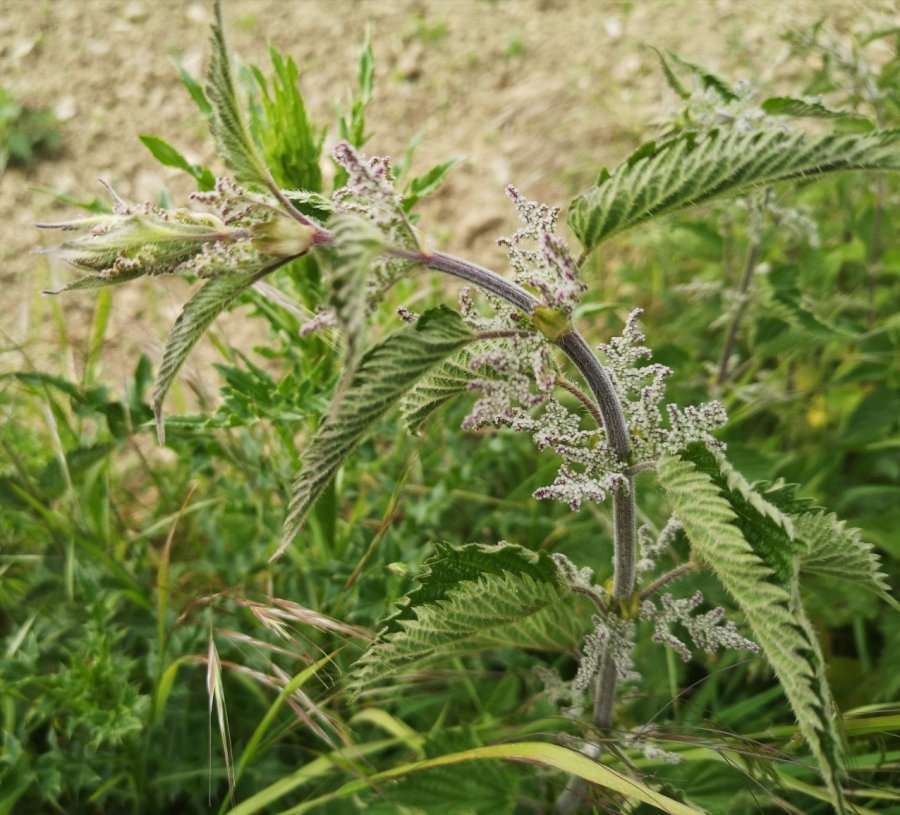
Stinging nettles

As soon as I started I wanted to reach out and feel the difference between the nettles and the dead nettles, even if one sort would surely sting me. It didn’t take long for my toddler instinct to kick in – ‘But I want to touch!’ I resisted.

When a wall reared up in front of me, my protesting teenager was taunted – ‘Just cos you say I shouldn’t touch, doesn’t mean I can’t!’ Though I was grown up and I didn’t.
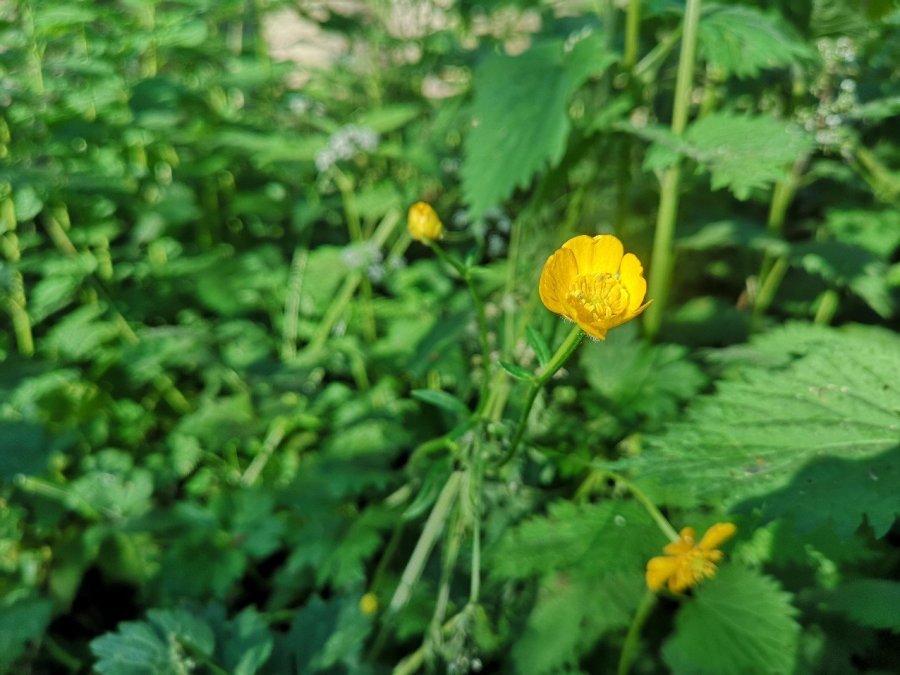
Buttercup (Ranunculus)

As I passed the buttercups I could imagine the smooth, silky petals. I’m a tactile person. I have honed my sense of touch to a very sensitive degree over tens of years. The mere sight stimulated the part of my brain which remembered the feel from before (as it does with most people) – my brain’s sensory cortex.

“When asked to imagine the difference between touching a cold, slick piece of metal and the warm fur of a kitten, most people admit that they can literally ‘feel’ the two sensations in their ‘mind’s touch,’” said Kaspar Meyer, the lead author of a study into touch.

“The same happened to our subjects when we showed them video clips of hands touching varied objects,” he said. “Our results show that ‘feeling with the mind’s touch’ activates the same parts of the brain that would respond to actual touch.”

Rick Nauert on Psychcentral.com
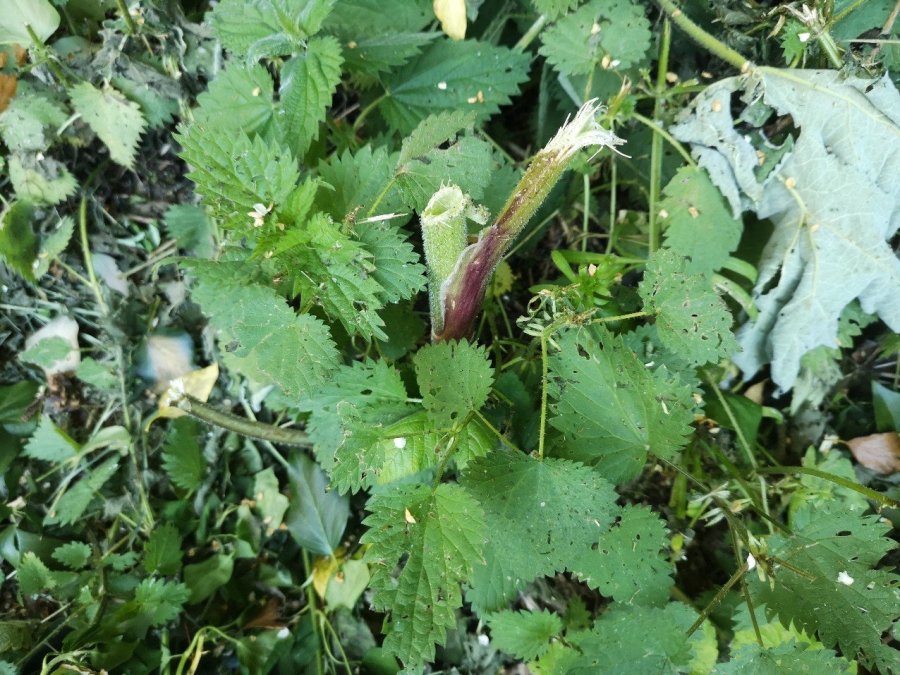
Hollow stalks with rough ends
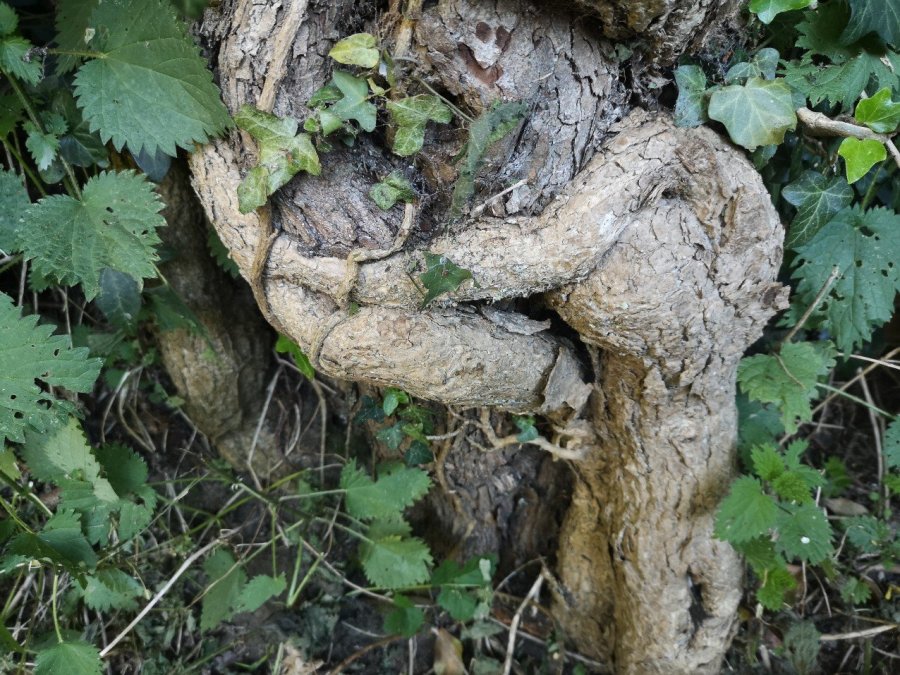
Ivy like a rattlesnake coiled around a tree
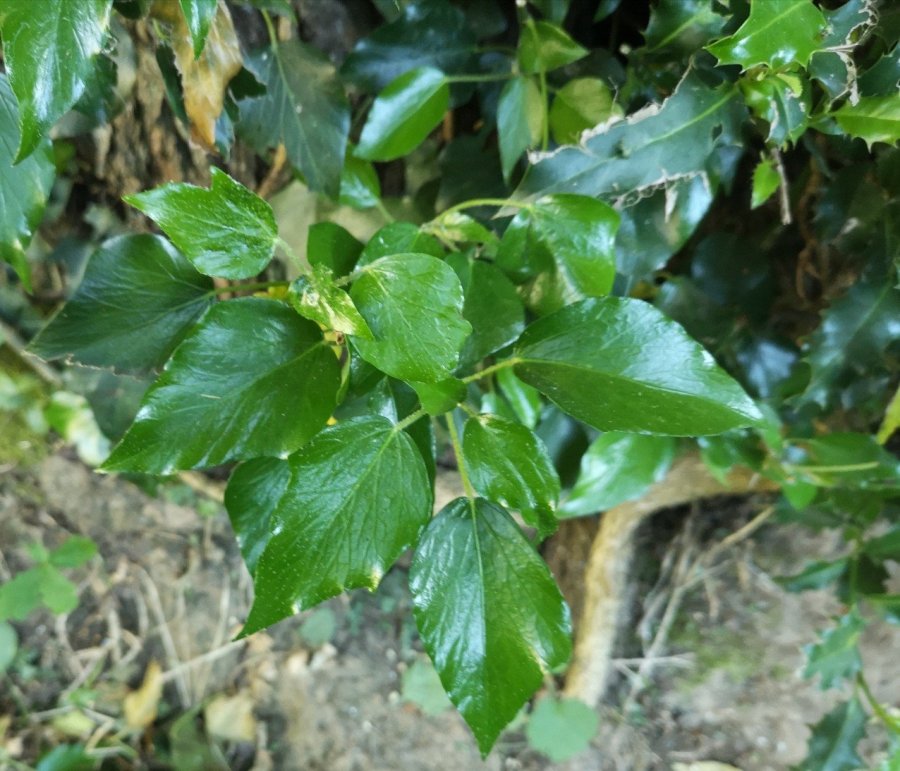
Common Ivy (Hedera helix)

I saw stalk ends which I was convinced would be dry and rough. The torn-off strands might feel like threads, but I couldn’t be sure. The gnarled tree, all crooked and twisted, must feel just as dessicated, I conjectured, but harder. I was pretty sure I could lean into it and it wouldn’t fall over whereas the stem would have, of course. Colder than the trunk, the Hedera helix (a better monica than ‘common ivy’ in this case) would feel the least substantial, but the shiniest. Isn’t it fascinating that we use visually descriptive words like ‘shiny’ to describe the feel of something?  

While it is customary to assert that we see with our eyes, touch with our hands, and hear with our ears, we live in a simultaneous universe where sensory events and their constituent elements have a natural tendency to overlap.

Brain World
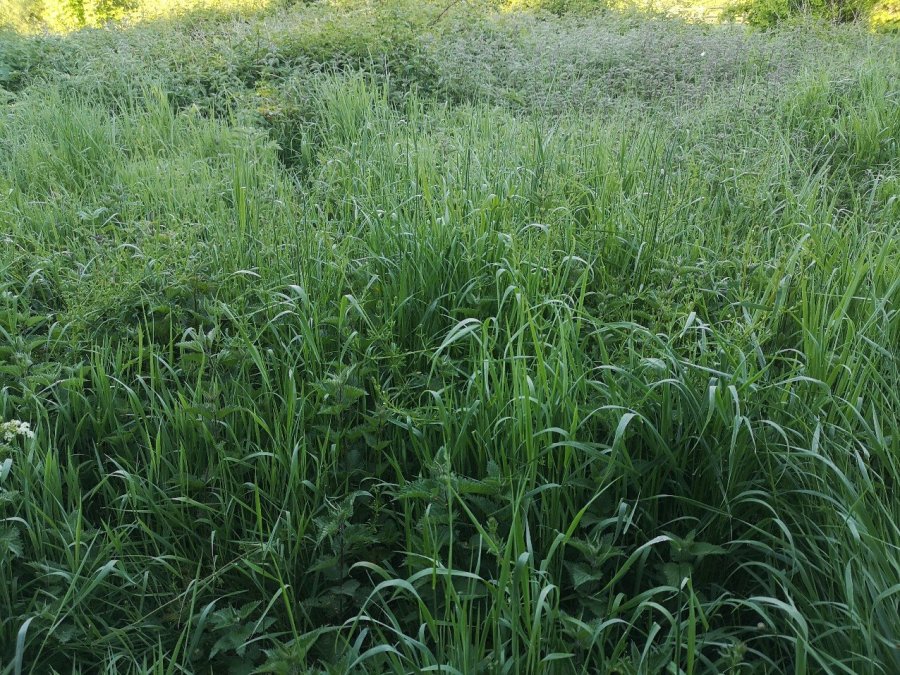
Undergrowth still covered in dew where the sun hasn’t yet touched

The undergrowth to my right was still opaque with dew, its wetness indistinguishable from its colour. But I didn’t touch; my eyes just feasted. (There’s another of those sensory comminglings). As I wandered on, I wondered, can you feel a colour? Would that pale grey-green feel the same as the vibrant gloss-green of that ivy I had just passed? It would be impossible to subtract the wetness from one in order to compare I reckoned.
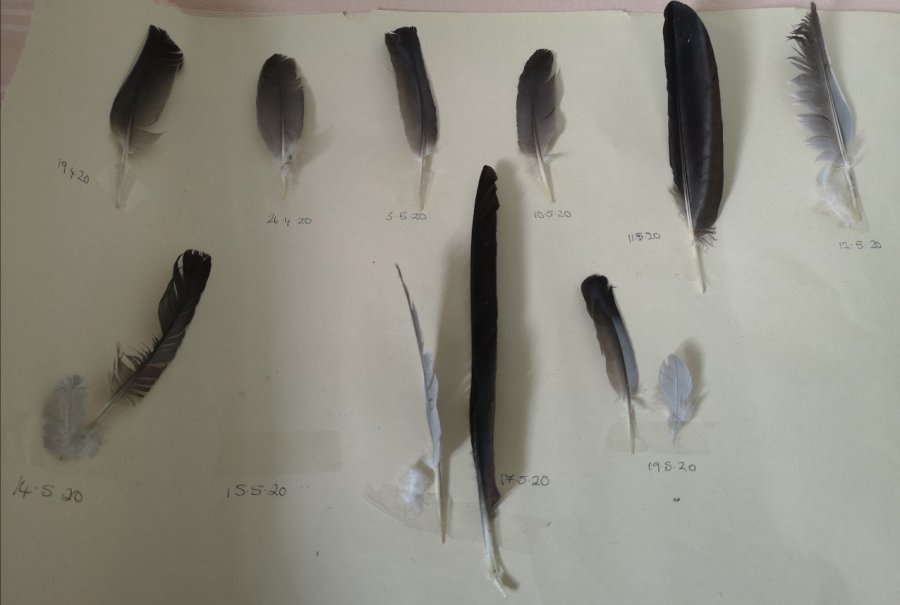
My feather collection

In this part of the countryside, the cascades of hawthorn are over now, their slightly feathery, petally droplets have fallen. Black crows were feeding, sharp-beak first, in the field. I would certainly like to touch their glossy feathers – I have been collecting feathers every day on my walks. If I hold the white tubular calamus, or hollow shaft of a long corvid’s plumage and twiddle it, the vane catches the light and gleams. There was a matching black horse lying down nearby and she observed me, haughtily. I might not have been brave enough to touch her.
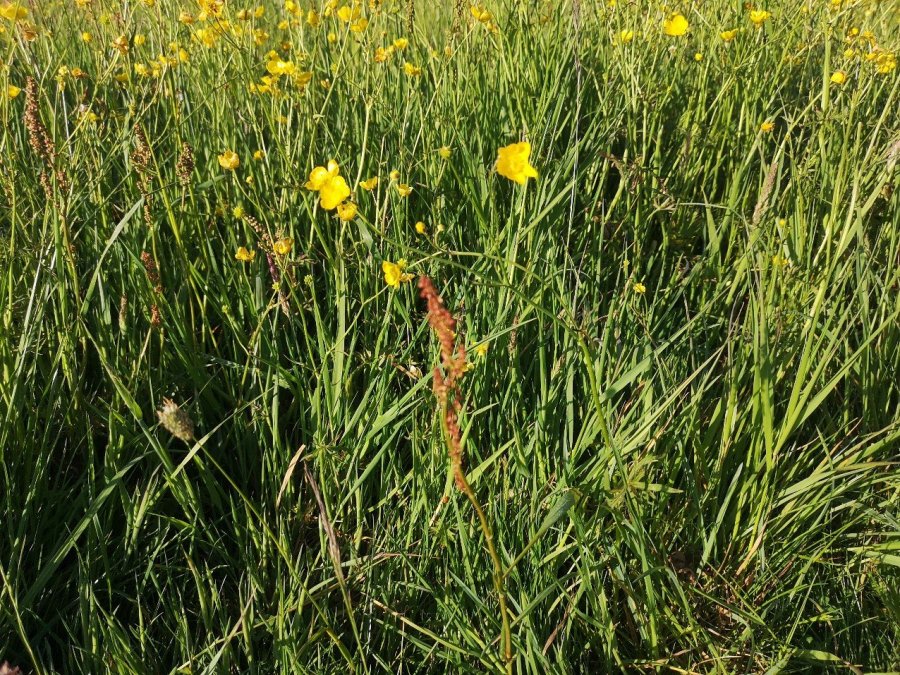
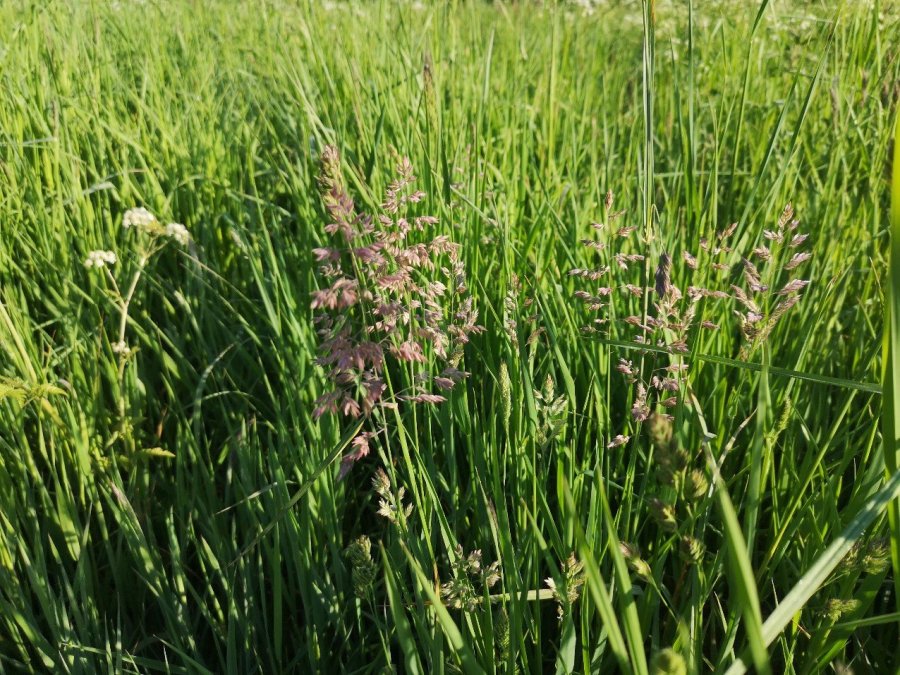
Common sorrel (Rumex acetosa) or ‘Sour Ducks’, red-brown between the buttercups
Yorkshire Fog

The wet grass touched my boots – I could see, but not feel. My legs brushed past the seedheads and they tickled my shins. They touched me, I didn’t touch them. In the same patch, I was alive to the contrast between the sorrel, which I knew would be bitty like toast crumbs between a thumb and forefinger, and the emery board, might-cut-you blades of grass. I remembered how I like to slide up the sheath of the softer Yorkshire Fog, just turning to seed now, gathering a mini bouquet before spilling the seeds up in a fountain and spraying them all around. I could just ‘feel’ the imprint of it on my fingertips.
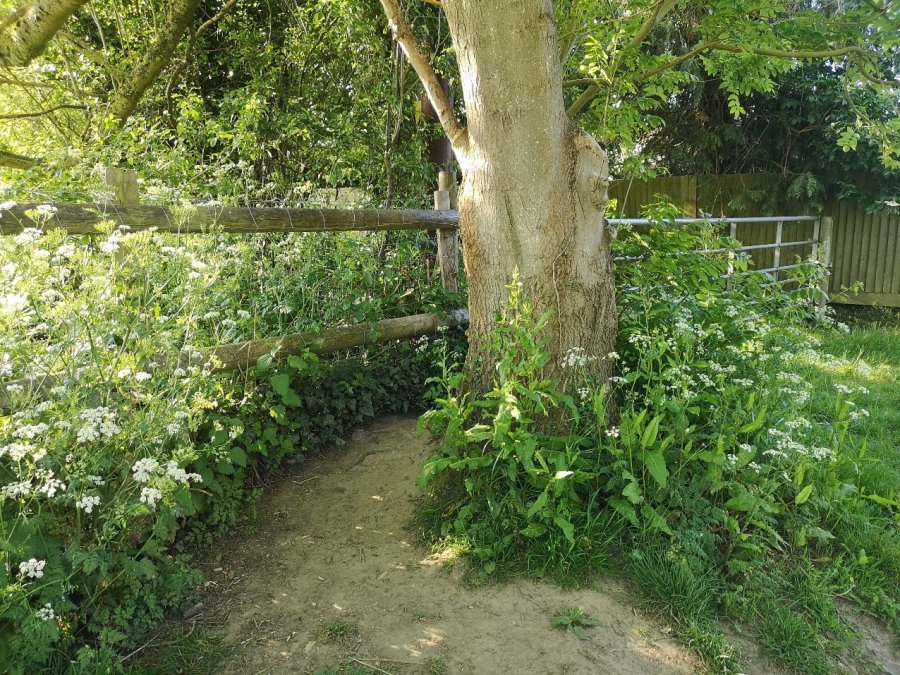
I had to edge behind the tree with my arms in the air

I crossed the first stile which I’ve been not hand-touching for weeks anyway, so I am practiced at that. I had to steady myself for a moment or two at the top before ‘jumping’ down off the second. Then at the next hurdle, I had to slip around behind the tree because the gate was shut. It was, I admit, impossible not to touch the trunk with the edges of myself, but I lifted my arms up as I squeezed through.

There was the familiar parp of the train as it approached the first of a ring of level crossings, making its announcement. I couldn’t touch that train even if I wanted to. I spotted the first chamomile and stooped to collect a feathery stem and have a sniff, transported back to my allotment where I grew swathes of it for medicinal purposes. It was not until the end of the walk when I scanned back that I realised that that had been a touch I didn’t even think to forgo. 
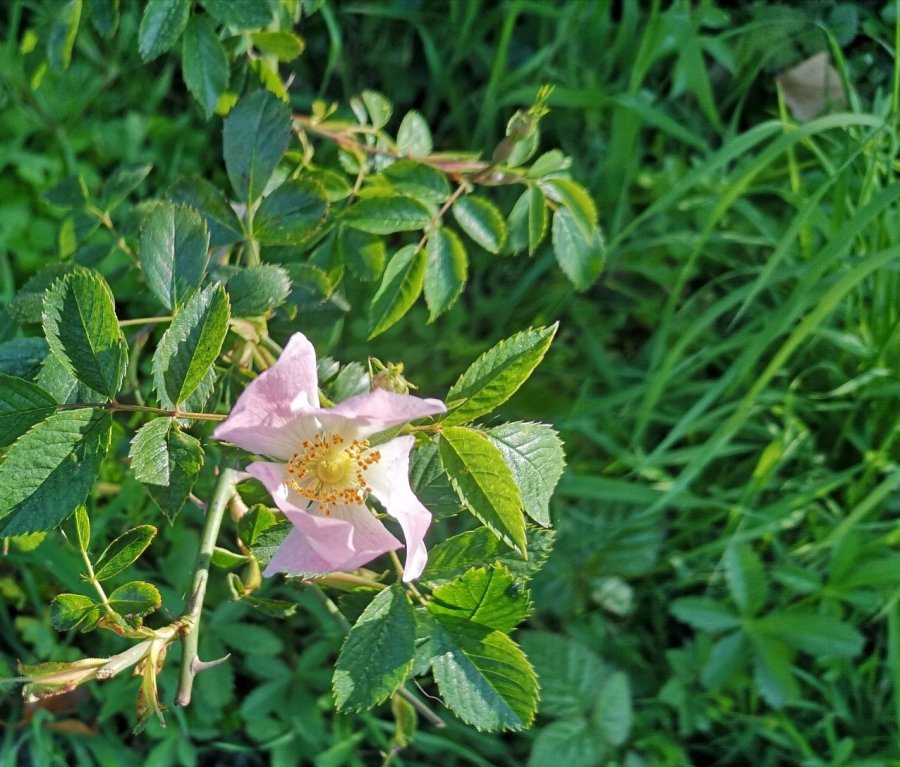
Wild dog rose (Rosa canina)

I feared to reach out to the wild roses in case I dislodged their fragile petals, so that was no problem. Before I knew it, I scratched my nose because it felt like a fly was crawling there. Damn! Turns out that I’m not great at this game.
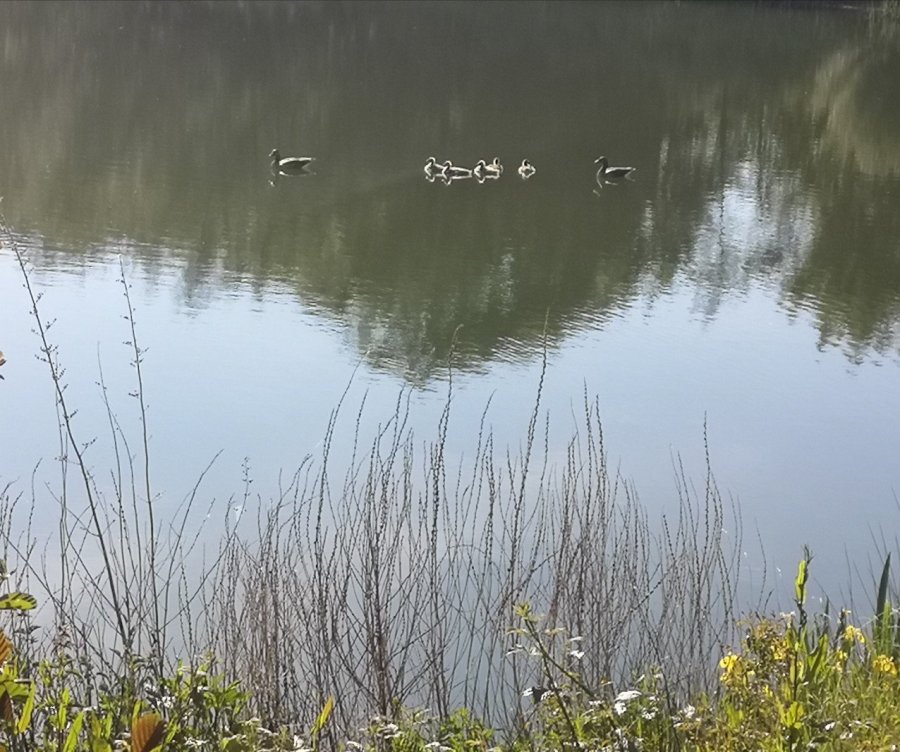
Goslings and their parents

I took a detour and there were the goslings, much more grown up, motionless on mirrored water. So still were they, that I assumed they were asleep, but then a parent dipped her beak and very slowly rotated to face her brood. The sun was behind, low, and I saw a drop dripping off. Mid way, it sparkled as the light shone through it, refracting into a star as it fell. Without actively moving she sailed closer to them, the space narrowing, and then she nudged the nearest chick. 

It was the second hour and others were waking up and walking their dogs: a puppy scampered towards me and jumped up, so there was a wet-tongue touch without a by-your-leave. The owner and I forgot to move to opposite sides of the path two metres apart. Not so the woman with the stick – she avoided me like the plague as we have been instructed to do.
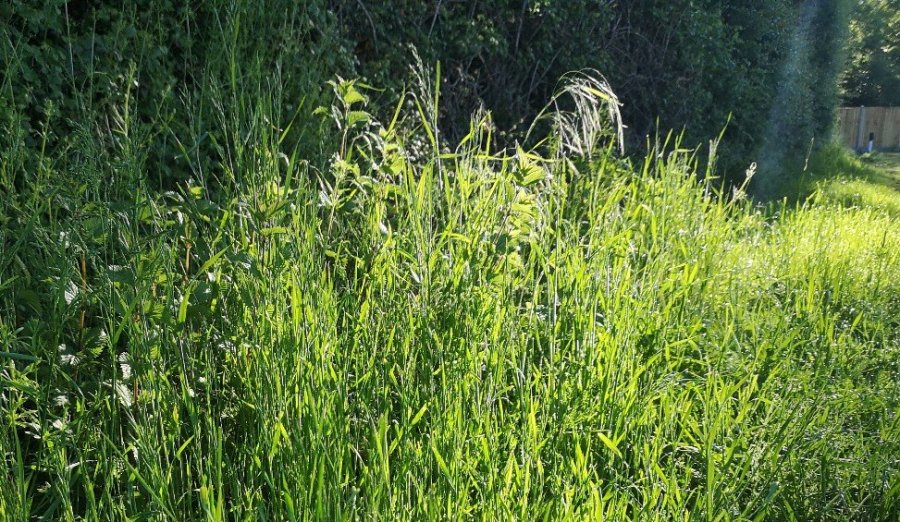
Pendulous Sedge (I think)

The birds were busy weeding in the arable fields, their heads bobbing. No doubt some seeds hadn’t yet germinated. A bramble scraped my upper arm leaving a long, bloody slash. Grasses caressed me and wind swept my sweaty brow – I felt it.
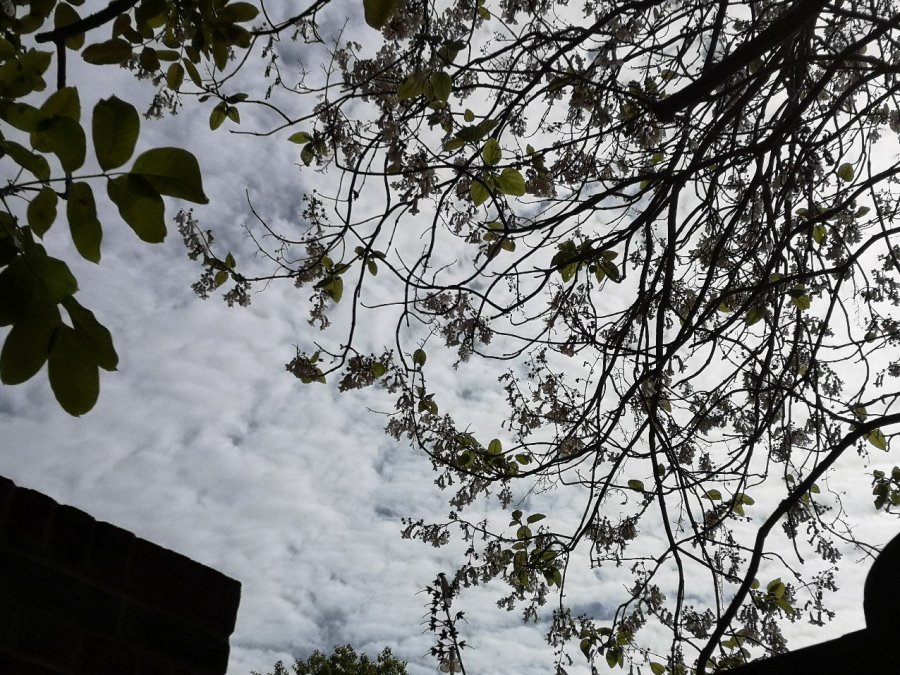
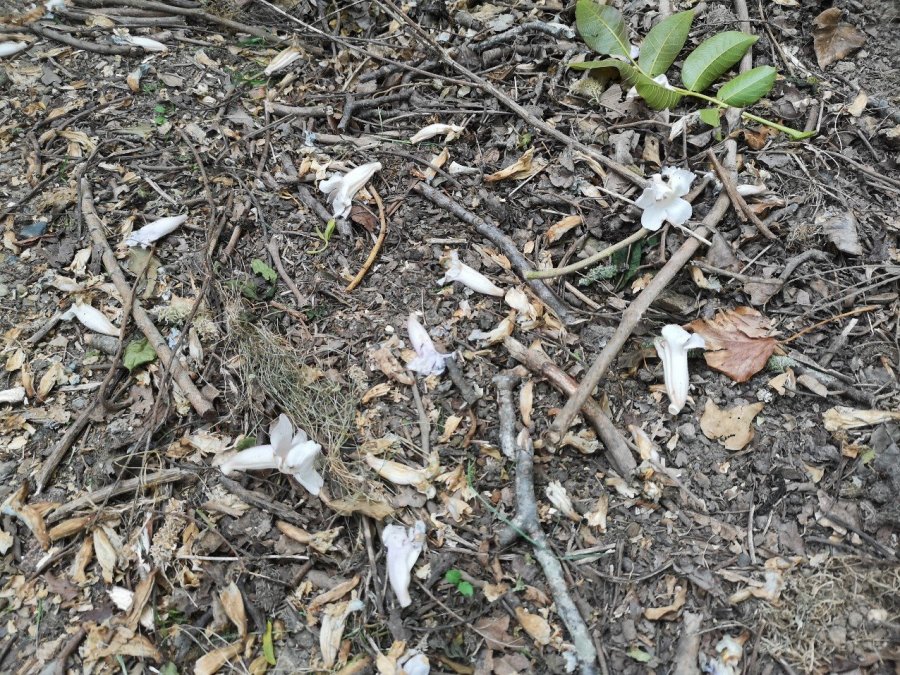
A fully grown tree with clusters of small, white traumpet shaped flowers (below)
What is the name of the tree (not a shrub) these sticky flowers came from?

I stood under an unknown tree admiring its flowers. I flipped through my mental filing system, took a photo, and then the tree seemed to go ‘here you are’ and one white trumpet floated to the ground. There it lay amongst 10s of others! I picked one up (again, I didn’t even notice this touch until I started writing this) and carried it uphill. After some time I relegated it to my pocket for later perusal and it was, ooh, 5 minutes before I worked out what had caused the stickiness in my palm. 
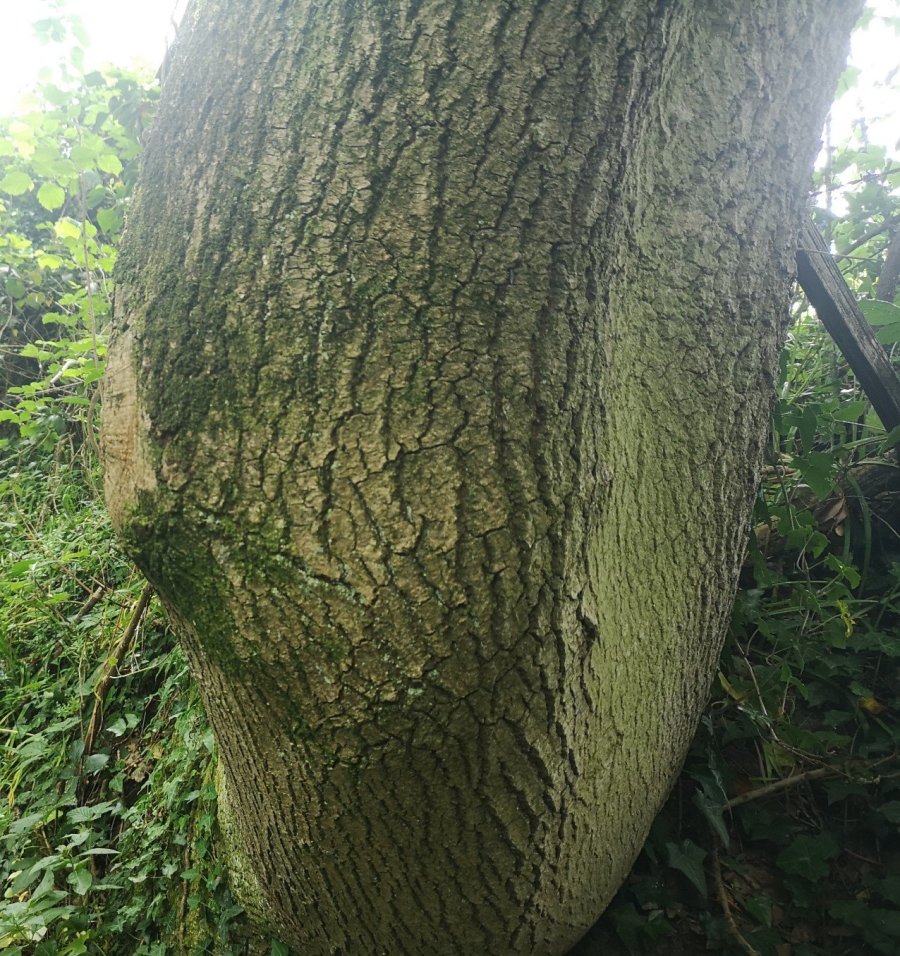
Impossible not to stroke

I did find an alternative route towards the end and as I squelched through the mud (there has been no rain for weeks but was some sort of stream running down the bridle path) and surveyed the broken branches from recent winds, I instinctively stroked the burl (a knotty growth) of a nearby tree, I caught myself at it and withdrew my hand sharpish, but it was too late.
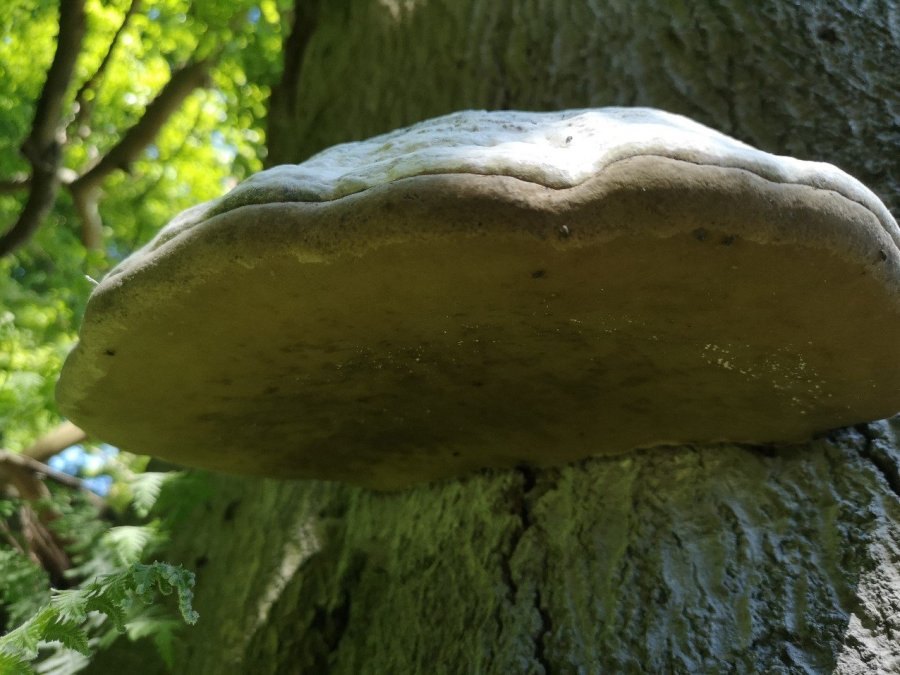
A fine specimen of Bracket fungus

The whole thing was pretty tricky. I wanted to know if the bracket fungus was hard or squashy. I wanted to warm my hand on the wall. I was curious whether the temperature of the inside of the log was different from the outside.  I would have liked to swish through the Quaking grass. However, I particularly enjoyed the newfound awareness of how much my senses interact. And I had a beautiful walk.
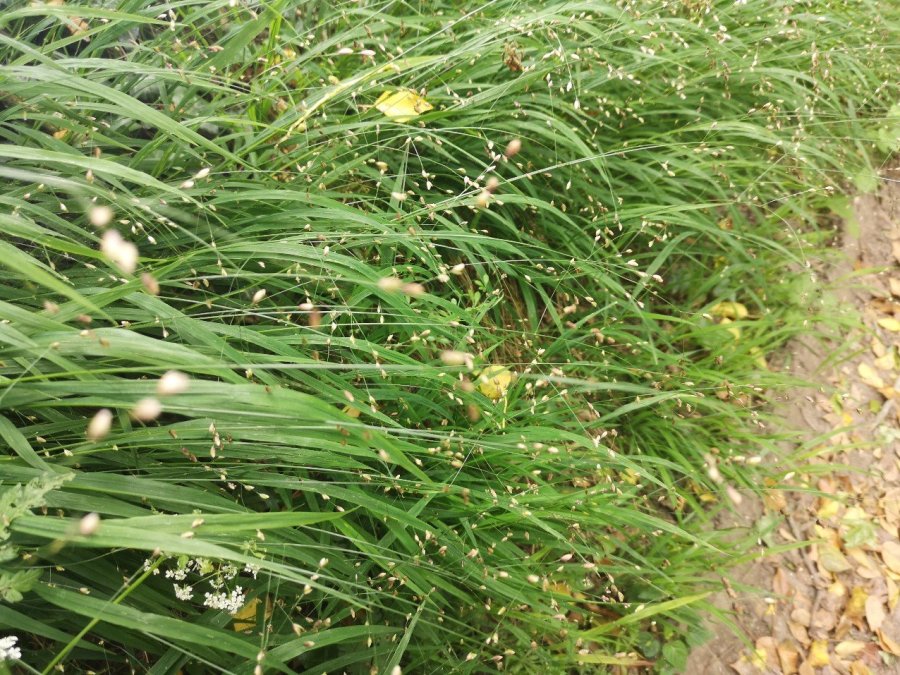
Quaking Grass

If you ever see something in one of my blogs that is wrongly named, please do let me know. I do a lot of research but it isn’t always easy to get it right and I would be very grateful to learn.
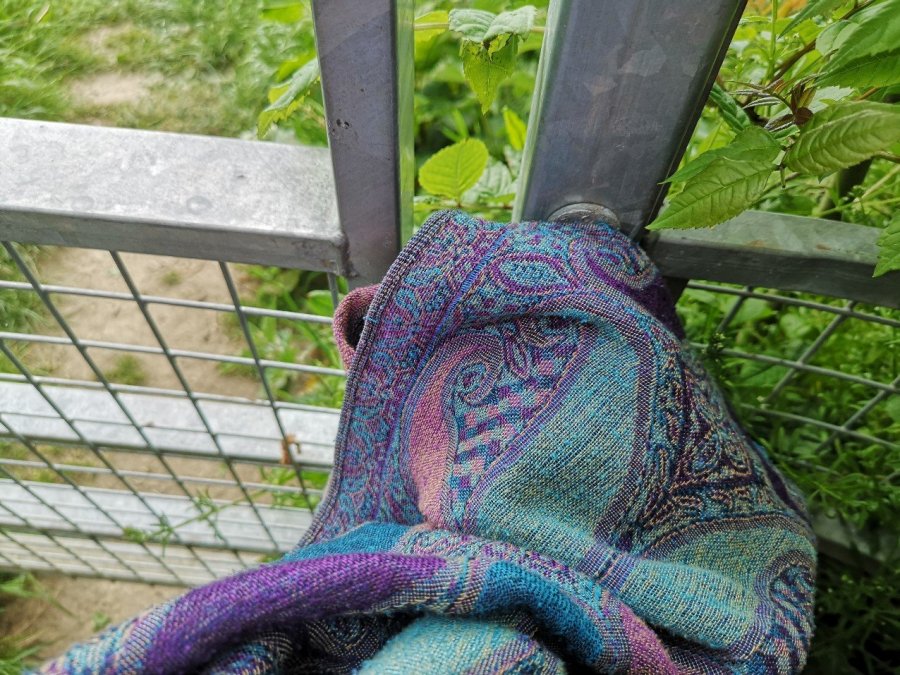
Uing the soft fabric of my scarf to open the metal gate to avoid cross-contamination from ‘the virus’- there was no other way to open it

Shetland dialect and a sense of identity

12.5.20

Chatting and walking at the same time

I have been talking to Shetland women about home and belonging. My initial idea was to meet up in person when I visited, but it has been impossible to go due to the corona virus, so my trip is a virtual one and my meetings had to take a different form. We chat on the phone, and while we do that, we both walk – I in Kent, England, and they in Edinburgh or on Shetland. Walking is part of the experience. We are connected in time and spirit, if not in space, and we are prepared for the ‘meeting’, so, as well as the information, thoughts and ideas we discuss, it’s interesting to take the walk itself into account.

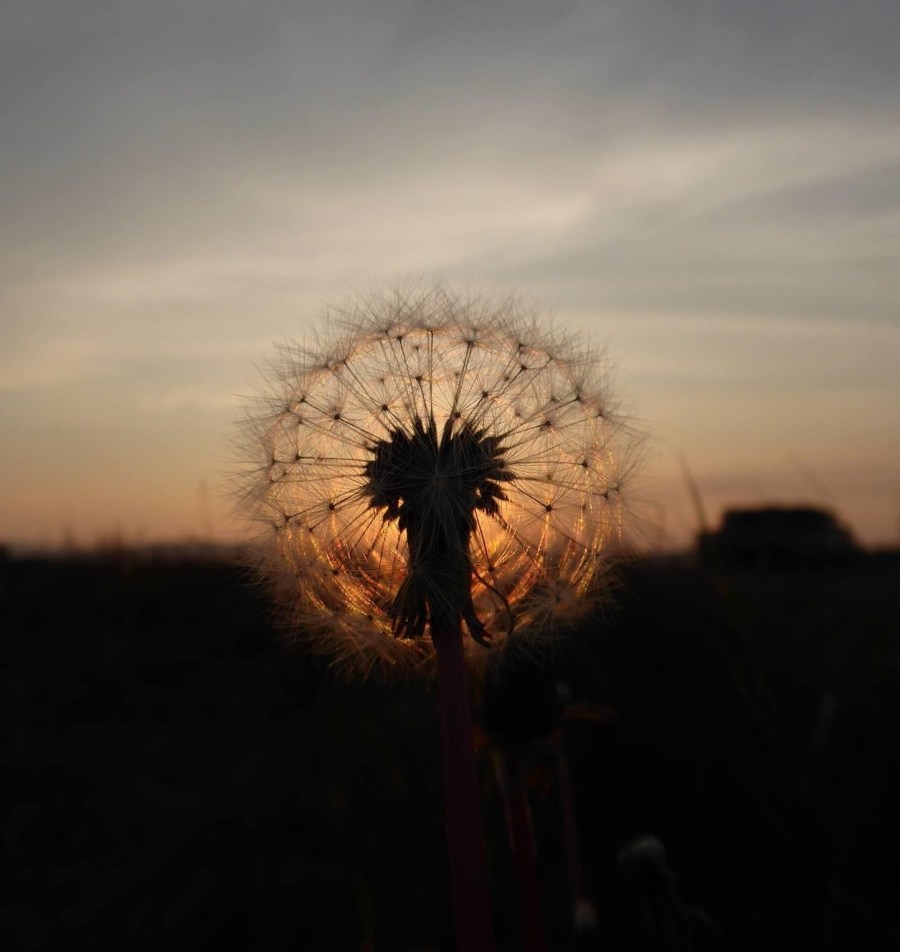
Dandelion clock. Photo Ann Marie

When I spoke with one woman, she had just fallen over and cracked her knee and tooth. I was negotiating road works while she told me about what happened – six men were working in close proximity with loud machines, and members of the public were trying to work out where was safe to walk. A second woman was walking in snow on Shetland, while I was in a T shirt because it was so sunny. A third is unable to walk far at any one time due to a physical condition. We kept getting cut off, the signal breaking down, and between us we had to work out what was best: I had to be out in the open, rather than under trees; she to sit still and survey her surrounding area while we spoke.
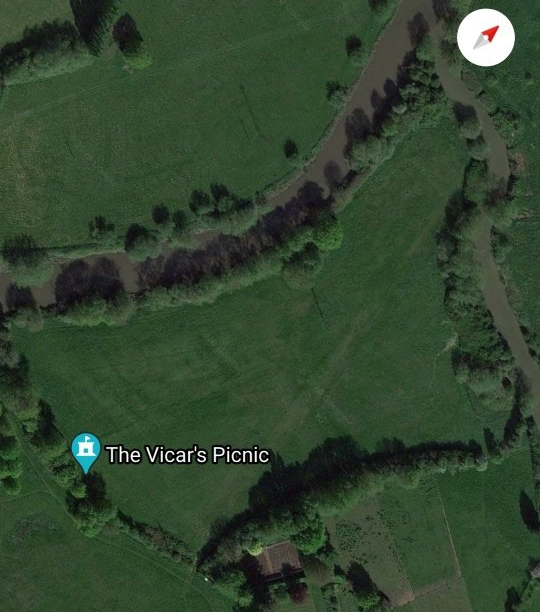
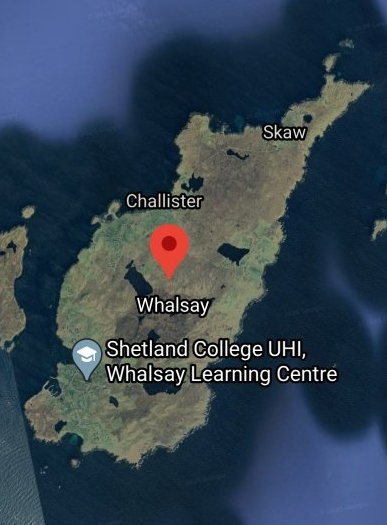
The field where I walked while talking to Ann Marie, seen from the air, the shape is similar to the island of Whalsay. Courtesy of google maps
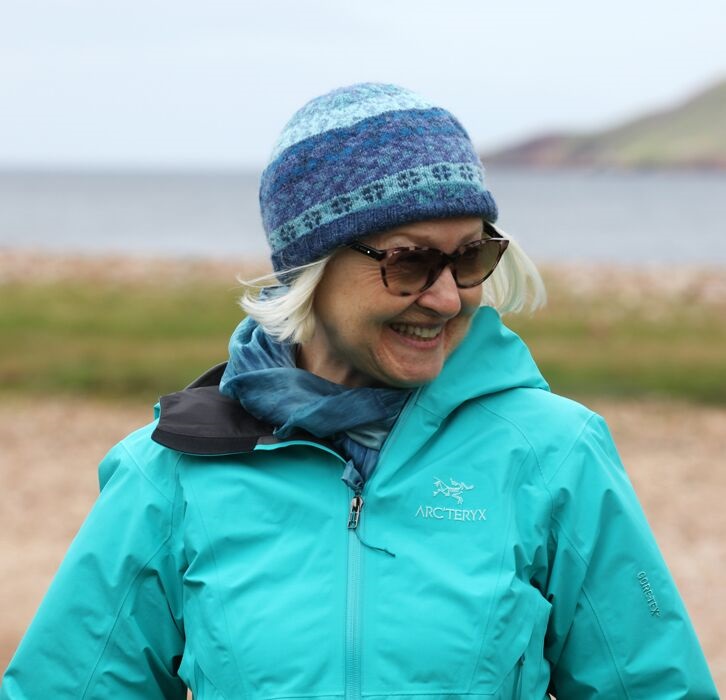
Ann Marie. Photo from her website

When Ann Marie Anderson phoned me from Whalsay, a jamon-shaped island in the east of Shetland, I wasn’t far from the river. Taking a right over the bridge, I passed 3 cyclists who were standing sort-of-200m apart on a path which was 1.5 metres wide, with cars parked beside them, on a very busy road. I crossed to the dangerous, non-pavement side. When I got to the Lees and climbed over a metal gate (no mean feat when you’re on the phone!) I found myself in an unfamiliar field, full to heart-height with sweeping grasses, gleaming yellow buttercups and dandelion clocks, many of which had discharged their fluff into downy piles on the hard-baked, cracked clay. I was totally alone and walked around the perimeter where someone/thing had crushed the undergrowth before me. I took occassional wee detours out and back through the bushes to where I knew the edge of the land met the river bank and found little patches of sand where the fishermen sat in days gone by. Back in the field, I deposited my anorak – an incongrous scarlet island amongst the gentle, complementary hues of nature – and traced figures of eight, winding pathways of my own in one corner as we conversed.

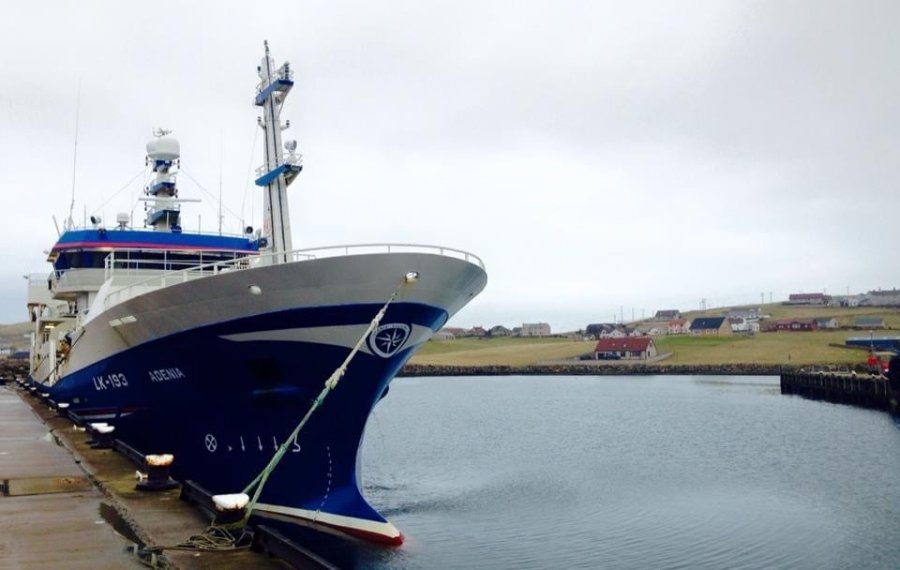
The pelagic fishing boat, ‘Adenia’. Photo Ann Marie
The island of Whalsay, Shetland, shaped like a Spanish ham. Google maps

Walking the coast of Whalsay

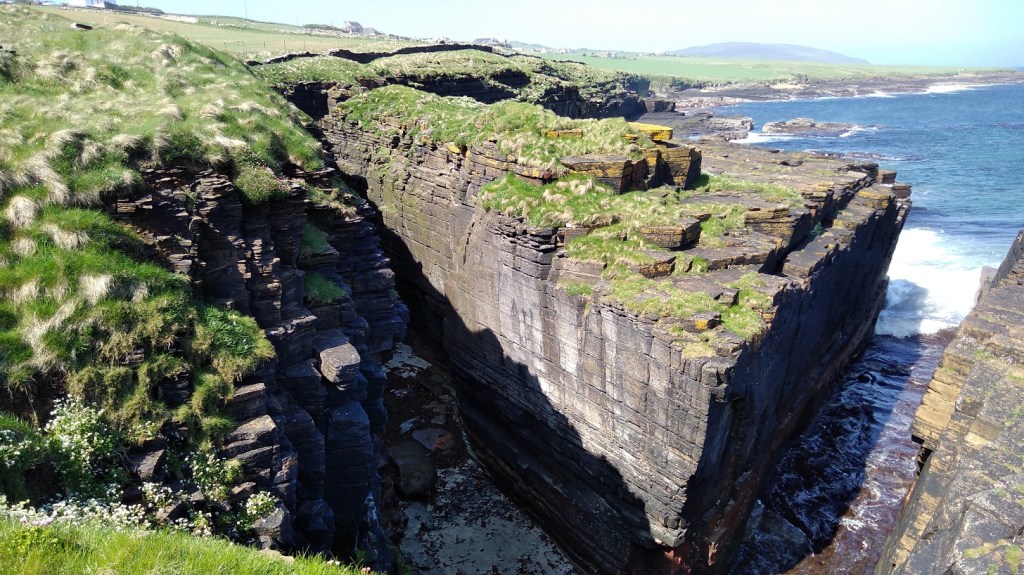
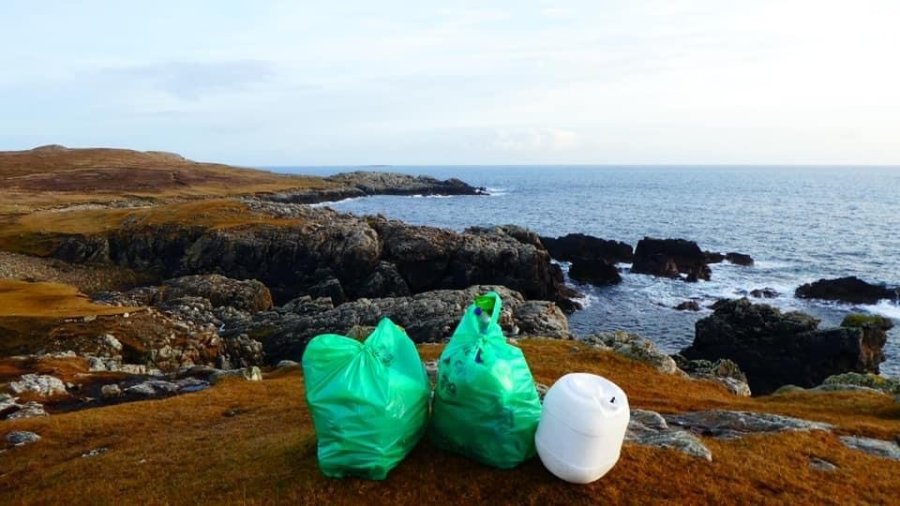
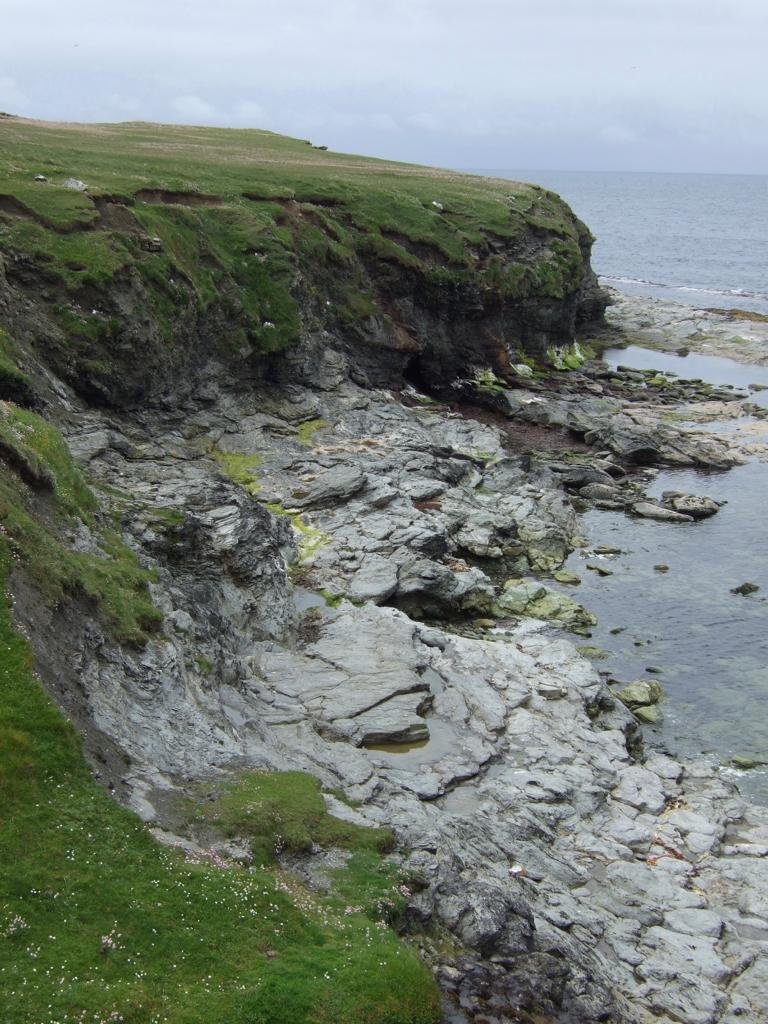
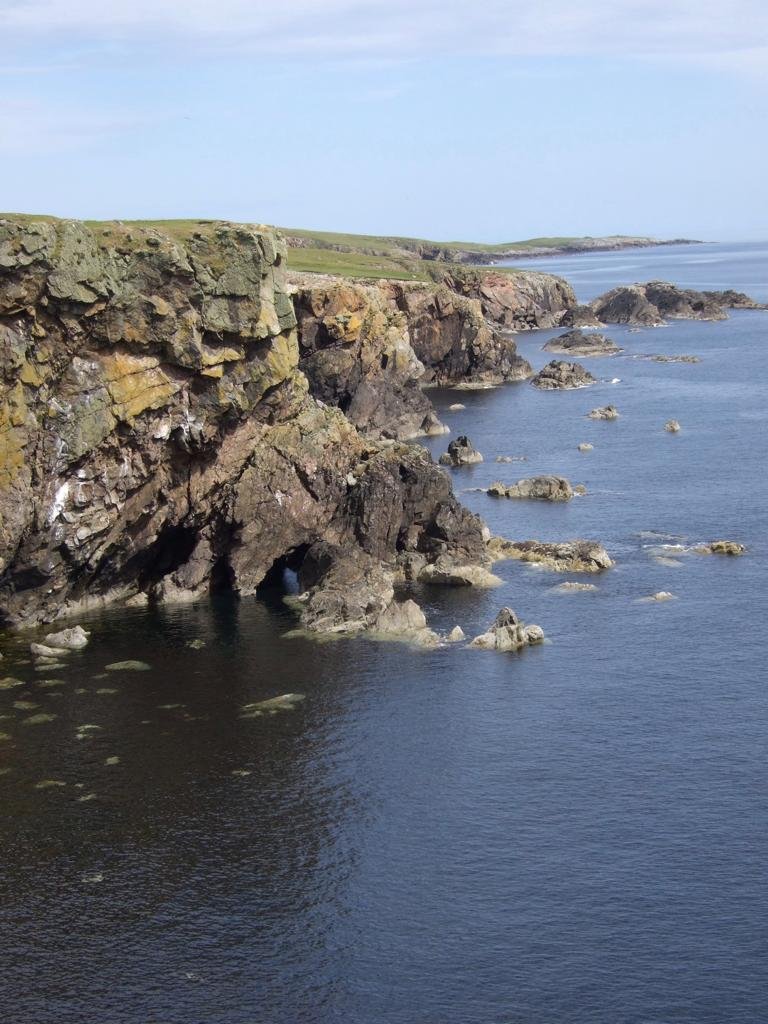
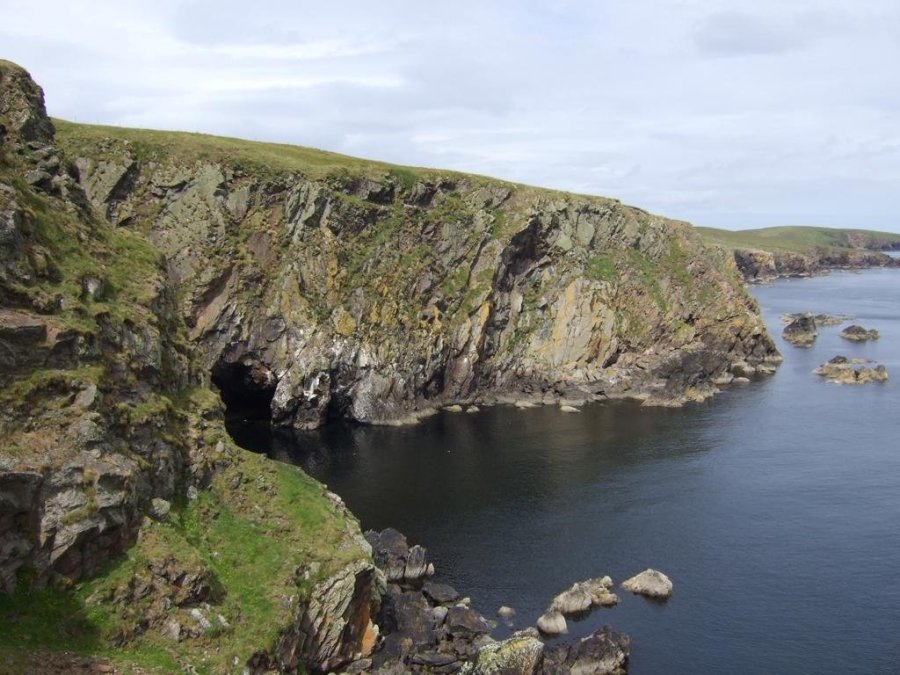
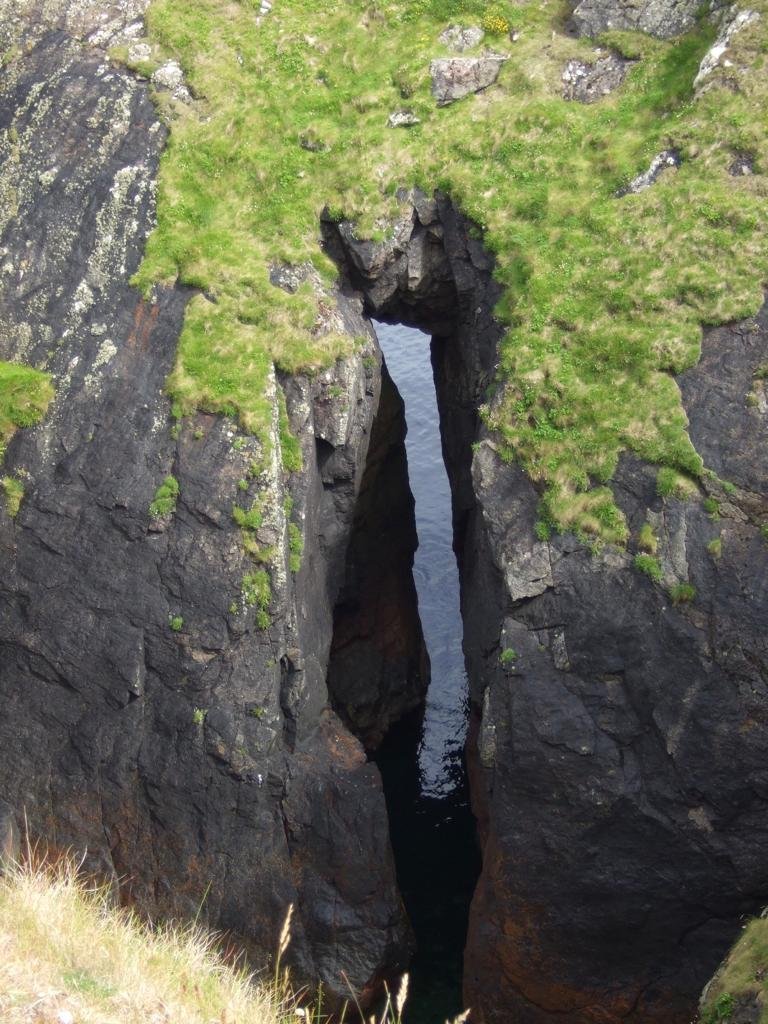
Ann Marie told me about where she has lived for 18 years: how you must cross the estuary from the mainland to get there, managing the ferry terminal and traffic; how the island has around 1000 inhabitants; and that she stays in Symbister, the main conurbation, her home. ‘Whalsay is on the east coast’, she told me, ‘there’s nothing really in the middle of the island and I usually go around in a car. Recently, though, I’ve been walking around the coast, seeing it from a different angle. It’s really interesting.’ She decided to join the challenge of gathering bruck (rubbish) which has been dumped or floated in from abroad, particpating in a Shetland-wide project to pick up litter called Da Voar Redd Up. ‘There’s not a coastal path as such’, she said, ‘but little blue pointers say Access Shetland. I diverted into geos (long, narrow, steep-sided rock clefts formed by erosion in coastal cliffs) and onto beaches where I could.’ So far she is 3/4 of the way round and has picked up 80 bags. Some of the pieces she has lifted have come from as far away as Massachusetts!

A geo on the north coast of the Orkney mainland
‘Gadderin bruck’ – some of the 80 bags of rubbish that Ann Marie has so far colected around the coast of Whalsay

How Shetland dialect contributes to a sense of identity

I am interested in how people construct a sense of their own identity, whether that’s by land, accent, or commonality of other sorts. One of the most impressive things about speaking to women from Shetland has been their use of dialect and the variations on English they employed when they spoke to me, the modulations they make for most folk, in fact, who are not Shaetlan speakers. Christine De Luca writes: ‘Shetland dialect – or “Shetlandic” – is a lively mother tongue, still vibrant and enjoyed both for its onomatopoeic quality and its classlessness.’

Christine De Luca. Photo provided by Christine

Christine told me a story about her aunt who died some years ago, but who never left Shetland very much. ‘She had been to the Women’s Guild, the church group for women, and a visiting minister’s wife had come. A woman who was in the Guild spoke to this lady in broad Shetland dialect. My aunt was very annoyed when she got back home – she thought it was so rude – it was a way of making the woman feel awkward, an example of the power of language to exclude or include.’

I have used some Shetland vocabulary for the landscape, birds and animals in previous blogs in this series, and in Research and Planning, you can read some of Christine De Luca’s words, written in the way she spoke them, and find links to recordings.

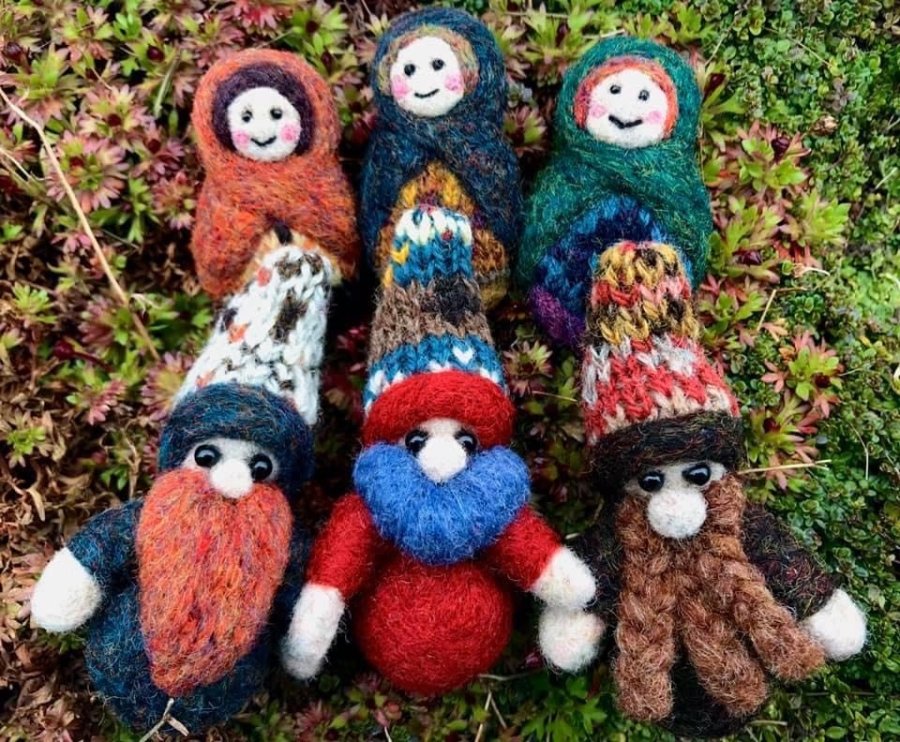
Ann Marie is a a needle felter and these are her Peerie Ooricks, characters from her children’s books, made from 100% Shetland wool. Photo Ann Marie

Ann Marie explained that she writes peerie bairns’ (little children’s) books in Shetland dialect, also working with them in school because, ‘Through my work I can see that the Shetland dialect is a dying one. A study has shown that in the next 25 to 30 years it’ll be gone. People are changing their tongue so that they are understood better and I do think that the TV has had a huge impact on that. There are still areas where it is strong, and I like to think that I’m doing my peerie bit to keep it alive so that hopefully it’ll be there in the future.’ Before the lockdown she was working alongside Shetland Arts delivering ‘Arts in Care’ workshops with elderly people in care homes. She told me, ‘It’s interesting, seeing how the children and the elderly respond differently. ‘

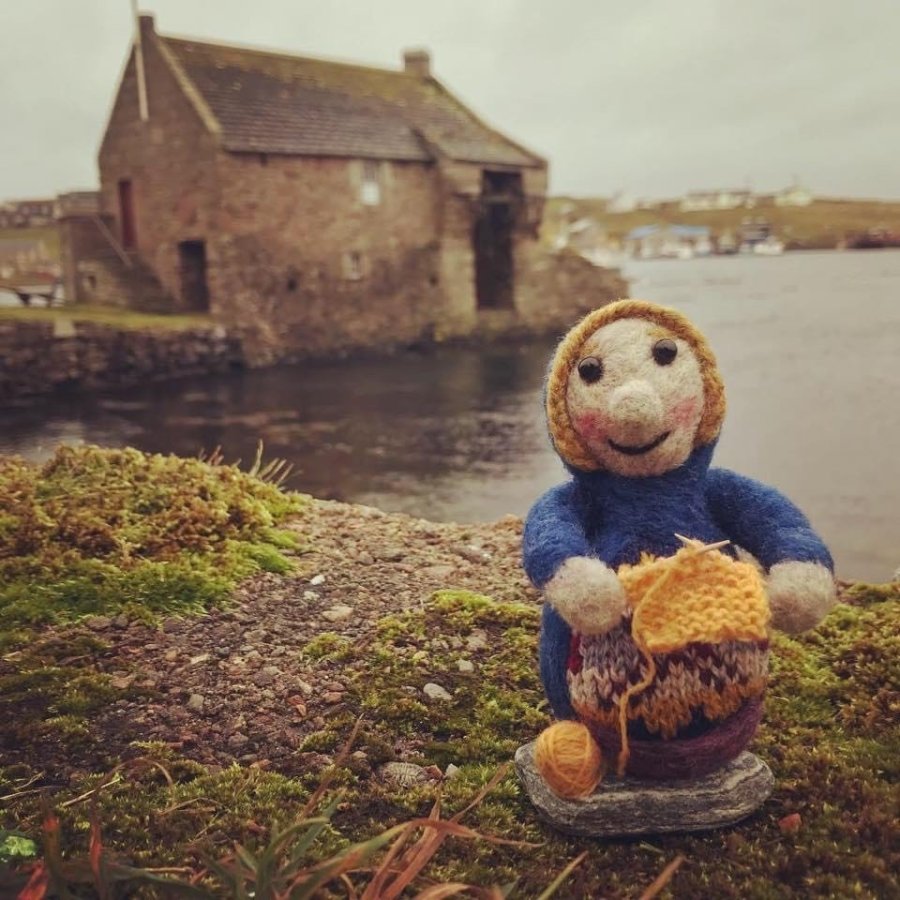
Another of Ann Marie’s Peerie Ooricks, knitting. Photo Ann Marie
The coast of the Sound of Papa near Huxter Mills, west of Sandness on Shetland, adjacent to the island of Papa Stour. Photo Lesley

‘I read the elderly certain poems and it’s amazing the different directions the people from the different care homes take. For example, I read them Christian Tait’s Da Magic Stane (about a stone which is sent skimming and visits some of Shetland’s Isles). One group wanted more information on the origin of the name Papa Stour which is one of the islands the stone visits; where others started speaking about where they were born and what was going on at the time they were born, how they were delivered in the house and there not being any hospitals; how life has moved forwards.’ You can listen to Tait’s poem here.

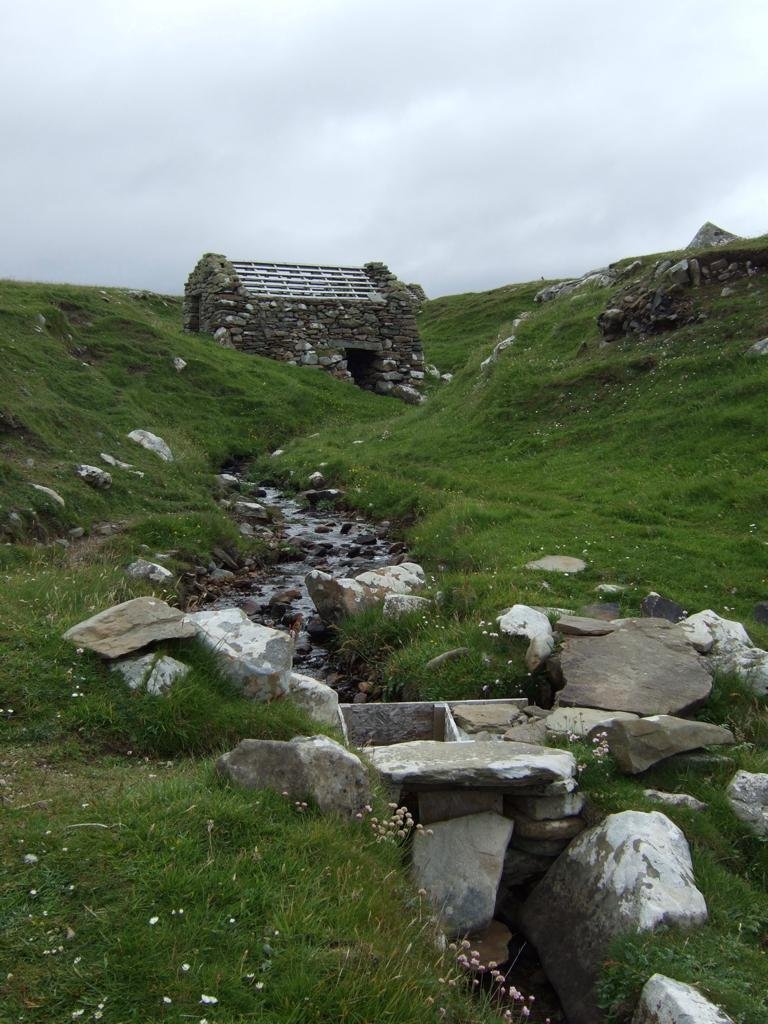
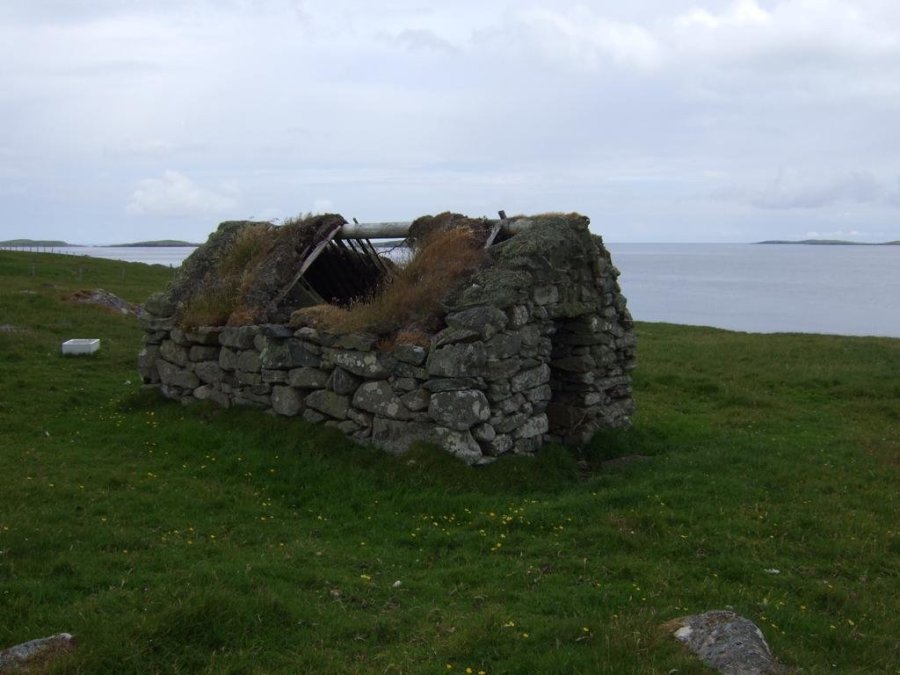
One of the old Norse or click mills at Huxter, west of Sandness on Shetland, adjacent to the island of Papa Stour. Photo Lesley

Deepdale and Sandness Hill walk. Thanks to Alastair Hamilton for this and other information from his blog on shetland.org

Waas (Walls), Shetland. Photo Christine

Christine writes in English and in Shetland dialect which is a blend of Old Scots with much Norse influence. She said, ‘The way people identify through language and the relative status of ways of speaking is quite a complex thing. For example, my cousin phoned me yesterday. Now, she’s in Edinburgh and she was brought up in Shetland, but her father’s people were from the south…. so their home wasn’t as Shetland as mine was. She thoroughly understands it, half speaks it, you might say, so when she phoned me I felt quite comfortable speaking in my normal Shetland dialect and she would just speak back in her kind of half-Shetland accent…it comes naturally. My sister, of course we were brought up the same, we just naturally speak in our Shetland tongue. My two brothers are slightly different – my elder brother went away at seventeen, into the Royal Navy officer class where you have to speak as they might expect you to do. He is very English spoken, but when he has been with us for a bit then he speaks in dialect again.’ I asked her if it was with an English accent. ‘No, he can do it quite perfectly!’ she replied. ‘My younger brother went to Canada and married a Canadian and he speaks with a slight roll, but when he’s on his own he reverts. We are chameleons really.’

Christine: ‘We have a verb for adjusting your accent, knappin, to speak in, let’s say, an English accent when there’s no need to. Nowadays folk seem to use the verb only meaning just speaking English, the meaning has perhaps changed a bit, but it used to mean an unnecessarily English accent and it certainly had a very pejorative edge about it.’

You can listen to a recording here of the word ‘knappin’ being used in a sentence in dialect. If you’re interested, like me, in the origins and examples of ‘knap’, here is another page about it. It’s interesting that to to knap can also mean to walk in a particular way: ‘To strike (the heels) on the ground in walking (Ork. 1960); intr. to walk with short active steps, to patter, to move about smartly’, which was something I did as I passed those road works while I trying to hear the voice on the phone, but not something I could do in the field where I was talking with Ann Marie.

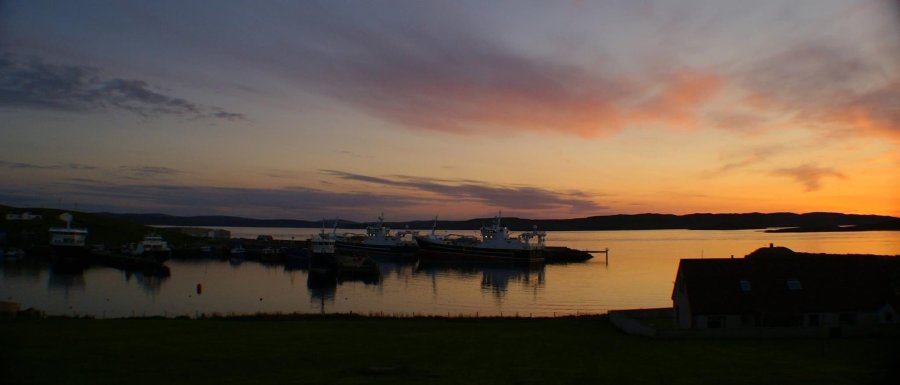
Sunset at Symbister, Whalsay. Photo Ann Marie

Here’s a Whispered reading by Still Waters ASMR of Ooricks in da Paet Hill by Ann Marie Anderson and illustrated by Jenny Duncan. The children’s book is about Ooricks, written in dialect of course, about digging peats from the bank in the traditional way. The Peerie Oorick Etsy page and the Peerie Ooricks Facebook Page

Christine De Luca’s website is here. Christine was born and brought up in Shetland, spending her formative years in Waas (Walls, see above) on the west side of the mainland, 15 minutes drive from Sandness (above). She now lives in Edinburgh. Her main interest is poetry, but she is also active in promoting work with Shetland children and has written dialect stories for a range of age-groups. In addition to this, her first novel, And then forever was published in 2011. She was appointed Edinburgh’s poet laureate (Makar) for a three year period, between 2014 and 2017. She has been published and recognised widely in the UK and internationally, wining prizes and having her work translated into countless other languages.

Christian S. Tait was born and brought up in Lerwick, where she now lives. After teaching music (Primary and Secondary) for twenty years, she was a primary teacher until her retirement in 1995. Christian writes in both English and dialect. Her first poetry collection, Spindrift, was published in 1989. Stones in the Millpond (2001) is part history and part a collection of poems inspired by and based on the experiences of members of her own family in the First World War. Her work appears in the New Shetlander and other local and national publications. Christian’s novel And Darkness Fell, set in and immediately after the First World War, was published by Shetland Library in 2018. You can find examples of her work here.

All photos are copyright Tamsin Grainger unless otherwise specified

Unst and Yell

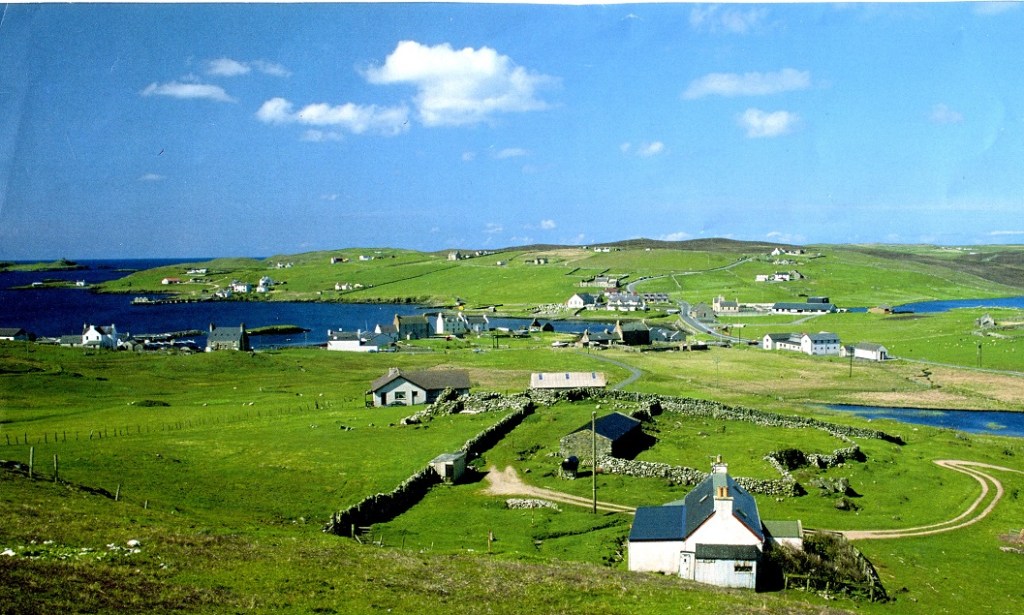
Unst and Yell are the two most northerly islands of the Shetland archipelago, known as Zetland until 1974. It is north of the north, and full of everyday places which have the ‘northernmost’ label attached to them – cafe, post office, art gallery….

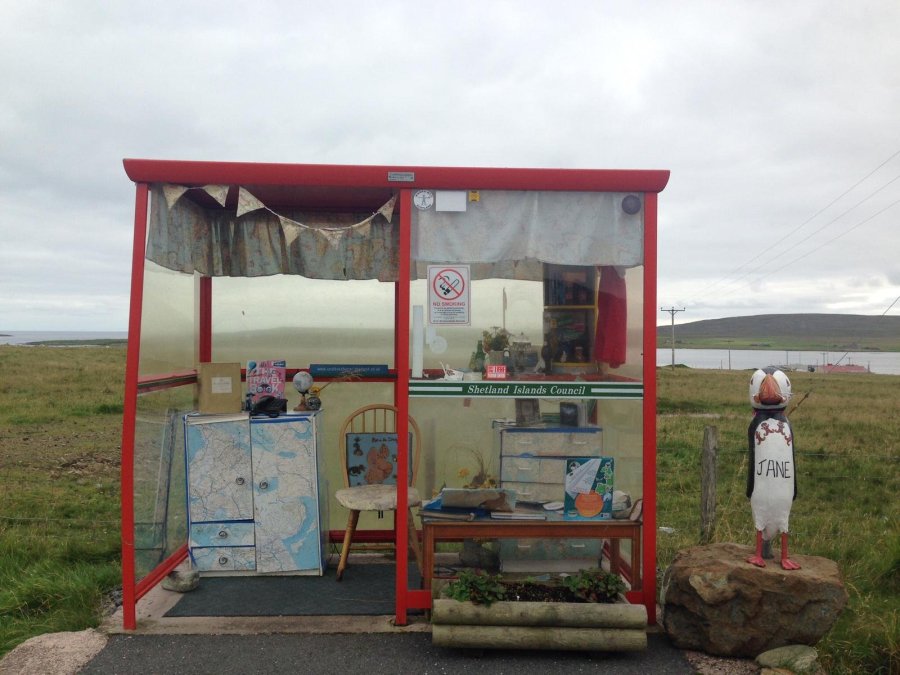
The northernmost bus stop! Photo Isobel Cockburn

Basic facts

Living this close to the Arctic Circle (400 miles, 640 kms) it’s not surprising that the winds can get up and the trees are sparse. However, the climate is mild because of the North Atlantic Current, and extension of the Gulf Stream system (Britannica). Unst measures 12 miles x 5, has between 650-700 inhabitants (the population seems to be falling). It is perhaps the first chunk of land the Vikings reached after leaving Norway, and in the summer there is almost no night – the simmer dim. ‘They say that if you climbed the highest hill on Shetland on midsummer’s night, the sun barely dips below the horizon’. From 60 degrees north online magazine.

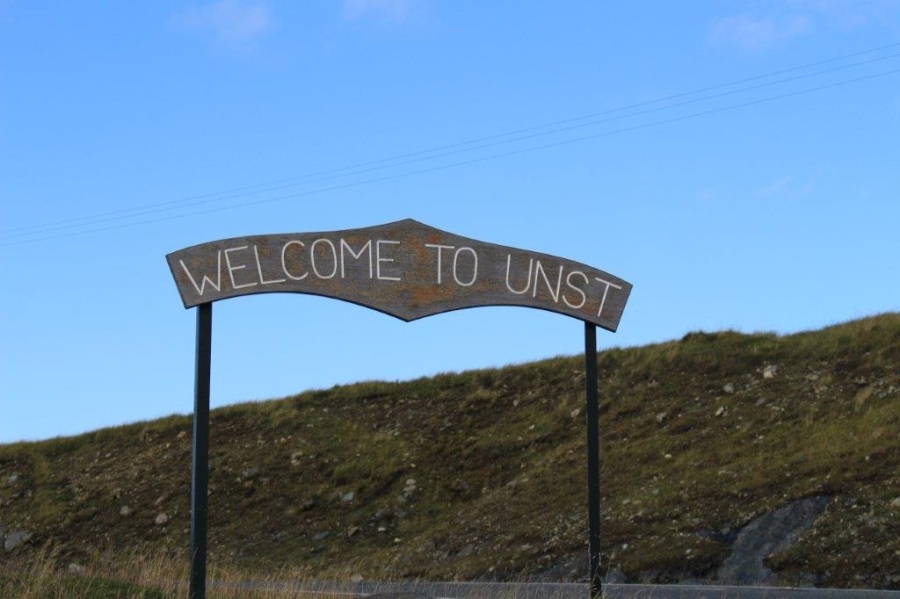
Welcome to Unst! Photo Liza Green

What does that word mean?

  • A wick is a place where goods are traded
  • Vik is the old Scandinavian word for cove or bay
  • A broch is an Iron Age, drystone, hollow-walled structure
  • A voe is a small bay or narrow creek
  • A holm is an islet (especially in a river or near a mainland) and a piece of flat ground by a river which is submerged in times of flooding
  • A böd was a building used to house fishermen and their gear during the fishing season

What to see – Vikings

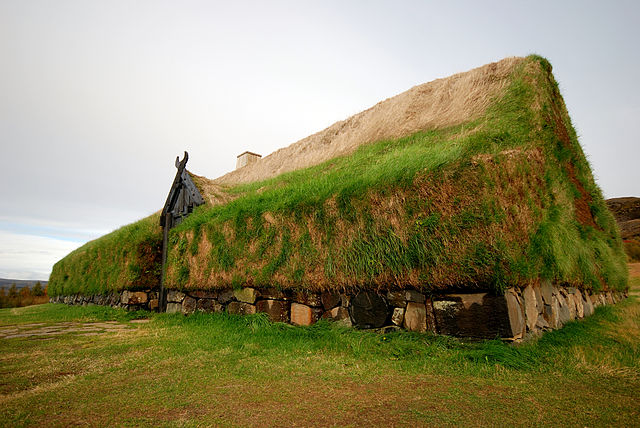
A beautiful picture of a Viking longhouse from Scott Michael Rank at history.net

There are plenty of fascinating places to visit on Unst, in fact I would have to scout round without seeing any of them properly if I wanted to fit them all in one day: a ruined castle at Muness with a tower house from around 1500, 3km east of Uyeasound; three excavated Viking longhouses at Belmont, Hamar and Underhoull; a longboat called The Skidbladner (good name) at Haroldswick; and brochs galore, such as the one at Underhoull within 15 minutes walk from Belmont. The Unst Boat Haven tells of the history of boats and fishing and, together with the Viking Unst Project, is near Haroldswick on Harold’s Wick.

More Viking history here and here at Shetlandamenity.org

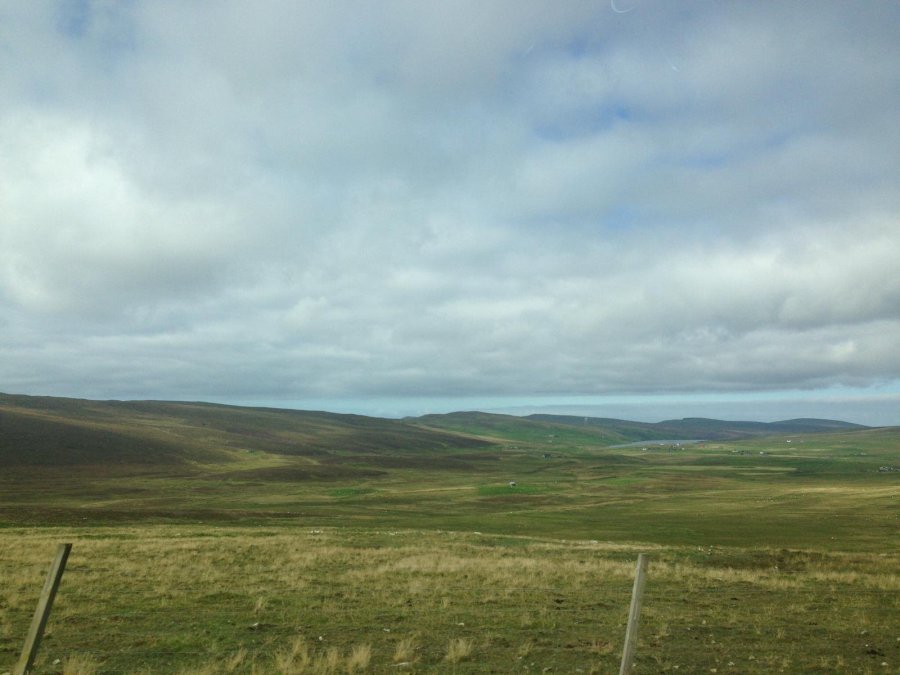
Moorland and gentle hills in Unst. Photo Isobel Cockburn

Walking on Unst

There are more than 100 miles of coastal paths, trails (including special Viking ones) and moorland walks. The Hermaness National Nature Reserve, north of Burrafirth is spectacular, and look out for the rare arctic-alpine plants an hour’s walk south on the Keen of Hamar. You can pretty much guarantee to see orcas in August, and look out, too, for basking sharks.

All that space – Uyeasound, Unst. Photo Isobel Cockburn

More Unst sights

  • The Unst Heritage Centre – crofting, quarrying, crafting, wildlife tourism and fish farming including fine lace knitwear
  • Victoria’s Vintage Tearooms
  • There are three shops in Baltasound: The Final Checkout, Henderson’s Stores (known as Ethel’s) and Skibhoul Stores, next to Britain’s most northerly Post Office and sporting an acclaimed bakery

Yell

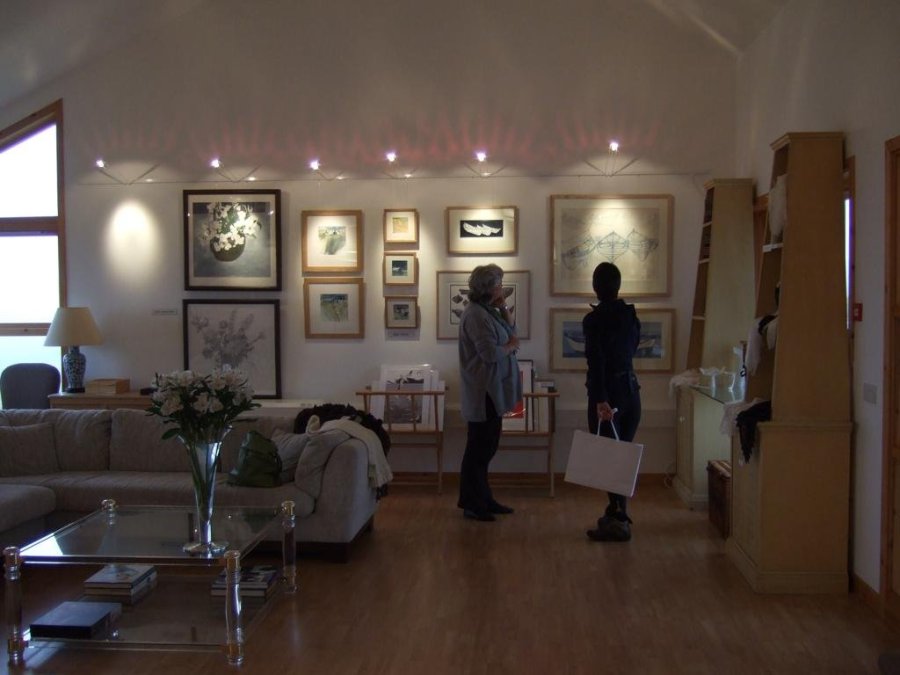
The Shetland Gallery. Photo Lesley

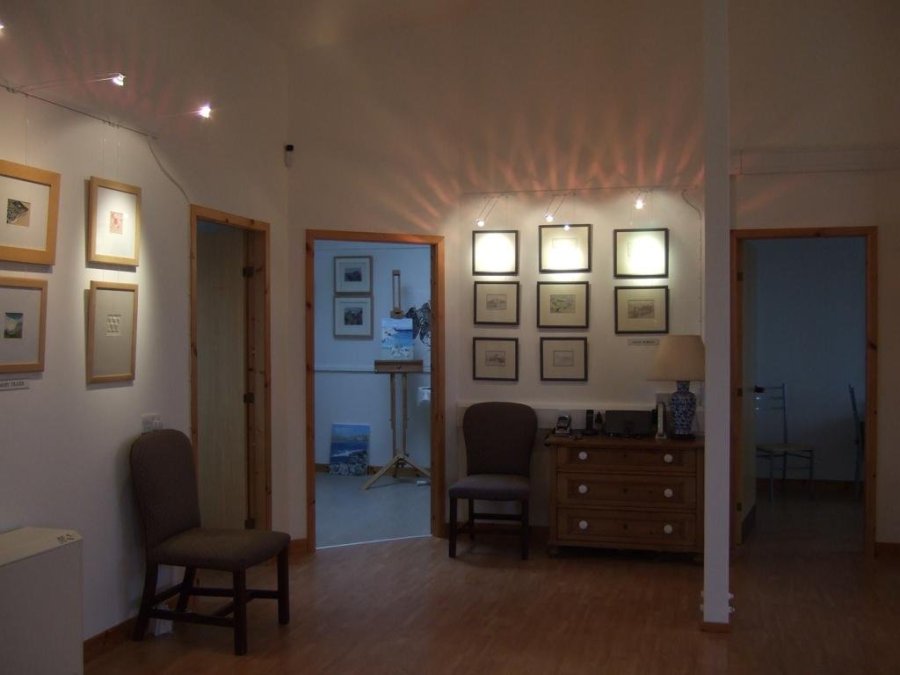
The Shetland Gallery is in Sellafirth, in the north of Yell. Allow yourself time to visit on your way from one ferry terminal to the other (see below) as it is well worth it, showing contemporary art and ‘high-end’ craft work. There’s a wide range of work, from the moody landscapes of Anne Bain to the bold linocuts of Keira Jem Thomson.

The Yell Museum, The Old Haa, is also well worth a visit.

The Shetland Gallery. Photo Lesley

Beaches, buildings and a bounty of geological features

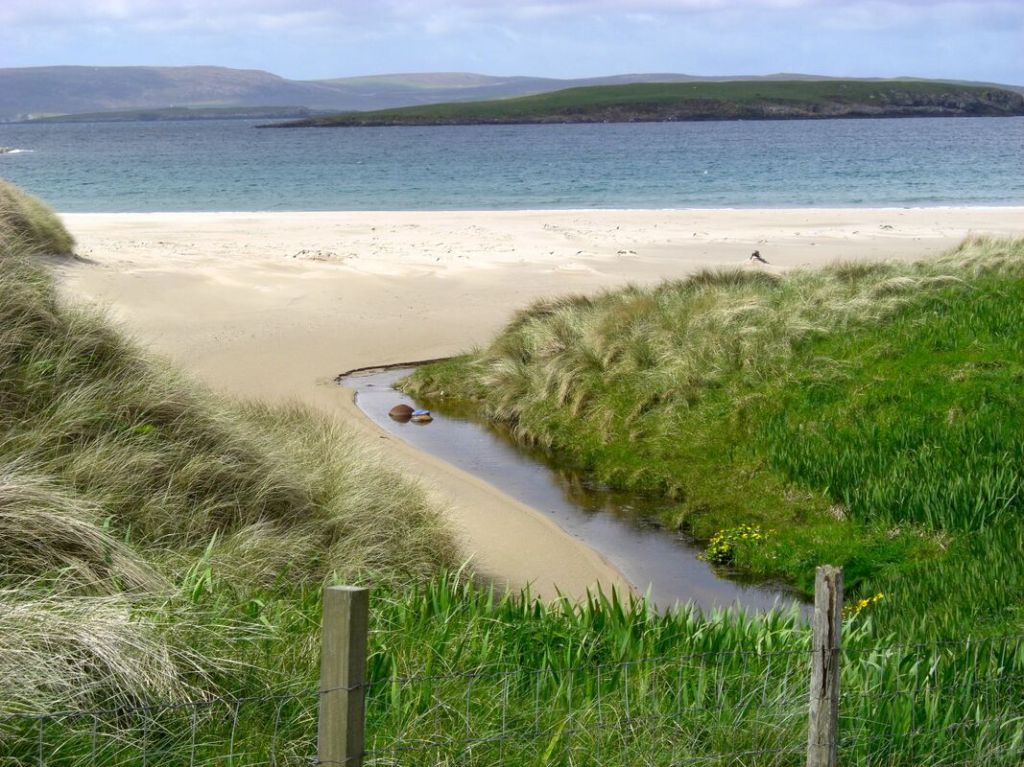
West Sandwick Beach, Yell. Photo Laurie Goodlad, Shetland With Laurie

Yell offers particularly clean and beautiful sandy beaches at West Sandwick, Brecon, Gossabrough and Hamnavoe, and there are dunes and machair where you might find the semi-precious stone, garnet, and mineral, mica. St Magnus gives his name to the church at Hamnavoe dating from 1838. You can find out more about him here. Birrier has an Iron Age fort as well as a bonnie bay. The Moine Rocks on the Lembister coast have striking white veins of granite-pegmatite, and there are countless other geological features to feast your eyes on. Thanks to Shetland Visitor for lots of this information.

Flowers, Shetland. Photo Lesley

Burra Ness where there is cairn, ancient boat ‘noosts’ and the remains of a broch on the northeast promontory. Gloup Holm has a large seabird colony and Ladies Hol is a good place for seals and sea birds and is a well-known cliff for puffin burrows.

Shetland Visitor

If you visit too, look out for arctic terns (tirricks) and merlin, just two of the birds found on Yell. And, it is famous for its flora, including two carniverous plants: butterwort and sundew. Will the peat continue to nurture old plants and pollen after so much of it has been dug up to make way for massive wind turbines? There has been intense local feeling against the proposals of the business Viking Energy and it looks like it will go ahead even though the local people will get none of the electricity or the profits. There is no doubt that it’s going to take x amount of years to recover the damage done to the environment. You can see lovely shots of birds here spotted on Unst (despite the title of the blog – East Sussex, England)

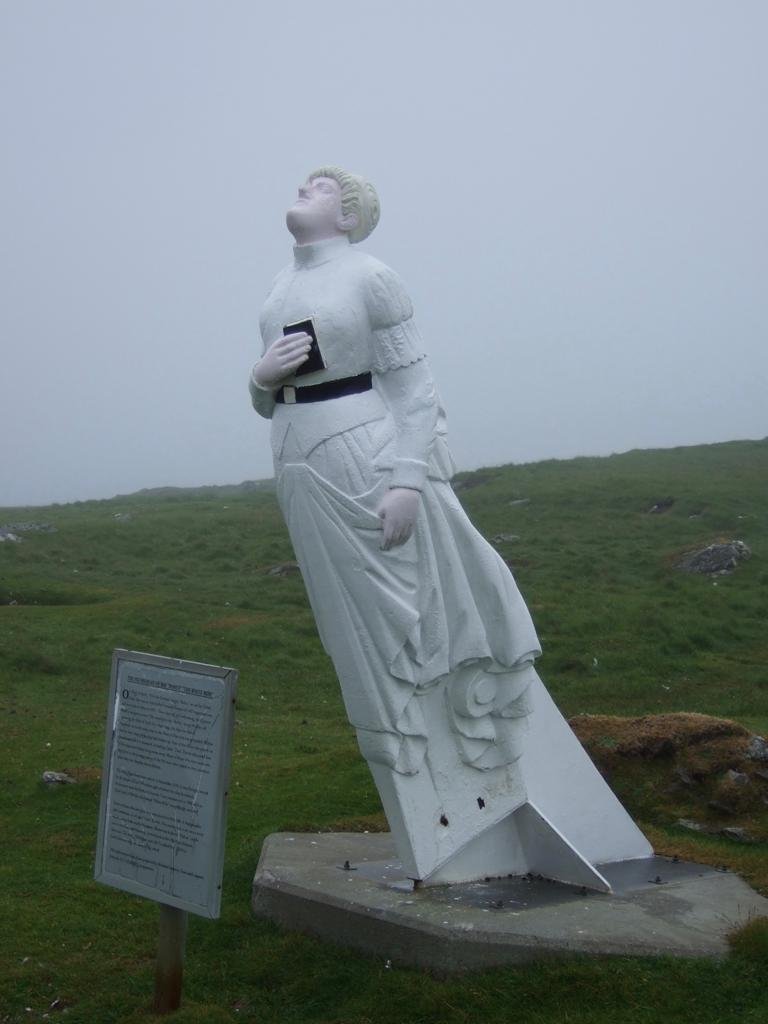
The Widden (White) Wife. Photo Lesley

The White Wife (Widden Wife) is at Otterswick (ON Óttarsvík – from the man’s name Óttar). She is the figurehead from the German training ship Bohus, wrecked in 1924. Four lives were lost from a crew of 38 plus a stowaway. A black marble commemoration slab, set in stone from nearby Hascosay, is in Mid Yell kirkyard. I have, sadly, come across many of these memorials to those who have died in fishing accidents and the women and children who were left behind, as of course, Shetland is predominantly a fishing community.


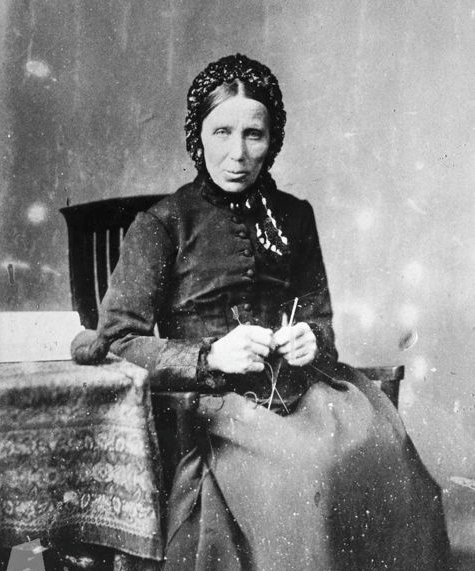
Photograph of Elizabeth Mouat. 1886. Image: Shetland Museum and Archive

A happier story comes to us down the ages – what a survivor!

‘In 1886 Elizabeth Mouat, a sixty-year-old Shetland lace knitter, was in a boat named the Columbine, travelling from one end of Shetland’s mainland to the other alongside a small crew. A storm threw the boat off its course and the crew jumped ship, swimming to the shore and leaving Betty Mouat, and the forty lace shawls she was transporting, alone on the boat.[1] She drifted for nine days in the North Sea and eventually arrived, alive, in Norway on 7 February.’

[1] Davies, K., ‘Born Survivor: Betty Mouat’, 60 North No. 3, Autumn 2012, p. 4. From
‘Fingers as clever as can be yet’: Shetland Lace and Women’s Craft in Victorian Britain by Isobel Cockburn

Music in Shetland

Music is popular throughout Shetland, especially that of the fiddle (traditional violin) and Margaret Robertson is a local fiddler, pianist, music teacher and composer. Her website tells us that she ‘grew up in Yell in a house where an evening without music, live or recorded, was a rare occurrence’ and I know from my conversation with Helen Robertson on Northmavine, that the network of community halls around the islands serves as an incredibly popular circuit for the smaller bands and solo artists who play at the annual Shetland Folk Festival and the Accordion and Fiddle Festival in Lerwick. Fiddler extraordinaire Aly Bain, and rock musician and songwriter Astrid Williamson were both born on Shetland and have achieved fame outside their home country. More about Astrid. The Mareel in Lerwick is the main music venue and here is some more general information from Shetland Arts about the scene.

How to get there

To get to Unst you have to go via Yell. Here are the stages: Toft on the Mainland across Yell Sound to Unsta on Yell, then transfer to Gutcher (also on Yell), then across the Bluemull Sound on a second boat to Belmont on Unst. (Note: Some of the boats go to Fetlar (denoted with ‘H’ for Hamars Ness on the timetables).) There are frequent, daily ferries to Yell from the Mainland. Here are the ferry timetables. A morning bus service leaves from Lerwick at 7.50am, going past the ferry terminal. There is an afternoon bus as well, leaving at 2pm at weekends and 2.30pm on weekdays (timetables can be found here).

Official tourist websites: Unst.org (includes videos about Wool Week, The Reel Festival, and Unst whisky) and shetland.org

The force of the wind is difficult to resist, the screeching of several thousand seabirds is a repetitive din in the background and the drama of the ocean surrounding me is all-consuming. I’ve spent the last couple of hours strolling between sheep, gawking at the vast spectacle of the Isle of Unst’s coastline.

A good Unst blog, Travels with a Kilt

Quoys, Unst a film poem by Roseanne Watt on YouTube

Scottish Field on Unst includes Where to Stay

A Crofter’s Life film by Jenny Brown National Library of Scotland

Whalsay and Bressay

All this week I have been in conversation with women from the Shetland Islands and travelled, in my imagination, to the places where they have lived. Two of my conversations have influenced my (virtual) itinerary: Leah (from Shetland Islands with Leah) and Christine De Luca. So, I made my way from Northmavine (where I met Helen Robertson), eastwards to Whalsay, where Leah lived shortly after she was born, and then in a southerly direction, via Lerwick where she was brought up, to Bressay which she knows as an adult, and where Christine also lived when she was a baby.

Whalsay

Whalsay from shetland.org

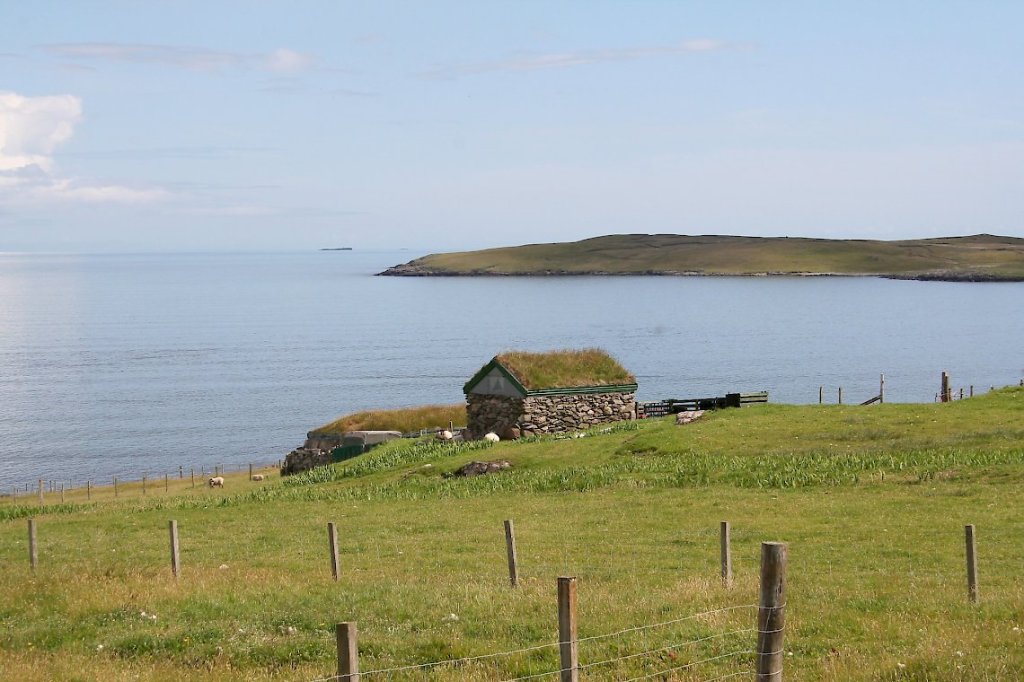
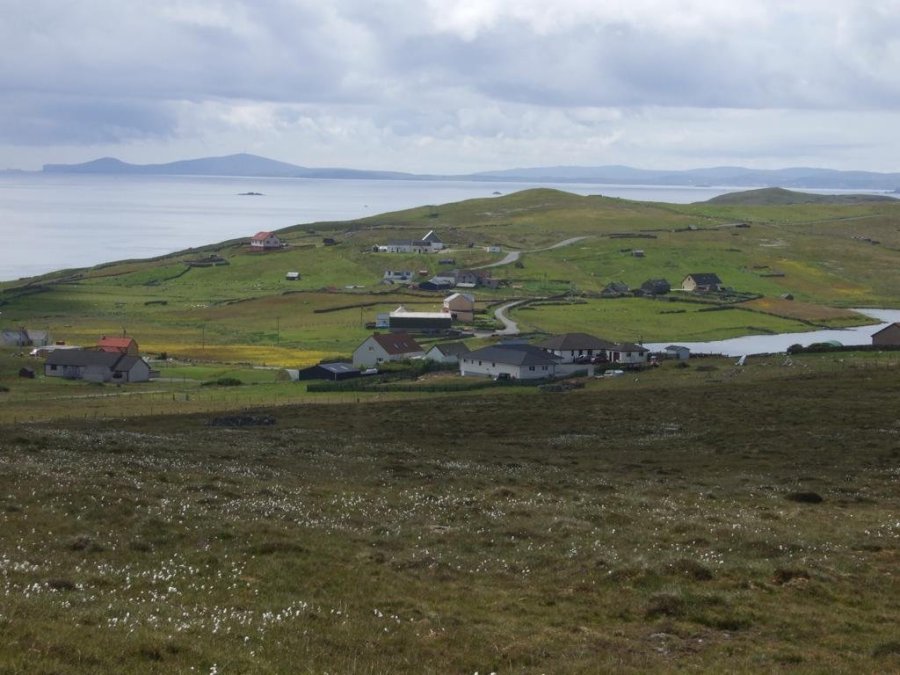
Whalsay is a small isle, 5 x 2 miles, east of Vidlin. There are even smaller islands between it and the mainland: 3 Holms (Wether, Score and Bruse) and 2 Lingas (Little and West). Fishing is its focus and Symbister harbour its hub. Boasting a Whisky Heritage Centre, golf course and swimming pool, my reason for visiting was the possibility of spotting sea mammals, whether from the ferry (see below) or as I hiked. I set off, anticlockwise, along the road past the Loch of Huxter and made a detour to the Ward of Hevadafield (61 m).

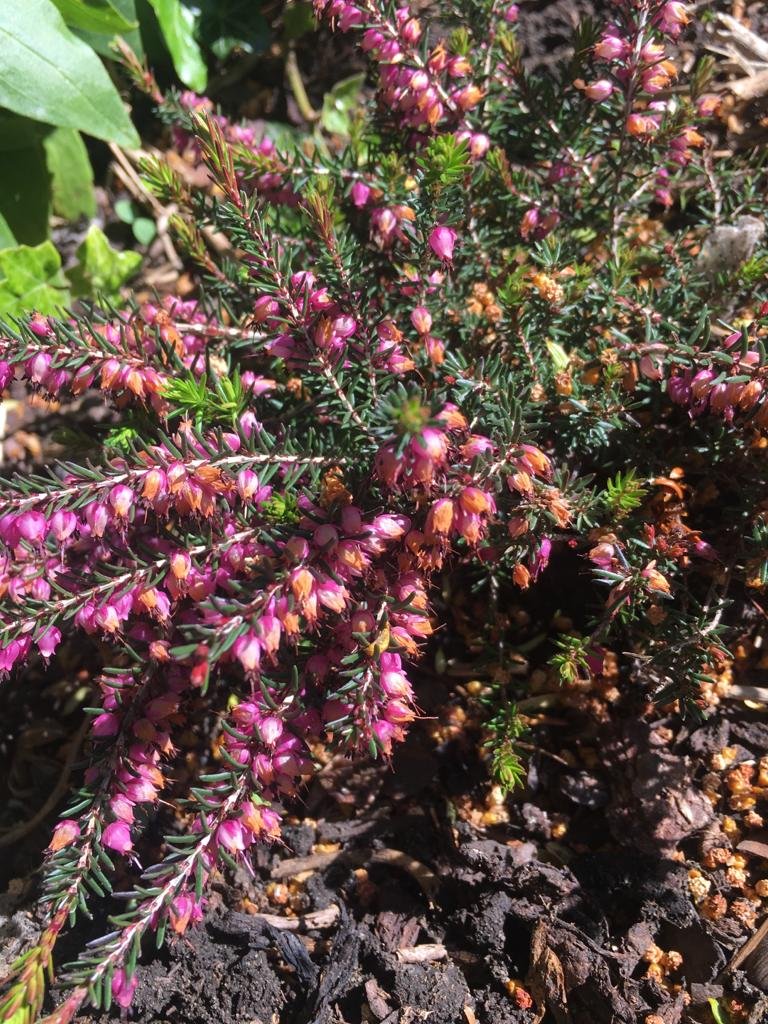
Heather (ling). Photo Sally Freedman

Back on the tarmac, I passed Nuckro Water opposite Vats Vord and once I arrived in Ibister, I curved around to Nisthouse and down to the Ness with its rocky coast and view of other outlying islands: East Linga (from ling meaning heather), Ibister Holm (a holm is an islet), Mooa and Nista. The Vikings called it The Island of Whales, so I was hopeful, but they were dashed – not today. I would, however, agree with another of its monikers: Da Bonnie Isle. Poet Christopher Grieve, aka Hugh Macdiarmid lived on Whalsay and I took a leaf out of his book and lay myself down.

‘Nothing has stirred
Since I lay down this morning an eternity ago
But one bird. ‘

From On a Raised Beach
Whalsay. Photo Lesley Skeates

The familiarity of one’s locality and the effect of pacing the land, can contribute to a sense of belonging. Knowing the area, recognising the landmarks and retracing your footsteps can evoke a visceral reponse. Leah said, ‘When we hike, we say, ‘Doesn’t it just smell like a Shetland night?’ It’s the freshness in the air, and then the heather and the sea mixed in there. It’s really unique, because I have been in the hills throughout Scotland and it’s different. There’s an immense sense of calm when you reach your destination. The view is mindblowing and the feeling of contentment is overwhelming. I hope that other people feel that when they come here. I don’t know if it’s just because I am so thoroughbred Shetland, so in love and passionate about where I’ve come from, but I hope that’s the feeling that people who visit here get too.’

Whalsay. Photo Lesley Skeates

The ferry terminal for Whalsay is at Laxo, a 20-mile drive north of Lerwick. The crossing to Symbister takes 25 minutes and the service is frequent, although booking is advised in the peak season. View timetable here.

shetland.org
Whalsay. Photo Lesley Skeates

Leah told me about when she was going to university in Edinburgh, how excited she was to be on the Scottish Mainland, aged 17. Her dad saw her and ‘the massive, biggest suitcase we could find in the shop’ off at the boat, and she negotiated the long journey, alone, going straight to the University to enroll and get her ID card. She said, ‘It was an overwhelming day’. Then, at the first class, she had to stand up and speak in front of the group. On hearing her, the tutor asked, ‘Where is your accent from?’ and ‘in front of everybody he said, “Is that where they still ride about on donkeys?” ‘This rude, racist, remark was not designed to make Leah feel at home or as if she belonged in her new surroundings. All such ill-informed comments separate, set one apart and, of course, belittle and shame.

Whalsay. Photo Lesley Skeates

Belonging means acceptance as a member or part. Such a simple word for a huge concept. A sense of belonging is a human need, just like the need for food and shelter. 

Psychology Today
Whalsay. Photo Lesley Skeates

In direct contrast, Leah went on to describe a Shetland community event which does the opposite – welcoming and fostering belonging. ‘Has anybody told you about Sunday Teas?’ she asked me. ‘I think this type of thing originates from the fact that Shetland was the last place in the country to have TV. It wasn’t that long ago, so the only thing you had to do was socialise and Shetlanders do tend to be very social people. Everything revolves around food!’

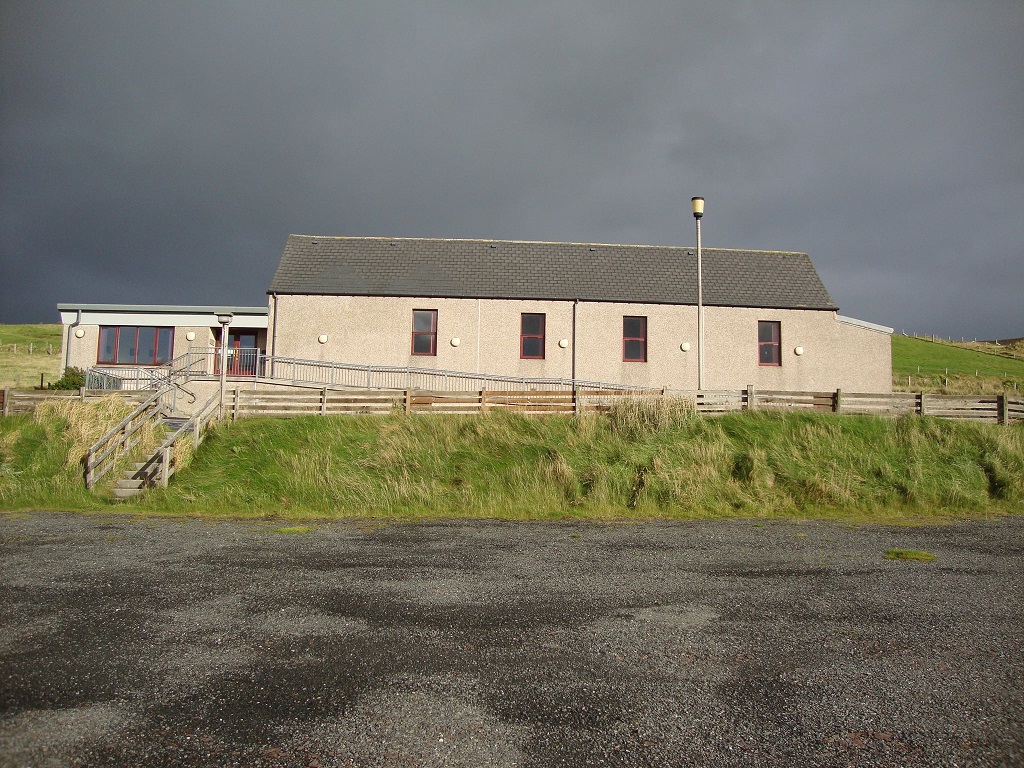
Bonhoga (it means ‘my spiritual home’) Gallery is in Weisdale Mill, a Shetland Arts venue east of Bixter (see bottom of blog for details) Bonhoga Gallery link

Leah continued, ‘Through the summer months everybody bakes and they drop it off at the hall, and between 2 and 5pm, you go, pay at the door, and there’s an absolute spread of homebakes … you fill your plate, get your cup of tea and sit with whoever. It’s not tables of 4, but of 8, and you all sit together, have a chat. People will drive, for example, from Lerwick to Bigton in the south end, or Bixter out west (Aithling), both 20 minutes or so drive. Every week they are advertised in the local paper and everyone goes: from new born babies to 90 year old women. We don’t have ball pools or private nurseries or bowling, so the community halls are used for toddler groups; Friday night take-aways; anything and everything. It’s all done by volunteering, so you’ll get your pinny on, you’ll serve tea and sandwiches, there’s no airs and graces, everybody is equal in a community hall, mucks in, helps out and has a good time.’

Bigton Community Hall from their Facebook page

It sounded to me as if going to the Sunday Teas would not only situate you in a place and a group where you can belong, but by engaging regularly with others, it is tantamount to saying, ’Here I am, I am part of this group, I belong, want to be let in and recognised as part of the community’. These halls and events obviously fulfil a vital role.

Isbister (Whaley)

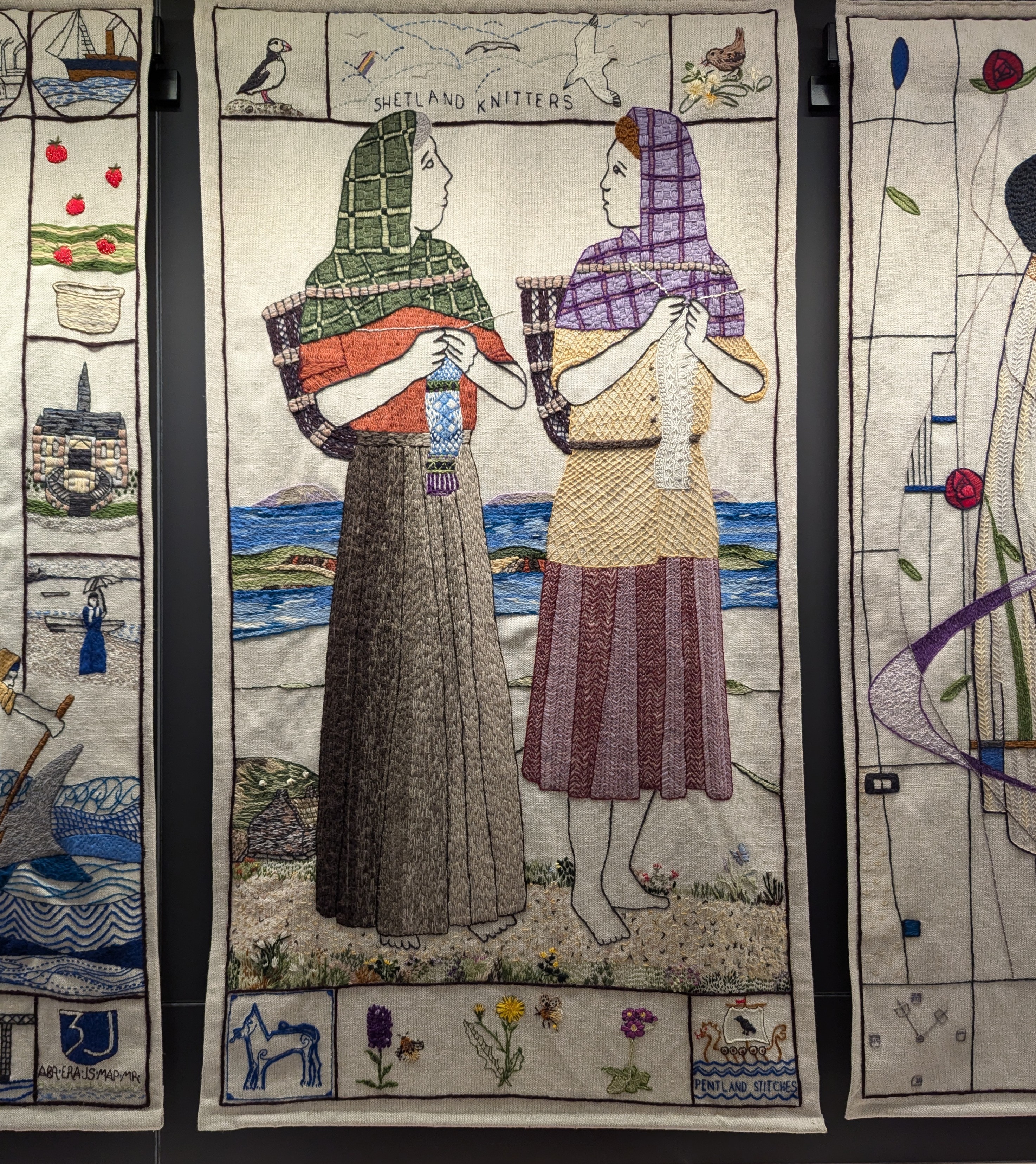
“In rural communities all over Scotland, women worked hard doing menial, muscular tasks. They did the back-breaking work of weeding, shawing, milking and bringing fuel for the fire. This image shows two sisters with creels on their backs. They chat as they walk, knitting without a glance at what their practiced fingers are doing.” from The Great Tapestry of Scotland #115

Bressay

Bressay, Shetland. Photo Liza Green

Bressay is also on the east side of Shetland, further south than Whlasay. Only very slightly larger, it is a mere 2.8 miles (4.5 kms) from Lerwick, taking 7 minutes on the ferry! Boasting a Heritage Centre, restaurant and post office, it is the Speldiburn cafe which attracted my attention.

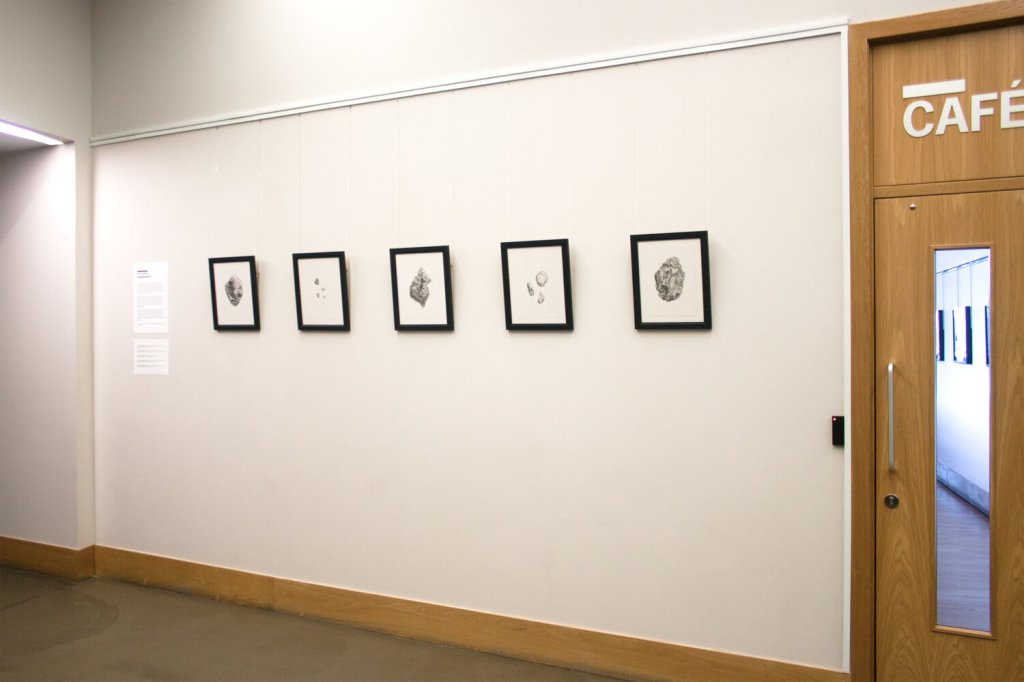
Aimee Labourne’s drawings of Plastiglomerates at Speldiburn exhibition space, Bressay. Photo from AL’s website

Plastiglomerates are, ‘evidence of coastal change. A proposed new kind of ‘human-made’ rock, plastiglomerate consists of a mix of melted plastic debris and natural sediment, and samples have been found on shorelines across the world. These uncannily organic forms are however but a visible part of a terrifying ocean plastic pollution problem.

from AL’s website

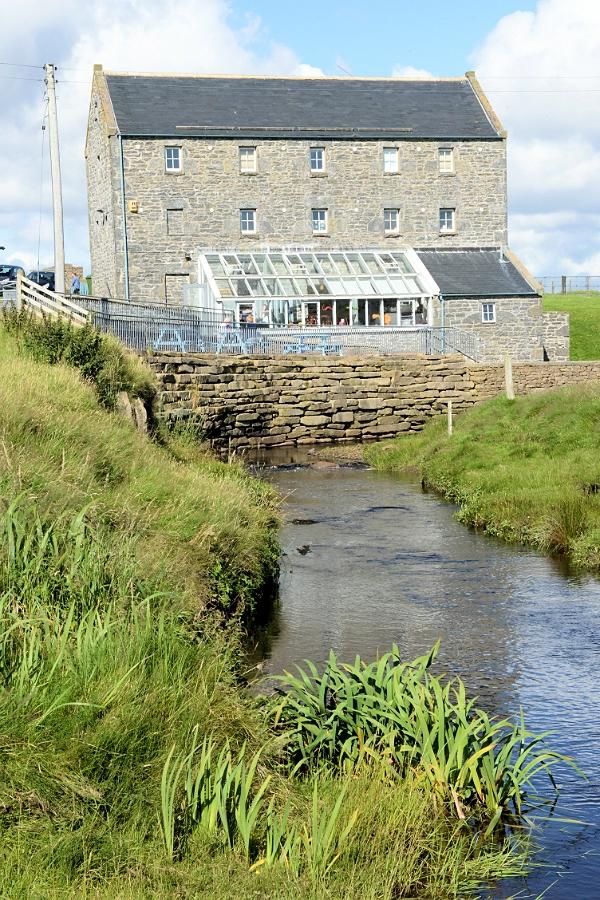
As well as food and drinks, there is a good-as-new shop, community lending library, a multi court for kids to have a kick-about, a bulky waste recycling scheme, and upskill and re-use projects. It is run by volunteers from the not-for-profit group who took over the old school premises, and like a lot of similar organisations during this Covid-19 crisis time, it is currently making food for delivery or take-away. There are also art and craft studios here, an exhibition space and Aimee Labourne’s workshop.

Wildlife on Shetland

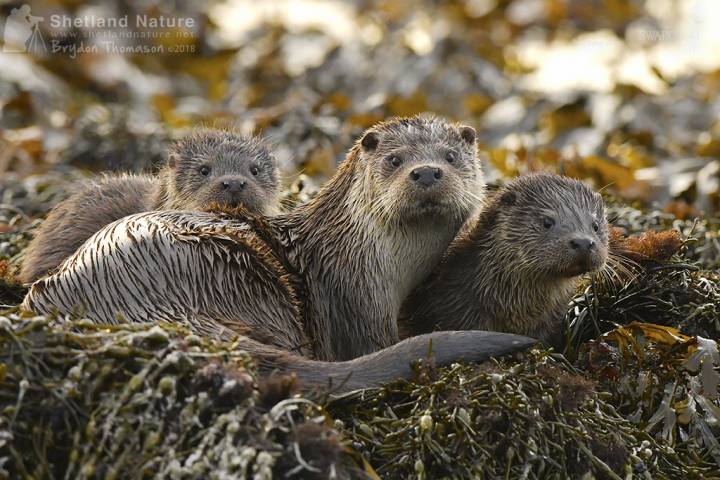
Otters from Shetland News. Photo Brydon Thomason

Video of otters in Shetland from Britannica. Billy Mail andMolly, a Shetland otter in the National Geographic Review The Guardian.

Once again, I make a bee-line, on foot, for the coast. With a promise of otters, I could barely contain my enthusiasm to leave the towns behind. Part of the weasal and badger family (Mustelidae), apparently Shetland has the highest density of otters than anywhere in Europe and I understand that Brydon Thomason is the go-to man for a tour and any information about them. His website is here.

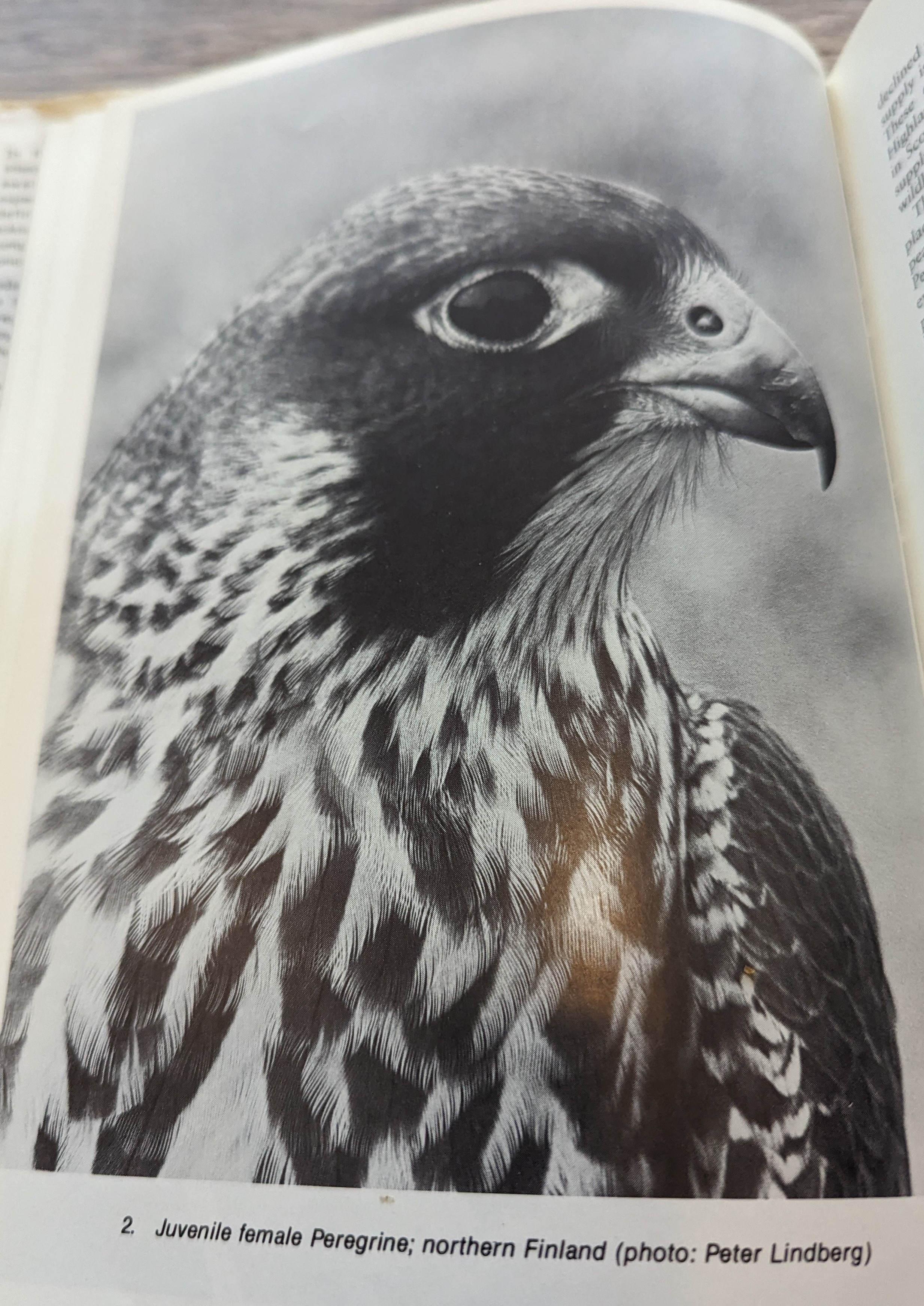
From The Peregrine Falcon by Derek Ratcliffe

Peregrine falcons have a history on Shetland and in his book, The Peregrine Falcon, Derek Ratcliffe states, ‘Shetland … another complex archipelago, with a huge total length of of highly indented coast, much of it rock bound. … Saxby in 1874 said that many pairs still remained to breed and that there were several on Unst. Evans and Buckley in 1899 wrote that they were ‘distributed pretty commonly’ over the Shetland group. The Venables wrote in 1955 that they knew of 11 breeding pairs …’ They are now a protected species in Scotland, and have been seen in Shetland (2025).

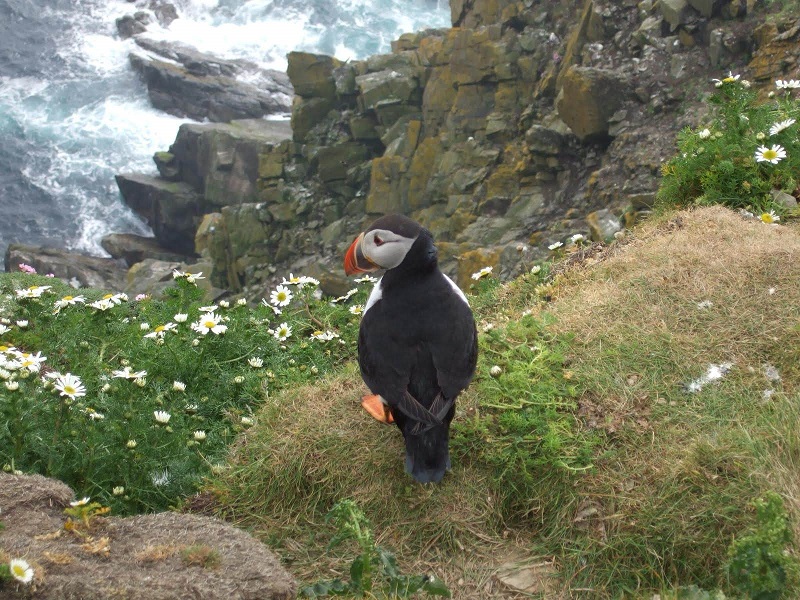
Noss Nature Reserve is to the east of Bressay, home to fulmar, terns, gannets and puffins. Photo Lesley Skeates, taken near Scalloway

On Shetland, a puffin is known as a tammie norrie and an otter as a dratsi.

Personal History

As I walk, I reflect on my own history. I remember, several years before I actually left home, how ready I was to run off across the fields and see what was over the hill. I went to college in London as soon as school ended, and straight to Edinburgh after that. Although I stayed some years in the Forest of Dean (Gloucestershire), Bristol (England), and Cardiff (Wales), I have now lived for over 35 years in the so-called Athens of the North. I don’t think I knew, when I was 18, that this would mean I would never really belong anywhere again – not English, except by birth, not Scottish because I wasn’t born there – that might be why I was so sure about voting to stay in Europe, somewhere that encompassed both places but gave me an overall identity – and why I feel our leaving the EU so keenly.

History

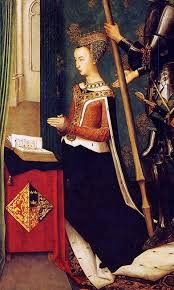
Margaret of Denmark whose dowry was Orkney and Shetland in 1468. Photo Wikipedia

Shetland was incorporated into the United Kingdom in 1707. Earlier in its history, it was inhabited by Neolithic farmers (3000BC), invaded by Vikings (around 800AD), and given to Scotland in lieu of a dowry for a Danish princess, (1468 James III and Margaret (see above)). Being a fishing community, membership of the EU is a double-edged sword for Shetland. On the one hand, ‘Leaving’ promises ‘unfettered access to some of Europe’s richest waters’ (Peter Geoghegan, 2017 Northern Exposure: Brexit reveals Shetland split accessed online 10.5.20), and on the other, ‘Staying’ will result in the withdrawal of European funding for projects such as the new fish market in Lerwick which is due to be completed this Spring. In the end Shetland narrowly voted to remain (6907 to 5315 with a 70% turnout Shetland Times).

Whalsay. Photo Lesley Skeates

Leah seems to have two homes now: ‘After university I came home and stayed with dad for a few months, but after you’ve not been in the family home for 4 years it can be a bit tricky, so I rented a little house in Bressay. It took me a while to adapt to it, I didn’t really feel at home for a long time because things had changed so much … on top of that, all the girls who had stayed in Shetland and hadn’t gone to university had settled down, got engaged and started families. I couldn’t just pop along and see all my friends who were still in Edinburgh. I felt quite out of place, and it took me a while to find out, discover who I was as an adult. Even though I’m from here I had to put in a lot of effort to feel part of Shetland again.’

Leah and Bressay, Shetland

An introduction to Shetland’s history

Whalsay. Photo Lesley Skeates

‘Belonging’ is a fascinating and tricky subject, one that I and other writers seem to repeatedly reconsider. Wendy Pratt writes about the Mesolithic Star Carr people who once visited Paleolake Flixton in Yorkshire at regular intervals. This ancient, now almost-lost body of water, is the titular Ghost Lake of her new book. The Star Carr people were nomadic (as most communities had to be back then) and she writes that they, ‘must have had a mutable sense of belonging and home. … The ritual deposits of hunting masks [found during an archeological dig] and the careful building of roundhouses have an edge of permanence. And in fact they were returned to, fixed and improved year on year. Perhaps ‘home’ for the Star Carr people was multiple, … That is a kind of belonging.’ (p5)

With my home on my back (and front!)

This speaks to me, having lived a modern, nomadic life for a while, and this virtual visit to Shetland throws a whole new light on ‘a sense of belonging’. Is it possible to feel that you belong somewhere, even if you’ve never actually been there? Does a deep engagement with place, even on a virtual level, allow you to feel a member of that community? What do you think? Please comment below if you would like to.

Walking on Shetland

Today, I am focusing on the natural landscape and walking in Shetland, together with some more about the local dialect. Once I have walked off the busyness of my mind, my body starts to relax and I start to be filled up again with the scent of the hawthorn and the surround-sound of the birds. Nature is my inspiration, endlessly fascinating whatever the season, especially in out-of-the-way places. Now, as I walk, I can hear the lilt of Shetland women speaking to me about home and a sense of belonging to their Islands, and find there is something reassuring and soft about it, something grounding.

I am pleased to be sharing Shetland with Leah who blogged about her walk on the Clift Hills (now not available). This range runs north / south on the west edge of the Mainland beside the Clift Sound which divides them from the islands of East Burra and Houss Ness.

Setting off on the Blett Road at 11am. Photo Leah

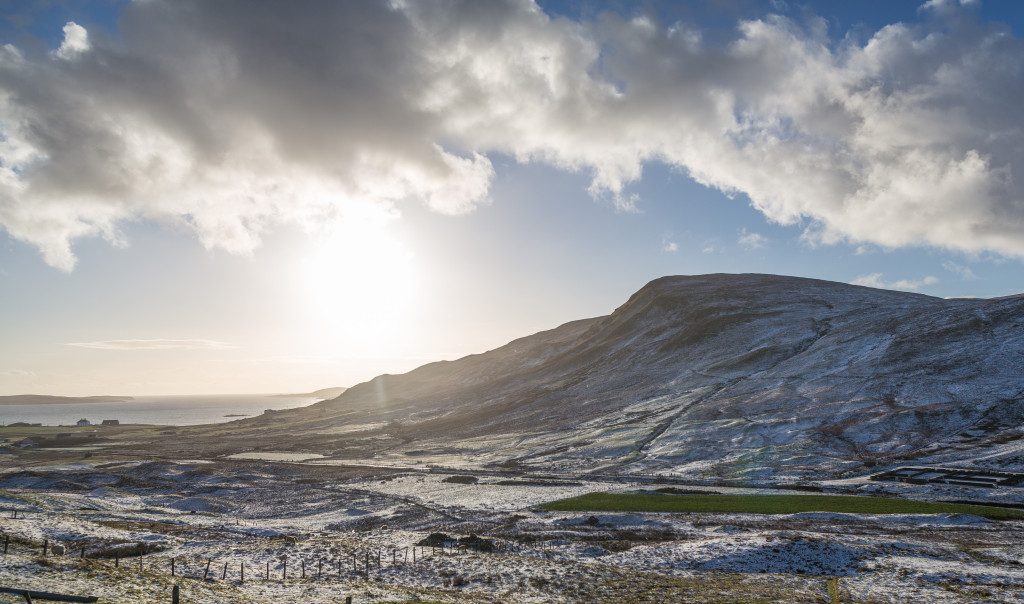
You will see that the snow is on the ground in this photo, but in fact today in Shetland we have 11 degrees and it’s really quite sunny – no white to be seen! Although not munros, the hills Leah climbs afford magnificent views: from Scroo (248m) and Holm Field (290) she could see the islands of Mousa, Bressay, Whalsay and Skerries to the east, while South Havra, Foula, Burra, Trondra, Scalloway, Tingwall (inland), Westerwick (near Skeld) and Ronas Hill on Northmavine are on the west. What sights!

Marram grass

Here’s a pointer towards some of the vocabulary she uses:

  • paet – peat, the springy turf-plus-earth which Shetland women traditionally carried on their backs in a kishie
  • kishie – a straw basket or creel which can be made from marram (photo above) or oats, which Ewen Balfour (wovencommunities.org) uses to make them nowadays
  • ganzies (or ganseys) – jerseys or jumpers (the book, ‘Threads of Life‘, by Clare Hunter, carries a lot of fascinating information about these clothes, who made them and why)
  • a guttery mess, a purt – anything metaphorically messy. It can be used to describe gossip: purt o clash (a bit of a conflict), for example
  • toorie – a woollen cap
  • cairn – there’s a photo in Leah’s blog! it means a pile of stanes – stones as a memorial or landmark. Often we will pick one up at the start of our jouney, carry it to the top and add it to the little tower that’s already there
  • bux – (a box?)I am not sure, but I am guessing from the context that it means something like walk or make ‘our way down’ the hill. If you know, please do leave the correct meaning in a comment below

Note: there’s a lovely old photo of a woman carrying a kishie on wovencommunities.org

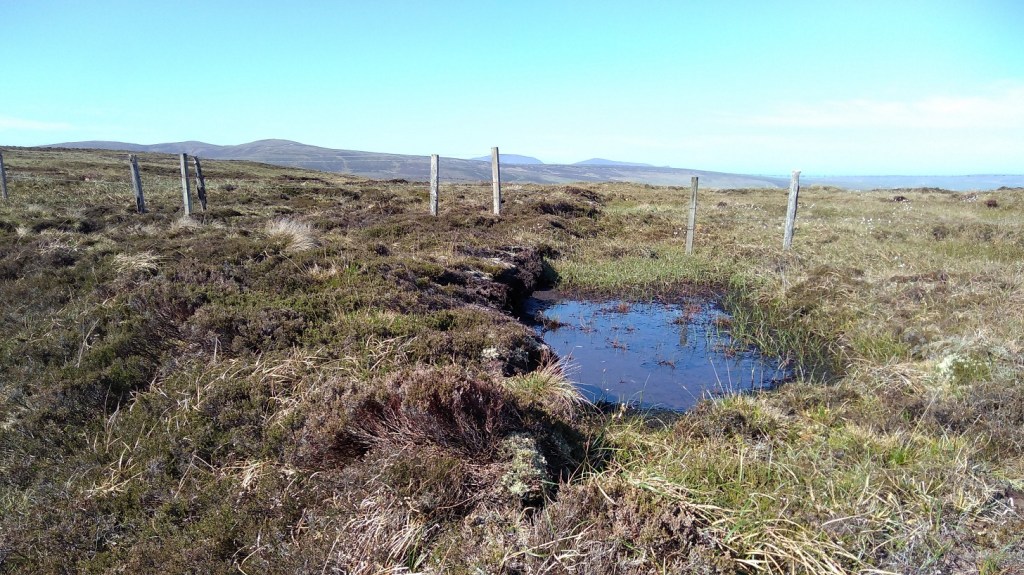
A typical peat bog, Orkney.

Leah’s blog is unfortunately now not available (updated 2025)

‘…when you are stood 953 feet above the world and the islands are literally shining with pride all around you; the clean, beautiful air so pure and unspoiled;….It is then that Shetland reminds you JUST how lucky you are to be stood on its incomparable land

Leah

Shetland For Wirds promotes the Shetland dialect – history, poetry, prose, drama and a dictionary, to name just some of what they offer.

A tiny photo of women carrying kishies (baskets usually carrying peat) 1900-1910. Image: Shetland Museum and Archives

Other walking links:

Shetland.org walking page ‘The walker has the rare opportunity to discover ancient historical sites dating back to Neolithic times…’

The light lay over Northland like a shawl from ‘some Landscapes’

The incomparable Walk Highlands website on Shetland. ‘Although the highest point is only 450m, Shetland is magnificent terrain for walkers, especially those who wish to explore away from the beaten track. The islands offer much of the best UK coastal walking…’

Shetland Amenity.org ‘There has been a traditional freedom of access across the isles with many places suitable to walk’, but I have read that there is so much protected wildlife on the isles that you are recommended to follow marked paths or even consult a guide, so that you don’t disturb the birds.

You may also like:

Research and Preparation About the route I took, Shaetlan dialect, and the aims of my Sense of Belonging project.

Leith to Lerwick Days 1 and 2 Charting my journey northwards and visiting Lerwick’s Textile Museum and Museum and Archives.

Home, Belonging and a Sense of Identity

Lerwick and Northmavine Days 3 and 4, in which I write about the Press Gang, visit The Old Tolbooth and view Da Lightsome Buoy, then travel to the north west to speak to Helen Robertson about her knitting projects.

Whalsay and Bressay About Sunday Teas, these 2 smaller islands, and about home and a sense of belonging.

Wildie and Lalla, An elegiac film by Catriona Macdonald, Shona Main and Angelica Kroger.