…and arrived rather later than anticipated. For a long time I had planned to start my next walk in Seville and posted on Facebook that I was looking for someone who would like Shiatsu in return for a bed. My kind friend, Gill, put me in touch with Pedro, a fellow Shiatsu practitioner, and he was more than welcoming with his excellent English.
It was good sleeping amongst the healing Chi of his practice room and I was delighted to listen to Jesús’ Cuban guitar for breakfast.
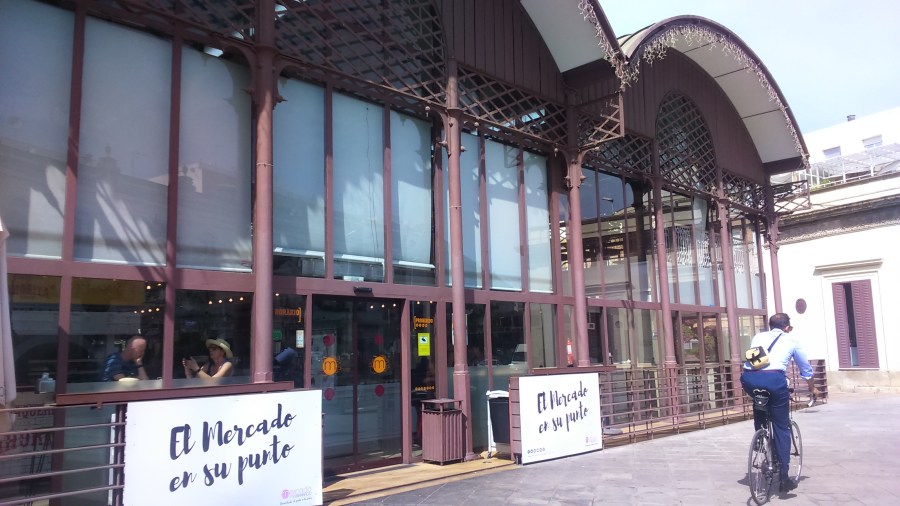
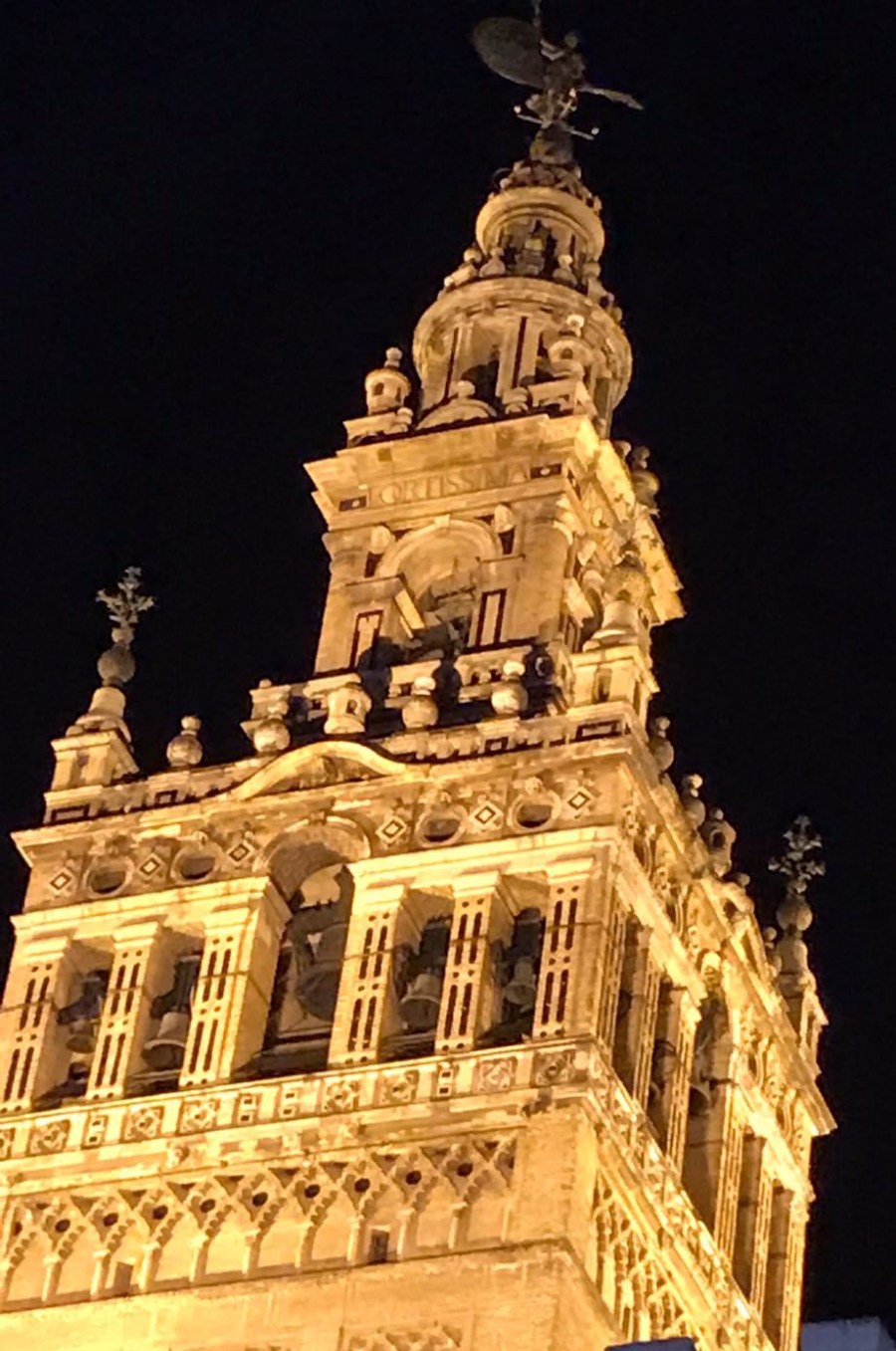
My tourist day in Seville began when I was dropped off at Plaza de Armas (where you can also find the bus station and super-market), and I started my walk along the River Guadalquivir towards the Mercado (market) Lonja del Barranco in Calle Arjona, next to Puente de Isabel II (one of the many bridges at regular intervals along the waterway).
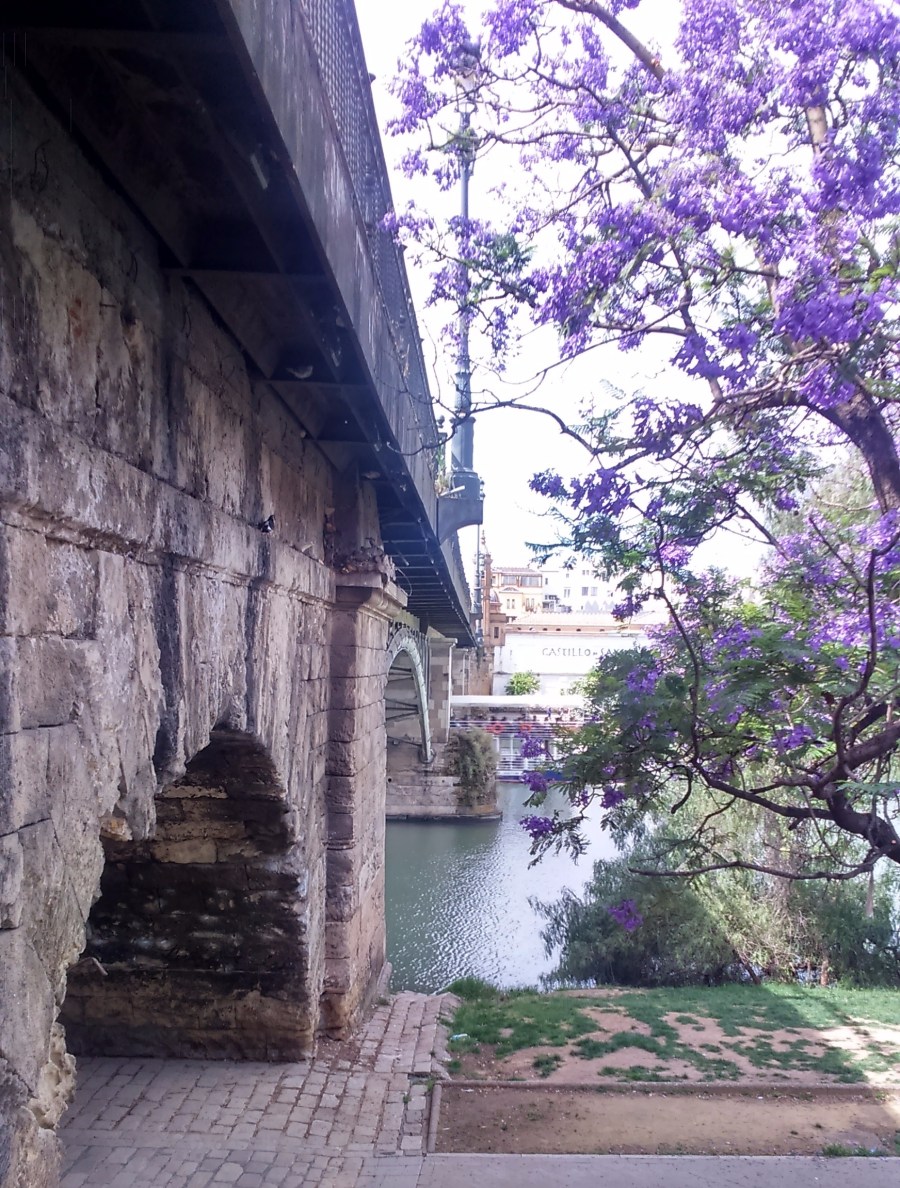
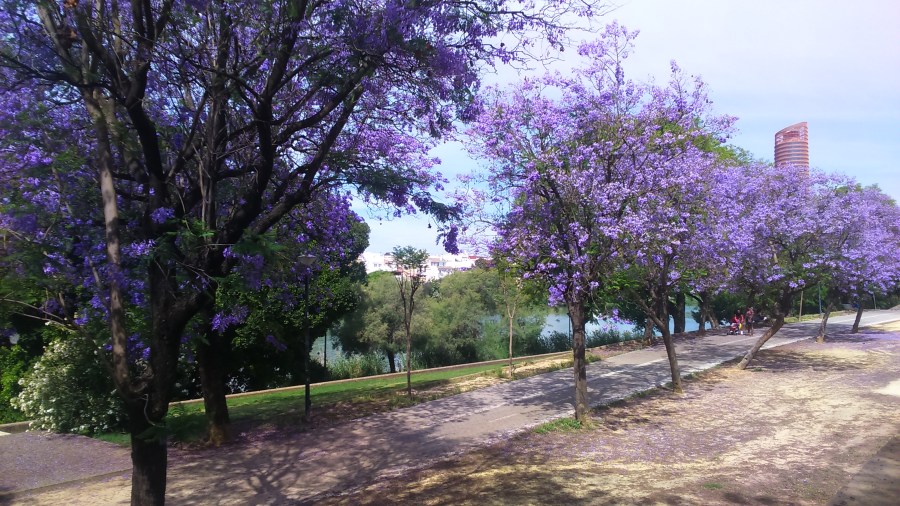
The mercado / marketThe Isabel Bridge where I will start the Camino Via de la Plata tomorrow.Beautiful Jacaranda trees with their strong purple flowers.
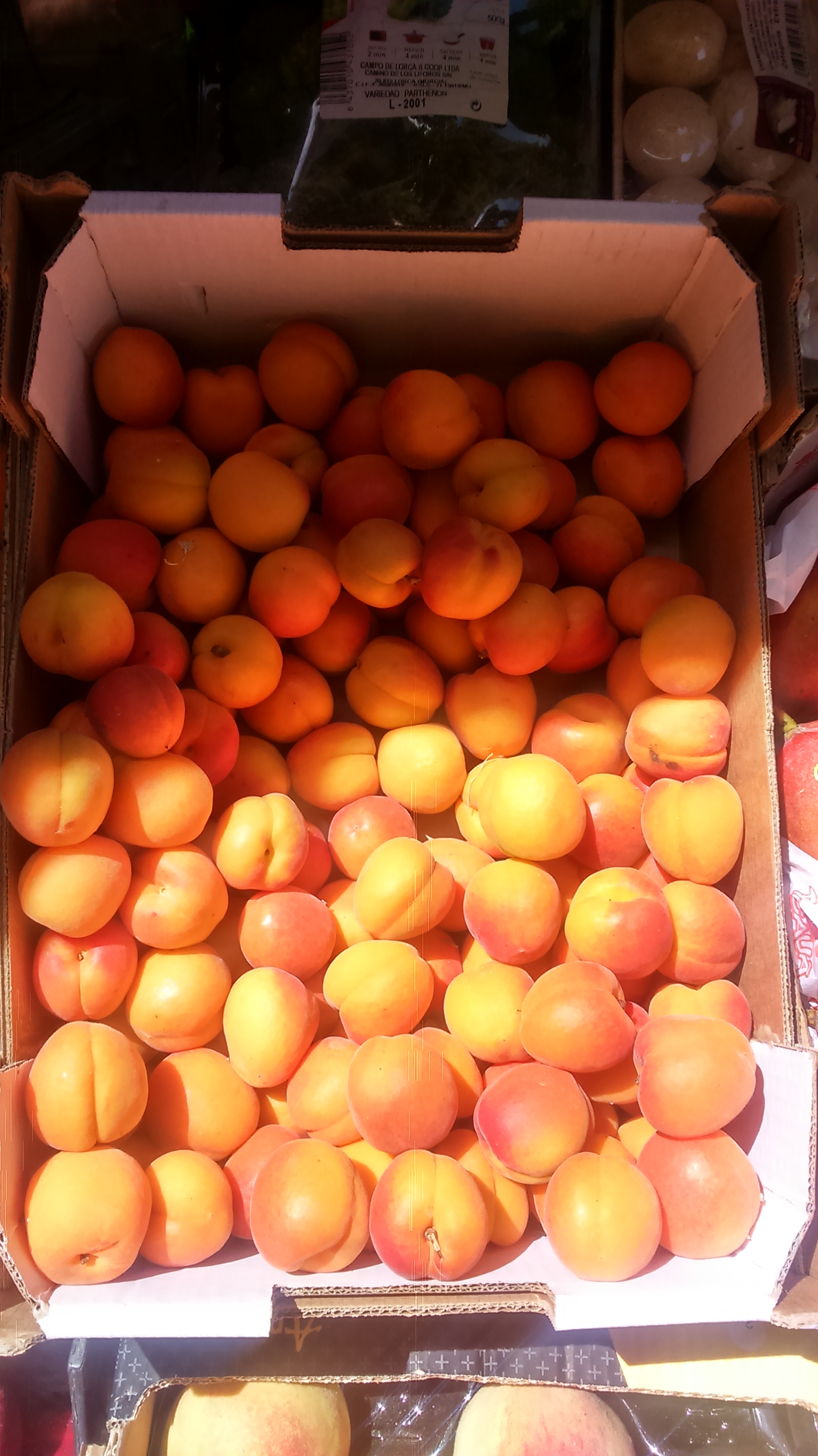
I sauntered past shops with gleaming apricots and sombreros for sale.
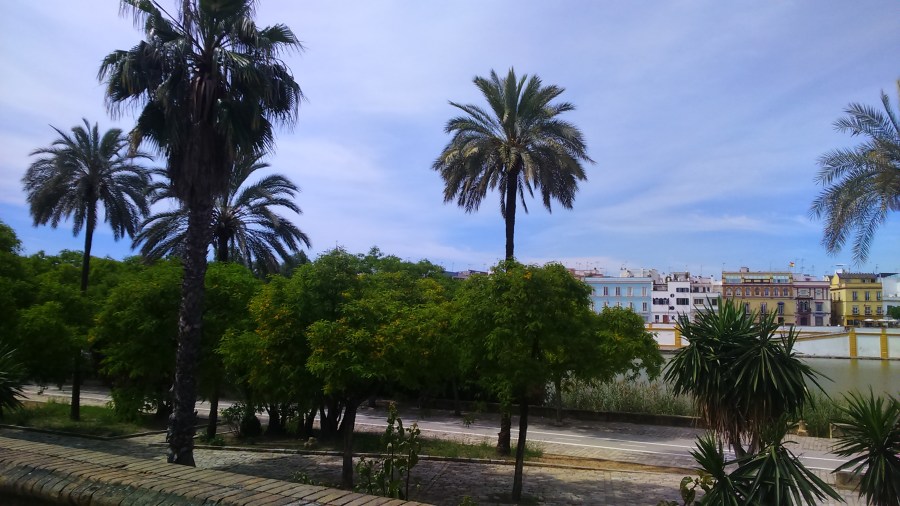
Then continued along the Paseo de Cristóbal Colón with its glorious colours: yellow earth, orange flowers and jade-green river. The subtle-sweet aromas, the sounds of school children, rhythms improvised with plastic bottles and hands making steel pan drum sounds on metal table and chair, with grass cutters in the background reminding me of those along the Brittany coast two days before.
Coffee in the morning.Monument, La Tolerancia by Eduardo Chillida.The temperatures were to rise to near tropical within the week.
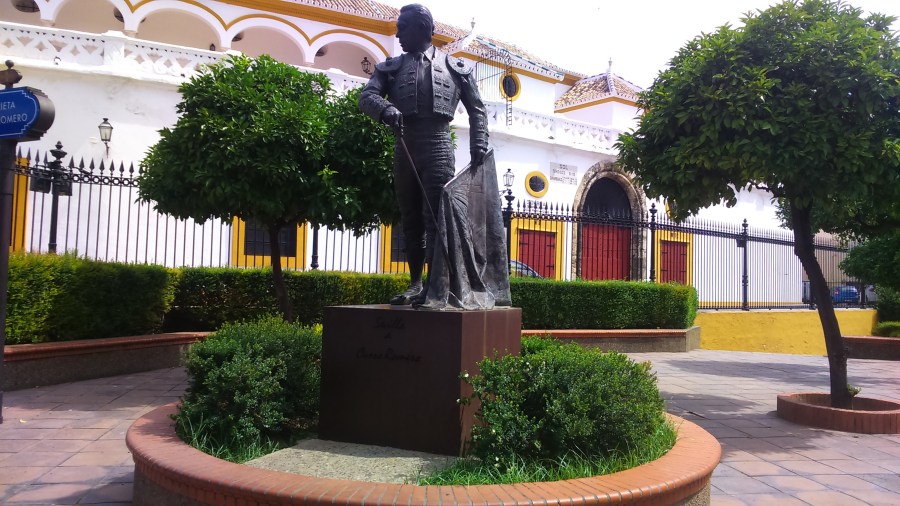
The architecture is quite different in this south-western corner of Spain. The yellow and white bullfighting stadium, deep pinks and orange of residential apartments are interspersed royal blue shuttered grandiosity. None of your Tobermory pale baby colours as on the Isle of Mull in Scotland.
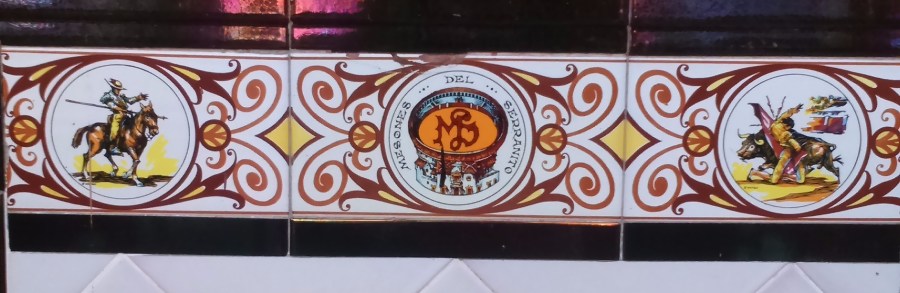
Decorative tiles.With plenty of statues of bullfighters.
Seville is a gay-friendly and open-minded place, extremely attractive, and full of tourists, artists and university students.
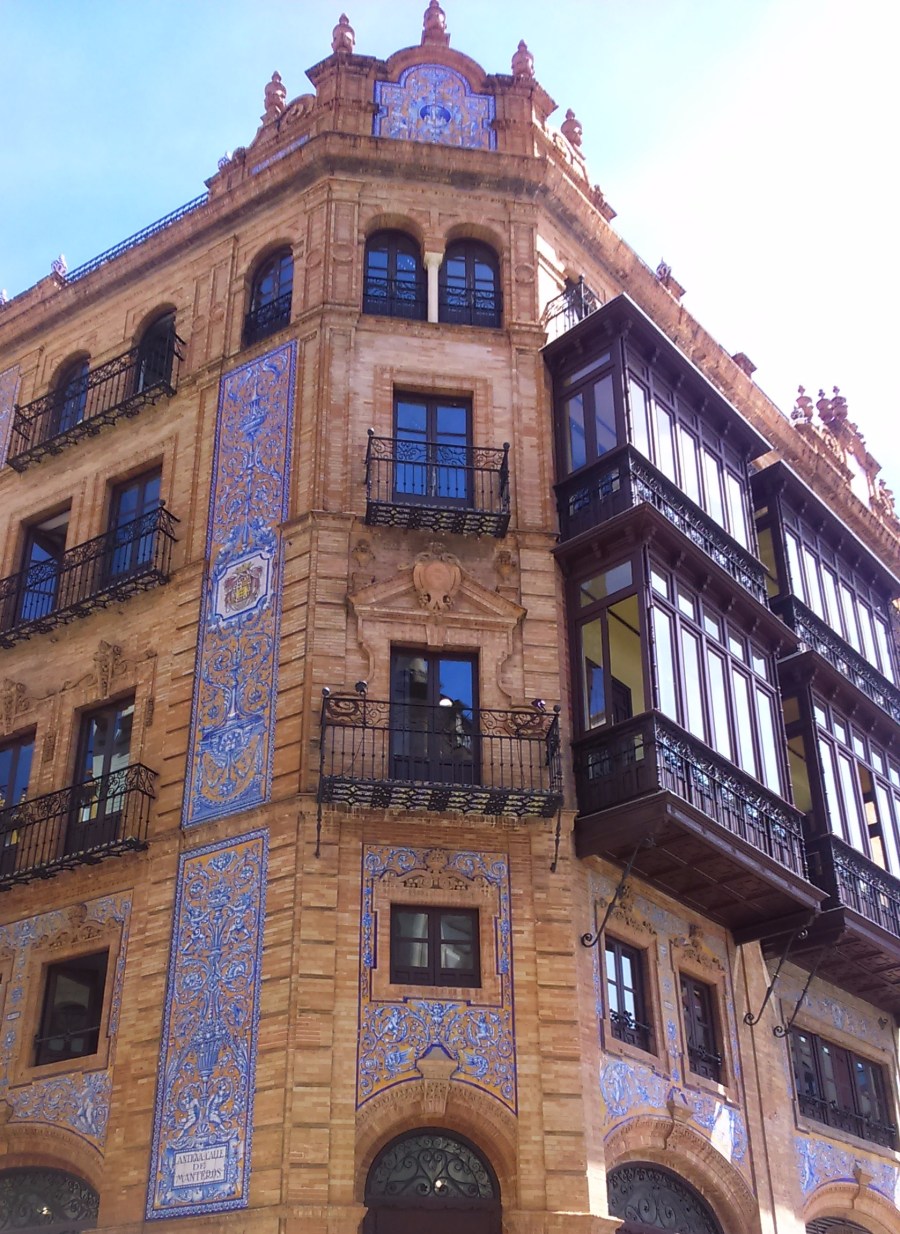
When I am in a city with so many famous sights, too many for a short visit, I have found a way to choose what to do: I get to a corner and I stand still and contemplate. If I like the look of the left-hand street I go there, if right then there. I have been practicing spontaneity and following my interest for many years in my Shiatsu sessions. Here my eyes draw me to a baroque exterior in the sunshine: a balustrade above oval windows, above decorated towers, beside naked torsos at the Instituto Geográfico y Estadístico in the Plaza Nueva next to the Plaza de San Francisco.
It was the unexpected details which caught my eye: the Banco de España (Bank of Spain) has cuboid trees; horses and carts sport shiny yellow wheels; while a woman squatted to take photos.
There was more English spoken around me than I had heard in weeks. It was swelteringly hot so that I was glad to get into the cool church.
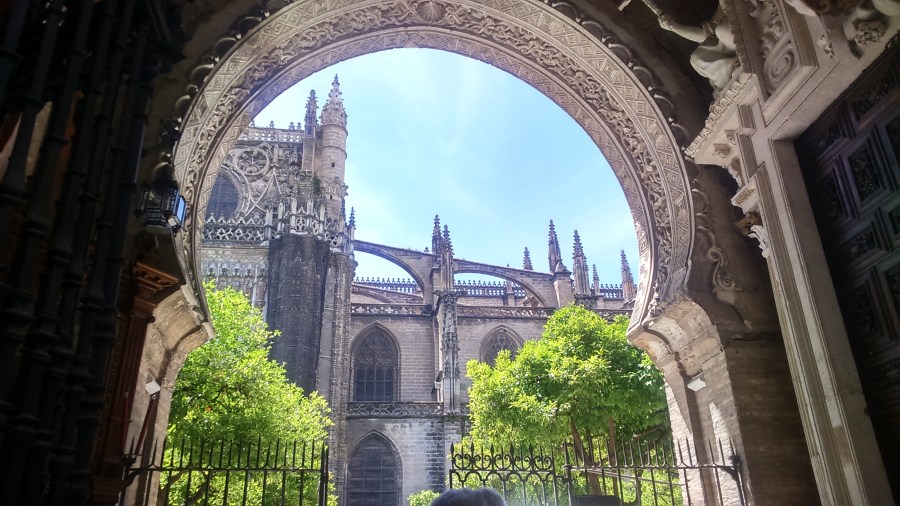
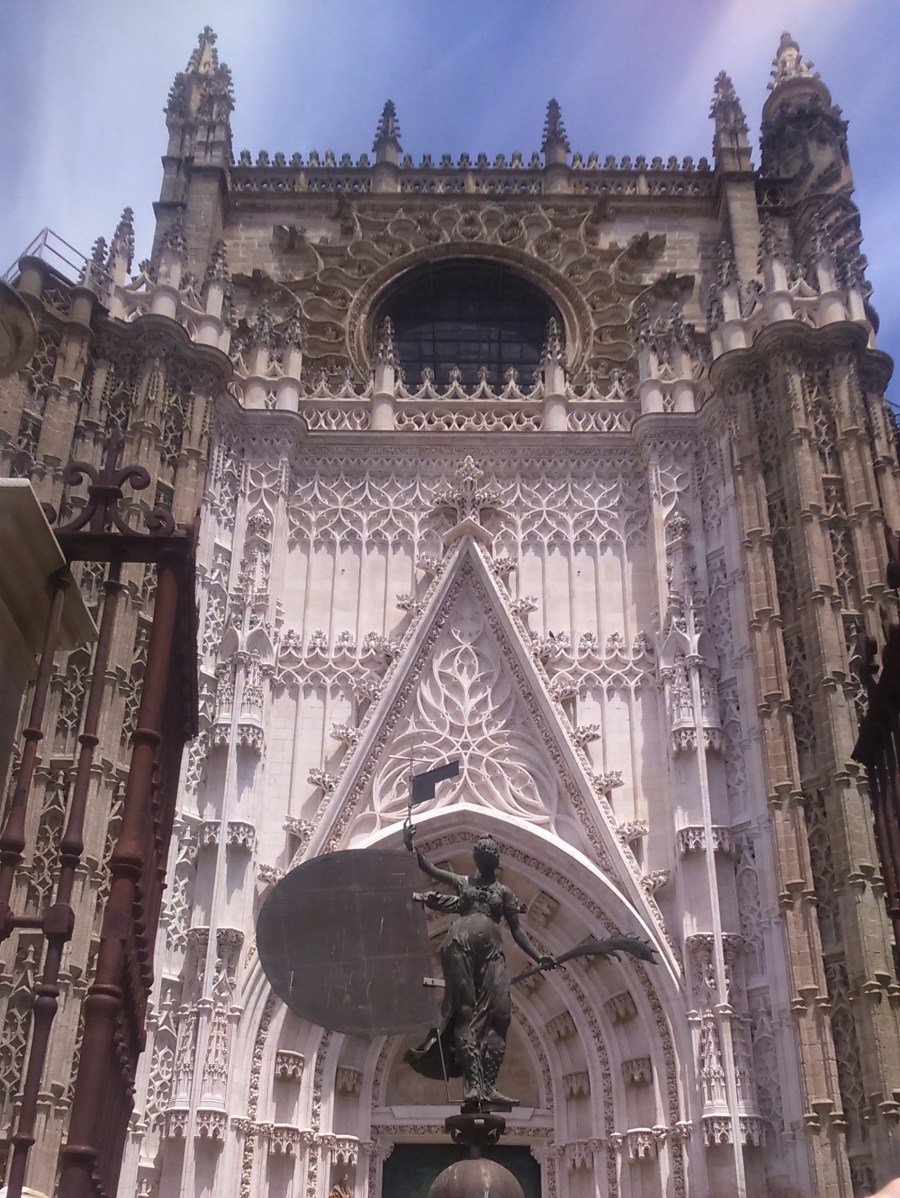
The famous Puerta del Perdon .
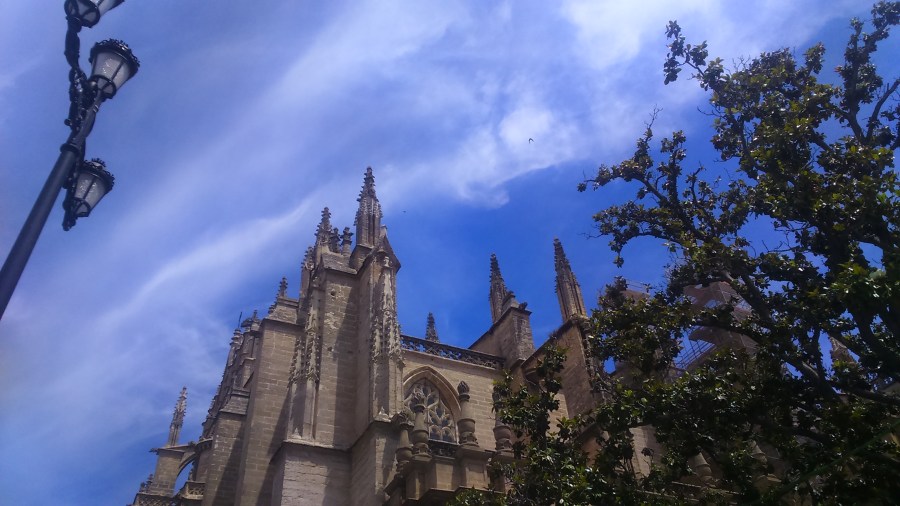
Saint Cristobel.The Cathedral where I got my credential and the first stamp for my walk from the guide at the door without having to queue.
If you get the chance to visit, check out the solid silver altar piece in the Cathedral, the flying angels holding lamps, pink marble, and, when I was there, spray after spray of white chrysanthemums and fragrant lillies. Outside, a young boy kindly put his arm around his brother and comforted him – there seemed to be good feeling everywhere.
I found myself back at the river: two men were lounging in a huge pedalo-type river craft made of white fibreglass;
a school girl on a bike was dressed in a burgundy and black kilt with matching socks; there were rows of municipal bicycles I had only previously seen in London; the green men on the road crossing signs walk! and three boys in swimming trunks took it in turns to jump off into the river. It was already 38 degrees. In fact for a moment I rather worried for myself for the walk tomorrow.
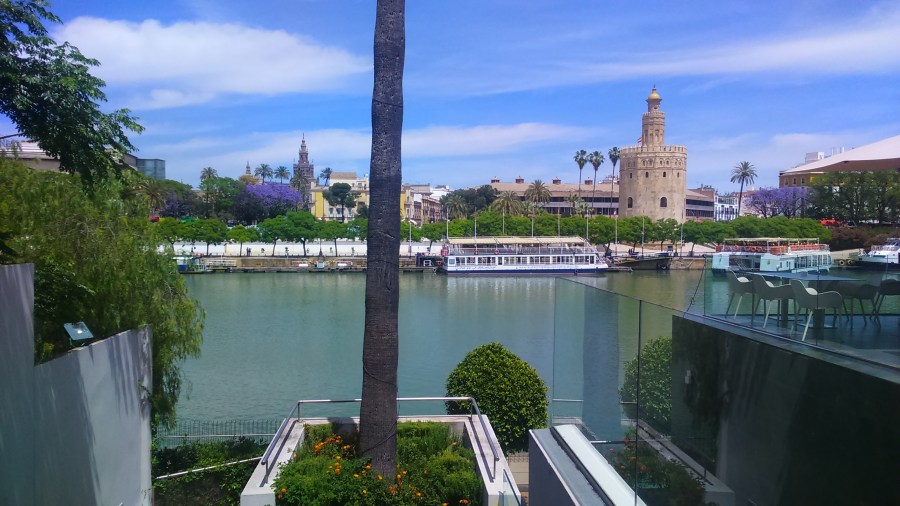
Big boats acting as restaurants line the opposite side along where I will walk when I start my Camino the next morning.
That evening we went to a concert in the Moroccan Pavillion, from the Expo in 1992. It has a highly decorated interior and glows in the evening.
There was tango, piano and singing (mostly in English from British stage shows – apparently very popular) in shorts and T-shirt, and we sipped free beer and ate peanuts. Later we drove through the gloriously illuminated city and enjoyed tapas in the slight breeze – welcome at midnight sitting outside!
Without a guide book, I had had to locate the setting-off place for the next leg of my travels through Spain on my own. Happily I had found it by chance at the very beginning of the day, so after a few hours of sleep I knew where to start.
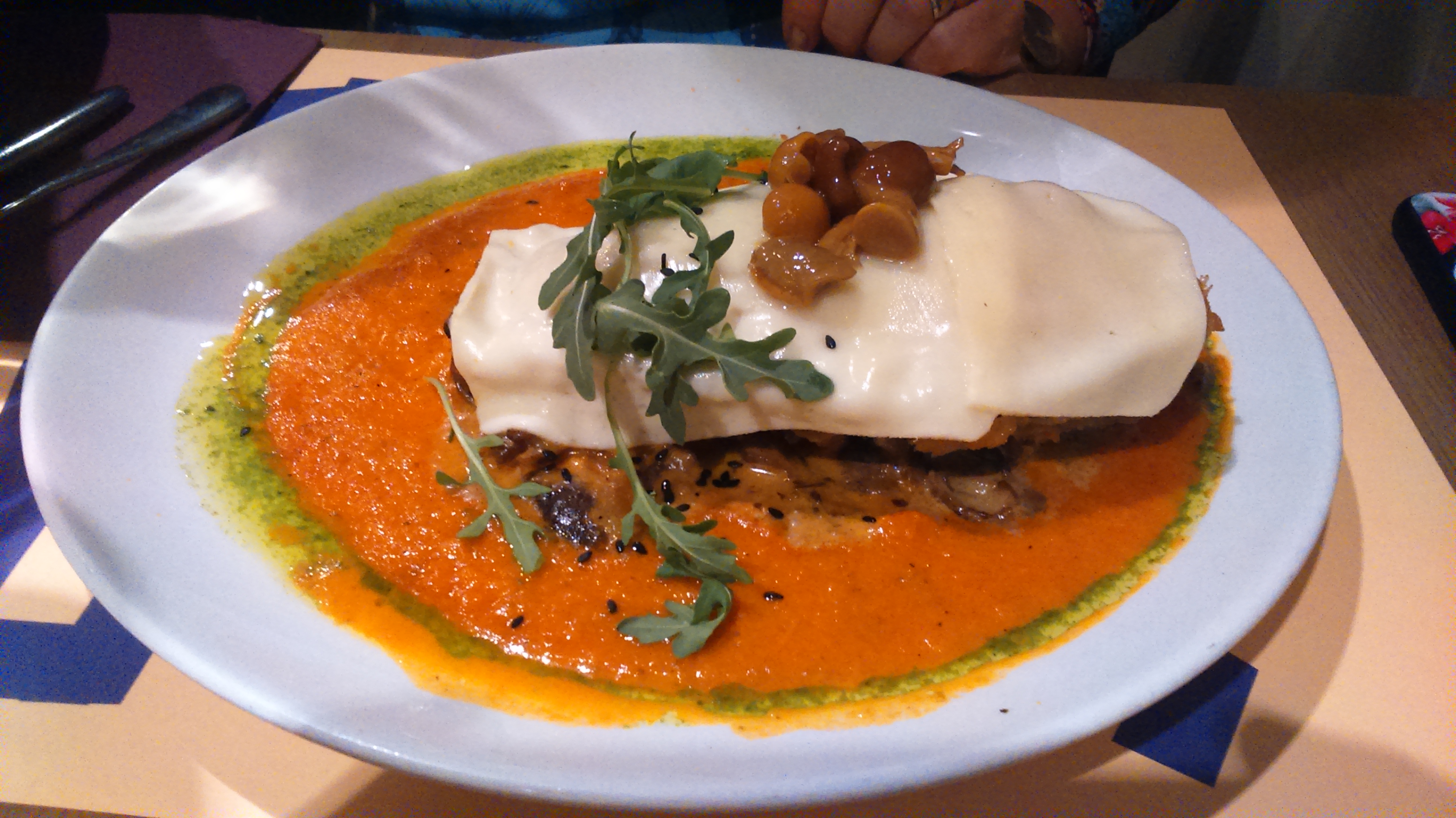
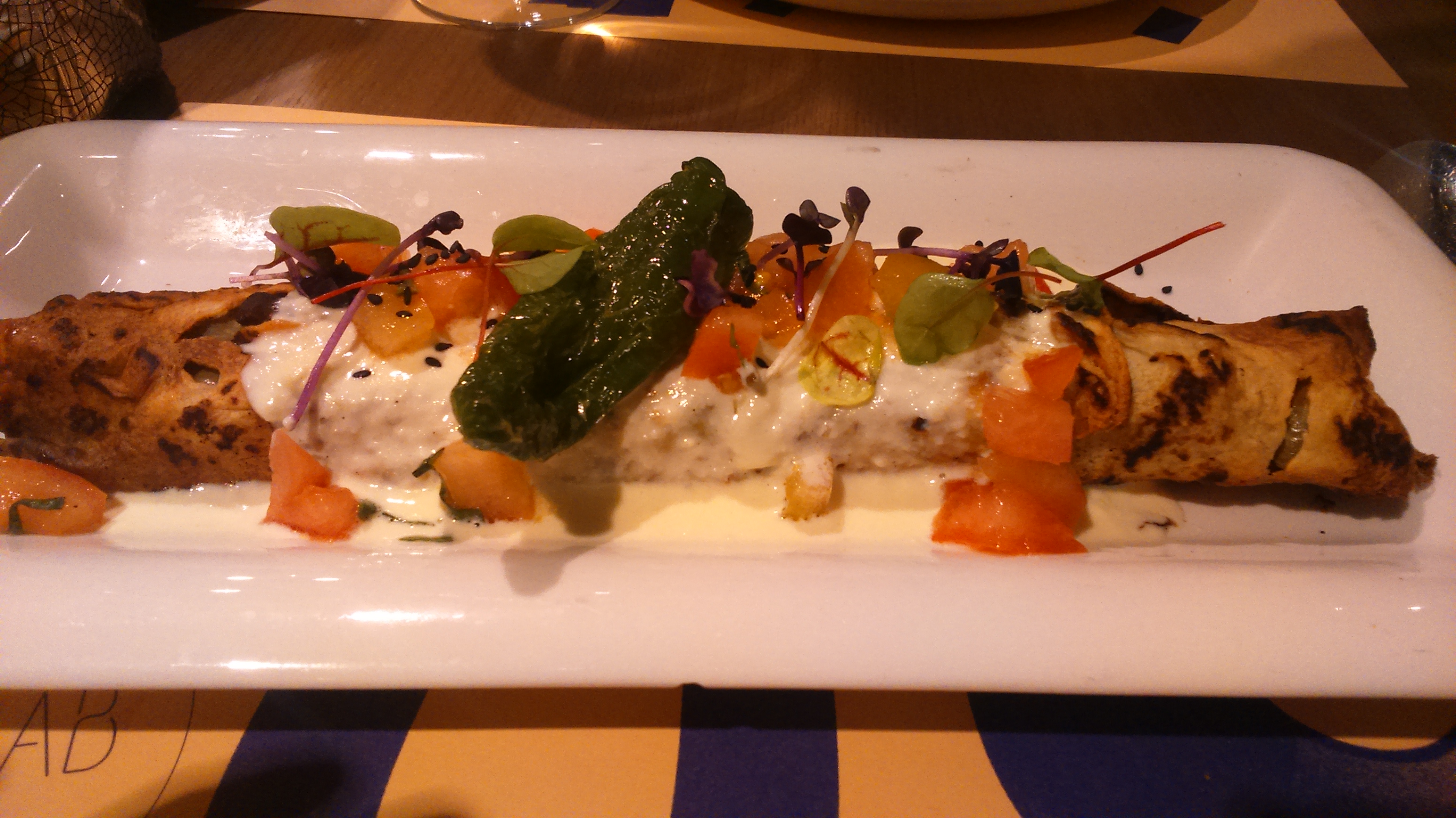
What did I do when I arrived in Zaragoza? I was welcomed by my host Yvonne and we went for a drink and something to eat! Whoever said that you cannot be a vegetarian in Spain?
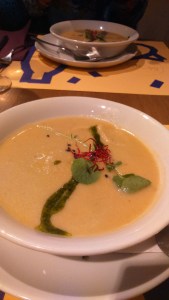
Almond soup – cold. Delicious.Baobab vegetarian restaurant.http://www.restaurantebaobab.com/View from the balcony of the flat where I stayed.
When I announced I was visiting this city, I was often asked why, even by people who live there! I think there is a popular idea that it is a predominantly industrial place and an army base. But, I can tell you that it is well worth seeing.
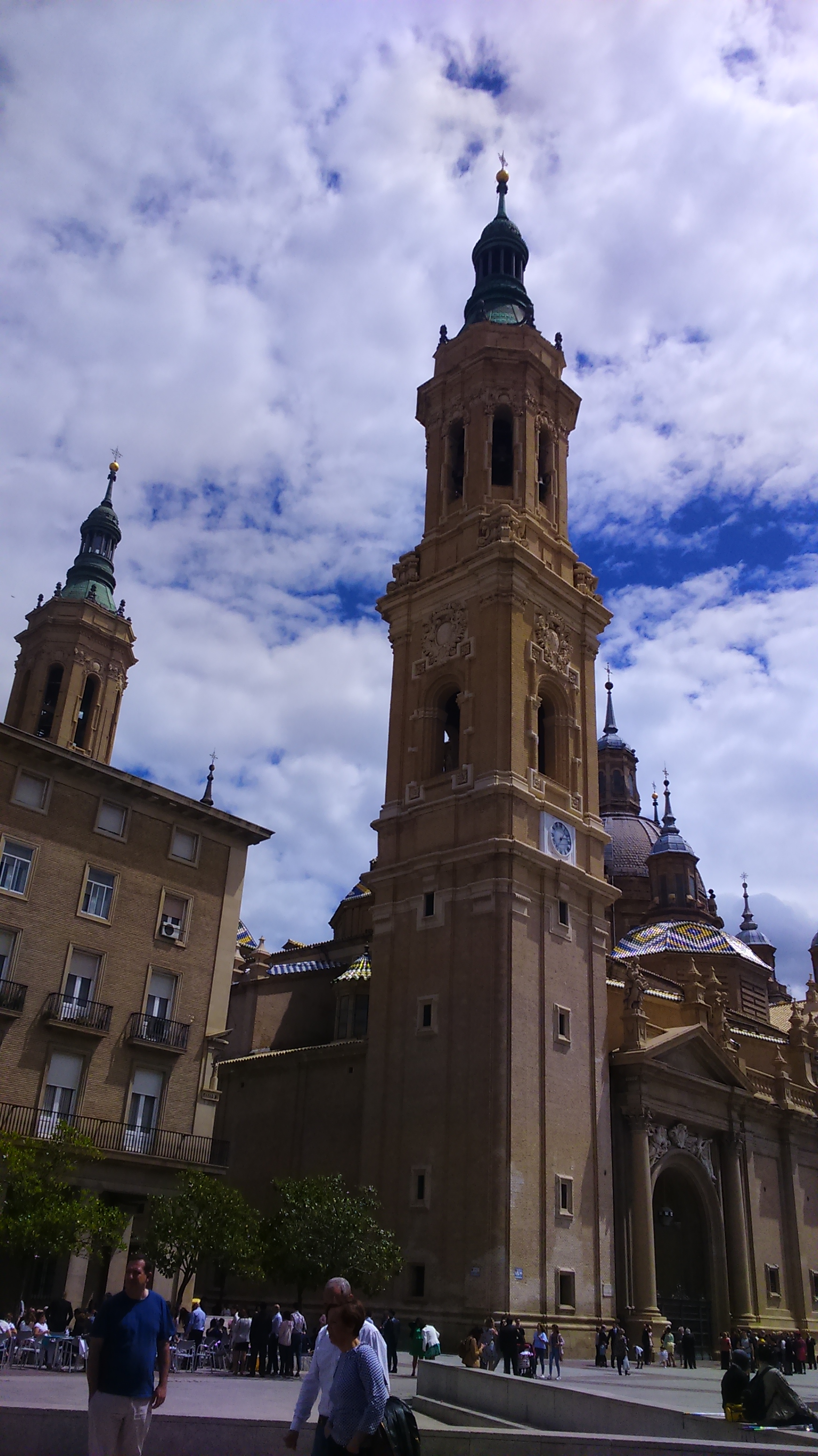
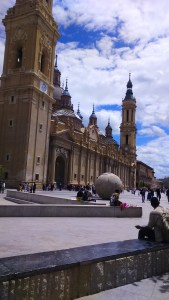
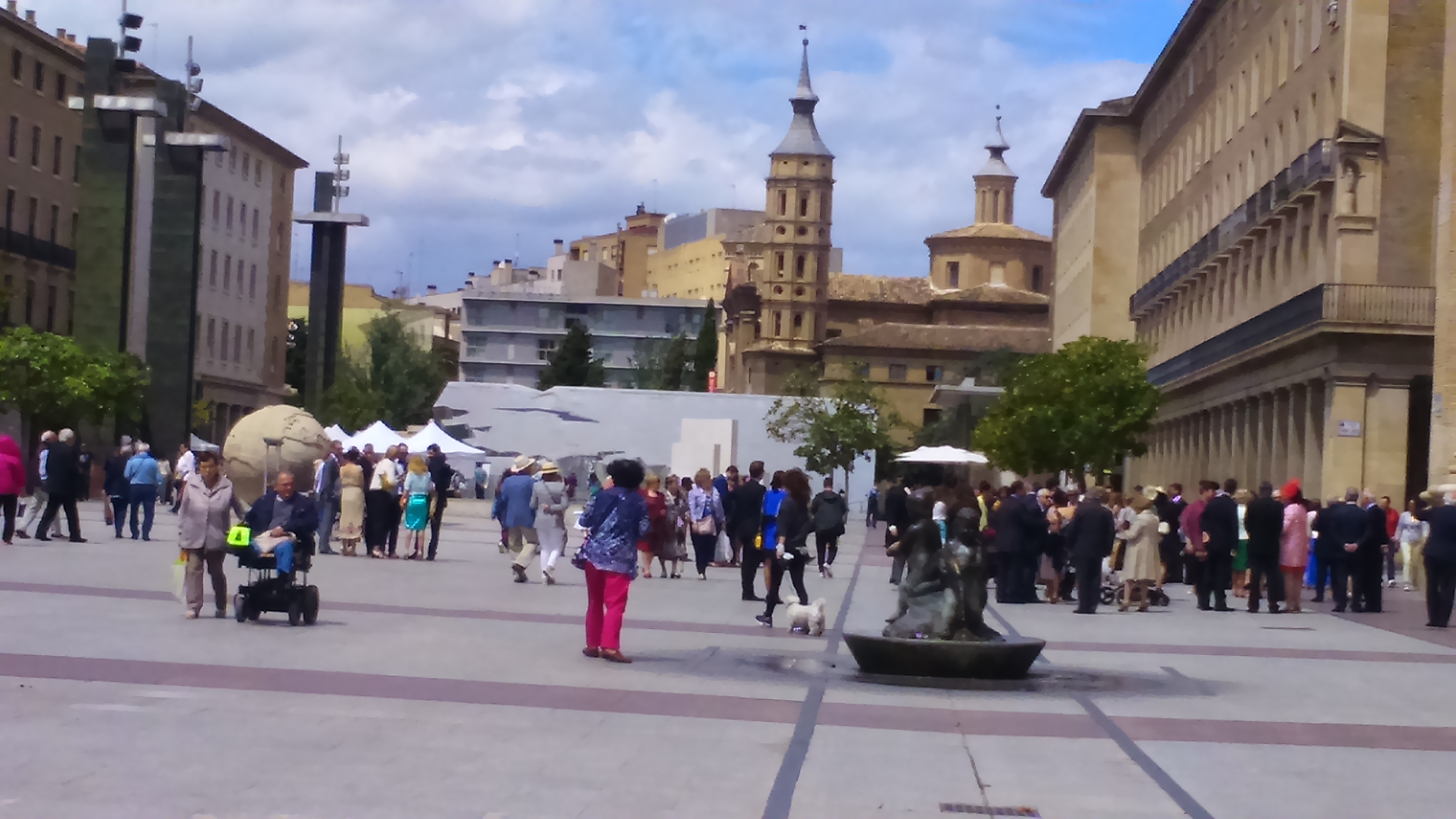
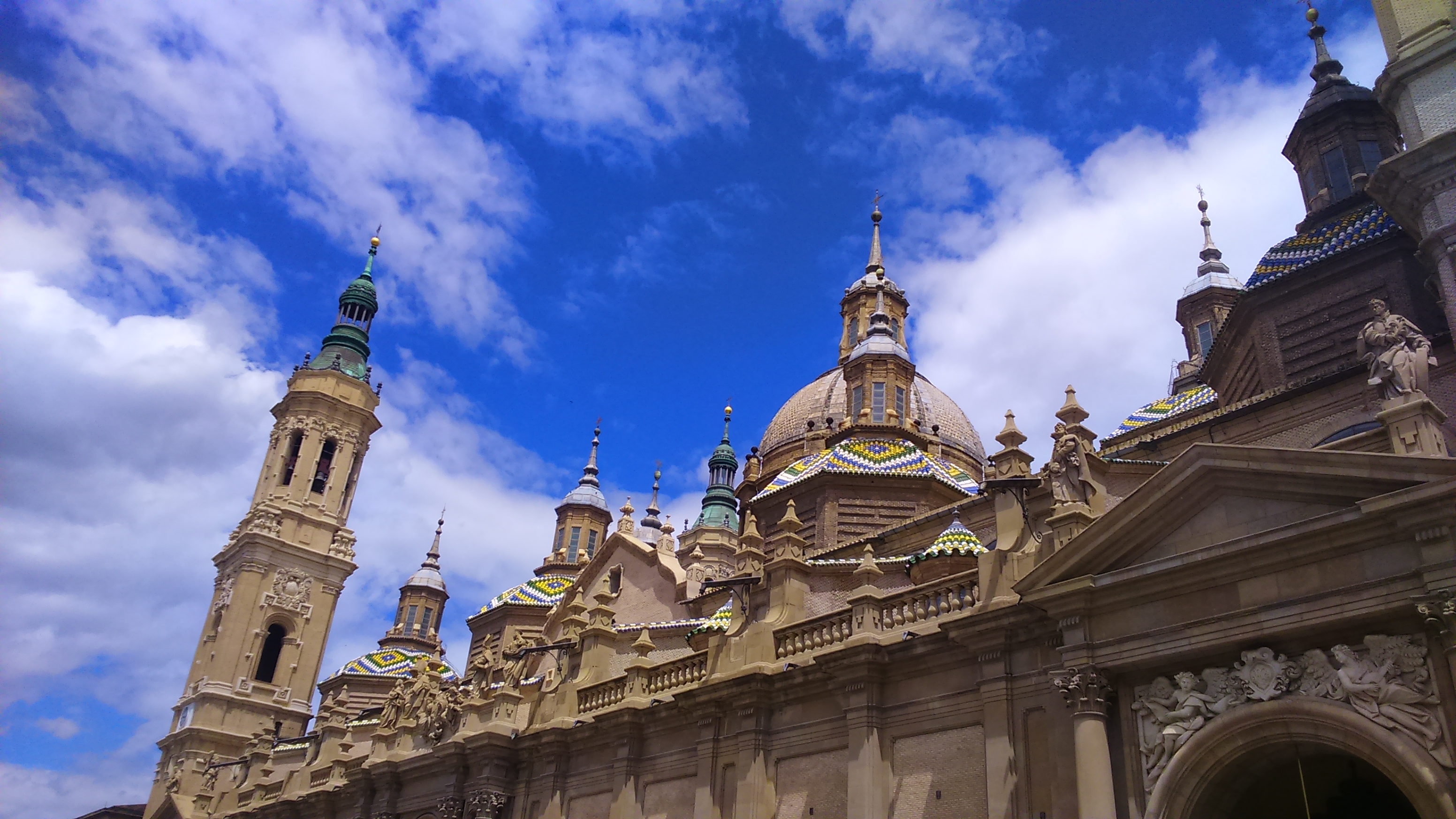
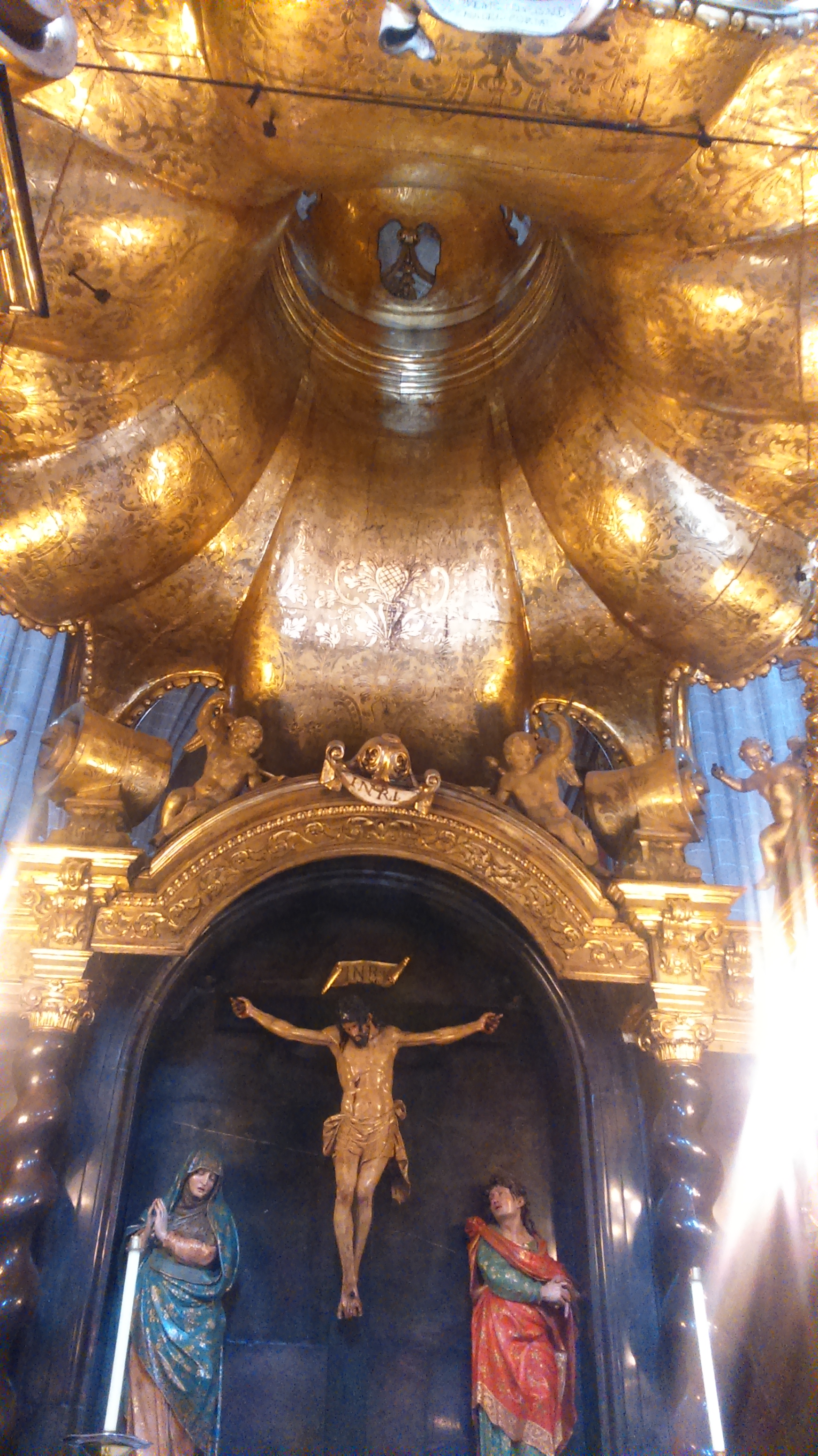
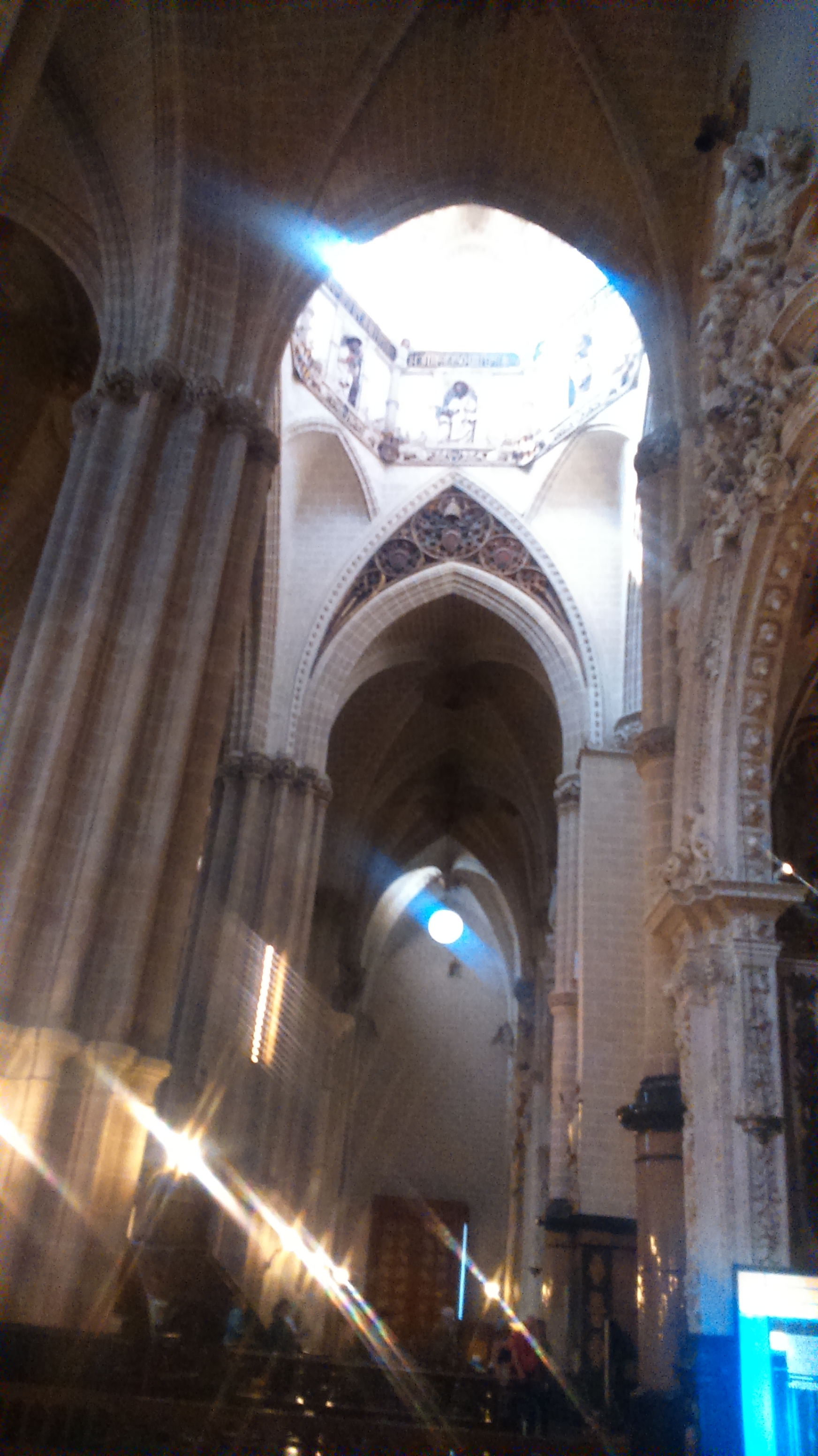
The main square, Plaza del Pilar, is enormous, with not one but two cathedrals: the Basilica Nuestra Señora del Pilar, a very old church inside a less old, bigger one; and the Seo, Cathedral of the Saviour (Catedral del Salvador) with its spectacular tapestries.
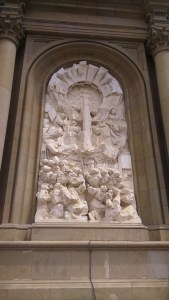
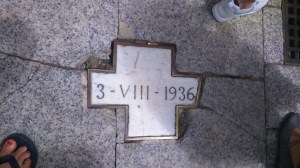
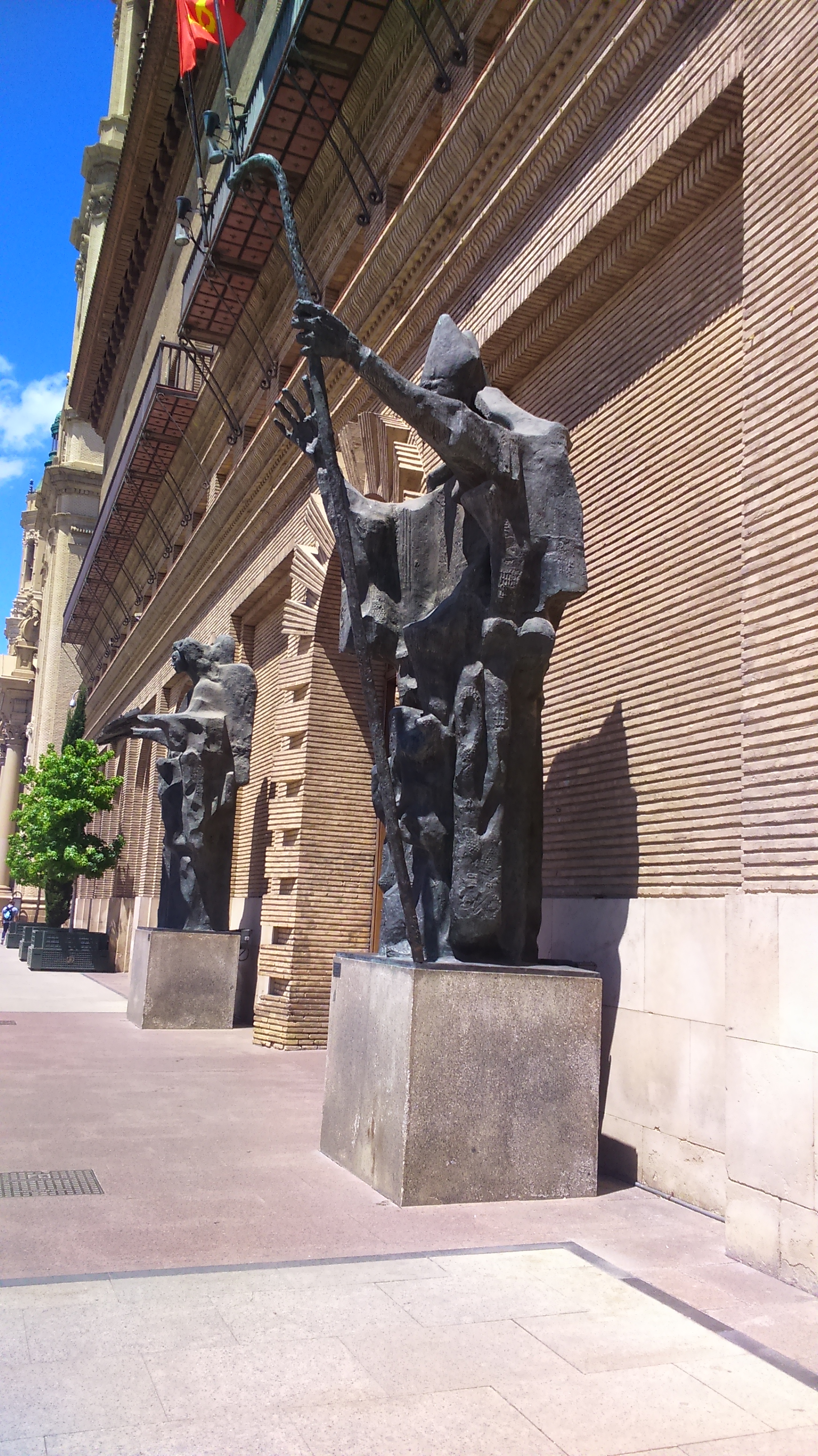
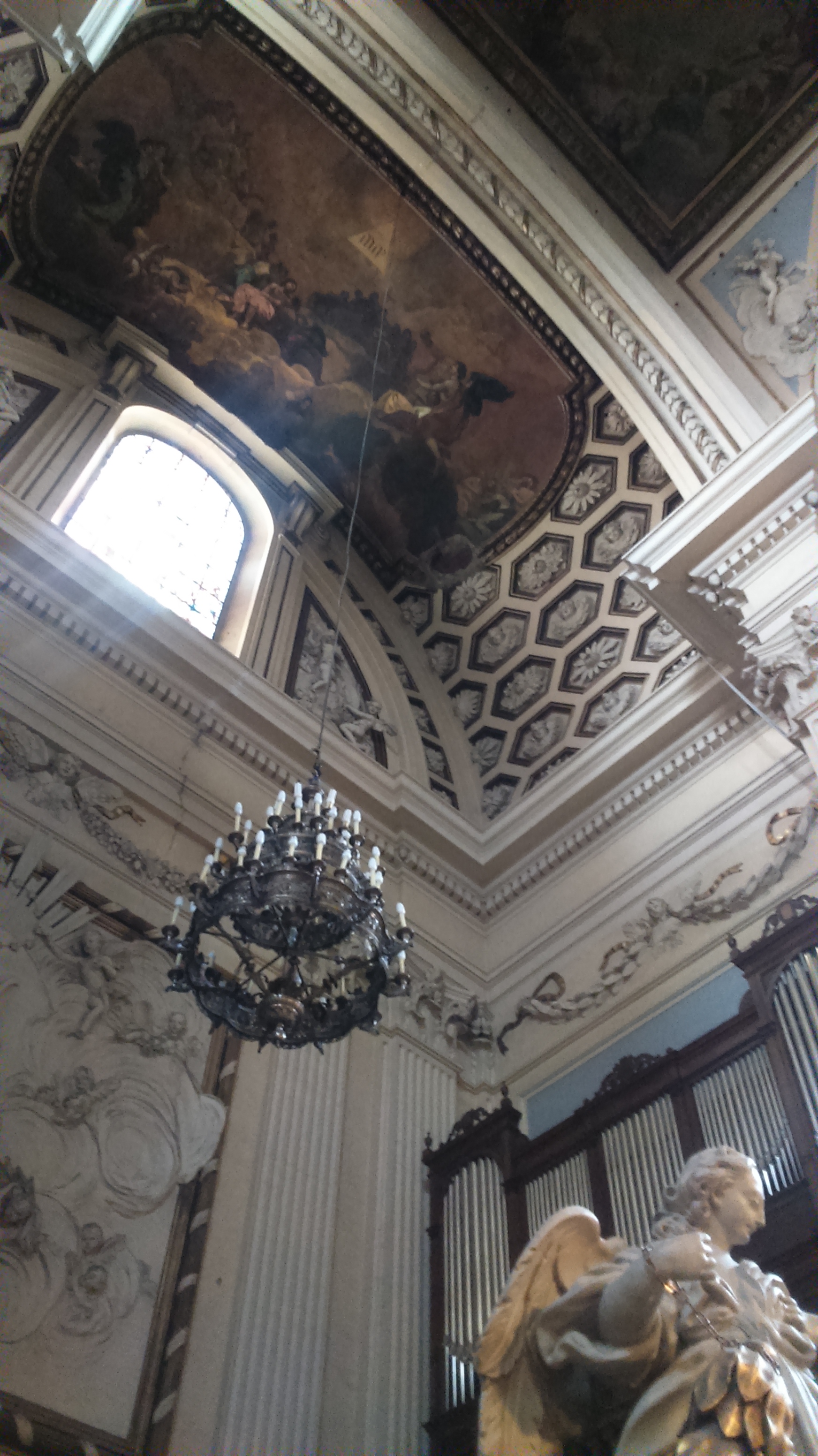
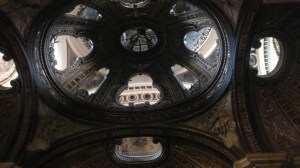
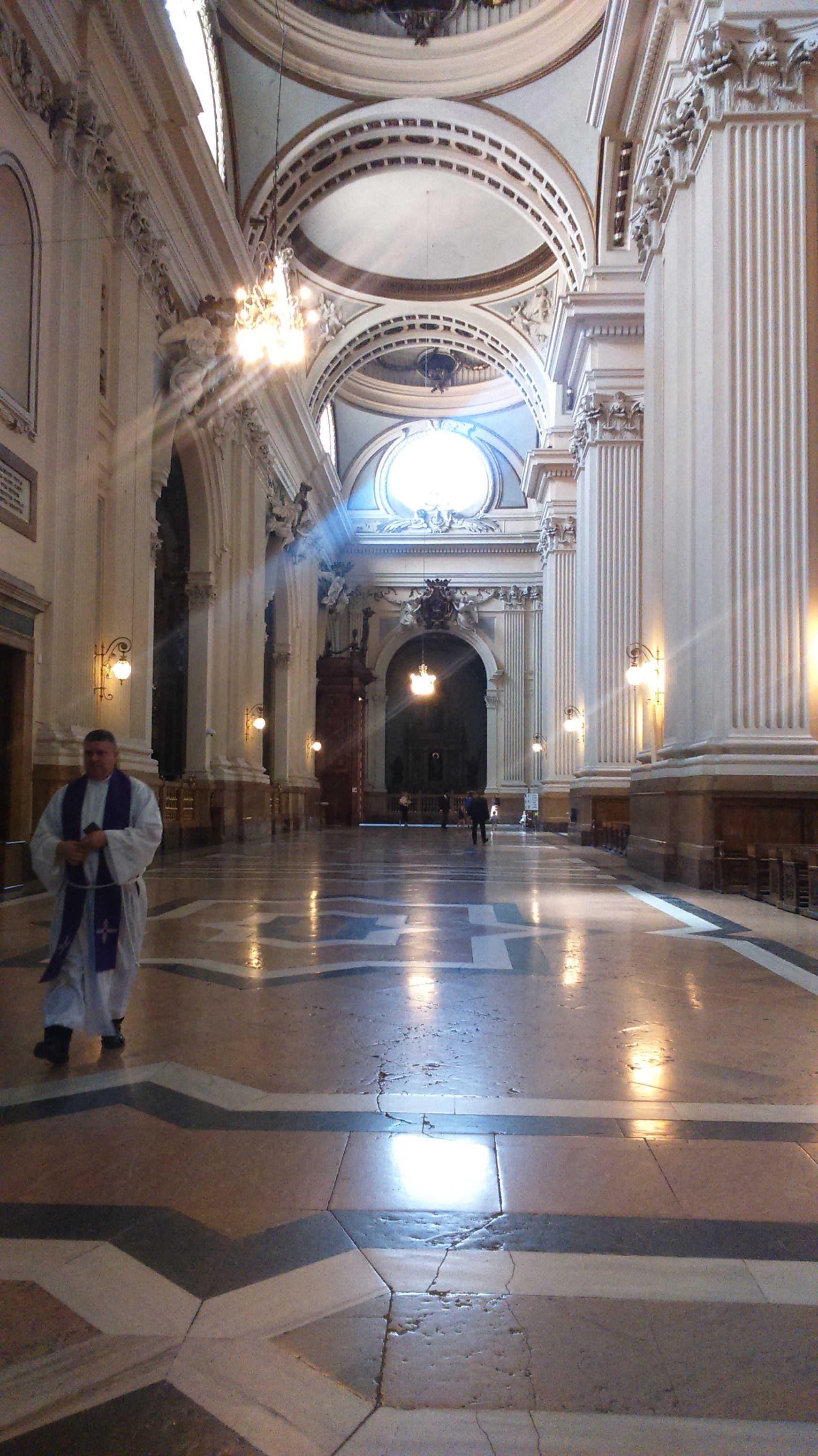
Basilica.Bas-reliefs on the outside walls of the Basilica.The Spanish coup of July 1936 fractured the Spanish Republican Armed Forces and marked the beginning of the Spanish Civil War.Down one end are the fountains backed by an expansive metal plate down which the water runs when it is on.Catedral Basilica de Nuestra Señora del Pilar.Tradition holds that on 2 January 40 AD, while Saint James was deep in prayer by the banks of the Ebro, the Mother of God (Nuestra Señora) appeared, gave him a column of jasper and instructed him to build a church in her honor.Statues outside by Pablo Serrano.Highly Baroque.Vaulted ceilings.
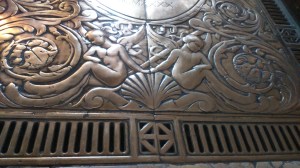
Romanesque, Gothic and many other styles can be seen in this venerated place.Francisco Goya and his relatives decorated the ceilings.Floor decoration.
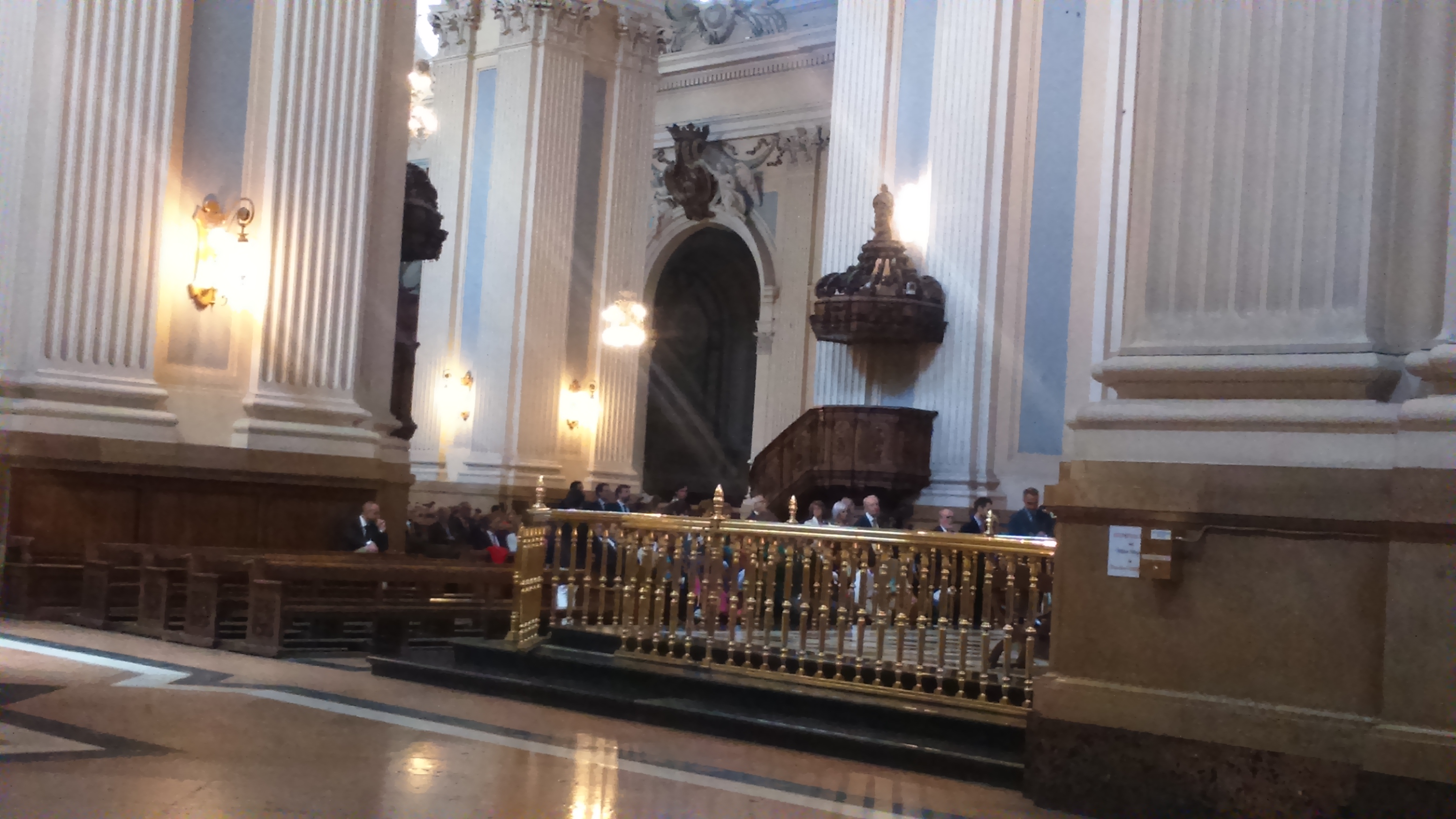
Confirmation taking place so we could not view the main altar.
In the past, the two cathedrals vied with each other to display the most impressive riches, but the Basilica is the only one with a canon ball hole in its front wall. As far as the parishioners are concerned it was an act of God that it did not explode when it came through during the civil war.
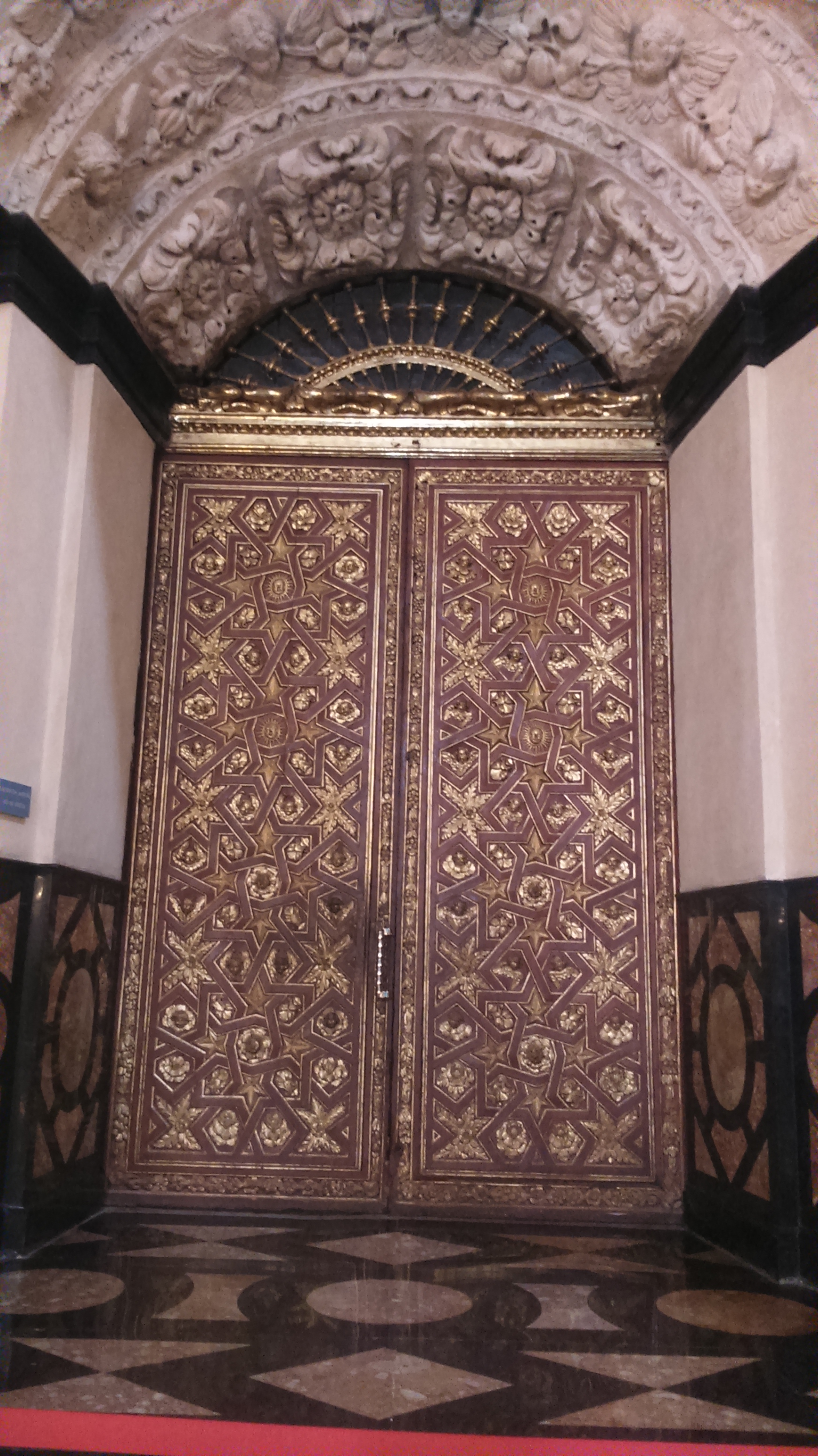
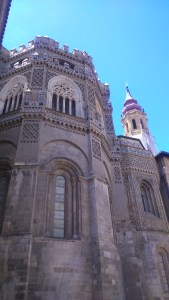
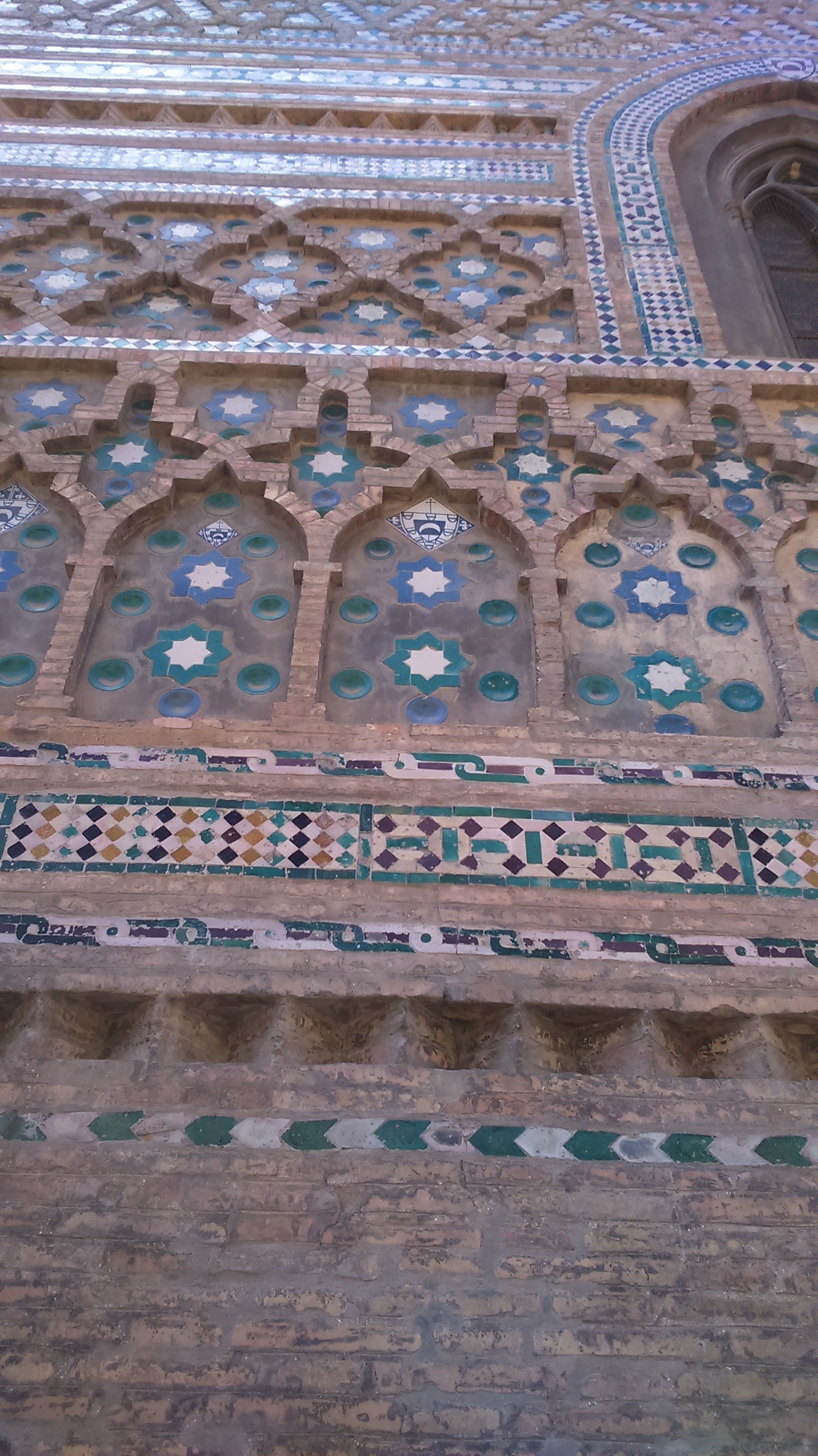
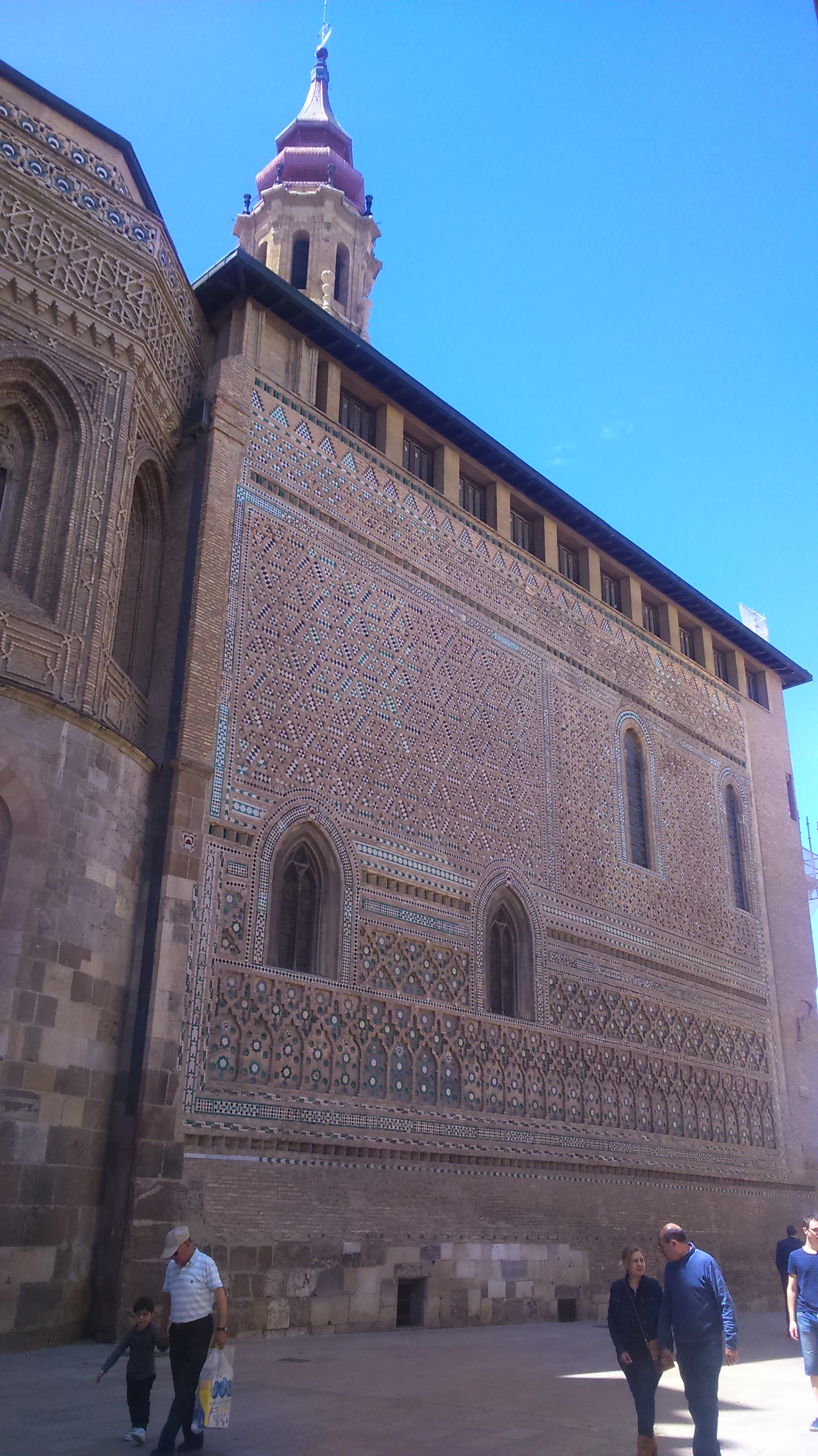
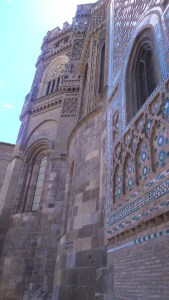
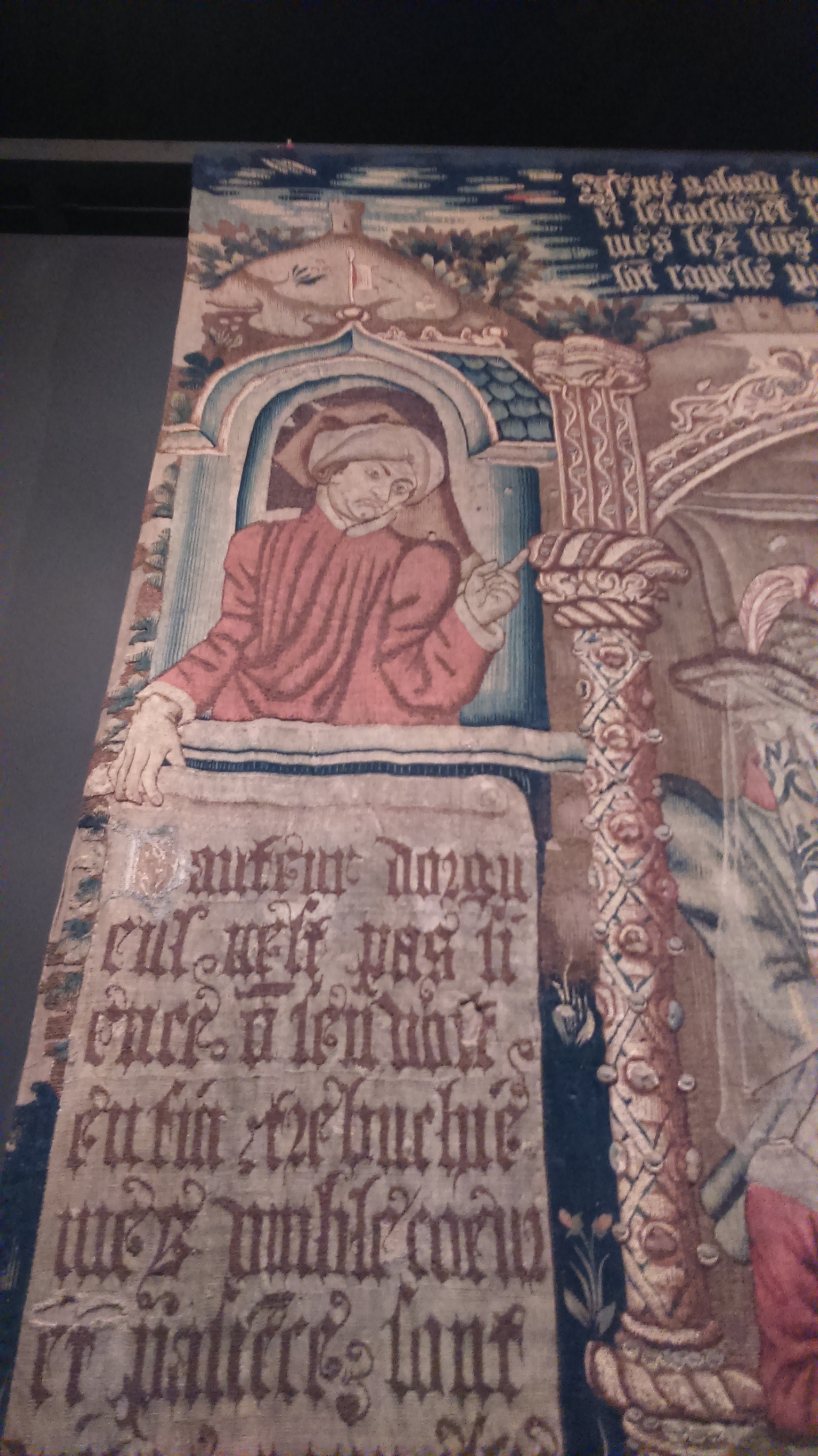
The Seo.Also known as the Cathedral of the Saviour (del Salvador).Or Parroquial de la Seo.With its wonderful Moorish decoration.Stunning tapestries upstairs – many are 15th century, stolen from Belgium.
Rooms of glorious tapestries.Really ancient, fascinating scenes telling intricate stories with divers characters.
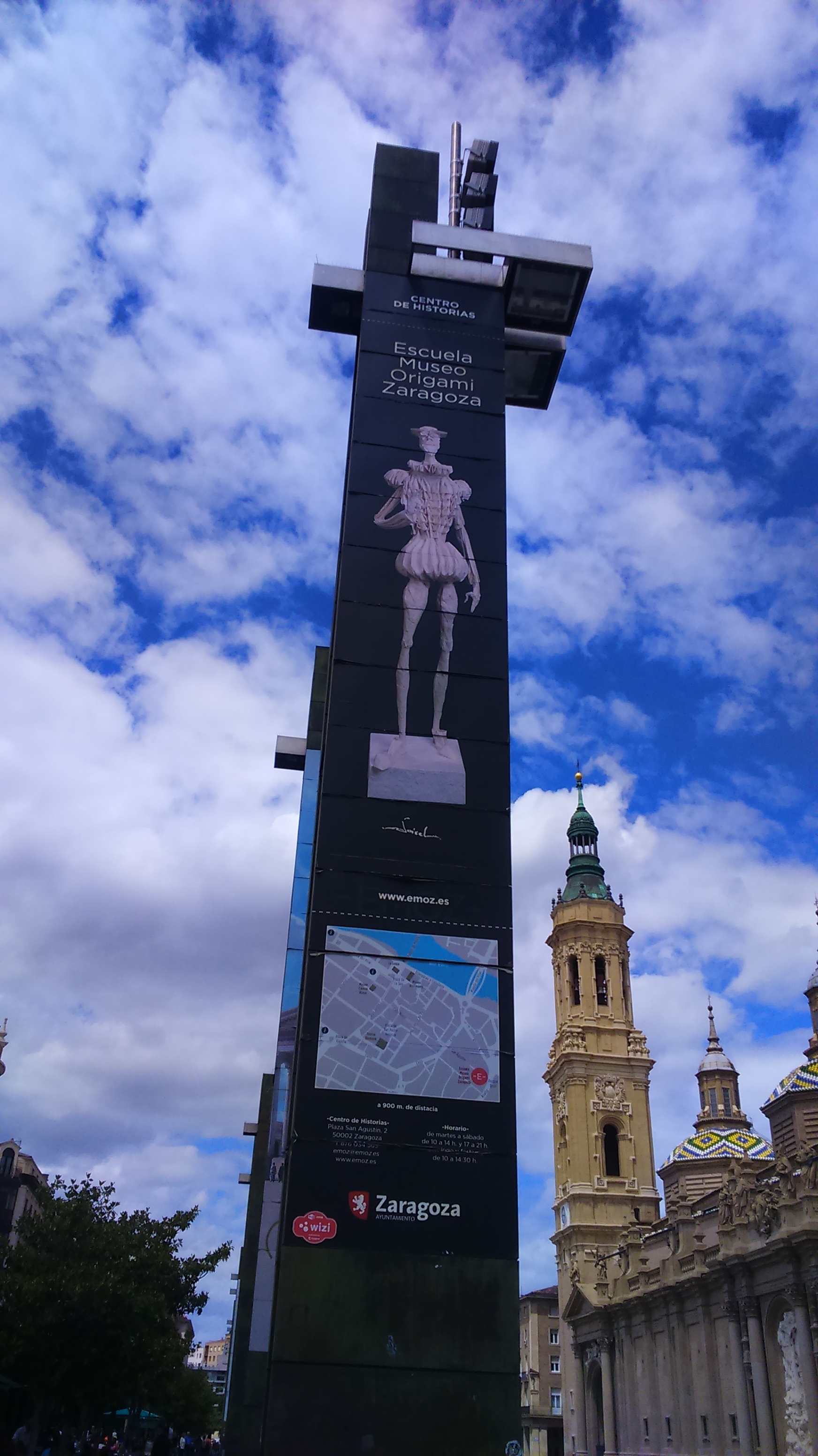
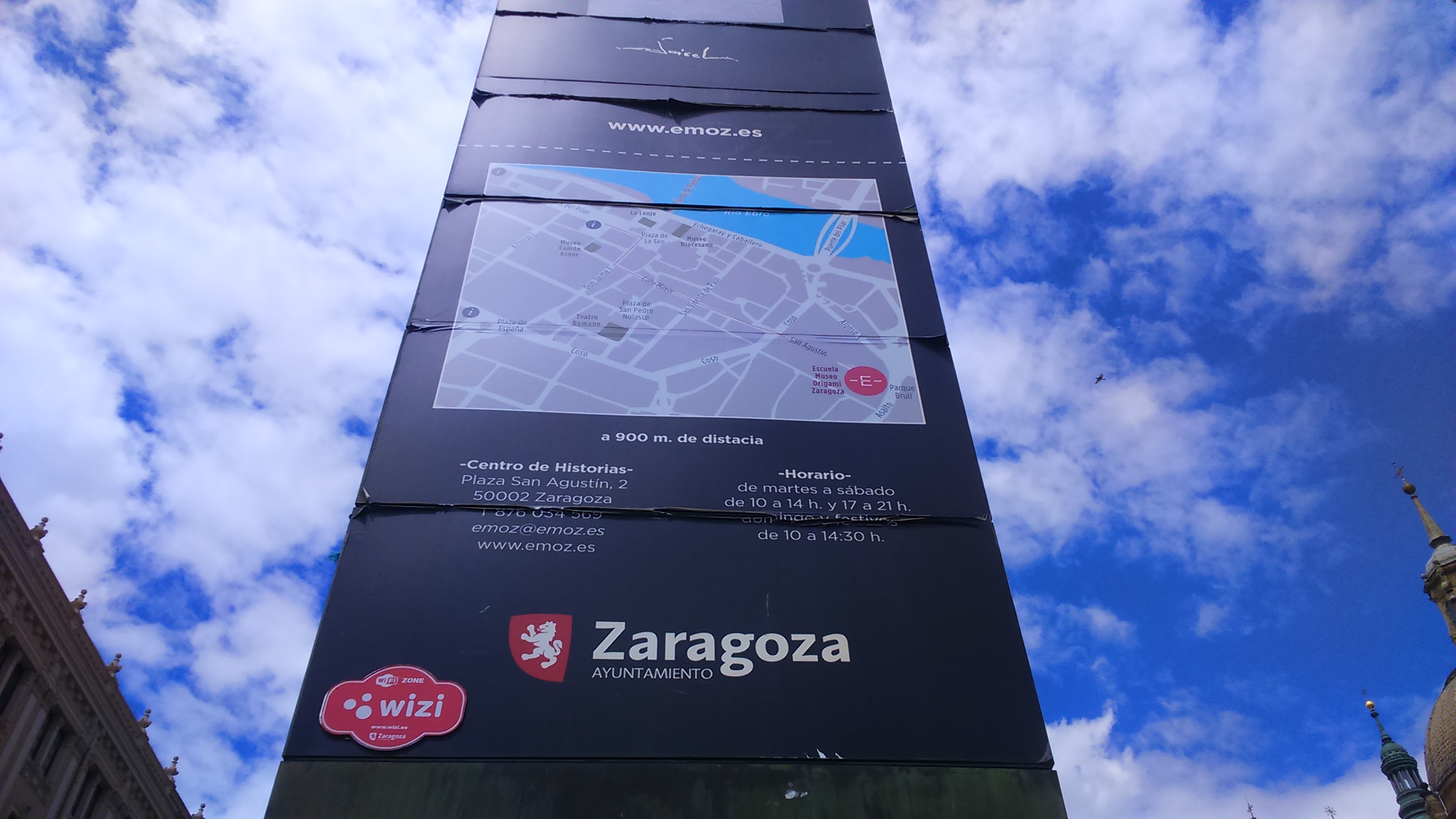
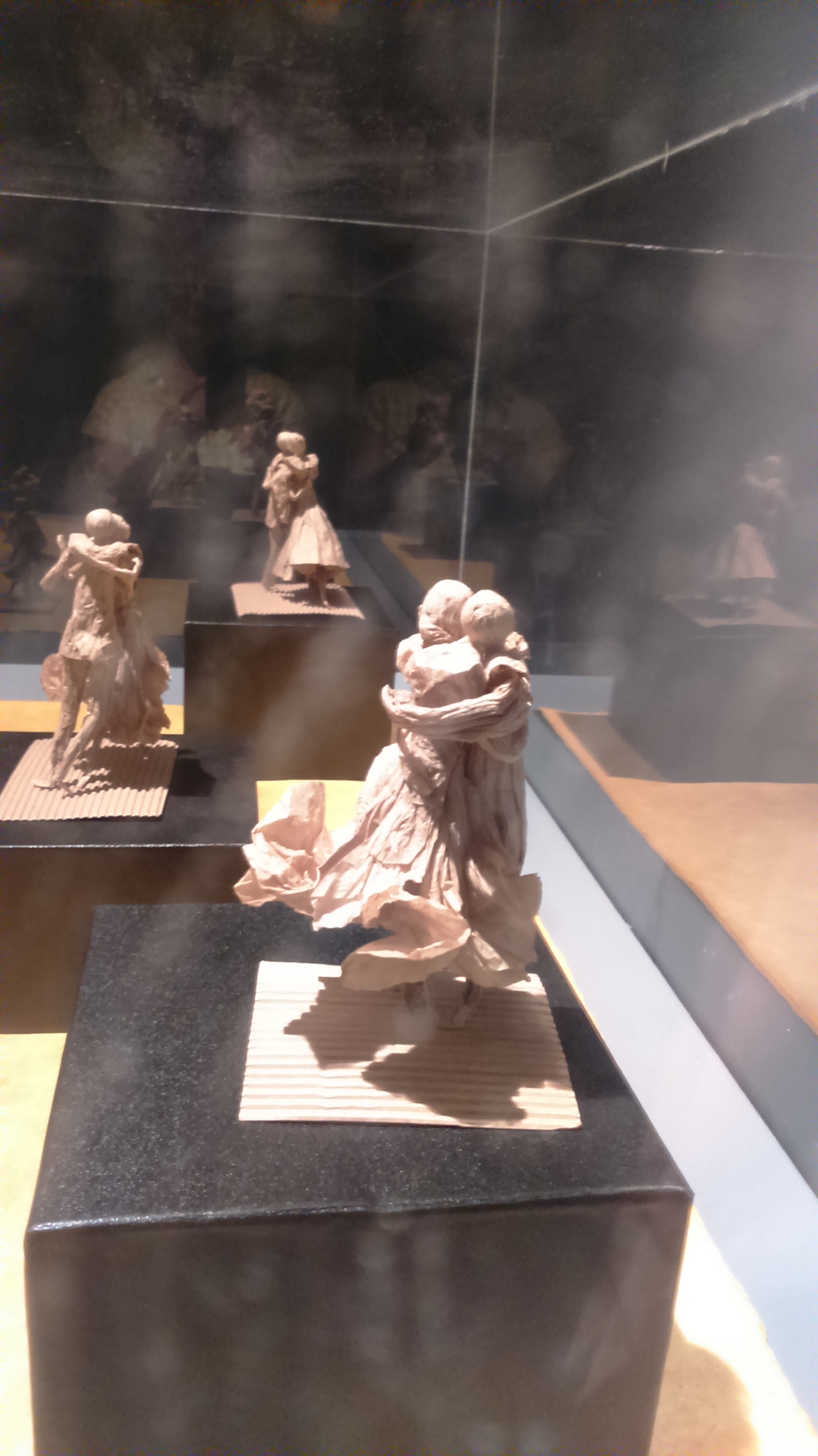
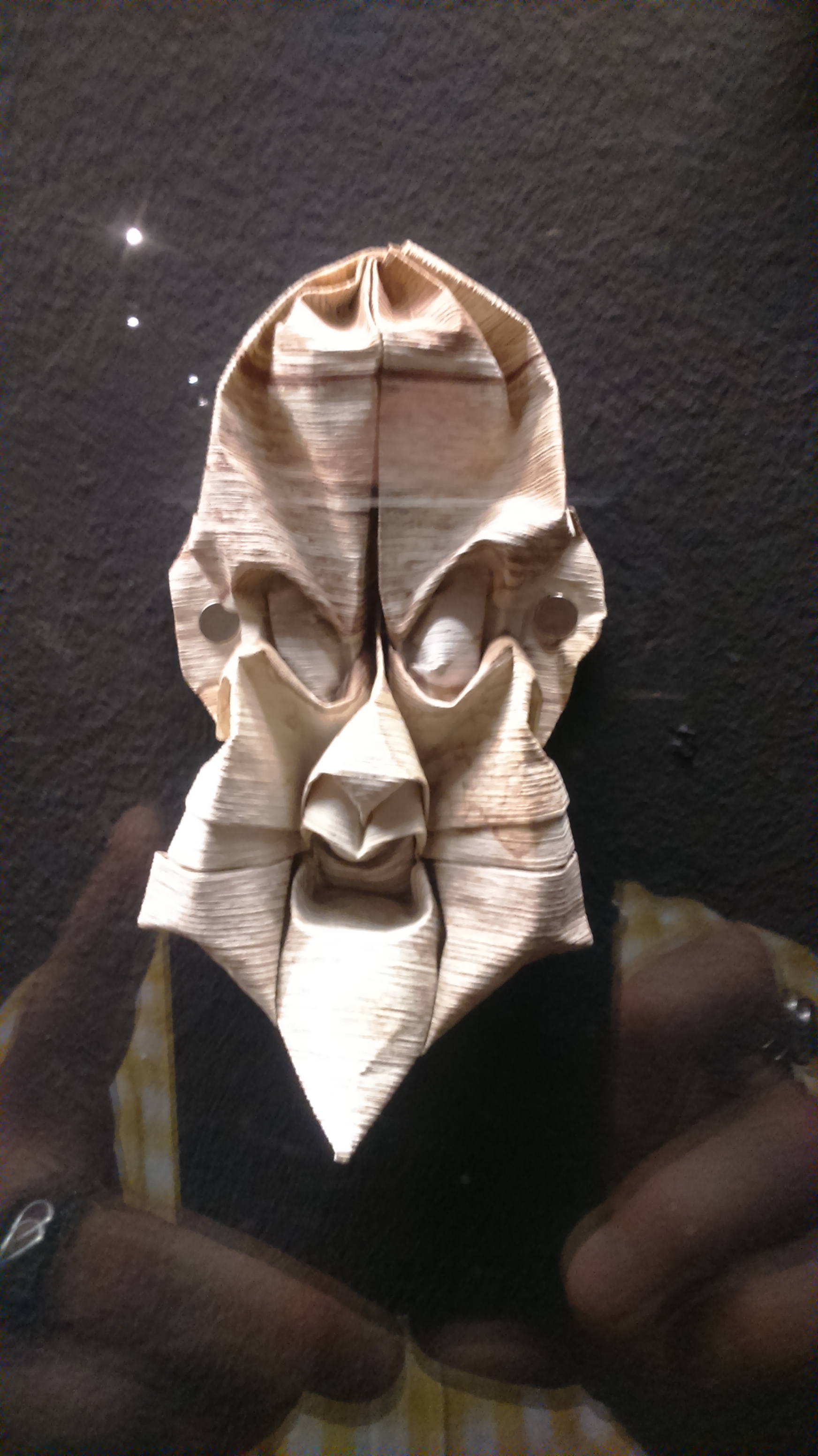
When I was in Normandy I met a paper sculptor and he told me I must go and see the Origami Museum in Zaragotha. But where was it? My hosts who had lived there for years did not know.
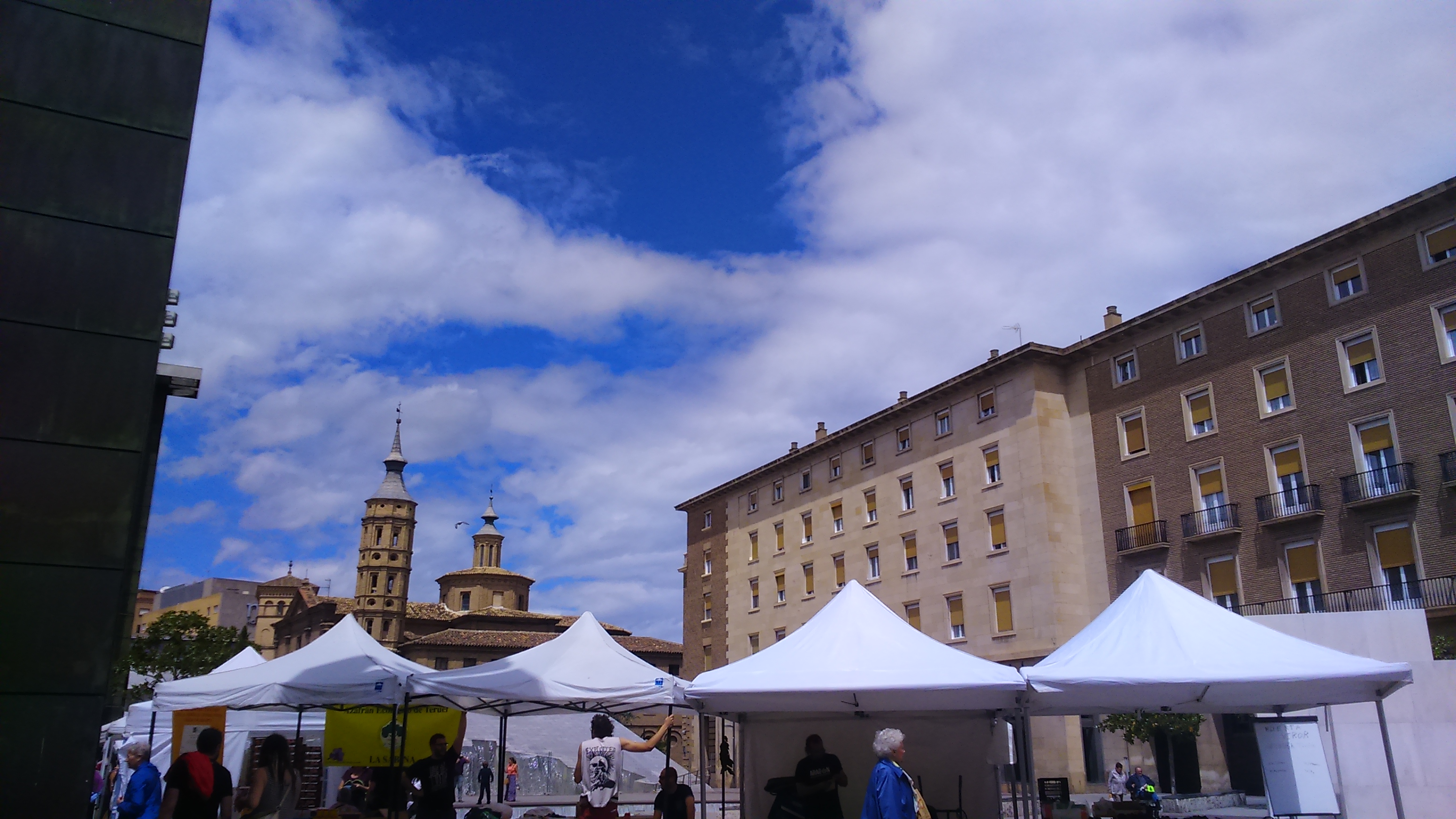
Ah, there – this advert for it was right beside us! See below.There are modern pillars advertising the city and its other sights.
There are fountains, sculptures, the tourist information, exhibitions, and plenty of space to sit or run around.
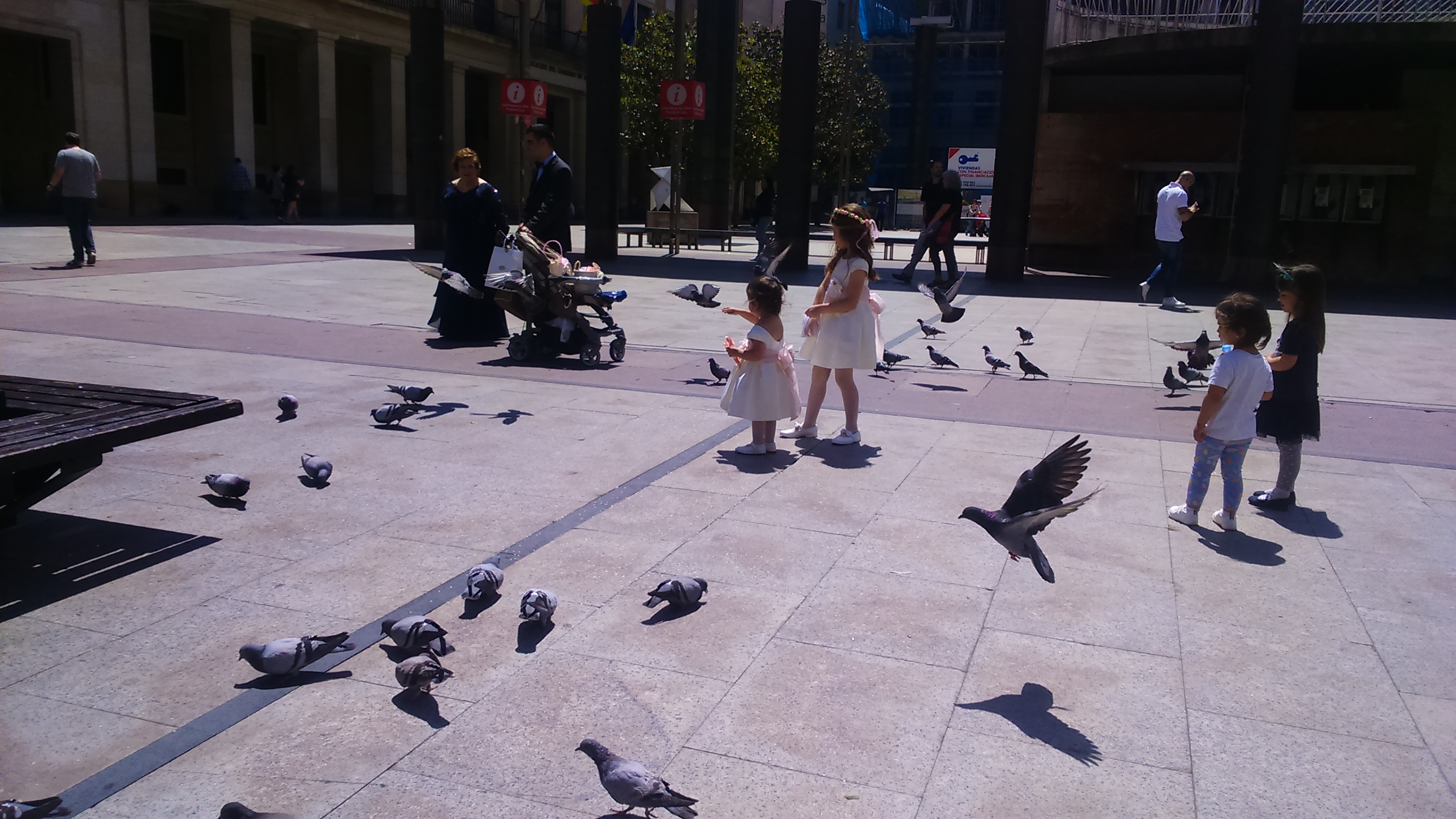
Large groups of immaculately dressed families celebrating their children’s the first communion.
That place alone takes a day or more to view properly.
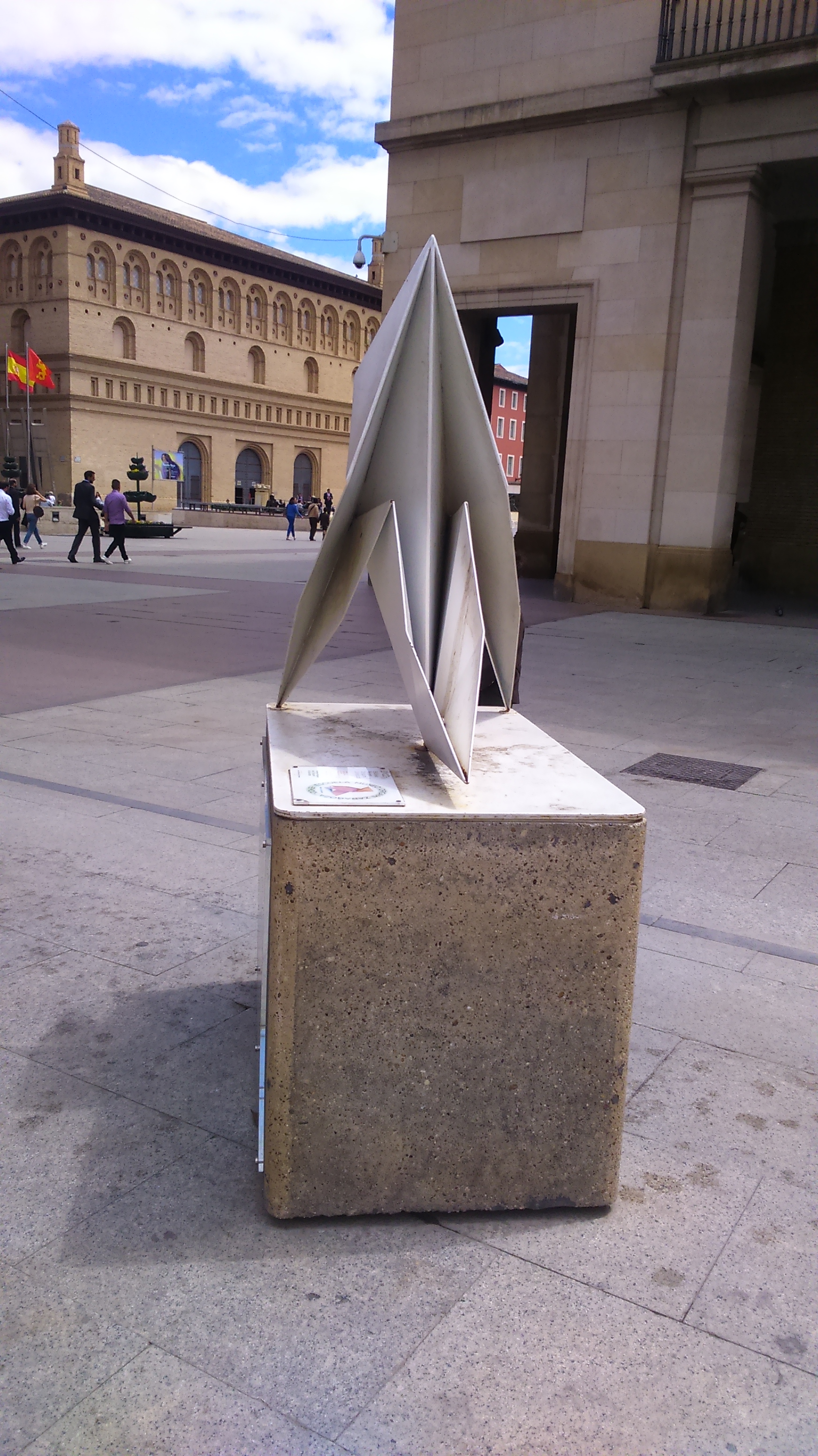
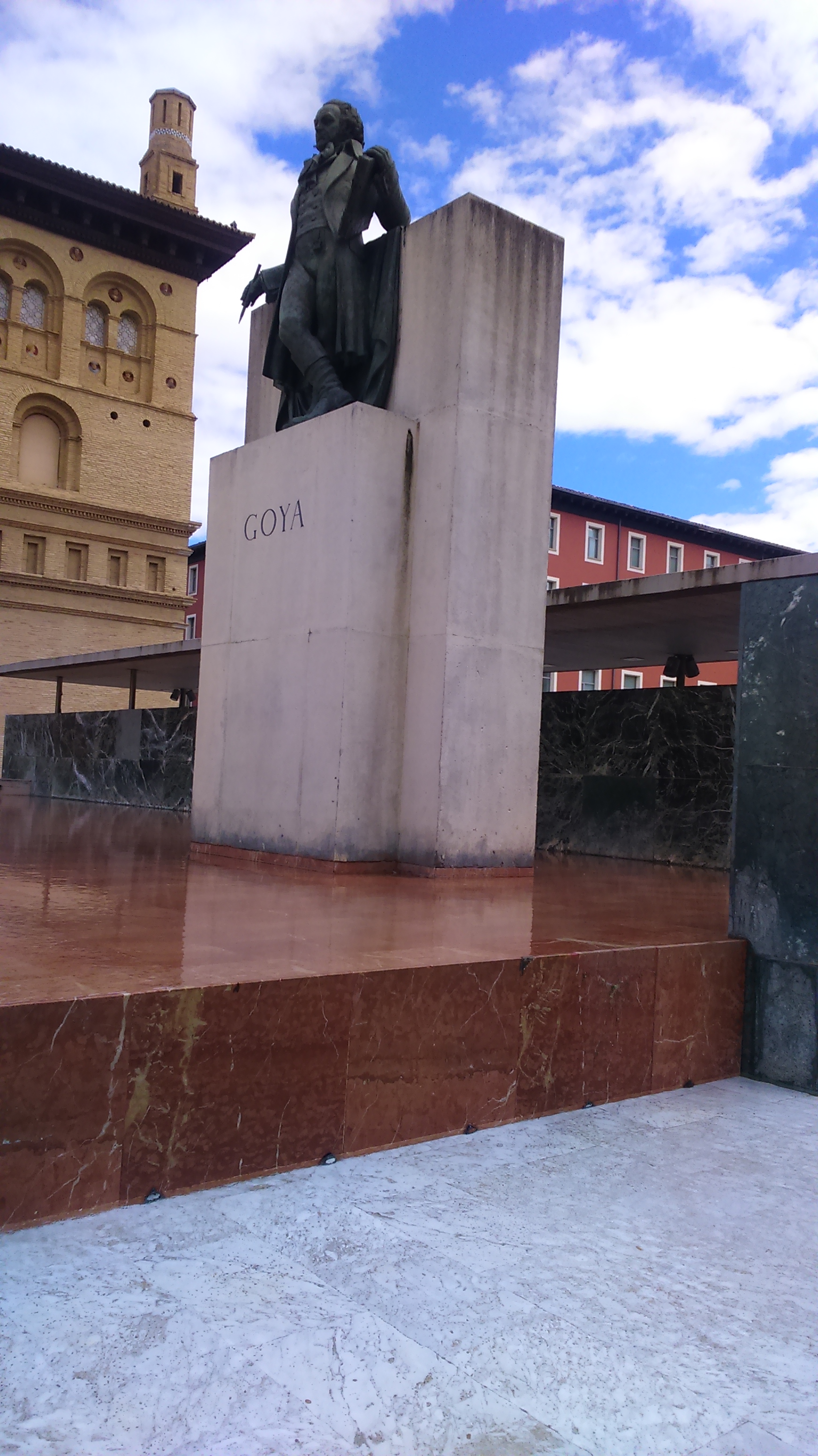
Origami sculpture.Goya himself, a famous inhabitant.
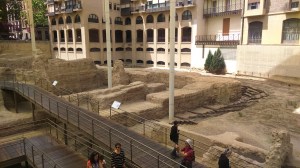
Within 5 minutes walk from there are ancient remains to be seen – an amphitheatre and clearly excavated dwellings.
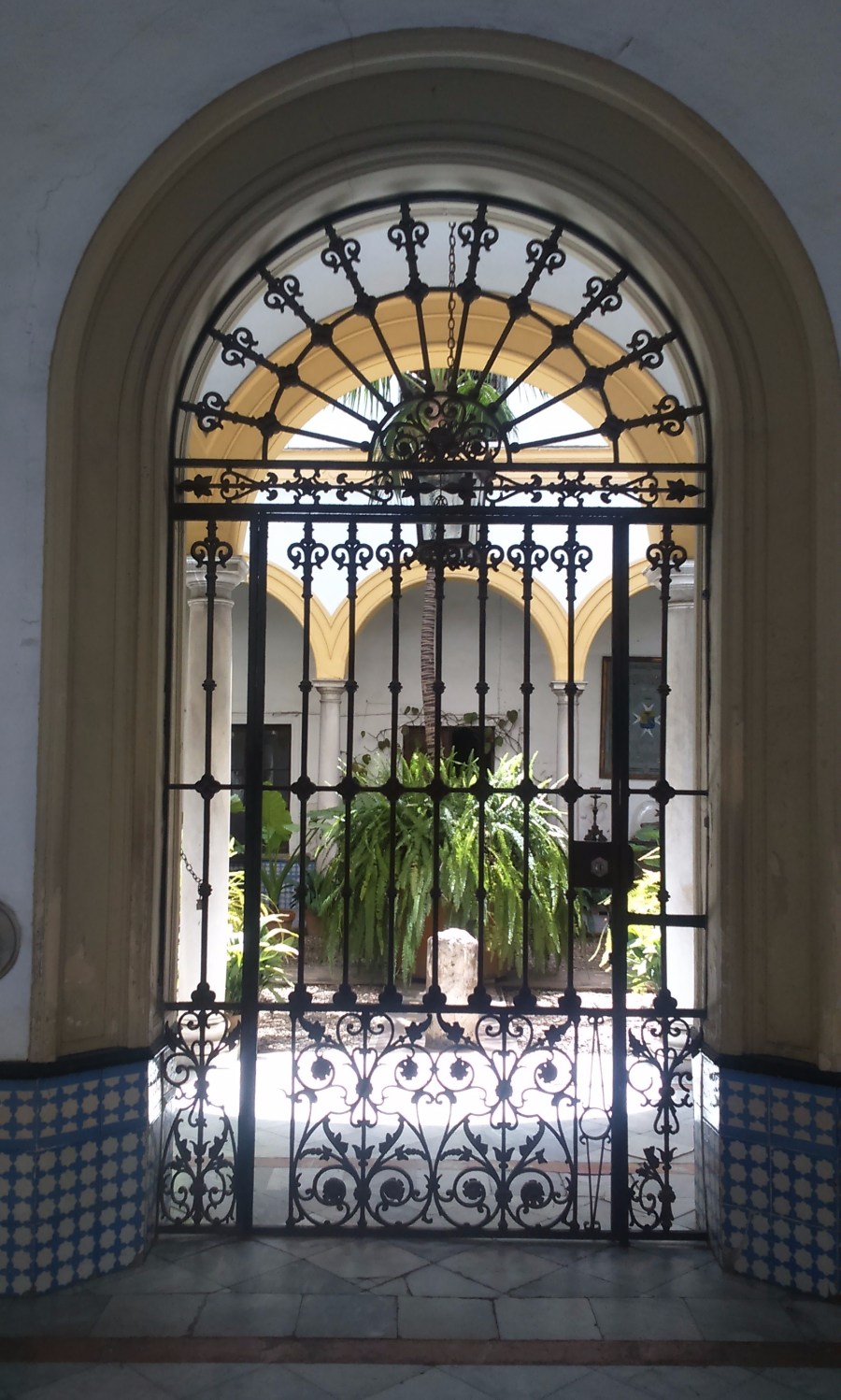
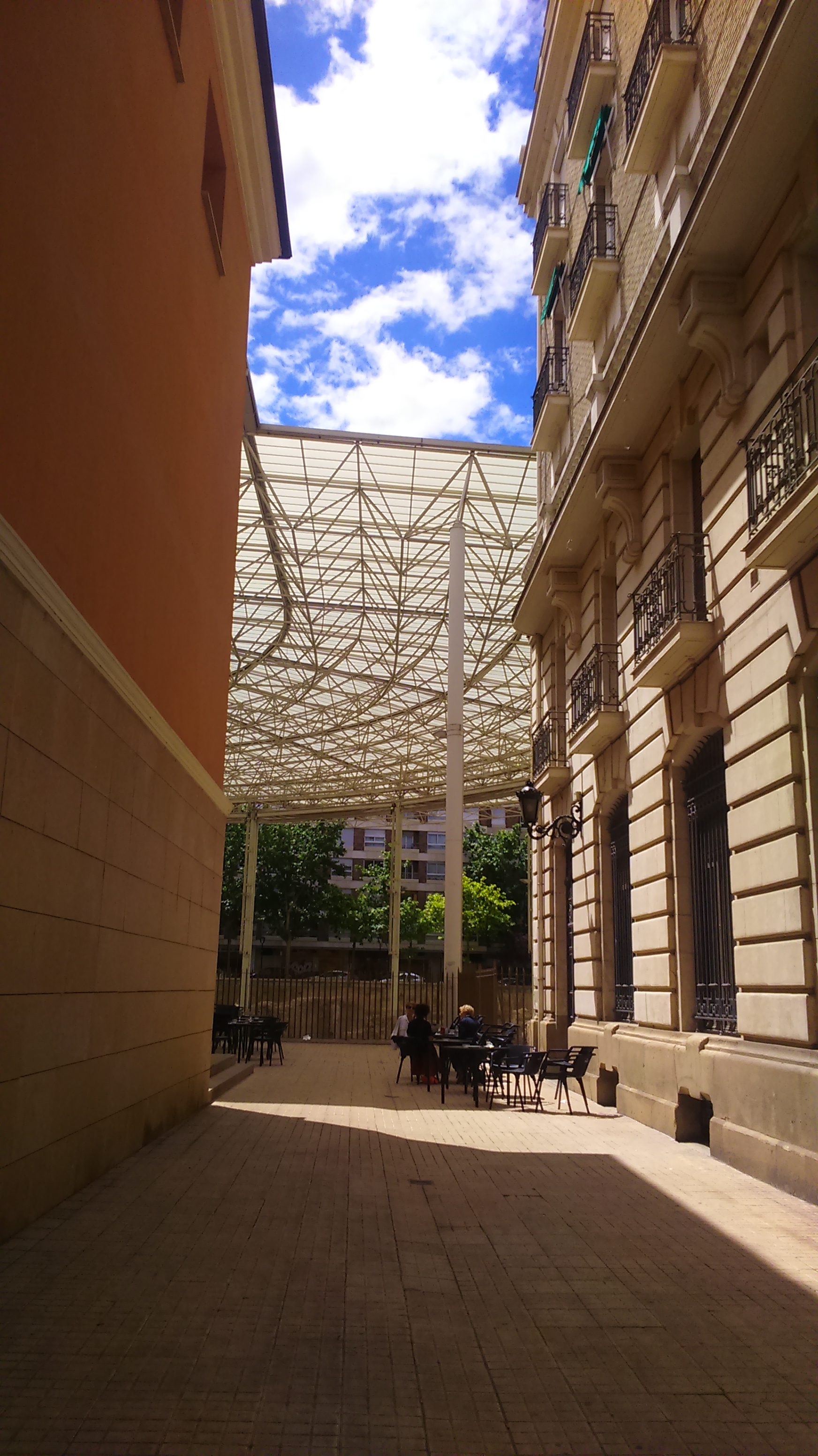
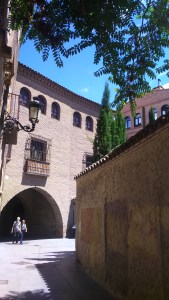
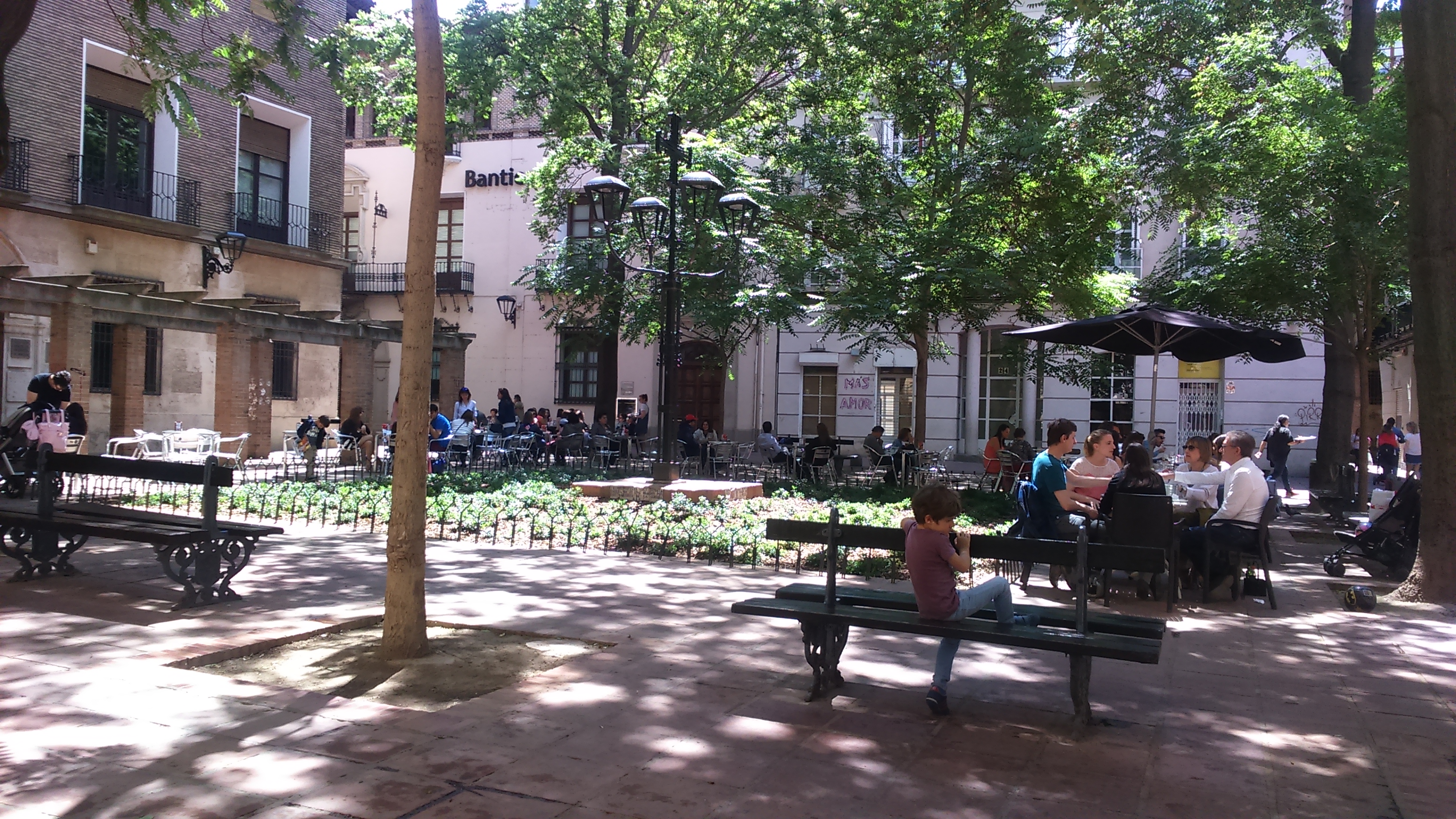
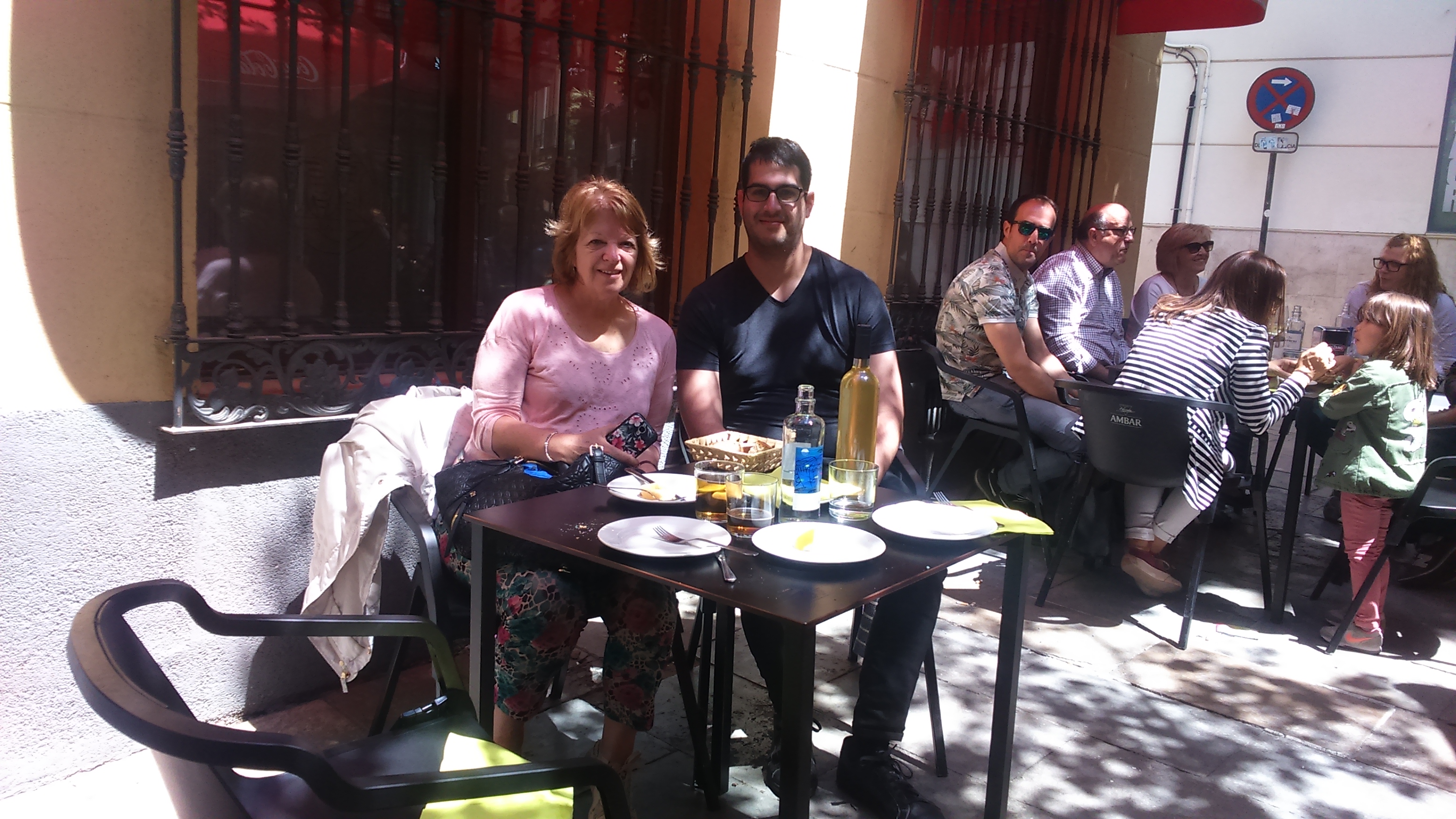
There are beautiful lanes, squares and courtyards with cafes in. We had paella sitting outside in the warm shade for lunch.
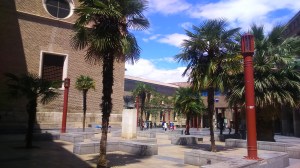
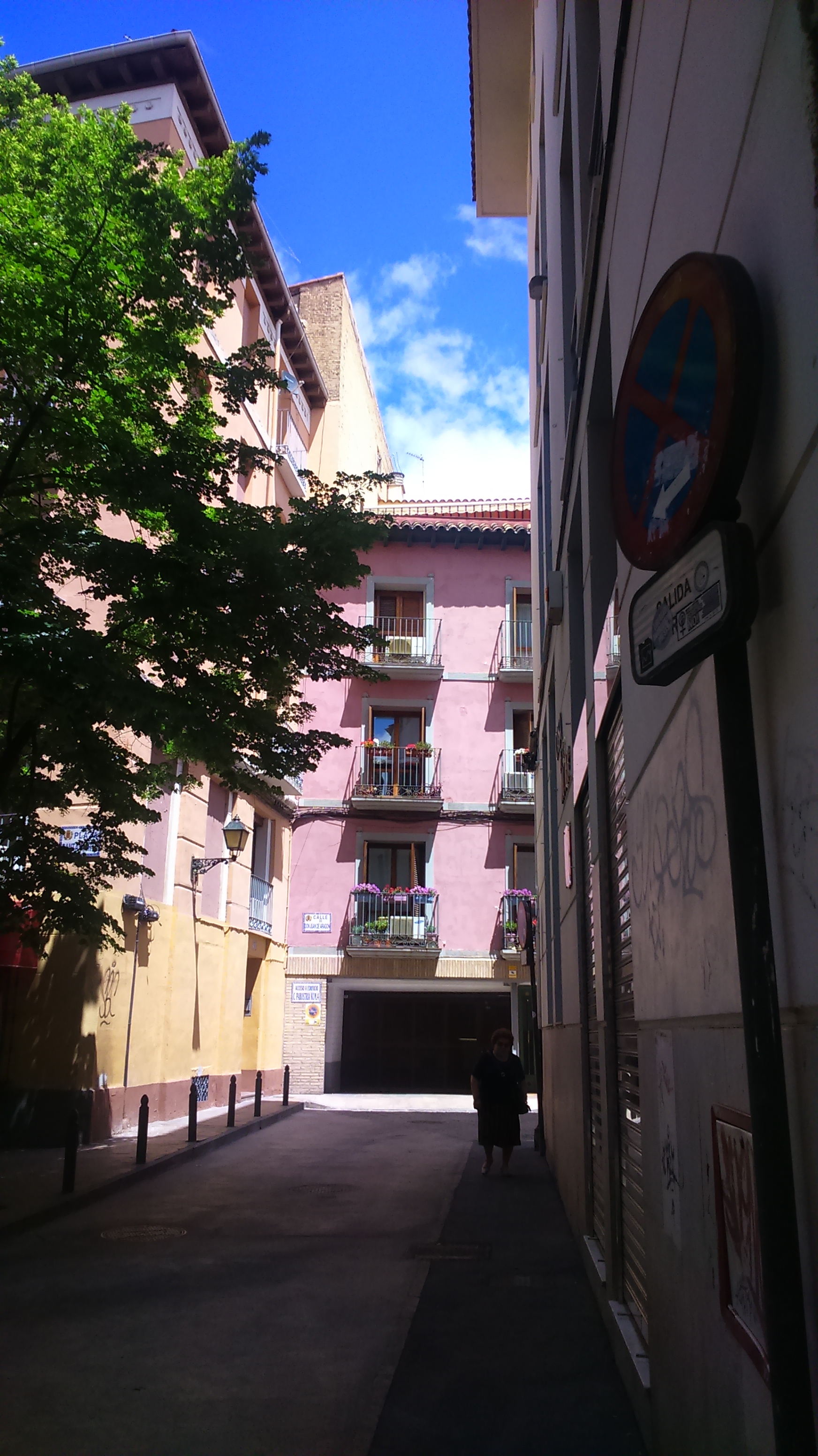
Cafe y mirador del Museo (museum).With palm trees.Candy yellow and pink houses.Archways leading to new delights.You could spend dappled days wandering and stopping for drinks.
Watch other people strolling – you might not be able to see the pom poms on the little boy’s socks.Yvonne and Danny.
Anywhere where music is played in the multi-storey car park as well as the cathedral is OK with me.
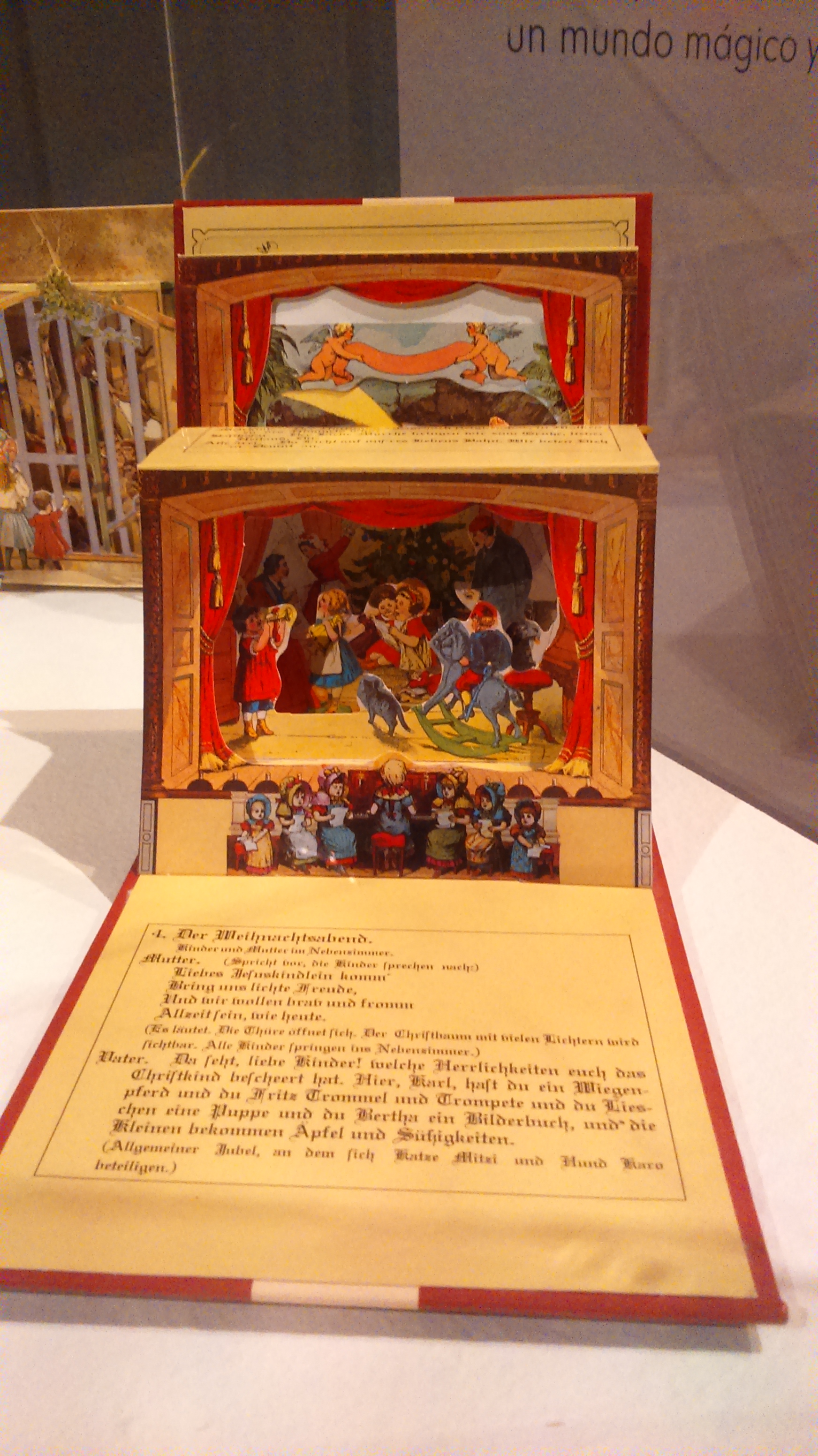
Here are some more of the origami and paper exhibits.
Made by Beata Kupczak, Poland.
Thanks to obliging Yvonne, who drove at top speed to catch the security guard before he closed the museum, I reclaimed my mobile phone with its 1000s of photos!
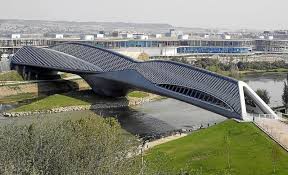
Other highlights included an evening walk along the Ebro, being shown the contemporary architecture of the 2008 Expo with the Pabellón Puente bridge designed by Zaha Hadid, and the Aragon Pavillion with its effect of woven glass panels. (No photos because I had not got my phone back at this time).
I extend my thanks for the hospitality, keen conversation, and sightseeing I received in this impressive city.
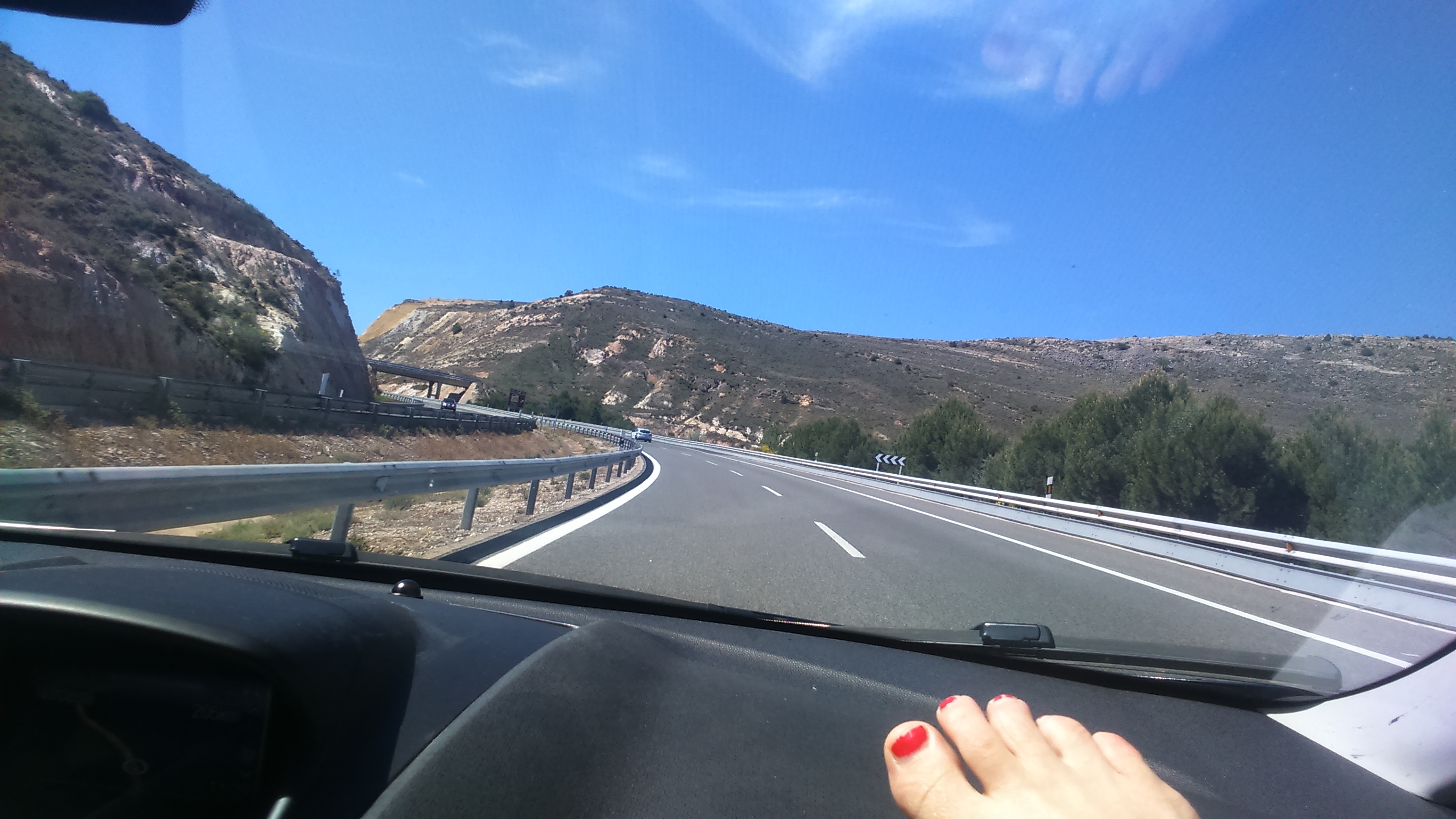
The next day I took a Bla Bla Car along the autovia del Nordeste (A2) between Zaragoza and Madrid, passing by Guadalajara and the Panteón de la Duquesa de Sevillano. Knowing it was the Fiesta San Isidro that day, the biggest and best of the year, and with extra unexpected time in Madrid, I made the mistake of attempting to walk from Chamartín to Atocha stations to try and see the street celebrations. Well, I had been in the car for a long time already, and was going to be journeying a further 5 hours to Seville later the same day so I figured I could stretch my legs! Readers, do not try it – it is mostly motorway and you cannot walk on the motorway, so I took a detour and somehow managed to get lost (in immense heat, on a Sunday afternoon) in an industrial estate. Oh dear, I had to retrace my steps and take the metro. It was a disaster and I did not get to see any of the carnival.
After the most troublesome pick-up I have had with Bla Bla Car, I eventually managed to get my lift. The driver was a wheelchair using, cannabis-smoking athlete with a wicked sense of humour. He played me Luis Fonsi’s raunchy Latino ‘Despacito ft.’ and we translated from the Spanish to English, line by line, all the way to Seville, arriving much later than planned, and being met by the patient Pedro. See next blog – Seville.
Pontorson 10.5.17; Brittany circular, coastal walk / ‘les balades’ (rambles) / ‘les randonnées’ (hikes) – La Bernière to Port de Pornic 11.5.17, both France.
Journey via Bla Bla Car to Zaragoza, Spain 12.5.17.
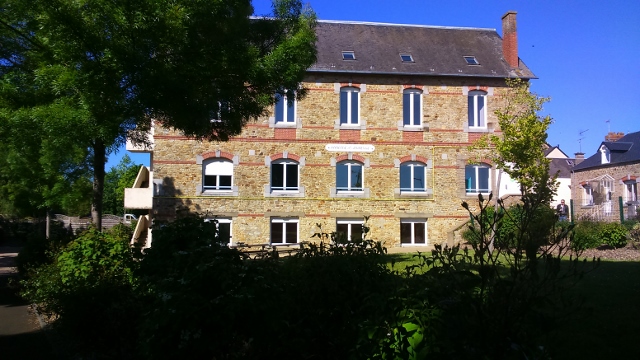
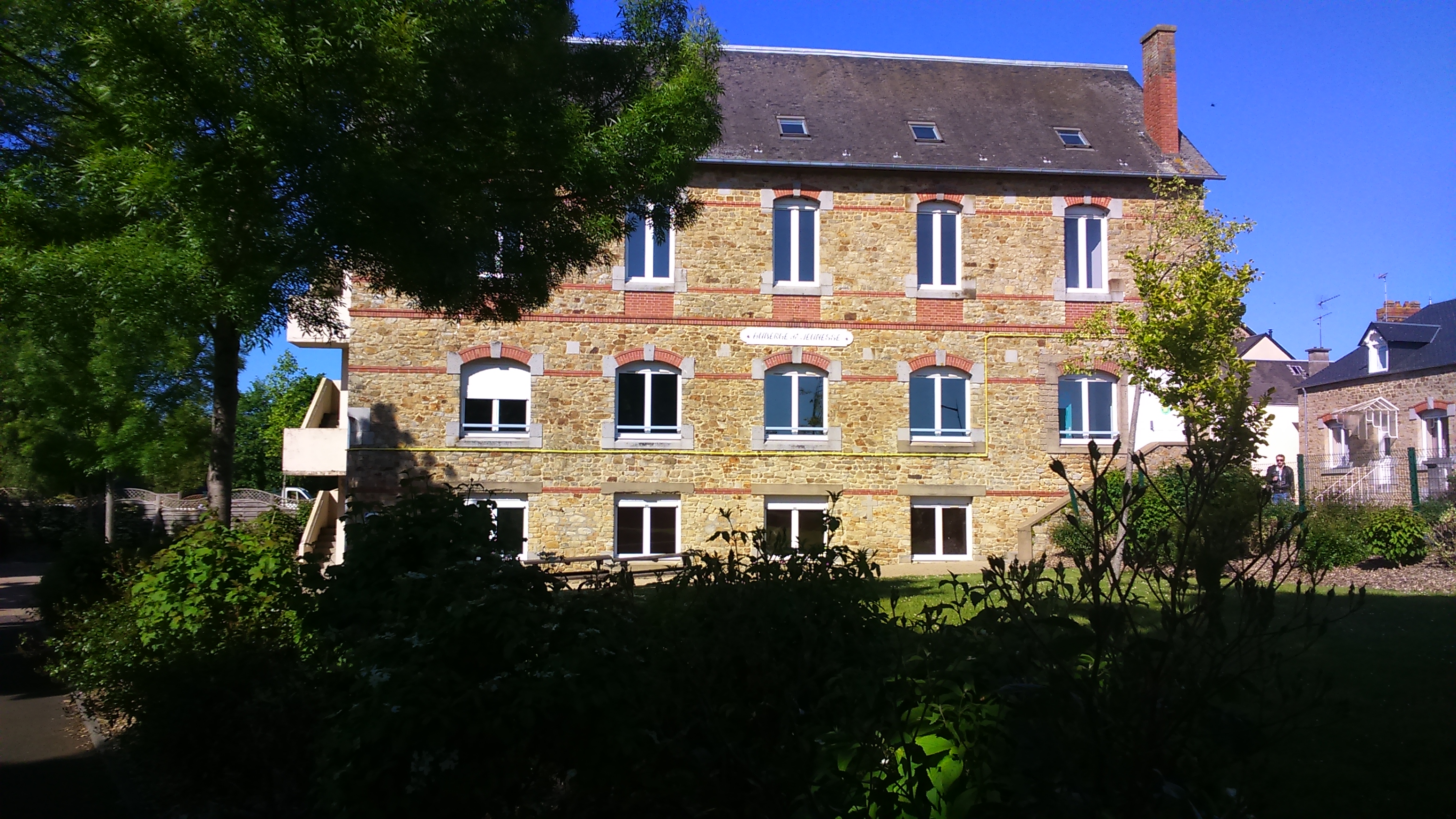
Youth hostel, Pontarson, Normandy, France.
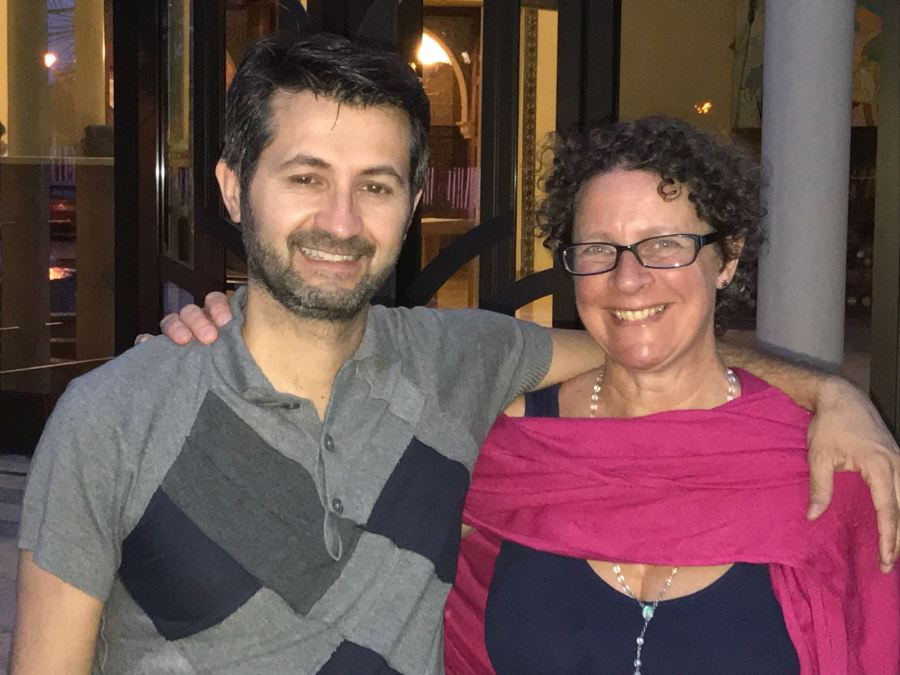
On the Camino Francés in Spain, the hostels are where you meet other backpackers and exchange tales. Up until today, I had not encountered anyone in France, but the two women I had seen the previous night were breakfasting when I got down to the youth hostel kitchen. After being initially engaged in (French) conversation with a rather interested man who told me he did all sorts of work, anything he was asked to do, and then kissed me goodbye (yes, the dangers of being a single female traveller!), I was invited to sit with them for a while. They asked me what I was up to and after explaining, I was enthusiastically given a piece of paper by Lysiane, with her name and address on it, and told that if I ever visited Brussels I could stay with her in return for Shiatsu. Almost everyone I meet and talk to knows what Shiatsu is and likes it; it really is quite notable compared with the UK.
Station, Pontorson from where I got my first and only train during this month. Goodbye Normandy!
Myself and a number of others arrived at the station before it opened. It was unclear to us all how we should get tickets and where to go, until a brusque woman came to open up. We waited in the gorgeous sun before realising we needed to cross the tracks for the stopping train to Rennes which I had booked online the day before. A Japanese couple regaled us, as we waited, with a comparison between the efficiency of French signposting and the contrasting confusion in Britain.
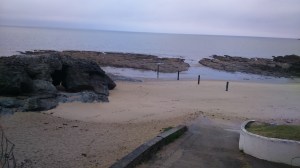
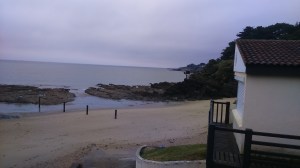
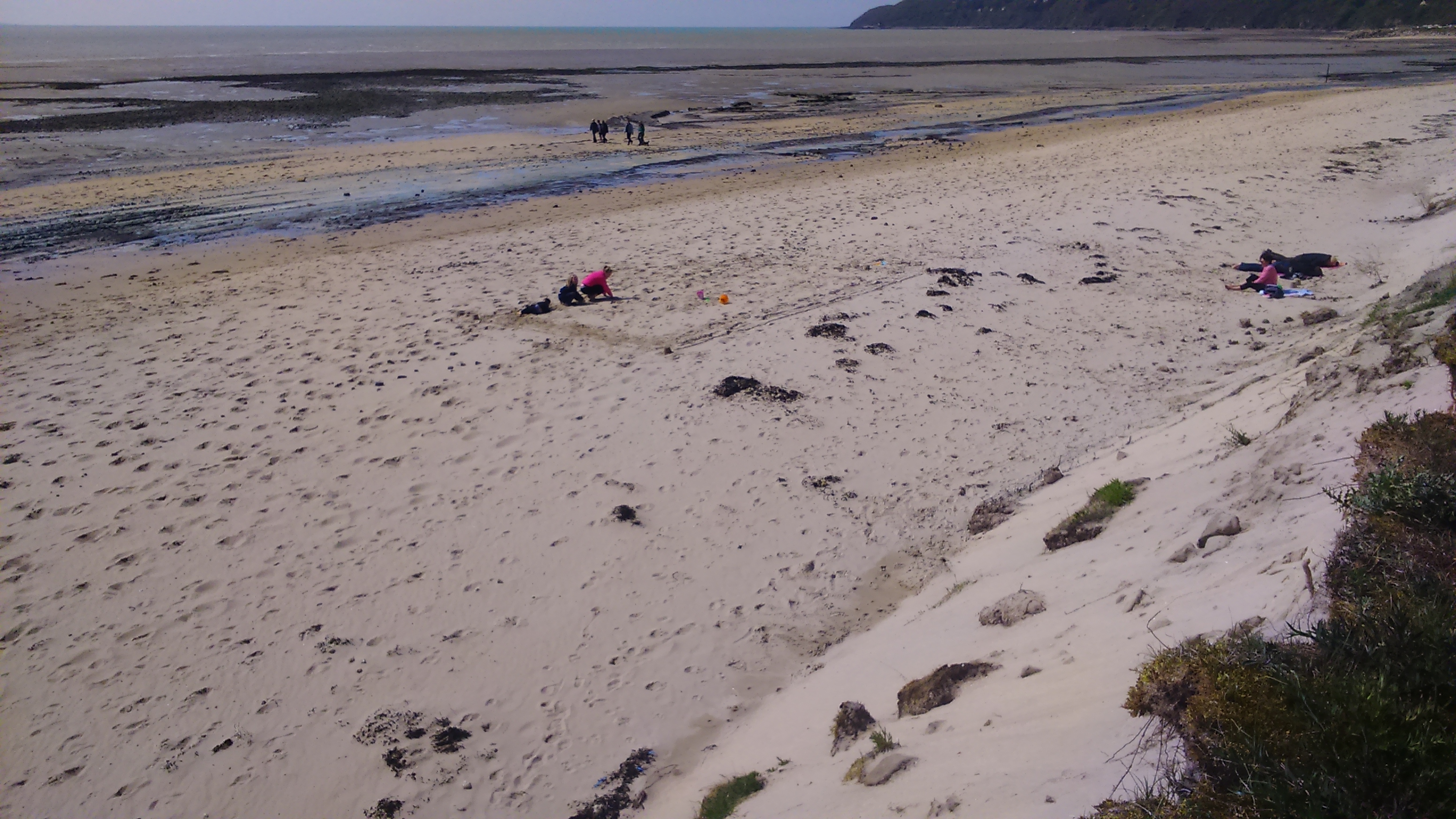
My day’s walk on the Brittany coast began in the rain at La Bernière-en-Retz, a small town where a lot of street work was being carried out, but that was otherwise deserted. The sea was well out, revealing broad sands with low stone walls. I felt immensely light-hearted, as happy as I was when walking in northern Spain in the Autumn of 2016.
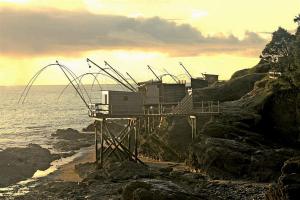
The path was easy to find and varied. Sometimes it was on cliffs, at others beside dwellings. Always there was the expansive view of the water, with miniscule collectors of seafish in the distance. After a while there was a series of platforms from which hung voluminous lift-nets. I was told that when the tide is in, these fill with fish. These traditional ‘carrelets’ are expensive apparently, but bring high yields and are found all along this coast.
‘les carrelets’c/o Olivier on Pinterest
The low stone walls are also demarcations related to fishing, left over from many years ago, and easily seen at certain times of the day.
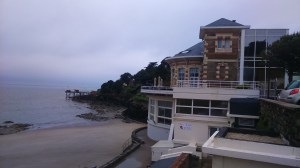
Elegant hotels and old people’s homes line parts of the shore.
Grassy paths wound up and over the rocks, seagulls shrieked, and the fresh breeze bought welcome fragrances of the cypress trees.
Not a cypress.
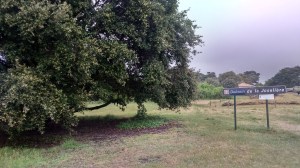
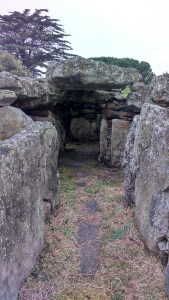
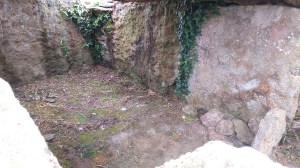
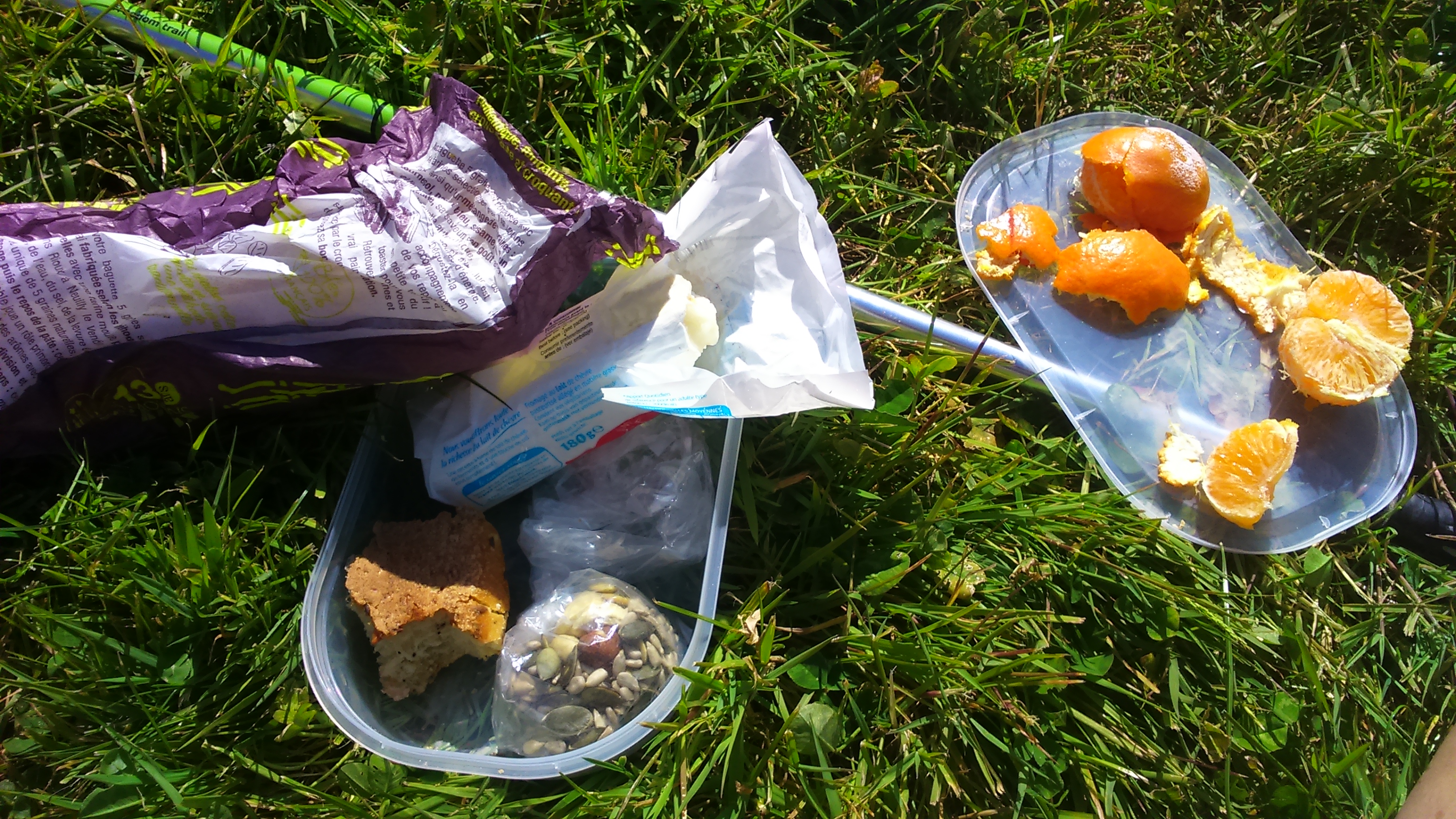
Picnic lunch was taken (illegally, it transpired) under ancient stones to shelter from the wet.
Dolmen de la Joselière.
Port de Pornic with its gentle harbour, silver grey turrets, and small yachts came as a surprise. Rather quaint and sophisticated by turns, it is quite a centre but I did not investigate. Instead, here I turned and headed back the way I had come, stopping to divest myself of waterproof trousers as the sun started to show itself, seeing things from back-to-front and in a different light, literally.
The next day I took a Bla Bla Car from Bordeaux, via Bayonne, Irun, and Pamplona to Zaragoza to stay with the genial Yvonne.
Bordeaux station. France.I needed a brandy while waiting in the extreme heat of midday.
Bla Bla Car is generally unknown in the UK. It is a fantastic system, originally set up so that someone who is making a long-distance journey has company while they drive. Nowadays some complain that it has become a sort of glorified taxi service, but on the whole I found it to be a social thing.
On the way.
It operates in France and Spain, and there is a website where you search for the setting-off point and destination, and then identify who you might like to go with. Like air bnb, the drivers are vetted and reviewed, and you can guarantee that the cost is less than the cheapest mode of public transport for that same journey. Sometimes the driver reserves the right to choose, and although you have paid (I used PayPal for safety), you can be rejected, and then the fee is repaid immediately.
In fact, it was often tricky to find a train or bus which goes went a to b at the times I was searching, whereas it was always possible to find someone who was driving, once you got the hang of the site. And of course I met fascinating people. On the first leg, from Bordeaux to Bayonne, I sat in the back with a young woman who told me all about her life, parents, health and loves, showing me photos and shedding a tear now and then.
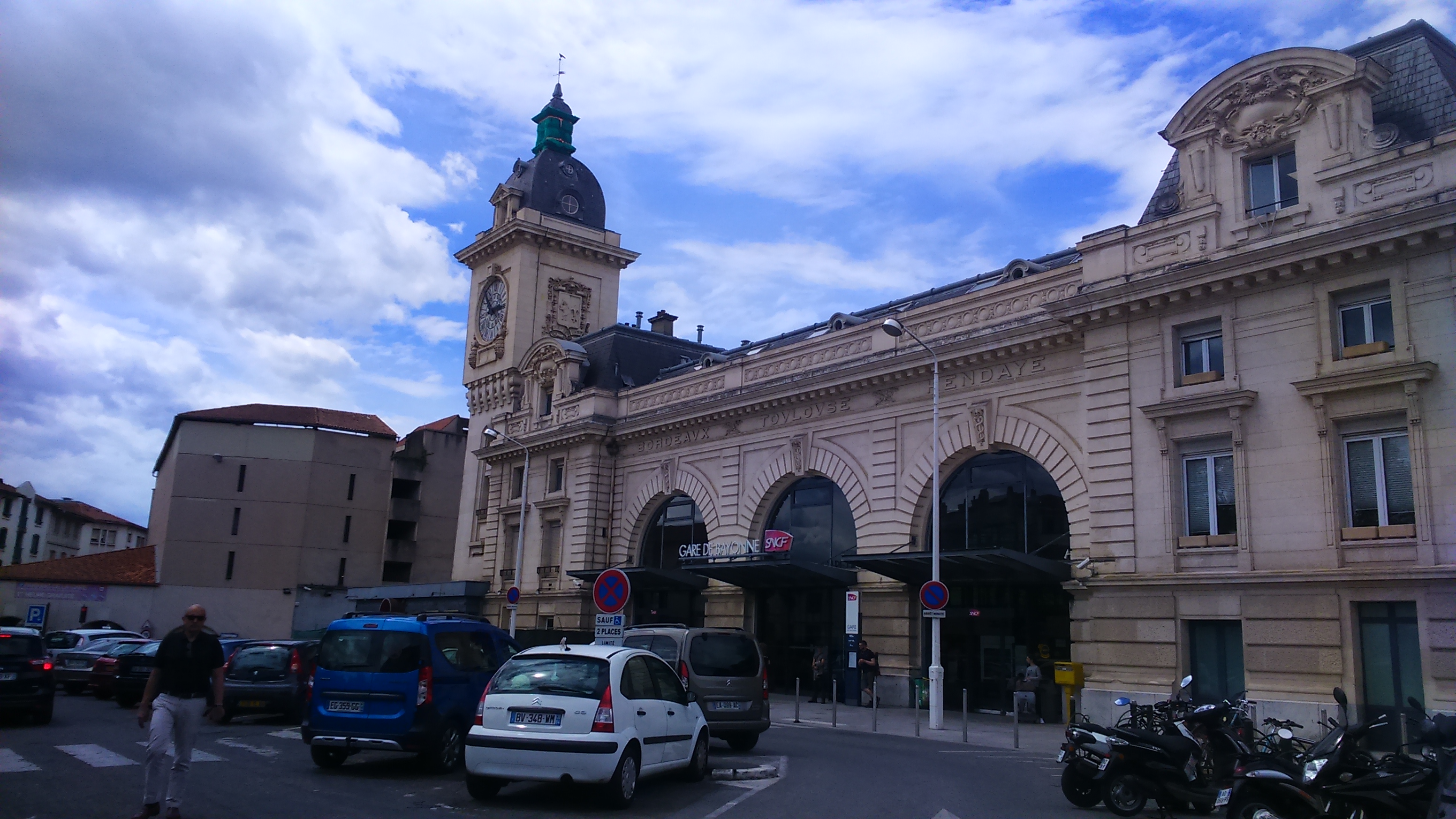
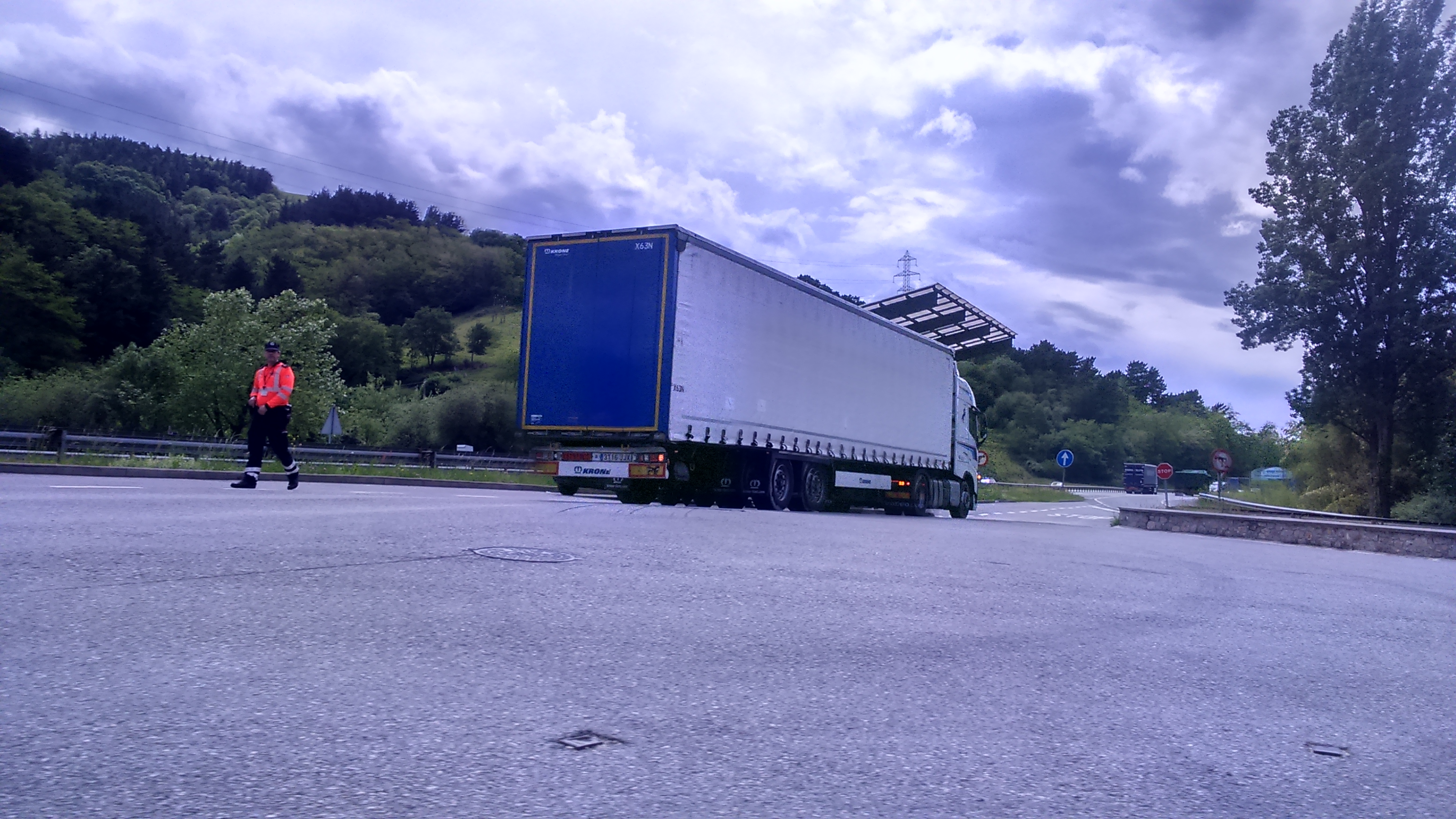
Bayonne station, France. Most of the Bla Bla Car pick-ups happen at well known sites.Passing through Irun on the mountainous border.Massive trucks doing paperwork.
At Pamplona we said good luck to two gentlemen who had both injured themselves on the Camino, been home to recover, and were re-joining it there. Then Charles, the car owner, and I made the final leg to Zaragoza, arriving at the radio station with messages flying between myself, my expectant host, and the driver. I have found all the drivers this month to be courteous and obliging. It was good that I had my daughter’s old Nokia with a topped-up Spanish SIM in it as we were late and so I was able to communicate by text and phone.
I had been asked several times why I was bothering to go to Zaragoza. It seems to have a poor reputation with tourists as a predominantly industrial city. My reasons for going: Yvonne kindly invited me when I met her at her father’s funeral and that was my plan – if I am invited somewhere I go, that’s how I choose between all the possible amazing places in Spain. Result: it was a fascinating and enjoyable place to visit, made considerably better I am sure by being shown around and treated like a queen by a resident!
Bas-Courtils to Mont Saint-Michel to Pontorson 9.5.17.
In this part of France I would suggest that it’s always better to go by the randonnées, Sentier de Littoral (coastal path), than by the road, as there are rarely pavements.
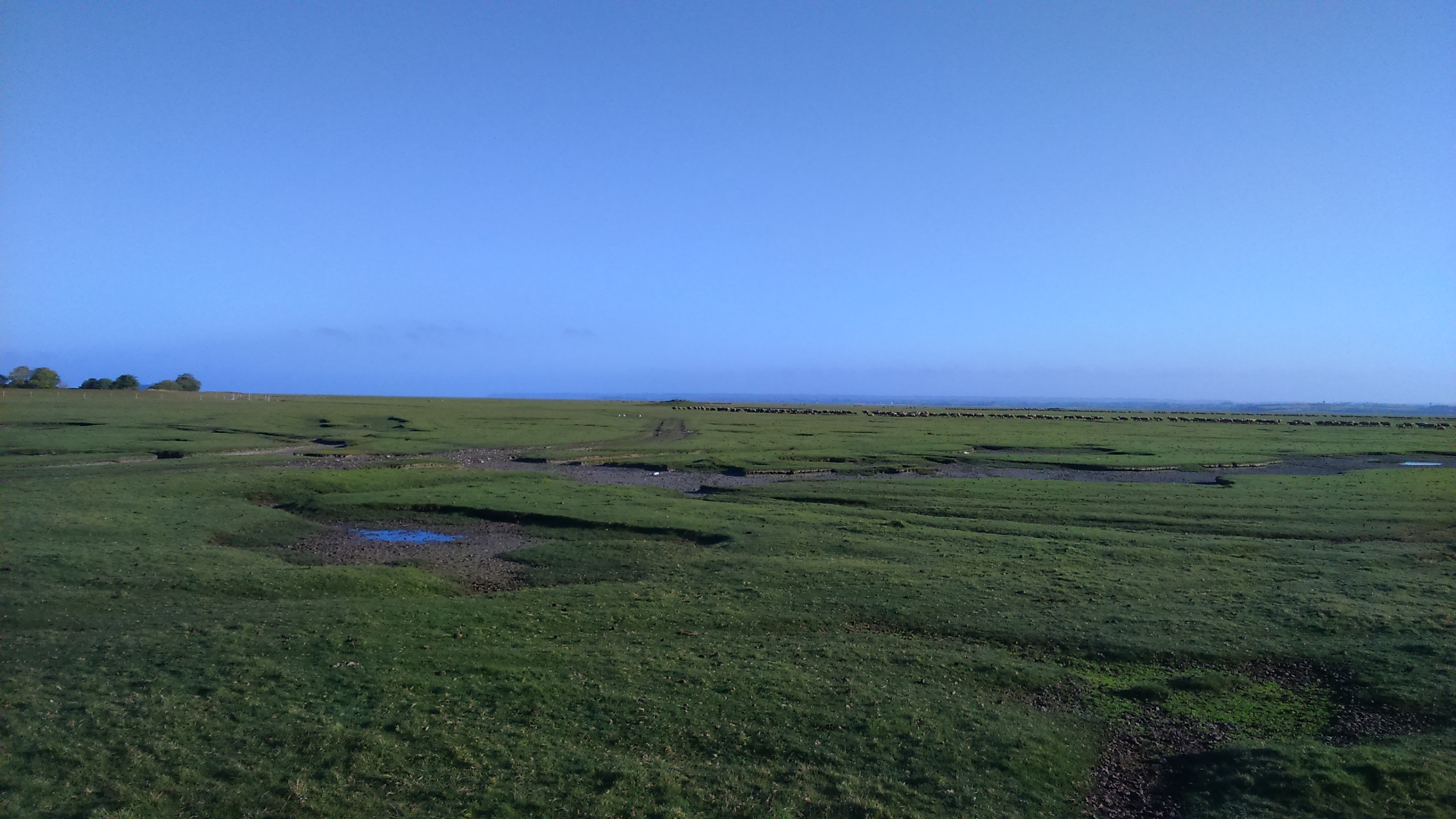
I left Bas-Courtils at 8am on a gloriously sunny morn. Beside the sea, the land stretches level affording a distant, nearly unbroken view.
The very long line of sheep is in the background of this photo (as close as I could get) but if you can enlarge it you will see -it’s amazing.
What a racket! Sheep: many, one after the other, having been let out (perhaps after the winter?) moving slowly in single file across the field, over the grey clay. A female and her lamb were leading, with not a human in sight, and yet they were reminiscent of the group of us who crossed the bay yesterday, though we did follow a guide.
Unlike the walks I had been making in the days preceding this, the path crossed numerous obstacles. To be honest it was a trial to have to climb and clamber over fences with a huge backpack. What with that, gates which do not open, and crossing deep, wet grassy fields, well, really this way is not pilgrim-friendly.
Thank goodness it was so very beautiful.
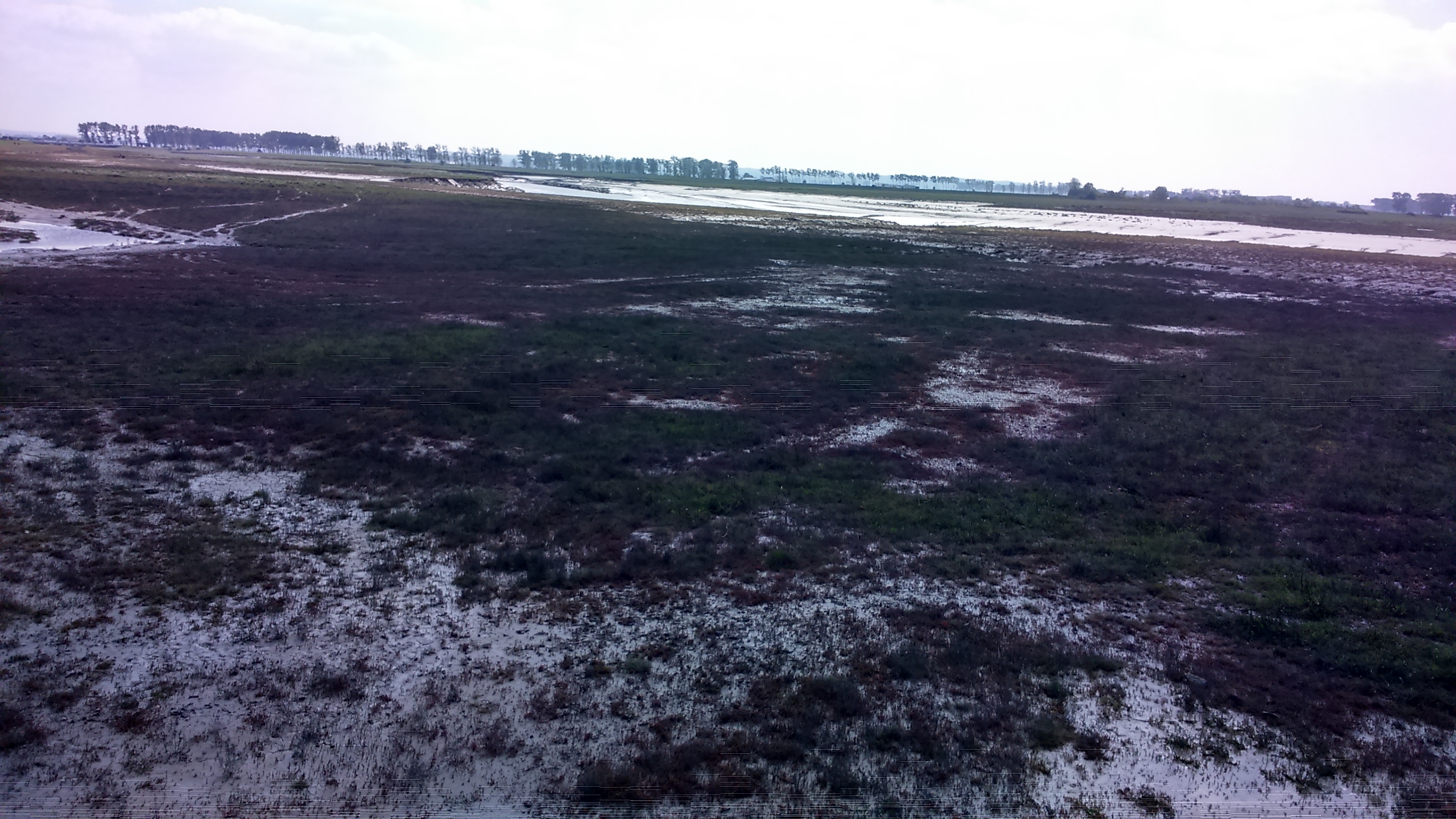
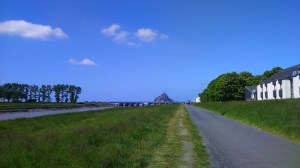
Mont Saint-Michel is clear in the distance. My human eye (rather than the camera) can see the shuttle buses, like black and white caterpillars on the horizon, the place I walked along 14 hours earlier. They are in contrast to the luminous spring green of the fields.
It is cold, exposed like yesterday, but still I have bare arms. I did not even think about it. It was more that I moved instinctively towards the Mount.
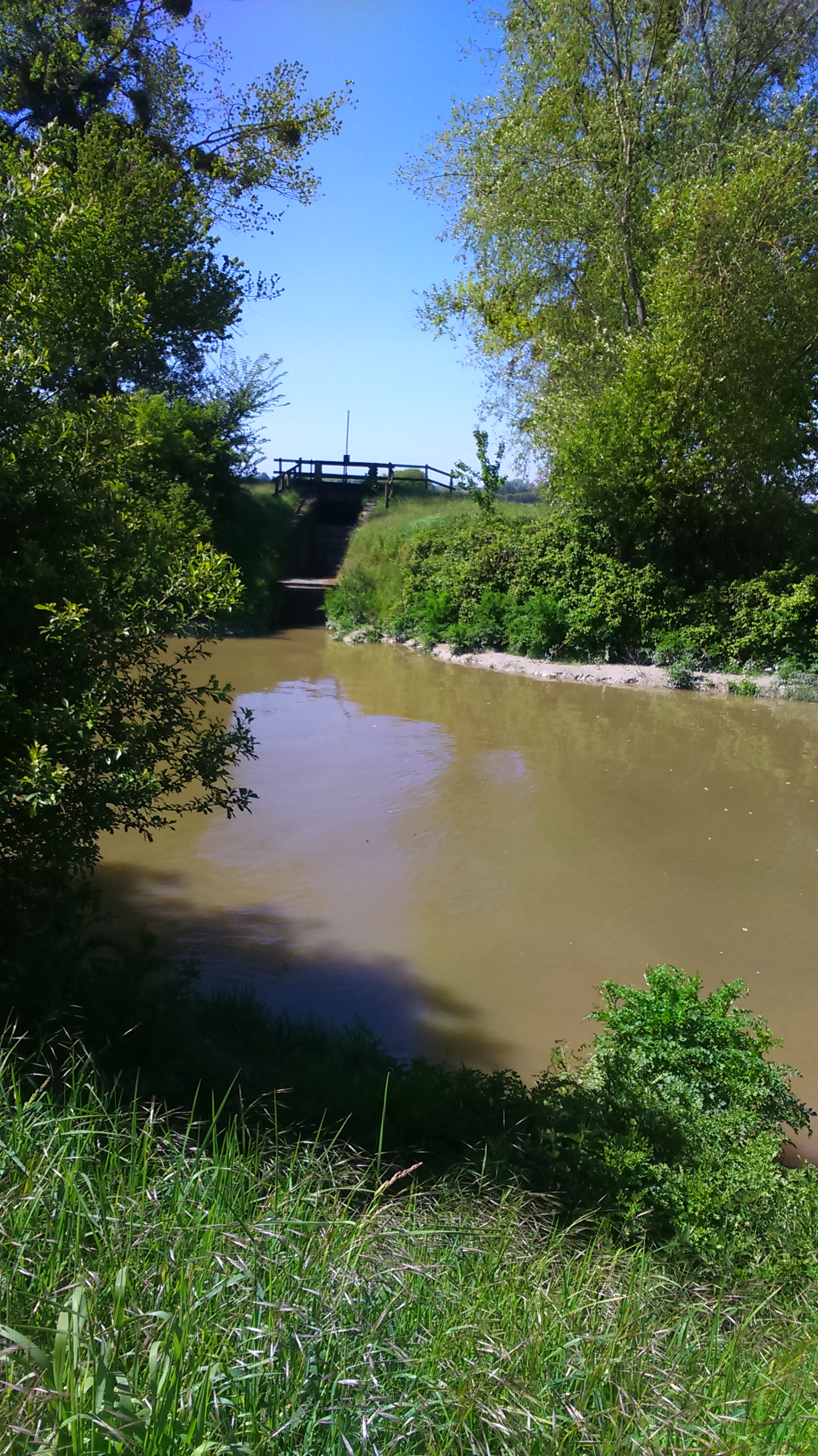
I crossed rivers by planks, sidled round deep pools, and struggled to follow the way which did not seem clear to me.
Another surge of black-headed sheep ma maaa-ed their way from their farm onto the plains.
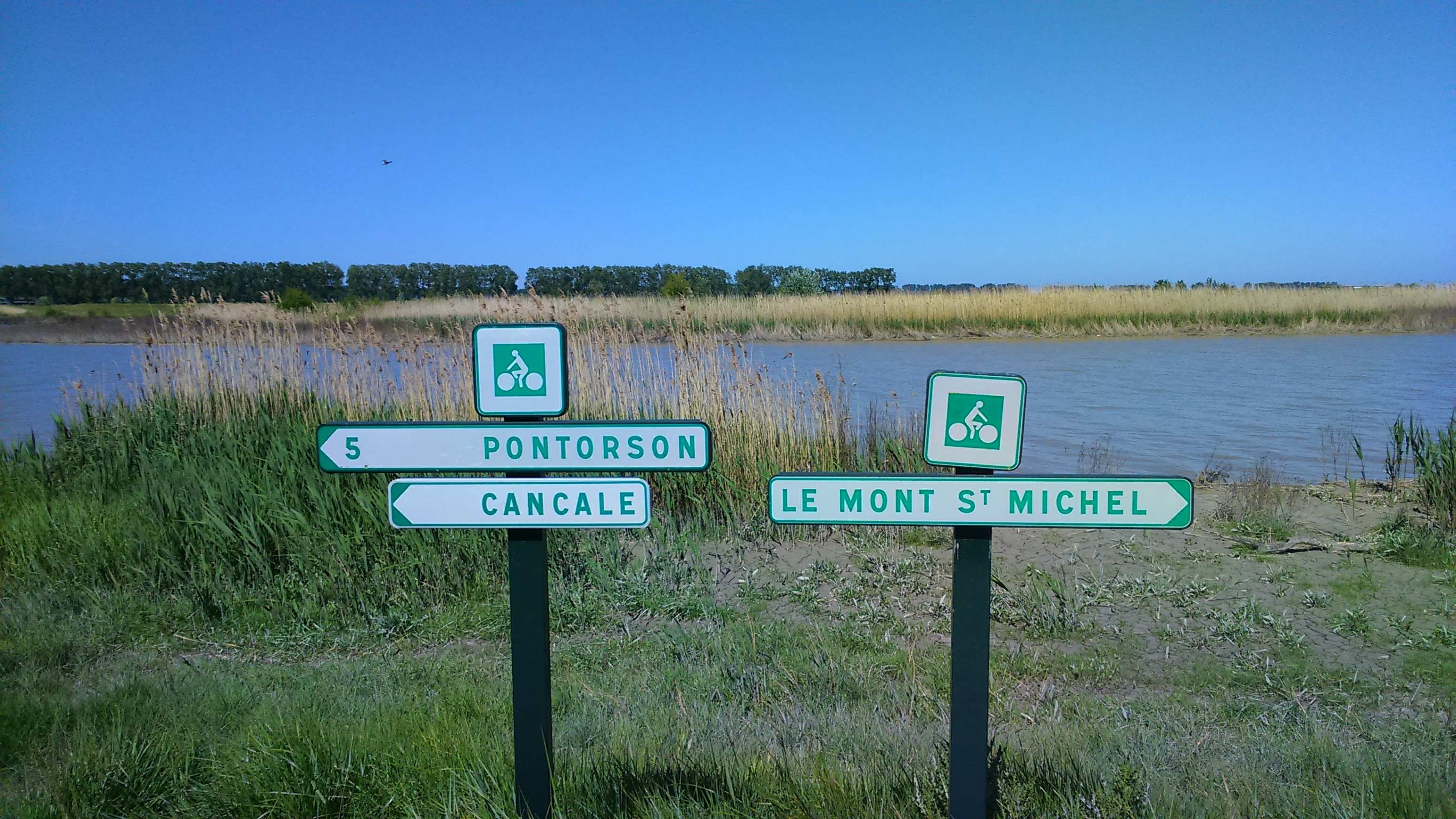
I arrived at the M S-M service buildings: restaurants, shops (though I followed the signs and found none), toilets (equally hard to locate), and so on. And then having completed the ‘Chemin de la Baie’ I launched straight, alongside the River Cuesnon, a new ‘randonnée’ in the direction of Pontorson.
After the hubbub of the tourists, the peace of the river was potent. Birds quietly mentioned, incongruous chariots raced silently round the track nearby, dogs were carried patiently in the backpacks of two cyclists, and just me making my way along a hard path beside a swollen river with butterflies blue.
I was continuing to take care of the way I walked, the parts of my feet on which the weight landed, and minute details of my posture. This walking provides ample time to pay attention to long-practiced bad habits.
More glorious weather.
Hush reeds in the wind, like witches whispering. It was a very short 10 kms to the next town, so I gave in and lay down, with my mind all but clear and just the sensation of the sun on my back.
An ant’s view.
My feet were throbbing, my ankles had felt quite unpleasant for a stretch. Now I listened lazily to the ducks, the farm machinery moaning, and felt the grass dampen me. Seed pods sailed down and piqued my thigh. I was not exactly pushing myself. There was no need to be in Pontorson before 5pm when the youth hostel opened.
Random thoughts passed through me: When you wait, you see more around you. There was no signal so no sending or receiving. It was the hottest day so far, and I needed a hat and sunglasses for the first time!
There was nothing to do when I arrived at 1.30 – all was closed. So I had a peaceful beer and sat in the main square opposite the Hôtel de Ville. It is a comprehensive town with a thoroughly helpful tourist information: there was free wifi where I could wait as long as I wanted in order to book trains and send messages. The only down-side were two men who would not leave me alone as I picnicked so I had to move on.
Old places with character.Smart town houses.Eglise Notre Dame
It was 22 degrees. I was impressed by the pharmacy because it sold herbs and homeopathy too. I was surprised by conversations in English at the next table. In fact it took me a while to realise, while I sat and wrote, that it was the English language I was hearing; about dogs and living here in Normandy; believe me, it was about the M25!
Handsome youth hostel.
There were a couple of women with rucksacks at the hostel: the first time I had seen other trekkers since I started walking. They did not stop and exchange despite my smile. The very young man in charge of the hostel was welcoming and helpful. All was clean, and I had a room with bunks to myself and space to do my t’ai chi.
Genêts to Mont Saint-Michel (13 kms across the sand) to Bas-Courtils 8.5.17
‘As I left home that morning and walked away from the sleeping village, it never occurred to me that others had done this before me.’ Laurie Lee, London Road chapter.
Yes, me too! Several people had recently enquired, on hearing I was going to visit Mont Saint-Michel, if I was planning to walk or not. It’s an island in the bay which forms a maritime corner of southern Normandy, and I had replied that I was walking around the coast and crossing the boardwalk to get there from the south. Until, that is, I realised what they meant: these people had already been to the Mount before me, and they had crossed the sands on foot from Genêts. Then I knew that was what I had to do this bank holiday Monday.
The day began with 25 minutes of fast walking from the youth hostel to the set-off place. (Note: If you want to do this too, and I highly recommend that you do, and if you are not just making a day-trip from home, you must book accommodation in advance (see below)). It was the track I would have taken last night had I not been distracted by the beach and tiredness, and consequently missed the markers. I rushed cross-country, through soft grass and pale powdery sand as the day heated up. As always, everyone was really helpful, and I made it just in time.
It’s impossible to make the journey to the isle from the east without a guide as the sands are treacherous and the tide must be at the right turn. There are two companies which offer to take you as part of a group (see below for details), and it was busy, busy, busy, possibly the busiest day of the year. As a result, there were groups leaving every 30 minutes or so and I had to wait. No problem, I whiled away the time in a cafe with wifi and the most generous waitress. I know I have ‘brass neck’, but it comes in useful in certain situations, such as when you need to send a well-translated message in French, but do not know how to do it yourself.
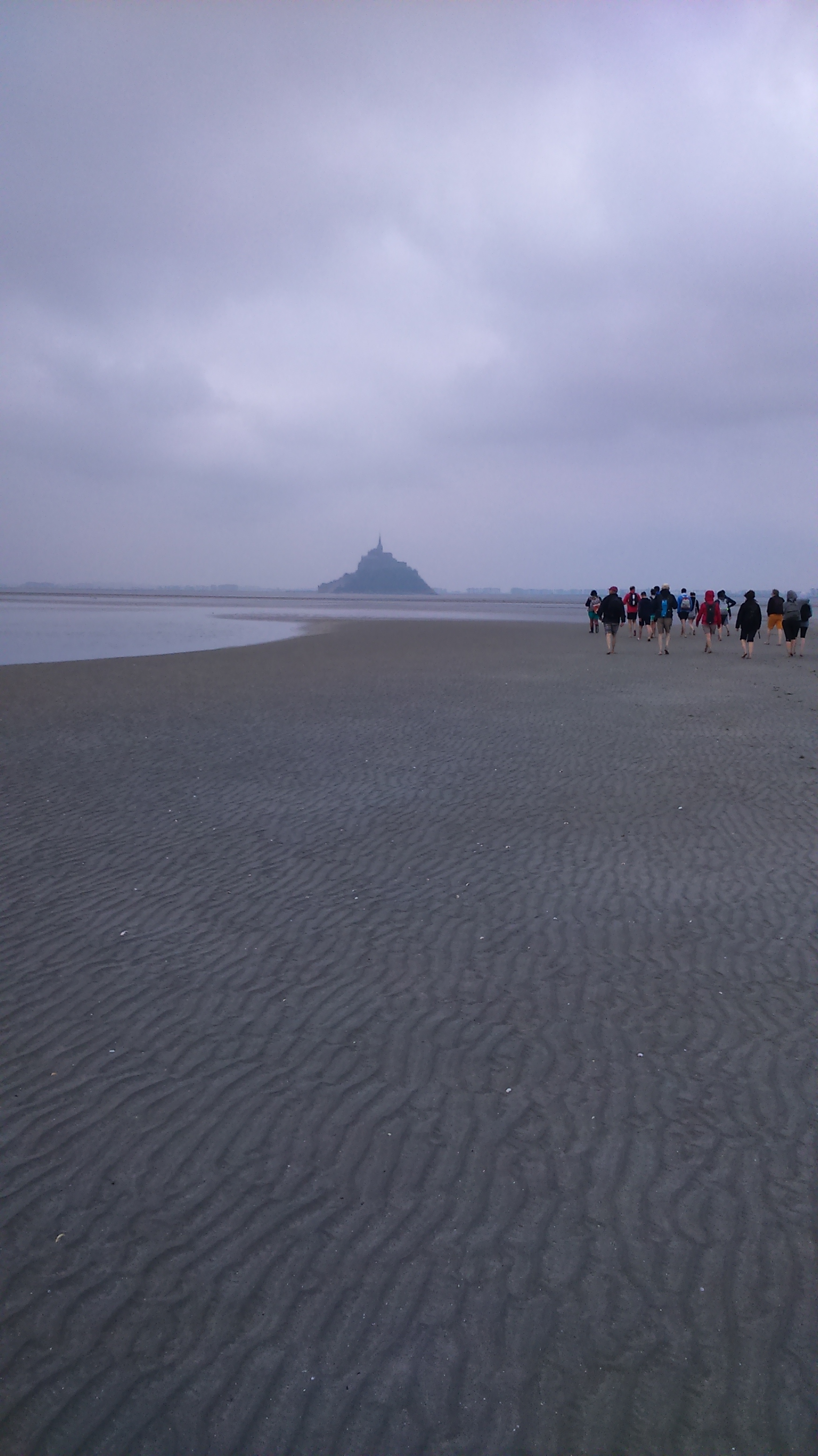
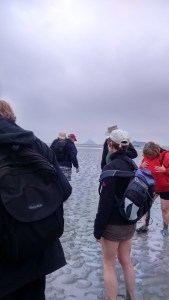
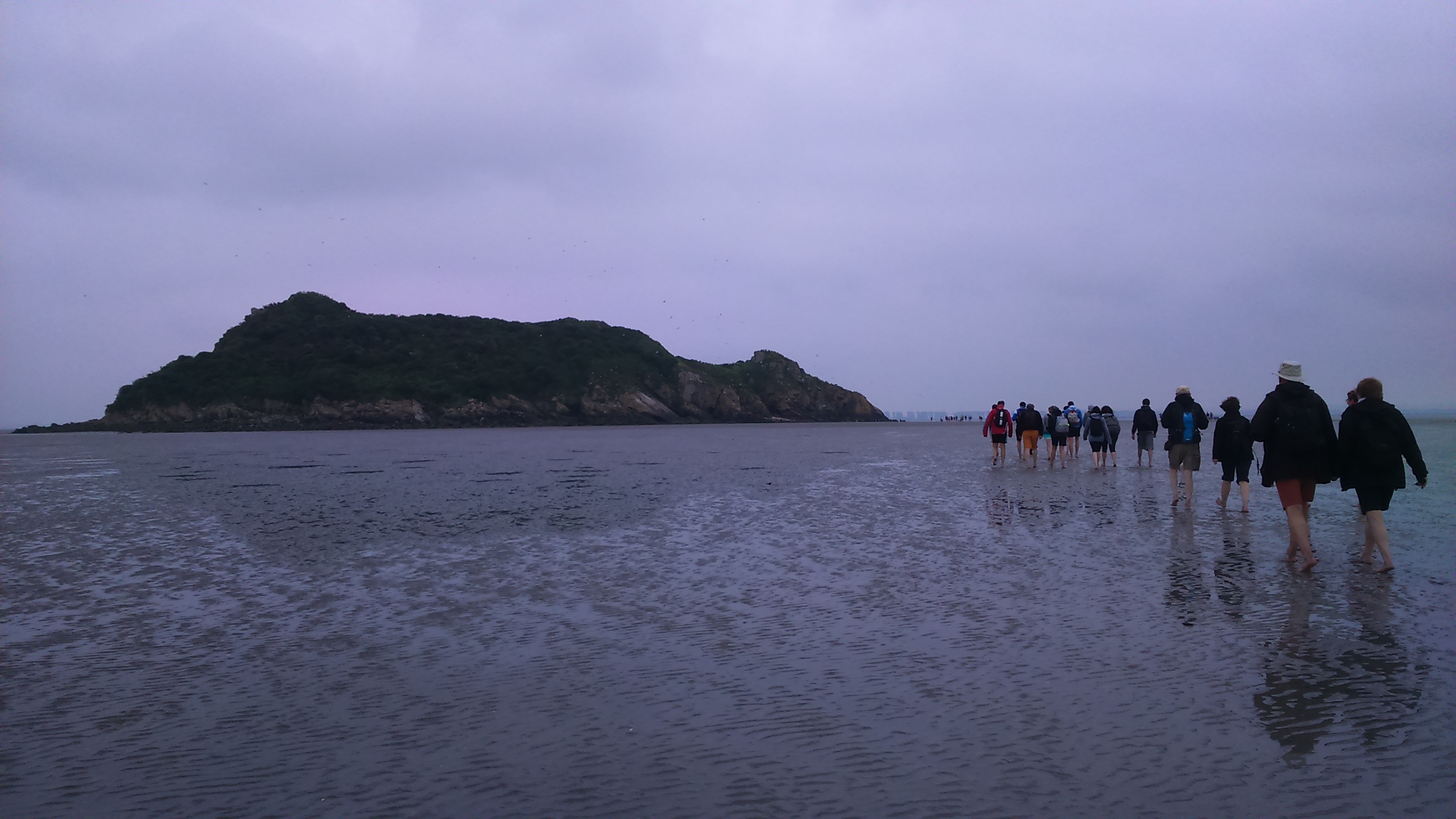
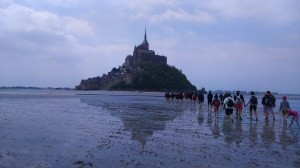
I watched the others who were massing: men, women and children; old and young; some who had clearly been many times before. I was the only one with a ‘serious’ rucksack (by which I mean I had clothes, sleeping bag, cooking utensils etc on my back – stuff for a month’s travelling), and I too removed my footwear, dangling them from a strap so that I had both hands to steady myself as we negotiated the sinking sands.
What a wonderful and moving experience! Layers of time seemed to concertina, and I felt as if I was simultaneously myself and a medieval pilgrim, arriving at last from afar at the culmination of an arduous journey and full of spiritual expectation.
Trekking across the sands like that takes two and a half hours. Be prepared for cold feet, lots of mud, and finding yourself in seawater to mid calf or knees (depending on the weight of what you are carrying!)
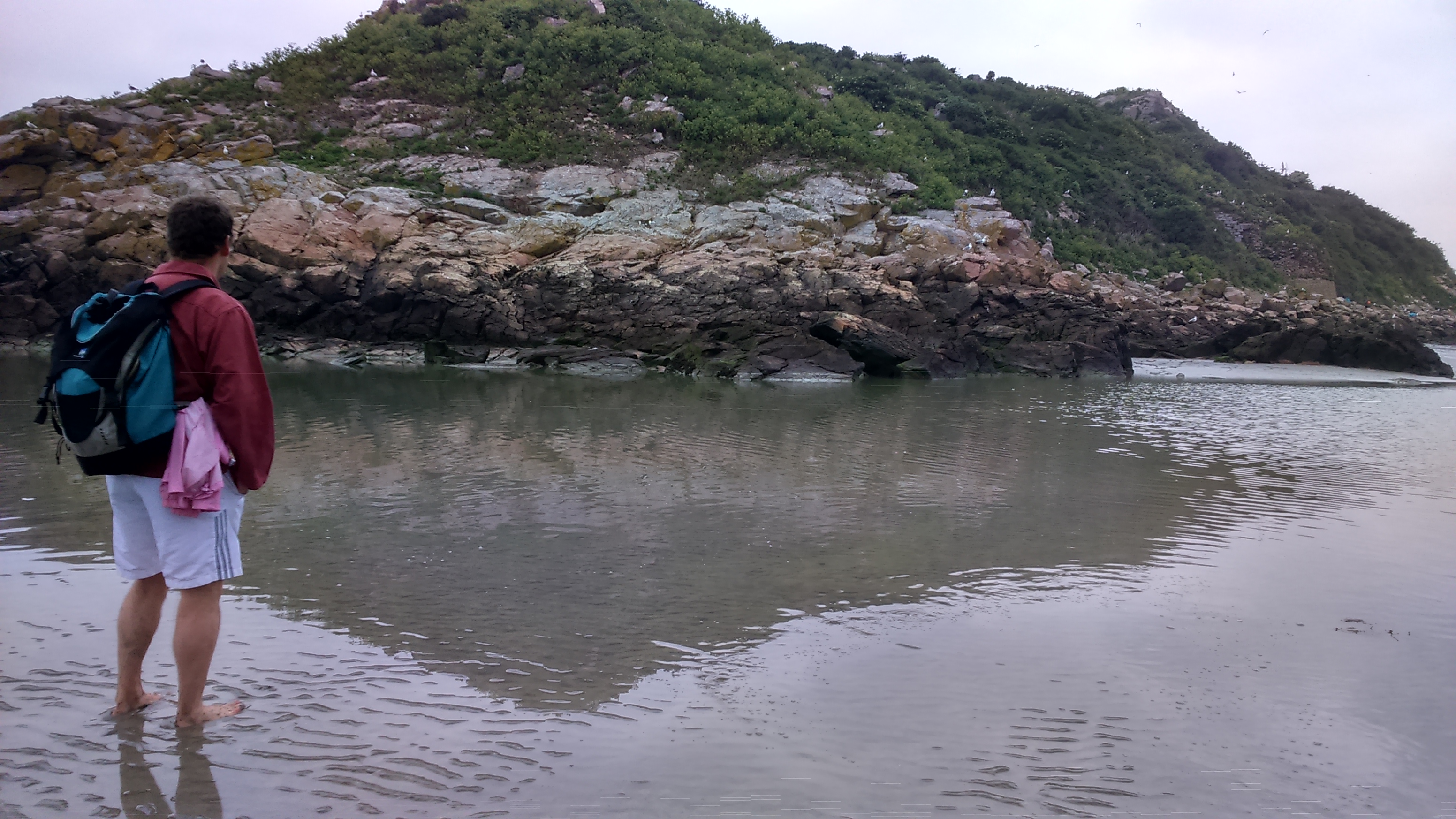
There’s a large rock, very similar to Bass Rock off the coast of East Lothian in Scotland, called La Roche Tombelaine, which you stop at on the way. The guide gives continuous commentary (in French) about the fascinating history and wild-life, together with stories galore.
According to wikipedia, the name Tombelaine means “the tomb of Hélène”, from a princess of the same name, daughter of King Hoël, said to have been buried on the rock
In 1423, Tombelaine was taken over by the English because it was close enough from which to attack the Mount. Luckily it was unsuccessful. In actual fact, no-one has managed to damage Mont Saint-Michel, not during the war, before, or since, so it’s easy to understand why some Normandy folk believe it has divine protection.
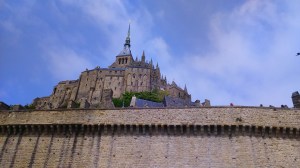
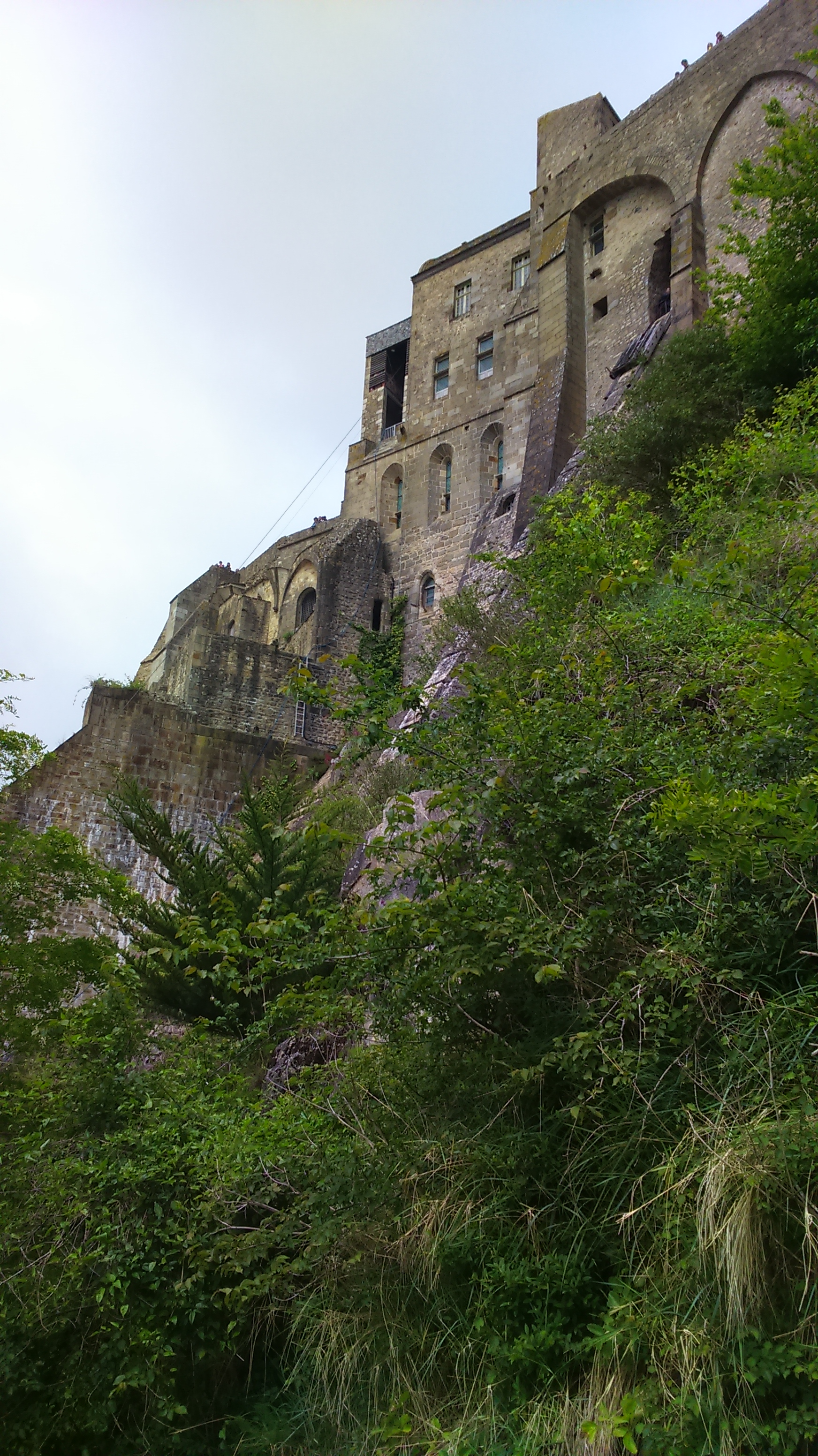
As we got closer and closer, the grandeur, the sheer size of the Abbey on top of such a small base, was awe inspiring.
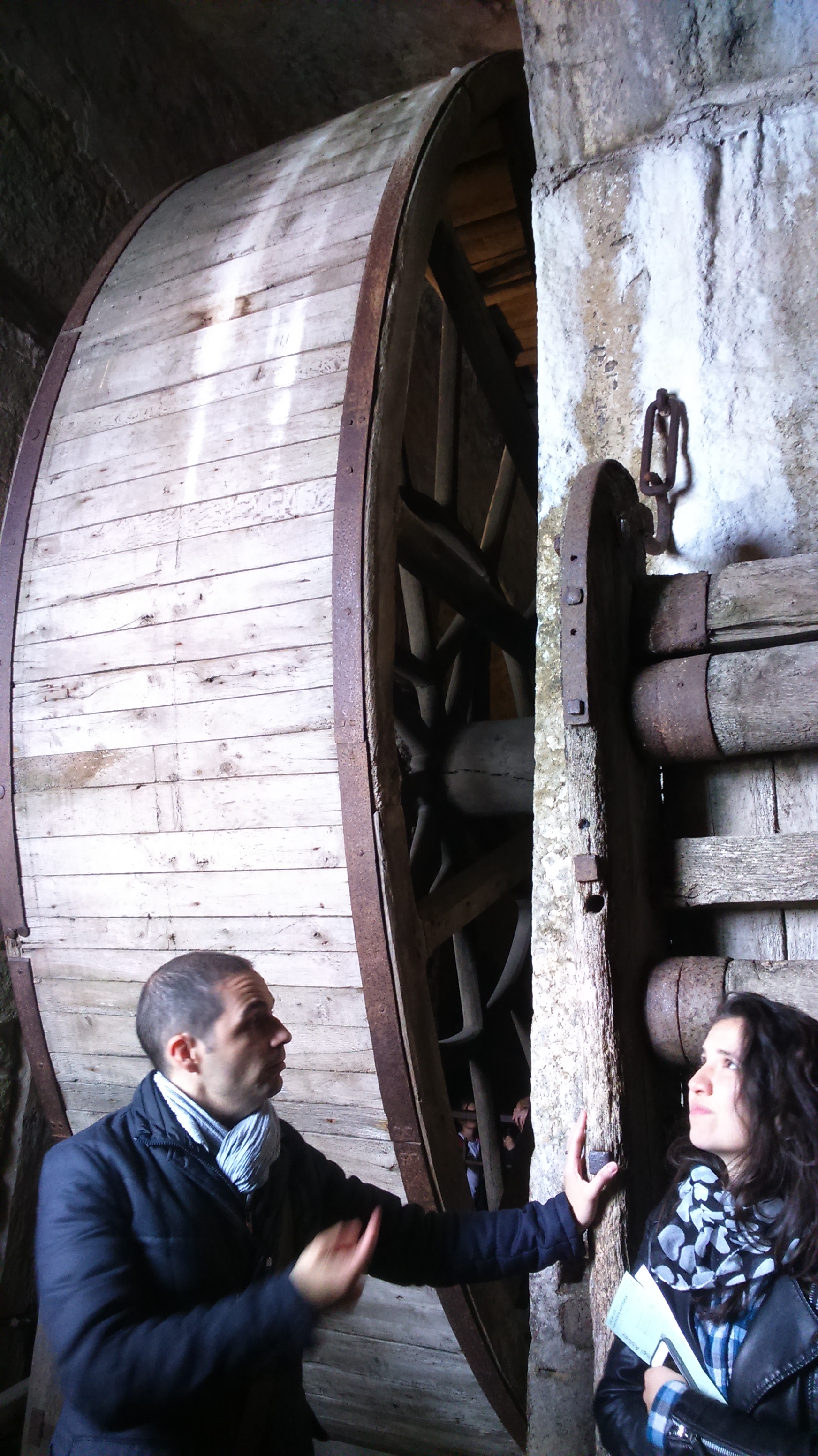
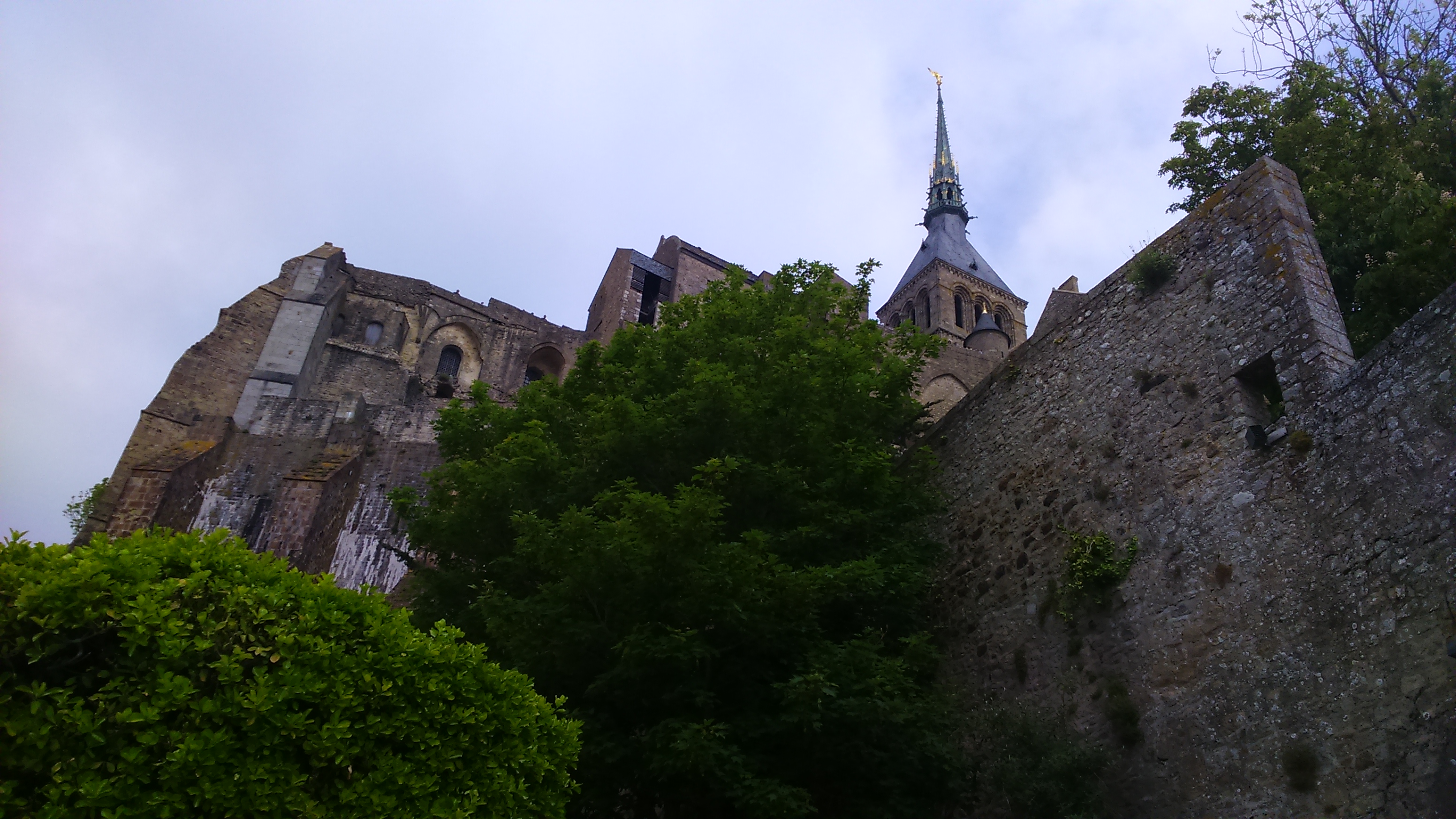
The Mount is made of granite, like our own Aberdeen, from the nearby Chausey islands. Rising 80 metres above sea level, it was quite some task, in the past, to bring the rocks up.
Many ‘workers’ trod this wheel to do the job of raising food, tools and building materials in 1880
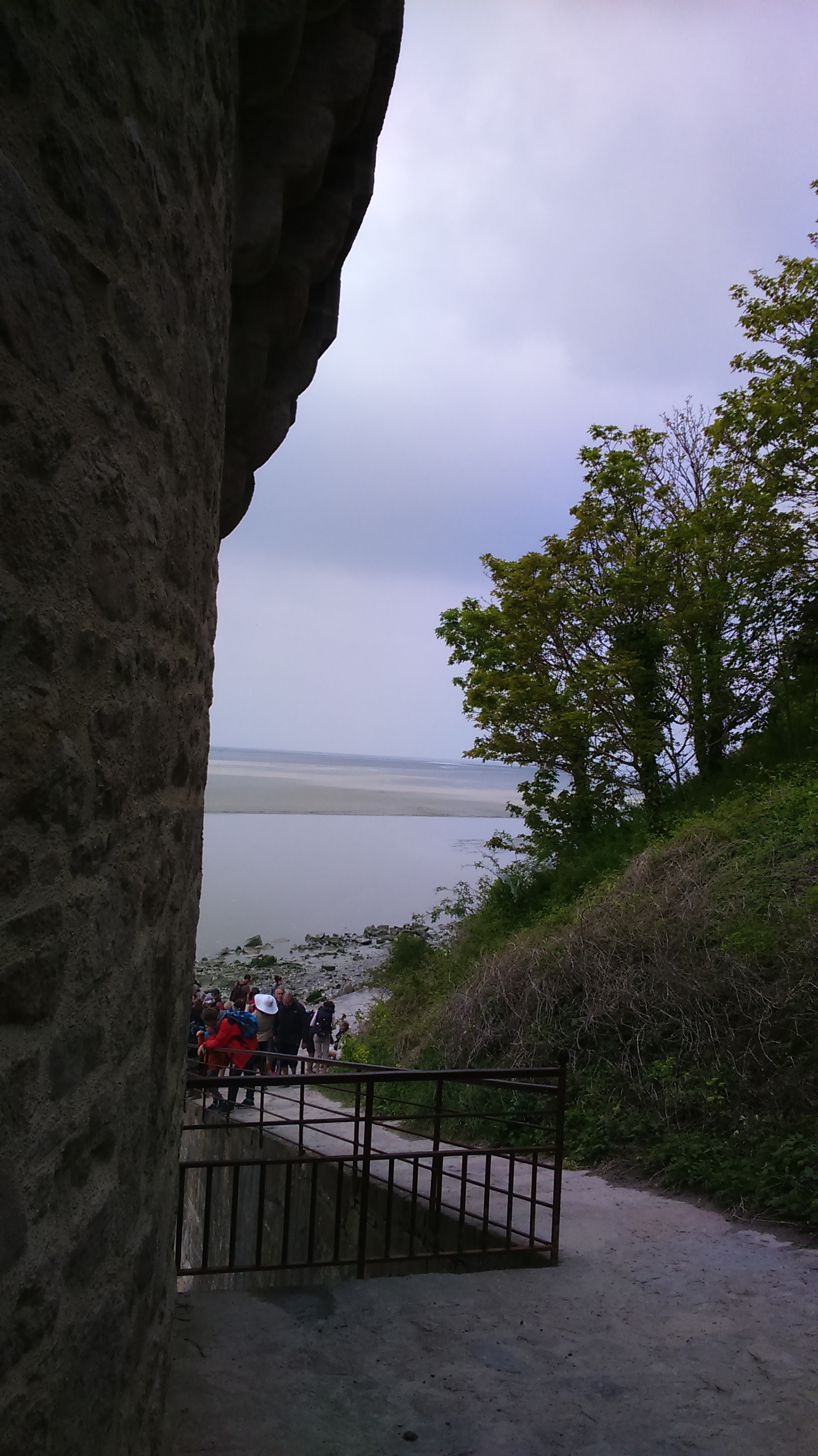
When I arrived, there were long queues for the foot fountains for washing so I did not bother, and I had to pay to get into the toilet. Then the woman in the tourist office told me I wouldn’t be allowed into the Abbey with my backpack, due to terrorist threats. I reckoned differently, not having come all this way on foot, with this weight, only to be refused admittance. Barefoot, I continued my winding way up the back street to avoid the crowds.
Today I made an exception to my own rule and bought a ticket. I don’t usually pay to go into places because I do not have the money, and because it encourages me to go to free venues, places that might not be on the tourist route, and see things from different angles. However, I knew I needed to go into this one, and I discovered later that the entrance ticket hall was the place the very poor pilgrims of the past were received, to be given alms and admitted for a blessing. If I did indeed come here in a previous life, I was surely one of this group.
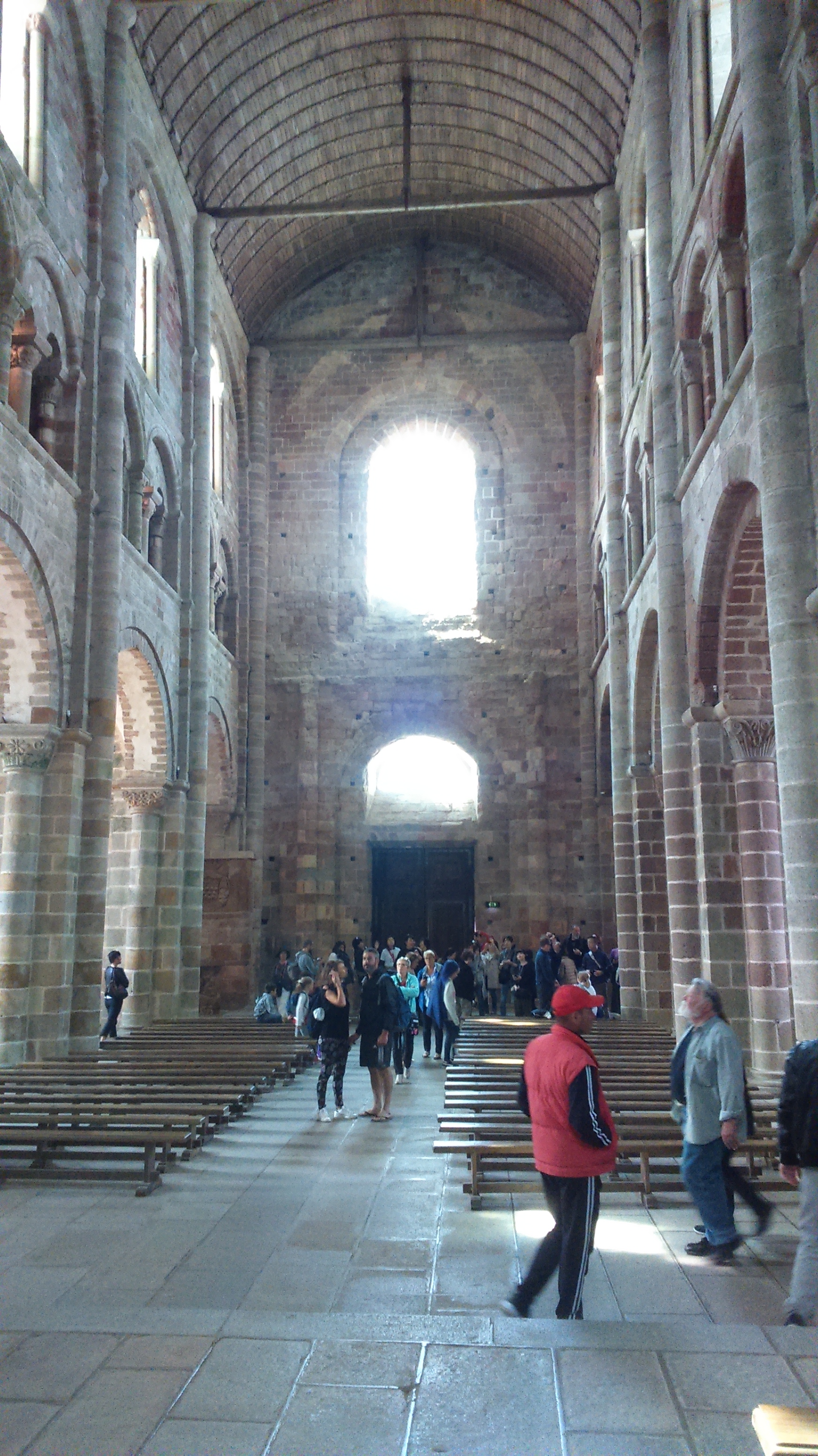
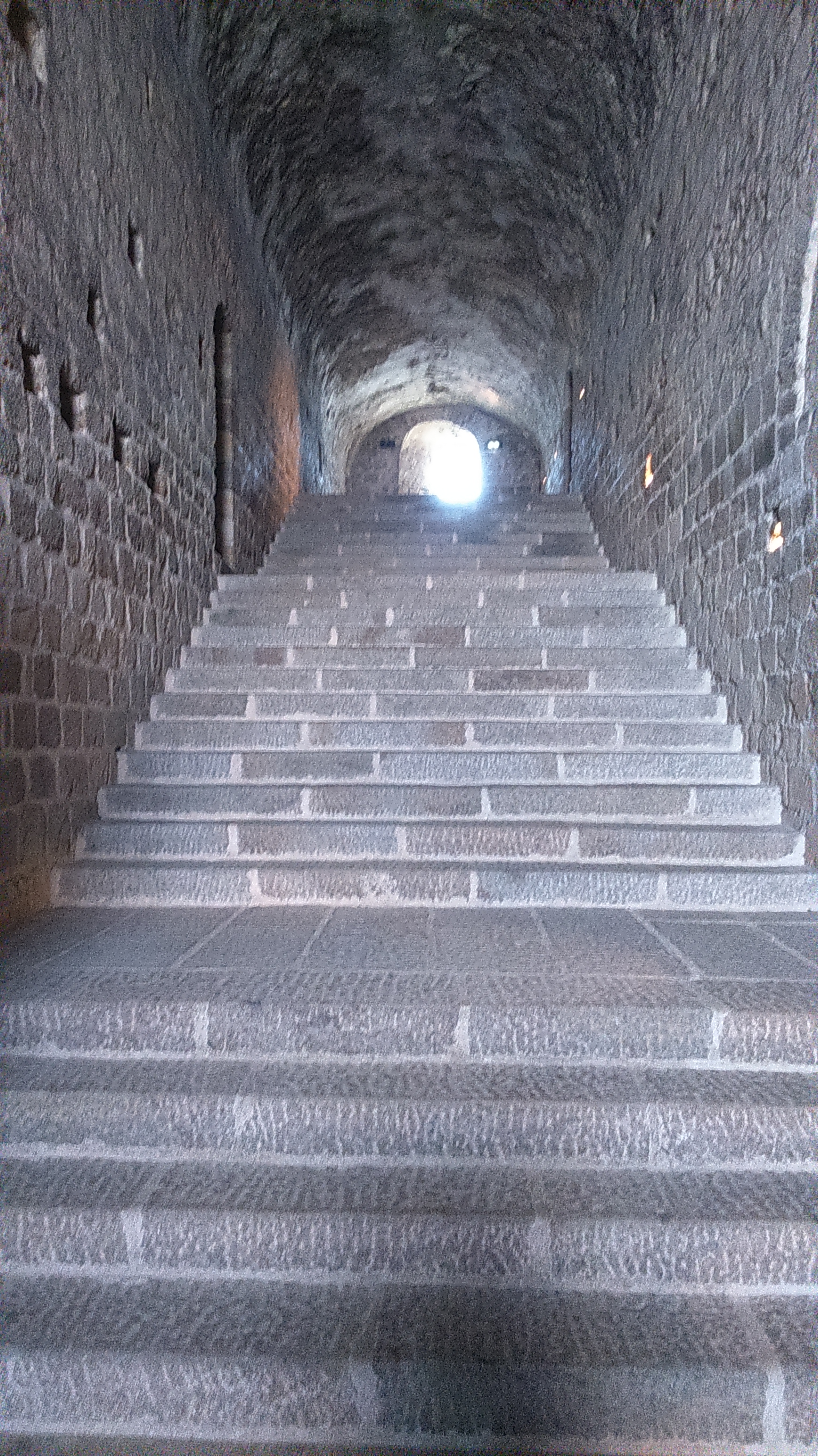
The almonry, now ticket hall, once the lowly reception for the poorestLofty ceilings and slithers of windows split the light into holy shafts
We waited for our English speaking guide (he was very entertaining and knowledgeable) on the terrace before entering. As it turned out, no-one looked twice at my pack so I did not have to plead or prostrate myself to be let in. Once again my age, sex, and perhaps skin colour seemed to be a bonus. It was well worth it, but a long tour. I left after 2 hours because I was very cold and getting tired carrying the weighty luggage around with me, but it was still going strong when I peeled away.
There’s so much to say about this place, and many photographs are available elsewhere. I listened and looked at chamber after chamber, conscious of the cold stone under my soles and imagining myself as one of the nuns he was describing, silent and worshipping through the ages.
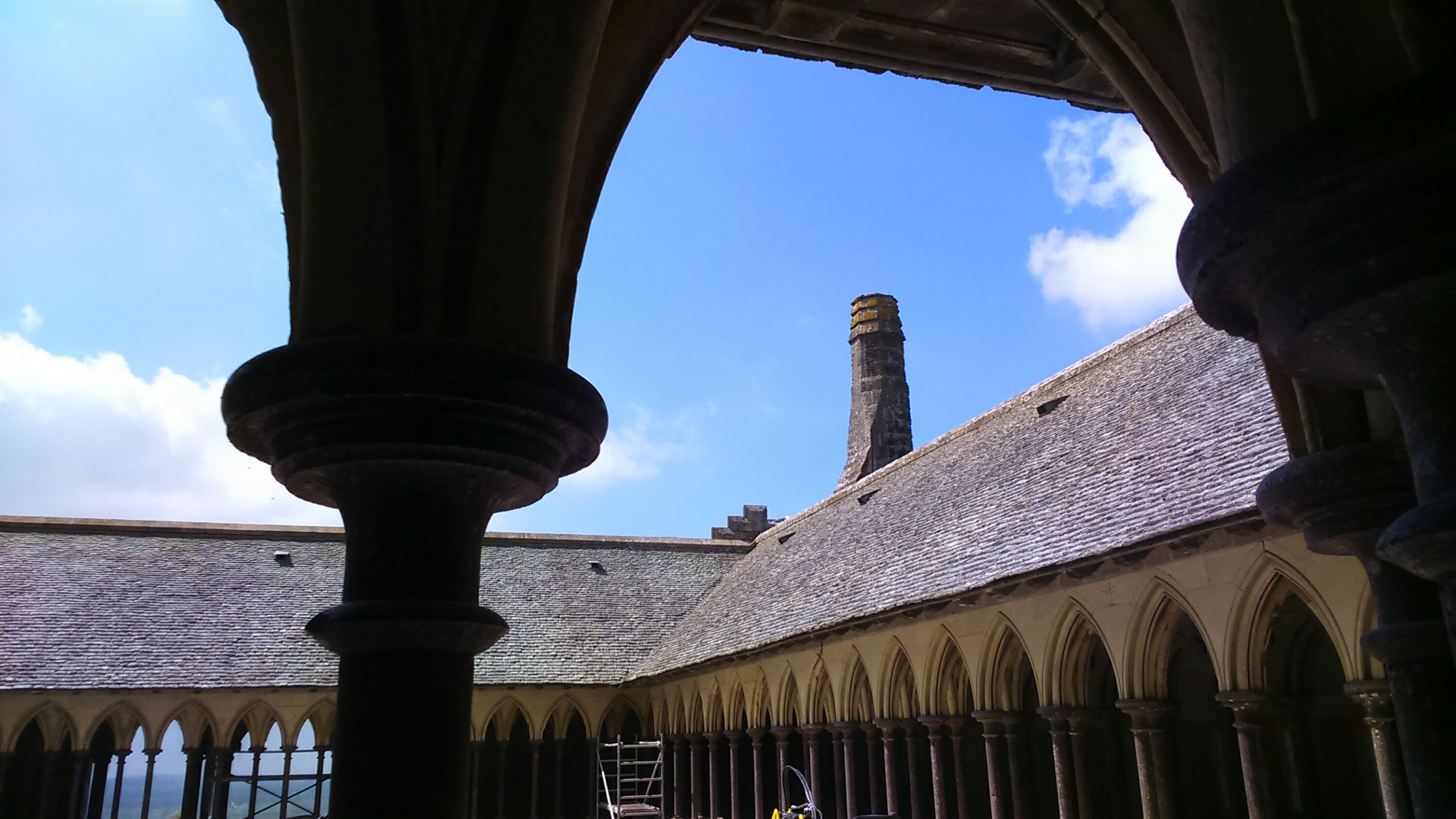
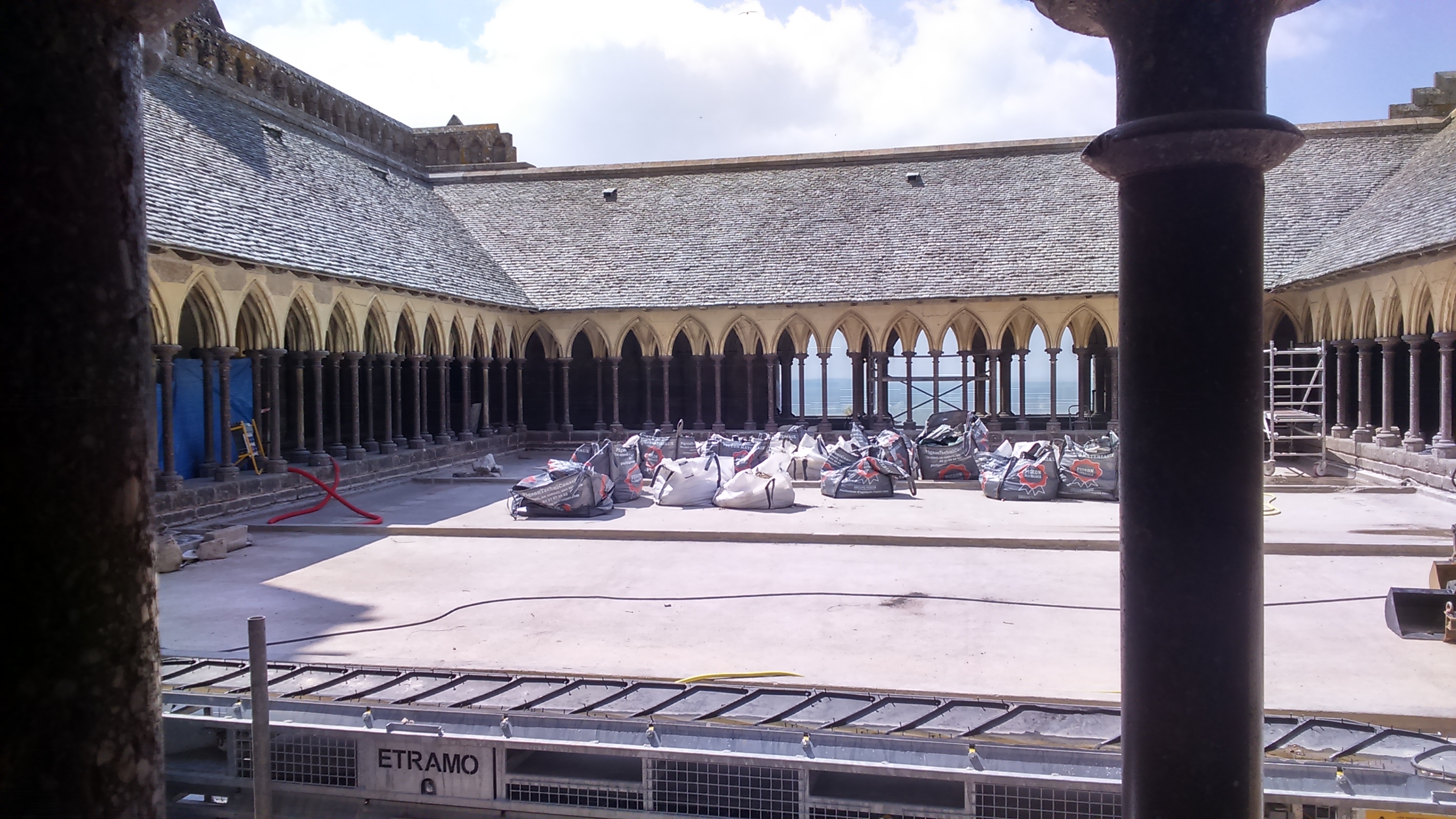
The cloisters were being rennovated so I had to take this through the railings
I was moved by the dark, Romanesque Crypt of St Martin with its eight pillars where sinners awaited sentencing
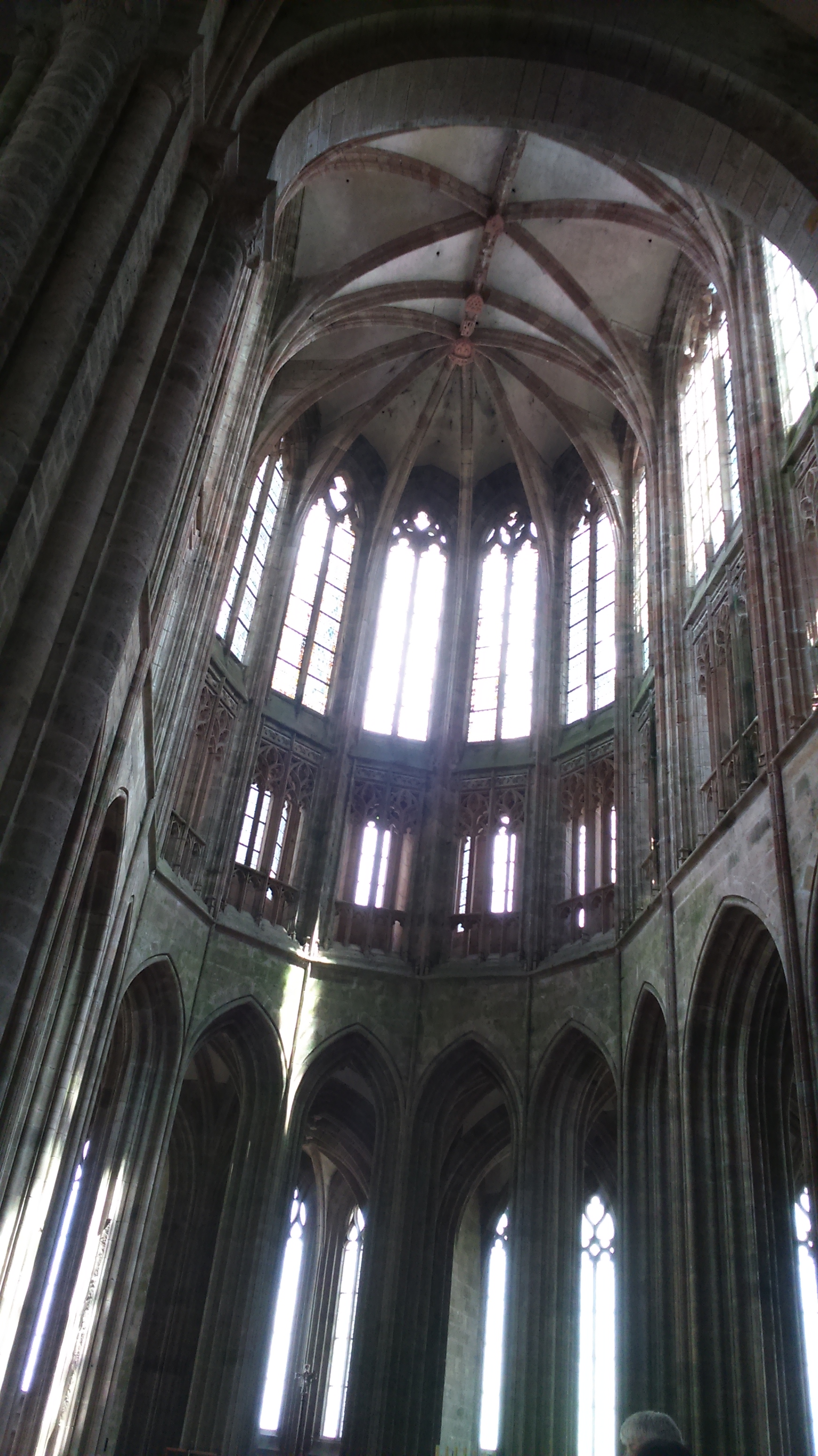
And I was fully engaged by the tale of the 1000 years of construction, stimulated apparently by Saint Michael (the archangel) speaking not once, but twice to Aubert, Bishop of nearby Avranches, before he took heed and started to build. The building of the Gothic-style choir (chancel) was impressive.
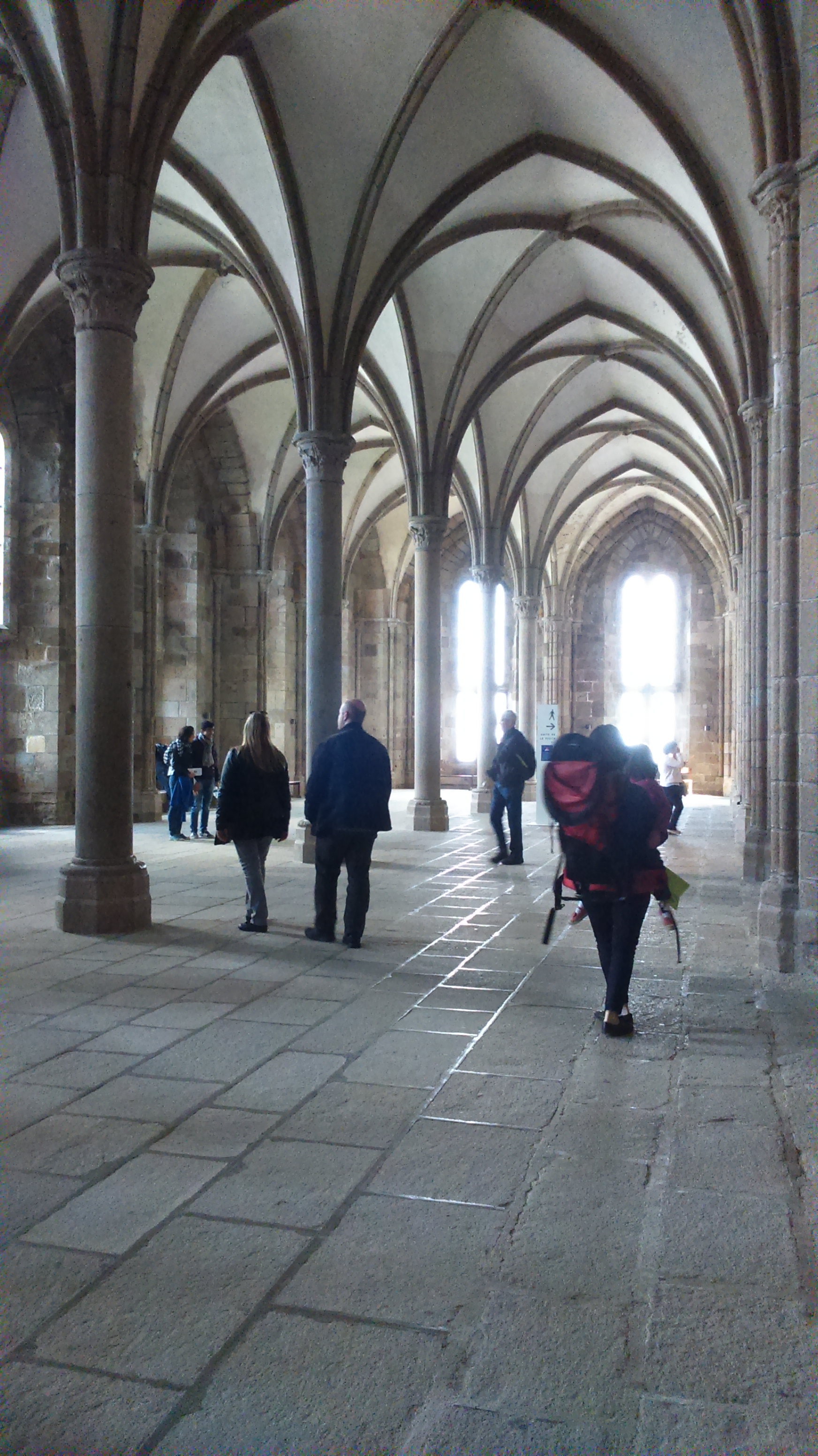
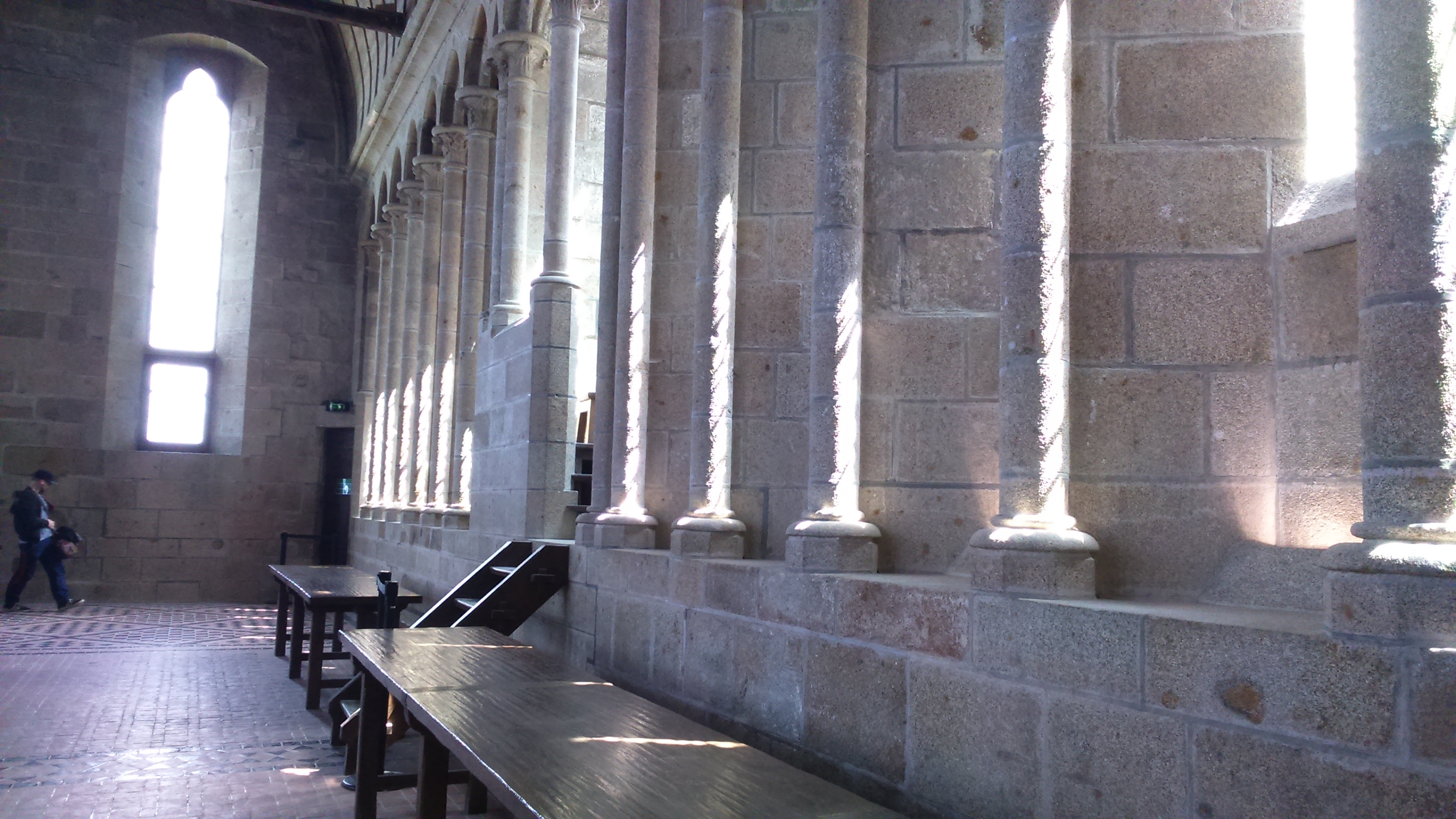
Dining Hall where the richest visitors were entertained by the Abbot
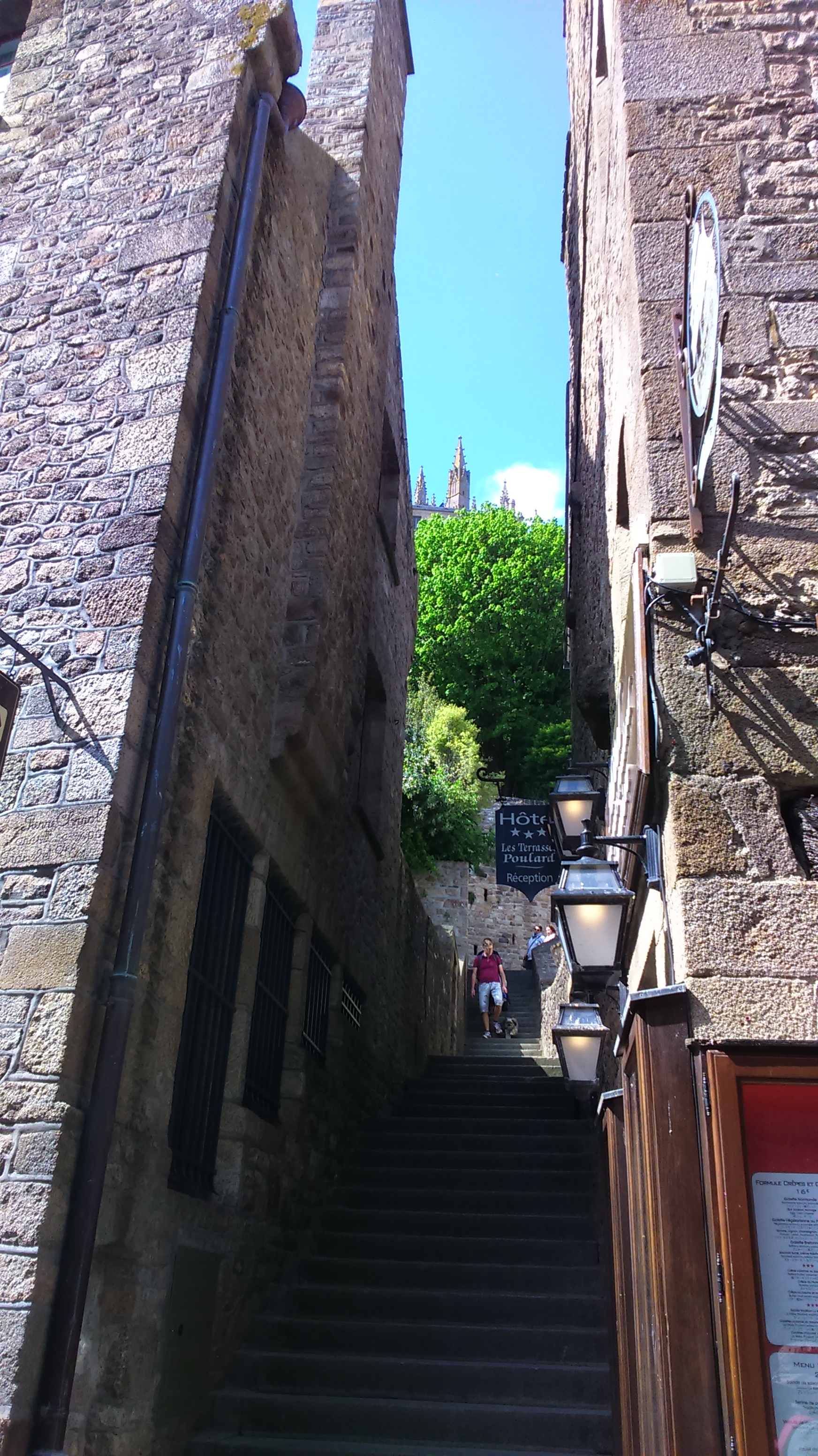
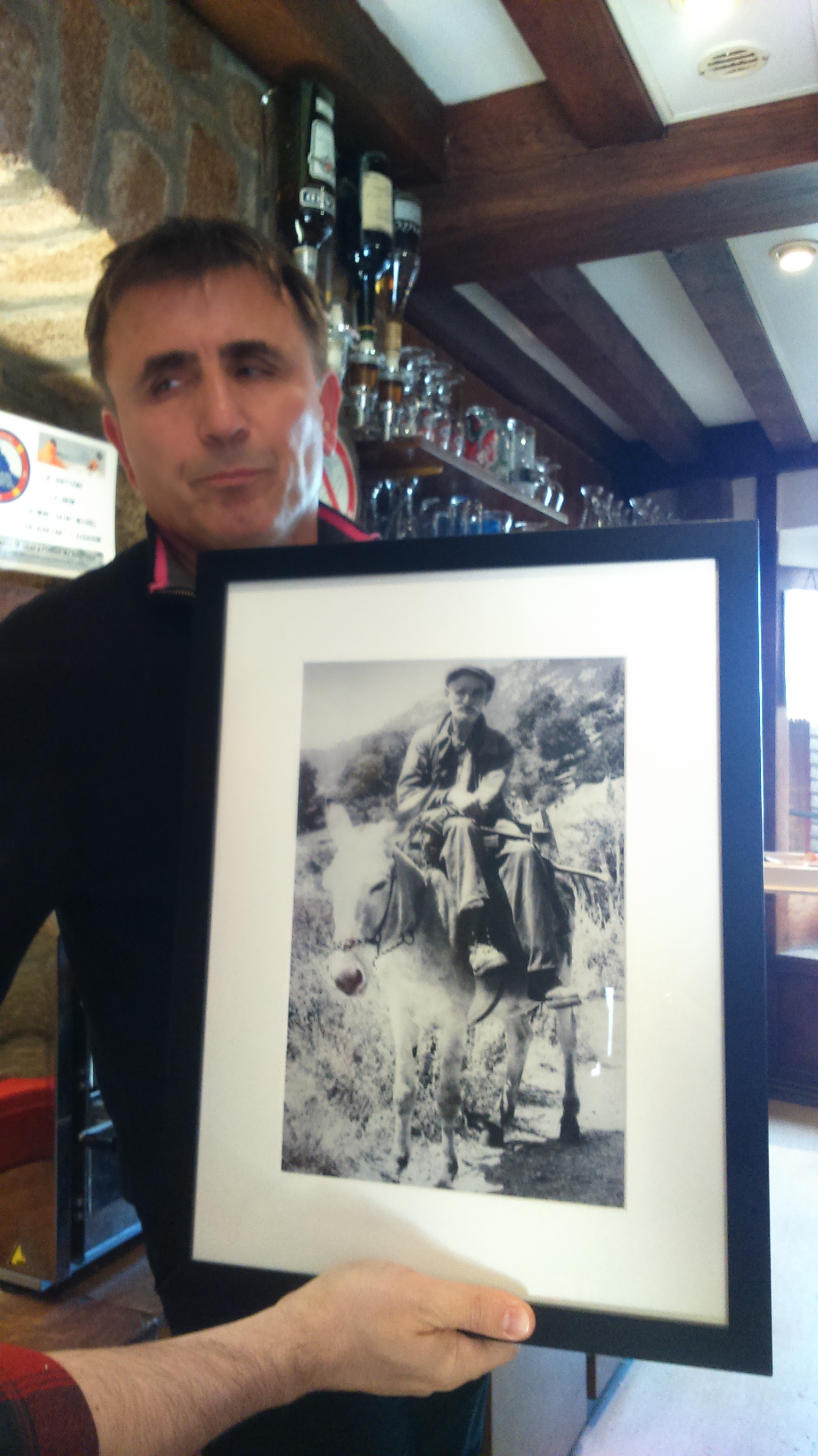
It was sumptuously hot once outside again, and I wound my way down, between souvenir shops and restaurants, sampling a small red wine to warm my cockles. There I spied a picture of a man on a donkey, the grandfather of the owner, held up by his son.
.
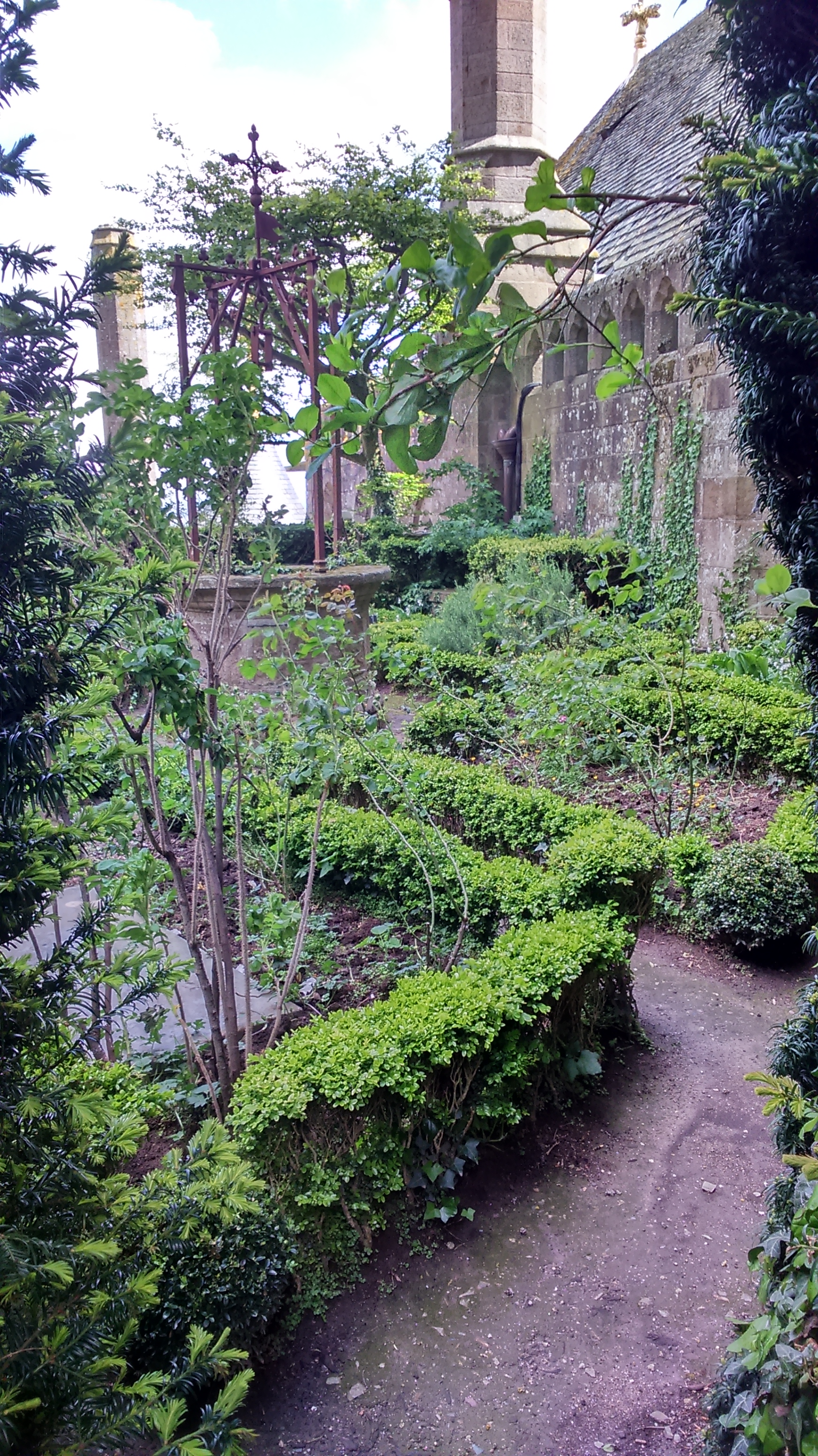
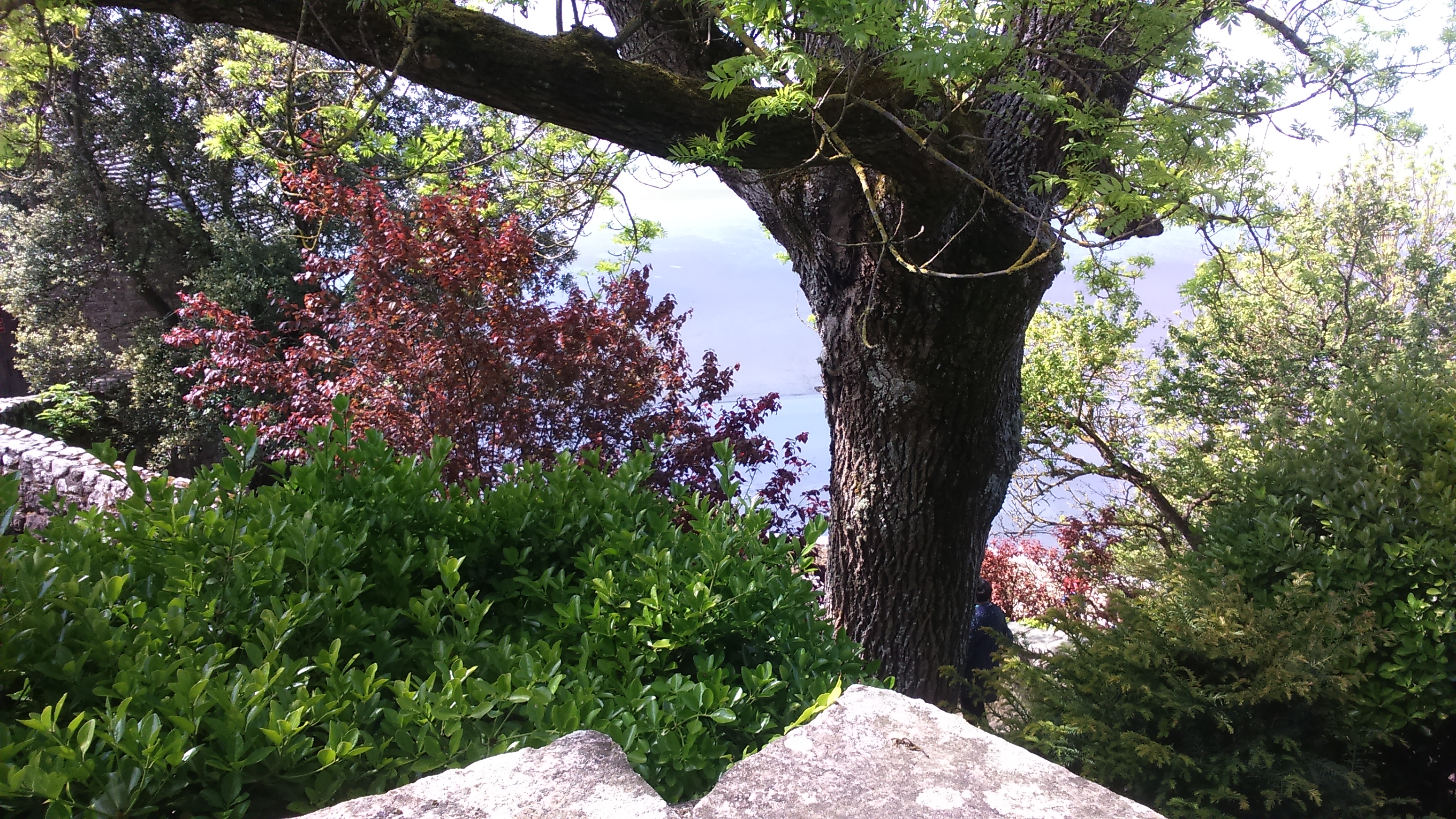
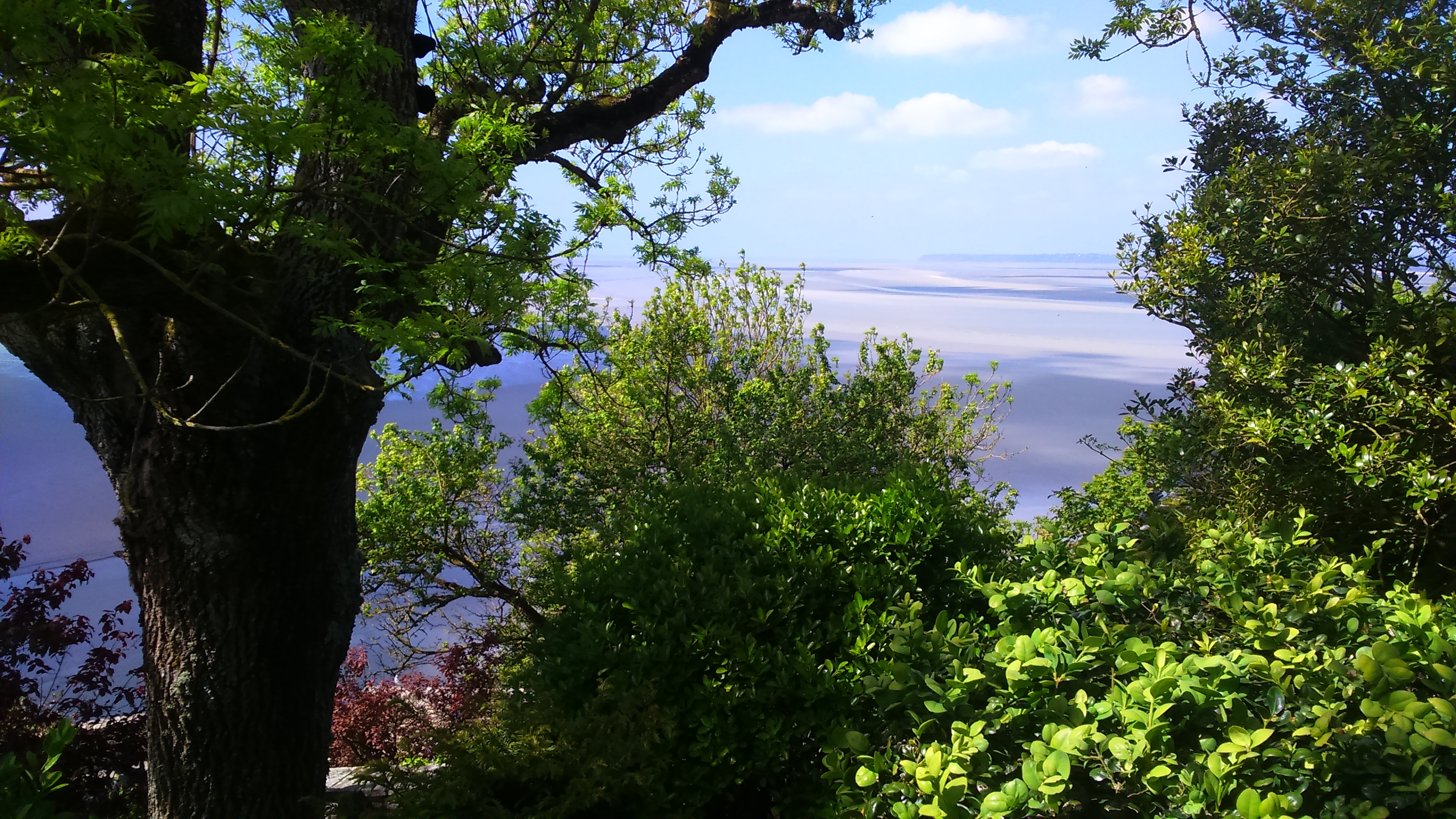
A garden hidden behind an almost solid gate (it did not stop me)Great views from high up
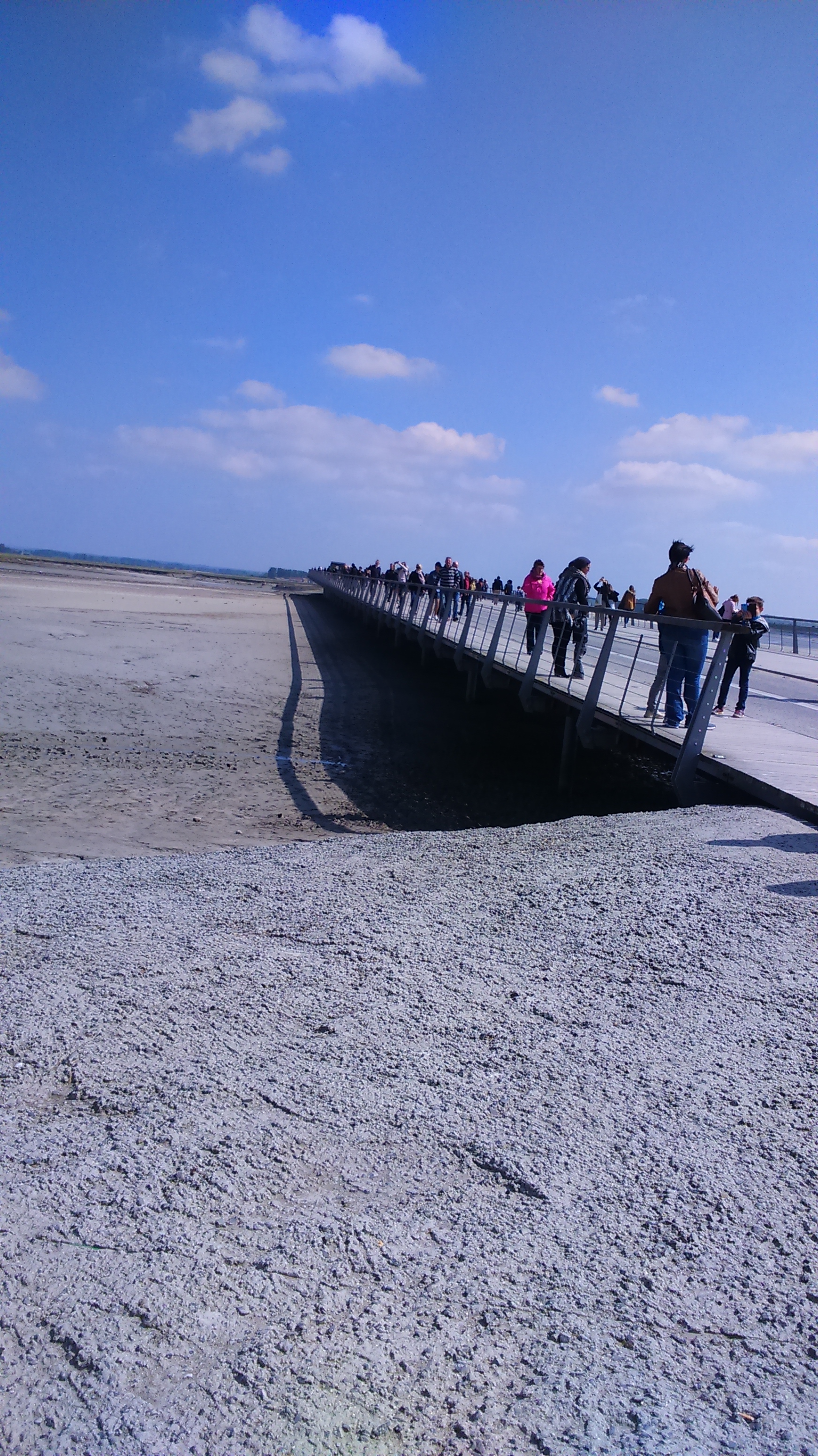
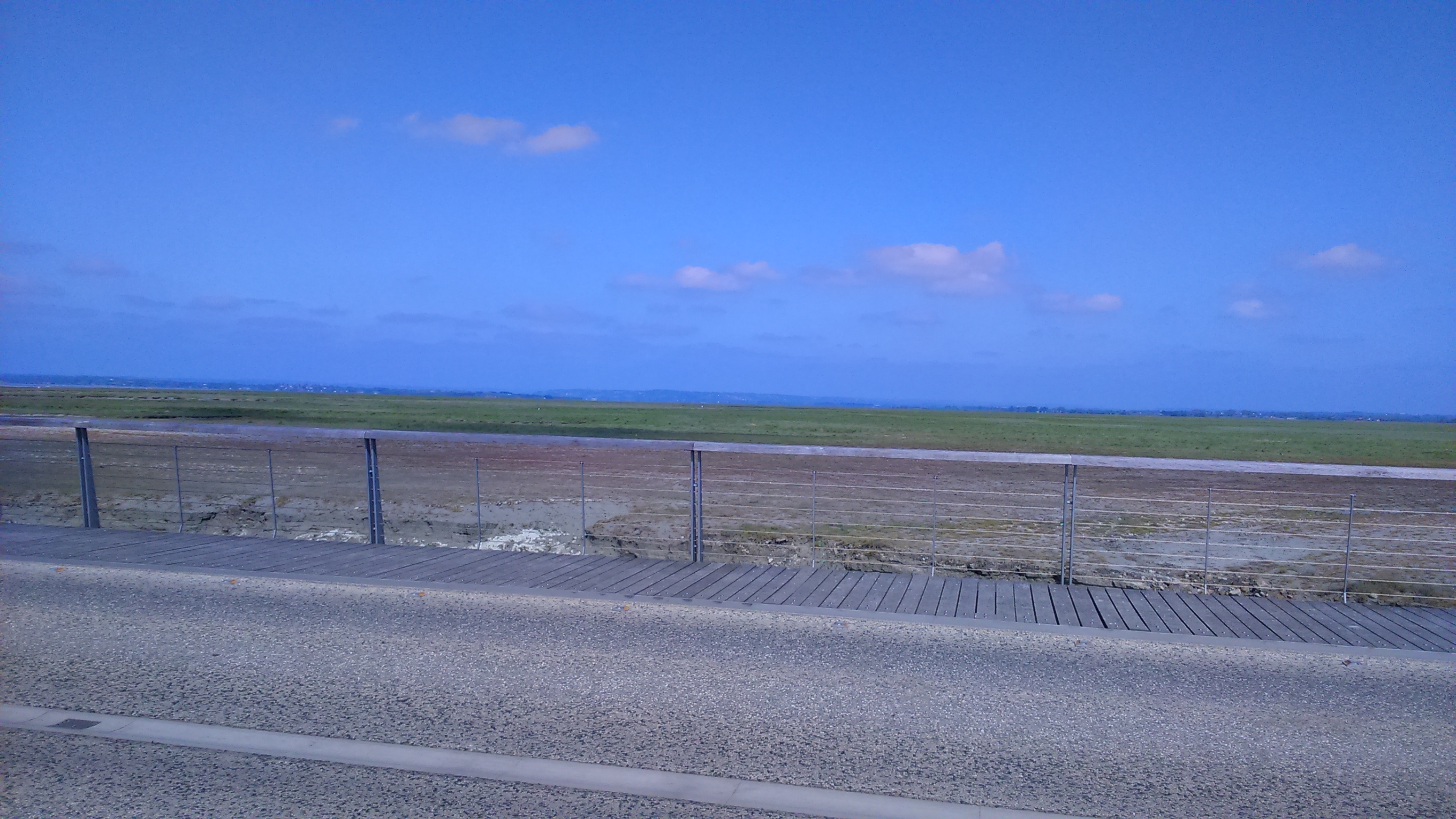
By the time I walked out towards the northern coast of Brittany, under a baking sun and along the sun-bleached, wooden walk-way, I was not a little dazed by the special energy of the place.
Dazed and a bit tiltedIt was still very low tide and we were advised to come back again when the sea surrounds the Mount – it only happens twice a yearYou can not tell from this, but the wind was starting up
I found my way to the bus-stop, ate a snack while I waited, sailed eastwards right through Bas-Courtils on a bus making a mental note when I saw somewhere I might eat later through the window, and alighting some 5 kms further on in Courtils, not knowing they were two different villages with almost identical names.
When you have been walking and walking for days, and then you get into a vehicle, it seems very, very fast and rather unnerving
I had booked a bed, but when I went into the first shop I could find to get wifi so that I could look on my phone for the address, I realised I did not have it. I started to panic (I rarely worry when I am away walking, but have noticed that it can happen when I am tired). The kind proprietress came to help and suggested I look on my list of received calls from 2 days ago. That way I managed to phone and get the address, only to then discover my mistake. Of course, I planned to walk, but no, the same woman insisted that she take me back there in her car – what a sweetie, such kindness!
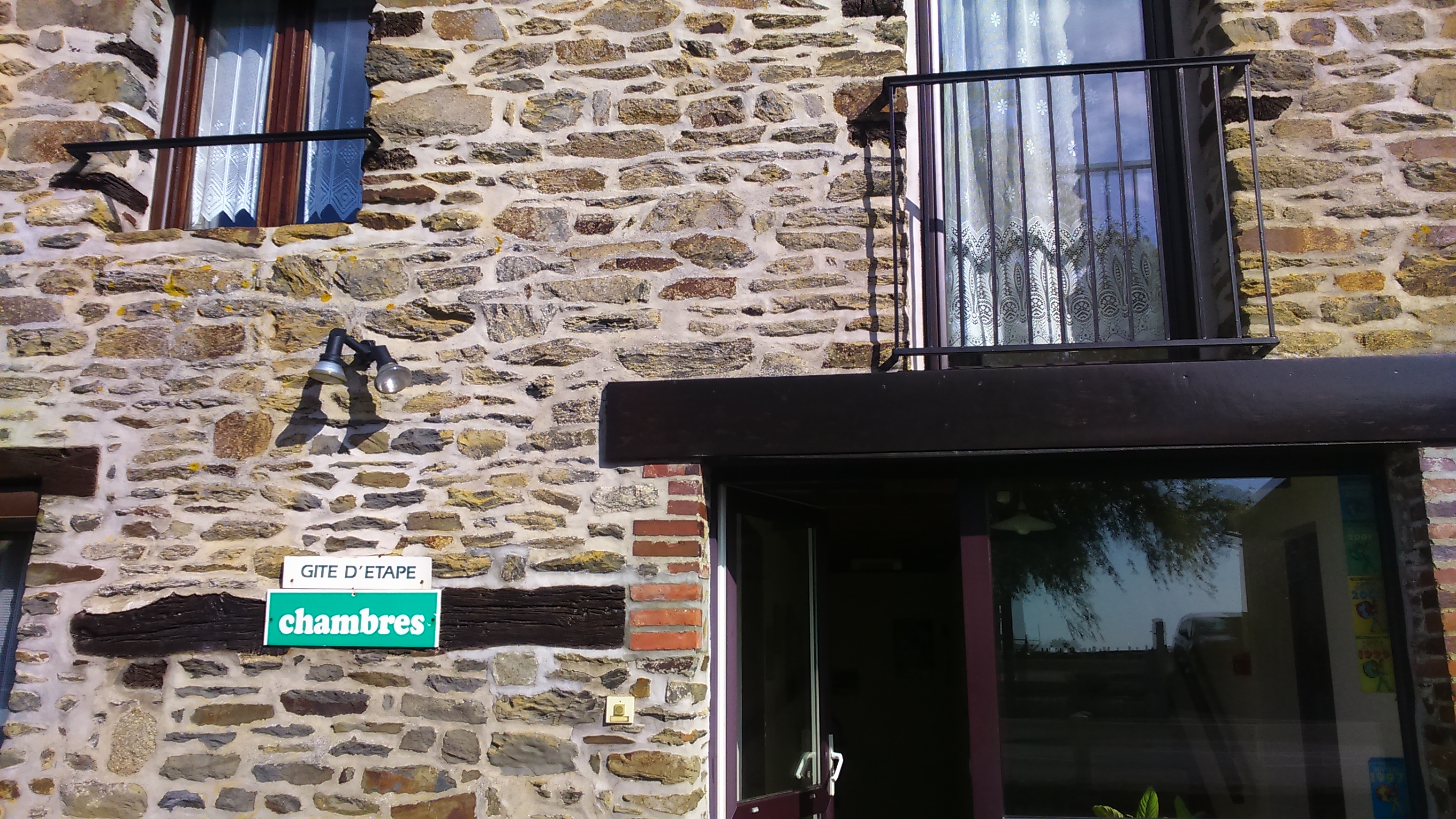
Gîtes d’Etape (sort of travellers hostel), Bas-Courtils
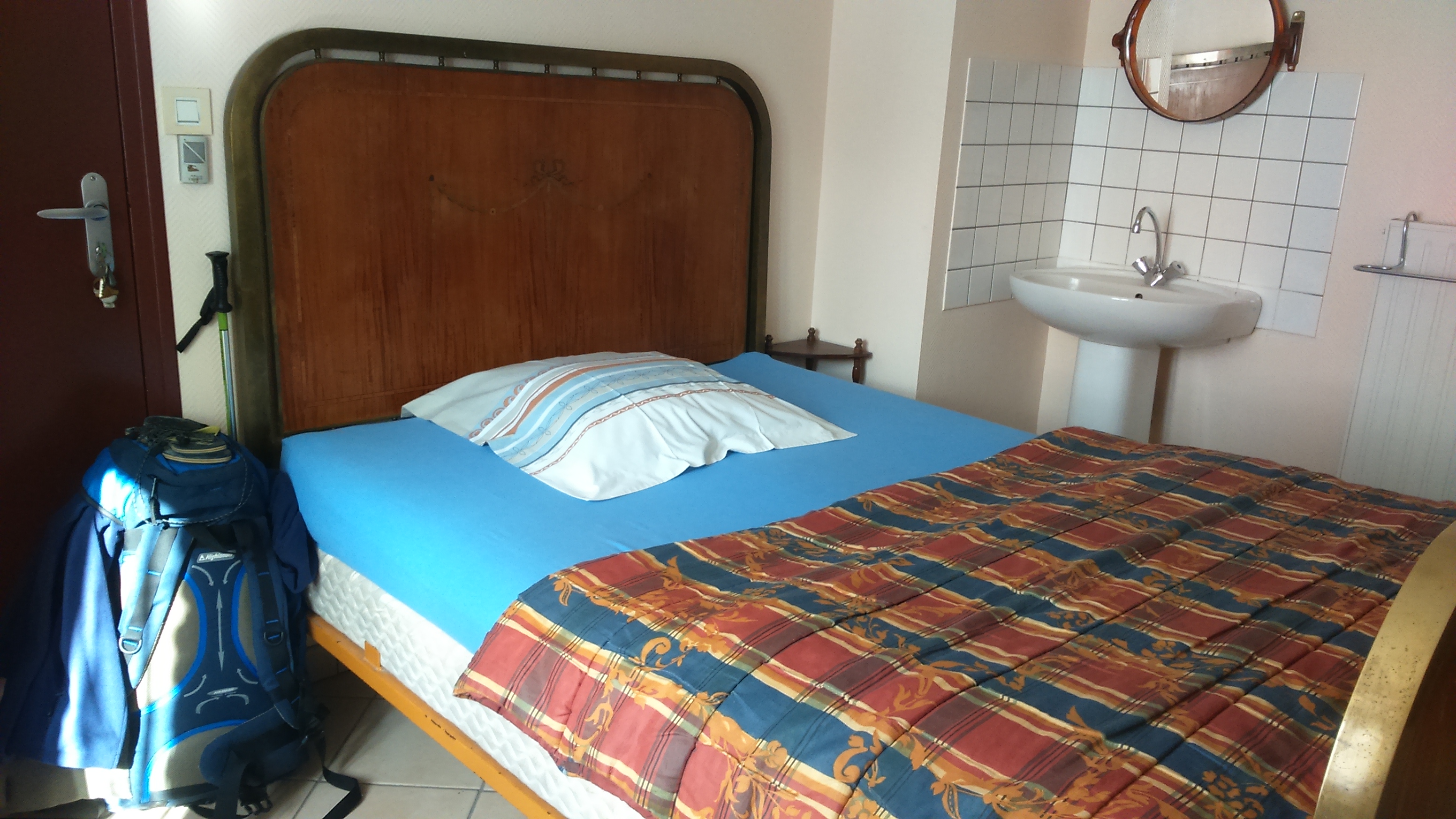
I had a double bed, in fact, the entire place, all to myself for 11 euros. There was no breakfast, but there was a place to hang up my washing.
On my long walk, I have discovered that I am usually the sort of person who wants to know why things happen. Walking has further taught me that when I pay attention, if I’m very quiet inside and I listen in a very relaxed way, the reason for everything becomes clear. This is a very simple way, and it requires me to be calm, to really stay in the exact moment, to put the anxious parts to the back. I have to trust; acceptance must be in the foreground. (Trusting can be a conscious act, I know, but this other way happens while I am just going about living.) Perhaps it is an undoing rather than a doing, about undoing the concern that I have learned, the questioning and the fearing?
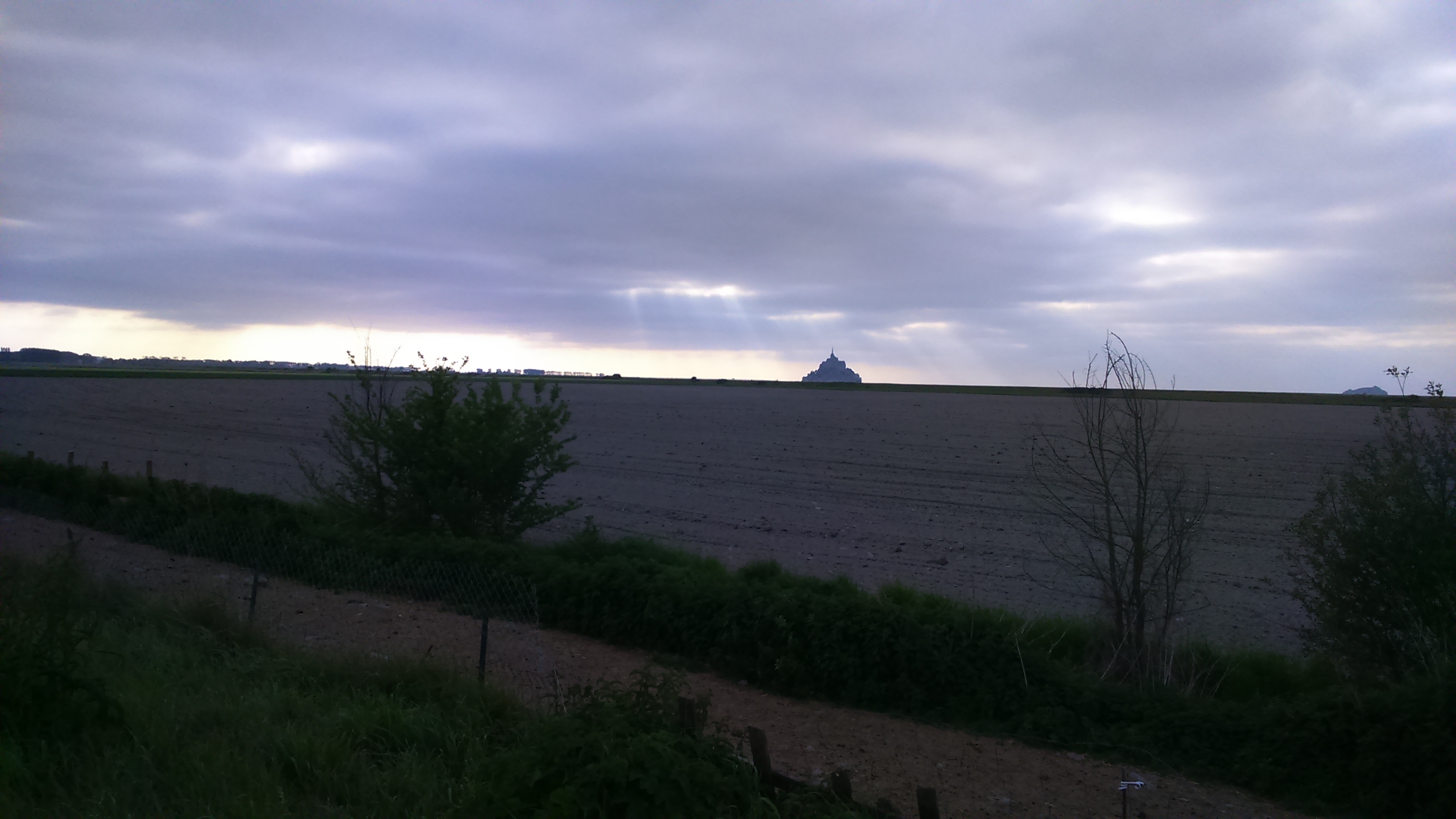
I could still see the Mount from where I stayed. It was almost the same size as it was the horizon I was walking towards when I left earlier that morning (see photo above)
Things seem to work out well when I let them: This is proven to me by a tiny thing like forgetting to eat an orange and discovering it days later when there’s nothing else and I’m very hungry; by larger things, such as not planning accommodation in advance and then finding that it unexpectedly rains so that I could not have walked to that place anyway; and by even lmore important things, where you meet the right person at the right time. Although it can seem completely unfathomable at the time, these occurances have resuled, for me, in a major life change. The phrase comes to me: ‘mine is not to question why’. It might sound religious, but I don’t think it has to do with any god.
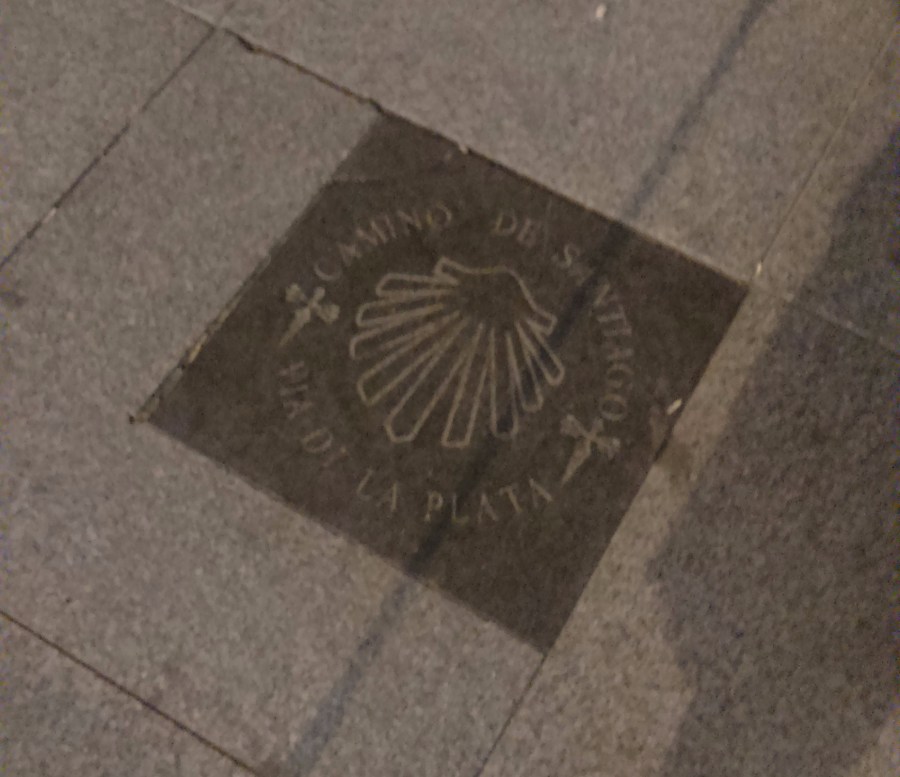
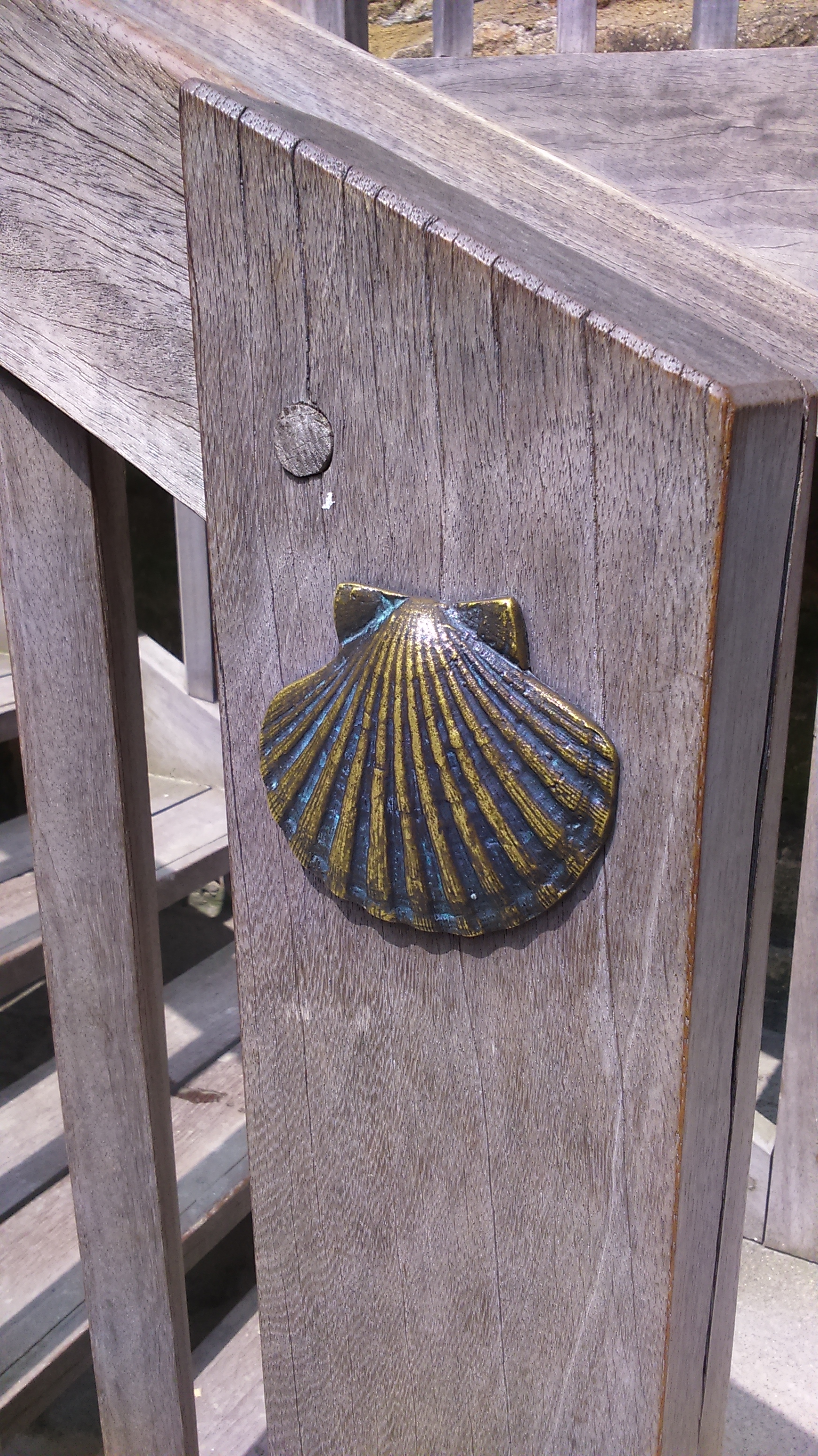
A place of pilgrimage, linking Mont Saint-Michel to Santiago de Compostelle where I visited in late 2016, with the coquille Saint Jaques (shell of St James)
That night I felt blessed. Truly. I stayed at the youth hostel in Genêts on the mainland (http://www.hifrance.org/auberge-de-jeunesse/genets–baie-mont-st-michel.html). You may be able to book there at the last minute if it’s not a bank holiday or high season, but if you want to stay on the Mount (it’s an island) you definitely have to plan ahead as it’s one of the most popular visitor attractions in France.


 When I am in a city with so many famous sights, too many for a short visit, I have found a way to choose what to do: I get to a corner and I stand still and contemplate. If I like the look of the left-hand street I go there, if right then there. I have been practicing spontaneity and following my interest for many years in my Shiatsu sessions. Here my eyes draw me to a baroque exterior in the sunshine: a balustrade above oval windows, above decorated towers, beside naked torsos at the Instituto Geográfico y Estadístico in the Plaza Nueva next to the Plaza de San Francisco.




 On the Camino Francés in Spain, the hostels are where you meet other backpackers and exchange tales. Up until today, I had not encountered anyone in France, but the two women I had seen the previous night were breakfasting when I got down to the youth hostel kitchen. After being initially engaged in (French) conversation with a rather interested man who told me he did all sorts of work, anything he was asked to do, and then kissed me goodbye (yes, the dangers of being a single female traveller!), I was invited to sit with them for a while. They asked me what I was up to and after explaining, I was enthusiastically given a piece of paper by Lysiane, with her name and address on it, and told that if I ever visited Brussels I could stay with her in return for Shiatsu. Almost everyone I meet and talk to knows what Shiatsu is and likes it; it really is quite notable compared with the UK.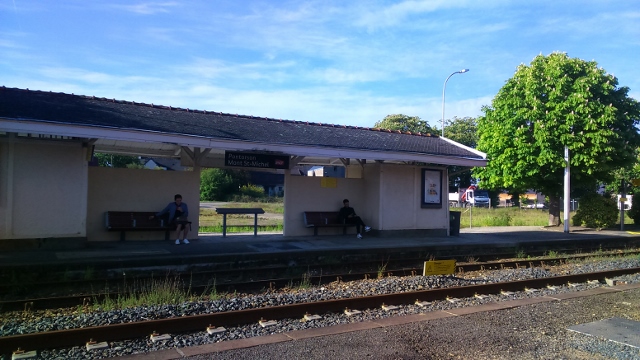
 Myself and a number of others arrived at the station before it opened. It was unclear to us all how we should get tickets and where to go, until a brusque woman came to open up. We waited in the gorgeous sun before realising we needed to cross the tracks for the stopping train to Rennes which I had booked online the day before. A Japanese couple regaled us, as we waited, with a comparison between the efficiency of French signposting and the contrasting confusion in Britain.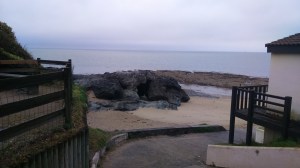



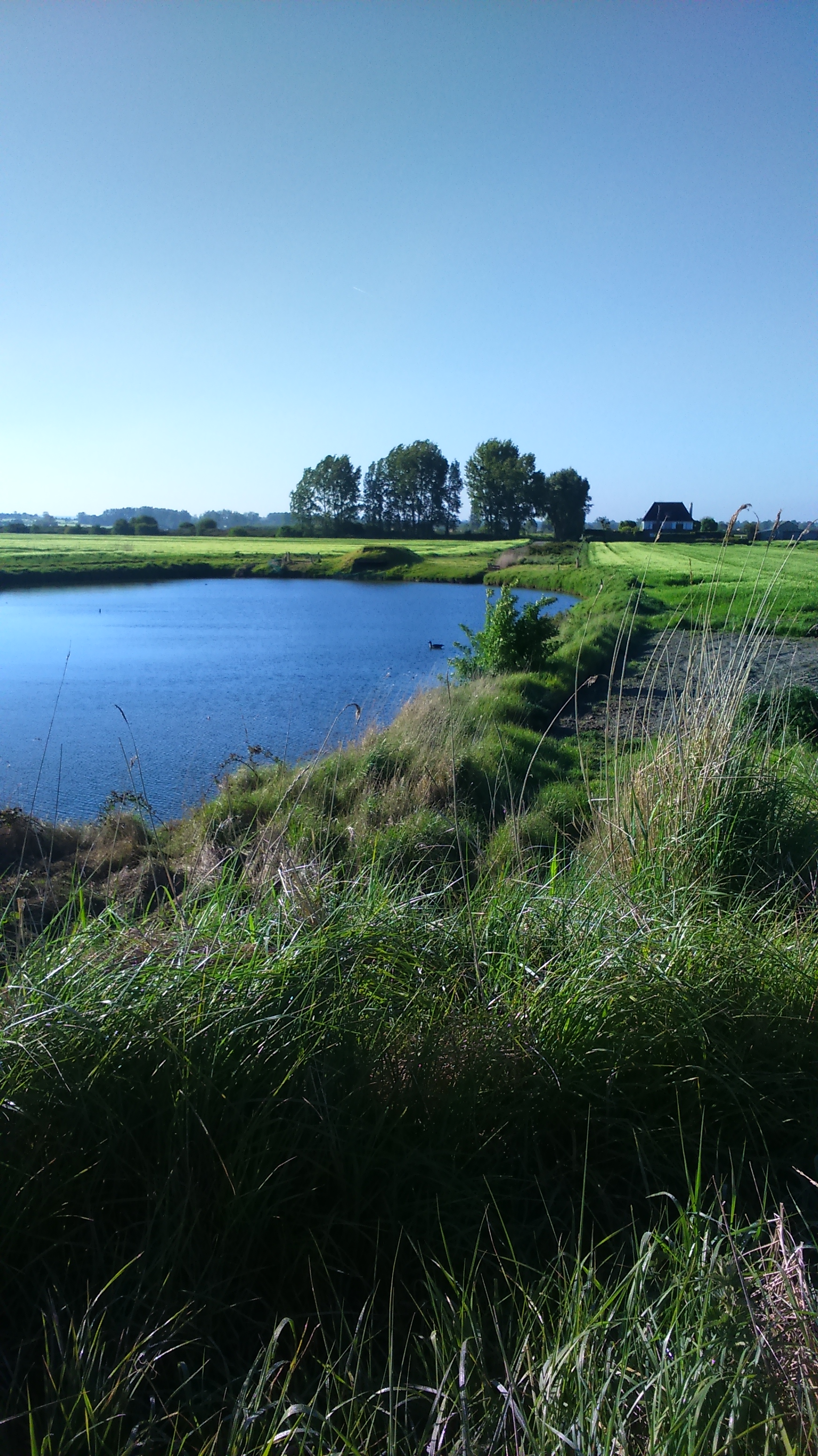

 It is cold, exposed like yesterday, but still I have bare arms. I did not even think about it. It was more that I moved instinctively towards the Mount.




 Walking without a donkey