
This day was led by the Reverend Willie Shaw, Rector of St Mary’s, Grangemouth and St Catharine’s, Bo’ness Episcopal churches. 27 October 2021. Approximately 10 miles through Grangemouth, his parish.
This blog follows on from the previous Pilgrimage to COP26 – South Queensferry to Bo’ness
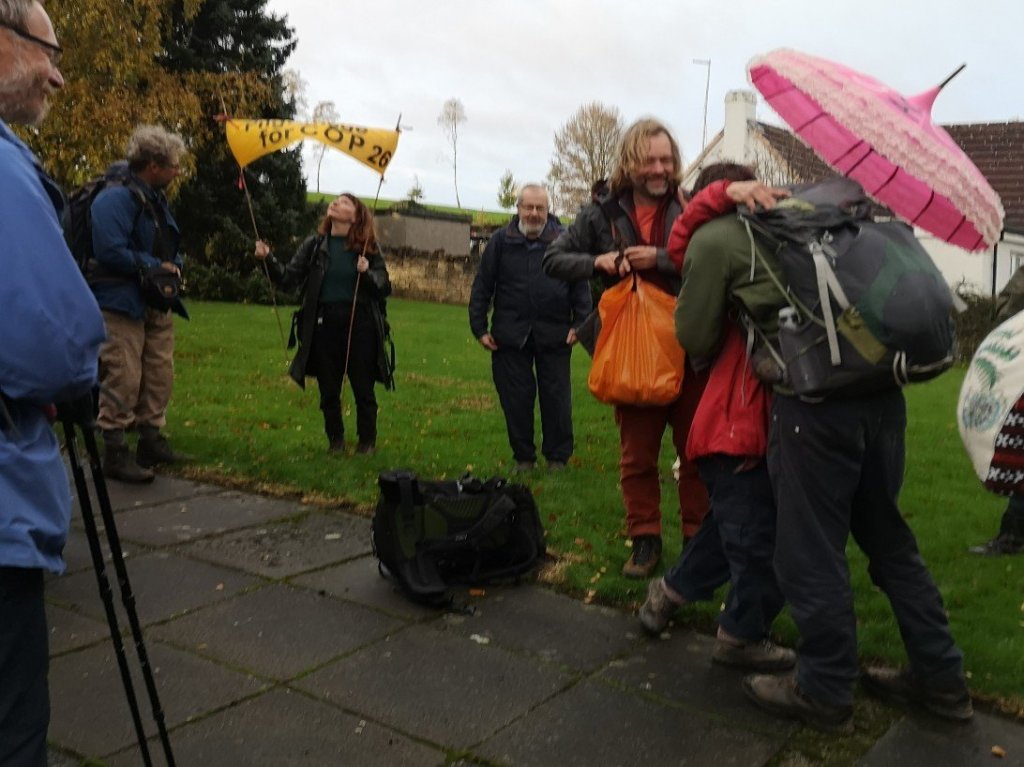
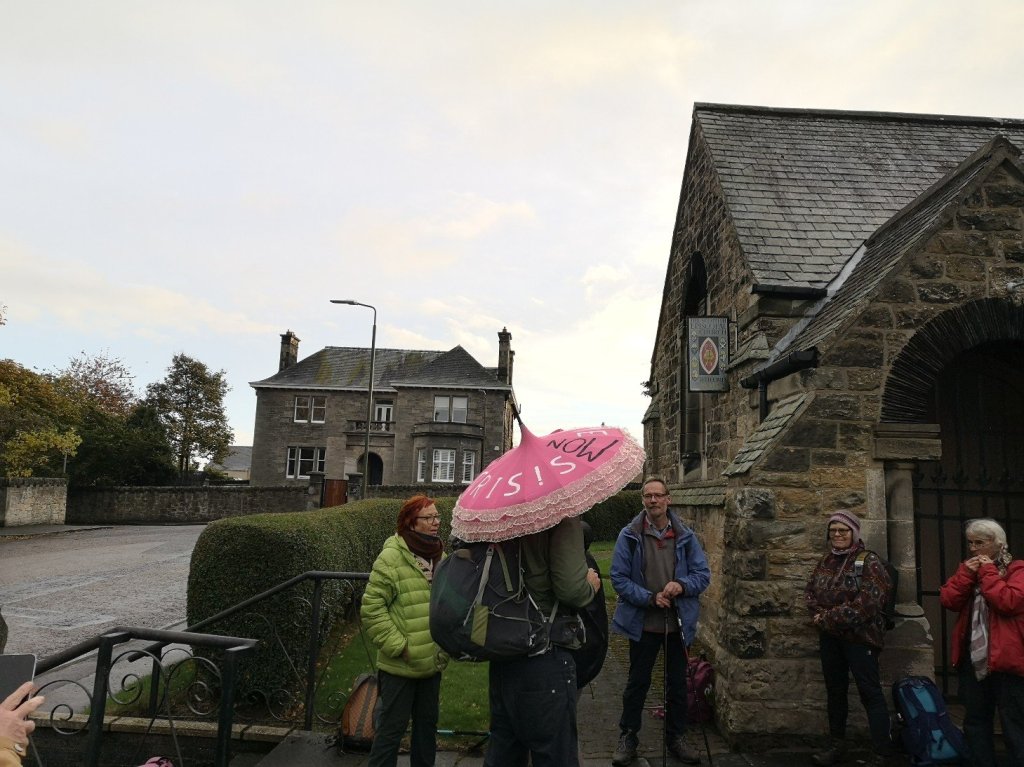
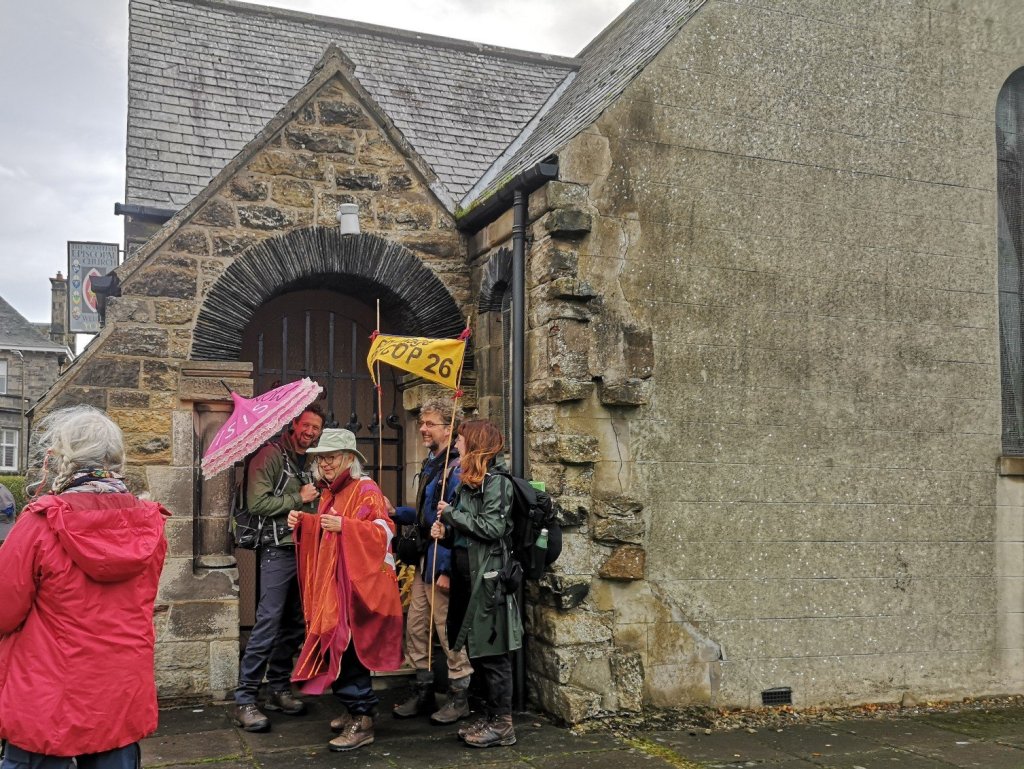
Industrial landscapes and ecological regeneration
The theme is Industrial landscapes and ecological regeneration, though the latter was going to be hard to focus on in the face of the intense piping, cooling towers and wot-not of the space-age area. There is nothing fantastic about it, but I am getting ahead of myself.
Bo’ness local history
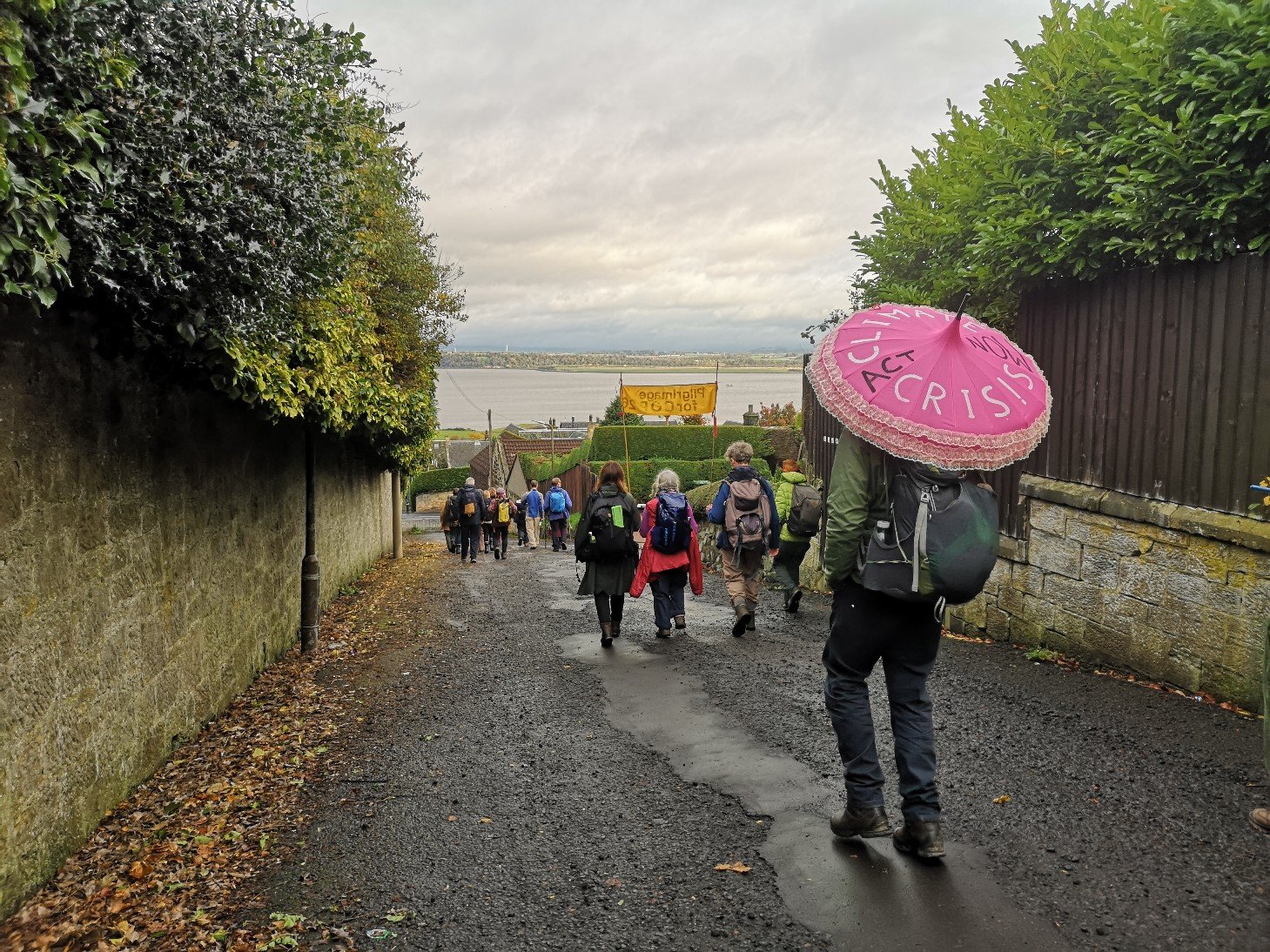
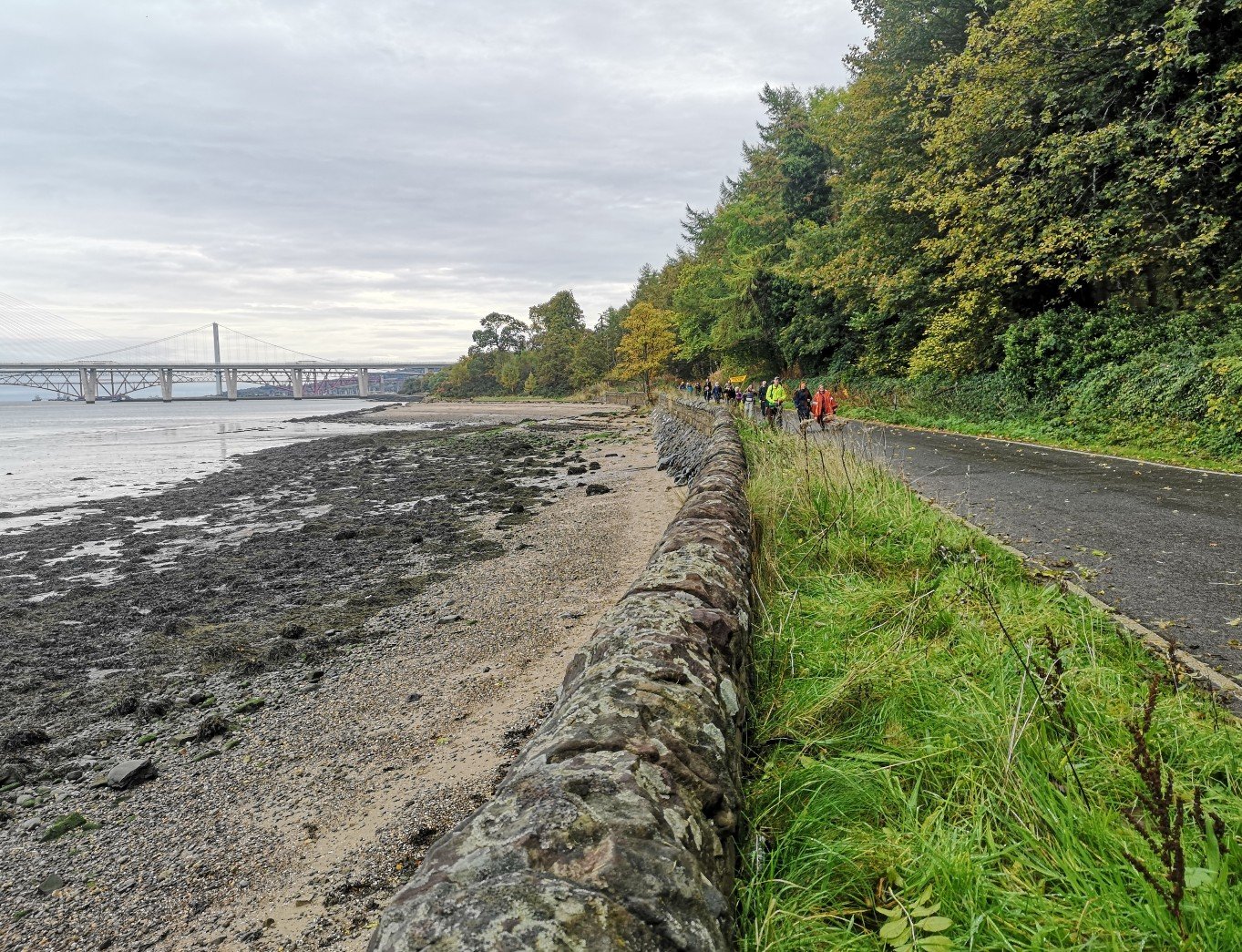
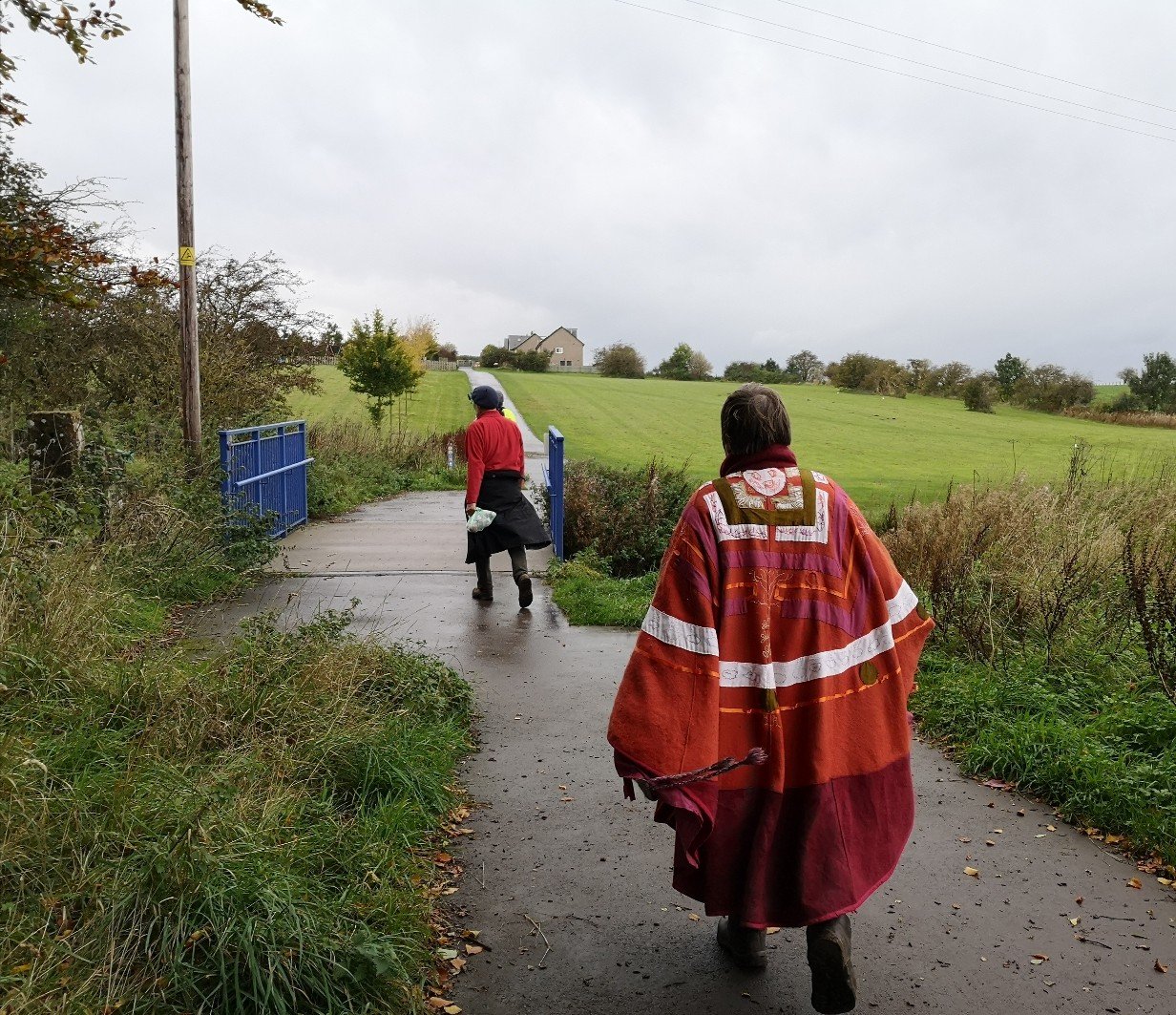
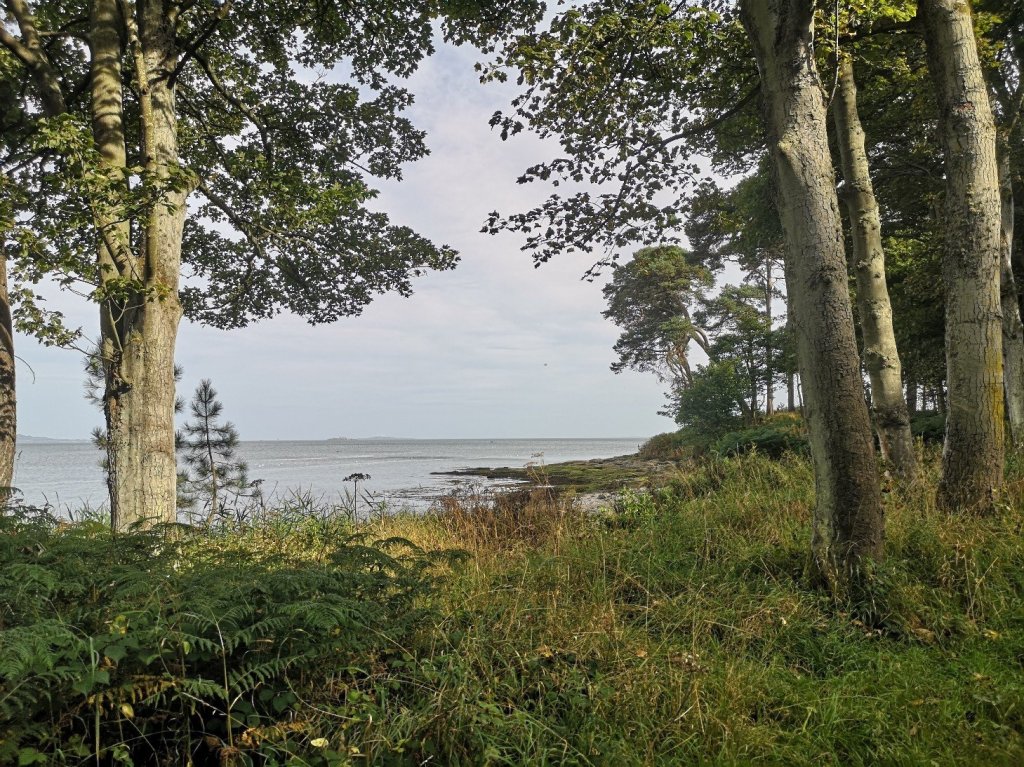
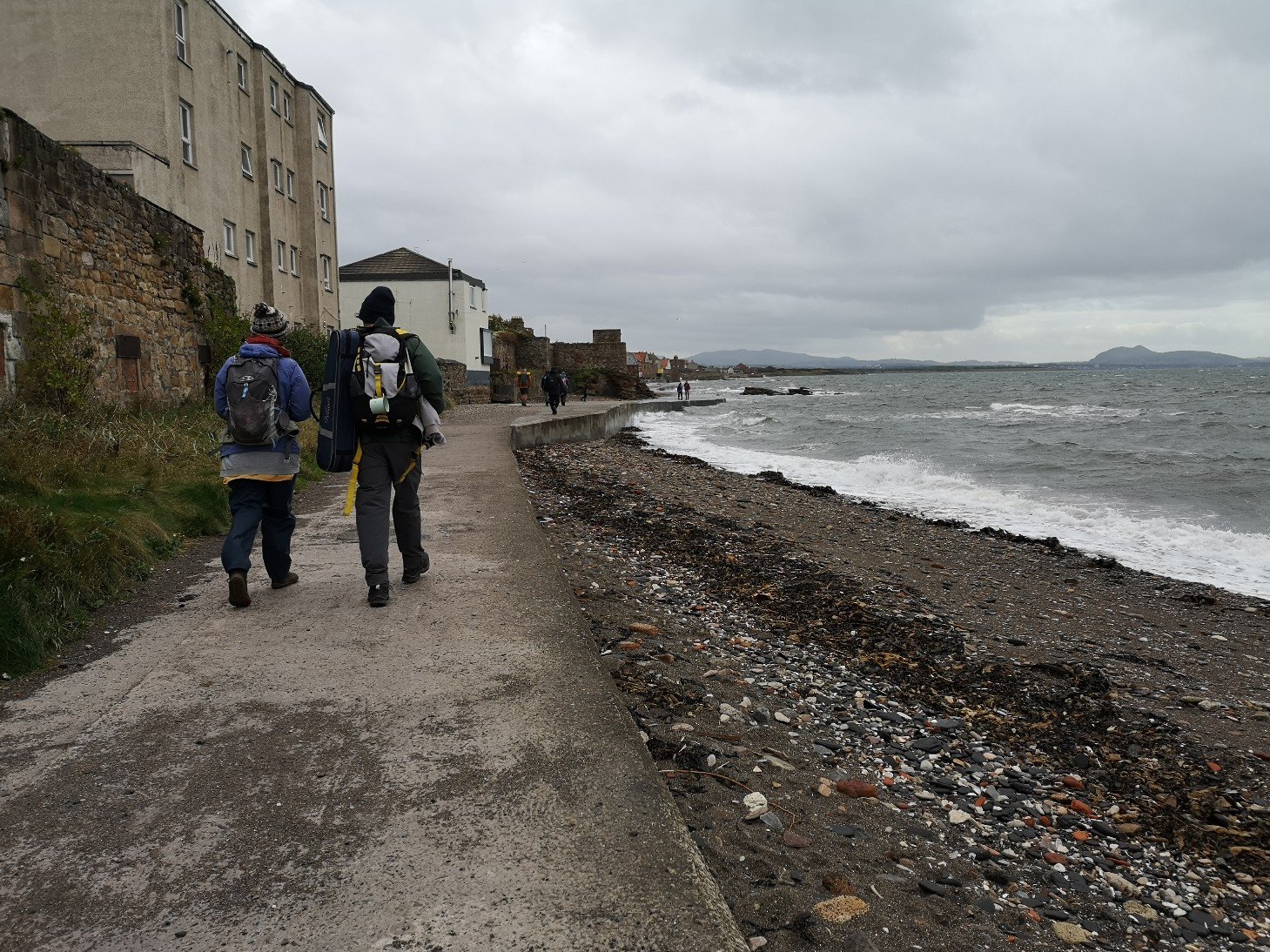
We leave Bo’ness (formerly known as Borrowstounness) around 9am as usual, going downhill one more time, crossing the old Bo’ness to Slamannan railway to Glasgow and rejoining the edge of the Firth of Forth. (The line was usurped in 1842 by the intercity one we now use, and is used for the Bo’ness and Kinneil Heritage Railway. There is also a large Museum of Scottish Railways, and the facilities here were used for the testing of a new hyrogen train. More about the UK eco-train plans here).
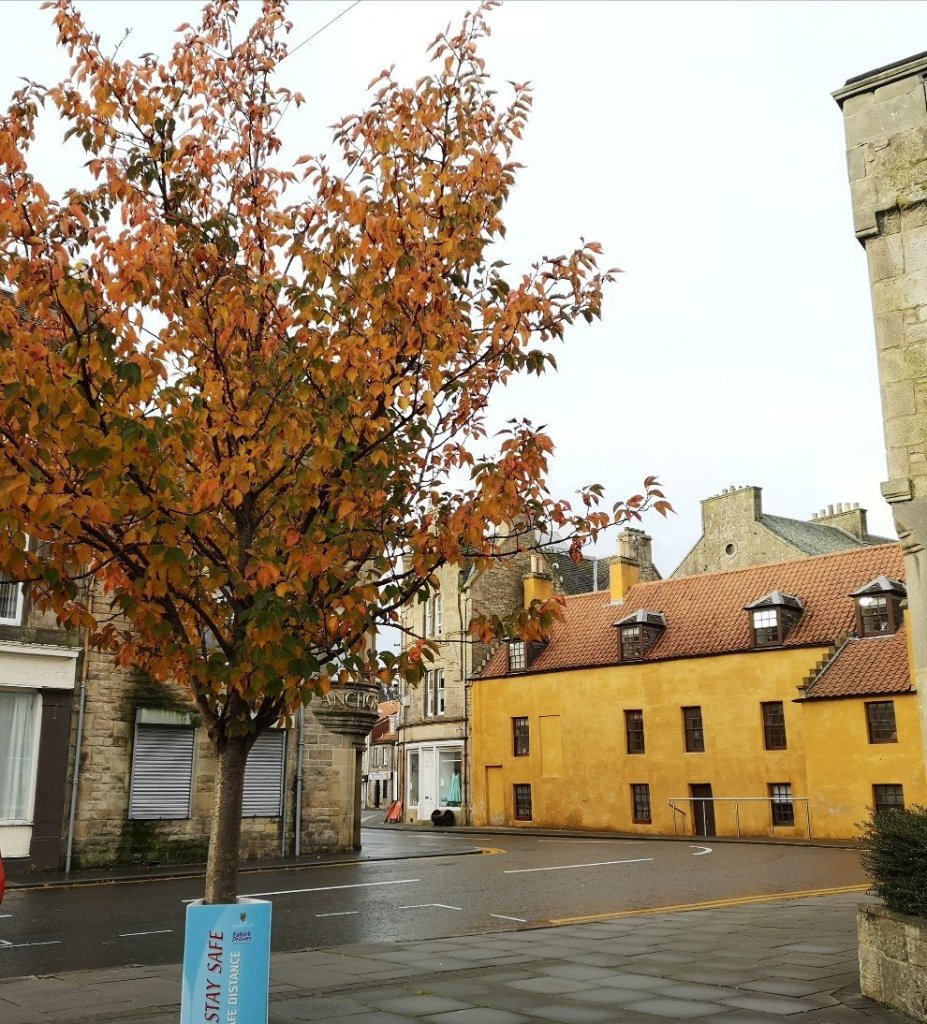
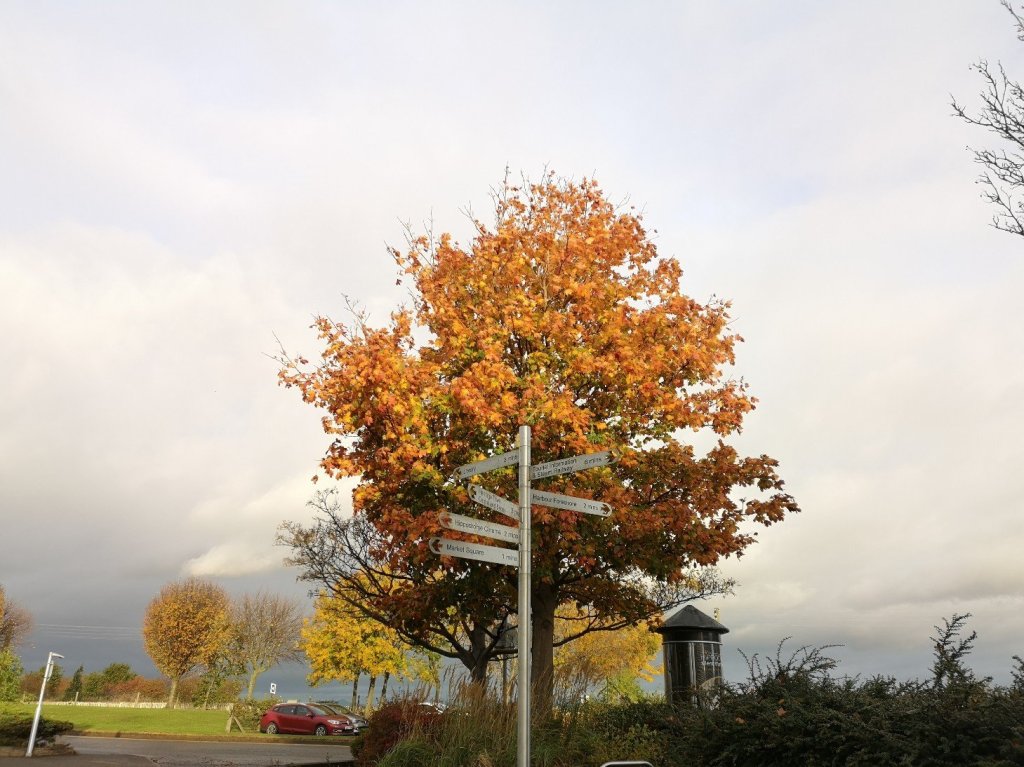
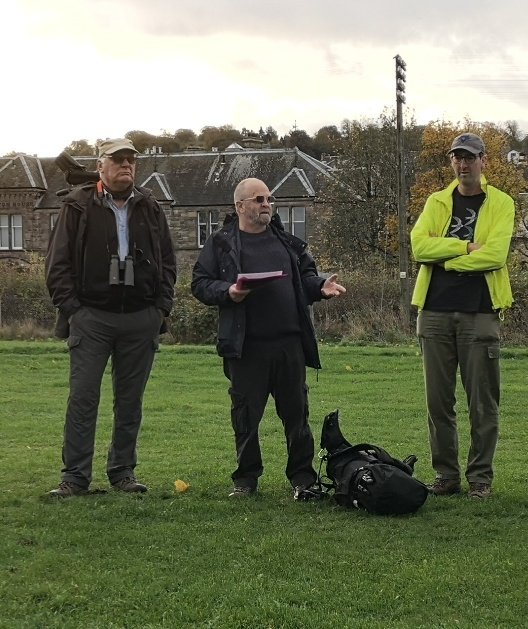
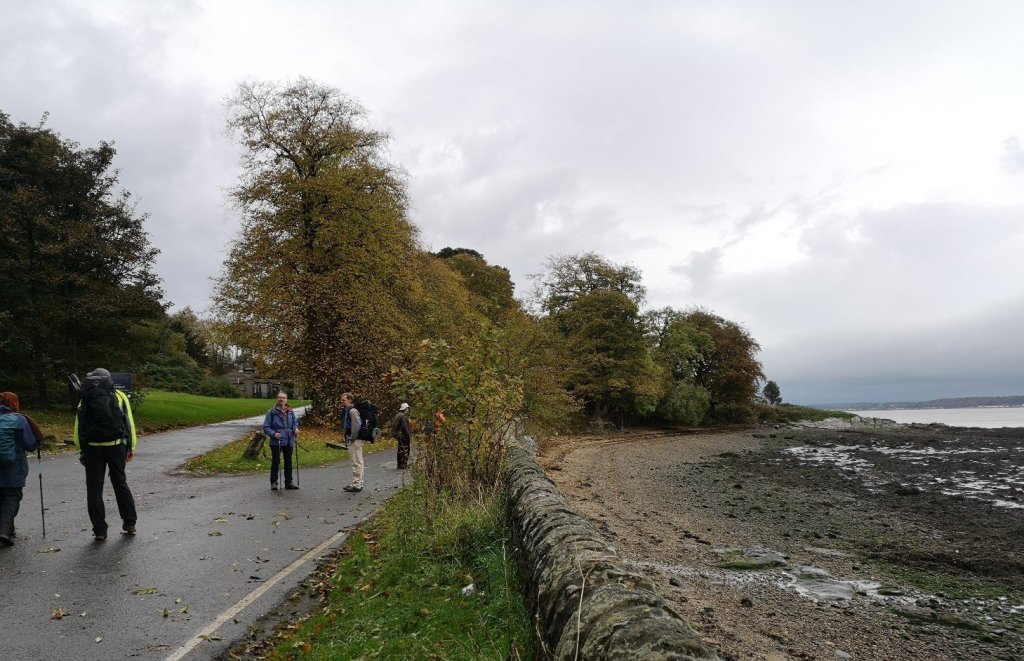
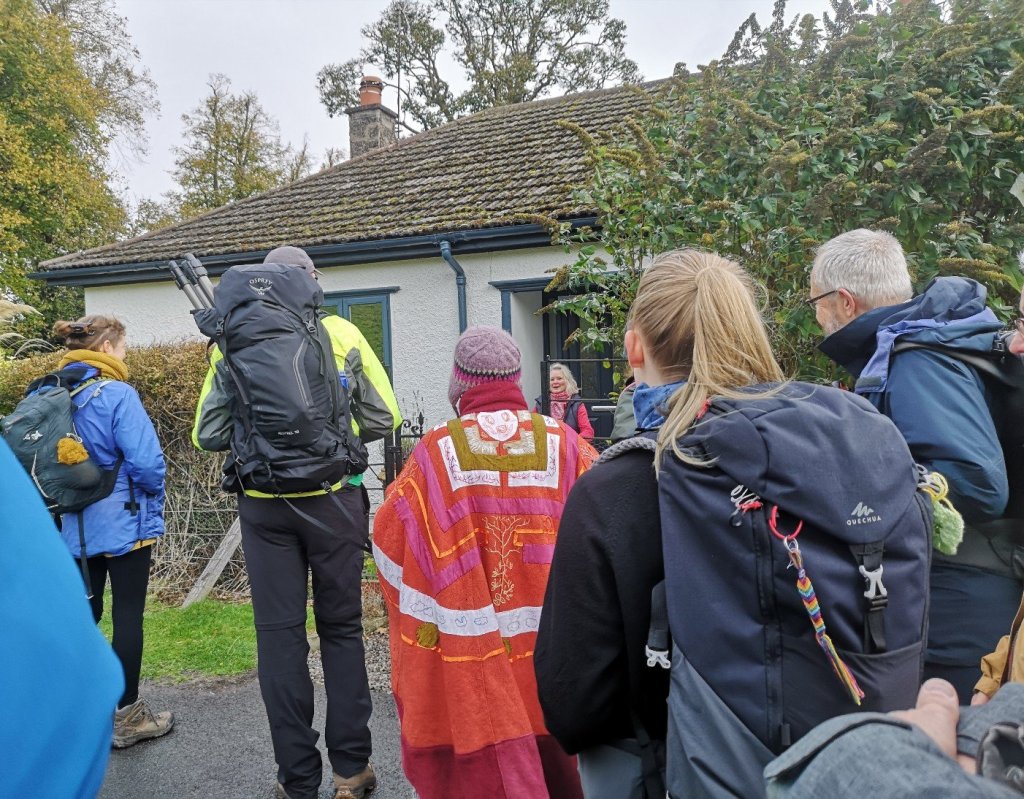
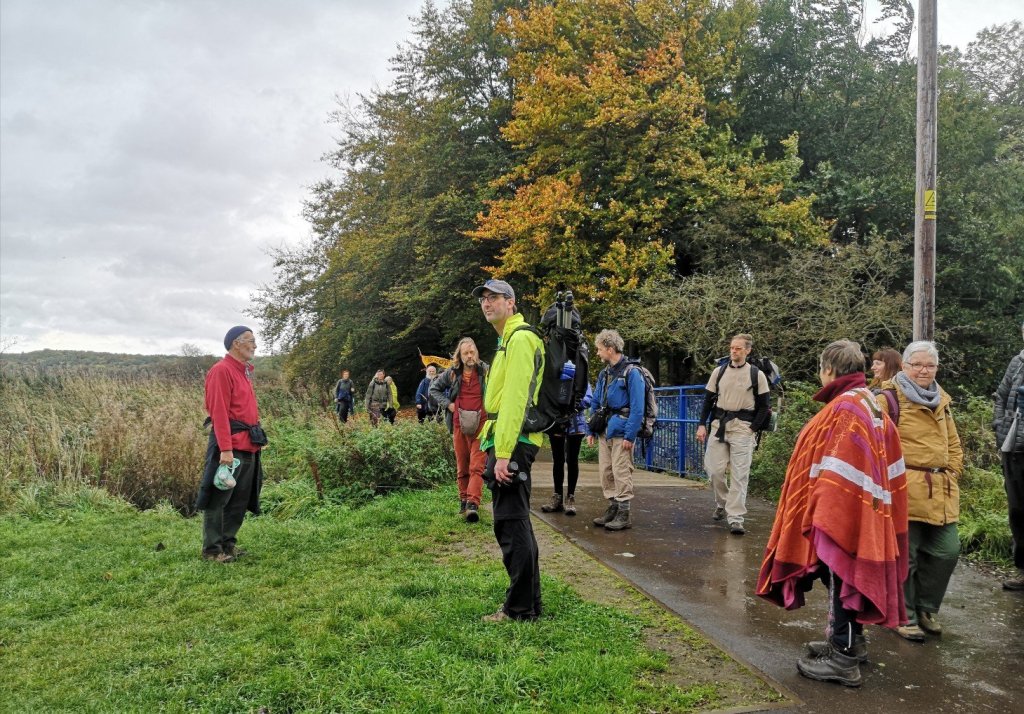
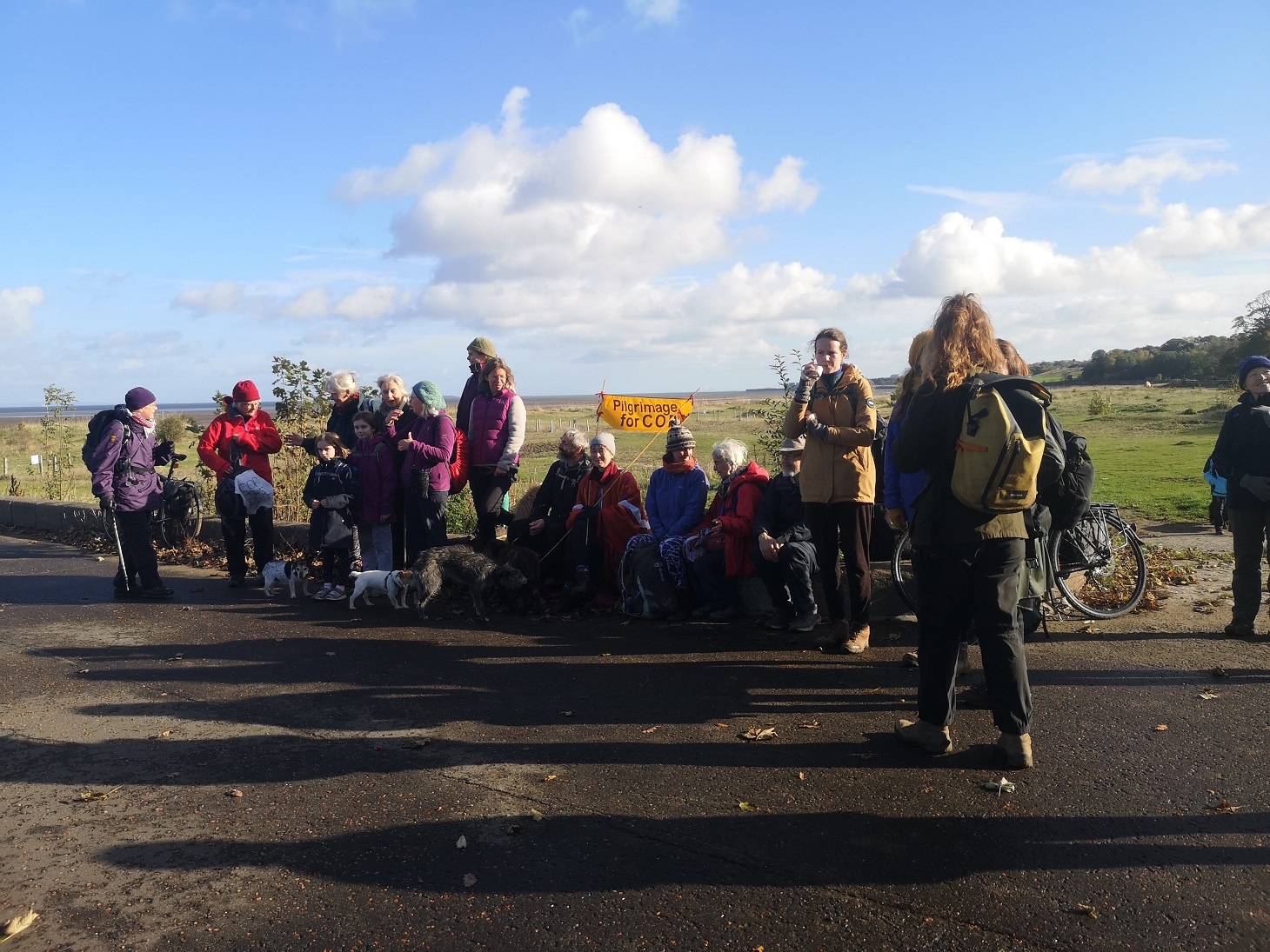
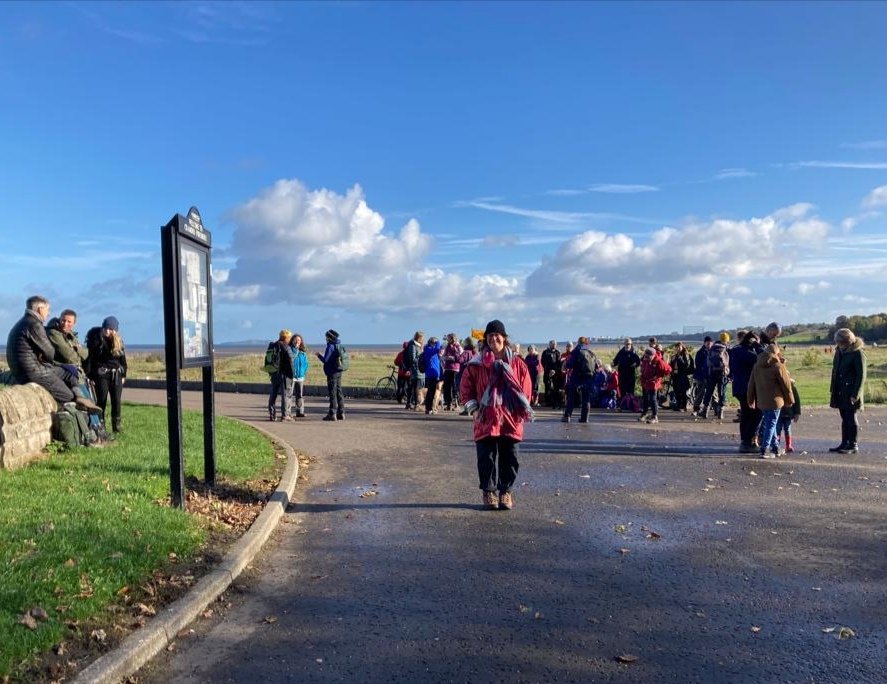
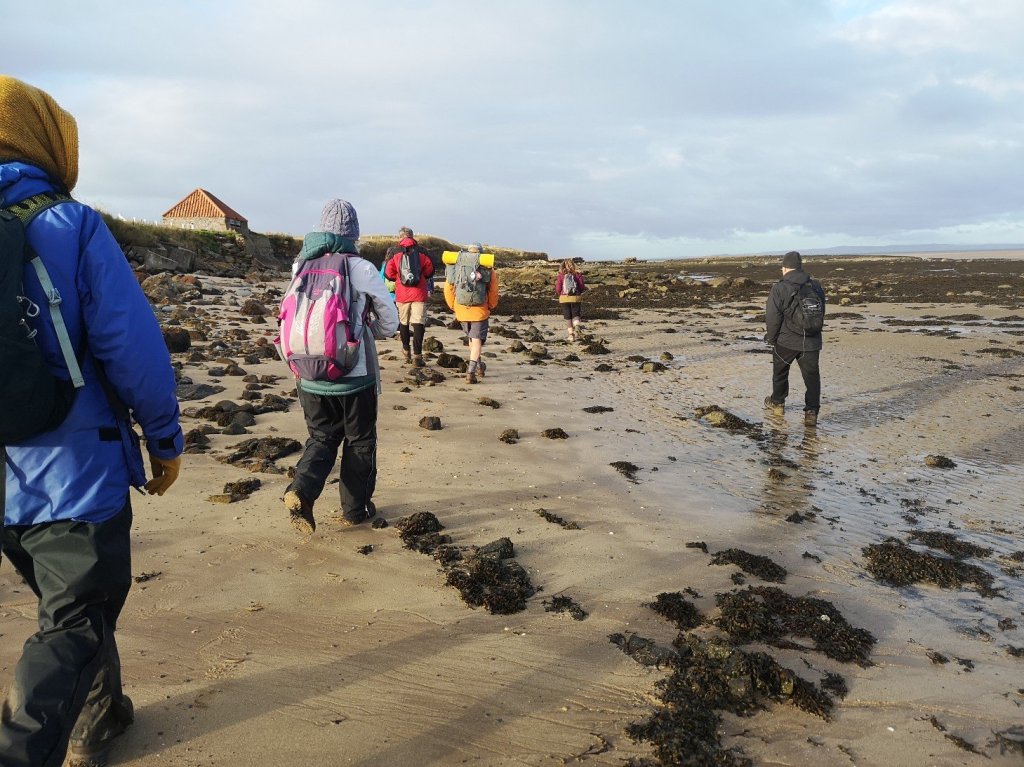
Here we are met by the day walkers who included Ian from the Friends of Kinneil House, built by the Hamilton Family. The Friends help to promote and develop the Estate and the foreshore of Bo’ness where we will be walking this morning.
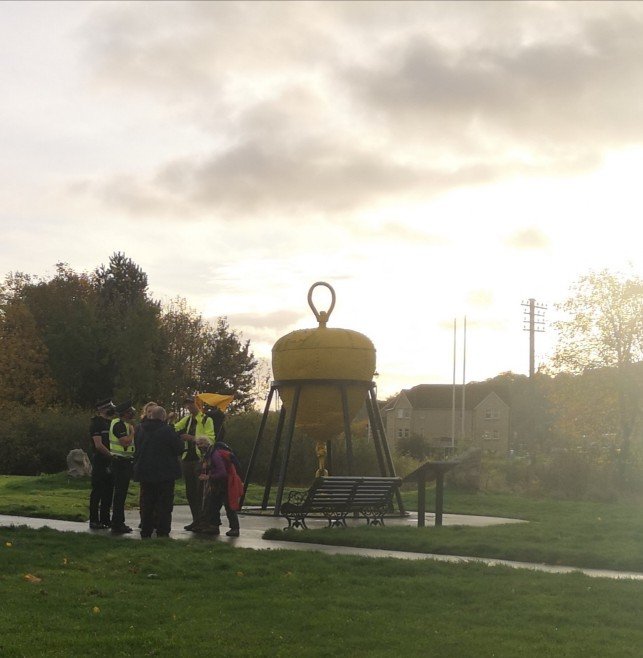
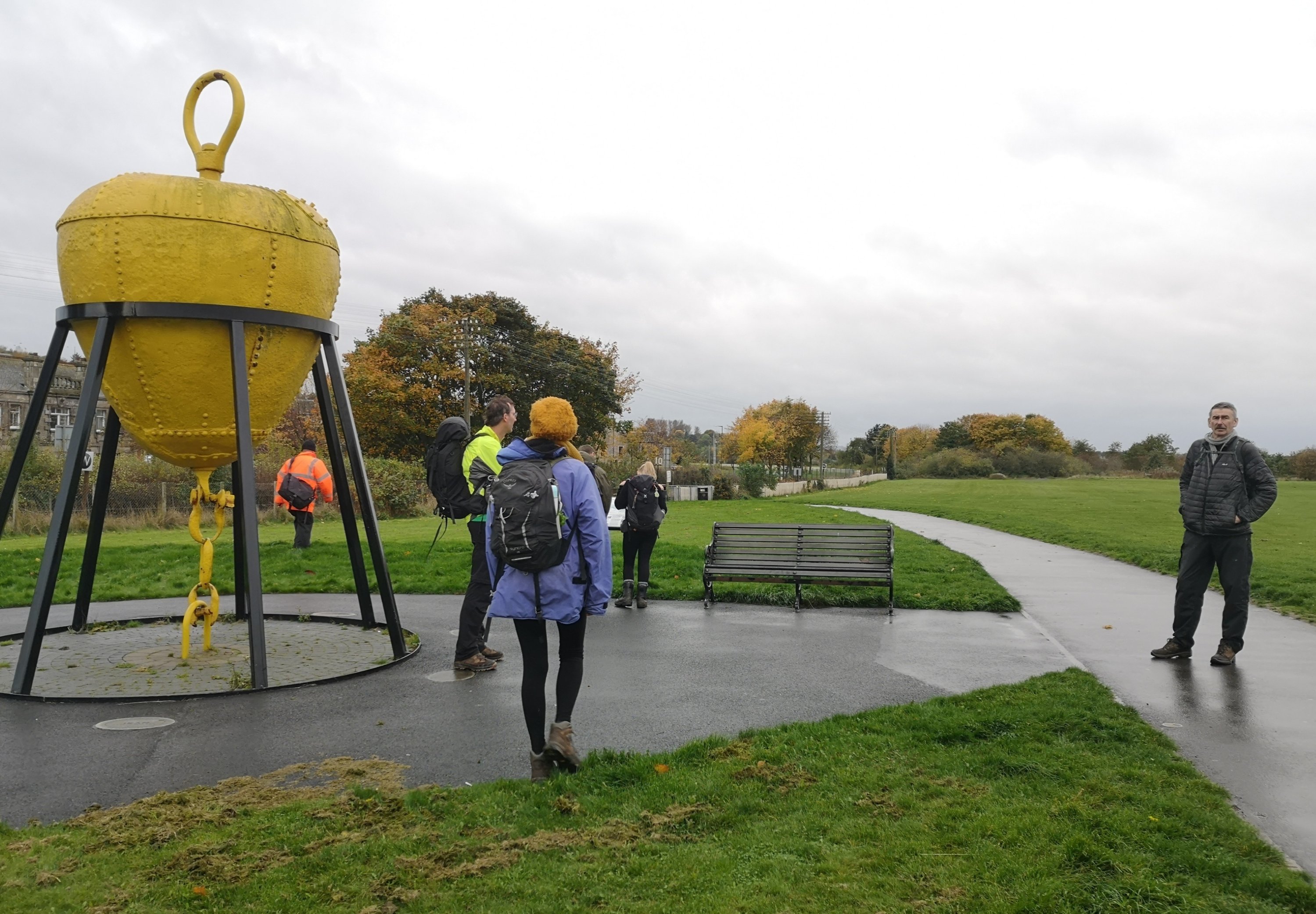
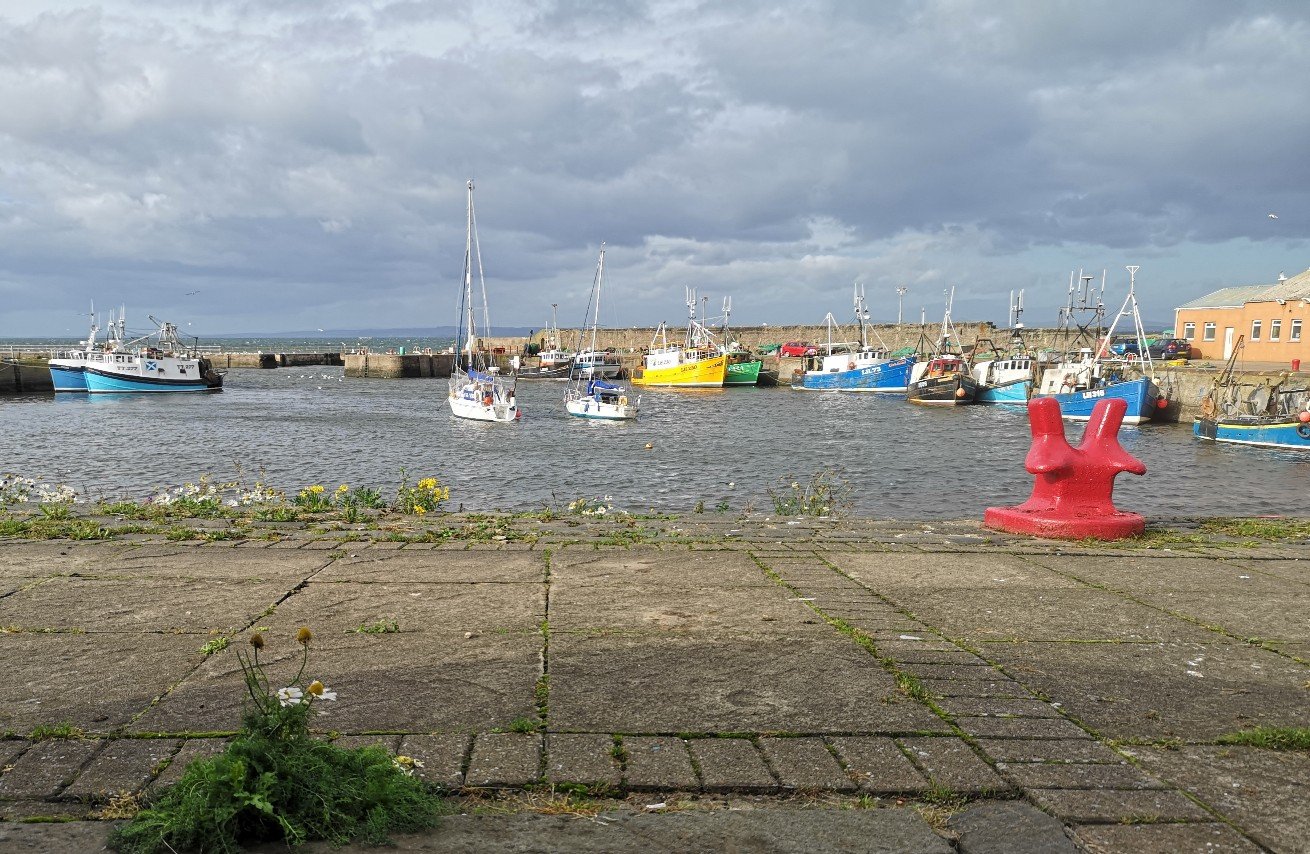
The port was recognised from 16th century, ranked as the third most important in Scotland in the 18th century, and the area was a hub of industry. Harbour construction started in 1707, and was closed in 1959 due to silting and the demise of the coal mining industry. Later, the port was the site of shipbreaking, with the ships being sailed as far up on the shore as possible, the bows nearly reaching Bridgeness Road, which must have been a sight.
There were 96 pits, one of which was connected across in Fife by mining under the river, and we are told about the bell pit that was sited in nearby Kinneil woods, now a nature reserve. The pits were closed by 1983 and lots of the remains were put in the river, including medical waste, and chemicals such as arsenic. There is a James Watt (b.1736, of steam engine fame) Supper at Kinneil House on Burns Night to look out for!
Maria Ford, the chair of The Friends, said: “Probably very few of us have a copy of Rabbie Burns’ Complete Works in our homes – but nearly everyone will have lightbulbs measured in Watts.
https://kinneil.org/2011/01/19/remembering-james-watt/
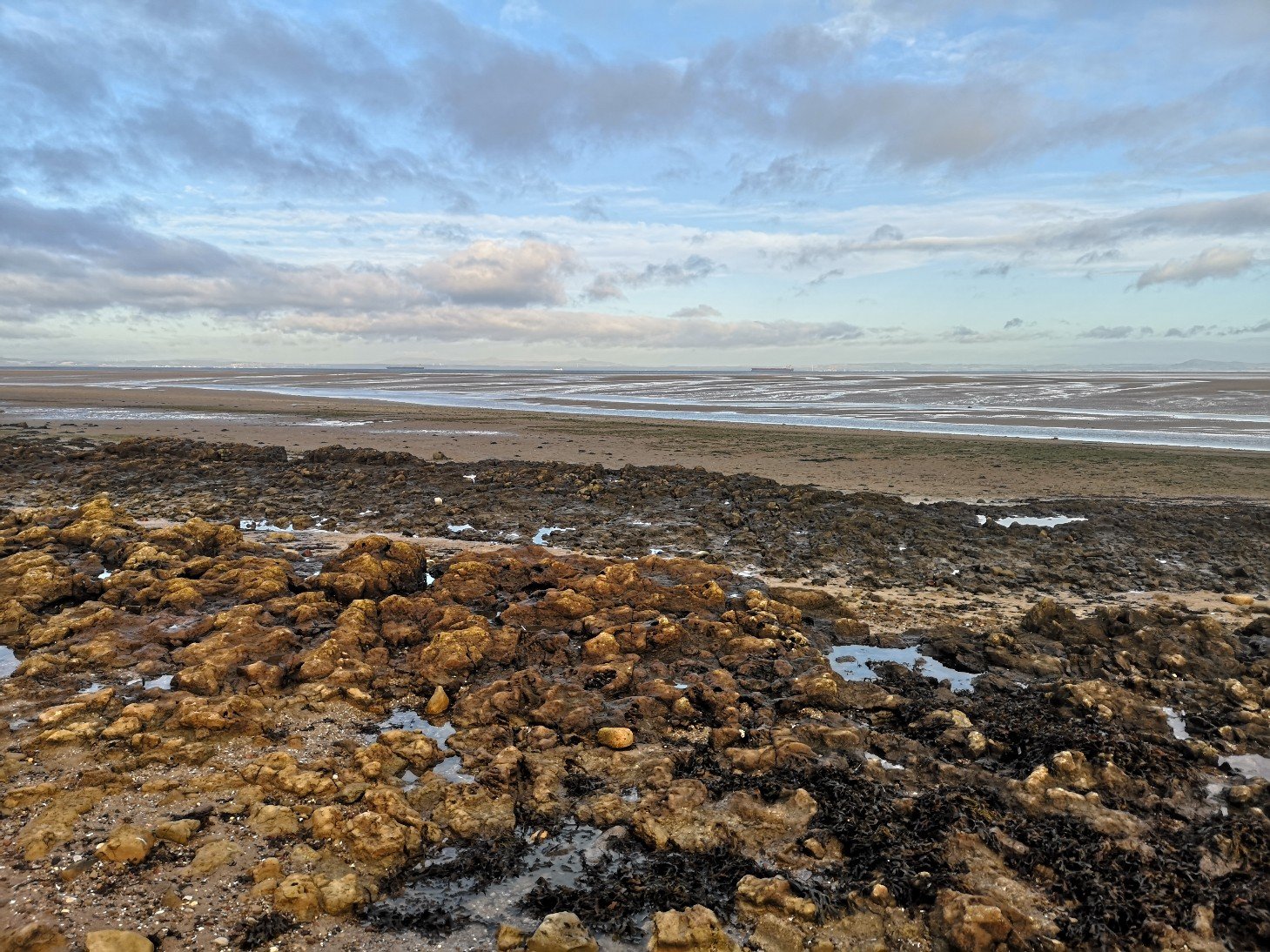
Mussels were gathered and eaten by our mesolithic ancestors, as evidenced by archeological finds near here, middens of oyster shells, for example, which have been found along these shores. Salt panning, ironstone and clay mines, potteries, whaling and gas were all local industries.
Links to local history of the Bo’ness area
Bo’ness Mining on the Visit Falkirk website
Bo’ness Pottery
Nature and The Lagoons
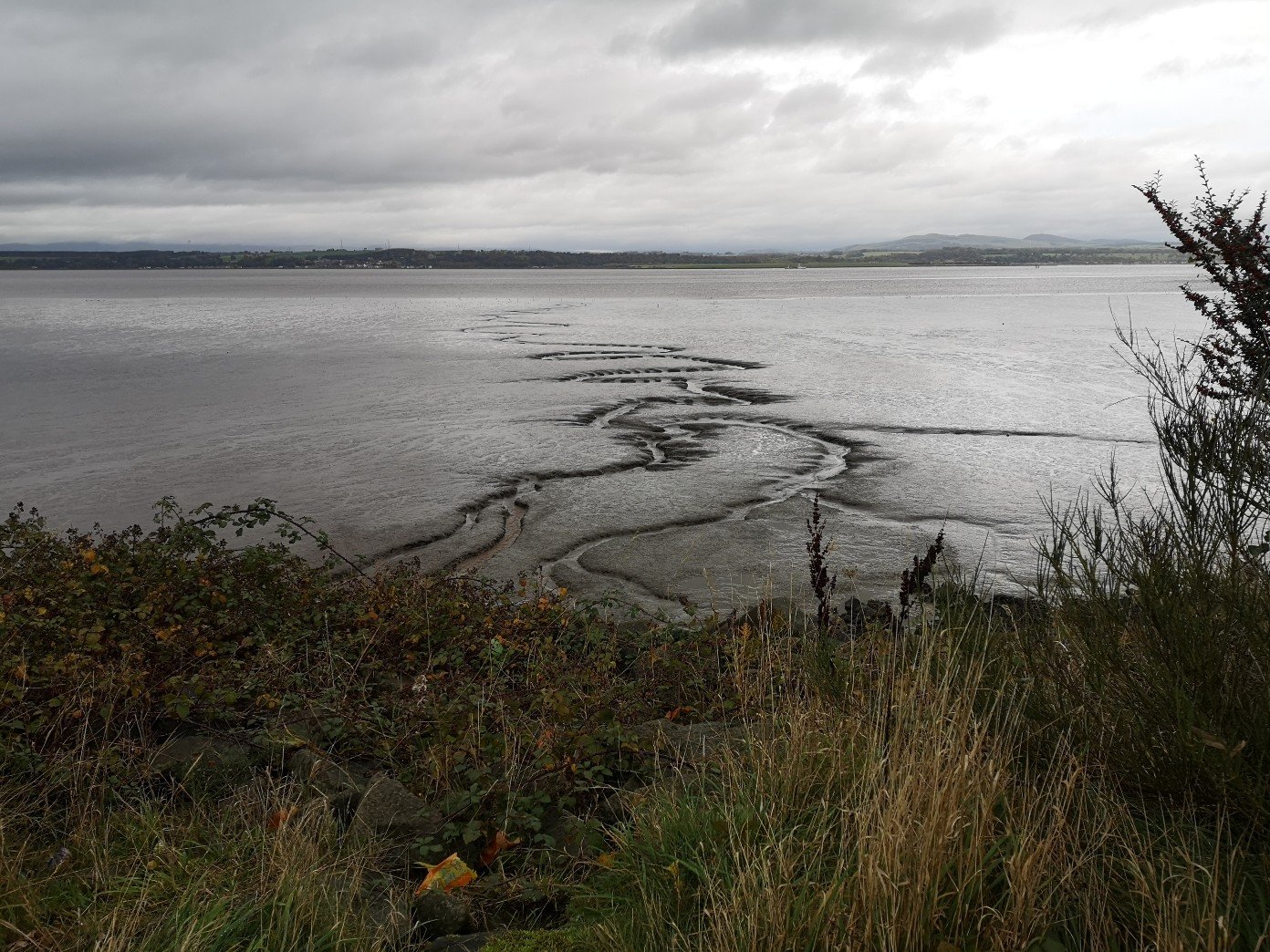
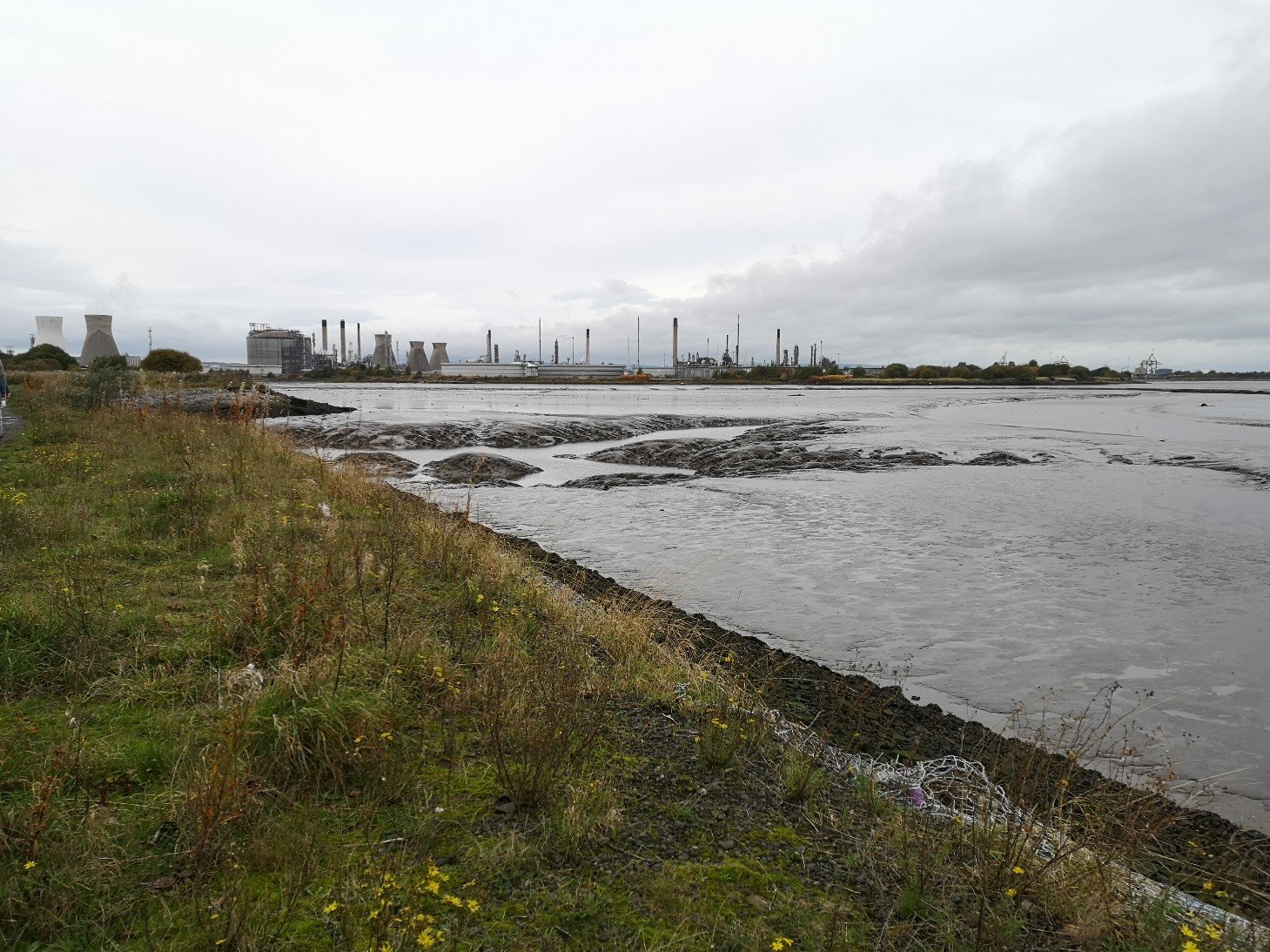
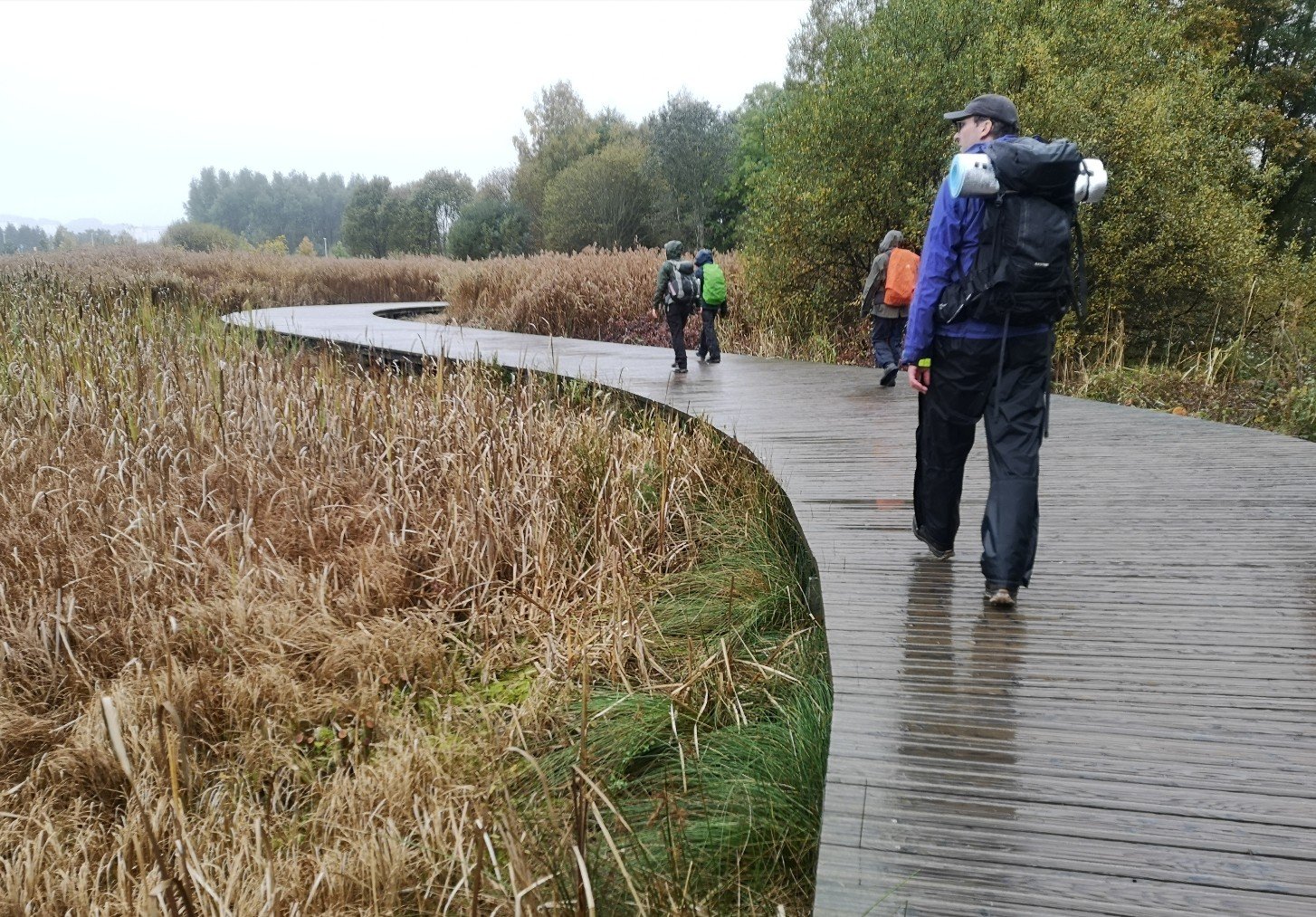
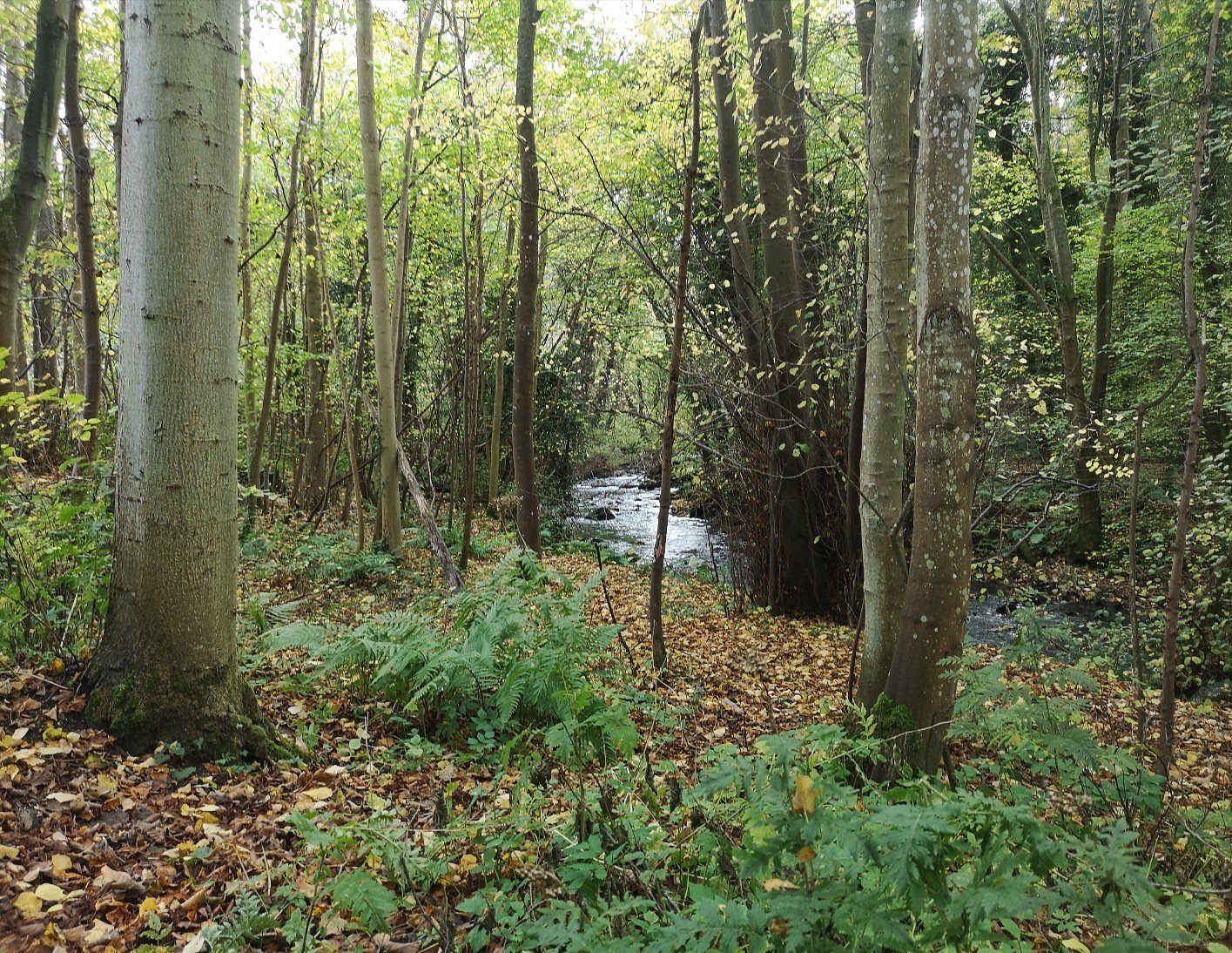
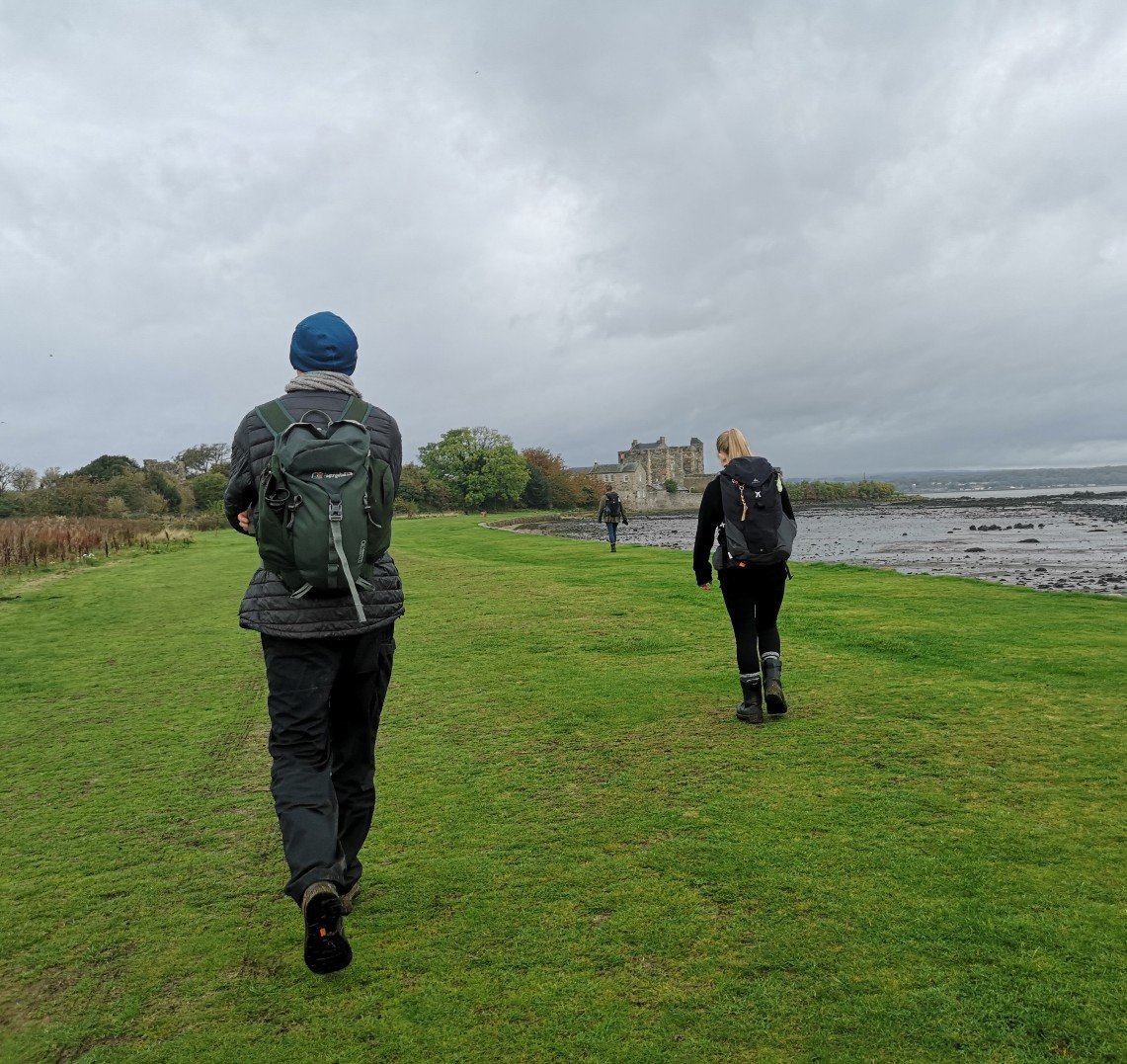
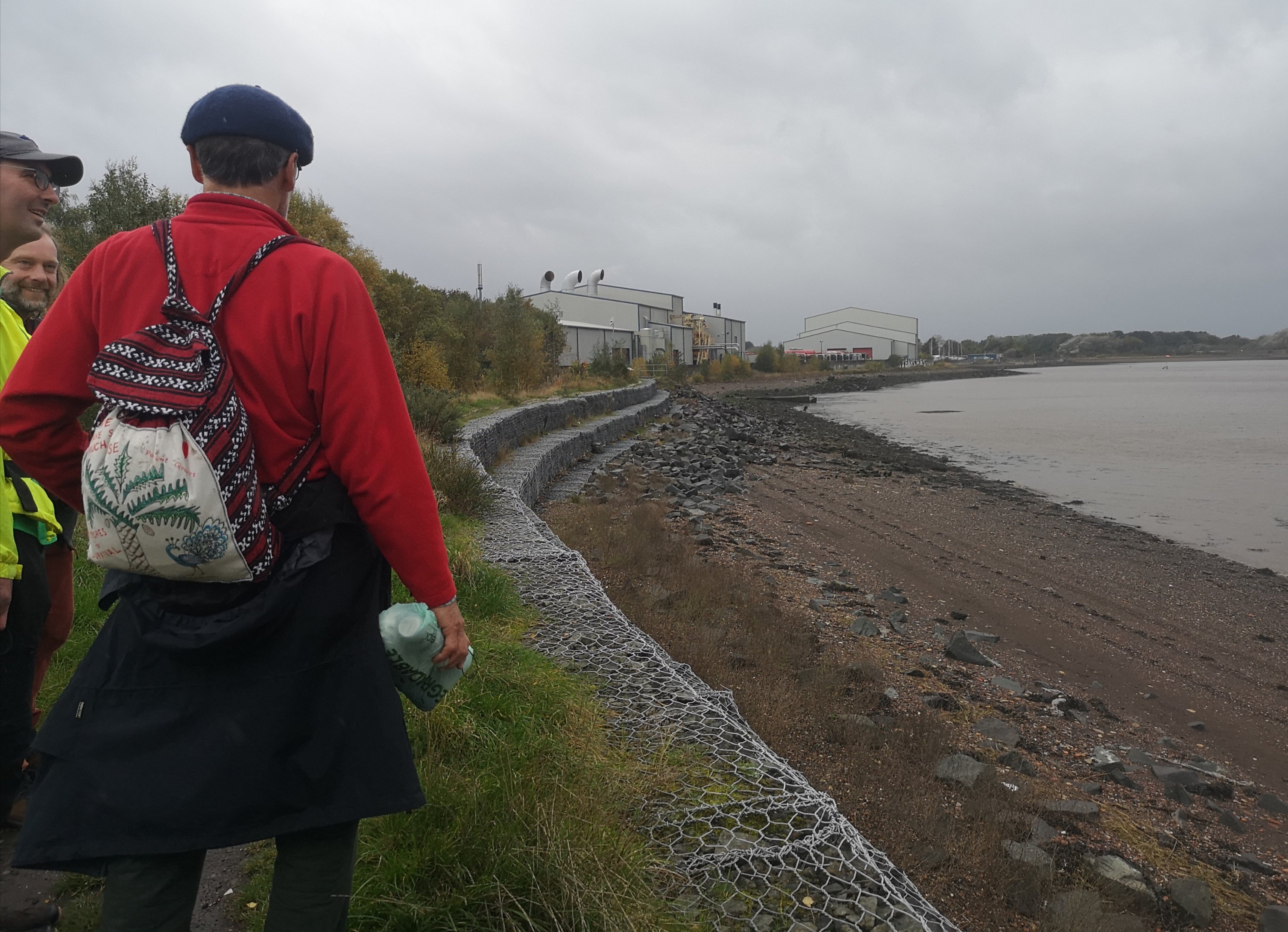
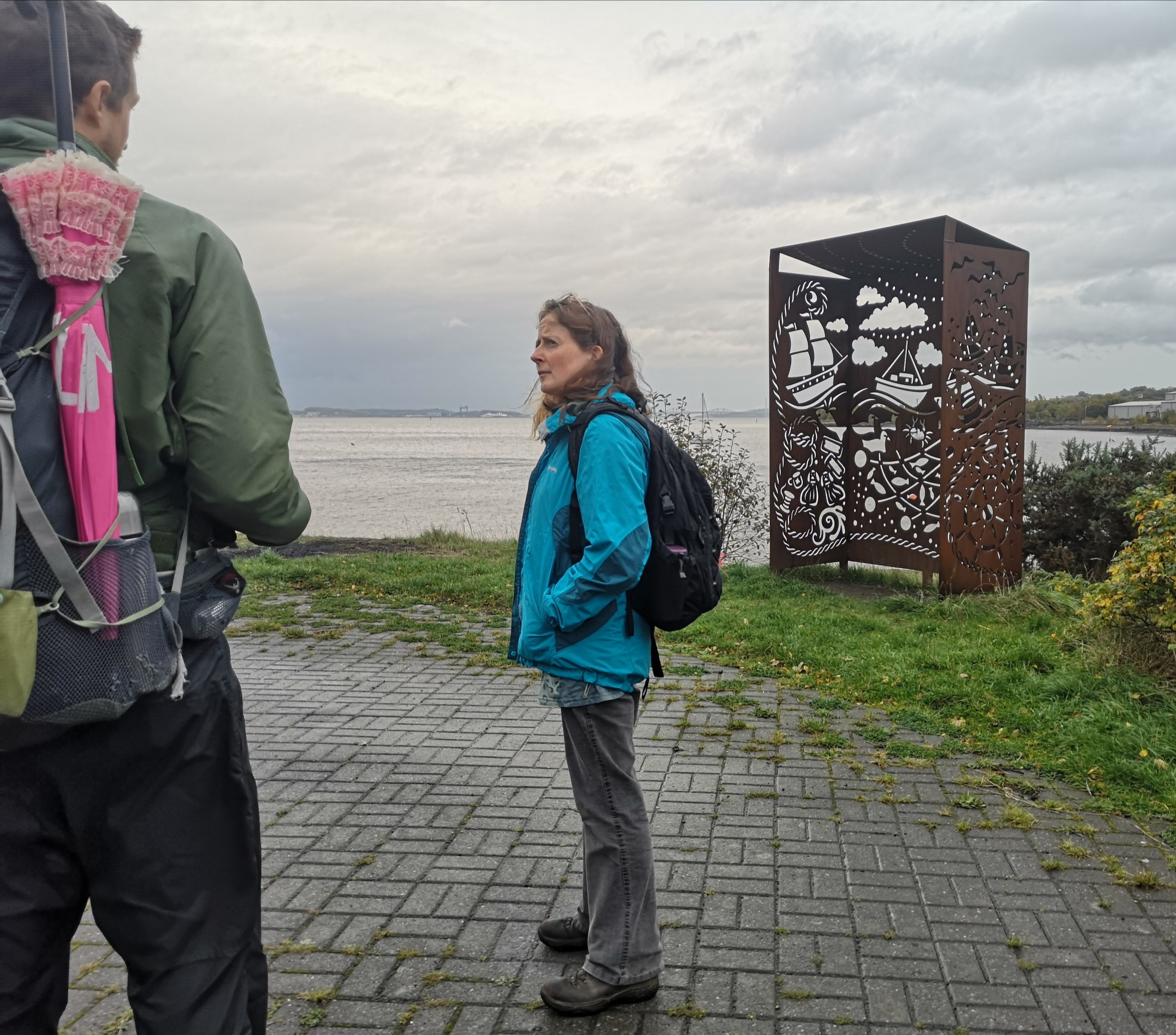
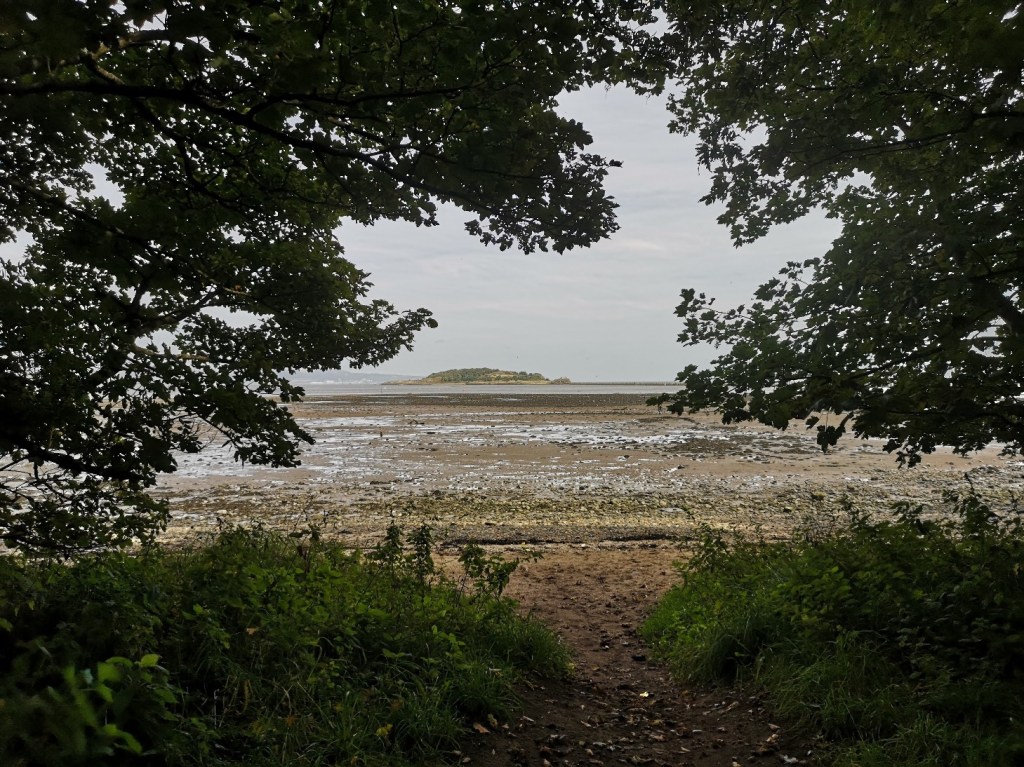
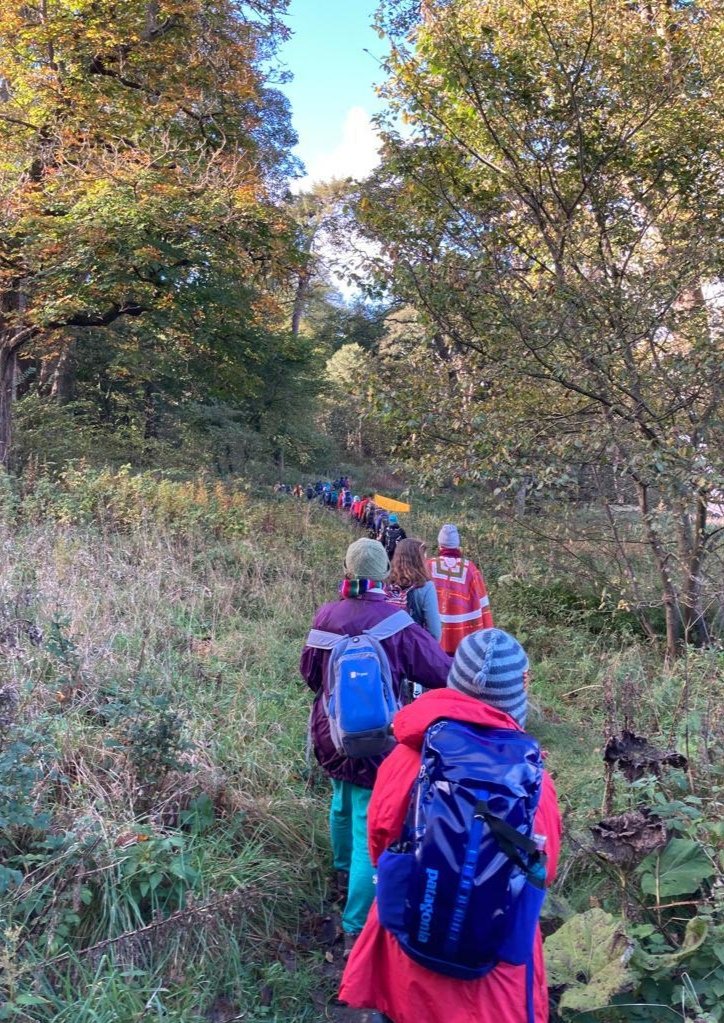
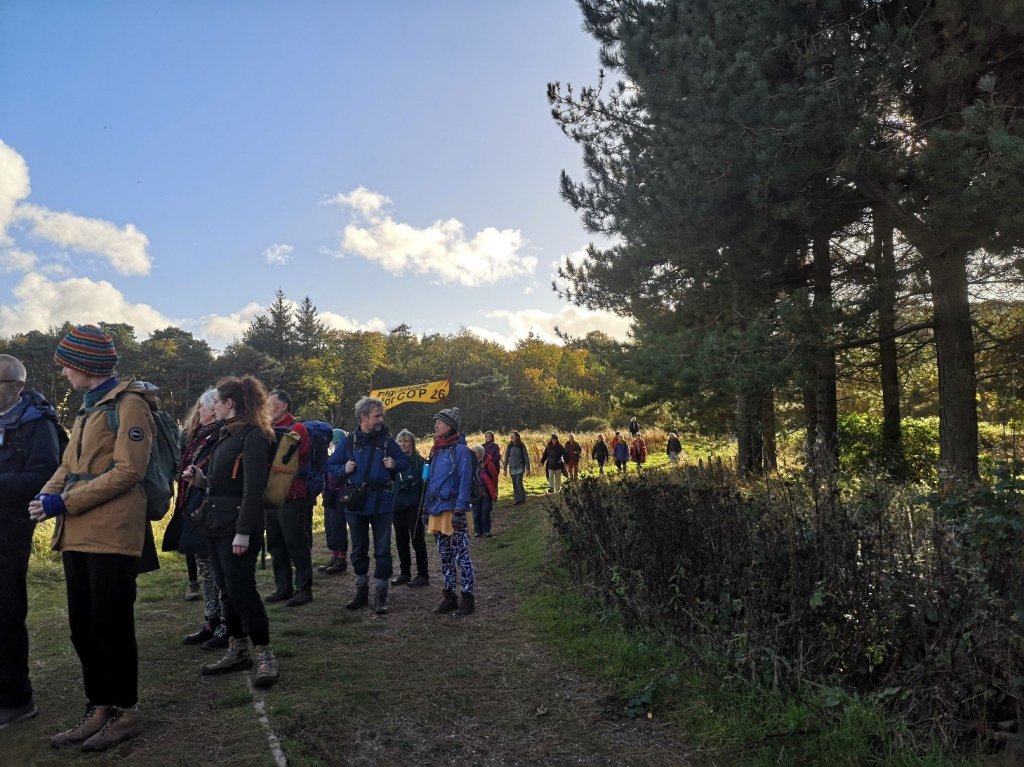
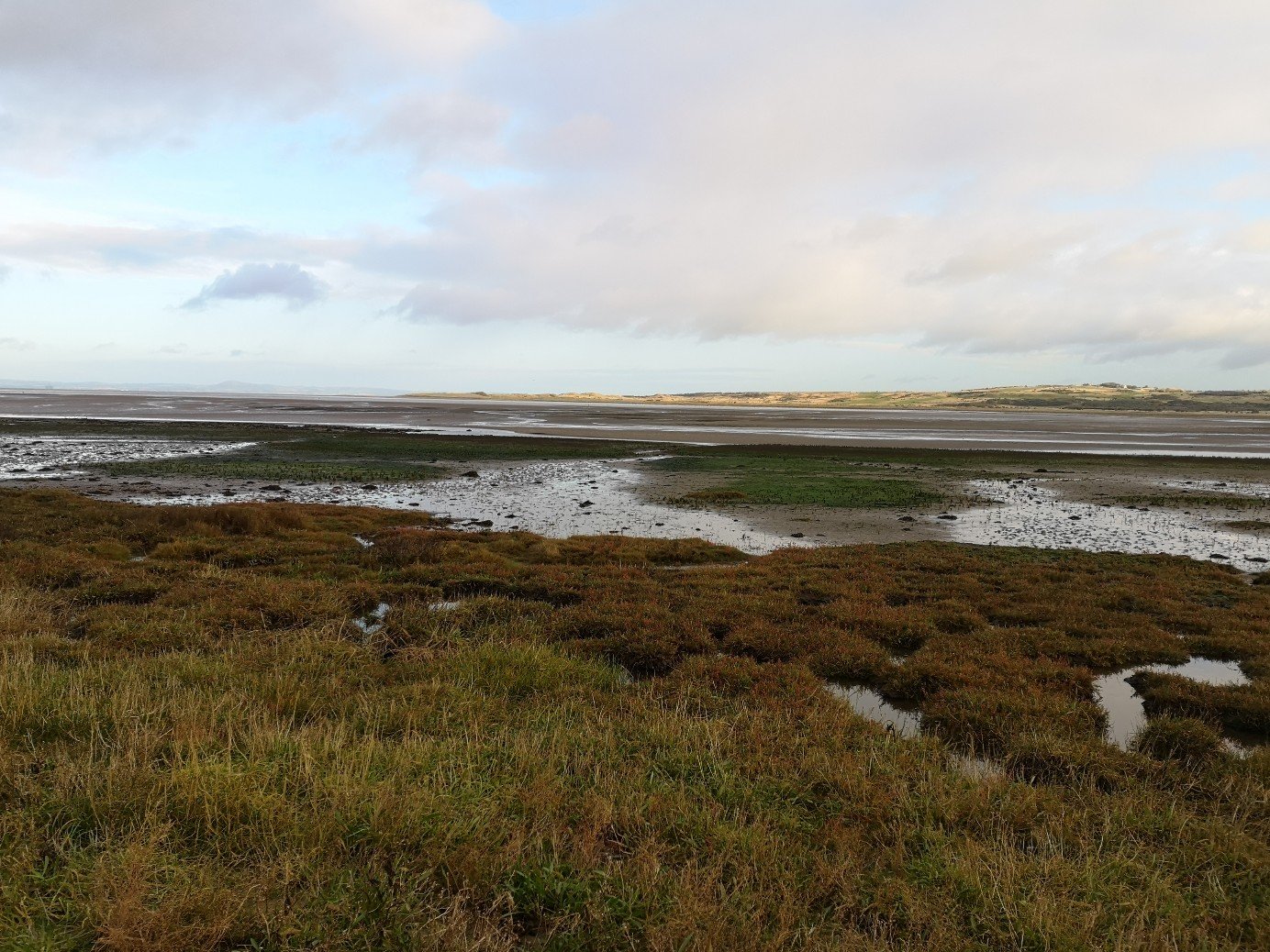
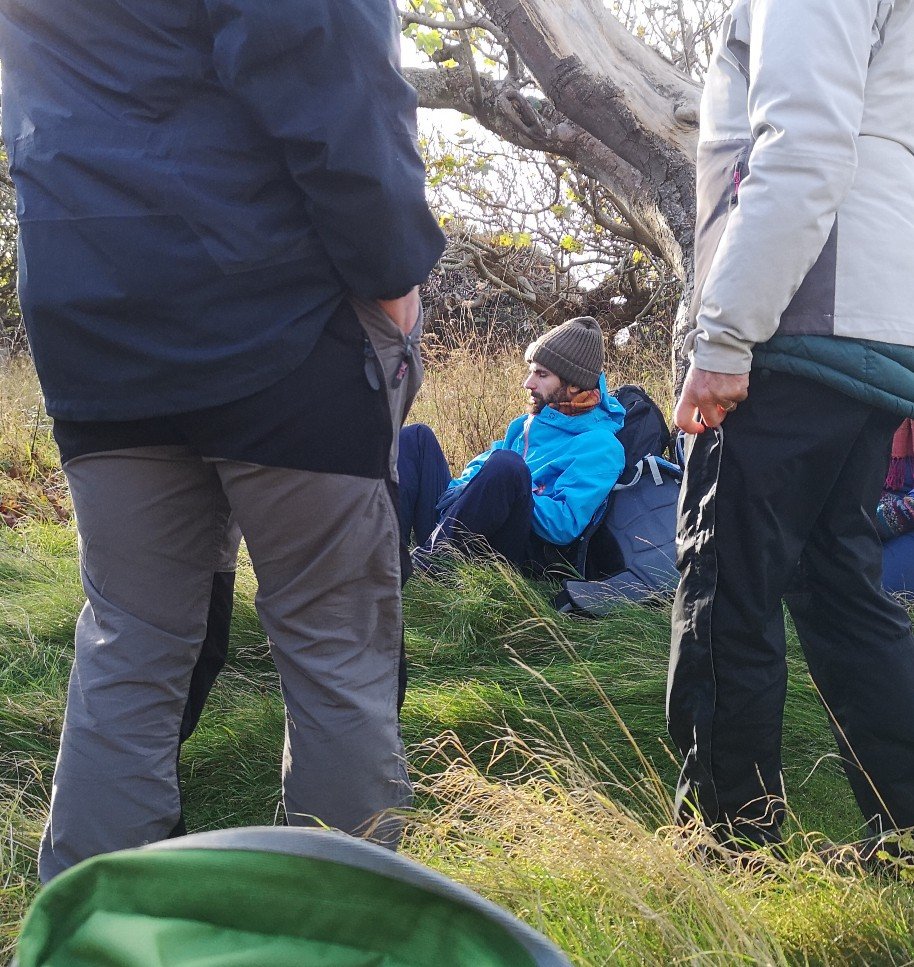
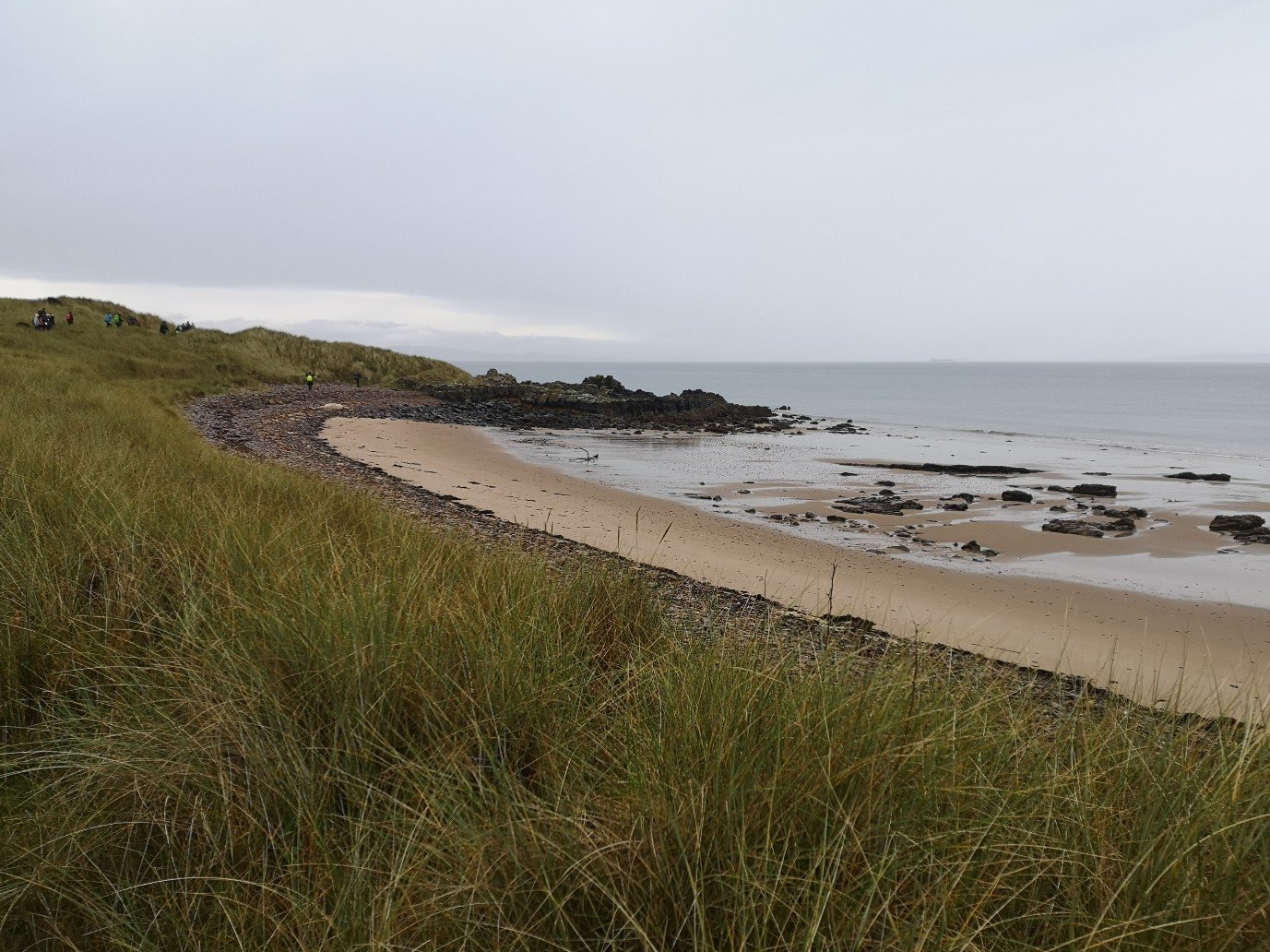
We started walking the Forth river Site of Special Scientific Interest (SSSI), stopping often to learn about the area, much of which is recently reclaimed industrial land, and we admired the lagoons and reed beds owned by the RSPB. Short-eared Owls, Kestrels and Buzzards have been sighted, reeling through the skies. We asked, what is needed to improve it for wildlife, and Billy replied, “Nothing, leave it alone. We hope that there is enough local interest to keep it like this.”
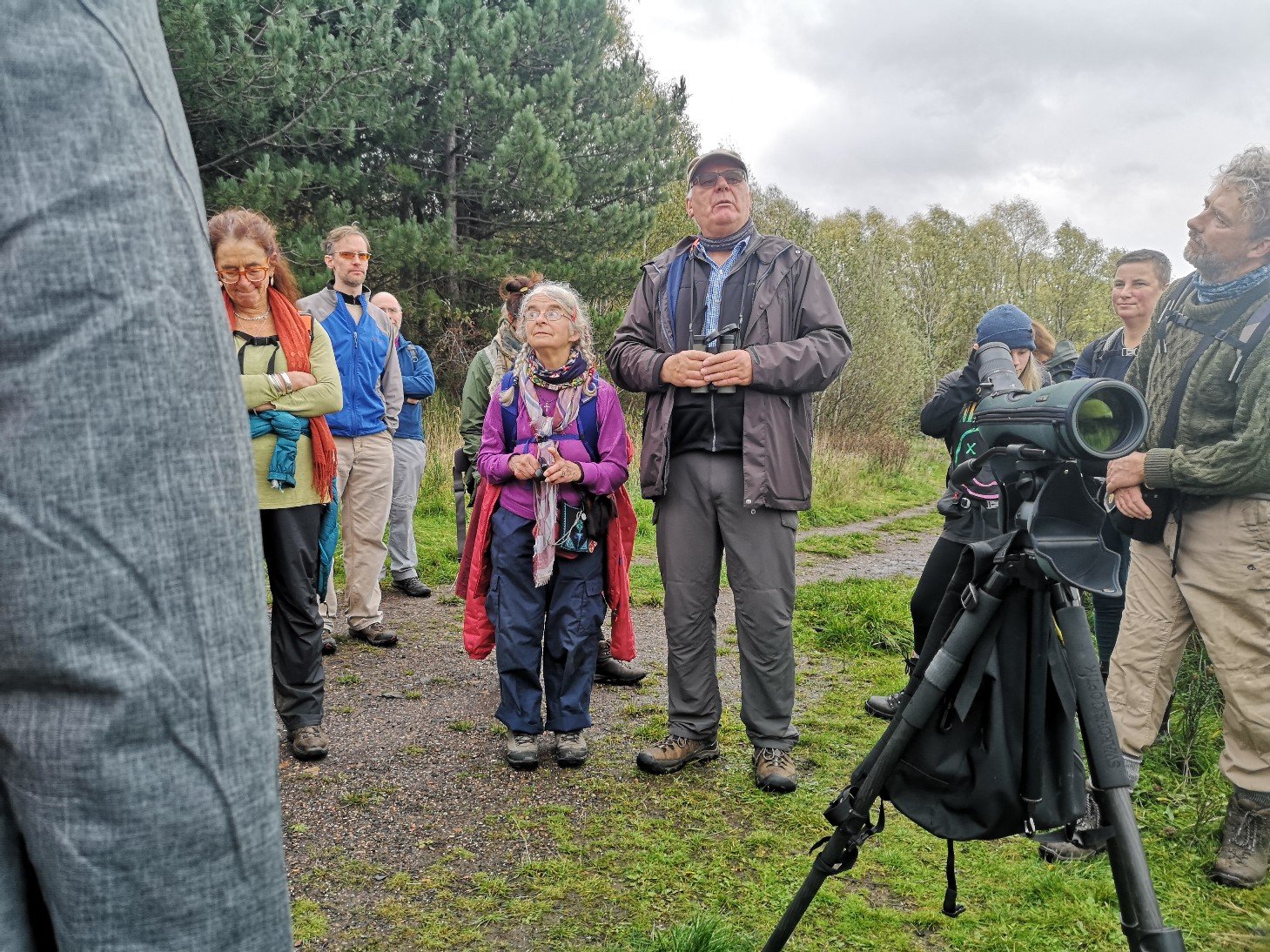
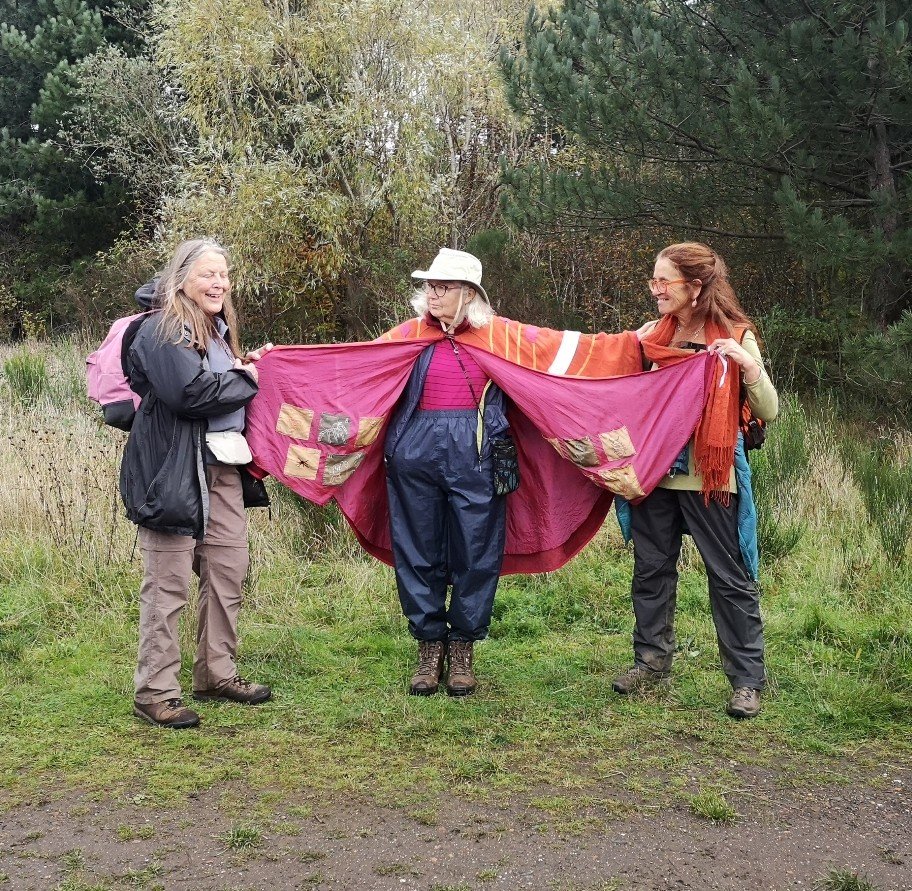
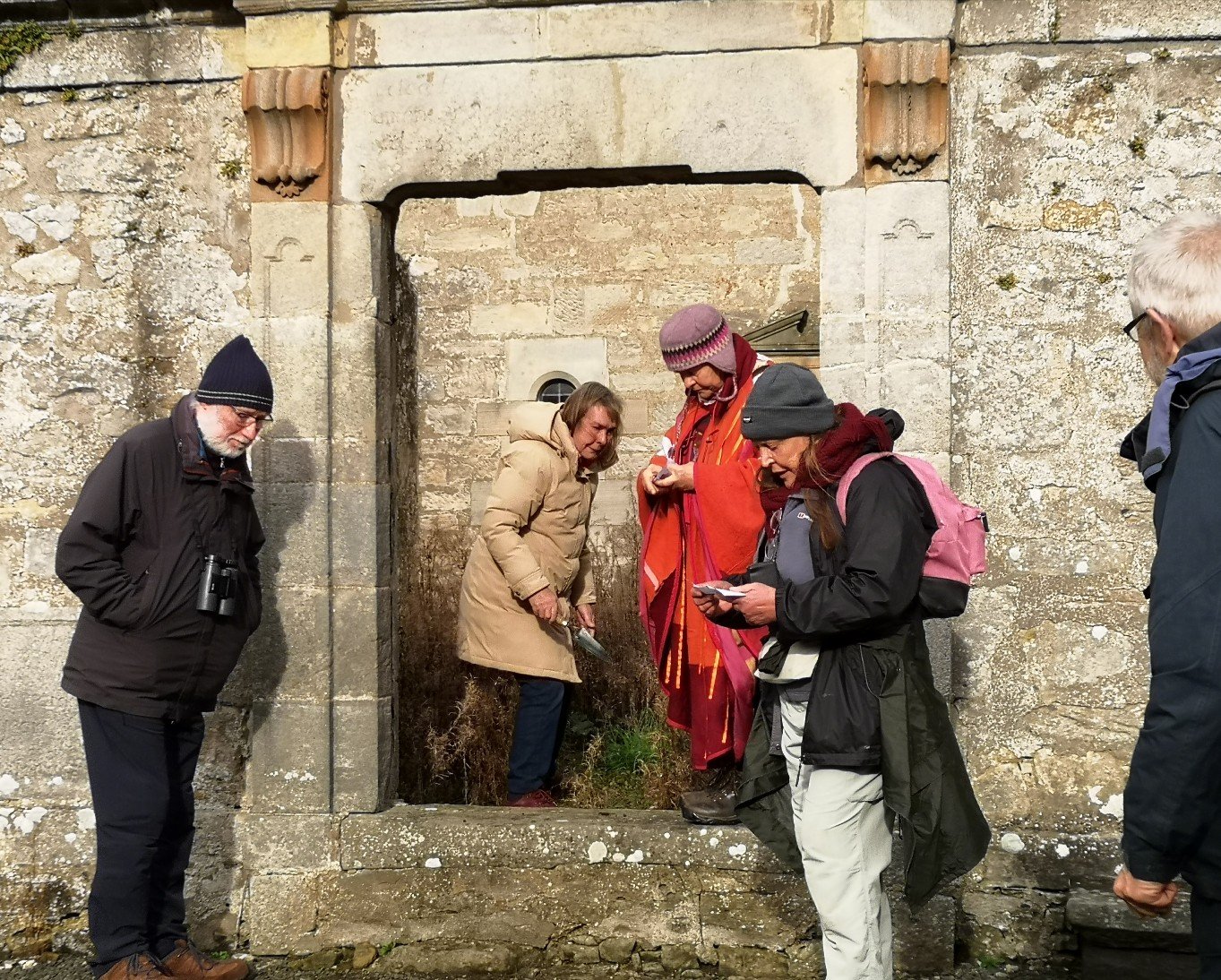
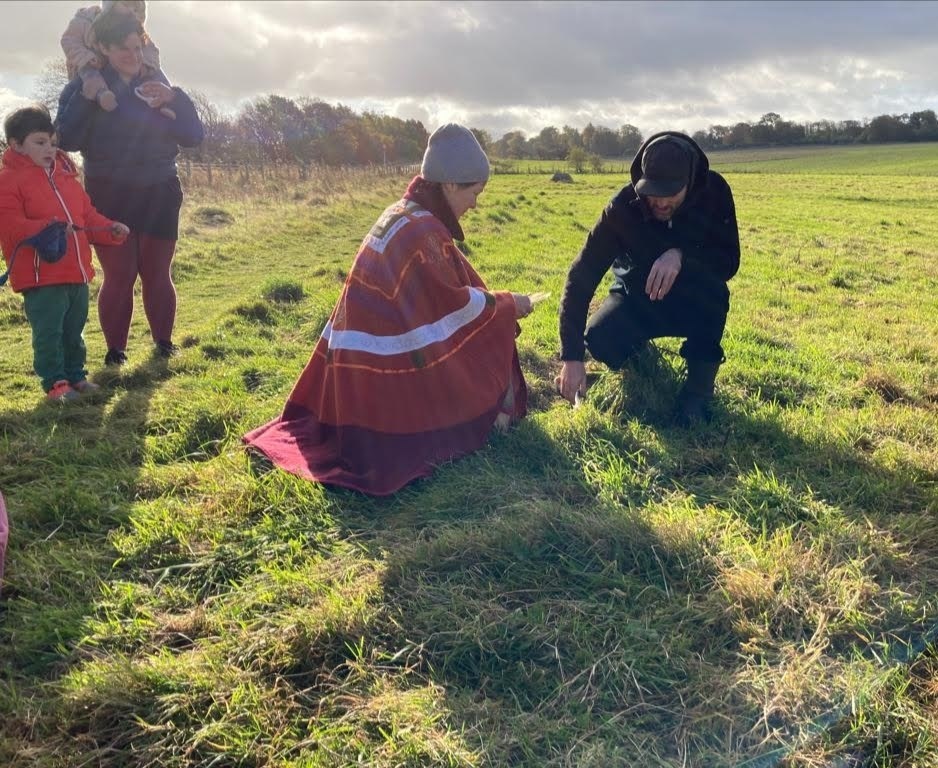
There were two soil ceremonies today. This was the first and Liz read out a quote from Wendell Berry‘s The Unsettling of America:
the soil is the great connector of lives… Without proper care for it, we can have no life
Wendell Berry
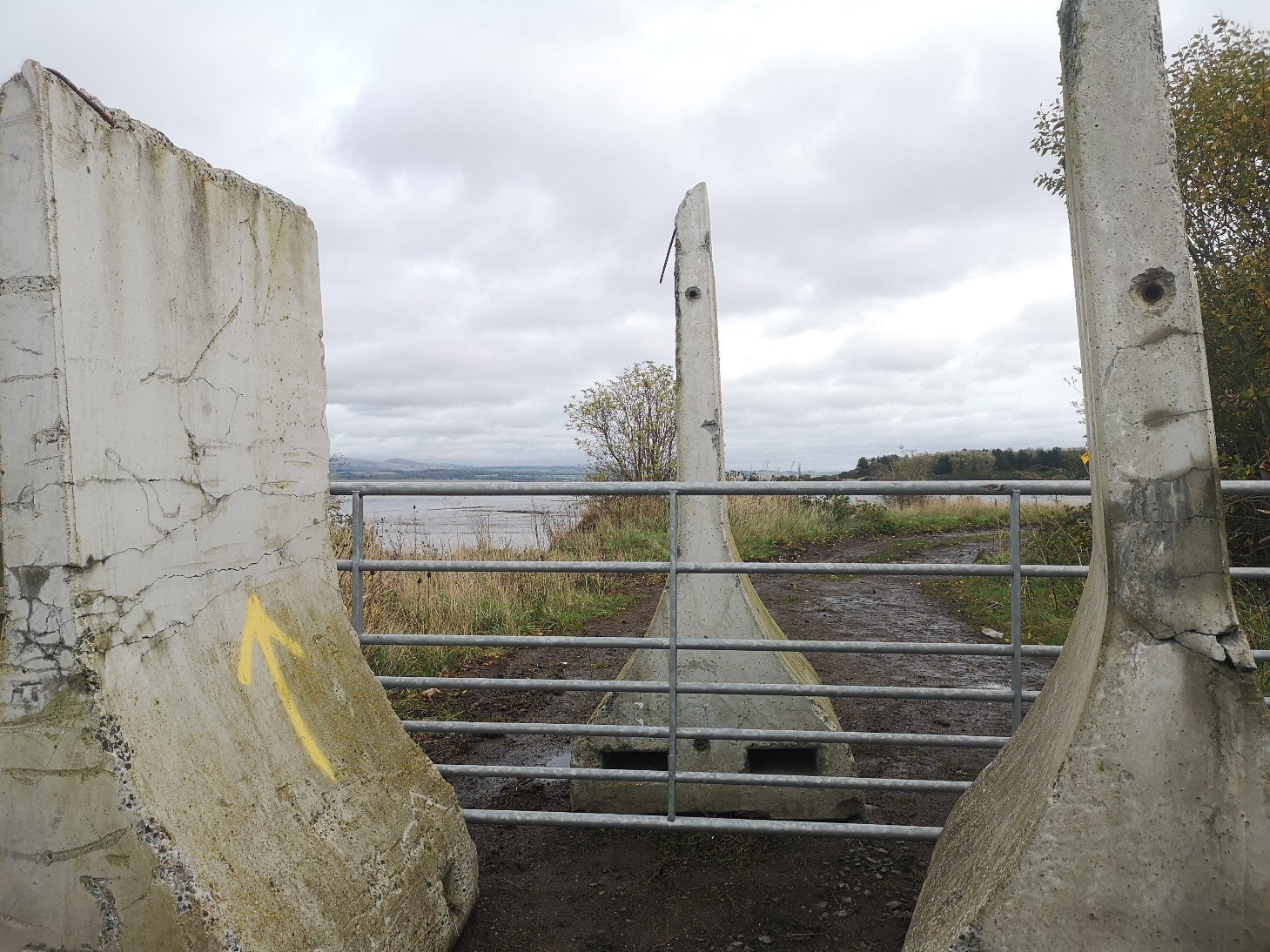
You had to have a pass to walk in this area during WW2 as they were making torpedos here.
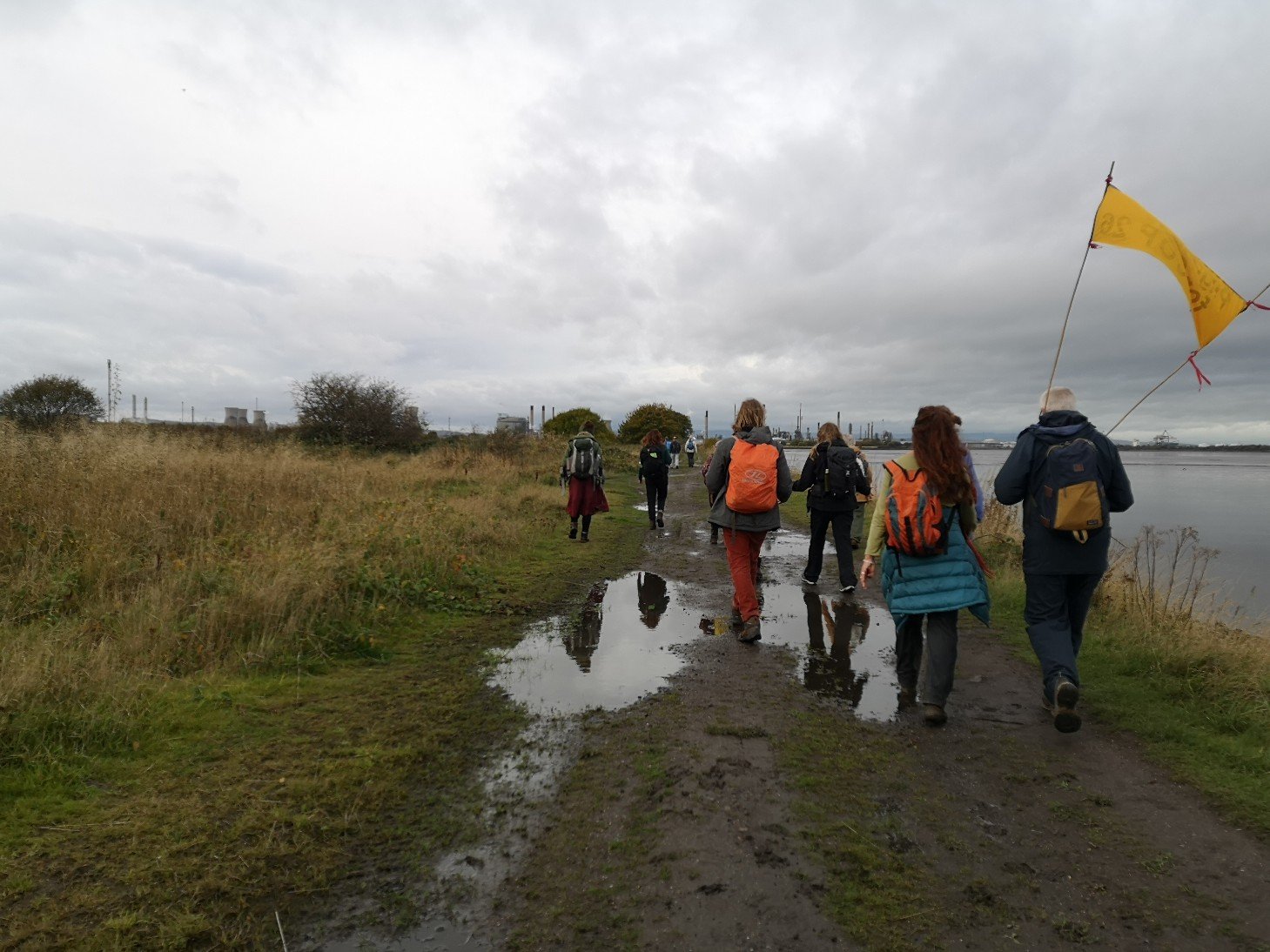
We come to the site of the former 18th century Bo’ness Distillery (almost at Kinneil Halt (station)) and are reminded that it, too, produced effluent, discharges which seeped into the Forth. The Pottery was nearby (at one stage in its long history, Alexander Cuming gifted it to his 12 year old nephew, James, and at another it was inherited by a 3-year old boy). We are told that it burned down in 1963. We could clearly see old bricks on the shore, as you can also see in Granton a few miles further east where we had walked earlier in the week.
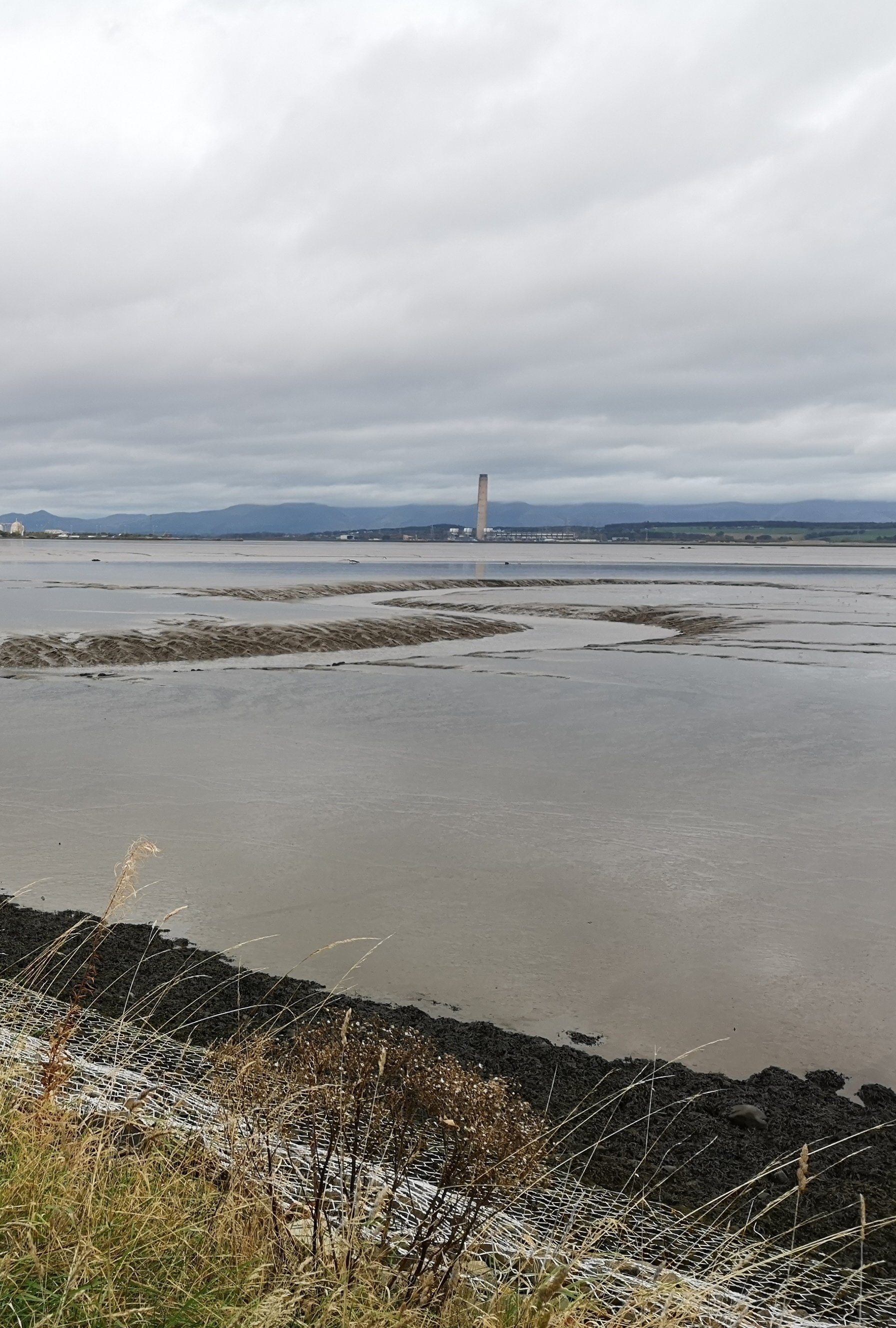
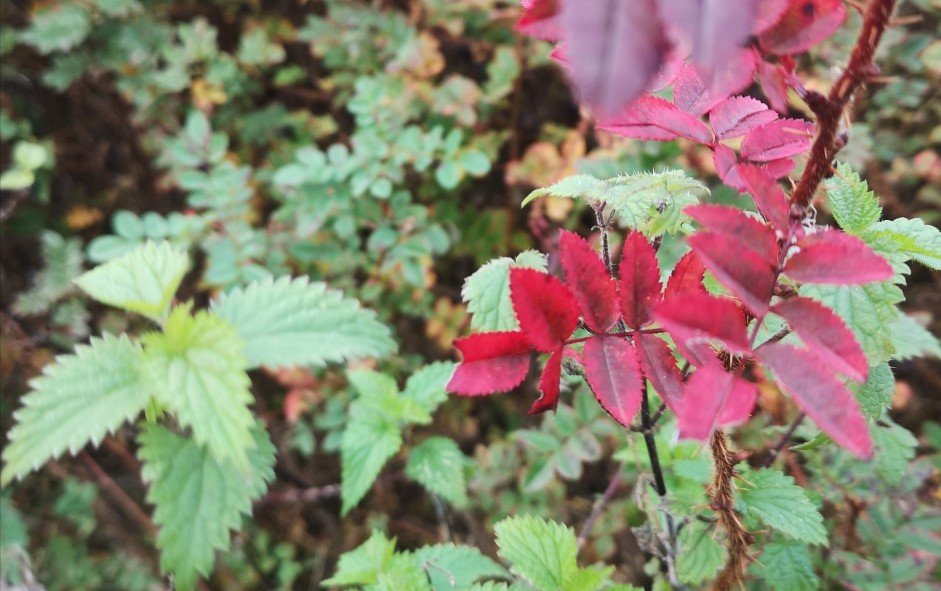
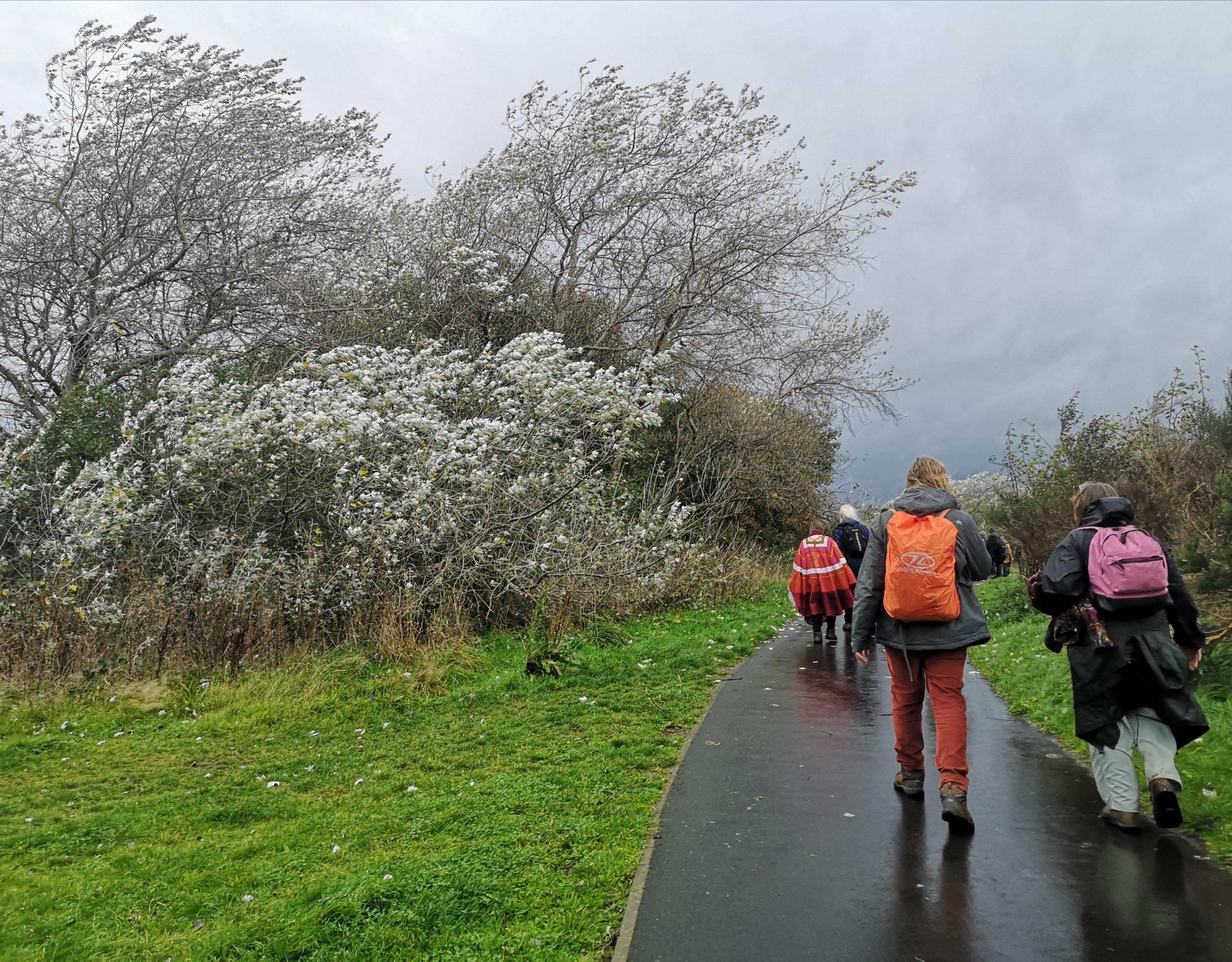
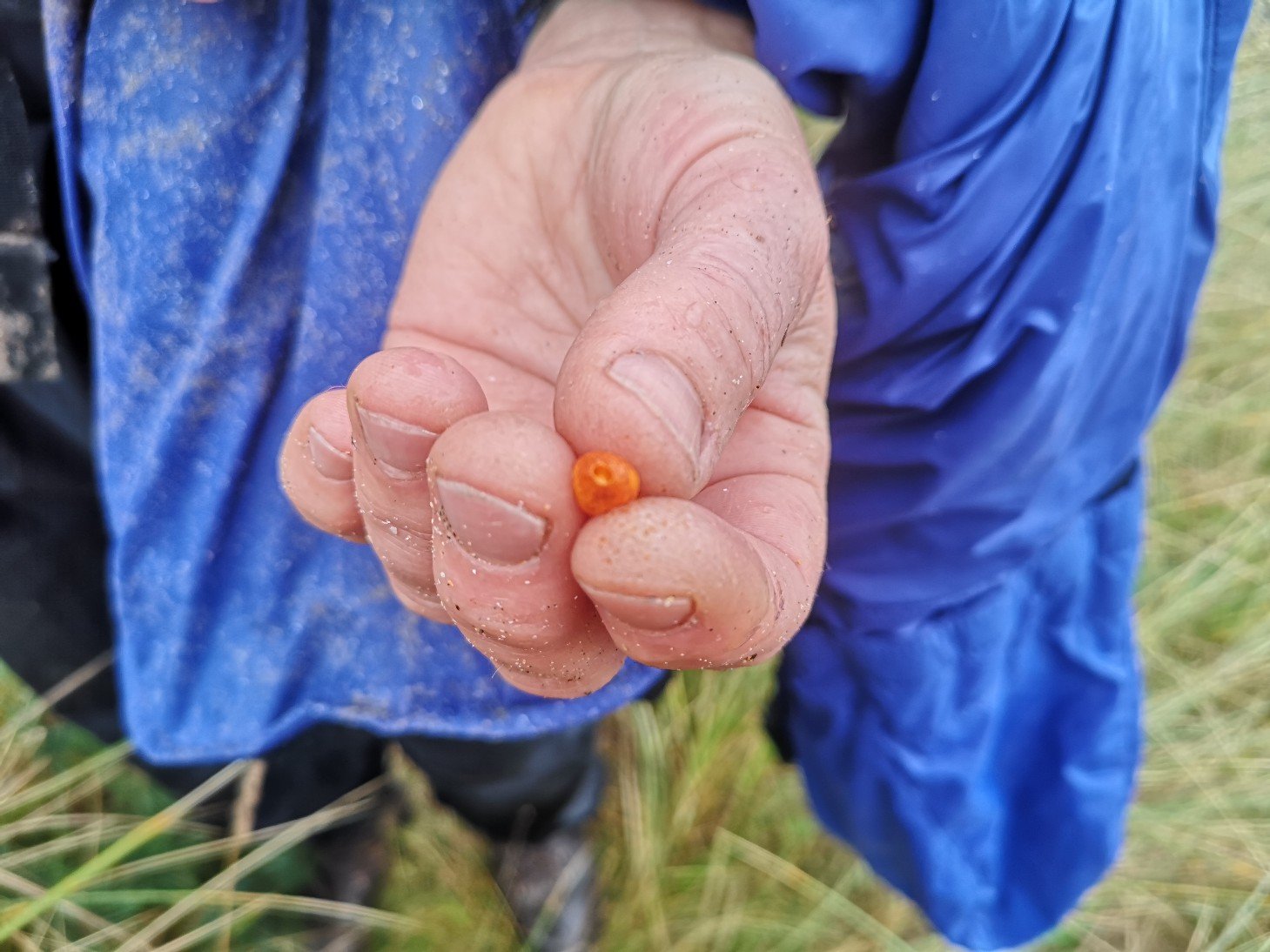
We see Godwits reaching for worms deep in the sand with their long, scimitar-like bills, and hear the plaintive piping of Curlew (their bills curve downwards). We move past delicate grasses, moody bulrushes, and stems of orange sea buckthorn berries highlighted against pale, sage-green leaves. The intense silver-white softness of the rosebay Willowherb contrasts with its rusty foliage, and the slim Salix stream in the wind above Hypericum, wild Stawberries, Brambles, and spiky Teasle. The Gorse sports both dry black pods and bright yellow flowers on the same bush.
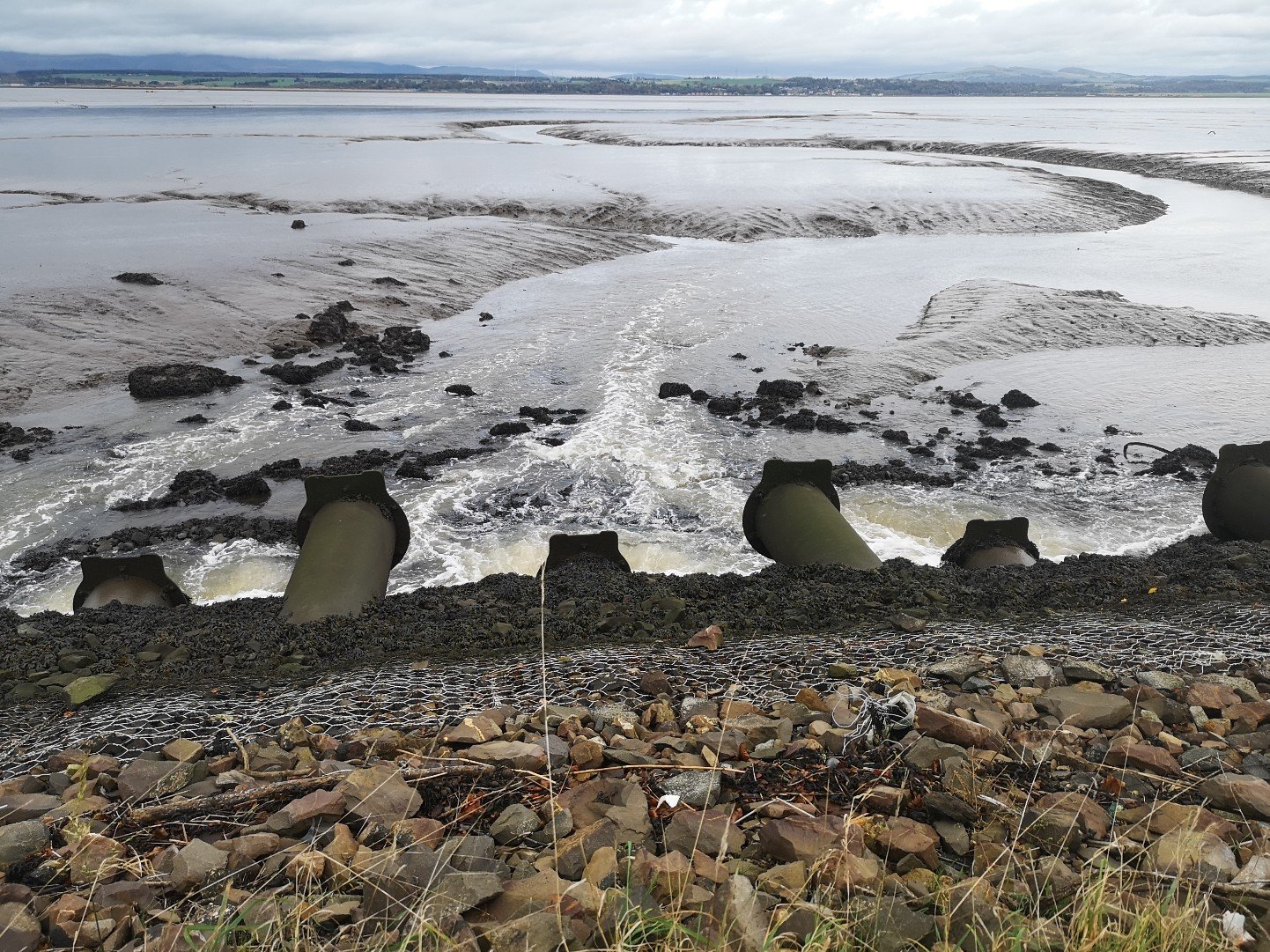
The landfill attracts Redshanks, Lapwings and Shelduck, and the absence of people during the early Covid period was advantageous for them. It is noted that the Shelducks (brown necks) moult here, a sign that they are feeling safe (they can’t fly when that is happening). The bigger issues, now, as at the reclaimed land we walked over in Musselburgh, are uncontrolled dogs off the lead.
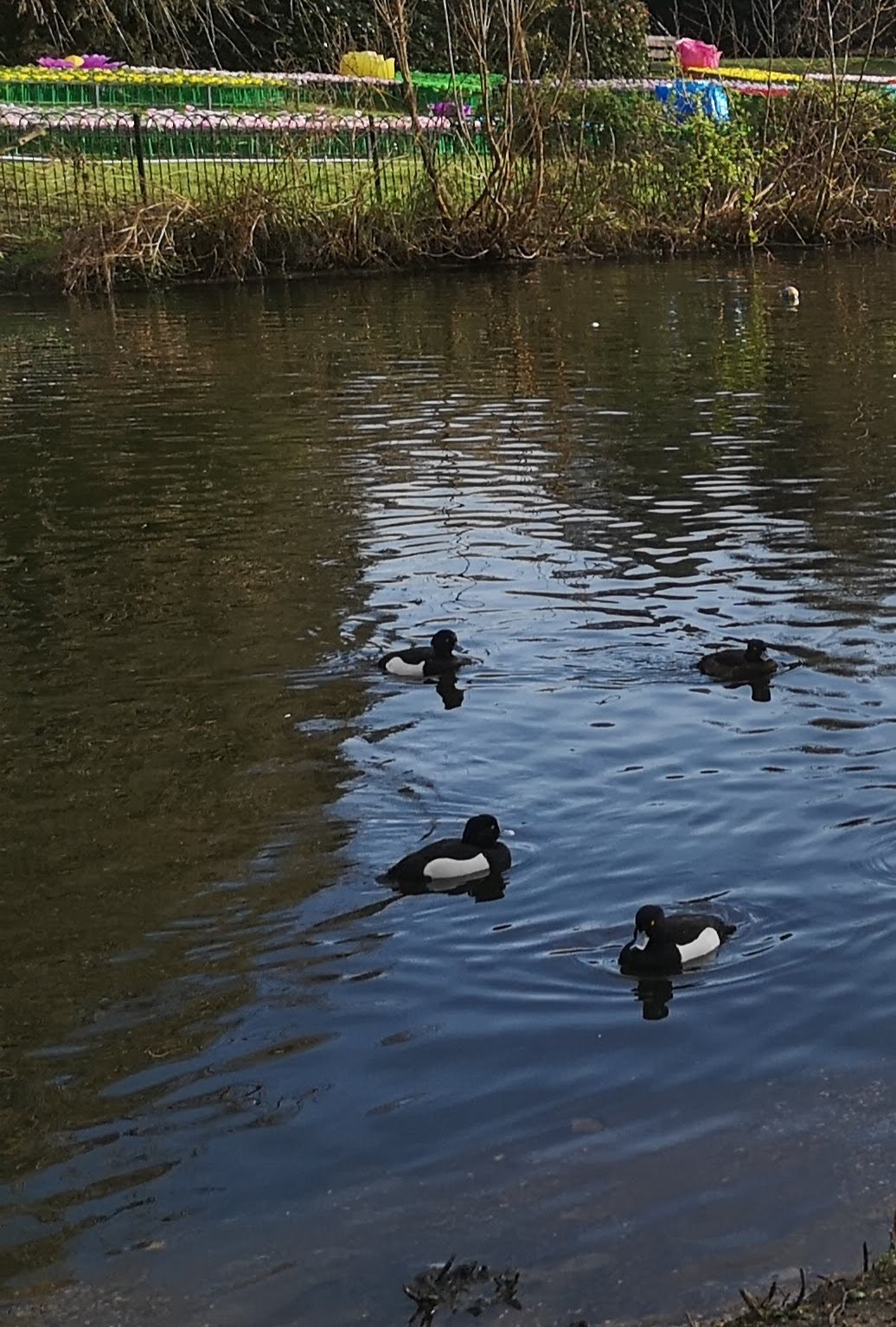
By way of explaining the change in wildlife in the local nature reserve as a result of cleaning up the waters, Billy explained about the Scop or Scaup (ducks) who used to live here alongside the molluscs and mussels. The sewage actually helped and now there is less, they have disappeared. However, when the refinery flares at night and the tide is at the right stage, Redshank feed at night, so there are more of them.
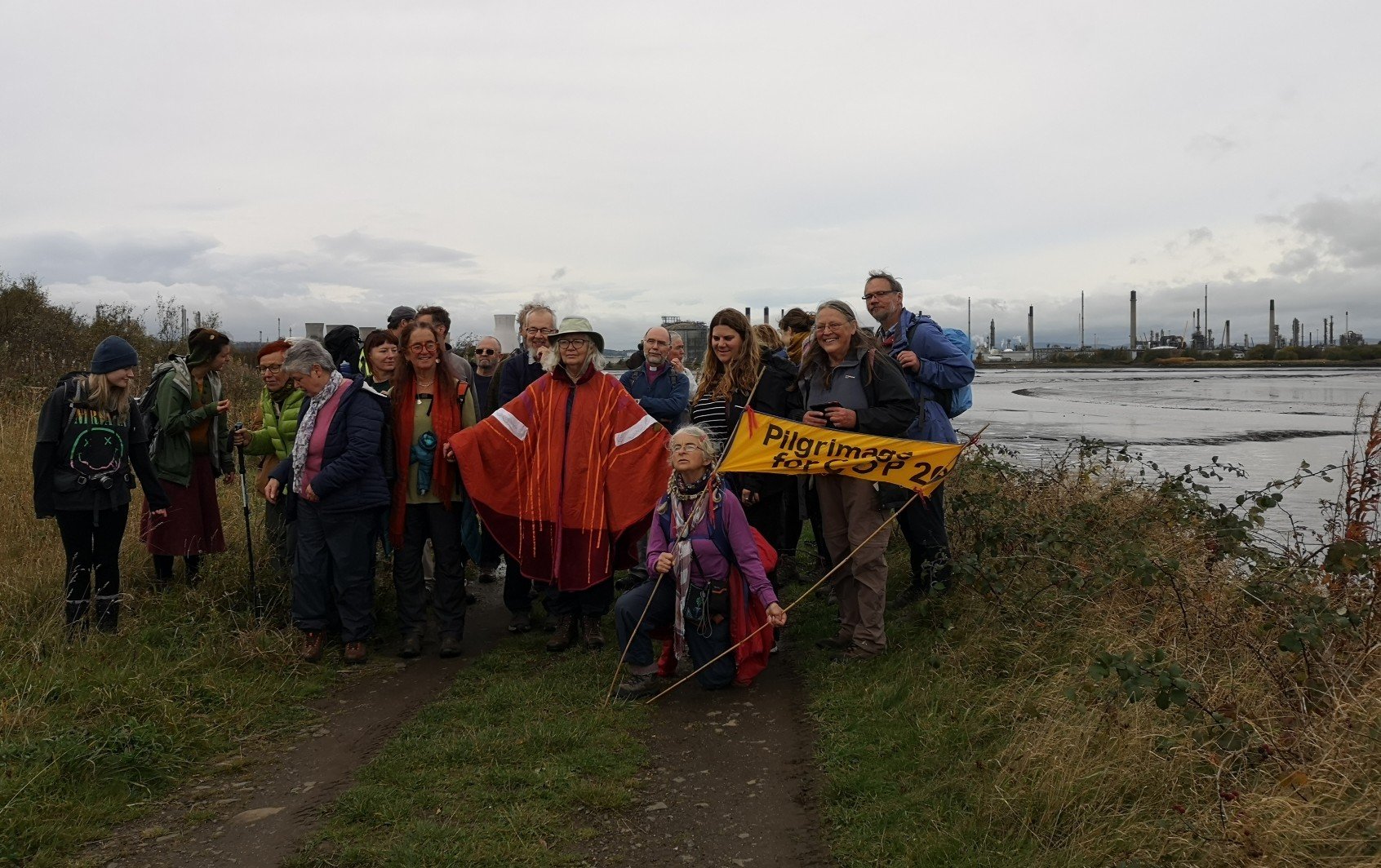
Grangemouth Oil Refinery
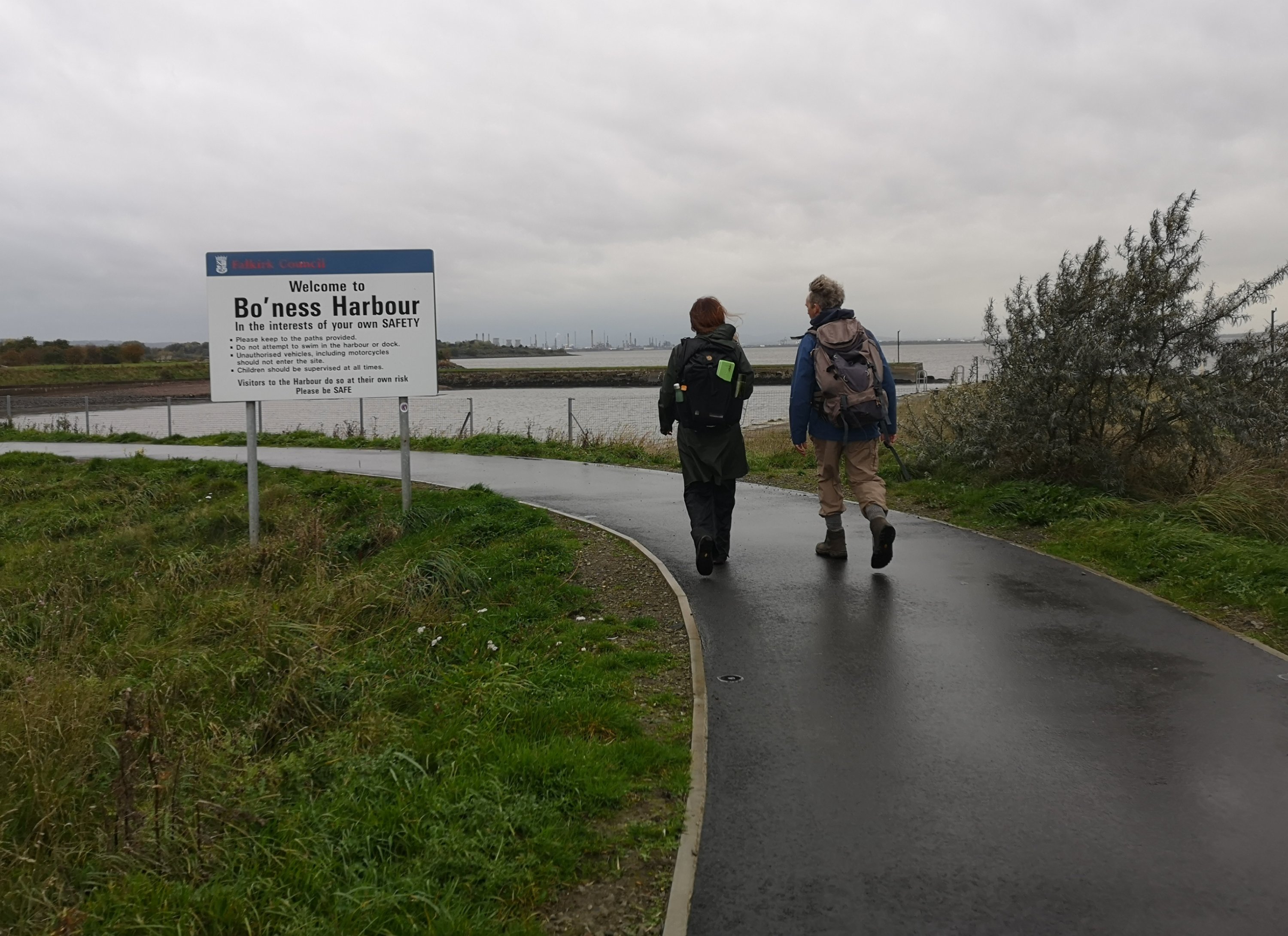
And then we turn away from the water and head inland towards the Grangemouth Refinery. Grangemouth port was founded as a result of the construction of the Forth and Clyde Canal (which we are scheduled to walk beside later today), in 1768. Grain and timber came in there, and coal went out. The first factory in the area was making soap and glycerine (1897 Scottish Co-operative Wholesale Society), and paraffin started to be produced from shale or coal in 1919. Then, as the Polish oil wells opened up and the prices for Scottish products went down, treating and refining became the focus.
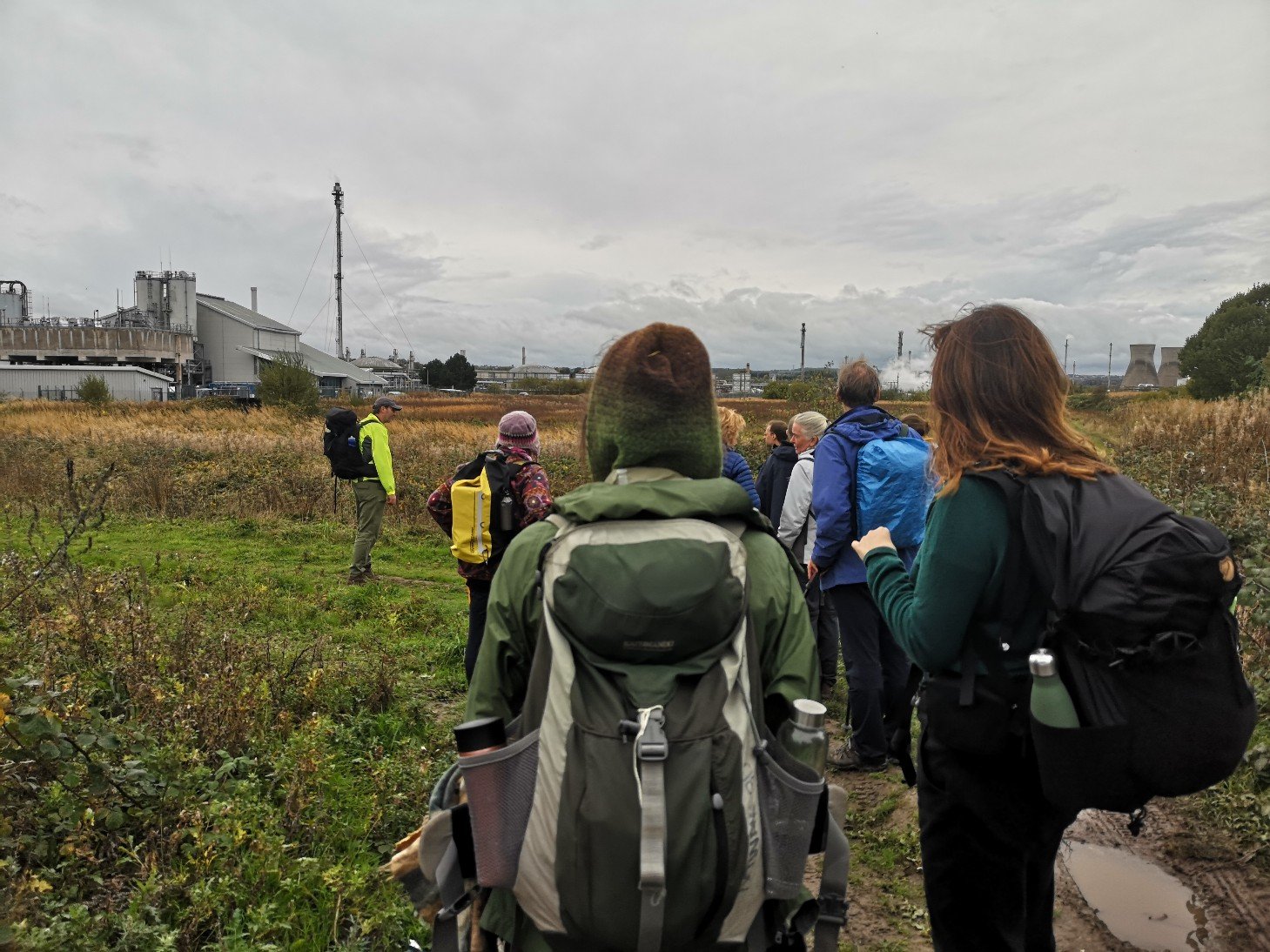
BP, former owners, sold up in 2004 when there were difficulties, and now the Plant is part-owned by a Chinese company and the greater part by Jim Ratcliffe, the richest man ‘in England’ (he lives in Monaco, “a move that it is estimated will save him £4 billion in tax”). Ratcliffe is the CEO of INEOS which includes Grangemouth as well as refineries in Italy, Germany, France, Belgium and Canada. Petro-chemical processing is a lucrative business, earning him an official Honour and wealth reputed to be worth £21.05 billion.
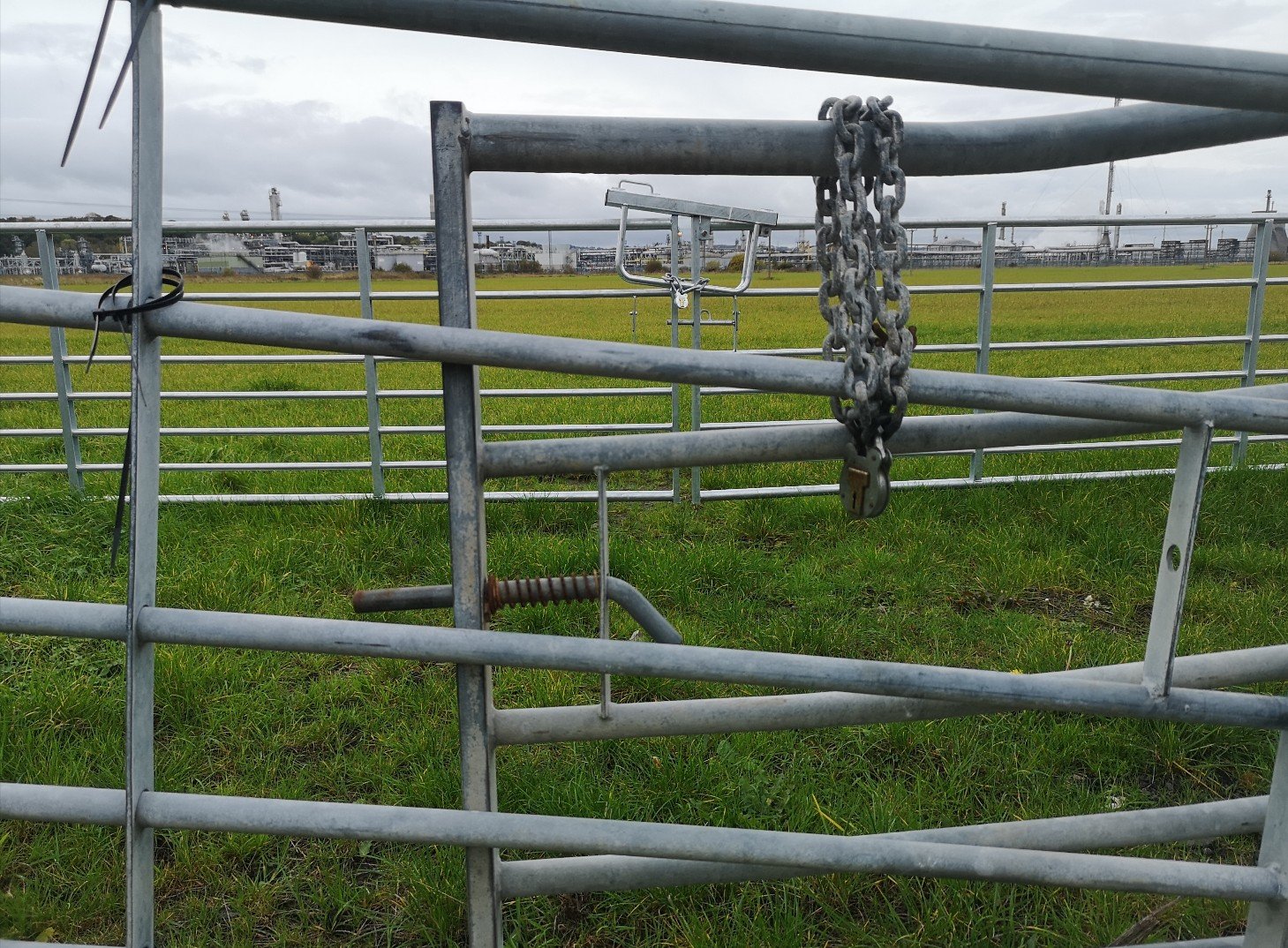
Wikipedia writes, “In February 2019 it was announced that Ineos would invest £1bn in the UK oil and chemical industries, to include an overhaul of the Forties pipeline system that is responsible for transporting a significant percentage of the UK’s North Sea oil and gas. On 1 May 2019, Ratcliffe criticised the current government rules which say fracking in Britain must be suspended every time a 0.5 magnitude tremor is detected, which has led to a de facto ban on fracking. He said: “I think the government has been pathetic on the subject.” In fact, although the Scottish government states “no support for unconventional oil and gas” (in a report which strongly resembles the spoofs in ‘Yes Minister‘), and has the reputation for banning, or at least not renewing or accepting new licences for shale (fracked) gas, it is important to note that it is still imported from the US (Pennsylvania) into INEOS right here.
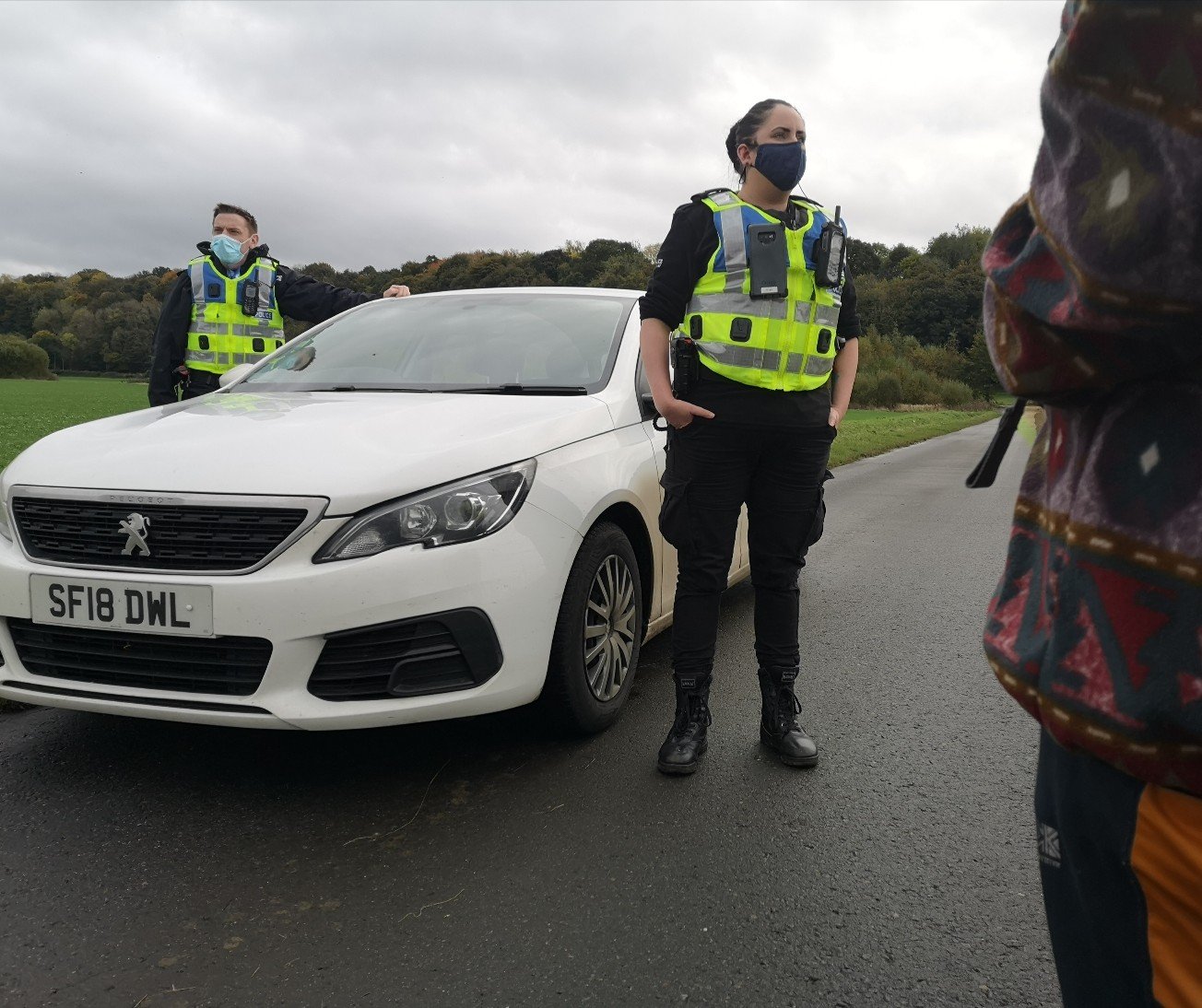
Before we entered Grangemouth, we were stopped twice more by police. One man told us, “I’ve been brought up from South of the border to join the COP26 security forces here. Are you the minister who’s going to bless the land?” Our reputation as a peaceful lot had proceeded us.
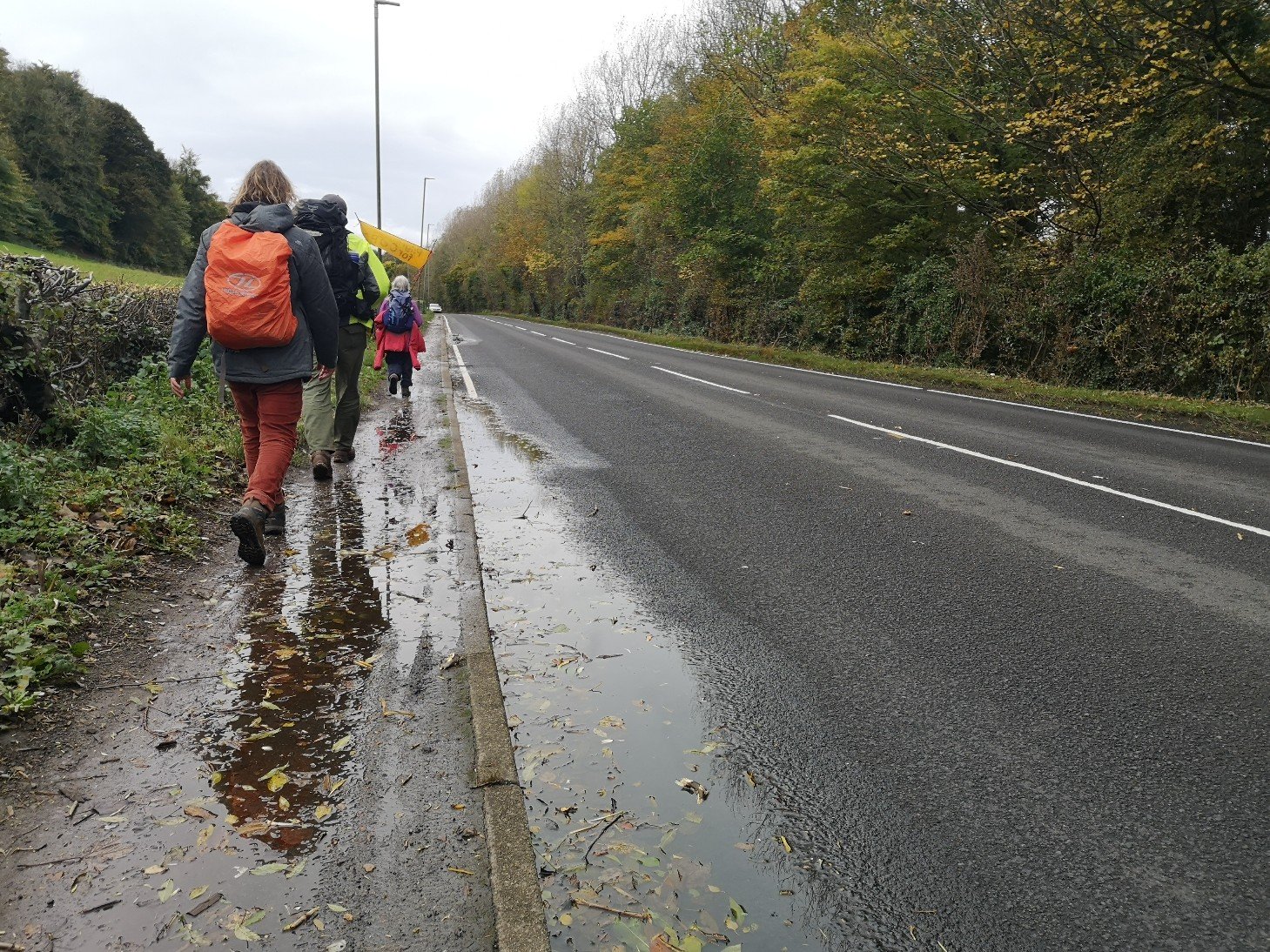
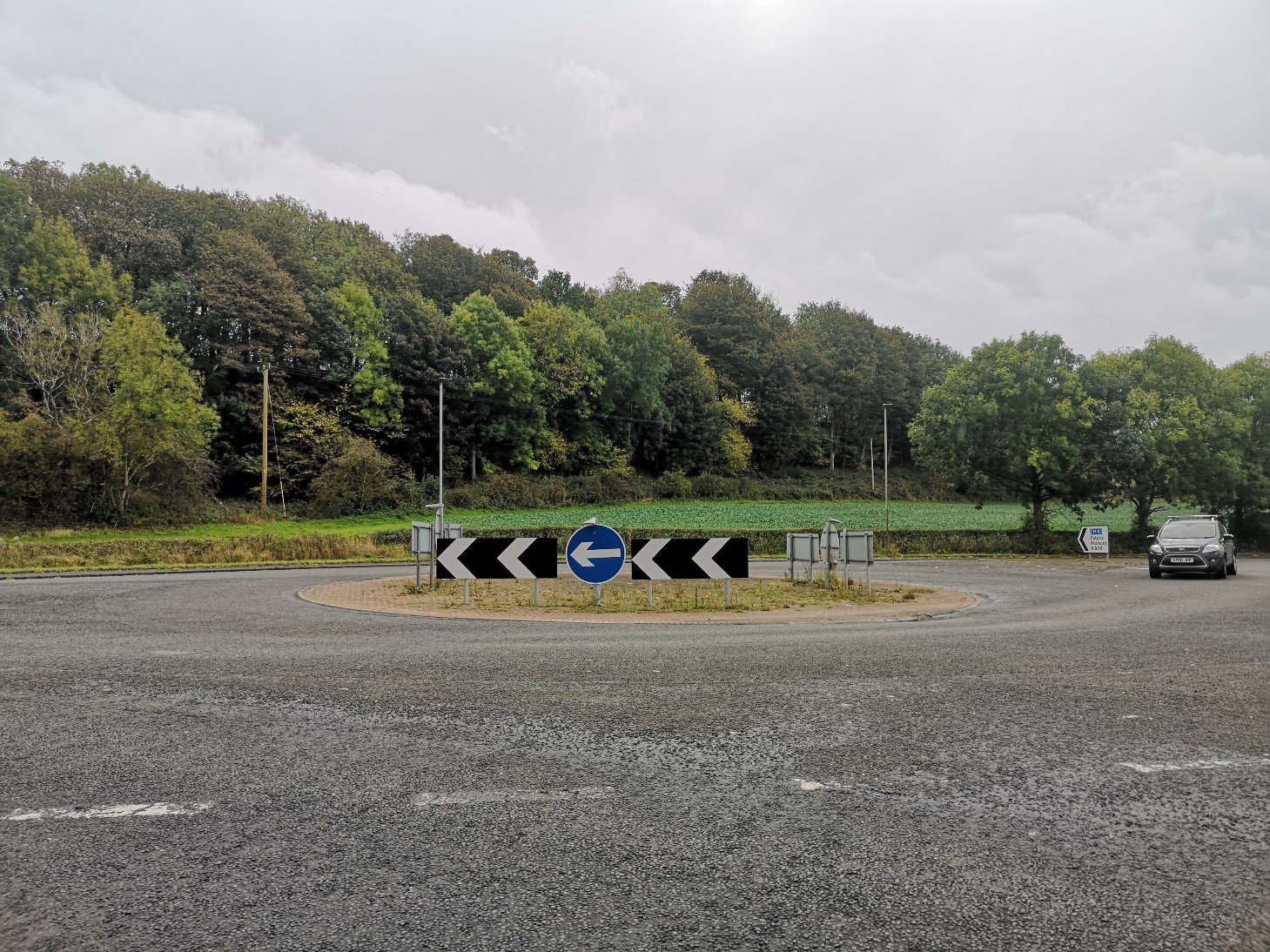
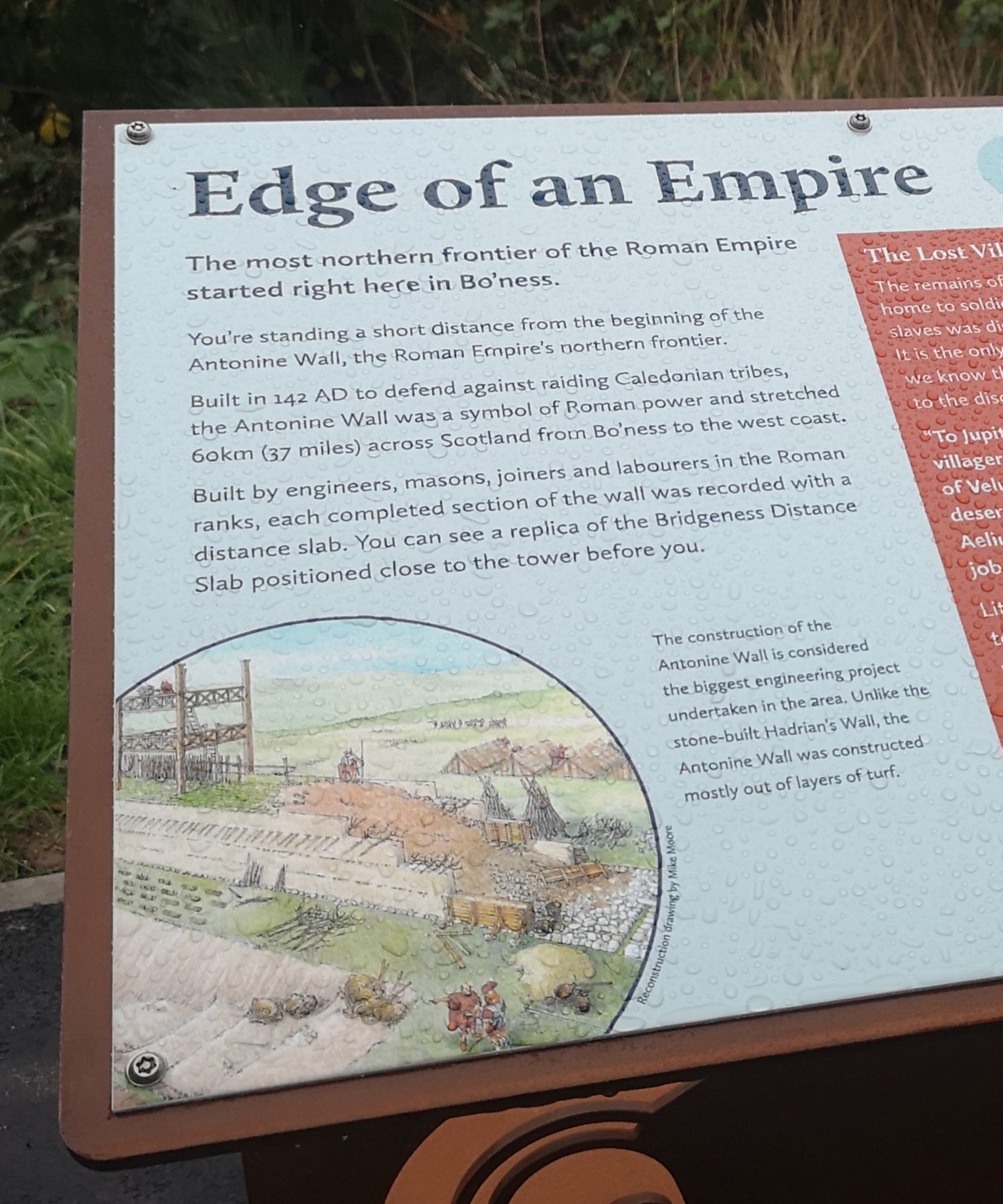
We are reminded again of the Roman Antonine Wall which runs from Carriden, near Bo’ness, and which sports a 2nd century fort at the eastern end. It stood near this roundabout for 20 years, though it was supposed to be there for ever.
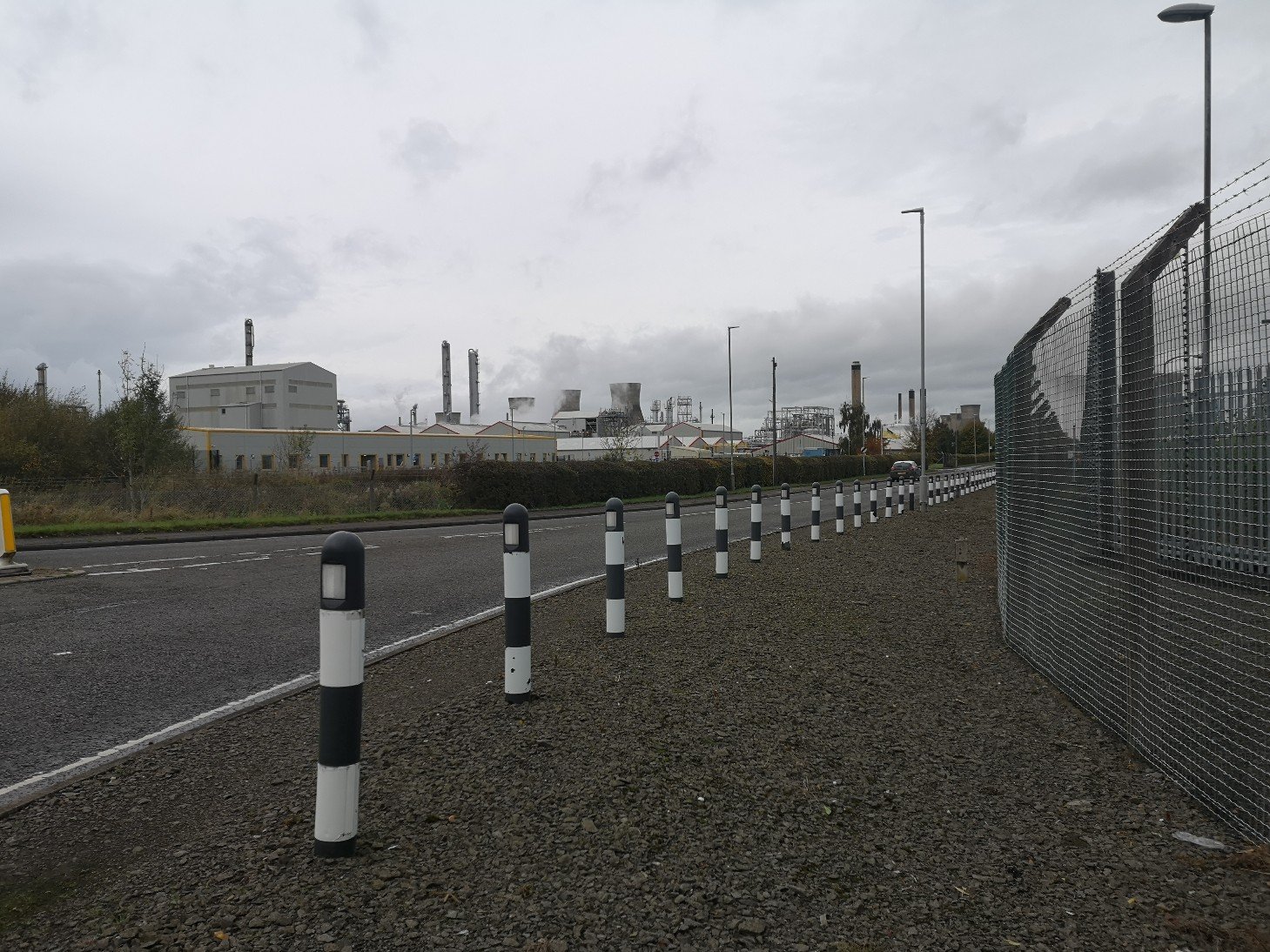
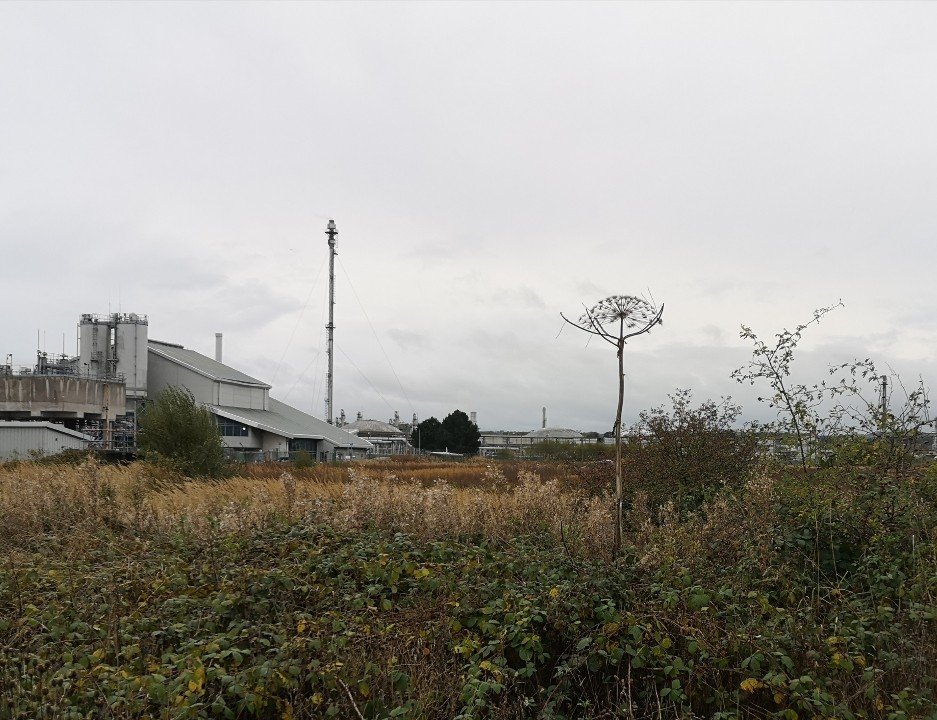
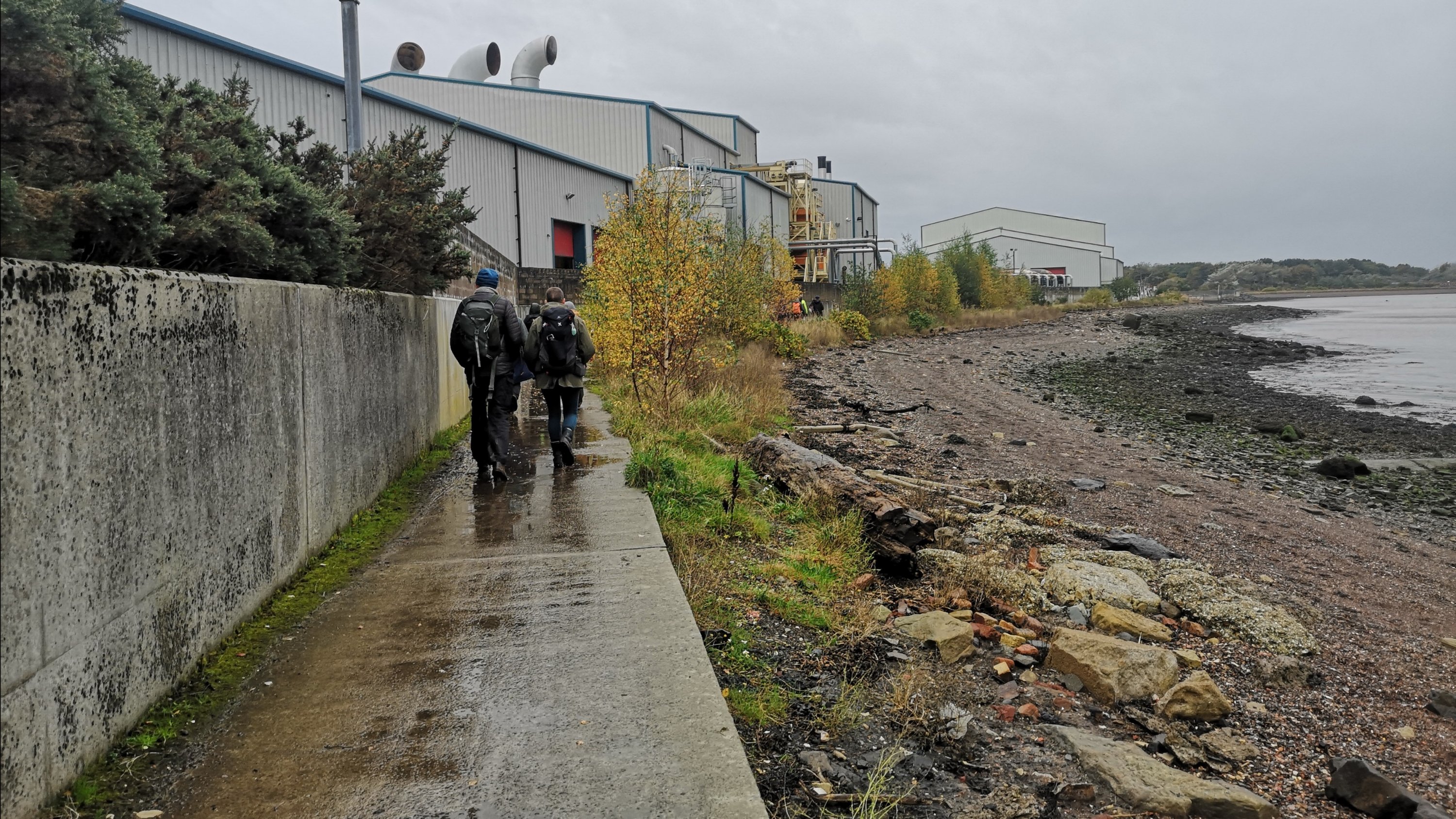
I am struck by the drear of the utilitarian and inanimate lengths of piping. Wide-diameter, above-ground conduits run the length of the road and the few desultory trees and mini-‘gardens’ don’t make up for the carbon that is produced in the petro-chemical works. These are not kilns for making beautiful pottery, not repurposed gas works recently used for art and music, but hydro-crackers involved in making products that most of us use in the form of health and pharmaceuticals, food and beverage packaging, and construction and utilities. Phasing them out means a change in what we expect to do and have, and we had plenty of silent walking time to ponder on that.
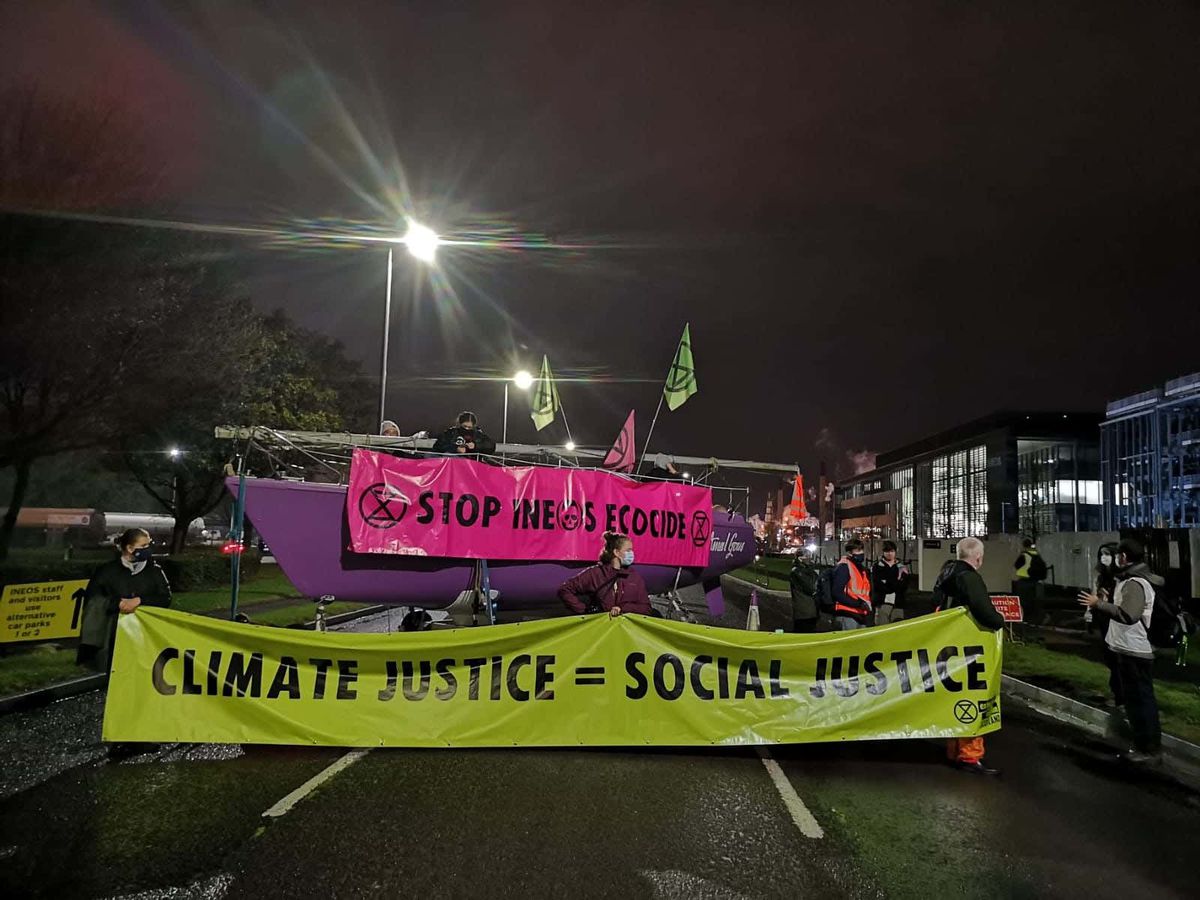
In March 2019 INEOS said it would close its Middlesbrough manufacturing plant unless it was allowed to ‘defer compliance’ with EU rules designed to prevent air and water pollution. An analysis of data from the Environment Agency (EA) also reveals the plant clocked up 176 permit violations between 2014 and 2017. An EA spokesperson said: “air emissions are well over legal limits and this poses a risk to the environment”. INEOS director Tom Crotty said the firm “cannot justify” the investment required to comply with EU air and water pollution rules due to come into force in the coming years.
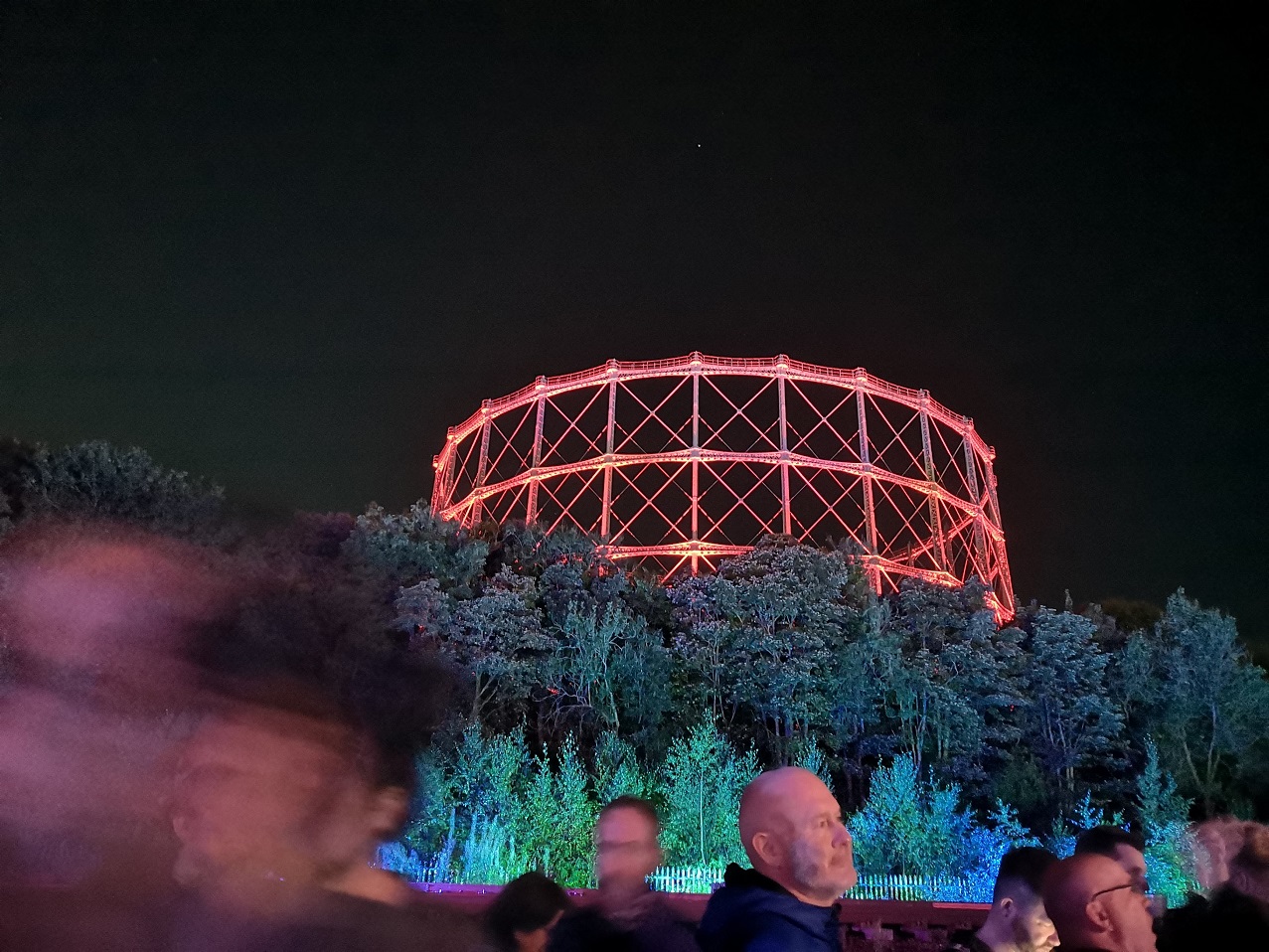
The engineering is, of course, state-of-the-art, but there is disparity between the shiny exteriors and the black-black oil which I knew was pumping inside, or the high-pressure gas contained within them. There were tin sheds and poles with what looked like guy-ropes stretched from their tips to the ground, and crows-nests at the top of them. I felt a sort of deadness in the air. The words of songs we had been singing sounded in my ears: We are a gentle, quiet people (1978, Holly Near), and our anthem for the Pilgrimage, Another world is not only possible (2021, Jane Lewis)
Tea, glorious tea
Wet and rather subdued, we were most grateful for a cup of tea and a sweet thing at St Mary’s Episcopalian Church in Grangemouth town. Thank you for those who made that for us, and in doing so, for counteracting the energy of the businesses that try to make even more money by changing pension rights for their workers.
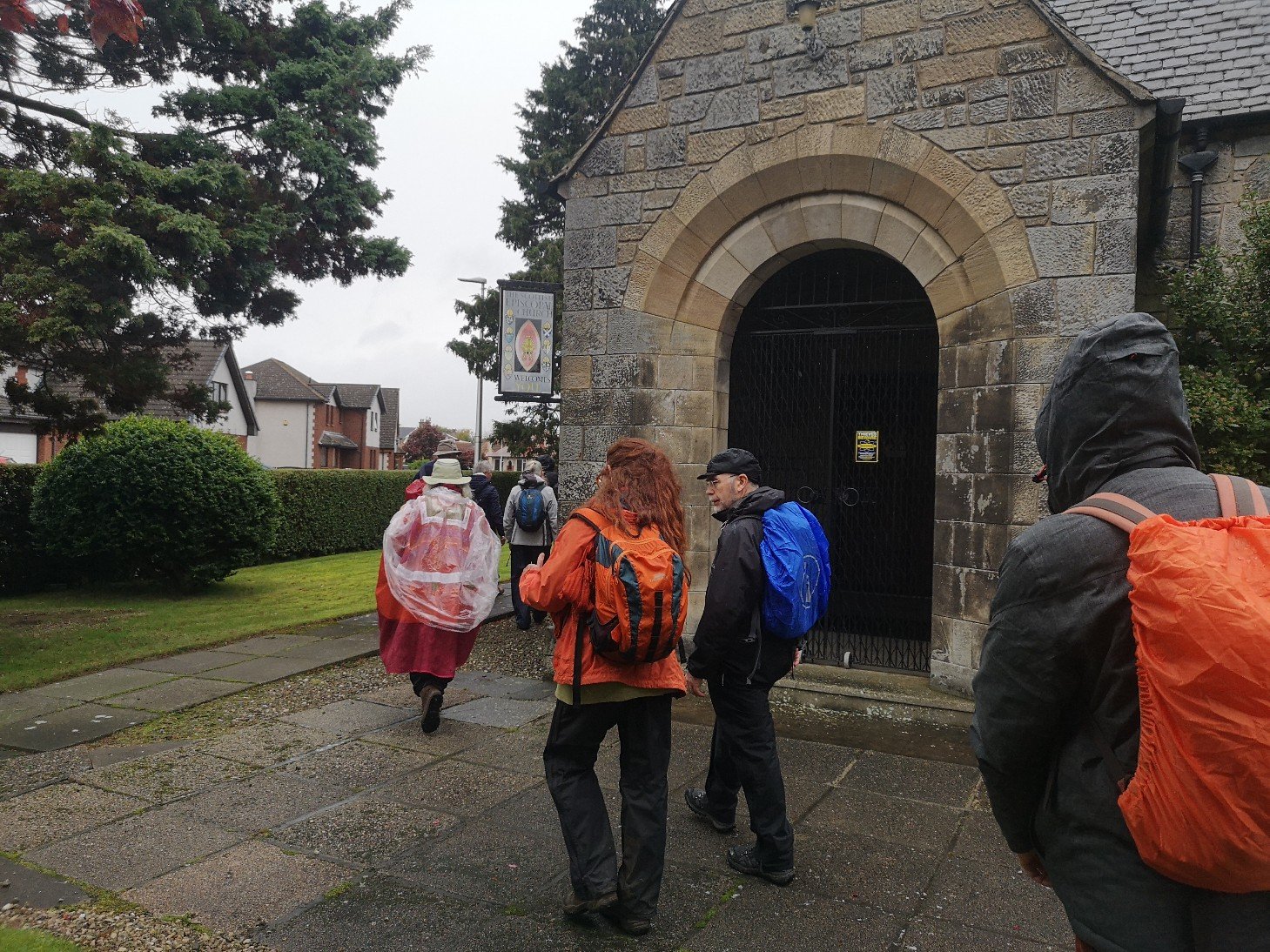
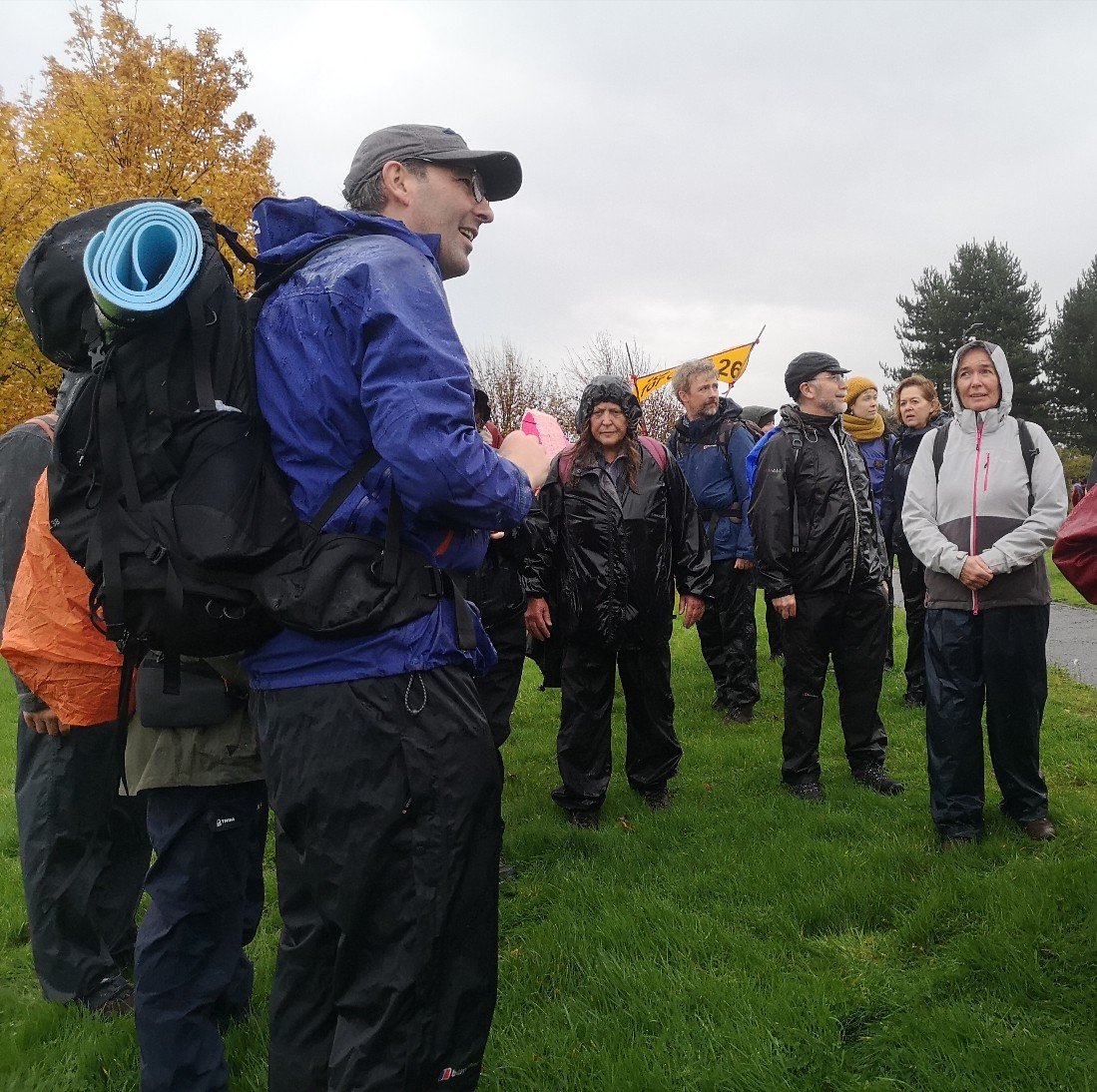
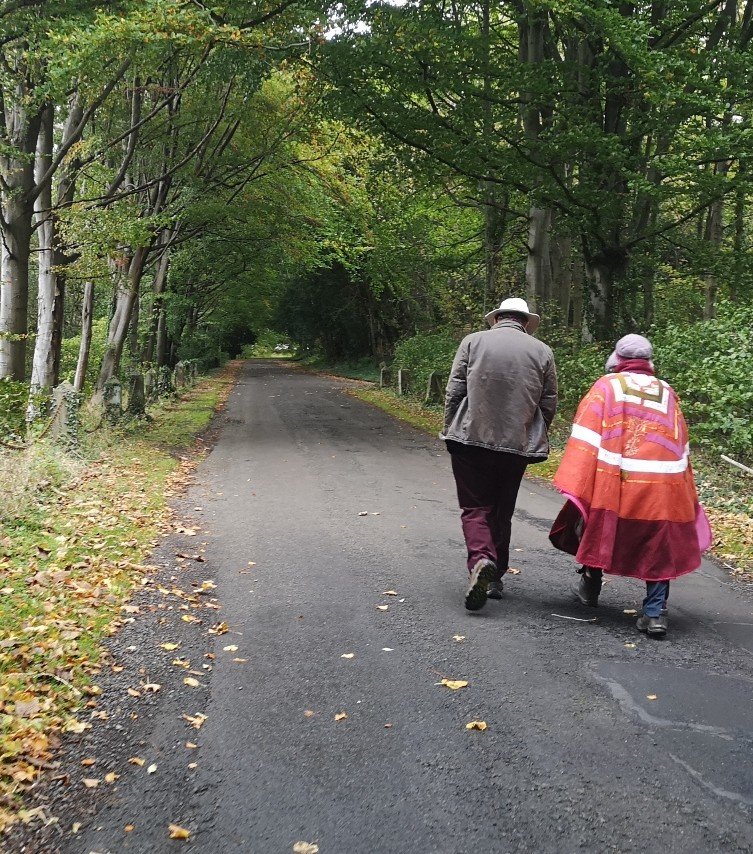
We put our wet clothes back on and set off for the 40 minutes’ hike to our next stop.
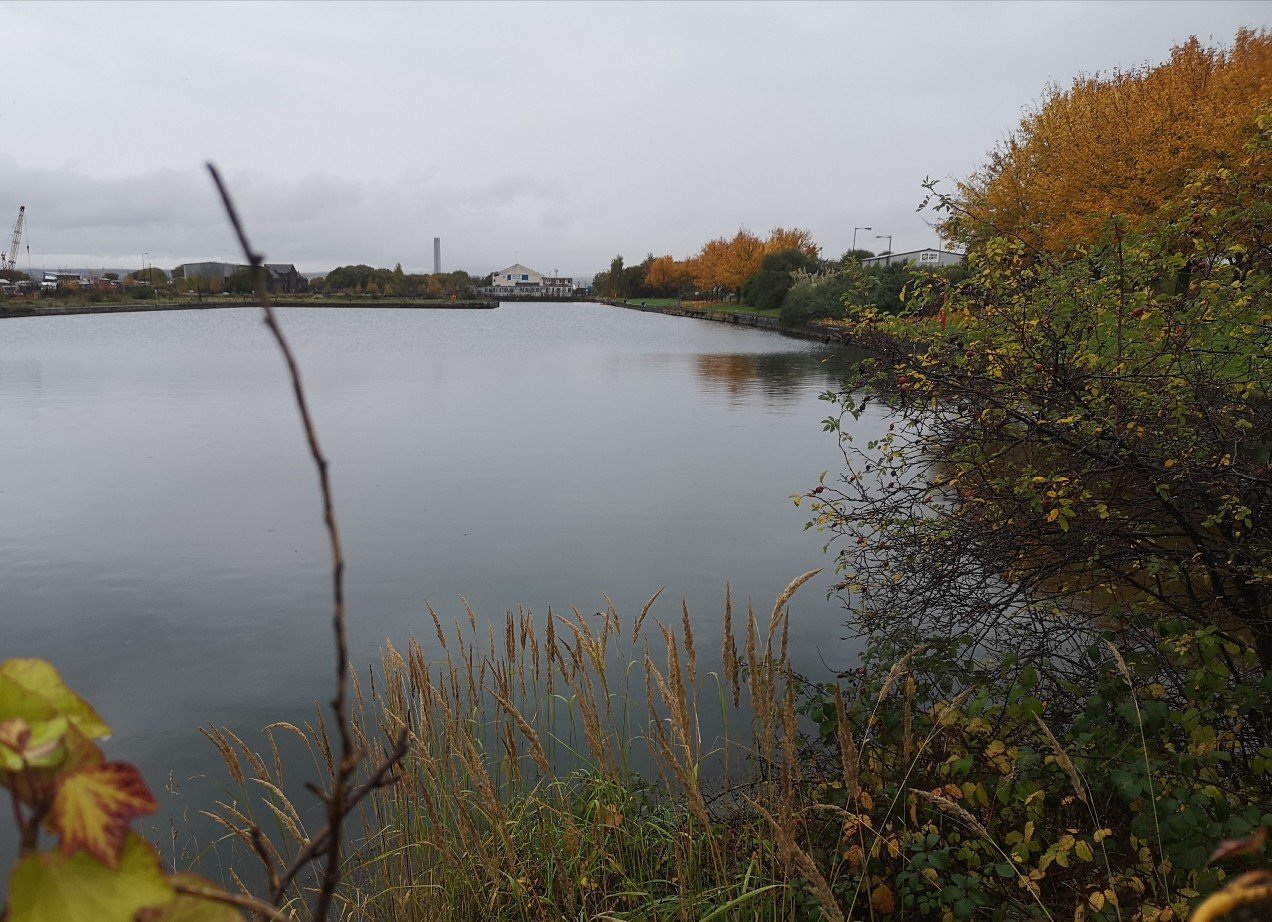
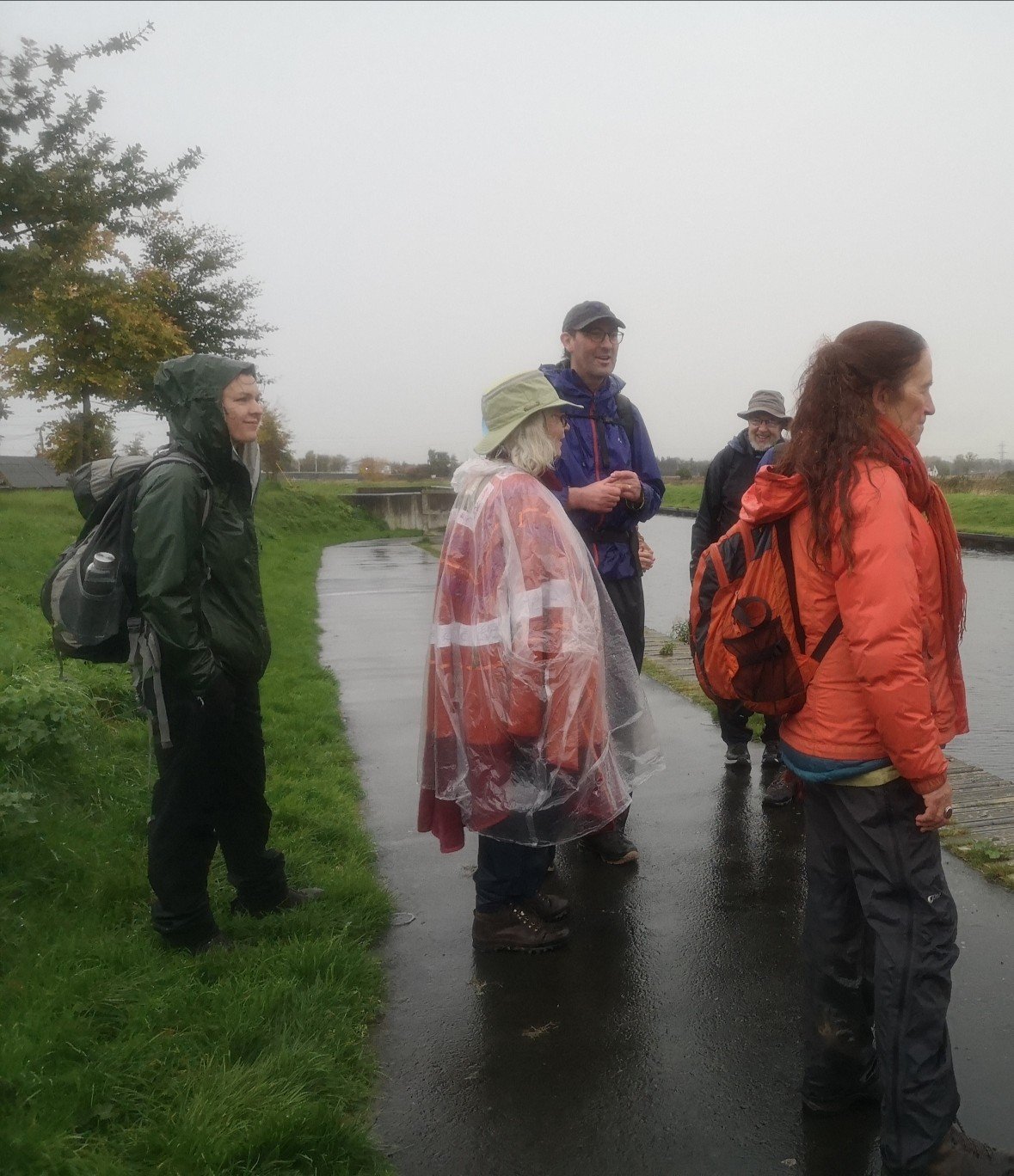
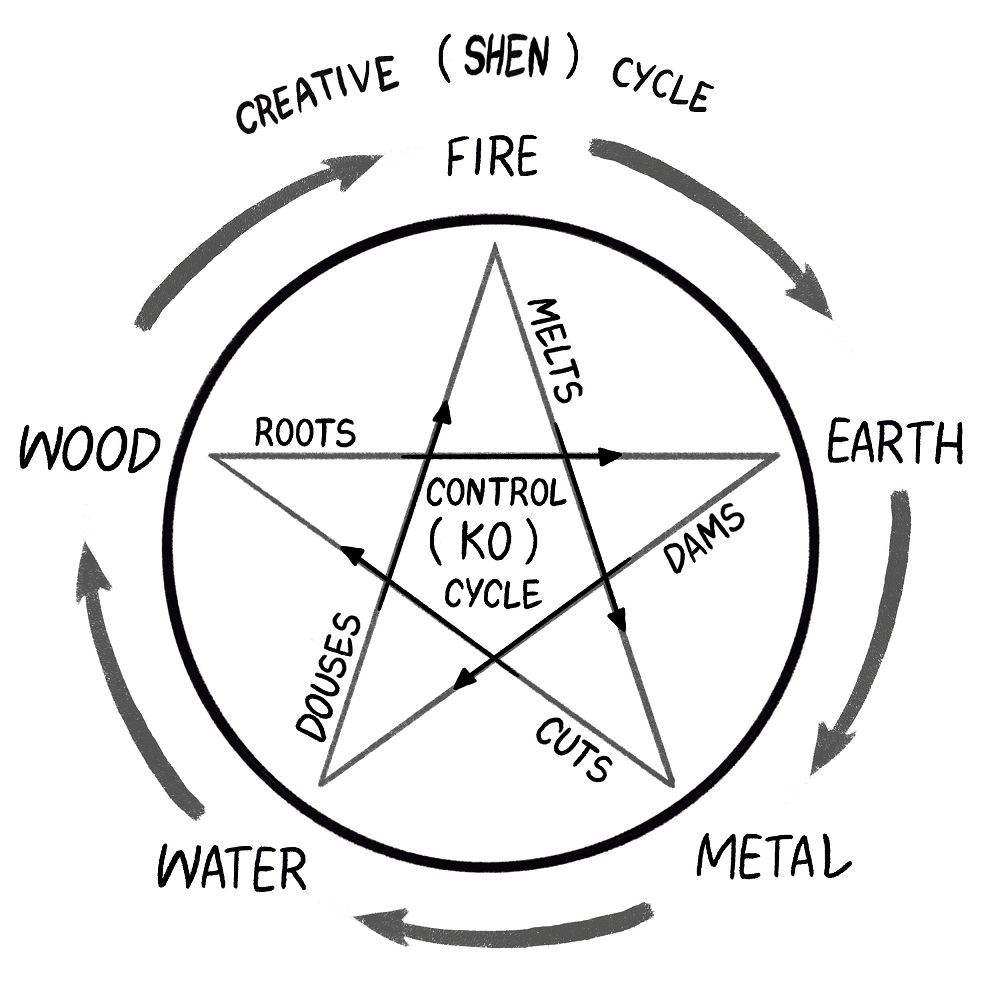
The Lungs in Chinese Medicine are associated with grief and sadness, and it is said that our tears are like their melt water
Joyce Vlaarkamp
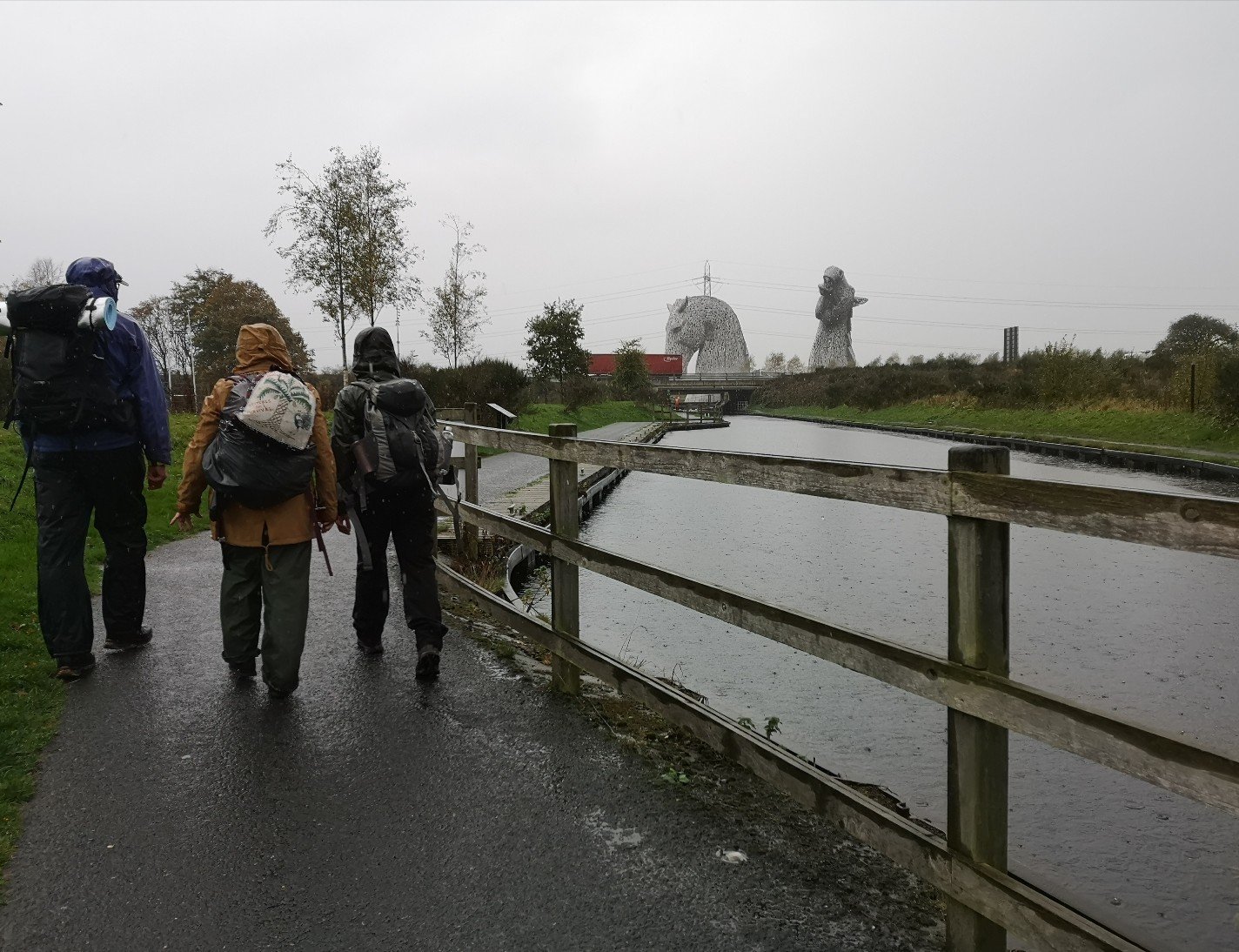
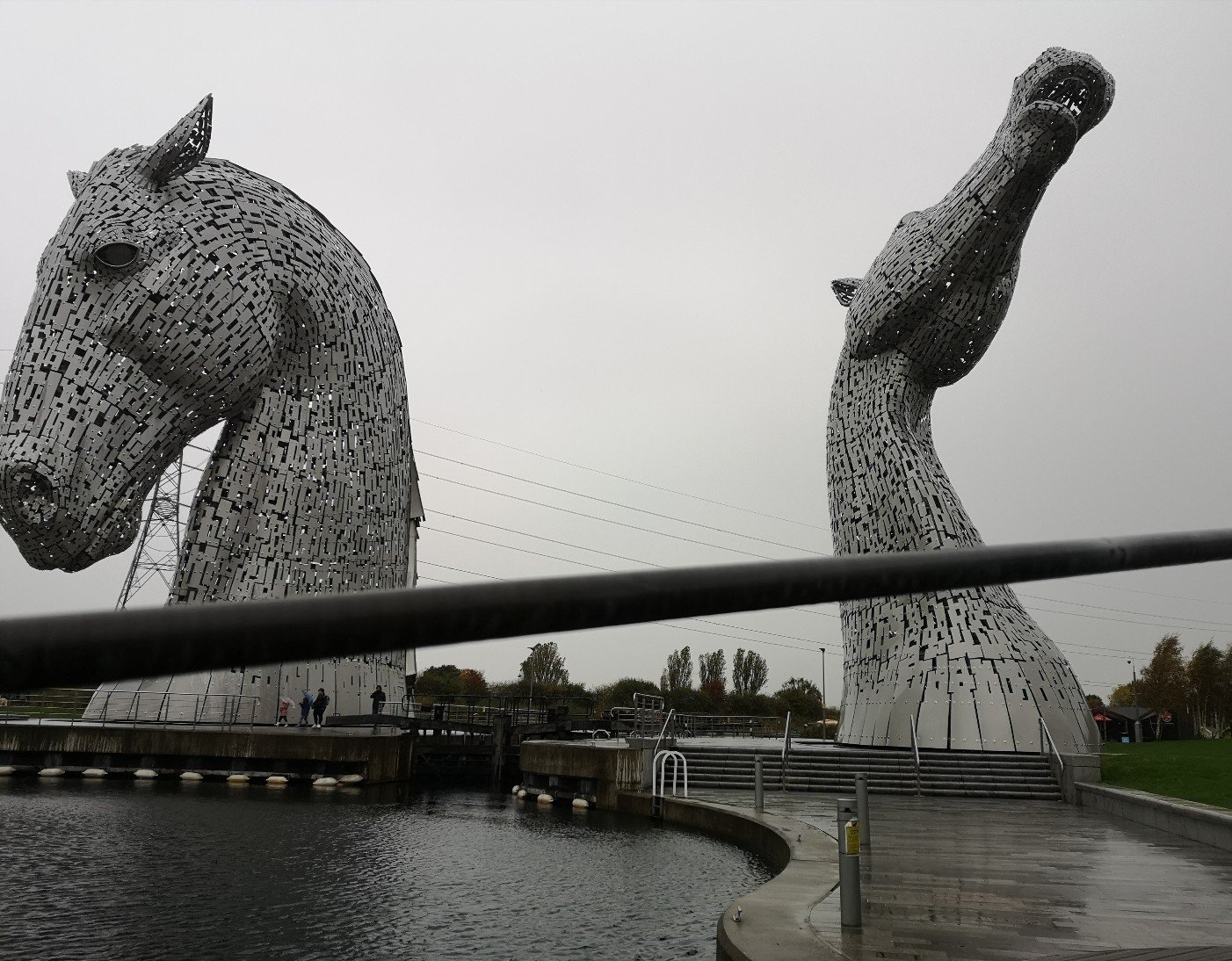
The Helix and the Kelpies
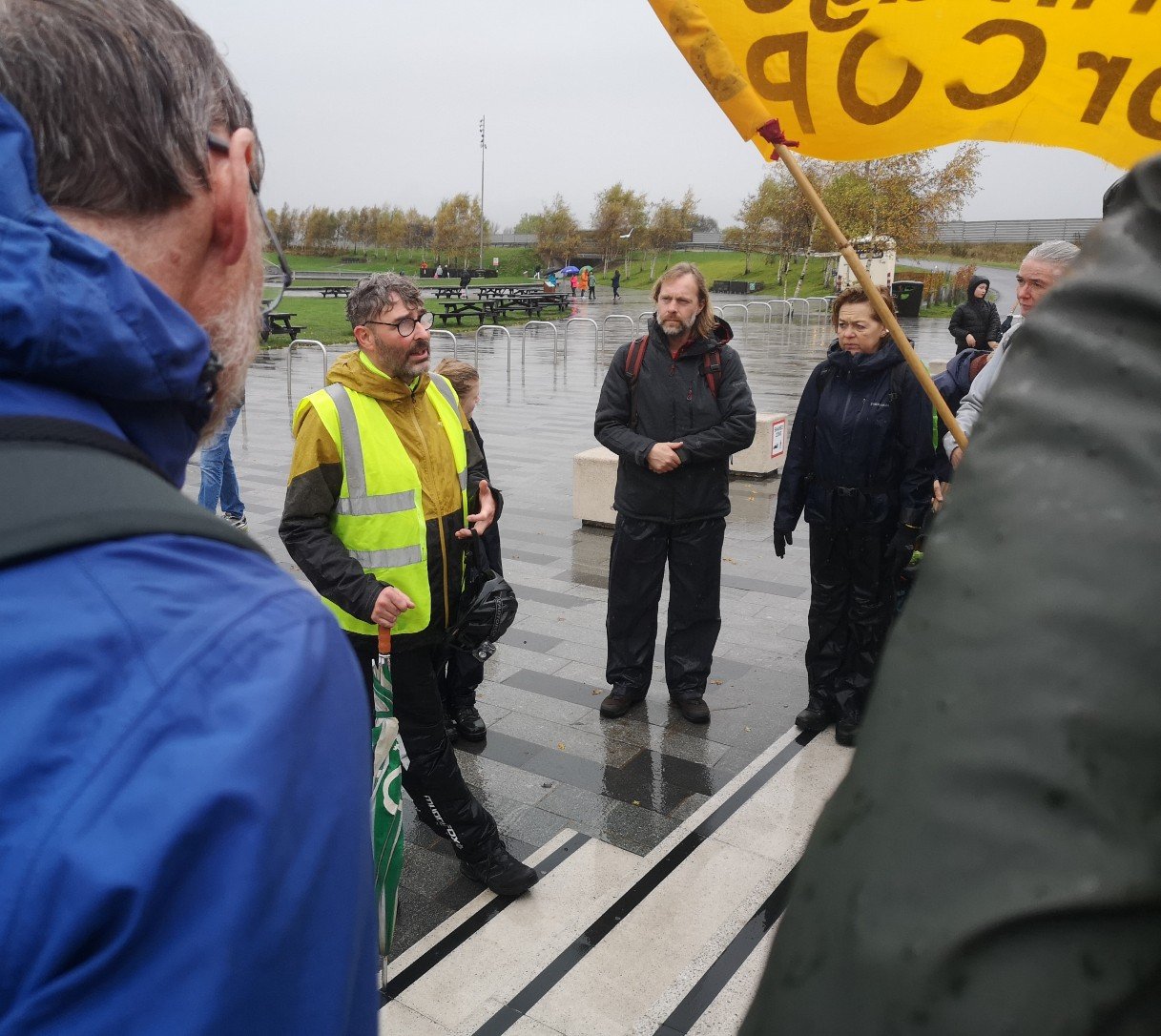
They stressed that the way we manage our energy needs must change, but that it is vital that people are redeployed in equivalent level jobs once their current ones have gone.
Climate justice recognises that the industrialised countries of the ‘global North’ like Scotland have grown rich over the past few centuries through polluting the atmosphere while at the same time extracting resources from the ‘global South’ under colonialism. It recognises that those on the sharpest end of climate impacts in the global South have done least to cause the crisis, and are often without adequate resources and technologies to deal with its impacts. Therefore countries of the global North bear a far greater responsibility for addressing the climate crisis.
Friends of the Earth, Scotland
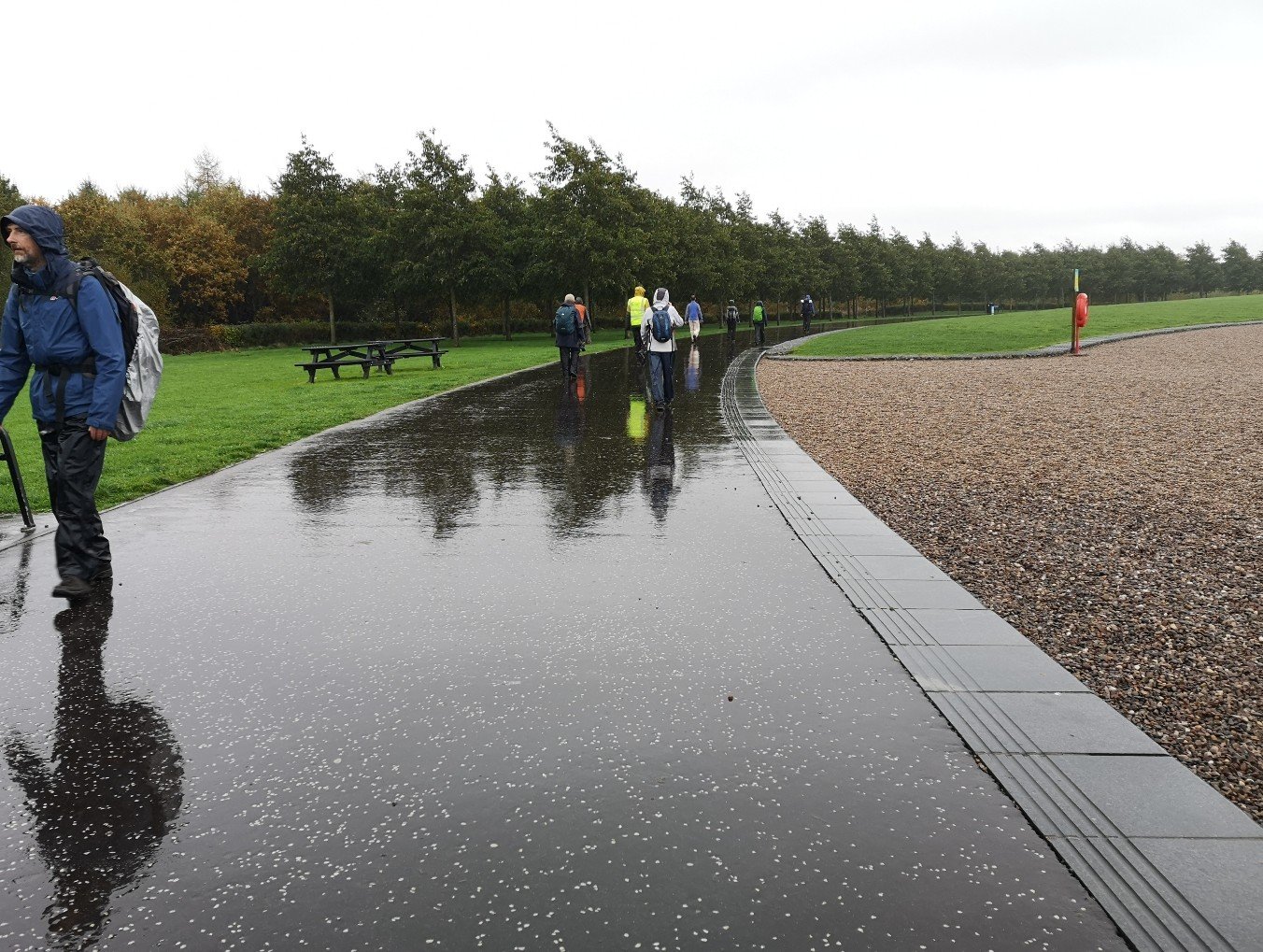
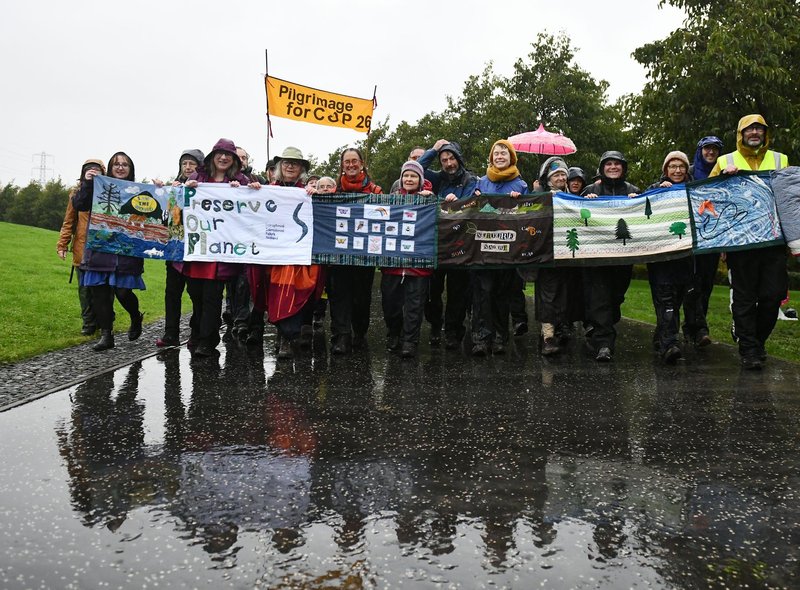
He got some better photos than I did! The Falkirk Herald
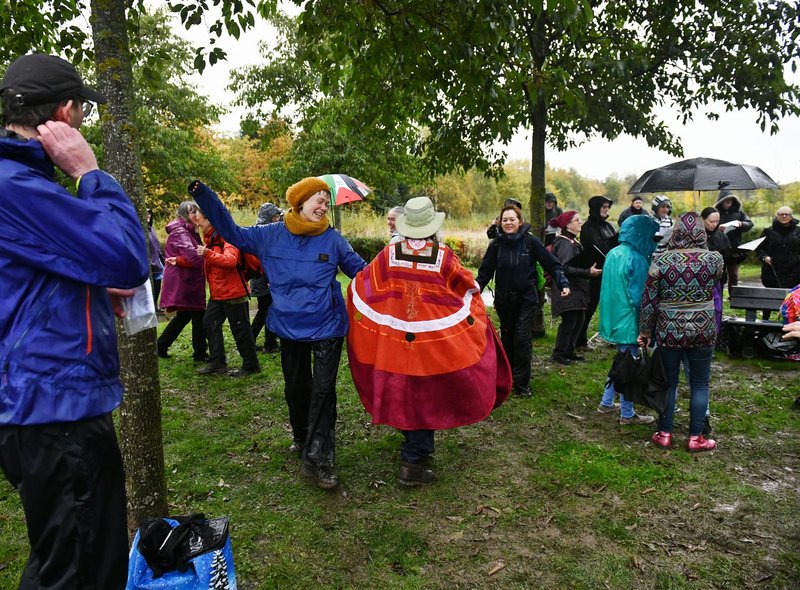
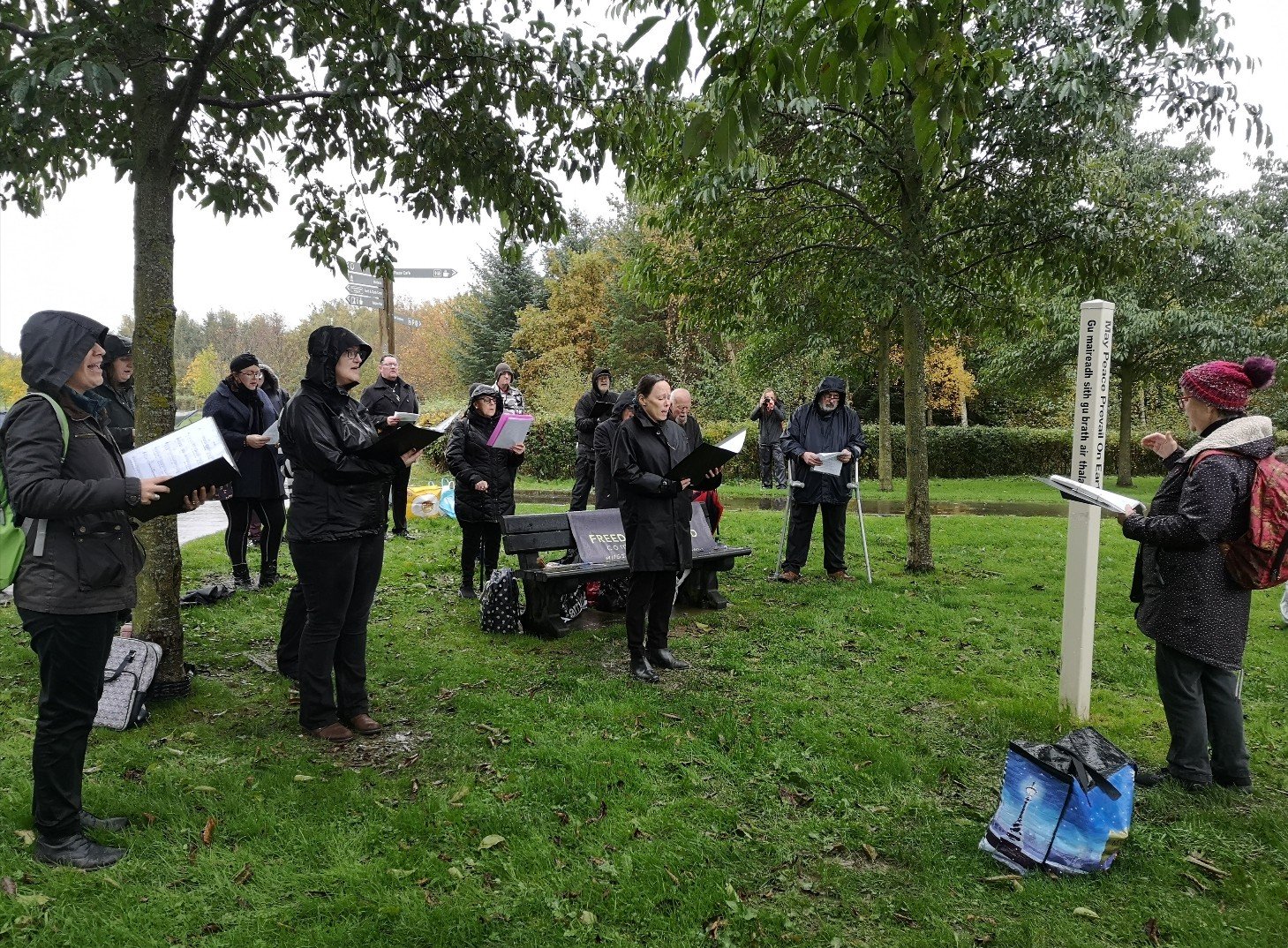
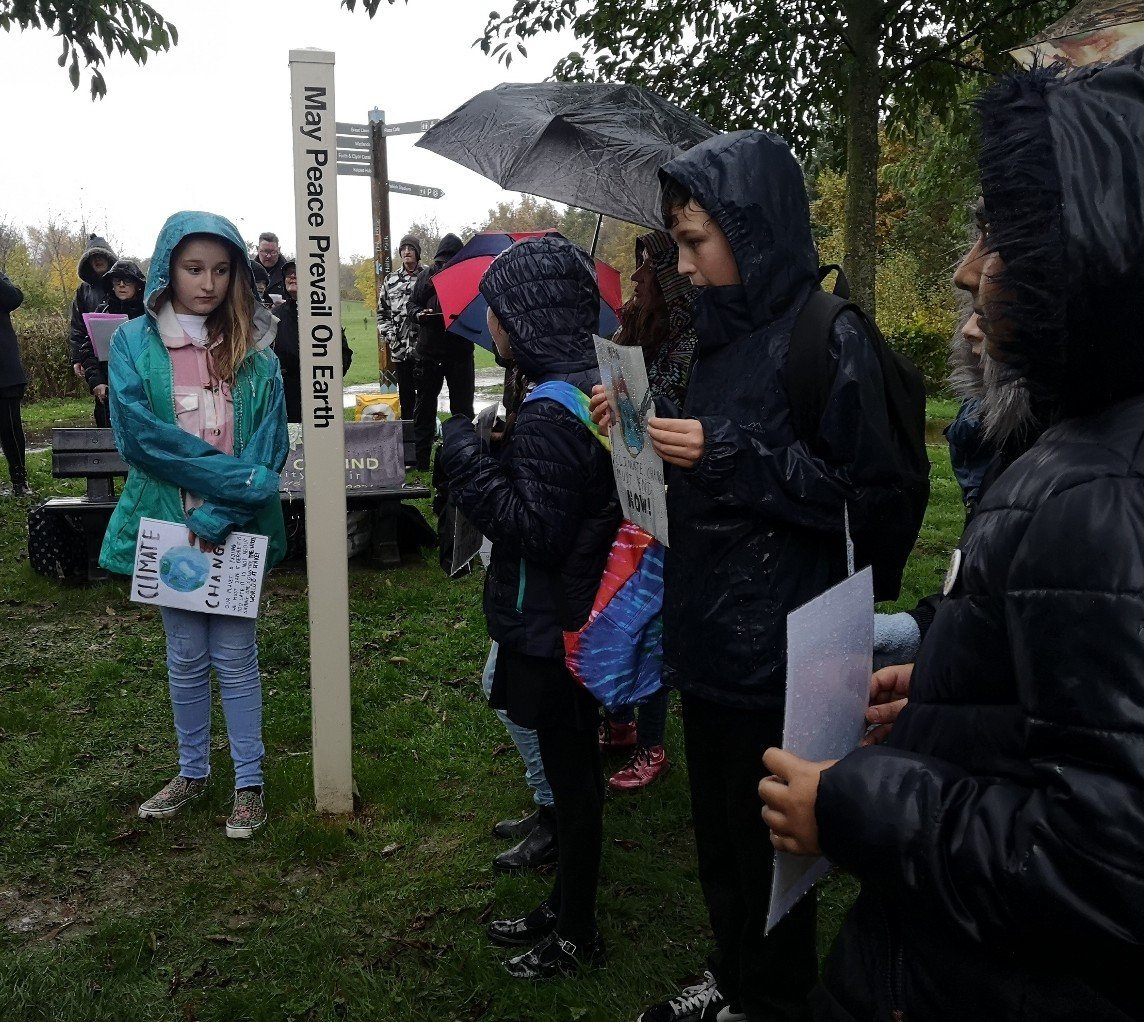
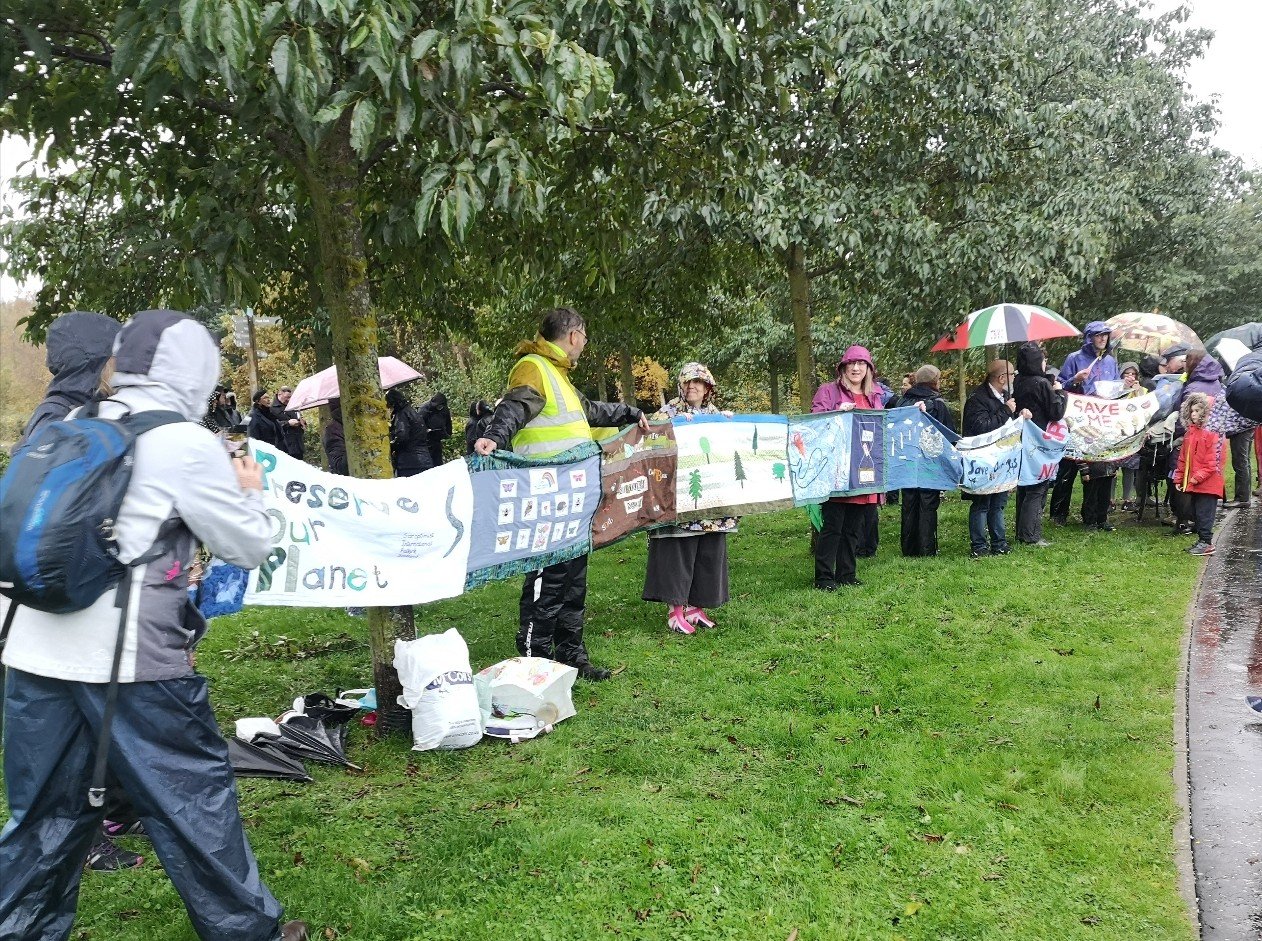
It must be said that the final stretch in the dark, up and into Falkirk’s town centre, in the really, seriously pouring rain was a hard one.
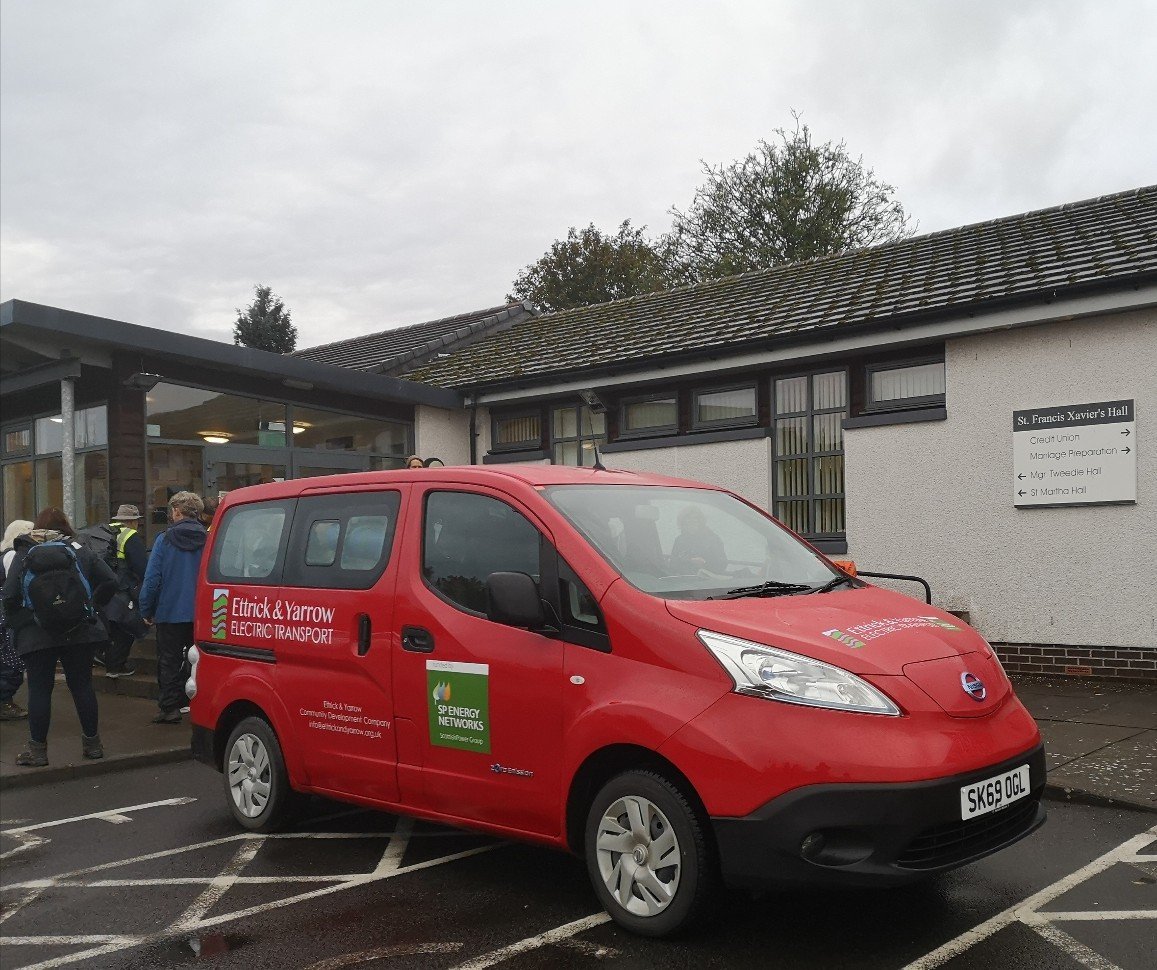
Falkirk
We spent the night at St Francis Xavier’s Hall, arriving wetter than it is hard to imagine any group of pilgrims could be, and presenting quite a challenge to the very kind folk who welcomed us, provided hanging rails and upped the heating before preparing our evening meal.
Alisar made a contribution to our soil collection. She is a New Scot, Syrian by birth, and had gathered it from her mother’s garden in Falkirk. Our food was cooked and served to us by members of the Muslim and Interfaith community in Falkirk, and it was delicious.
Here are some of the replies to ‘What keeps me Walking?’ read out at the Pilgrim’s Ceilidh on 22 October 2021.
In 1972 I walked from Canterbury to Winchester, a kind of reverse Pilgrims Way,and we camped by the side of a wood. As we cooked our noodles, a wren sat in the bush and sang his heart out. I have remembered that wren for nearly 50 years.
What keeps me walking? Hope.
Later that night, there was a reflection circle and enjoyable, high-energy workshop about group dynamics.
All photos are my own unless otherwise stated.








 Walking without a donkey