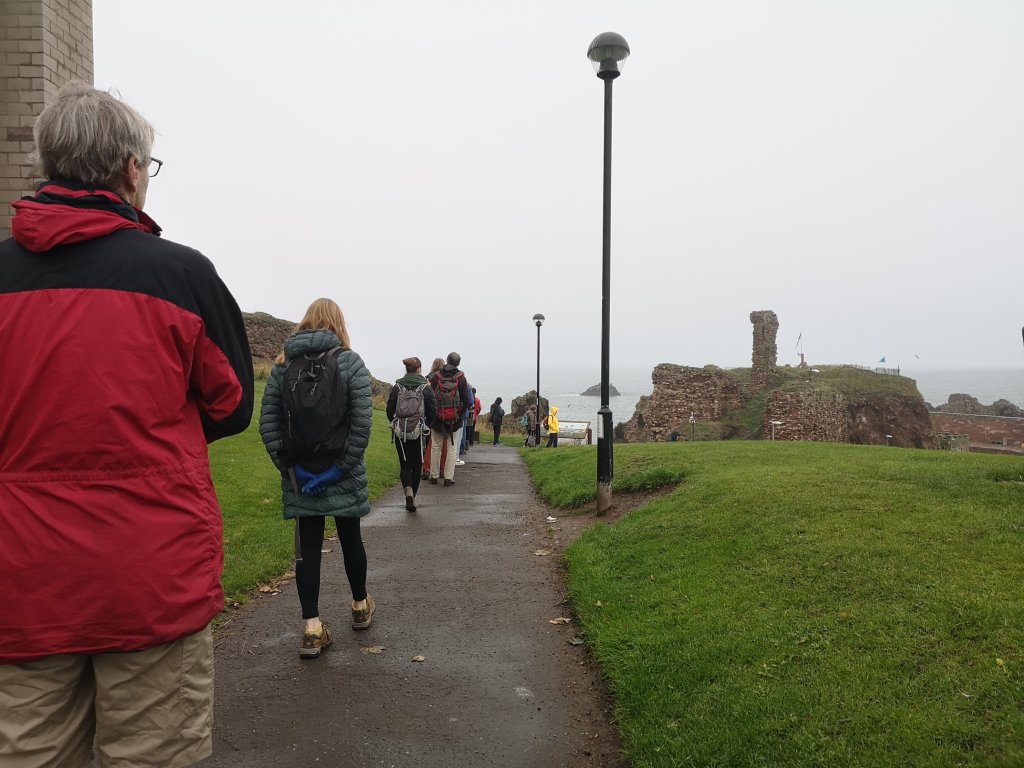
Pilgrimage for COP26

19 October 2021 – Blog 5: North Berwick to Aberlady Bay
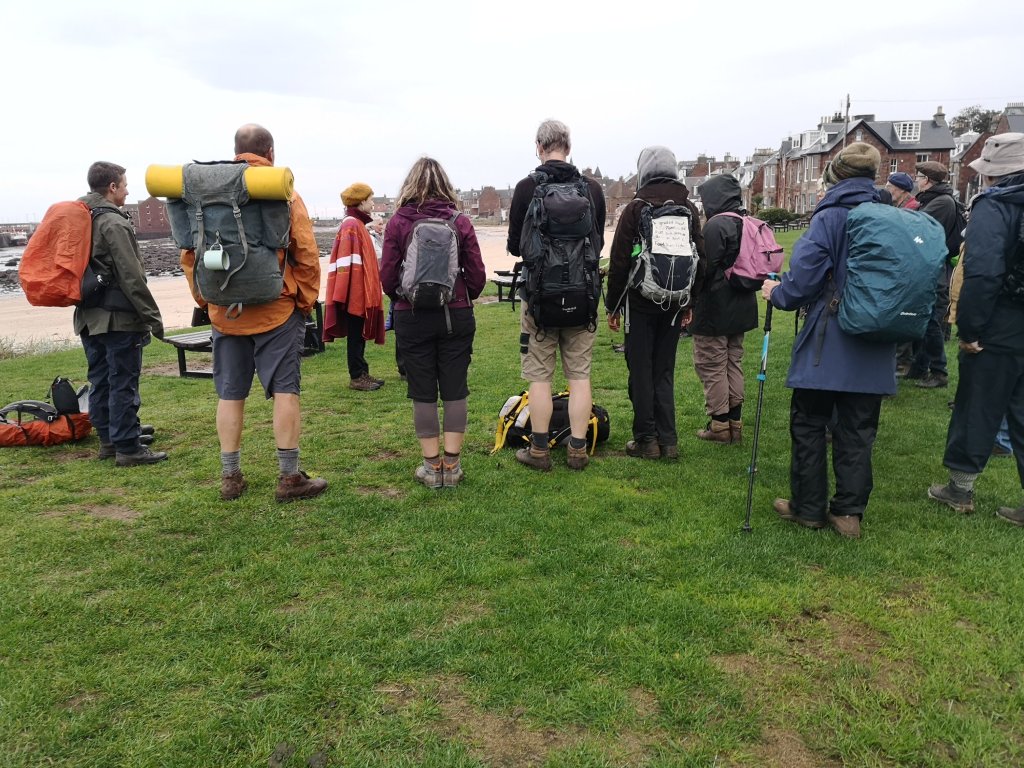
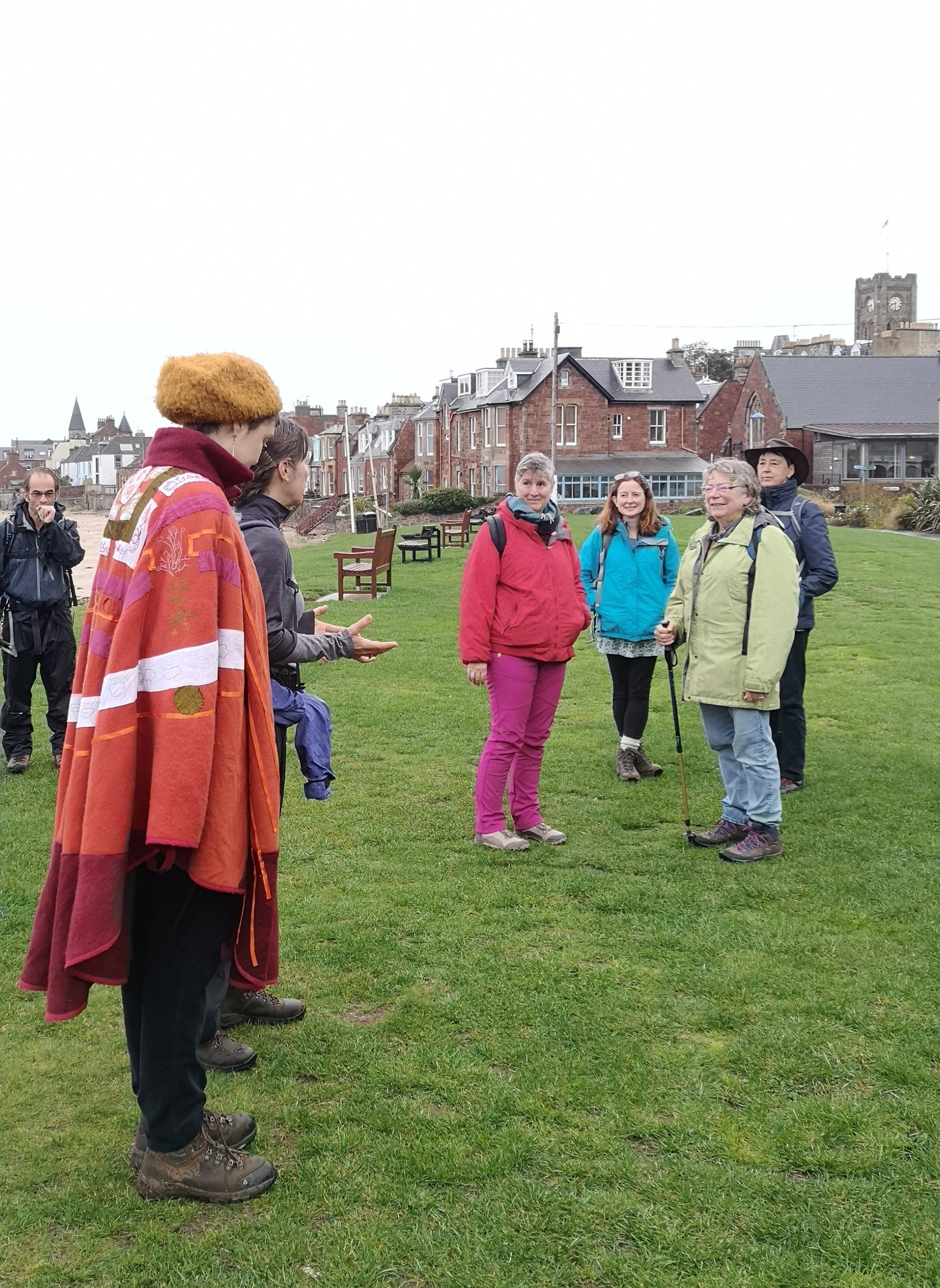
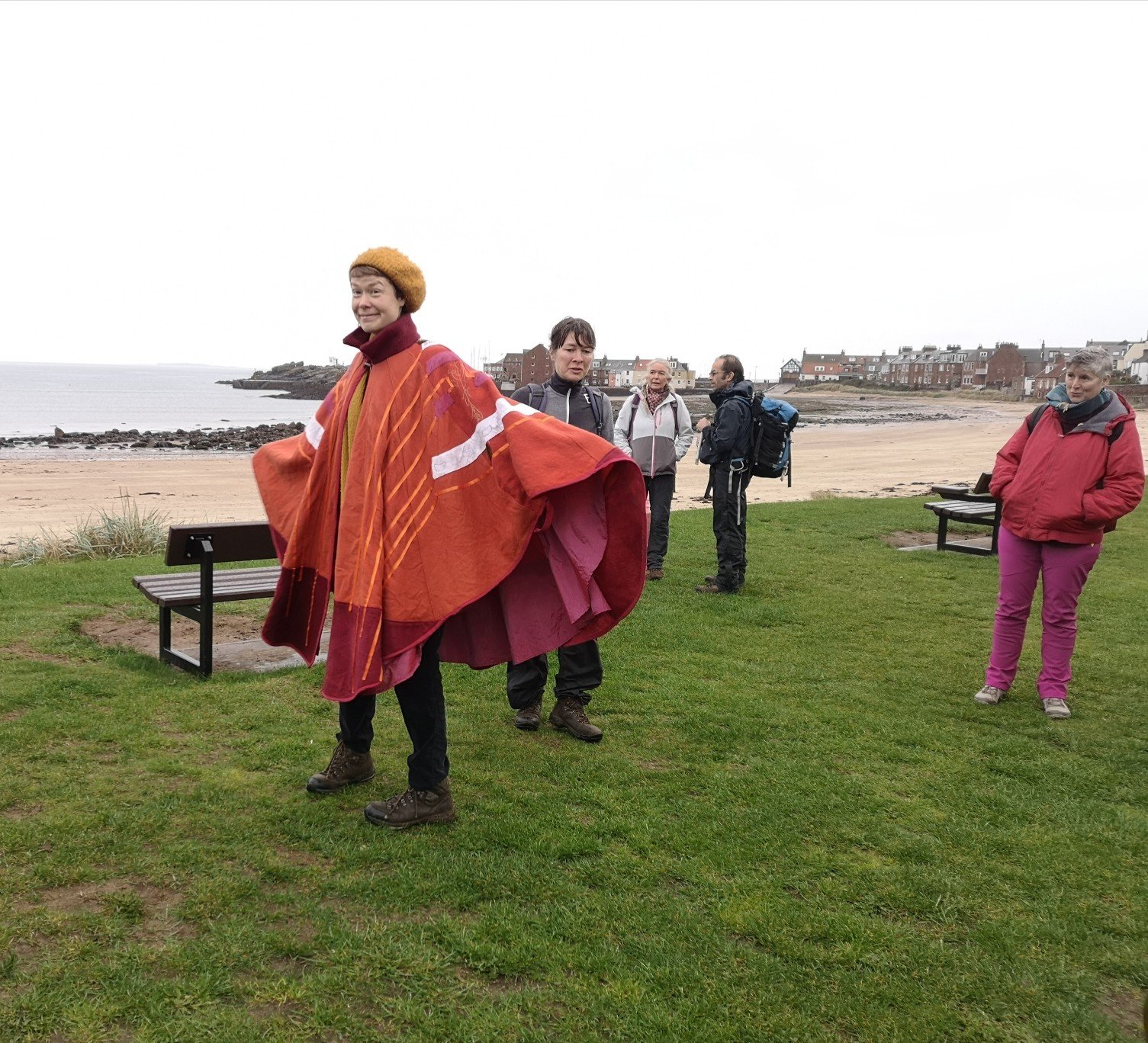
Ready to start out on the second day’s walk from North Berwick
Pilgrims at the ready – some who are walking all the way and others who have joined us for today
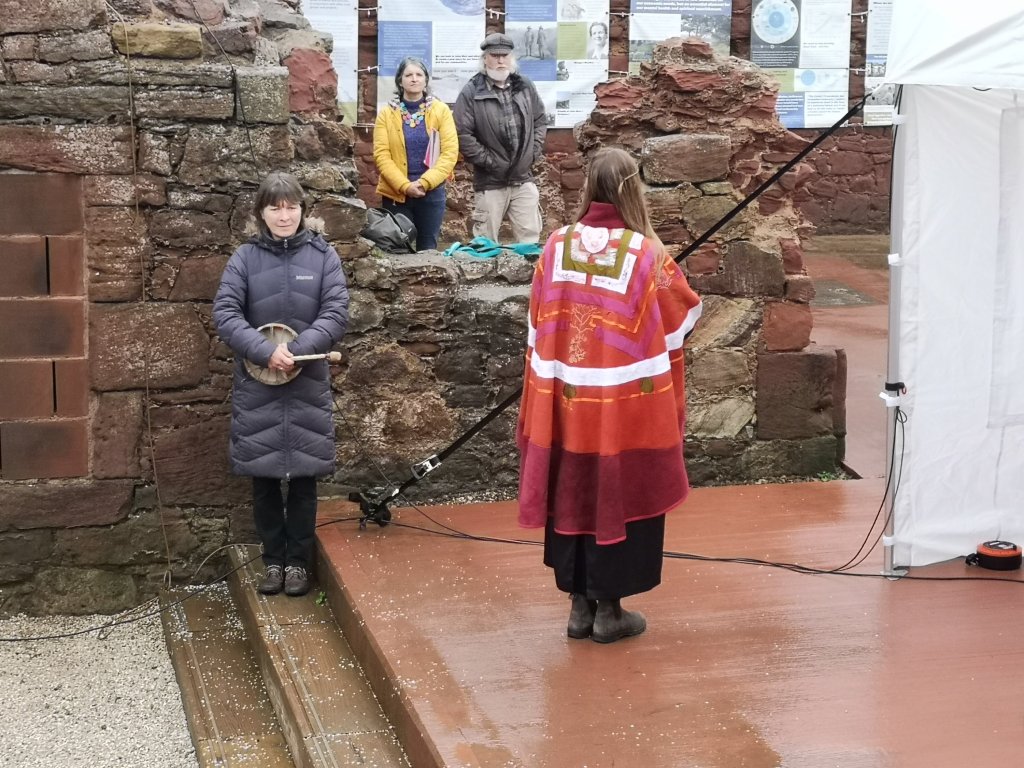
Olga is the Keeper of the Soils for this stage

Eva (in pink) was one of the day walkers and it was good to catch up after so many years. We talked of Reworlding, gratitude and reciprocity.
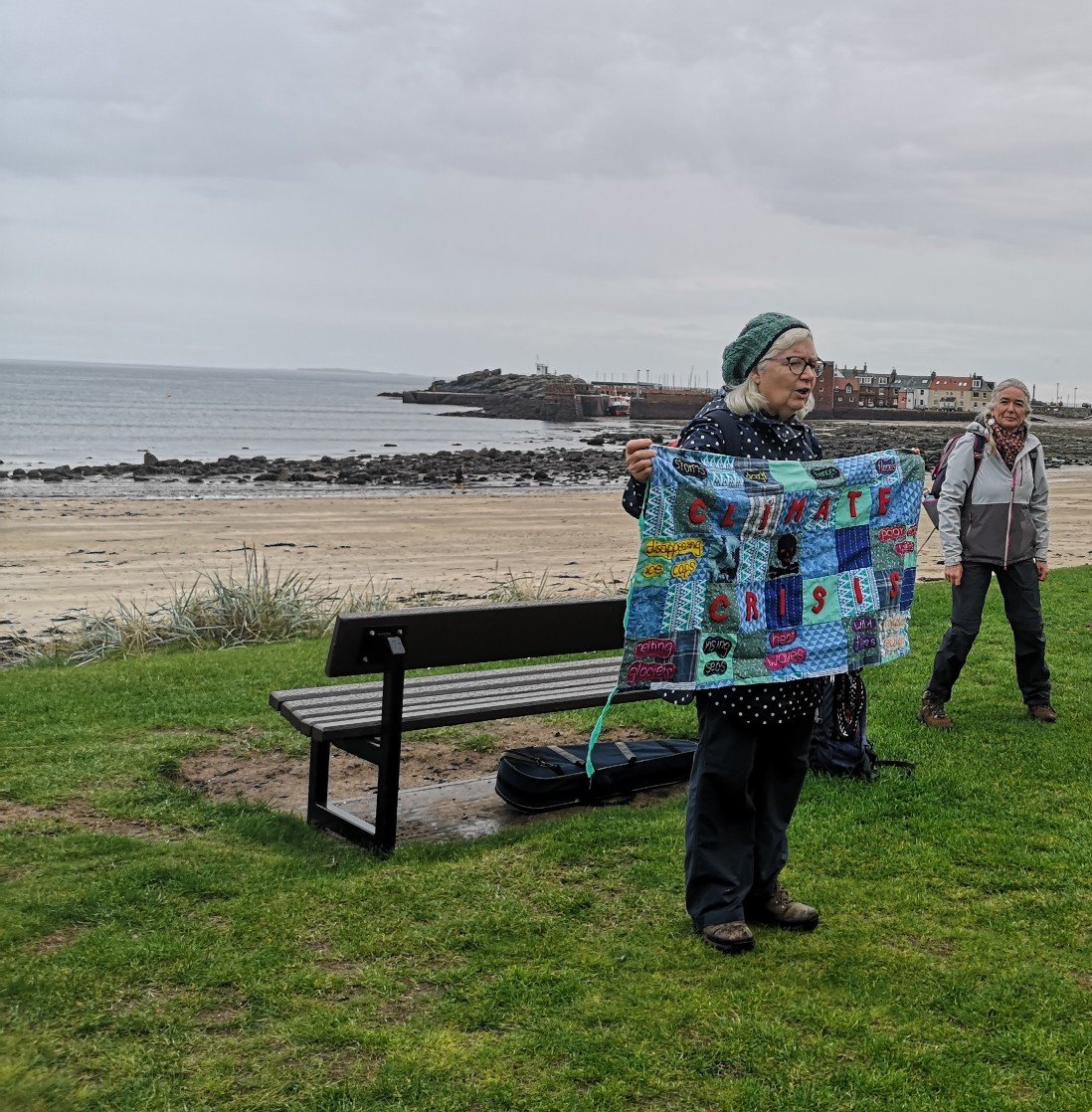
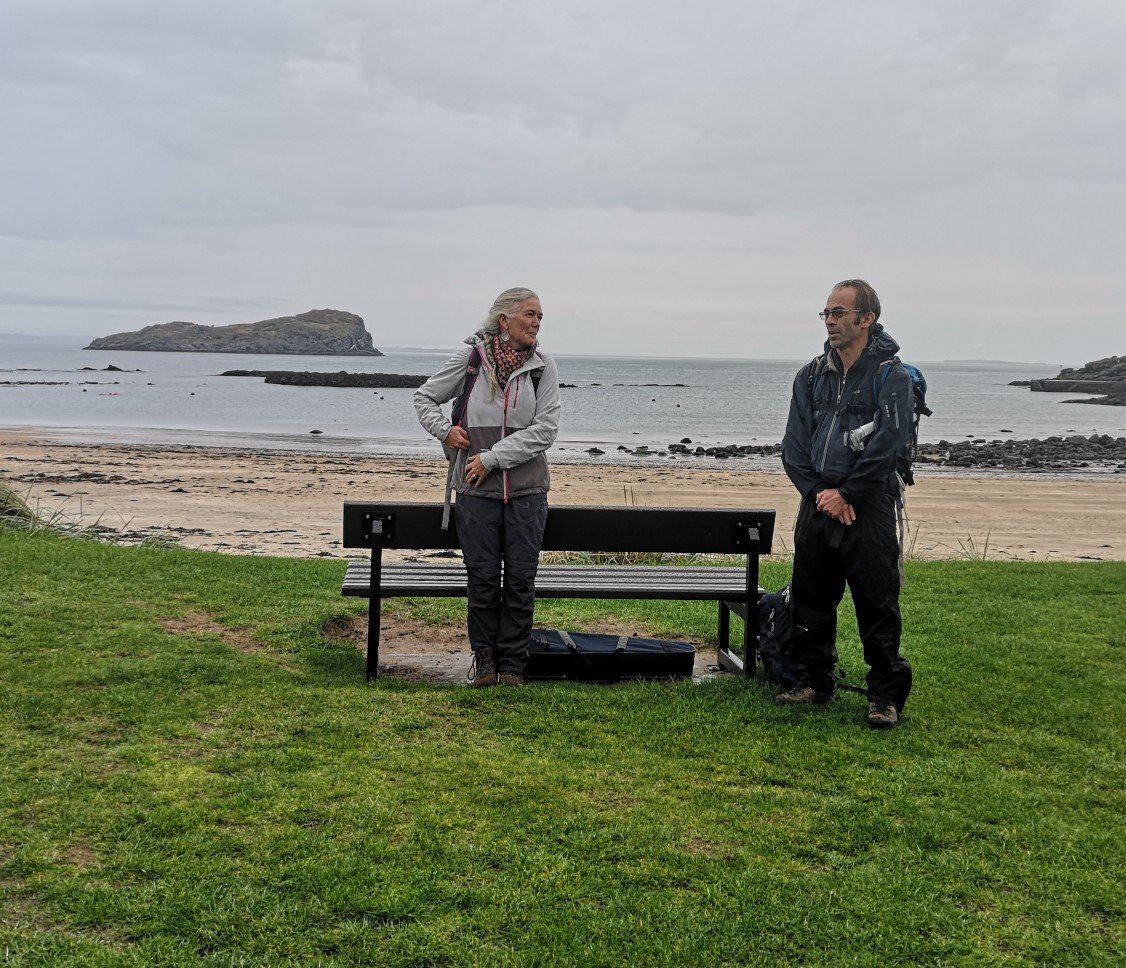
Cath explaining about Stitches for Survival – it was her day to carry the panels towards Glasgow
Ali Newell and Glen Cousquer were leading the walk

A field of brightness that travels ahead, providing, in time, ground to hold our footsteps and the light of thought to show the way. … to create a space for all our words, drawing us to listen inwards and outwards.

Read by Glen


Ali lead us in a Salute to the Sun from her Capacitar (Healing Ourselves, Healing Our World) exercises.
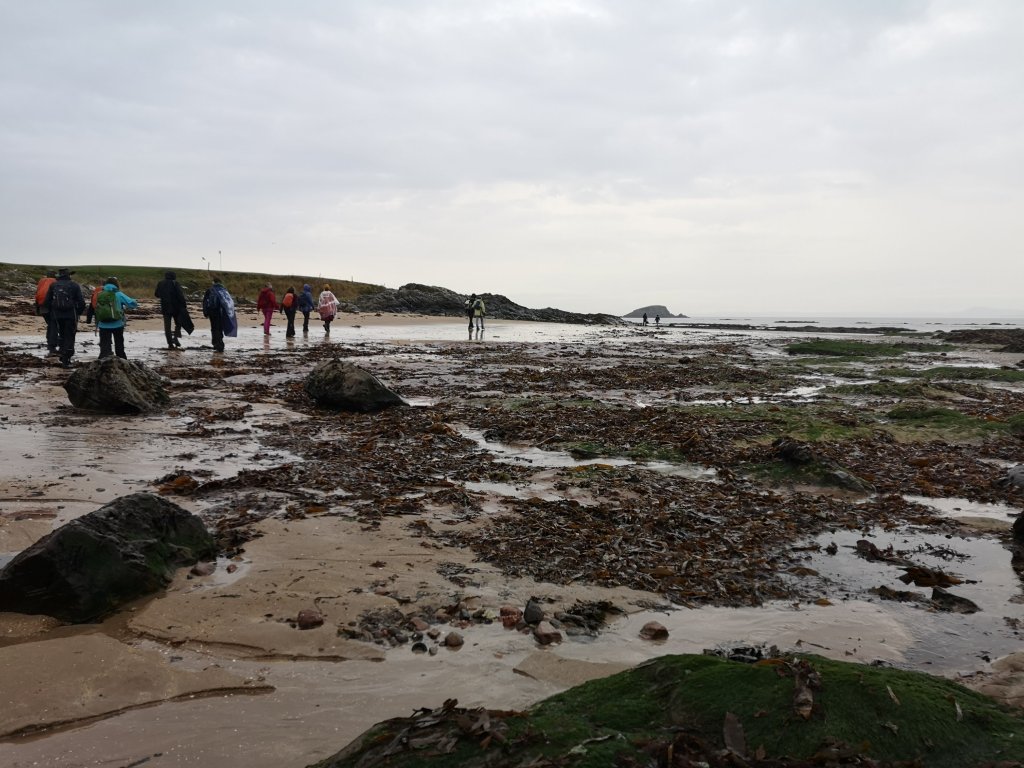

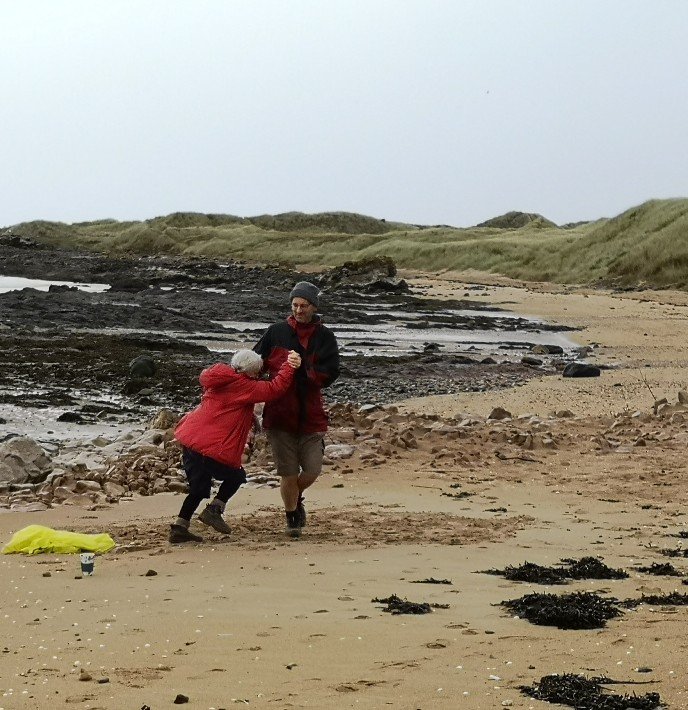
Then we began to walk and it rained

Petrichor: the smell of rain

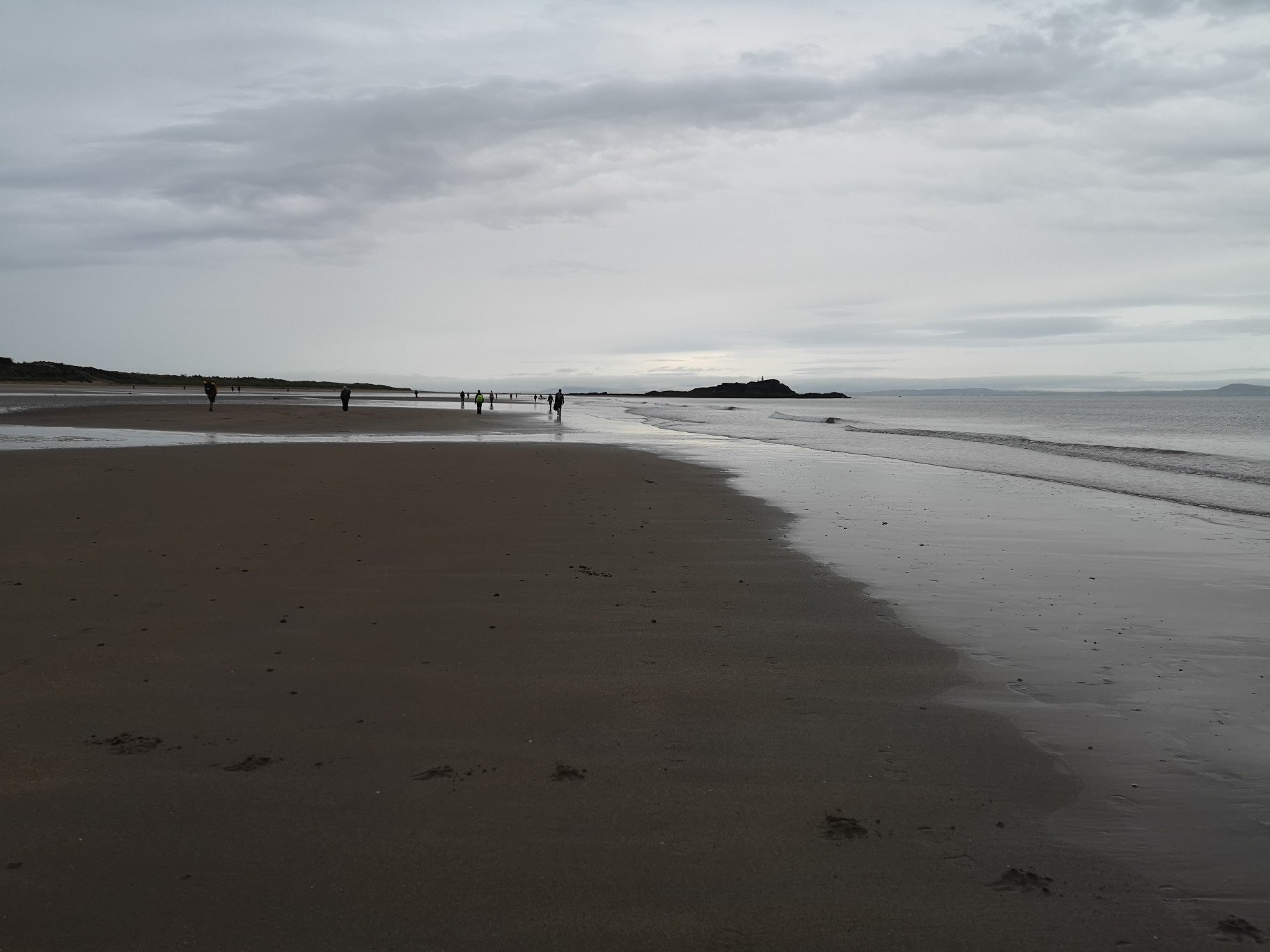
In this photo the waves have left vertical horizons on the near part of the beach: a dividing line of wet-sand mountain peaks and their mocha-coloured reverse shapes

We took time for quiet walking and reflection, appreciating the luminosity of the scene. I listened to the sound of the waves and the pit pat of rain on my jacket. I wasn’t aware of my own smell – it seemed to have merged with the air around me, and my wet fringe tickled my forehead.
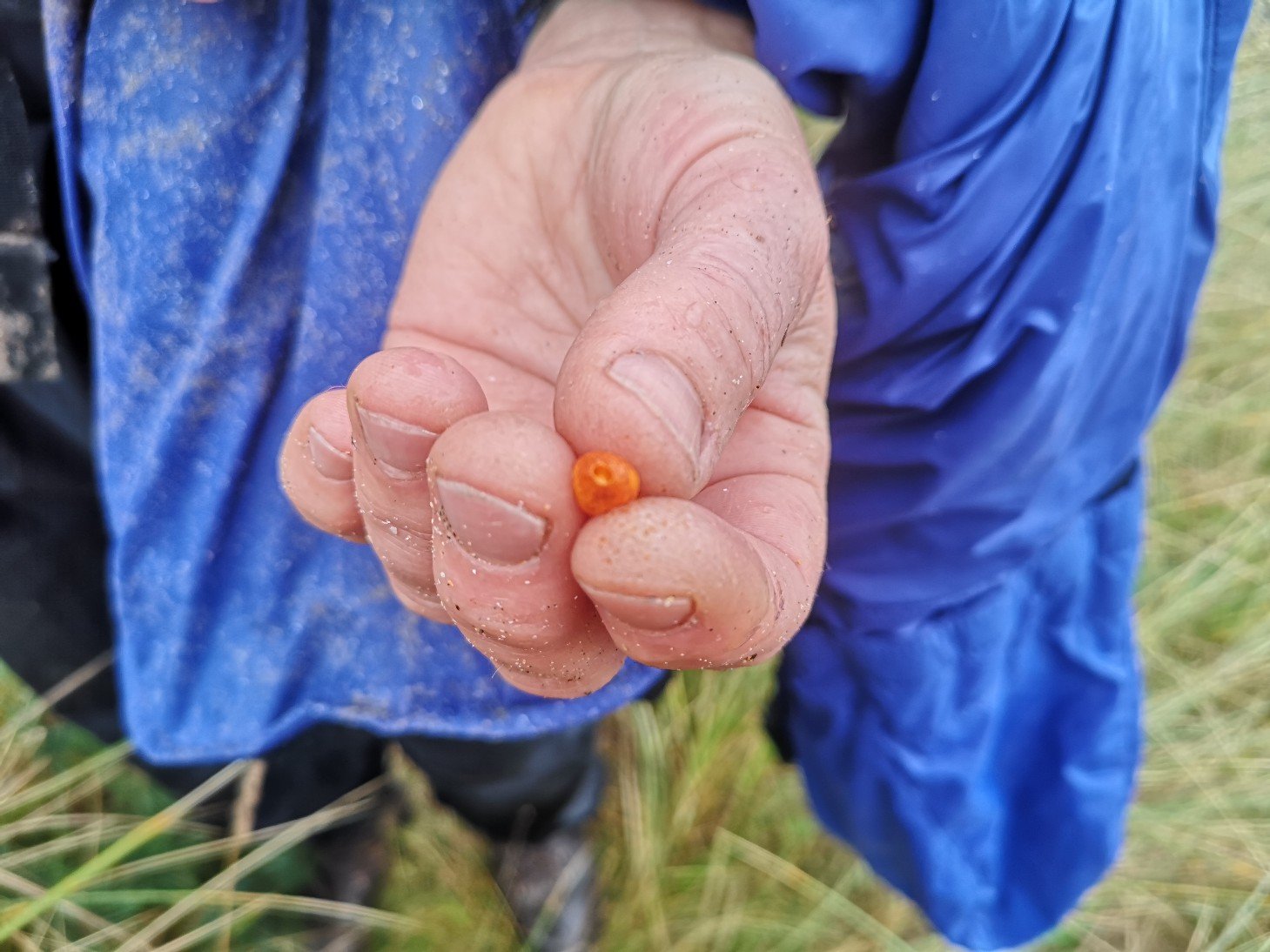
A stop to hold, admire and taste the Sea Buckthorn – salty and sour at the same time. As we walked on, we became attuned to the fermenting scent of the fruit on the bushes

… gifts from our plant relatives, manifestations of their generosity…When we speak of these, not as things, or products or commodities, but as gifts, the whole relationship changes. I can’t help but gaze at them, cupped like jewels in my hand … In the presence of such gifts, gratitude is the intuitive first response…

Robin Wall Kimmerer
I was glad that I popped a rain poncho in my rucksack at the last minute – it was useful to protect the cape
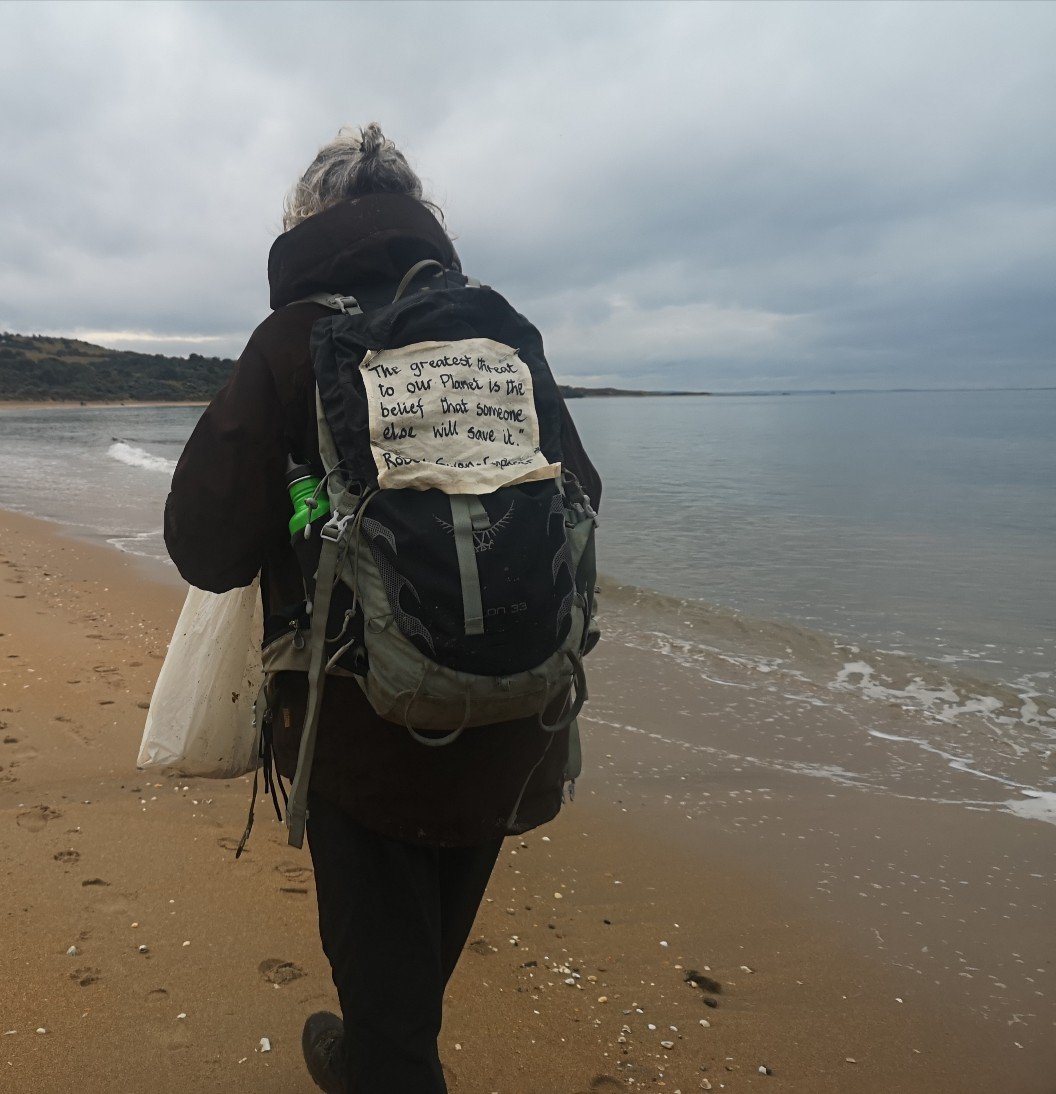
“The greatest threat to our planet is the belief that someone else will save it”

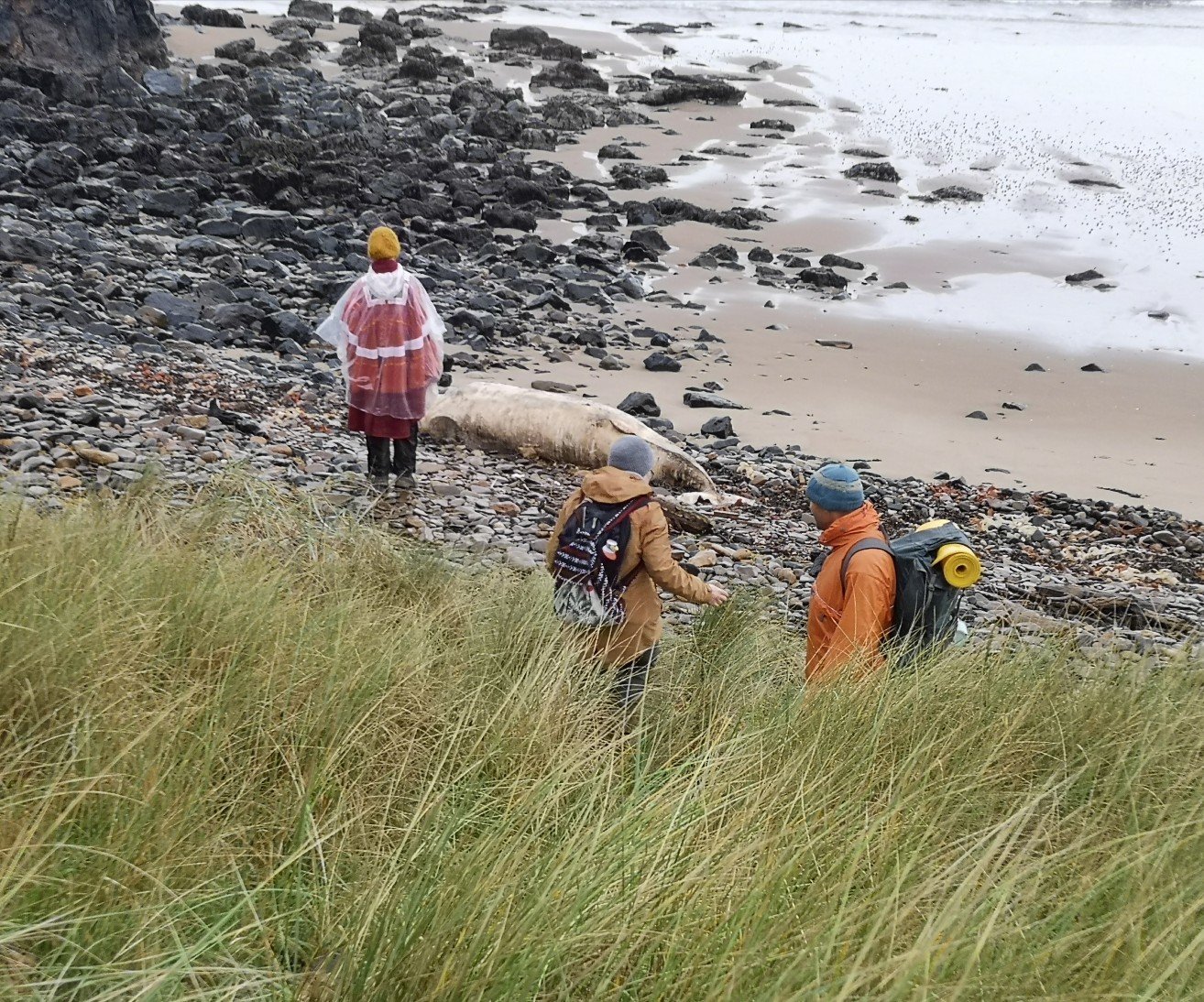
As we sat and ate our lunch, cormorants stretched out their wings on the rocks. The sea left a white line of bubbles behind. We couldn’t help ourselves stooping to pick up tiny triangles of blanched shells. The bloated body of a dead whale was a discomfiting pale apricot, and the decomposing stench was terrible as we walked past. I whispered my sorrow for its truncated life.

Cameron and the sea playing a lament

Someone said they had an image of Ghandi walking in solidarity with us.

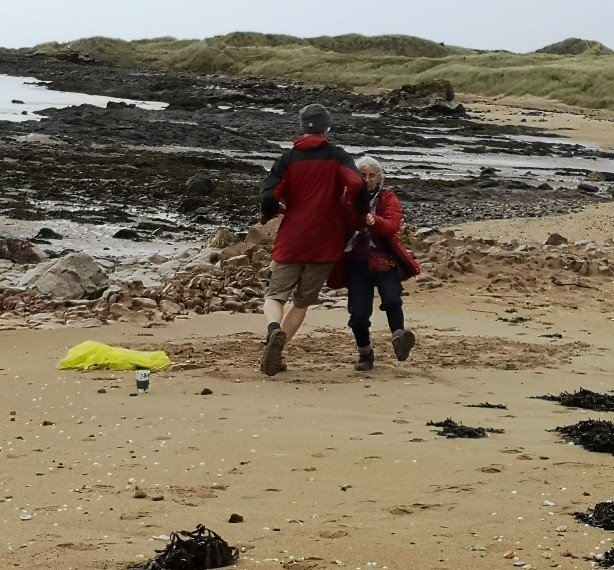
We were regaled with songs including one from four members of Protest in Harmony.
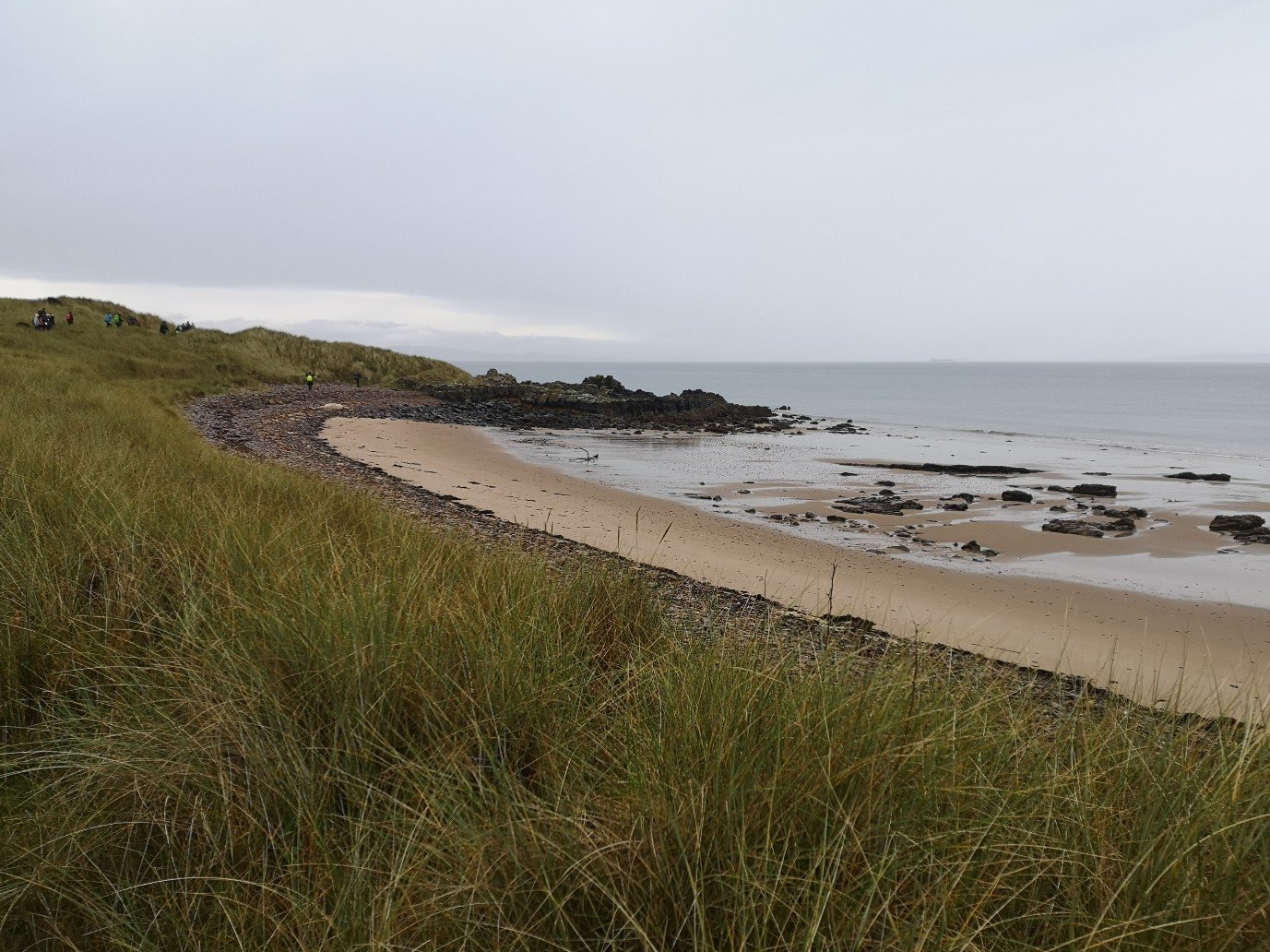
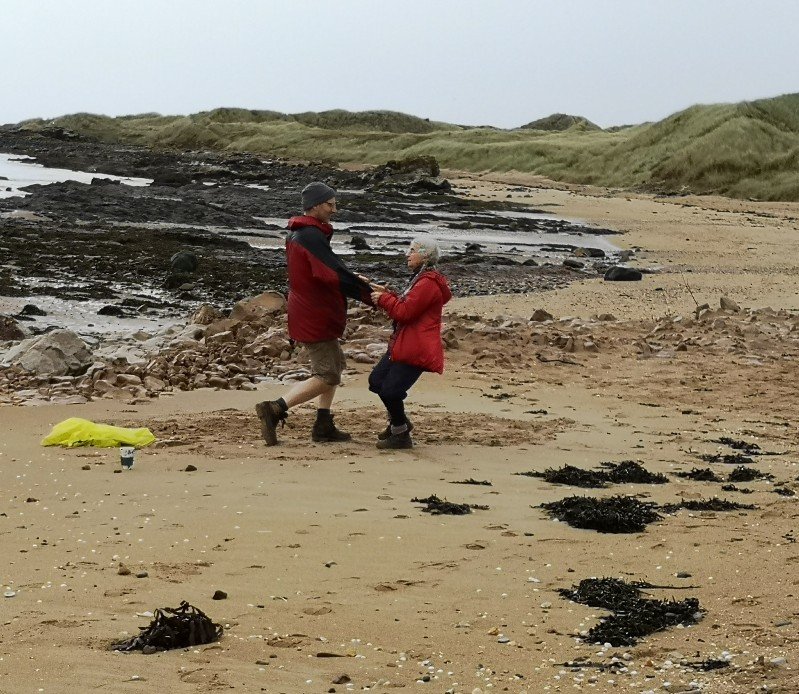
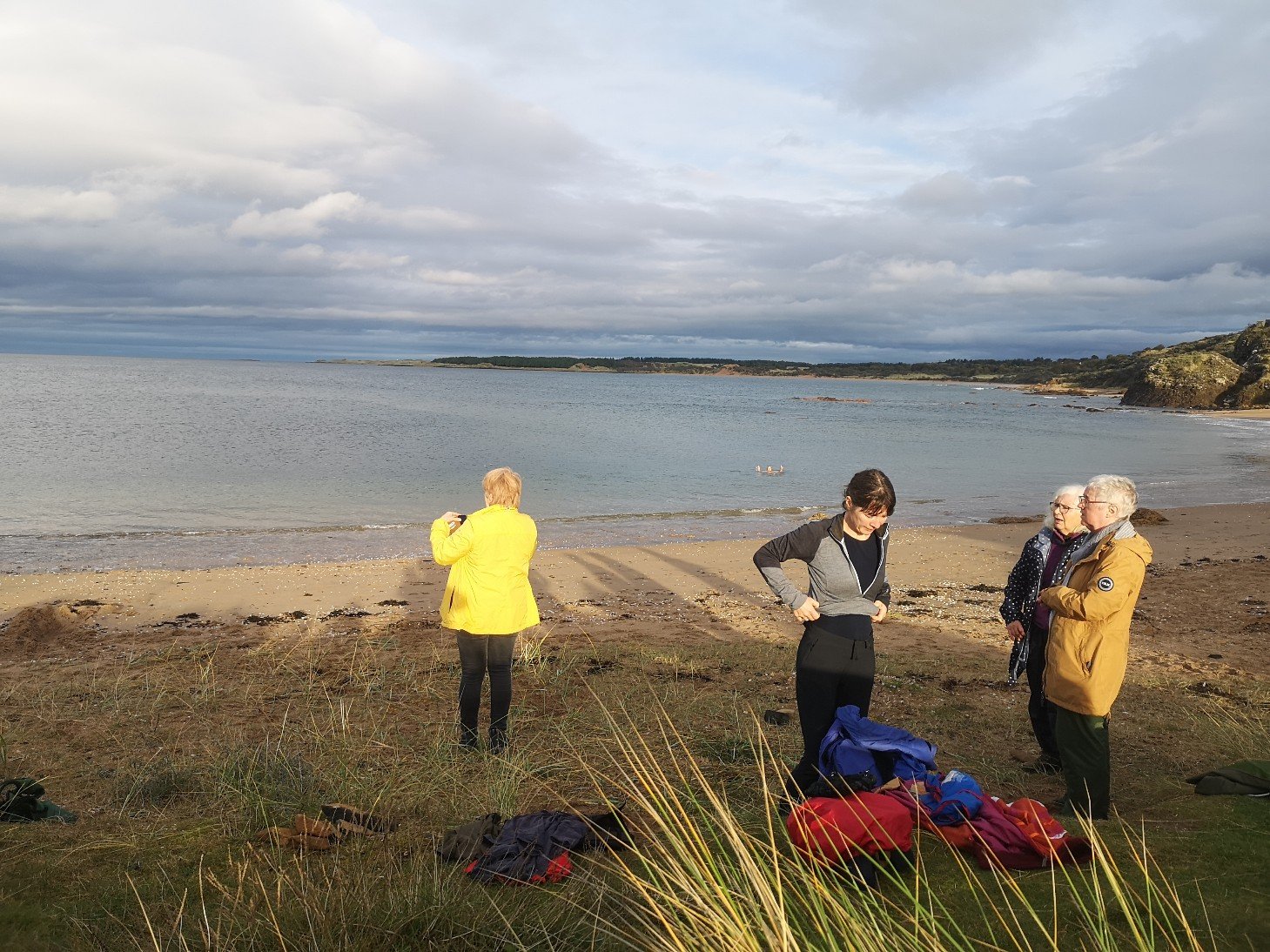
Some of us stopped and swam

Miles of beachy colours – caramel, beige and cinnamon – and the occasional low-lying green plants with lilac flowers. Further on there were fingers of cerise and buttercup seaweed shining in contrast.
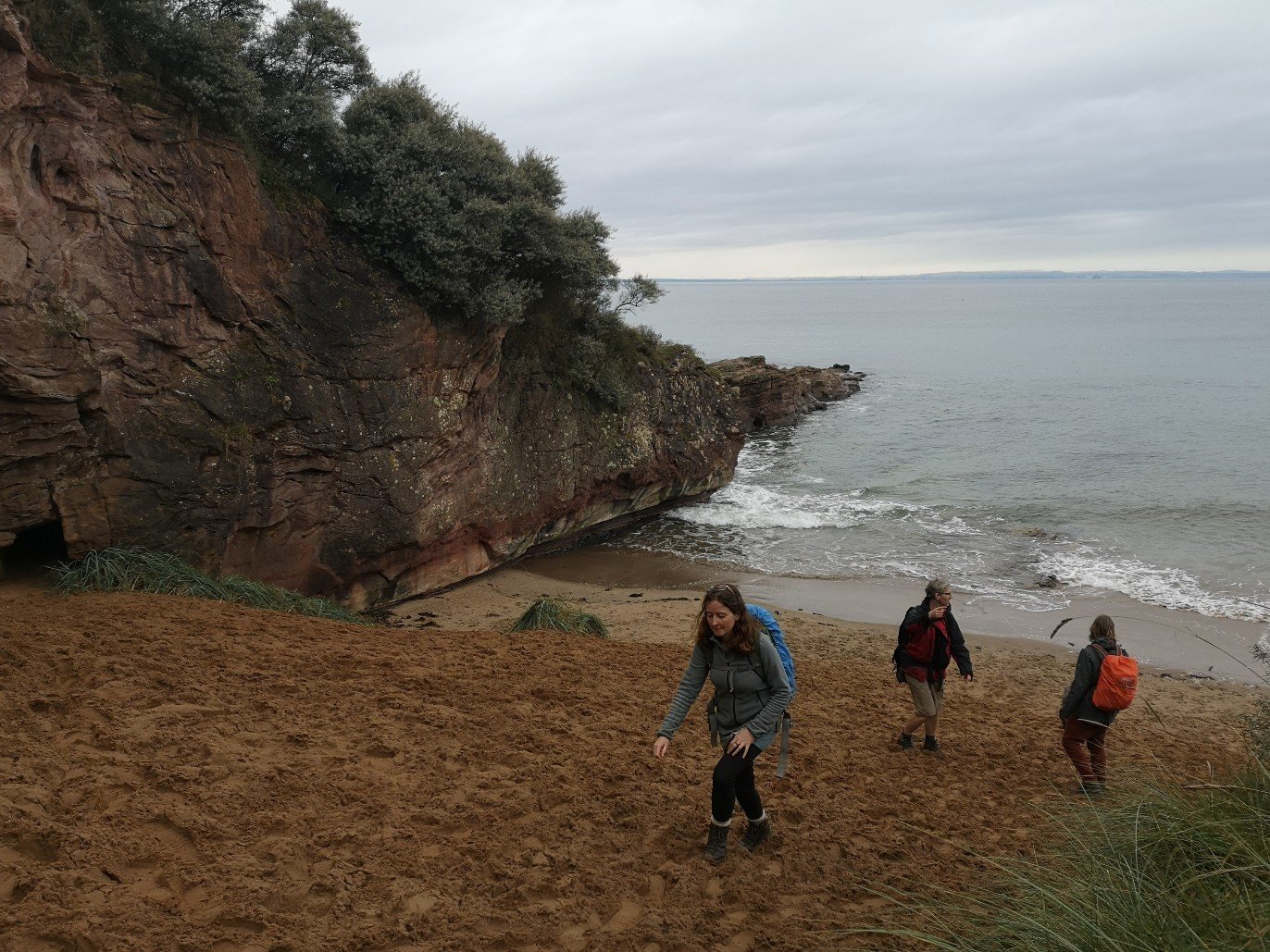
A steep climb that turned out to be the wrong route
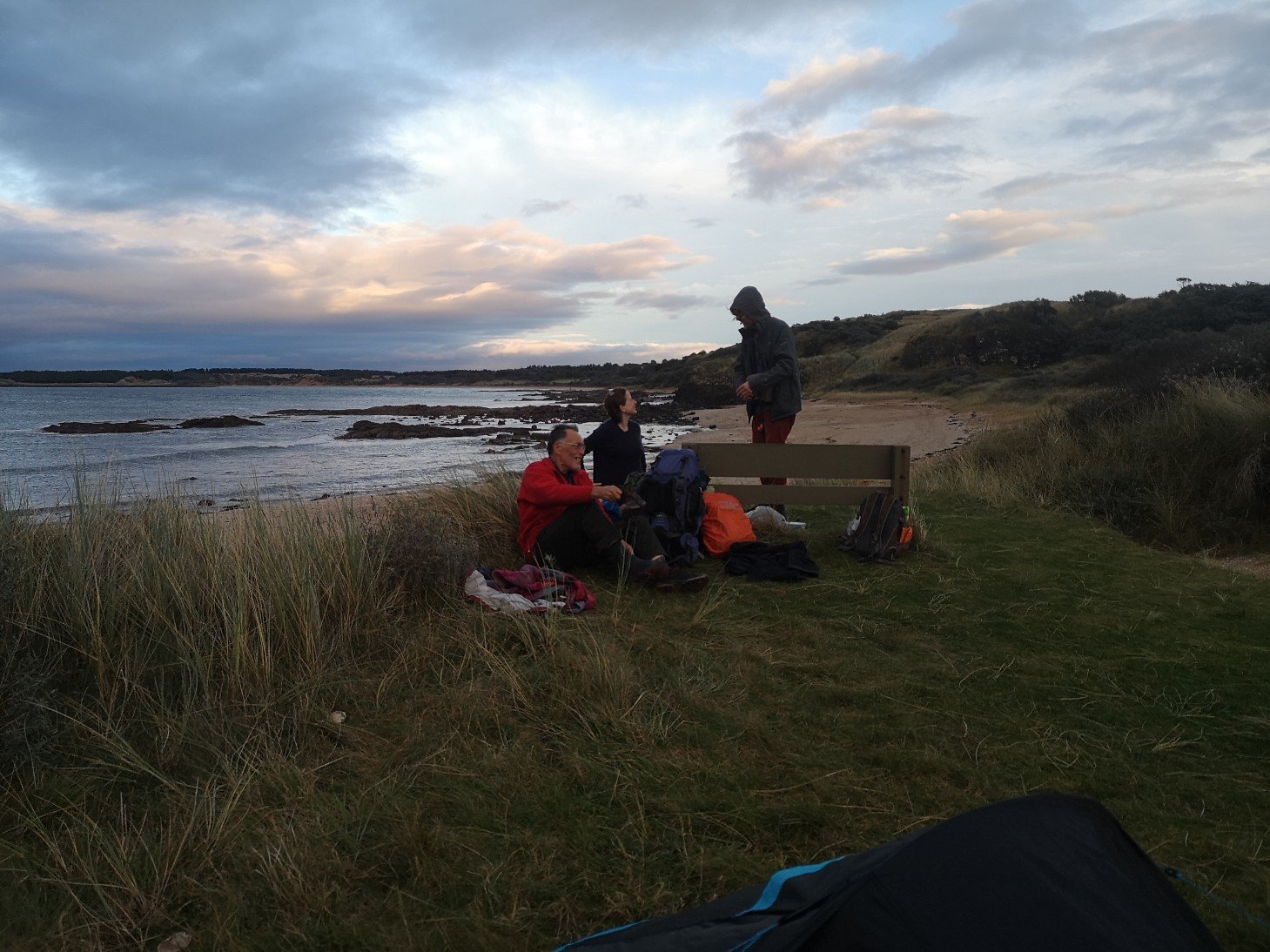
Aberlady Bay, where we camped for the night
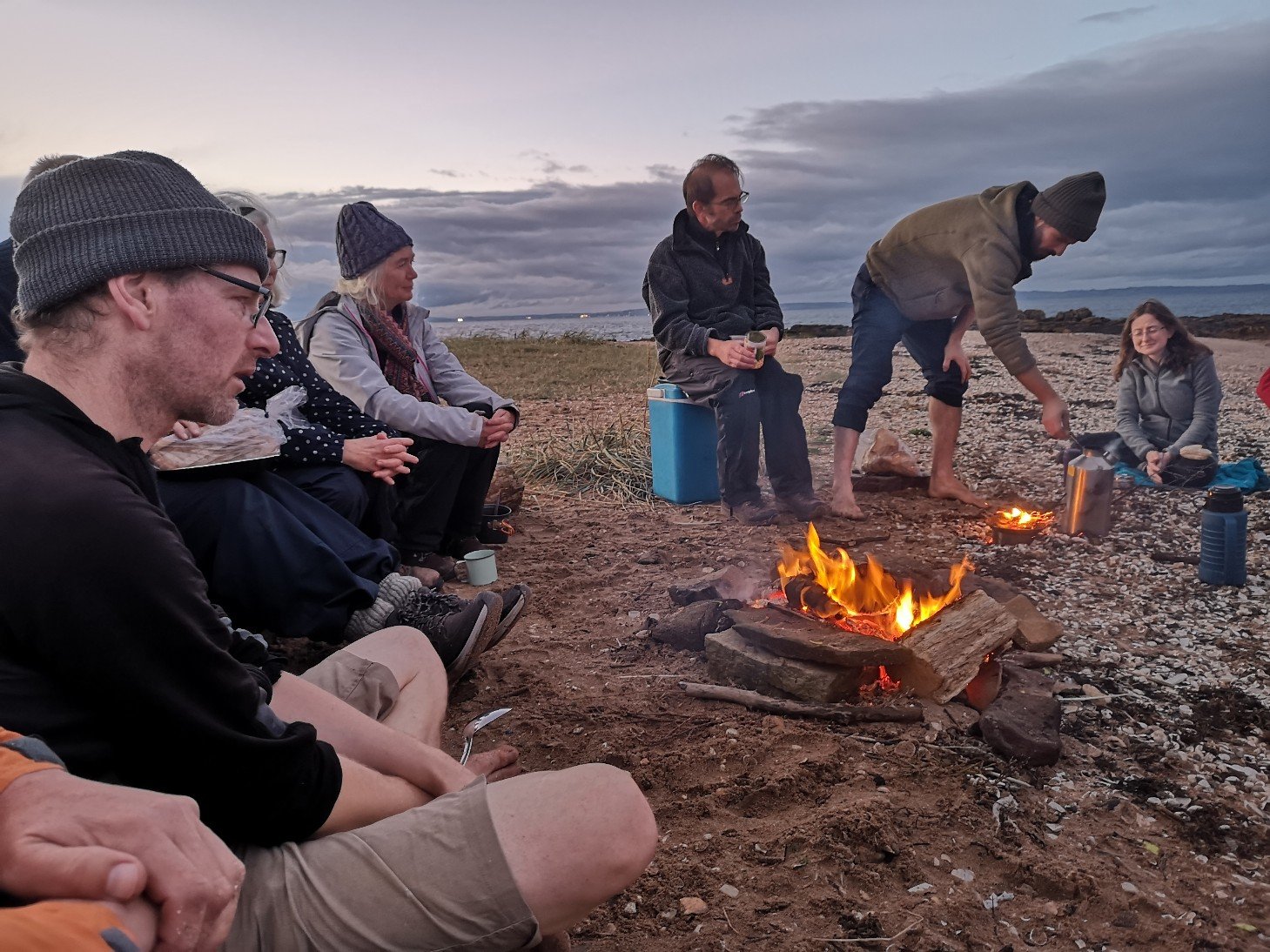
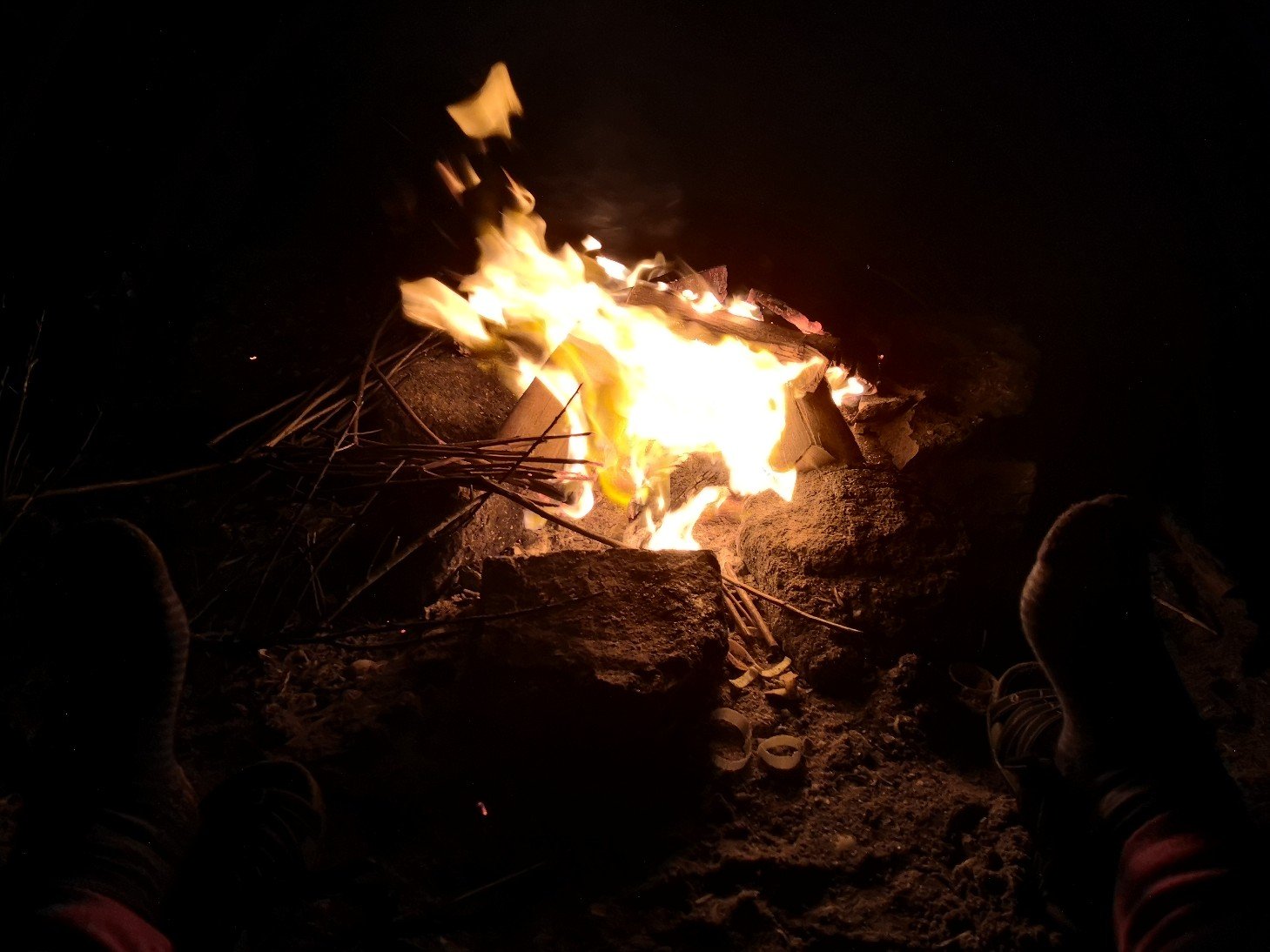
Delicious food around the campfire for all the walkers
Apricity: means ‘the warmth of winter sun’
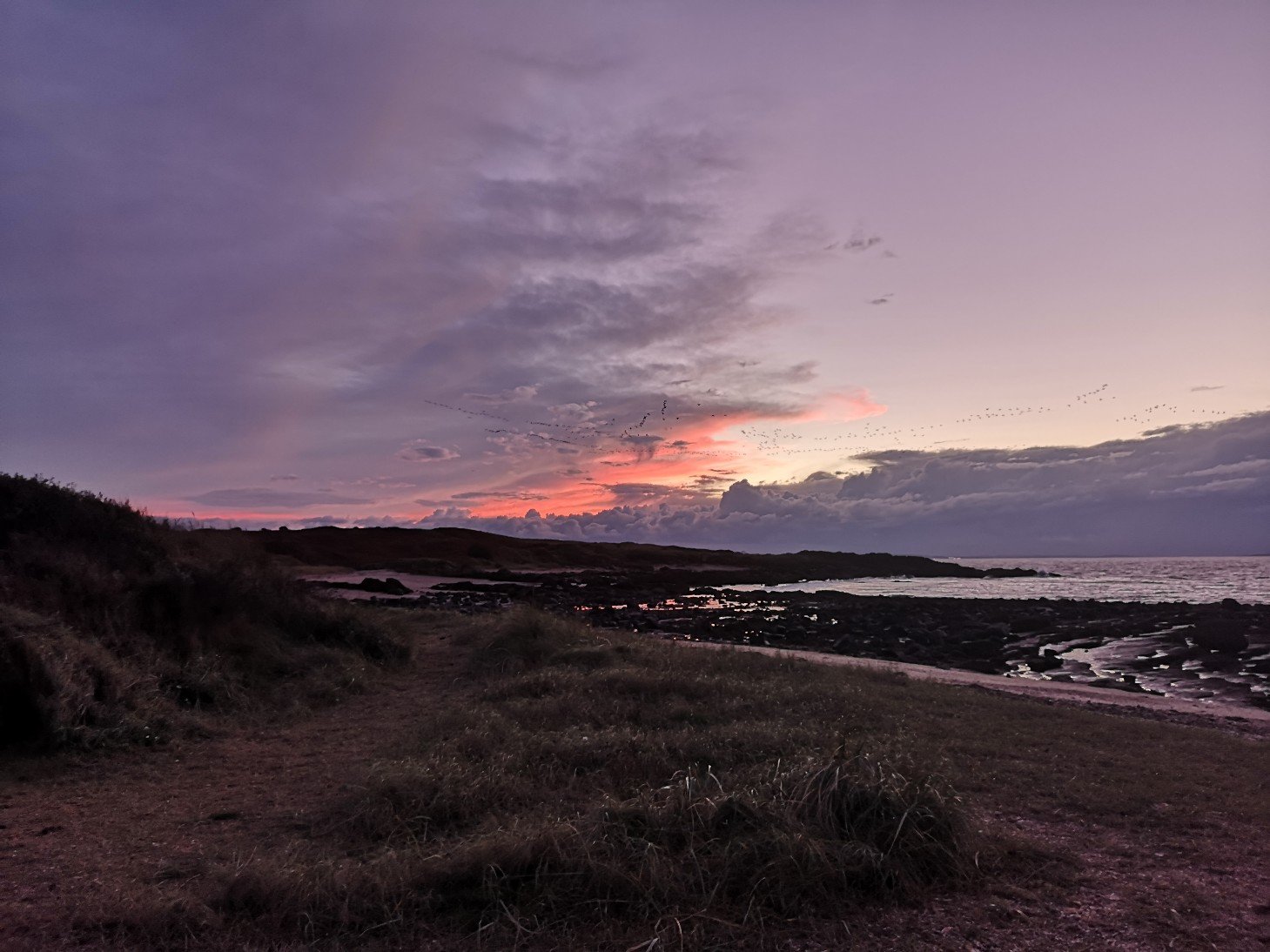
We watched skeins and skeins of geese honking homeward as the sky darkened. They were particularly spectacular when silhouetted first in front of the setting sun and then the rising moon
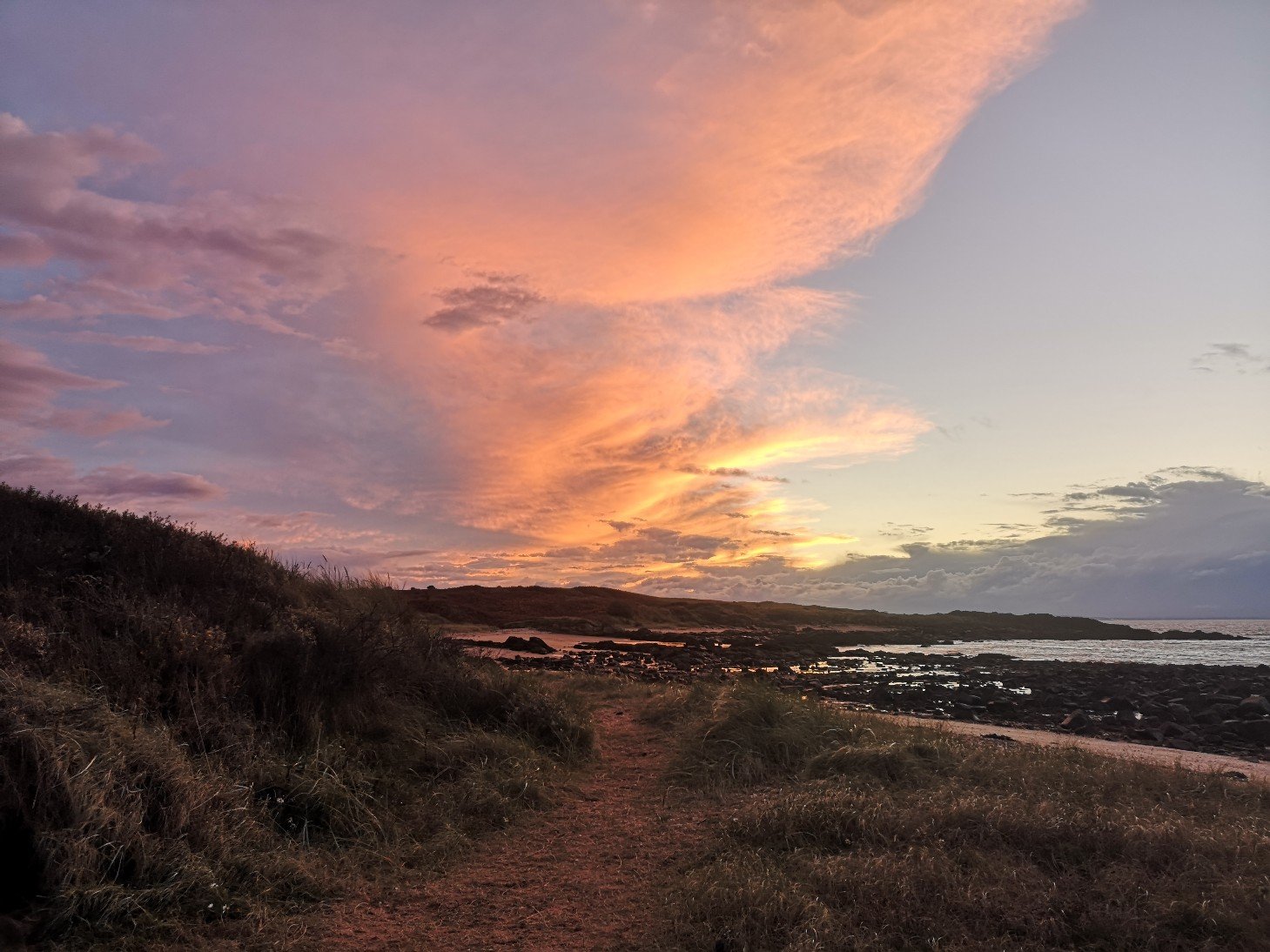
Landscapes in the sunset sky looking towards Longniddry
After supper, the group split in two and the majority walked to a hall in Aberlady village to sleep – a night walk along this path against the wind

Eight of us camped in the high winds of the Aberlady Nature Reserve. It was the most beautiful spot for contemplating and talking about how important such places are and how vital it is that our government and businesses curtail sewage output, address coastal erosion, and put money behind the preservation of our wilder environments.
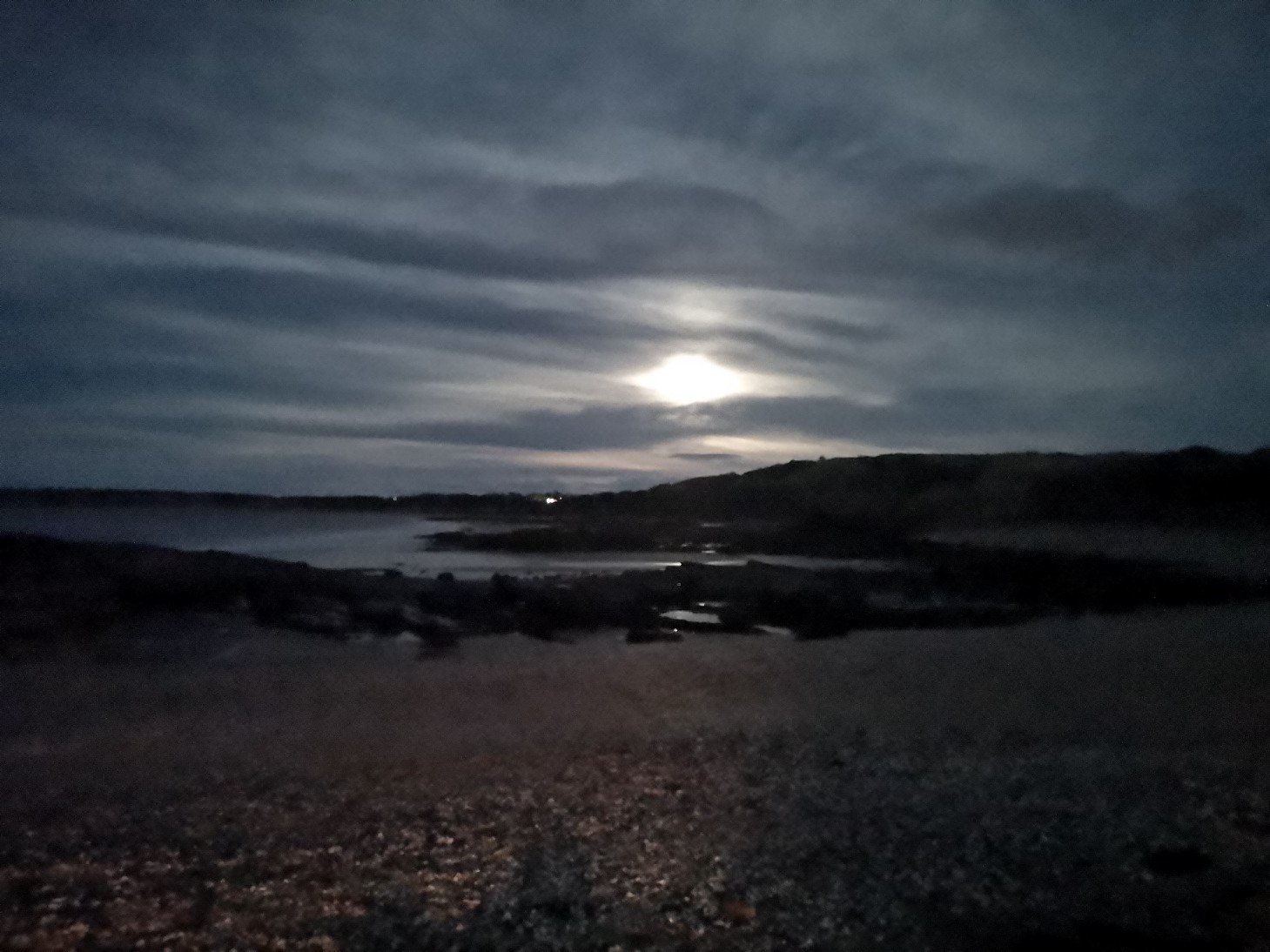
A blurry pic of the Harvest Moon – full around 5am
Campfire and a dram

Thanks to

Ali and Glen for leading the walk, and Cameron for playing his fiddle. Vicky for driving the electric van which carried our rucksacks.
Pilgrimage for COP26 – why am I walking?

Blog 2 – Why am I walking? 17 October 2021

There are lots of things I could do to face up to the serious climate crisis I find myself part of. I could stay at home and recycle, join a committee and work towards political change, lie down on the M25 and get put in prison to raise awareness, I could throw myself in front of a horse to get attention.

Why walk instead of doing anything else? Why would I stop earning (I’m self employed), pay for someone to be at home to look after my cat, and walk in the unpredictable Scottish weather?

The statements of intent of Pilgrimage for COP26 are these:

  • We’re walking to raise awareness of the climate and ecological crisis. 
  • We’re reflecting on that crisis as it relates to our own lives, the communities we pass through and the lives of those already impacted; both human and more-than-human.
  • We’re building a community of witness and resistance committed to climate justice now and in the wake of COP26.

Yet still I find myself asking, but why walk? I could run or cycle and there are lots of other ways to raise awareness, to reflect, and build a committed community.

My answer: because walking is special.

  • It is very slow, a counterpoint to the speed of life. (Google tells me it would take me 1 hour and 24 minutes to drive from Dunbar to Glasgow now, but it will take us 8 days to walk).
  • It leaves very little trace; although I disturb undergrowth, probably inadvertently step on unsuspecting creatures, and leave my temporary footprints, it is the least destructive way of moving across the country.
  • Each step reminds me that I rely on the earth to hold me up and that the earth relies on me to stand on it – it’s reciprocal.
  • The vibrations that my stepping cause are not the same as the shaking of the ground by a lorry, say, rolling on tarmac. The moving through air I do at my pace (approximately 3 miles an hour) contrasts with the displacement a Boeing 737 makes.
  • Walking interacts with weather. Not knowing whether I will be walking through rain, sun or snow at the beginning of every day is, yes, not abnormal for this country at this time of year, but the attentiveness I have when I walk, and the fact that I have walked here before, means that I will notice the climactic differences. The skin on my cheek will be aware of the relative warming, my muscles of my back will sense the increased wind speeds in comparison to last year, the joints of my feet will register the dwindling peat they walk on.

The quality, and energy of walking is different, and it matches the quality of focus and the listening energy I want to apply to this issue.

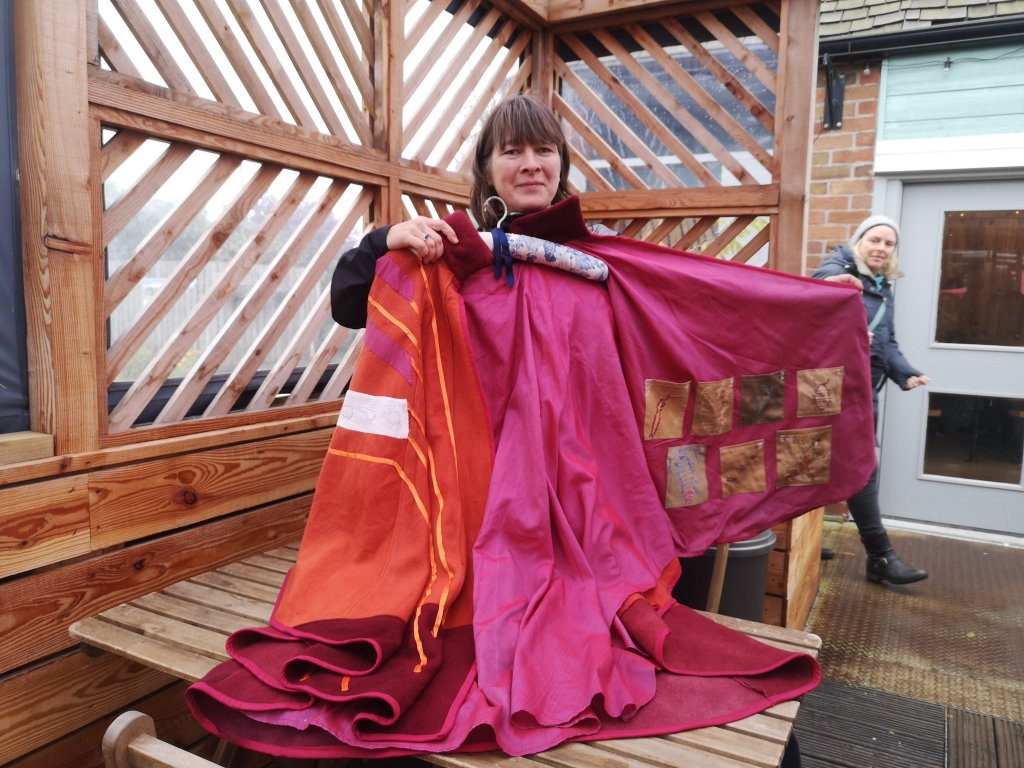
Natalie Taylor who devised the Keeper of the Soils cape and and Roxy Ambrozevich wearing it

What we have collectively wrought (most of us) upon the environment, is so very complex. There are strands of destruction, fibres of difficulties and damage which have become interwoven over centuries, a fabric of knots and snags and imperfections brought about by misinformation, neglect, greed and thoughtlessness. And when you pull one thread, it all starts to unravel and that’s scary and huge to see; it’s hard to know where to begin to stitch it all together again in a more durable and compassionate way.

Natalie Taylor with her Keeper of the Soils cape

Though I am not a religious person, my belief in the act of walking gently and kindly, allowing myself time to notice and reflect, is like the nun’s faith that sitting quietly and performing her daily duties mindfully will make a difference; that opening her heart to the way things really are and facing that, will affect change, that it will alter the fabric of life the way it is now.  I am a Shiatsu practitioner and those of us who give Shiatsu know that because the whole universe is made of the same stuff, chi, we can affect it with a thought, touch or word.

Or a step.


Walking for Water

Walking for water is not
going for a breath of fresh air,
a pilgrimage,
a stroll,
a hike.
It is not
a parade,
a protest march,
a sponsored whatever.
It is not a way
to stretch your legs,
or have that conversation.
Walking for water is not
to see an unmissable sight.
It is not on any body’s bucket list.

It is the flight of a migrating bird,
a cruel calculation of distance, fuel
and energy burned.

by Lydia Kennaway from A History of Walking (2019:25)

The Pilgrimage for COP26 has now begun.

Slow Walk in Dunbar to launch the Pilgrimage for COP26 with Karen Gabbitas. 30 people participated

#pcop26 @pilgrimageforCOP26