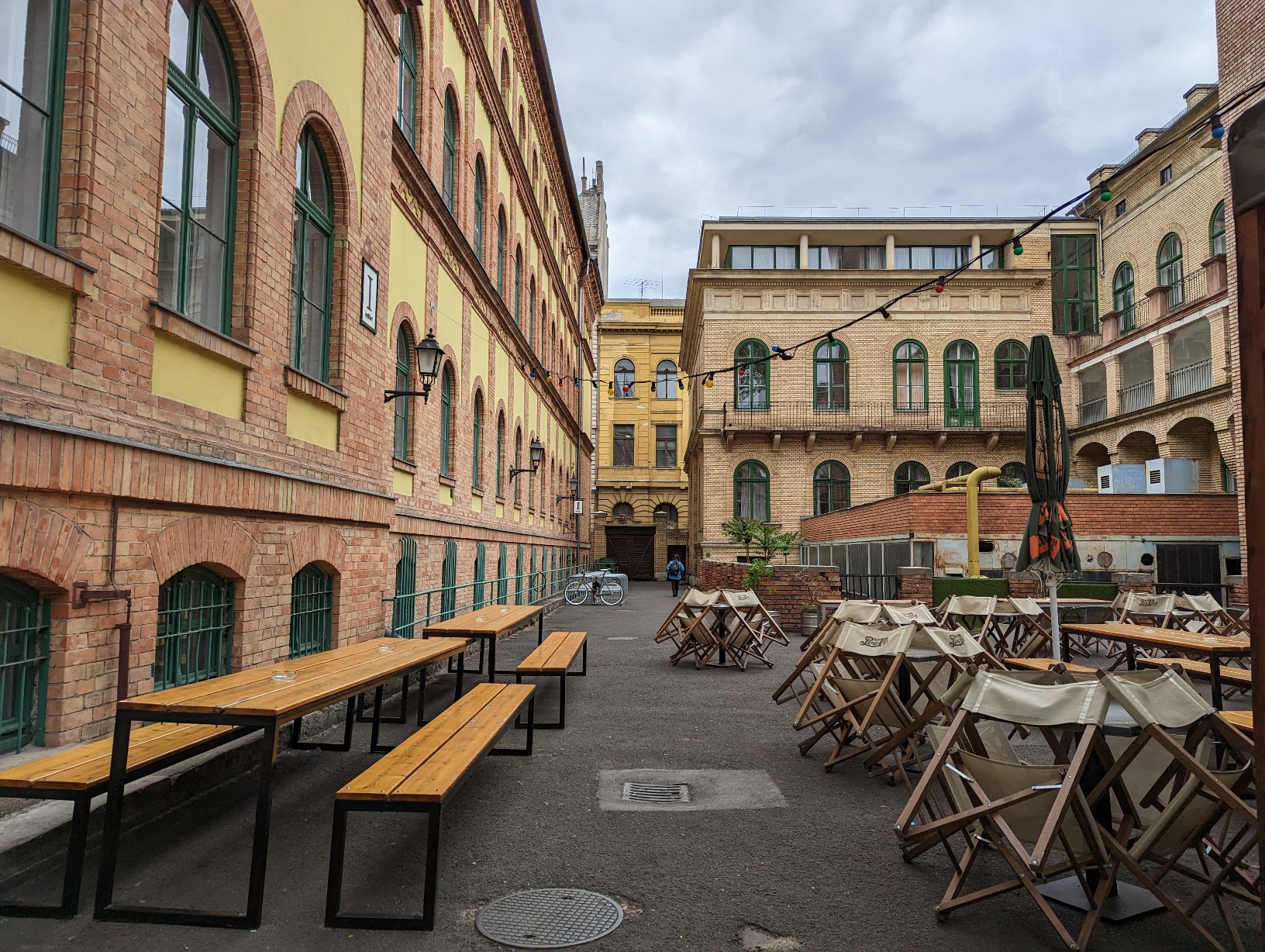
Athens to Edinburgh overland 1

In early 2023, I made a vow not to fly unless it’s an emergency, not for pleasure nor work, and so I made my expeditions back and forth between Scotland and Greece overland. The first took 10 days, from Athens to Edinburgh, because I broke my journey many times to give Shiatsu and meet friends and family. I took the overnight bus, first to Budapest via Belgrade, then I travelled on to Berlin and The Hague (also by bus), Hook of Holland (tram), Harwich (ferry), London (train), and finally home (train).

I announced my potential route in advance on social media, asking if anyone wanted to do a Shiatsu-hospitality swap. The responses and invitations that I received resulted in an elongated trip; I went off on tangents and saw places I would not have visited otherwise. It meant that I didn’t get to Bratislava or Prague as I’d thought I might, but this collaborative approach to planning allowed for the unexpected, and was a way of letting go of a set itinerary. Along the way I made new friendships and re-newed others, gave gentle, therapeutic touch, and much more besides.

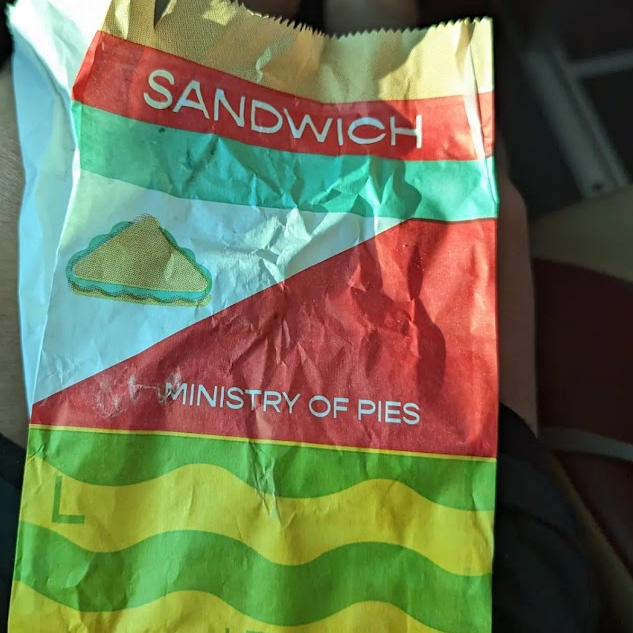
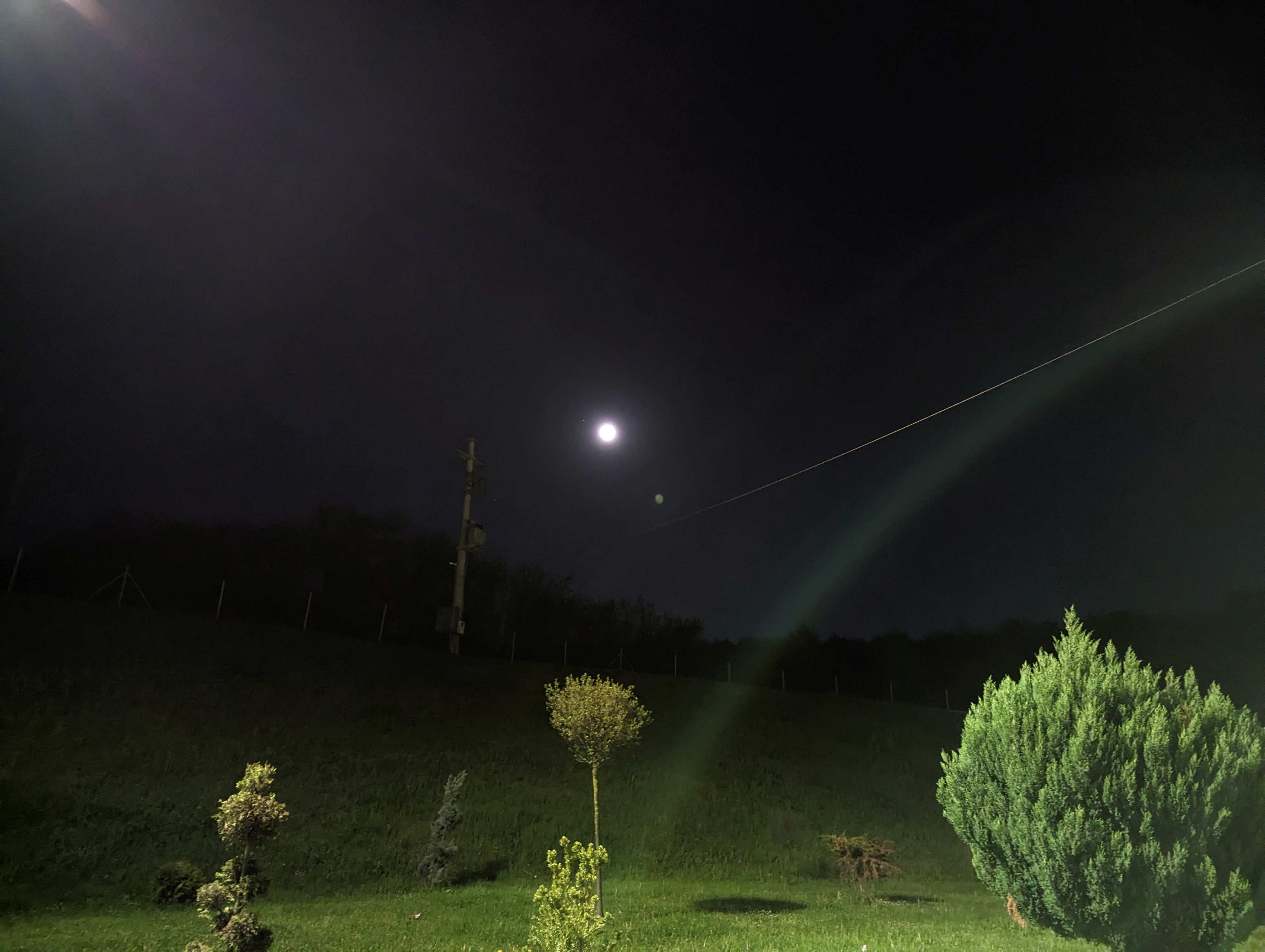
Travelling overland is so very different from flying: These were journeys of paths and mountains which were seen, but not walked. Of borders and boundaries, and The Ministry of Pies. Of the full moon at night and in the early morning. Of towers and rivers – fast glimpsed through windows. They were about fresh air in car parks after miles on the road, a 3am toilet break, new currencies each time I woke, and ‘thank you’s in different languages. Of waiting at yet another border where I whiled away time reading Margaret Forster’s biography of Elizabeth Barrett Browning in the sun (borrowed from one of those mini-book-swap boxes that can be found in public parks all over Europe and the UK, and returned at the next one, in the next city). Of T’ai chi and walking under trees dripping with rain as passports were checked, and of motorways and forests and wheels on solid ground.

Athens to Budapest
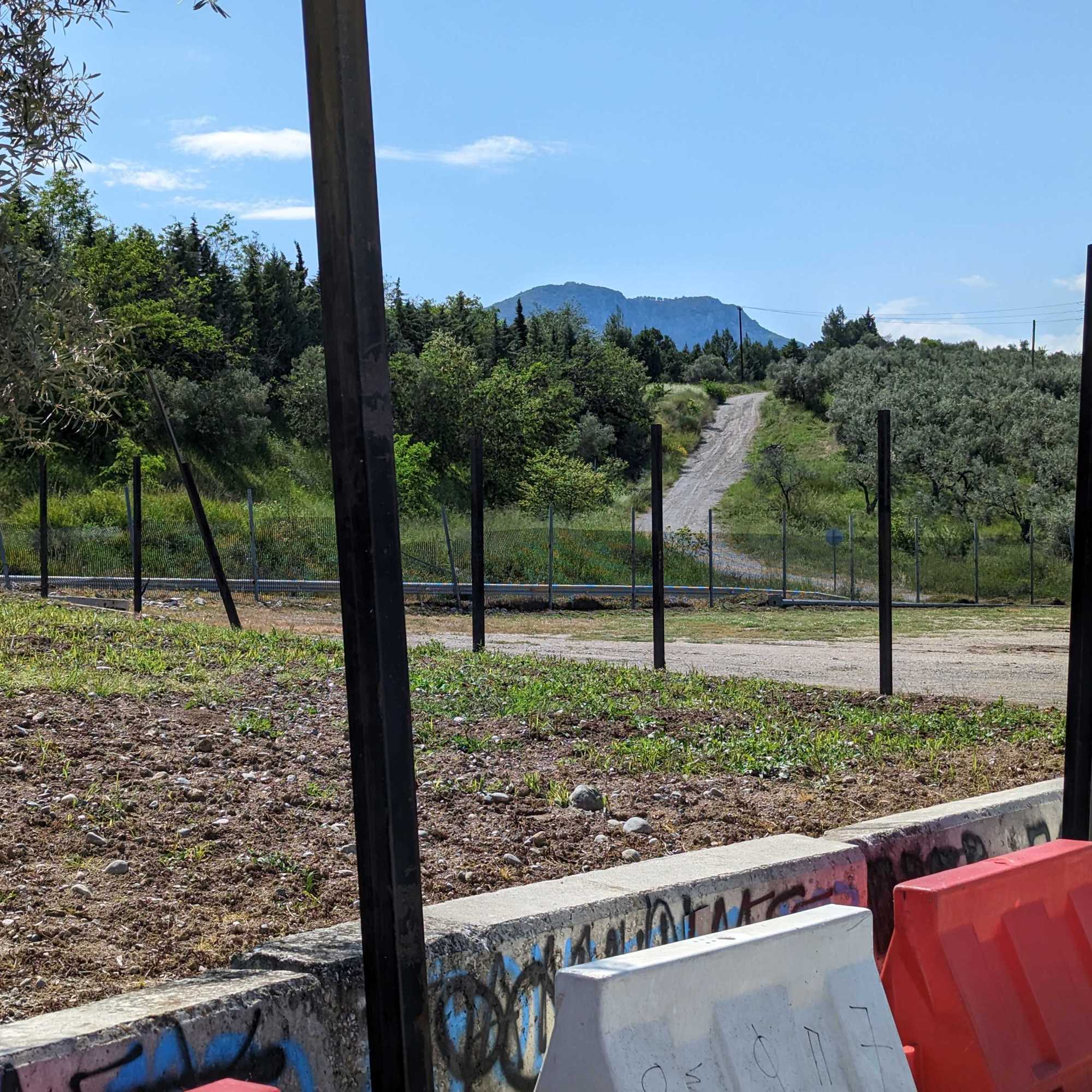
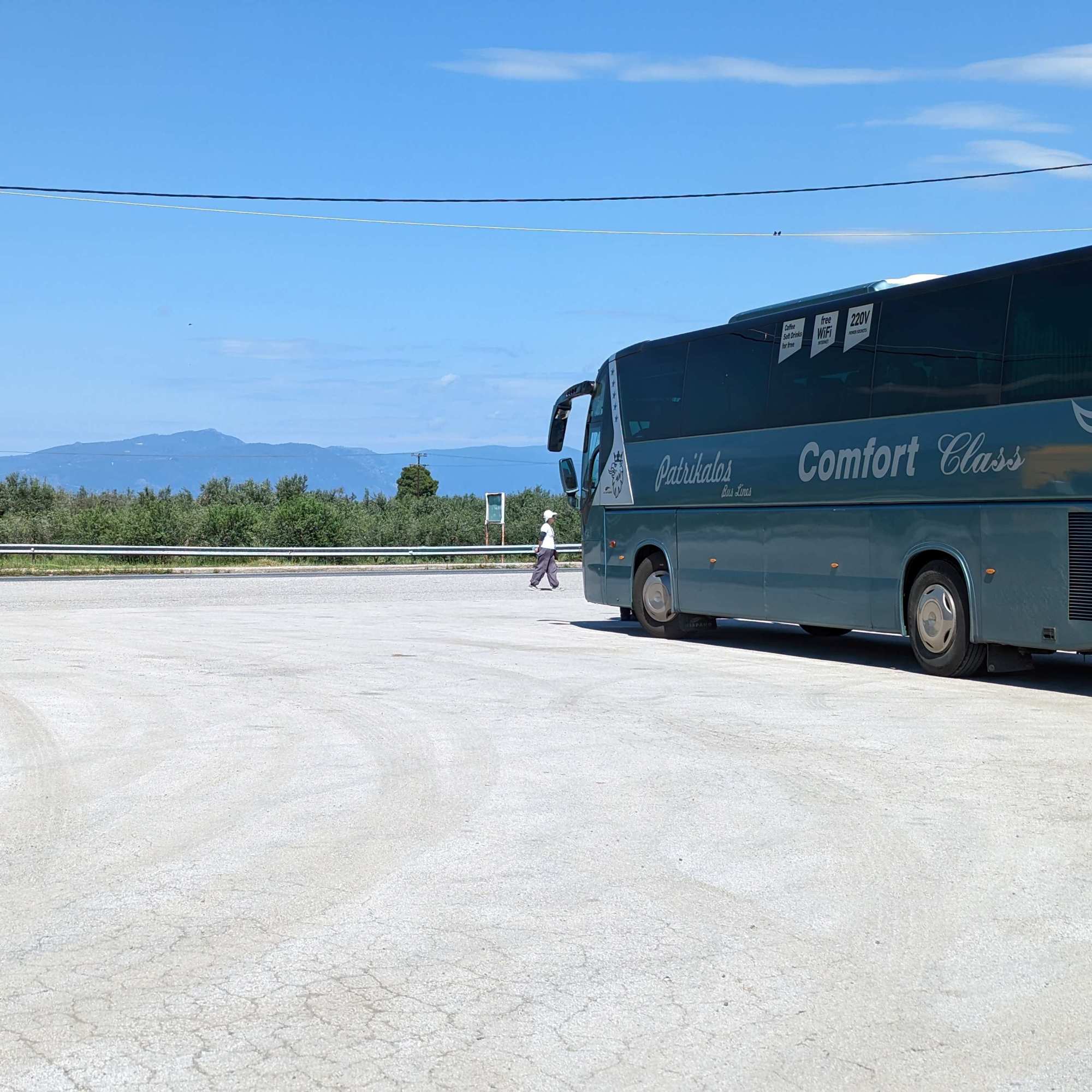
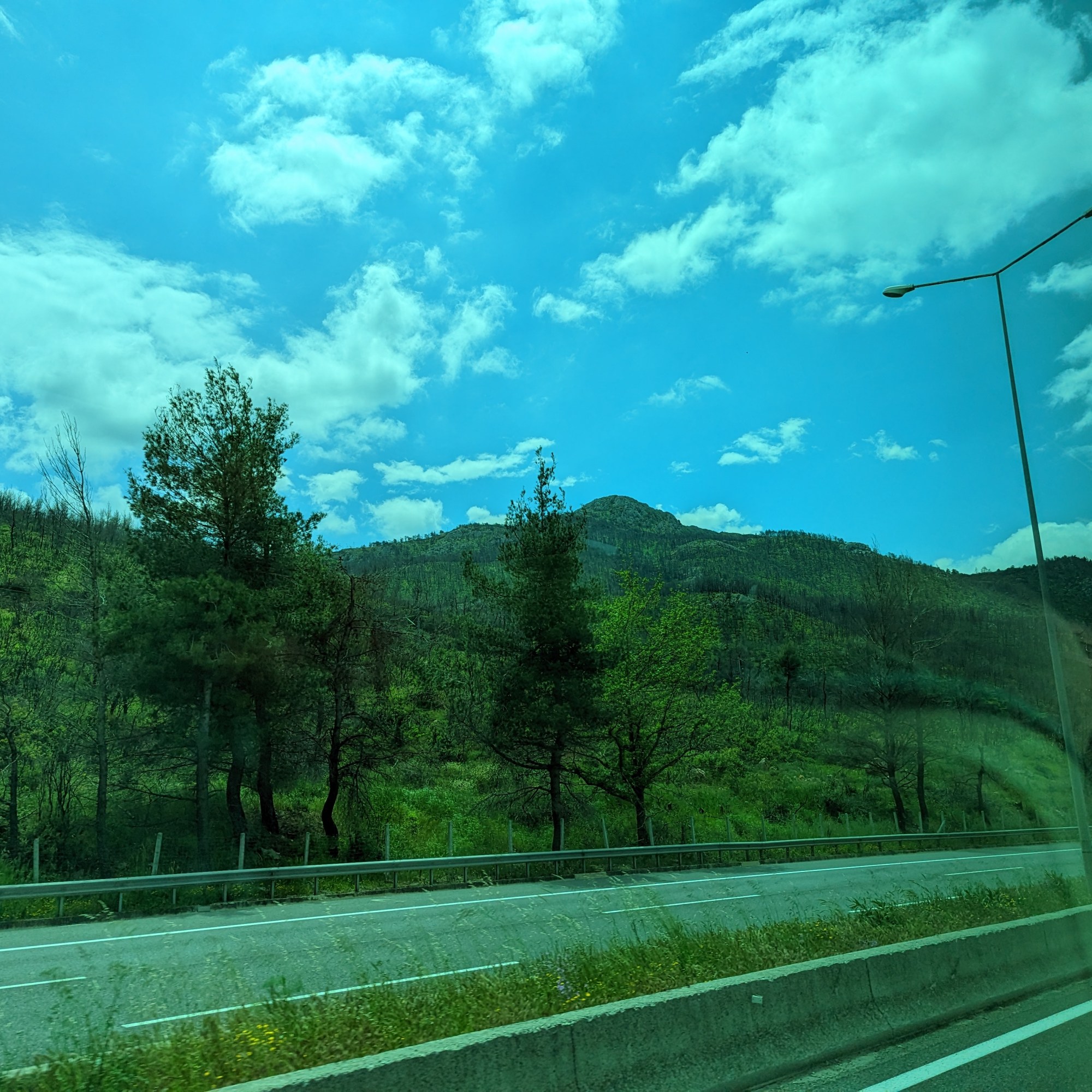
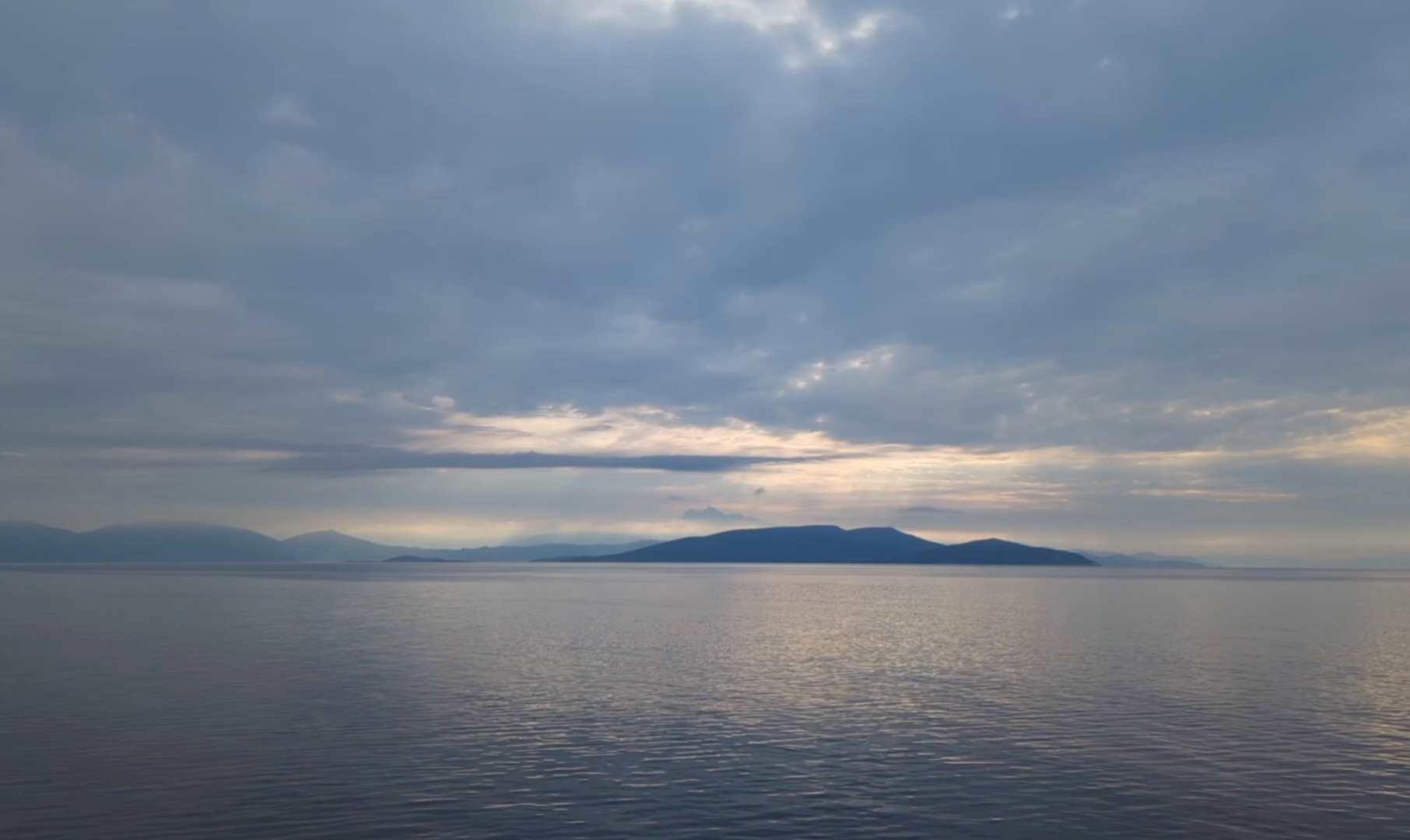
I left Athens at 12.30pm, went through Kifisia around 1.30pm, and the bus made toilet stops at Agios Konstantinos at 3.40pm, and passed by Mount Ossa (south of Kozani) around 6.15pm.
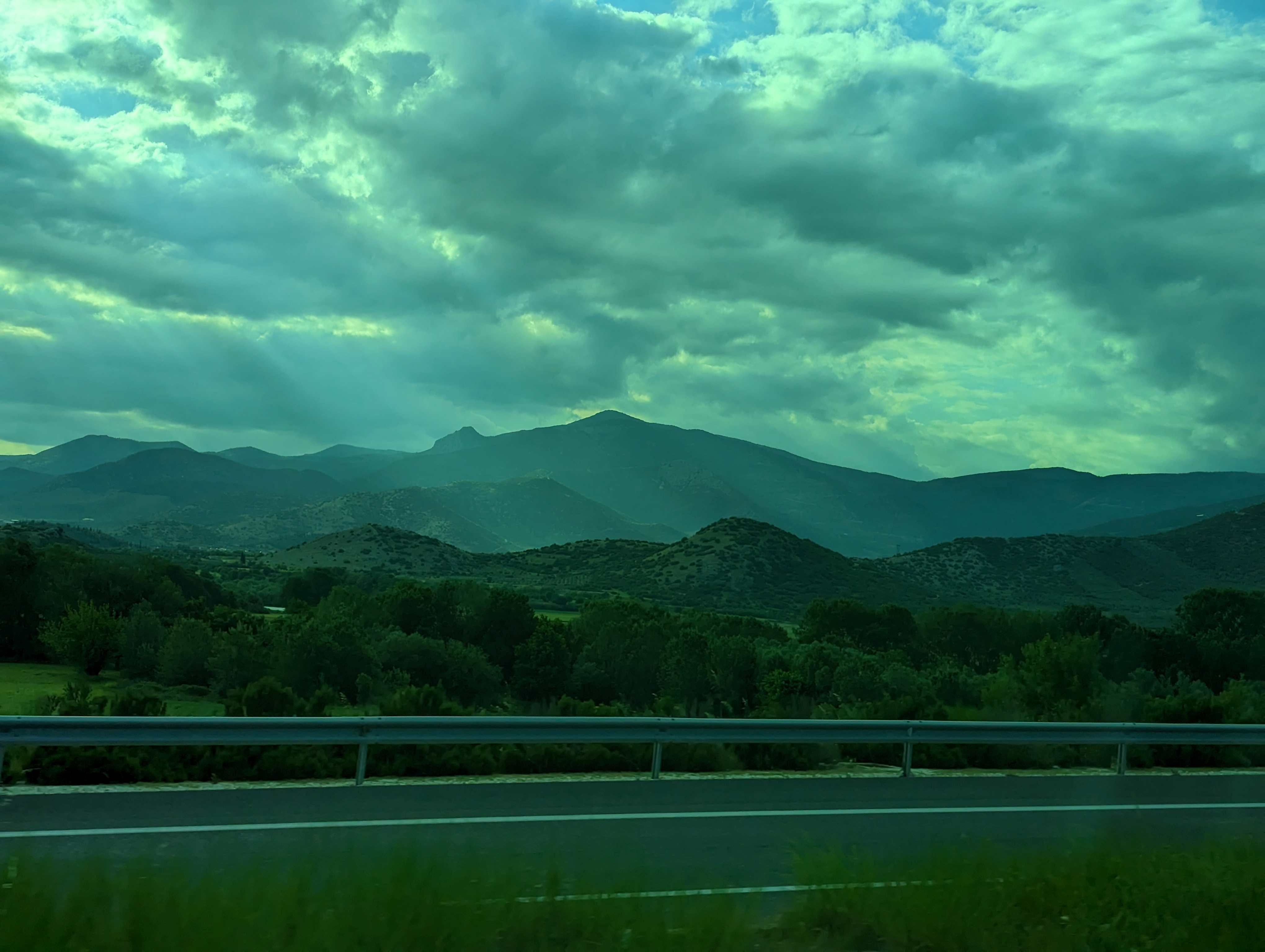
Mount Ossa in the distance
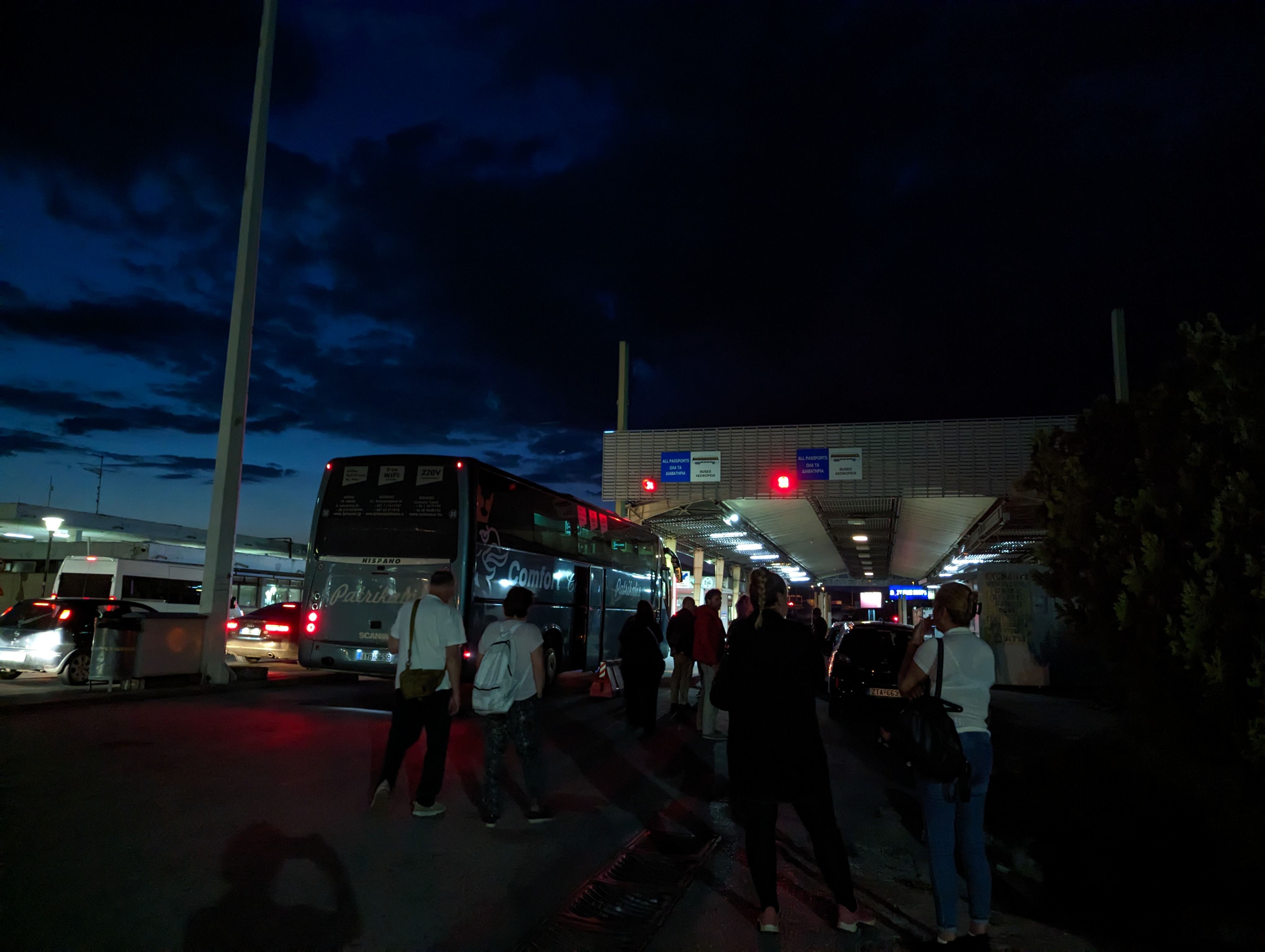
The Greek – North Macedonian border (Tsoiliades) 8.15pm
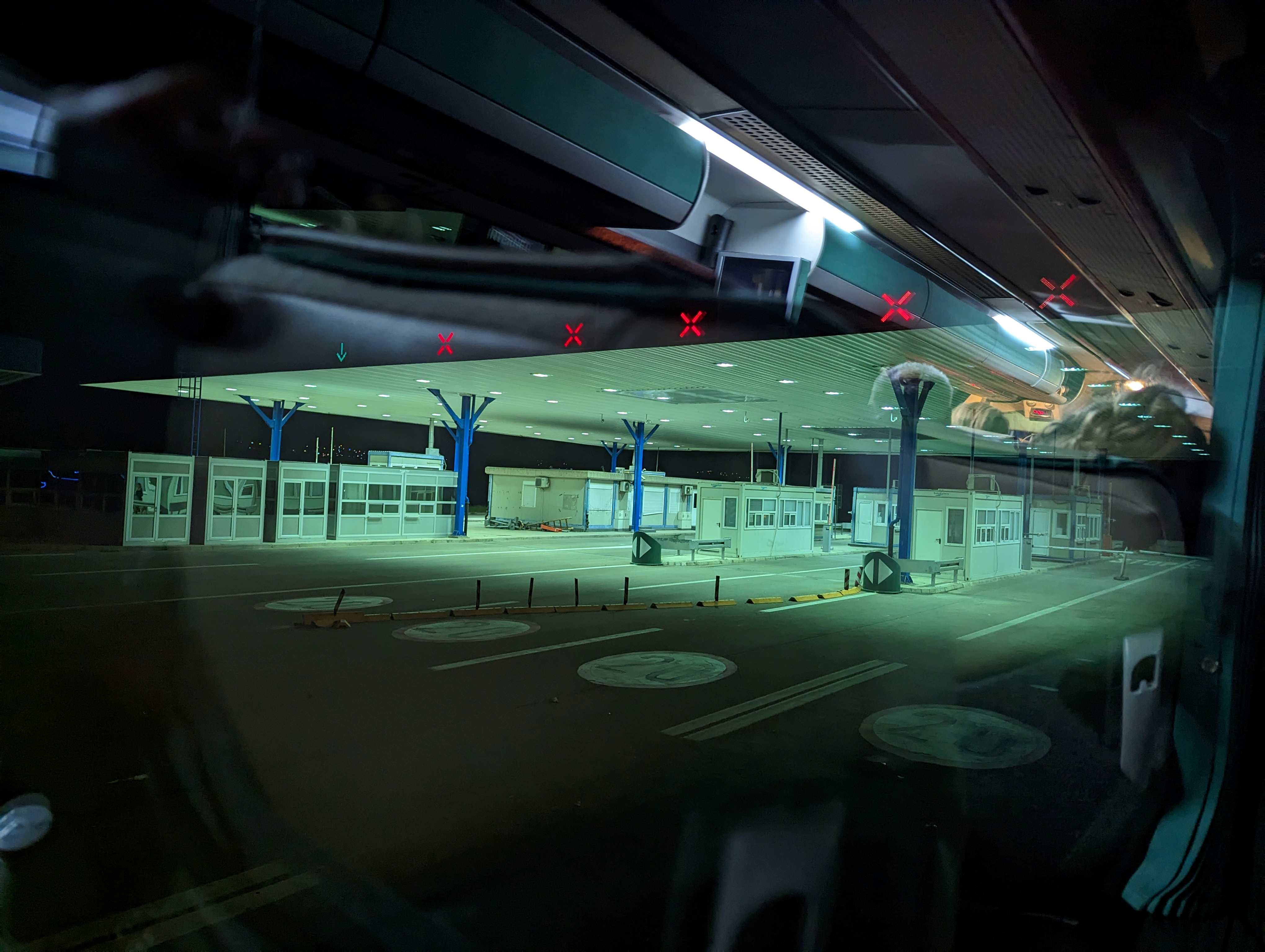
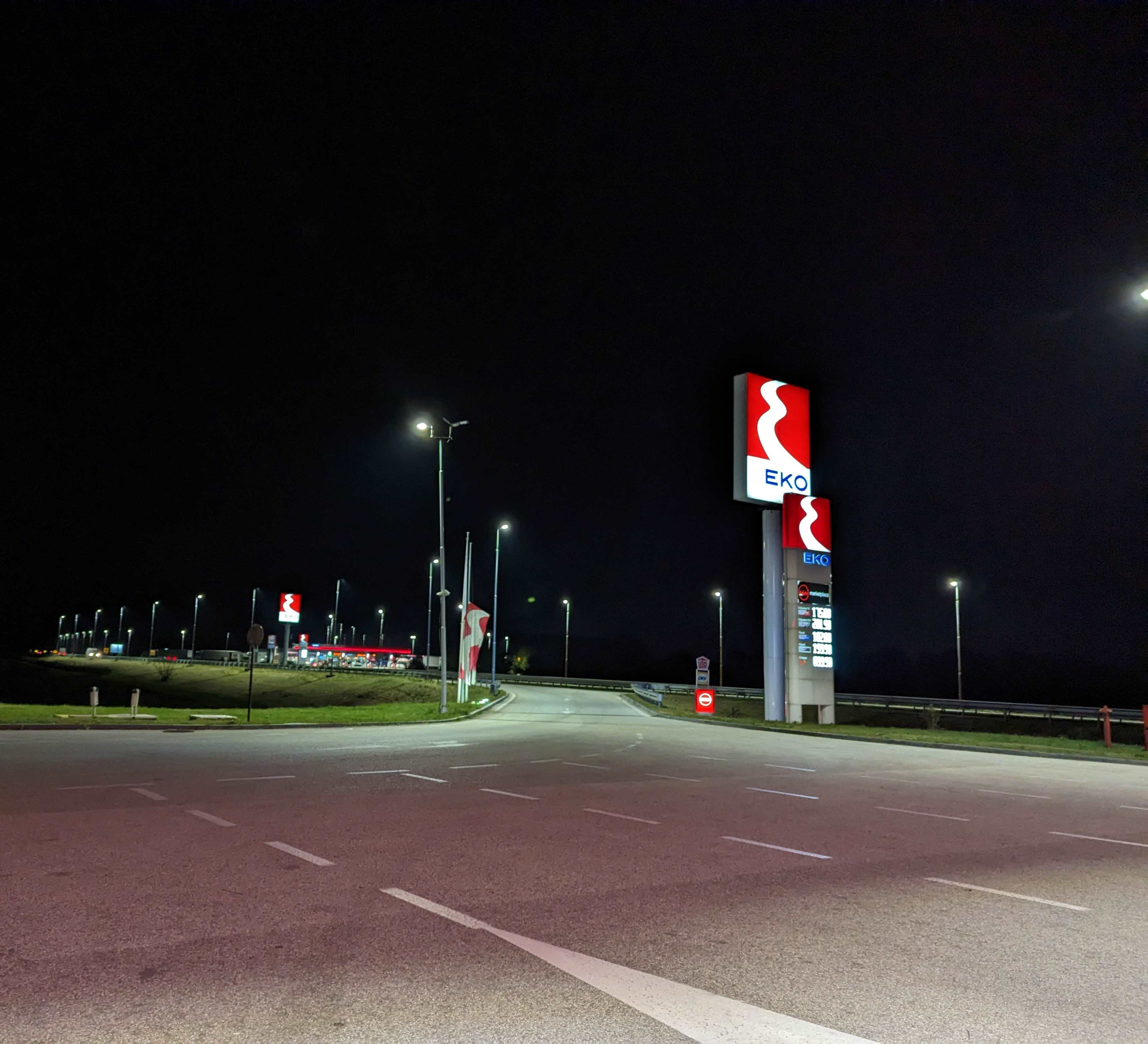
The North Macedonia – Serbian border (Preševo) 11.45pm
Borovac, Serbia 12.30am

Even nearer the North Macedonian – Serbian border at 3.30am

Tips: take a rolled-up sleeping bag and a blow-up pillow, stock up on food and water before you get on, don’t chose a seat near the toilet (if you have a choice), and always get out to stretch your legs and breathe deeply when possible

By 5.30am, we were in Belgrade.

Belgrade to Budapest: six hours
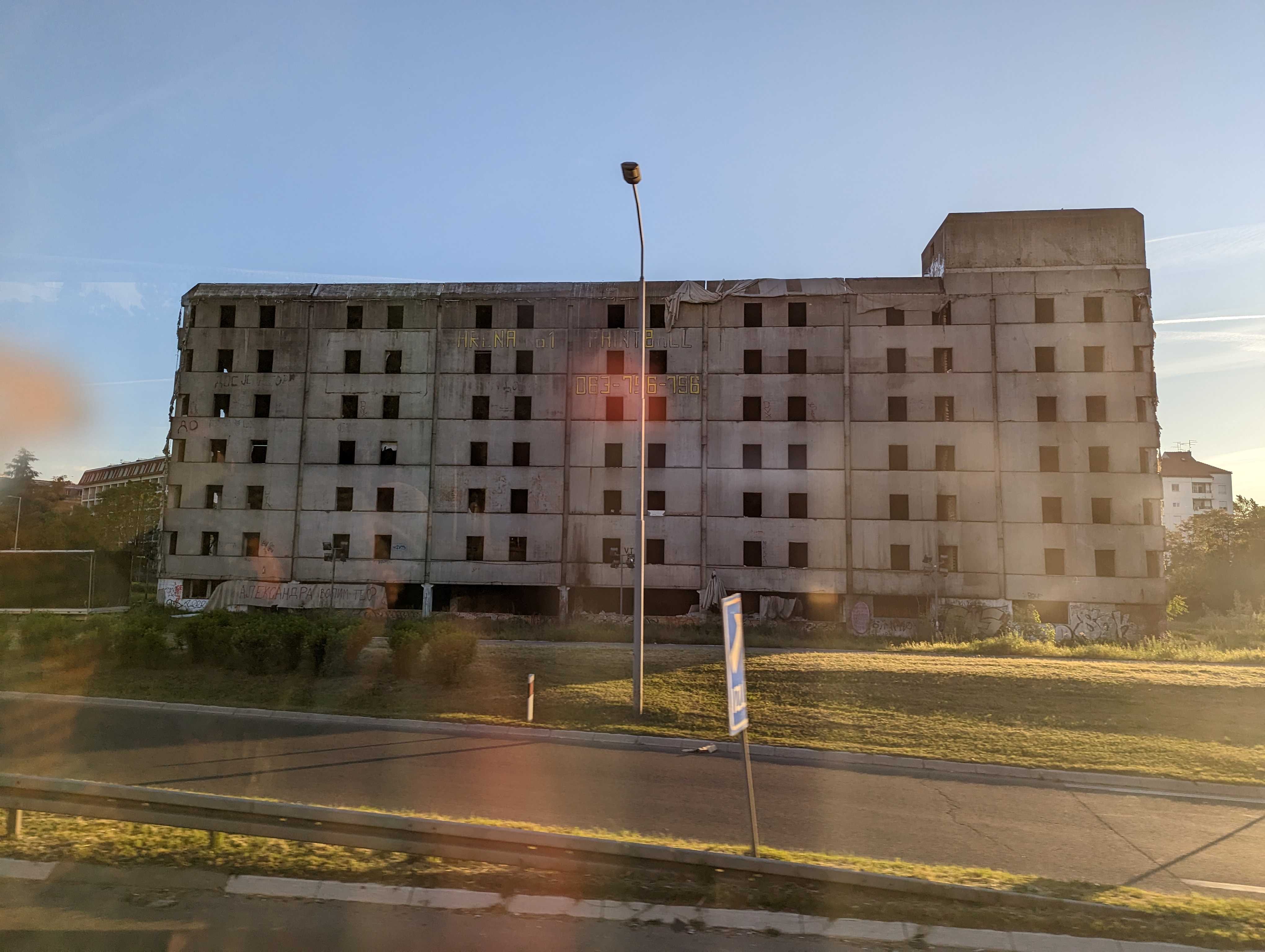
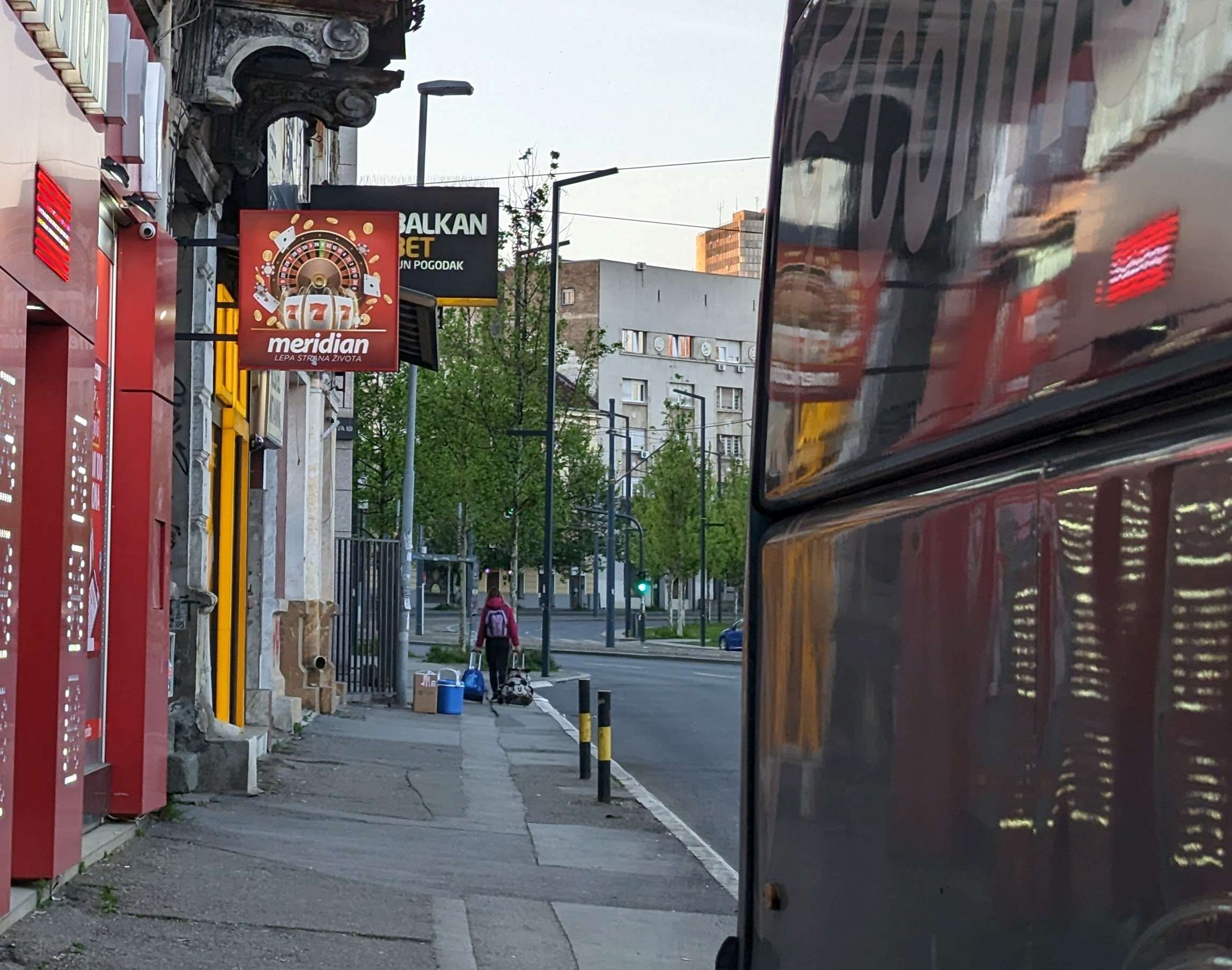
I decided that I must be ‘in the right place’ as our Belgrade stop where people and many boxes left the bus and boarded was called ‘Meridian’ (a key word in Shiatsu denoting the channels through which we image chi flows)

The worst thing about the journey was the smoking – both driver and passengers. I asked them if it was possible to stop and, reluctantly, there was a short hiaitus for the air to clear. It’s not always like this.
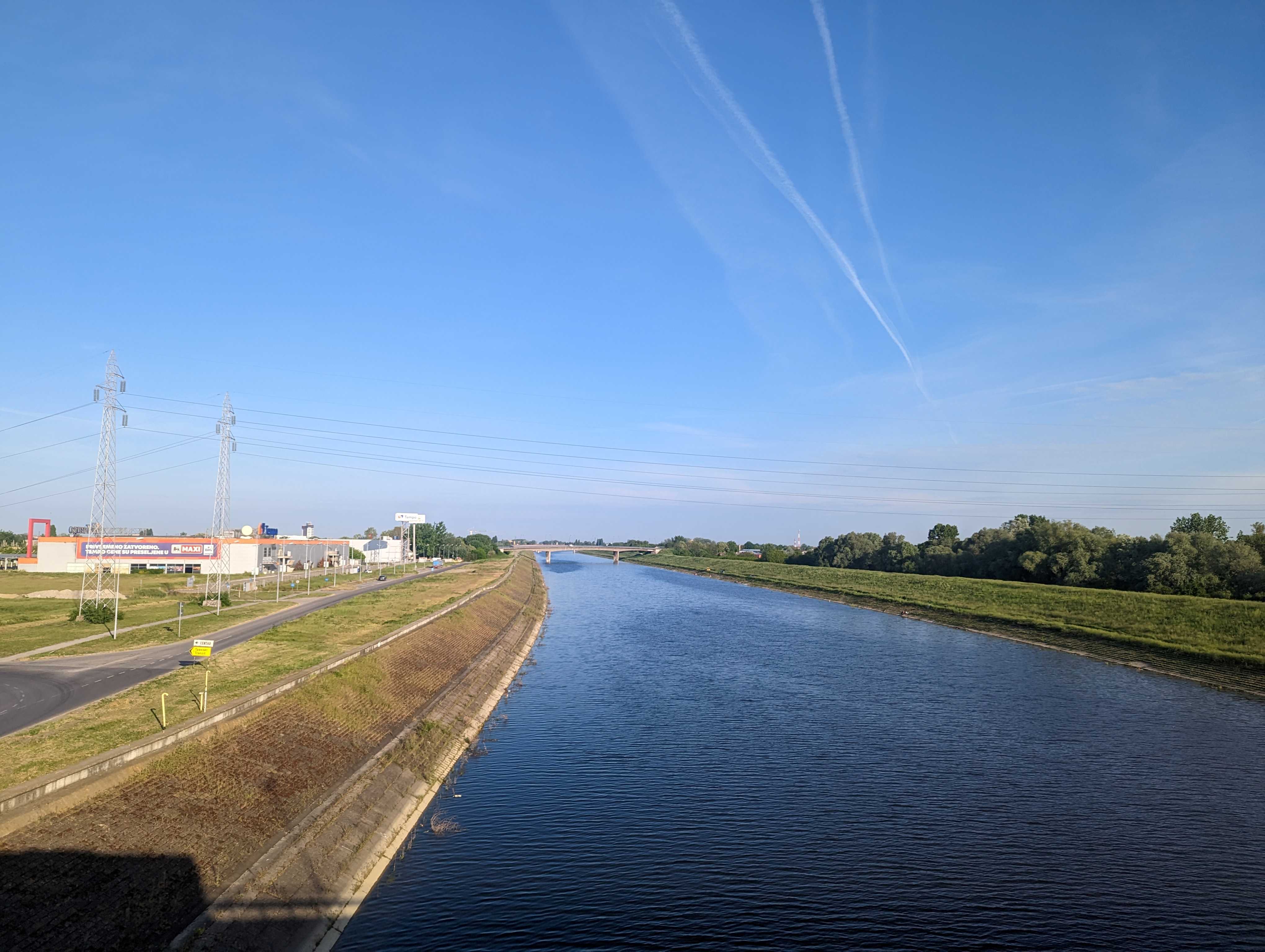
River Danube, Novi Sad, Serbia
Terra Travel bus company
Supska, Serbia
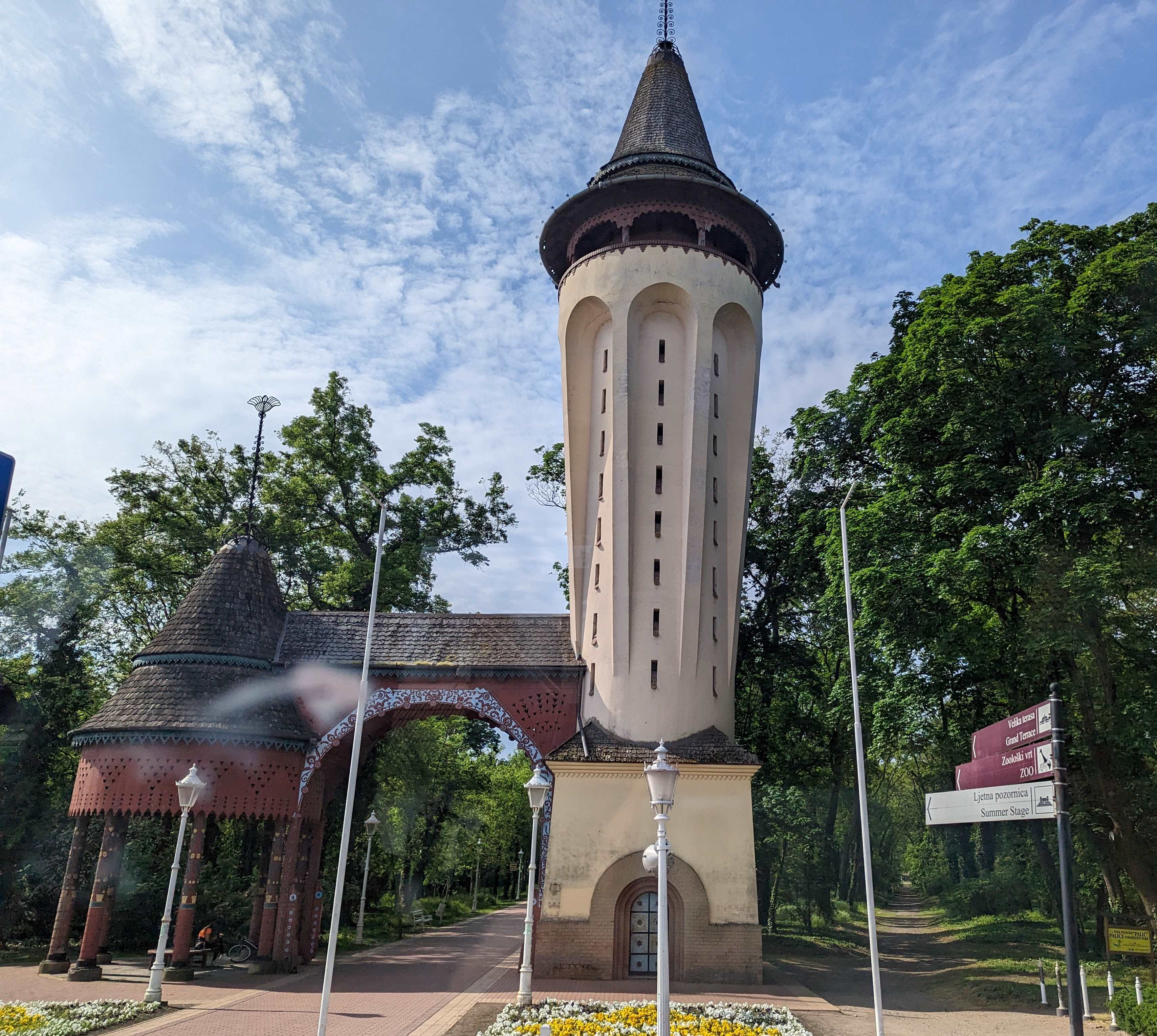
Through Palić, Serbia at 9.30am

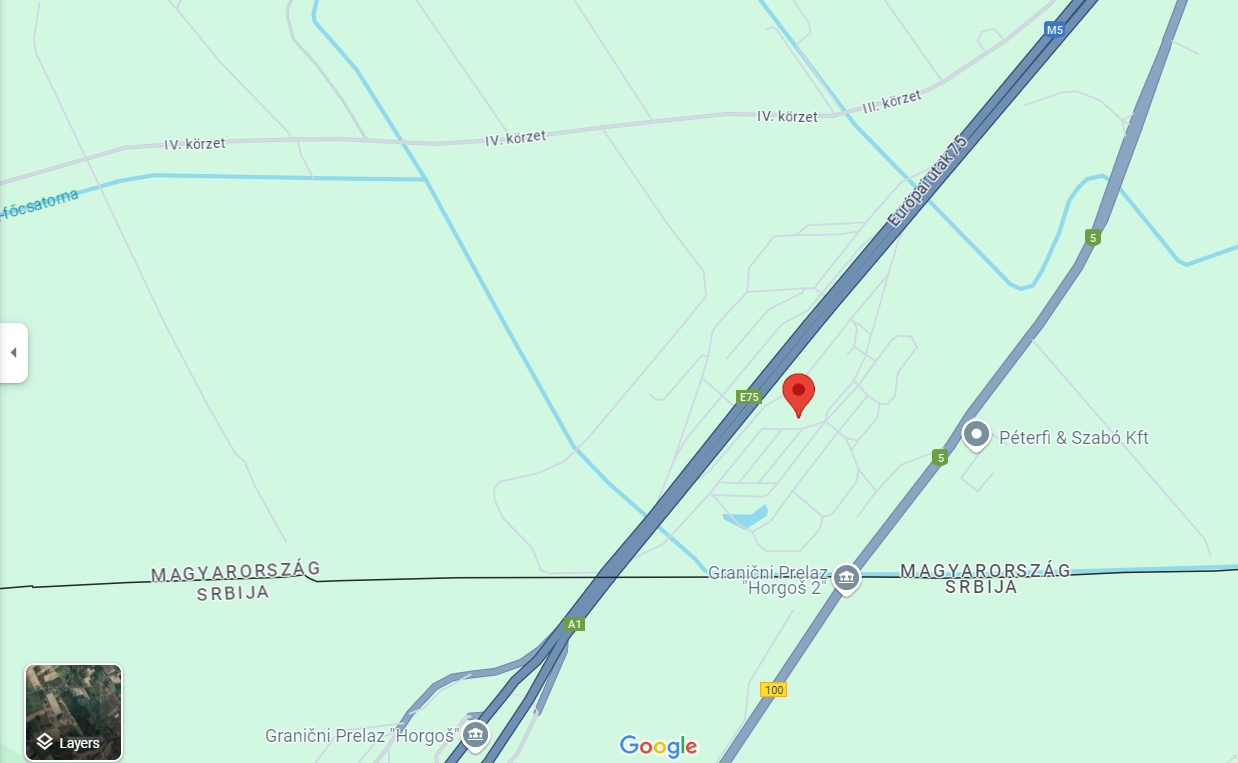
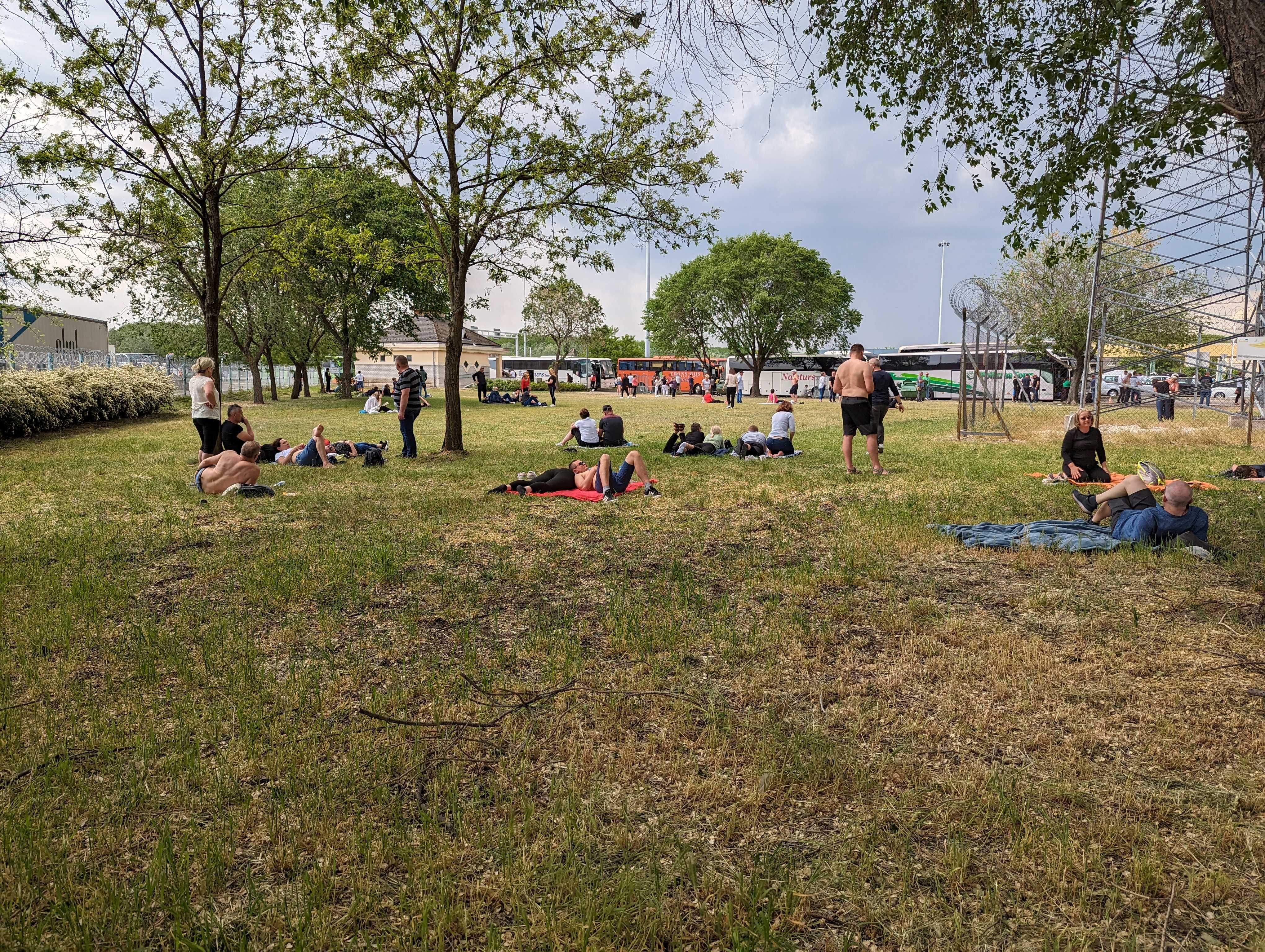
At Röszke, we waited at the border crossing from Serbia to Hungary, one of the 29 Schengan countries, arriving at 10am and staying until 3pm when we finally got moving again. Luckily the sun was shining and we all spread out. I was the only person doing T’ai chi under the trees (it felt good after hours of sitting on a coach), but not the only one meditating.
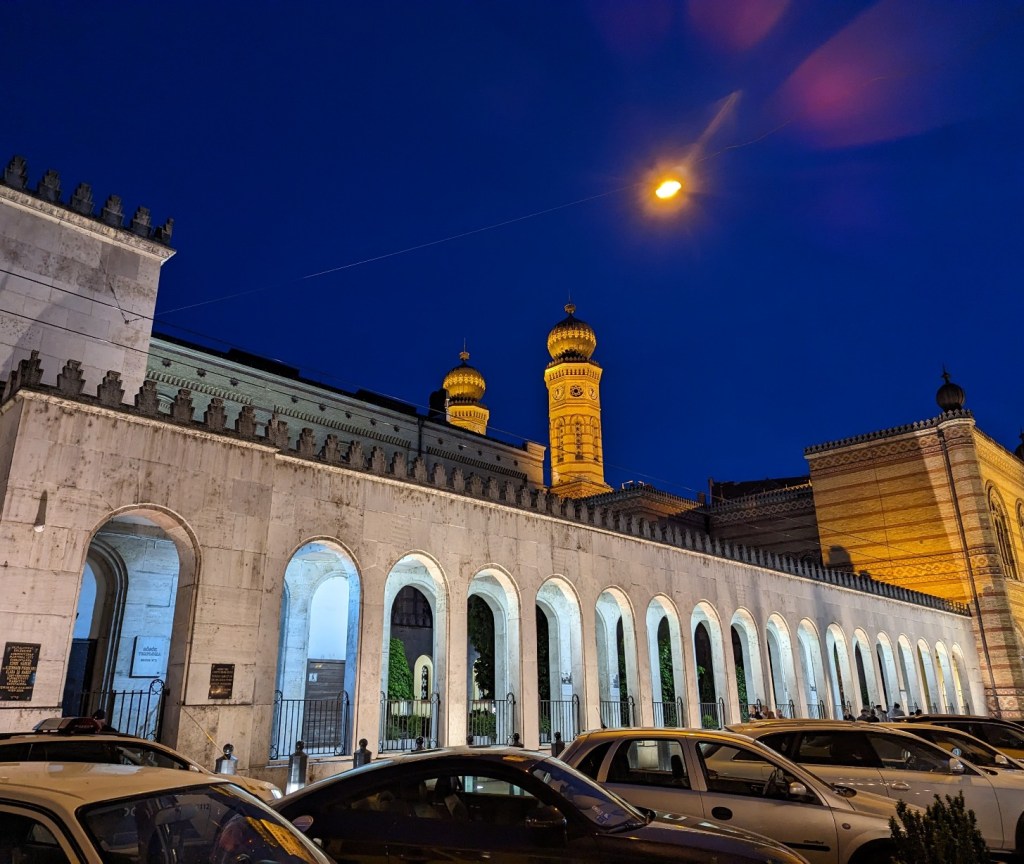
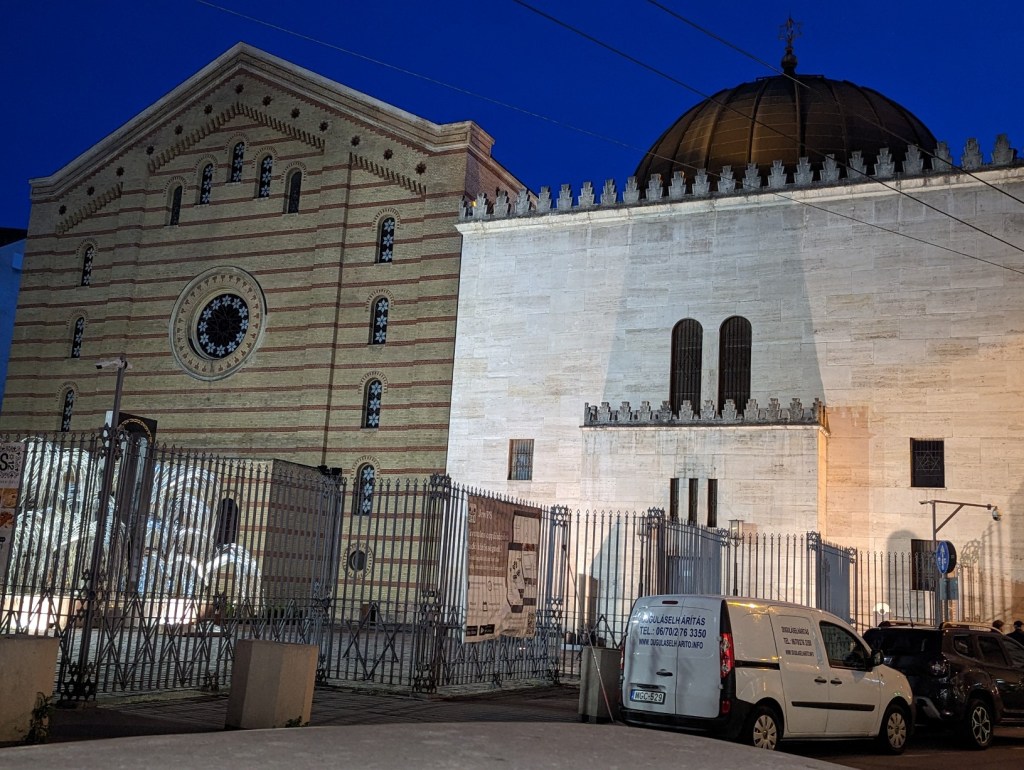
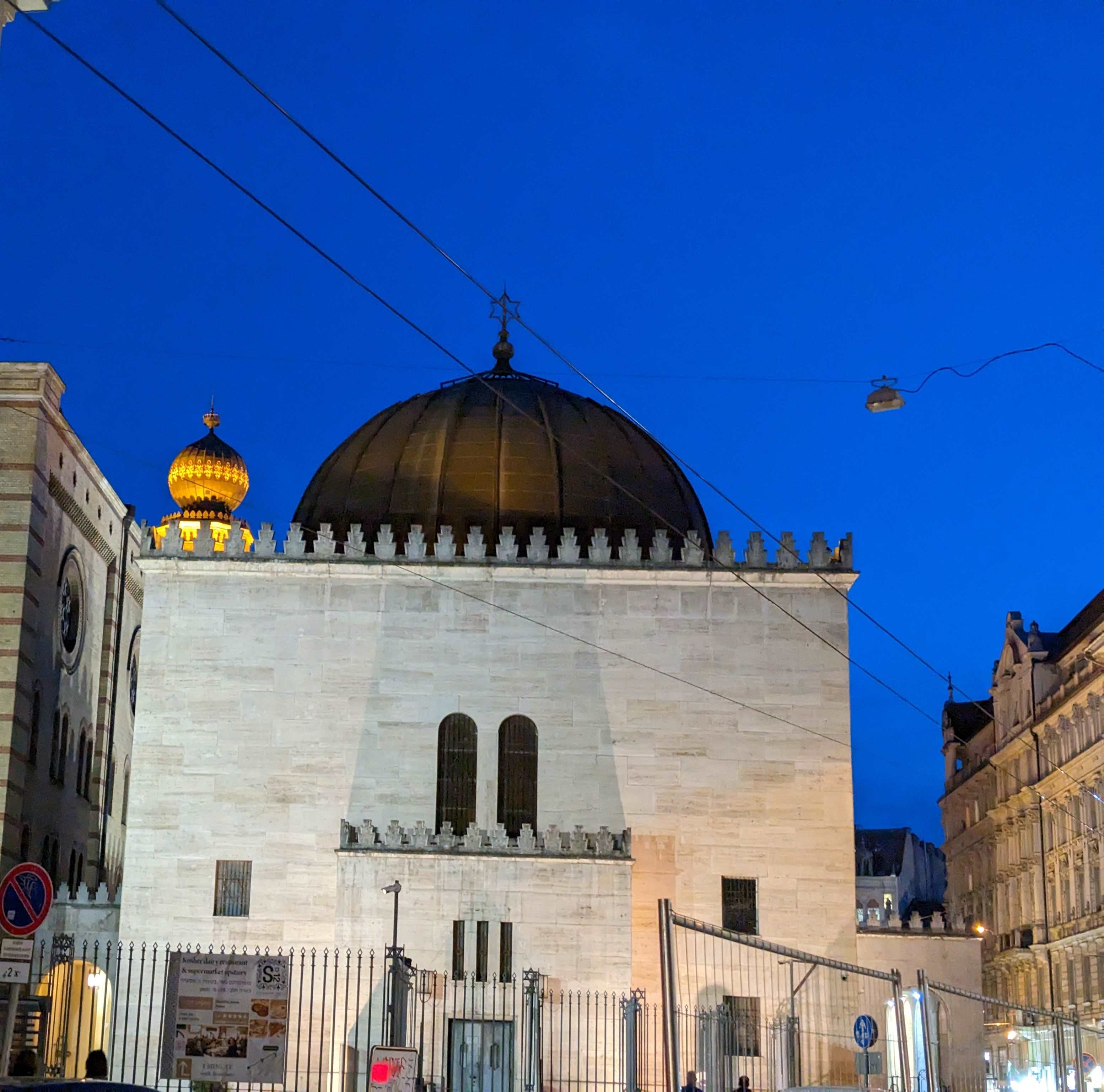
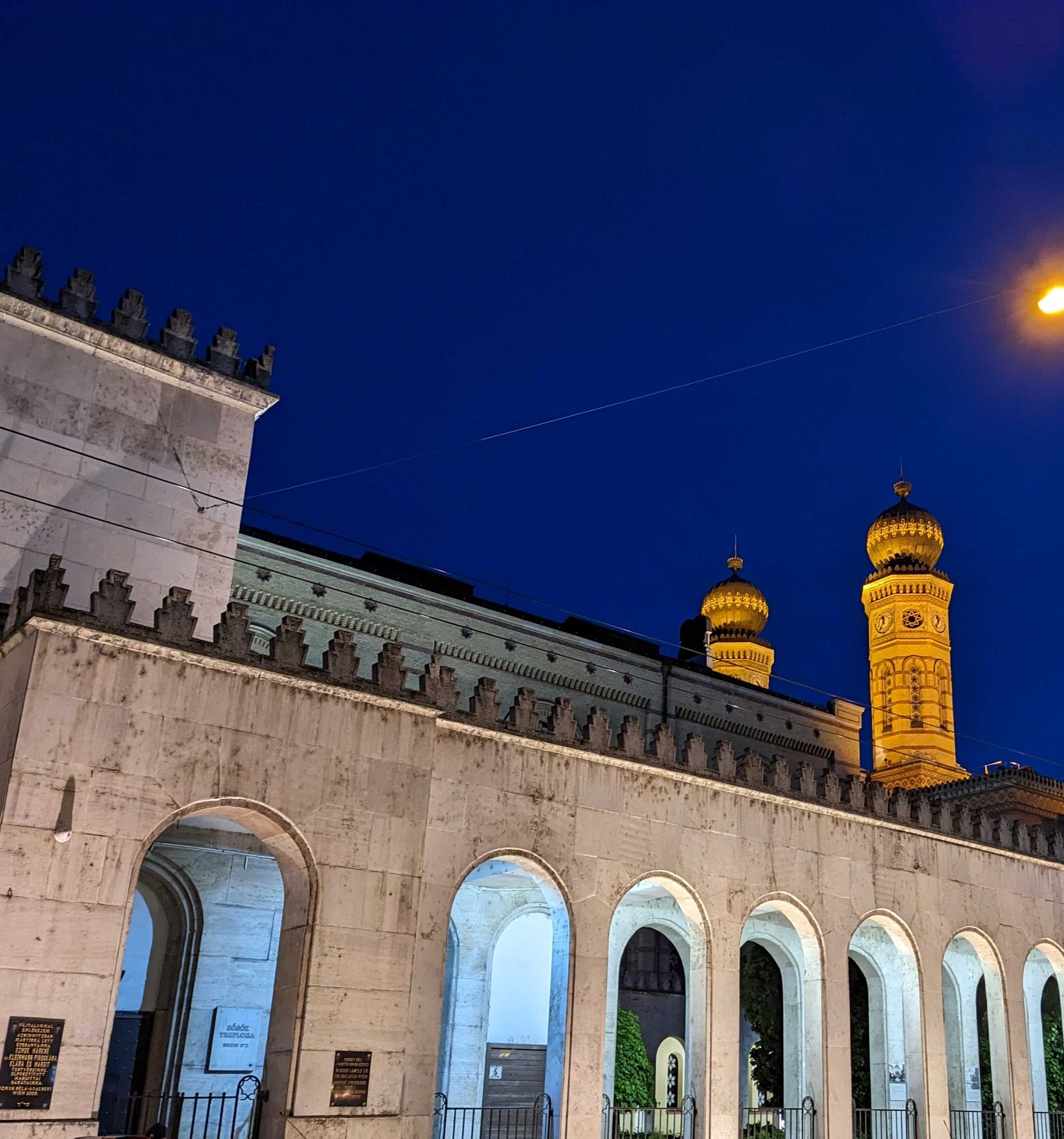
At 5pm, we eventually arrived at Budapest where they use the Hungarian Forint currency (1 HUF = £0.0023). There is much more information about accomodation and things to see via the link above. Below, two photos of the Dohány Street Synagogue from the Jewish Quarter where my hostel was located.
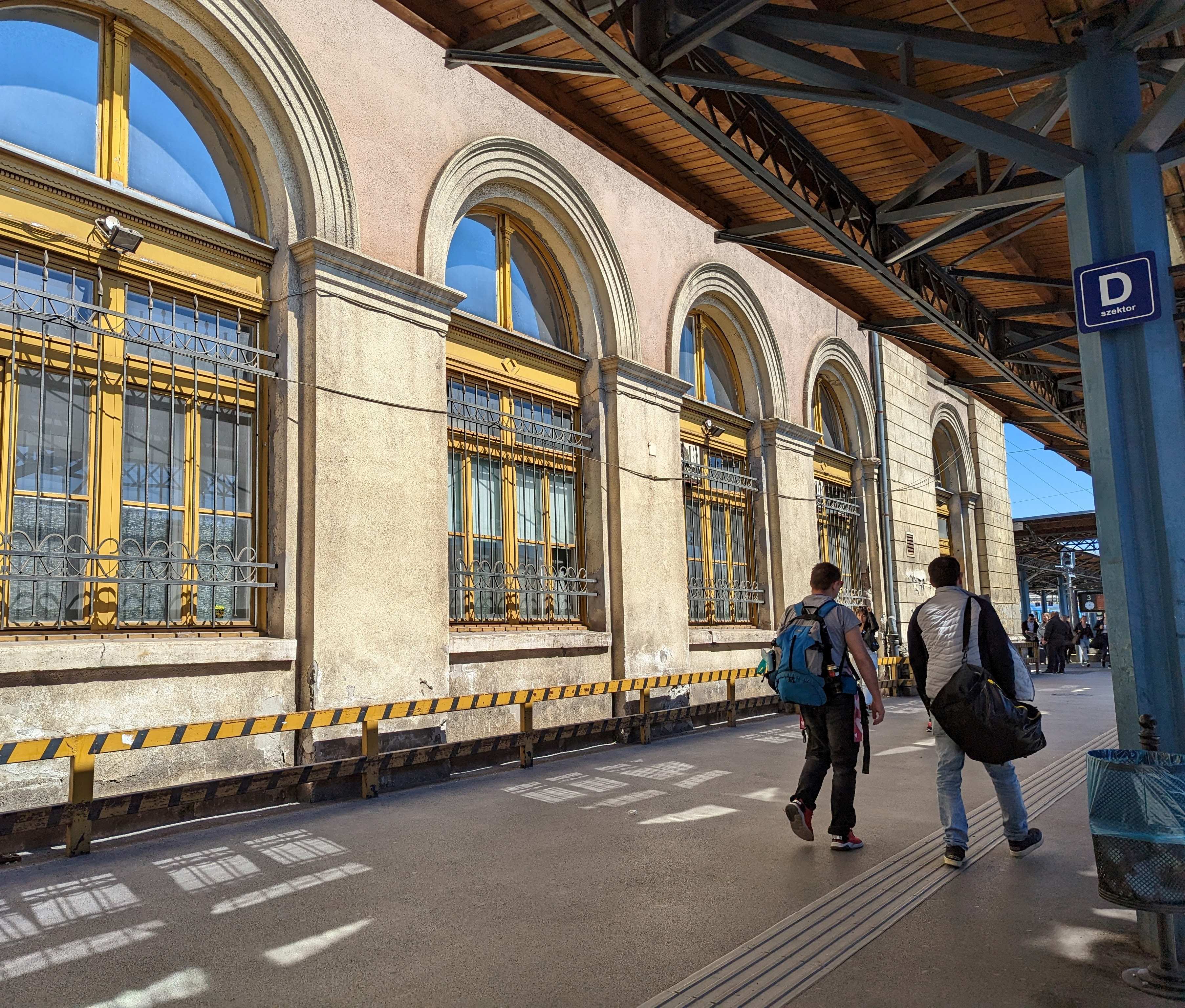
Budapest-Keleti train station
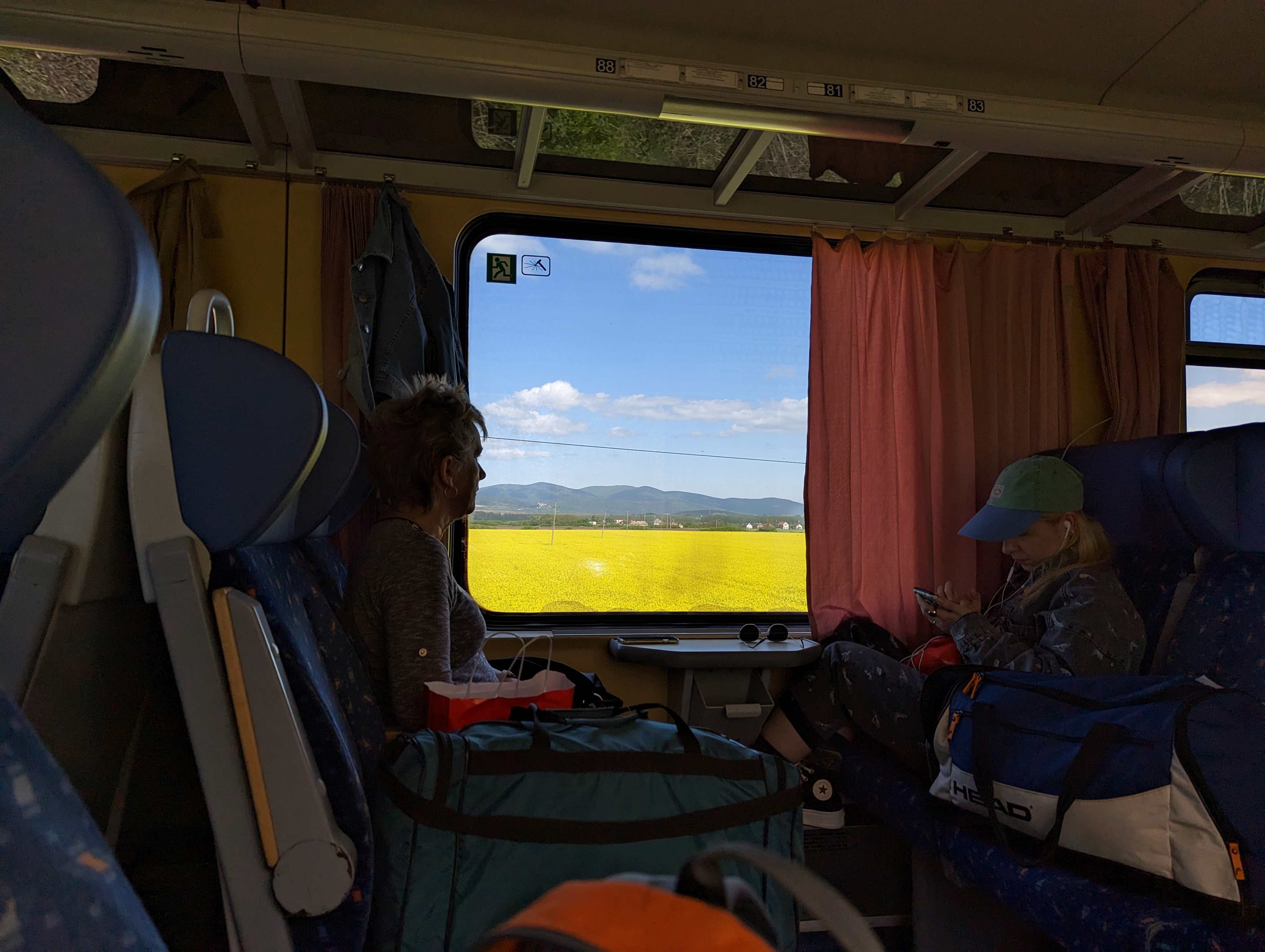
On the way to Slovakia from Hungary

Budapest to Trebišov (east of Kovice) Slovakia

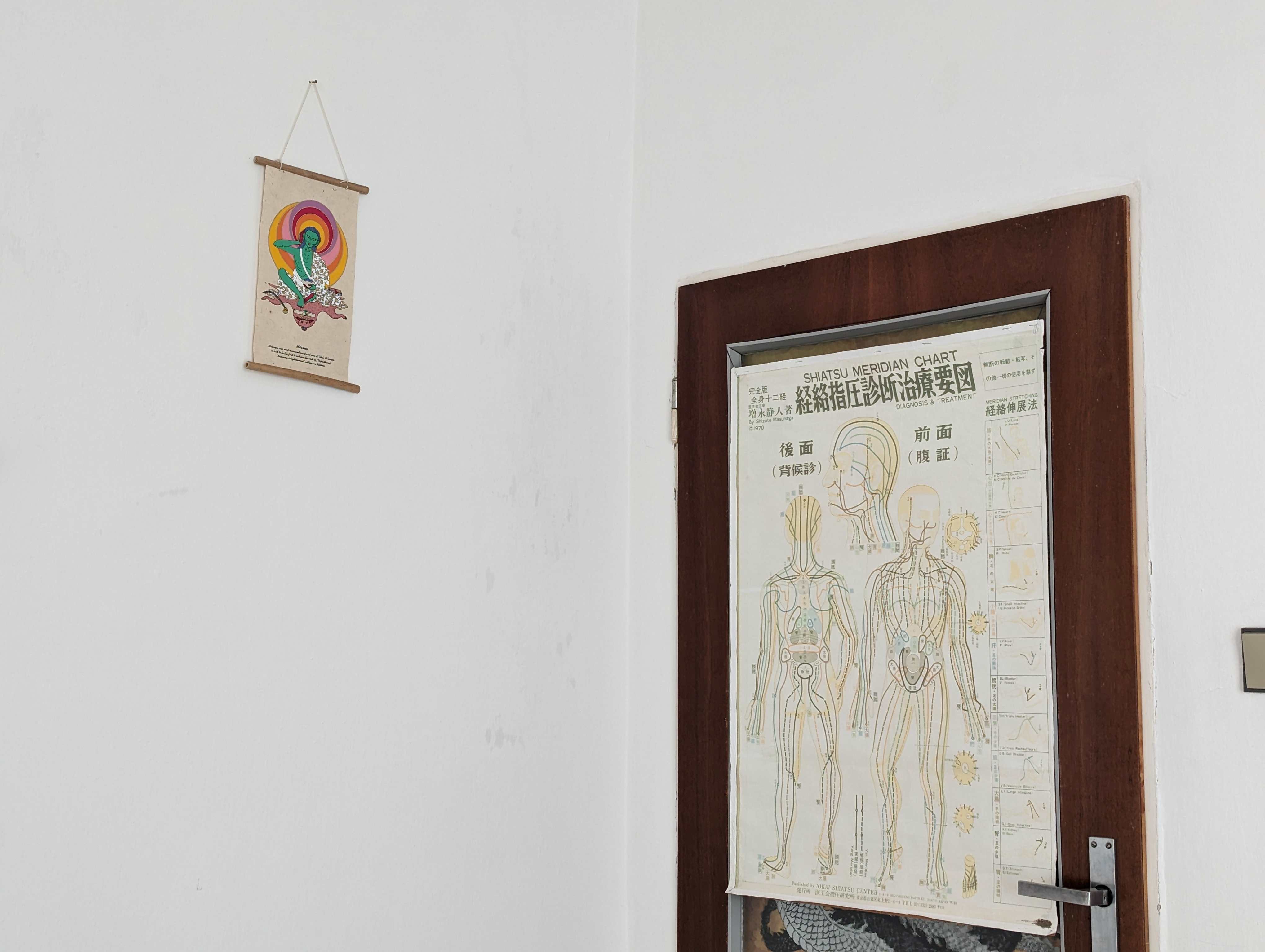
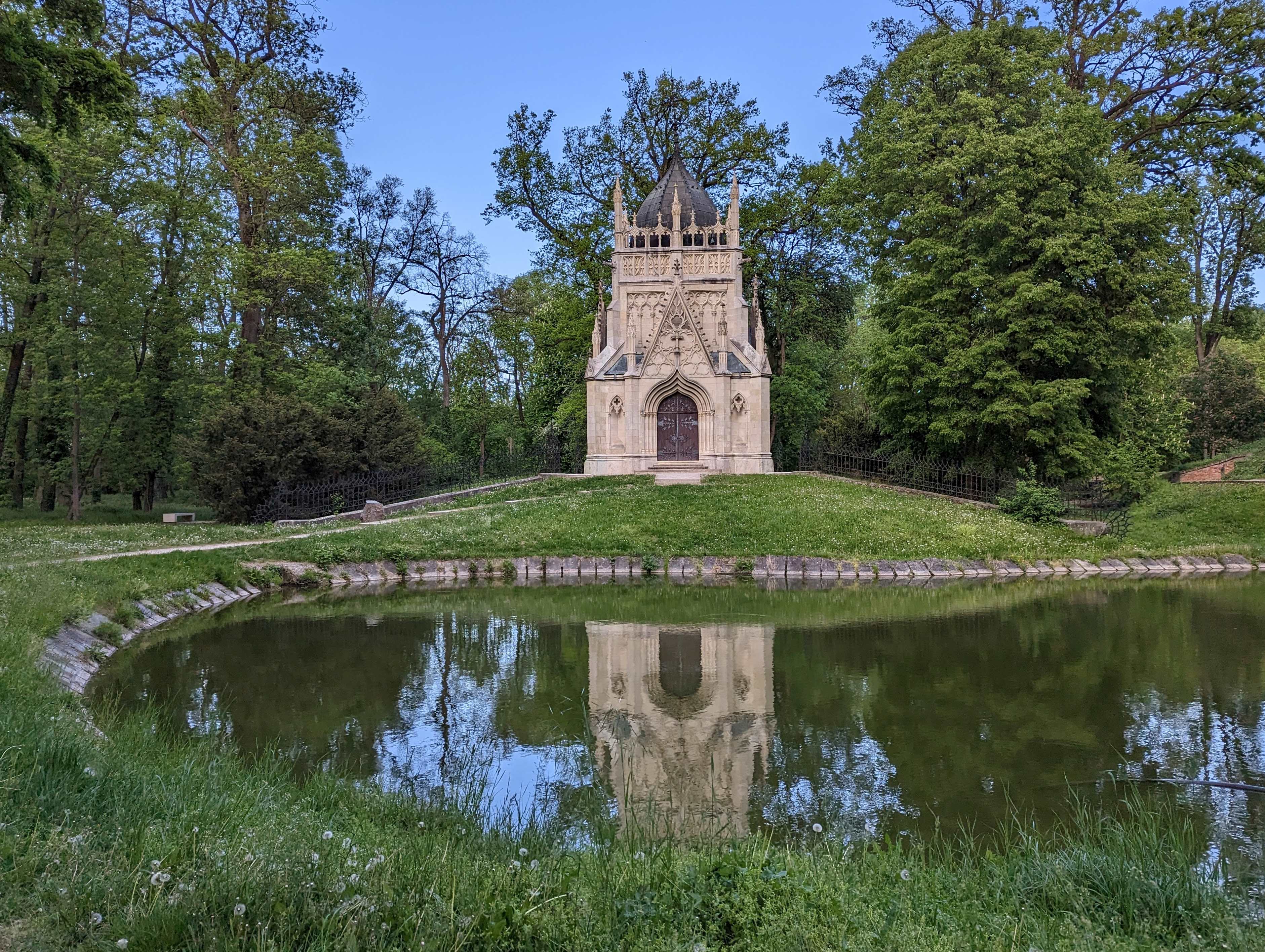
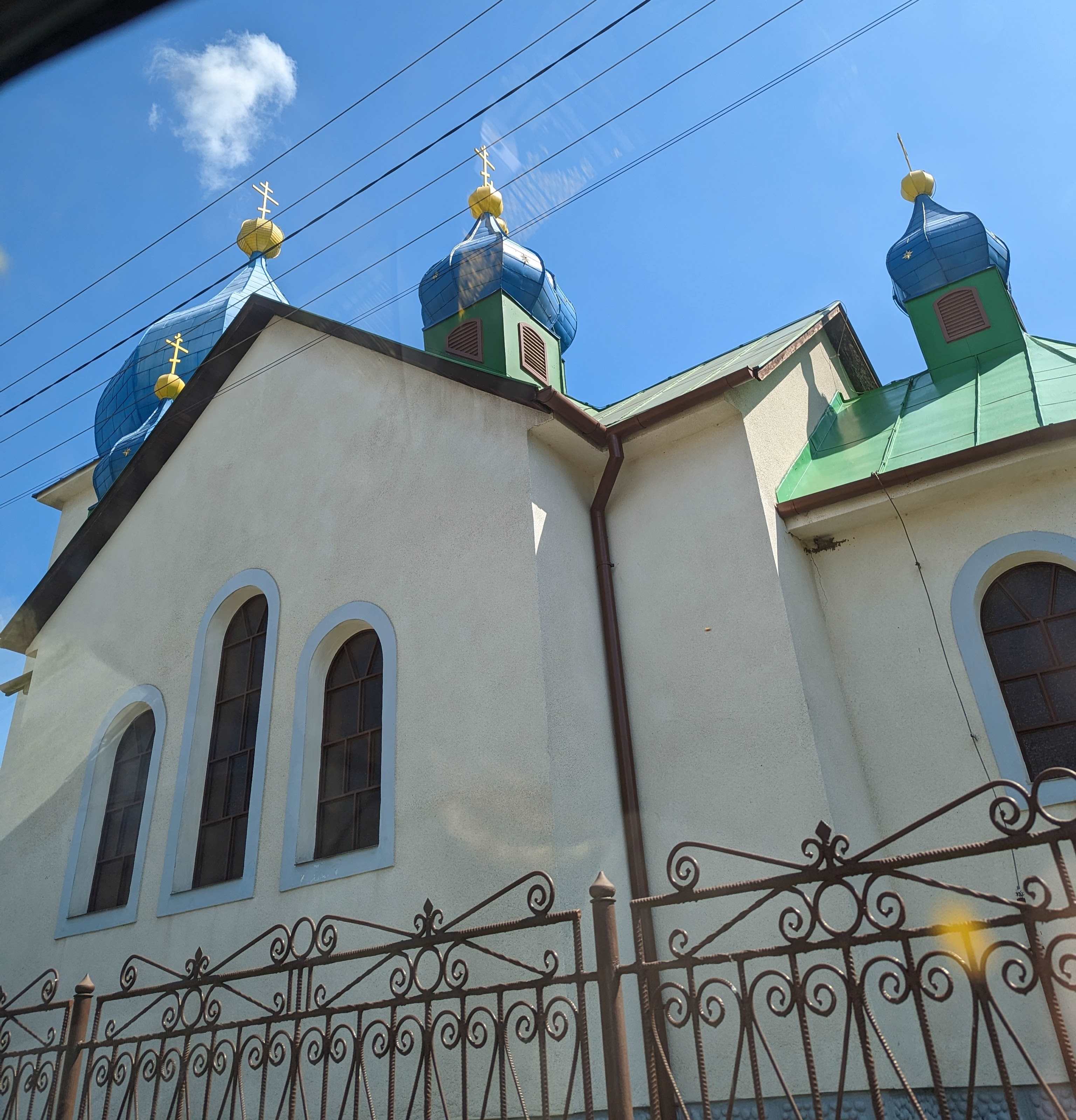
I went to stay with Patrik, one of the Shiatsu School Edinburgh graduates, and his family in Trebišov. They were really hospitable and I enjoyed the Shiatsu exchange, walks and talks we shared. The following three images are: the Milenecká ulička park (top), a traditional church (below left), and a Shiatsu room with a poster showing the Masunaga meridians (below right).
On the way back to Budapest, I changed trains at Kosice.
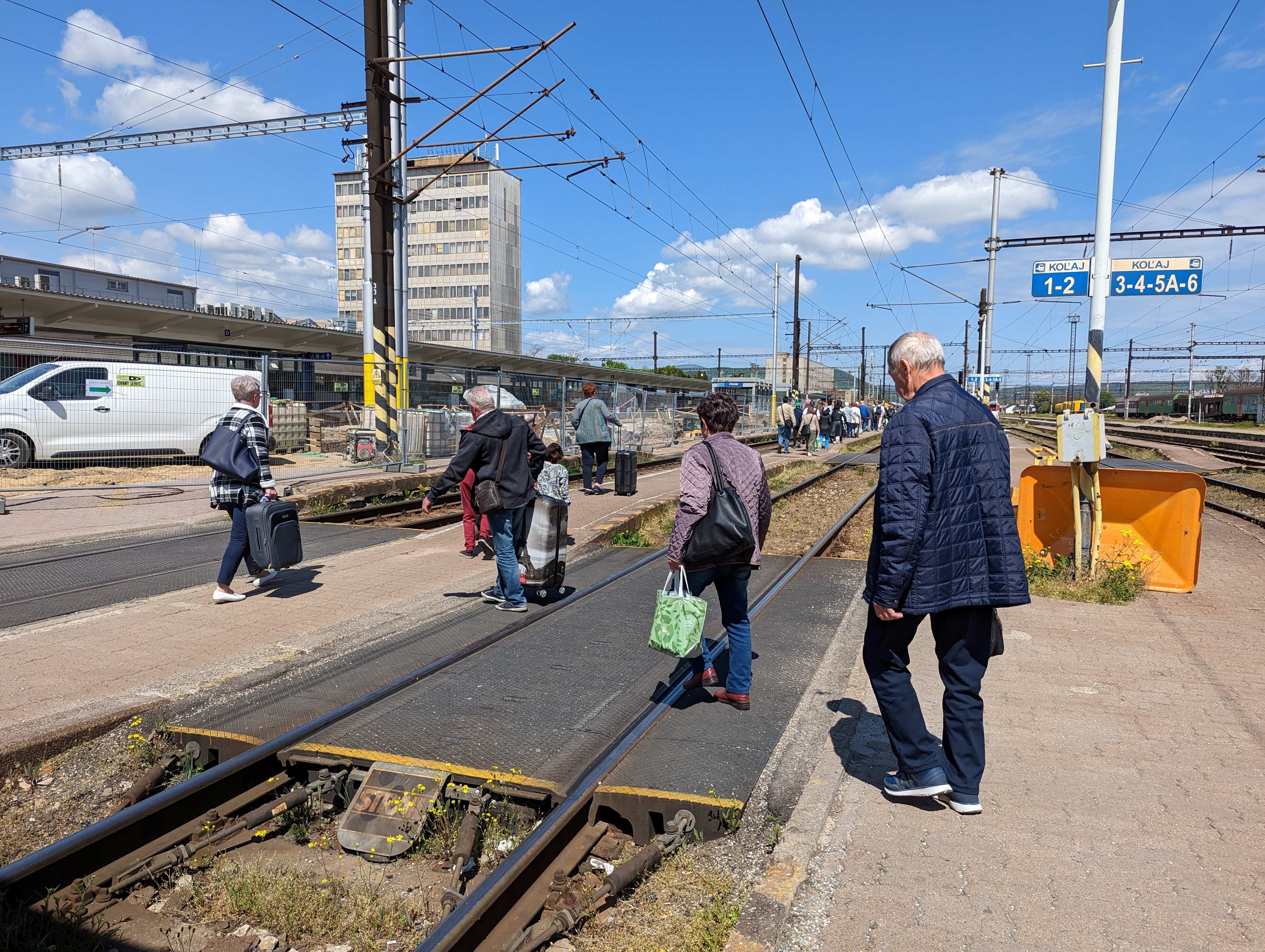
Kosice, Slovakia

Budapest to Balaton, Hungary

Budapest to Balaton, Hungary – adult and child

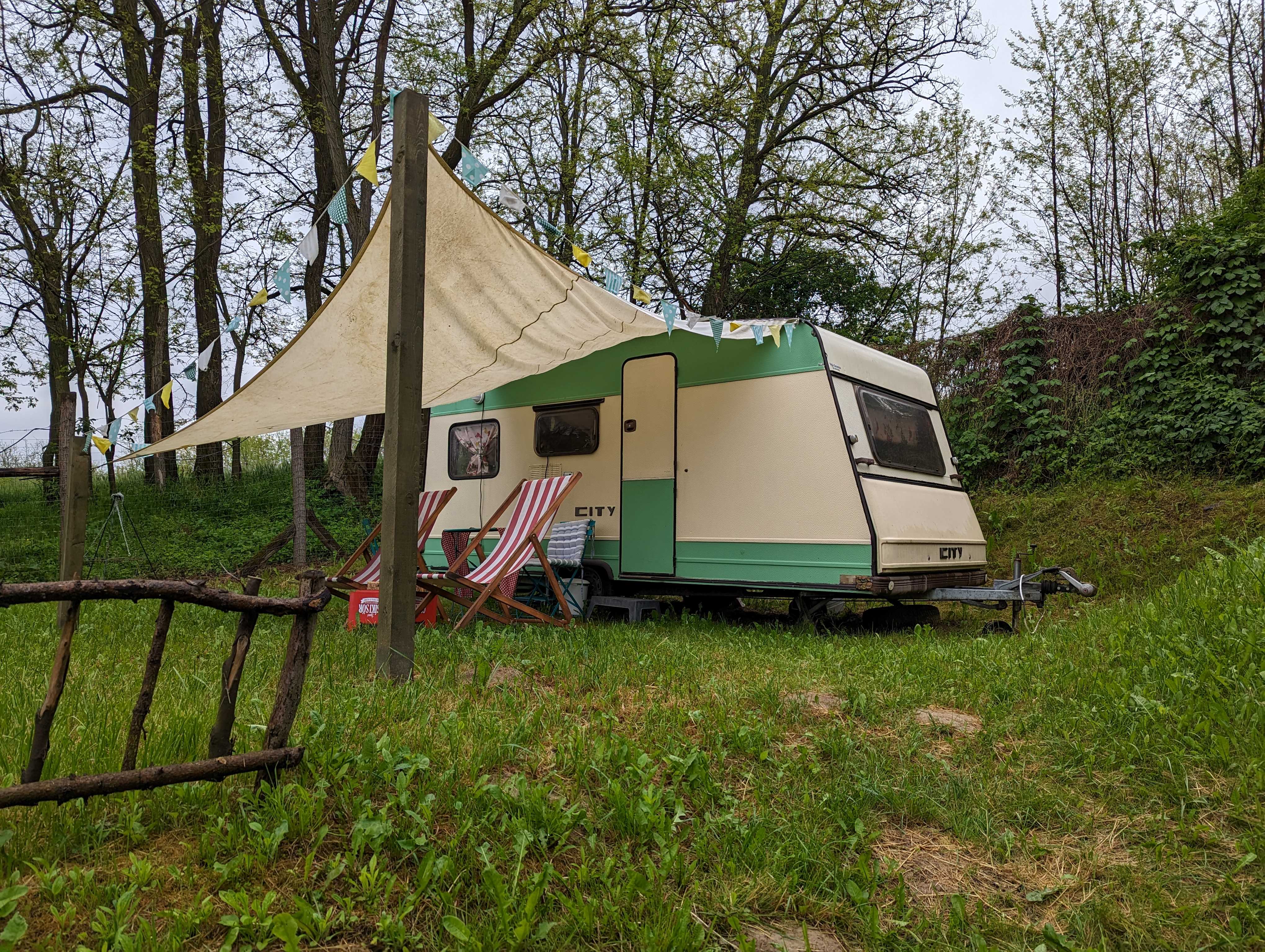
After staying another night in Budapest, I detoured to rural Hungary, travelling by train to Siófuk near Lake Balaton (south west of Budapest), from where I took a bus to Kopánnyszántó and walked to Koppány Pines to stay with Debs Tetlow (a fellow Juicy Crone). There, I exchanged Shiatsu with her and her husband who run a beautiful camp site, enjoyed walks and sat out the rain in the caravan they prepared so kindly for me.
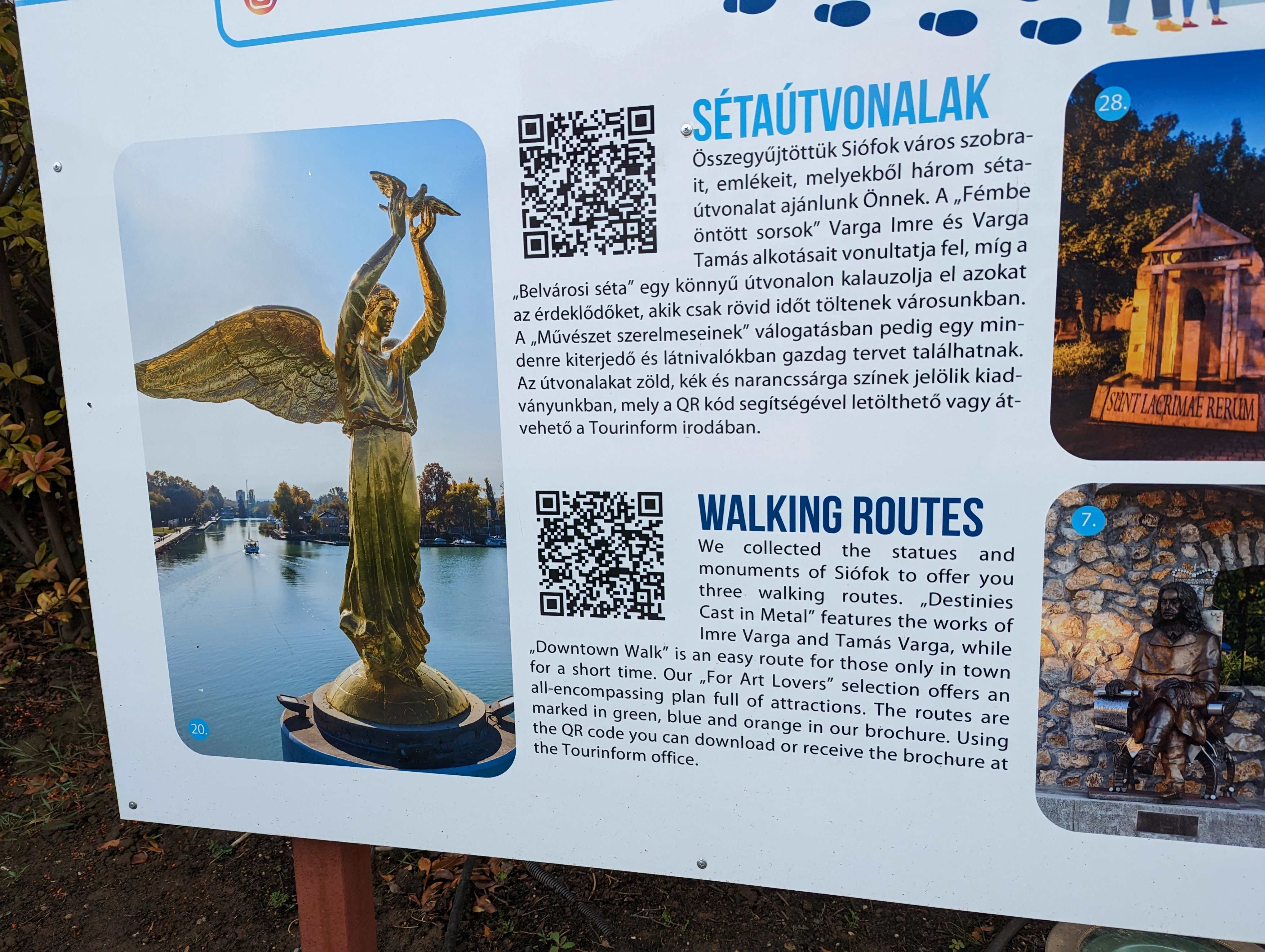
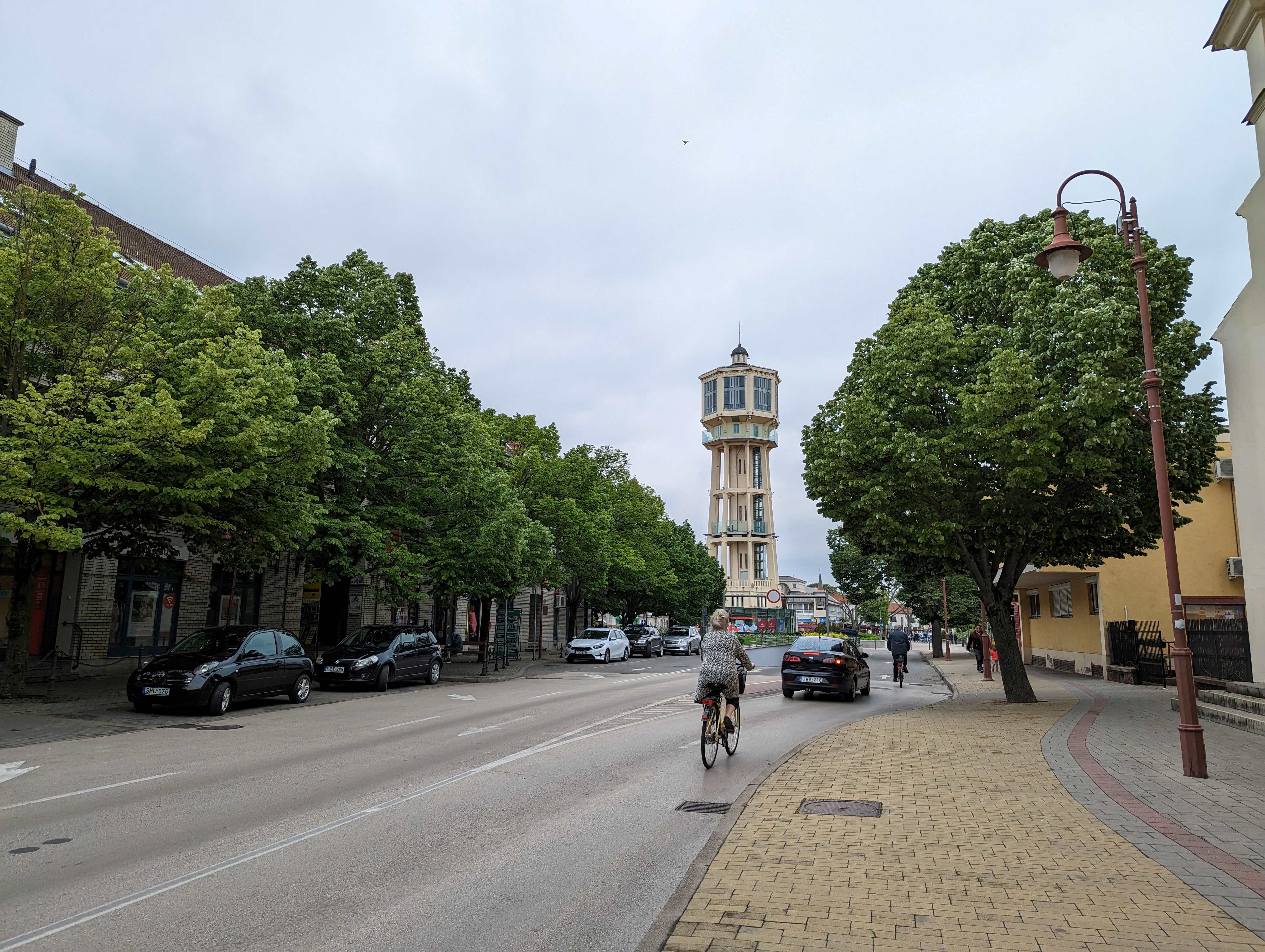
I stayed in their caravan at Koppány Pines. Hungary

Again, I was returning to Budapest. This time I got a lift in a car to Nagykónyi, and then took the bus back to Lake Balaton (where I visited the Mineral Museum at Siofuk, Kálmán Imre stny. 10 8600, which is recommended), and the train to the Hungarian capital (station Népliget).
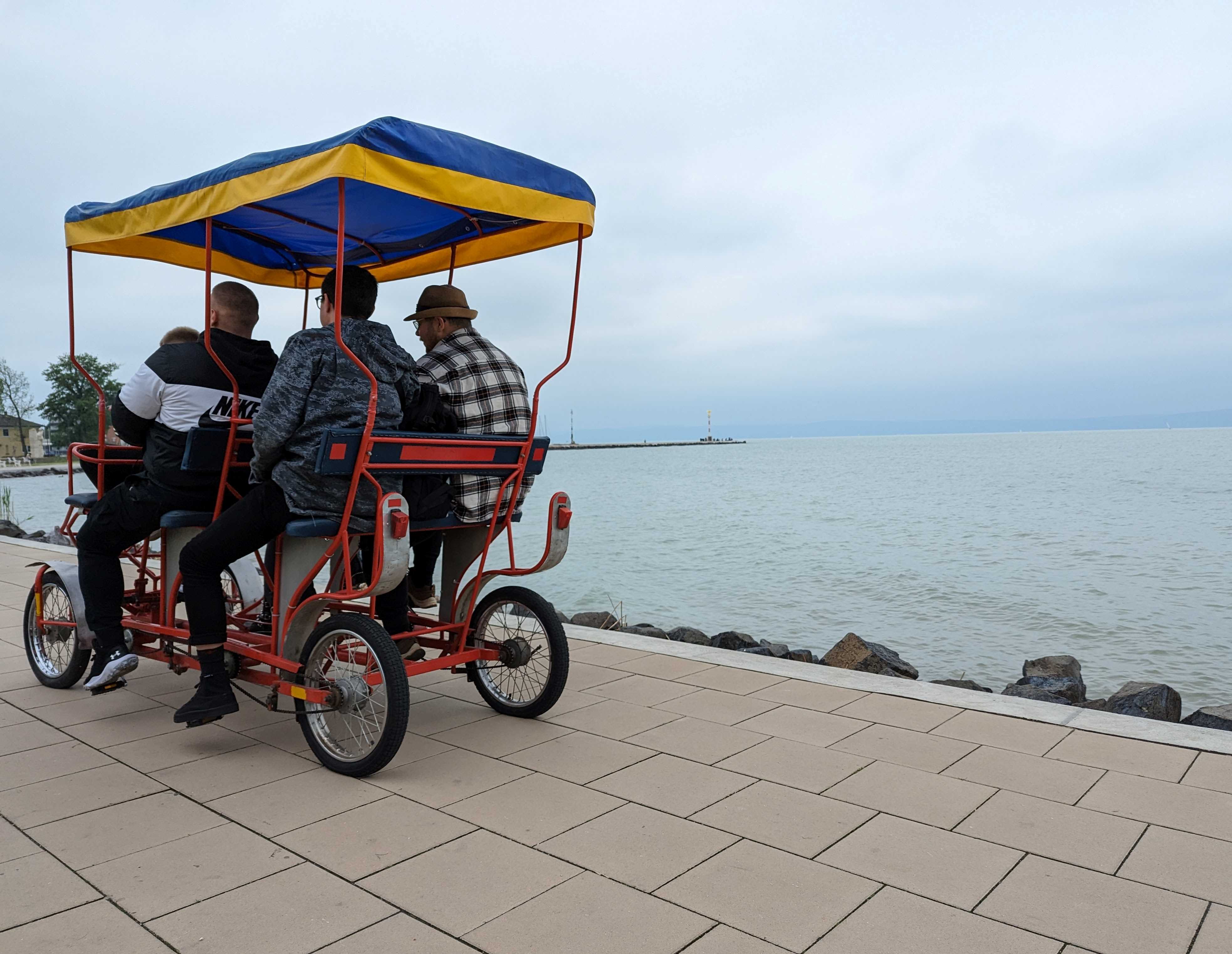
Lake Balaton, Hungary

Budapest to Berlin

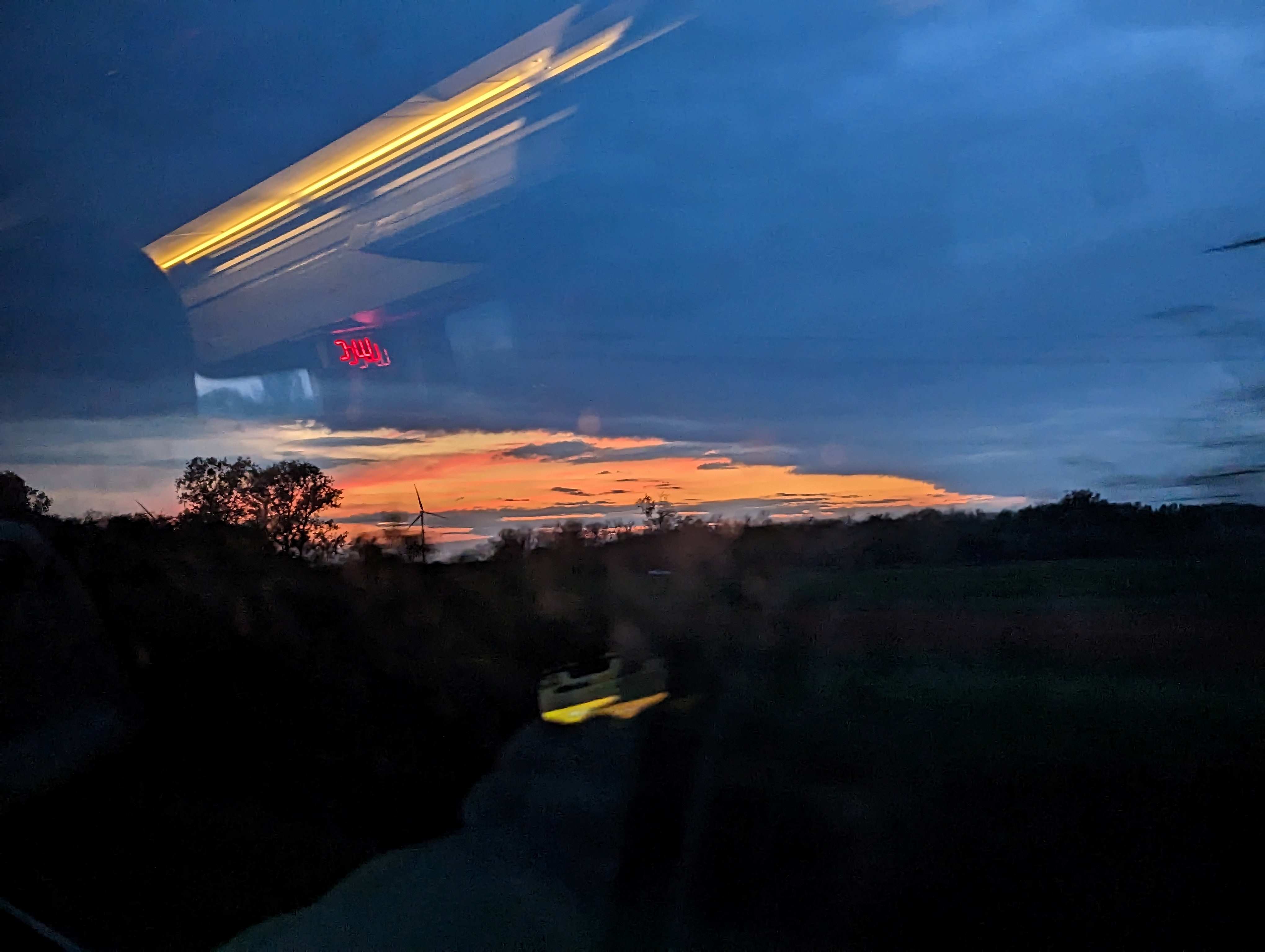
Soon after leaving Budapest: sunset from the bus

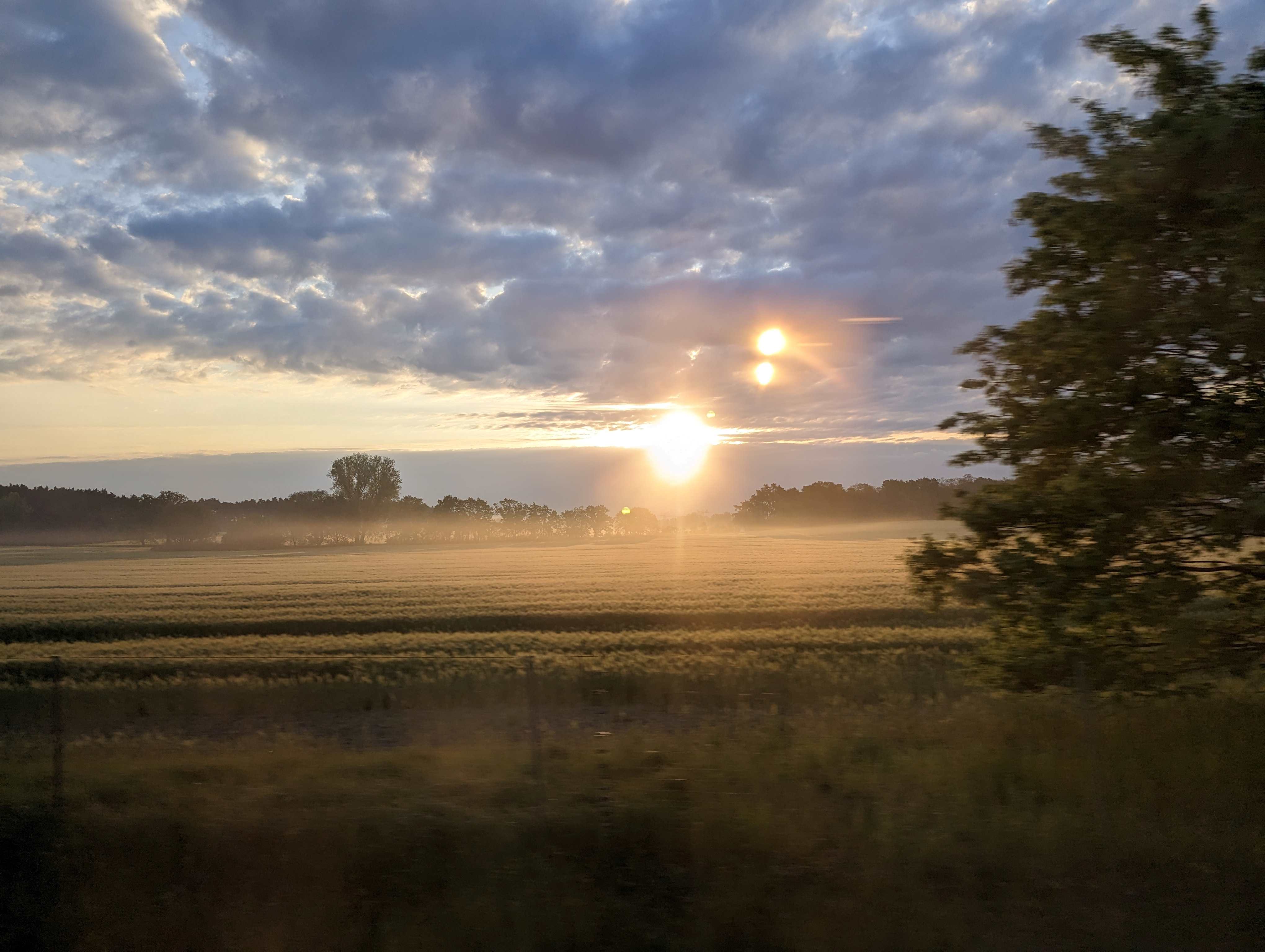
I left Budapest Nepilget at 7.30pm by bus, stopped somewhere for a break at 3.30am, and woke up in Germany at 5.30am to the most atmospheric dawn.
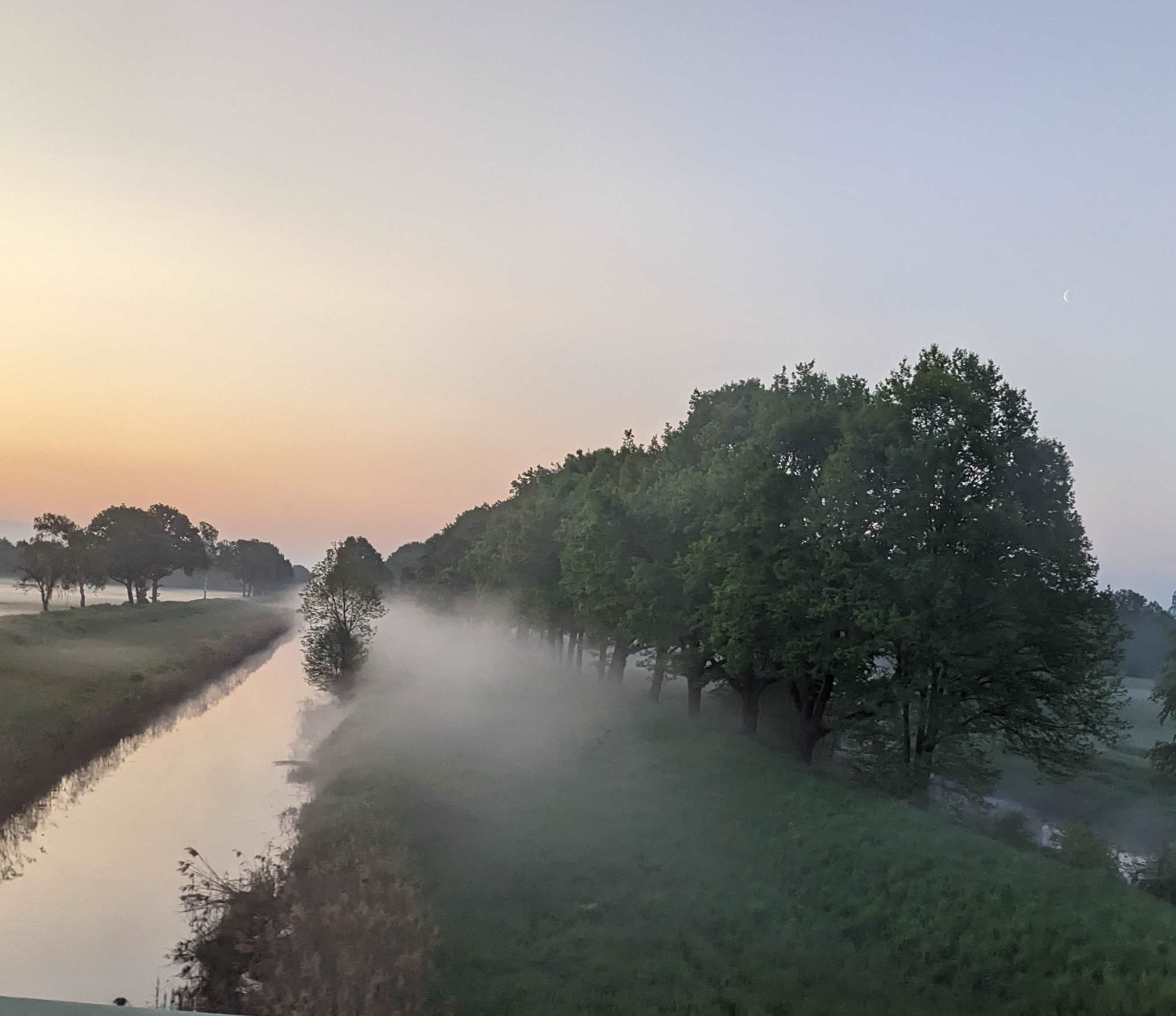
Sunrise Lübenau, Germany
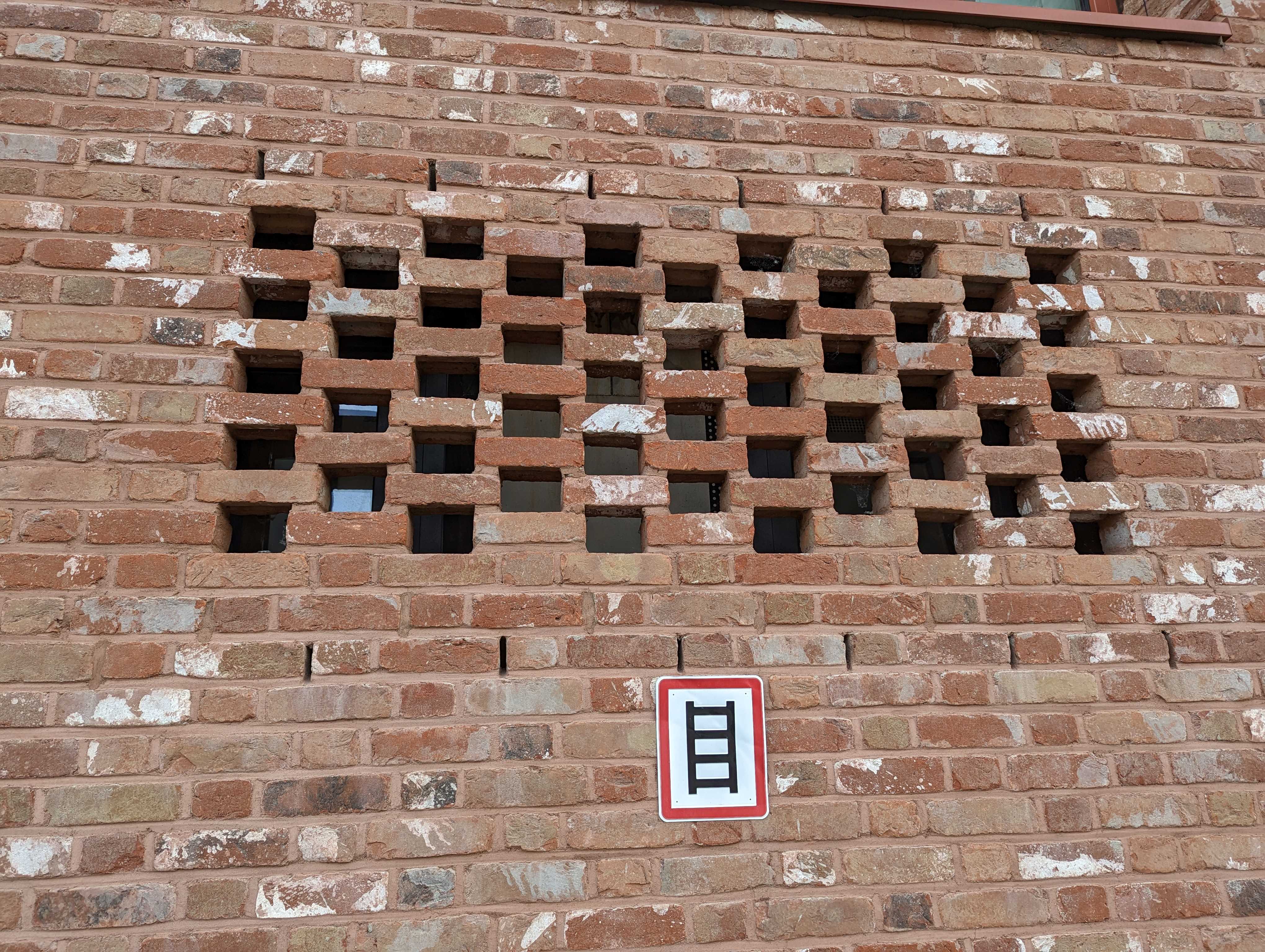
At 7.30 we drew into Berlin Südkreutz and I had a wonderful walk by New Tempelhof where the streets are named after plants: Jasminepfad, Magnoliapfad.
Berlin, Germany to The Hague, Netherlands
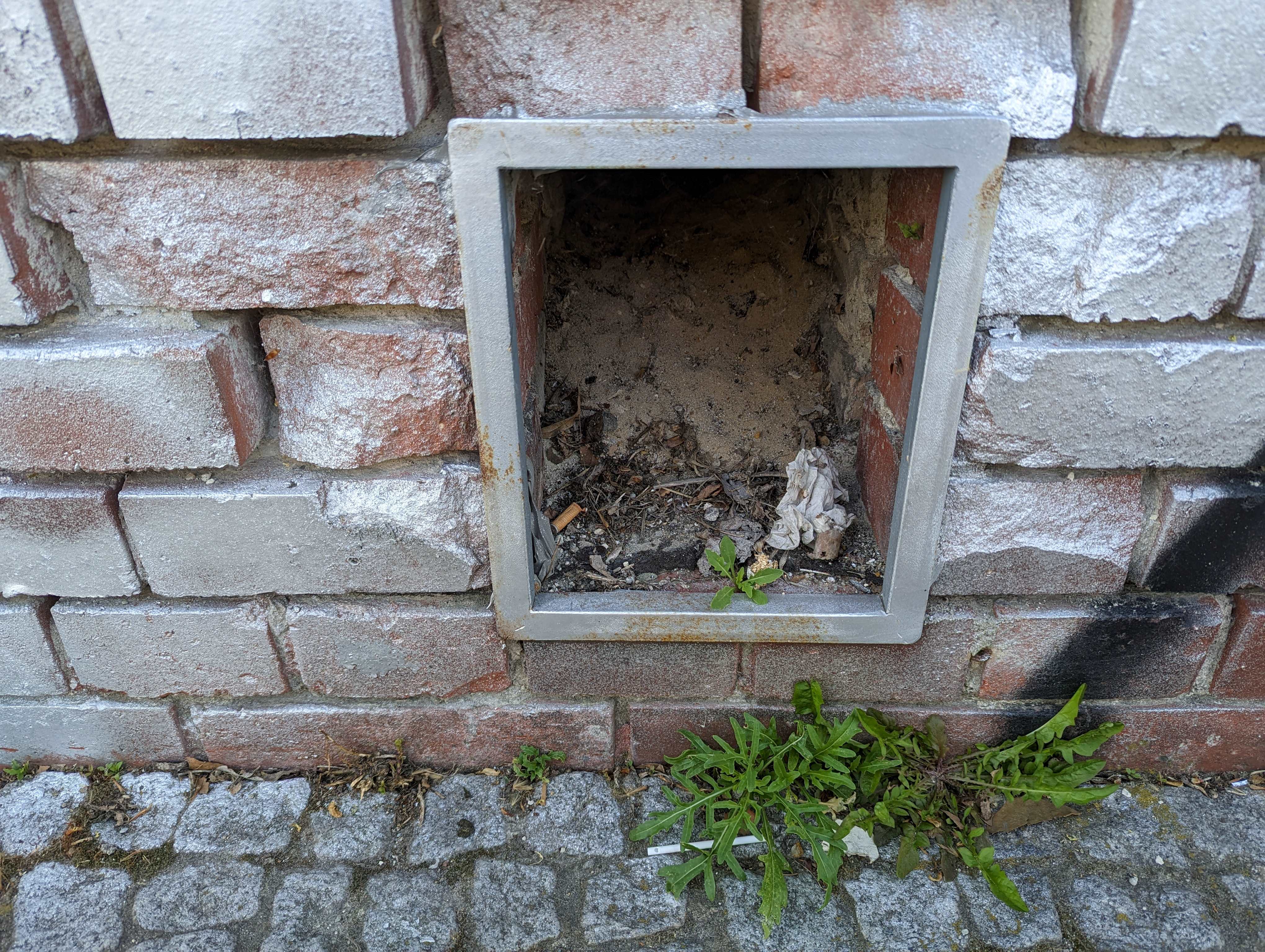
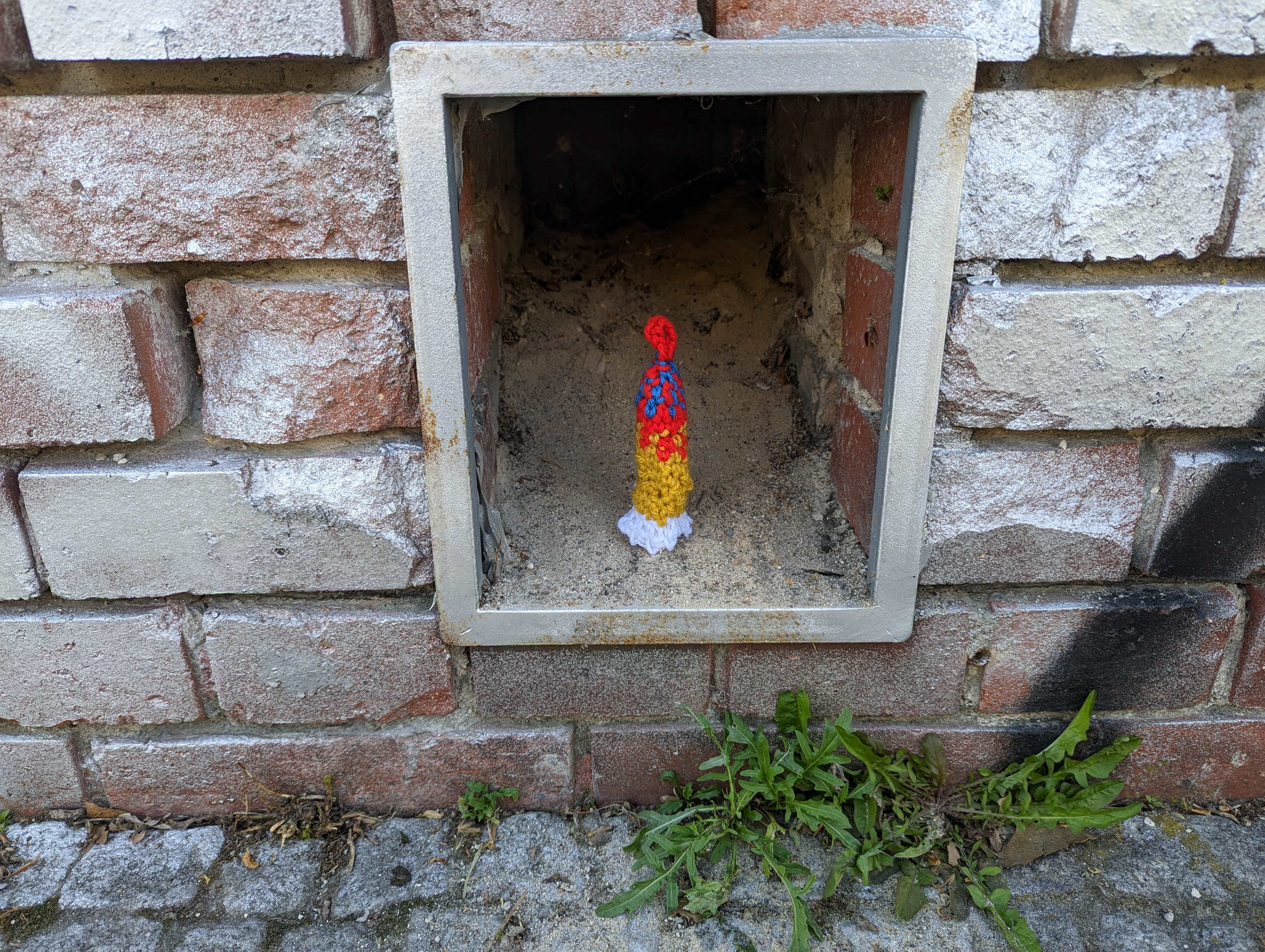
I still had a home-made crocheted flower left over from my time on the Greek island of Tinos and, on finding a make-shift altar space in a wall, cleared it and made a grateful offering to Abiona, Goddess of Safe Return.
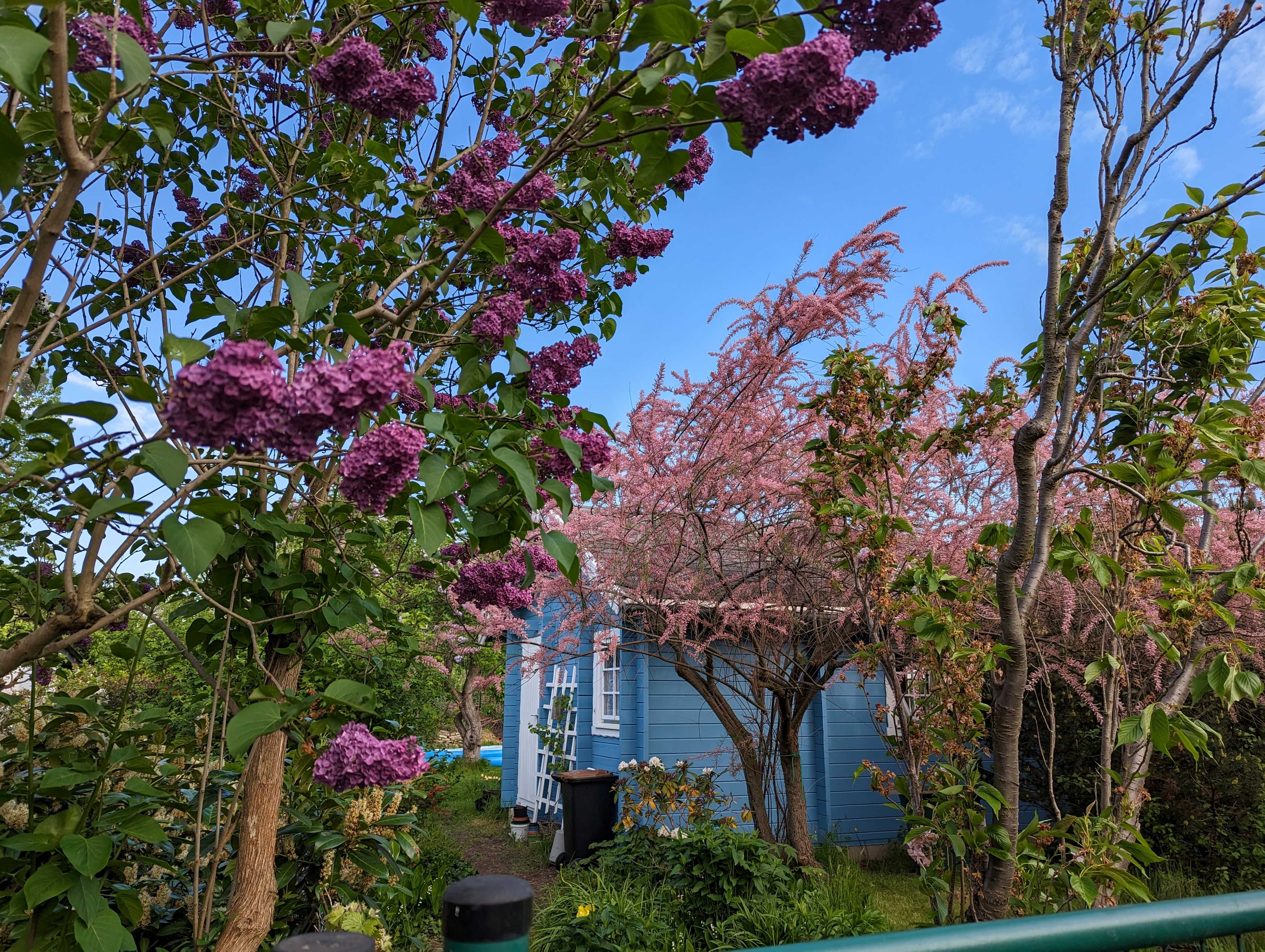
New Tempelhof

These allotment gardens (which I was told by a resident were like gold dust during the Covid-19 pandemic) were near to, and consciously contrasting with, the SA prison in General Papestrasse in Schöneberg.

I was in the German capital city for the first time. A few months earlier, I had been chatting with my mum and she said we had a relative living there who I had never heard about before. It was lovely to meet Helen and her daughter, and to find that we had interests, age and other things in common. It was she who recommended the Jewish Museum (it was a Monday and lots of the others were shut). I only had that one day to explore, and I was really impressed by the architecture and the exhibition both.
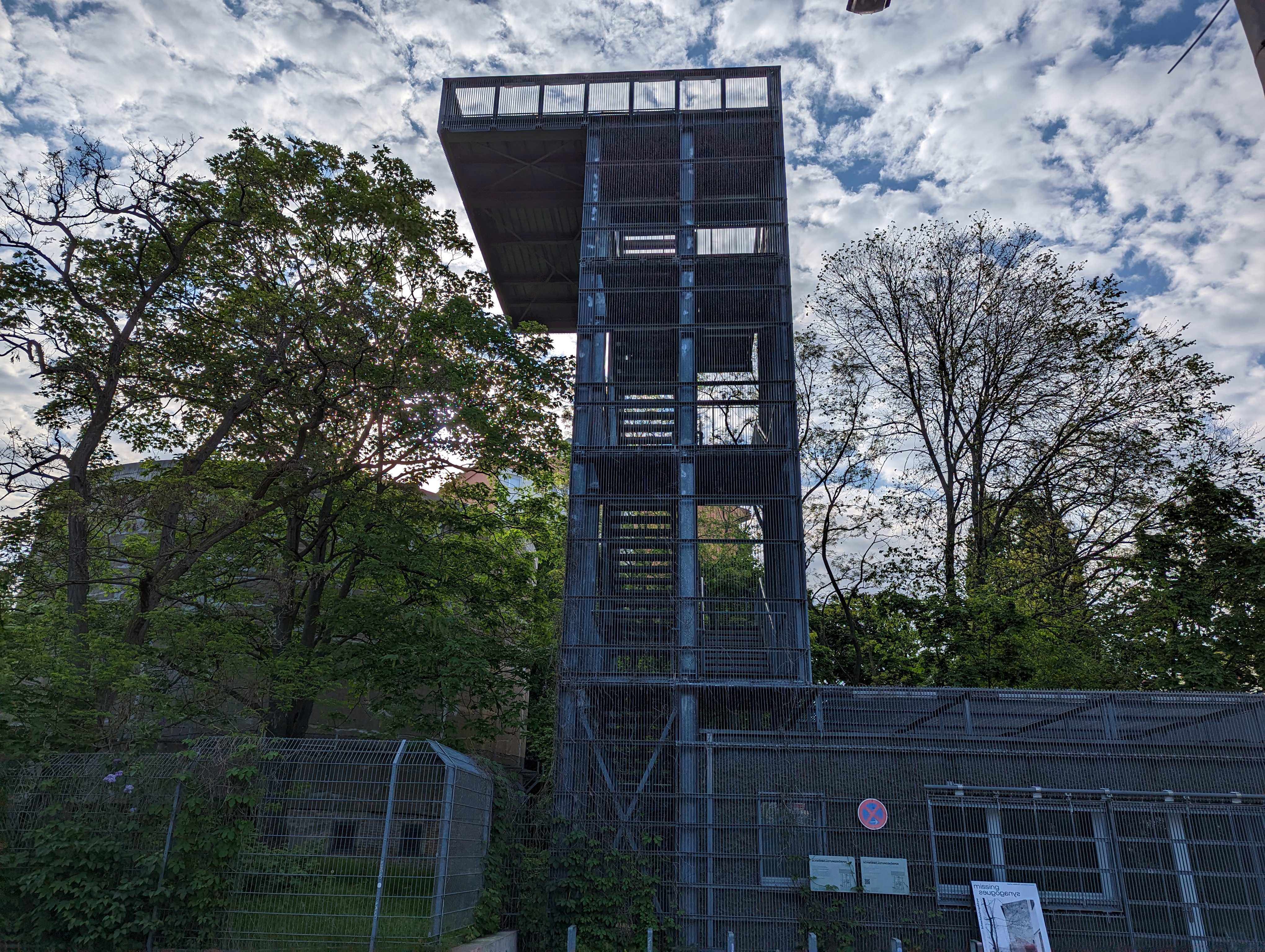
Repurposed Nazi watch tower, Berlin

“The cellar rooms used as prison cells have been preserved in their condition from that time, with inscriptions and dates carved into the walls. Since 2013 there has been an exhibition here documenting the history of the prison.” Papestrasse
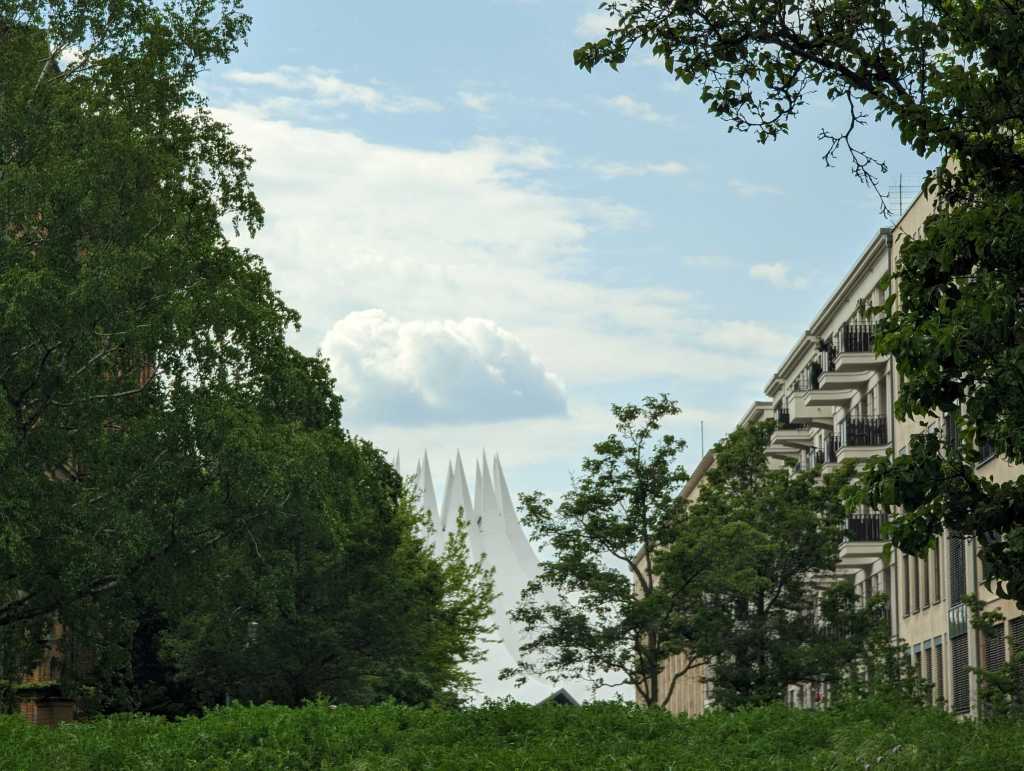
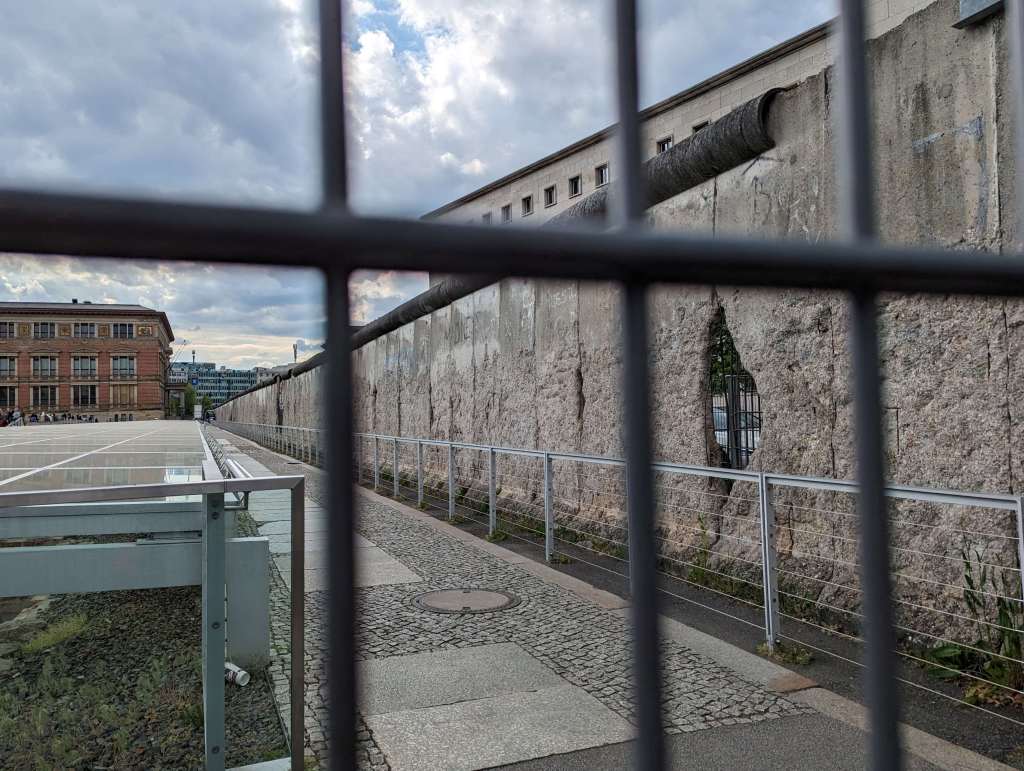
Walking out of Berlin City Centre, northwards
Berlin Wall

After my visit to the Jüdesches (Jewish) Museum, I walked a long way northwards, out of town, past the site of the Berlin Wall and Wilhelmstrasse. It was like walking through the history books. The end of this walk was the only time during my entire journey when I got scared and it was brief. There’s a section of very quiet streets and it was, by then, dark. I wasn’t sure I would be safe, but there seemed no option having got this far, so although the walk was really interesting, I would recommend getting a bus if you are leaving from the Flixbus stop on Berliner Strasse, Alt Tegel. I also didn’t find the stop very easily.

It was due to leave around 11pm, but was delayed by several hours. We waited and got cold, got random messages from the bus company, and eventually knew we had ages to wait, giving ample time to find somewhere warmer to sit and continue a lovely meeting with a Ukranian woman who was with her young daughter. She was understandably very worried about her husband and extended family back home. They were going to Amsterdam to try and sort out passport issues.

Berlin to The Hague to the Hook of Holland

Journey time: 9-9.5 hours Berlin to The Hague.
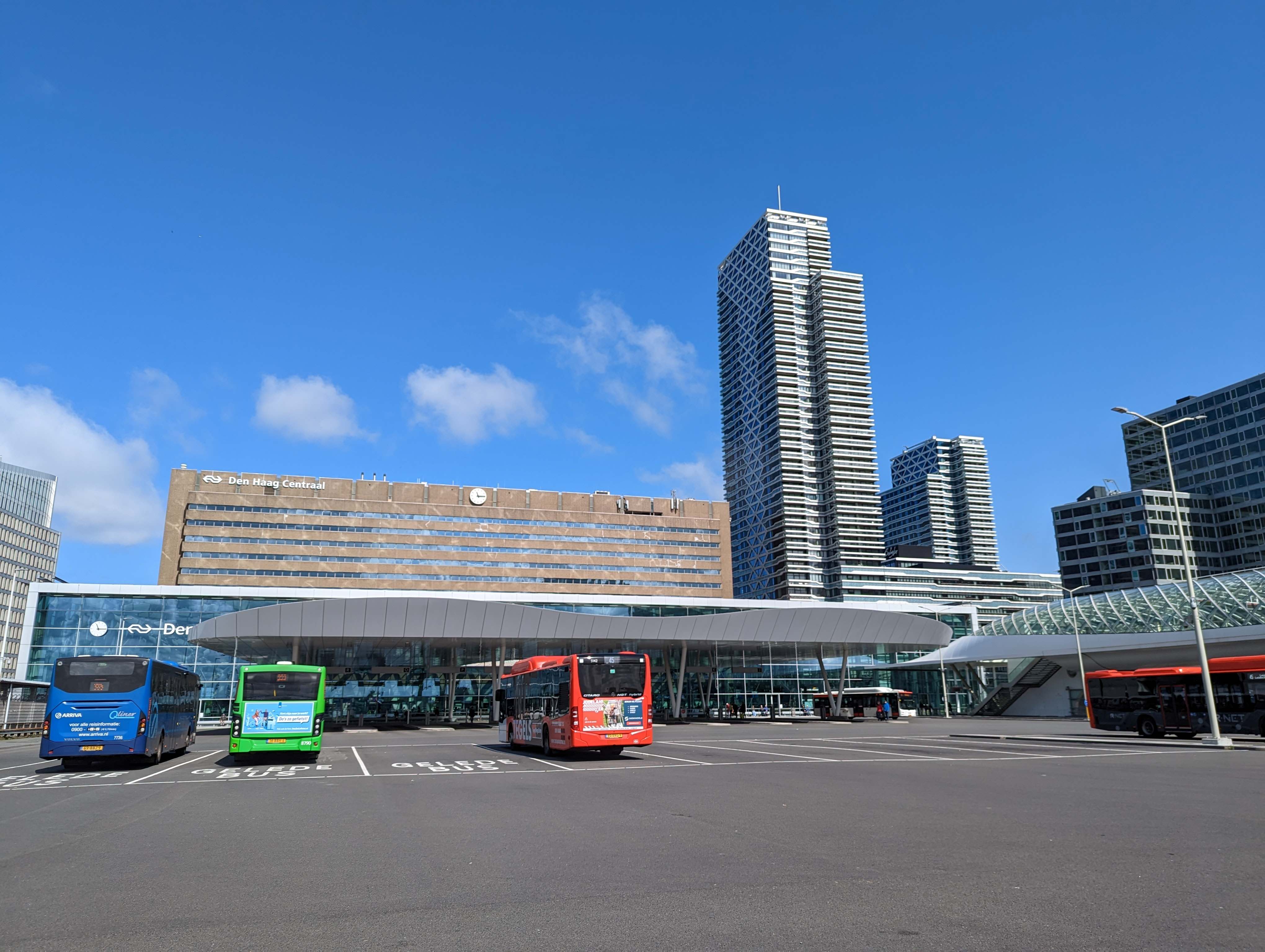
It was hard to find where to take the tram from The Hague (Den Haag) to the Hook of Holland (it takes just over an hour). There were lots of people wandering around looking and no-one knowing. When changing from the tram to the bus, the only place I could find to go the toilet was in a hospital (Haga Ziekenhuis)!
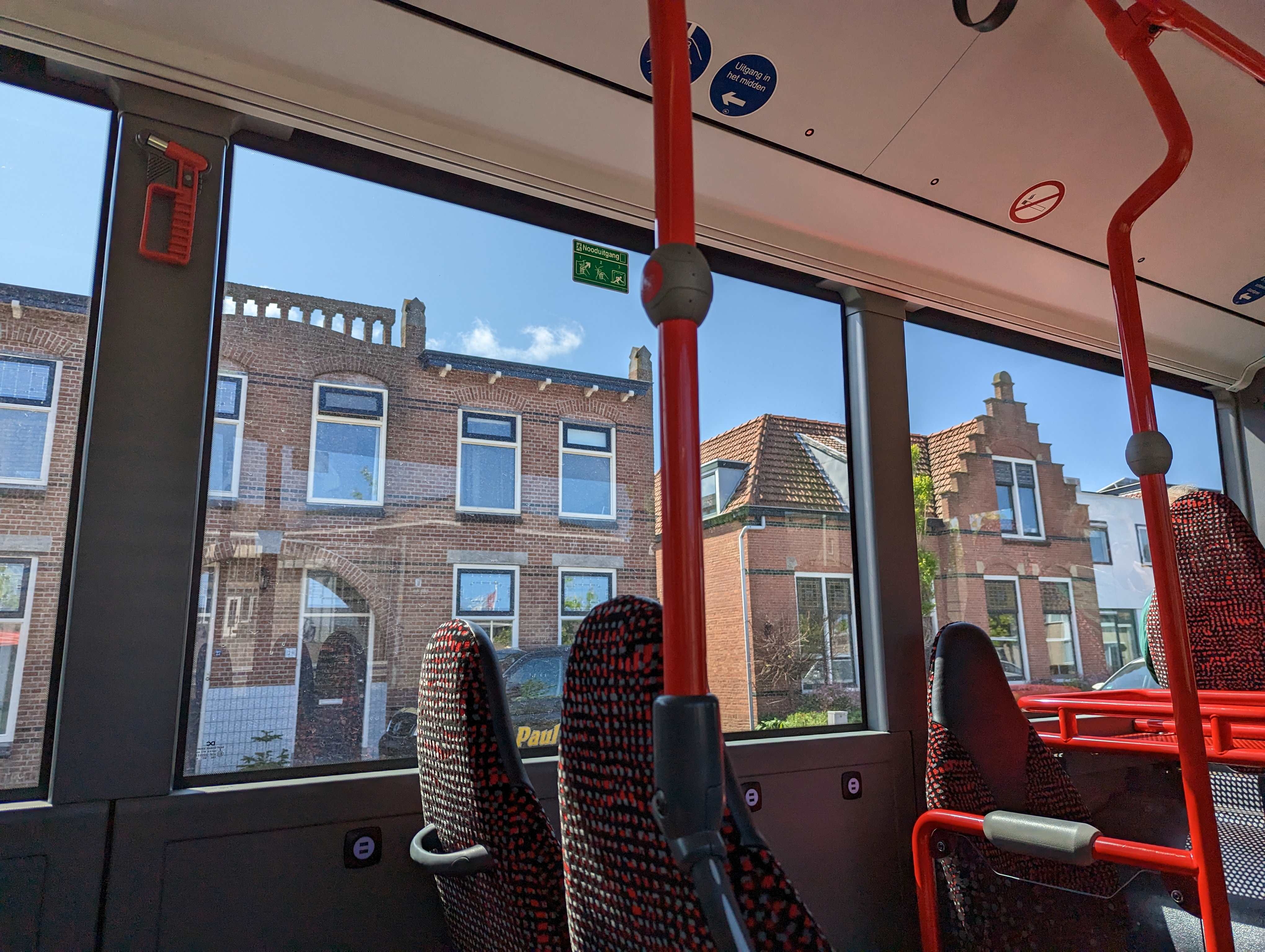
From the tram – Hague to Leyenburg, where I changed to a bus

The ferry terminal was almost empty. I was detained for quite a while as passport control flipped through my passport, looked at me, did it again and so on. In the end I asked what was wrong and they asked about going into the Schengan area and why I hadn’t got a stamp saying I’d gone out again. Presumably I was asleep. Thankfully, I had left myself plenty of time, and eveyrything went smoothly after that.
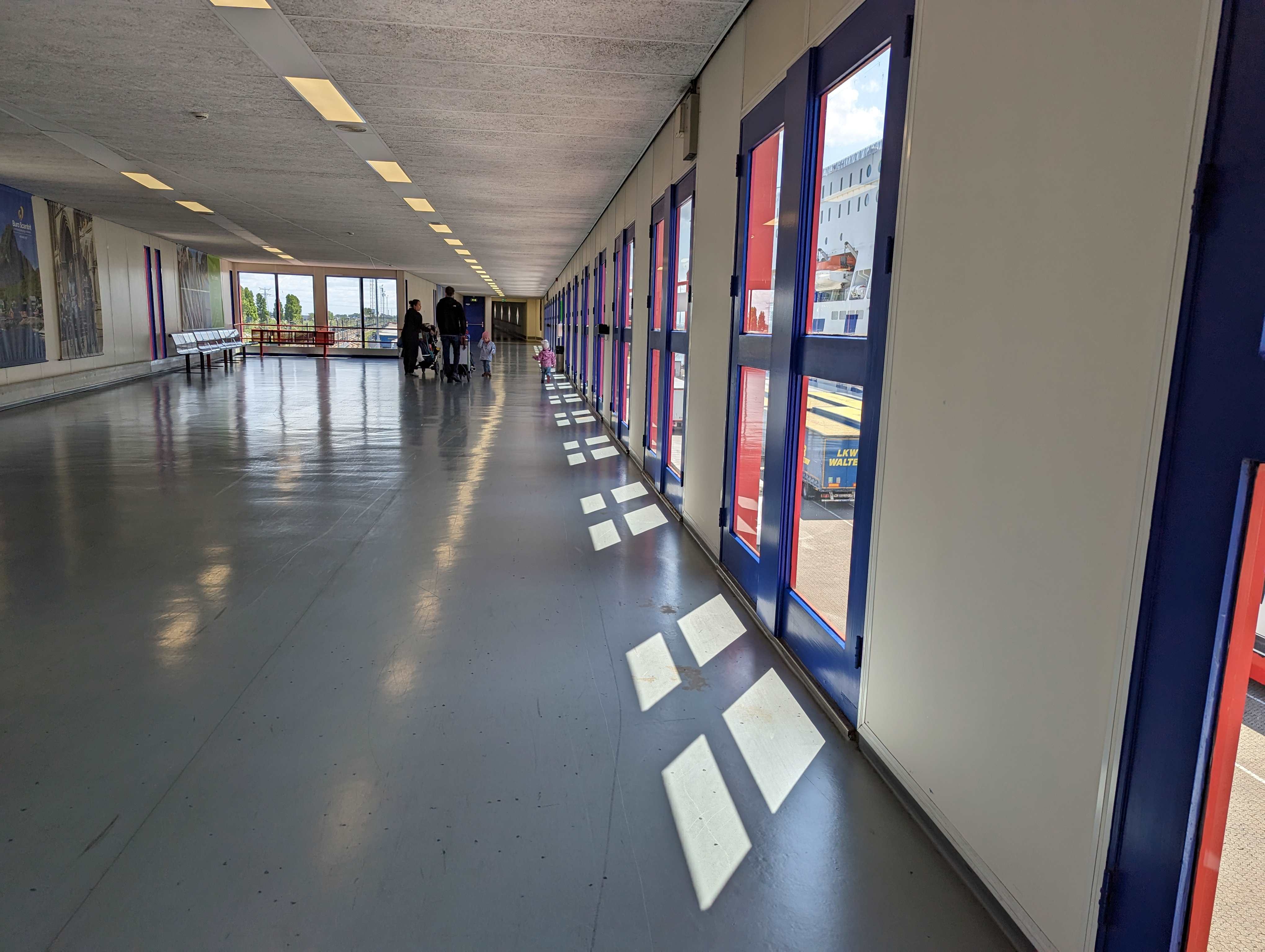
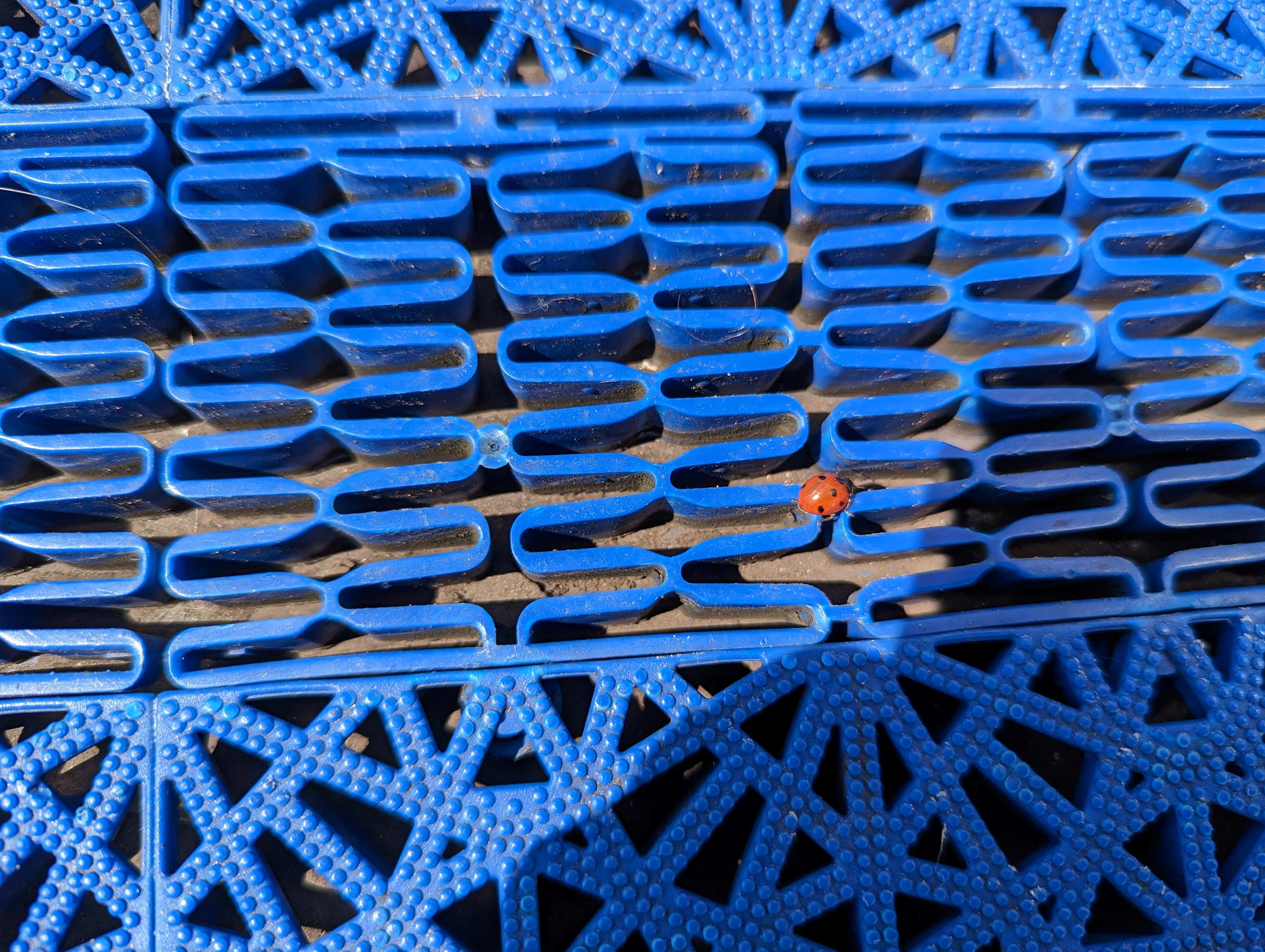
Hook of Holland ferry terminal, Netherlands

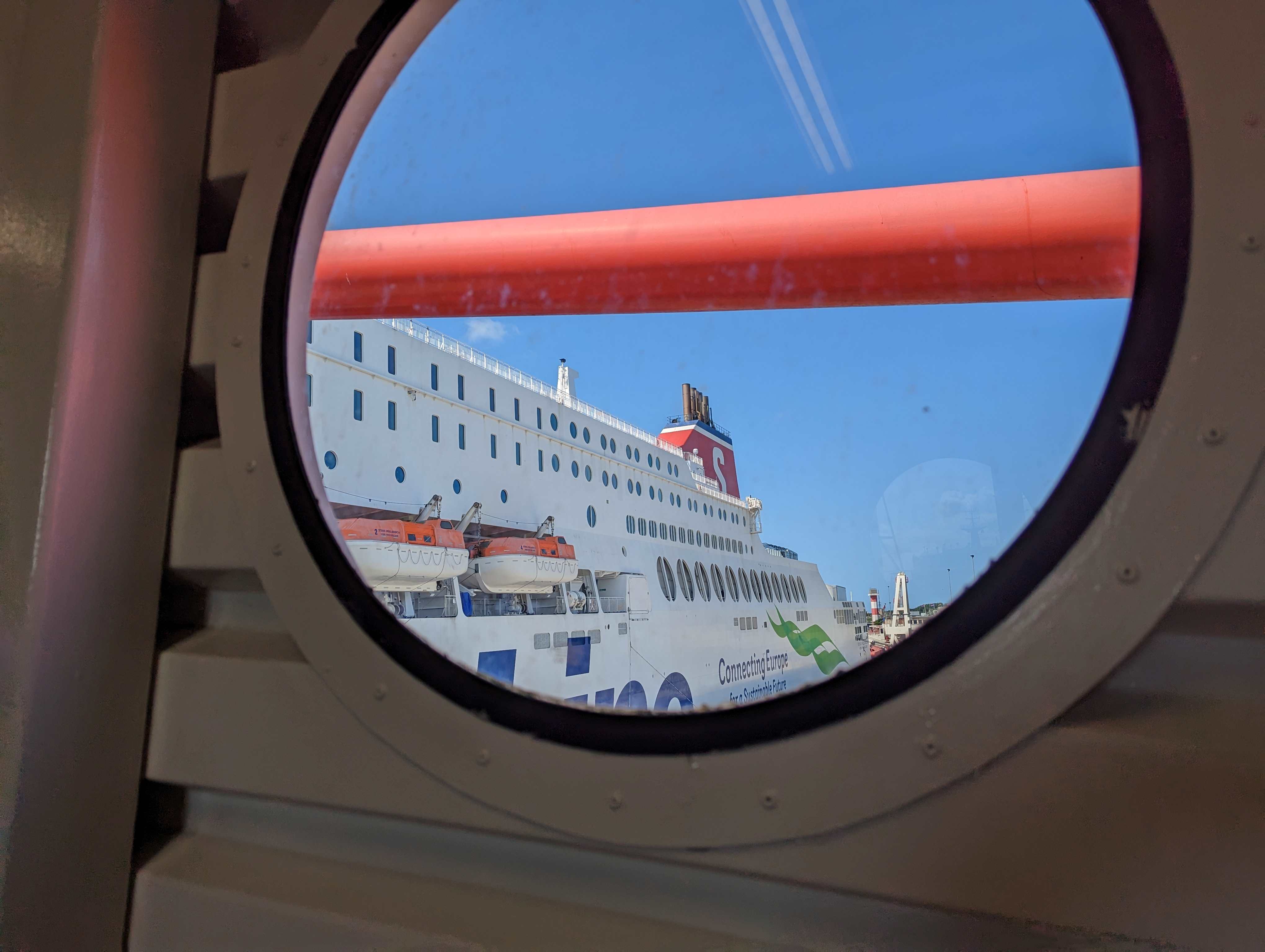
Photos above are of the Hook of Holland (Netherlands) ferry journey to Harwich, England

Harwich to London to Edinburgh

I took a late train into London using Greater Anglian Trains.
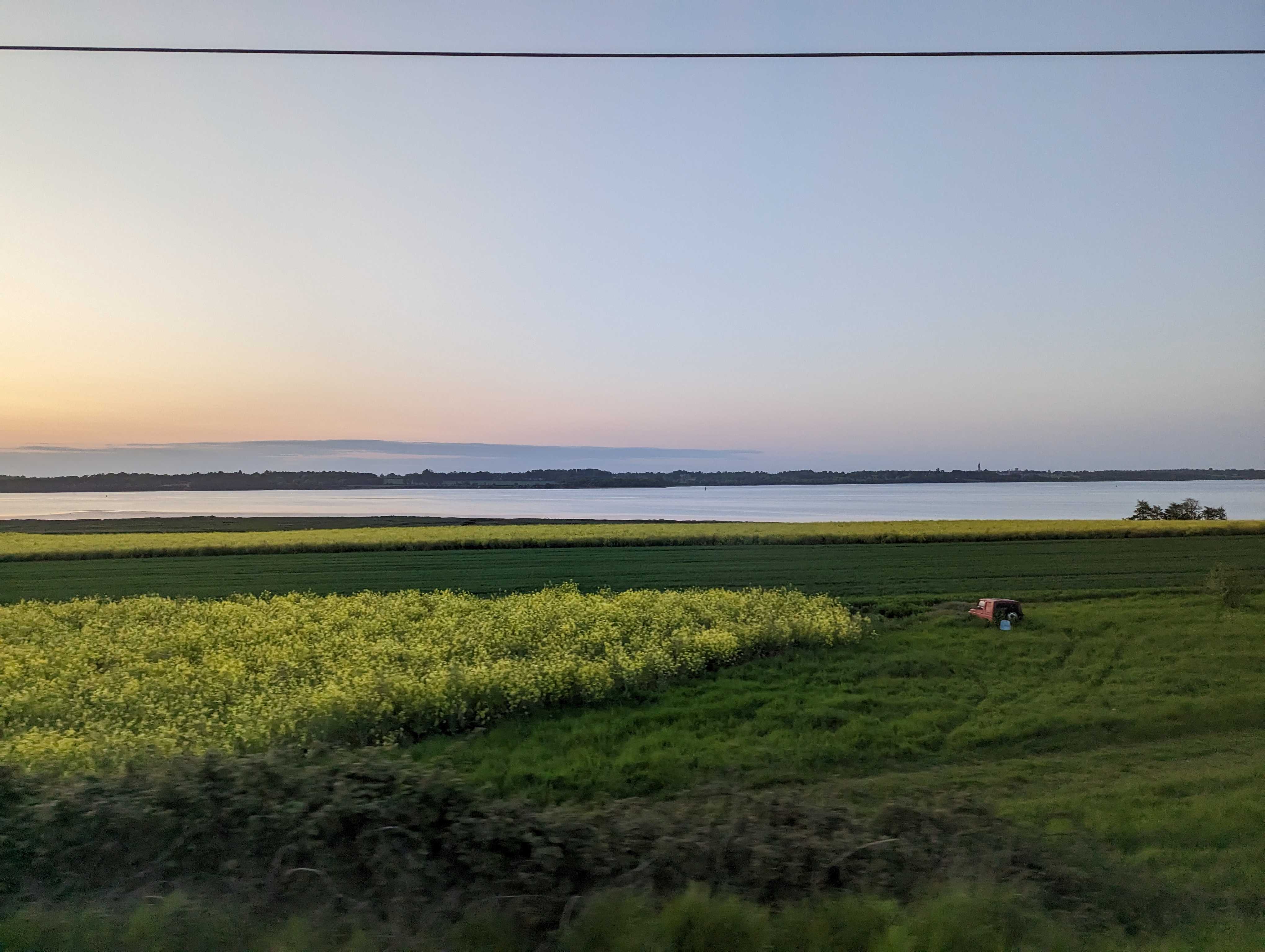
From the train between Harwich and London

And to Edinburgh via LNER (London and North Eastern Trains)
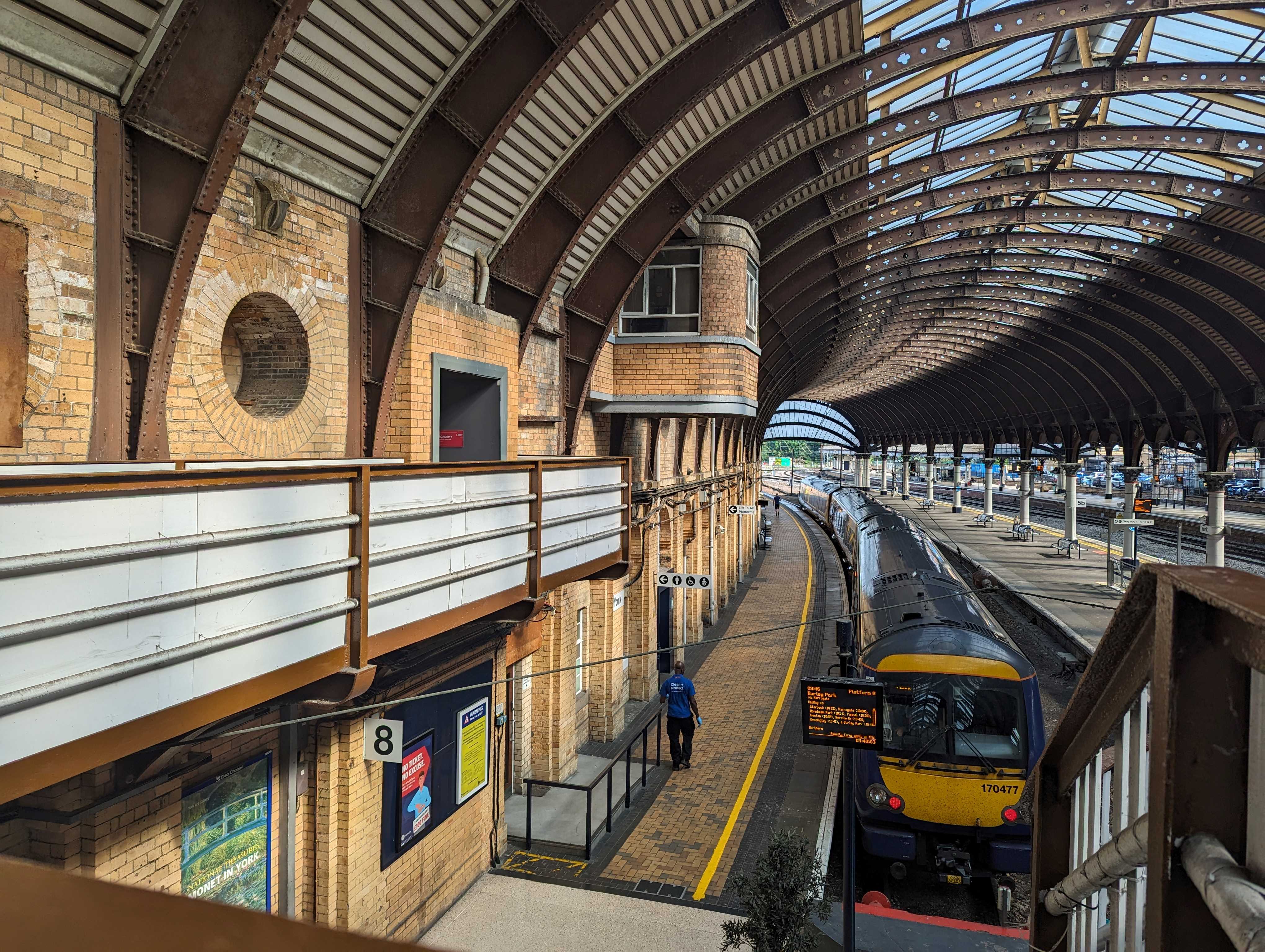
York railway station, England

Useful links, recommended reading etc

You may also like Overland Travel from Edinburgh to Greece 2

Travel websites: Infobus

Get By Bus

Flix Bus – beware they are very cheap, but there are very often delays and it’s hard to get any money back from them as recompense because they blame it on the roads and so on. If you have travel insurance (which I recommend if you are making complicated journeys like this – it’s not too expensive for a year – I used multitrip.com), it’s easier to claim from that.

Ride Sharing in Berlin

and into Kent from London – use South Eastern Trains

Recommended reading: Slow Living by Wendy Parkins and Geoffrey Craig (about the ‘slow’ movement of which this type of travel is a part); The Instant by Amy Liptrot (about her time spent in Berlin).

This trip was taken in May 2023. The title photo is of Keleti Station, Budapest. All images my own and are copyrighted to me.
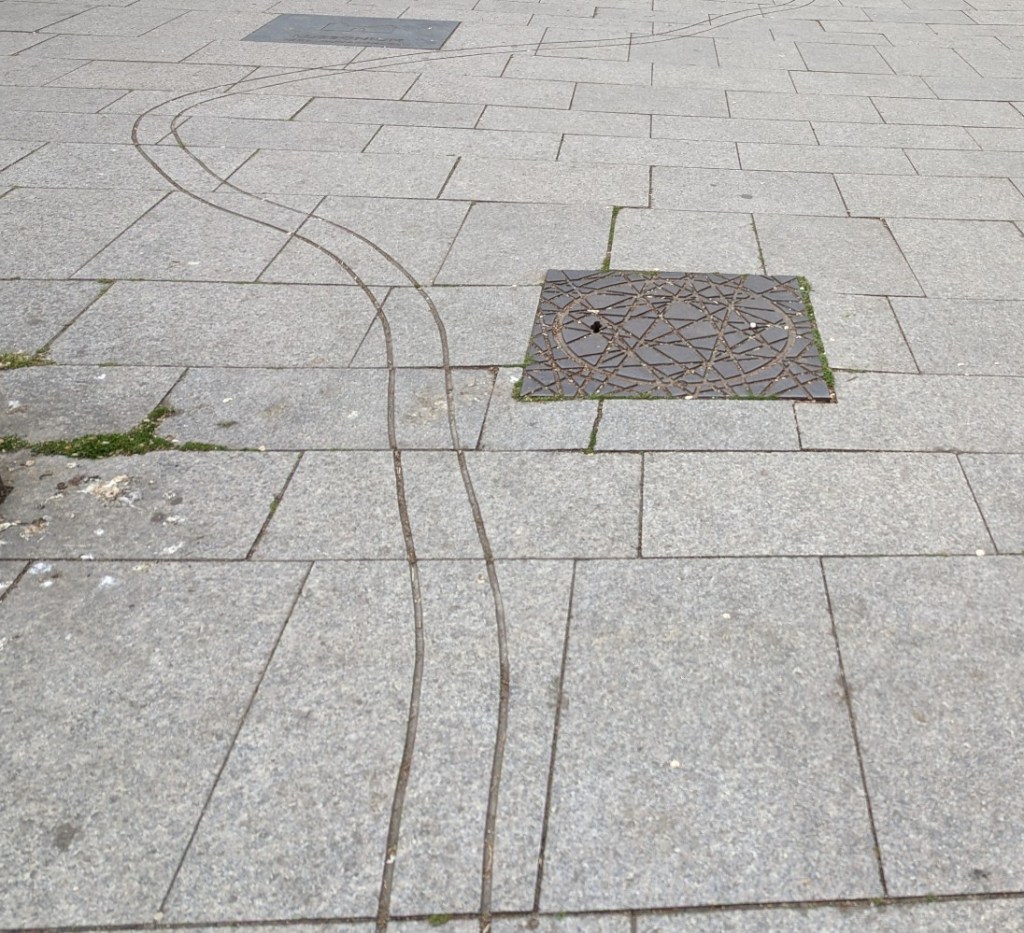
Budapest on foot

Budapest is a city of contradictions: of dilapidation and shiny surfaces; of slow, leafy suburbs and frantic roundabouts; of climbing frames for dogs, vending machines for books, fast food and deliciously prepared brunch, kindness and dismissal, a really great synagogue and more than one scary-to-walk-over bridge. I came across all this by simply walking.

By the River Danube, Budapest, Hungary

There are many blogs about the tourist sights of this Hungarian capital city, so I will try not to repeat too much. (You will find some of the links below.) I came by bus from Athens, overnight, arriving half a day late due to a five-hour delay at the Serbian border (I’m told it’s to do with gangs and cigarette smuggling). I came and went a few times, but despite that I saw a fair amount of the place in quite a short time.

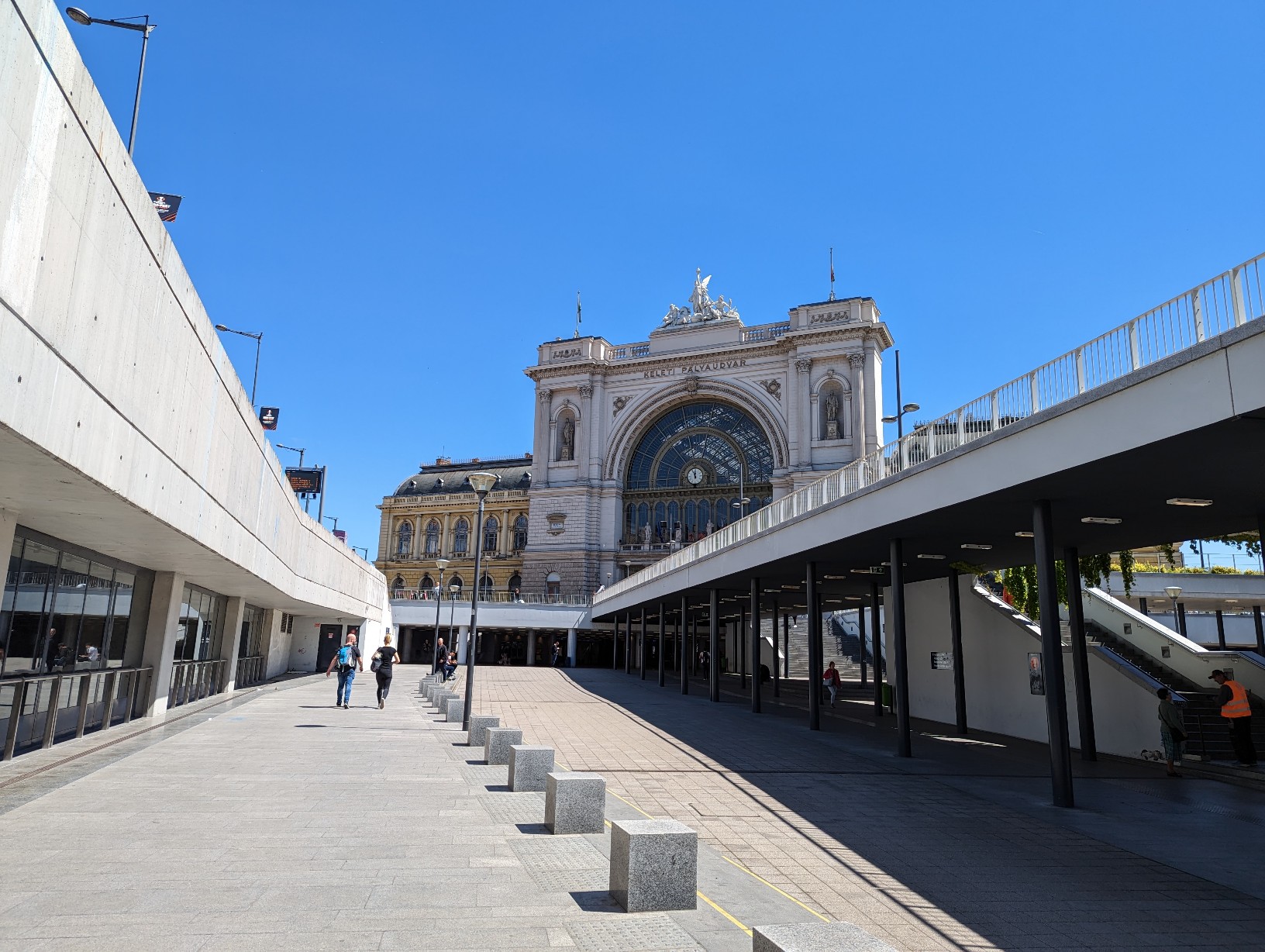
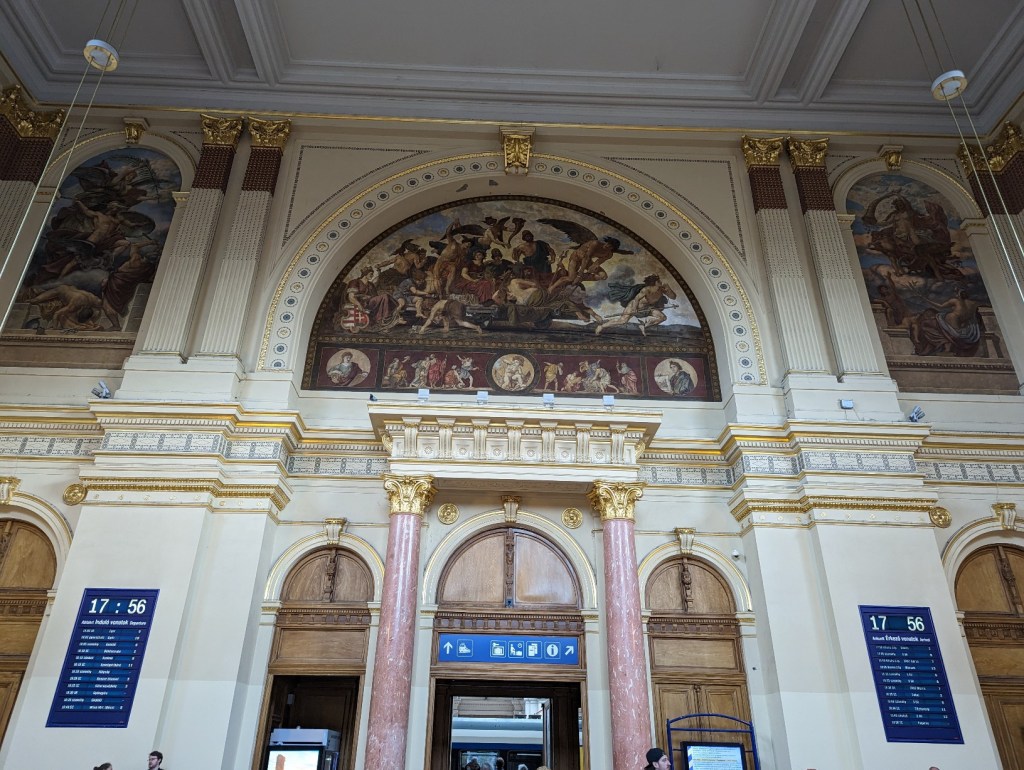
Budapest-keleti, the main train station. To book tickets, go to MAV direct. The website is slightly annoying, but workable, and is also in English

As a UK pedestrian, I had to keep reminding myself to look left before stepping off the pavement, and to beware motorbike and bicycle food delivery guys as they come upon you (often on the pavement) from behind, unexpectedly. I walked everywhere, from bus station to hostel to train station to a different hostel, and so on, meaning that I saw outlying as well as central areas. However, I’ll start with the more famous middle.

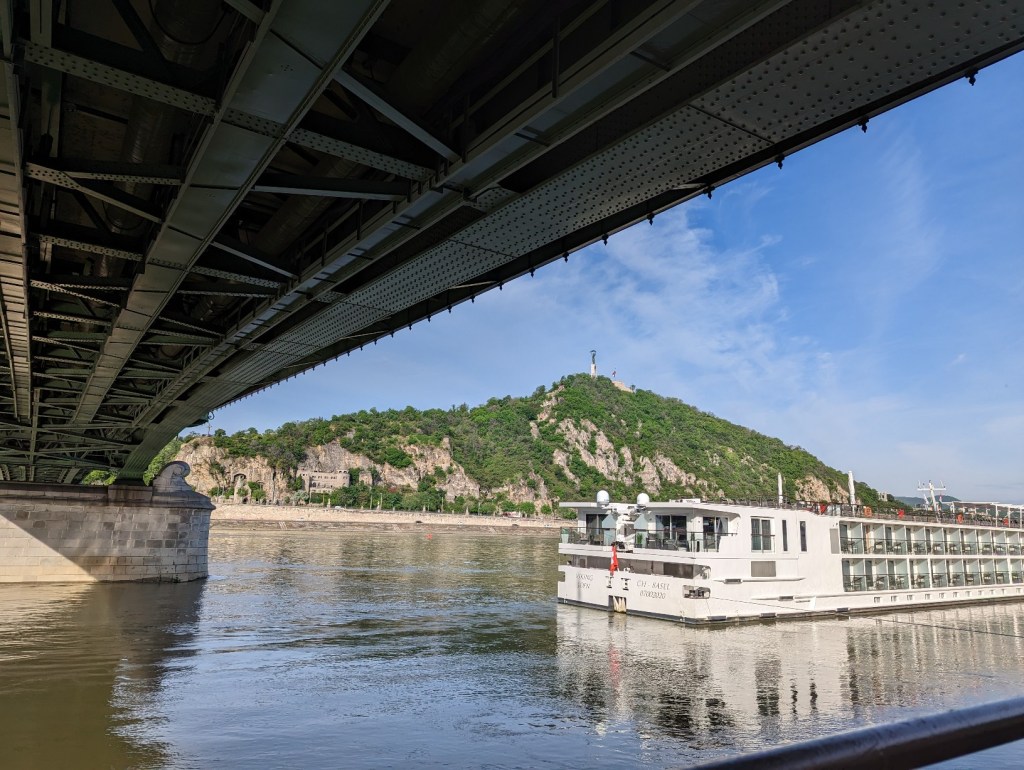
Liberty / Freedom Hill, Budapest, Hungary

Budapest sits either side of the River Danube which you can walk along, but don’t think Paris and the Seine, nor even London and parts of the Thames, as it’s bordered by busy roads and tram/train lines. I stayed at two cut-price hostels: The Heart of Budapest on Dohány útca (street) and the Maverick Urban on Lónyay utca. Because they are cheap, they are both east of the waterway which divides Pest (where I was) from Buda and Óbuda. It is worth knowing that Pest is the party side and Buda the quieter, sight-seeing part (more about the hostels below).

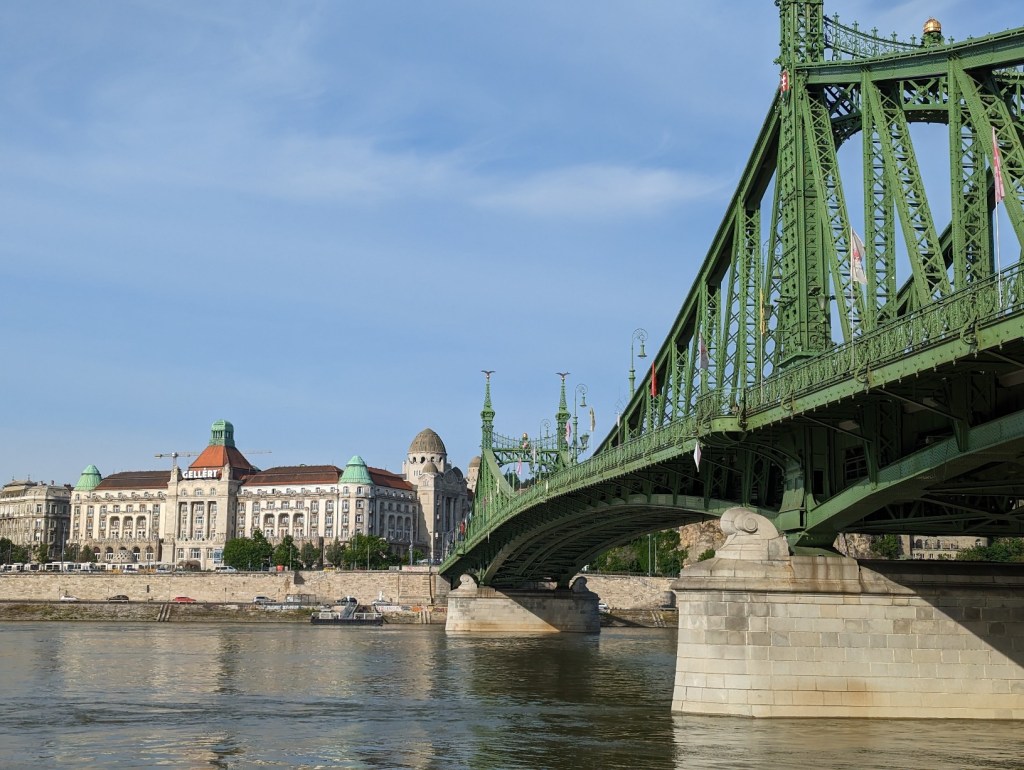
Szabadság hid or Liberty Bridge and the Gellért Spa Baths, Budapest, Hungary

The Budapest sights and architecture

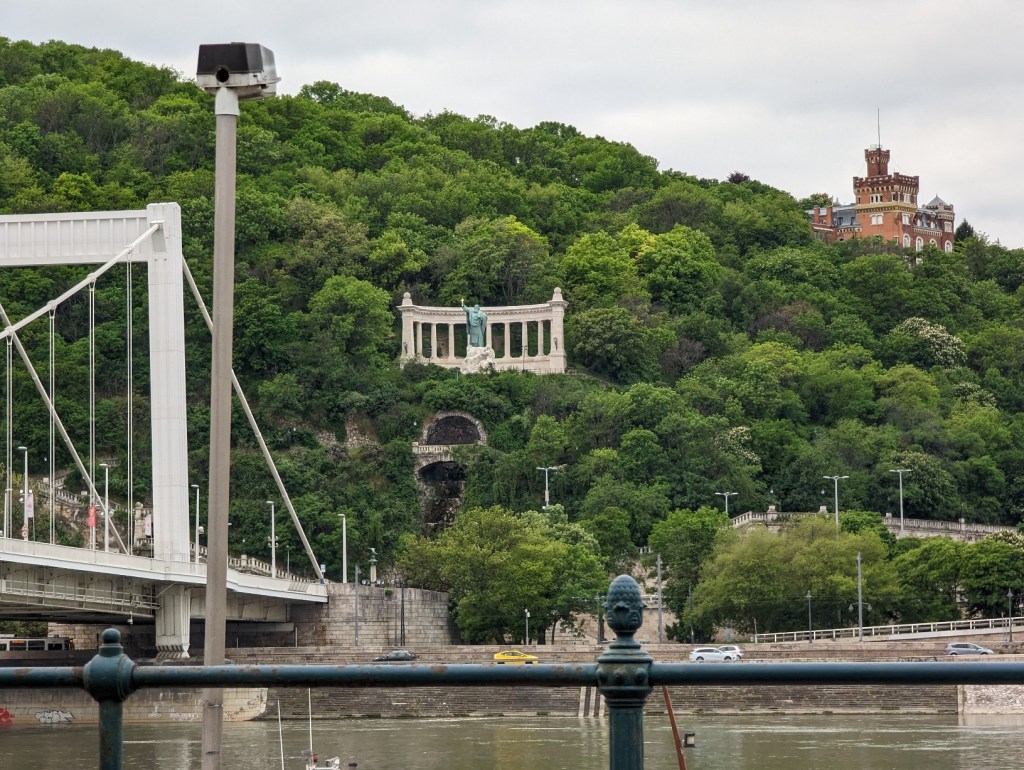
My first early morning walk took me to the near bank of the Danube from where you get impressive views of the Budapesti Müszaki és Gazdaságtudományi Egyetem (BME, the University of Technology and Economics) opposite, with its deep terracotta, mosaiced roof, the Gellért Spa / Baths, the Citadella Fortress on the wooded Gellért Hill and the Liberty or Freedom lady-Statue on top holding her palm leaf aloft. Between, are the bridges: the green (London Tower-type) Liberty Bridge with its golden crown, the Elizabeth Bridge (no, not our Queen, we don’t hold any sway here, for once, thank goodness), the Széchenyi Chain Bridge, and more. I crossed two of them and they’re scarily high above the water. On one, bikes whished past my ear, and on the other there was an army of older men with white hair and beards cleaning its white girders. I got a light spraying!

The Erzsébet hid or Elizabeth Bridge with the statue of Elizabeth, Queen of Hungary and the Schoch-Hegedüs Villa, Budapest, Hungary

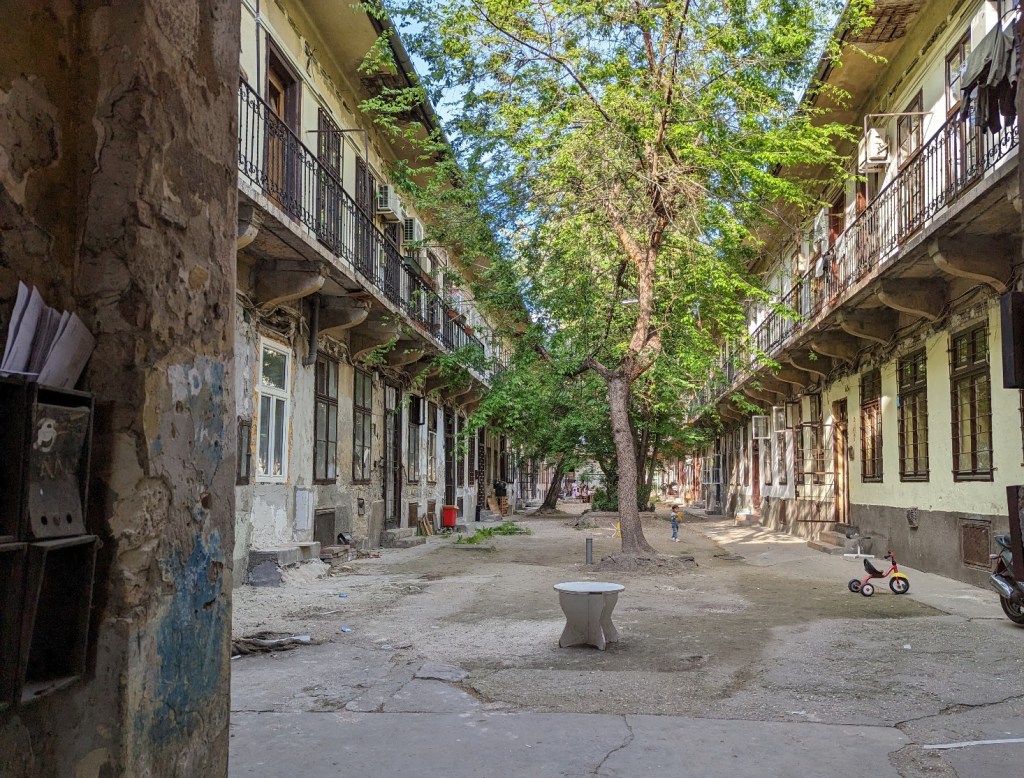
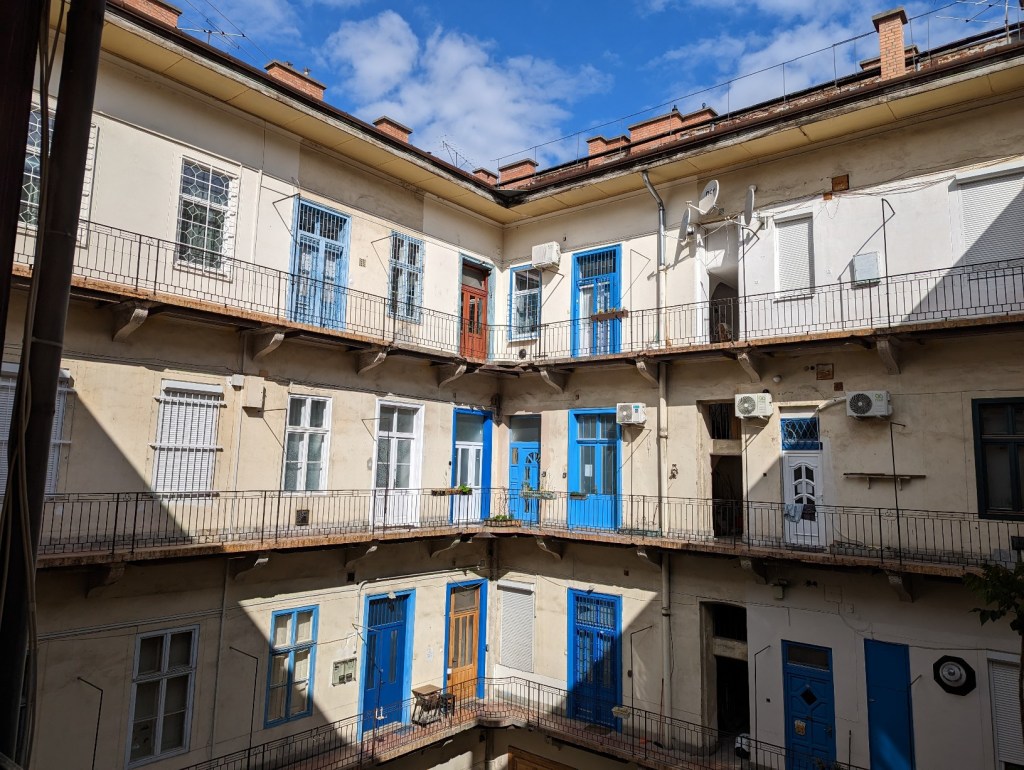
Some of the architecture is grand, not unlike that in Vienna (remember your school history and the Austro-Hungarian Empire?), with royal statuary on the external facades. Some is old, buildings which haven’t seen a lick of paint in a while, but are active. Look through the dilapidated outside, and there are green living quarters where children safely play inside.

Typical glimpse of courtyard hidden by what seems to be a derelict building. District VIII, Budapest, Hungary

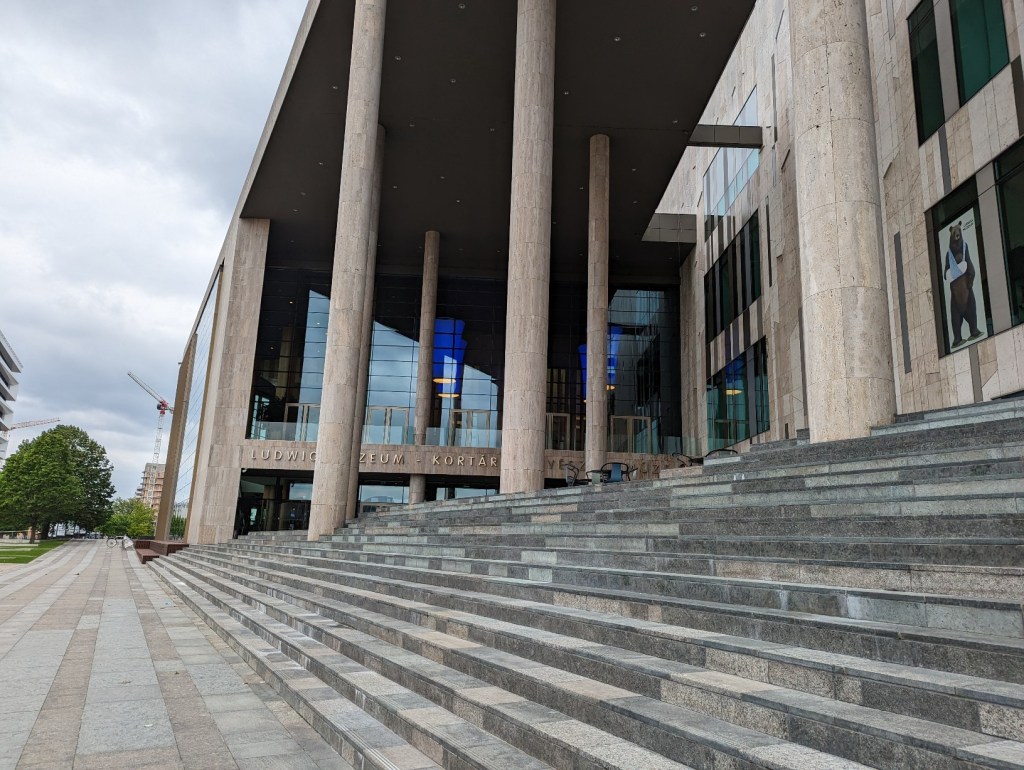
Then there are the more modern places like the enormous Modern Art Gallery with it’s smart cafe, plus miles of half-built apartment blocks going up between the gallery and the bus station.

Ludwig (modern art) Museum Budapest, Hungary
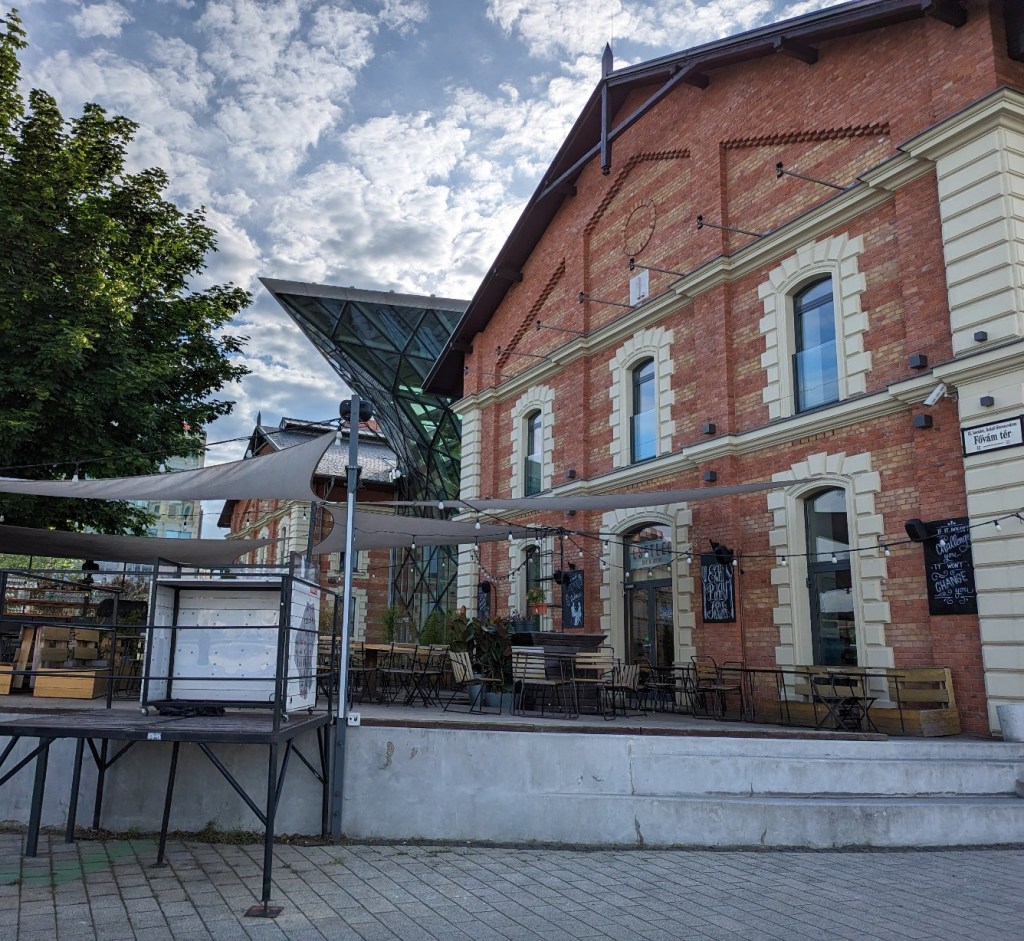
Some, like the skating rink on the river bank, are squashed between older red-brick edifices. I thought it seemed to be sailing out like the prow of a great ship, leaving behind the huge bar / restaurant complex and shopping mall which flank it.

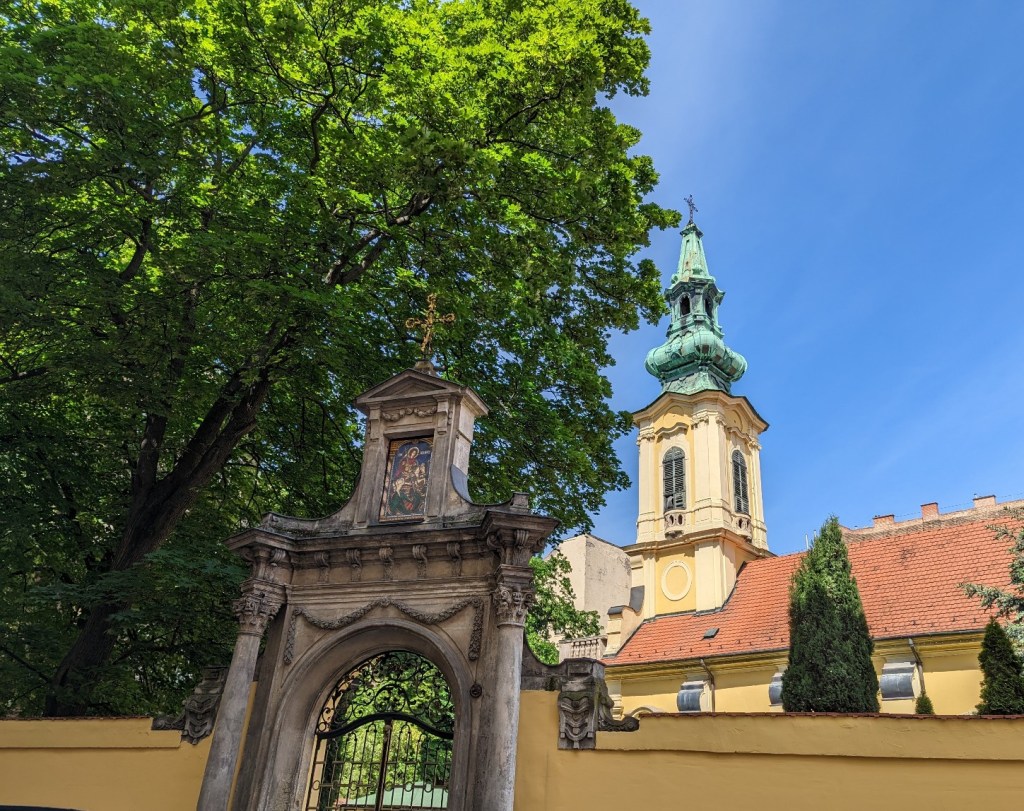
There are lots of turquoise church steeples in the Central European Baroque style; some Catholic, others Orthodox, and numerous other steeples, new and old.

The Saint George Serbian Orthodox Church, Szerb ut 4, Budapest, Hungary
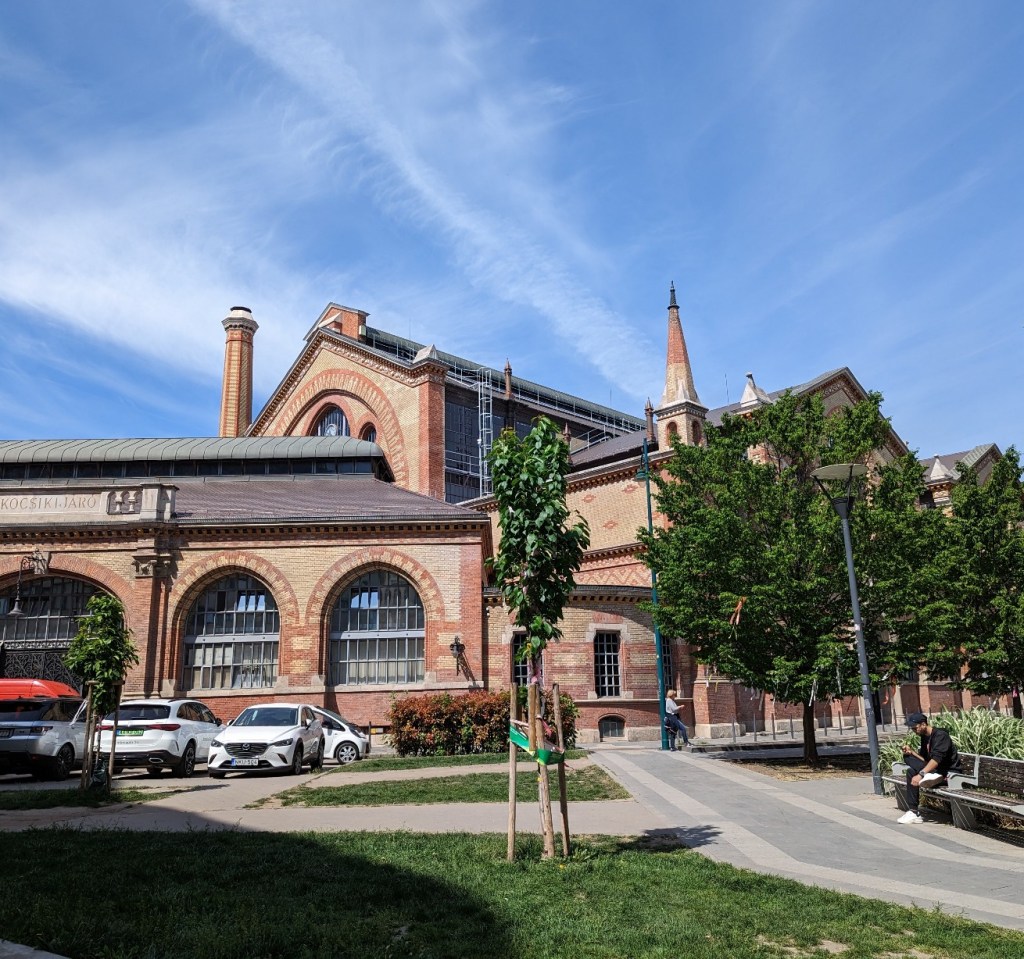
The Great Market Hall, Budapest, Hungary
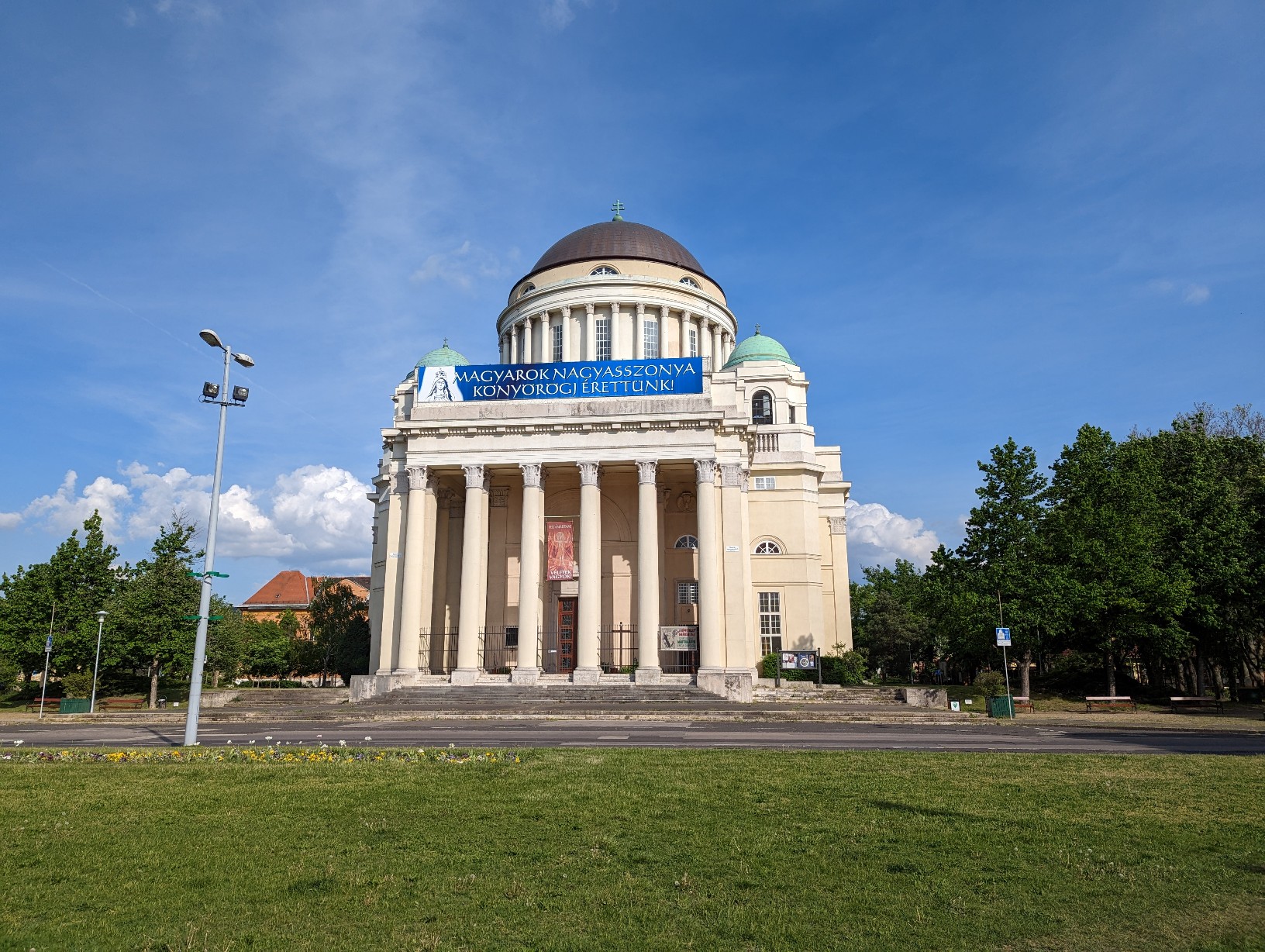
Our Lady of Hungary Catholic Church near Szenes Iván ter, Budapest, Hungary

As an older woman alone here, I was struck by how numerous are the ‘sex palaces’ and other sex shops / references, and this was replicated in Siófok, a town on the bank of Lake Balaton which I also visited. I met with a lot of surly male responses to questions like, ‘Please can I fill my waterbottle?’ – scowls, disinterested shoulder shrugs, and turnings away without bothering to answer. A couple of times men just stood close by and stared for too long, but I was never approached nor subjected to anything worse than that. I felt safe walking around in the day and evening. Indeed, I witnessed the same sort of men being kind and loving to their wives. The younger men who worked in the cafés I ate in, like their female counterparts, were polite, very helpful, and spoke excellent English.

Hostels

The internal courtyard off which The Heart of Budapest hostel is. Find it on booking.com Budapest, Hungary

The Heart of Budapest hostel on Dohány útca is okay. It consists of two spacious rooms, one for women only (sadly, it’s very unusual to find such dormitories at hostels nowadays which doesn’t encourage us to travel alone), but you do have to go through the mixed dorm (4 beds) to get to it. There’s one toilet / shower for everyone, and a self-catering kitchen with small table and facilities (both moderately clean, not bad). Although it’s on a main street, it takes some concentration to find it, even with the detailed instructions. The room was warm, so the window was open, meaning it was unavoidably noisy.

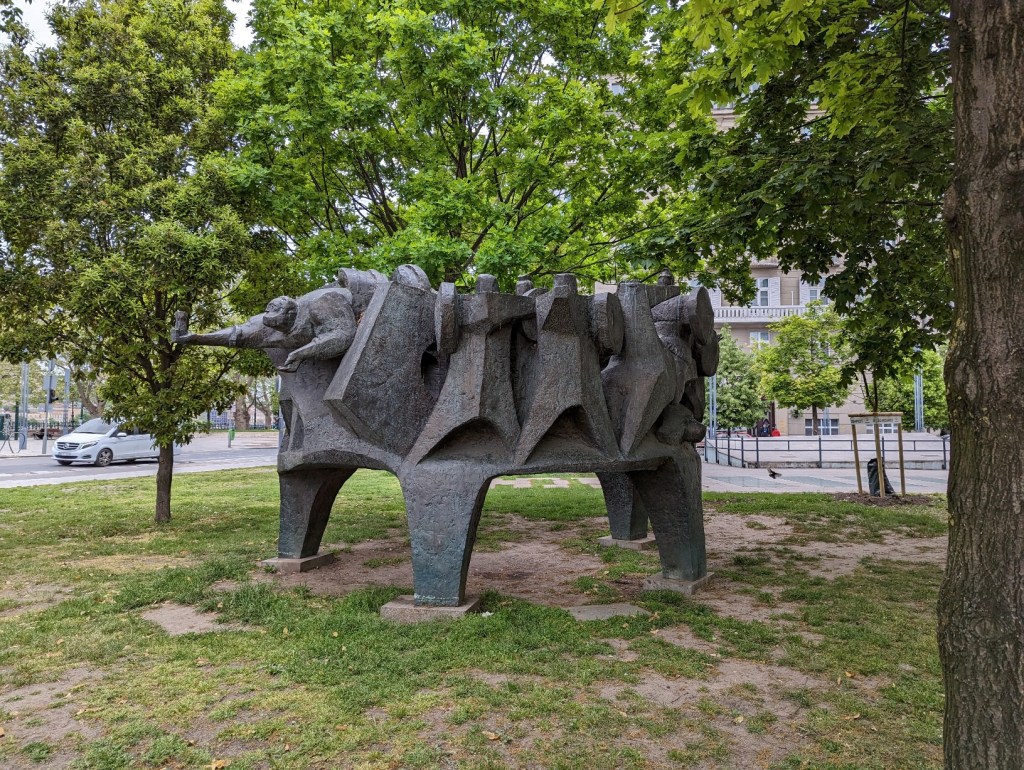
Sculpture: Barbarian Struggle with the Romans, Március 15 ter, Budapest, Hungary

There’s no washing machine or drying area, not even somewhere to hang damp towels after a shower, though there is a ‘super’ quick launderette almost next door (Árlista on Dohány u) which provides automatic powder and has driers. Cost: 1800 Forint (HUF) for a wash, 700 HUF per dry (self-service).

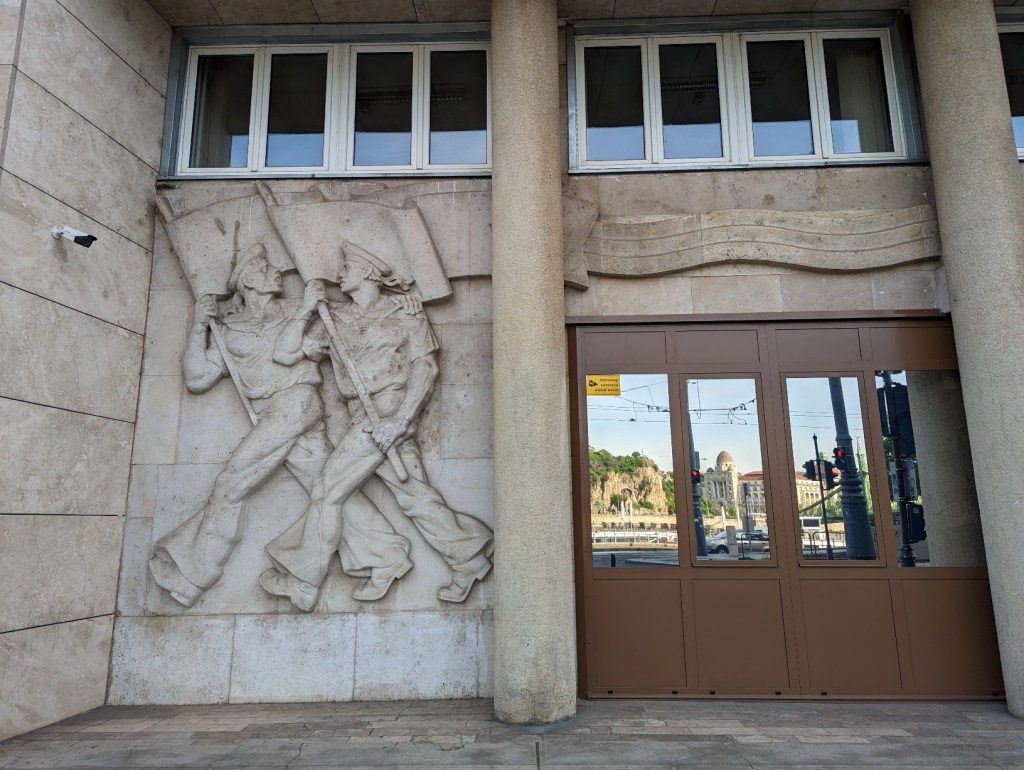
Interesting relief beside the river, Budapest, Hungary

Currency – forints

Forints are the local currency – they don’t use the euro. At the time of writing, you would get approximately 427.5 florints to £1 stirling. It took me a while to get my head around the conversion.

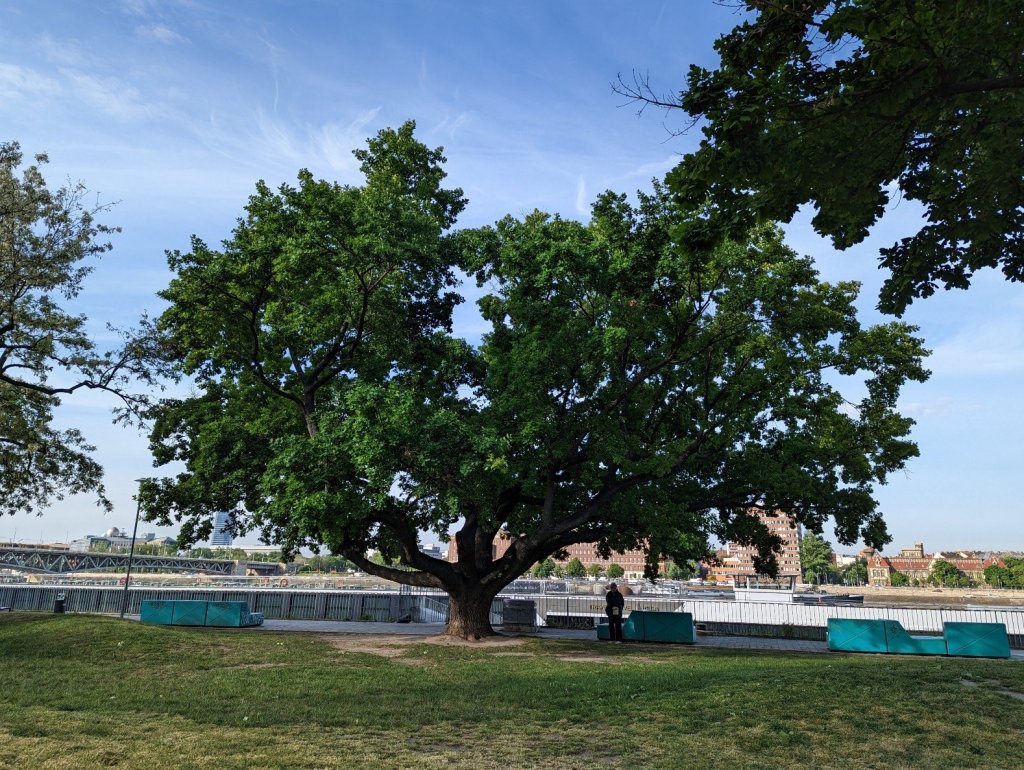
A beautiful oak worth visiting on the banks of the River Danube, Budapest, Hungary

I booked the room late, so was with the men. A Ukrainian ex-soldier (retired) dressed only in his boxers, told me about himself – how things were so bad at home with bombing and children being killed, that he thought he might as well go touring, look for beautiful places, after all he didn’t know what would happen next (by which I understood him to mean that he may not survive into old age). He was very enthusiastic about the war museums he had seen, and he sat (uninvited, but friendly) on the edge of my bed to show me photos of himself beside tanks and holding guns in the places he’d visited. The other two were quiet (apart from snoring) and smiled politely.

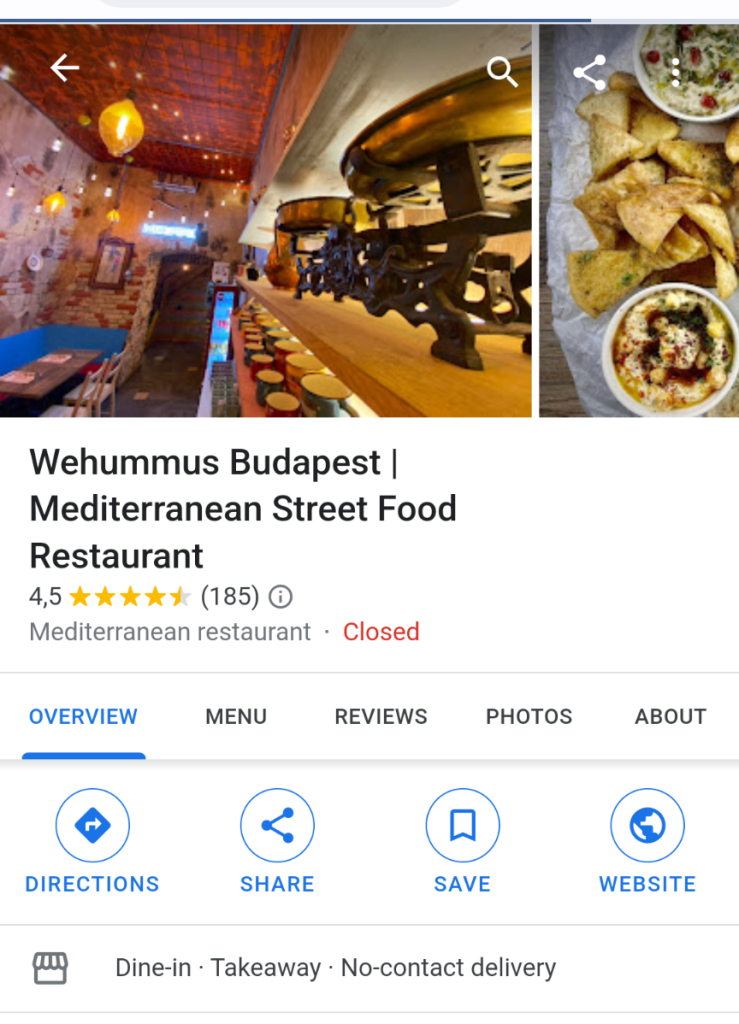
WeHummus is very close to the hostel, an independent (sort of fast-food) place with cheap, good fare. I had an excellent chat with Adam who was serving, a highly competent high school lad who talked interestingly about history, politics, and Budapest of course.

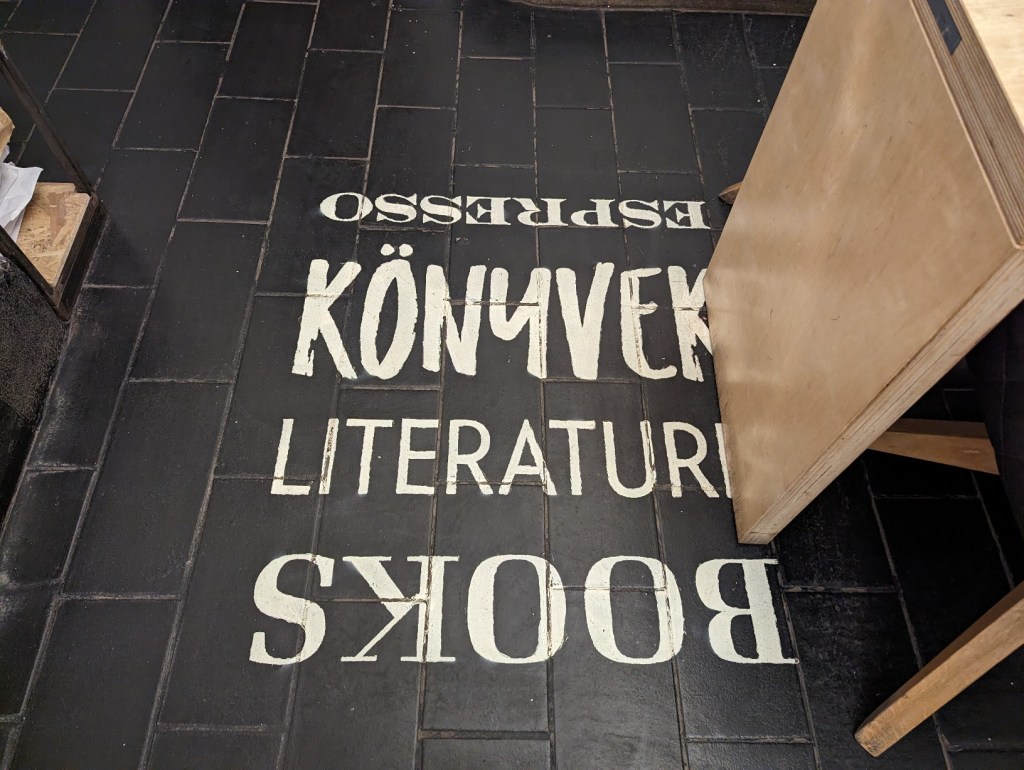
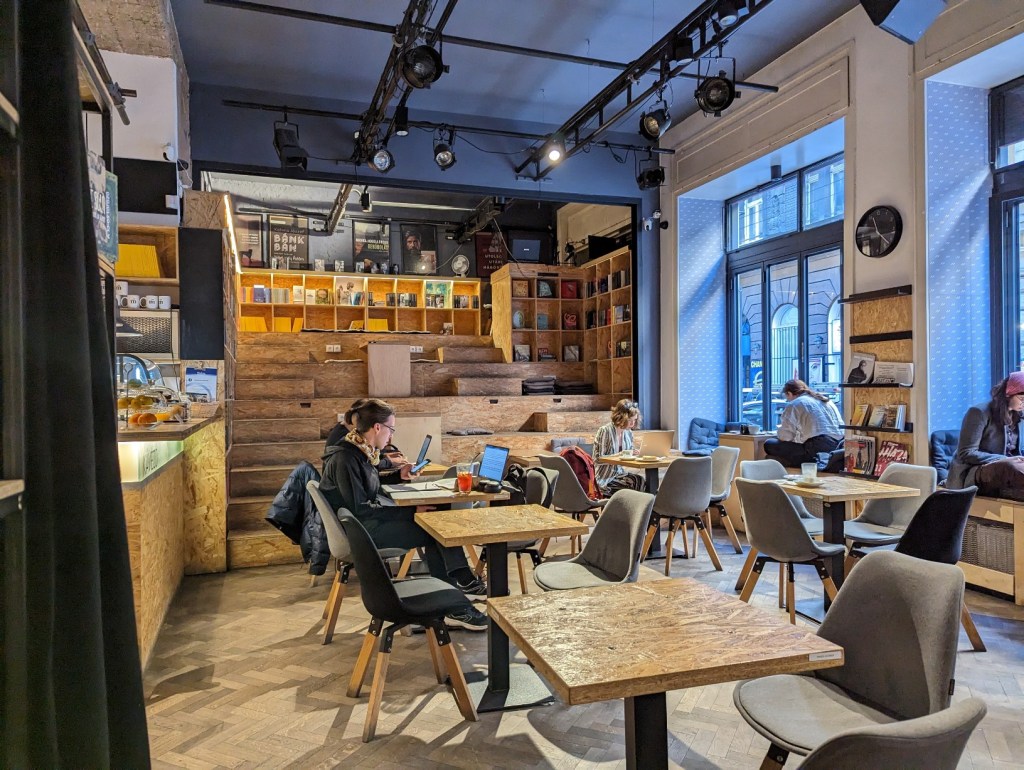
The hostel is in the Jewish Quarter, very close to the beautiful Great Synagoue, and opposite Magveto book cafe (just drinks and snacks, but good to sit and write in).

The other place I stayed was the unfortunately named Maverick Urban hostel, and it is near the top of my list of good, cheaper places to stay in Europe. It can be found on a street corner with tables and chairs outside, and you go through the bar to the reception. It resembles an Ibis-type hotel, but that’s a good thing for a hostel because it means it’s clean!

Each bunk has a curtain round it, a light, and a phone-charging socket inside. The mattress was comfy, the bedding clean. There are big, safe lockers which emit quite a loud buzz in the middle of the night when opened (as does the door when returning from the toilet) with the key card, but they are also clean. Importantly for a backpacker, there is a clothes drying rack next to a hot radiator in the women’s toilet which is a few doors down the corridor. There was hot water. Bliss. The kitchen I used was very small – okay – and there was a separate table to eat at. My food was stolen from the fridge, which is pretty normal. Finally, there is a “chilling-out area” on the roof which I didn’t see.

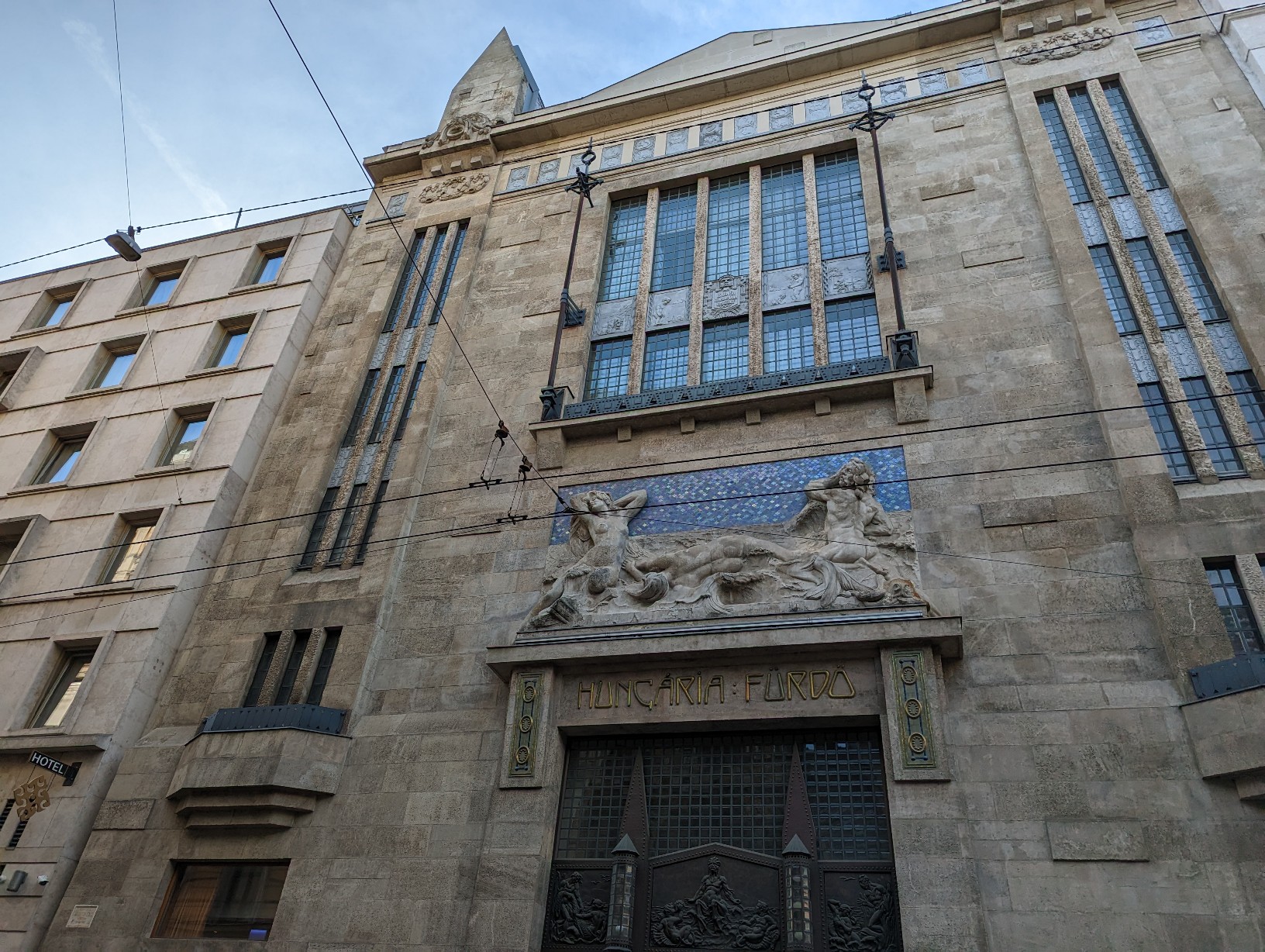
There is quite a lot of Art Nouveau architecture in Budapest, Hungary
The modern approach to the stately train station, Budapest, Hungary

Recommended

Petofi Irodalmi Múzeum, Budapest, Hungary


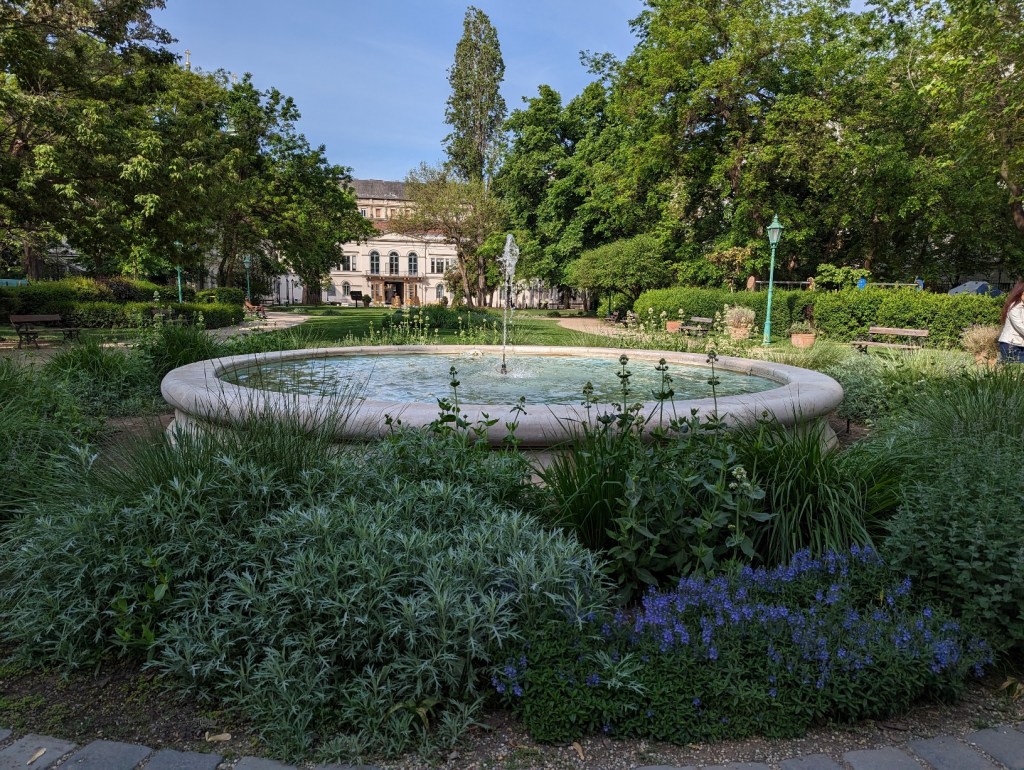
Petofi Irodalmi Múzeum – this is an historic museum of Hungarian literature with a lovely courtyard and garden. The cafe opens at 10am. “Sandor Petofi was a passionate young poet who during his short life (he died at age 26, presumably in battle) created an enduring literary work that motivated the Hungarian people during the rebellion of 1848 against the Austrian domination. His poetry continues to be taught and recited today.” (from Trip Advisor by Gabriel H, Bellaire).

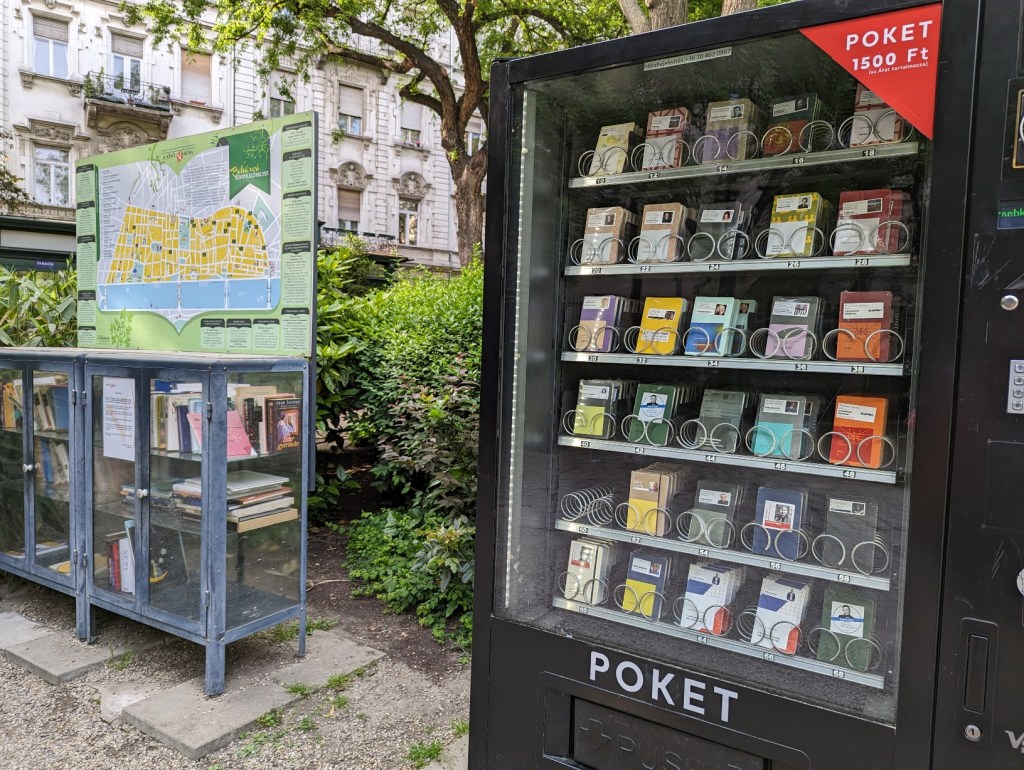
Pocketbooks machine and free book library, Budapest, Hungary


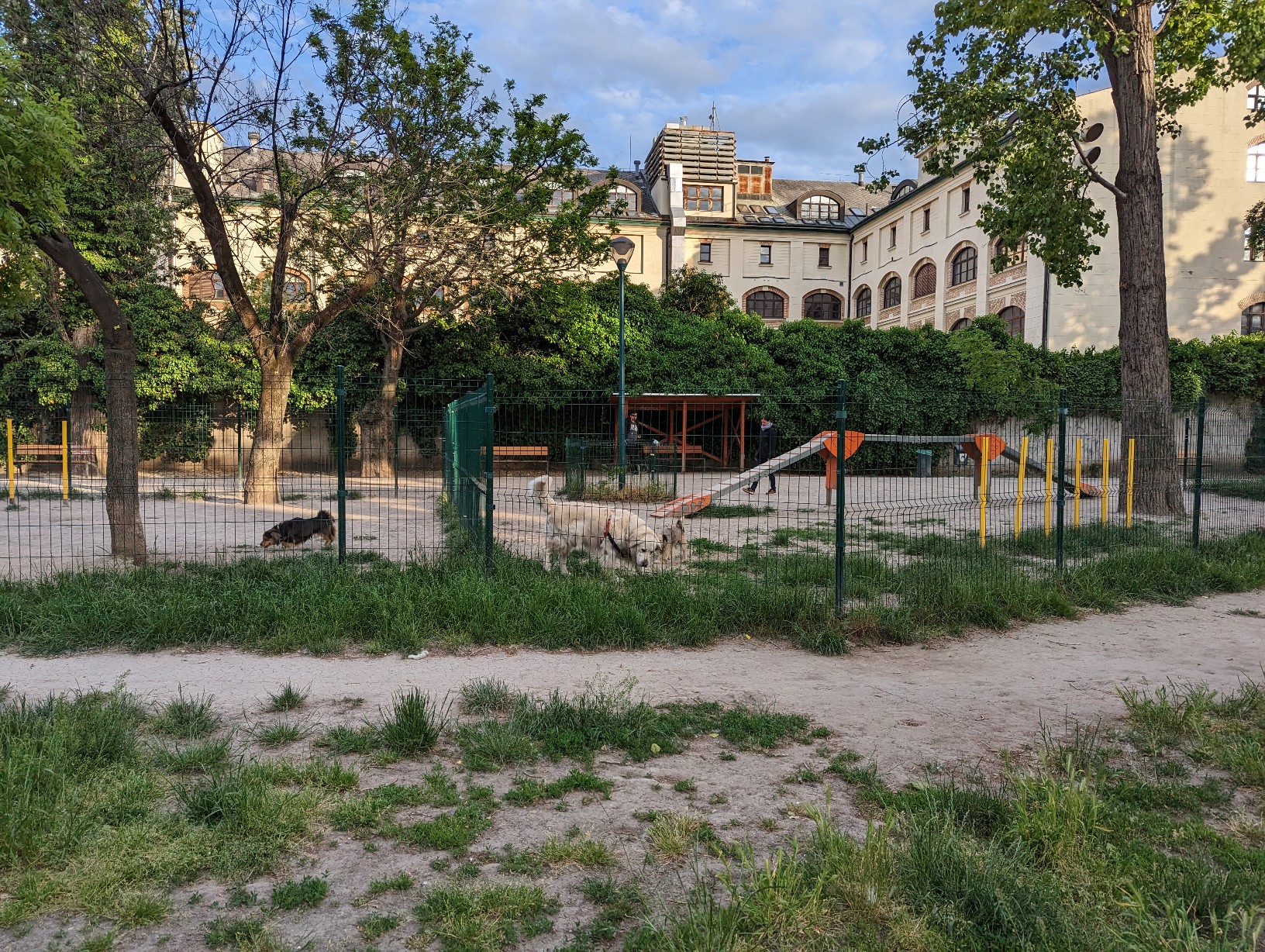
It backs on to Károly-kert, the oldest garden in Budapest which has one of the city’s many dog playparks (yes, you read right!) as well as one for kids. There is also a Pocketbook machine (sadly there was no literature by women, although there were a few female faces pictured on the outside of stories by men, including Lina and Panni (YouTubers), Juhaksz Anna (cultural manager), and Eszter Horgas (flautist). George Orwell and Shakespeare featured.) Two men bought books while I was there, so it is used – a great idea. Beside it was one of those free book shelves where you can put your finished one (mine: an interesting but curiously unsympathetic biography of Elizabeth Barrett Browning by Margaret Forster) and take a new one. There’s a map of all the similar places around the city. Unfortunately the city library was shut.

One of Budapest’s dog playparks, Hungary
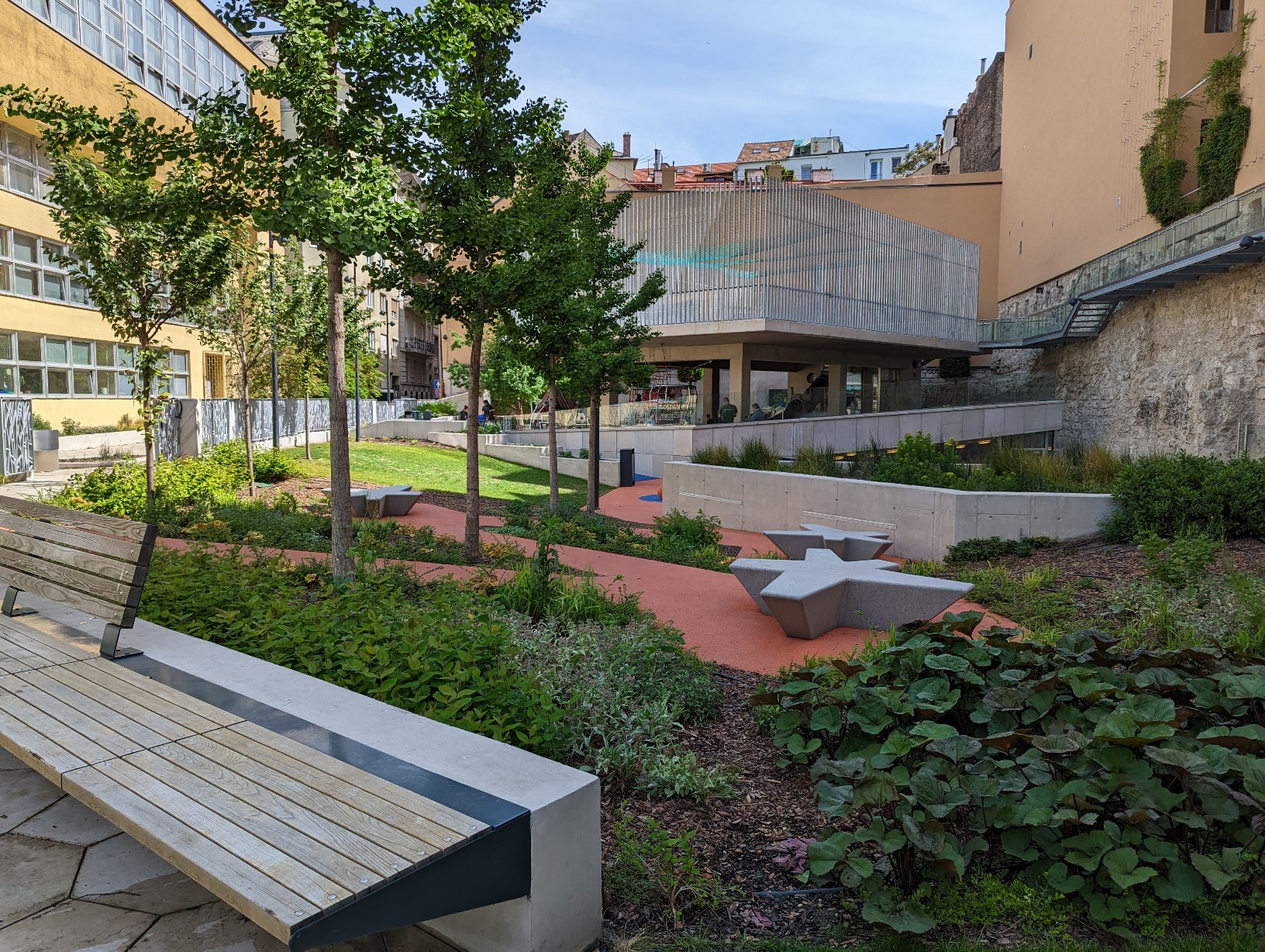
I also came upon the lovely Bástya park (V District) next to the Pest city wall, squashed, apparently between office buildings, Budapest, Hungary

Beside it was a sign about the Towering City Wall and the Murder Chamber (in Hungarian) and it was established in 2022. There is a city history museum here, another good (children’s) playpark, and a great place to sit and listen to the fountain and enjoy greenery in the middle of the city.

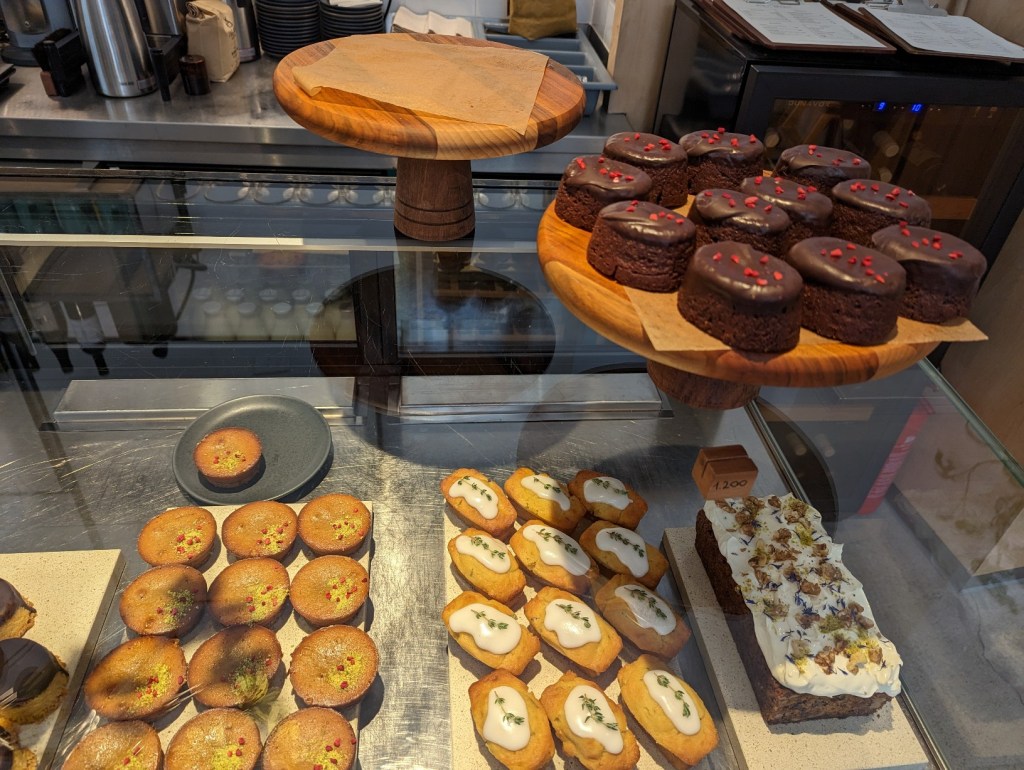
Cakes at Portobello (Coffee and Wine) Budapest Hungary

I have always been an early to bed /early riser and so, once again I went for a morning stroll. When hunger started to call, and because finding somewhere which was open at that hour and was good for breakfast took me some time, I will share what I eventually found: Portobello (good title!) The green tea and sourdough with miso roasted mushrooms, sauerkraut and walnut muhammara were excellent. There was also an impressive range of cakes. Walking back to the Maverick with a contented tummy, I found a great barber who spoke English and kindly shaved the back of my neck for free (see below). There were other possible breakfast places (Mantra was one) which opens at 8am.

TimarT Hair, Veres Pálné u. 27, 1053 Budapest Hungary. Find them on Facebook
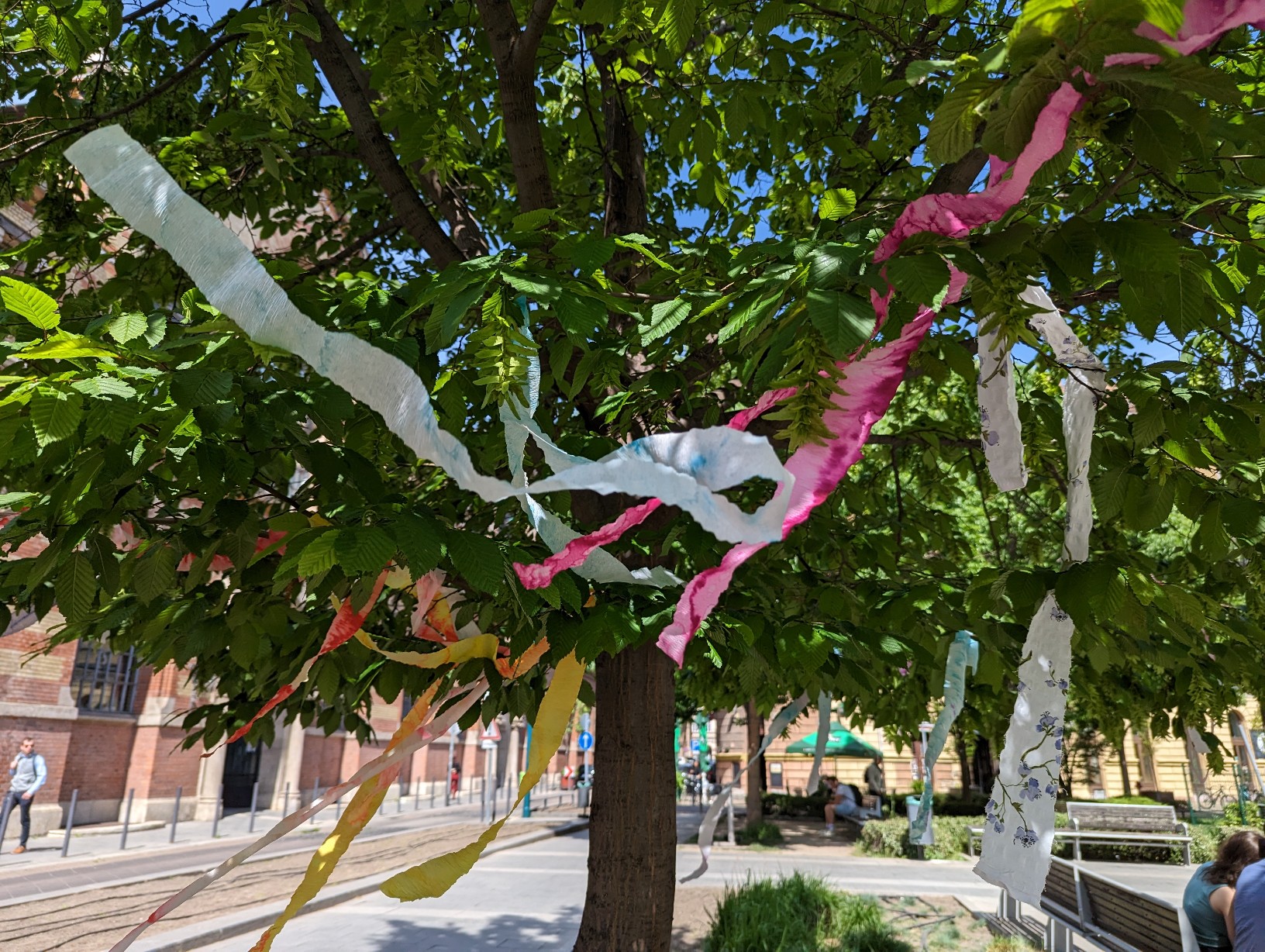
Some trees had colourful streamers flying from them. This was because of the recent Mayday / Labour Day (1st May) and it is traditional to have a May Queen and to decorate in this way.
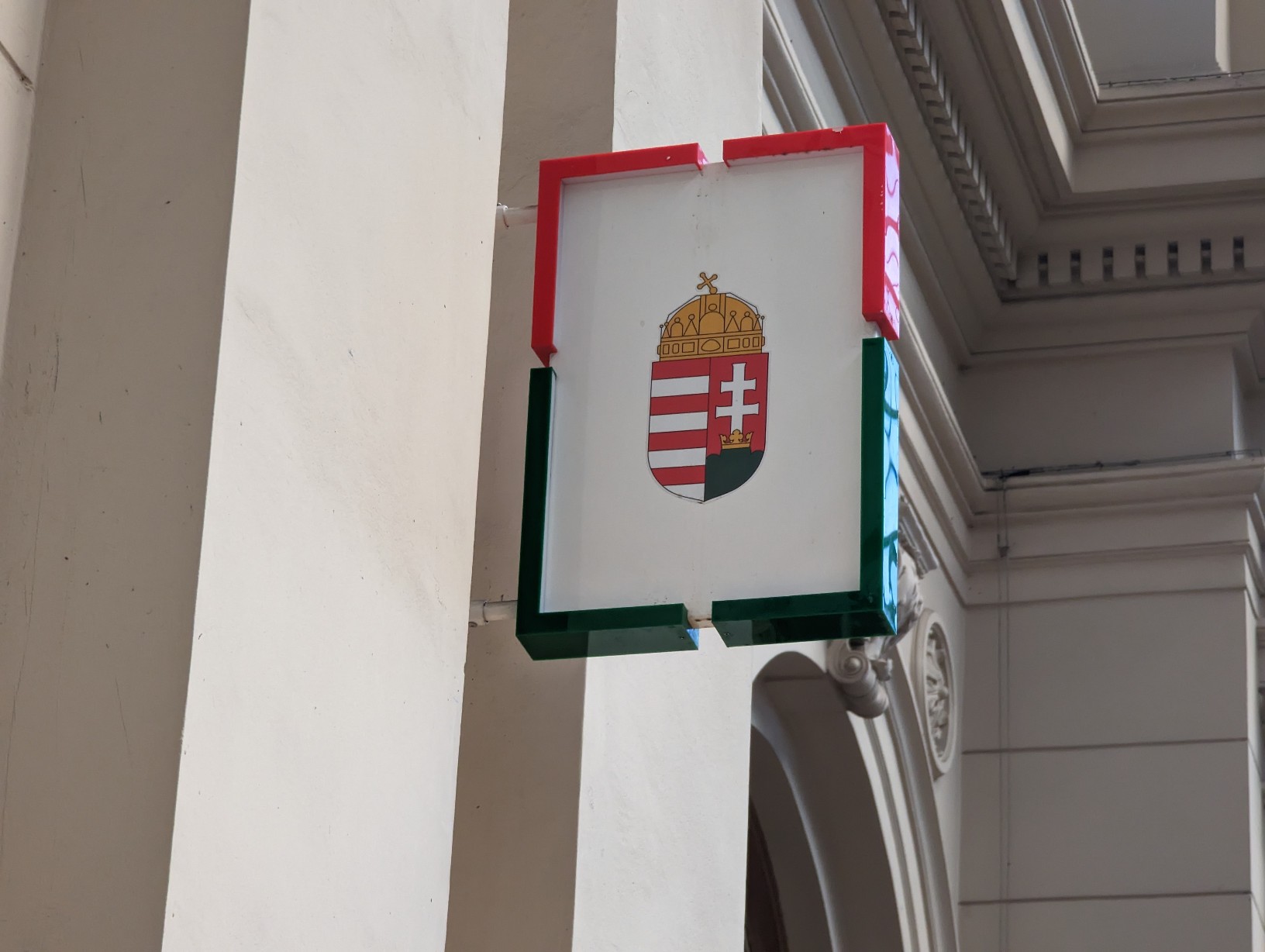
Hungarian coat of arms – a white Lorraine cross with a crown at the base on three (green) hills
Budapest is famous for its outdoors street food areas. They are teeming with life in the evenings but quiet early on in the day.

If you don’t want to walk or can’t, here’s a link for travelling in other ways.

Budapest by Locals – history page

Budapest City Guide

Architecture, Budapest

Offbeat Budapest 10 best Ruin Bars

10 Weird things to do in Budapest

May 2023 Title photo: Nyitvatartása Park, Budapest