Girona

2024

Girona is a small, attractive and friendly city in Cataluña / Catalonia, 105 kms from Barcelona. Popular with tourists, it has almost all the facilities you need for a holiday – an array of cafés and restaurants (including lots of vegan ones (@b12_bar on Instagram) and a Natural Wine bar), a host of sights and museums and a beautiful park – de la Devesa.
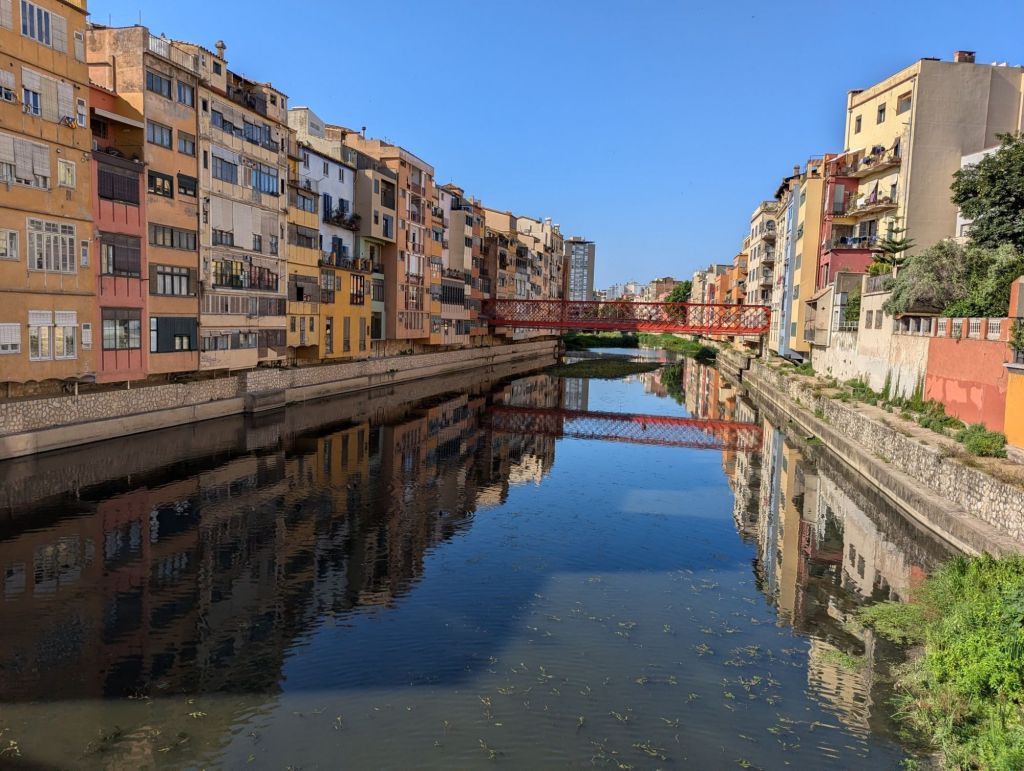
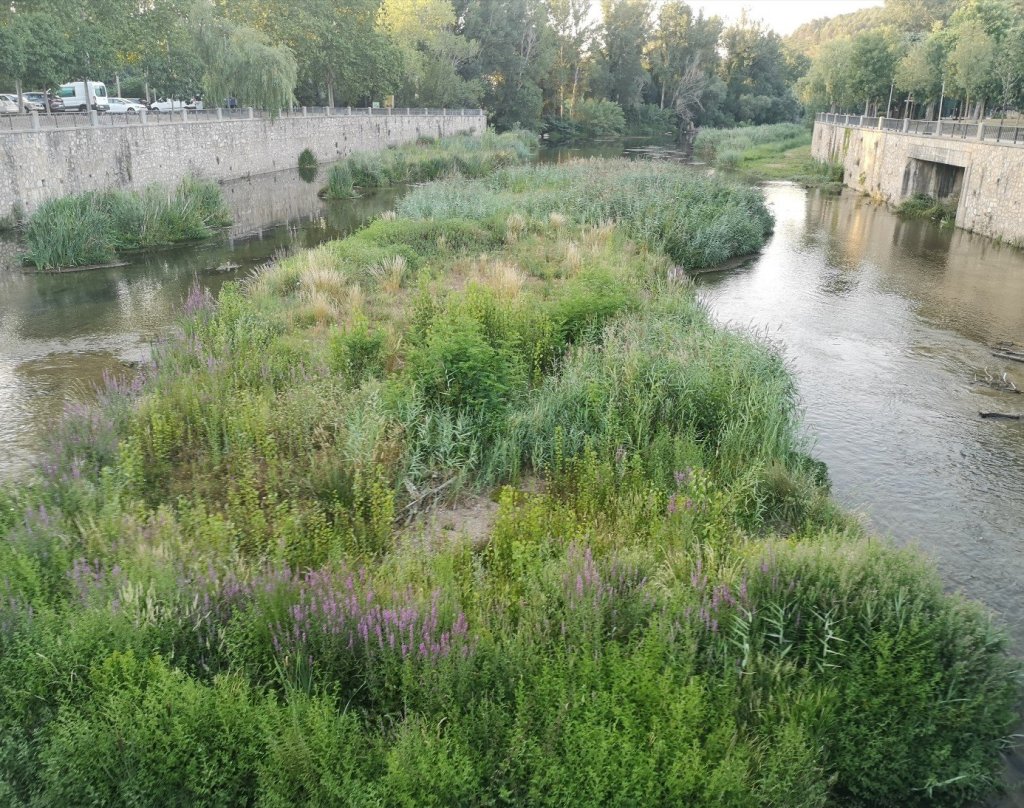
River Onyar, Girona, Cataluña

I will be adding photos and information to this blog over time but for now, here’s some useful stuff and pretty pictures.

Culture

The Bolit Centre of Contemporary Art is excellent. All the exhibitions I’ve seen there have been interesting and inspiring. Helpfully, it’s next to the Tourist Information on Rambla de la Libertad.
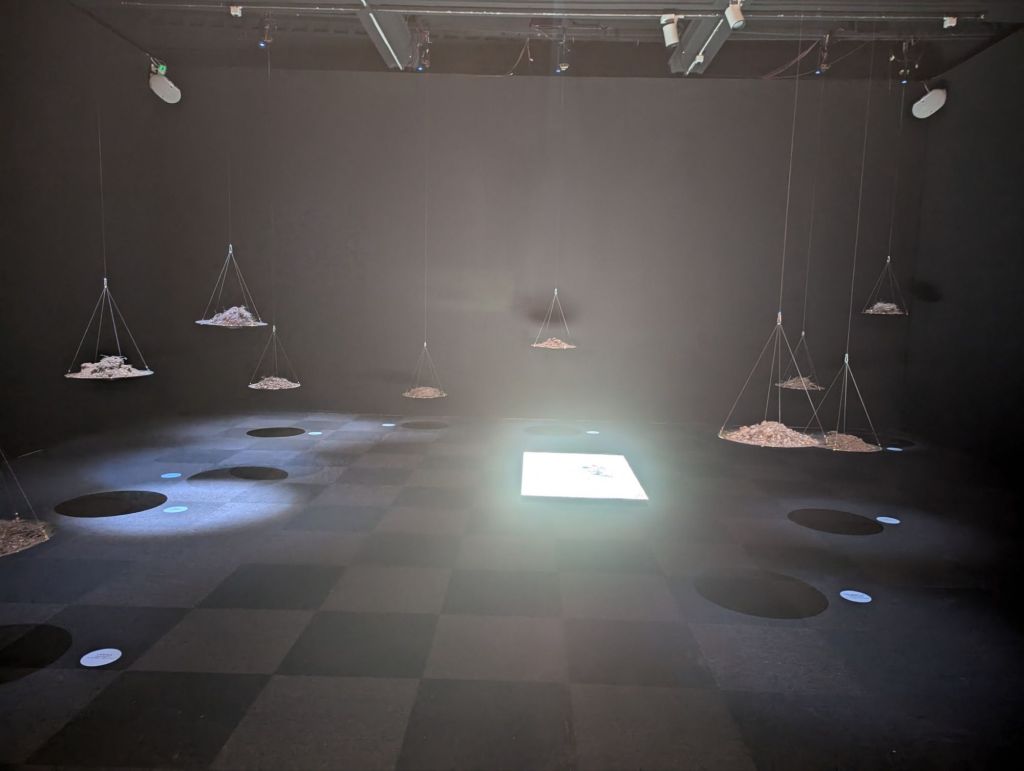
‘Forats para a fer un requiem’ by cabosanroque exhibition at Bolit Centre for Contemporary Art July 2024

The Jewish Museum and the Museu Trésor de la Catedral (next to the Cathedral) are both well worth a visit.
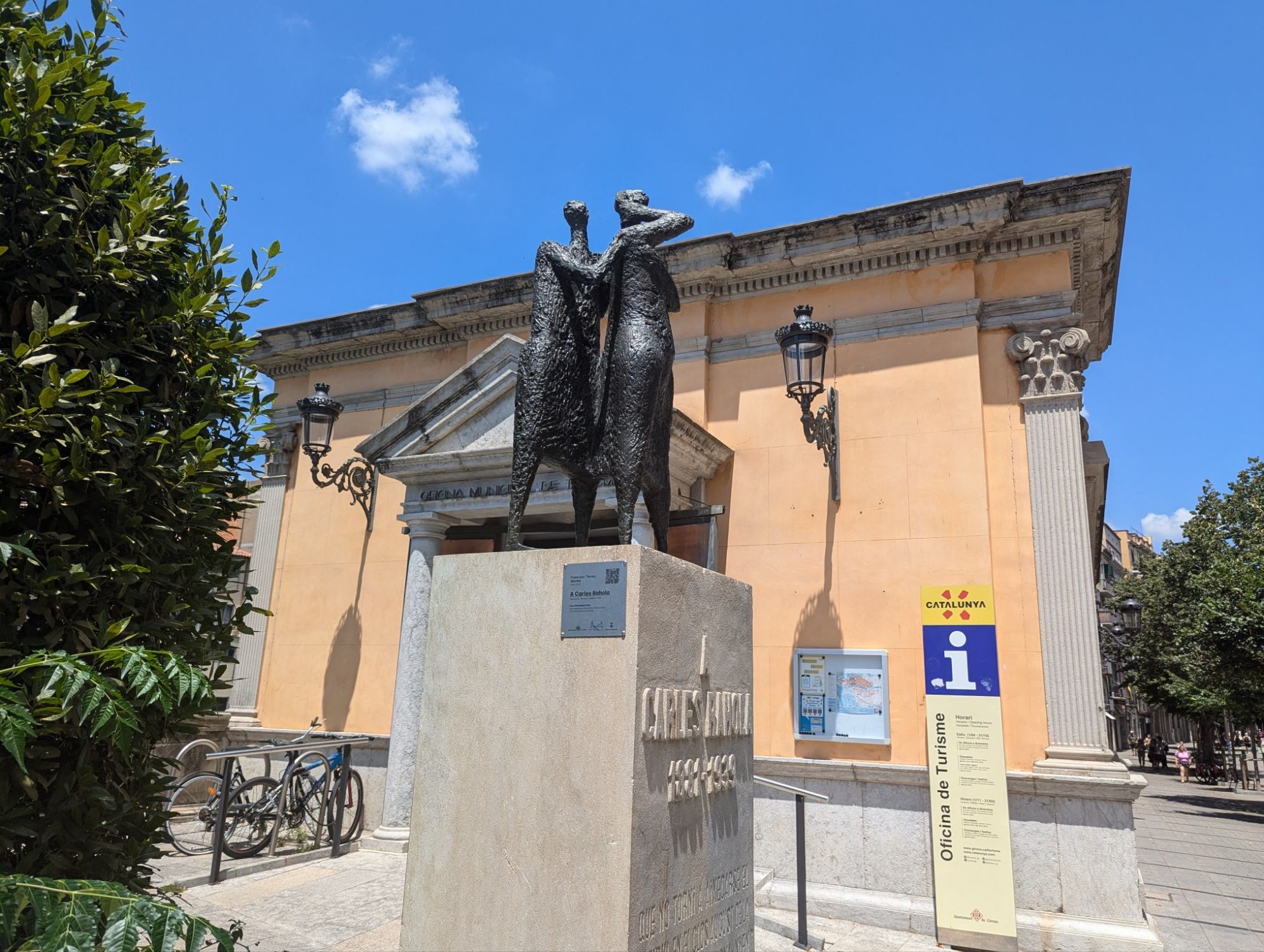
Tourist Information behind Monumento a Carles Rahola Llorens, journalist, historian, politician

Trains

It is not hard to get to Girona overland. Please consider ditching the plane in favour of the climate and saving carbon emissions.

Here is one way to get to Girona: Eurostar train from London to Paris (book in advance and take advantage of offers by email if you can, as tickets are very expensive.)

SNCF train from Paris to Toulouse overnight (my late June ticket cost €20 (not a typo!) booked well in advance, with a Carte Avantage (senior). The return day-ticket (single) cost €104, also with a Carte Avantage (senior). The SNCF app works much better now.

SNCF train Toulouse to Port Bou via Perpignan (1 hour stop-over) €21.40. Fast train Girona to Barcelona €18.
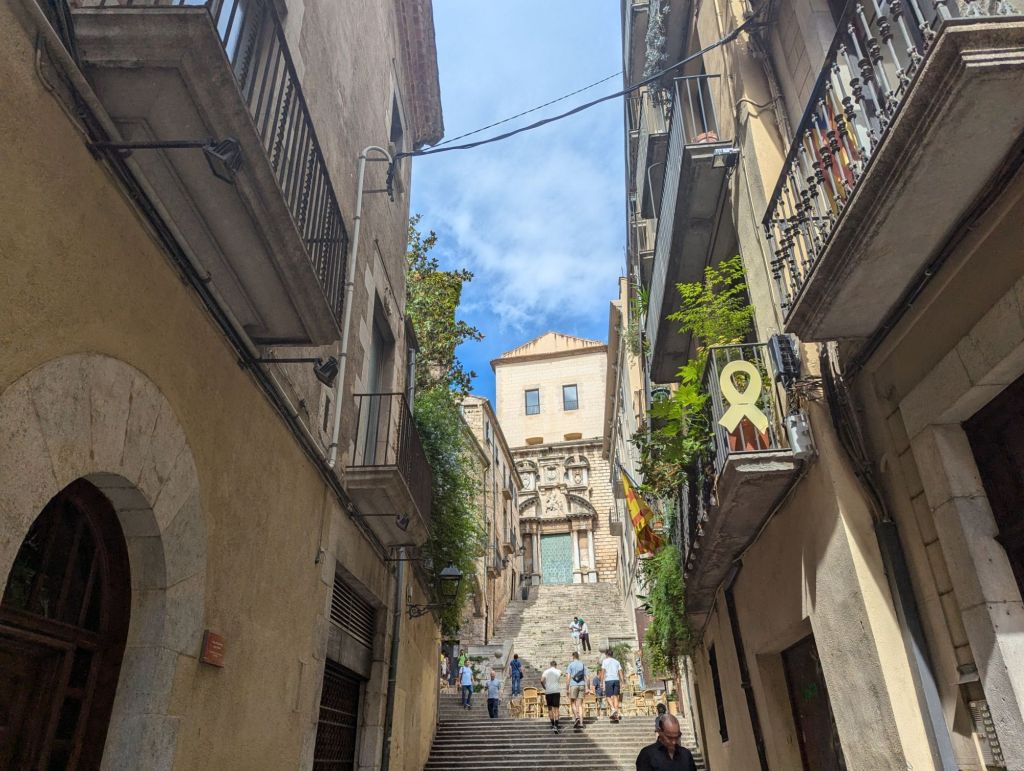
View towards the city walls – there are lots of steps! Girona, Cataluña

There are two types of trains – slow, stopping ones (eg Port Bou to Llançà to Camallera and Girona (ends at Barcelona)) which are cheaper; and high-speed ones which are more expensive. It’s hard to book tickets online (RENFE is the national company), so better at the station. Do it in advance (note that, as with the correos / post office, you’ll need a queue ticket from the machine which is in Catalán so, again, allow time to use your translate app if you don’t have the language). The machines that are used to book your tickets are slow, you will need your passport, and the staff tend to be brusque. You may find someone who speaks English.
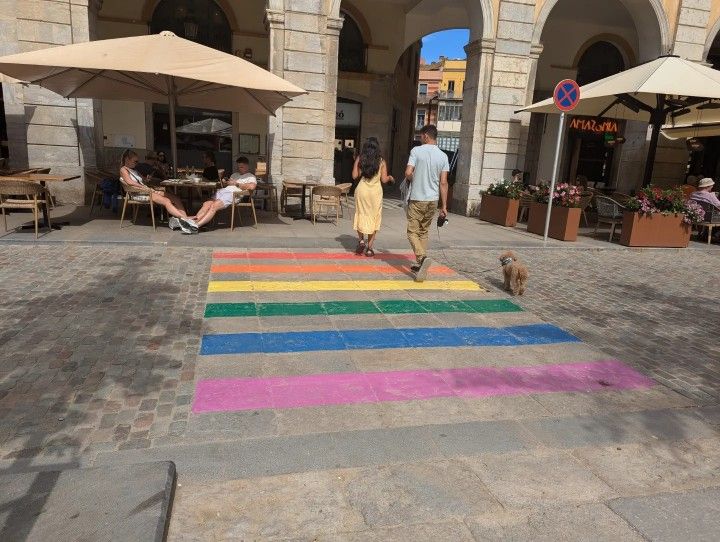
Pride, Plaza de Independencia, Girona, Cataluña

At the Spanish train stations, the process of ‘getting on’  is more like an airport procedure than that which we’re used to at a British station, so allow yourself time to put all your luggage onto the conveyor belt. There is also a slow and careful ticket checking system. This applies in Girona and Barcelona.
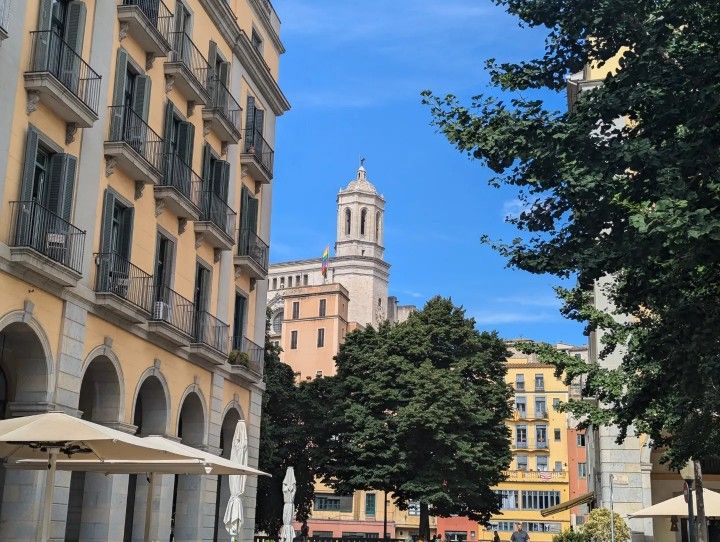
Beautiful views of the Barri Vell, the old town, Girona, Cataluña

On the plus side, the Barcelona-Paris train guard announces in French, Spanish and English, and addresses you as, ‘dear passengers’.

Changing money

You cannot change £ stirling into € euros at the Correos / post office. Nor can you do so at the Santander Bank unless you already have an account with them. Note: they and Caixabank both charge €7 to take money out of the ATM, so you are advised to get fewer, bigger amounts at one time rather than smaller sums more often. The ATM at the train station only charges €5. It’s not in the main concourse, but in the building through the car park, the bus / train station, downstairs.
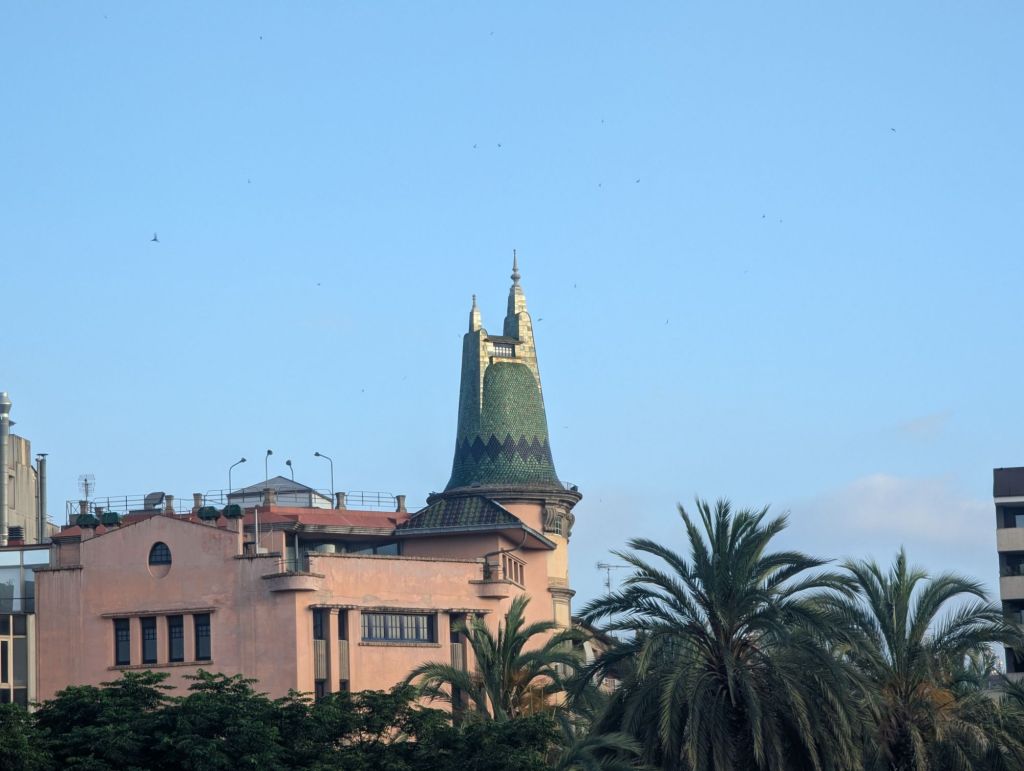
À city on top of a tower. View from the station Estación de tren, Girona, Cataluña

You can change money at the airport, so I’m told though I haven’t tried. Also it’s possible at the big El Corte Inglés department store on Barcelona Street a bit out of the centre (worth a visit if you like shopping or have to replace something that got broken in your air bnb!)
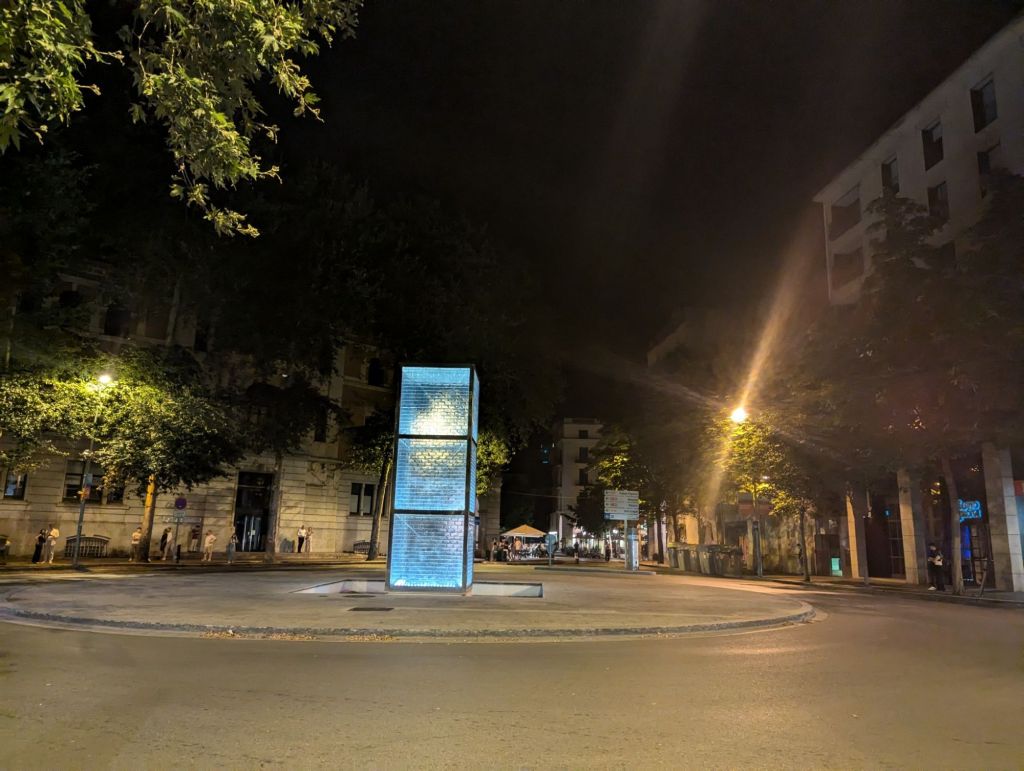
Night scene – a good example of Dpain’s renowned roundabout art, Girona, Cataluña

Shops, cafés etc take cards and cash so if you’ve remembered yours / have enough, you’ll be fine.
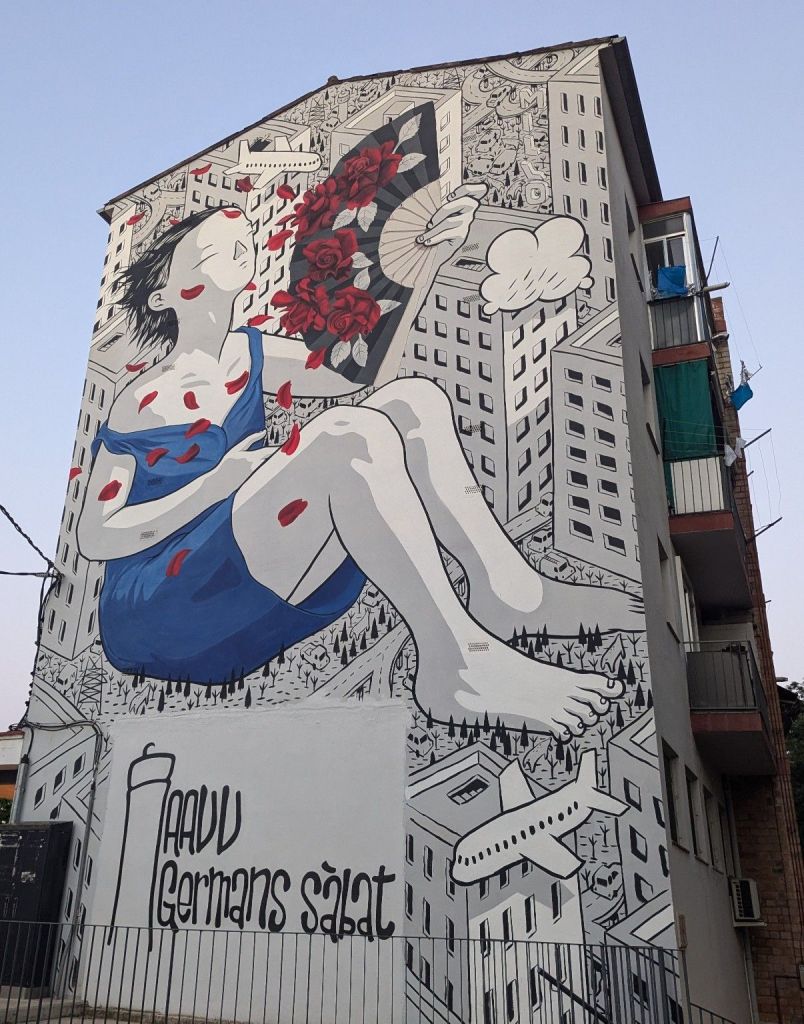
By Millo in the Germans Sàbat neighbourhood, Girona, Cataluña

Buying stamps

Although you can buy postcards all over the city, you can only get stamps from the post office / el Correo. It is open all day until 8pm and has a book swap.
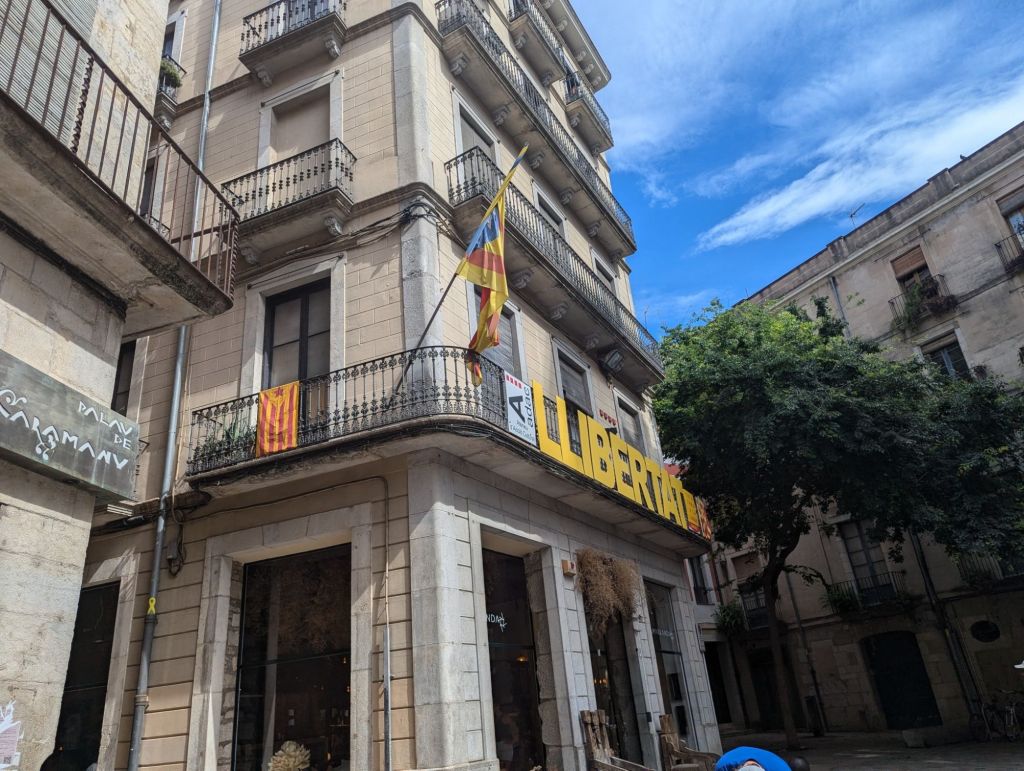
Rambla de la Libertad, Girona, Cataluña

Other people’s blogs

10 Top Things to do in Girona

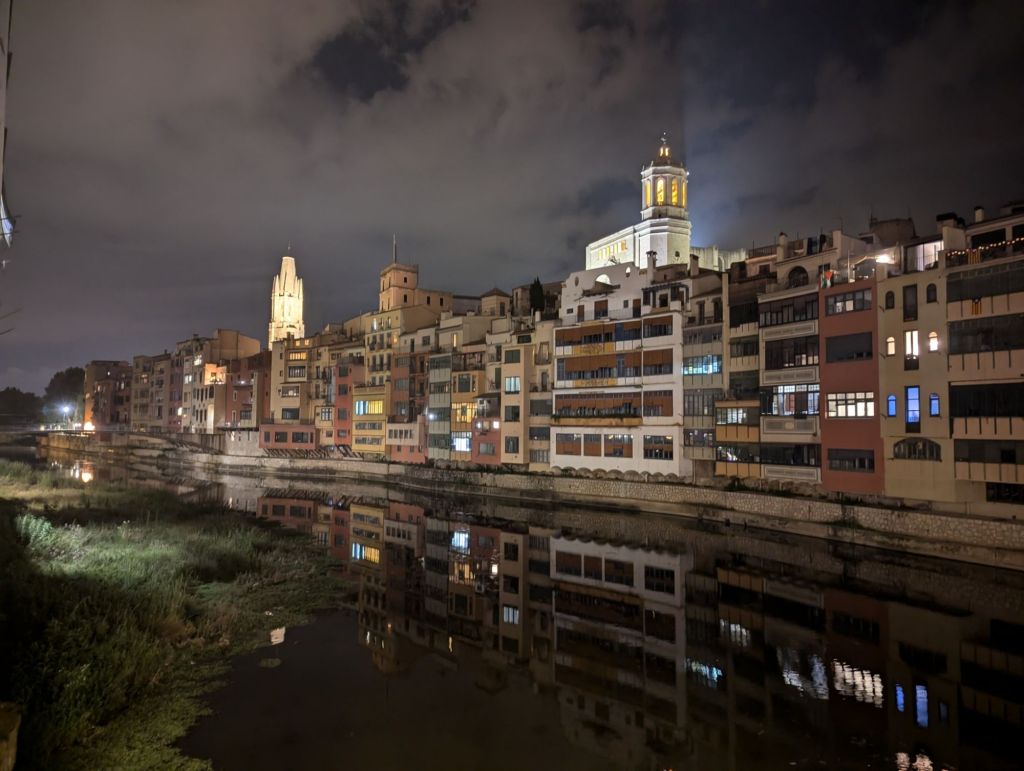
River Onyar at night, Girona, Cataluña

Please note that driving in the centre of Girona is not at all recommended – the streets are very narrow and even if you can get in you might not be able to get out again! There is a very large car park by Park de la Devesa (see link in opening paragraph).
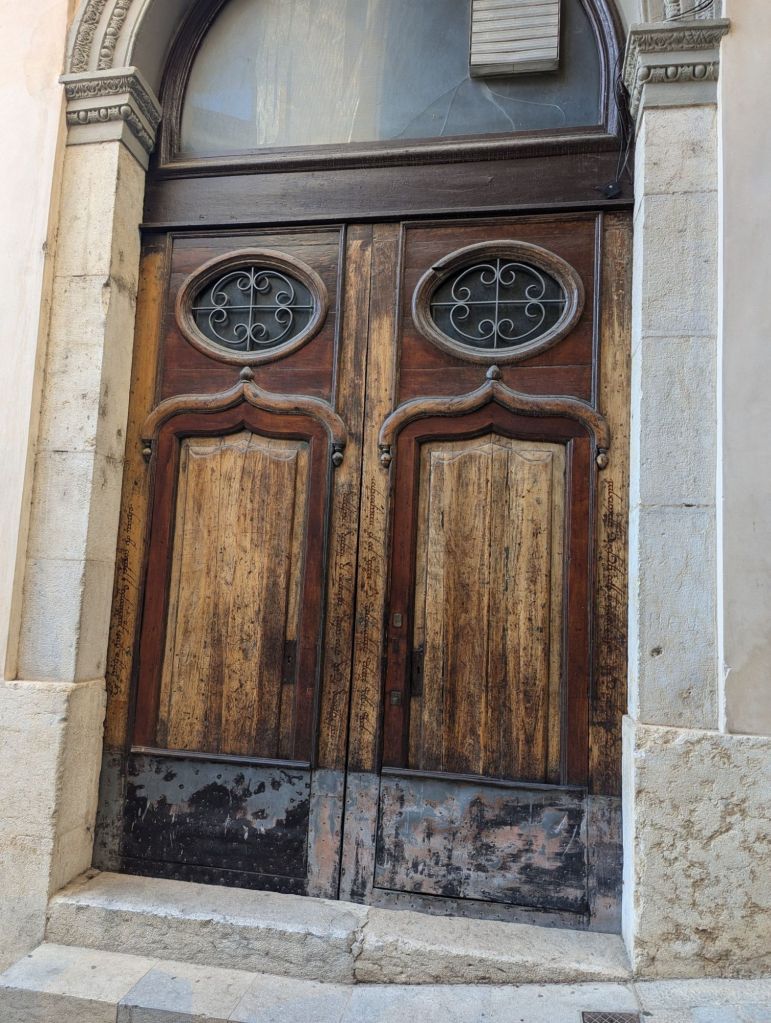
Morisco architecture with Arabic inscriptions at sides, Girona, Cataluña

Girona mini-pilgrimage

This was the first of three mini-pilgrimages offered to delegates of the international meeting ‘Walking Art and Relational Geographies’ and others in Girona, Cataluña. 6 July 2022

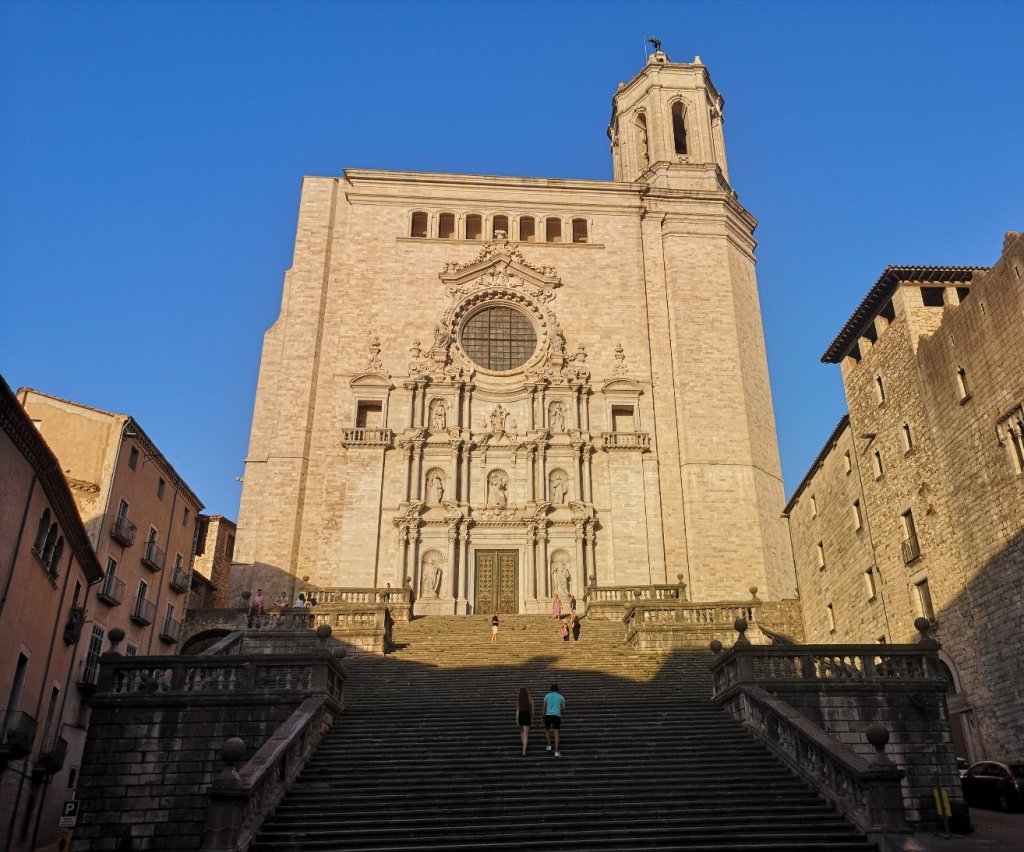
We met at the foot of the steps of the Catedral de Girona, a traditional location for the start of a pilgrimage. As we waited for the group to assemble, I asked, do you see any pilgrim signs?

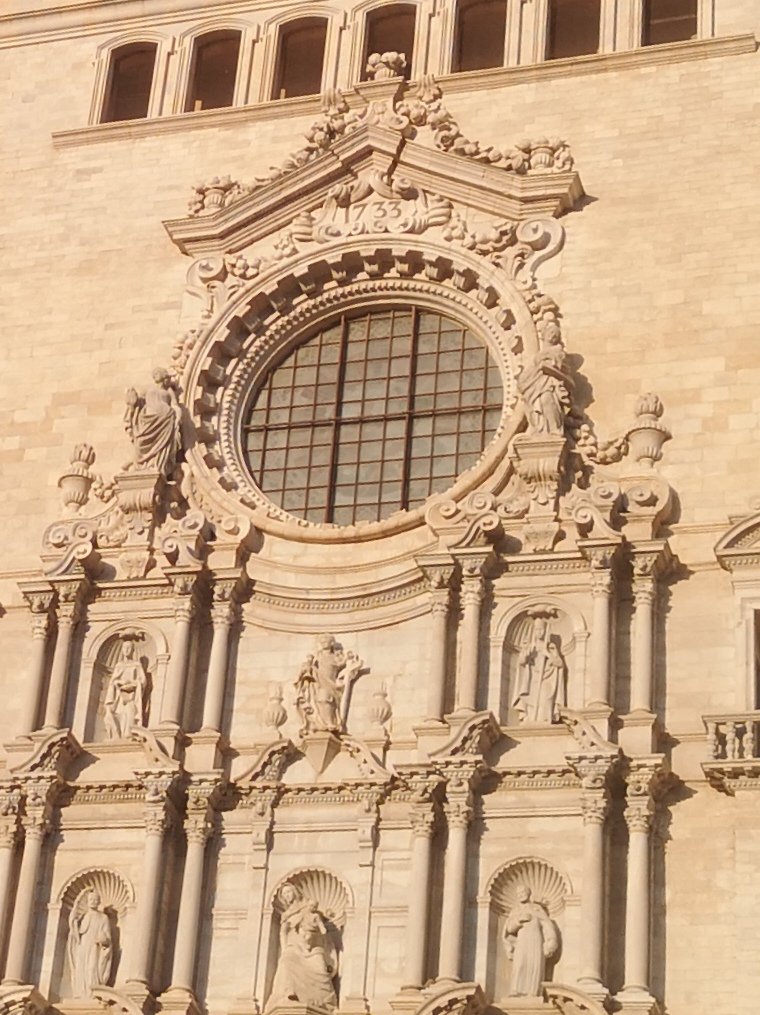
The statues at the front of the building are inset with the shell motif behind them – the iconic scallop being the emblem which pilgrims on their way to Santiago de Compostela sported.

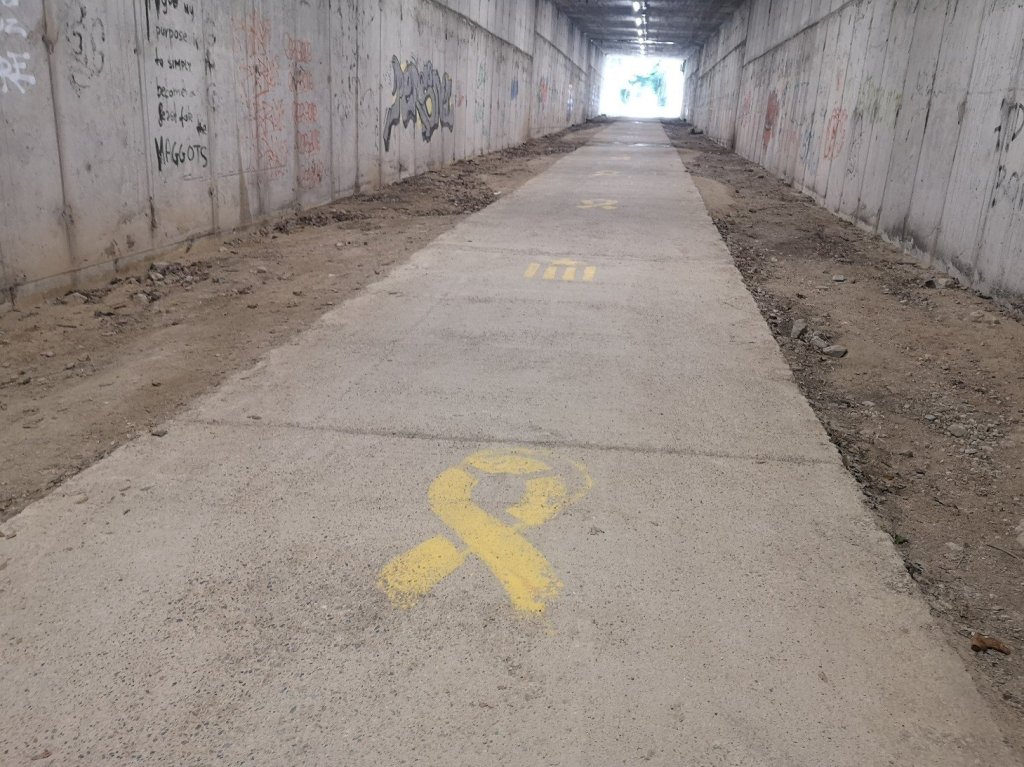
We searched for the yellow arrows which are used to indicate the path; instead we were surrounded by the yellow ribboned loops of the Cataluñan Independence movement.

Sign of the Cataluñan Independence Movement on the pilgrim path

We were a group of approximately twelve, and I explained that I had changed the place we were walking to once I knew the start time was 9pm (sunset is around 9.20 here), and now that the city and I had started to get acquainted in person, rather than virtually from Scotland in the initial planning stages.

The title of my walking project here is Separation and Unity, being aware of the political issues that concern Scotland and Cataluña, both, in their debates and attempts at achieving autonomy from England and Spain respectively.

We performed some simple experiential exercises: huddling close, noting that we were united in our interest in walking, turning outwards to acknowledge those people around us who were not in our group or who were in groups of their own.

We began some chi gung exercises, a method of grounding and centering in the body. It became clear that we needed to take more space for ourselves in order to move individually. We were moving together, separately and experimenting with breathing in unison.

Through Girona’s city walls

Last week, I walked part of the Cami Sant Jaume alone, as a secular pilgrimage.
I was on the path with others – dog walkers, cyclists, 2 hikers. Walking part of this age-old tradition, I knew there were others who went before me and who will come after.

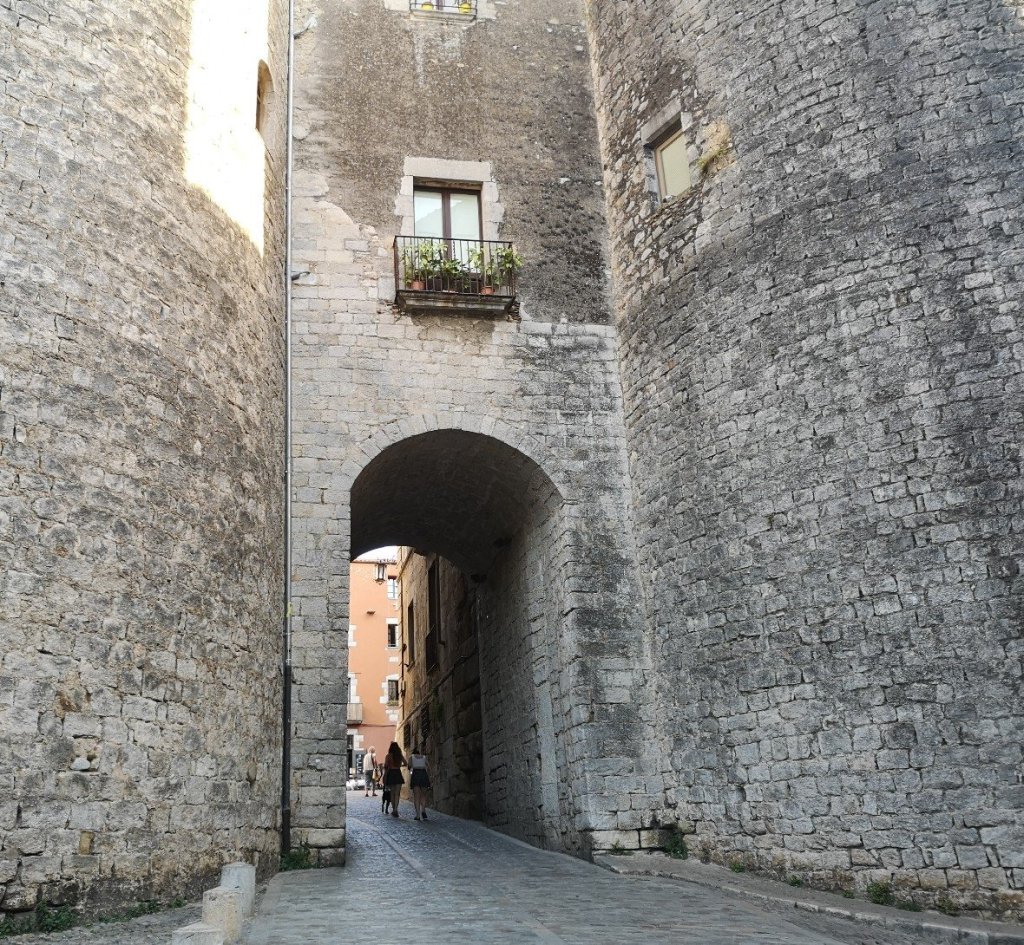
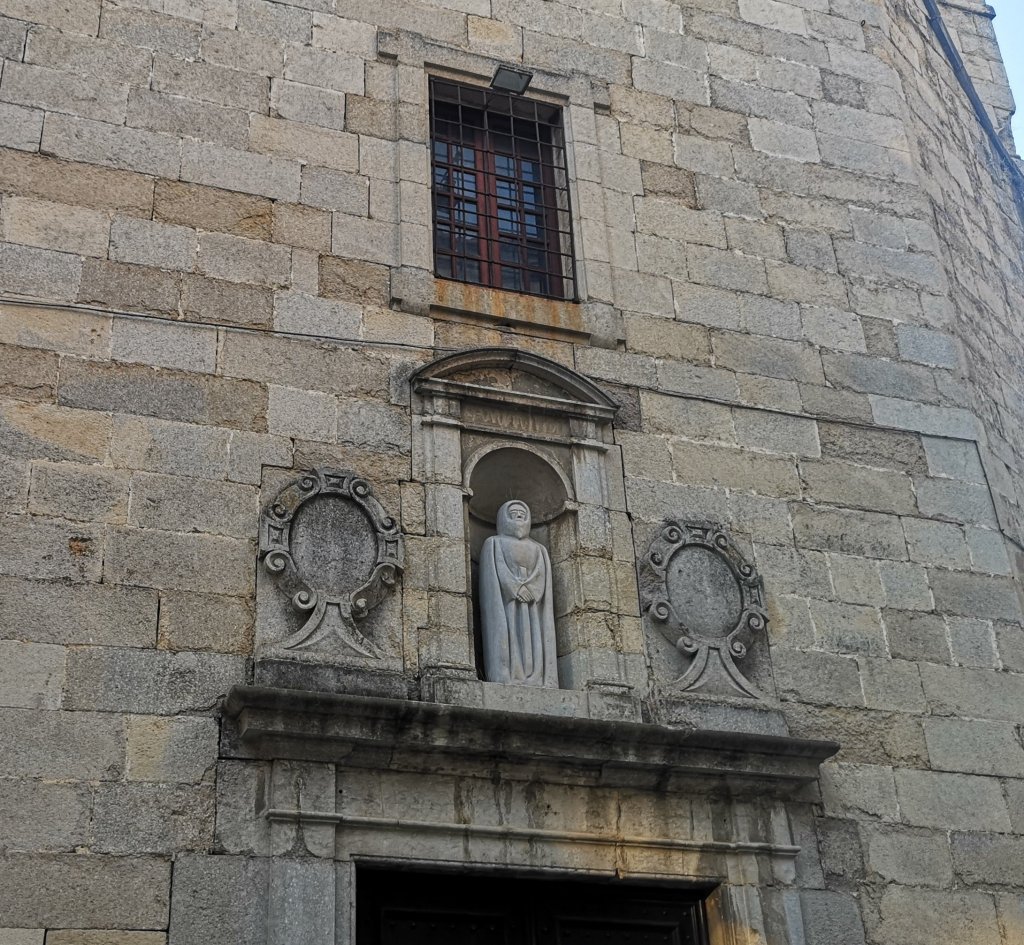
Now our group traced a pilgrim path through the archway made by the city walls and, despite there being no external signs to guide us, we headed downhill to the river. We left the heavy, archetypal building behind and walked in silence, in single-file, with the thick, steep walls with religious iconography on either side.

As we walked down Reí Marti, we paid attention to our connection with the elements – the paved surfaces under our feet, the air and water – indivisible.

Also to the birds we could hear but not always see, the insects we only knew were there if we looked very carefully or when they bit us, the other folk milling around the city. We were a mass moving inside and outside the city walls.

We were aware of each other walking together. Our intention was clear.

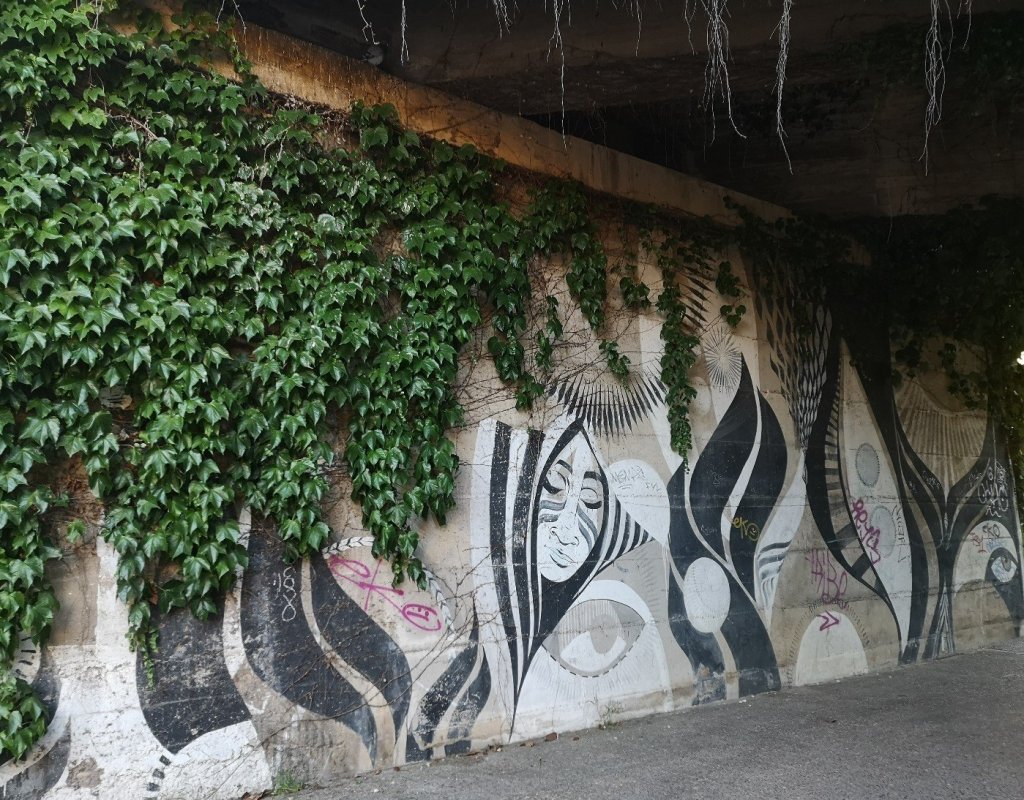
As the streets opened out, we turned left taking Carrer del Bellaire and heading straight for the river, passing once again,
underneath, though by now we were amongst modern architectural constructs. The train line ran overhead.

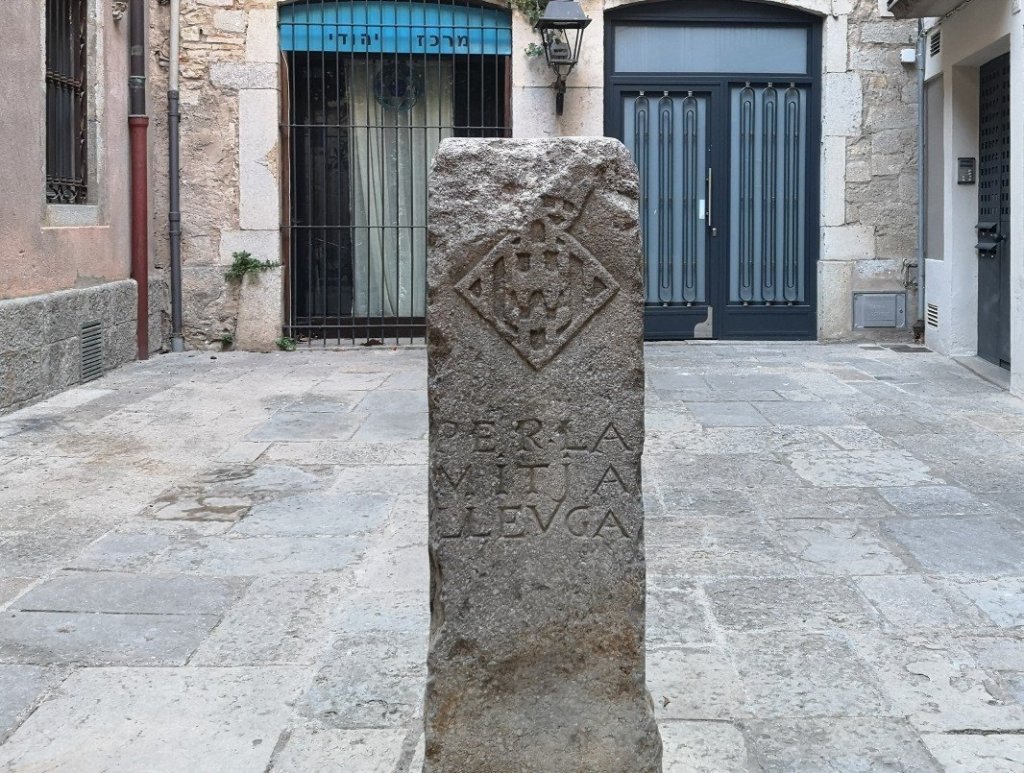
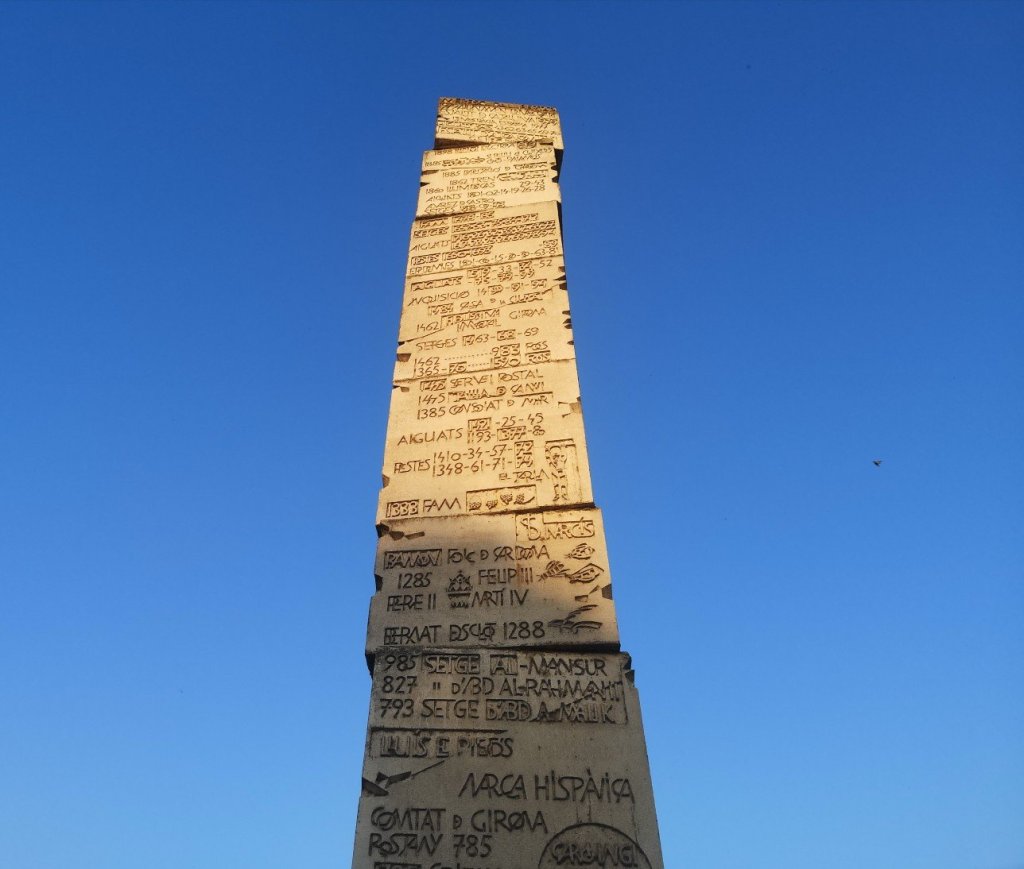
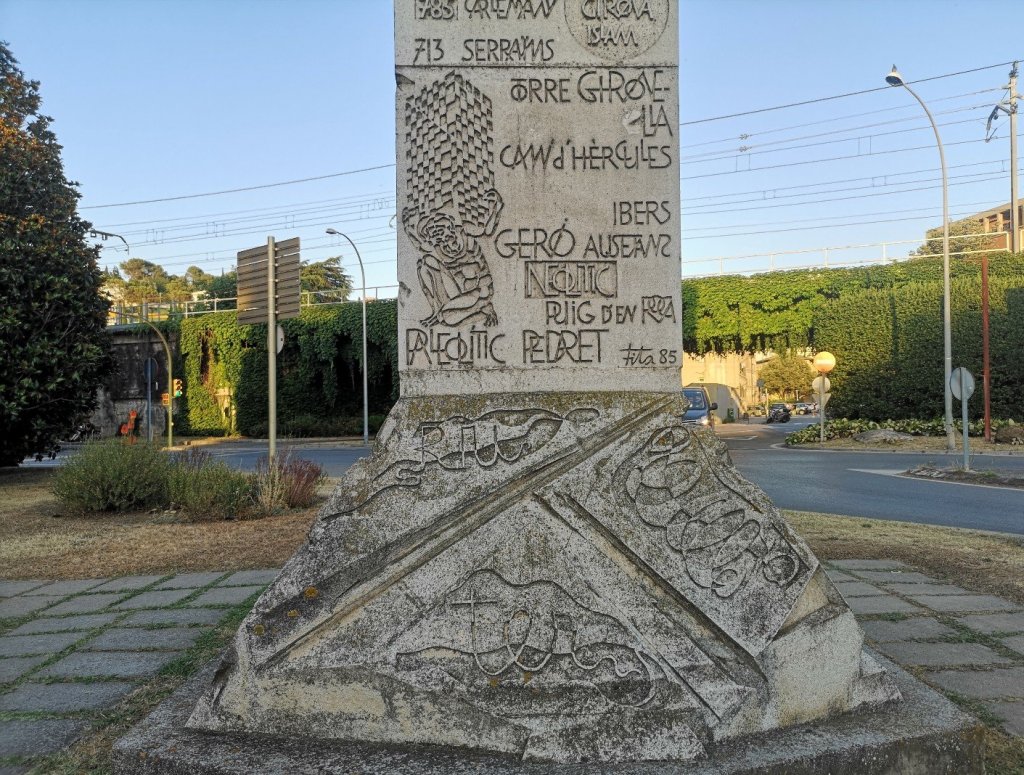
Around the cornerstone the left, was the Column of the History of Girona, a pillar of stone whose four sides depicted images and text saying this ancient settlement back to the Neolithic.

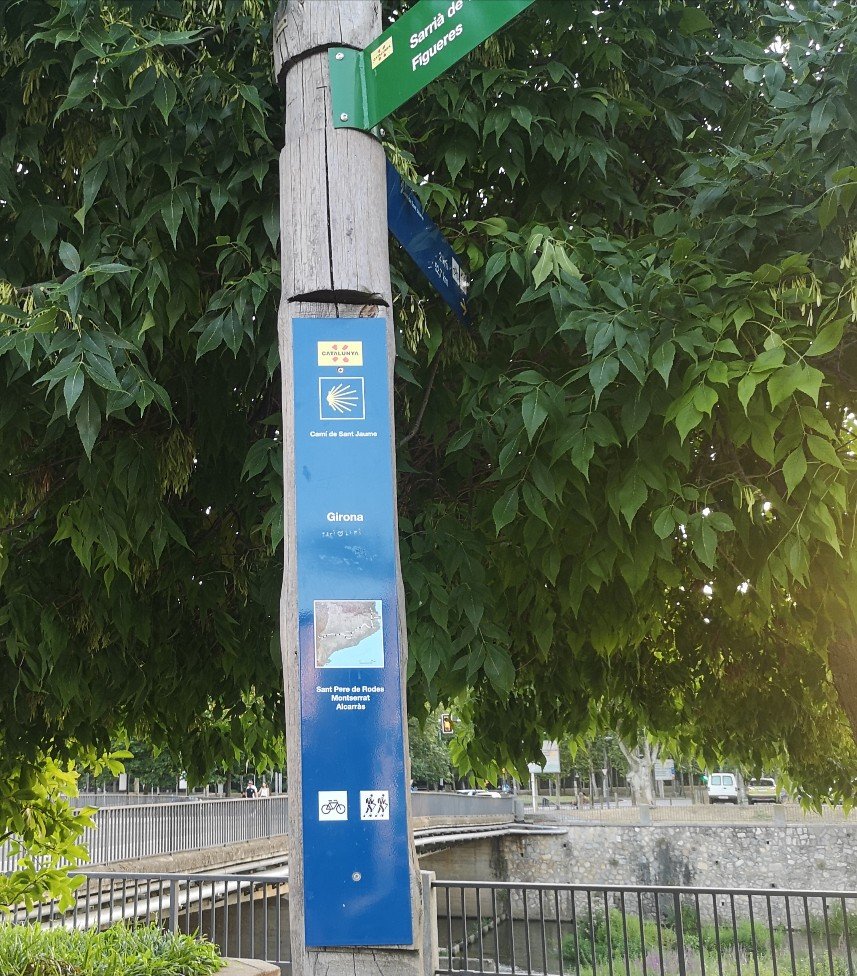
We were at the River Onyar and the Pont (bridge) de Pedret which formed a crossroads where the first Cami de Sant Jaume and other route signs were located.

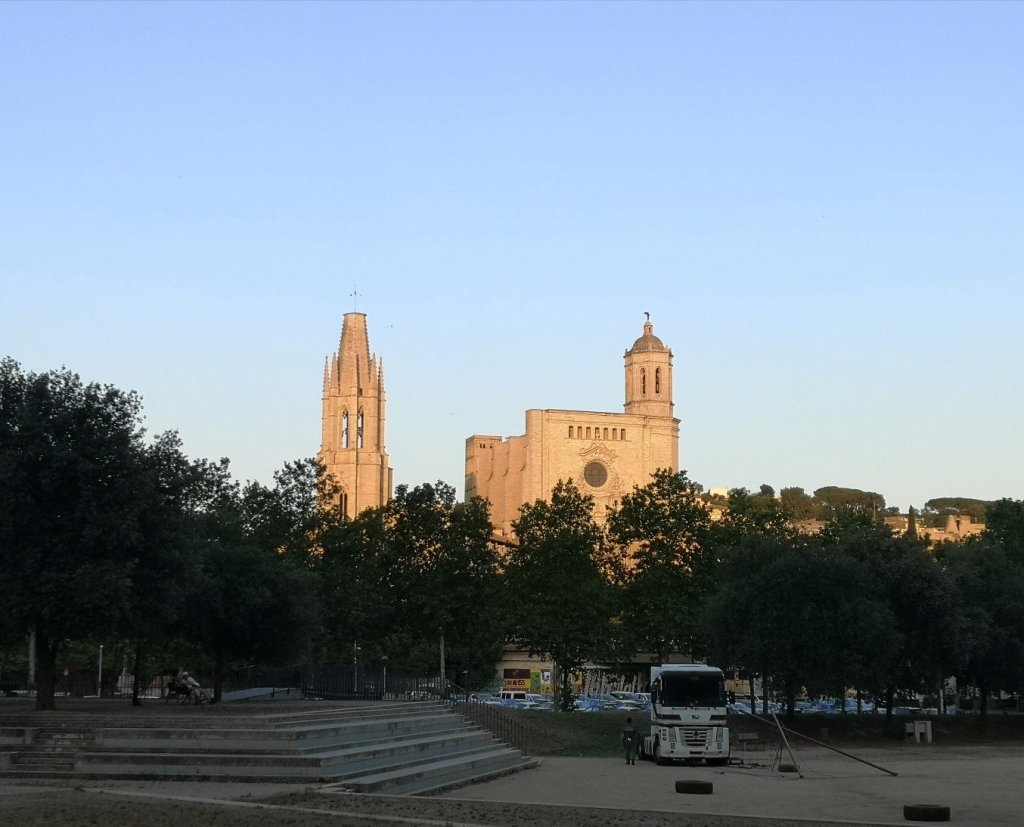
We looked back at Cathedral
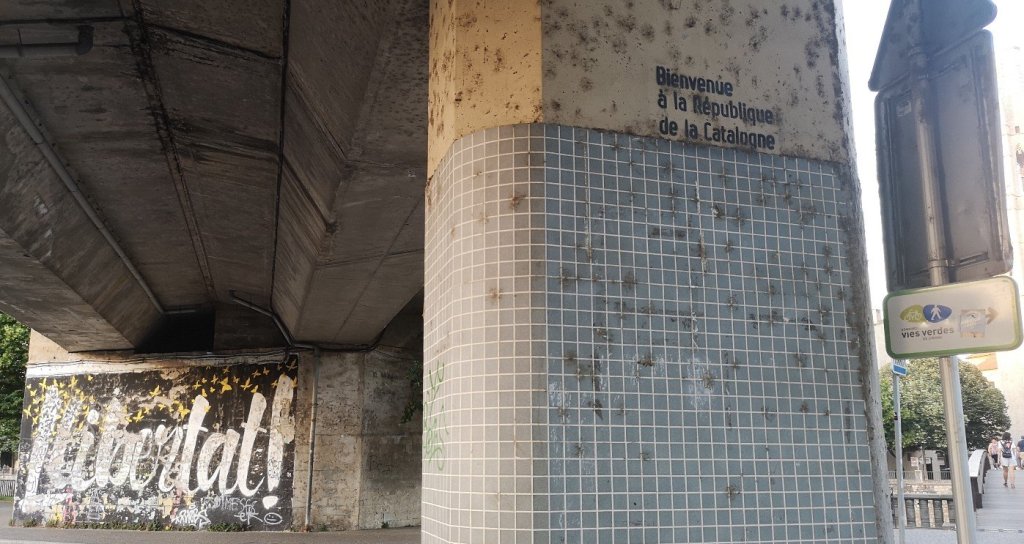
There are messages of separation ‘Libertat’, ‘Bienvenue a la République de Catalogne’ alongside the Vies Verdes (green cycling / walking ‘carrilet’ route (a modest narrow guage railway) I took out of the city last week

We glimpsed the La Devesa Park where we walked yesterday.

As I walked out of Girona, I moved from the urban environment, the edge lands where people were growing crops in their hueltas / allotments, and then out of town, walking between city and towns. There were people stringing these urban places together by walking between them to work and school.

I was carrying my clothes and sleeping mat with me, crossing the country, from Osona to La Garrotxa and into the Barcelona región.  

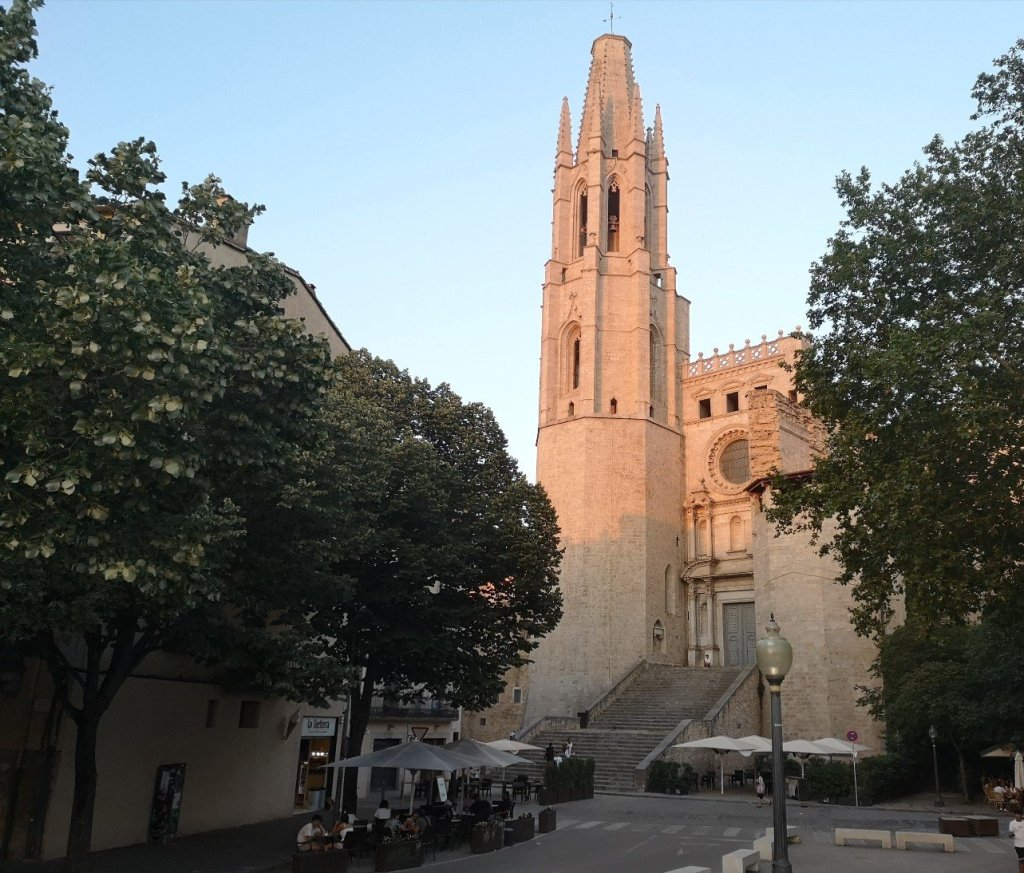
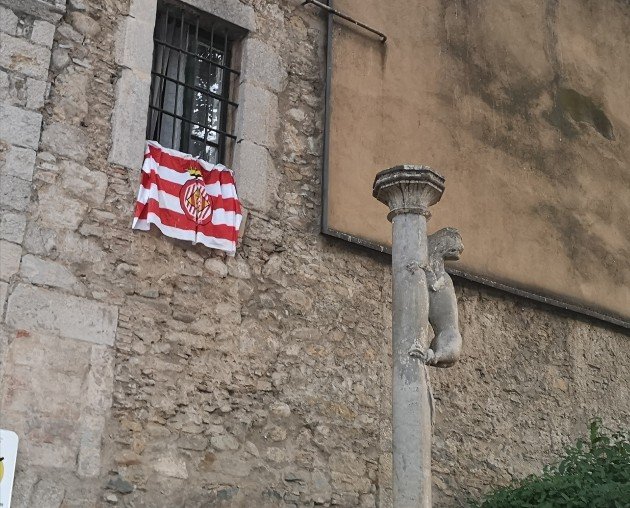
We completed our mini-pilgrimage at the foot of the steps of Basílica de Sant Feliu, a familiar way to end a pilgrimage. Close by is the statue of la Lleona (lioness) whose bottom/ass you are invited to kiss, an 11th century folk tradition.

Basílica de Sant Feliu
La Llona

Soundscape by Ralph Hoyte Temple of Hermes