Via de la Plata Camino – Day 14 (Mérida to Ourense). Tuesday 3 April 2018. 20 kms.
The camino is otherwise known as The Way, as is the Tao, and I turned over the similarities between the two as I walked the road from Morille to Salamanca.
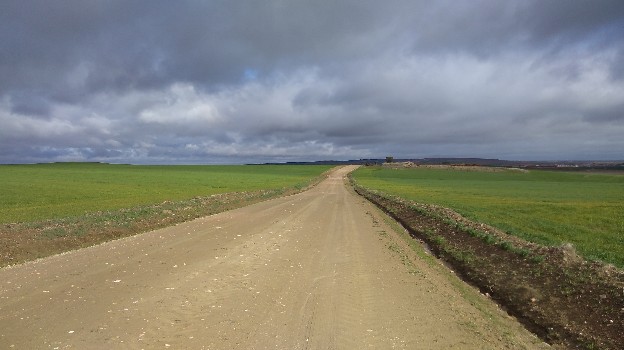
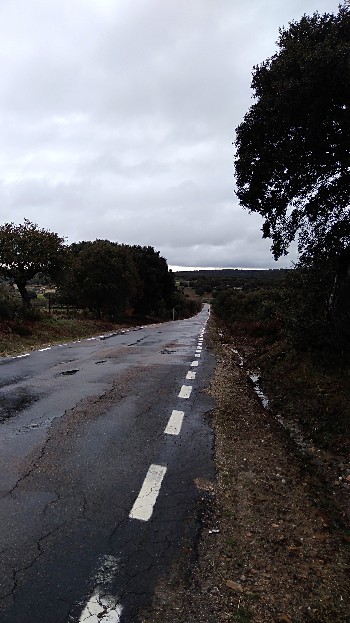
There was a straight yellow line ahead of me, almost flat, through green fields of recently sown grass. There were three of us at intervals, visible to each other.
The wind was strong, all on my left and it was overall too cold. I walked with my woolly hat on and hood up most of the way. In fact, today I would have recommended avoiding the month of March on this camino, but perhaps it was unseasonal. The accommodation, in general, is not geared up to it.
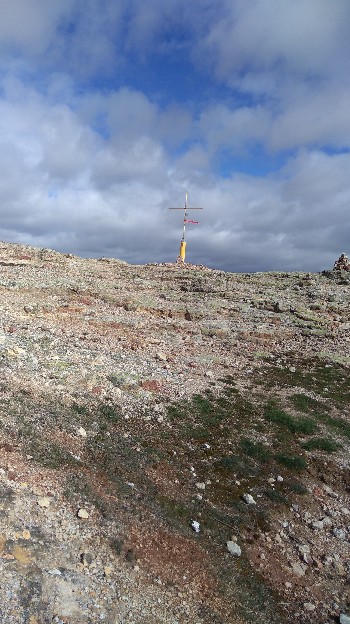
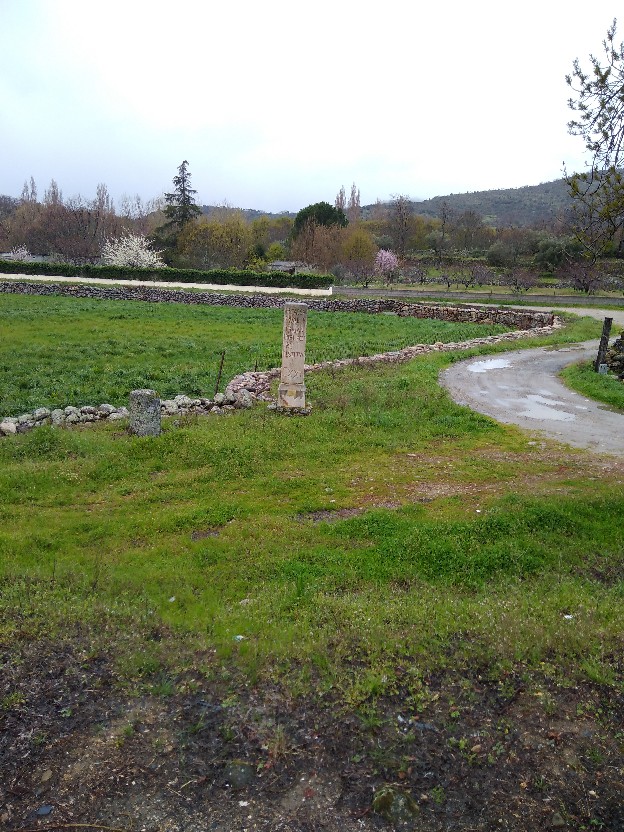
The Cruz de Peregrinos, close to the Teso de Aldatejada (a battle ground between the English and French).
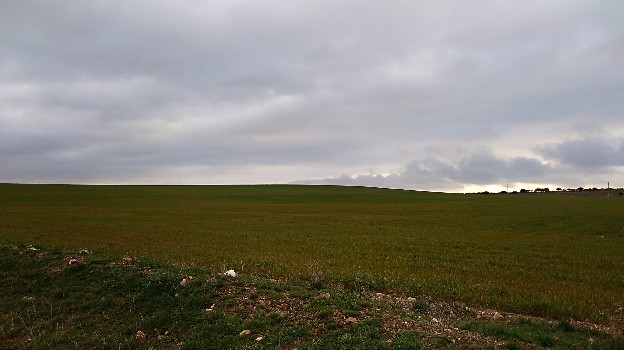
Here there were plains and plains to cross and so for hours I could see Salamanca, but even once I reached the outskirts there were two underpasses to duck under and parks with unfriendly city folk to cross.
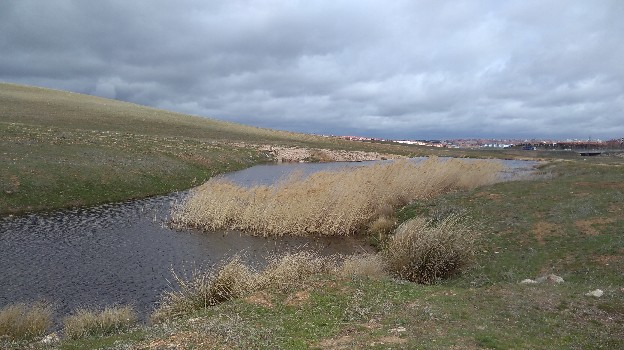
On the way into Salamanca. Most of the landscape here is messy and of no particular interest, but these rushes caught my eye.
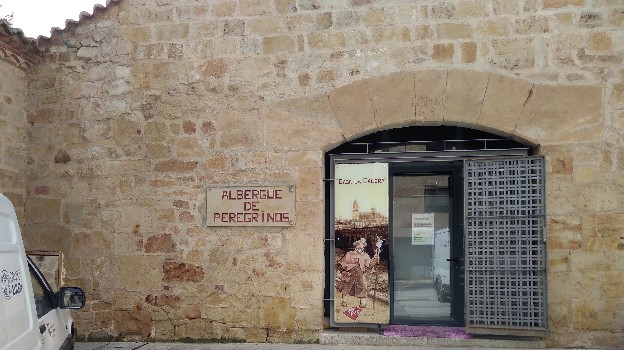
Then I received a lovely welcome at the municipal albergue (donativo ie you pay what you think it is worth) and a host of friends had already arrived in that warm place.
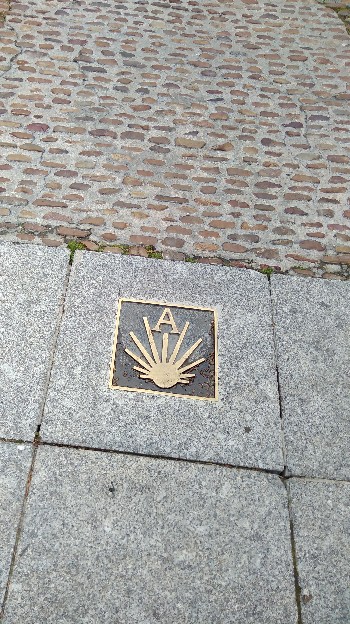
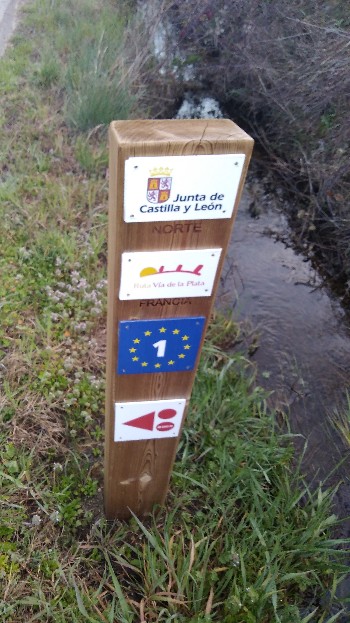
The signs are on the street as you walk into Salamanca to find the albergue.
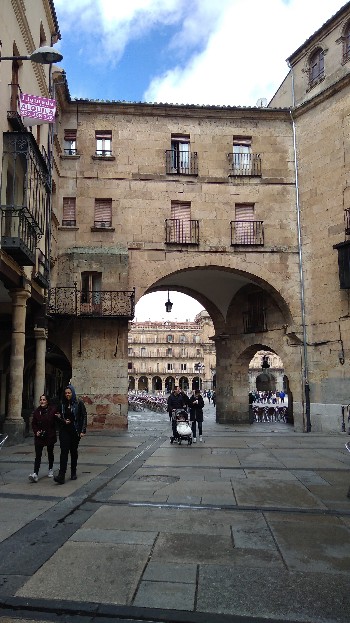
Oh, it is a very elegant and sturdy city, Salamanca, with its deep ochre buildings and grandeur!
Looking through onto the Plaza Major (18th century).
In Bar Cuzco the man was also exceptionally friendly, and though expensive, I waited out the pouring rain with wifi and red wine to warm my insides, stepping out onto the gleaming streets 2. 5 hours later.
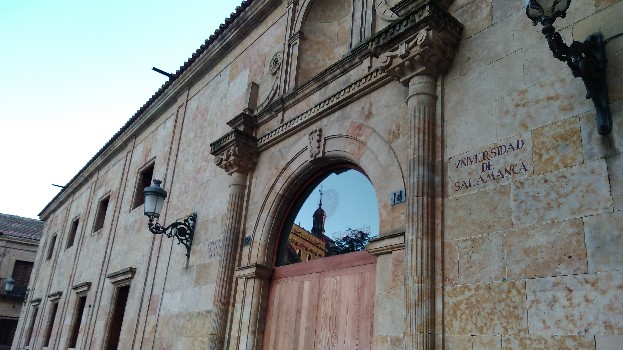
In the evening I wandered around and here are some of the great sights.
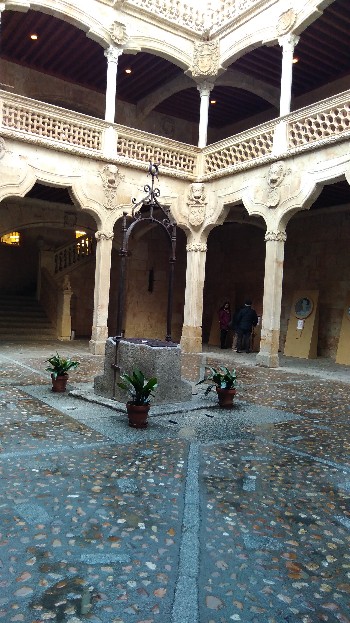
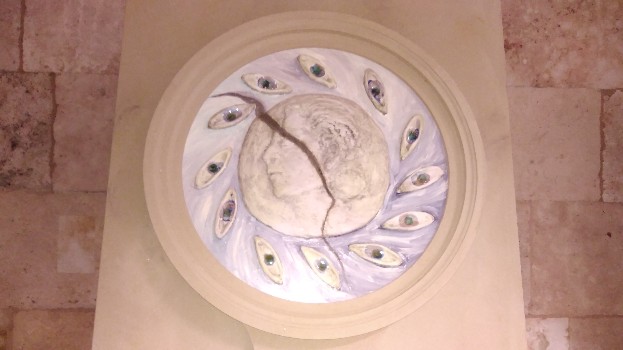
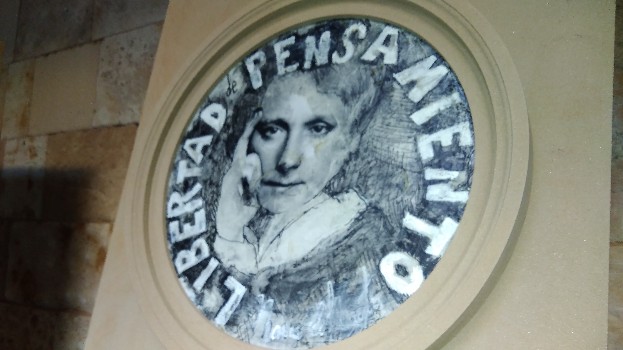
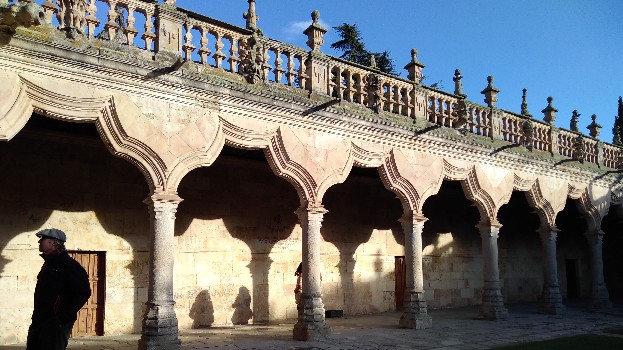
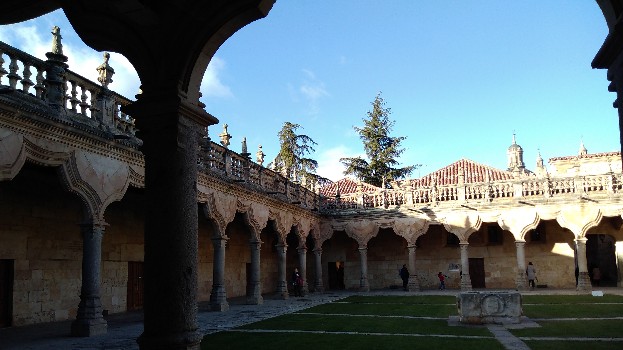
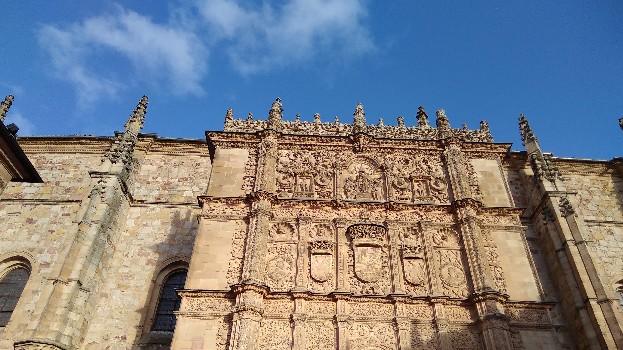
Part of the Rostros del olvido, Female faces fallen into oblivion’ exhibition. María de Maeztu.The same exhibition. Petra Román Arroyo.University courtyard, Salamanca, Spain.
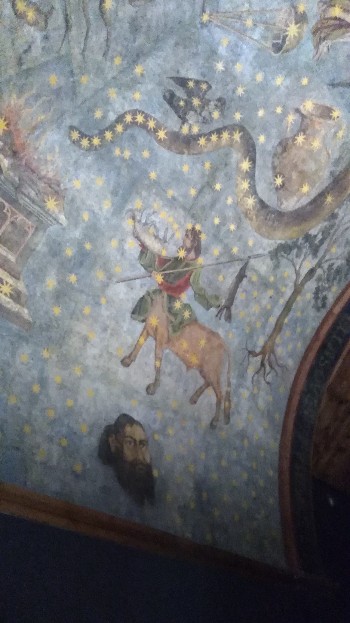
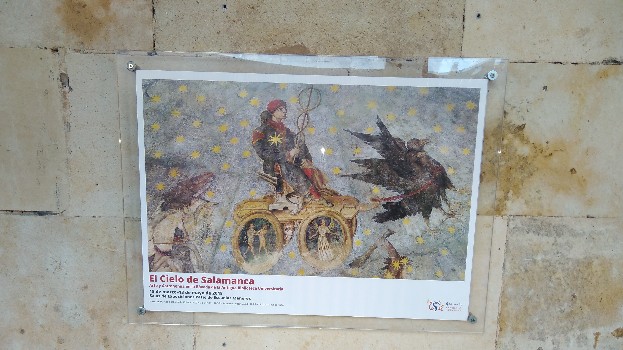
The starry sky of the University, Salamanca, Spain.Ditto.
Iglesia de San Pedro, Salamanca, Spain.
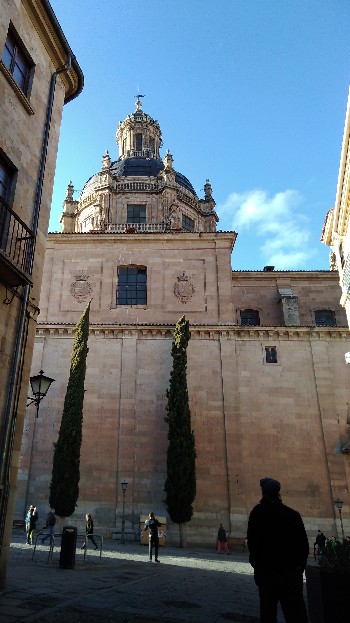
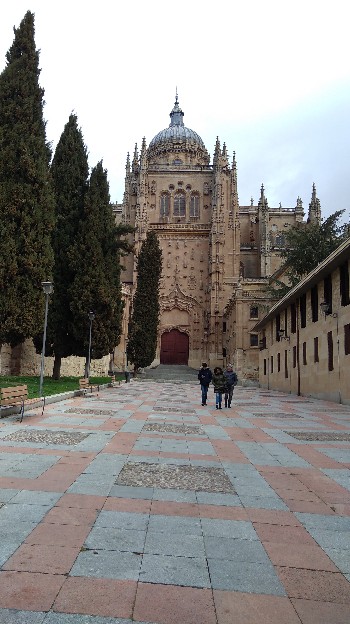
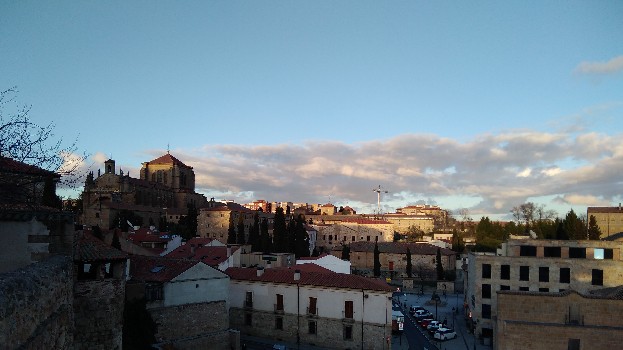
Cathedral Vieja de Santa María, Salamanca, Spain.View from the gardens next to the albergue, Salamanca, Spain.
Via de la Plata Camino, day 13 (Mérida to Ourense). Tuesday 3 April 2018.
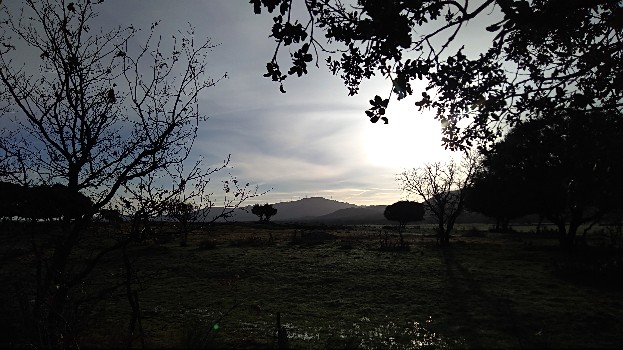
A dark start to the day.
The previous evening, we (there were only two of us in the albergue) had sorted out the boiler, which fused the lights at top setting but gave out wonderfully hot water after several hours at a lower one. The rain and wind continued all night, the shutter irregularly banging to wake us at intervals, and it was a dreary start. The hostel was freezing, there was no kitchen where I could prepare something, and the cafe was shut so no breakfast.
Morille, Castilla y León.
It was a very straightforward journey though, through Monterubbio de la Sierra to Morille.
There were more pigs along the way, and men working in the street. Up and down roads we went in conversation for five kms, and then walked apart in blessed silence for the further seven.
The weather brightened eventually and the raindrops dried on my specs. It was sheep farming again after days of dairy country.
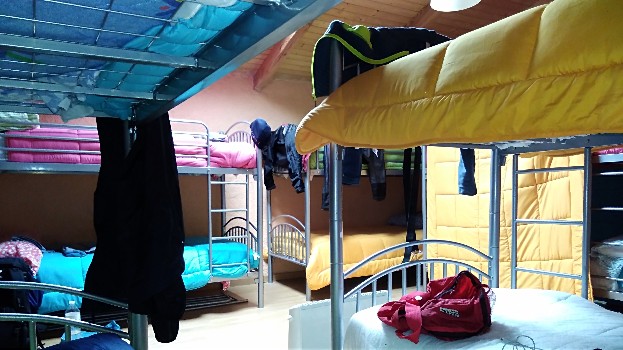
The Morille hostel was nice and bright in the upper room but open-plan so the one small heater was insufficient. Between us we moved the bunks across the opening to the further chamber and draped the coloured duvets over to keep out the draughts. Thankfully there was hot water and although there were also places to sit, it was so cold that they were impossible to use. Ditto, the fridge was unnecessary at this time, but a stove would have been amazing to make tea on. The cost was, after all, only six euros. The smaller hostel was shut – only this larger one was open. When we arrived all the bars were shut until 12 noon. I had my credential stamped at the bar and paid later. The village has no phone lines: I think I understood from her Spanish that a bull damaged the line but…!
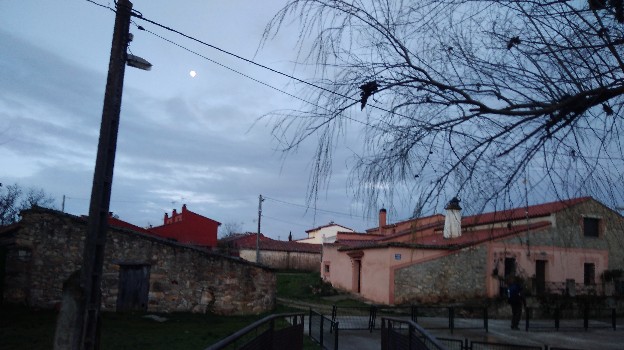
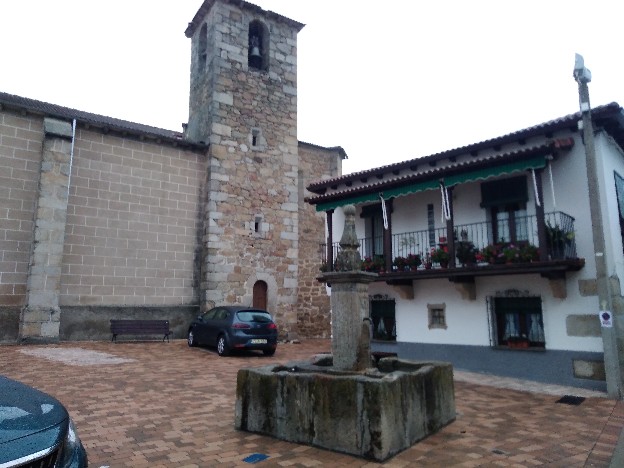
The middle of the village of Morille.
Everyone was at work in Salamanca, 20 kms away. There was a seemingly deserted village school and the townsfolk had made a great effort to rebuild and smarten up the place. As in the previous pueblo, in this village there is a travelling shop but today I missed it (Pedrosilla blog). A most helpful woman in her housecoat helped us find the place.
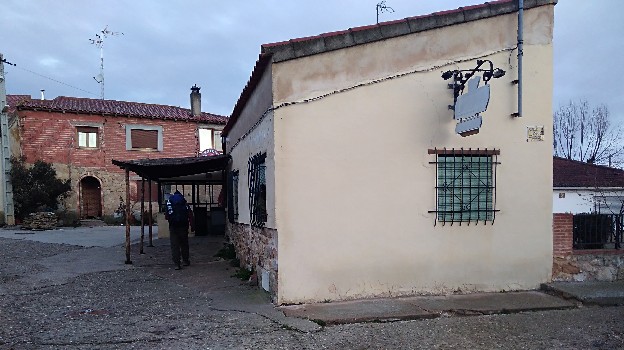
The Bar where you can pay for the albergue and get a stamp on your credential.
Via de la Plata Camino – Day 12 (Mérida to Ourense). Monday 2 April 2018. 18 kms.
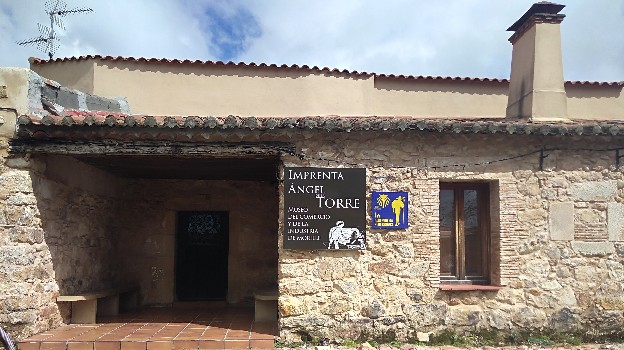
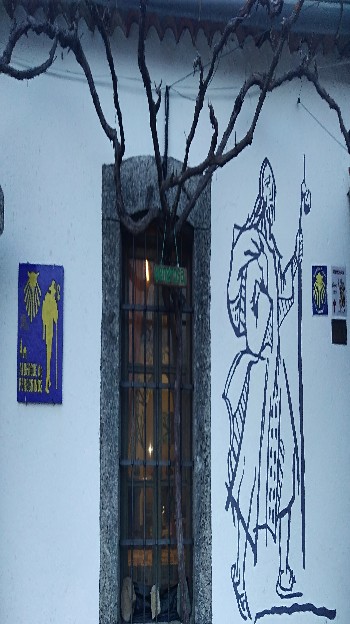
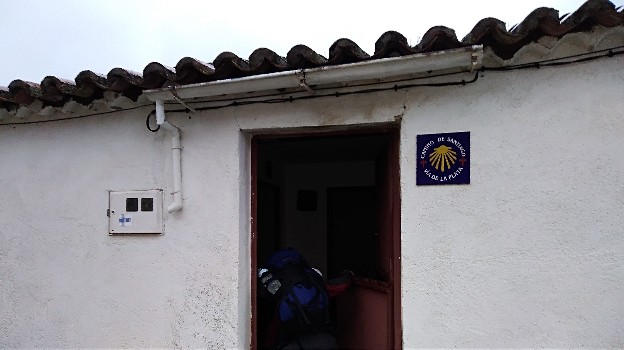
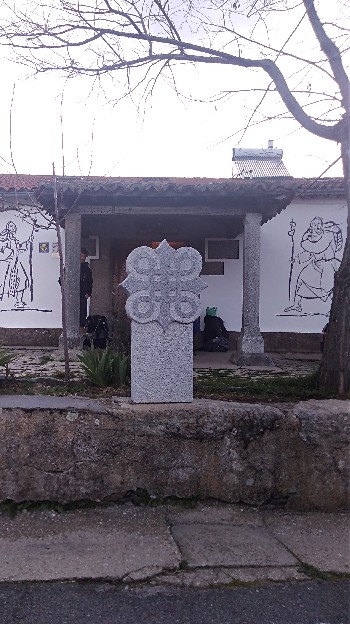
Attractive frontage with classical Camino signs and images.
I slept in the upper room of the lovely hostel in Fuenterroble and two others joined us three from the crowded dormitory downstairs during the night to avoid the snoring.
Fuenterroble de Salvatierra, Castilla y León.
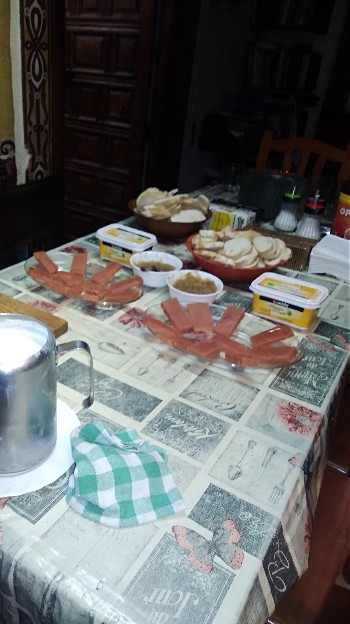
Breakfast was amazing – an Easter Monday special maybe.
Quince jelly, some sort of delicious home-made fruit jam, bread, coffee etc.
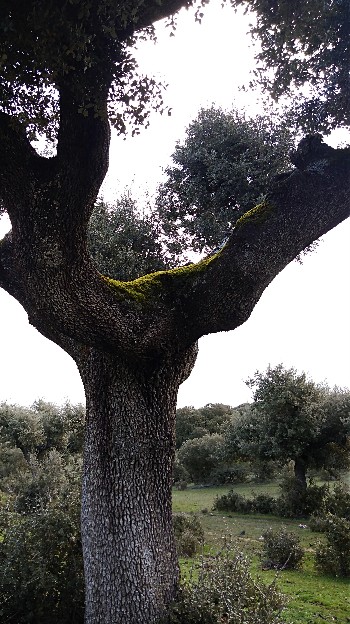
It was a flat walk today through holm oak woods. I started with Marie Noelle but we soon parted company to walk alone.
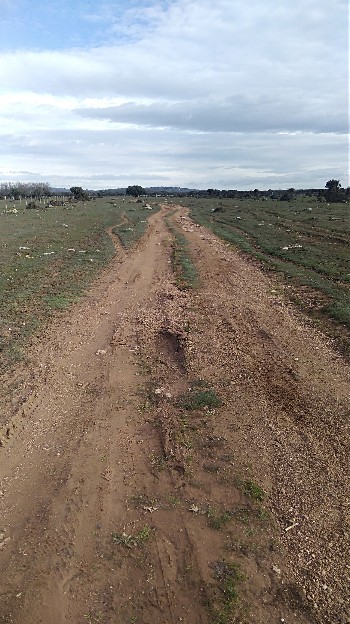
Long straight paths.
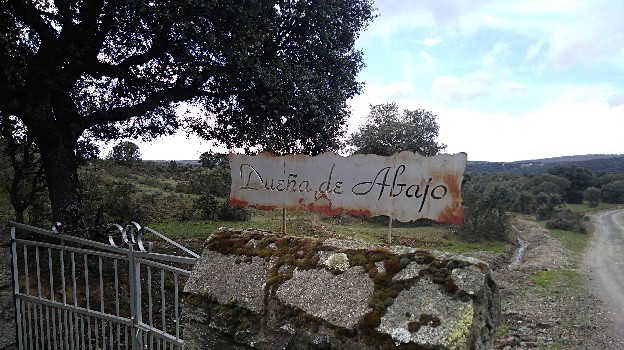
A plane left its noise behind it; there were more pigs. I had decided not to walk a very long way (over 30kms) so I took a right at the Dueño de Abajo when the others went left.
It was a lovely way ending as it began with a cattle grid and land-owner’s sign.
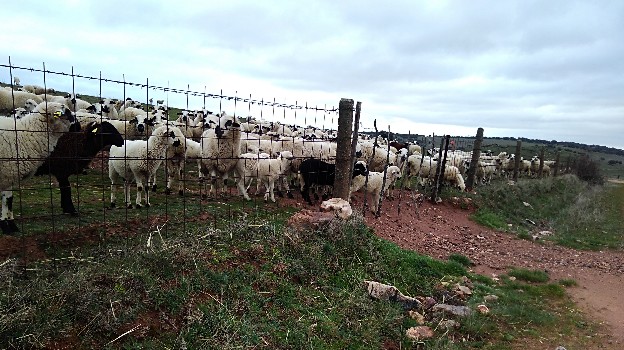
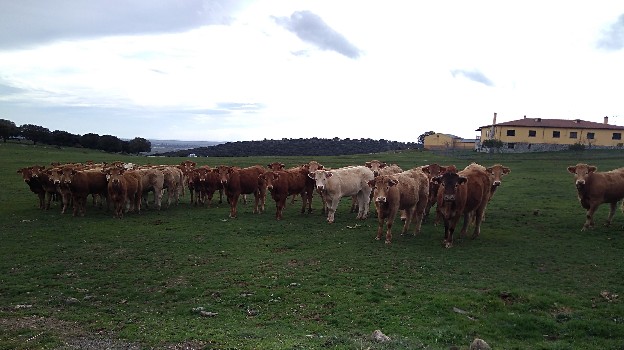
The young cows were orangey-red and they played Grandmothers Footsteps with me: first running away when I walked and then freezing, all in a crowd (about 30 of them), when I turned round.
It was wide open countryside and I spent a great deal of time reviewing my dream of the night before – very powerful.
There was rain coming, judging by the wind and the feel in the air. One becomes attuned to the changes when outside all the time.
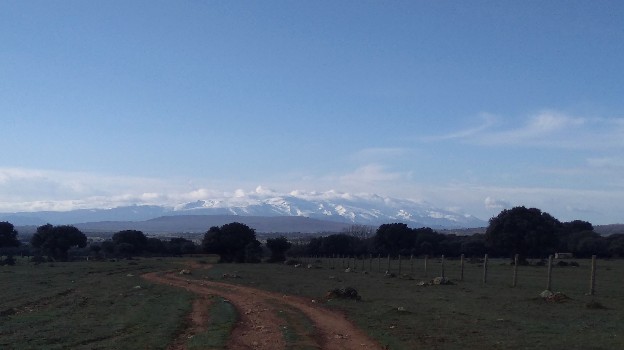
The snowy mountains were behind us now but still stunning.
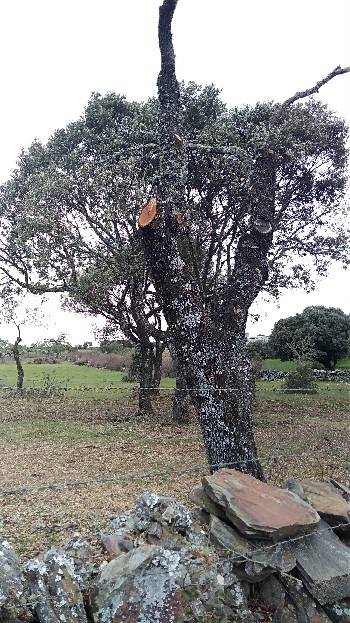
The sound of an engine seemed to be connected to the blunt, cut-off tree stumps – also revealing strong orange at the wounds.
Chaffinches with softer apricot-coloured bellys were swooping, and there were some grey cows wandering, activating their sonorous bells.
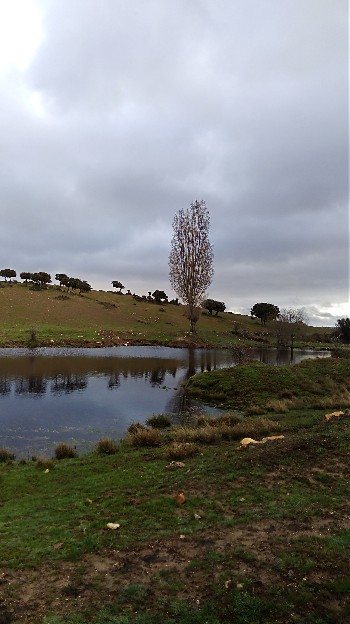
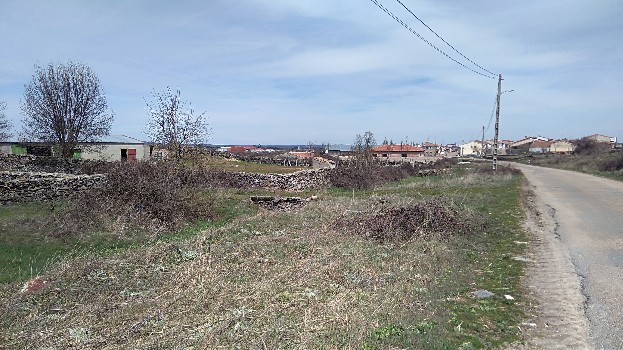
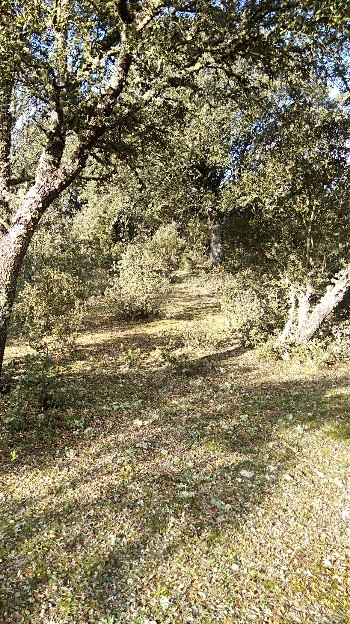
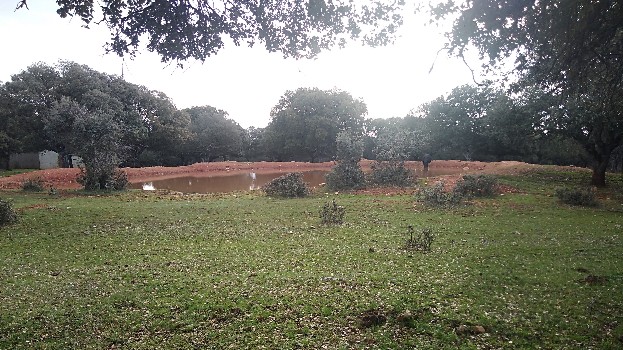
Leafy glades in the sunlight.The amazing orange soil banked up to create a pool, apparently to equalise the water table for when it is hot with no rain.Pedrosilla, Spain on approach – a hill to climb before arriving!
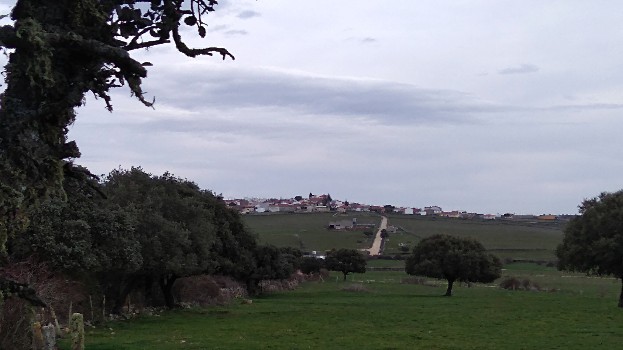
It was getting cold and wet by the time I arrived at Pedrosilla and I went to the bar, as directed, to indicate the keys to the albergue municipal, the council hostel. It was devoid of any heating, dirty and musty-smelling, so when Benito came along he joined me in the bar where there was wi-fi and warmth.
The excellent (and warm) Bar Laureano.
The family-run bar was excellent. The youngest daughter (of 9!) was there with her mother and various relatives; her sister ran the joint when she was away in Paris working as a TV producer. She cooked a wonderful tortilla for us and chatted away, ‘twenty to the dozen’ as they say, telling us about her life and that of the others. There is no shop in Pedrosilla although there is a mobile one which happened by at the right moment and charged me 6 plus euros for a tub of lettuce, one mandarin and a banana!)
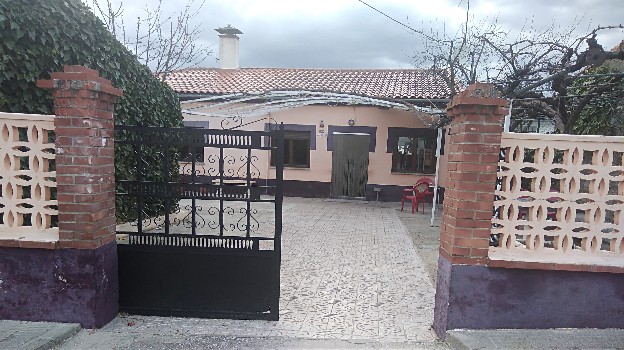
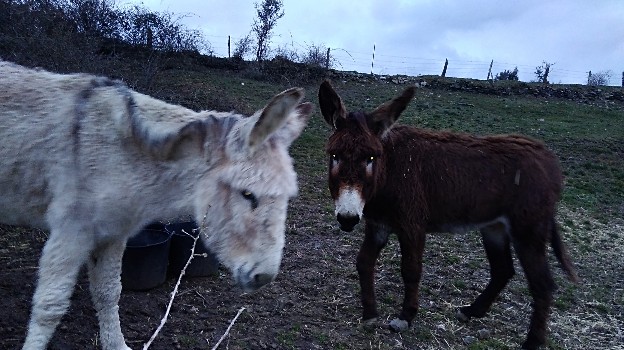
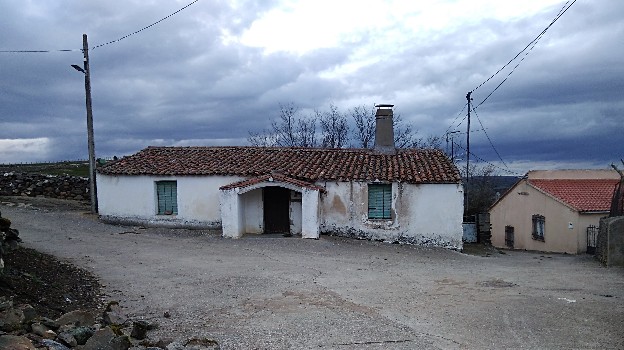
Donkeys in a field nearby – my blog’s namesake.The municipal hostel (albergue) in Pedrosilla de las Aires, Castilla y León.
Nuria made a long afternoon/evening, in a village which had no any other entertainment, and where the weather was almost entirely terrible, most enjoyable.
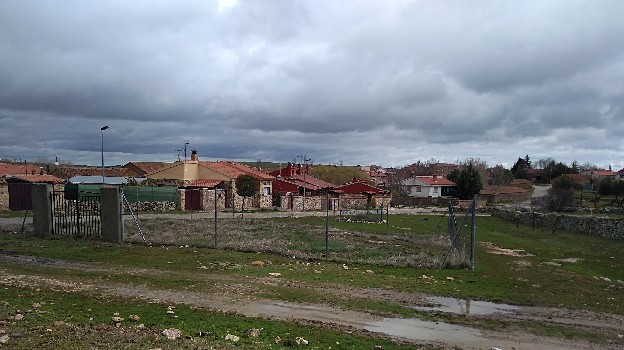
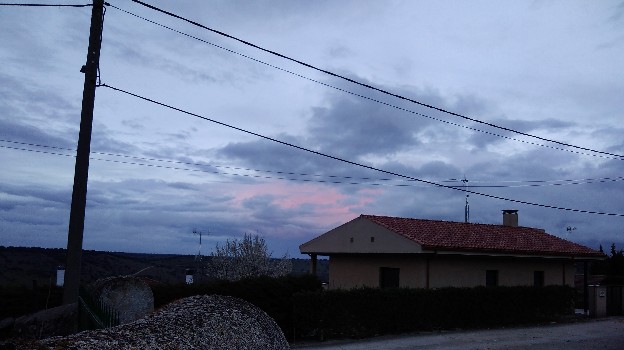
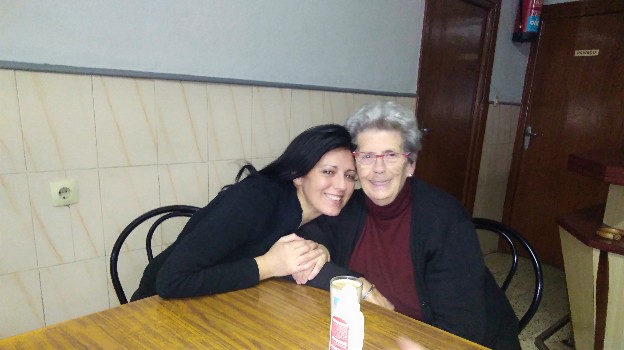
Village dwelling, Pedrosilla de las Aires, Castilla y León.Pink sky at night, shepherd’s delight!Nuria with her mother: like a hen, spreading out her black cardi in her place at a table of the family business.
Note: Something has gone wrong with my WordPress making it impossible to load photos using the usual method, so some of these are elongated for some reason, and all smaller than usual. For which I apologise.
1 April, April Fool’s Day and Easter Sunday 2018. Day 11. Via de la Plata Camino, Spain.
There was a good breakfast provided at the communal table, but I had enough of my own and wanted to eat it so it did not need to be carried. Most of the others seemed to be enjoying a good spread. T’ai Chi that morning in the lee of the mountains, with the full moon still strong in the sky, was inspiring.
After a false start when I had to go back for my baton, I made my way through the very ancient village and out into the countryside along what might have been an old railway between pollarded trees – the first I had seen here.
There were cows everywhere: black ones on the left – mum grazing and her newborn calf souking; beige / white on the other. The white snowy mountains were ever present when I looked back, walking happily alone. What a wonderful morning! We walked into the region of Castilla y León.
I watched for a while as the young bovine, on their long spindly legs, geared themselves up to jump across the stream; I admired the bright white ones still with the tufty cord sticking out under their bellys, and all fluffy. I realise now that lots of the females have impressive horns, but in this bullfighting country how was I to know when put on the spot a few days ago?!
I mused on my topic of the last few months: the balance between a solitary and a social life. I set out from Mérida eleven days ago expecting the same quiet experience I had had when walking from Seville the previous May. Instead I found a great camino ‘family’ (as people like to call it) forever changing its members but, warm and supportive. With them around one rarely loses one’s way or dines all alone. On the other hand, there is hardly the chance to meditate in peace; one has to politely refuse company when setting out in the morning if silence is required; and all-in-all it’s profoundly communal and not at all the solitary wandering of the historical pilgrim which I have enjoyed over the past year.
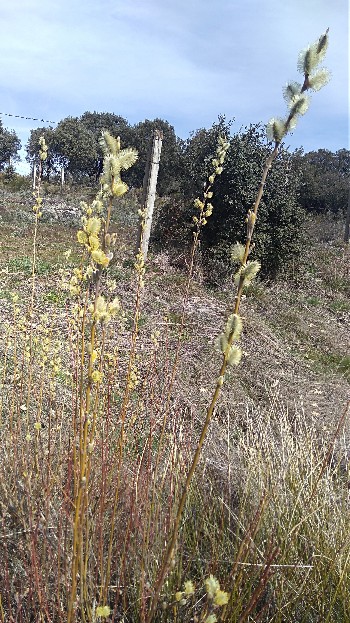
Today’s plant: catkins, at the early spiky stage.
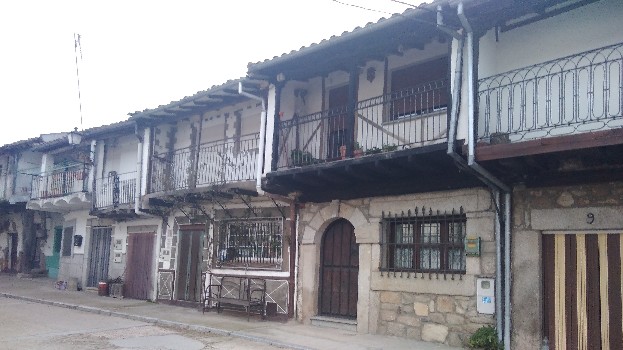
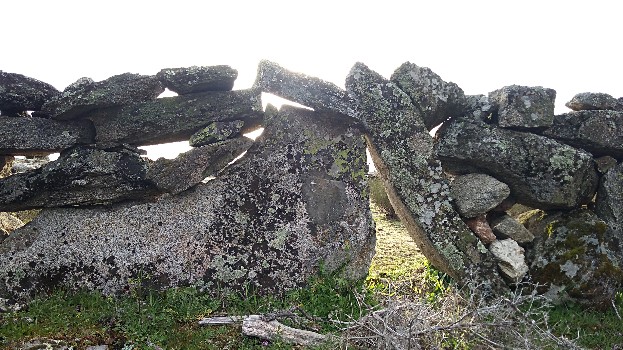
They use natural stone for fence pillars here compared to further down in the valley.
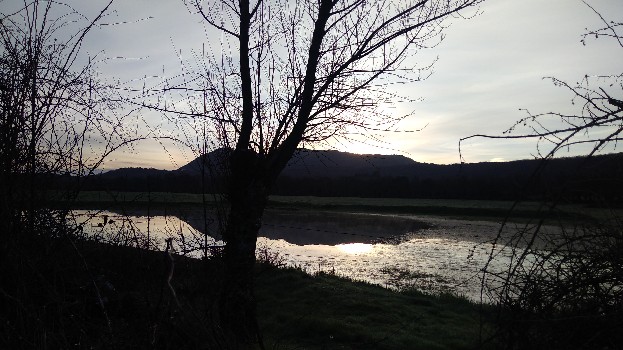
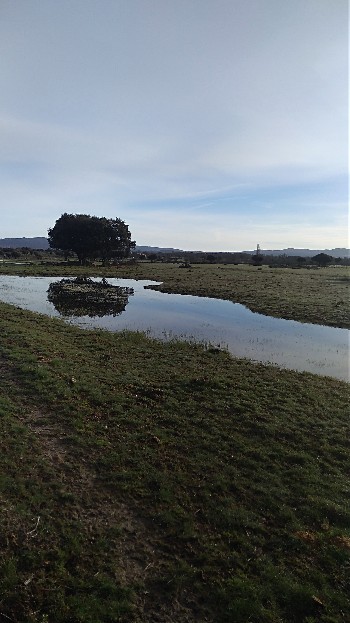
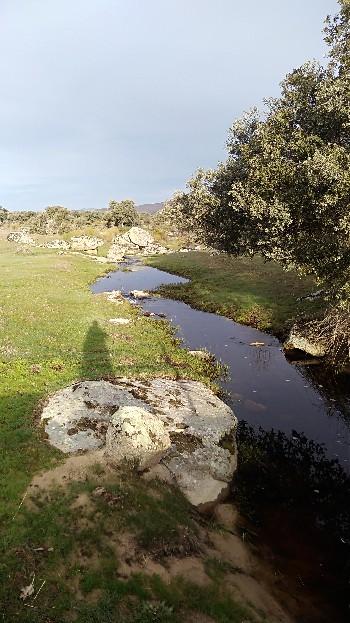
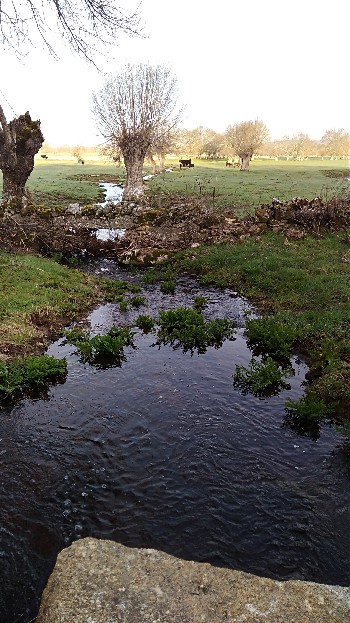
As the morning wears on, the sun shines more brightly and the colours strengthen – water, fields and rocks in stark contrast.
I remind myself that I must stay alert and look for the details of the journey, the arrows. I come across a bridge very similar to one in Kent. Later there is a really helpful, home-made railing to help the hikers across the flooding, but for me the stones are too far apart!
It took me two hours instead of one to get to Valverde de Valdelacasa – I walked slowly, paying attention to touching the the tip of my stick on the ground very gently, taking photos and notes etc. But, then, no, it turned out that I had misunderstood the book. I was not behind-time after all.
My feet were throbbing; the birds were trilling; and alsatians were being walked as I made the long, uphill trek into the village.
Benito was already there, tapping on the window as I went by (I had meant to walk on), and the bar was just opening after what must have been a riotous night.
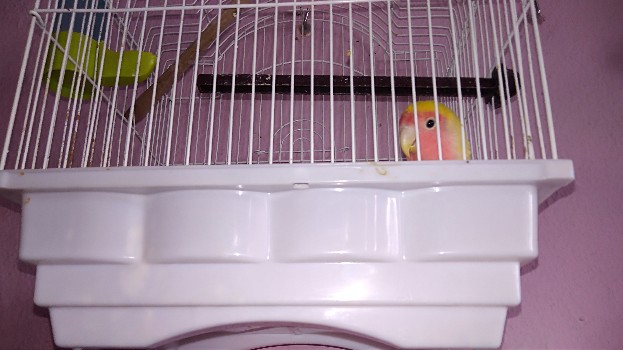
Oddly there was this colourful bird, curious, in the bar that morning.
If you walk this camino, make sure you go straight on at the roundabout along the road. I was able to change into my shorts as the sun warmed up.
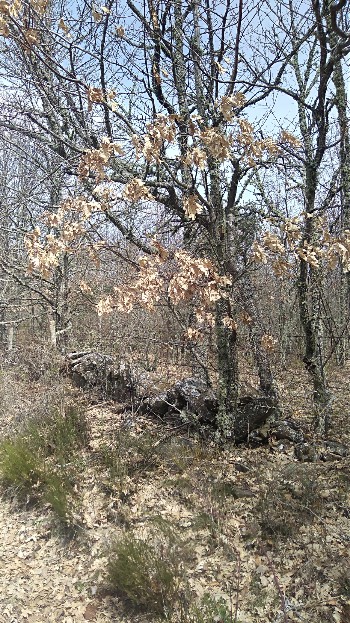
Dead oaks and copious lichen for miles in this landscape – further behind, Spring-wise, than the south.
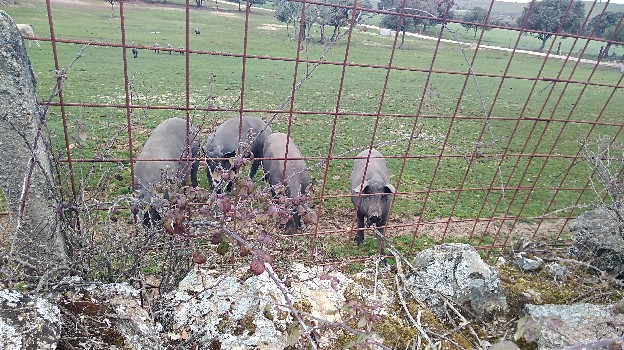
Here were big black pigs in a very plain enclosure; there, quarries and multiple farm buildings. The land was all beautifully ploughed and ready for sowing.
Initially they ran away. I stood still and they returned, curious, with up to 5 rings per nose.
The paved road was hard on my feet so I lay down on the prickly ground, my back against a rock, and was sung to by cattle and birds and tickled by insects and it smelled sweetly of disturbed earth and nearby flowers. Even a large yellow butterfly flew by me, like an angel.
There was not one car or person on the next stretch although much later a tractor and finally a yellow arrow heralding the near end of my walk.
The entrance to the albergue at Fuenterroble de Salvatierra.
What an amazing albergue. It is a religious community, looking after the flock when the priest is away tending to his seven other parishes. They take great care, the people who live there, some long-term, some shorter; and the food and accommodation is excellent. Particularly as it is a donativo hostel which means that you pay for what you think it is worth or what you can afford.
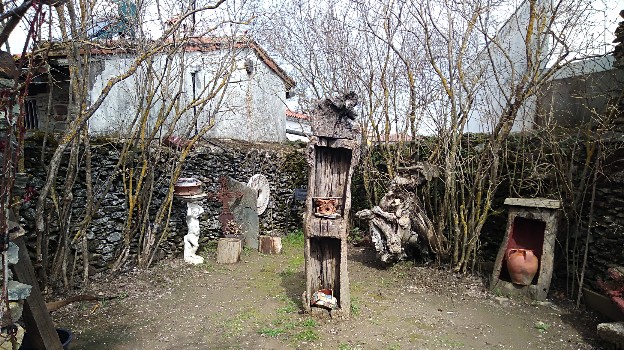
A little grotto or shrine at the back of the hostel, Fuenterroble de Salvatierra.
March 31st 2018 10 kms 2. 5 hours then a bus to Béjar and a shared taxi (6.5 euros each) to Calzada de Béhar.
At the large hostal in the centre of the busy town, I had a couple of very interesting conversations with an Irishman, and an Englishman who lives near me in a Fife forest, both of whom are wild campers and walking with tents etc. This is something I have been thinking about for a while as it eliminates the need for finding a free bed every night. (See yesterday’s blog for a good example of how hard it can be unusual but worth knowing about if you are considering walking the Via de la Plata).
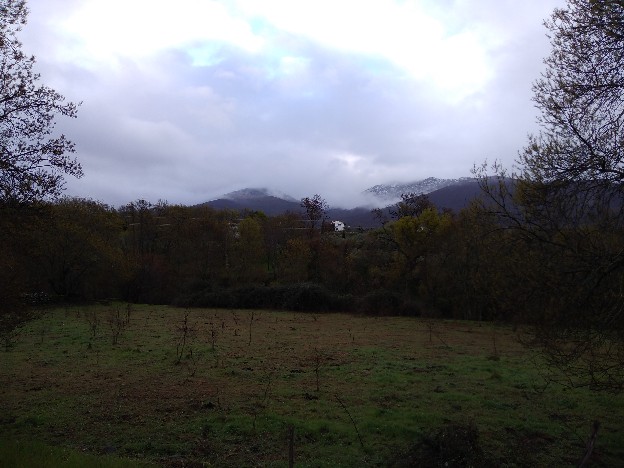
The remains of the rain from the day before lay over the mountains.
The dormitories are warm and the kitchen well equipped. It was swarming with peregrinos I had seen before and so was a friendly place to be.
After the escapades of the day before, I set off as usual, walking to Balneario which was all along the road.
Once there, I immediately saw the sign to the terma, the hot baths, and thought that would be a lovely treat but…
I entered a bar to find my companions already partaking of their morning coffee. One said he was staying behind to visit and after telephoning the hostel we were heading for, both for myself and 3 others because I spoke the most Spanish, I decided to stay as well.
The Roman baths were booked up ahead of time (this was the Saturday of Easter weekend and very busy with tourists) but the kind woman at the desk showed us around.
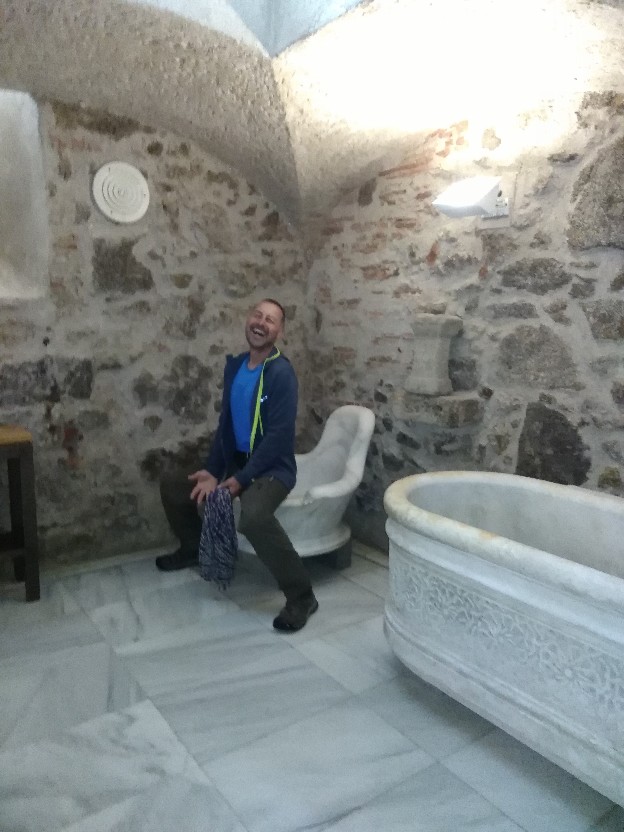
Benito, a German with a propensity for delight in all things.his is the old Roman bathroom, now a museum.
Then we went over the road to the modern baths and took advantage of the Pilgrim Discount (4 euros) for a leisurely swim and laze around on loungers, with a huge blue bathrobe thrown in for good measure. It was a small pool with one fountain and the only others present were a family with 2 young daughters, so reminiscent of my own in days gone by. I had a good sleep and after an hour and a half my feet were barely aching at all. Wonderful. (They are open until lunchtime and then reopen later in the day. )
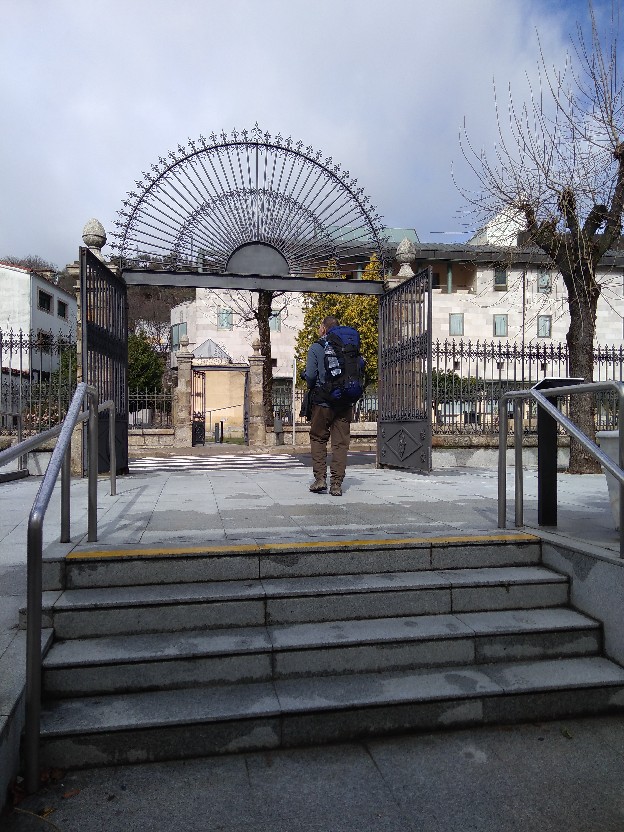
Modern baths in Balneario.
We had a nice meal back at the bar (he had salad with orange and goats cheese; I had salad with gulas and prawns which turned out, despite my thinking it was a seafood salad by the title on the menu, to be sprinkled with thousands of tiny pieces of bacon which I laboriously separated from every mouthful before I ate it.)
Note to self: always check for the presence of meat before ordering!
The town is beautiful, tucked right in under the mountains and, on account of its height, very windy.
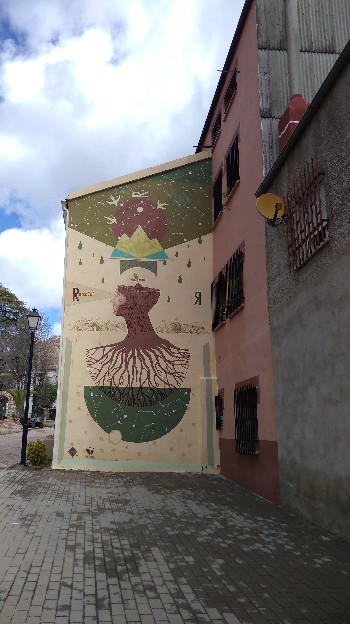
Street art in Balneario.
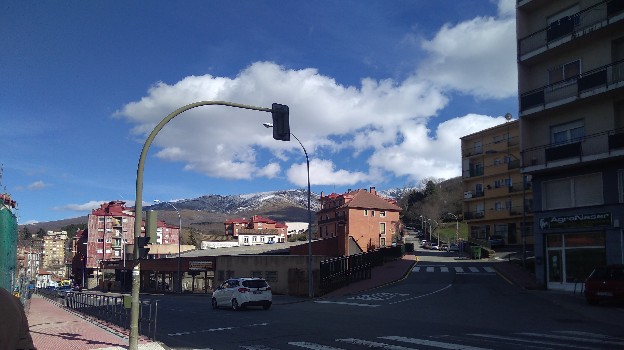
We managed to find a sunny corner to wait for the bus, before being driven to Béhar (only two buses that day at 12-something and 5pm) – an idea which the Tourist Information adviser had come up with. He said we could walk from there. It was lovely and warm and we wound our way up, higher and higher, through spectacular scenery, to the main town of this region, on the edge of Extremadura.
The centre of Béhar.
Once again we visited the Tourist Information and discovered it was further than we we had been led to believe and, it being close to the evening, my companion suggested we take a taxi – ending what was essentially a rest-day, which after all was day 10 and so a sensible time to take it.
Camino friends had already arrived at the albergue after a very steep climb, and the hospitaleros were most accommodating. There is a a garden overlooking the wonderful scenery, and loud music coming from a closed outbuilding which I was told the next day was where they were training horses to dance.
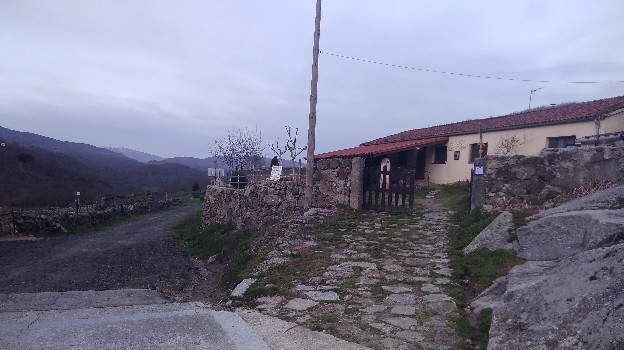
Albergue, Calzada de Béhar, Spain.
There were two very large sittings for the evening meal which consisted, for us vegetarians, of salad, omelette and flan. The usual, but all cooked on the premises and delicious.
Very sadly I forgot to take my swimming costume off the washing line the next morning.

 Walking without a donkey