
Genêts to Mont Saint-Michel (13 kms across the sand) to Bas-Courtils 8.5.17
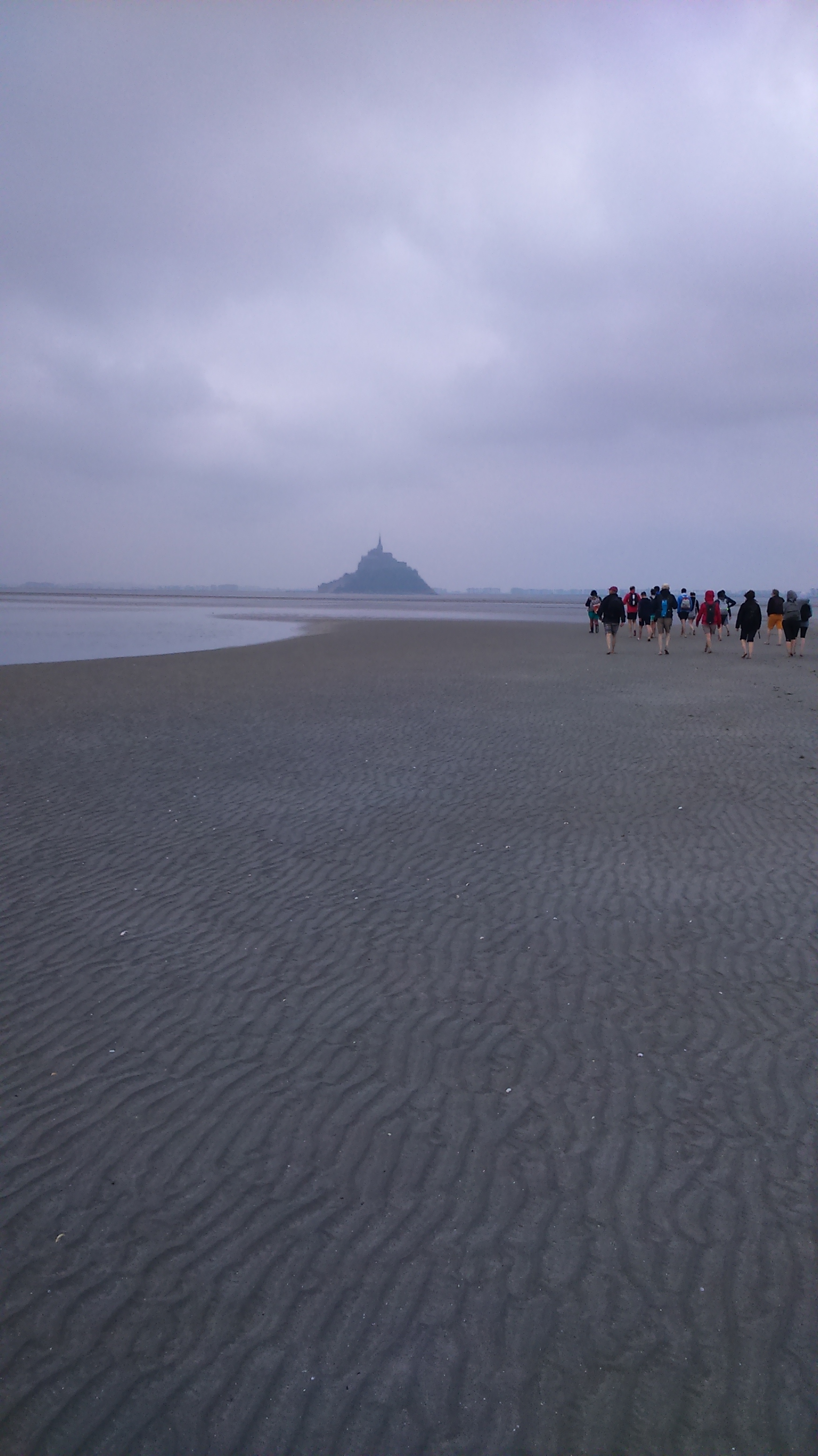
‘As I left home that morning and walked away from the sleeping village, it never occurred to me that others had done this before me.’ Laurie Lee, London Road chapter.
Yes, me too! Several people had recently enquired, on hearing I was going to visit Mont Saint-Michel, if I was planning to walk or not. It’s an island in the bay which forms a maritime corner of southern Normandy, and I had replied that I was walking around the coast and crossing the boardwalk to get there from the south. Until, that is, I realised what they meant: these people had already been to the Mount before me, and they had crossed the sands on foot from Genêts. Then I knew that was what I had to do this bank holiday Monday.
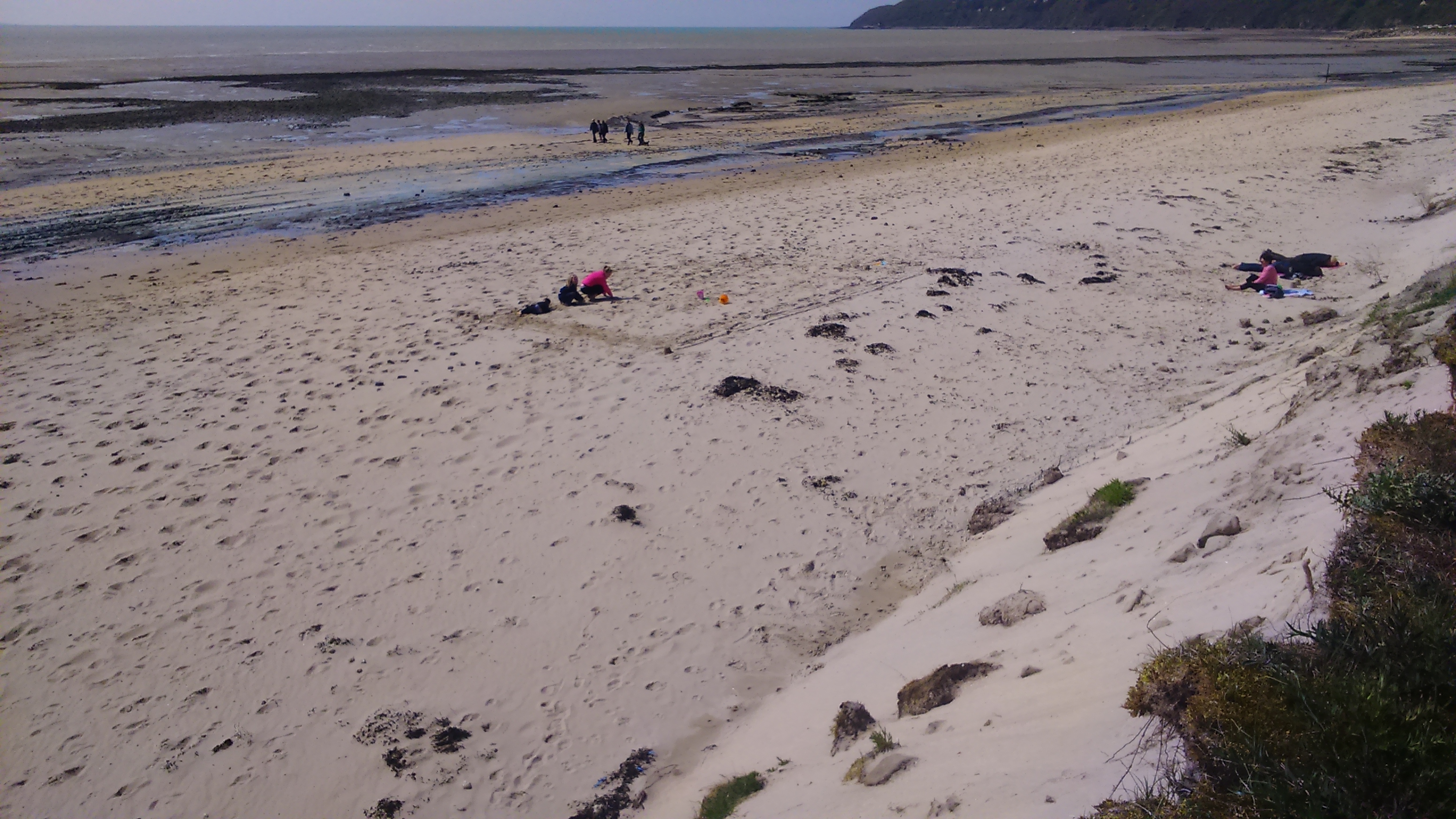
The day began with 25 minutes of fast walking from the youth hostel to the set-off place. (Note: If you want to do this too, and I highly recommend that you do, and if you are not just making a day-trip from home, you must book accommodation in advance (see below)). It was the track I would have taken last night had I not been distracted by the beach and tiredness, and consequently missed the markers. I rushed cross-country, through soft grass and pale powdery sand as the day heated up. As always, everyone was really helpful, and I made it just in time.
It’s impossible to make the journey to the isle from the east without a guide as the sands are treacherous and the tide must be at the right turn. There are two companies which offer to take you as part of a group (see below for details), and it was busy, busy, busy, possibly the busiest day of the year. As a result, there were groups leaving every 30 minutes or so and I had to wait. No problem, I whiled away the time in a cafe with wifi and the most generous waitress. I know I have ‘brass neck’, but it comes in useful in certain situations, such as when you need to send a well-translated message in French, but do not know how to do it yourself.
I watched the others who were massing: men, women and children; old and young; some who had clearly been many times before. I was the only one with a ‘serious’ rucksack (by which I mean I had clothes, sleeping bag, cooking utensils etc on my back – stuff for a month’s travelling), and I too removed my footwear, dangling them from a strap so that I had both hands to steady myself as we negotiated the sinking sands.
What a wonderful and moving experience! Layers of time seemed to concertina, and I felt as if I was simultaneously myself and a medieval pilgrim, arriving at last from afar at the culmination of an arduous journey and full of spiritual expectation.
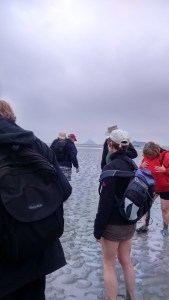
Trekking across the sands like that takes two and a half hours. Be prepared for cold feet, lots of mud, and finding yourself in seawater to mid calf or knees (depending on the weight of what you are carrying!)
There’s a large rock, very similar to Bass Rock off the coast of East Lothian in Scotland, called La Roche Tombelaine, which you stop at on the way. The guide gives continuous commentary (in French) about the fascinating history and wild-life, together with stories galore.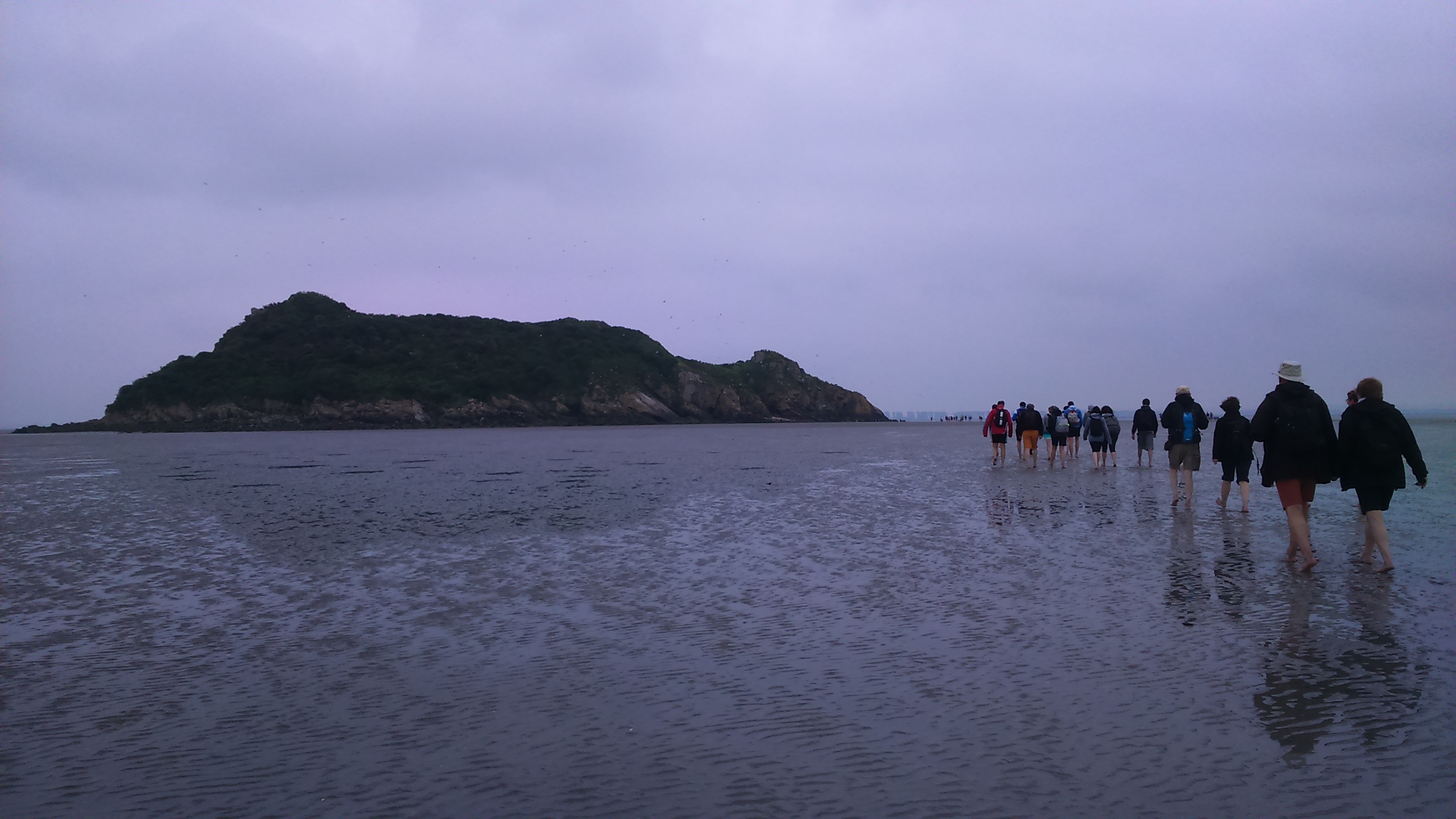
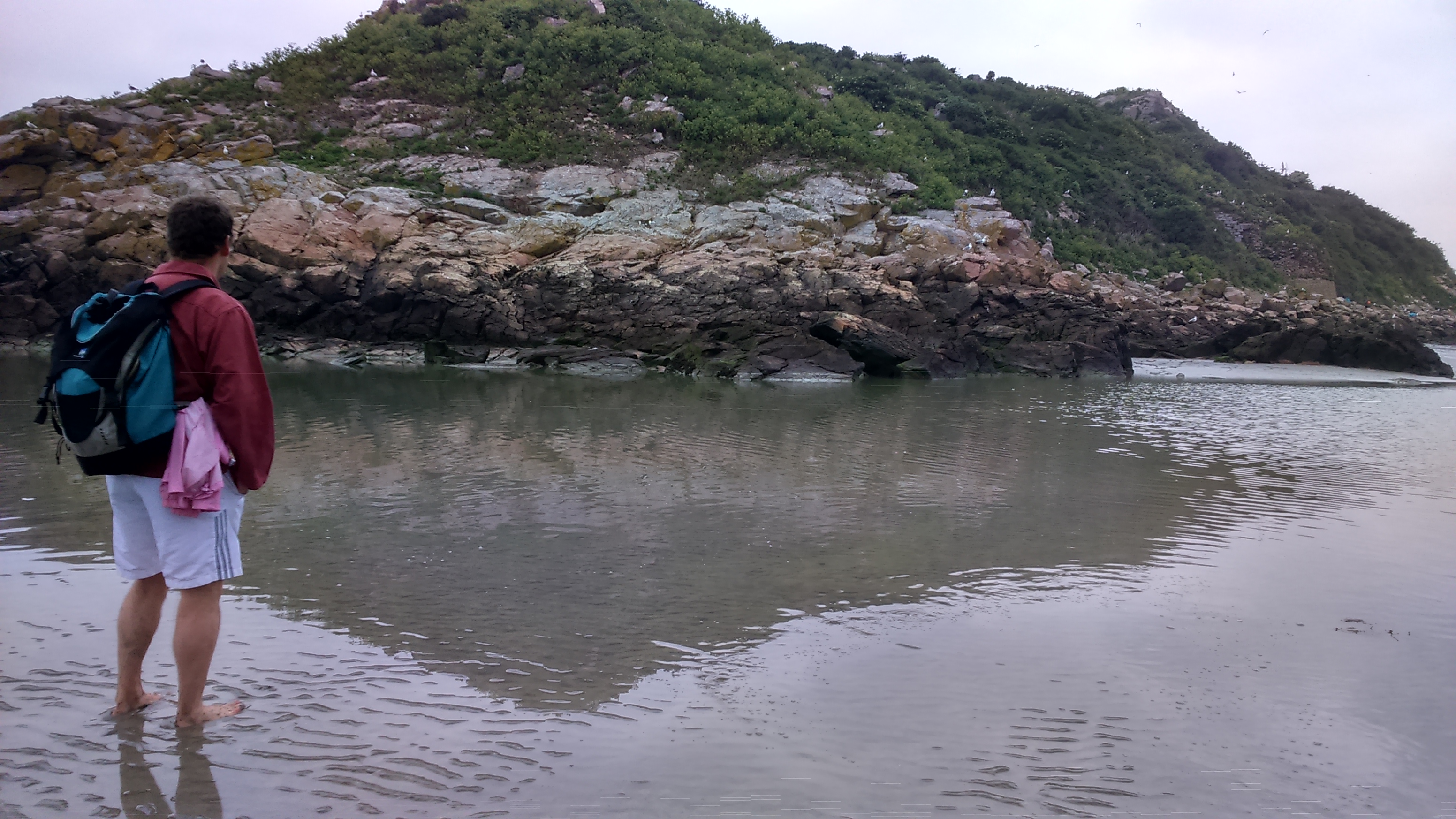
In 1423, Tombelaine was taken over by the English because it was close enough from which to attack the Mount. Luckily it was unsuccessful. In actual fact, no-one has managed to damage Mont Saint-Michel, not during the war, before, or since, so it’s easy to understand why some Normandy folk believe it has divine protection.
As we got closer and closer, the grandeur, the sheer size of the Abbey on top of such a small base, was awe inspiring.
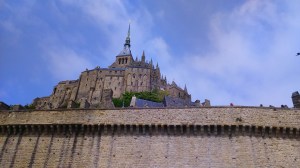
The Mount is made of granite, like our own Aberdeen, from the nearby Chausey islands. Rising 80 metres above sea level, it was quite some task, in the past, to bring the rocks up.
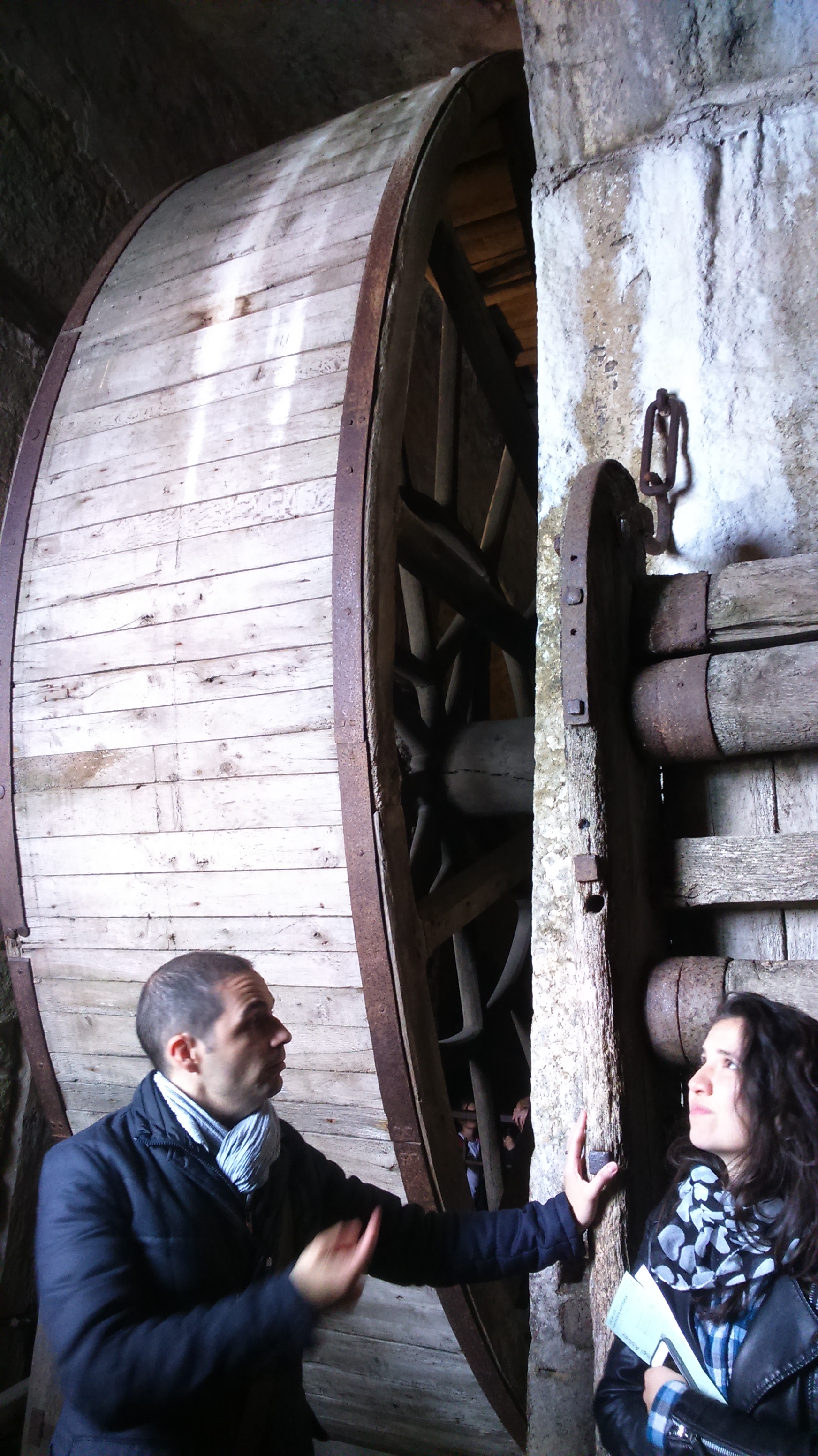
Many ‘workers’ trod this wheel to do the job of raising food, tools and building materials in 1880
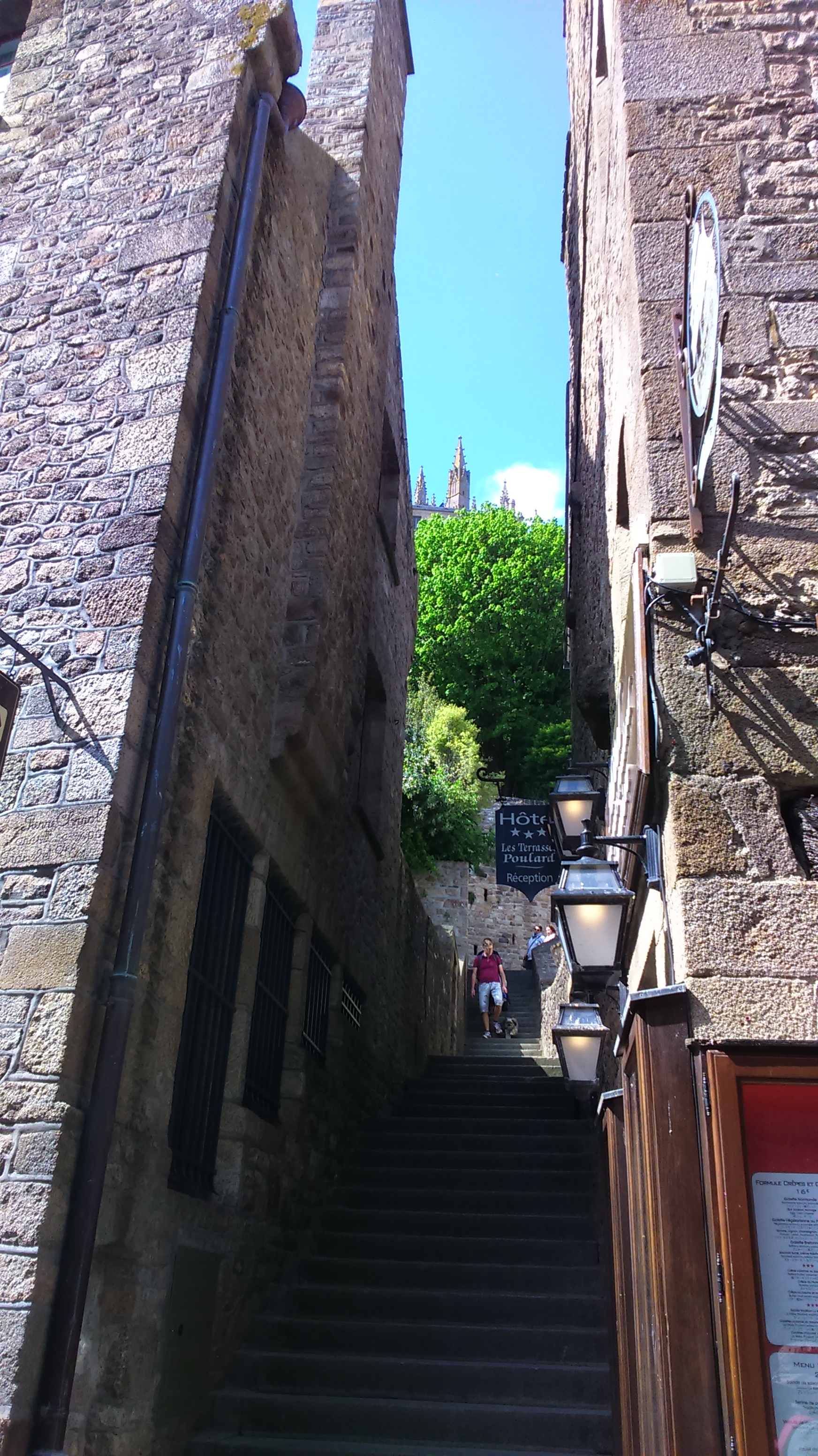
When I arrived, there were long queues for the foot fountains for washing so I did not bother, and I had to pay to get into the toilet. Then the woman in the tourist office told me I wouldn’t be allowed into the Abbey with my backpack, due to terrorist threats. I reckoned differently, not having come all this way on foot, with this weight, only to be refused admittance. Barefoot, I continued my winding way up the back street to avoid the crowds.
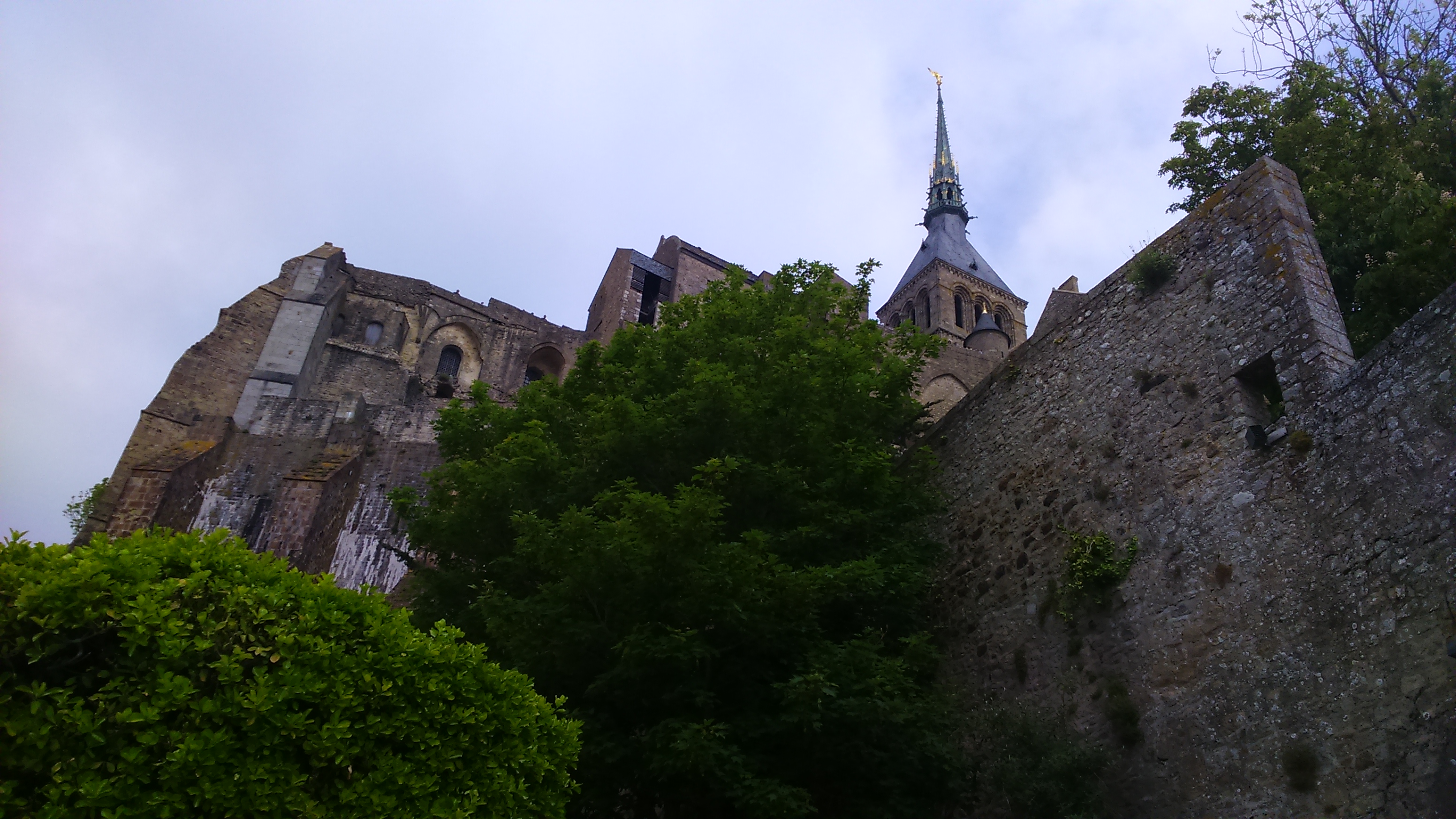
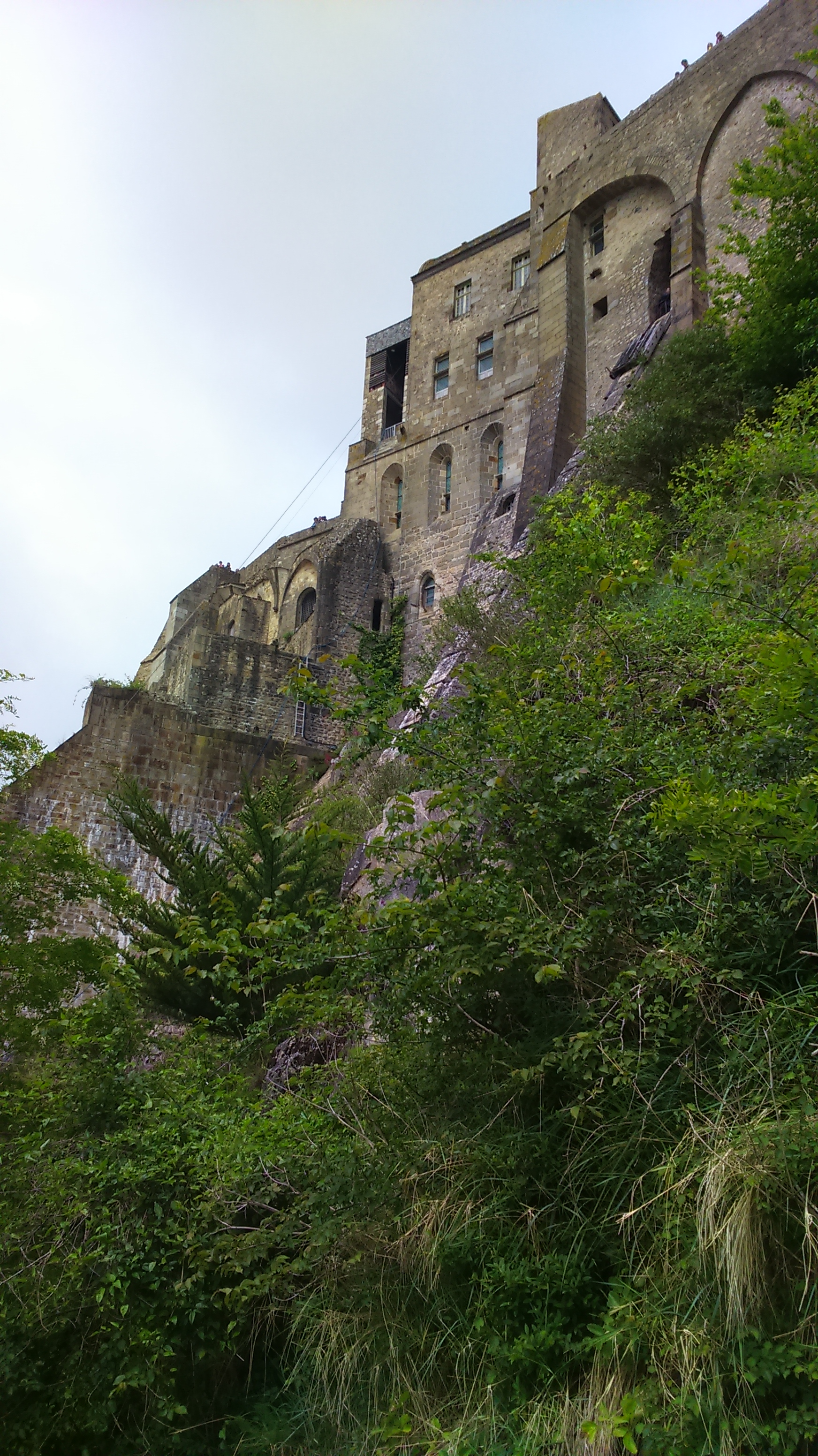
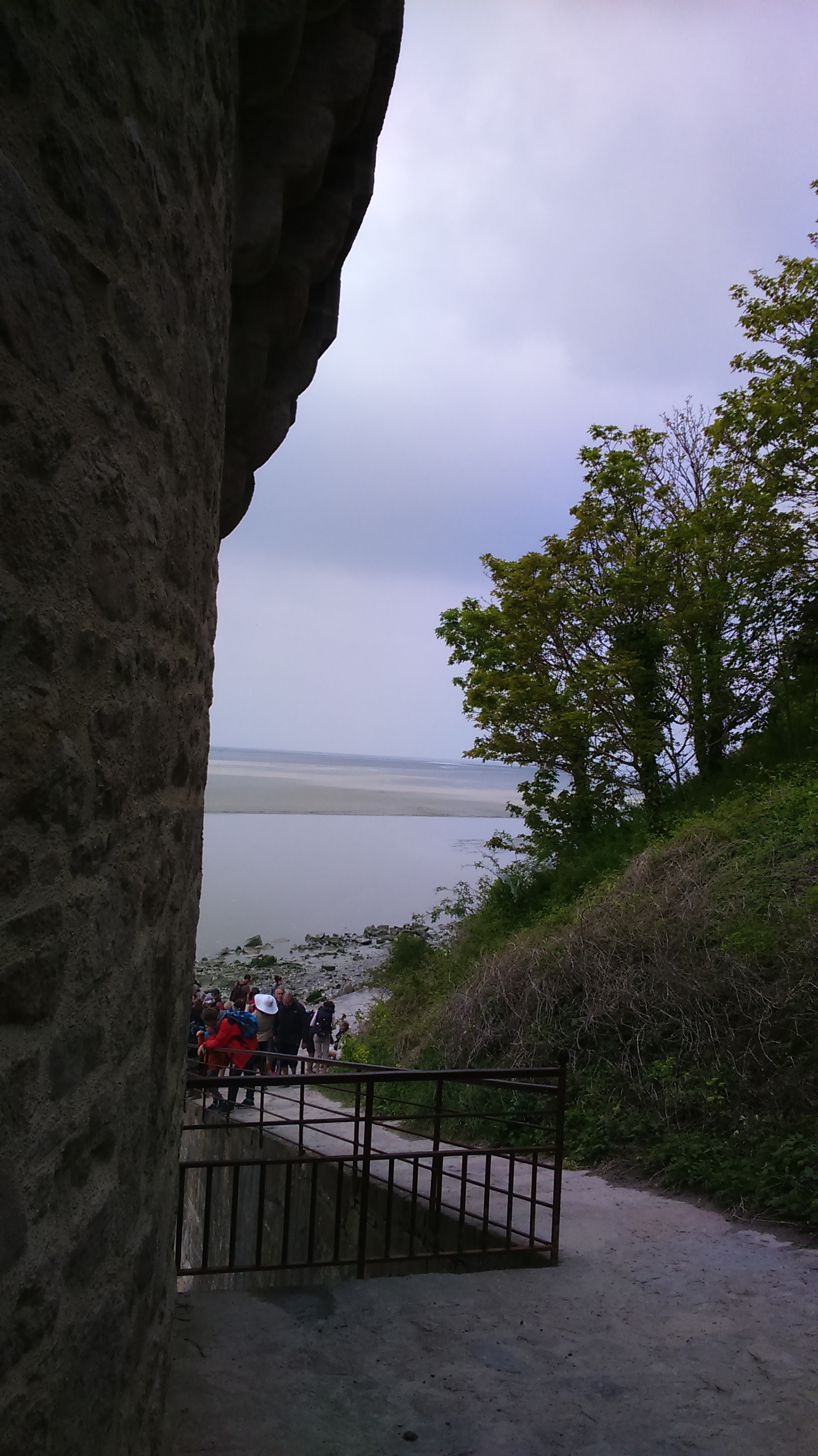
Today I made an exception to my own rule and bought a ticket. I don’t usually pay to go into places because I do not have the money, and because it encourages me to go to free venues, places that might not be on the tourist route, and see things from different angles. However, I knew I needed to go into this one, and I discovered later that the entrance ticket hall was the place the very poor pilgrims of the past were received, to be given alms and admitted for a blessing. If I did indeed come here in a previous life, I was surely one of this group.
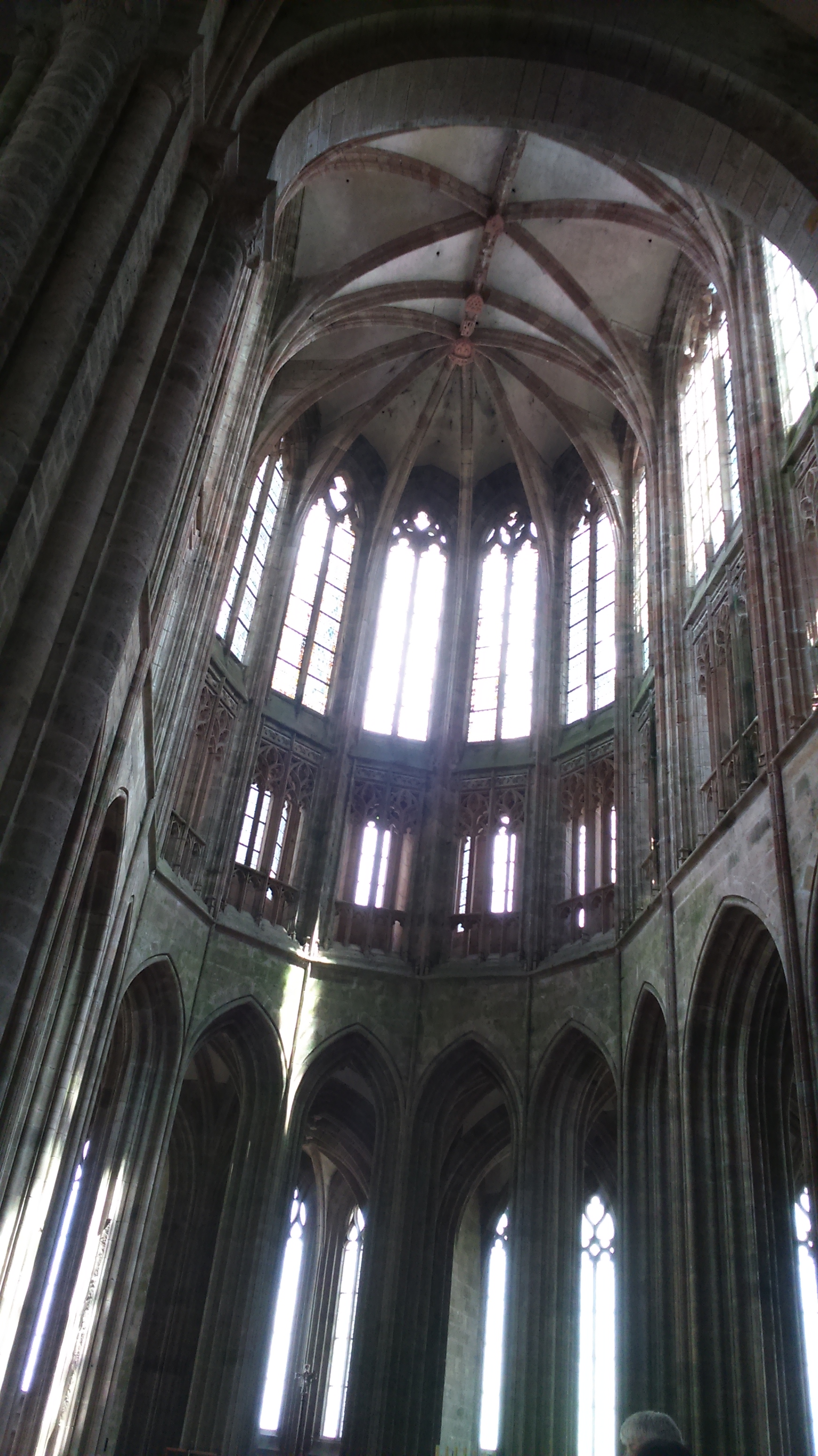
We waited for our English speaking guide (he was very entertaining and knowledgeable) on the terrace before entering. As it turned out, no-one looked twice at my pack so I did not have to plead or prostrate myself to be let in. Once again my age, sex, and perhaps skin colour seemed to be a bonus. It was well worth it, but a long tour. I left after 2 hours because I was very cold and getting tired carrying the weighty luggage around with me, but it was still going strong when I peeled away.
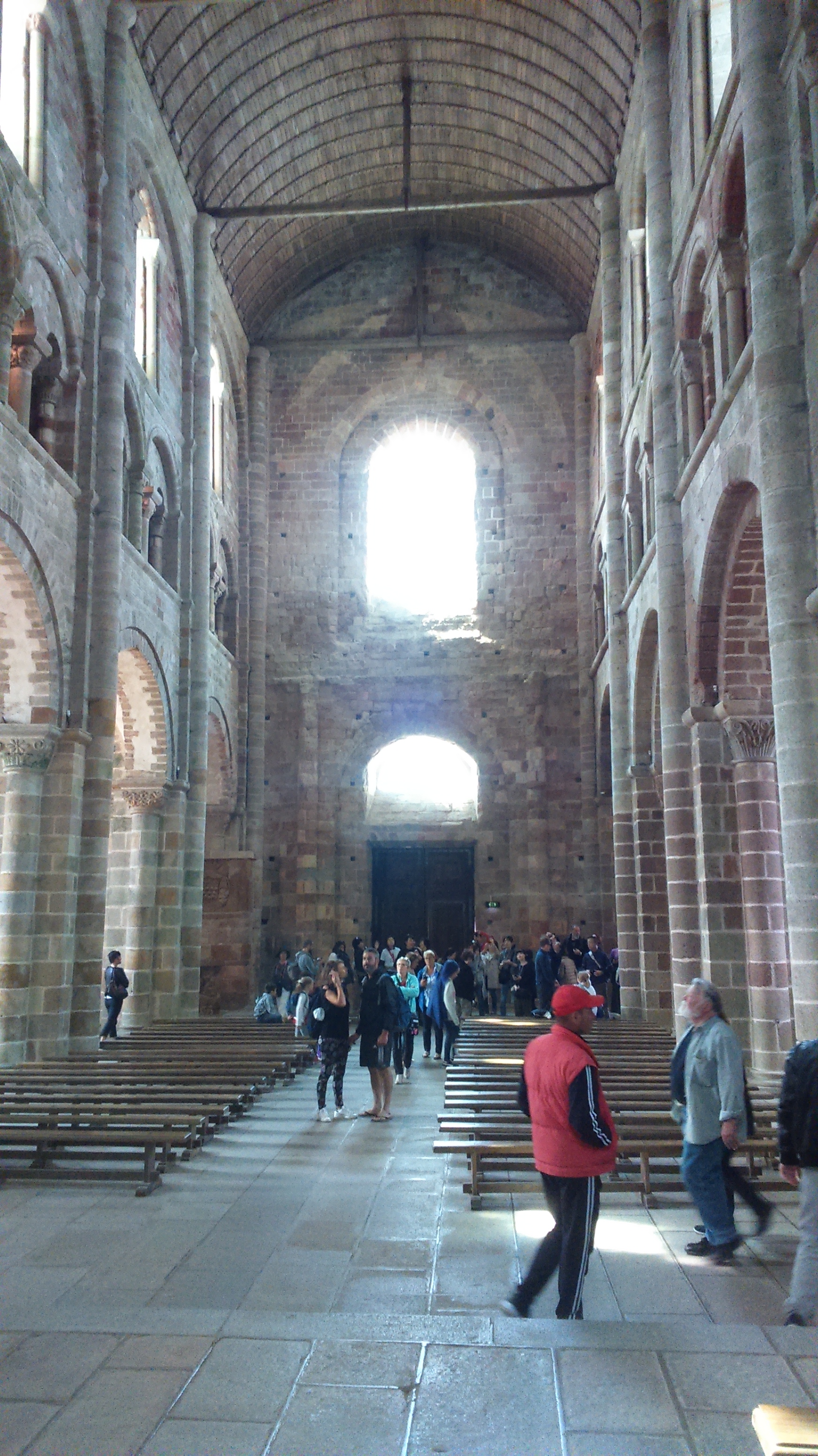
There’s so much to say about this place, and many photographs are available elsewhere. I listened and looked at chamber after chamber, conscious of the cold stone under my soles and imagining myself as one of the nuns he was describing, silent and worshipping through the ages.
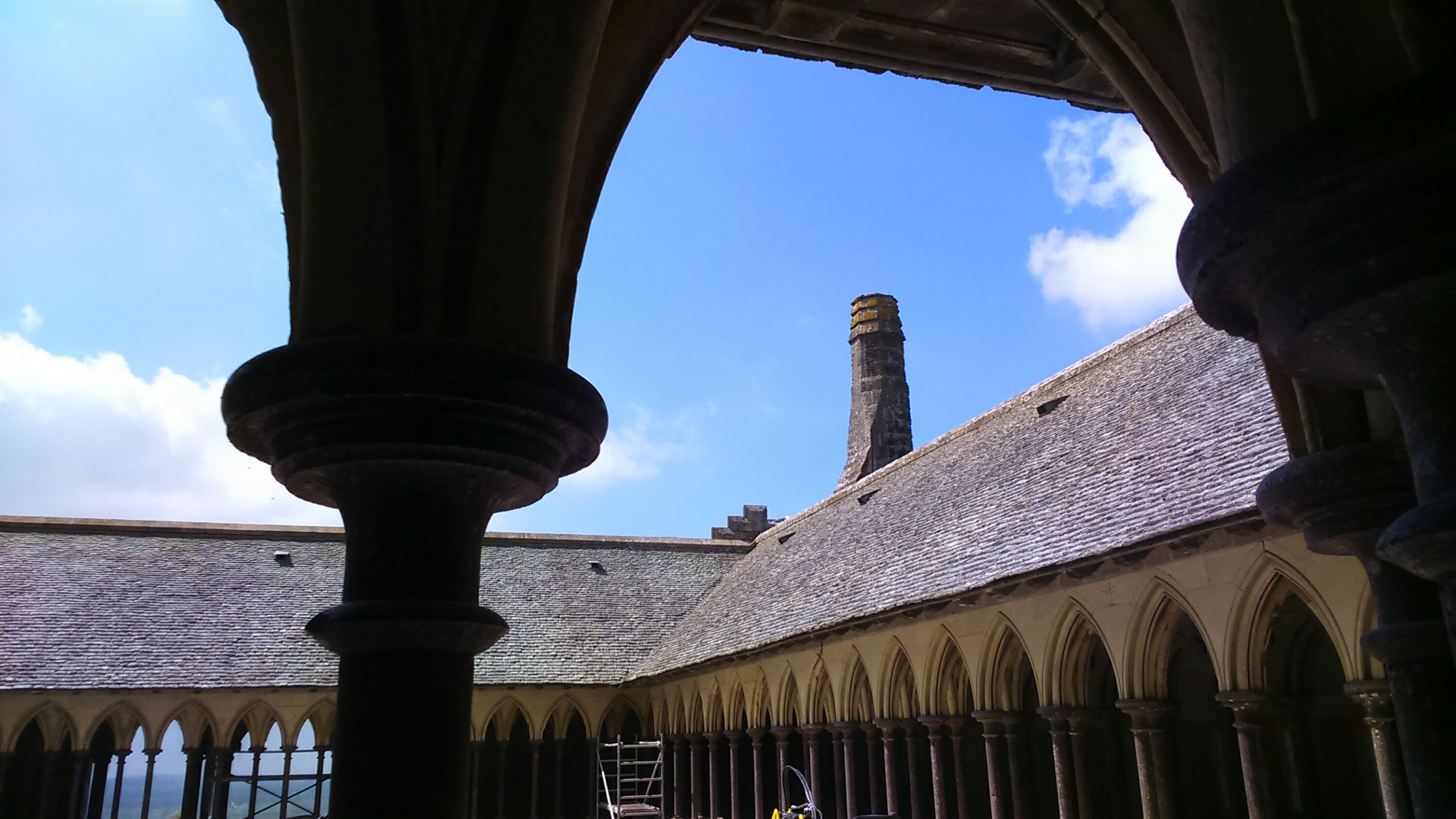
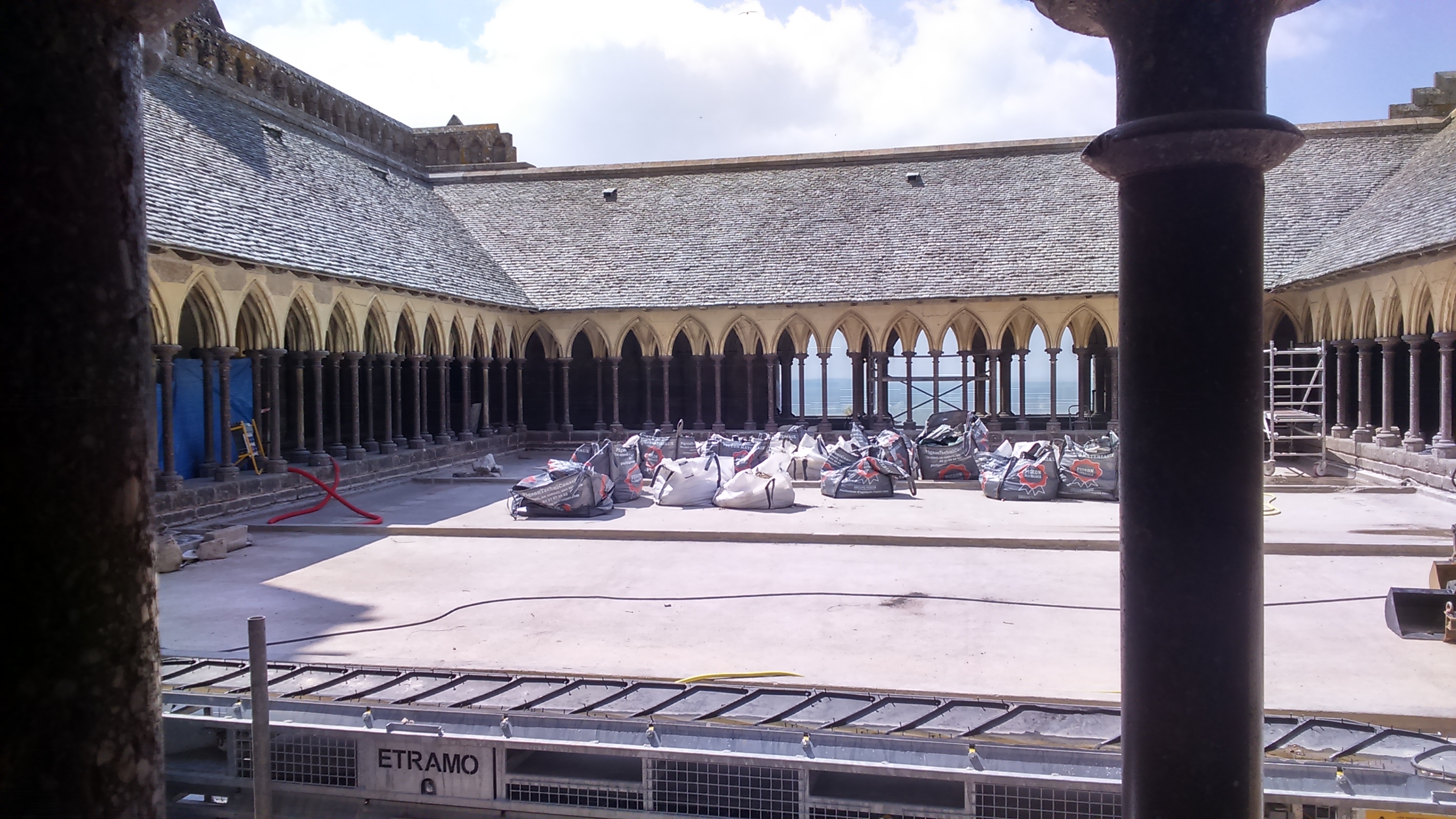
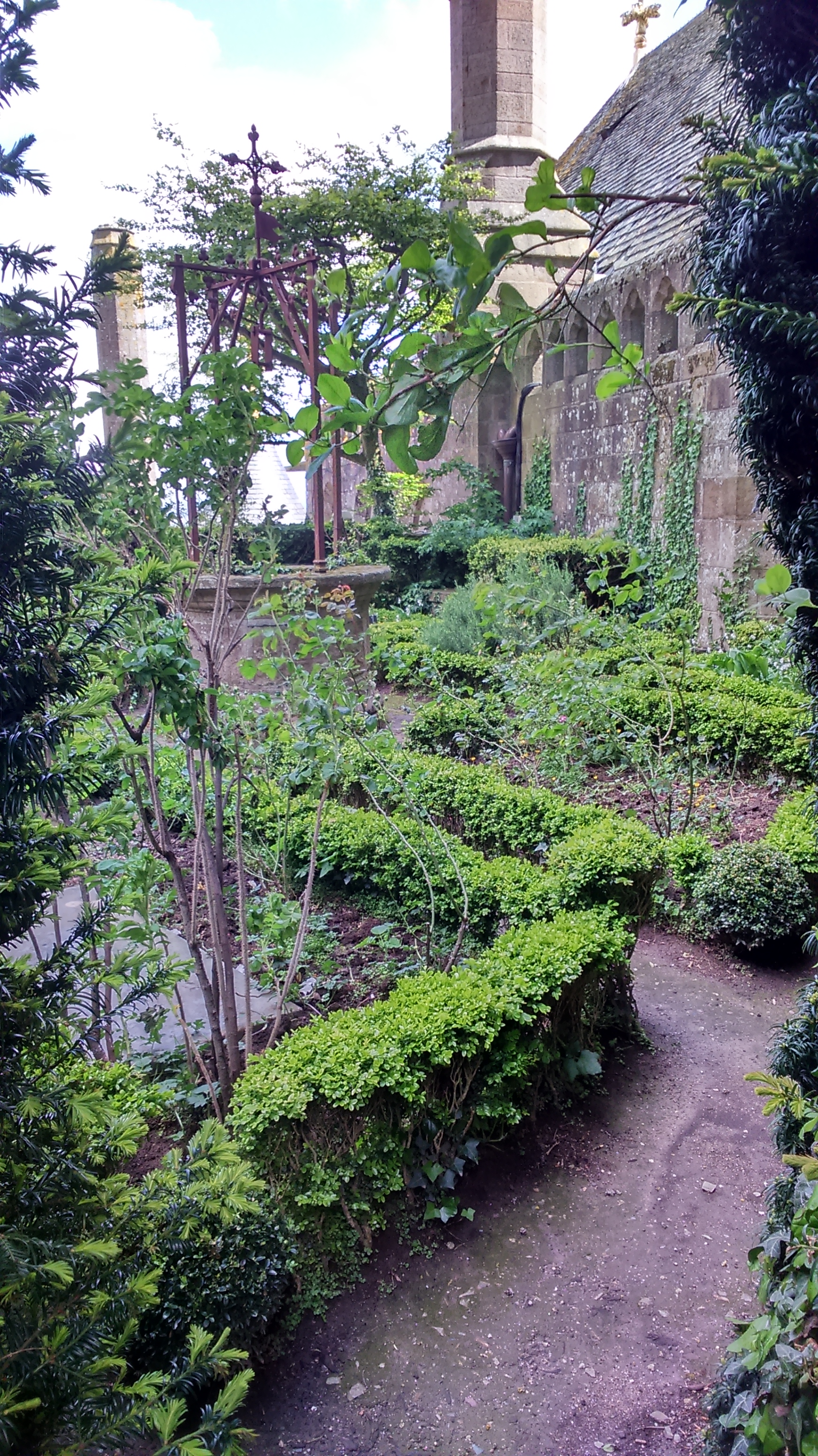
The cloisters were being rennovated so I had to take this through the railings
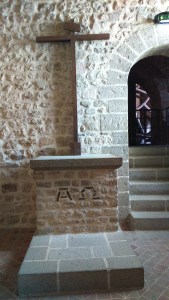
I was moved by the dark, Romanesque Crypt of St Martin with its eight pillars where sinners awaited sentencing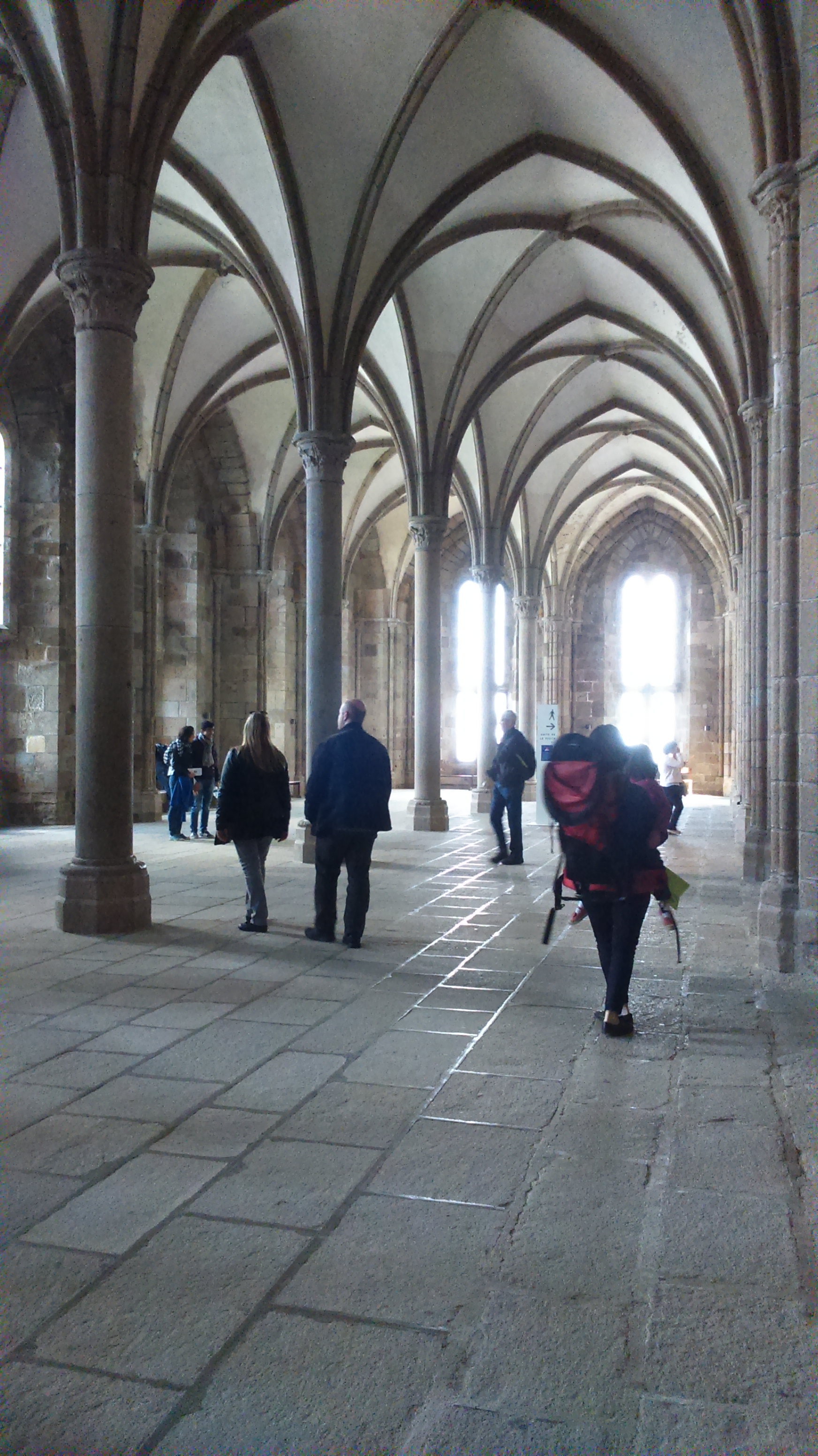
And I was fully engaged by the tale of the 1000 years of construction, stimulated apparently by Saint Michael (the archangel) speaking not once, but twice to Aubert, Bishop of nearby Avranches, before he took heed and started to build. The building of the Gothic-style choir (chancel) was impressive.
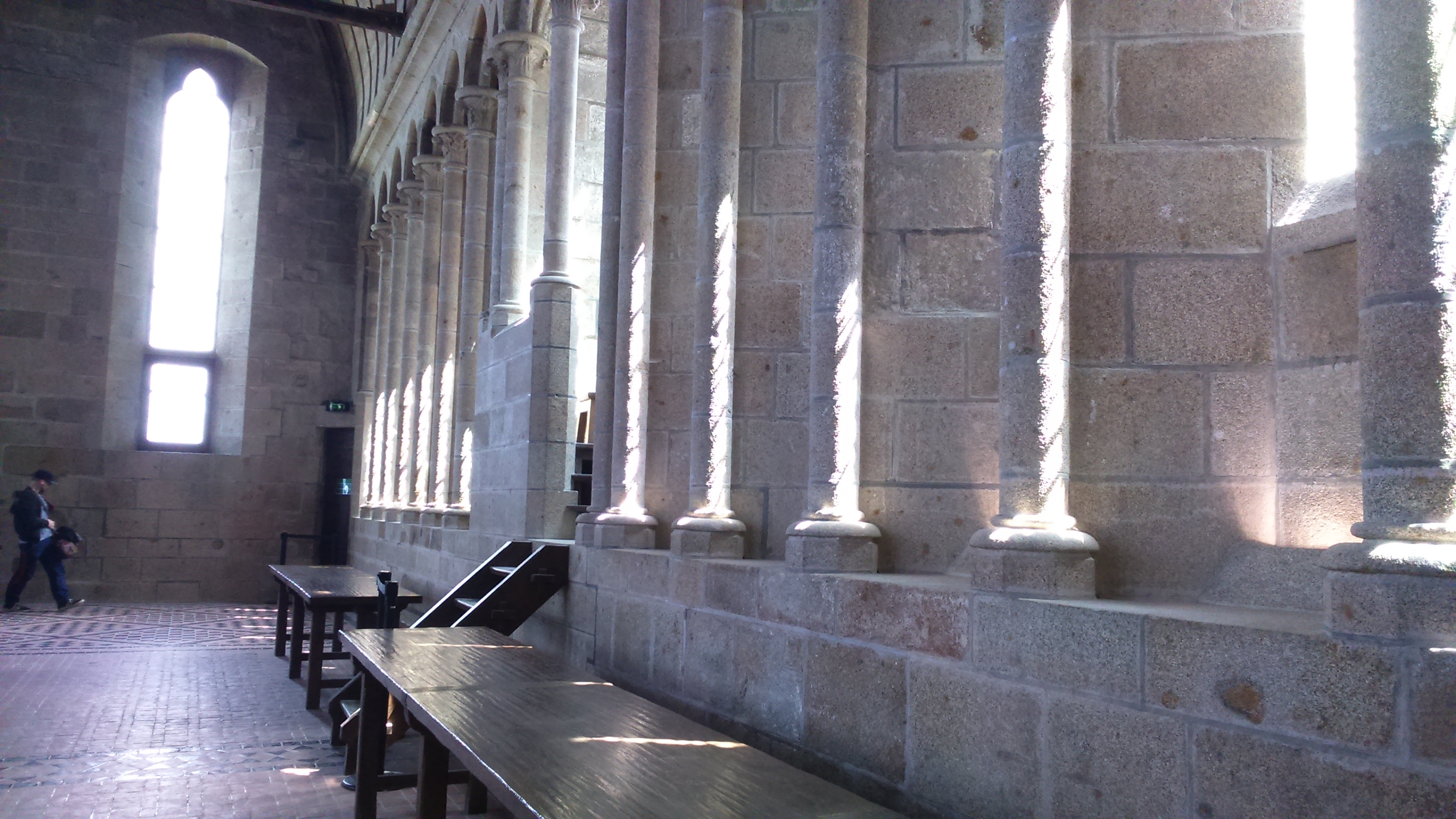
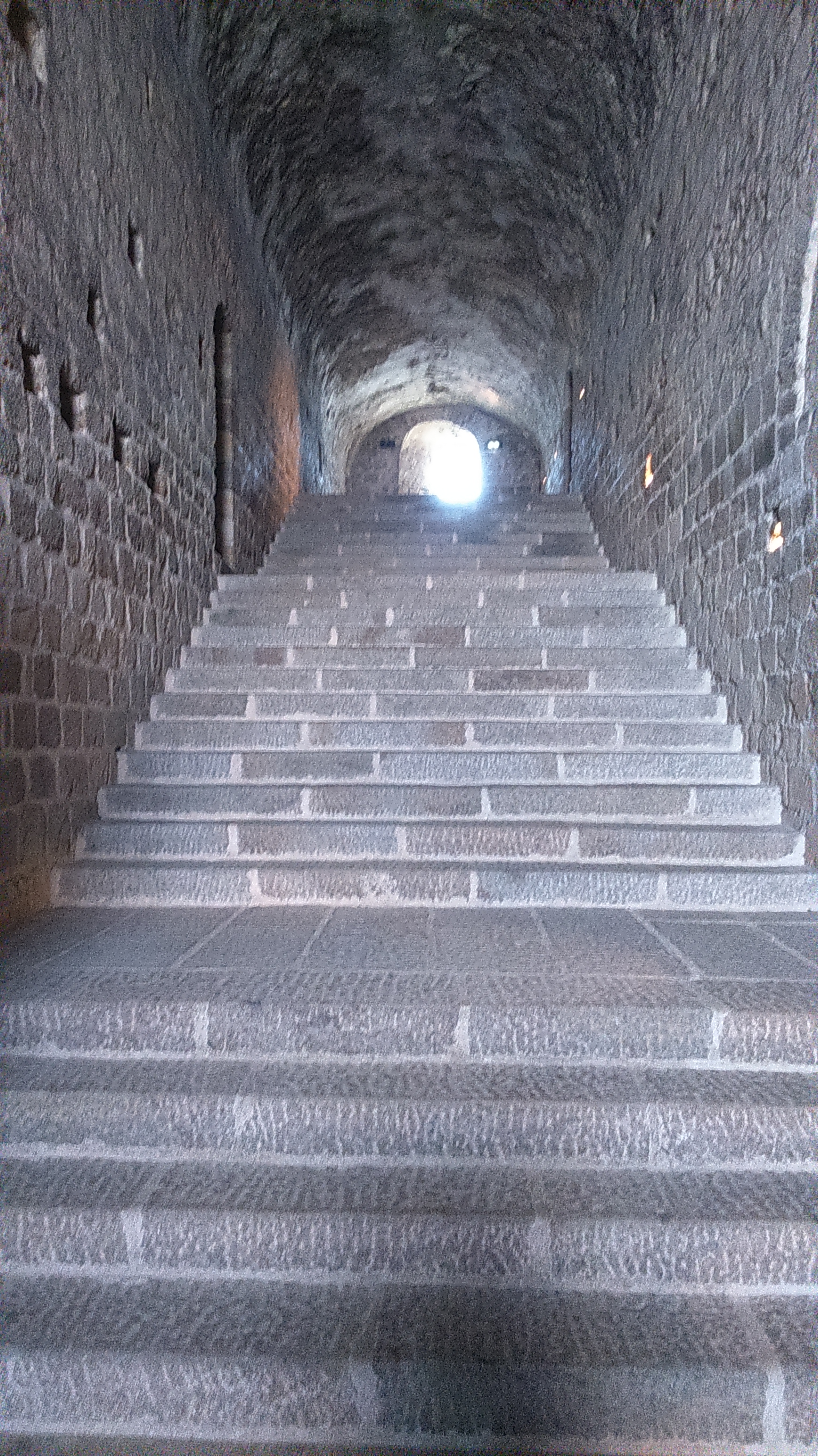
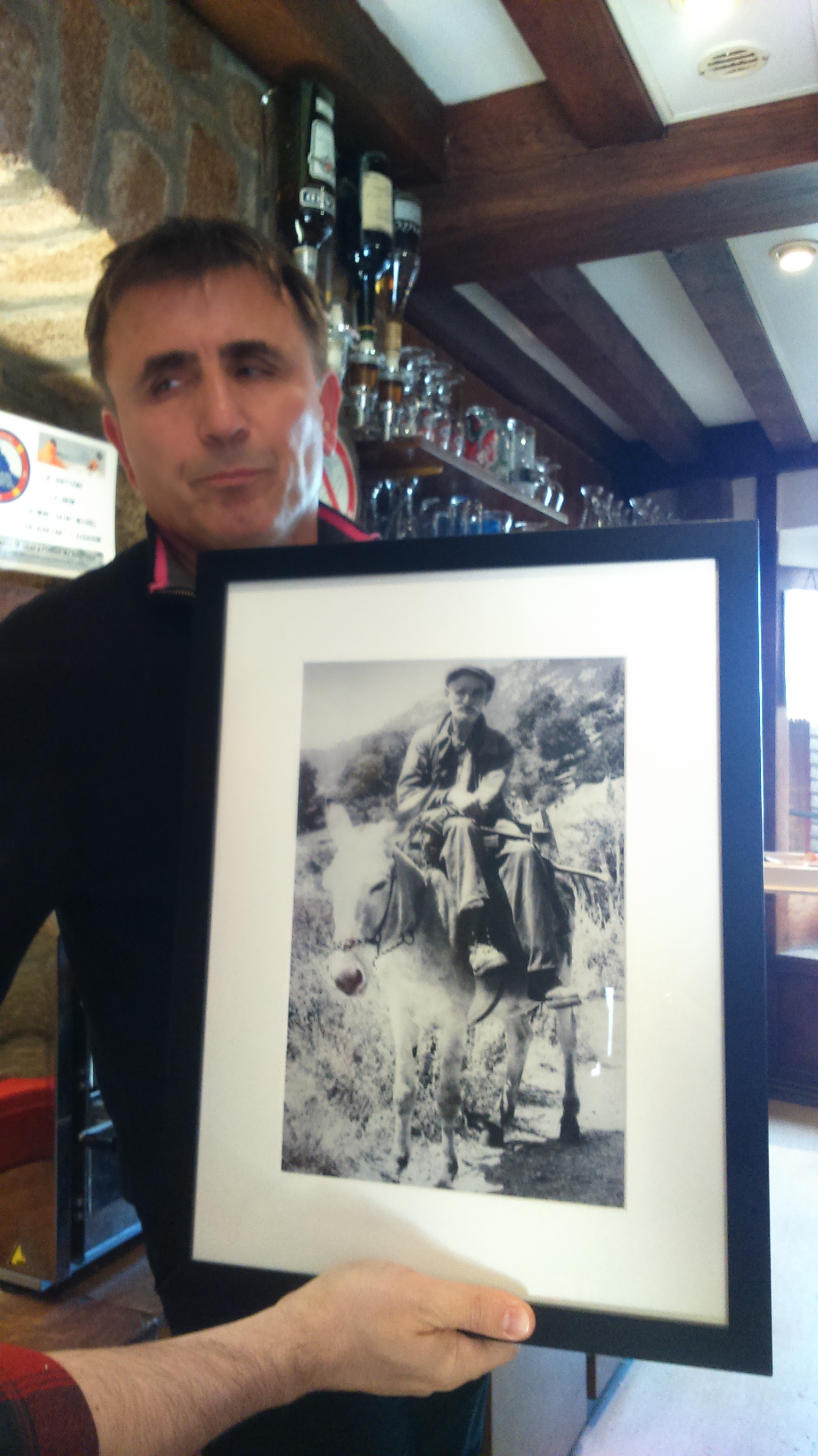
It was sumptuously hot once outside again, and I wound my way down, between souvenir shops and restaurants, sampling a small red wine to warm my cockles. There I spied a picture of a man on a donkey, the grandfather of the owner, held up by his son.
.
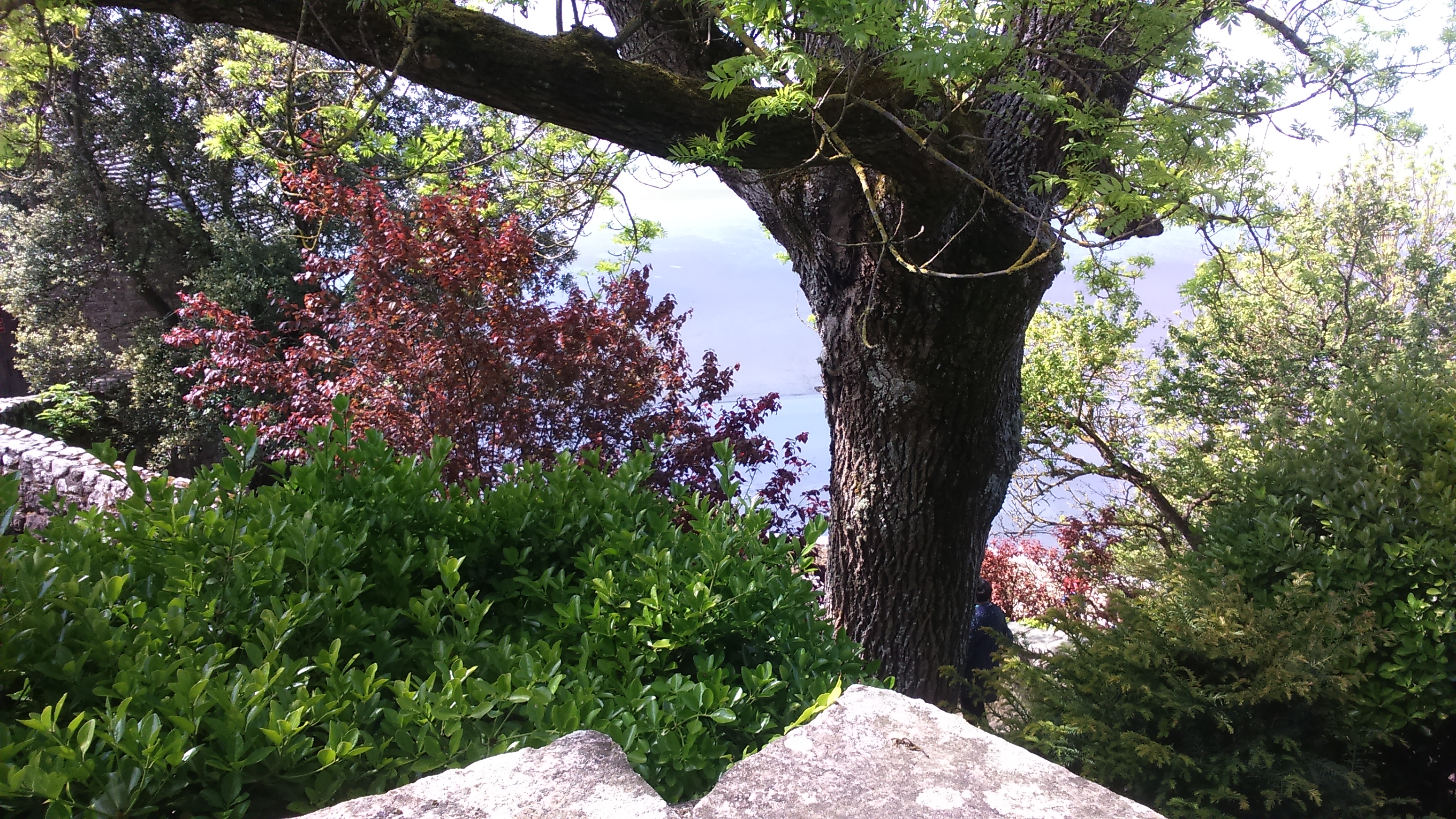
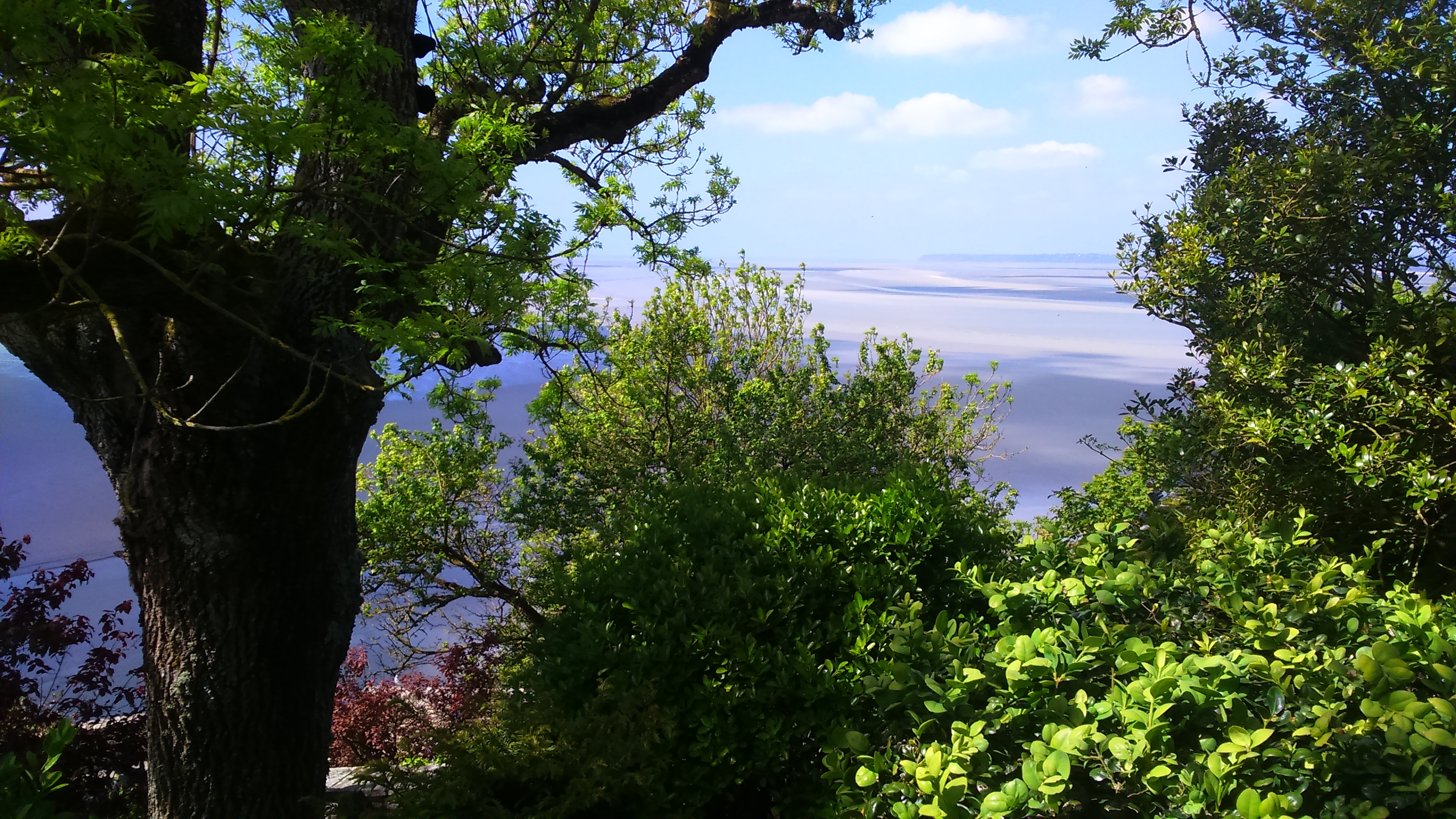
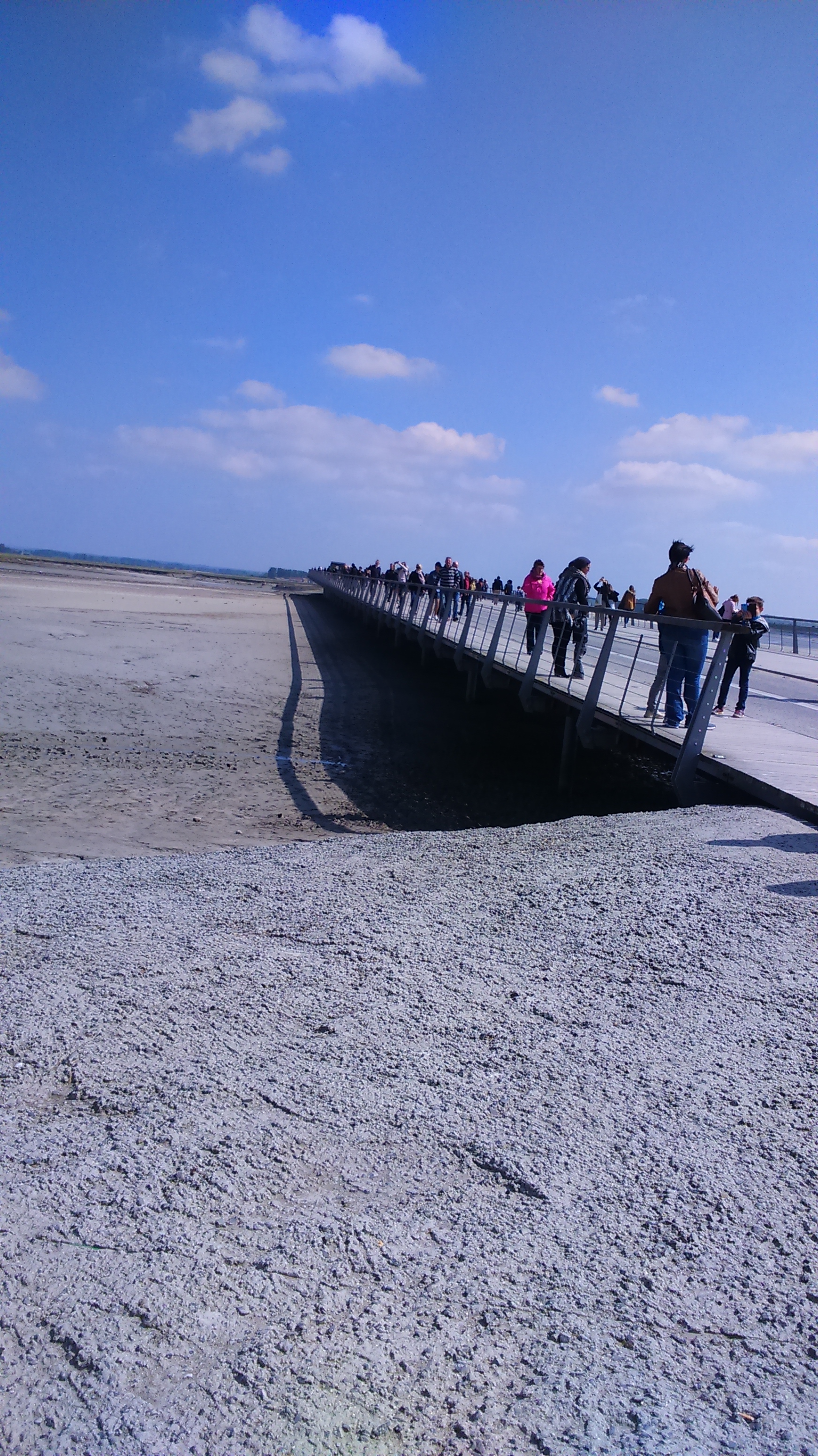
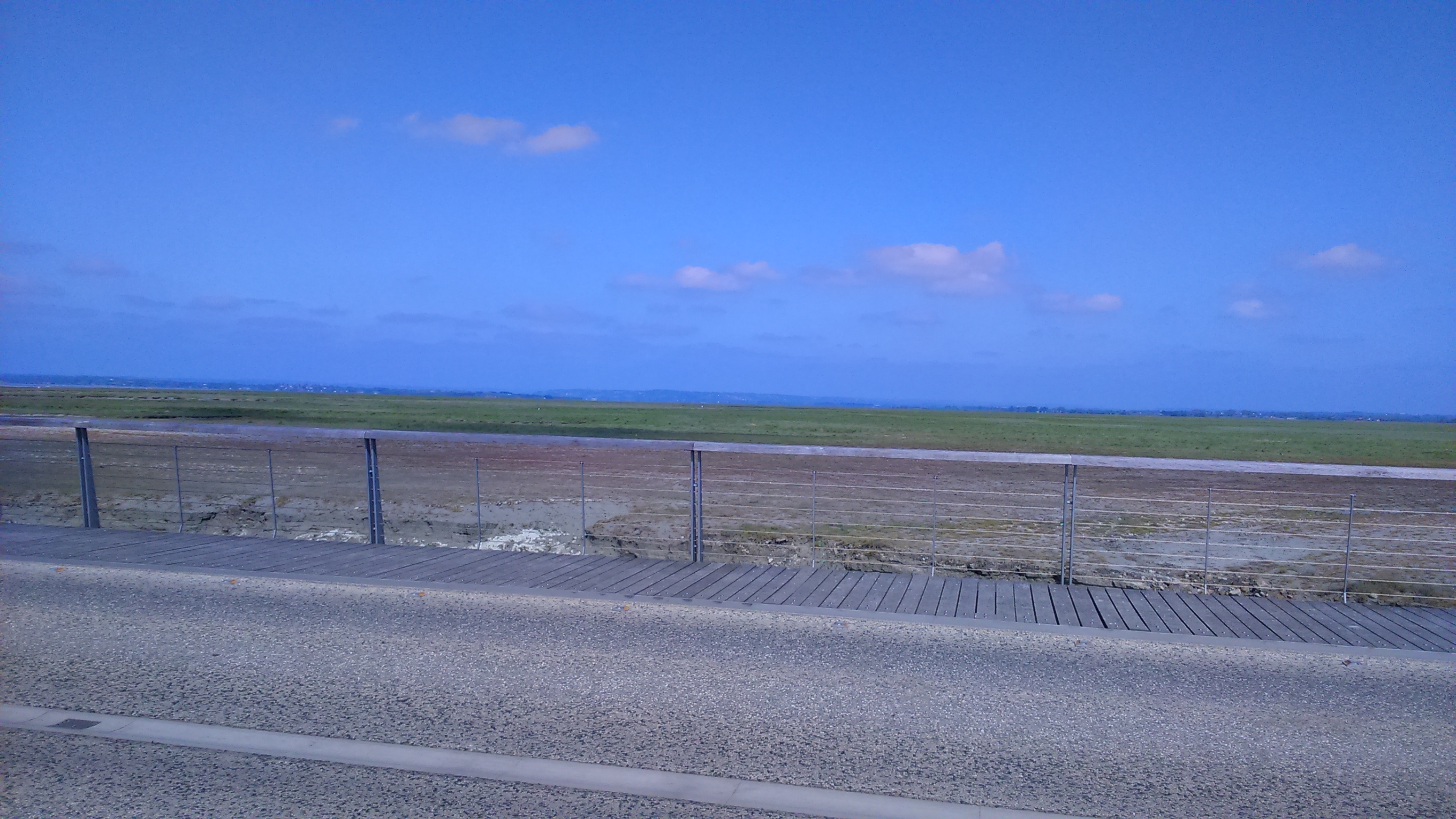
By the time I walked out towards the northern coast of Brittany, under a baking sun and along the sun-bleached, wooden walk-way, I was not a little dazed by the special energy of the place.
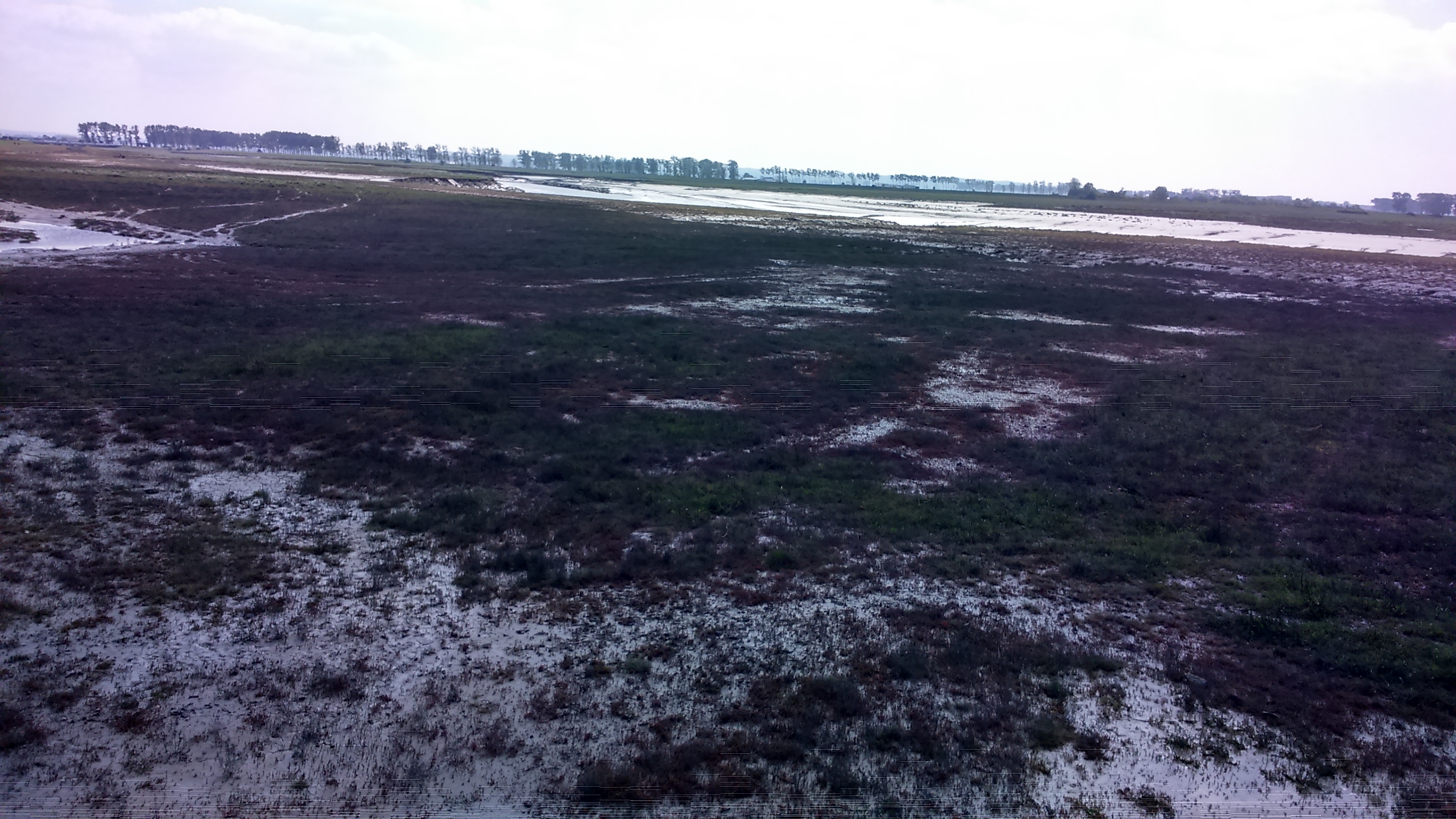
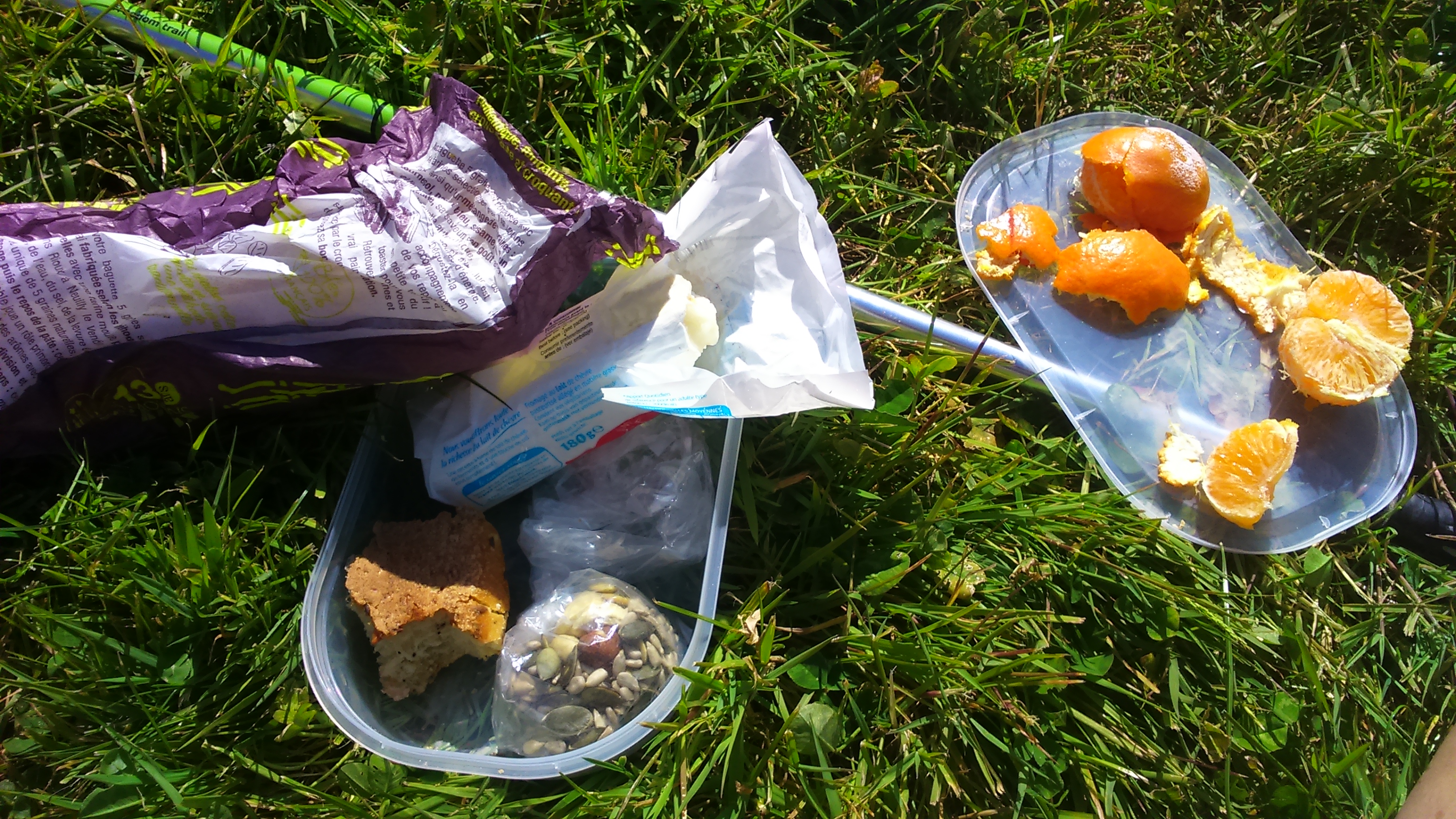
I found my way to the bus-stop, ate a snack while I waited, sailed eastwards right through Bas-Courtils on a bus making a mental note when I saw somewhere I might eat later through the window, and alighting some 5 kms further on in Courtils, not knowing they were two different villages with almost identical names.
I had booked a bed, but when I went into the first shop I could find to get wifi so that I could look on my phone for the address, I realised I did not have it. I started to panic (I rarely worry when I am away walking, but have noticed that it can happen when I am tired). The kind proprietress came to help and suggested I look on my list of received calls from 2 days ago. That way I managed to phone and get the address, only to then discover my mistake. Of course, I planned to walk, but no, the same woman insisted that she take me back there in her car – what a sweetie, such kindness!
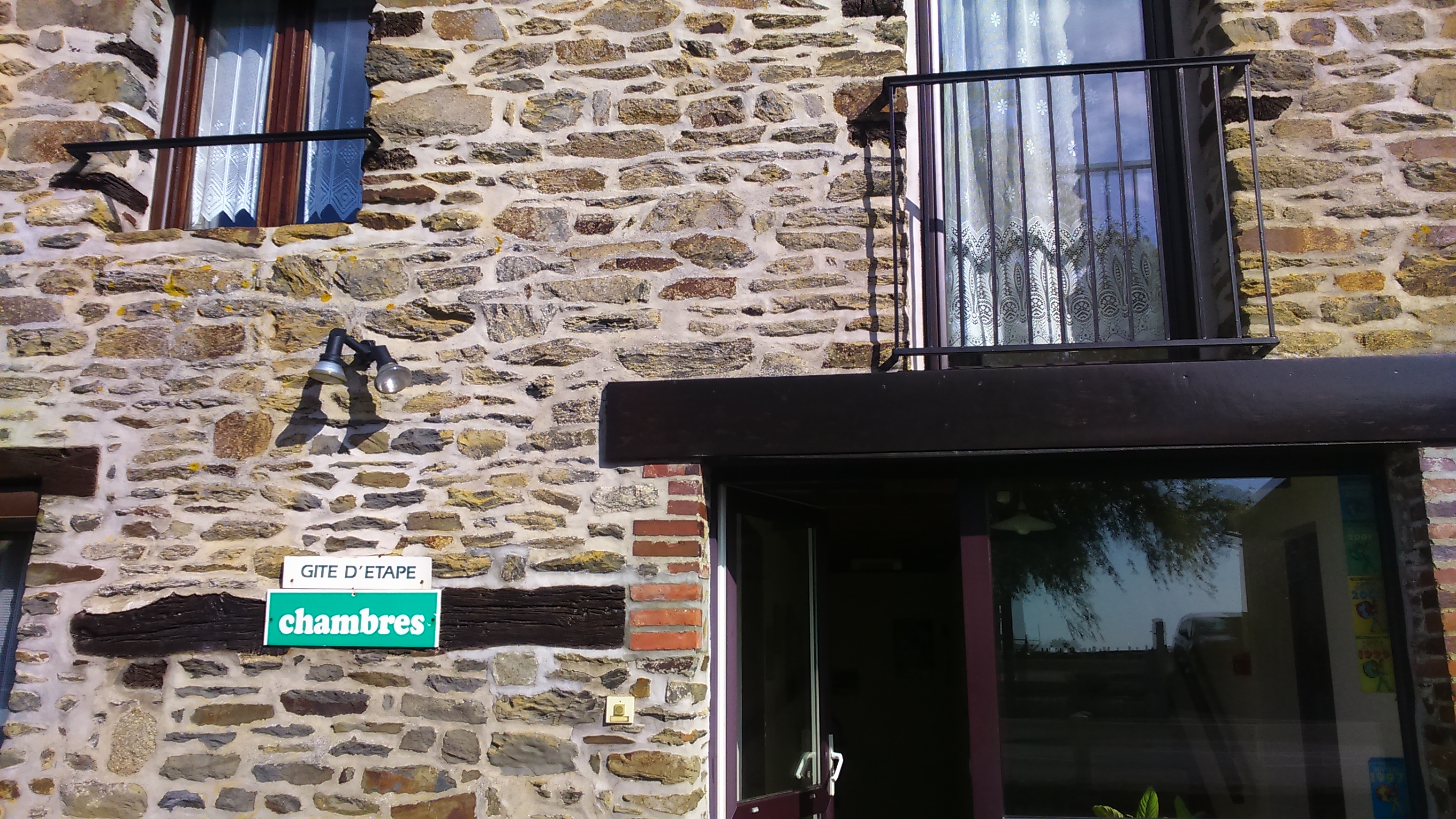
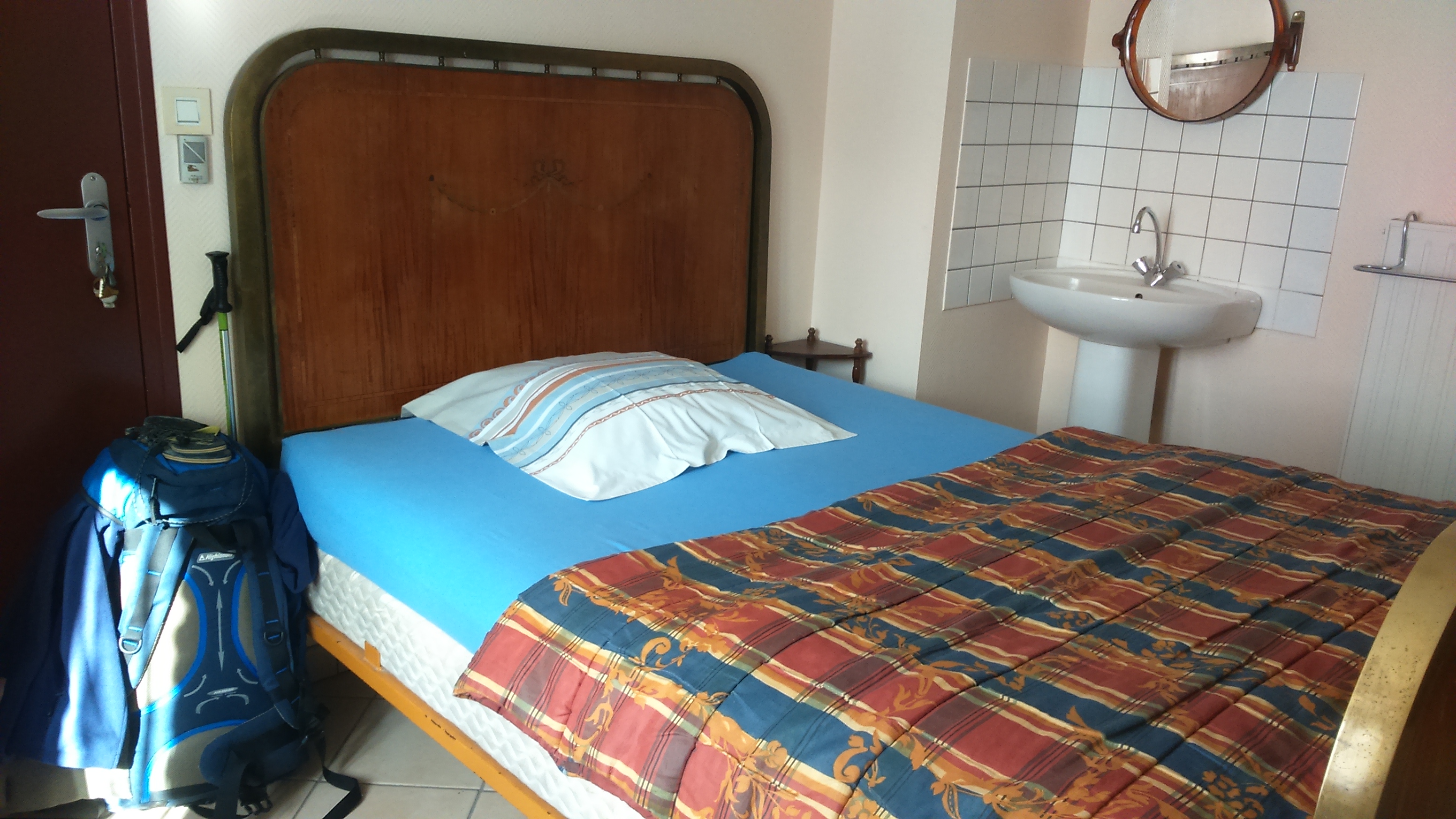
I had a double bed, in fact, the entire place, all to myself for 11 euros. There was no breakfast, but there was a place to hang up my washing.
On my long walk, I have discovered that I am usually the sort of person who wants to know why things happen. Walking has further taught me that when I pay attention, if I’m very quiet inside and I listen in a very relaxed way, the reason for everything becomes clear. This is a very simple way, and it requires me to be calm, to really stay in the exact moment, to put the anxious parts to the back. I have to trust; acceptance must be in the foreground. (Trusting can be a conscious act, I know, but this other way happens while I am just going about living.) Perhaps it is an undoing rather than a doing, about undoing the concern that I have learned, the questioning and the fearing?
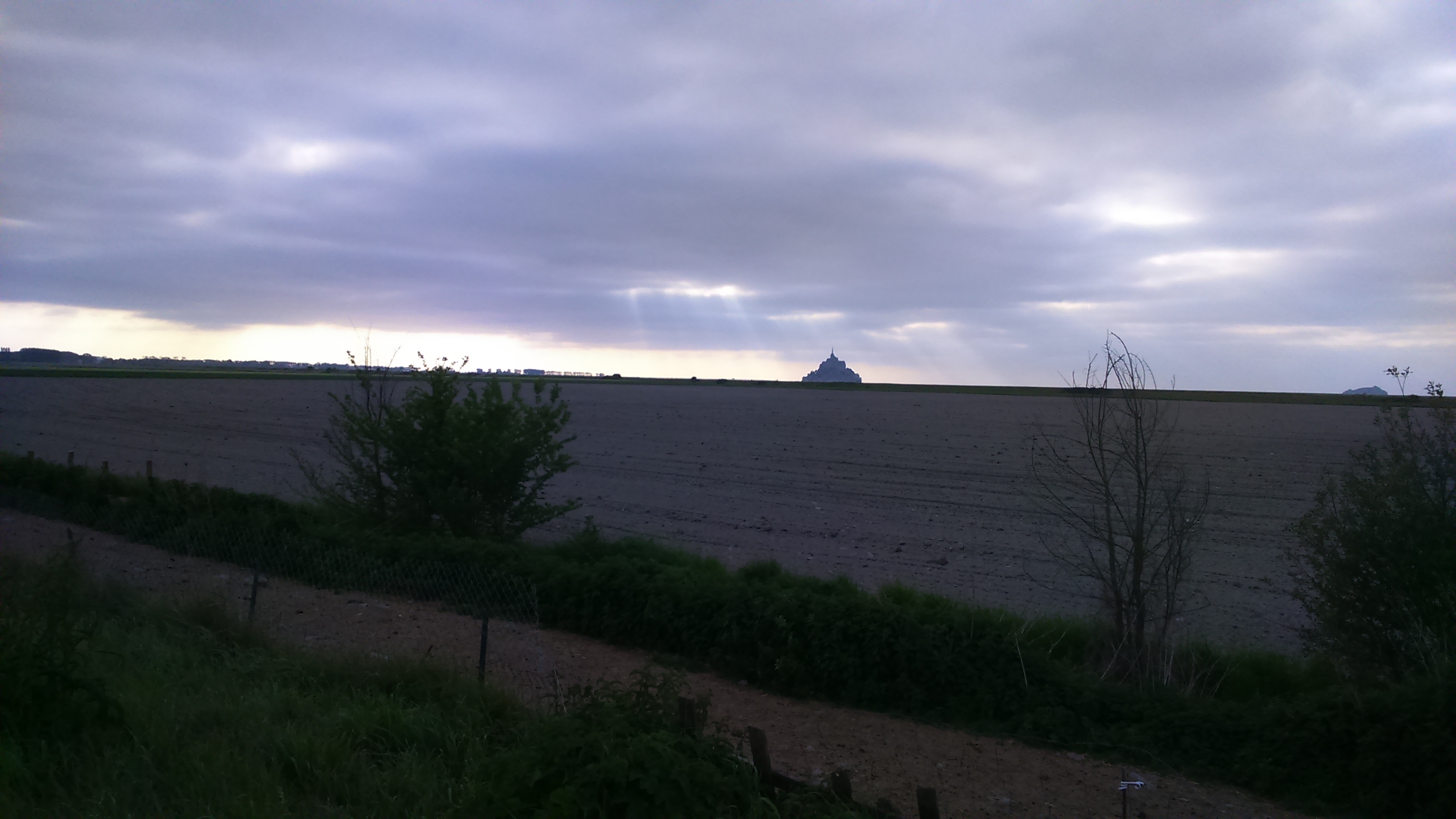
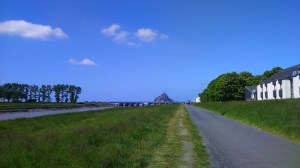
I could still see the Mount from where I stayed. It was almost the same size as it was the horizon I was walking towards when I left earlier that morning (see photo above)
Things seem to work out well when I let them: This is proven to me by a tiny thing like forgetting to eat an orange and discovering it days later when there’s nothing else and I’m very hungry; by larger things, such as not planning accommodation in advance and then finding that it unexpectedly rains so that I could not have walked to that place anyway; and by even lmore important things, where you meet the right person at the right time. Although it can seem completely unfathomable at the time, these occurances have resuled, for me, in a major life change. The phrase comes to me: ‘mine is not to question why’. It might sound religious, but I don’t think it has to do with any god.
That night I felt blessed. Truly. I stayed at the youth hostel in Genêts on the mainland (http://www.hifrance.org/auberge-de-jeunesse/genets–baie-mont-st-michel.html). You may be able to book there at the last minute if it’s not a bank holiday or high season, but if you want to stay on the Mount (it’s an island) you definitely have to plan ahead as it’s one of the most popular visitor attractions in France.
La Manche tourist site (English language version) with details of walks, maps etc.
Here are the details of one company with whom you can walk across the bay. Cost: 7 euros one-way (you can walk back (or go by bus, or in a horse and cart) via another route). You can also go and return in one day, with time there to sight-see. And there are other alternatives. https://www.decouvertebaie.com/42-traversees-traditionnelles-traditionnelle–depart-genets-point-a.html
Mont Saint-Michel tourist site http://www.ot-montsaintmichel.com/index.htm?lang=en
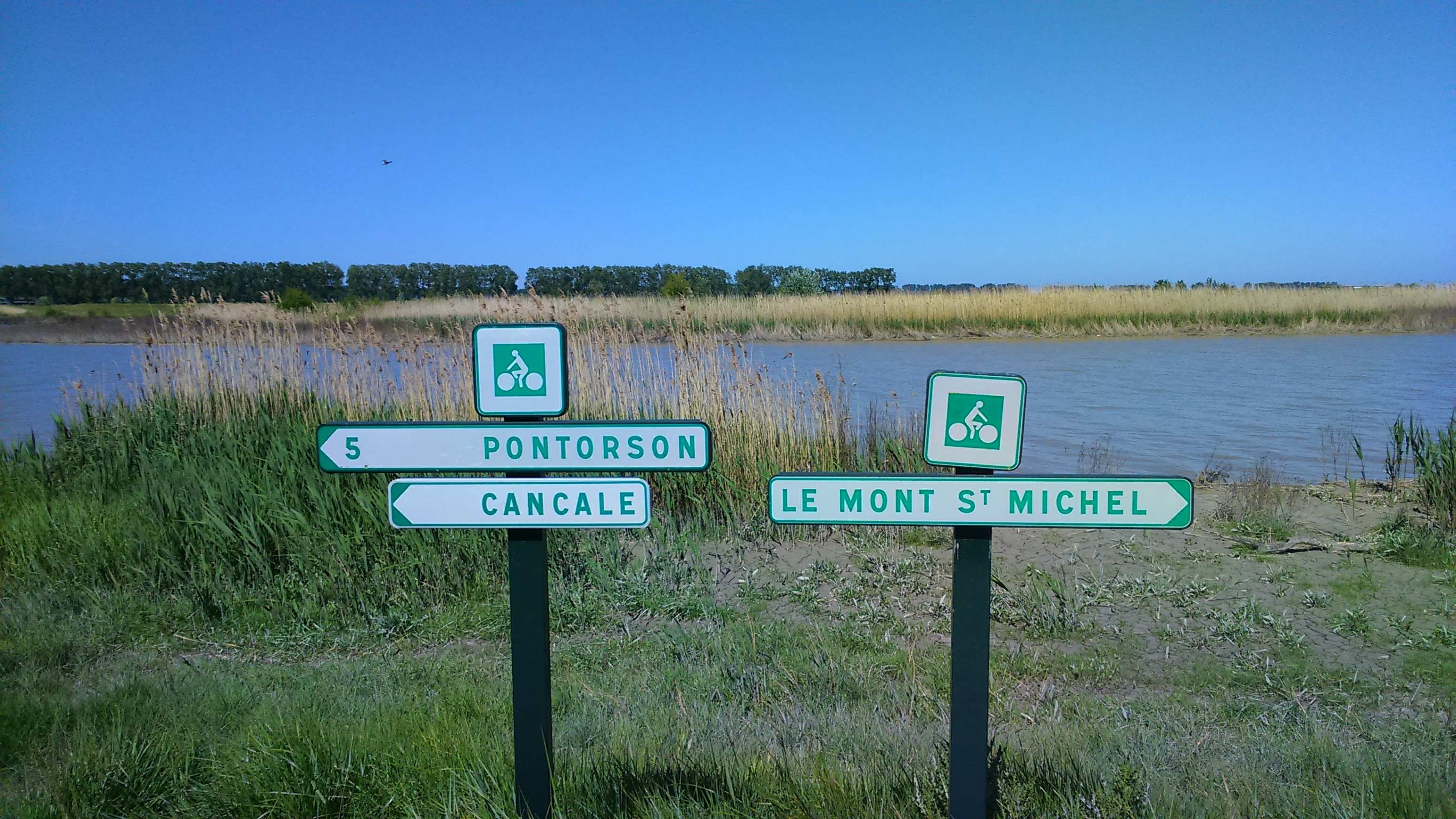
 Walking without a donkey