Whalsay and Bressay

All this week I have been in conversation with women from the Shetland Islands and travelled, in my imagination, to the places where they have lived. Two of my conversations have influenced my (virtual) itinerary: Leah (from Shetland Islands with Leah) and Christine De Luca. So, I made my way from Northmavine (where I met Helen Robertson), eastwards to Whalsay, where Leah lived shortly after she was born, and then in a southerly direction, via Lerwick where she was brought up, to Bressay which she knows as an adult, and where Christine also lived when she was a baby.

Whalsay
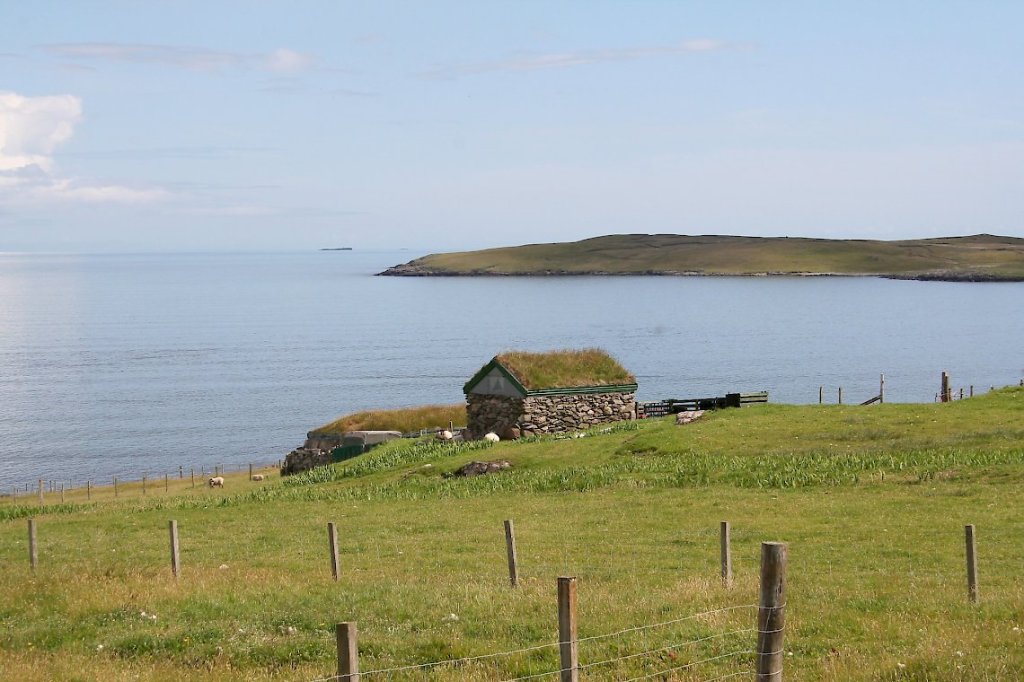
Whalsay from shetland.org

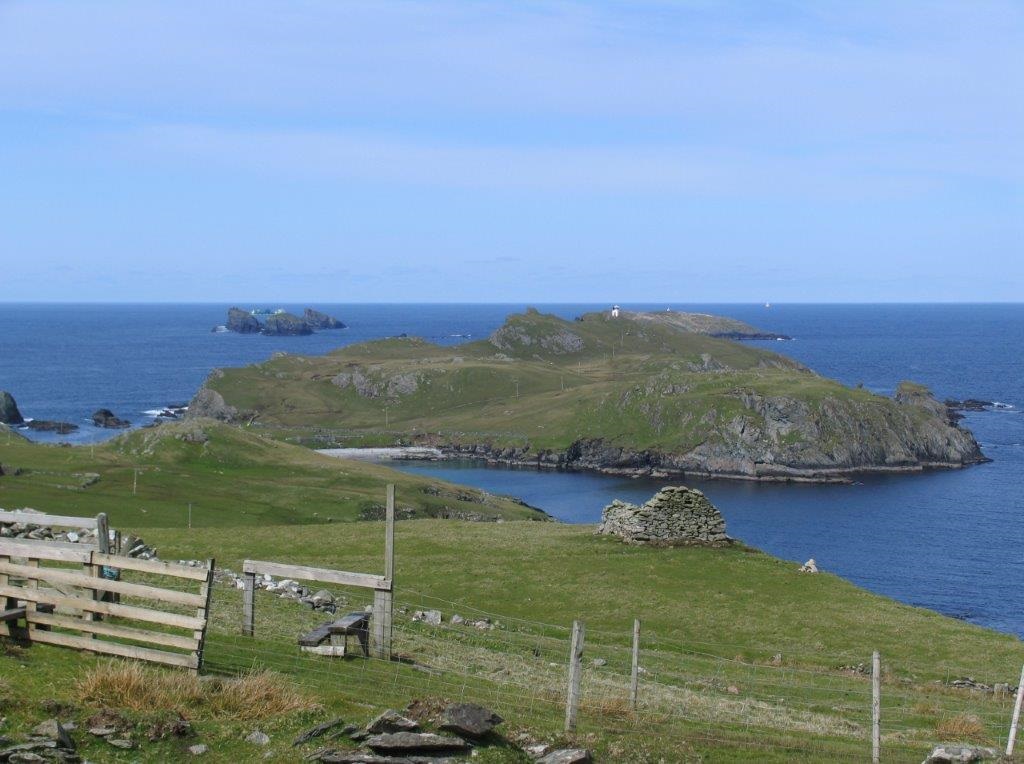
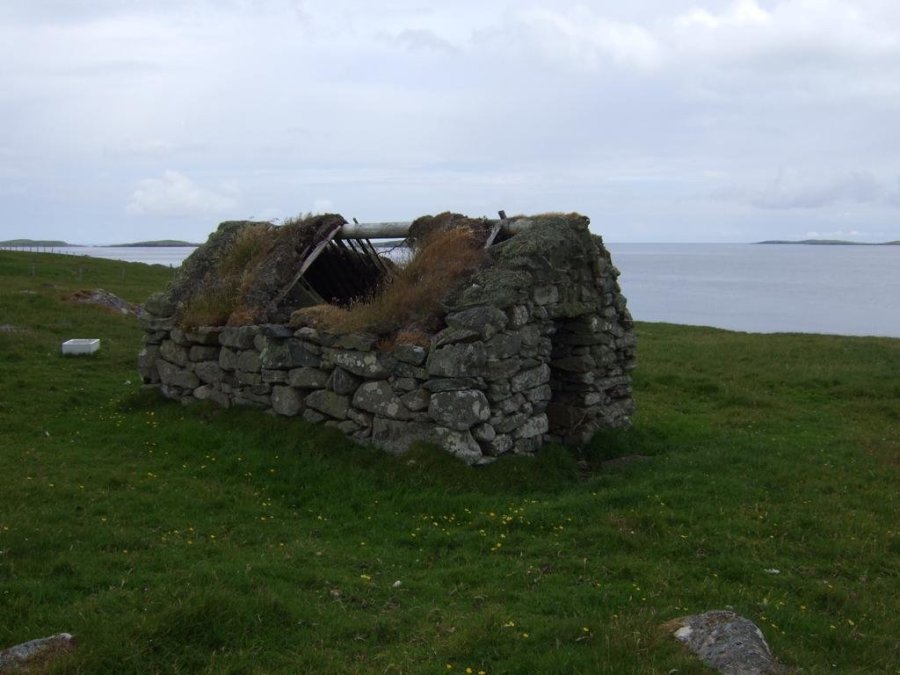
Whalsay is a small isle, 5 x 2 miles, east of Vidlin. There are even smaller islands between it and the mainland: 3 Holms (Wether, Score and Bruse) and 2 Lingas (Little and West). Fishing is its focus and Symbister harbour its hub. Boasting a Whisky Heritage Centre, golf course and swimming pool, my reason for visiting was the possibility of spotting sea mammals, whether from the ferry (see below) or as I hiked. I set off, anticlockwise, along the road past the Loch of Huxter and made a detour to the Ward of Hevadafield (61 m).
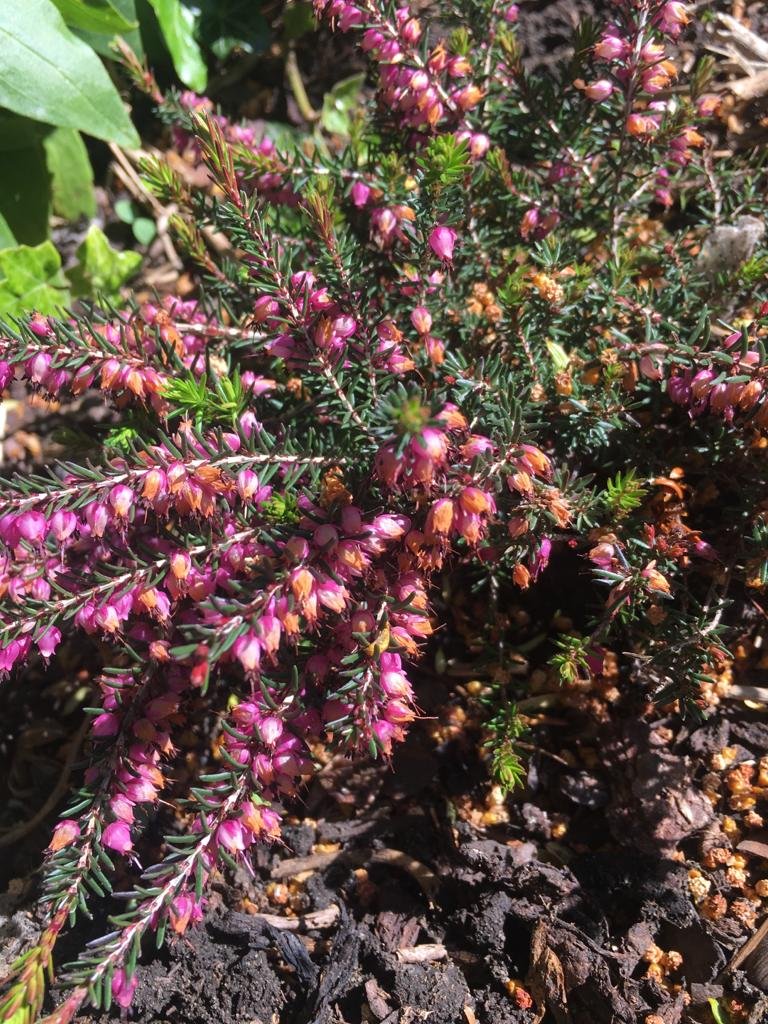
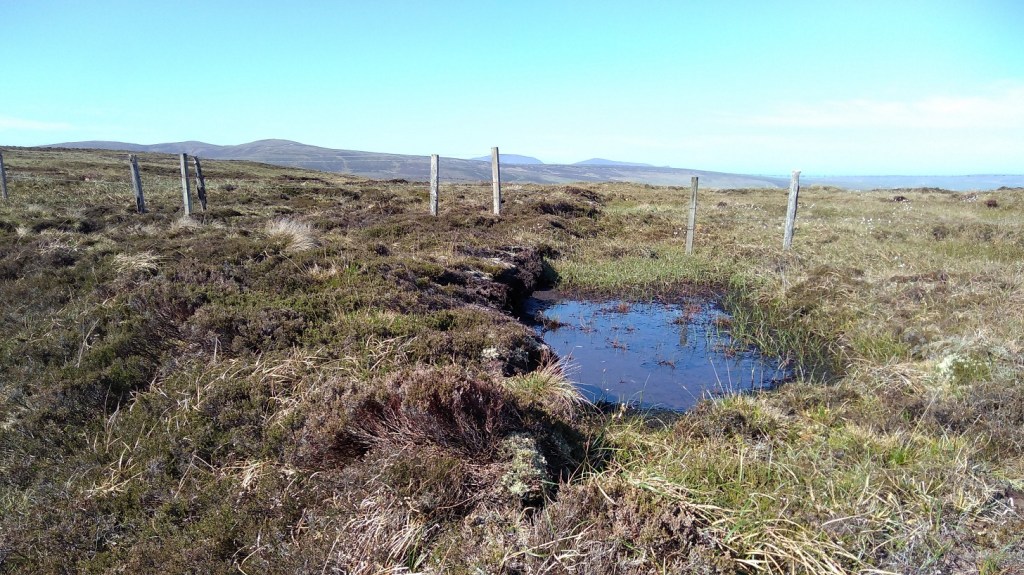
Heather (ling). Photo Sally Freedman

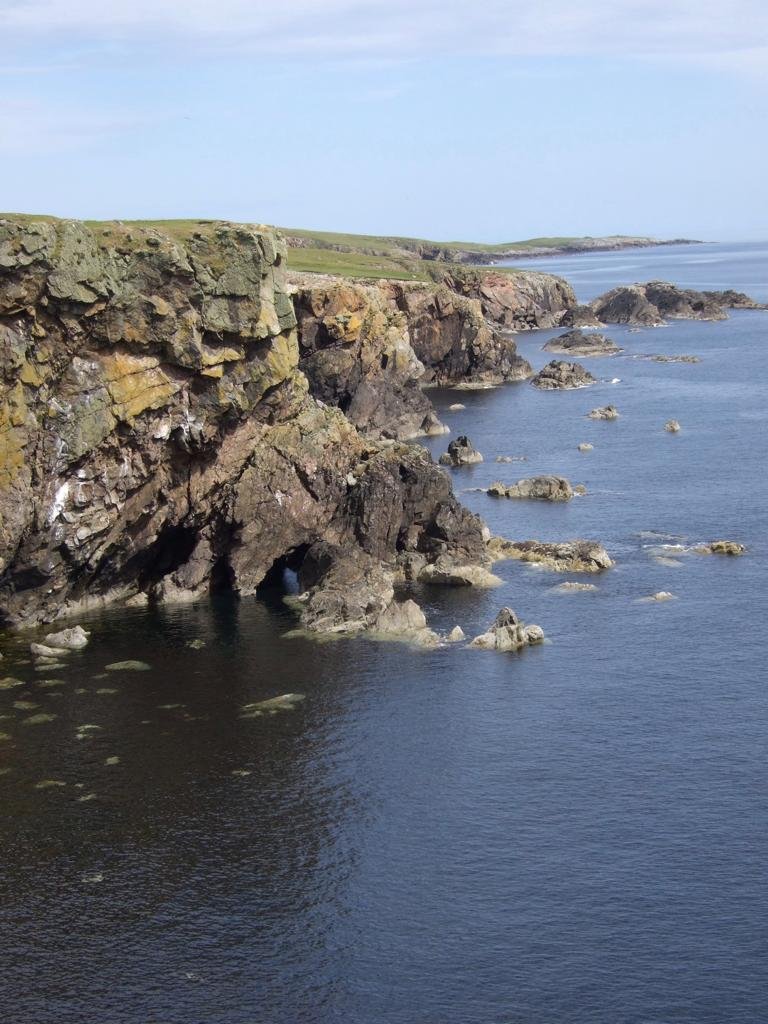
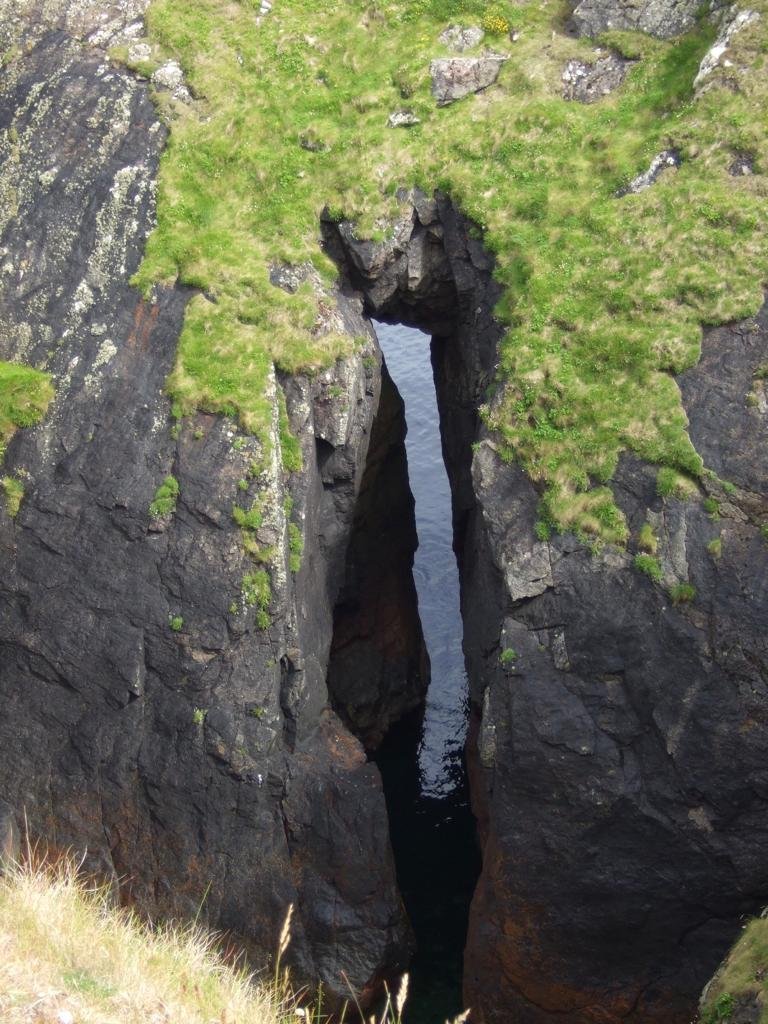
Back on the tarmac, I passed Nuckro Water opposite Vats Vord and once I arrived in Ibister, I curved around to Nisthouse and down to the Ness with its rocky coast and view of other outlying islands: East Linga (from ling meaning heather), Ibister Holm (a holm is an islet), Mooa and Nista. The Vikings called it The Island of Whales, so I was hopeful, but they were dashed – not today. I would, however, agree with another of its monikers: Da Bonnie Isle. Poet Christopher Grieve, aka Hugh Macdiarmid lived on Whalsay and I took a leaf out of his book and lay myself down.

‘Nothing has stirred
Since I lay down this morning an eternity ago
But one bird. ‘
From On a Raised Beach
Whalsay. Photo Lesley Skeates

The familiarity of one’s locality and the effect of pacing the land, can contribute to a sense of belonging. Knowing the area, recognising the landmarks and retracing your footsteps can evoke a visceral reponse. Leah said, ‘When we hike, we say, ‘Doesn’t it just smell like a Shetland night?’ It’s the freshness in the air, and then the heather and the sea mixed in there. It’s really unique, because I have been in the hills throughout Scotland and it’s different. There’s an immense sense of calm when you reach your destination. The view is mindblowing and the feeling of contentment is overwhelming. I hope that other people feel that when they come here. I don’t know if it’s just because I am so thoroughbred Shetland, so in love and passionate about where I’ve come from, but I hope that’s the feeling that people who visit here get too.’
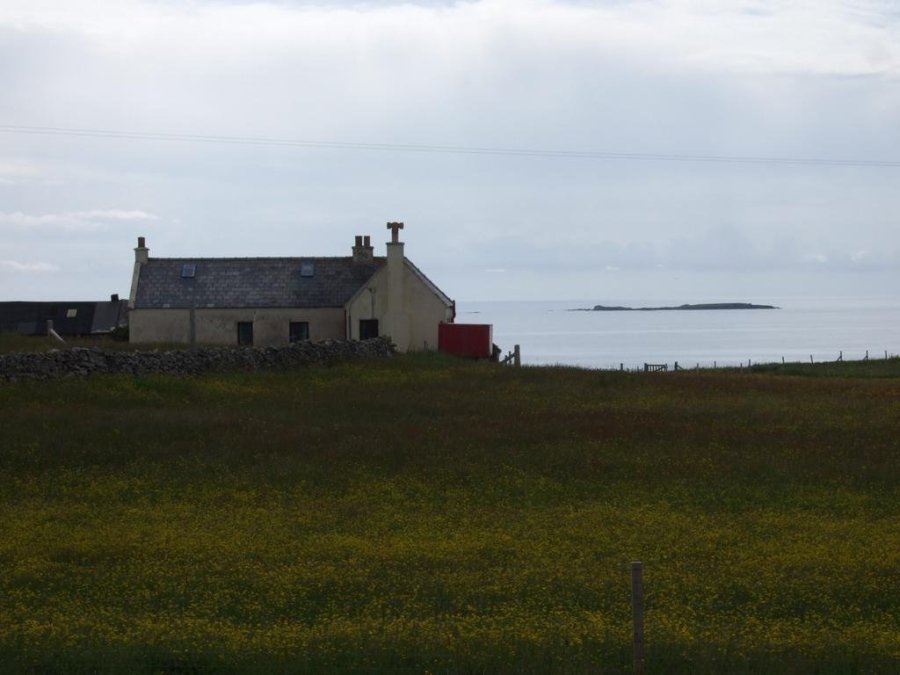
Whalsay. Photo Lesley Skeates

The ferry terminal for Whalsay is at Laxo, a 20-mile drive north of Lerwick. The crossing to Symbister takes 25 minutes and the service is frequent, although booking is advised in the peak season. View timetable here.

shetland.org
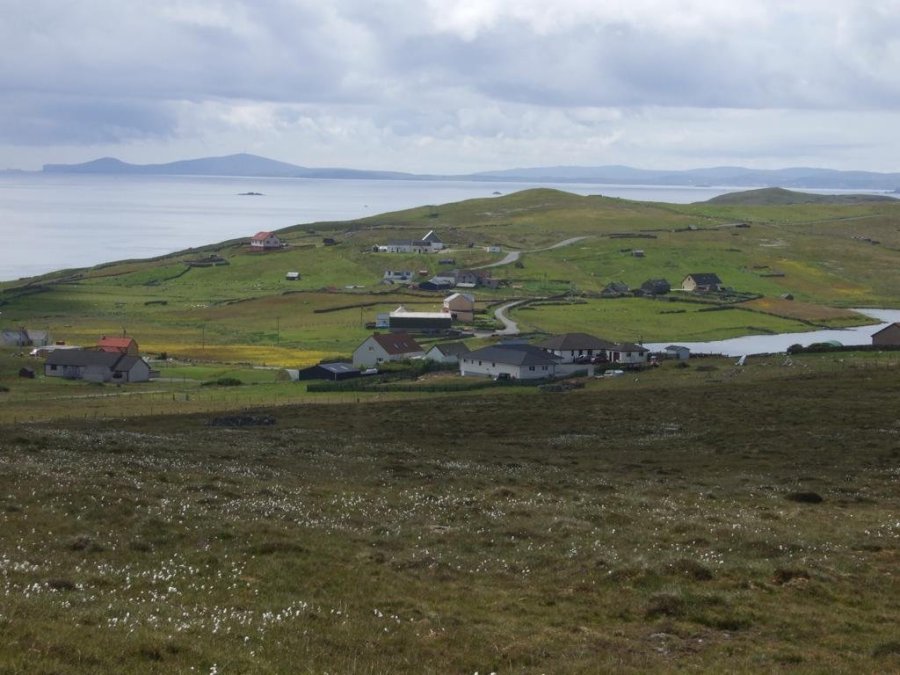
Whalsay. Photo Lesley Skeates

Leah told me about when she was going to university in Edinburgh, how excited she was to be on the Scottish Mainland, aged 17. Her dad saw her and ‘the massive, biggest suitcase we could find in the shop’ off at the boat, and she negotiated the long journey, alone, going straight to the University to enroll and get her ID card. She said, ‘It was an overwhelming day’. Then, at the first class, she had to stand up and speak in front of the group. On hearing her, the tutor asked, ‘Where is your accent from?’ and ‘in front of everybody he said, “Is that where they still ride about on donkeys?” ‘This rude, racist, remark was not designed to make Leah feel at home or as if she belonged in her new surroundings. All such ill-informed comments separate, set one apart and, of course, belittle and shame.
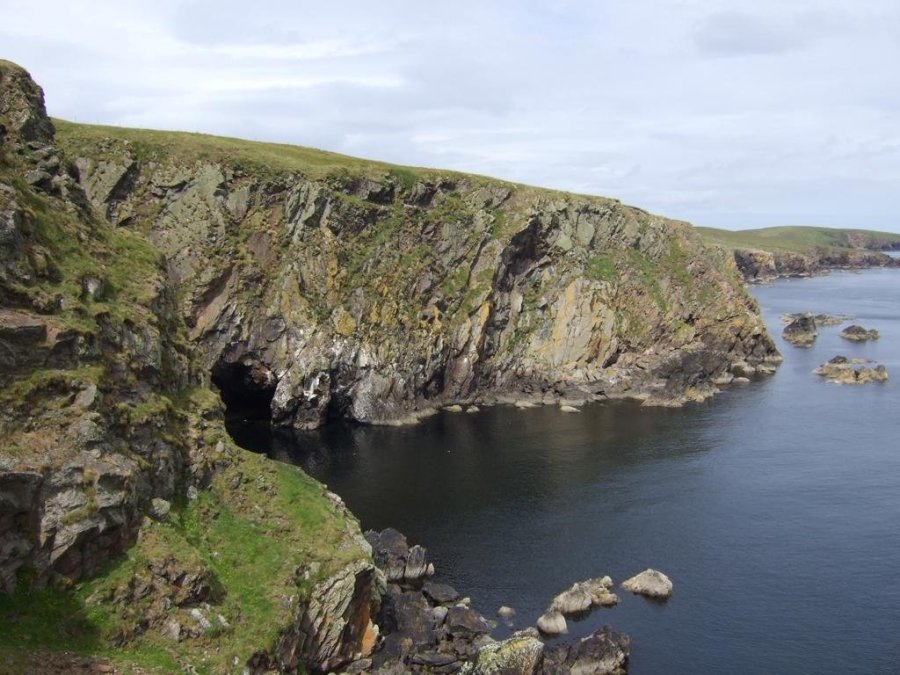
Whalsay. Photo Lesley Skeates

Belonging means acceptance as a member or part. Such a simple word for a huge concept. A sense of belonging is a human need, just like the need for food and shelter. 

Psychology Today
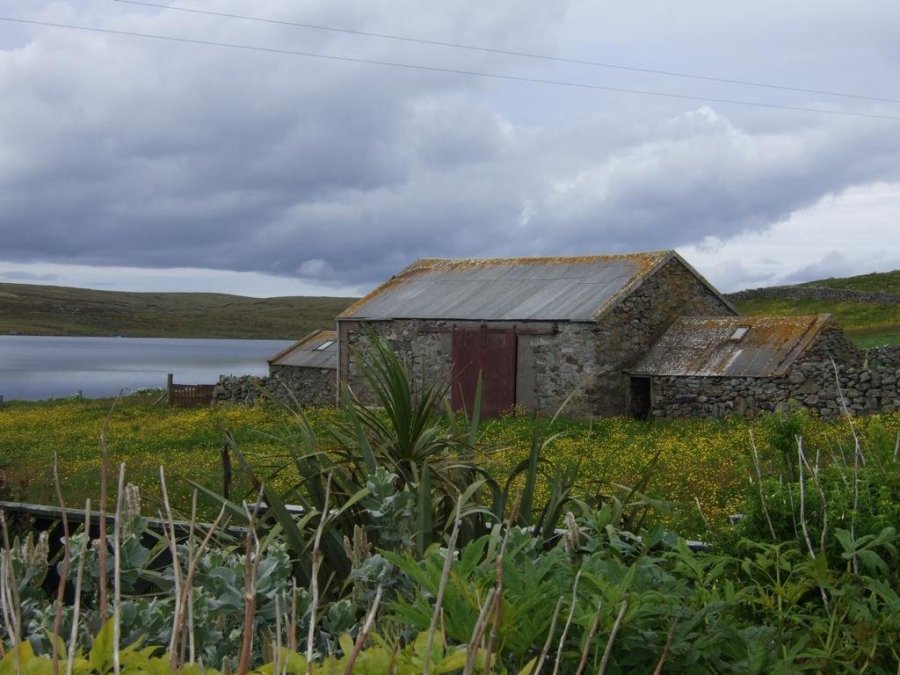
Whalsay. Photo Lesley Skeates

In direct contrast, Leah went on to describe a Shetland community event which does the opposite – welcoming and fostering belonging. ‘Has anybody told you about Sunday Teas?’ she asked me. ‘I think this type of thing originates from the fact that Shetland was the last place in the country to have TV. It wasn’t that long ago, so the only thing you had to do was socialise and Shetlanders do tend to be very social people. Everything revolves around food!’
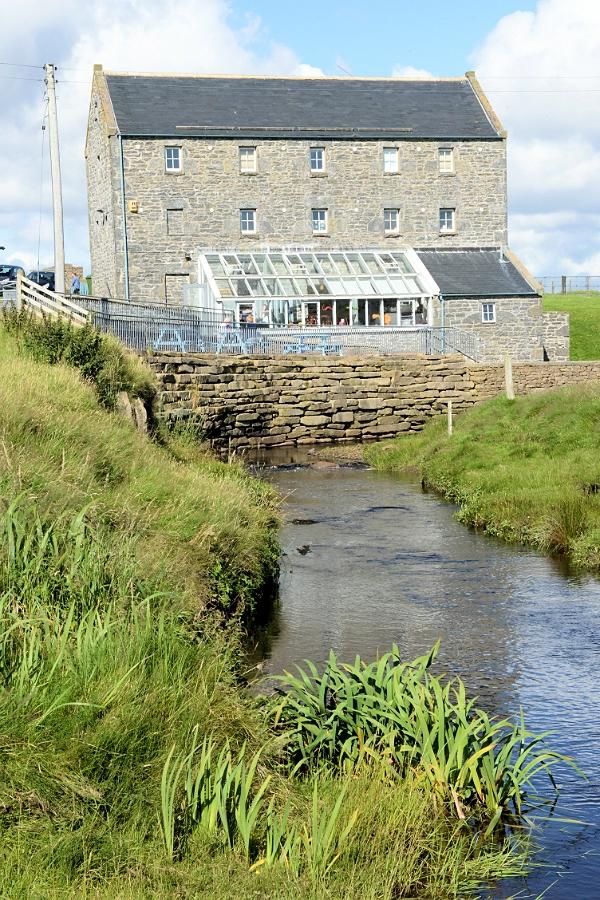
Bonhoga (it means ‘my spiritual home’) Gallery is in Weisdale Mill, a Shetland Arts venue east of Bixter (see bottom of blog for details) Bonhoga Gallery link

Leah continued, ‘Through the summer months everybody bakes and they drop it off at the hall, and between 2 and 5pm, you go, pay at the door, and there’s an absolute spread of homebakes … you fill your plate, get your cup of tea and sit with whoever. It’s not tables of 4, but of 8, and you all sit together, have a chat. People will drive, for example, from Lerwick to Bigton in the south end, or Bixter out west (Aithling), both 20 minutes or so drive. Every week they are advertised in the local paper and everyone goes: from new born babies to 90 year old women. We don’t have ball pools or private nurseries or bowling, so the community halls are used for toddler groups; Friday night take-aways; anything and everything. It’s all done by volunteering, so you’ll get your pinny on, you’ll serve tea and sandwiches, there’s no airs and graces, everybody is equal in a community hall, mucks in, helps out and has a good time.’
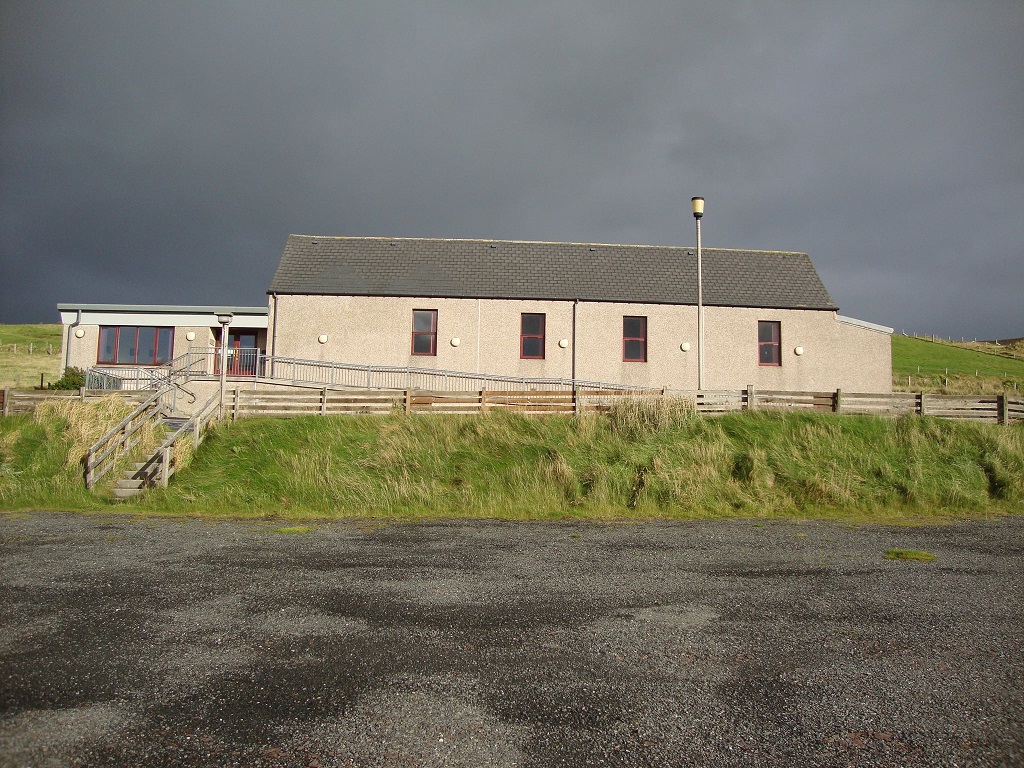
Bigton Community Hall from their Facebook page

It sounded to me as if going to the Sunday Teas would not only situate you in a place and a group where you can belong, but by engaging regularly with others, it is tantamount to saying, ’Here I am, I am part of this group, I belong, want to be let in and recognised as part of the community’. These halls and events obviously fulfil a vital role.

Isbister (Whaley)
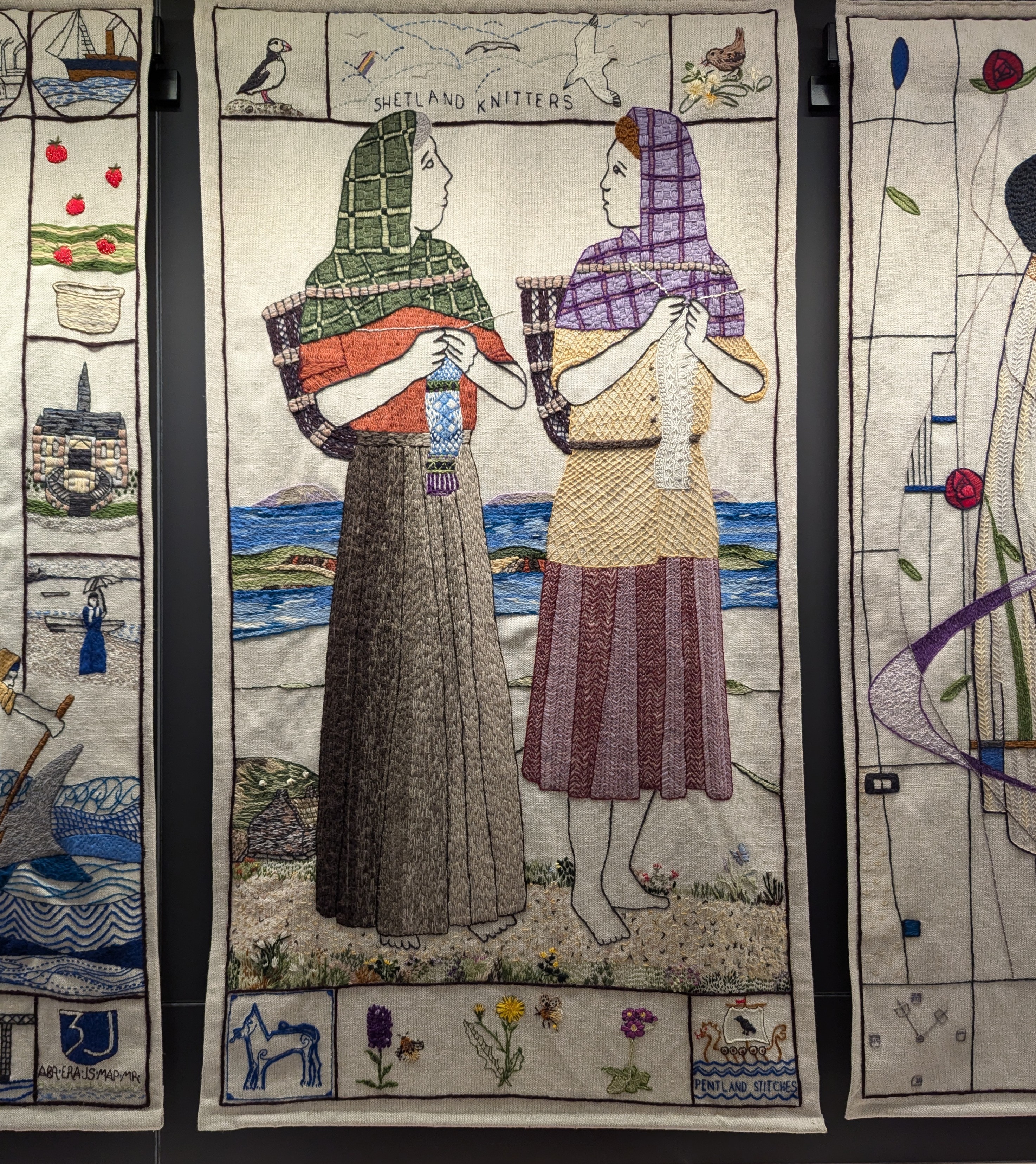
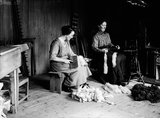
“In rural communities all over Scotland, women worked hard doing menial, muscular tasks. They did the back-breaking work of weeding, shawing, milking and bringing fuel for the fire. This image shows two sisters with creels on their backs. They chat as they walk, knitting without a glance at what their practiced fingers are doing.” from The Great Tapestry of Scotland #115

Bressay
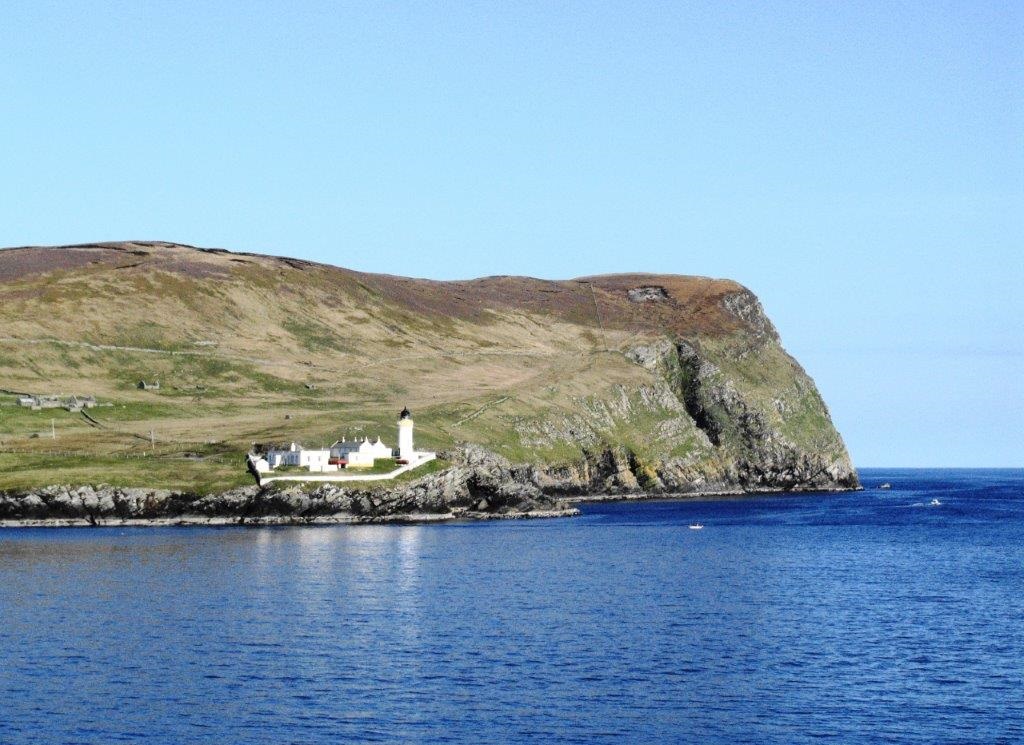
Bressay, Shetland. Photo Liza Green

Bressay is also on the east side of Shetland, further south than Whlasay. Only very slightly larger, it is a mere 2.8 miles (4.5 kms) from Lerwick, taking 7 minutes on the ferry! Boasting a Heritage Centre, restaurant and post office, it is the Speldiburn cafe which attracted my attention.
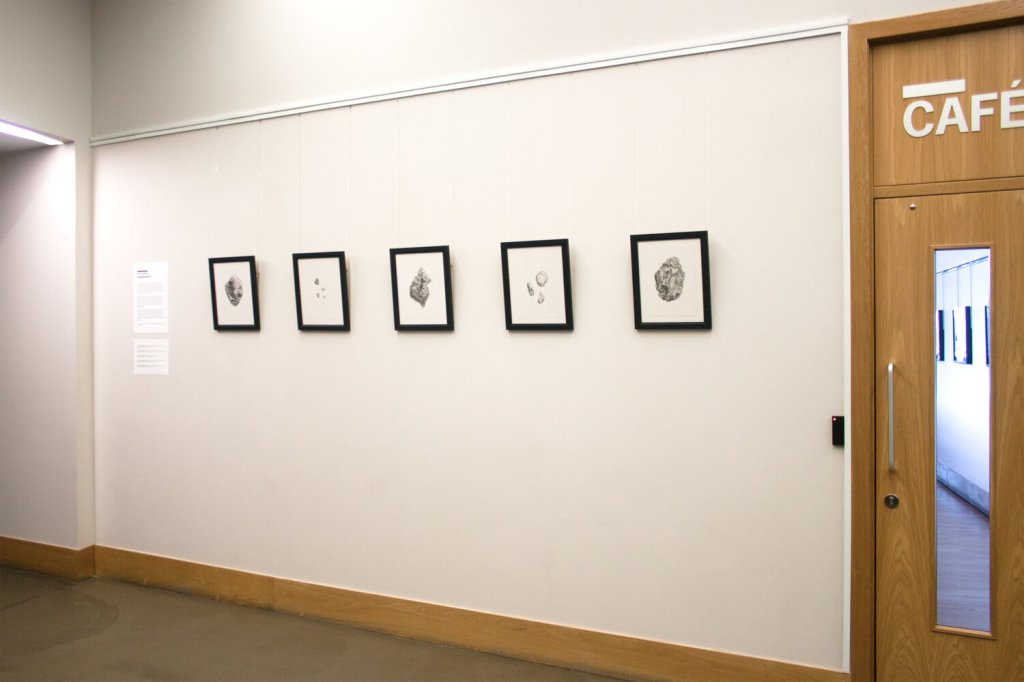
Aimee Labourne’s drawings of Plastiglomerates at Speldiburn exhibition space, Bressay. Photo from AL’s website

Plastiglomerates are, ‘evidence of coastal change. A proposed new kind of ‘human-made’ rock, plastiglomerate consists of a mix of melted plastic debris and natural sediment, and samples have been found on shorelines across the world. These uncannily organic forms are however but a visible part of a terrifying ocean plastic pollution problem.

from AL’s website

As well as food and drinks, there is a good-as-new shop, community lending library, a multi court for kids to have a kick-about, a bulky waste recycling scheme, and upskill and re-use projects. It is run by volunteers from the not-for-profit group who took over the old school premises, and like a lot of similar organisations during this Covid-19 crisis time, it is currently making food for delivery or take-away. There are also art and craft studios here, an exhibition space and Aimee Labourne’s workshop.

Wildlife on Shetland
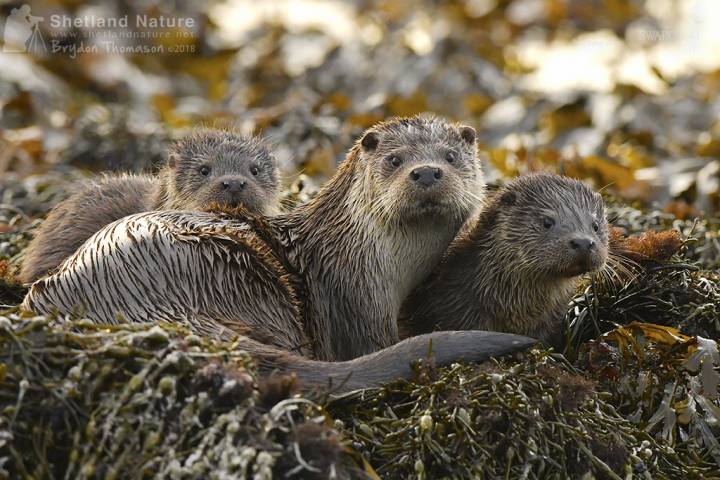
Otters from Shetland News. Photo Brydon Thomason

Video of otters in Shetland from Britannica. Billy Mail andMolly, a Shetland otter in the National Geographic Review The Guardian.

Once again, I make a bee-line, on foot, for the coast. With a promise of otters, I could barely contain my enthusiasm to leave the towns behind. Part of the weasal and badger family (Mustelidae), apparently Shetland has the highest density of otters than anywhere in Europe and I understand that Brydon Thomason is the go-to man for a tour and any information about them. His website is here.
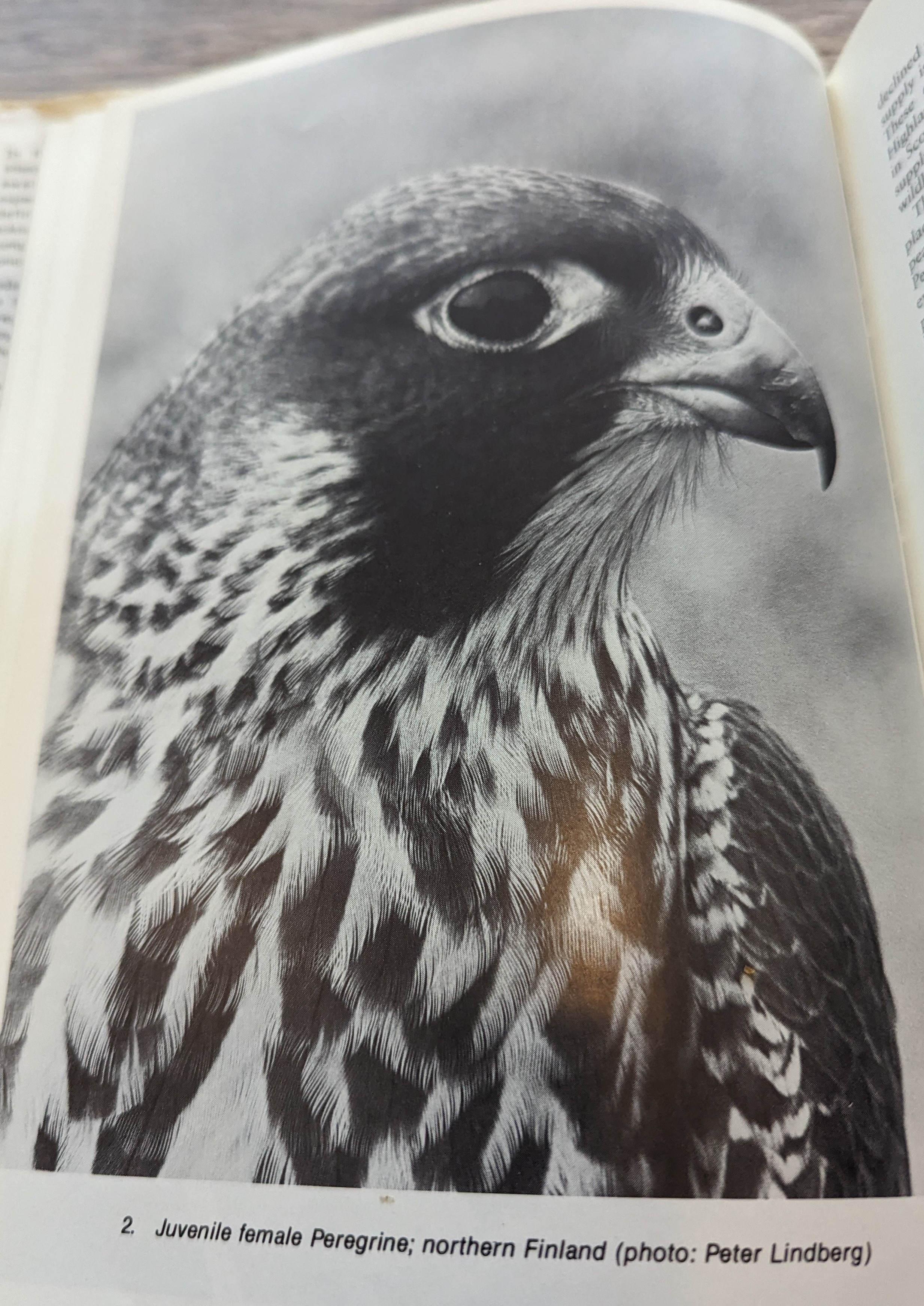
From The Peregrine Falcon by Derek Ratcliffe

Peregrine falcons have a history on Shetland and in his book, The Peregrine Falcon, Derek Ratcliffe states, ‘Shetland … another complex archipelago, with a huge total length of of highly indented coast, much of it rock bound. … Saxby in 1874 said that many pairs still remained to breed and that there were several on Unst. Evans and Buckley in 1899 wrote that they were ‘distributed pretty commonly’ over the Shetland group. The Venables wrote in 1955 that they knew of 11 breeding pairs …’ They are now a protected species in Scotland, and have been seen in Shetland (2025).
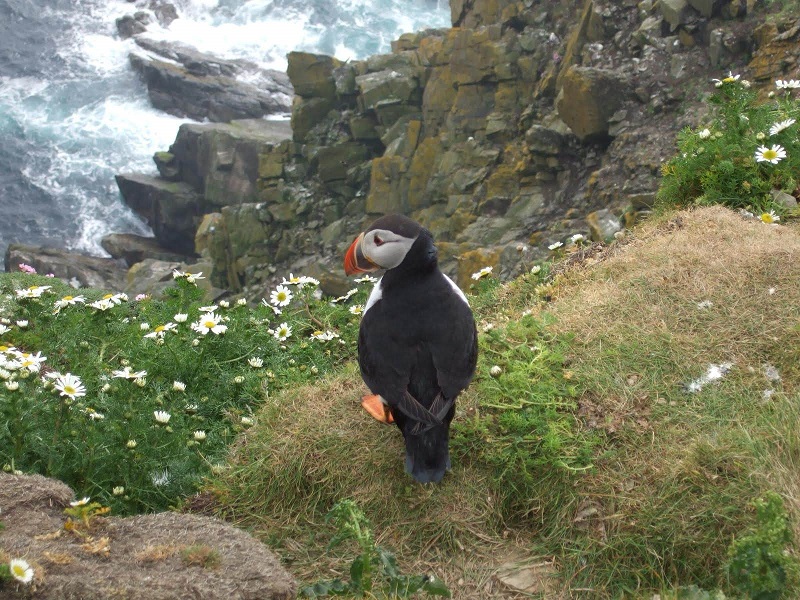
Noss Nature Reserve is to the east of Bressay, home to fulmar, terns, gannets and puffins. Photo Lesley Skeates, taken near Scalloway

On Shetland, a puffin is known as a tammie norrie and an otter as a dratsi.

Personal History

As I walk, I reflect on my own history. I remember, several years before I actually left home, how ready I was to run off across the fields and see what was over the hill. I went to college in London as soon as school ended, and straight to Edinburgh after that. Although I stayed some years in the Forest of Dean (Gloucestershire), Bristol (England), and Cardiff (Wales), I have now lived for over 35 years in the so-called Athens of the North. I don’t think I knew, when I was 18, that this would mean I would never really belong anywhere again – not English, except by birth, not Scottish because I wasn’t born there – that might be why I was so sure about voting to stay in Europe, somewhere that encompassed both places but gave me an overall identity – and why I feel our leaving the EU so keenly.

History
Margaret of Denmark whose dowry was Orkney and Shetland in 1468. Photo Wikipedia

Shetland was incorporated into the United Kingdom in 1707. Earlier in its history, it was inhabited by Neolithic farmers (3000BC), invaded by Vikings (around 800AD), and given to Scotland in lieu of a dowry for a Danish princess, (1468 James III and Margaret (see above)). Being a fishing community, membership of the EU is a double-edged sword for Shetland. On the one hand, ‘Leaving’ promises ‘unfettered access to some of Europe’s richest waters’ (Peter Geoghegan, 2017 Northern Exposure: Brexit reveals Shetland split accessed online 10.5.20), and on the other, ‘Staying’ will result in the withdrawal of European funding for projects such as the new fish market in Lerwick which is due to be completed this Spring. In the end Shetland narrowly voted to remain (6907 to 5315 with a 70% turnout Shetland Times).
Whalsay. Photo Lesley Skeates

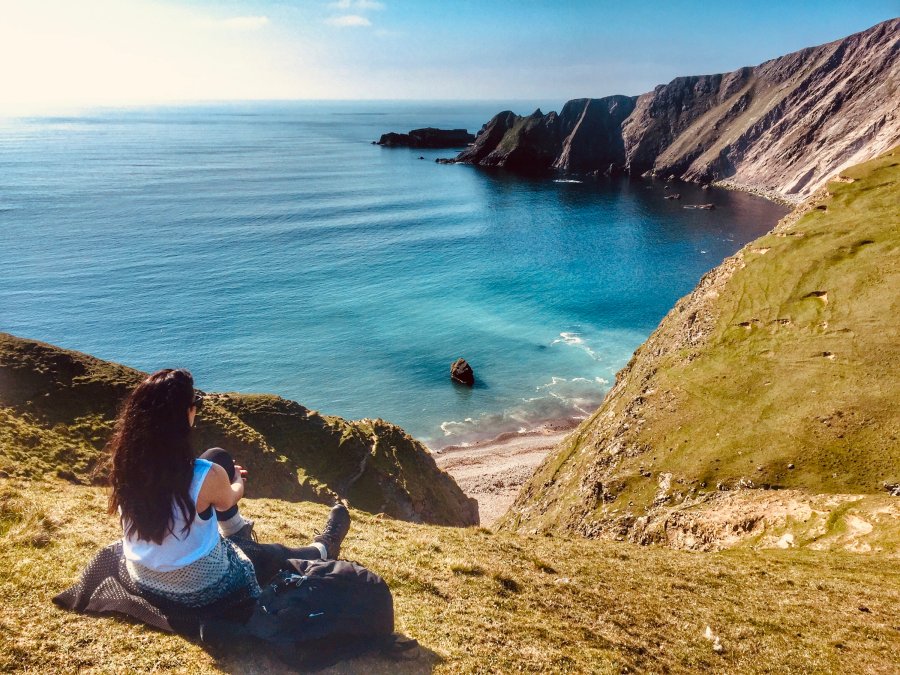
Leah seems to have two homes now: ‘After university I came home and stayed with dad for a few months, but after you’ve not been in the family home for 4 years it can be a bit tricky, so I rented a little house in Bressay. It took me a while to adapt to it, I didn’t really feel at home for a long time because things had changed so much … on top of that, all the girls who had stayed in Shetland and hadn’t gone to university had settled down, got engaged and started families. I couldn’t just pop along and see all my friends who were still in Edinburgh. I felt quite out of place, and it took me a while to find out, discover who I was as an adult. Even though I’m from here I had to put in a lot of effort to feel part of Shetland again.’
Leah and Bressay, Shetland

An introduction to Shetland’s history
Whalsay. Photo Lesley Skeates

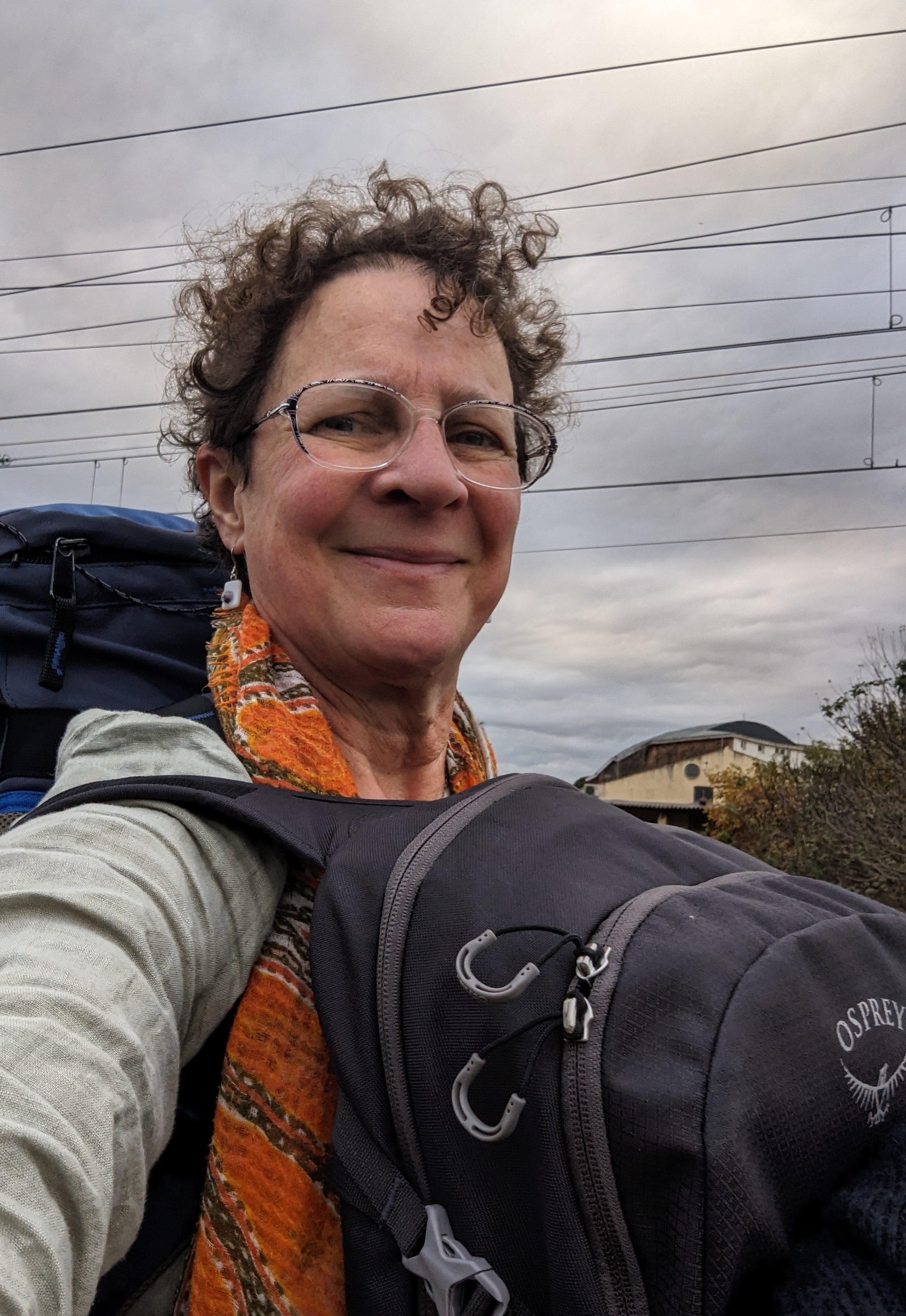
‘Belonging’ is a fascinating and tricky subject, one that I and other writers seem to repeatedly reconsider. Wendy Pratt writes about the Mesolithic Star Carr people who once visited Paleolake Flixton in Yorkshire at regular intervals. This ancient, now almost-lost body of water, is the titular Ghost Lake of her new book. The Star Carr people were nomadic (as most communities had to be back then) and she writes that they, ‘must have had a mutable sense of belonging and home. … The ritual deposits of hunting masks [found during an archeological dig] and the careful building of roundhouses have an edge of permanence. And in fact they were returned to, fixed and improved year on year. Perhaps ‘home’ for the Star Carr people was multiple, … That is a kind of belonging.’ (p5)
With my home on my back (and front!)

This speaks to me, having lived a modern, nomadic life for a while, and this virtual visit to Shetland throws a whole new light on ‘a sense of belonging’. Is it possible to feel that you belong somewhere, even if you’ve never actually been there? Does a deep engagement with place, even on a virtual level, allow you to feel a member of that community? What do you think? Please comment below if you would like to.
Walking on Shetland

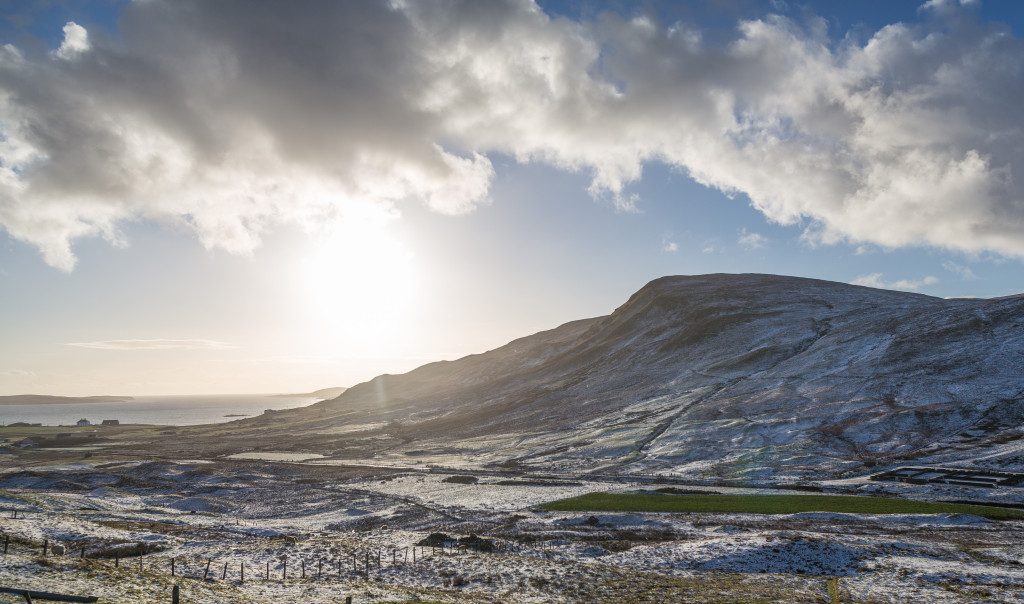
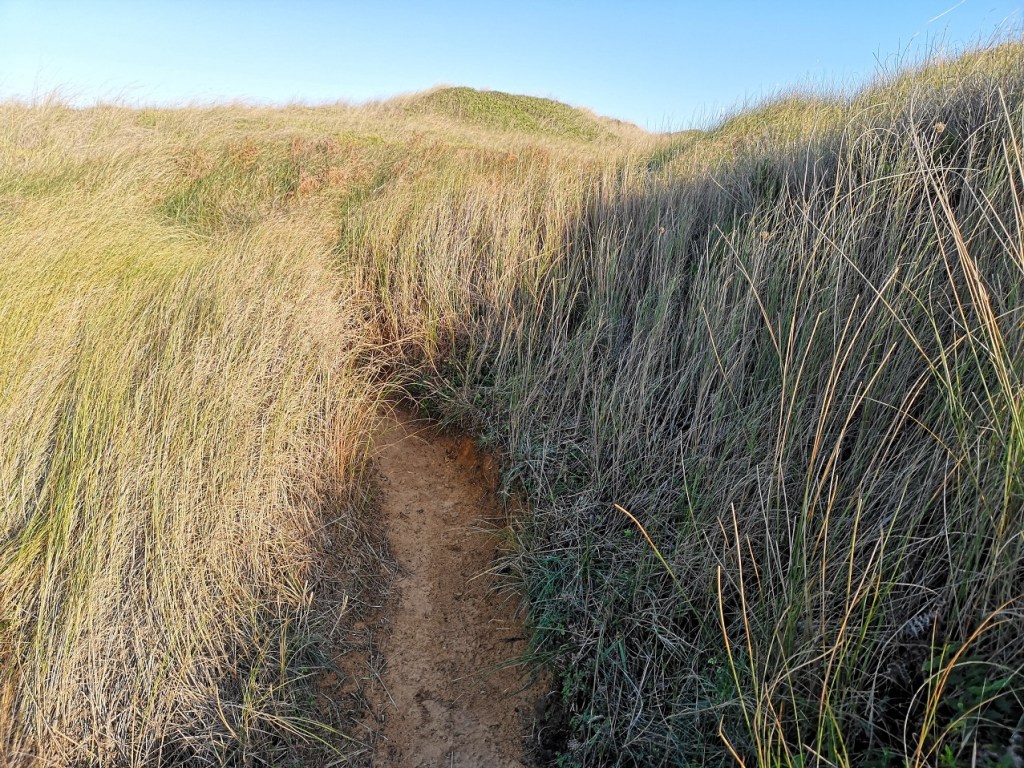
Today, I am focusing on the natural landscape and walking in Shetland, together with some more about the local dialect. Once I have walked off the busyness of my mind, my body starts to relax and I start to be filled up again with the scent of the hawthorn and the surround-sound of the birds. Nature is my inspiration, endlessly fascinating whatever the season, especially in out-of-the-way places. Now, as I walk, I can hear the lilt of Shetland women speaking to me about home and a sense of belonging to their Islands, and find there is something reassuring and soft about it, something grounding.

I am pleased to be sharing Shetland with Leah who blogged about her walk on the Clift Hills (now not available). This range runs north / south on the west edge of the Mainland beside the Clift Sound which divides them from the islands of East Burra and Houss Ness.

Setting off on the Blett Road at 11am. Photo Leah

You will see that the snow is on the ground in this photo, but in fact today in Shetland we have 11 degrees and it’s really quite sunny – no white to be seen! Although not munros, the hills Leah climbs afford magnificent views: from Scroo (248m) and Holm Field (290) she could see the islands of Mousa, Bressay, Whalsay and Skerries to the east, while South Havra, Foula, Burra, Trondra, Scalloway, Tingwall (inland), Westerwick (near Skeld) and Ronas Hill on Northmavine are on the west. What sights!

Marram grass

Here’s a pointer towards some of the vocabulary she uses:

  • paet – peat, the springy turf-plus-earth which Shetland women traditionally carried on their backs in a kishie
  • kishie – a straw basket or creel which can be made from marram (photo above) or oats, which Ewen Balfour (wovencommunities.org) uses to make them nowadays
  • ganzies (or ganseys) – jerseys or jumpers (the book, ‘Threads of Life‘, by Clare Hunter, carries a lot of fascinating information about these clothes, who made them and why)
  • a guttery mess, a purt – anything metaphorically messy. It can be used to describe gossip: purt o clash (a bit of a conflict), for example
  • toorie – a woollen cap
  • cairn – there’s a photo in Leah’s blog! it means a pile of stanes – stones as a memorial or landmark. Often we will pick one up at the start of our jouney, carry it to the top and add it to the little tower that’s already there
  • bux – (a box?)I am not sure, but I am guessing from the context that it means something like walk or make ‘our way down’ the hill. If you know, please do leave the correct meaning in a comment below

Note: there’s a lovely old photo of a woman carrying a kishie on wovencommunities.org

A typical peat bog, Orkney.

Leah’s blog is unfortunately now not available (updated 2025)

‘…when you are stood 953 feet above the world and the islands are literally shining with pride all around you; the clean, beautiful air so pure and unspoiled;….It is then that Shetland reminds you JUST how lucky you are to be stood on its incomparable land

Leah

Shetland For Wirds promotes the Shetland dialect – history, poetry, prose, drama and a dictionary, to name just some of what they offer.

A tiny photo of women carrying kishies (baskets usually carrying peat) 1900-1910. Image: Shetland Museum and Archives

Other walking links:

Shetland.org walking page ‘The walker has the rare opportunity to discover ancient historical sites dating back to Neolithic times…’

The light lay over Northland like a shawl from ‘some Landscapes’

The incomparable Walk Highlands website on Shetland. ‘Although the highest point is only 450m, Shetland is magnificent terrain for walkers, especially those who wish to explore away from the beaten track. The islands offer much of the best UK coastal walking…’

Shetland Amenity.org ‘There has been a traditional freedom of access across the isles with many places suitable to walk’, but I have read that there is so much protected wildlife on the isles that you are recommended to follow marked paths or even consult a guide, so that you don’t disturb the birds.

You may also like:

Research and Preparation About the route I took, Shaetlan dialect, and the aims of my Sense of Belonging project.

Leith to Lerwick Days 1 and 2 Charting my journey northwards and visiting Lerwick’s Textile Museum and Museum and Archives.

Home, Belonging and a Sense of Identity

Lerwick and Northmavine Days 3 and 4, in which I write about the Press Gang, visit The Old Tolbooth and view Da Lightsome Buoy, then travel to the north west to speak to Helen Robertson about her knitting projects.

Whalsay and Bressay About Sunday Teas, these 2 smaller islands, and about home and a sense of belonging.

Wildie and Lalla, An elegiac film by Catriona Macdonald, Shona Main and Angelica Kroger.

Lerwick and Northmavine – days 3 and 4

Tuesday was my final day in Lerwick and I returned to the Textile Museum which was originally the Shetland Textile Working Museum established by the Guild of Spinners, Weavers and Dyers. It was Bess Jamieson of Pointataing, Walls, who first collected historic Shetland textiles and commissioned faithfully produced replicas of certain styles and garments, caring and preserving them. I particularly wanted to see @maverick_knitter, Helen Robertson’s piece, Life Boy, as I knew I would be ‘meeting’ her later.

Life Boy by Helen Robertson (photo Tamsin Grainger)

The following day, when Robertson and I walked and talked together, she told me that the project was inspired by the Press Gangs who, from 1800, took men forcibly away to sea. This left the women to manage family and land without them. Sometimes, they were unable to say goodbye, did not know where they would be going, and understood that the chances of death by disease were higher in the navy than when they were home.

Impressment was the enforced seizure by government of men to work in the army or navy which was carried out by press gangs who were paid to bring in men. It was detested by everyone and was popularly considered to be an unjust system.

From an article by Kim Burns (as part of her dissertation), University of the Highlands and Islands
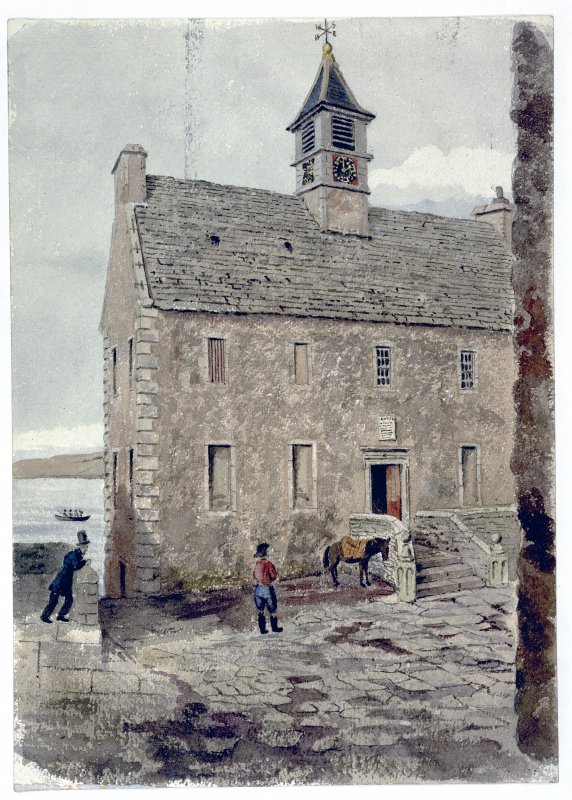
The Old Tolbooth from canmore.org.uk

Earlier that morning, I passed by the 18th century Old Tolbooth (32 Commerical Street) which used to be where they locked the men up while they were waiting for the boats to come. Although Robertson didn’t consciously remember it, this building, which was the head quarters for the Red Cross when she was young, is now the Royal National Lifeboats Institute station and she later discovered that she had a photo of it in a research book with a life belt hanging outside!

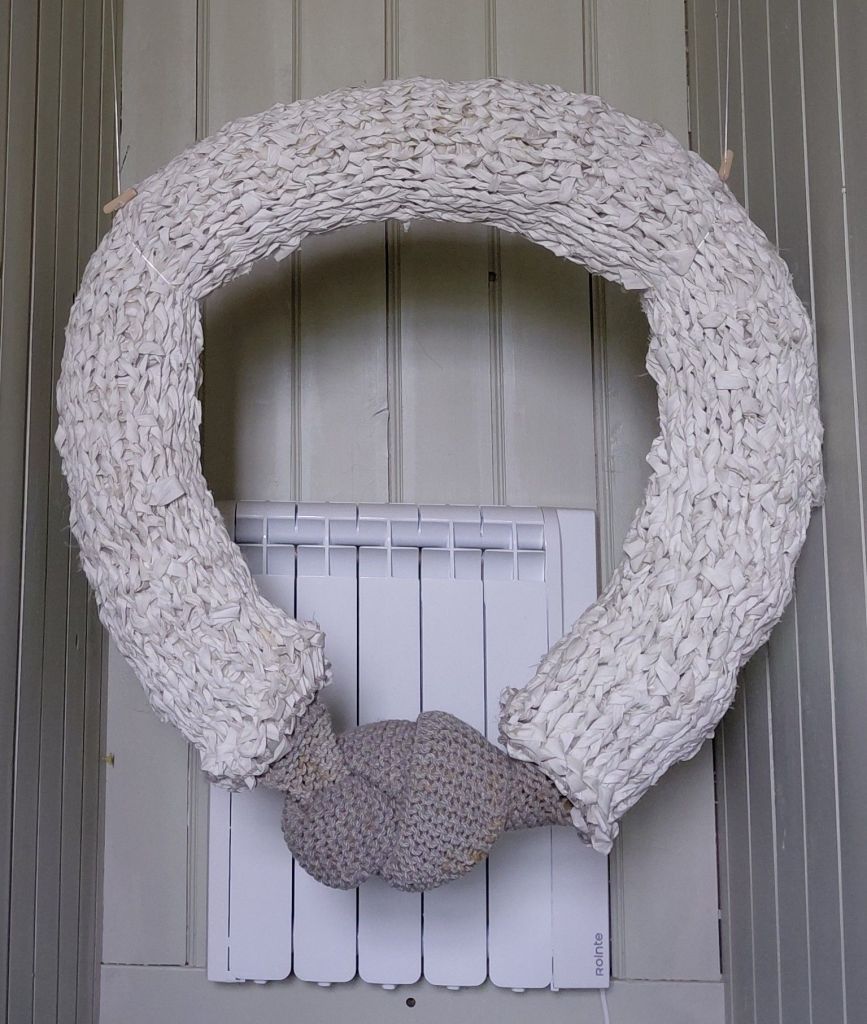
From deconstructed sails I made big pieces of yarn and knitted a life belt. I did short rows in the round – a big piece of work, the size of a proper life belt. With Shetland oo (wool) and an old handline (a rope used for fishing without a rod), I knitted an infinity knot. It was the time that the European migrants were coming and there were lifebelts washing up. For me, it was all about the imbalance of power, the life and death thing, still touching wis every day.

Helen Robertson, from our chat
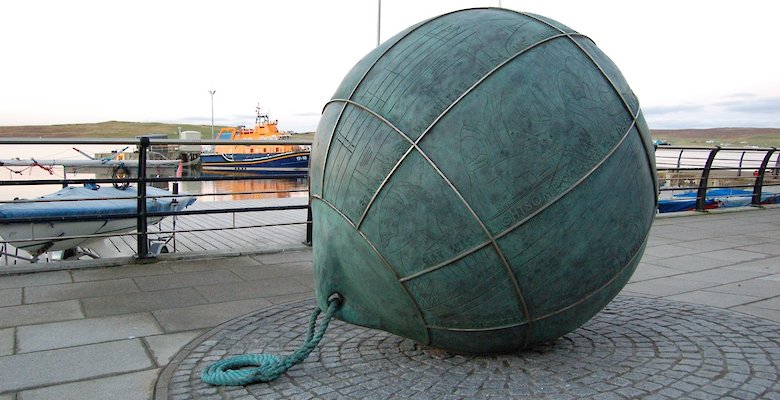
Da Lightsome Buoy sculpture. Photo Shetland Arts

The Old Tolbooth is seconds away from the Esplanade and the harbour (where the Seabird Tour boats around Noss leave). The Jo Chapman sculpture Da Lightsome Buoy (2016) is nearby. Commissioned by the Pelagic Sculpture Partnership comprising of Shetland Catch, Shetland Fish Producers’ Organisation, Lerwick Port Authority and LHD in association with Shetland Arts, it celebrates Shetland’s long association with the pelagic (midwater trawls that have a cone-shaped body and a closed ‘cod-end’ that hold their catch) fishing industry.

The design ideas were influenced by a series of workshops, meetings, events, and the sharing of stories, photos and memories by the many people Jo met during her stay here.

Lerwick Port Authority

Heavy and solid-looking with a hole at one end, it is made of cast bronze and so has that dusky-turquoise look. The illustrations are of the female fish gutters and the fishermen (two gender divided groups), the historical and the new ways of processing the herring, and there are quotes and poetry in the local dialect from residents. It honours those who have died and who still labour in the industry today. The women who gutted the fish would sail around the British Isles and gut the fish in harbours such as Lowestoft and Edinburgh’s Newhaven. It was hard, mucky work and their hands were raw from the cold and the waters. There is more information on my blog about the herring gutters and the songs they sang.

Lerwick. Photo by Liza Green

The Böd at Gremista, where the Textile Museum is located, is at the edge of the town. I imagined myself walking on from there, northwards, via the Point of Scatland and Green Head.

The sewage works are close, so it wasn’t always a sweetly scented wander, but the seals on the rocks at Scottie Holm and the Rova Head lighthouse (UK Lighthose tour blog here) on Easter Rova Head made up for it, their sad-looking eyes and cats-whiskers so at odds with their on-land bulk. I watched them slip-slide into the sea and glide away so smoothly into the Bressay Sound, raising their heads like little periscopes to see what was going on back at shore.

Voe, Shetland. Photo Liza Green
Fethaland, the very northernmost tip of Northmavine, Shetland. Photo Liza Green

The next day I was set to visit Northmavine (say Nortmayven with an emphasis on the ‘Nor’ and ‘ay’) in the north west where Helen Robertson lives with her family on a croft on the west coast of Sullom Voe (small bay or creek). 45 minutes by road, I took the number 21 bus to Brae. It’s a scenic route which skirts the Hill of Skurron (143m), travels along the Loch of Voe and through the town of the same name, where there used to be a whaling station operated by the Norwegian Whaling Company from 1904 until 1924. Then it branches by the side of the Olna Firth to Brae. Brae means slope or brow of a hill, and is just over an hour and half’s walk (according to google maps) to Sullom.

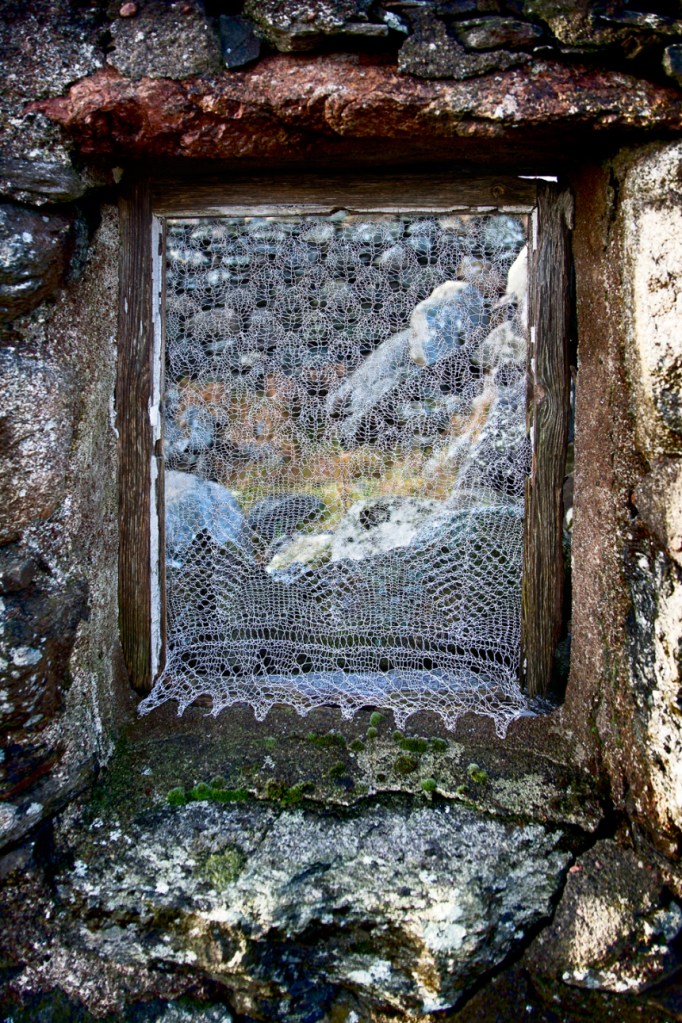
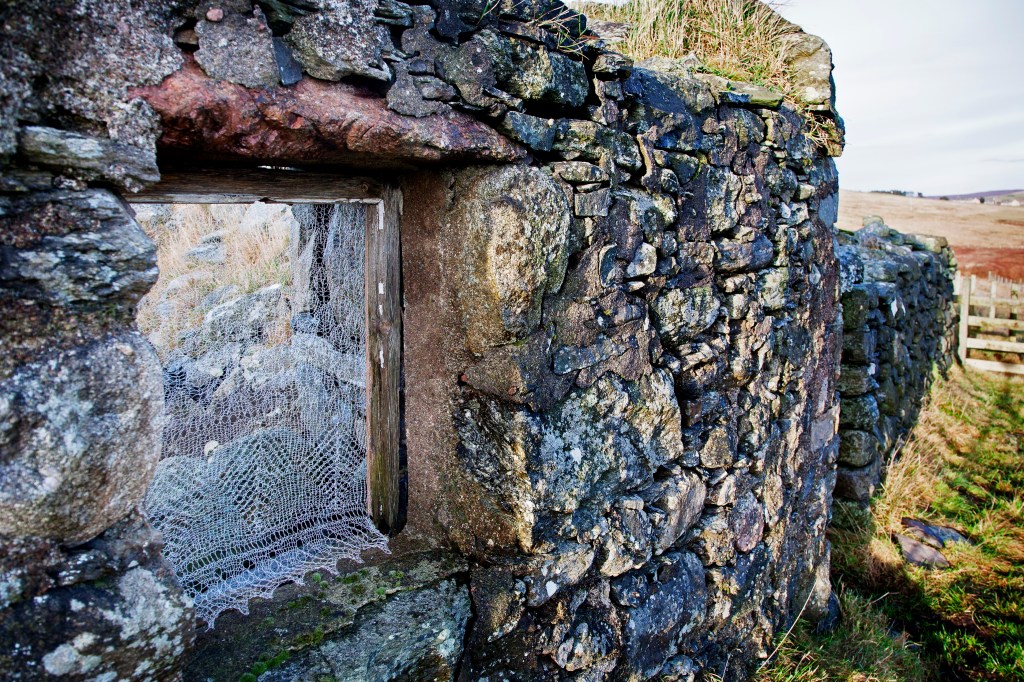
Helen Robertson’s beautiful lace window, Crugga, a derelict croft house on Northmavine. It’s knitted in fine silver and uses the ‘braand iron’, ‘tree of life’ and ‘candlelight’ patterns

Near Sullom is a ruined house where Robertson placed her fine silver lace curtain. It was part of her Hentilagets Project. The name of the project comes from the scraps of oo (or fleece) from sheep’s necks and backs that would snag on dykes and fences. In the past, these were gathered and spun to make beautiful lace garments. We walked and then sat on a grassy knoll, a girsie broo, and looked at the windmill while she told me about her work.

Crugga, looking north. Photo Helen Robertson

a uniquely thoughtful aesthetic which celebrates, commemorates and reflects upon Shetland’s history and heritage 

Kate Davies on Helen Robertson

Chef James Martin visits Helen Robertson’s brother at his Transitions Turriefield in Sandness which grows healthy, fresh, chemical-free fruit and veg to supply the Isles.

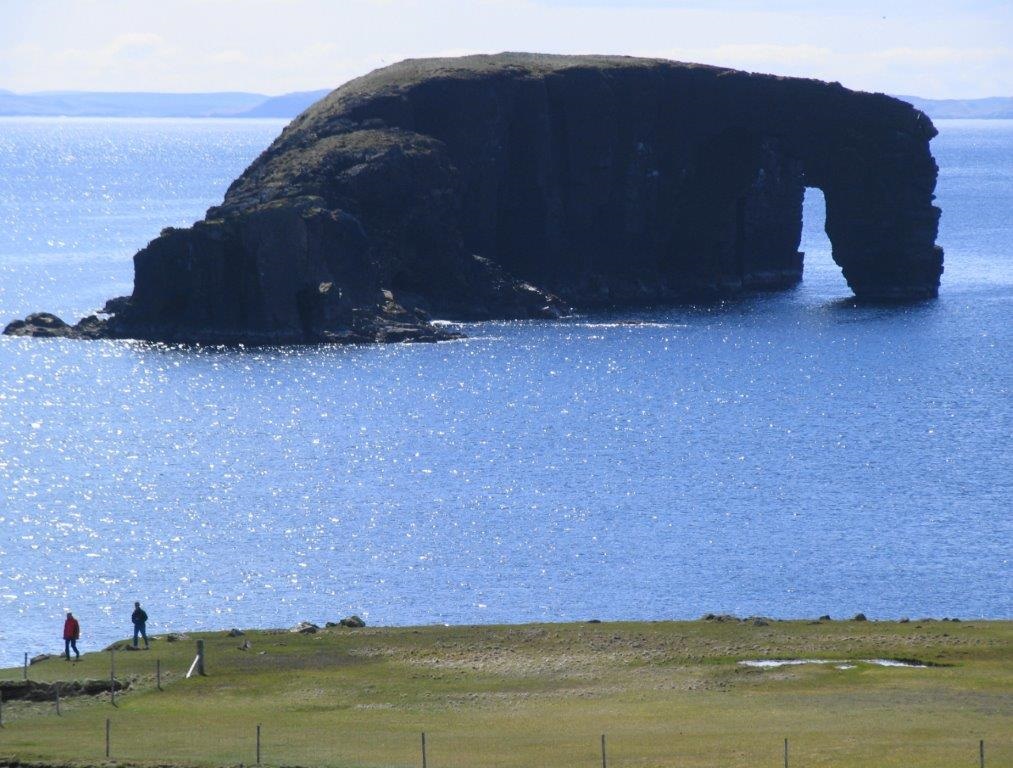
Monolithic rocks and arch off Eshaness, the west of Northmavine, Shetland. Photo Liza Green

Helen Robertson is on instagram @helenrobertsondesign Her website is here.

Please note that my visit is a virtual one because I was unable to go due to the Coronavirus lockdown. I cannot, therefore, vouch for any of the trips which I have mentioned above or linked to.
Sullom a filmpoem by Roseanne Watt with music by Eamonn Watt

Home, belonging and a sense of identity

As I have walked around Europe in the past three years, being away from home half of the time, I have been much concerned with notions of home,. What makes for a sense of belonging? What constitutes a sense of national and community identity? Language has been a key topic as I have sought to understand and be understood. Coming at a time of great change, as the UK first voted to, and then left, the European Union, I have had many exchanges and considerable dialogue around these issues.

The image used by the Audacious Women Festival 2019 Travellers’ Tales

In 2019, I was part of the Audacious Women Festival‘s ‘Travellers Tales’. A small panel of us debated the reasons why women travel. With each other and an audience of perhaps 40 women, we discussed and listened to how women settle in new places, establish friendship and support structures, and negotiate language and cultural differences. It was an unexpectedly lively and moving event with women of all ages taking the stage to speak about their experiences in moving and travelling around the world.

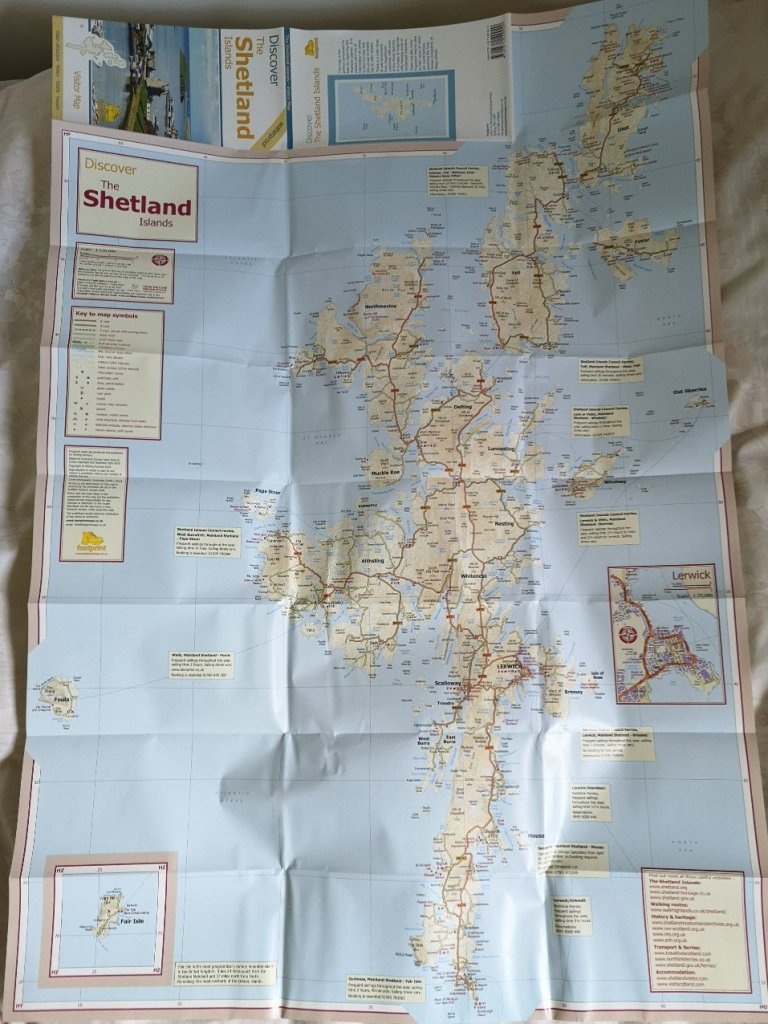
Map of the archipelago of Shetland

At the time of writing, I am on a virtual visit to Shetland, north of the mainland of Scotland. I am having a series of fascinating chats with women who live there, or who were born there and now live elsewhere, on these topics. I have also been stimulated to reflect on my own and my family’s stories around identity. Women travel for many reasons:

To obtain work

The start of the oil boom saw families moving to Shetland, or young couples settling who then had children there. This was good for the community in many ways, enabling integration and expanding the community. Even when the adults moved away again, some of their grown-up children stayed and continued to build lives on the Islands. Nowadays this happens far less, partly because the trend is for individual oil workers to come for a spell of weeks before returning to their families, and partly because the oil industry is in decline. Many local people who have worked at Sullem Voe, for example, lost their jobs just before the Coronavirus hit, and job hunting was of course, been hard during this time. Will there be an exodus as a result?

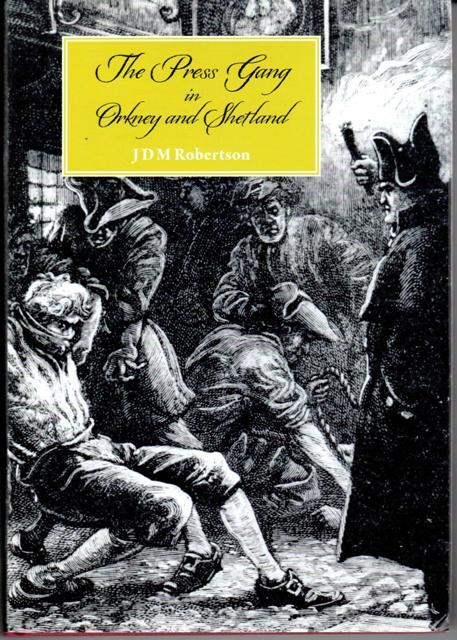
Book cover: The Press Gang in Orkney and Shetland by J D M Robertson

Some join the armed forces and the Merchant Navy and travelled the globe. Often they return to Shetland, but others did not, settling in other countries and establishing families and support structures there, their accents and habits changing over the years. In the past, men were also press ganged (1755 – 1845) which had a considerable impact on the Shetland way of life, not least that at one time there was a ratio of 3:1 women to men on the Isles.

When I travelled, I am usually asked where I am from. Scotland, where I have lived for 30 years, and Nicola Sturgeon (who was First Minister between 2014 – 2023) were popular on the continent at that time, so there were smiles when I answered. However, there was usually a pause after that. With a puzzled expression, they would say, ‘But you don’t sound Scottish’. My parents and grandparents were very keen that I spoke ‘good’, or ‘Queen’s, English’ and it hasn’t rubbed off after all these years living in Scotland, much to my disappointment. It betrays my origins!

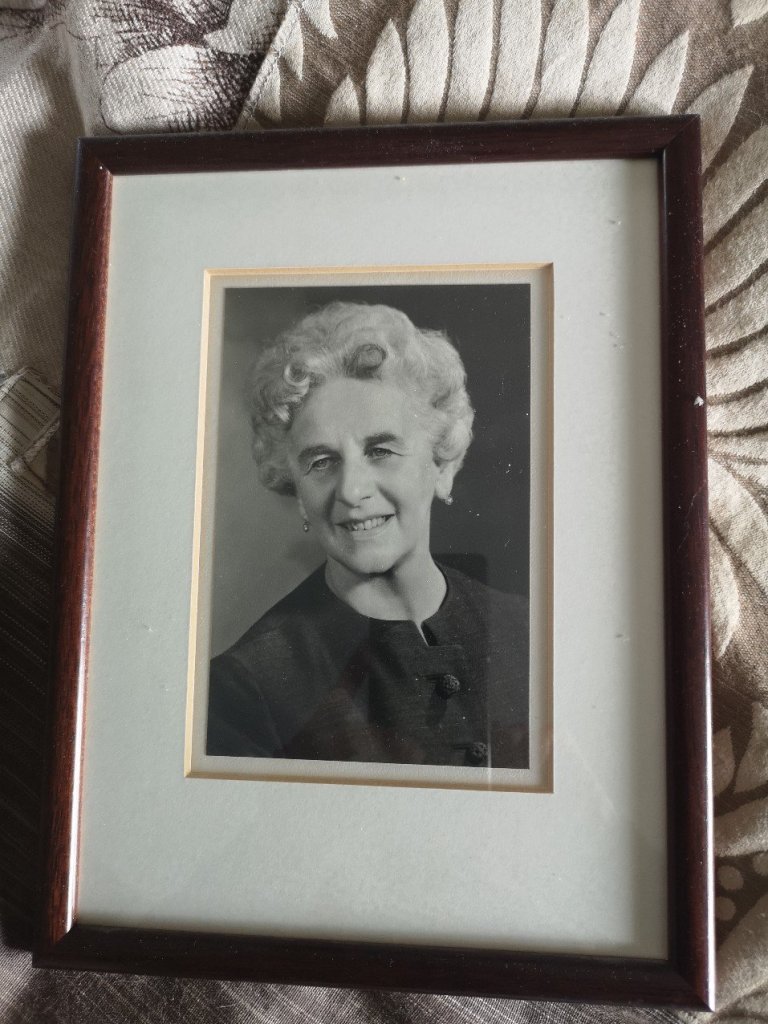
My maternal grandmother, Violet Elizabeth, known as Liz who went back and forth to Africa during World War II on the Banana Boats

Marriage and relationships

The Marriage Bar was still in place when my grandmother married just before World War II. She had trained at college to be a PE teacher and secured a position at Benendon College, a school for girls, but on marrying my grandfather, she was required to give it up and travel with him to Africa where he worked. The expectation that she should be at his side extended to the children. She travelled back by ship to have each of her daughters, but had to leave them behind in the UK (in 1937 and 1941) in order to return to him.

The main problem was undoubtedly the attitude of senior officials, but the Marriage Bar also deterred ambitious women from entering the civil service and/or ensured that, once recruited, they were forced to leave. 

Women in the Civil Service

Seeking education

There are two high schools in Shetland: Brae in the north west Mainland and the other in Lerwick, further south on the east coast. Young Shetland girls / women (aged 15 years and over) have to attend boarding school or stay in a hostel, Monday to Friday, if they want to continue their education past Standard Grade level. After that, although many now choose to stay on the Islands and attend the Highland and Islands University (which has 13 colleges and research centres, over 70 local learning centres, as well as online tutoring), like many other young people they might also choose to leave home and go to Aberdeen, or other cities in Scotland and further afield.

Other reasons for leaving home and returning that I am going to be looking into are:

  • Wanderlust – stimulation – inspiration – curiosity
  • Seeking asylum or otherwise escaping injustice or abuse
  • Looking to provide one’s children with a particular environment to grow up in which is often linked to happy childhood memories
  • To be with family
  • Illness
  • The landscape and community

I will be examining the challenges to stability and identity that are involved in travel

Language: The Shetland dialect is distinctive and a strong part of people’s identity. There are variations which are closer or further away from Scots and English, and modulations are naturally made depending on who is talking. I will be writing more about this.

  • Winning independence in another culture
  • Facing the cultural assumptions you grew up with
  • Settling and belonging
  • Making a home
  • Never quite settling down

I have already discovered, personally and through speaking with other women, that a sense of a new identity can emerge from moving to another country, and be liberating. This may surprise both the woman and her family, even disrupt relationships, as parts of oneself changes in response, either being emphasised or stymied. A set of different religious or cultural values may feel liberating or constricting; a change of temperature, climate and daylight (or lack of it) may have a positive or negative effect; opportunities may be greater or fewer, leading to enrichment or a blocking of possibilities. Crossing oceans and borders sometimes requires courage and daring, and other times is easy and natural because of a sense of coming home.

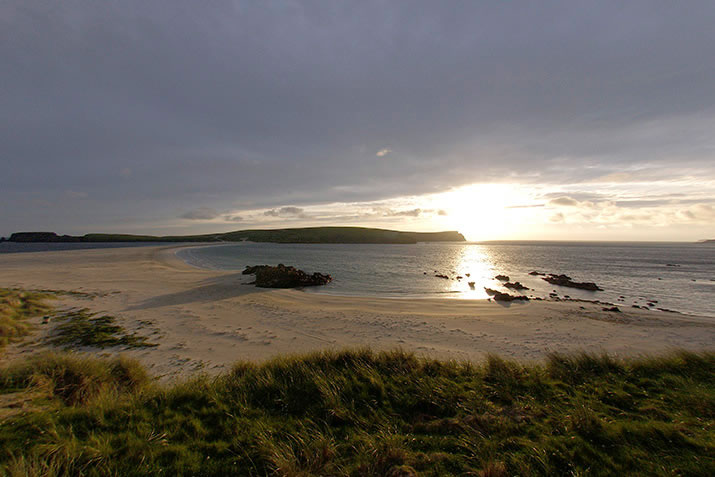
St Ninian’s Isle, in the south west of Shetland, connected to the mainland by the largest tombolo or ayre, meaning gravelbank in old Norse. (source: Wikipedia) (not my own photo)

Special thanks to Geraldine Wooley who initiated a meeting between the different presenters of the Audacious Women Festival event. She prompted us to think about the topic in alternative ways, summarised the discussion, and chaired the live session.

Emigration Records can be found on the Scottish Archive Network website.

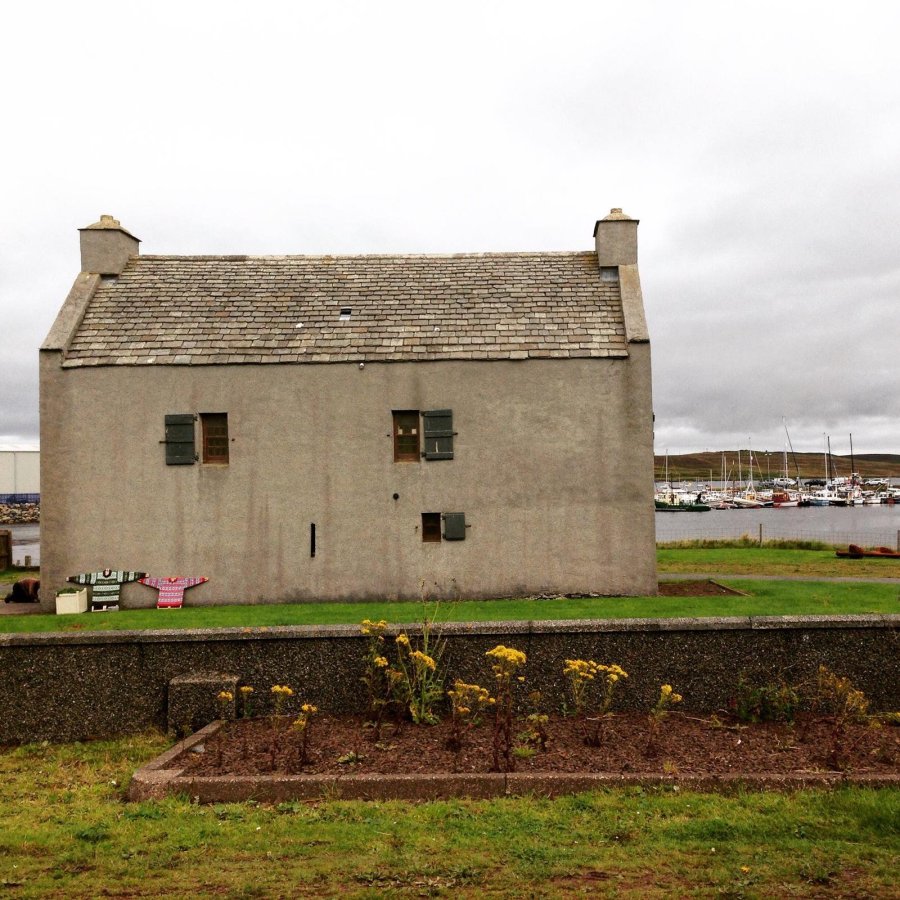
The building in the title photo is Lerwick’s Textile Museum. Thanks to Isobel Cockburn for her permission to use it.

You may also like:

Research and Preparation About the route I took, Shaetlan dialect, and the aims of my Sense of Belonging project.

Leith to Lerwick Days 1 and 2 Charting my journey northwards and visiting Lerwick’s Textile Museum and Museum and Archives.

Lerwick and Northmavine Days 3 and 4, in which I write about the Press Gang, visit The Old Tolbooth and view Da Lightsome Buoy, then travel to the north west to speak to Helen Robertson about her knitting projects.

Walking on Shetland

Whalsay and Bressay About Sunday Teas, these 2 smaller islands, and about home and a sense of belonging.

Wildie and Lalla, An elegiac film by Catriona Macdonald, Shona Main and Angelica Kroger.

Leith to Lerwick – days 1 and 2

2 – 3 May 2020. A virtual tour informed by friends and relations, online resources and other kind people who agreed to speak with me or shared their photos and experiences via social media. Please see the Research and Planning post for more details.

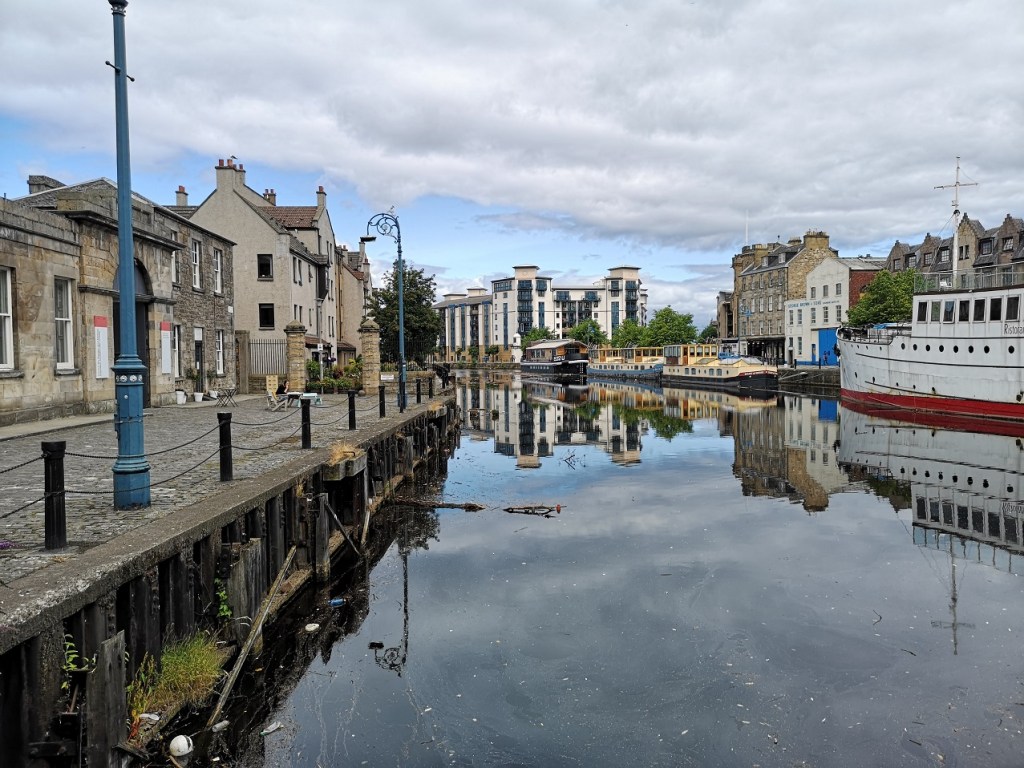
Custom Lane on the left, looking towards Leith Docks, Edinburgh

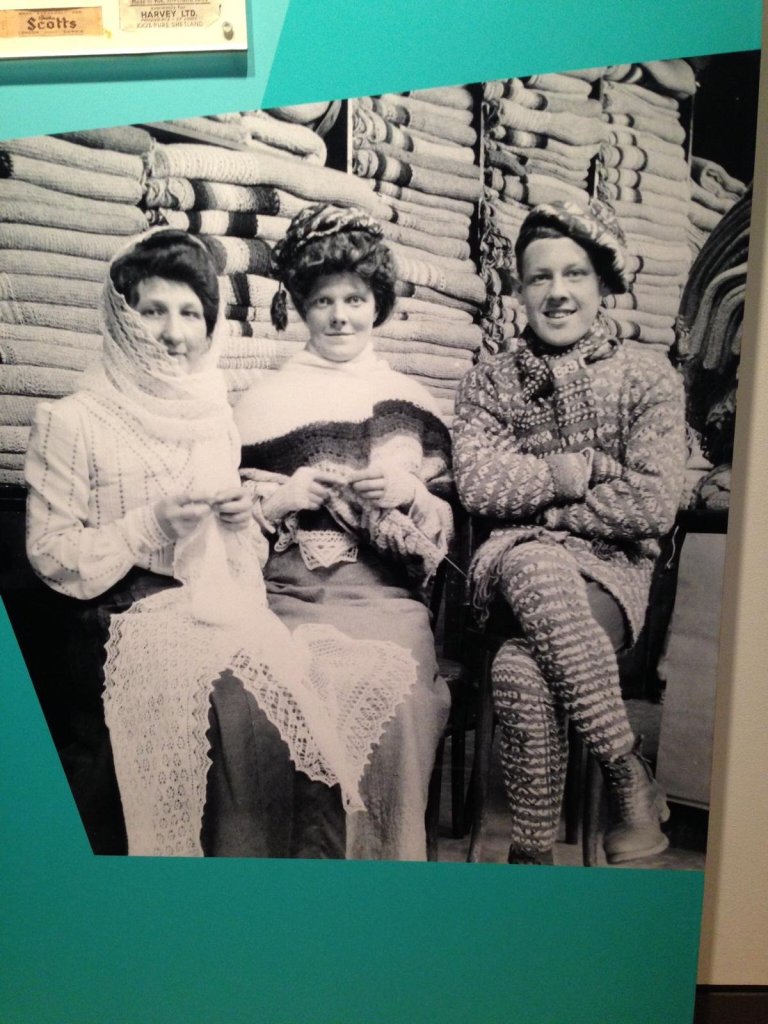
My virtual visit to Shetland began at Leith Docks in Edinburgh. The Aberdeen, Leith and Clyde Shipping Company extended a route from here to Lerwick 83 years ago, enabling Shetlanders to trade their lace and knitted products. Approved of by Queen Victoria herself, it was women who toiled to make these fine stockings and shawls, who were the mainstay of the economy.

 “Women were culturally, economically and demographically predominant in this period,…hundreds of unmarried women … were only able to support themselves through knitting.“

Isobel Cockburn, ‘Fingers as clever as can be yet’: Shetland Lace and Women’s Craft in Victorian Britain.

Nowadays, it is not possible to sail from Leith, so I took a train (approx. 2.5 hours) to Aberdeen which was also the first leg of my 2018 journey to Orkney to walk the St Magnus Way. It was an easy 10 minute walk from the railway station to Jamieson’s Quay, and I had almost an hour before the ferry left at 5pm.

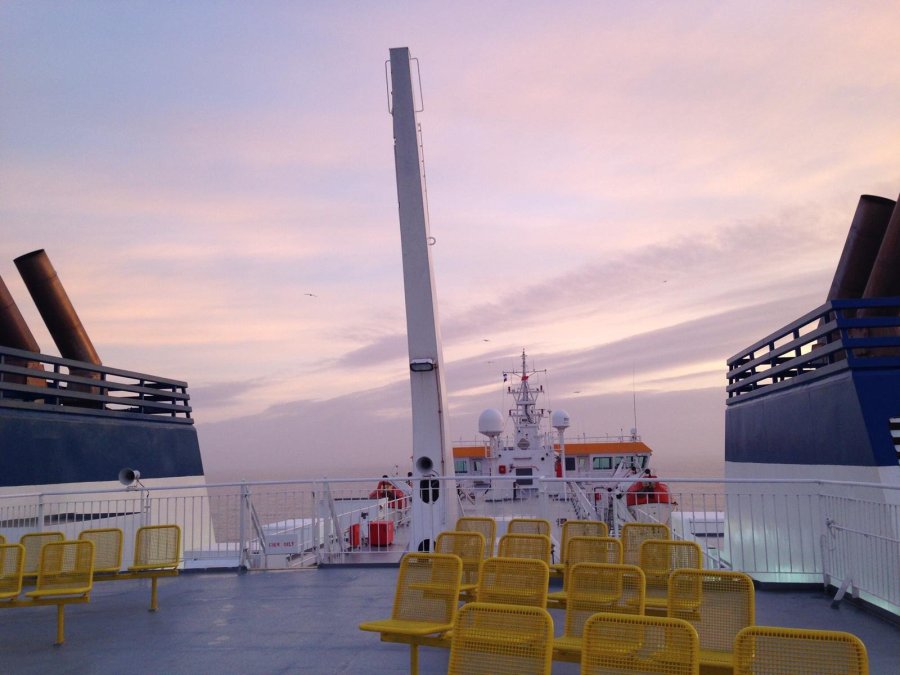
I travelled with Northlink Ferries who have great customer service. Photo Isobel Cockburn
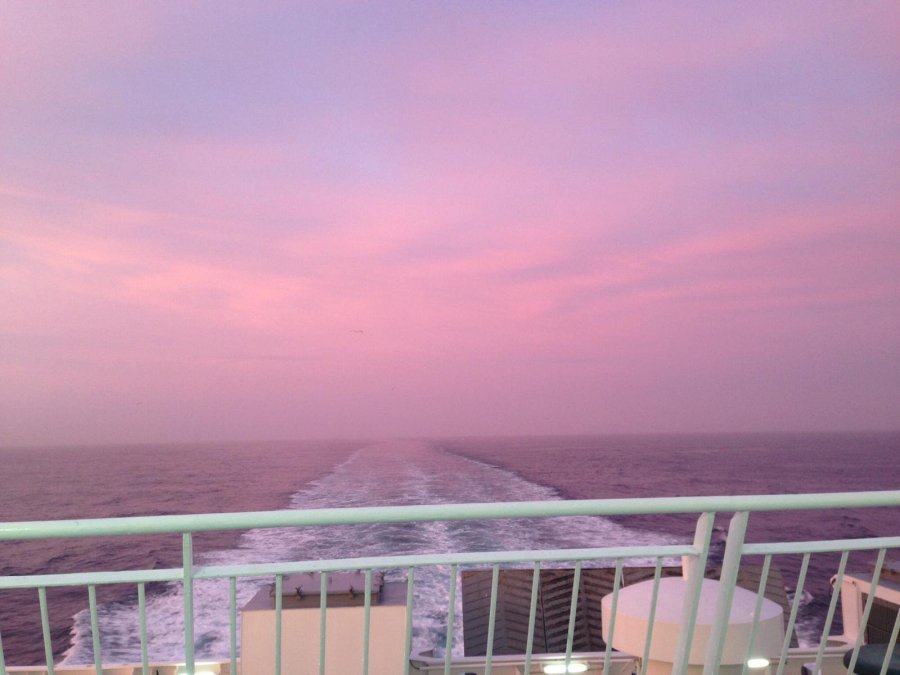
Seeing the sun starting to set, seen from the stern. Photo Isobel Cockburn

It was only 10 degrees when we left and the temperature was dropping steadily during the four hours before sunset, but it was well worth being up on the chilly deck for the spectacle.

Spectacular sunset. Photo Isobel Cockburn

The wind was a light northerly (5.5 miles an hour) and the journey on the Northlink Ferries‘ ship, the MV Hjaltland, took 12 hours, stopping half way at Hatston in Orkney, docking at 11pm and leaving again 45 minutes later. I had elected for a seat rather than one of the cabins (the cheapest) and wiggled in and out of my sleeping bag at 1.30am when it was totally dark (3 degrees – brrr) and again at 6 when it was already quite light, an hour after sunrise. Sadly, I saw no cetaceans (whales, dolphins and porpoises) although many do during the early hours of the day at the end of this journey.

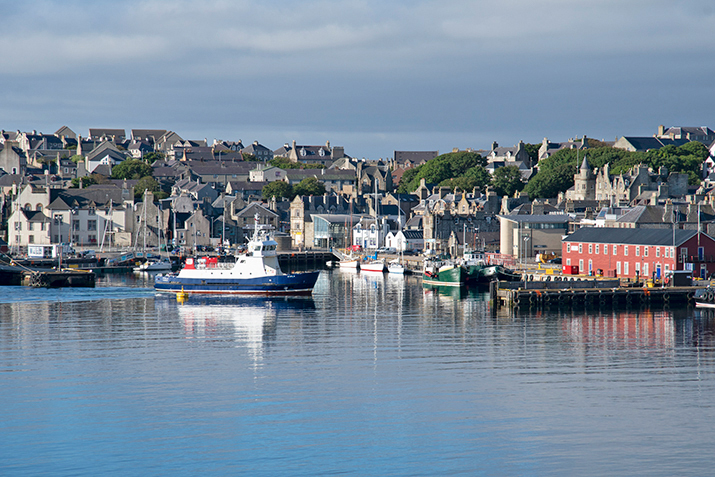
Lerwick harbour. Photo from the Northlink Ferries site

Lerwick is almost equidistant from Aberdeen on the mainland of Scotland, Bergen in Norway, and Tórshavn in the Faroe Islands. Its name comes from the Norse ‘Leirvik’ meaning muddy or clay bay. It’s a major fishing centre where more fish are landed than in England, Wales and Northern Ireland combined, despite the, relatively, small population.

As I had had breakfast on the boat, I was ready to explore. Fifteen minutes walk north of Holmsgarth terminal is The Shetland Textile Museum (opens 12noon). Located at the Böd of Gremista, it is only £3 to enter. Fifteen minutes in the other direction is the Shetland Museum and Archives (10am – 4pm) where there are exhibitions, events and the Emma-Louise coffee shop. Remember that, in real life, both are open Tuesday to Saturday. As this was an imaginery trip, I was able to enter on a Sunday! (note: The Co-op food store, if you ned to stock up, is on the Holmsgarth Road 6 minutes from the terminal towards the latter.) If you arrive on a Sunday like I was meant to, you will have to either go somewhere else and come back a few days later, or spend a minimum of 3 days in the town. There is so much to see and do that I can see this would be a delight.

Advertising image from D&G Kay, 1900s. Photo Isobel Cockburn

Right now, during lockdown, there is a vast array of archives available at Shetland Museum and Archives at the click of a mouse.

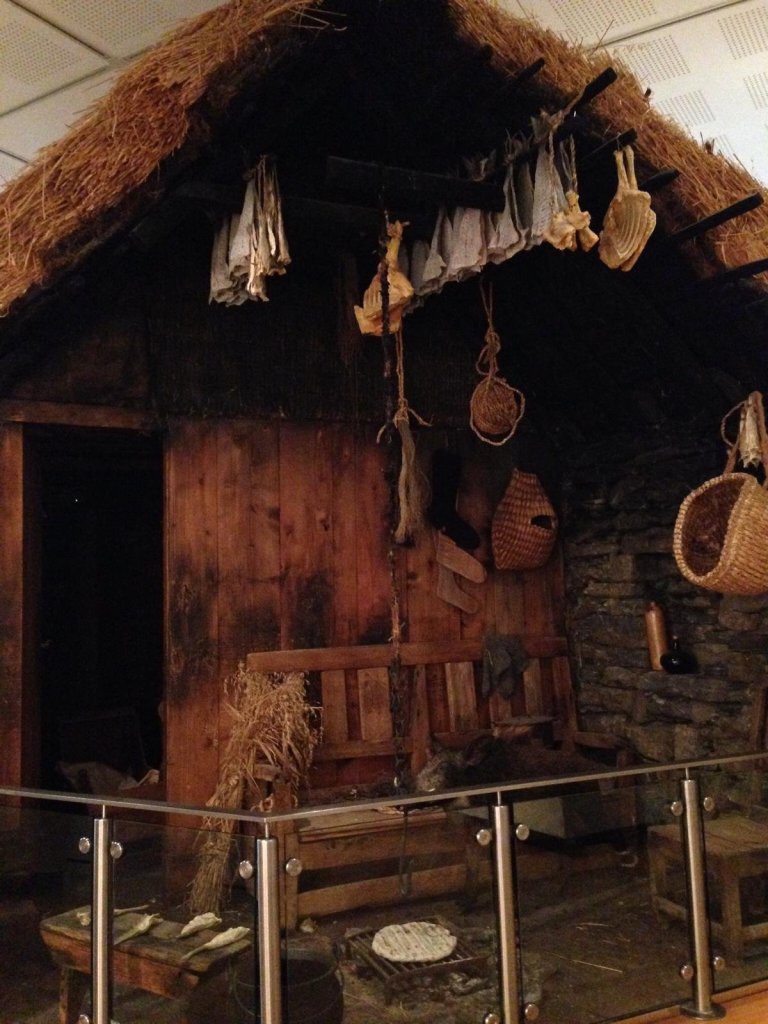
Traditional croft display with baskets and fish, Shetland Museum and Archives. Photo Isobel Cockburn
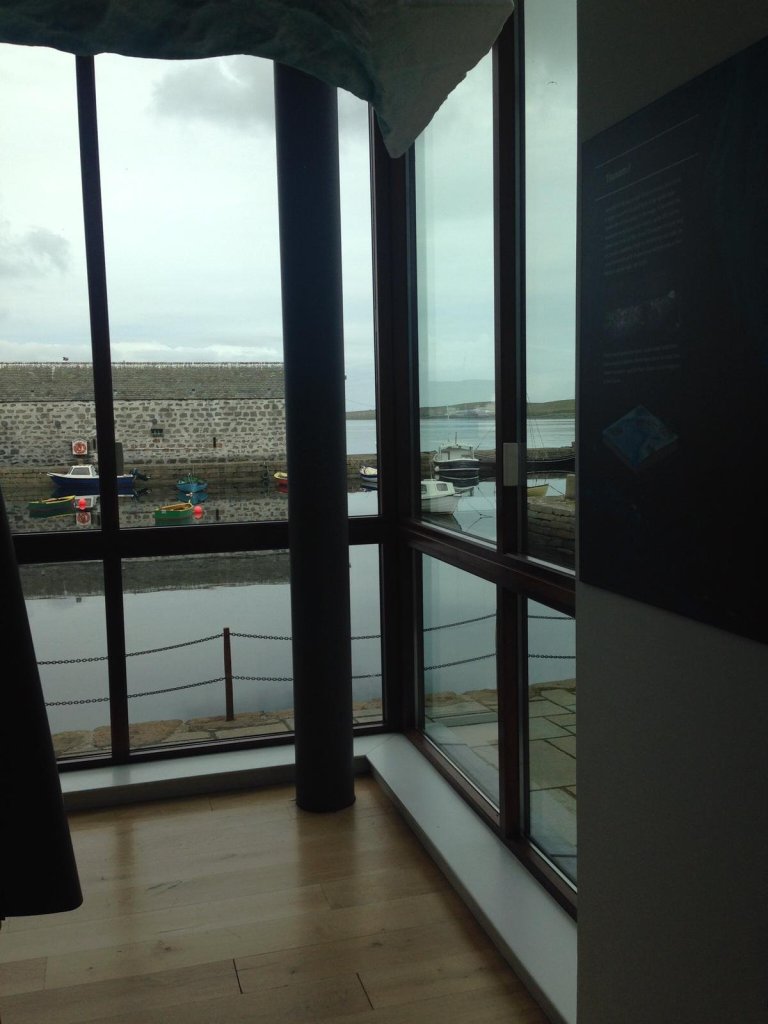
The Shetland Museum and Archives is right beside the sea at Gutters Gaet. Photo Isobel Cockburn
Textile Museum, Lerwick. Photo Isobel Cockburn
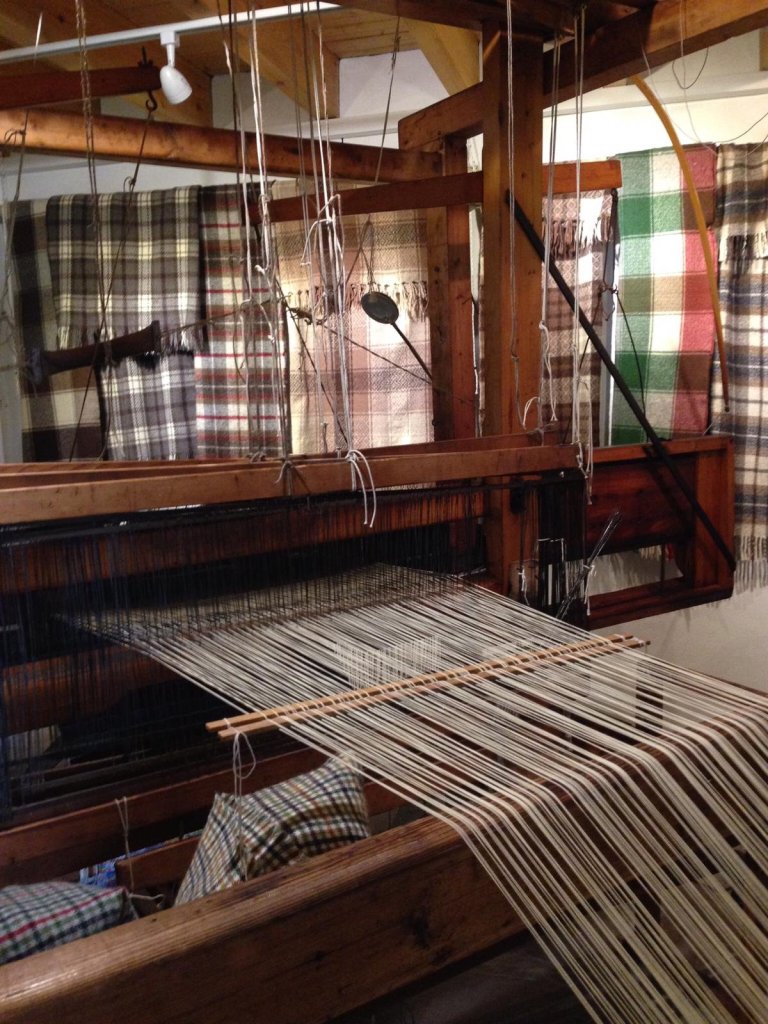
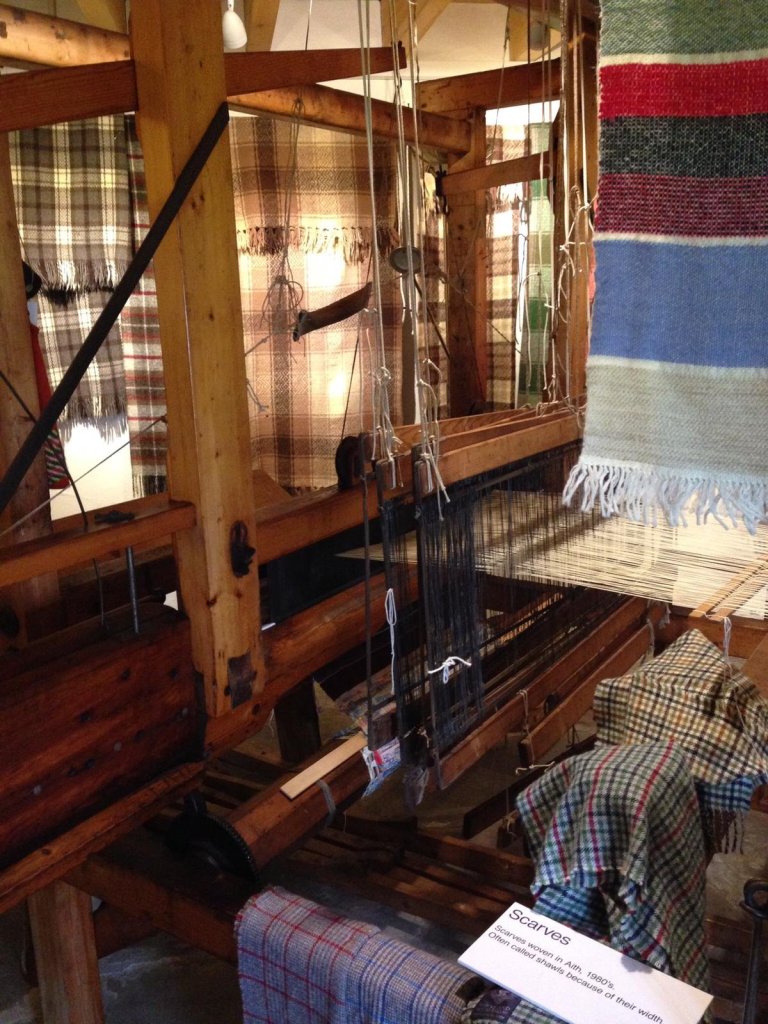
Looms in the Textile Museum, Lerwick. Photo Isobel Cockburn
Admiring the fabric in the Textile Museum, Lerwick. Photo Isobel Cockburn
Available from The Shetland Times. Photo from their website

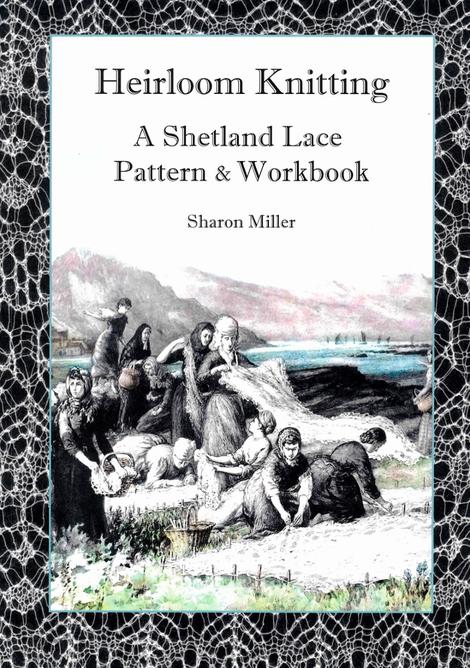
There’s a brewery, a town hall, a fort and the bookshop is part of The Shetland Times where you can buy Heirloom Knitting, A Shetland Lace Pattern and Work Book by Sharon Miller, as well as maps and gifts.

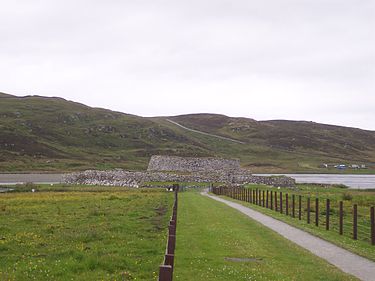
The broch at Clickimin Loch, west of Lerwick, Shetland. Photo Wikipedia

What would a hiker do? Why, take a walk along the Knab Road and then right into Hillhead which becomes Scalloway and then South Road, until I meet the roundabout. From there I would drop down onto the track which skirts the Loch of Clickimin almost all the way, excepting for Westerloch drive. I would admire the wildfowl and explore the broch, a Pictish fort, which was occupied circa 700BC until about the 6th century. I would camp somewhere if it was warm enough at night (you can wild camp in Scotland) where I could leave my rucksack so I could climb.

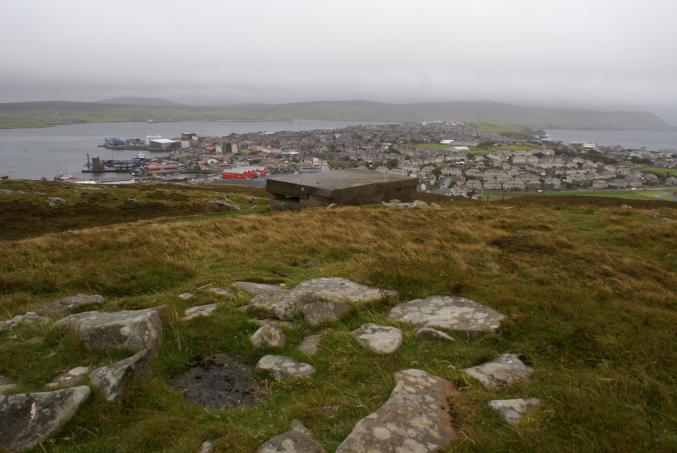
North Staney Hill

Then I’d climb up Staney Hill and get a panormaic view of Lerwick and the sourrounding landscape.

A Shetland pony. Photo Isobel Cockburn

Shetland Wildlife offer tours from Lerwick around the Noss coast to see the birds and sea mammals.

All photos are copyright Tamsin Grainger unless otherwise stated.