A short film made on the Summer Solstice 2025, a provocation curated by Kel Portman. Sub titled, Walking an Orbit on the Longest and Shortest Day, I walked an anti-clockwise circuit in Granton, Edinburgh at dawn. It included a swim in the cauldron of the Firth of Forth, and an encounter with one of the Covid Memorial Trail sculptures by Skye Loneragan and Stewart Ennis.
Below: 10 walking artists celebrate the summer solstice:
‘Widdershins, A Witch’s Walk’ (short film) was my contribution. Widdershins, a spell for the Summer Solstice. Scots: Anticlockwise. Deosil, Gaelic: turn right, towards the sun, ‘May things go right’. A Witch’s Walk, contrariwise – Fox (tod) shapeshifter – Crow (corbie) familiar – Clootie – Mugwort – Ragwort – Wych Elm – Cauldron – Spoons for stirring. Song: The Witches Reel 1591. Sculpture: Skye Loneragan and Stewart Ennis. Location: ///only.voices.passes
Contributing artists: Claudia Zeiske, Janette Kerr, Jaqui Stearn, Kara-Louise Slattery, David Tidsall, Jaak Coetzer, Neil Greenhalgh, Martin P Eccles and Kel @kelarrowsmith
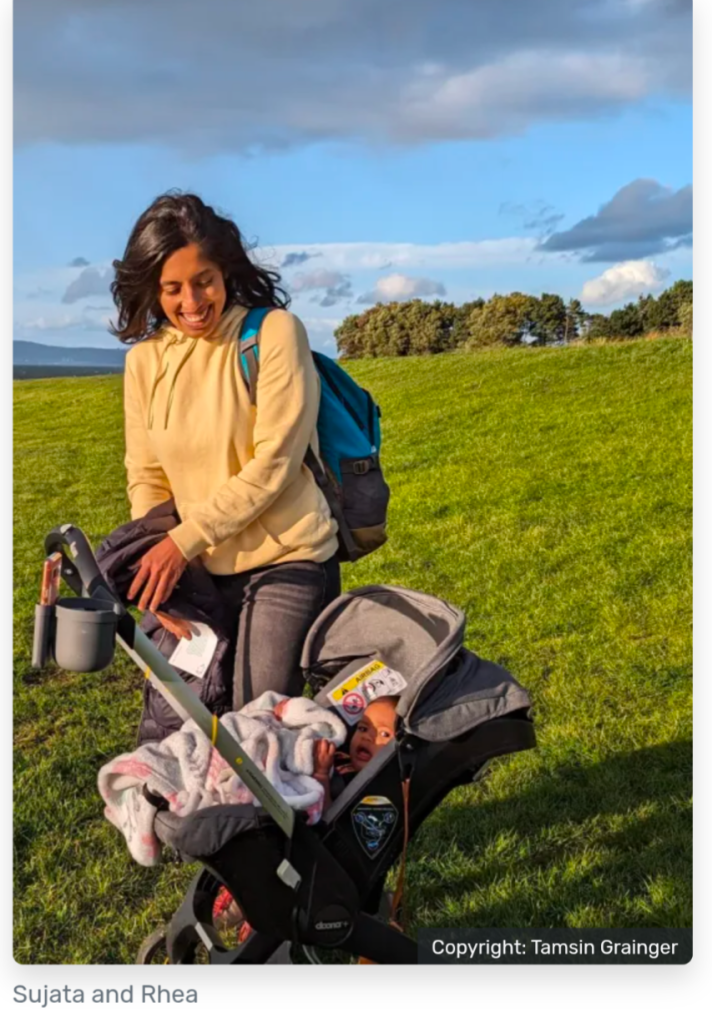
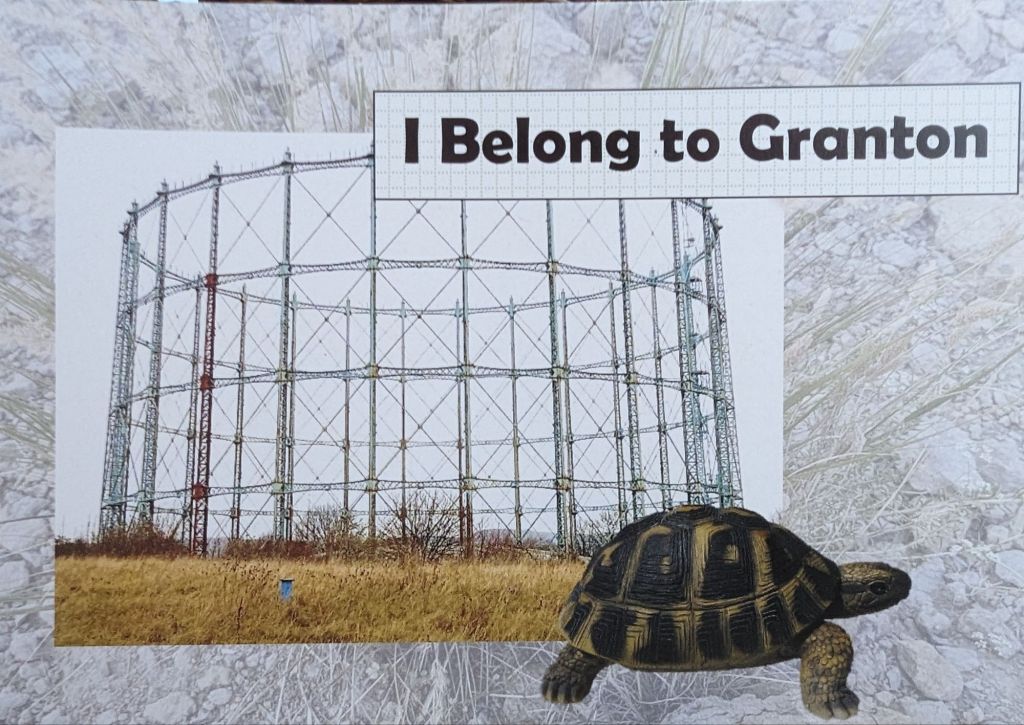
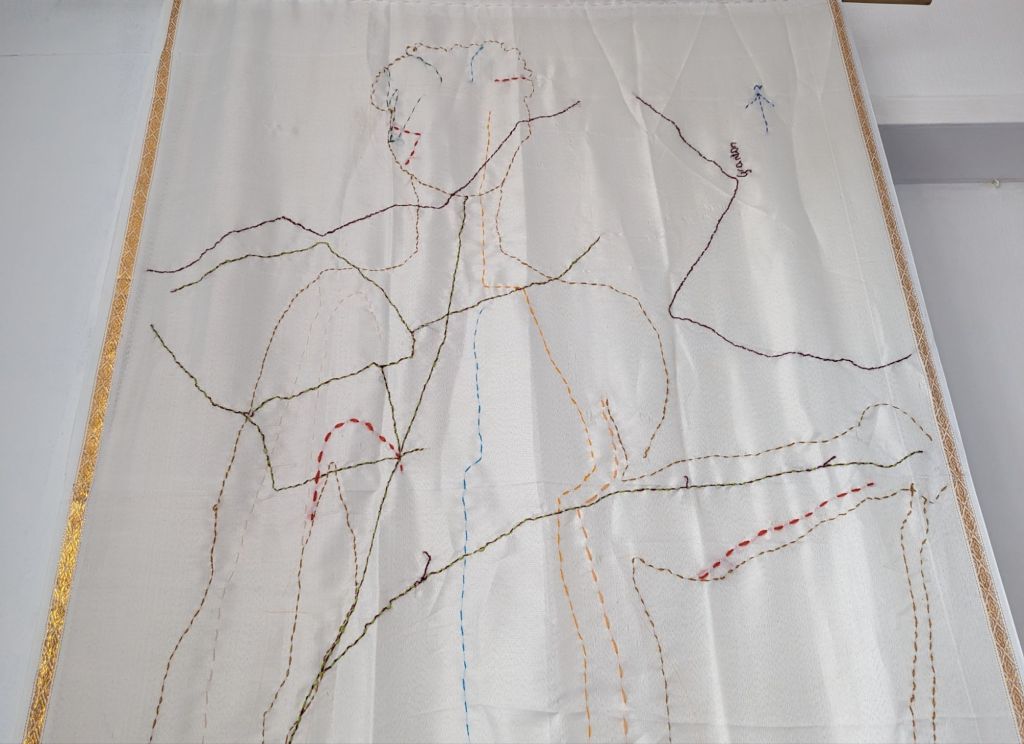
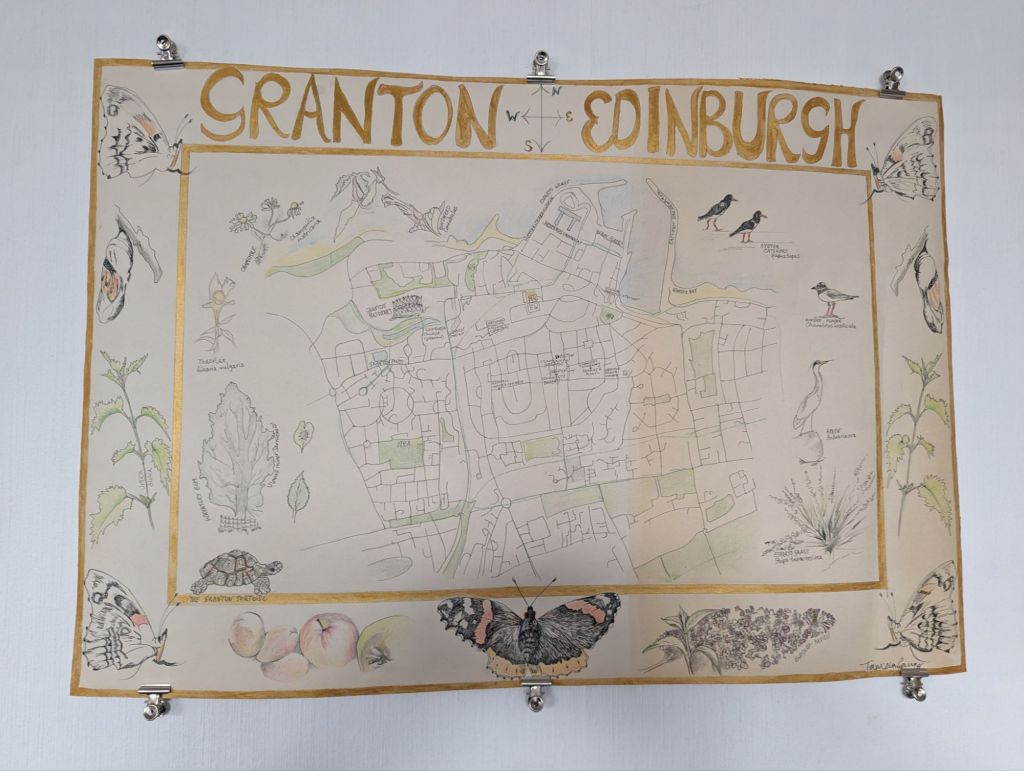
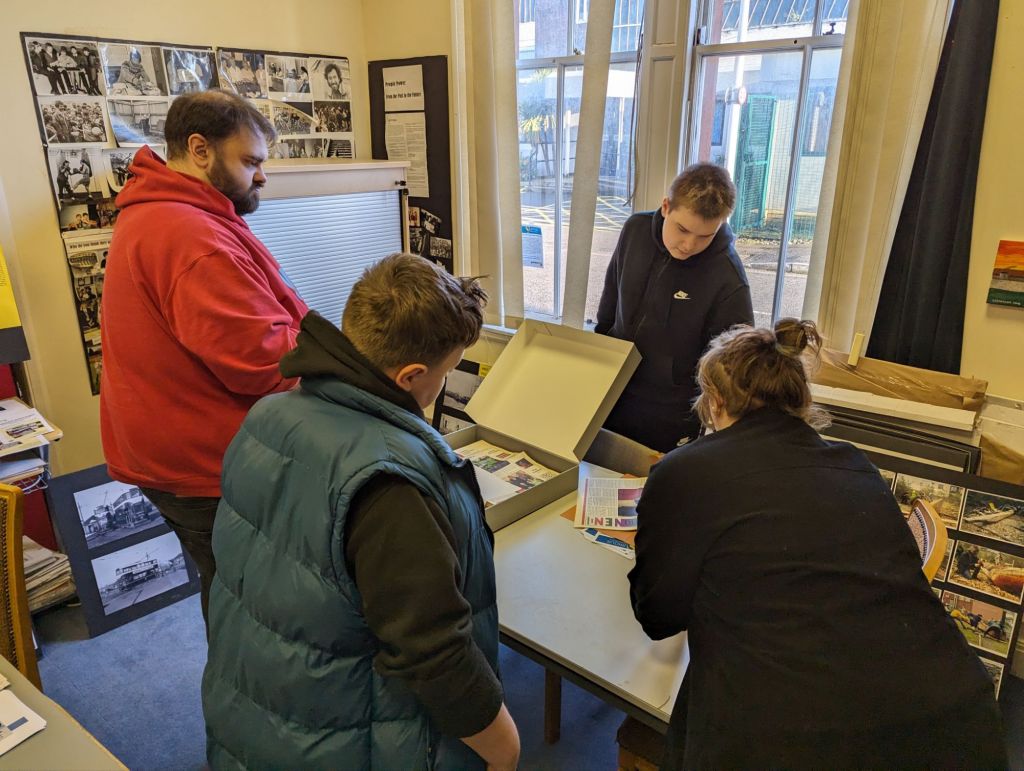
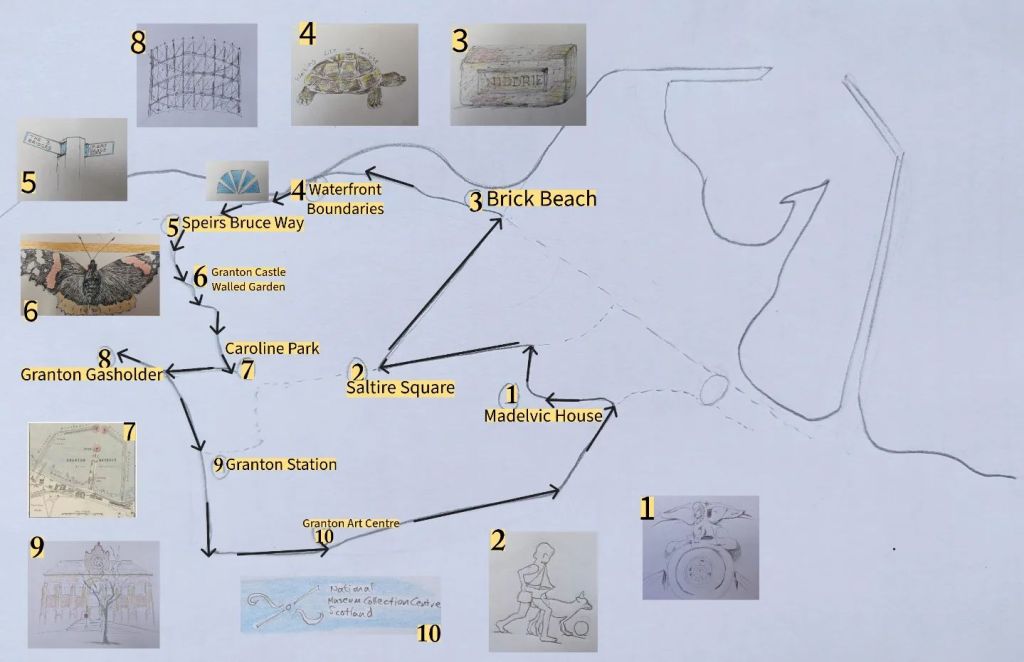
One of the portraits of members of the local community I met while walking the Granton Boundary Free postcard for residents, designed by Tamsin Grainger Detail, Personal Mapping. Textile work re. ‘My Body is My Map’ Hand drawn / painted map of Granton showing other-than-human inhabitants we live with One of the Walking Like a Tortoise events Showing members of the local youth club around the History Hub Walk Map, Granton, Edinburgh
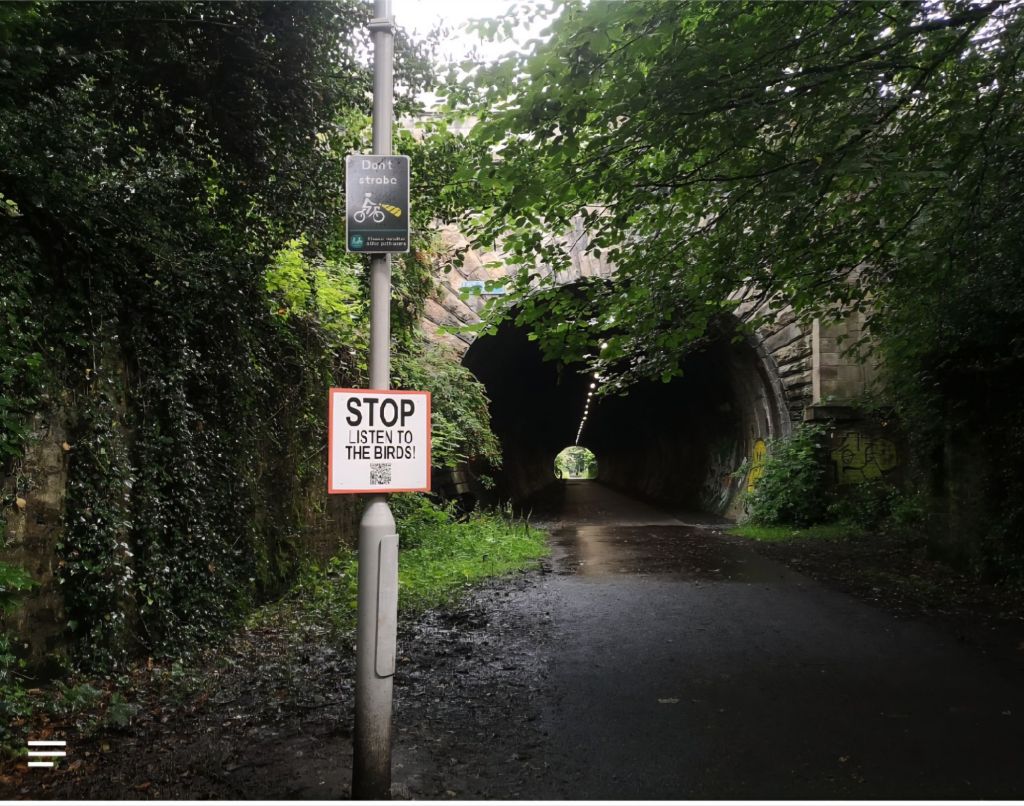
I’ve been repairing my sound walk, No Birds Land, in the Trinity Tunnel of the Edinburgh cycle paths.
Tomorrow morning there’s a community walk along the Trinity Path where it’s situated and I’m going to say a bit about how I made it and why, play it to them, encourage participants to Stop and Listen to the Birds, and put the installation into the context of the tunnel, the old railway, and the history of the area.
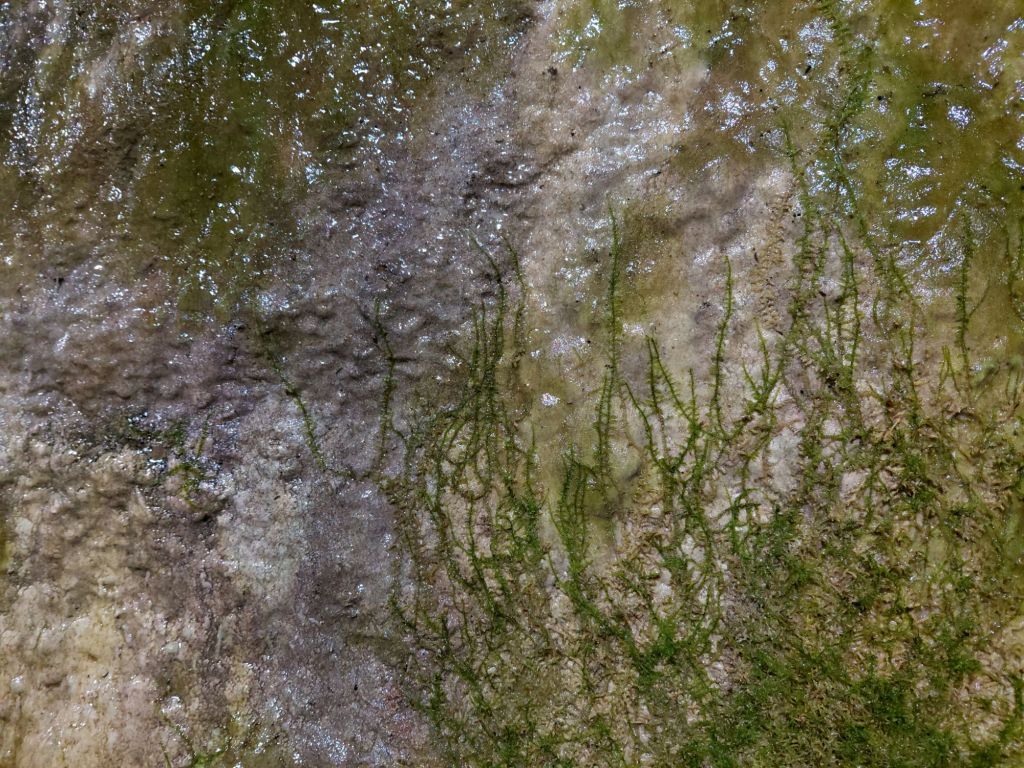
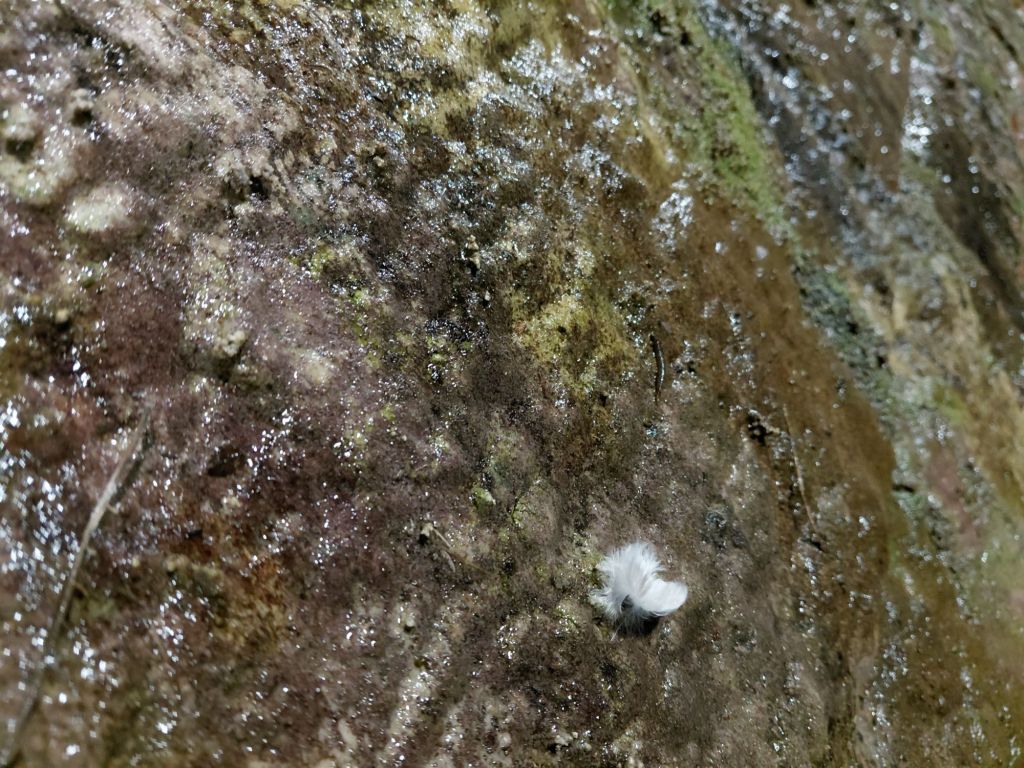
It’s a wet and mucky job as the rain comes in and runs down the walls, bringing with it all sorts of minerals and deposits in a wonderful array of subtle and extreme colours. The there are the mosses and lichen, spiders and flies, and lots of tiny feathers embedded there too.
Mosses and minerals inside the Trinity Tunnel, Edinburgh The wet walls of the Trinity Tunnel, site of No Birds Land
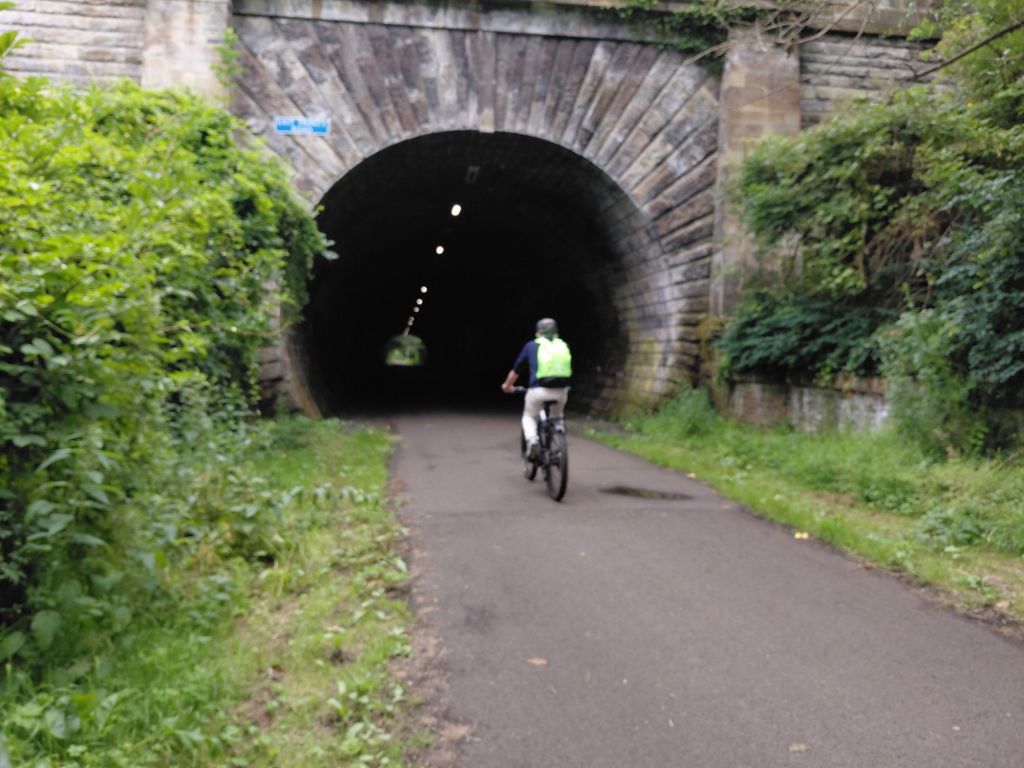
As well as the pleasure of working in this environment and discovering the little messages and additions folk leave or add, it’s the interaction with the walkers, runners and cyclists I enjoy.
The first man stopped running and asked about what I was doing. He shared his experiences of going from light to darkness, activated the QR code, and thanked me.
Another woman kept running but called she called out, “That looks lovely!”
I offered a card to a couple of guys sheltering under umbrellas, who said “Yes please”. Then one said he’d already listened on a previous occasion and smiled.
Keith – he told me his name: – stopped and used the QR code (his son had told him about the ones along the Water of Leith). He asked me if it was the same sort of thing and I explained. “Nice to meet you”, he said, asking my name, and walked off, listening, so that my recorded Sound Poem rang out in the #trinitytunnel
A huge white, wet, fluffy dog barked and barked. I like to think he was v enthusiastic about No Birds Land as a work of public and activist art!
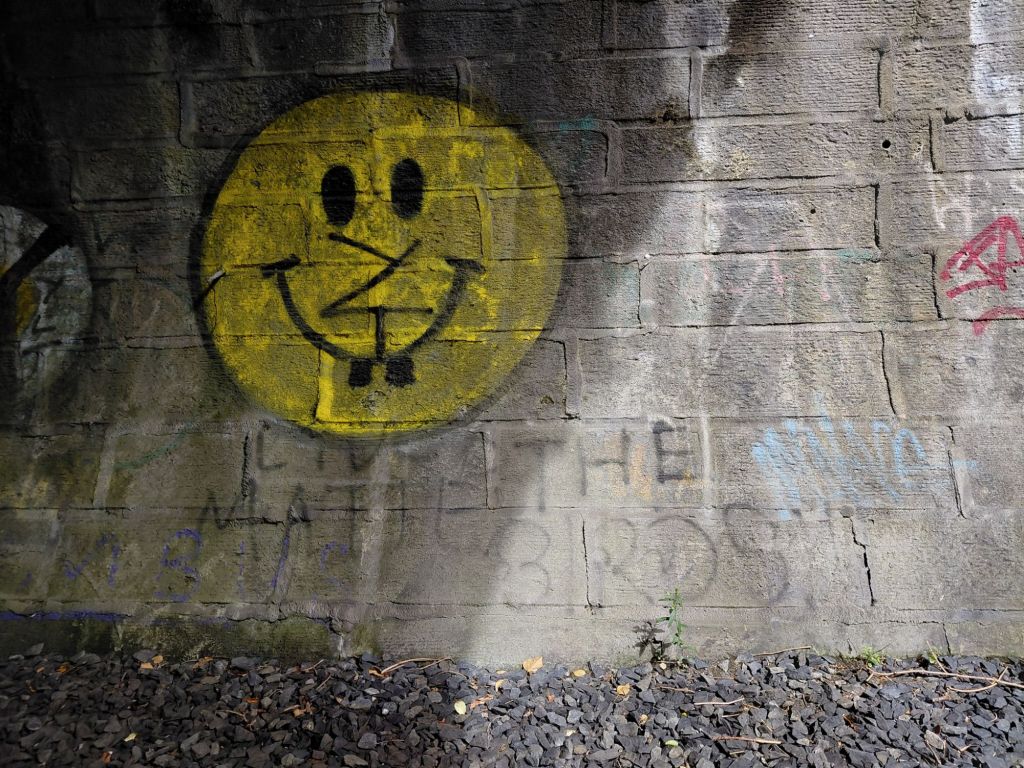
Sadly, someone has stolen the sign from the south end of the Trinity Tunnel #edinburgh Local graffiti on the opposite wall of the Trinity Tunnel, Edinburgh
If you’d like to join us, here are the details: Join the Drylaw Neighbourhood Monday Morning Walking Group and me for a tour on 28th July of the Trinity Path. You will learn about and listen to the No Birds Land soundwalk (funded by RSPB and Sustrans, shortlisted for a Sound Walk September Award) and Trinity area local history.
Either meet at Drylaw Neighbourhood Centre (DNC) at 10am (free return bus) or at the path entrance on Trinity Rd near the junction with Lower Granton Road. What3Words ///since.page.tells at 10.45am.
Ends approx. 12.15 at Trinity / back at DNC by 1pm.
Bring a pack lunch and drink if you like, plus something to sit on and keep you dry in the event of showers.
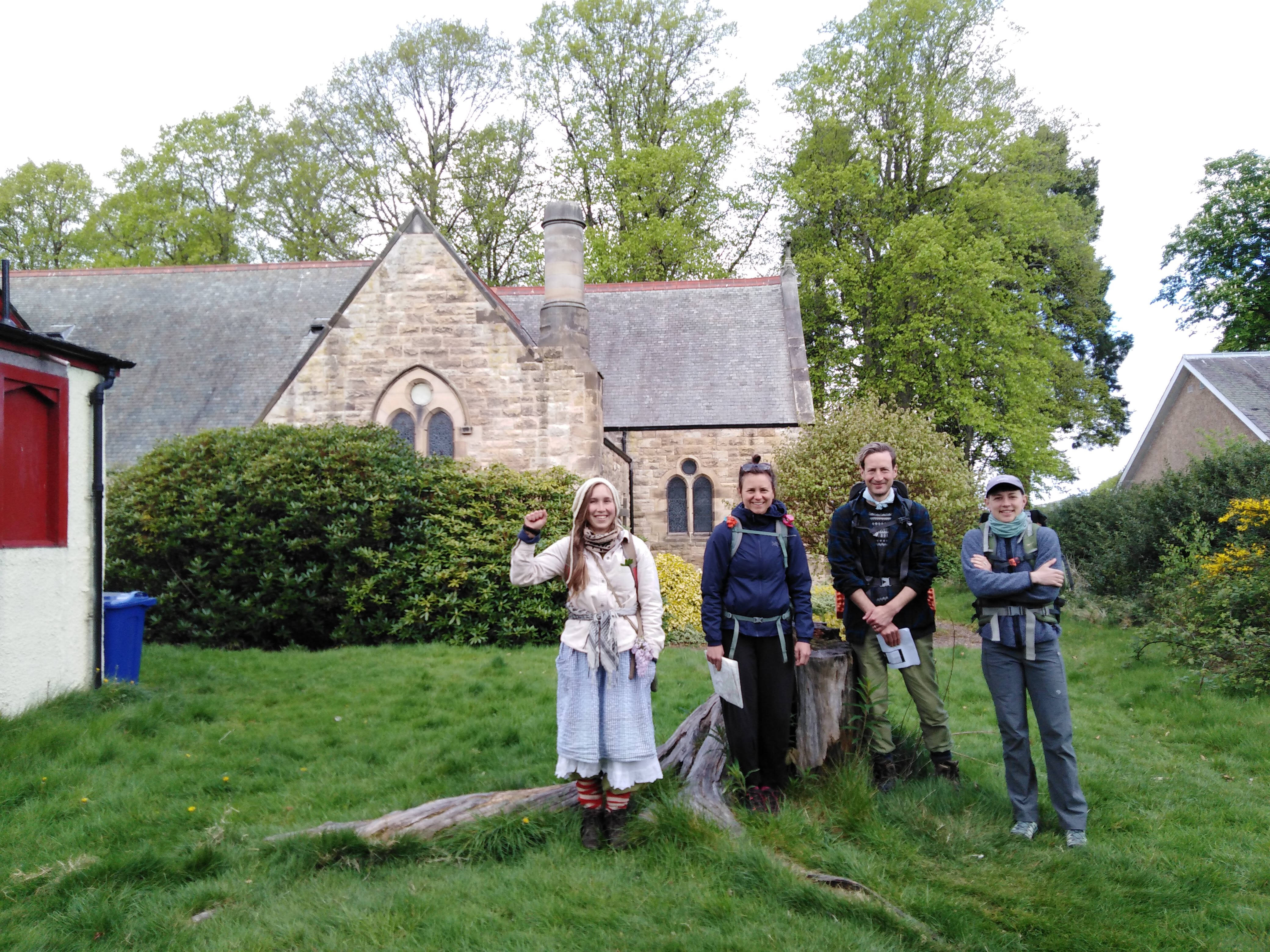
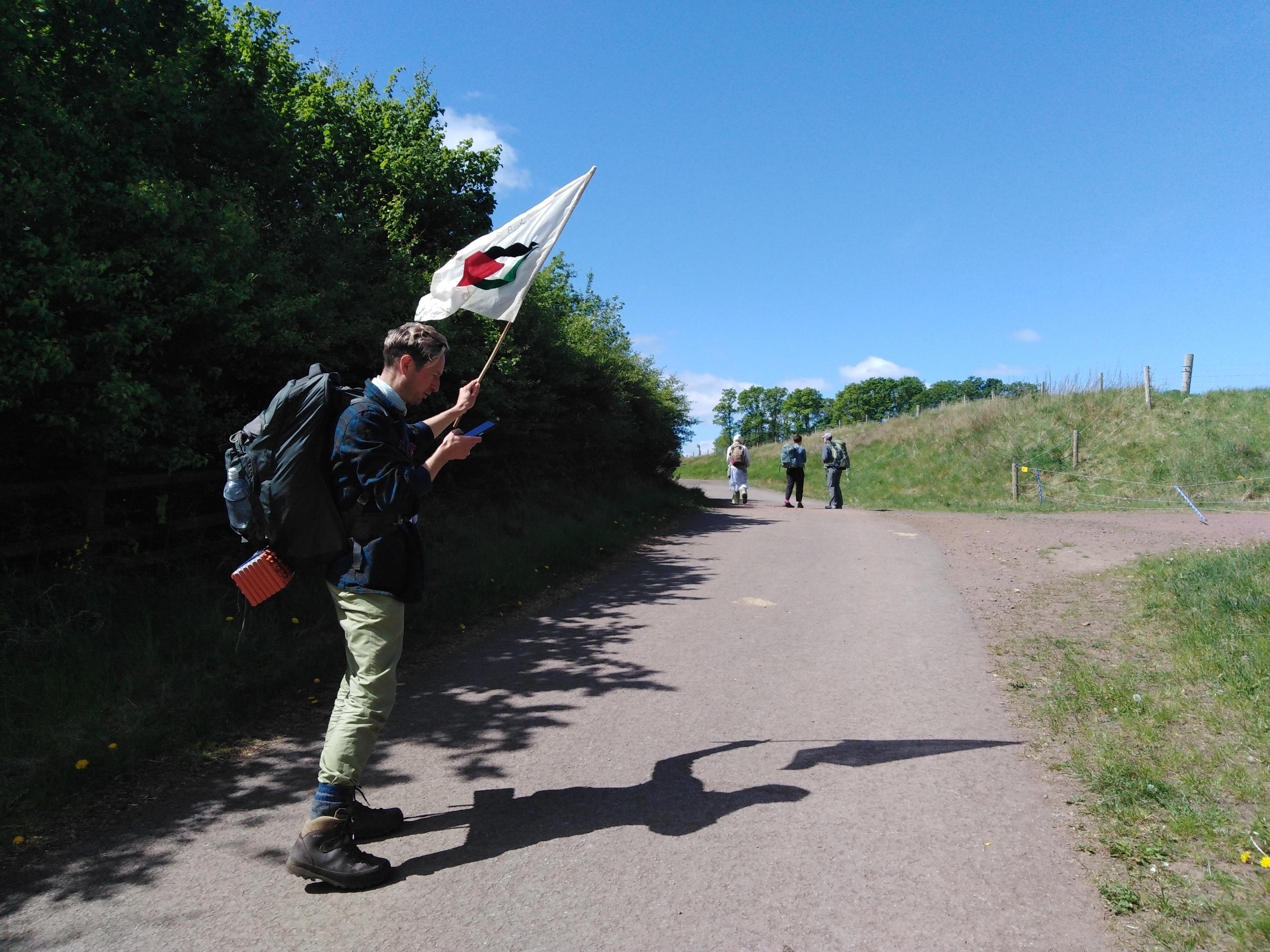
On May 5th 2025, I joined Tom Jeffreys (organiser) Tiki Muir and Emily Cropton on the final day of a walk to raise awareness and funds for Palestinian families. Fundraising link
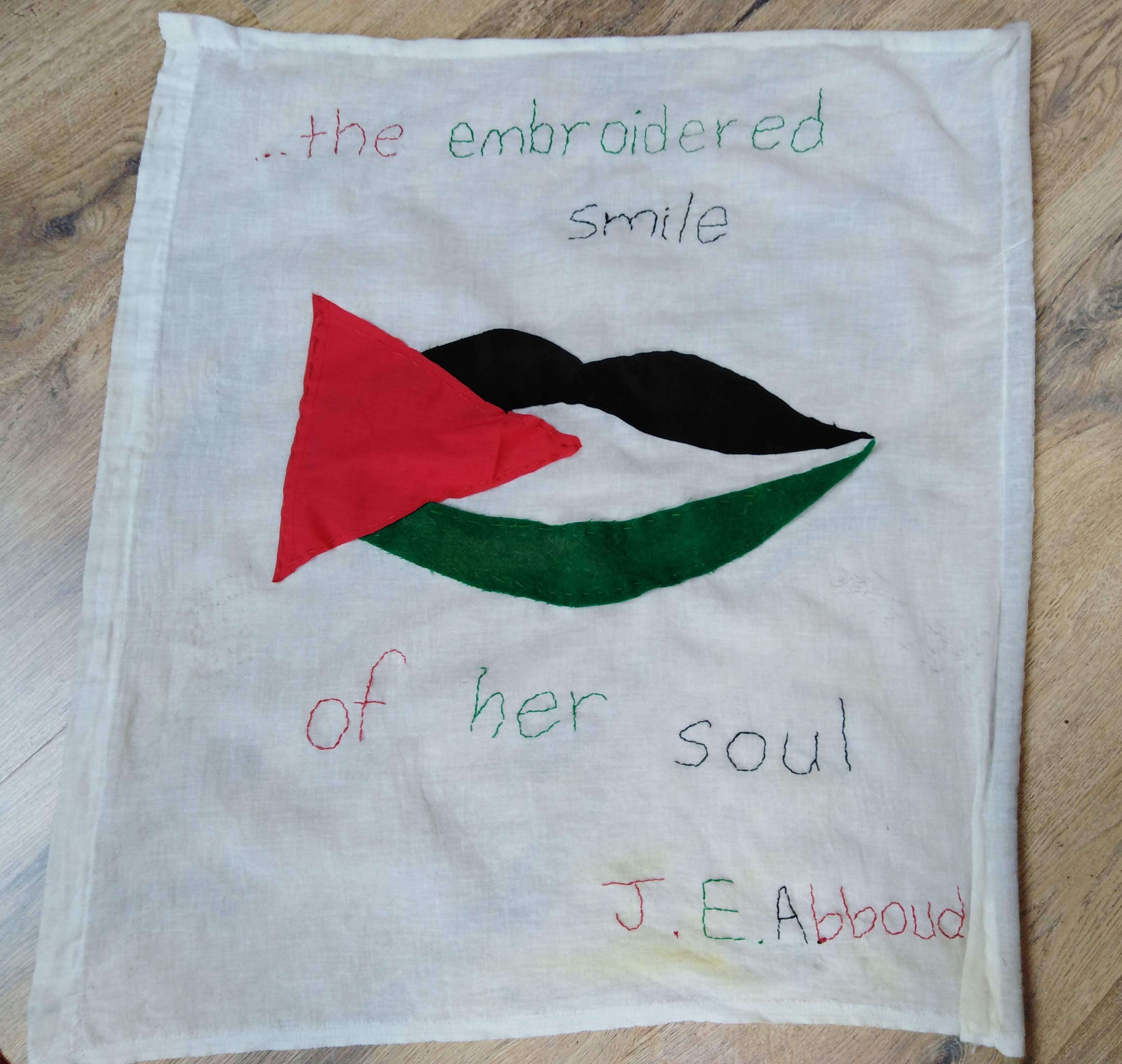
I made a flag to carry on the day.
The smile is in green, red and black, referencing the Palestinian flag
Jumana Emil Abboud
It features a quote from the artist, Jumana Emil Abboud (b. 1971, Shefa’amer) who is Palestinian. Her practice is grounded in her homeland’s cultural landscape and she draws on the traditions of folklore, myth-making and storytelling that once animated community life, particularly around times of family or community gathering, such as seed-sowing, water collection, or harvest. In her work, she uses drawing, installation, video and performance, often collaboratively, Exploring personal and collective memory and practices of sharing and re-telling as ways to address experiences of loss and longing, she highlighs the impacts of decades of dispossession and annexation. (adapted from the Campleline website where her work was shown in 2023.)
I seek out the presence of a woman; or perhaps it is she who seeks me out … I attempt to express her intimate voice. To copy the embroidered smile (or frown) of her soul; her womanhood.
Jumana Emil Abboud, from the catalogue to Story Time: an exhibition by artists living in Israel / Palestine. Institute of International Visual Arts, London: Arts Council England. Sherbany, Anna (1998).
Walking in solidarity with the people of Gaza
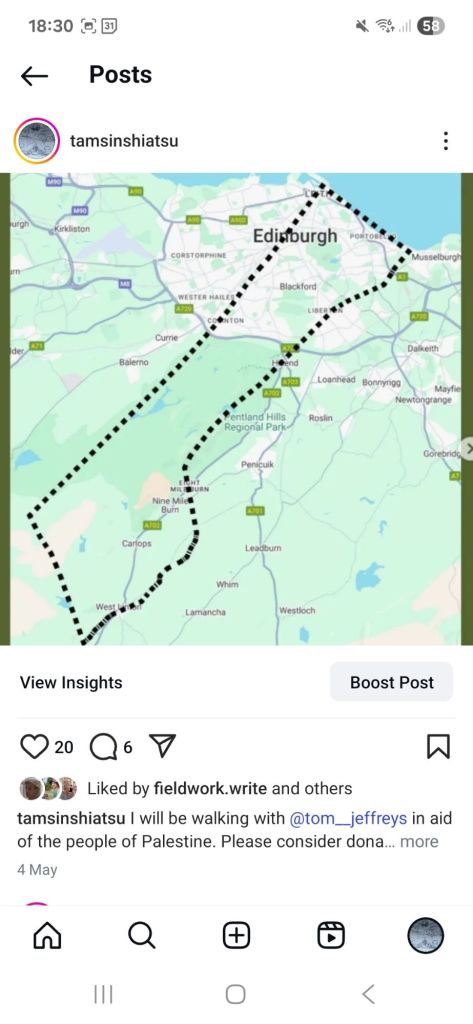
The shape of Gaza was transposed onto Edinburgh and Midlothian and a solidarity walk was planned around its outline. In total, 23 people walked at one stage or another. This was the second event, the first being in the Scottish Borders and the north of England in 2024. Then, £4000 was raised, and this time it is over £6000. Tom writes:
In placing one map on top of the other, the first thing you notice is how tiny Gaza is. 25 miles of coastline; a population of over 2 million people; bombed for nearly two years, with barely a pause for breath, and no possibility to hide or escape.
Tom Jeffreys (instagram @tom_jeffreys)
The group, Bonnyrigg
We walked and shared stories, poetry readings and more, remembering and celebrating artists and writers from Palestine (Mira Mattar, Hasib Hourani) who express what is happening on the ground, as well as in hearts, there. The event was moving and it was important to be doing it together, both for mutual support and to emphasise the impact.
Wheatley Elm Wellbeing Walk, May 10th 2025 (2-3.30pm).
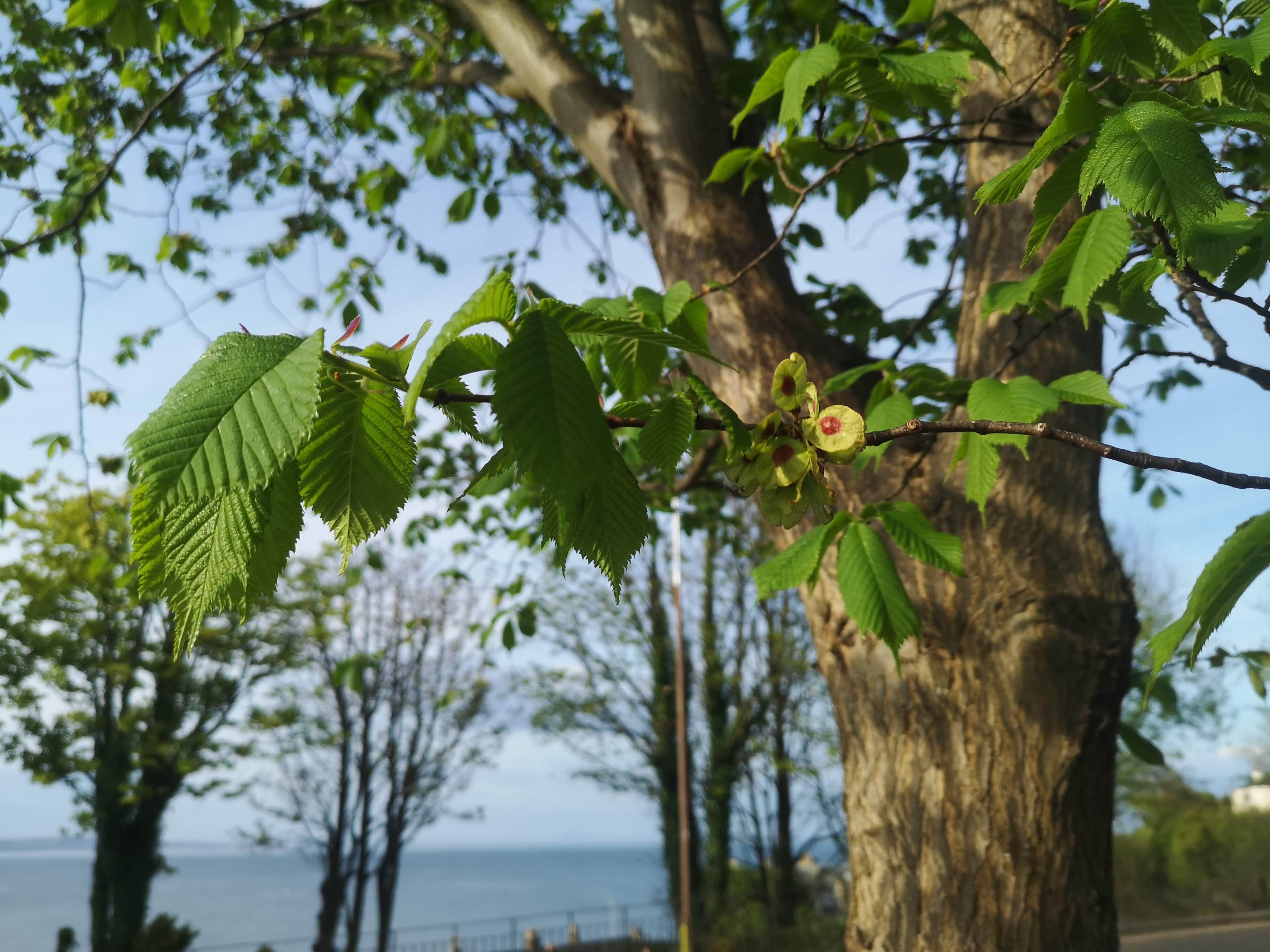
Wheatley Elm (detail)
A free community event beginning at Granton Crescent Park with some walking, art activities and gentle exercises. Part of the country-wide Urban Tree Festival, it focuses on our local trees, ones we go past everyday, and celebrates how brilliant they are.
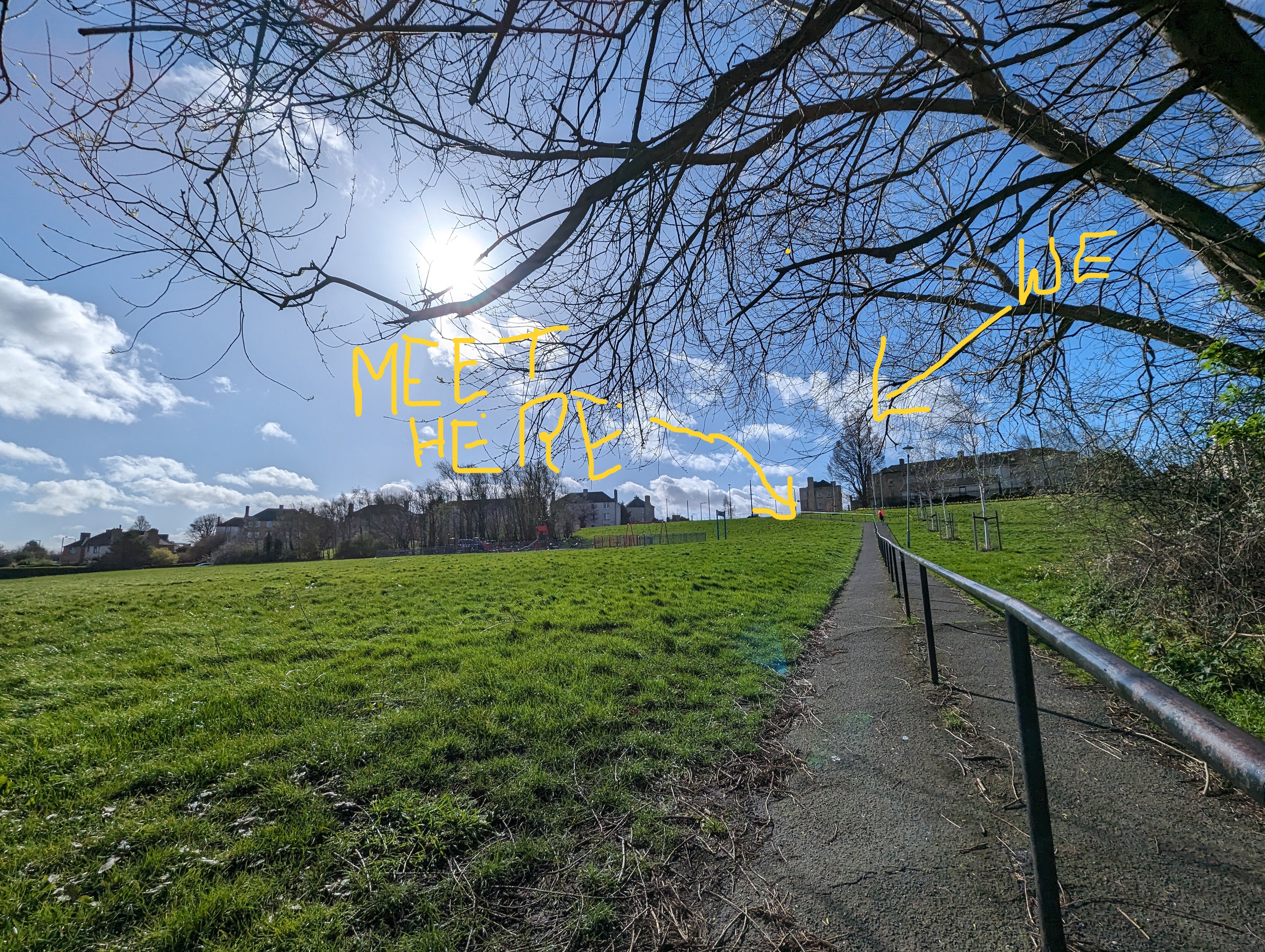
Meet here: There is a bench just inside the gate at the top of the path which runs between Granton Crescent and the bottom of Granton View and we will gather there. What3Words: ///skips.bets.aspect
Meet at Granton Crescent Park
We will visit some of the resilient and versatile Wheatley Elms in Edinburgh, find out more about this unusual species which is only found in 2 places in Britain, Edinburgh being one of them, and identify how we can benefit our sense of wellbeing besides.
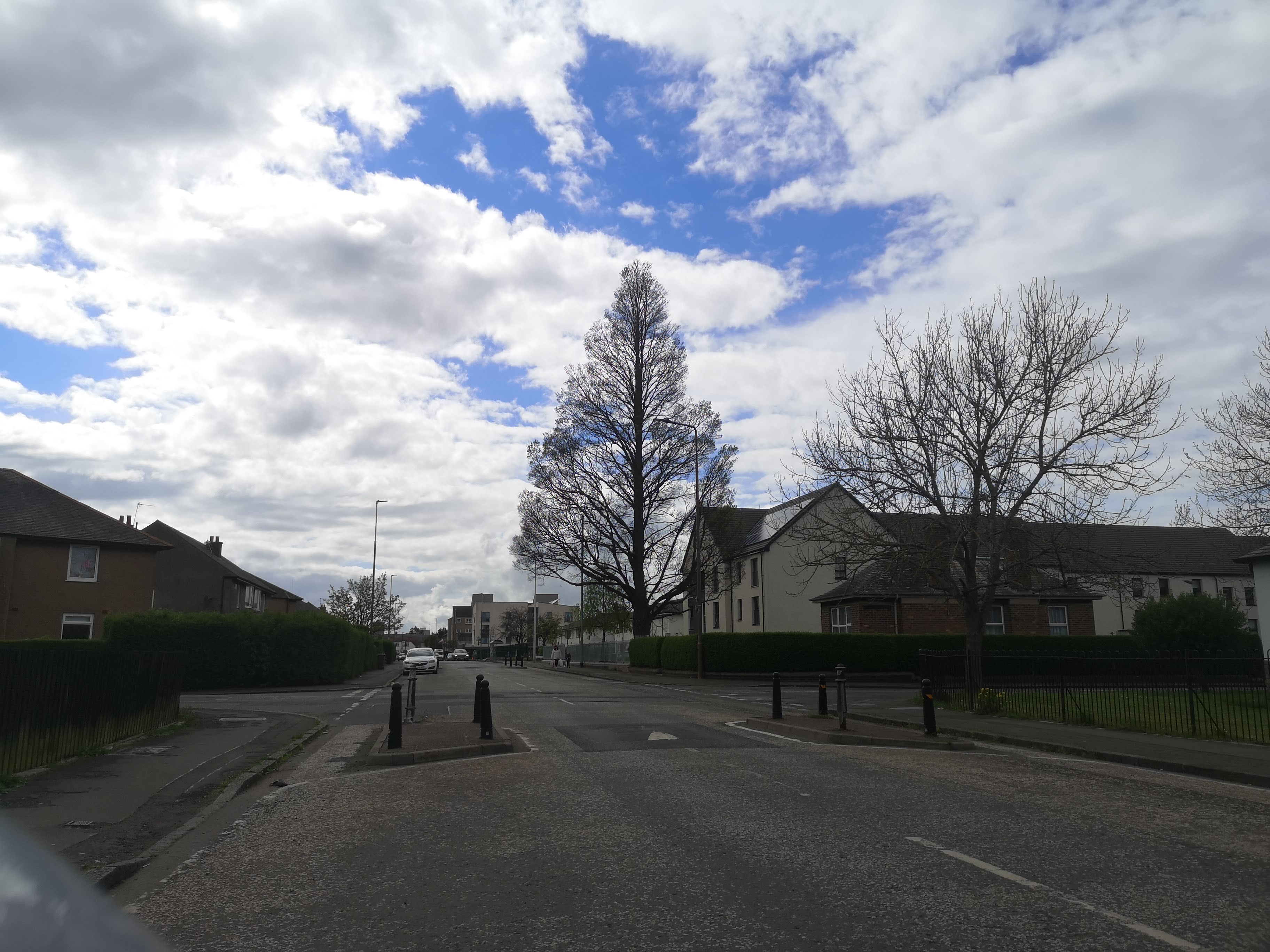
A Granton Wheatley Elm
Walking, well-being ‘exercises’, art, talking and learning about the Wheatley Elm trees in the city.
All welcome – adults, children and dogs, prams and wheelchairs. Bring water and wear sensible footwear. Chocolate provided.
Contact me if you have questions. tamsinlgrainger@gmail.com

 Walking without a donkey