I’m championing Slow Travel, blogging about going overland on foot, by train, bus, Bla Bla Car, or ferry. I began in 2016 by taking a boat to Santander from Portsmouth across the Bay of Biscay, and walking around Spain, including from Pamplona to Santiago de Compostella (most of the Camino Frances) which took 5 weeks (approx. 410 miles / 660 kms). Then in 2023, I decided ‘no more aeroplanes for me’.
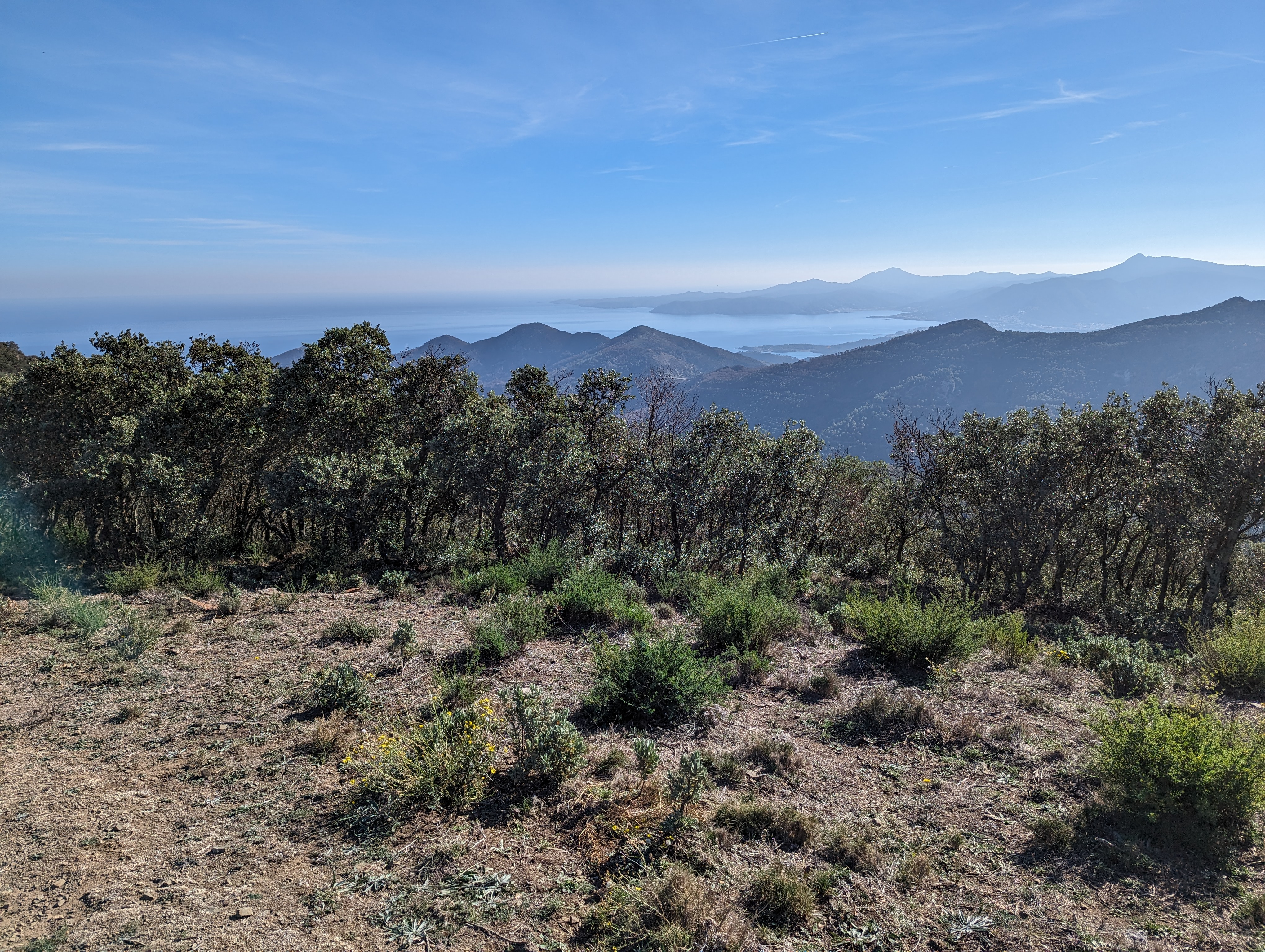
Pyrenees on the Walter Benjamin Trail 2023
There are several reasons why I’m doing this: the most important two are to avoid producing carbon emissions when flying, and the pleasure I get from being able to feel the ground under me and see the places I’m passing through. Ideally, I would walk, and I’ve done a lot of that, but I generally move between cities on wheels on a method of transport where I’m sharing with other people. I’m concerned about global warming and climate change, and would prefer not to be responsible for making it any worse, if possible.
This type of journey is slower. It takes more preparation time, and is often more expensive too, which means that I must incorporate the travel days into my itinerary rather than adding them on to the beginning and end of a holiday. I have chosen to make this a part of my life and art, and I know how lucky I am, privileged, to be able to do that. I stop off whenever I get an invitation to give Shiatsu, exchanging with people as I go, which means that I often meander instead of going in a straight line.
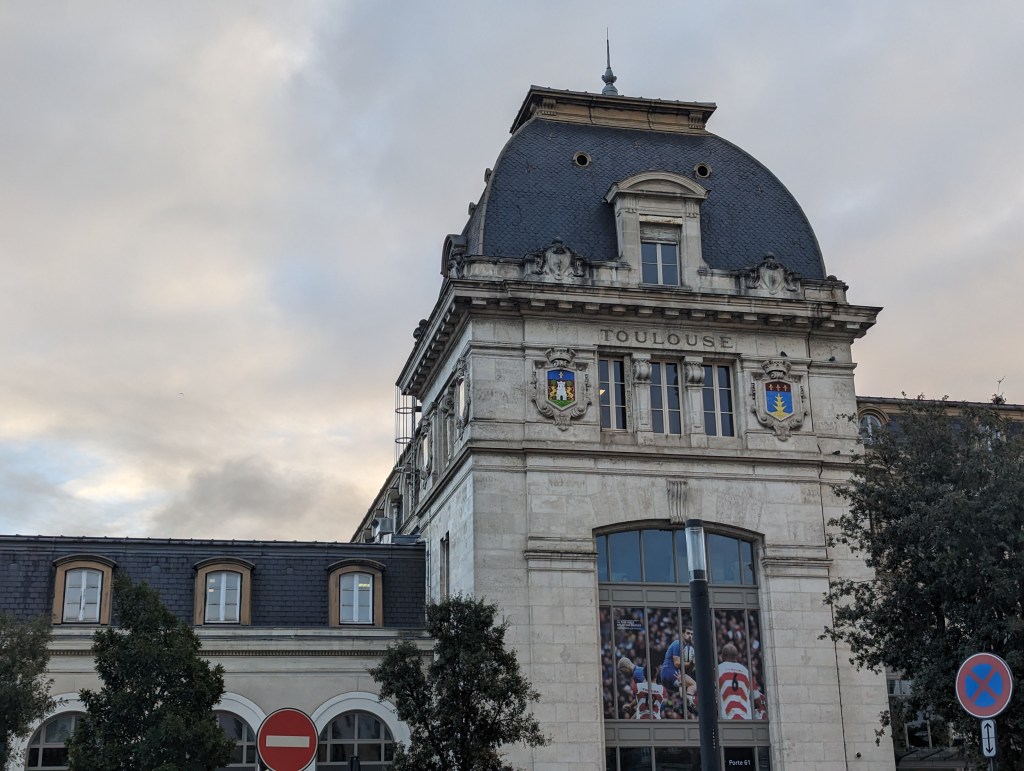
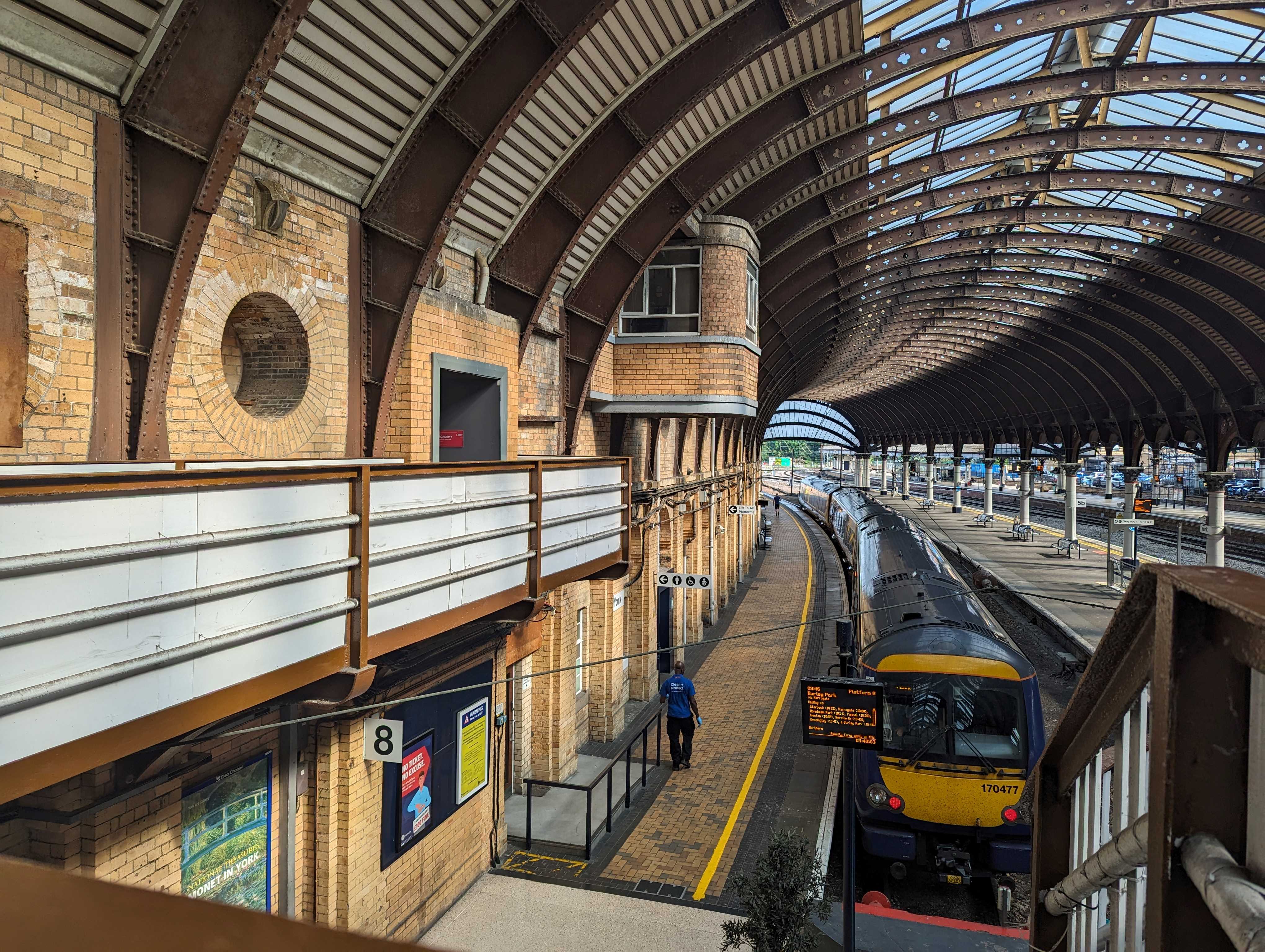
Toulouse-Matabiau train station between Paris and Girona
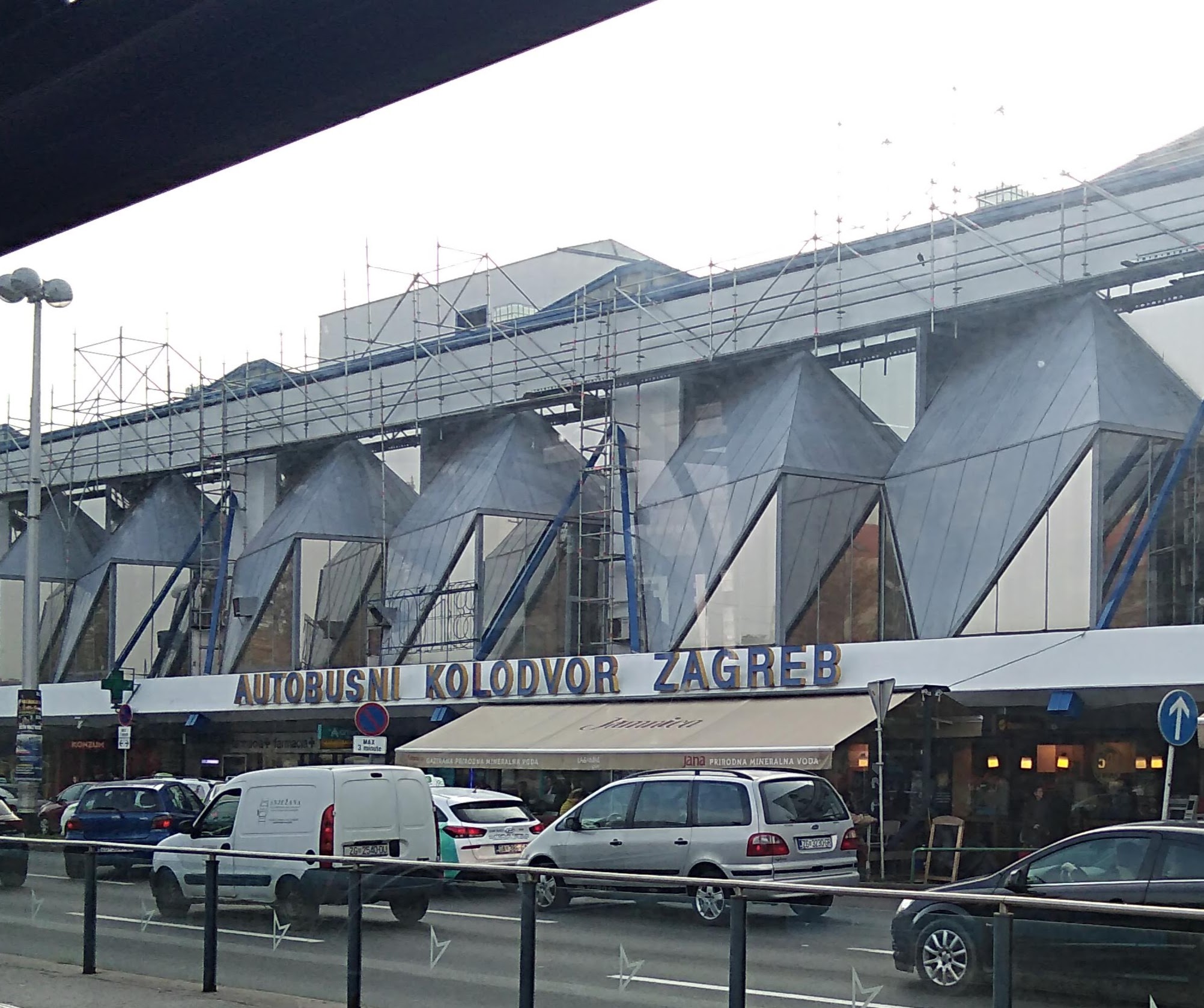
Between 2016 and early 2023, I did fly (although I often walked from the airport to where I was staying eg in Dublin), so you will find that info in the older blogs (see below, when I went to Croatia, for example. I flew from Paris to Milan and took buses from there to Zagreb.)
In early 2023, I made a vow not to fly unless it’s an emergency, not for pleasure nor work, and so I made my expeditions back and forth between Scotland and Greece overland. The first took 10 days, from Athens to Edinburgh, because I broke my journey many times to give Shiatsu and meet friends and family. I took the overnight bus, first to Budapest via Belgrade, then I travelled on to Berlin and The Hague (also by bus), Hook of Holland (tram), Harwich (ferry), London (train), and finally home (train).
I announced my potential route in advance on social media, asking if anyone wanted to do a Shiatsu-hospitality swap. The responses and invitations that I received resulted in an elongated trip; I went off on tangents and saw places I would not have visited otherwise. It meant that I didn’t get to Bratislava or Prague as I’d thought I might, but this collaborative approach to planning allowed for the unexpected, and was a way of letting go of a set itinerary. Along the way I made new friendships and re-newed others, gave gentle, therapeutic touch, and much more besides.
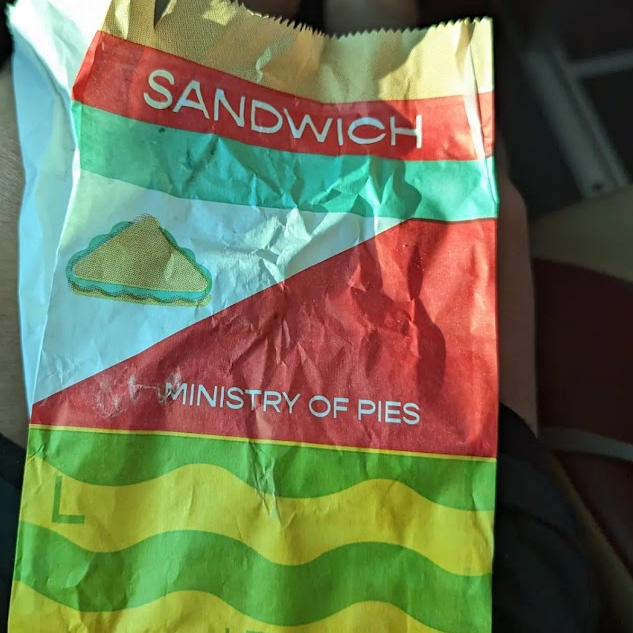
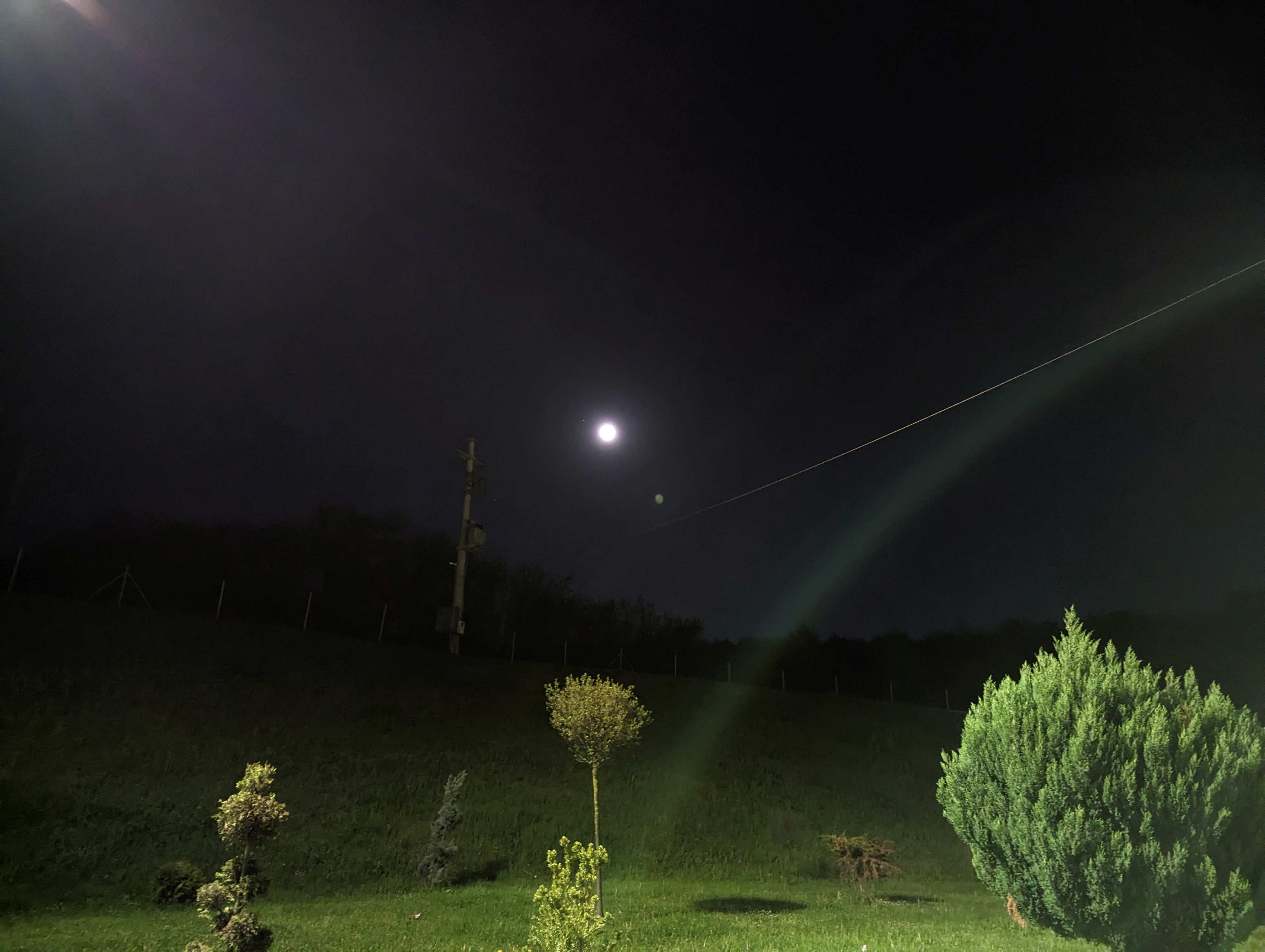
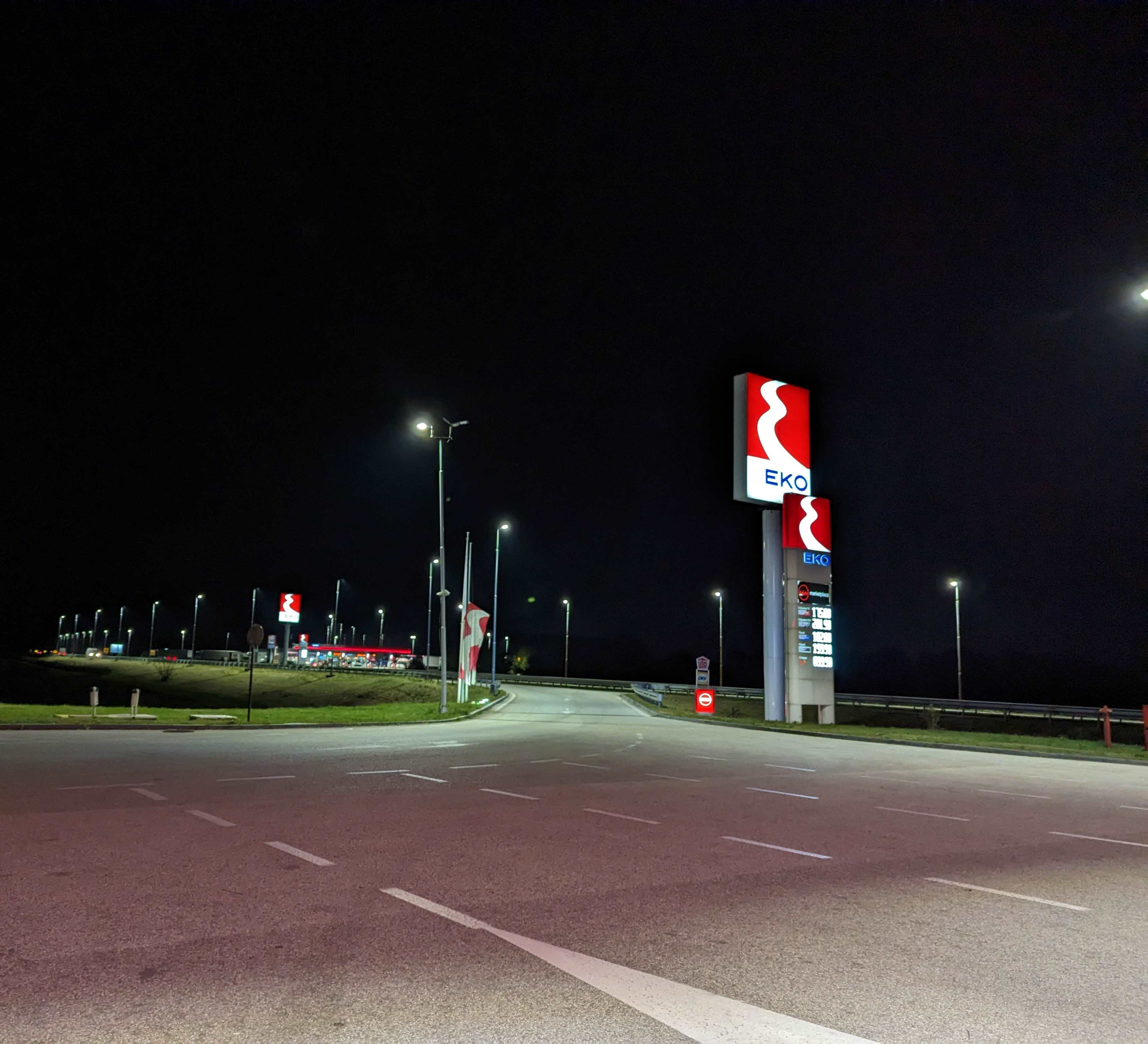
Travelling overland is so very different from flying: These were journeys of paths and mountains which were seen, but not walked. Of borders and boundaries, and The Ministry of Pies. Of the full moon at night and in the early morning. Of towers and rivers – fast glimpsed through windows. They were about fresh air in car parks after miles on the road, a 3am toilet break, new currencies each time I woke, and ‘thank you’s in different languages. Of waiting at yet another border where I whiled away time reading Margaret Forster’s biography of Elizabeth Barrett Browning in the sun (borrowed from one of those mini-book-swap boxes that can be found in public parks all over Europe and the UK, and returned at the next one, in the next city). Of T’ai chi and walking under trees dripping with rain as passports were checked, and of motorways and forests and wheels on solid ground.
Athens to Budapest
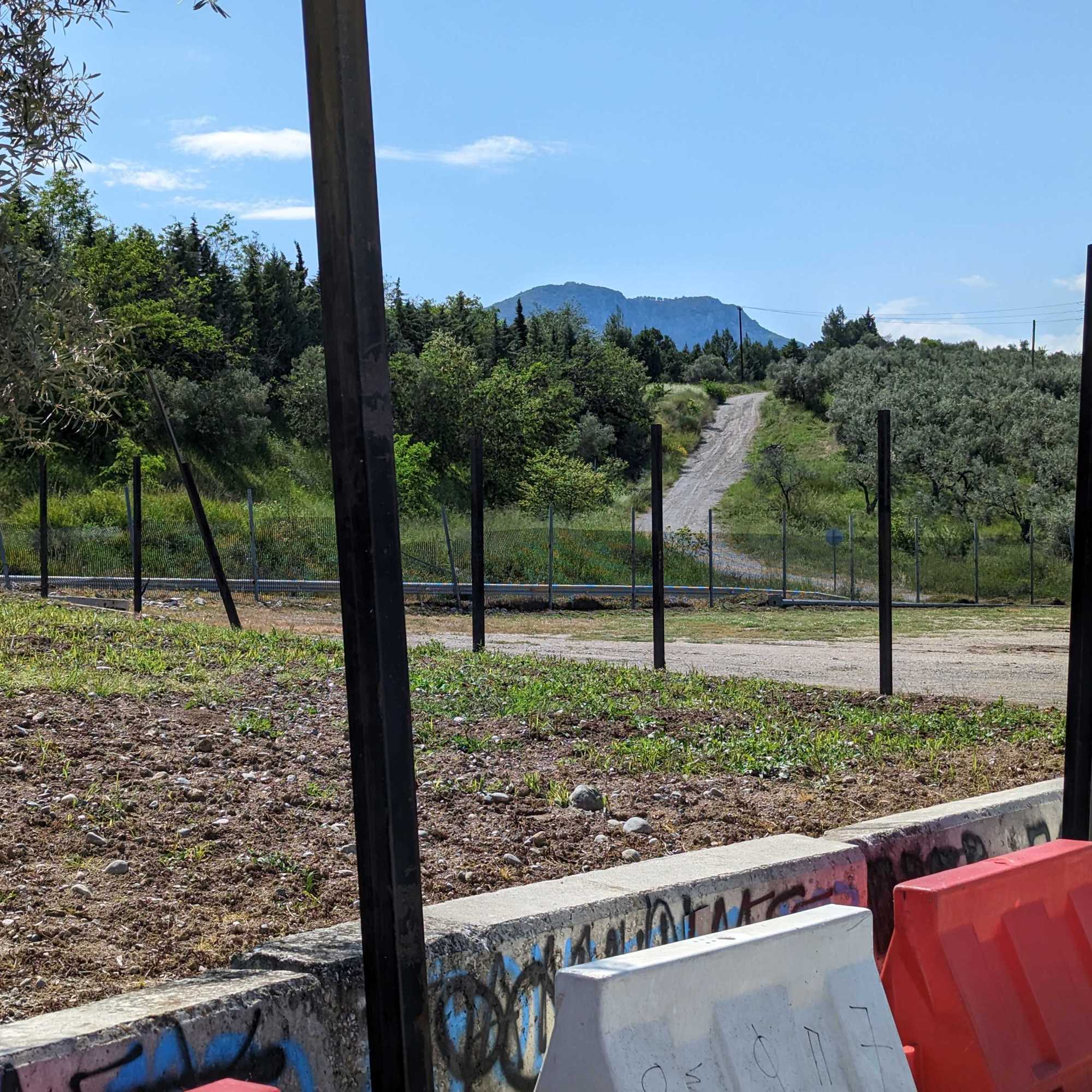
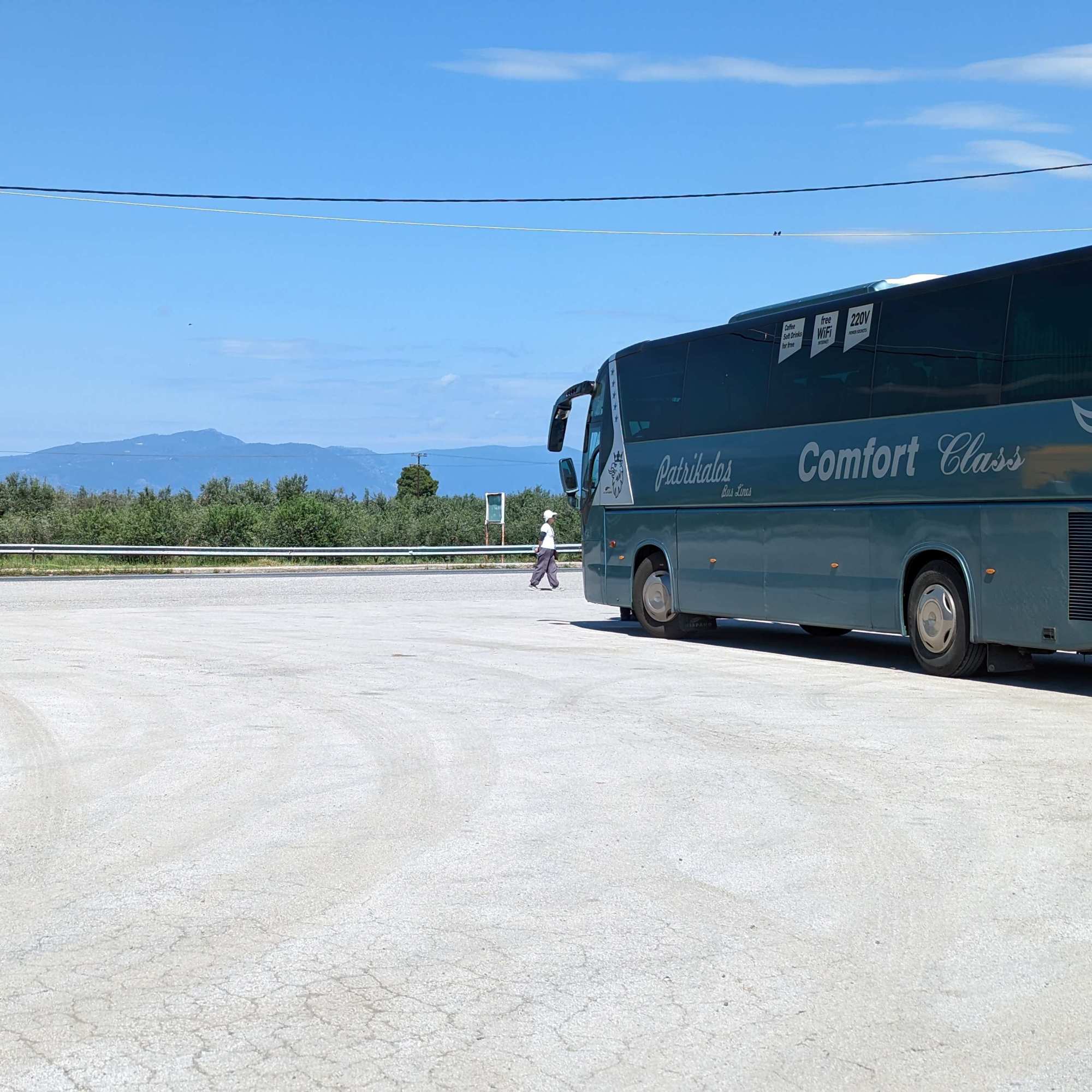
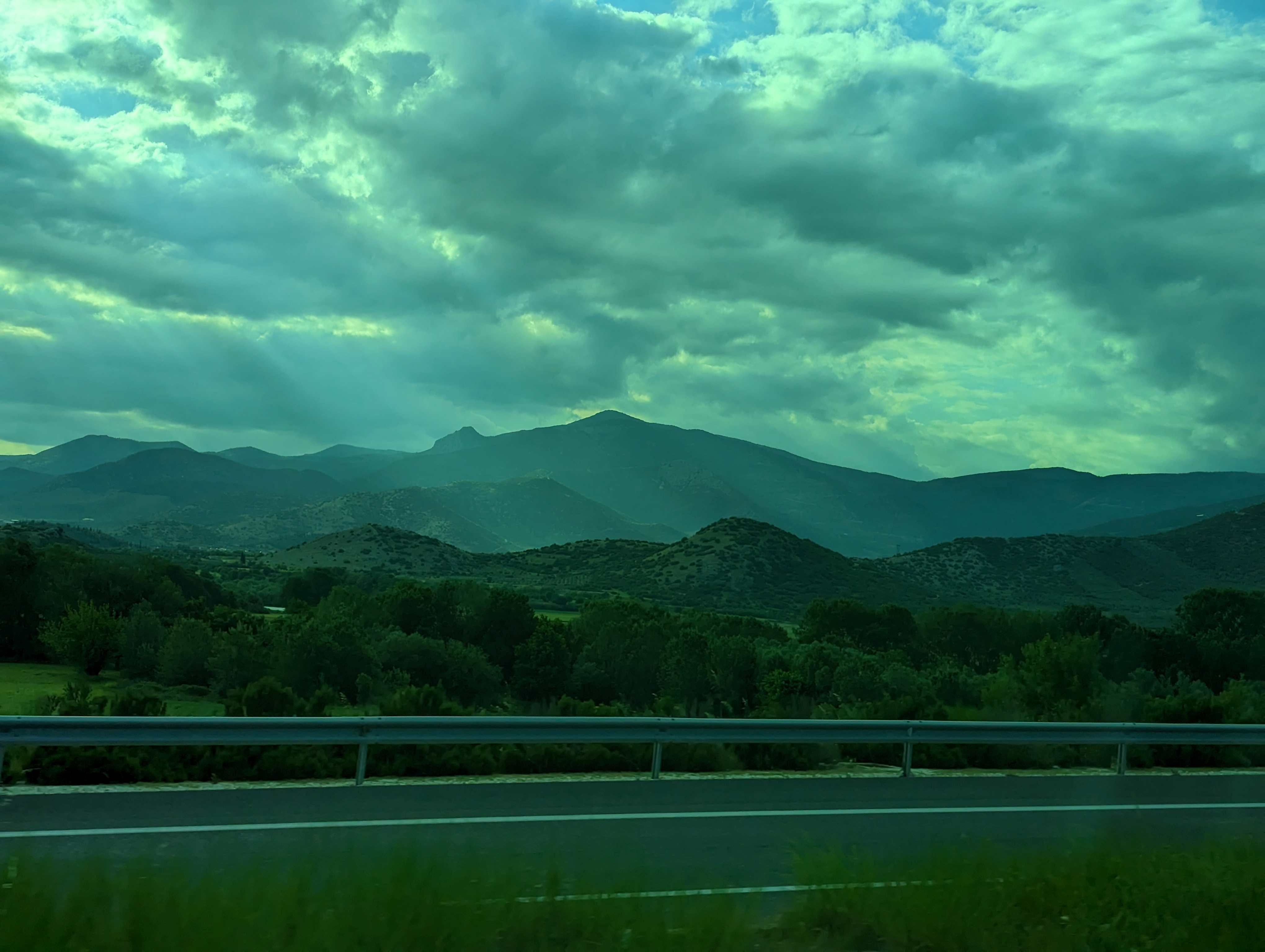
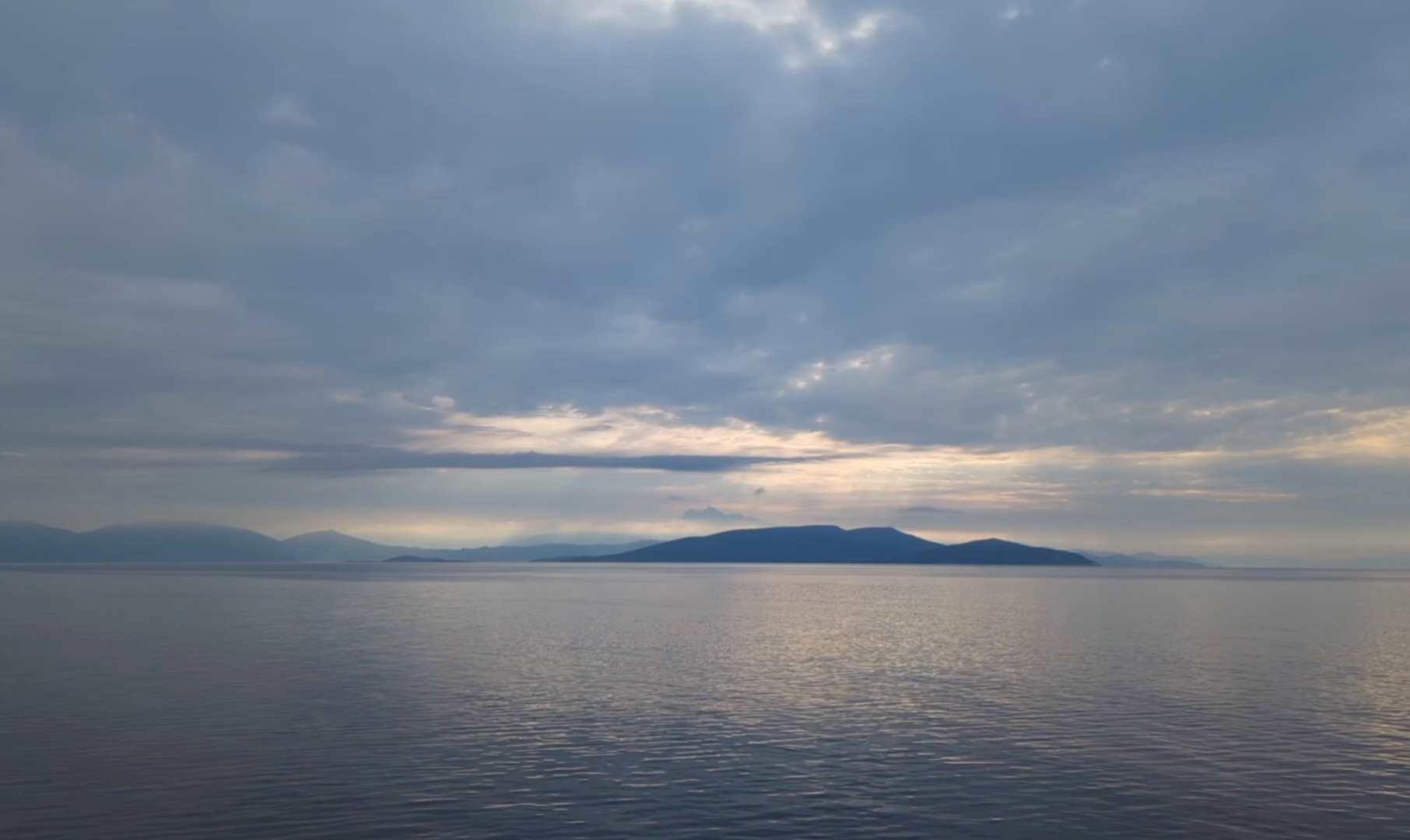
I left Athens at 12.30pm, went through Kifisia around 1.30pm, and the bus made toilet stops at Agios Konstantinos at 3.40pm, and passed by Mount Ossa (south of Kozani) around 6.15pm.
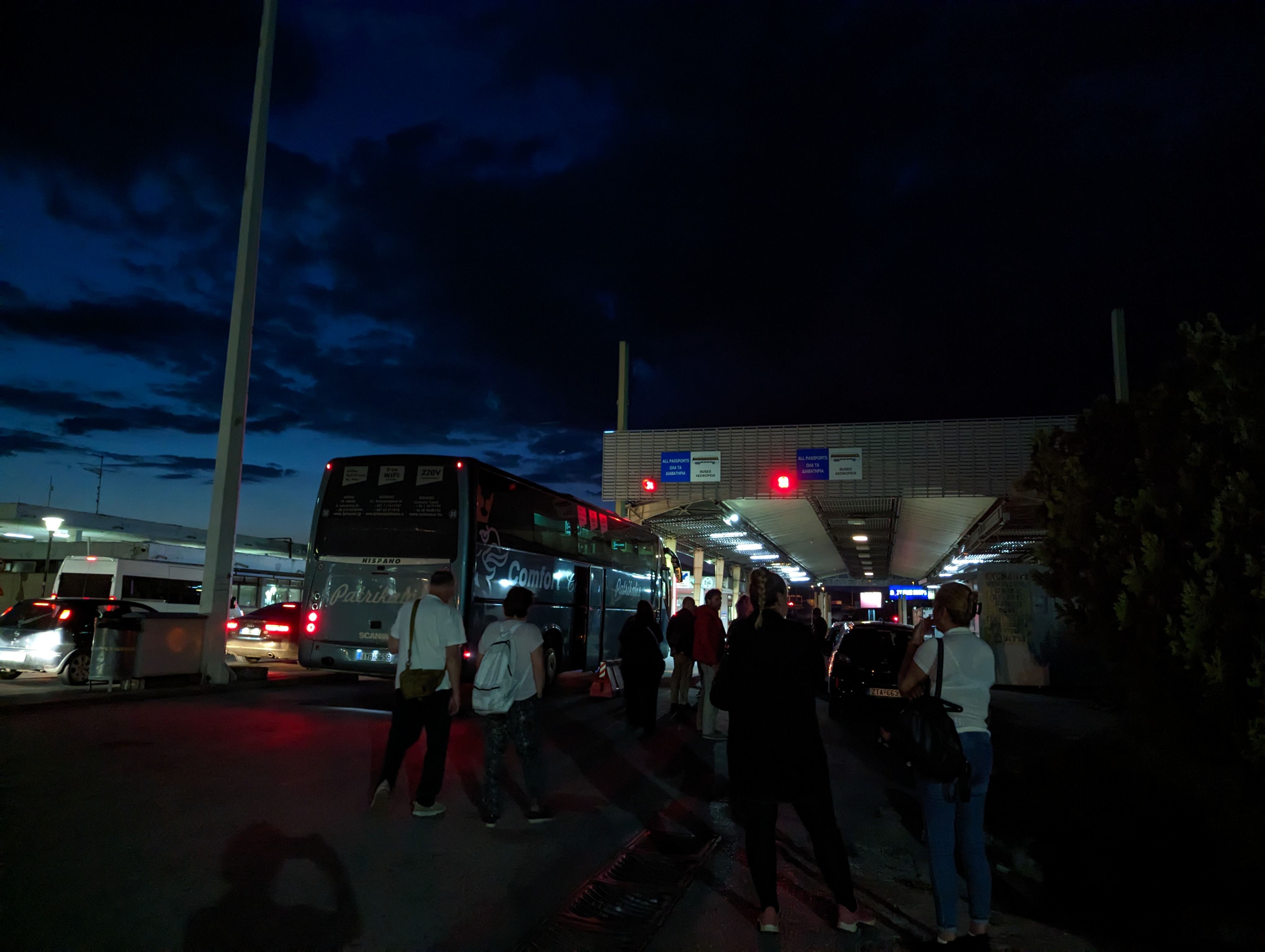
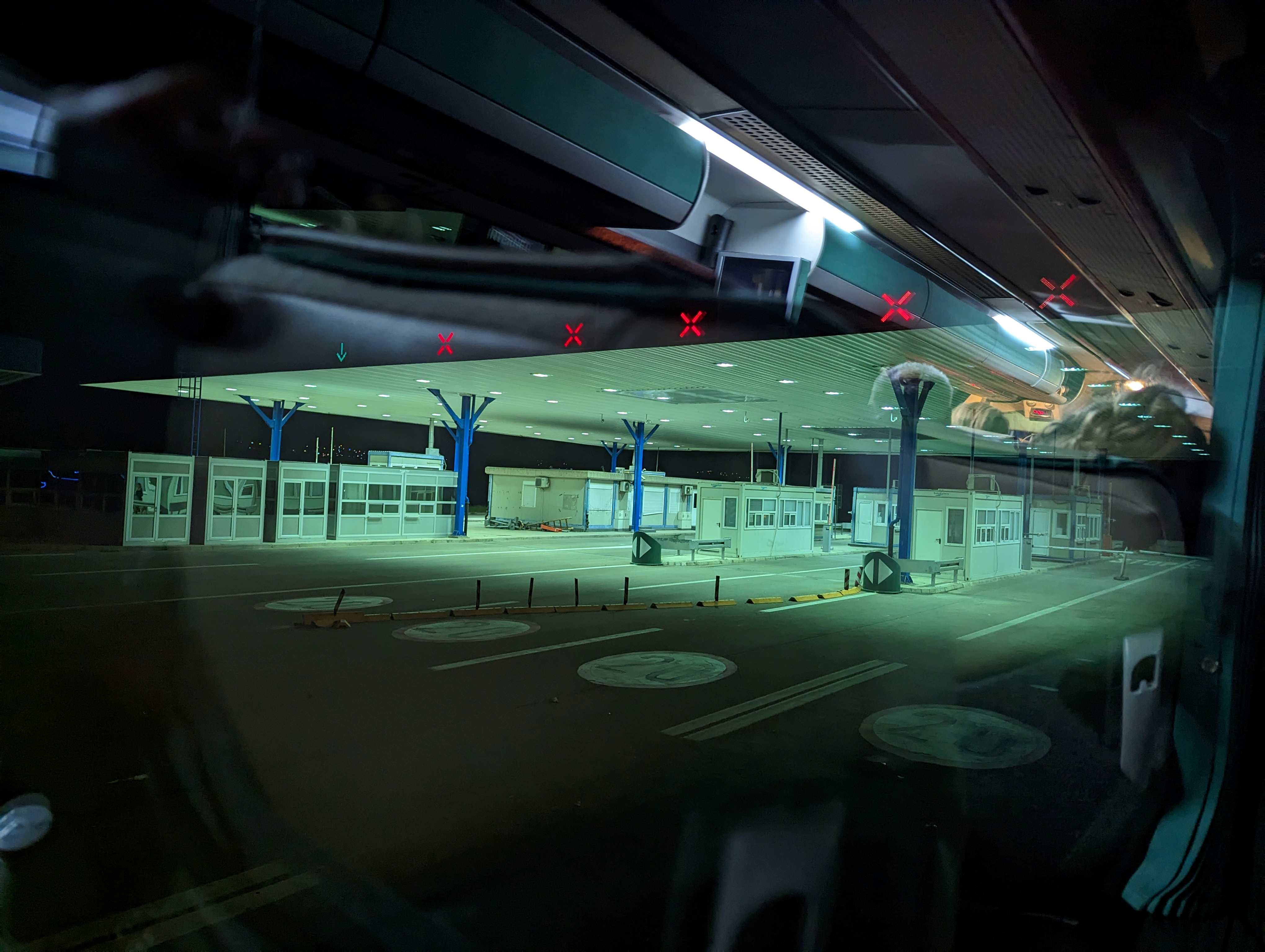
Mount Ossa in the distanceThe Greek – North Macedonian border (Tsoiliades) 8.15pmThe North Macedonia – Serbian border (Preševo) 11.45pmBorovac, Serbia 12.30am
Even nearer the North Macedonian – Serbian border at 3.30am
Tips: take a rolled-up sleeping bag and a blow-up pillow, stock up on food and water before you get on, don’t chose a seat near the toilet (if you have a choice), and always get out to stretch your legs and breathe deeply when possible
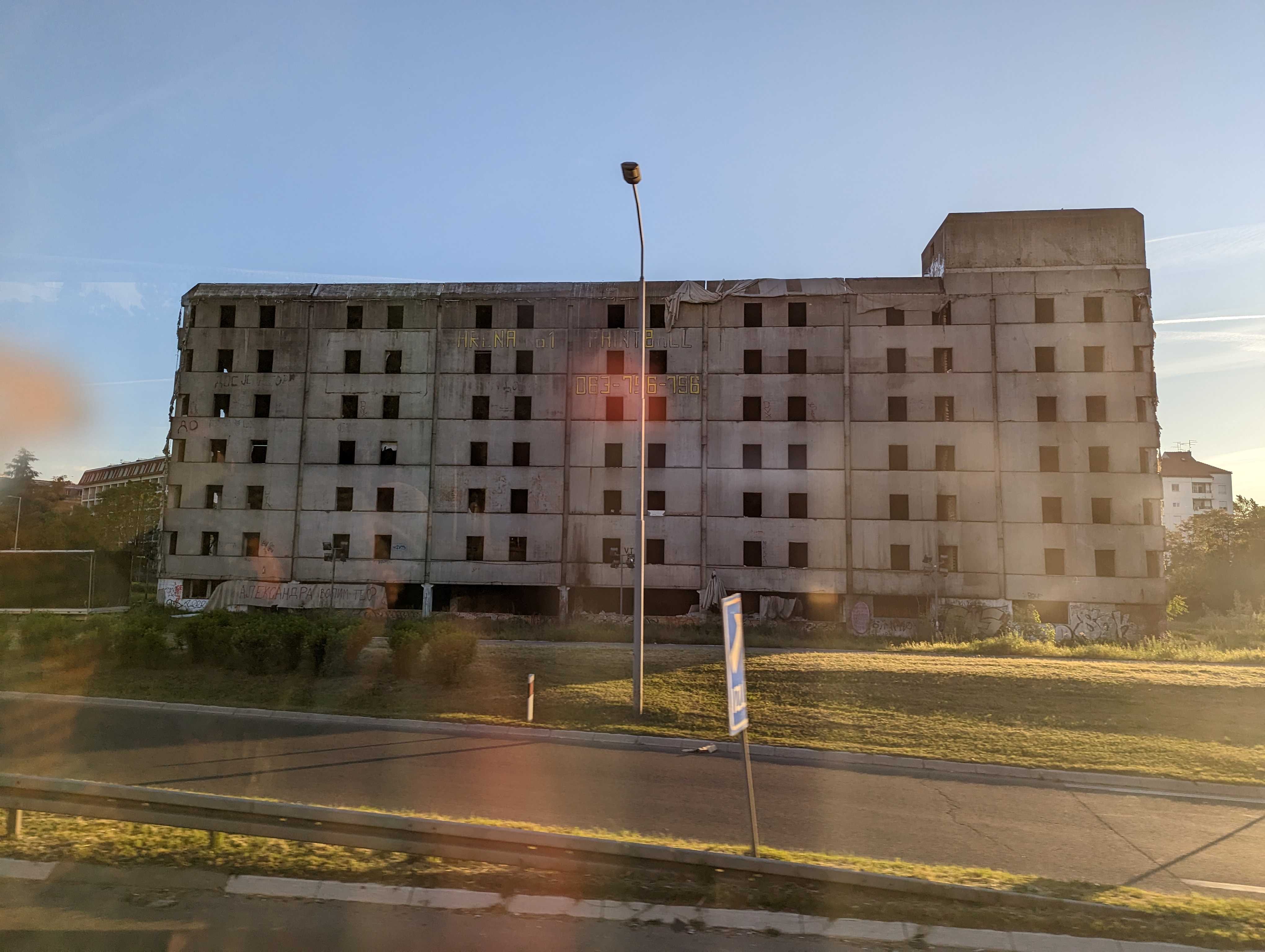
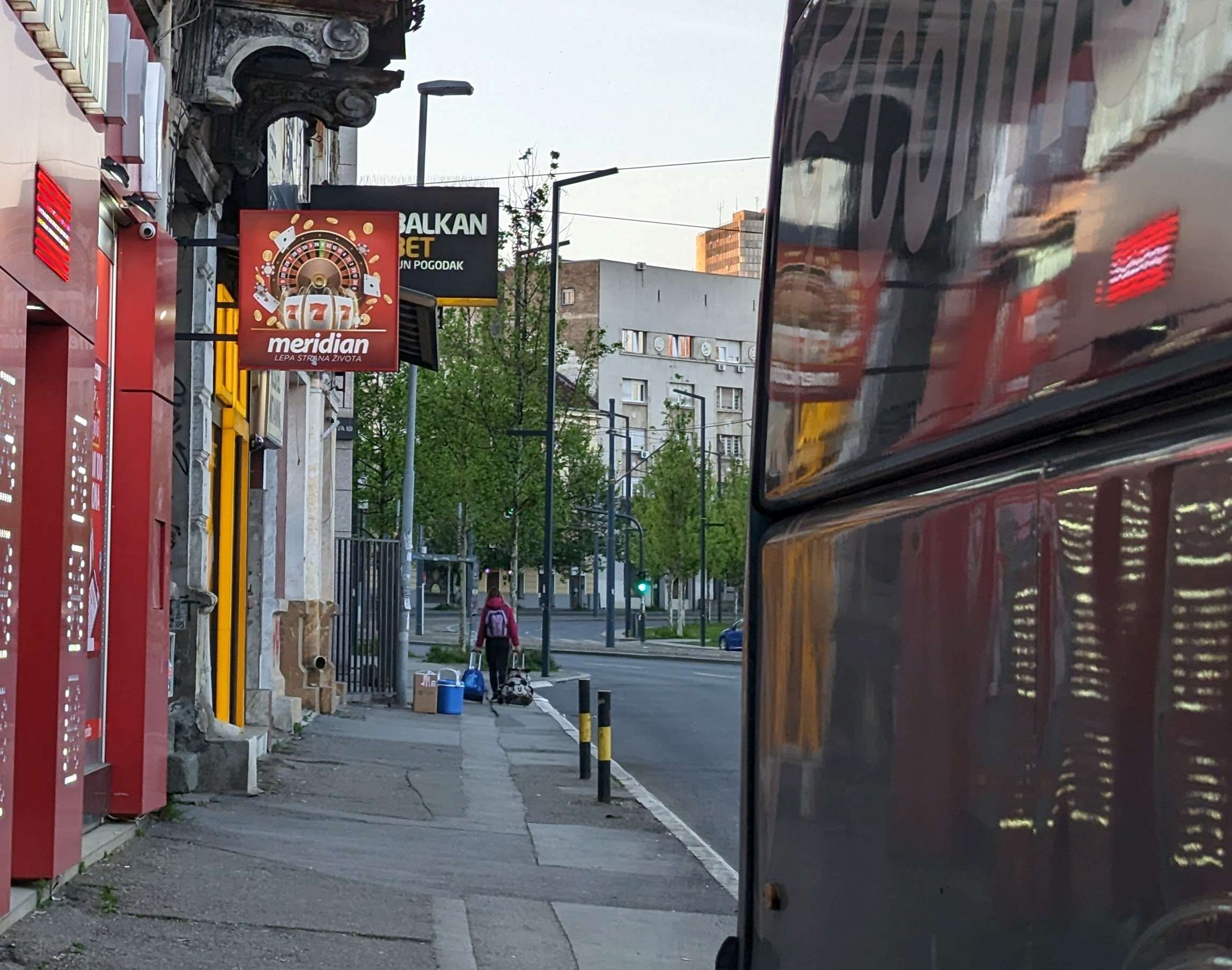
By 5.30am, we were in Belgrade.
Belgrade to Budapest: six hours
I decided that I must be ‘in the right place’ as our Belgrade stop where people and many boxes left the bus and boarded was called ‘Meridian’ (a key word in Shiatsu denoting the channels through which we image chi flows)
The worst thing about the journey was the smoking – both driver and passengers. I asked them if it was possible to stop and, reluctantly, there was a short hiaitus for the air to clear. It’s not always like this.
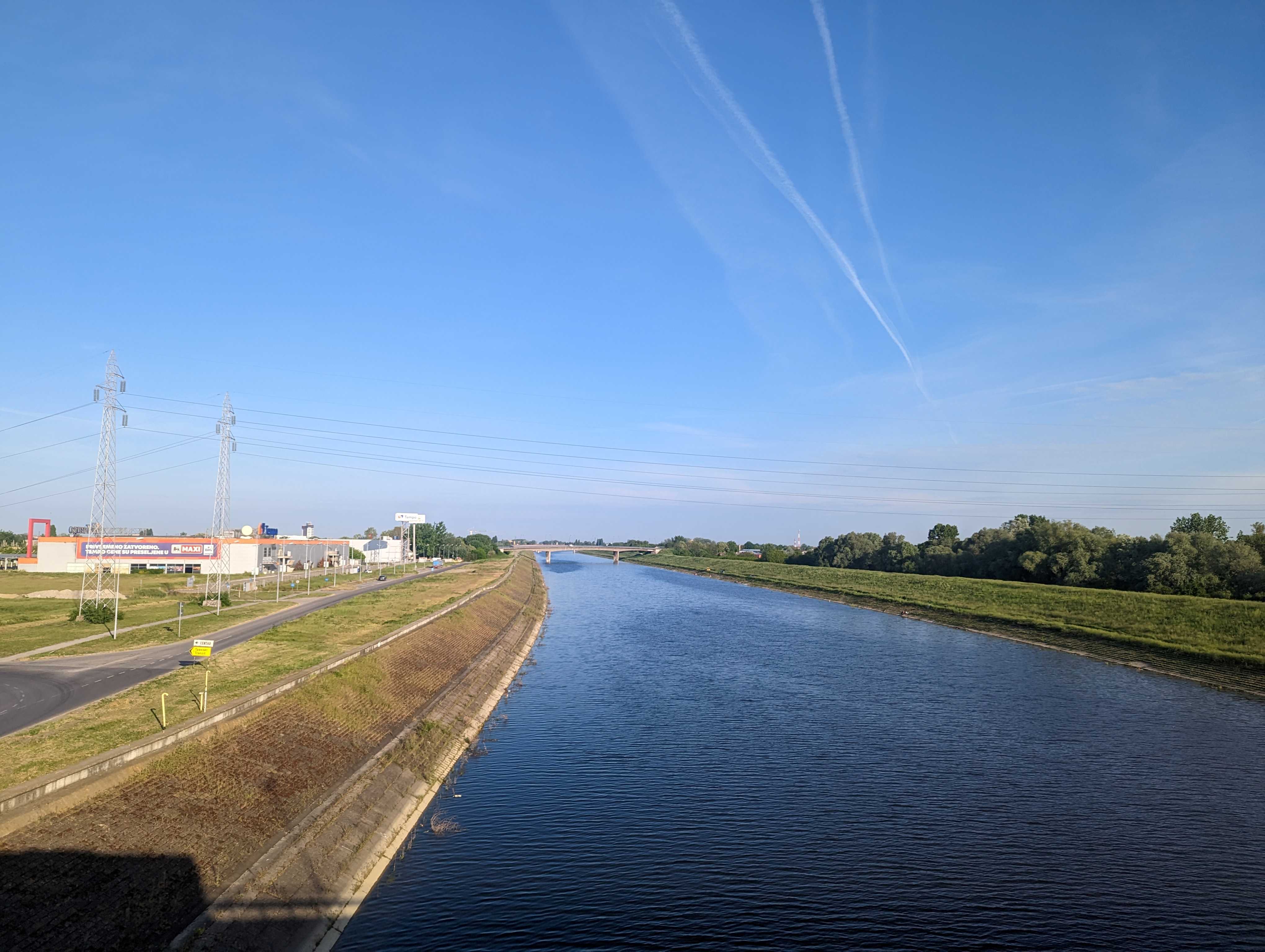
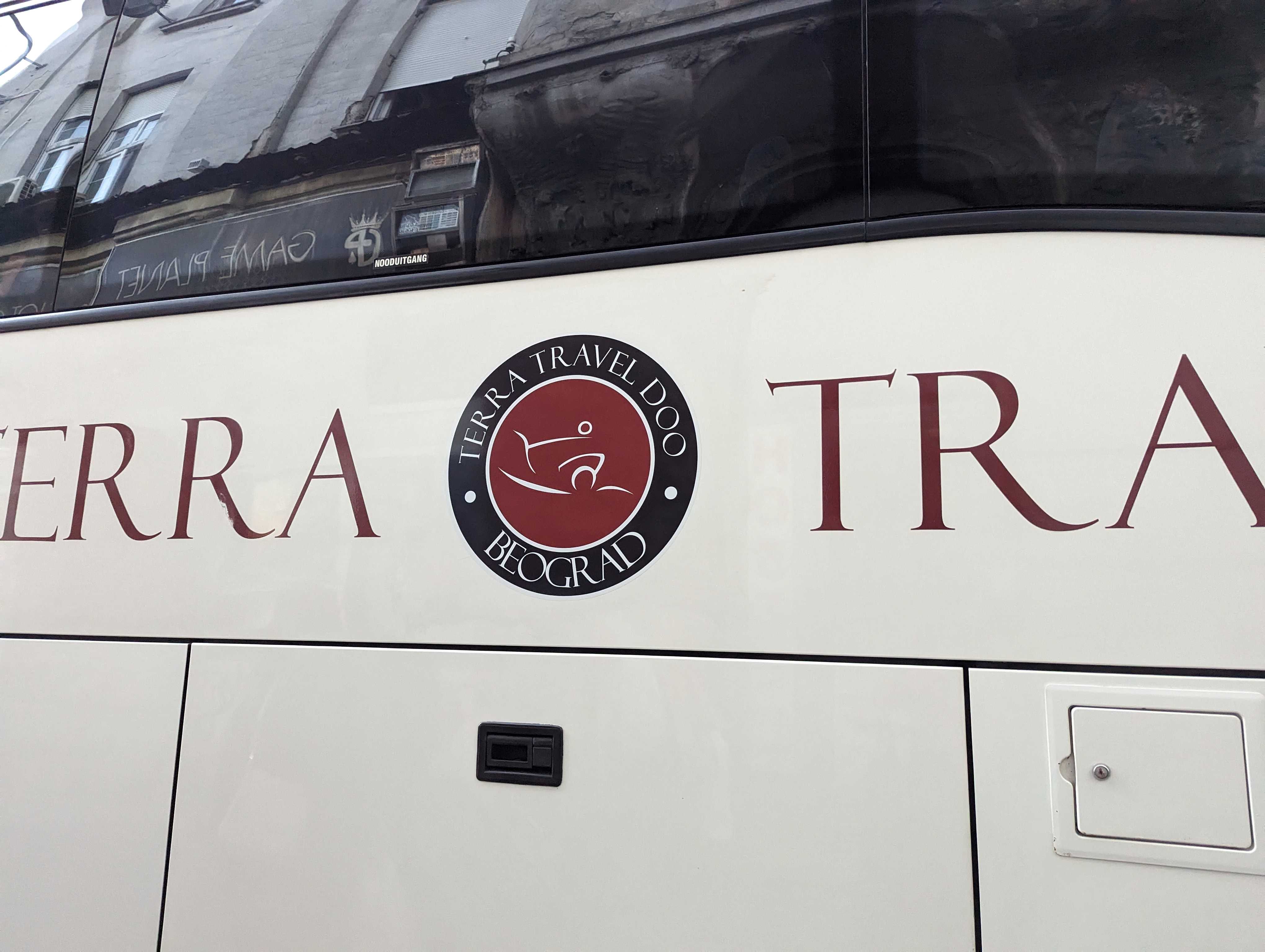
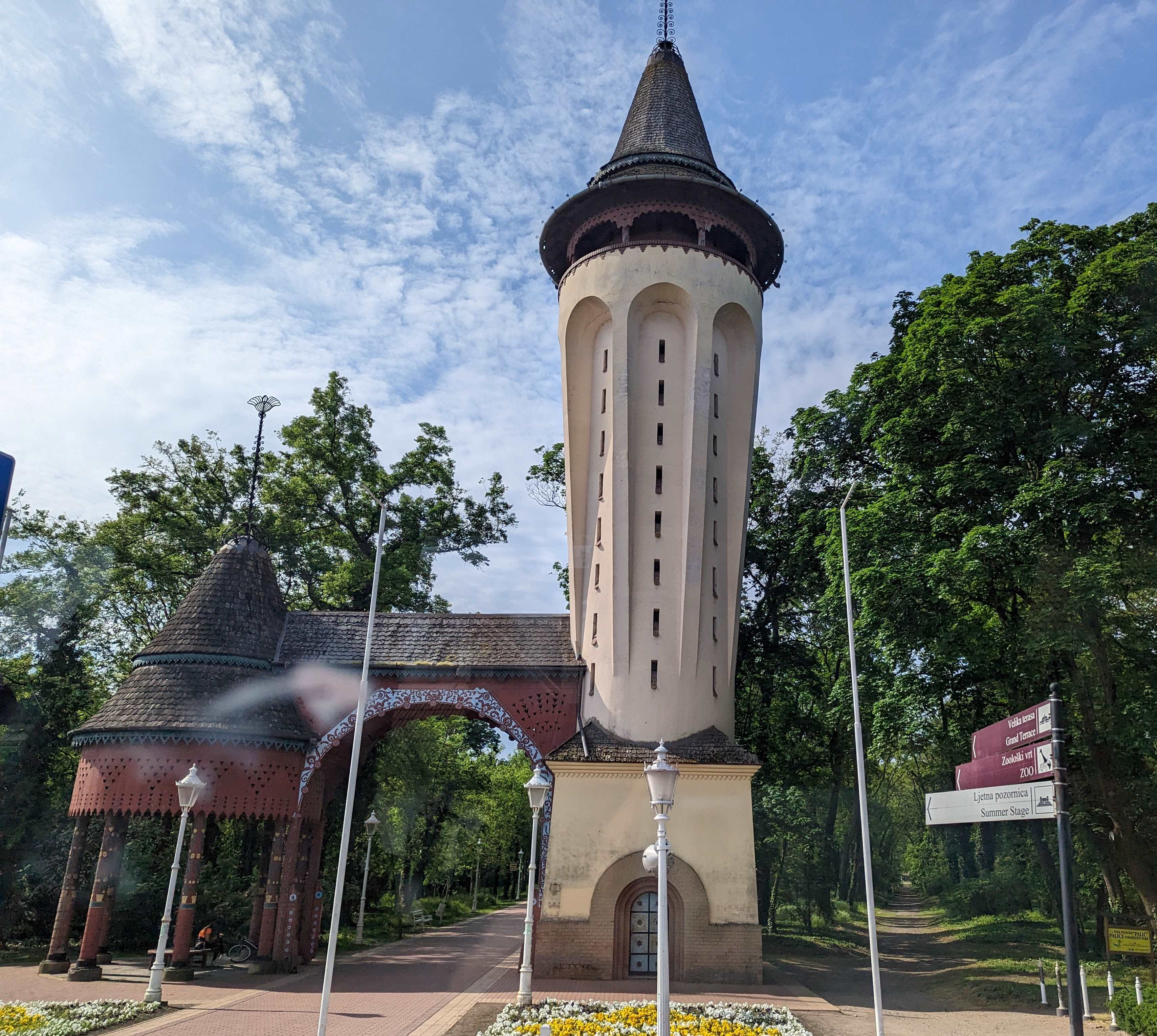
River Danube, Novi Sad, SerbiaTerra Travel bus companySupska, SerbiaThrough Palić, Serbia at 9.30am
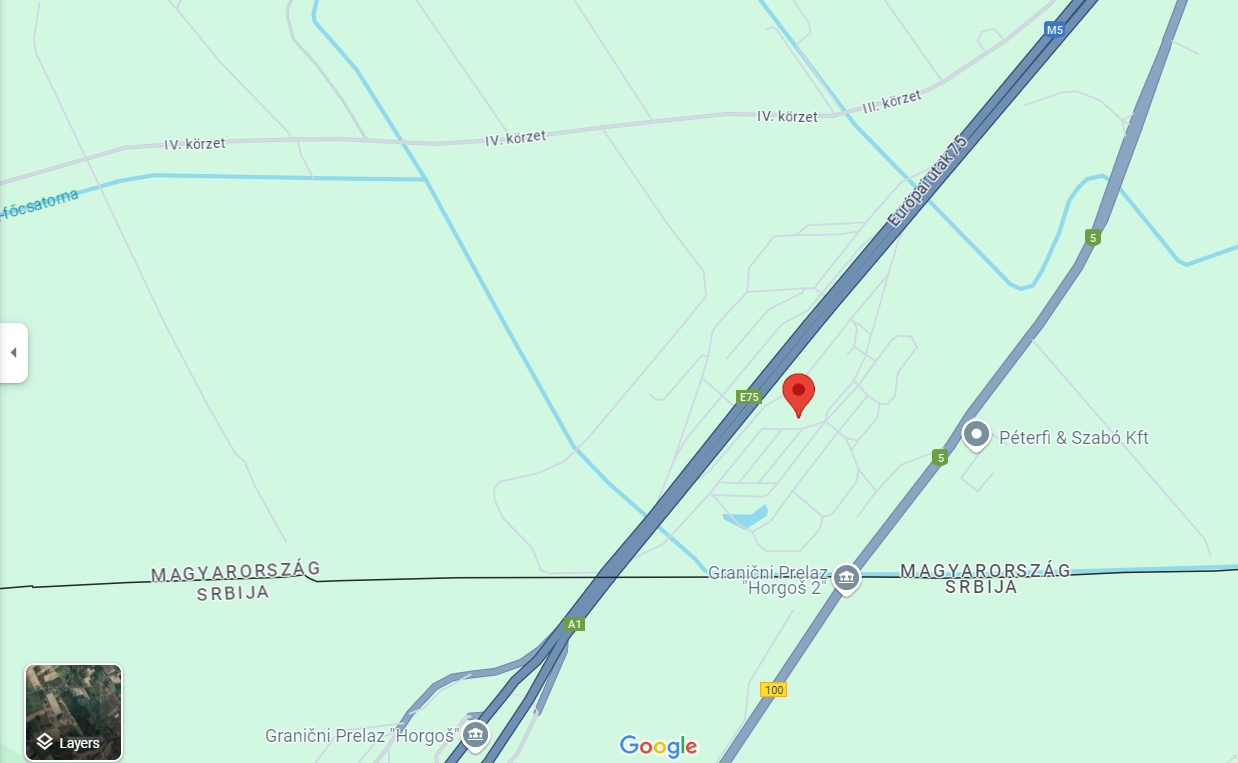
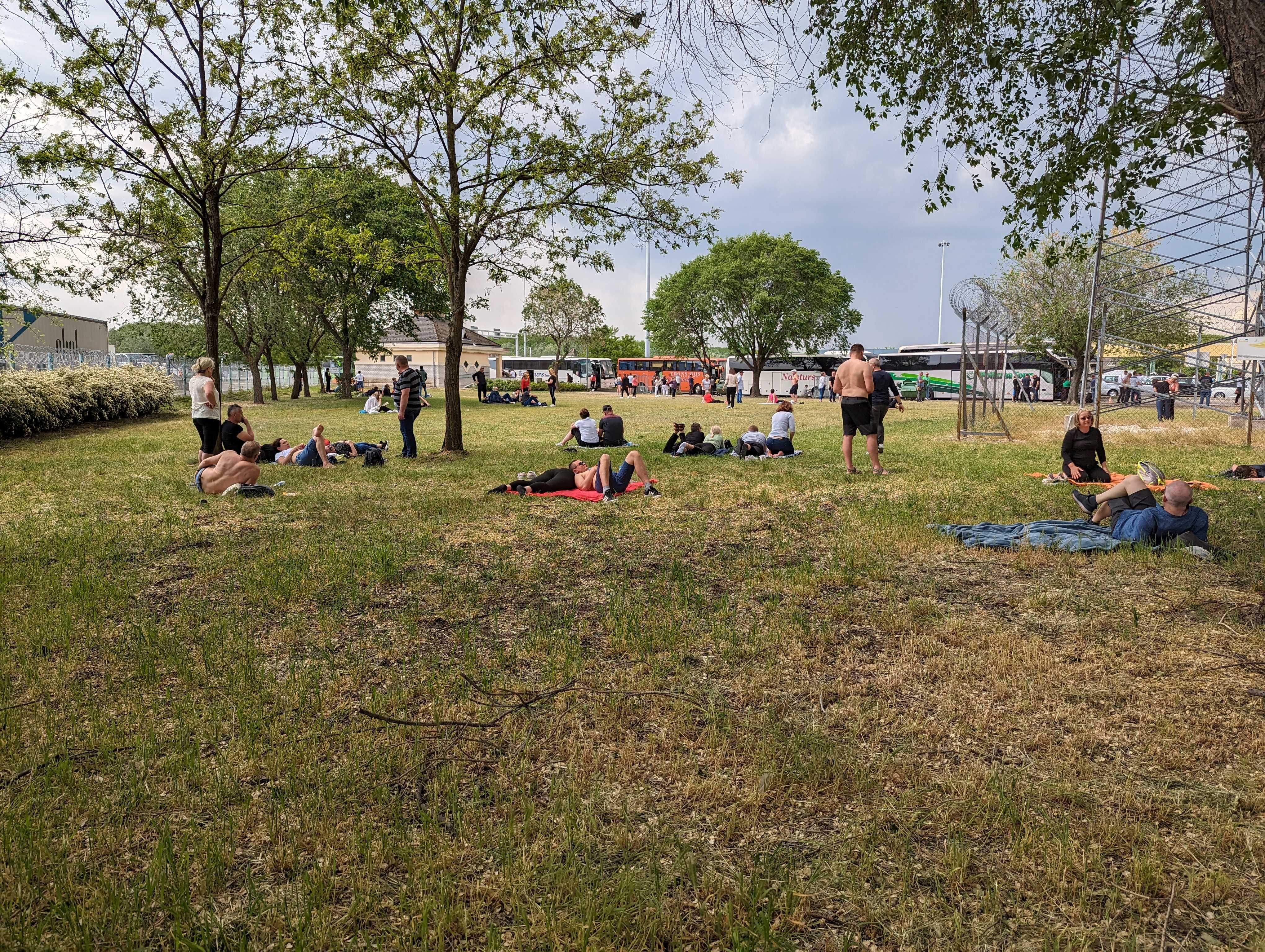
At Röszke, we waited at the border crossing from Serbia to Hungary, one of the 29 Schengan countries, arriving at 10am and staying until 3pm when we finally got moving again. Luckily the sun was shining and we all spread out. I was the only person doing T’ai chi under the trees (it felt good after hours of sitting on a coach), but not the only one meditating.
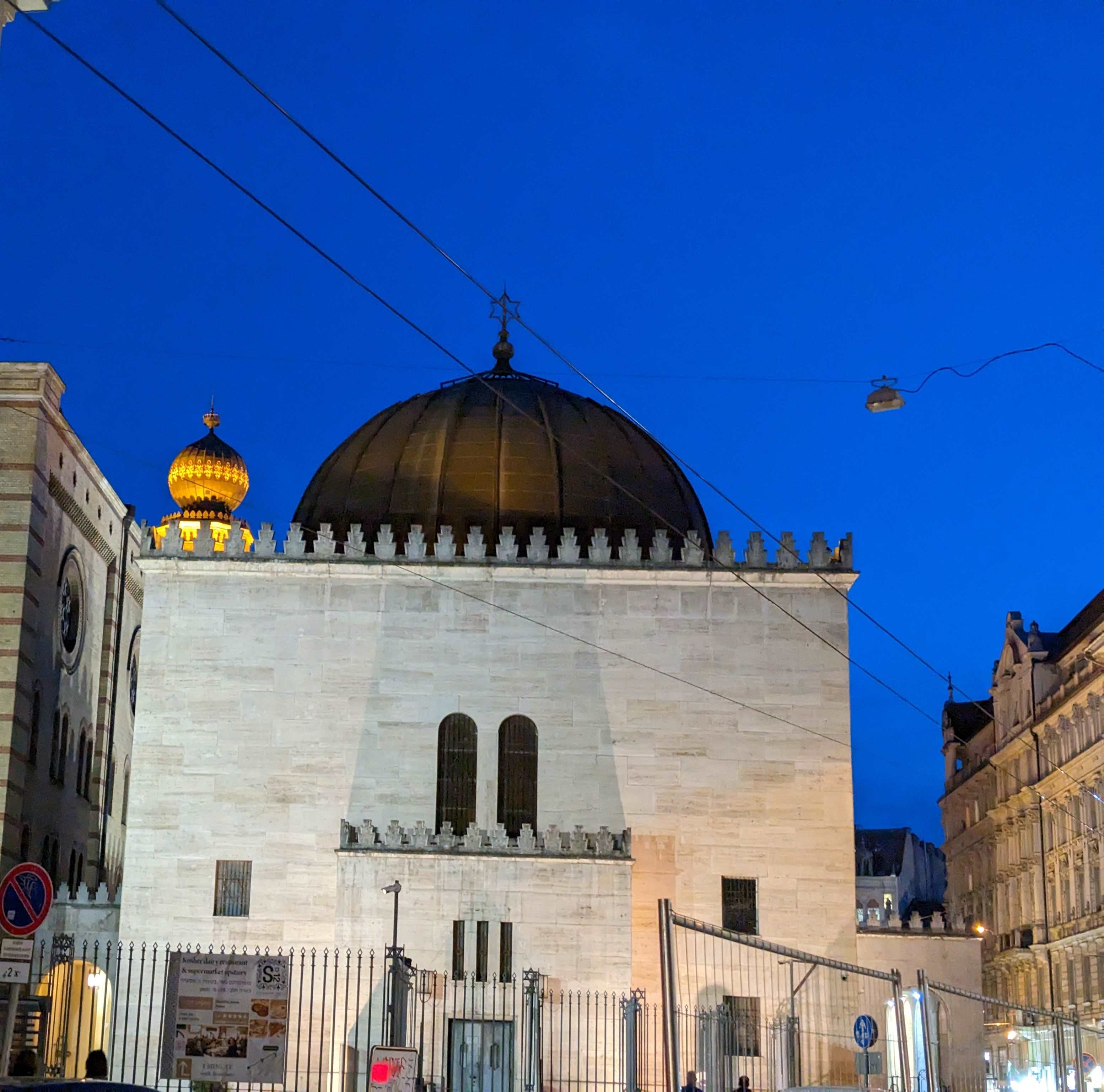
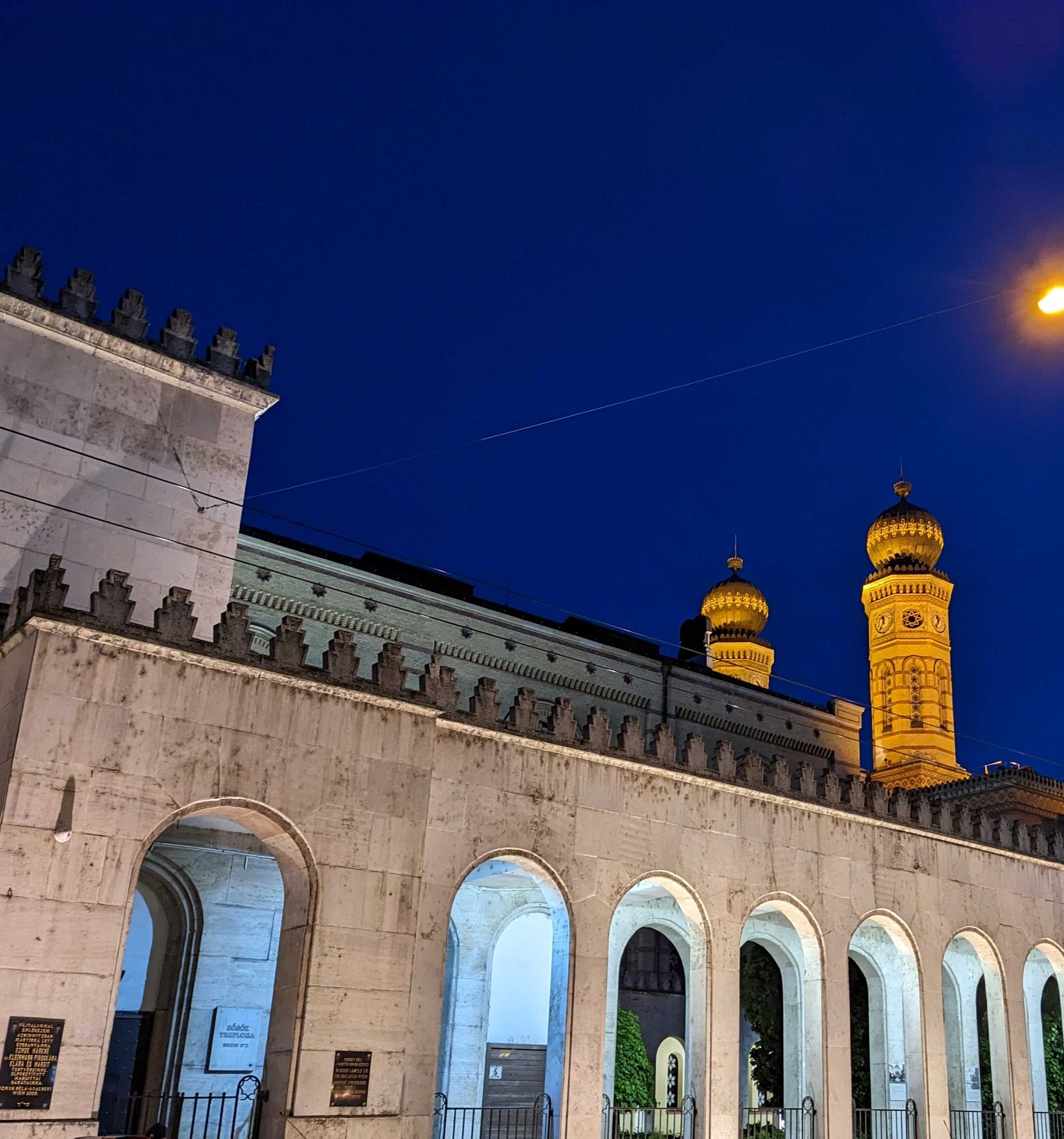
At 5pm, we eventually arrived at Budapest where they use the Hungarian Forint currency (1 HUF = £0.0023). There is much more information about accomodation and things to see via the link above. Below, two photos of the Dohány Street Synagogue from the Jewish Quarter where my hostel was located.
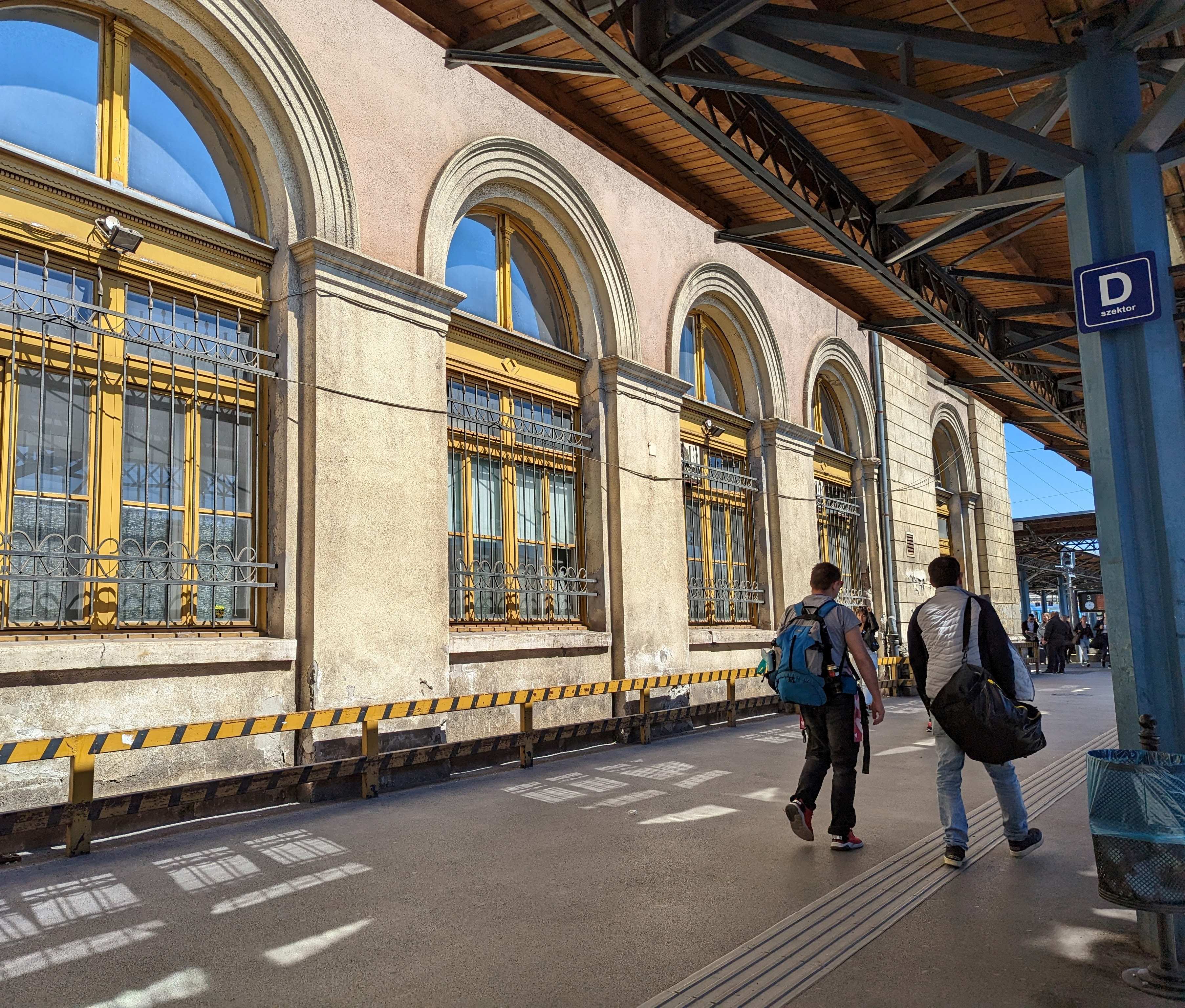
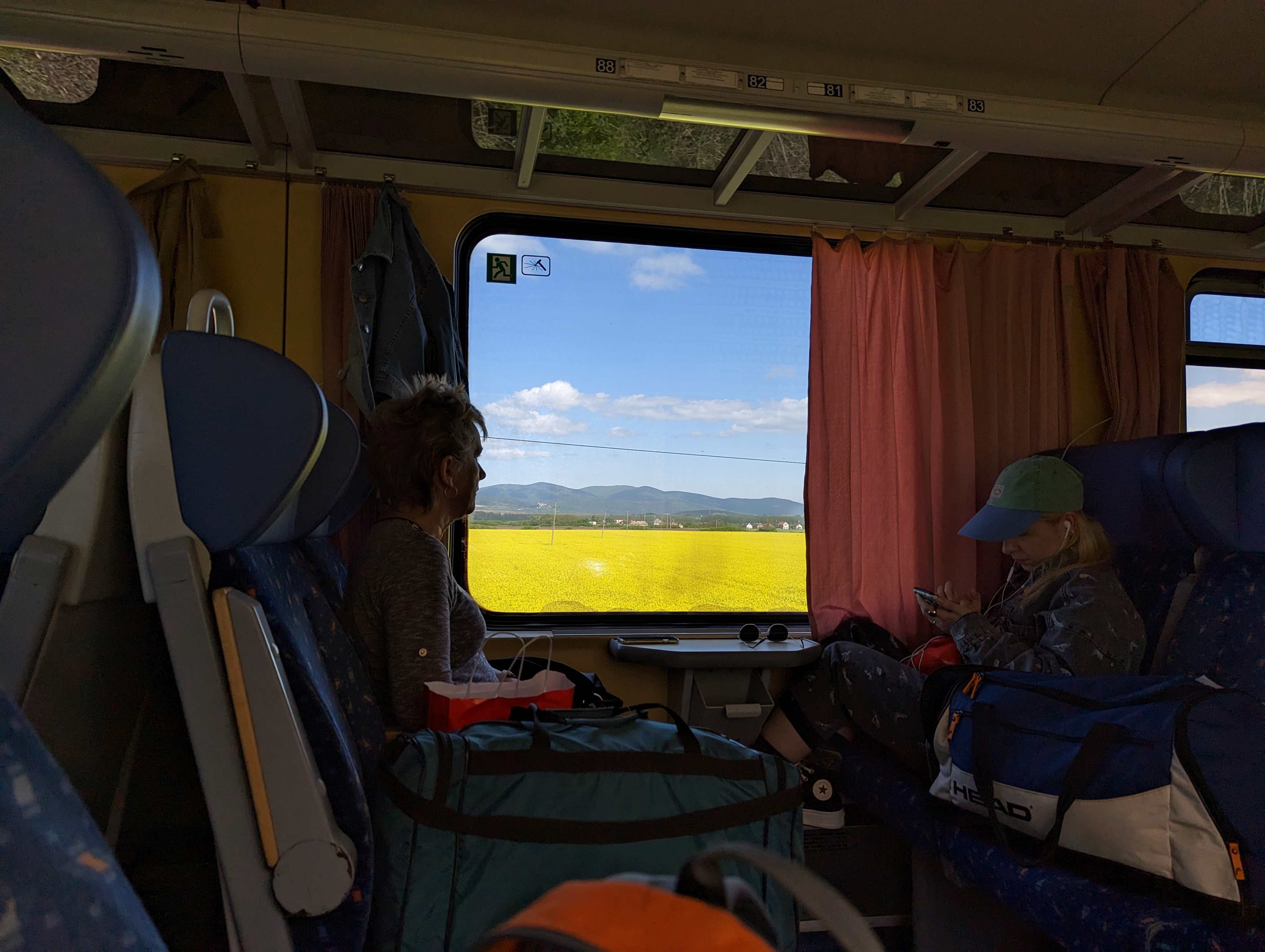
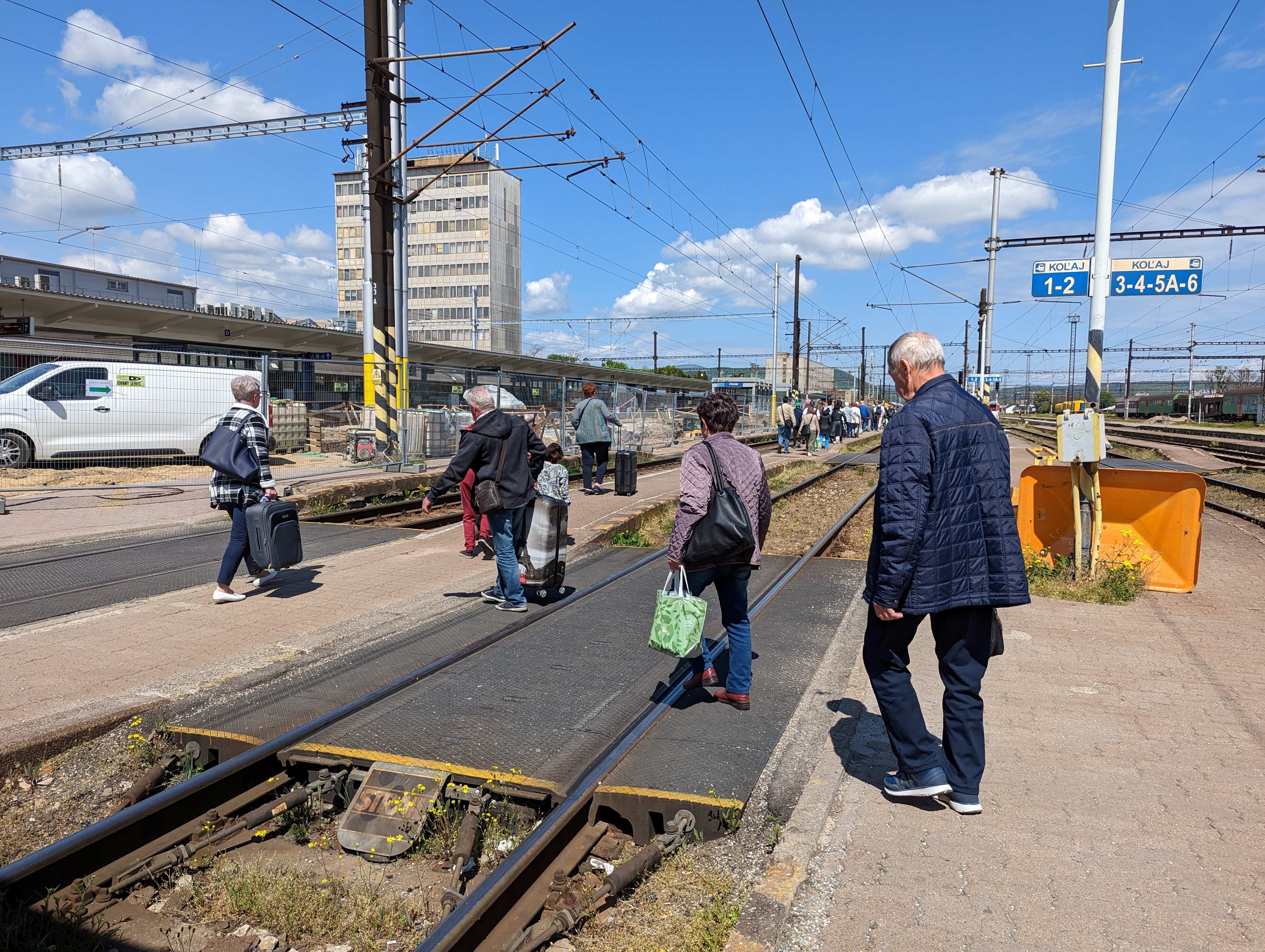
Budapest-Keleti train stationOn the way to Slovakia from Hungary
Budapest to Trebišov (east of Kovice) Slovakia
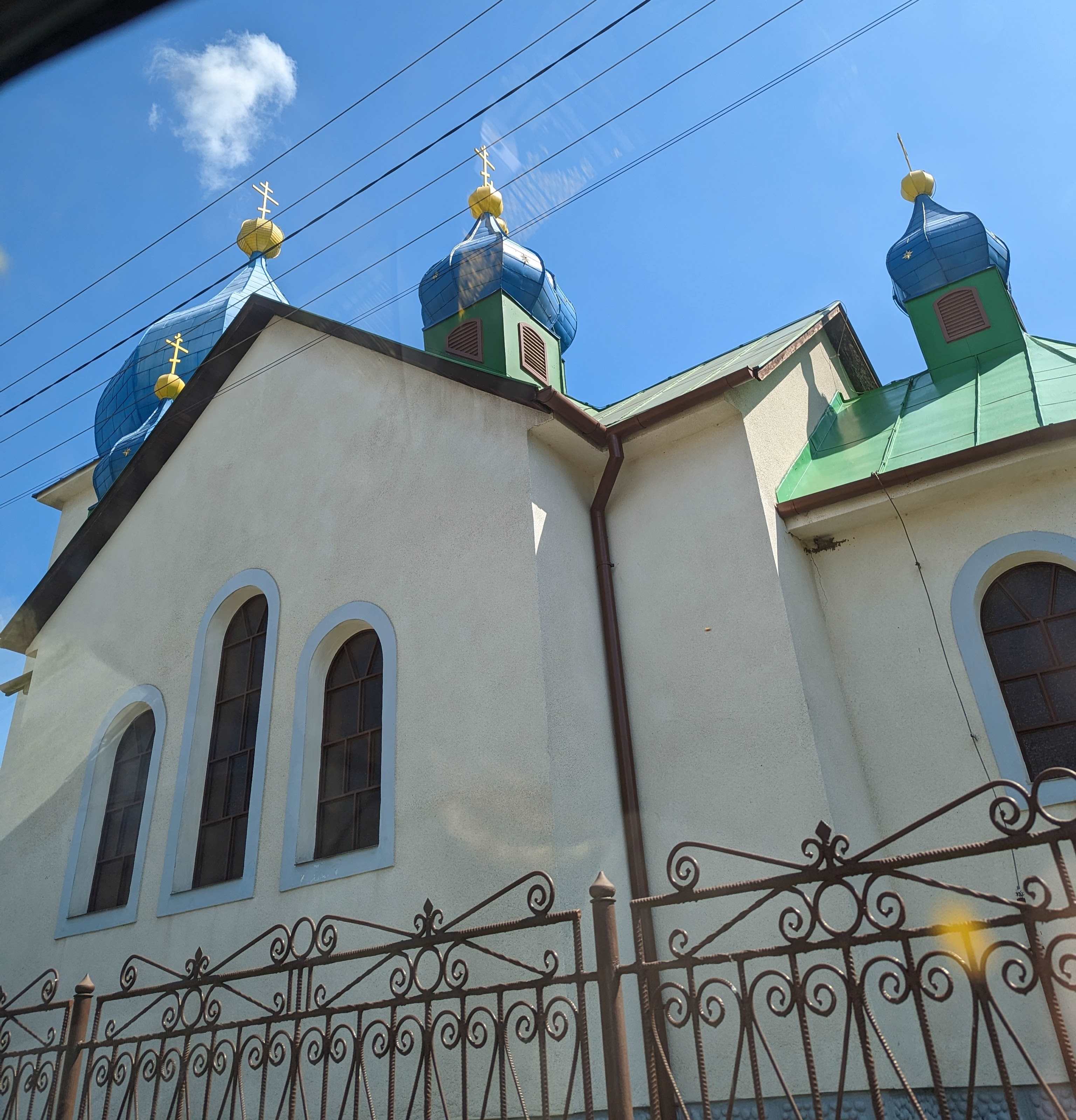
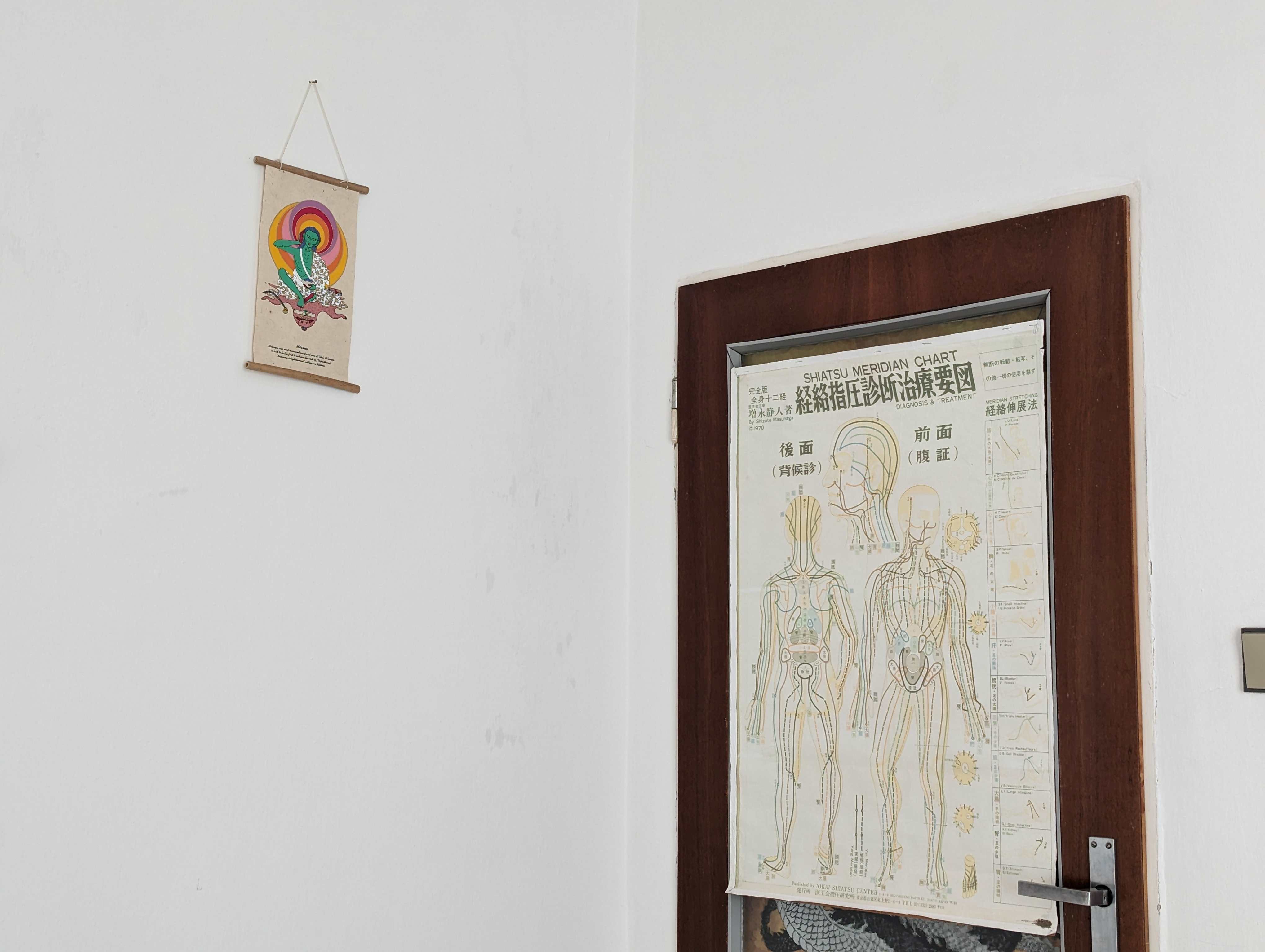
I went to stay with Patrik, one of the Shiatsu School Edinburgh graduates, and his family in Trebišov. They were really hospitable and I enjoyed the Shiatsu exchange, walks and talks we shared. The following three images are: the Milenecká ulička park (top), a traditional church (below left), and a Shiatsu room with a poster showing the Masunaga meridians (below right).
On the way back to Budapest, I changed trains at Kosice.
Kosice, Slovakia
Budapest to Balaton, Hungary
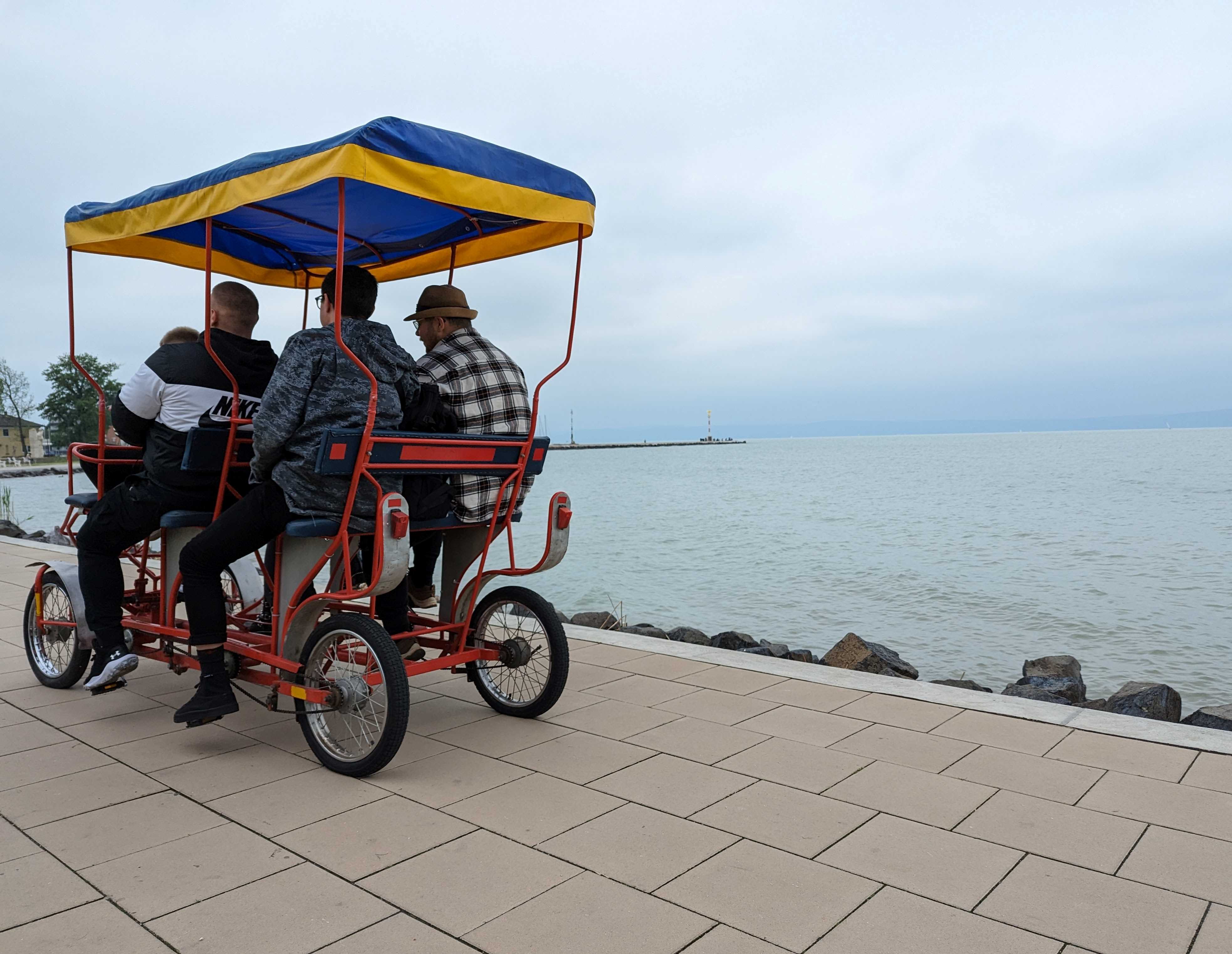
Budapest to Balaton, Hungary – adult and child
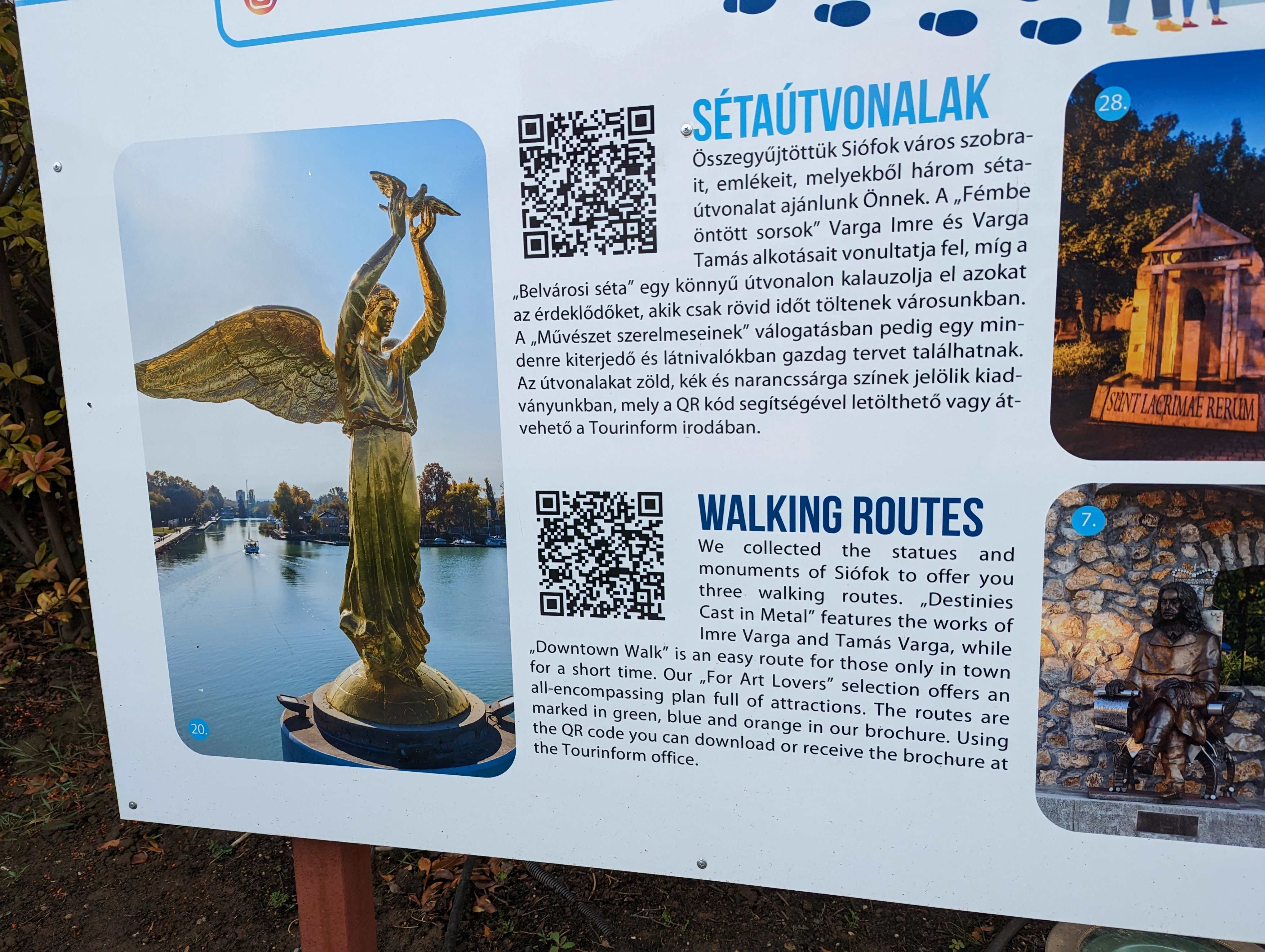
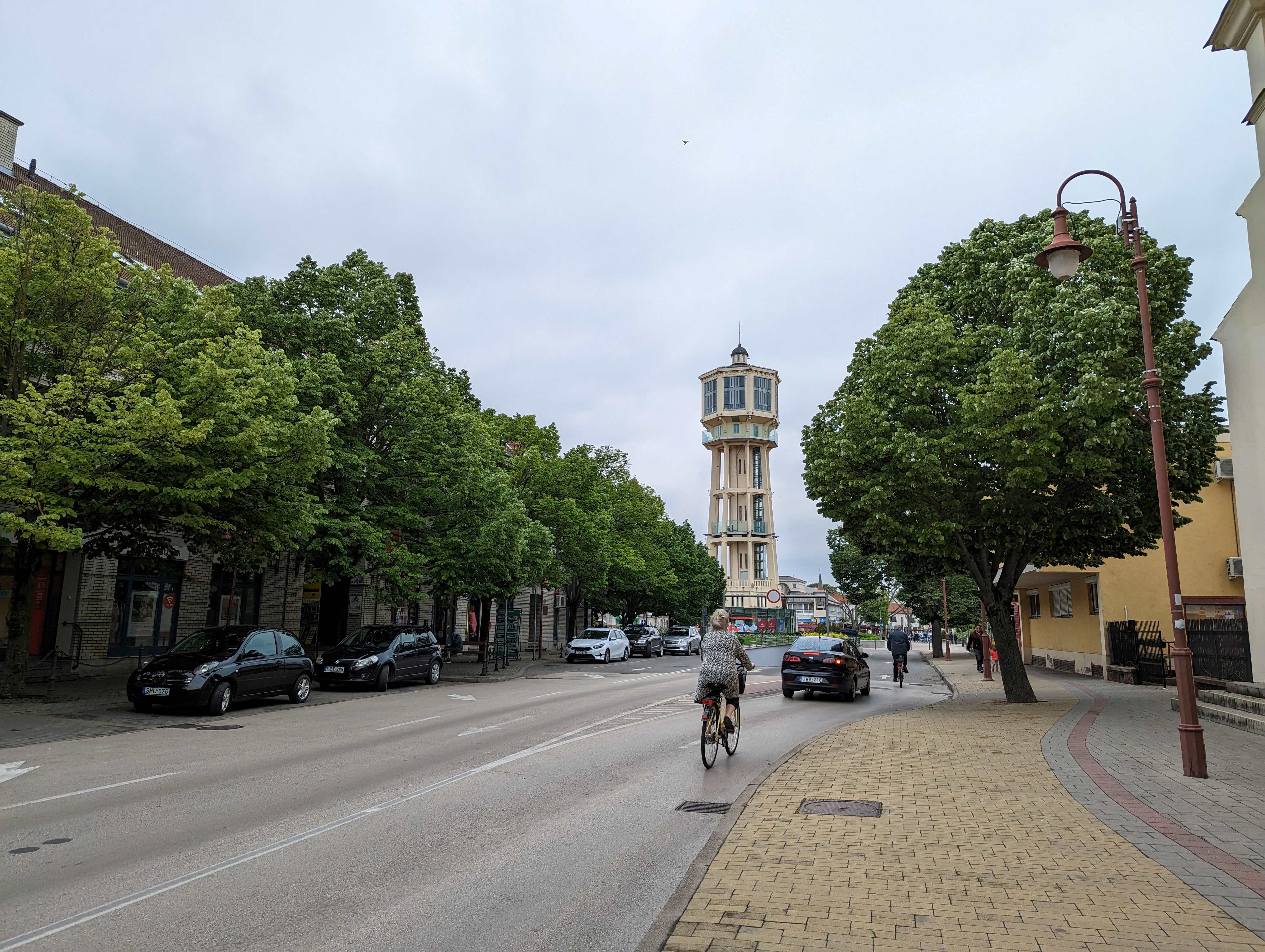
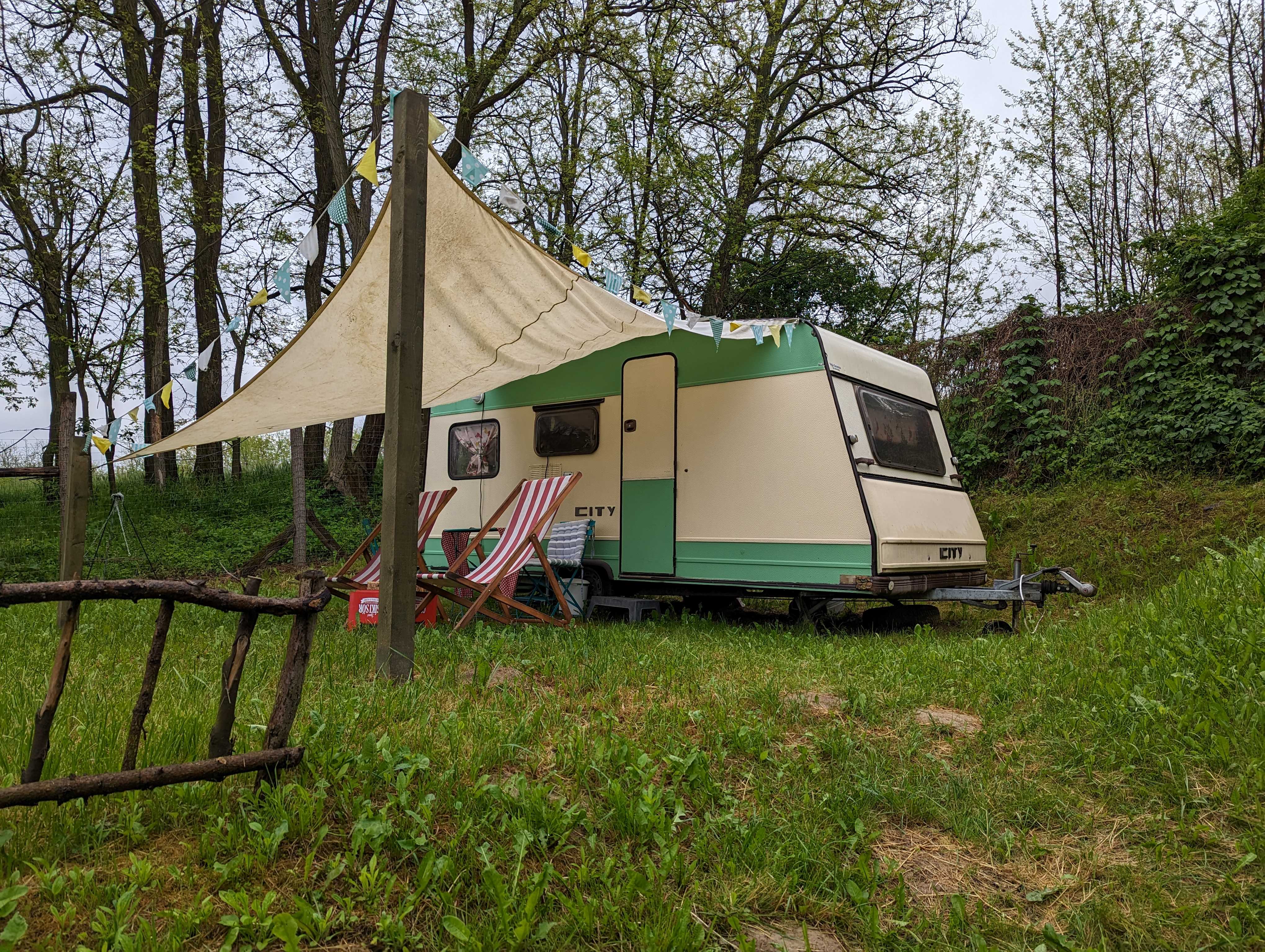
After staying another night in Budapest, I detoured to rural Hungary, travelling by train to Siófuk near Lake Balaton (south west of Budapest), from where I took a bus to Kopánnyszántó and walked to Koppány Pines to stay with Debs Tetlow (a fellow Juicy Crone). There, I exchanged Shiatsu with her and her husband who run a beautiful camp site, enjoyed walks and sat out the rain in the caravan they prepared so kindly for me.
I stayed in their caravan at Koppány Pines. Hungary
Again, I was returning to Budapest. This time I got a lift in a car to Nagykónyi, and then took the bus back to Lake Balaton (where I visited the Mineral Museum at Siofuk, Kálmán Imre stny. 10 8600, which is recommended), and the train to the Hungarian capital (station Népliget).
Lake Balaton, Hungary
Budapest to Berlin
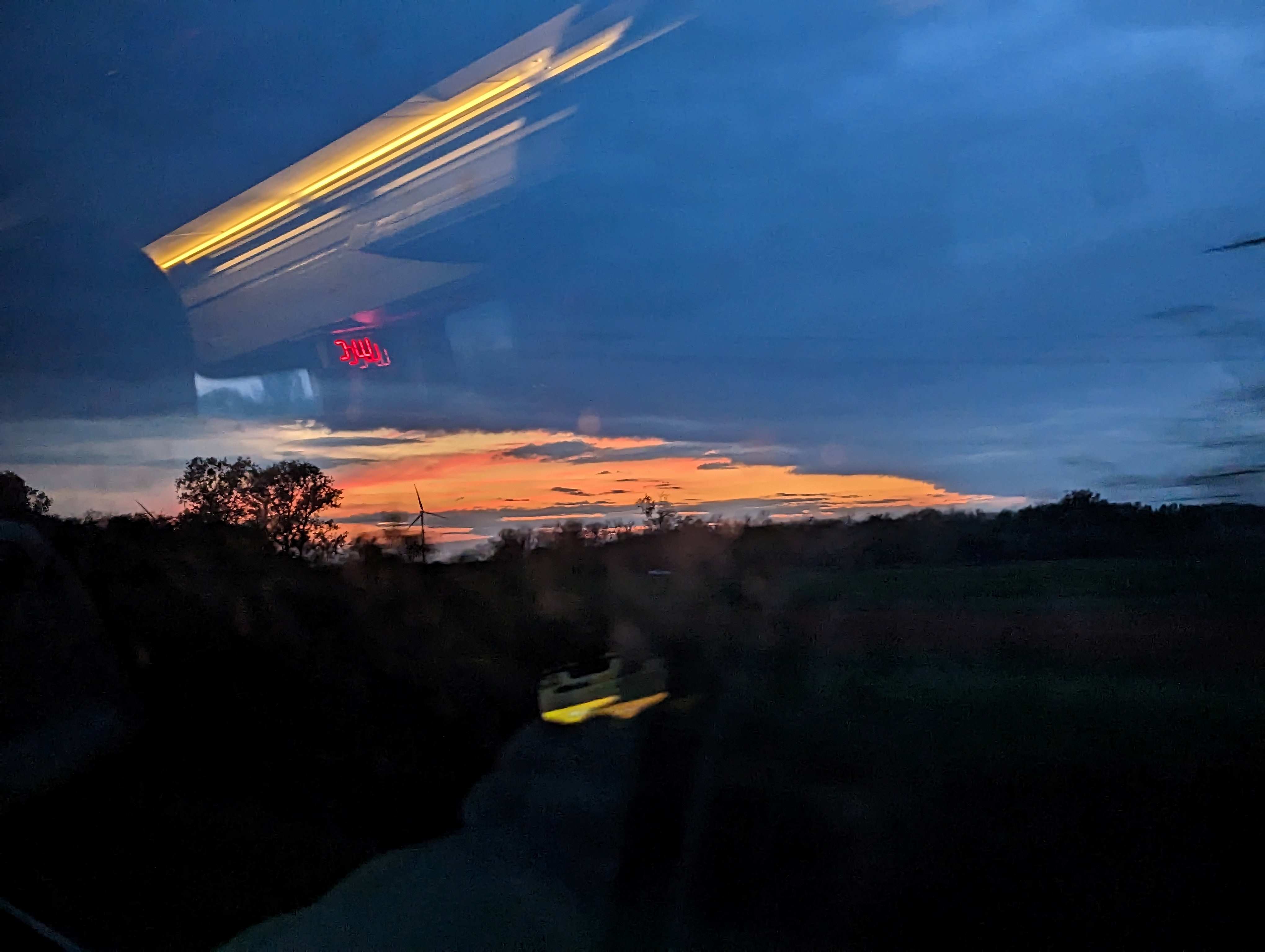
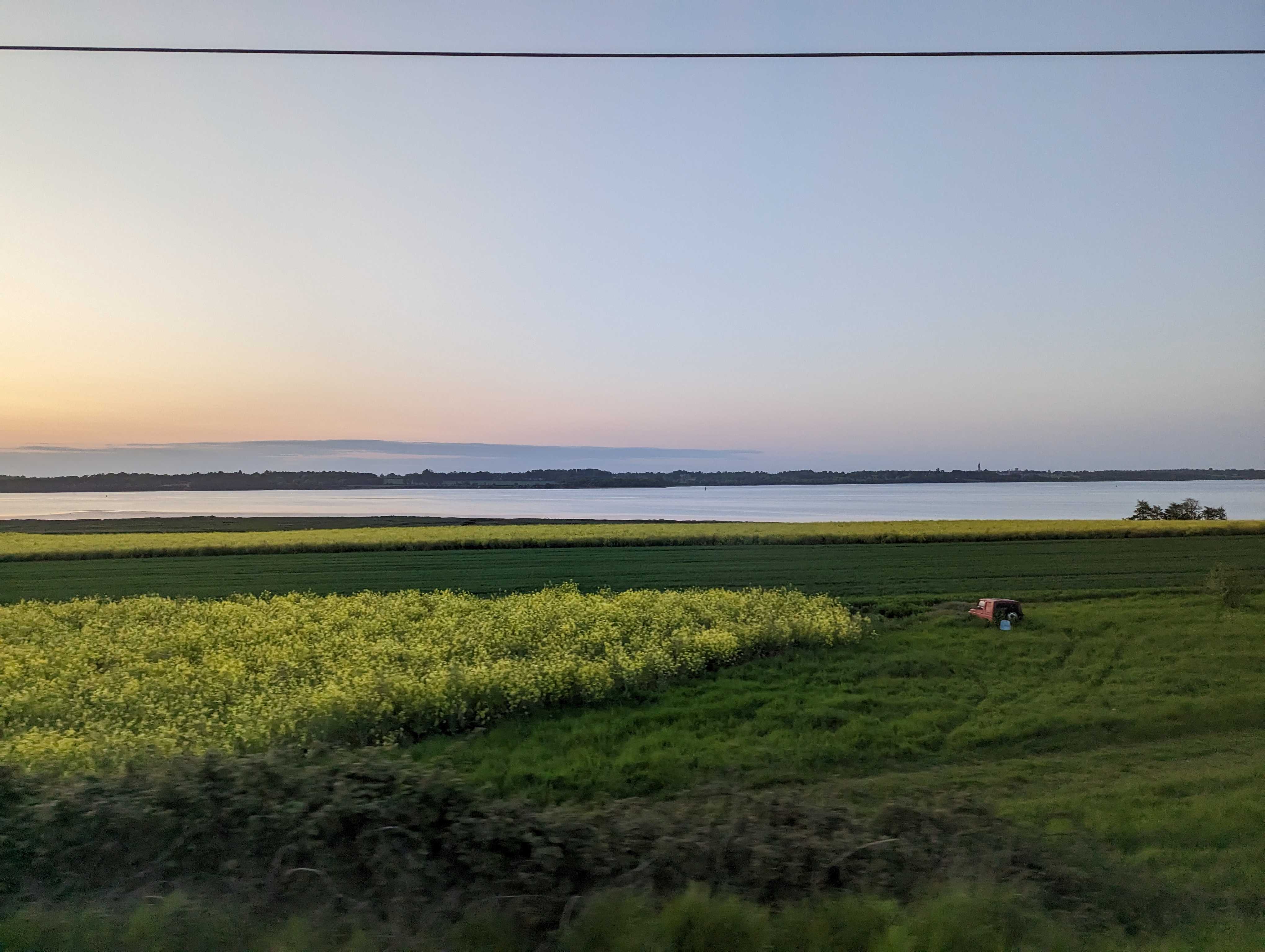
Soon after leaving Budapest: sunset from the bus
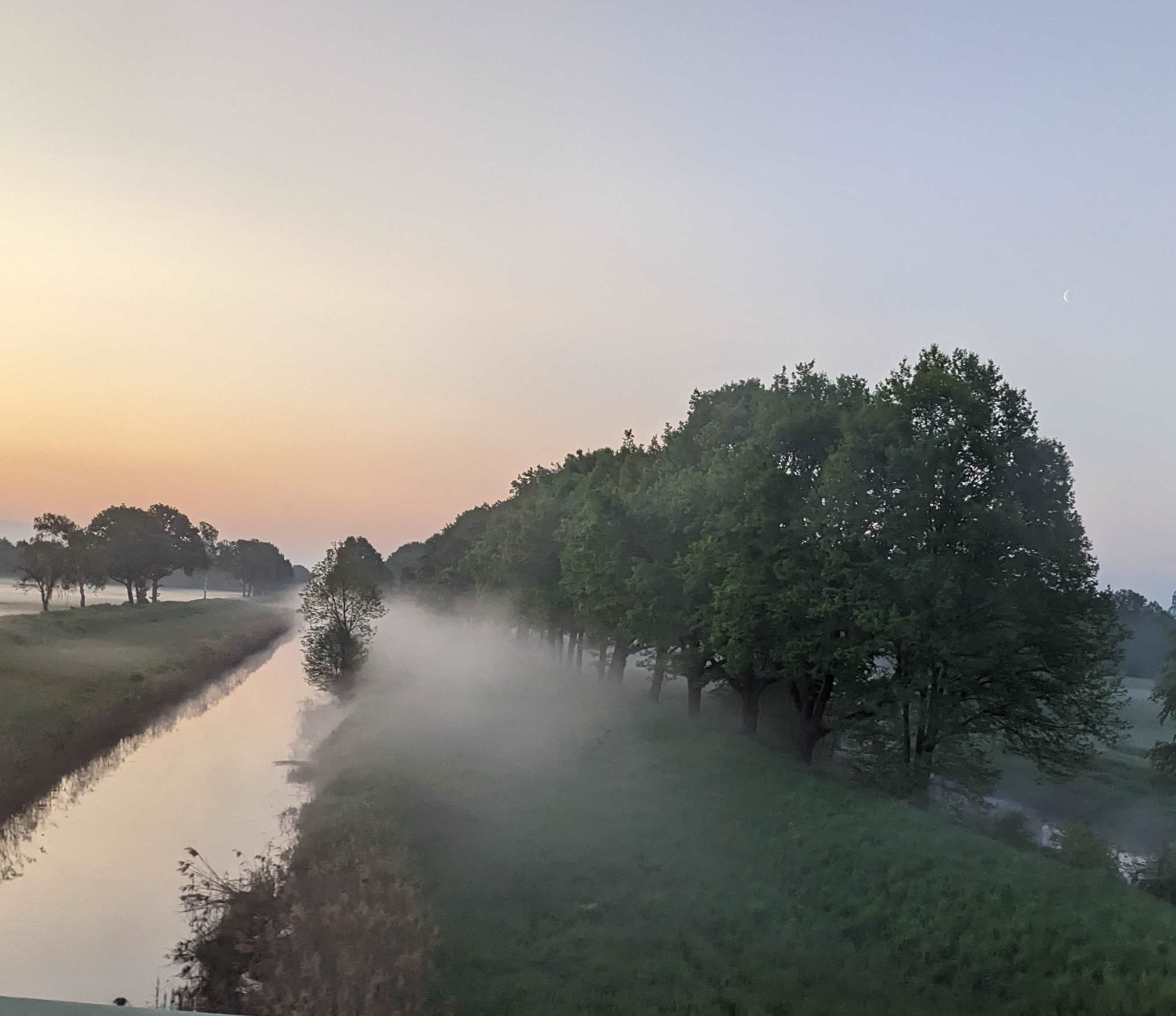
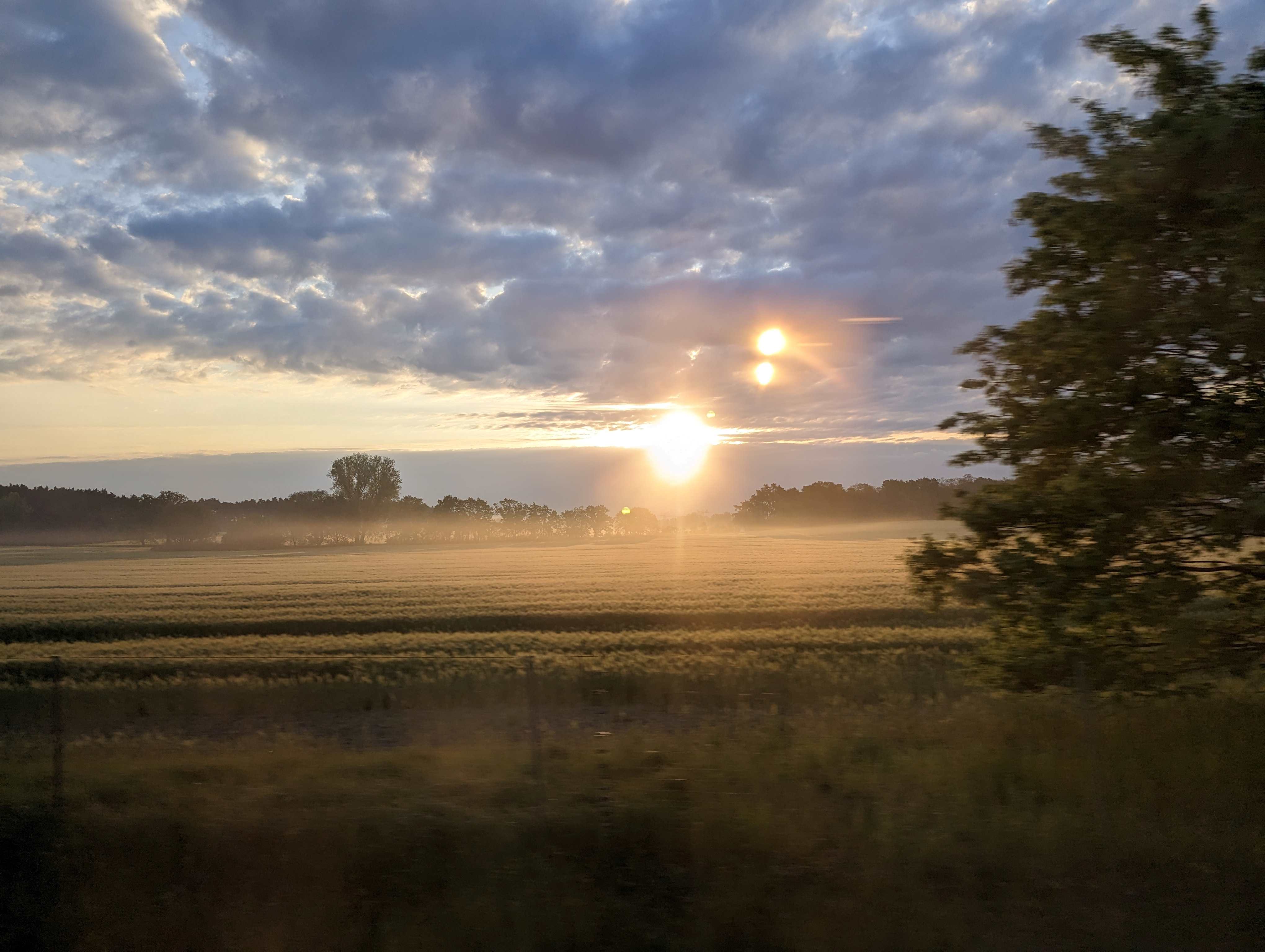
I left Budapest Nepilget at 7.30pm by bus, stopped somewhere for a break at 3.30am, and woke up in Germany at 5.30am to the most atmospheric dawn.
Sunrise Lübenau, Germany
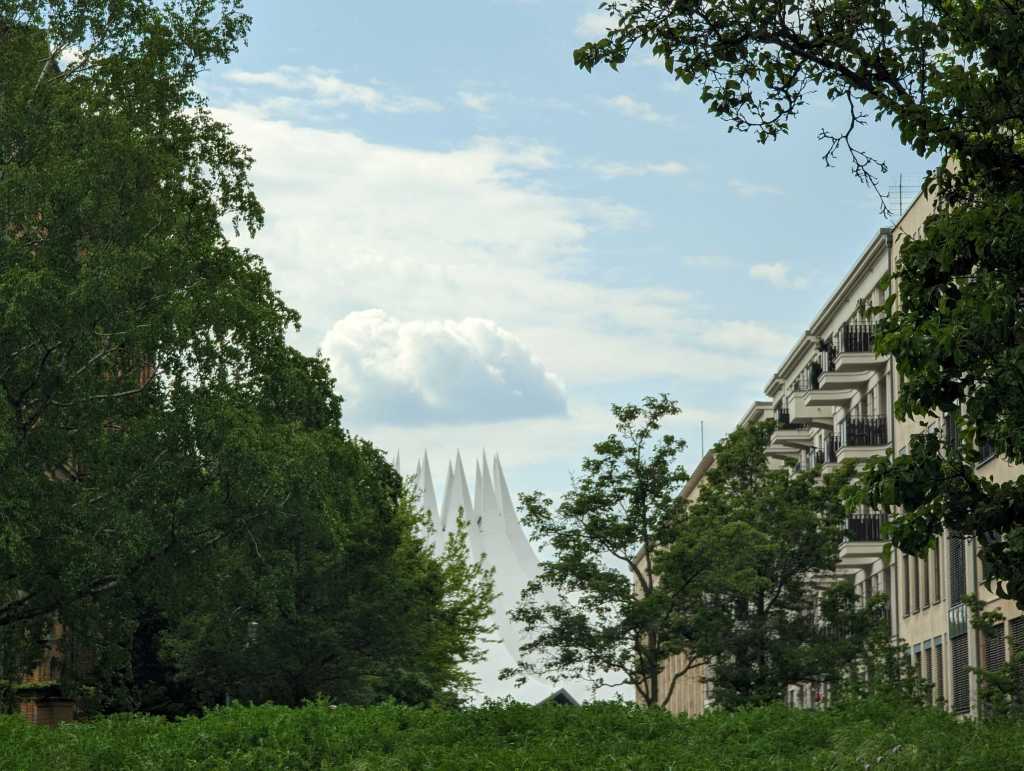
At 7.30 we drew into Berlin Südkreutz and I had a wonderful walk by New Tempelhof where the streets are named after plants: Jasminepfad, Magnoliapfad.
Berlin, Germany to The Hague, Netherlands
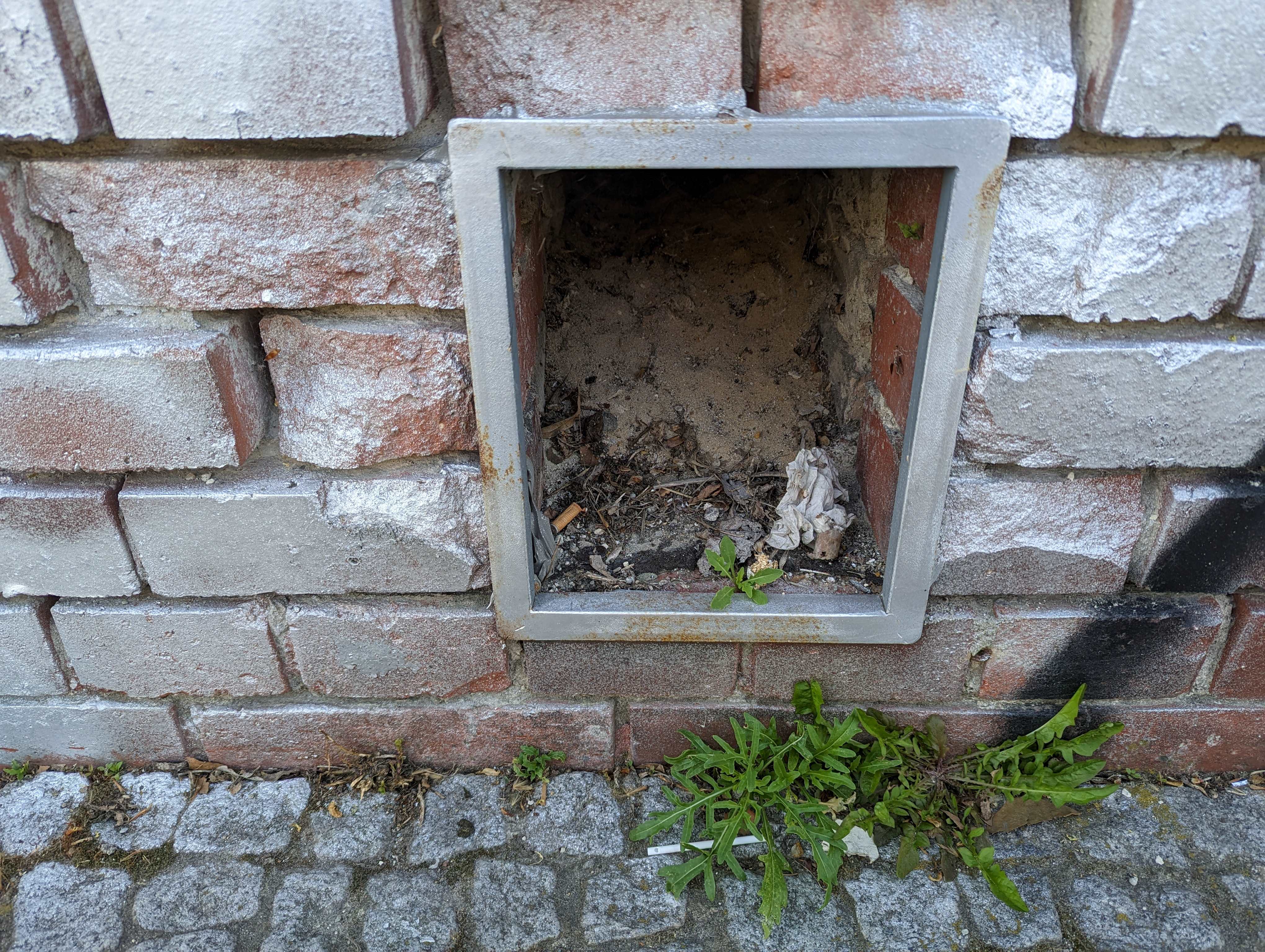
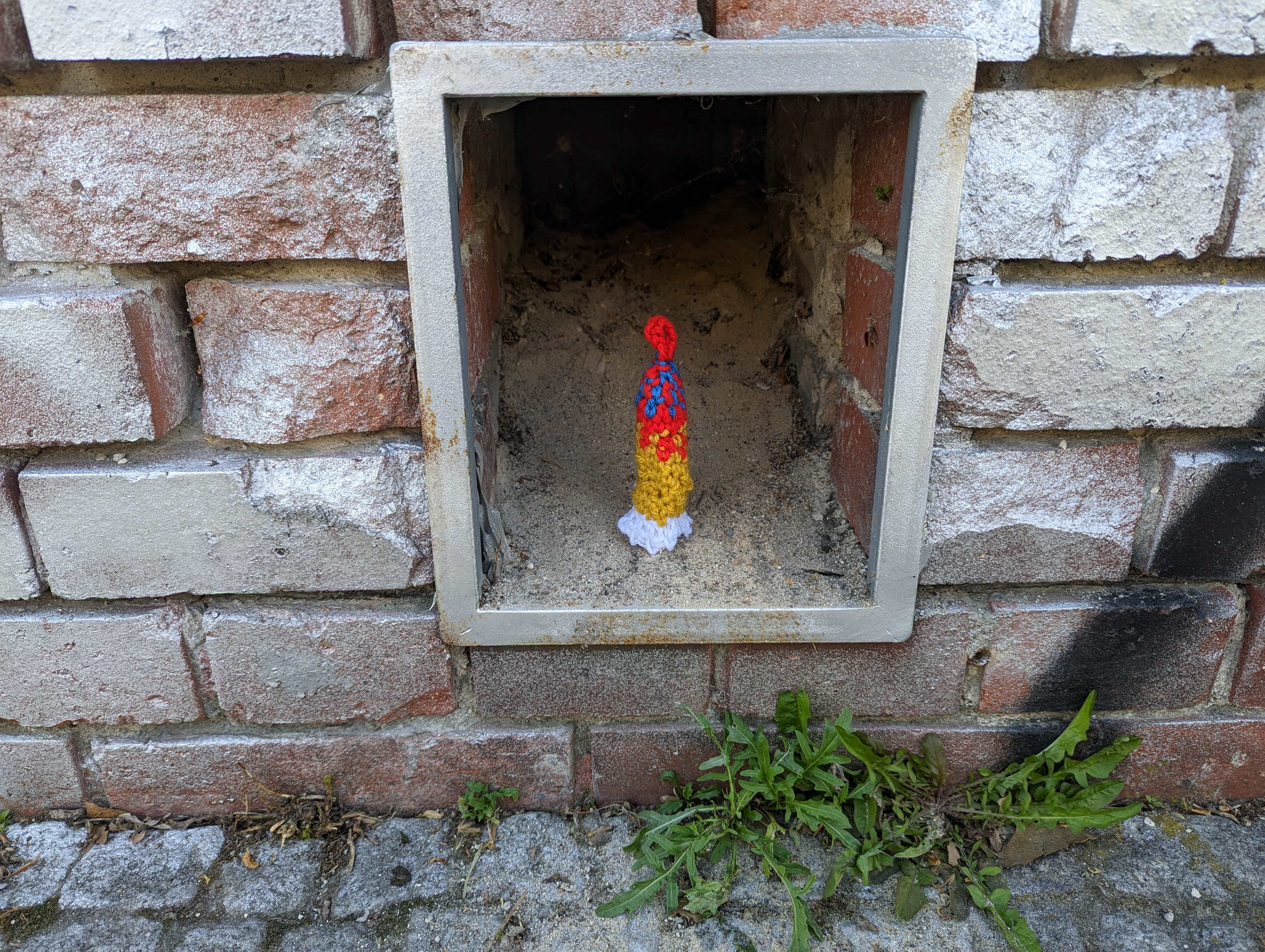
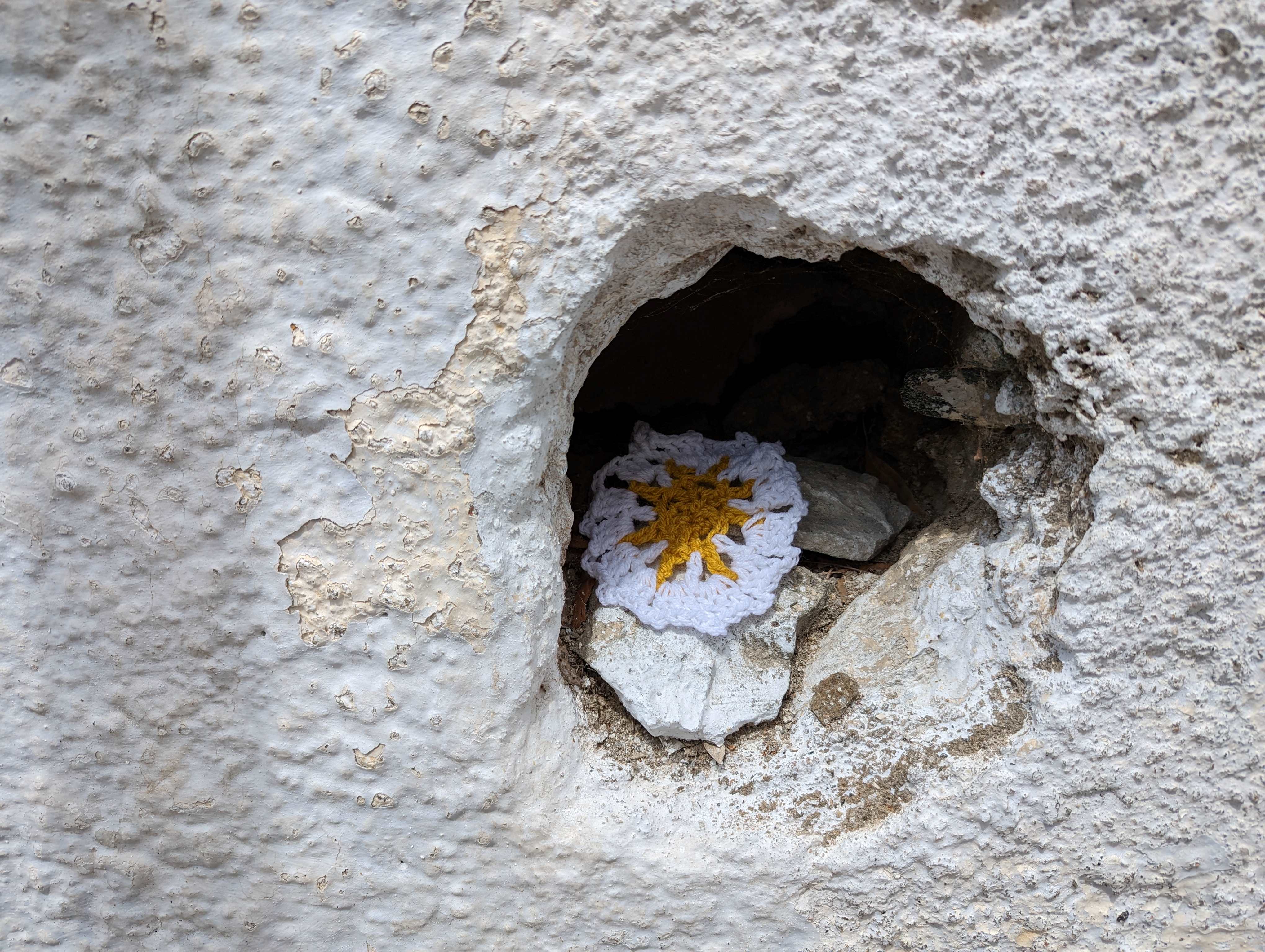
I still had a home-made crocheted flower left over from my time on the Greek island of Tinos and, on finding a make-shift altar space in a wall, cleared it and made a grateful offering to Abiona, Goddess of Safe Return.
New Tempelhof
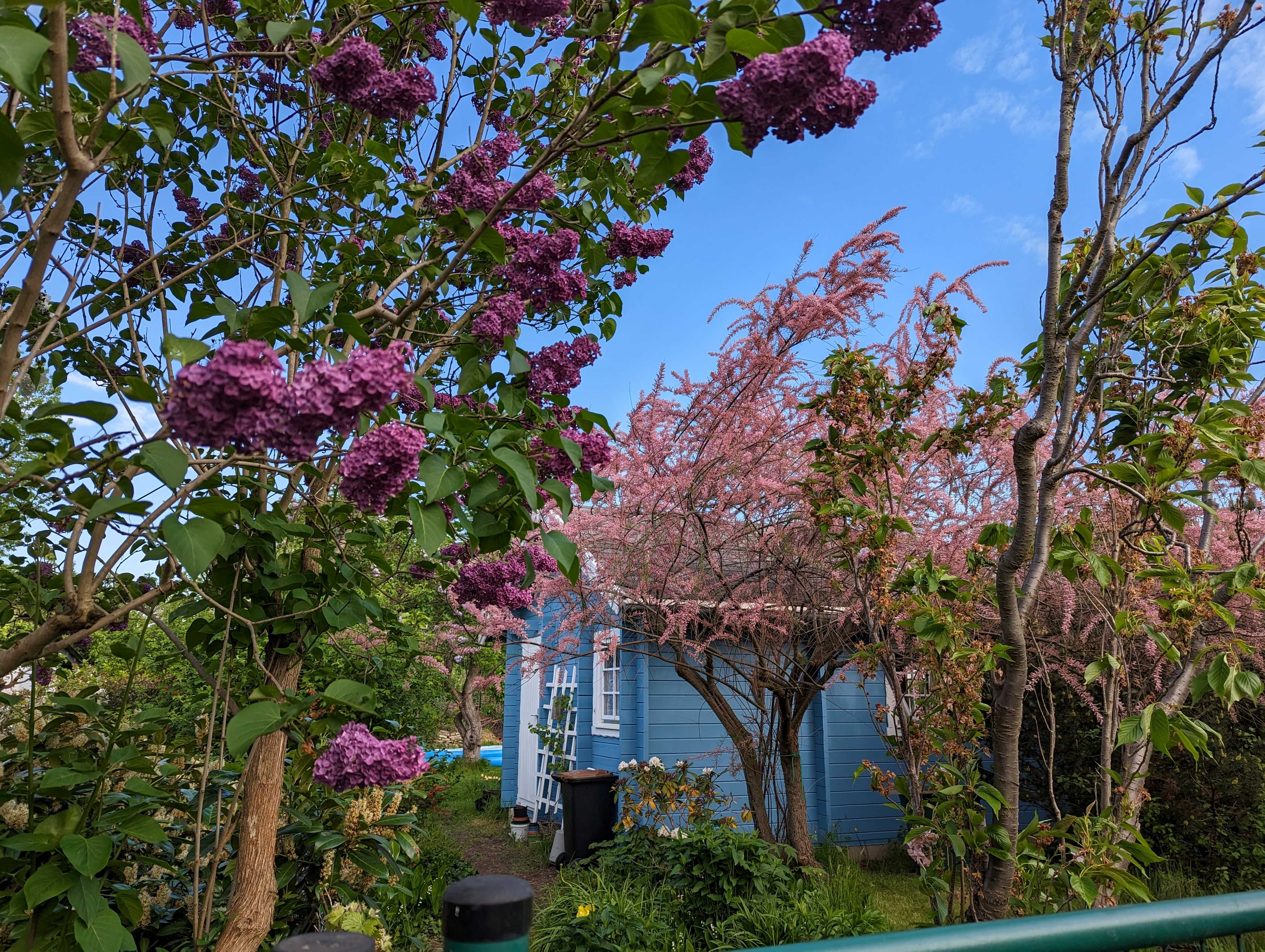
These allotment gardens (which I was told by a resident were like gold dust during the Covid-19 pandemic) were near to, and consciously contrasting with, the SA prison in General Papestrasse in Schöneberg.
I was in the German capital city for the first time. A few months earlier, I had been chatting with my mum and she said we had a relative living there who I had never heard about before. It was lovely to meet Helen and her daughter, and to find that we had interests, age and other things in common. It was she who recommended the Jewish Museum (it was a Monday and lots of the others were shut). I only had that one day to explore, and I was really impressed by the architecture and the exhibition both.
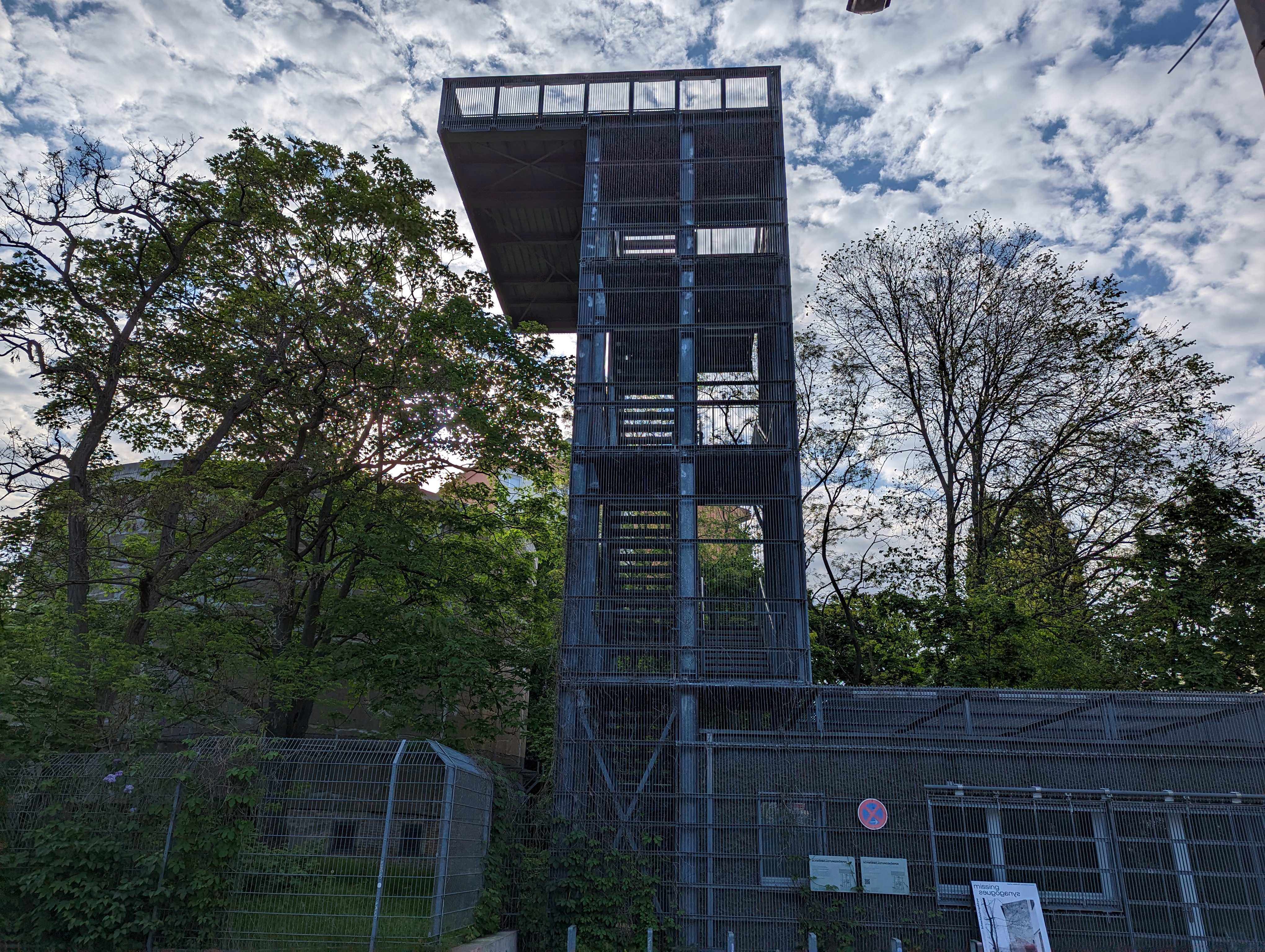
Repurposed Nazi watch tower, Berlin
“The cellar rooms used as prison cells have been preserved in their condition from that time, with inscriptions and dates carved into the walls. Since 2013 there has been an exhibition here documenting the history of the prison.” Papestrasse
Walking out of Berlin City Centre, northwards
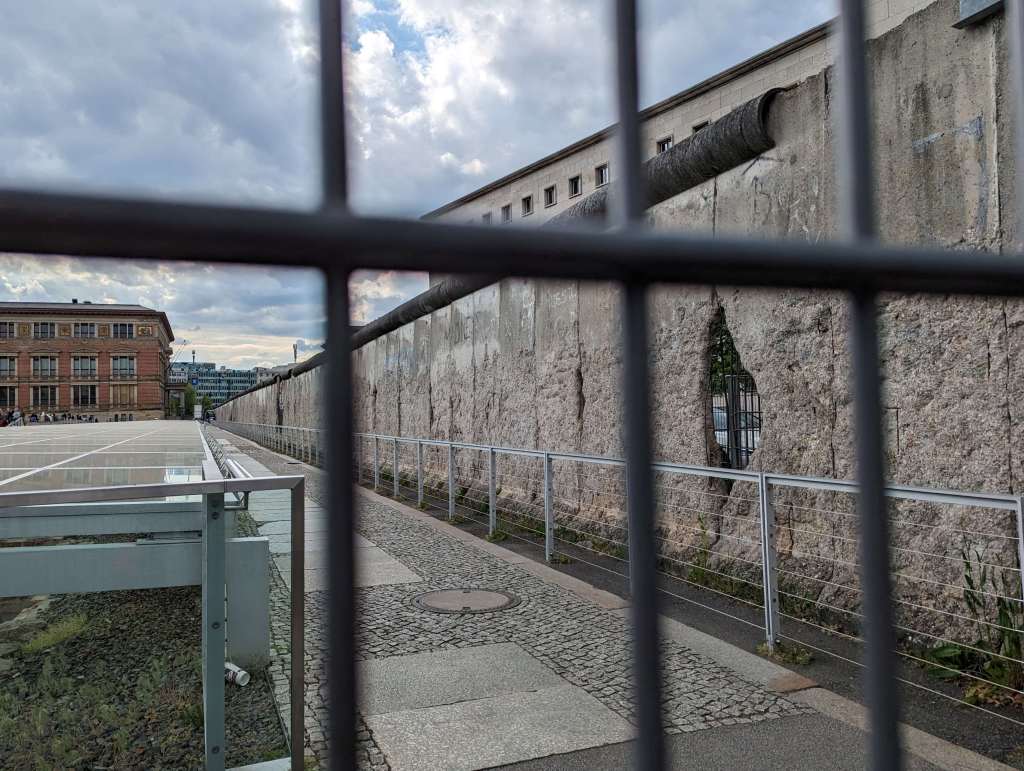
Berlin Wall
After my visit to the Jüdesches (Jewish) Museum, I walked a long way northwards, out of town, past the site of the Berlin Wall and Wilhelmstrasse. It was like walking through the history books. The end of this walk was the only time during my entire journey when I got scared and it was brief. There’s a section of very quiet streets and it was, by then, dark. I wasn’t sure I would be safe, but there seemed no option having got this far, so although the walk was really interesting, I would recommend getting a bus if you are leaving from the Flixbus stop on Berliner Strasse, Alt Tegel. I also didn’t find the stop very easily.
It was due to leave around 11pm, but was delayed by several hours. We waited and got cold, got random messages from the bus company, and eventually knew we had ages to wait, giving ample time to find somewhere warmer to sit and continue a lovely meeting with a Ukranian woman who was with her young daughter. She was understandably very worried about her husband and extended family back home. They were going to Amsterdam to try and sort out passport issues.
Berlin to The Hague to the Hook of Holland
Journey time: 9-9.5 hours Berlin to The Hague.
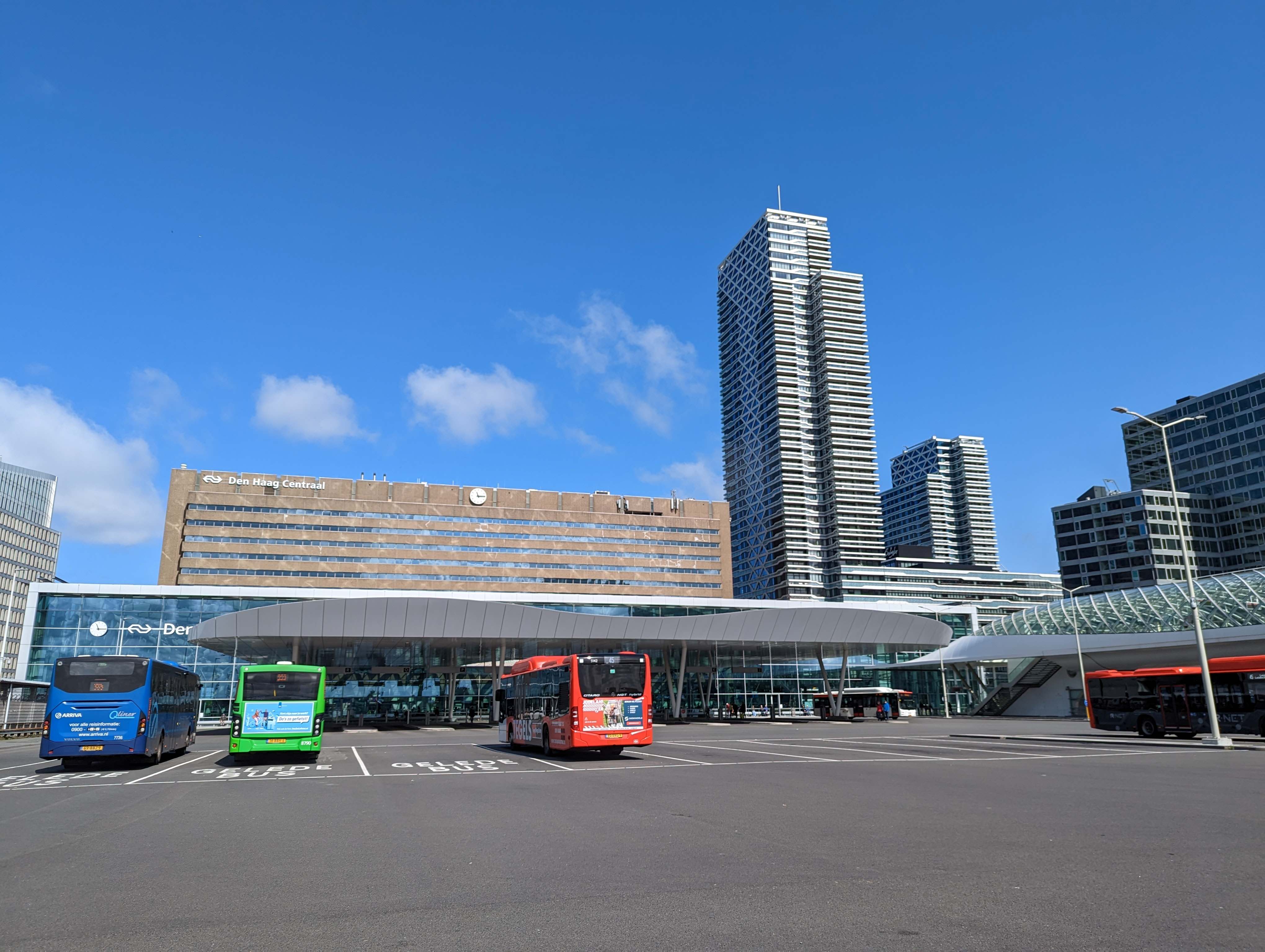
It was hard to find where to take the tram from The Hague (Den Haag) to the Hook of Holland (it takes just over an hour). There were lots of people wandering around looking and no-one knowing. When changing from the tram to the bus, the only place I could find to go the toilet was in a hospital (Haga Ziekenhuis)!
From the tram – Hague to Leyenburg, where I changed to a bus
The ferry terminal was almost empty. I was detained for quite a while as passport control flipped through my passport, looked at me, did it again and so on. In the end I asked what was wrong and they asked about going into the Schengan area and why I hadn’t got a stamp saying I’d gone out again. Presumably I was asleep. Thankfully, I had left myself plenty of time, and eveyrything went smoothly after that.
Hook of Holland ferry terminal, Netherlands
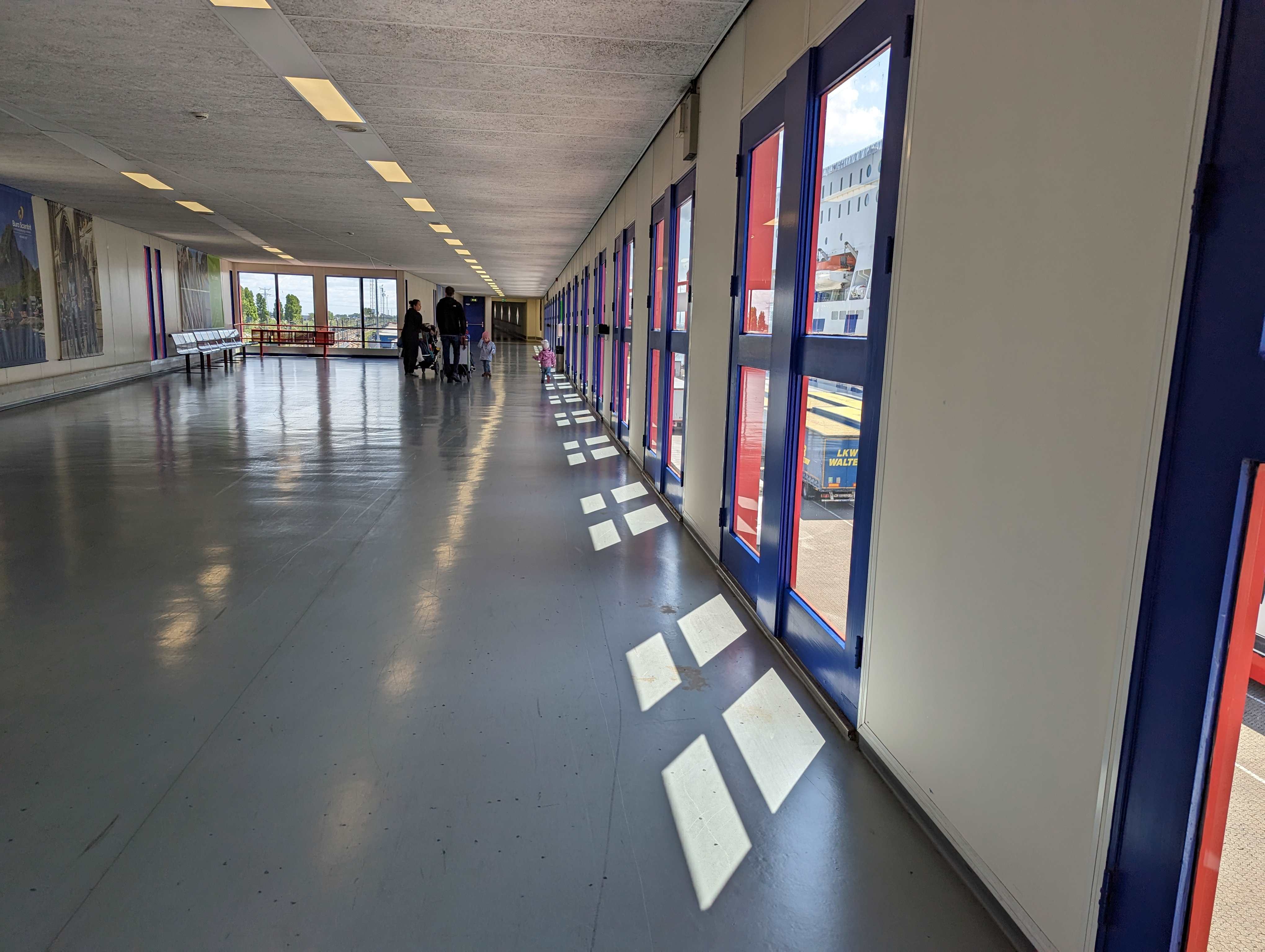
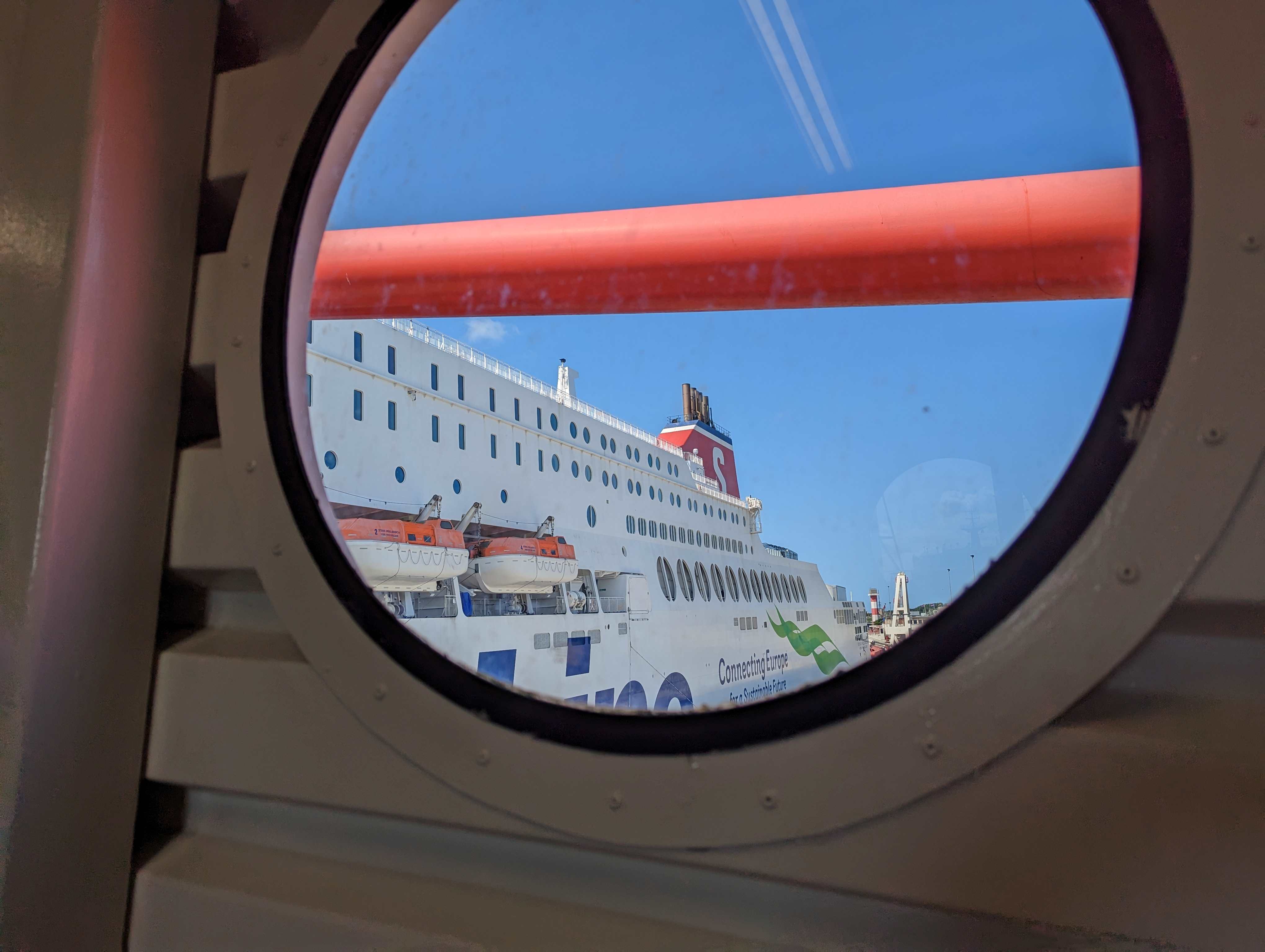
Photos above are of the Hook of Holland (Netherlands) ferry journey to Harwich, England
Flix Bus – beware they are very cheap, but there are very often delays and it’s hard to get any money back from them as recompense because they blame it on the roads and so on. If you have travel insurance (which I recommend if you are making complicated journeys like this – it’s not too expensive for a year – I used multitrip.com), it’s easier to claim from that.
Recommended reading: Slow Living by Wendy Parkins and Geoffrey Craig (about the ‘slow’ movement of which this type of travel is a part); The Instant by Amy Liptrot (about her time spent in Berlin).
This trip was taken in May 2023. The title photo is of Keleti Station, Budapest. All images my own and are copyrighted to me.
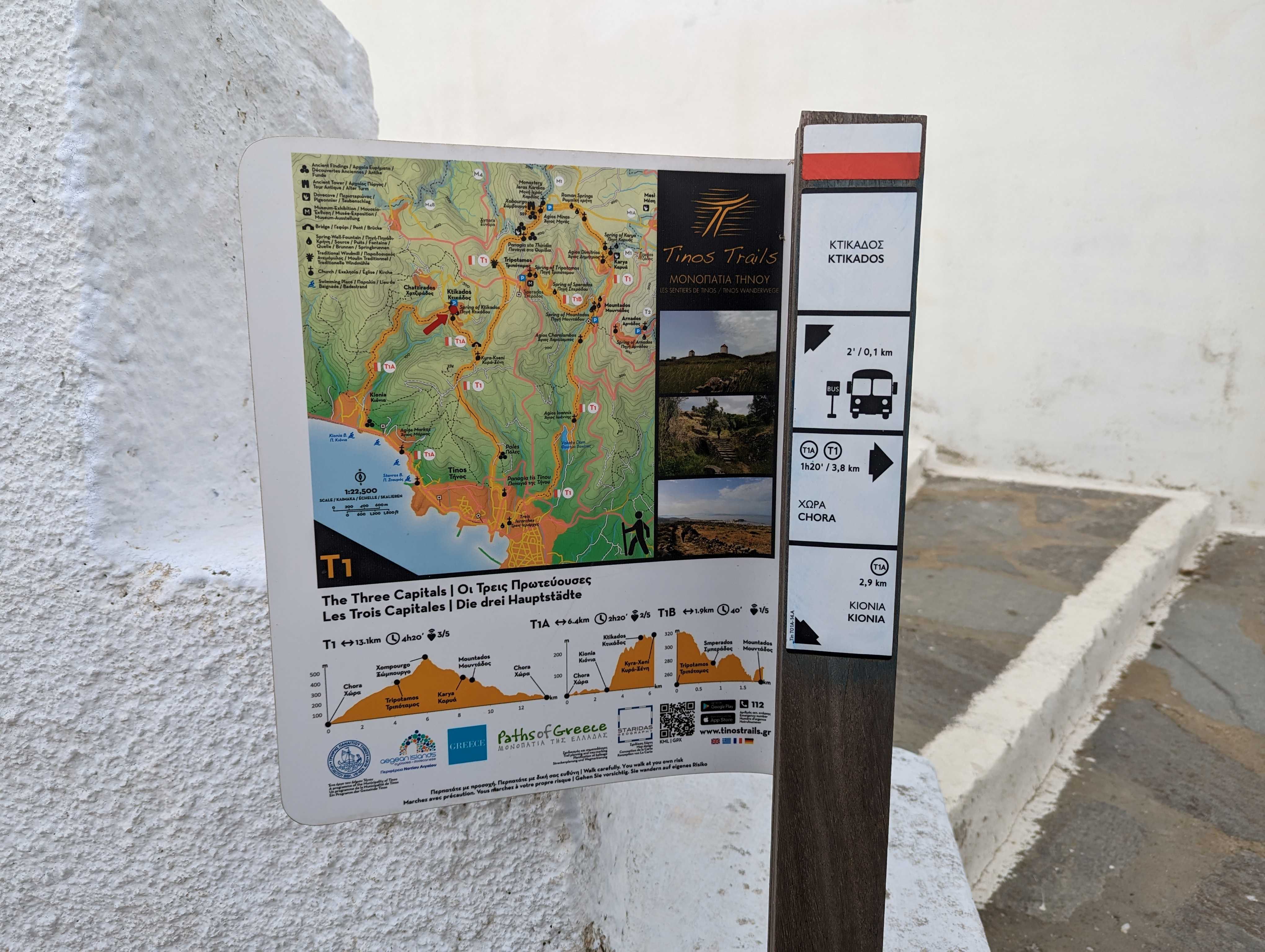
T1A walk to Kionia, Poseidon Sanctuary, walk from Kionia to Chora (Tinos town).
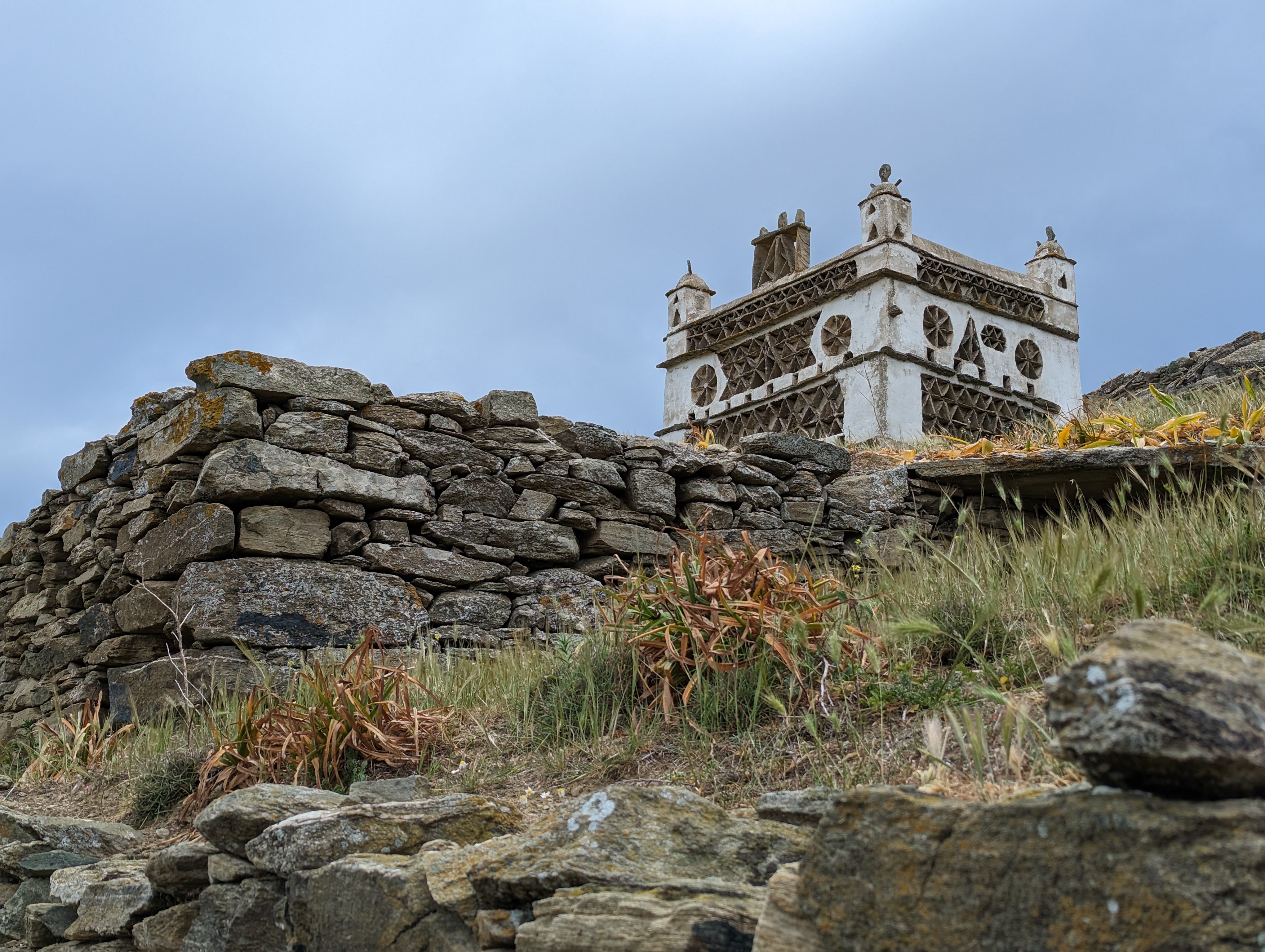
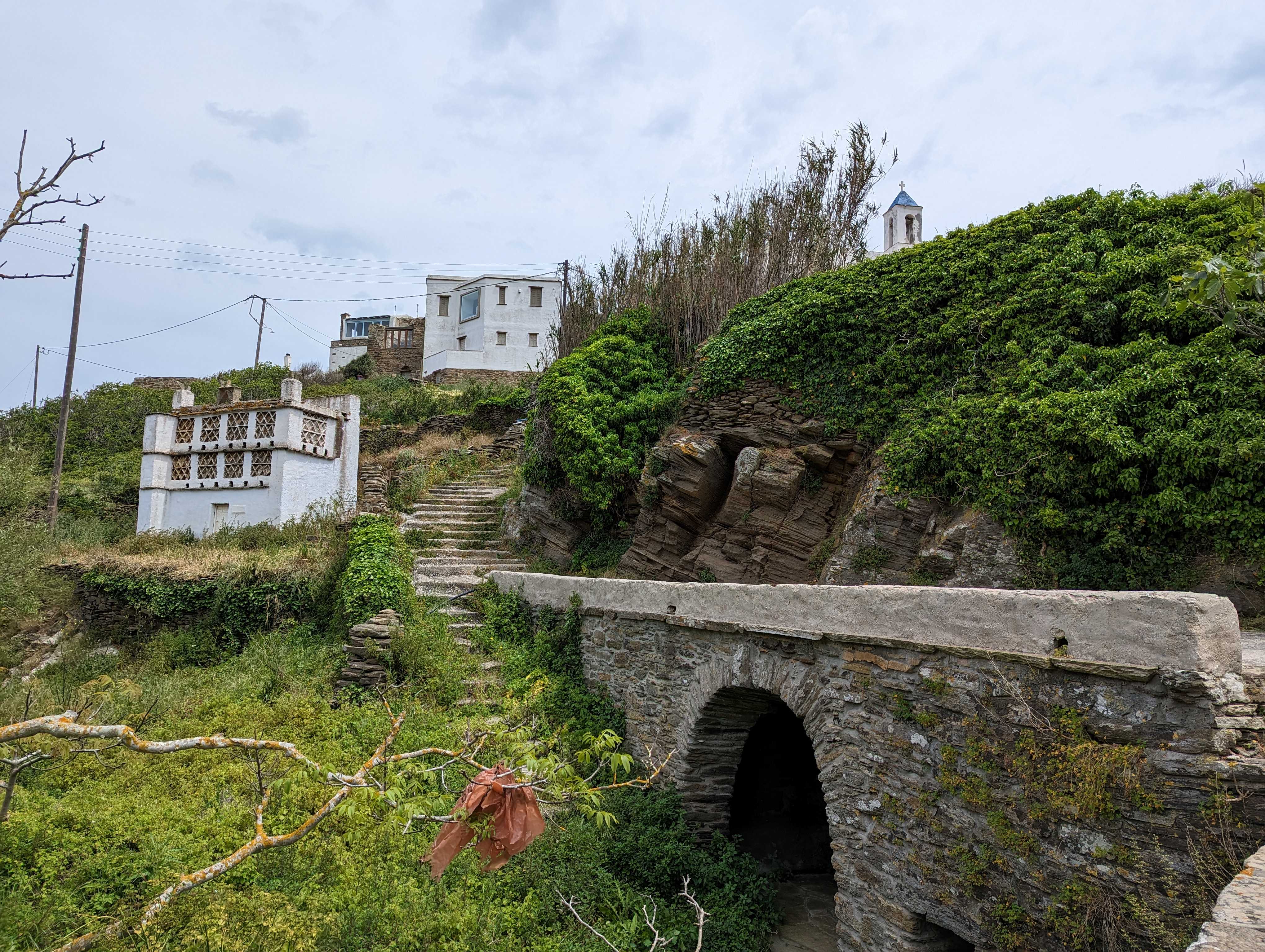
Dovcot of traditional design outside Ktikados, Tinos, Greece
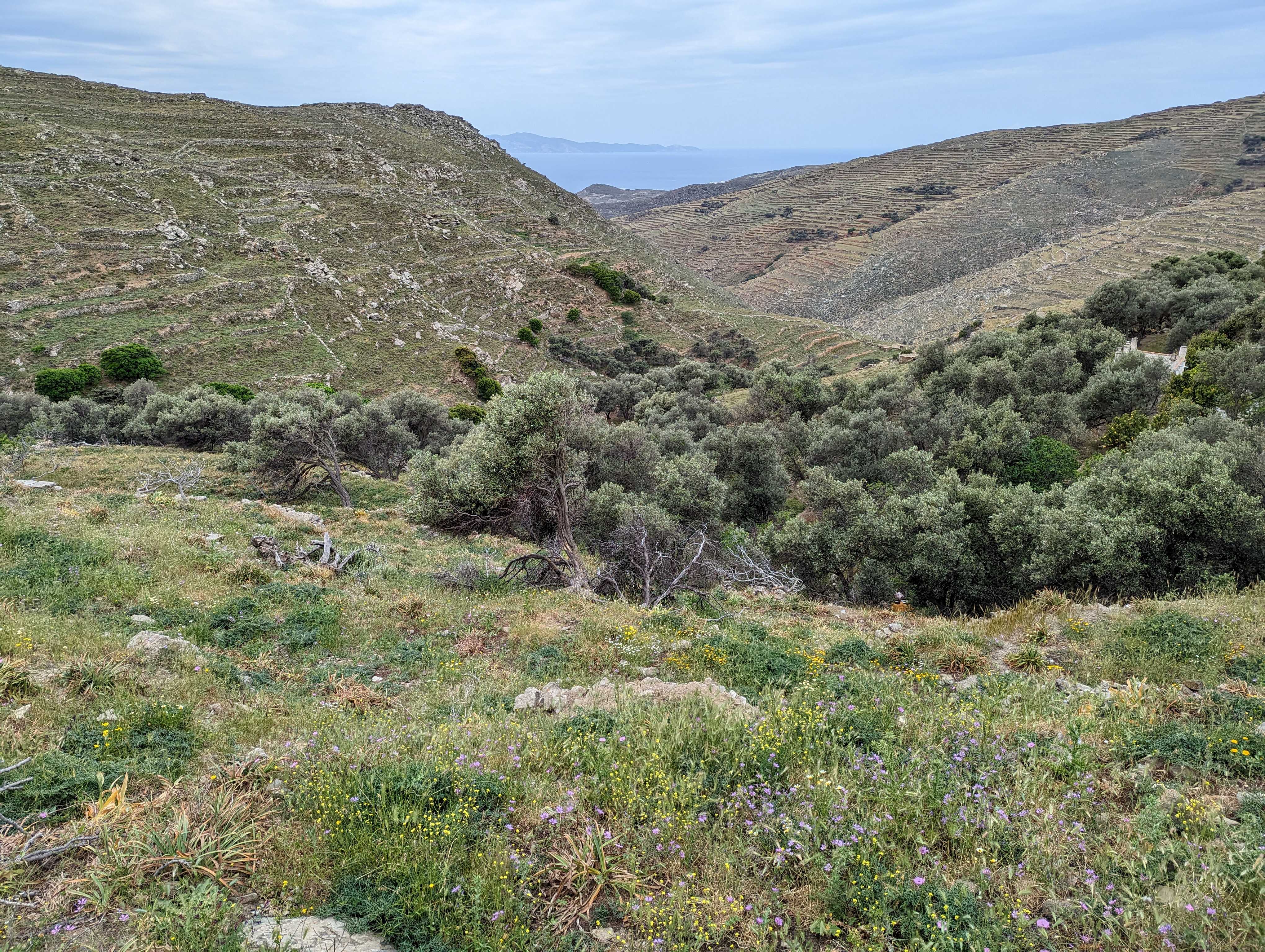
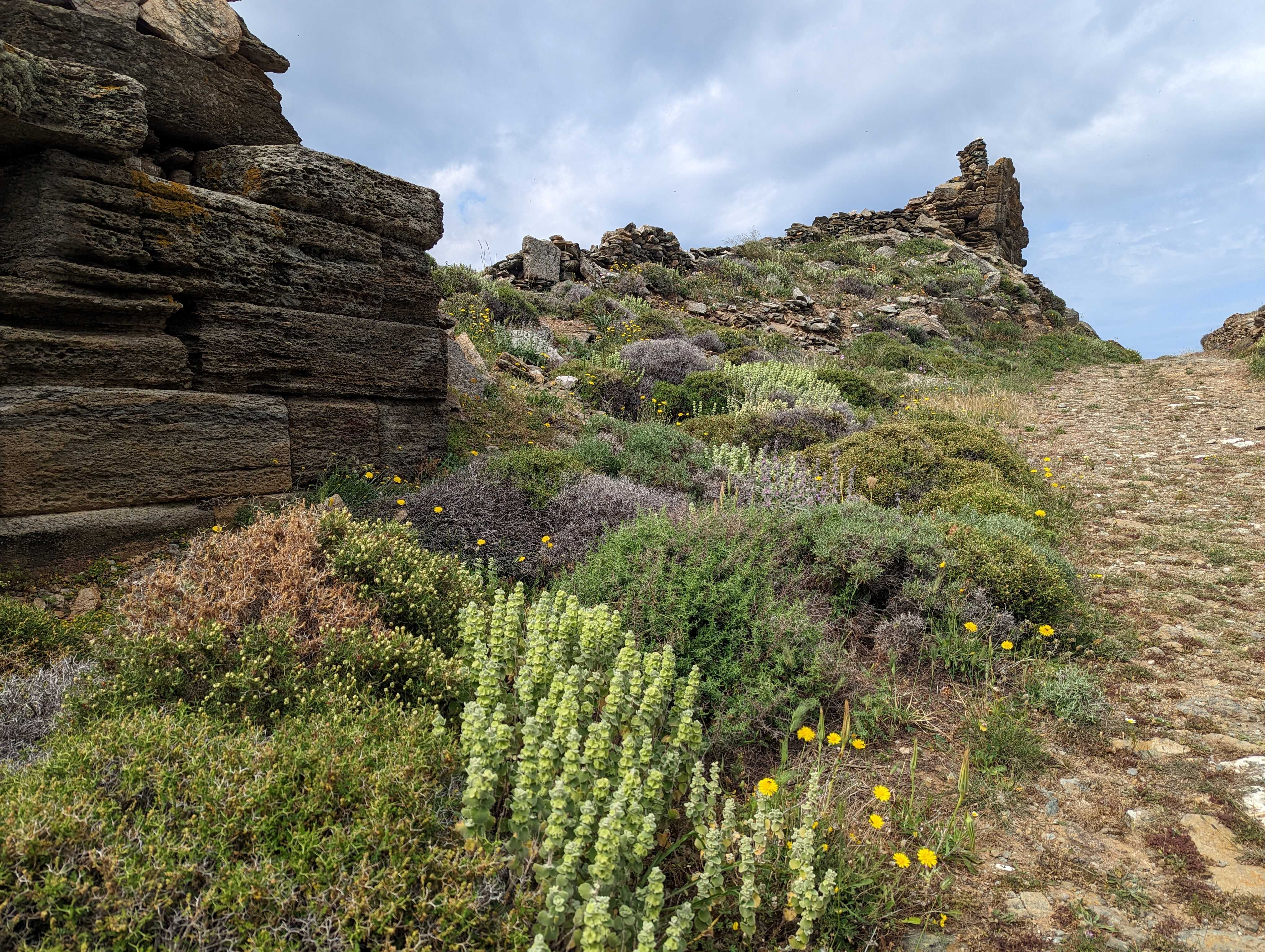
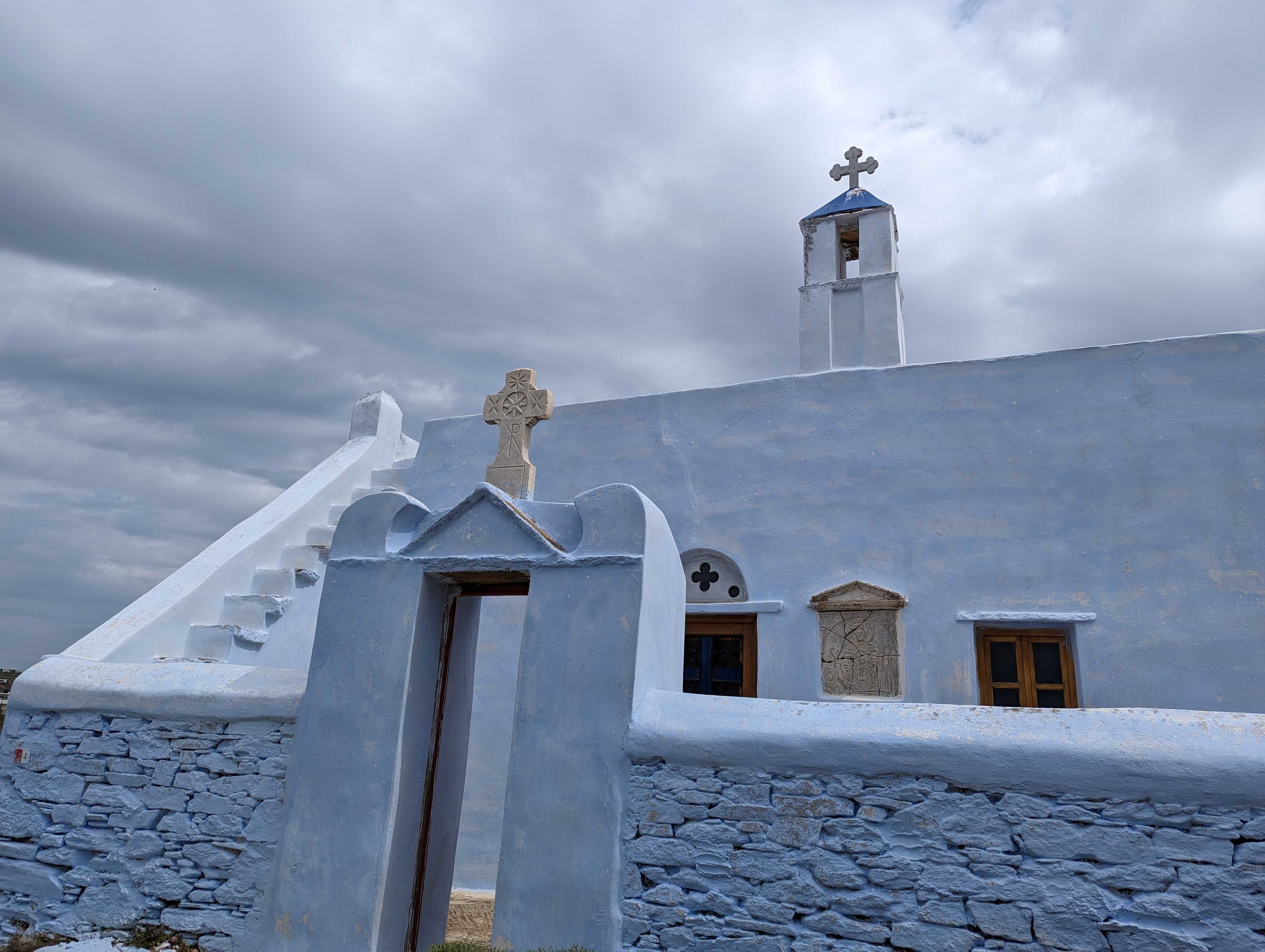
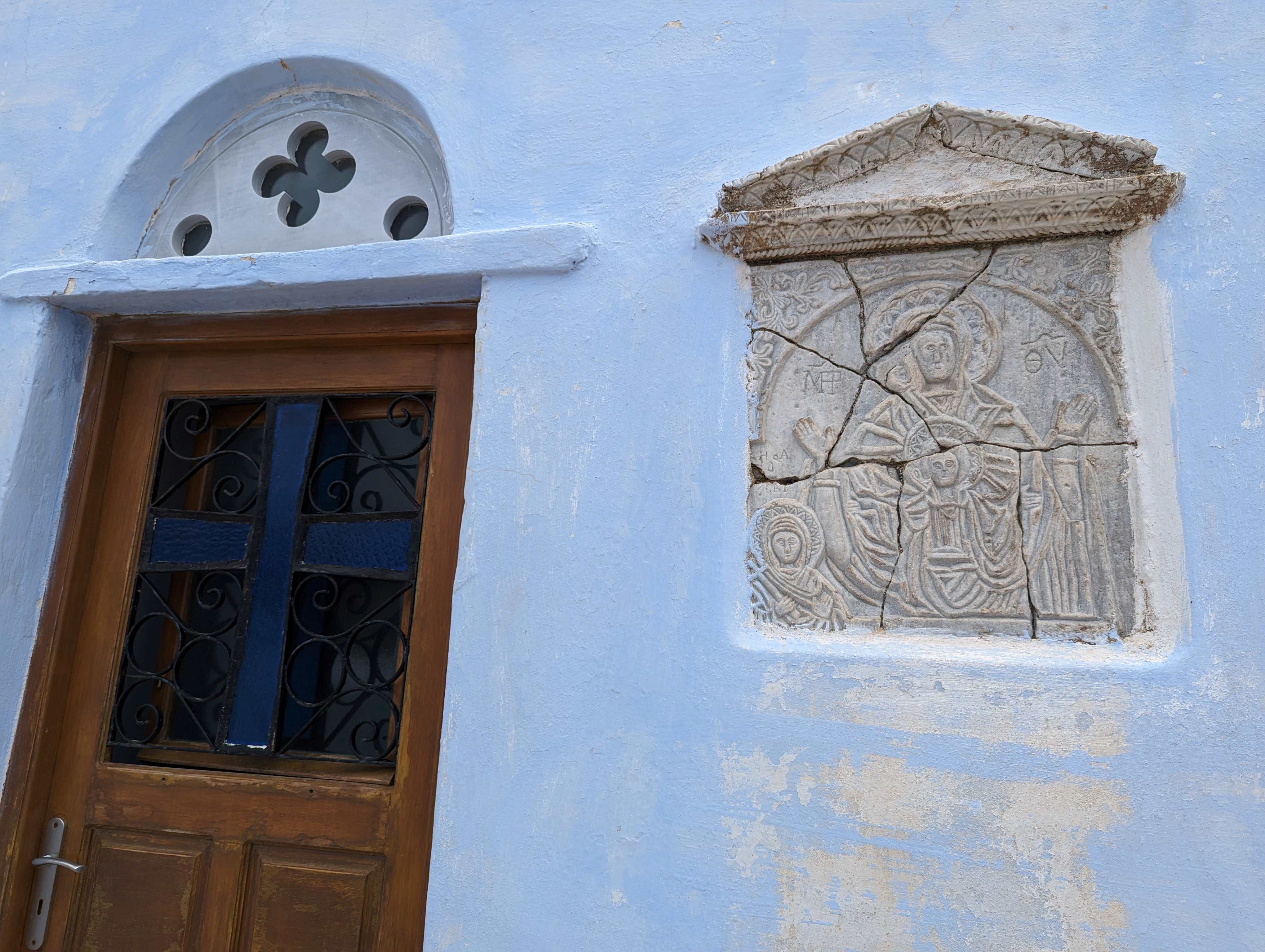
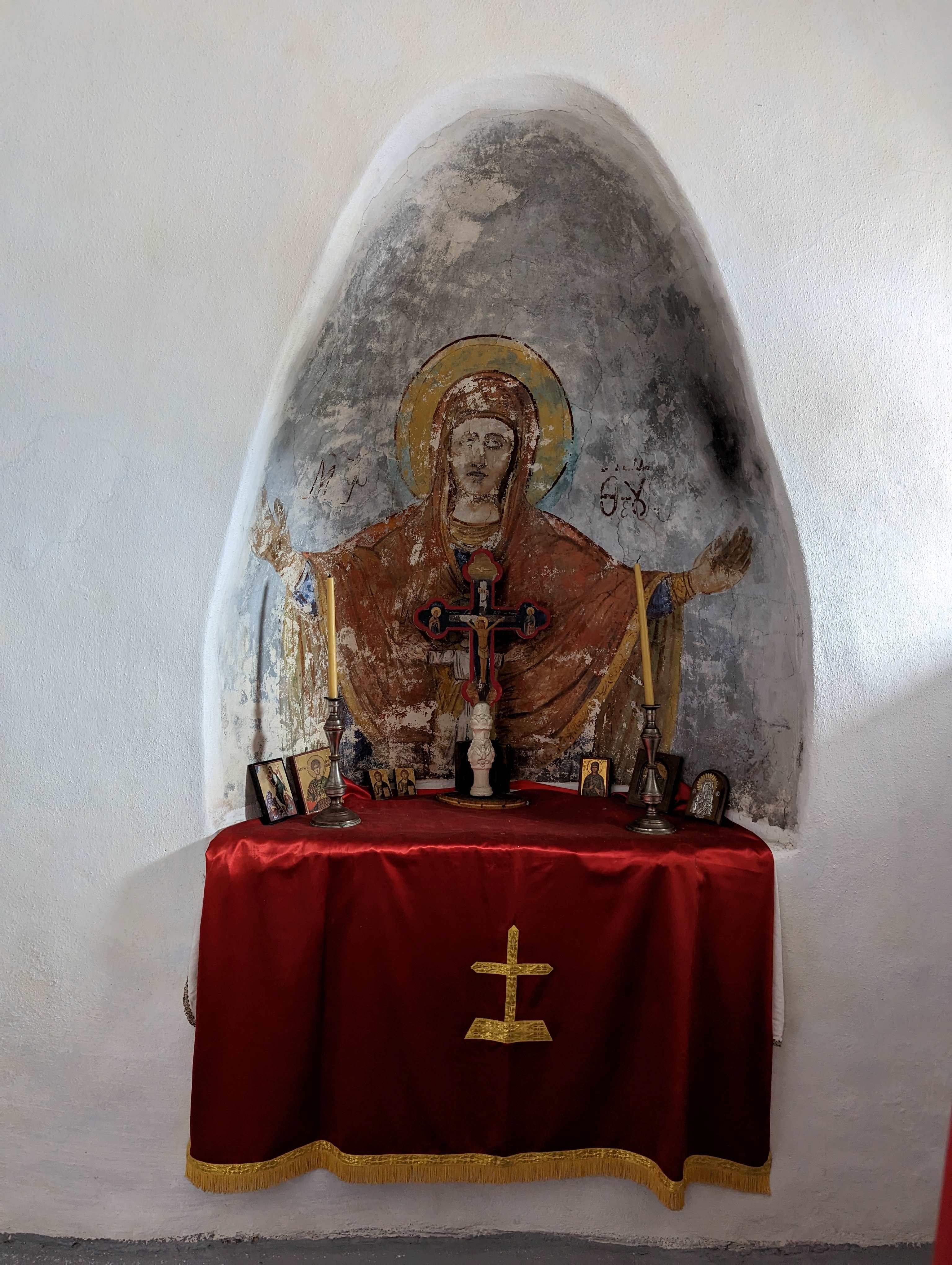
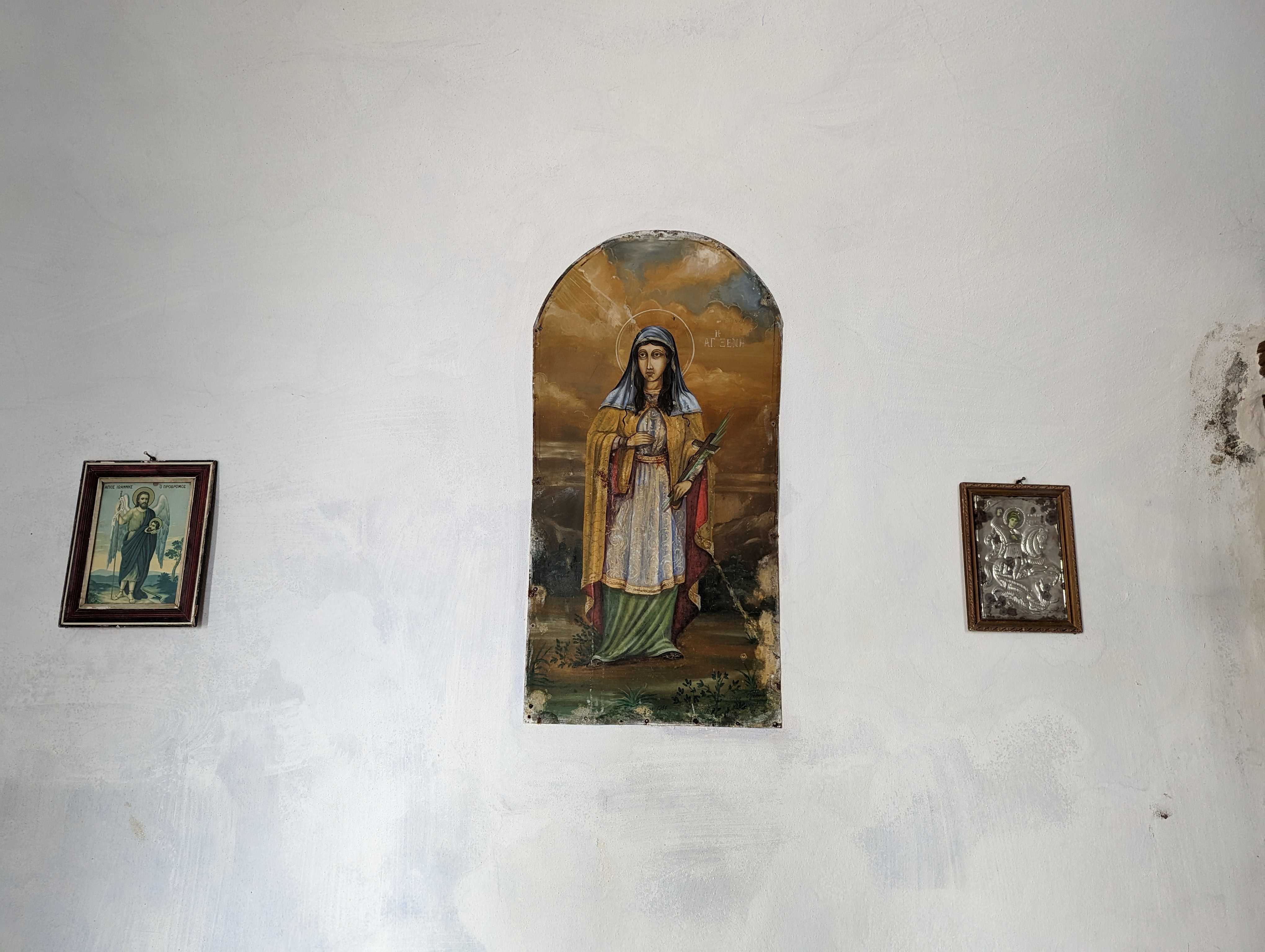
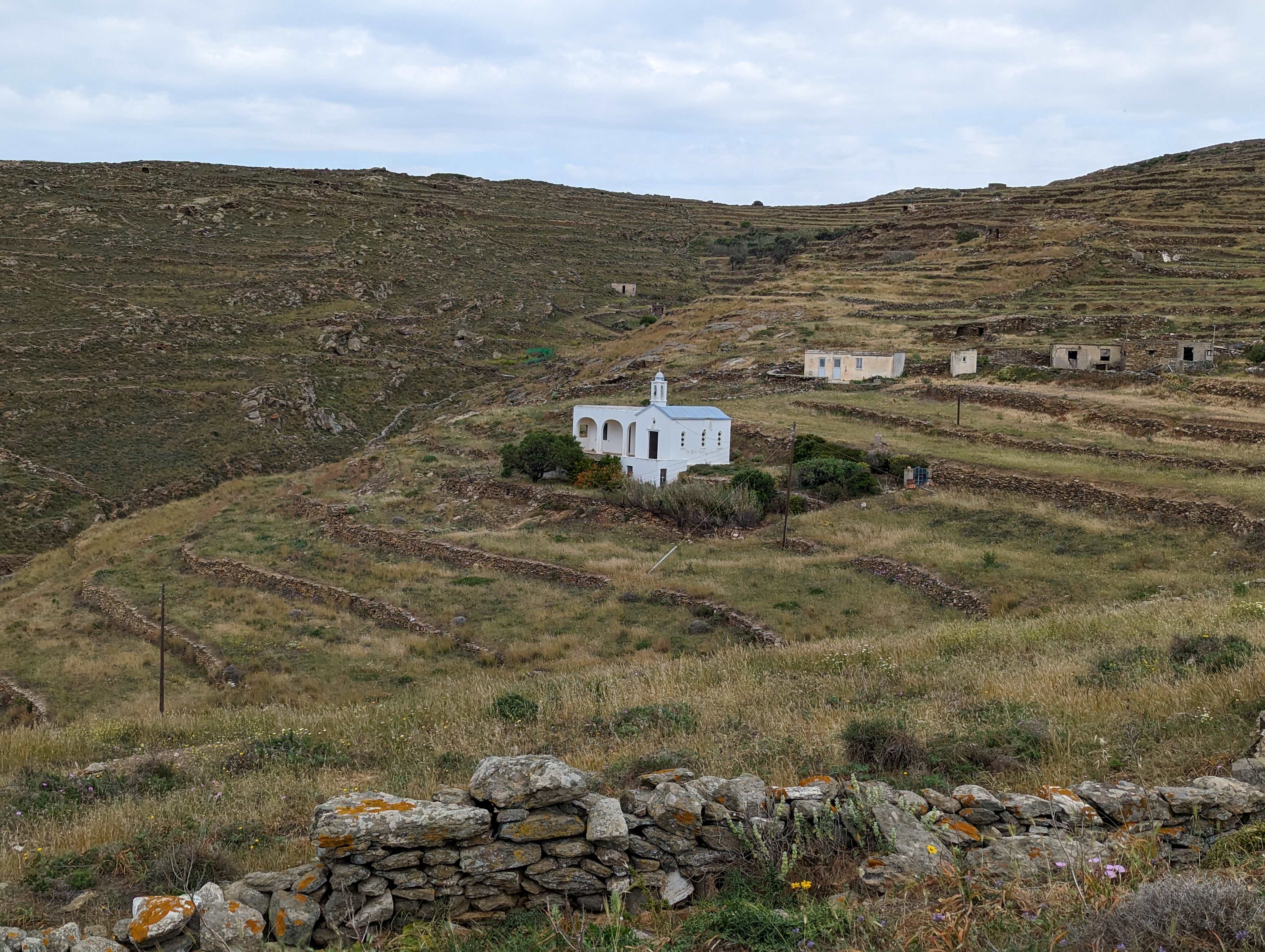
There are a wide range of walks around the Greek island of Tinos. Look out for wild goats, the most stunning variety of local flowers, and unexpected chapels with cool interiors, often with murals and other atmospheric images. On the whole the paths are quite well signposted, and the ones I made travelled through varied scenery, almost all taking in at least one of the famous dovecots. There are no high mountains, but there is some climbing and descending. Do look out for trails that can be dusty from lack of rain and slippery, also narrow and overgrown ones through lack of clearing, however, none of the ones I tried were impassable.
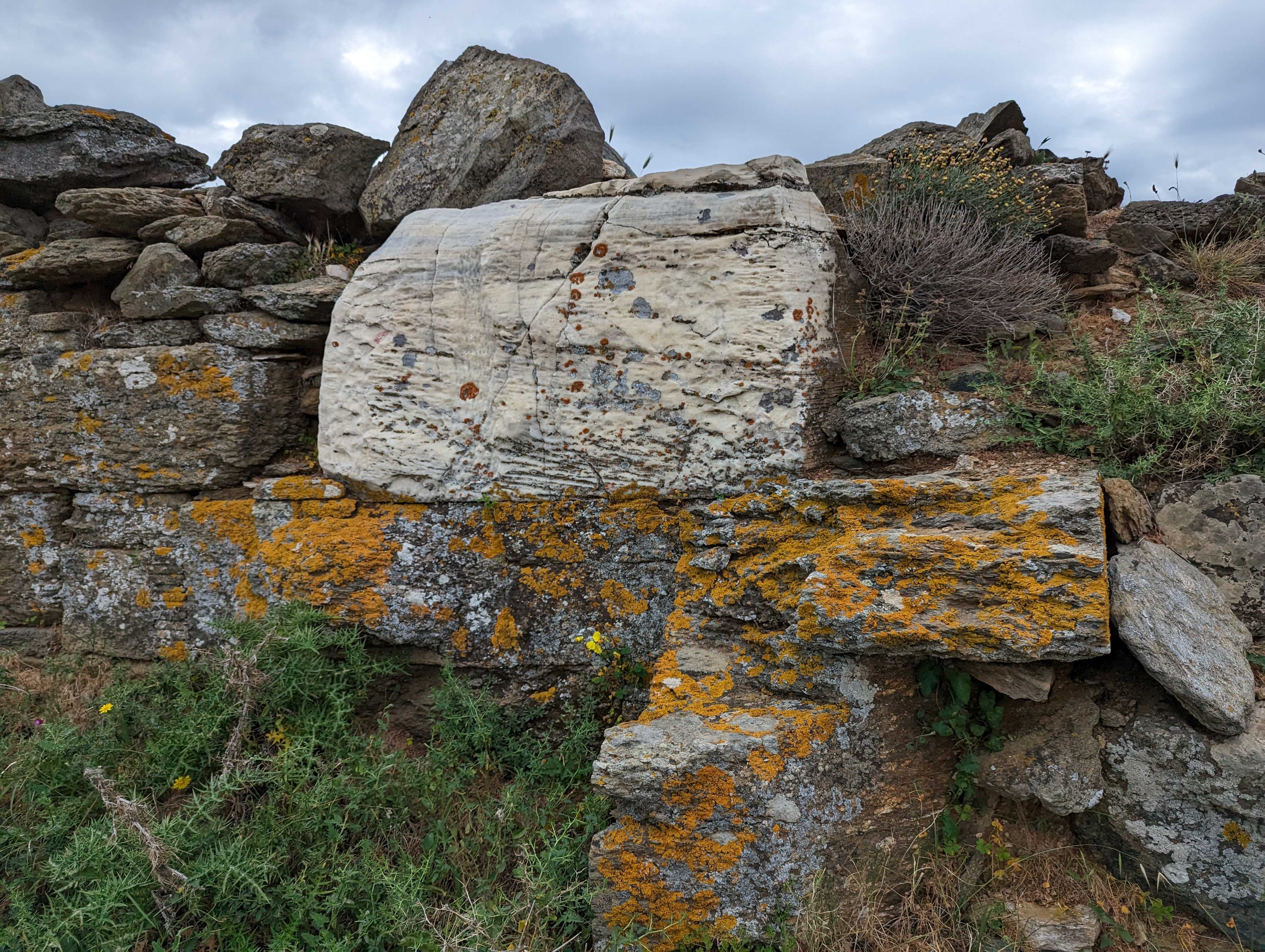
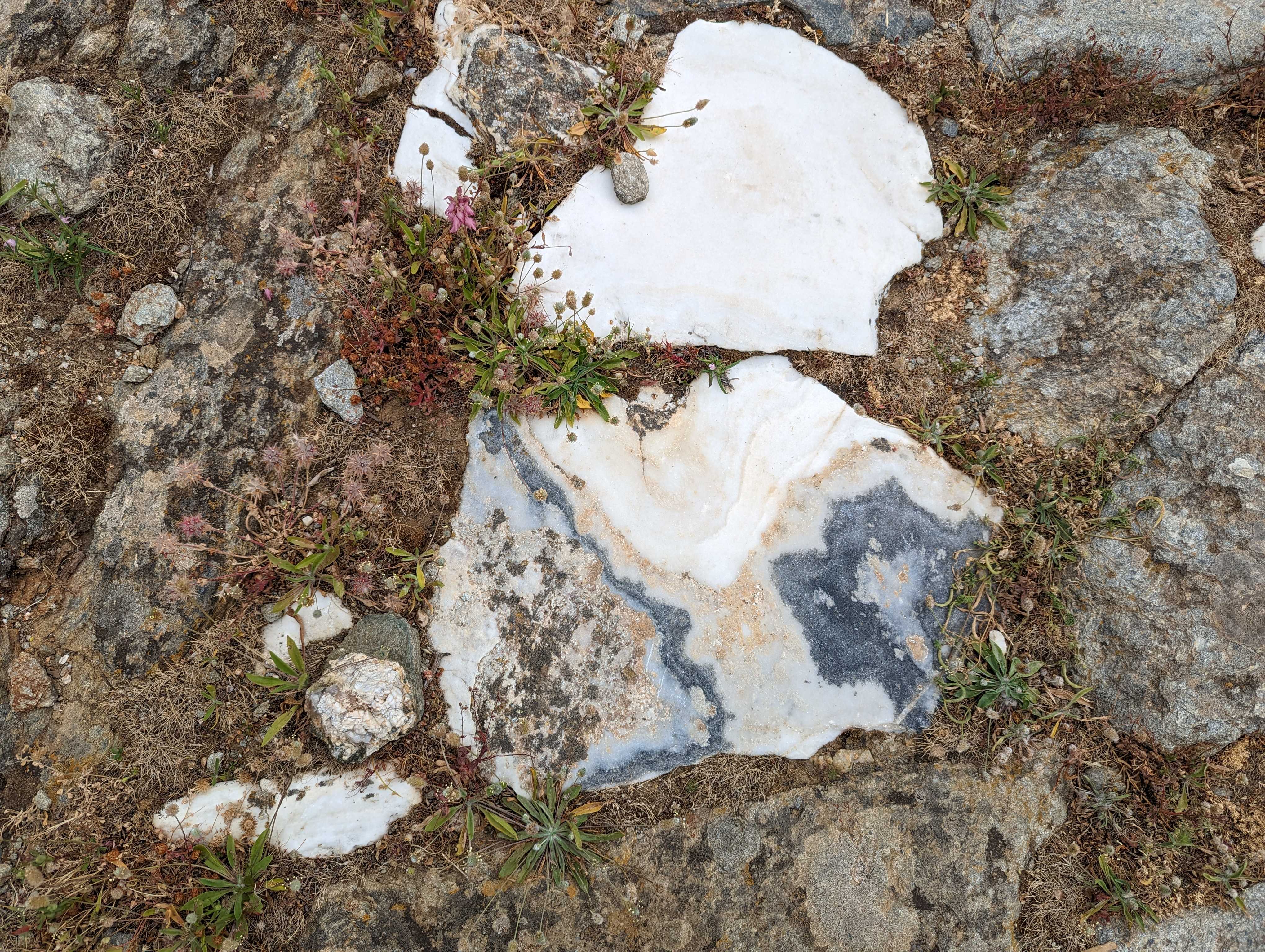
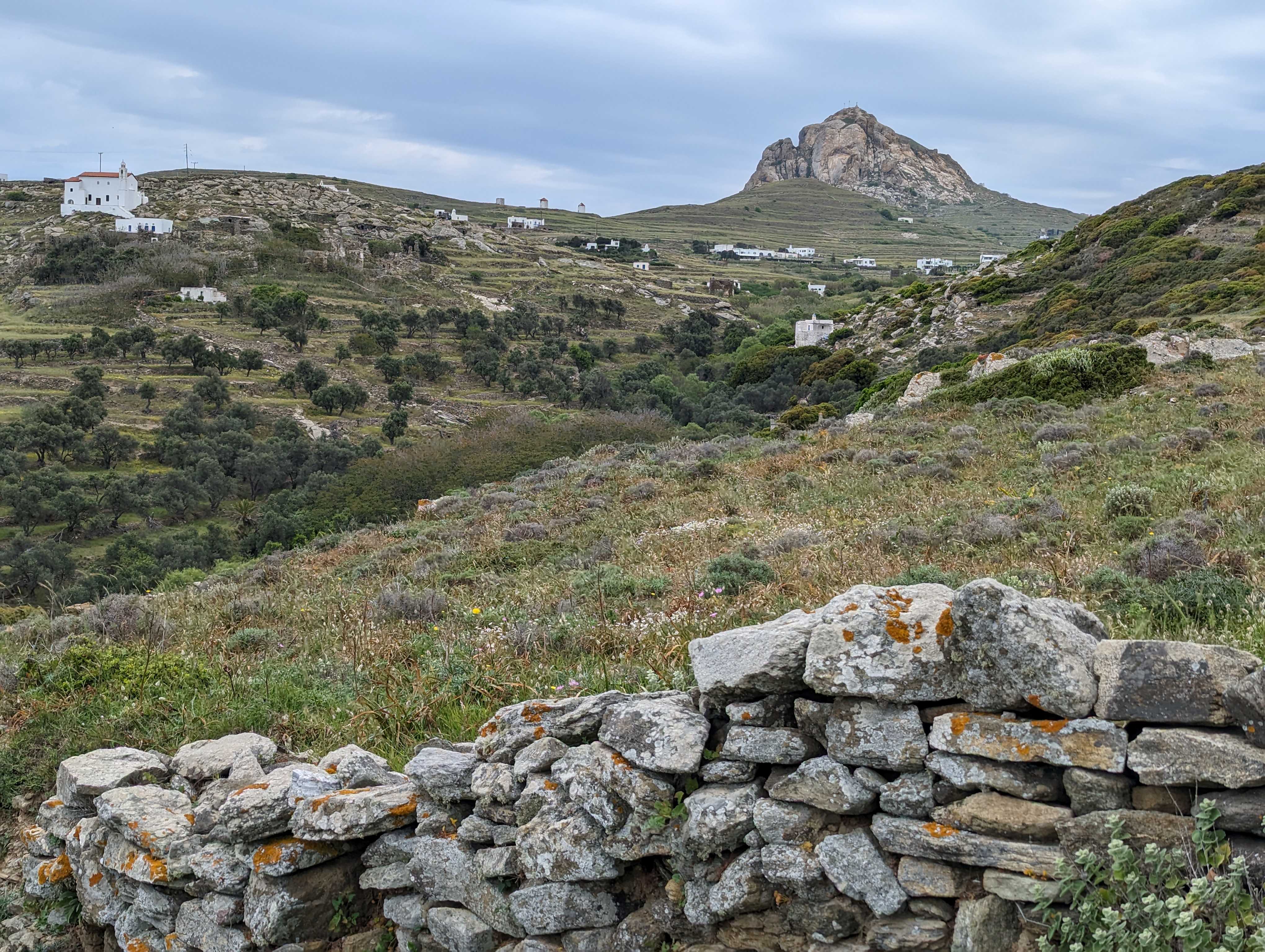
T1A trail – flora, Ktikados, chapel, and geology
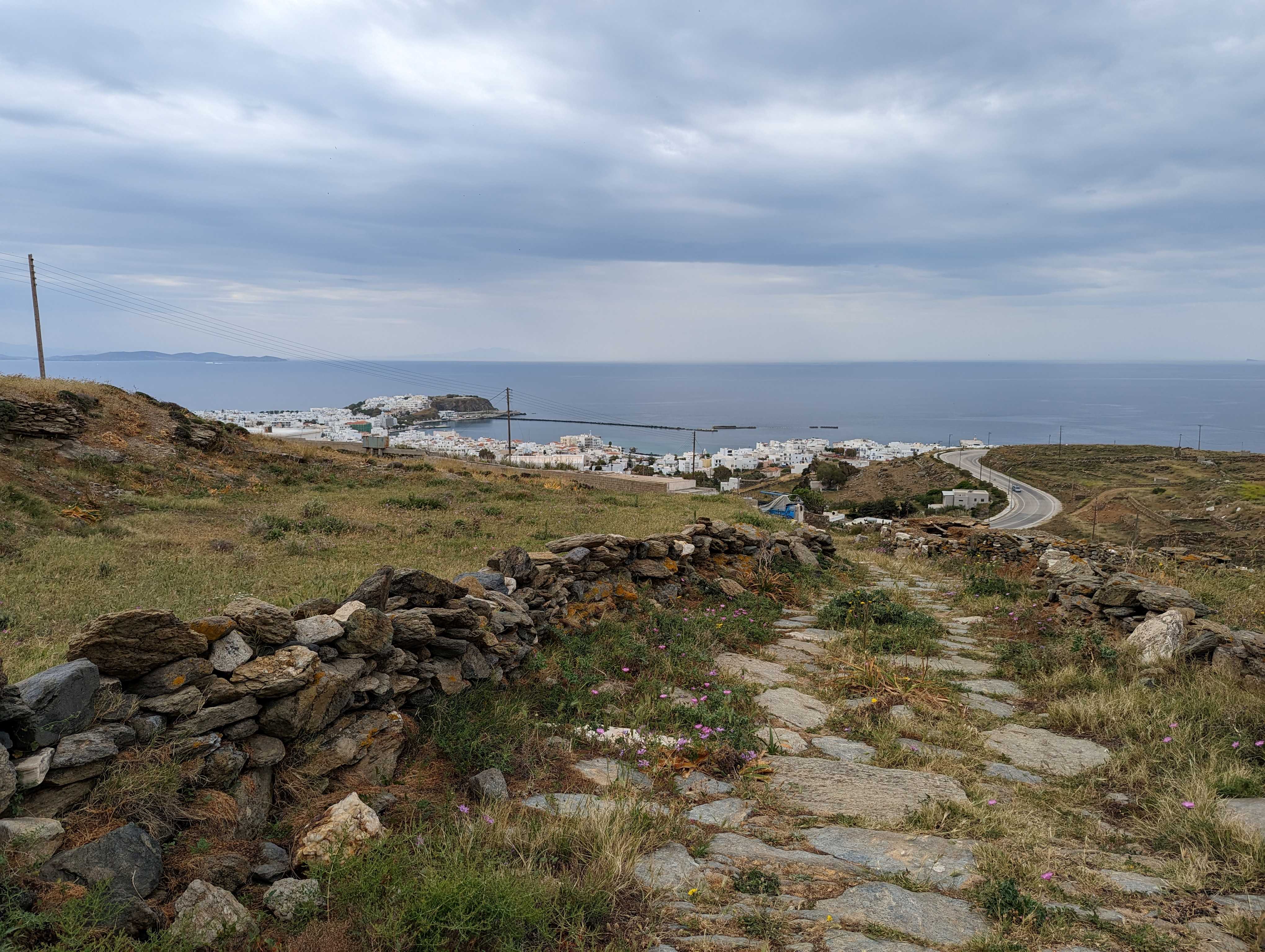
I started the T1 trail at the Panagia Shrine, Chora, Tinos, GreeceView of Chora (looking back) from T1 trail, Tinos, Greece
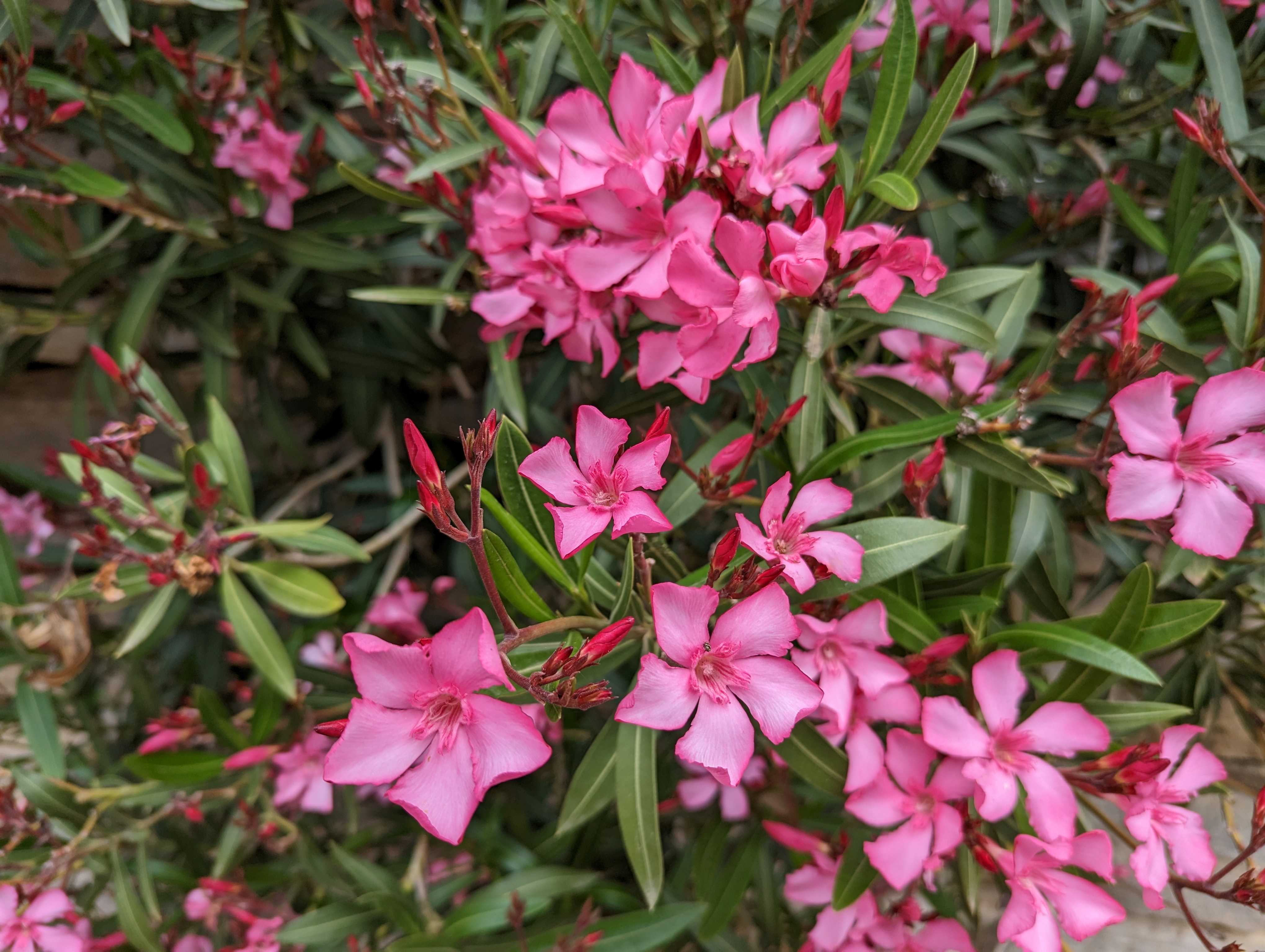
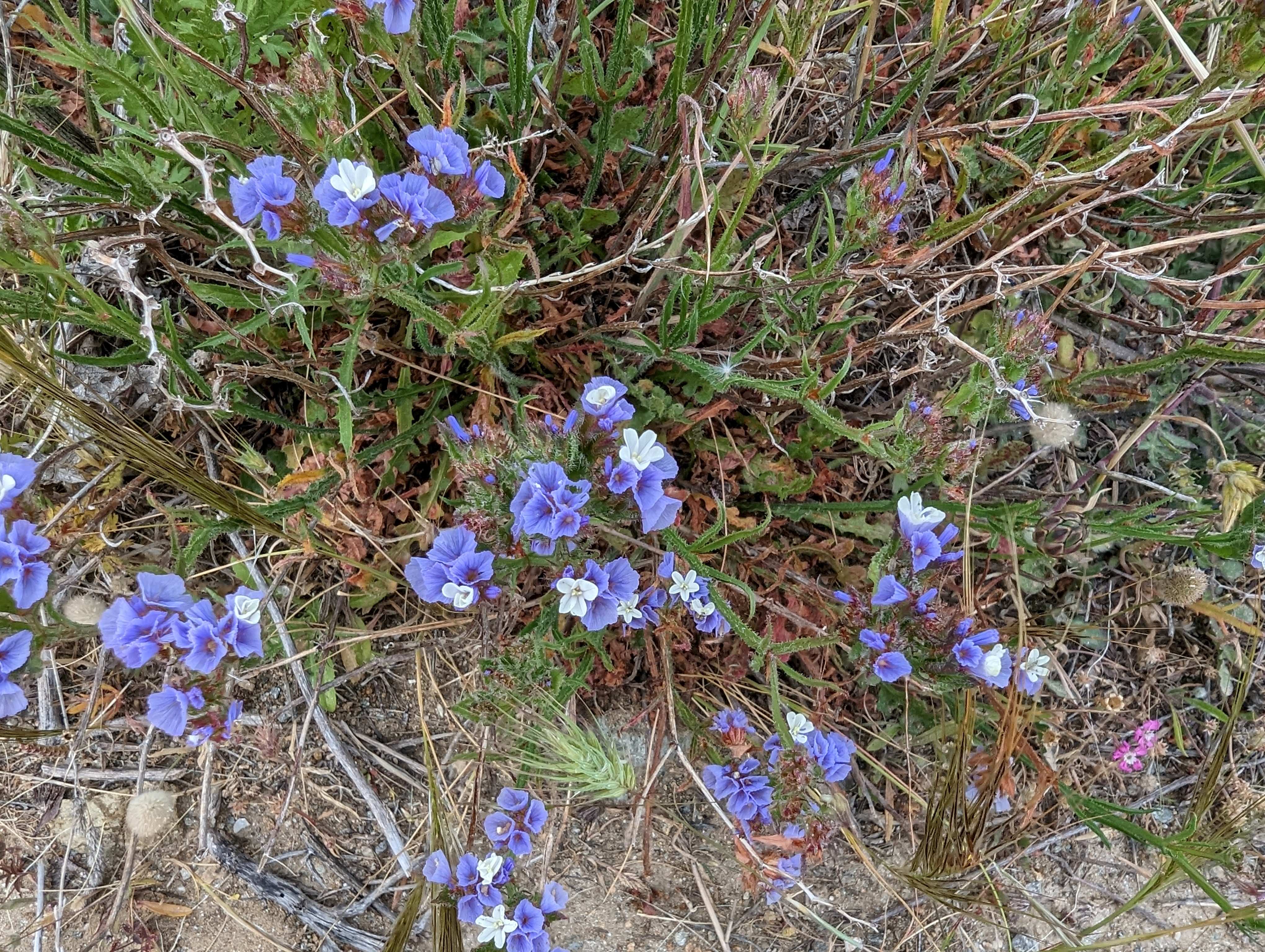
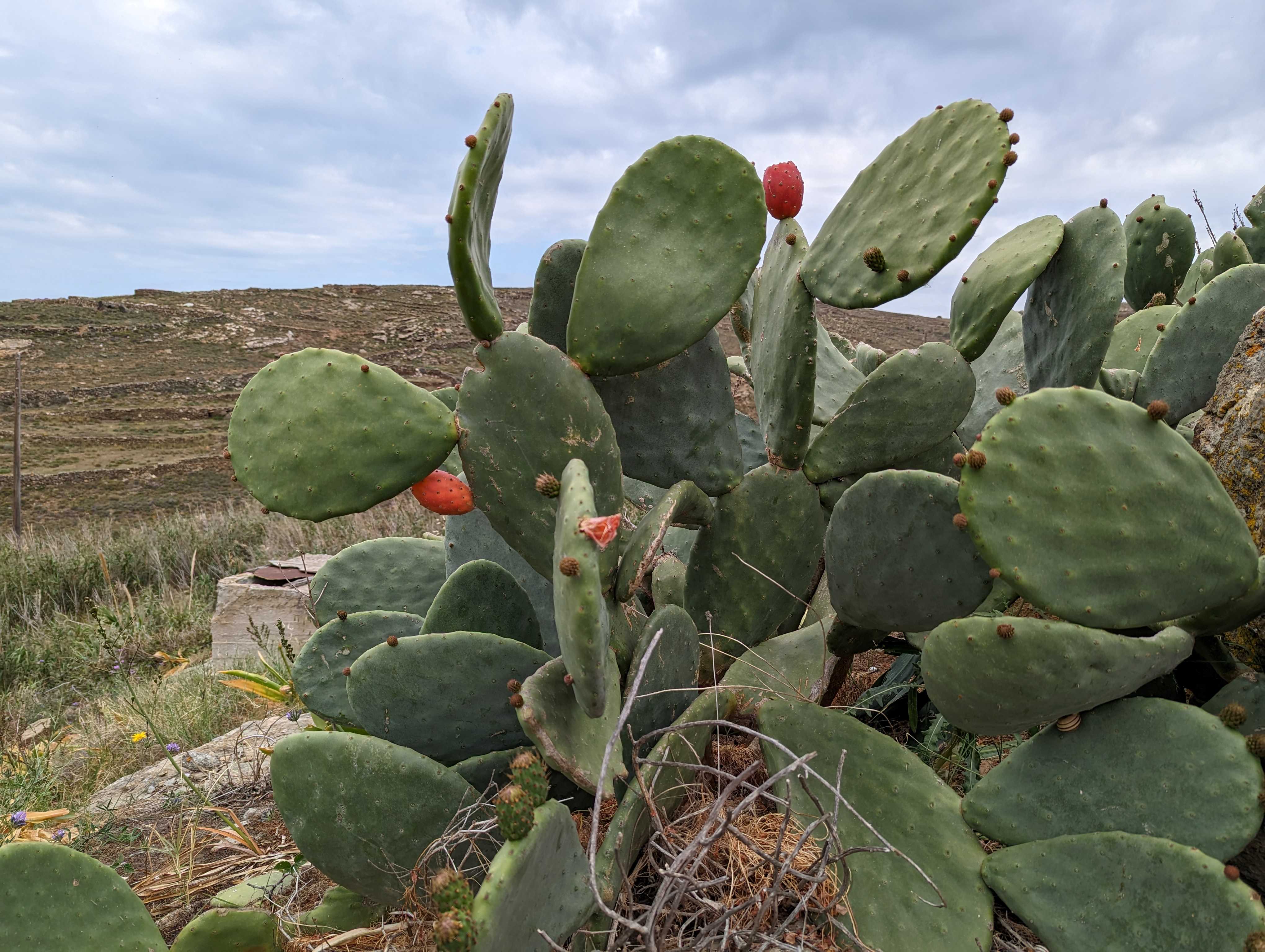
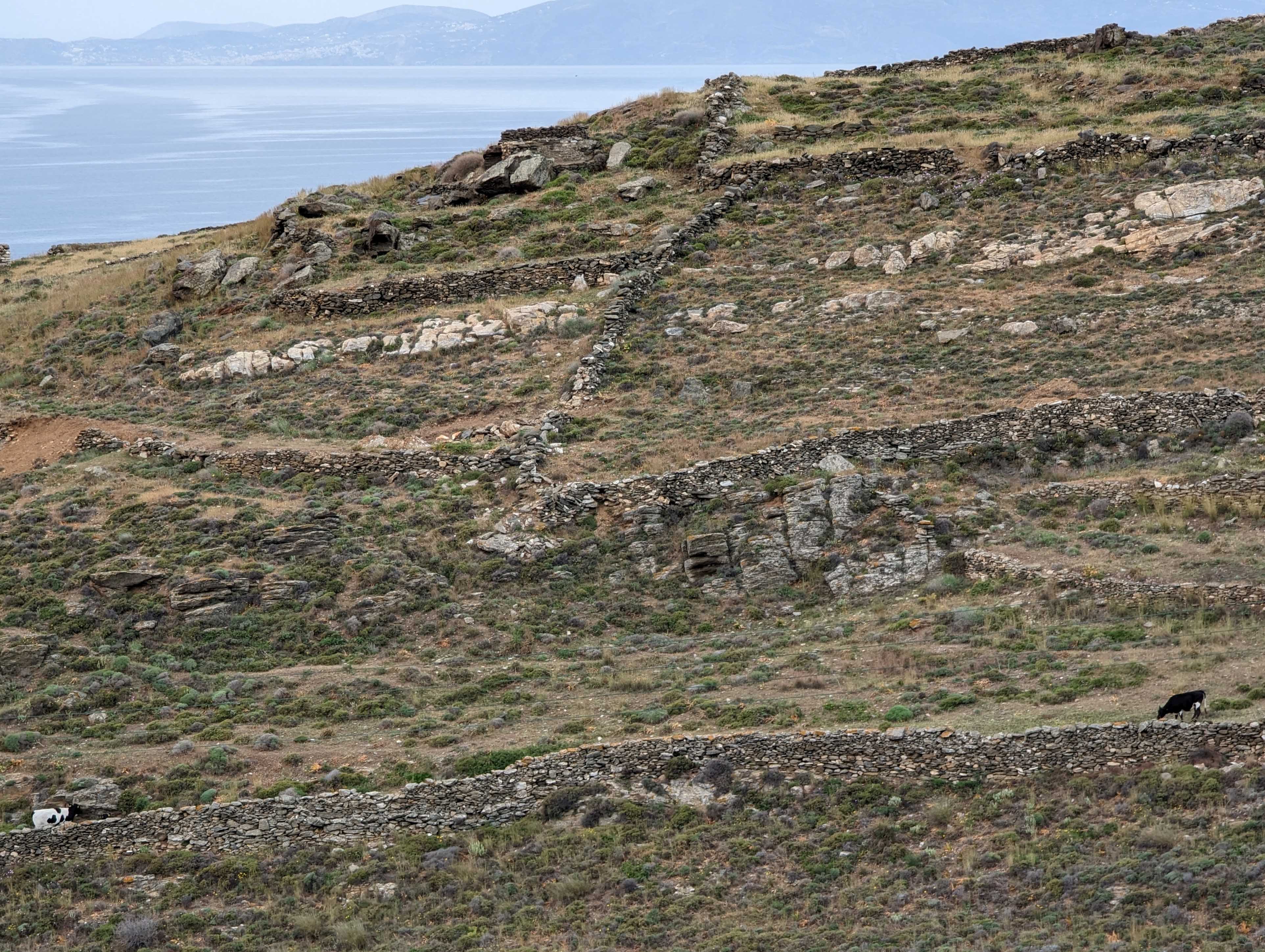
It was a wonderful day which took me steeply out of the city, hard by the Panagia shrine (Holy Monastery of Virgin Mary Evangelistria) and an olive grove, past hens, goats and ladybirds in the fields, and a vast array of wild plants: pink and white oleander, fig trees, sea lavender, and a giant cacti replete with prickly pears. I meandered along crazy-paving paths with spectacular views of the sea, across slopes with small churches, and amongst giant geological specimens.
Oleander, sea lavender and prickly pears along the T1 trail, Tinos, Greece
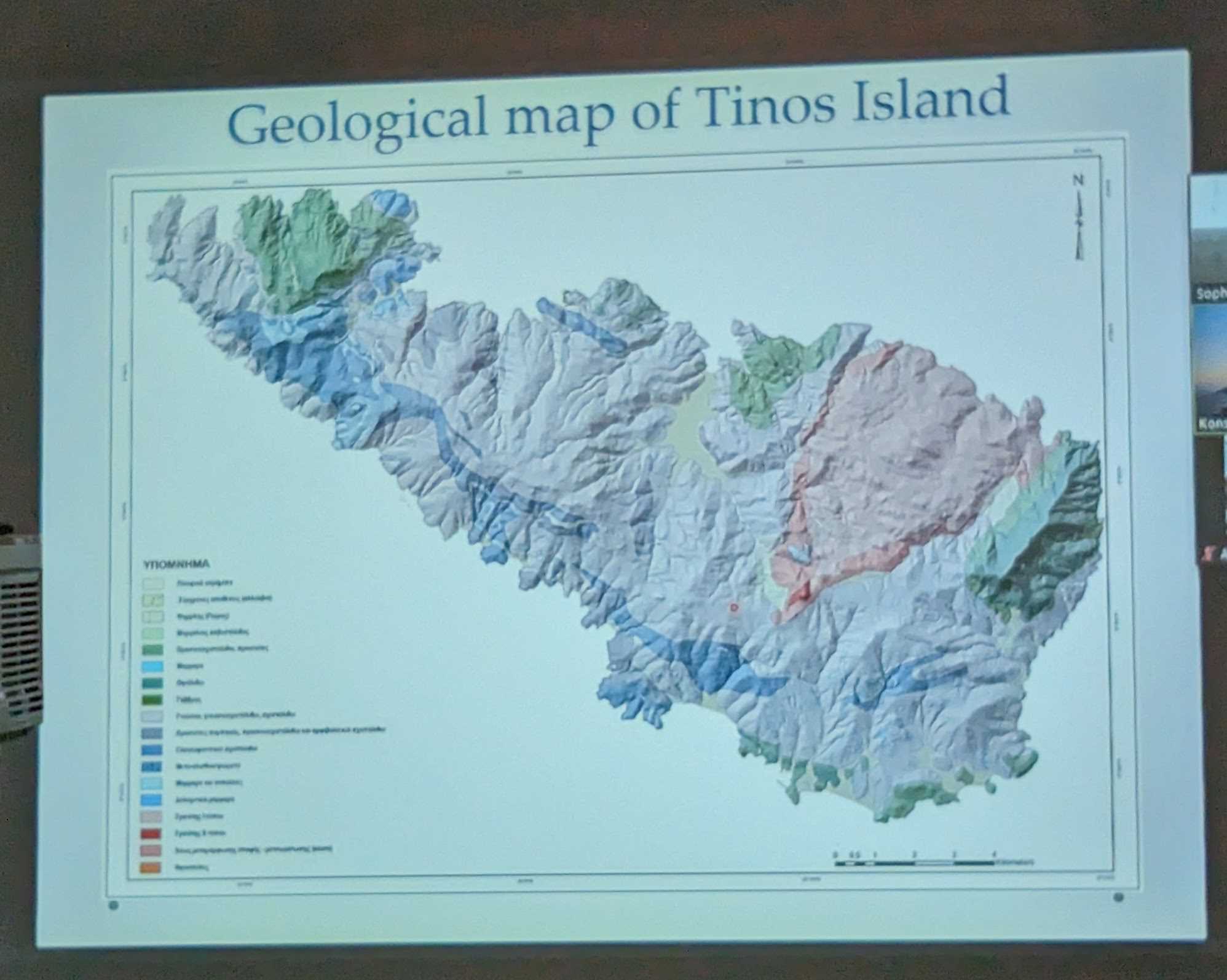
Geological map of Tinos from a presentation made as part of the Artist’s Residency, The Inherited Earth, part of the Fe26 project a collective research program by the NWMW NPO team 2023T1 trailGeology of Tinos
There was a small church open for me to visit. Co-ordinates 37°33’35.8″N 25°09’34.2″E
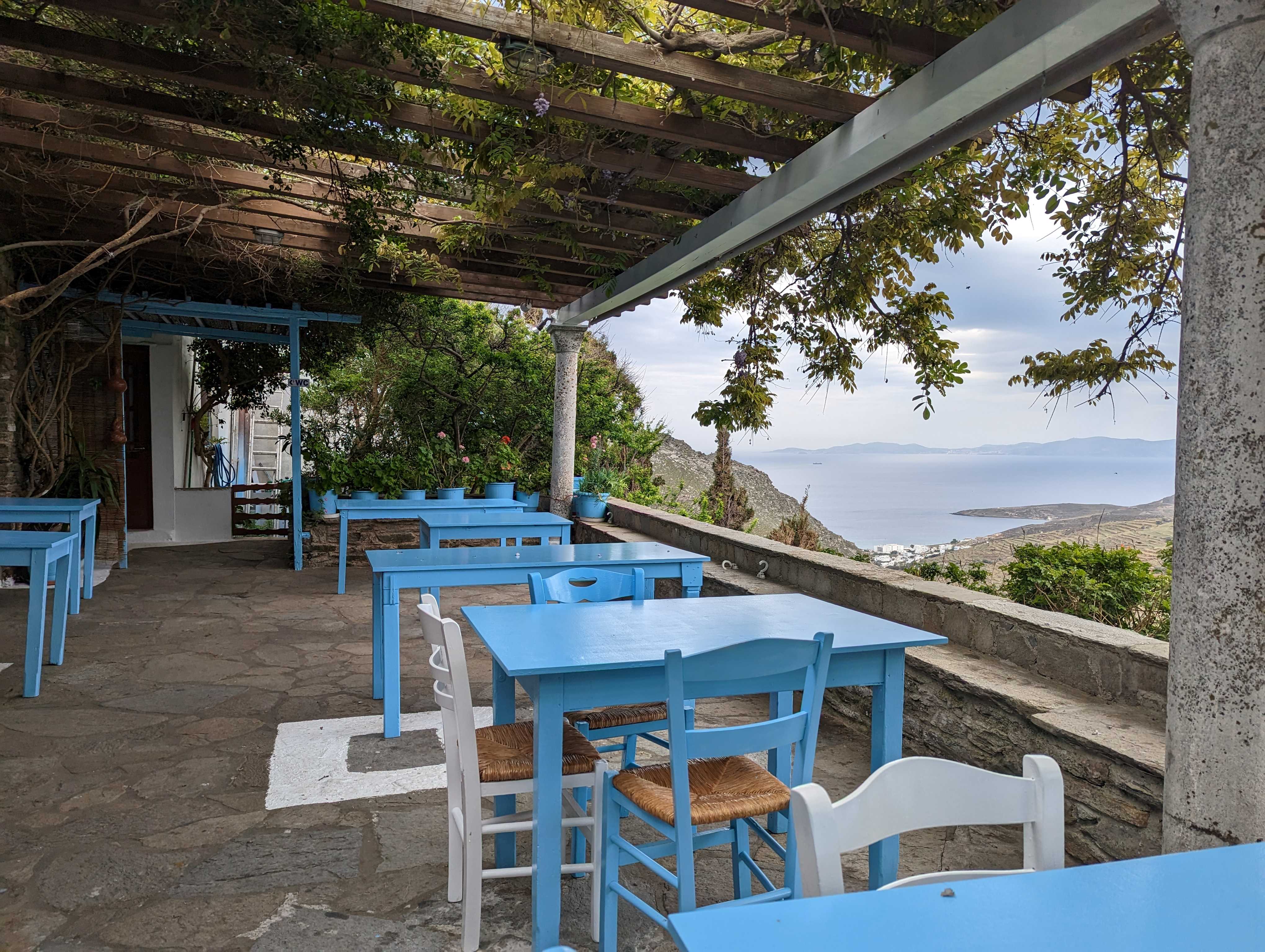
I stopped in the small village of Ktikados for a break, enjoying melizanosalata (baba ganoush / aubergine dip) and a cup of tea.
View from the Drosia Taverna, Ktikados, Tinos, GreeceKtikados
This walk comes highly recommended.
Great views of Exomvourgo (hill), Tinos, GreeceMy offerings to the Panagia on the T1 trail, Tinos GreeceOn the T1 trail
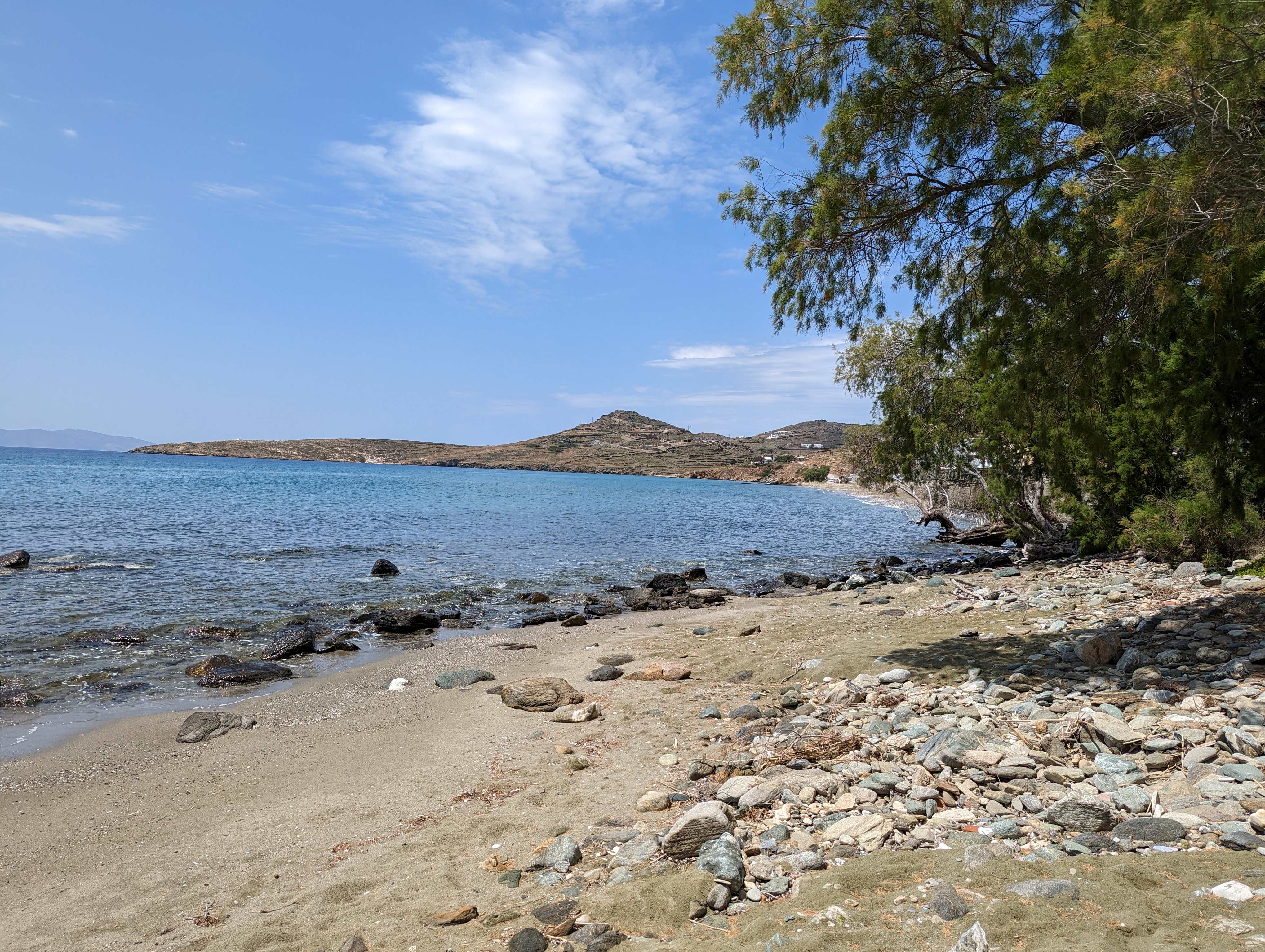
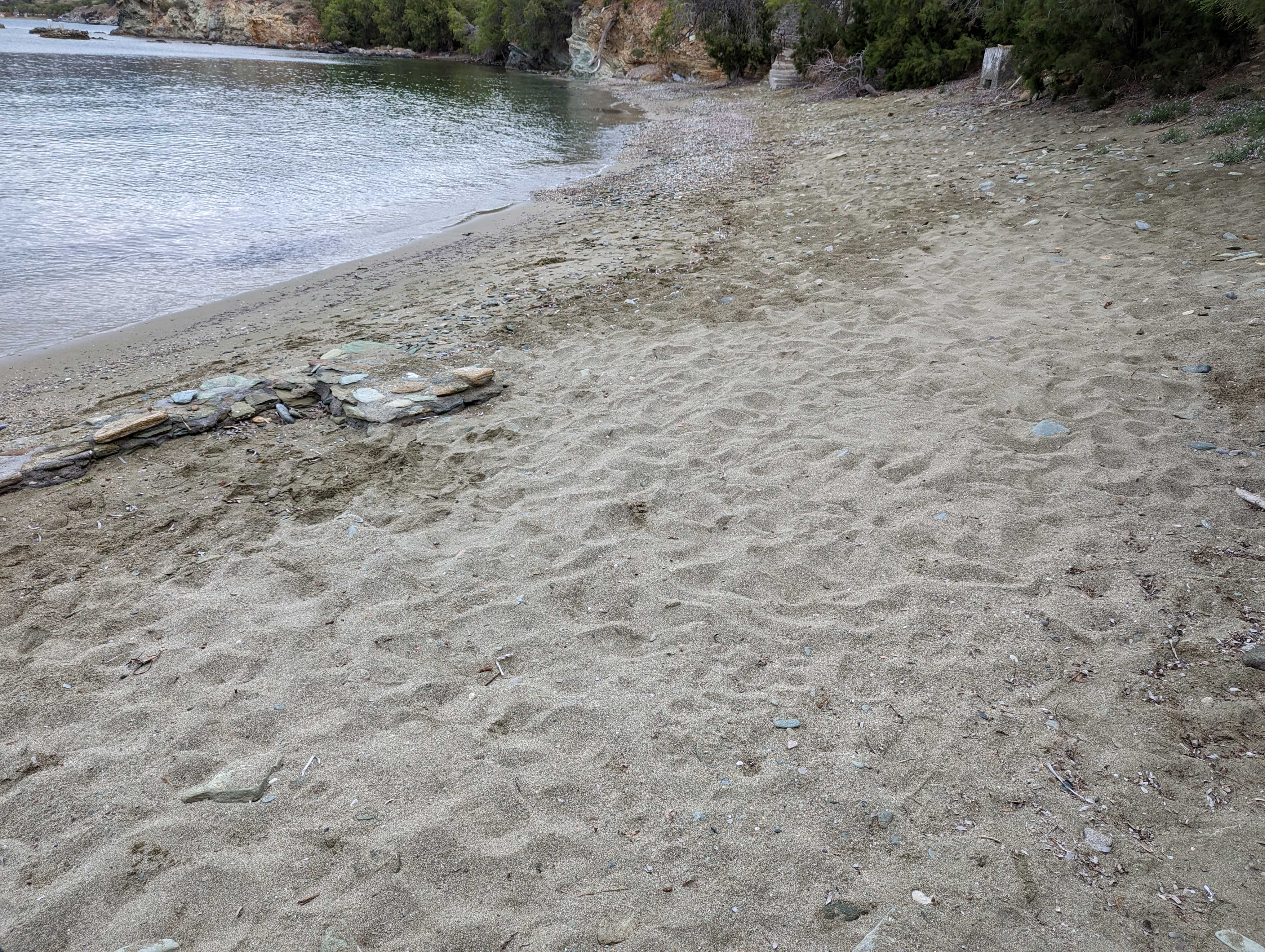
Eventually I descended to the beach in Kionia (see below) and had a refreshing swim.
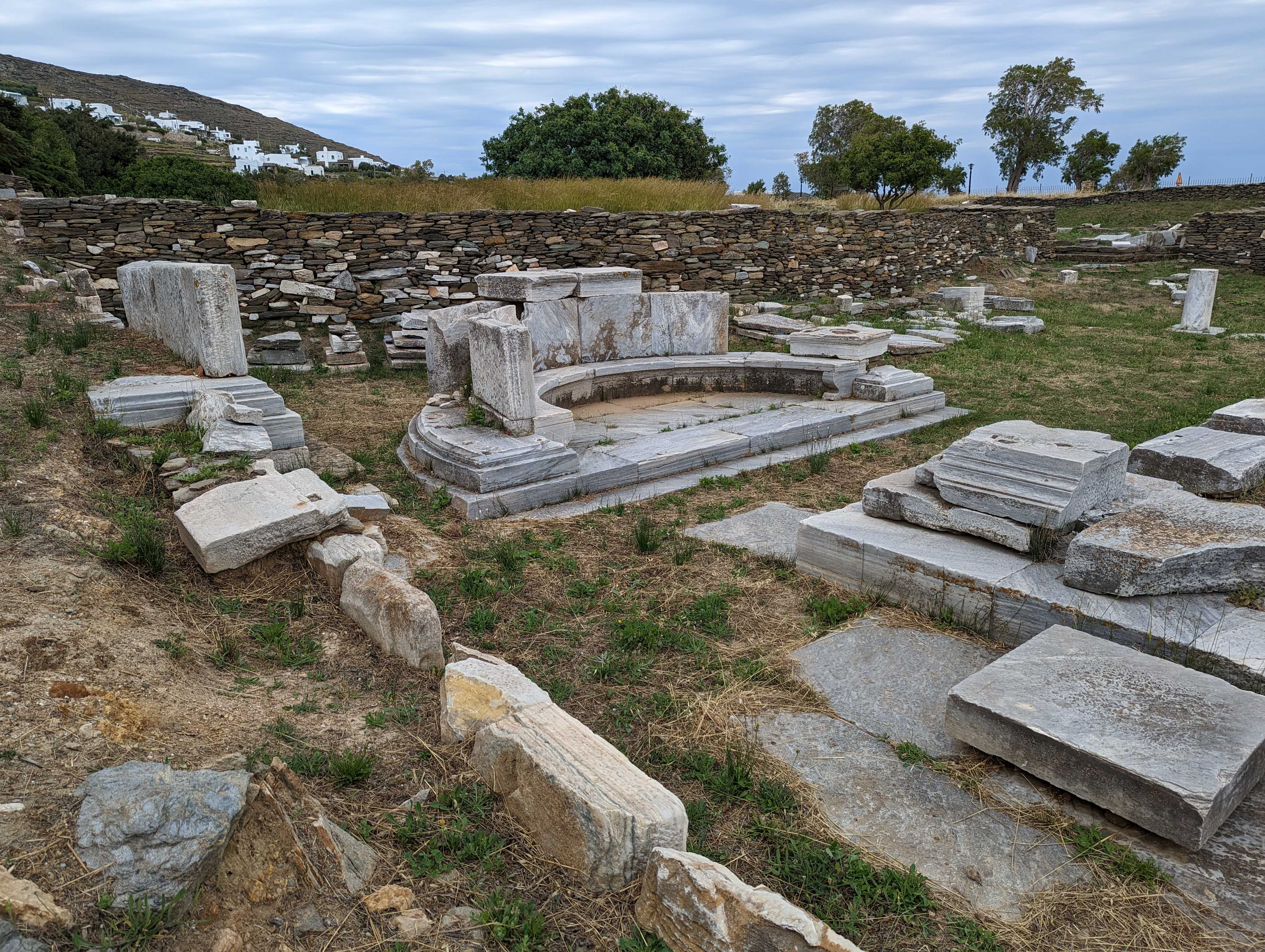
The Poseidon Sanctuary
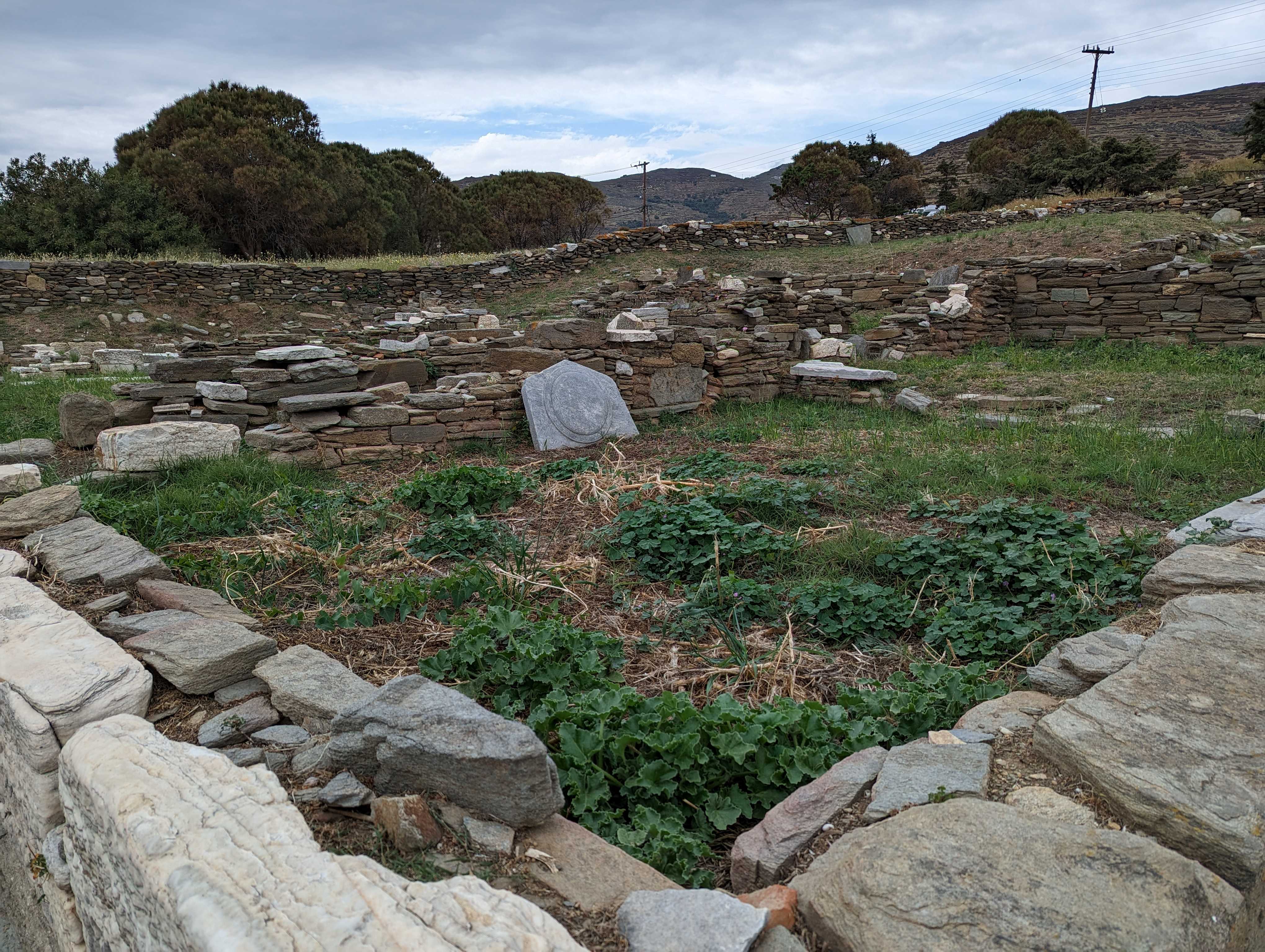
Along the boardwalks I was delighted to discover, by chance, the Poseidon Sanctuary which, in its heyday, attracted pilgrims from beyond the borders of the Greece, as far away as Italy, Asia Minor, and Africa.
Therapy RoomsPoseidon Sanctuary
The Poseidon Sanctuary is believed to date from the 4th century or earlier, placing it in the Hellenistic Period. Dedicated to the sea nymph Aphrite (Amphitriti) and Poseidon, god of the sea, it was a place where visitors would come to clean and purify themselves. As a complementary therapist, I was particularly interested in the site of the former therapy rooms (above left).
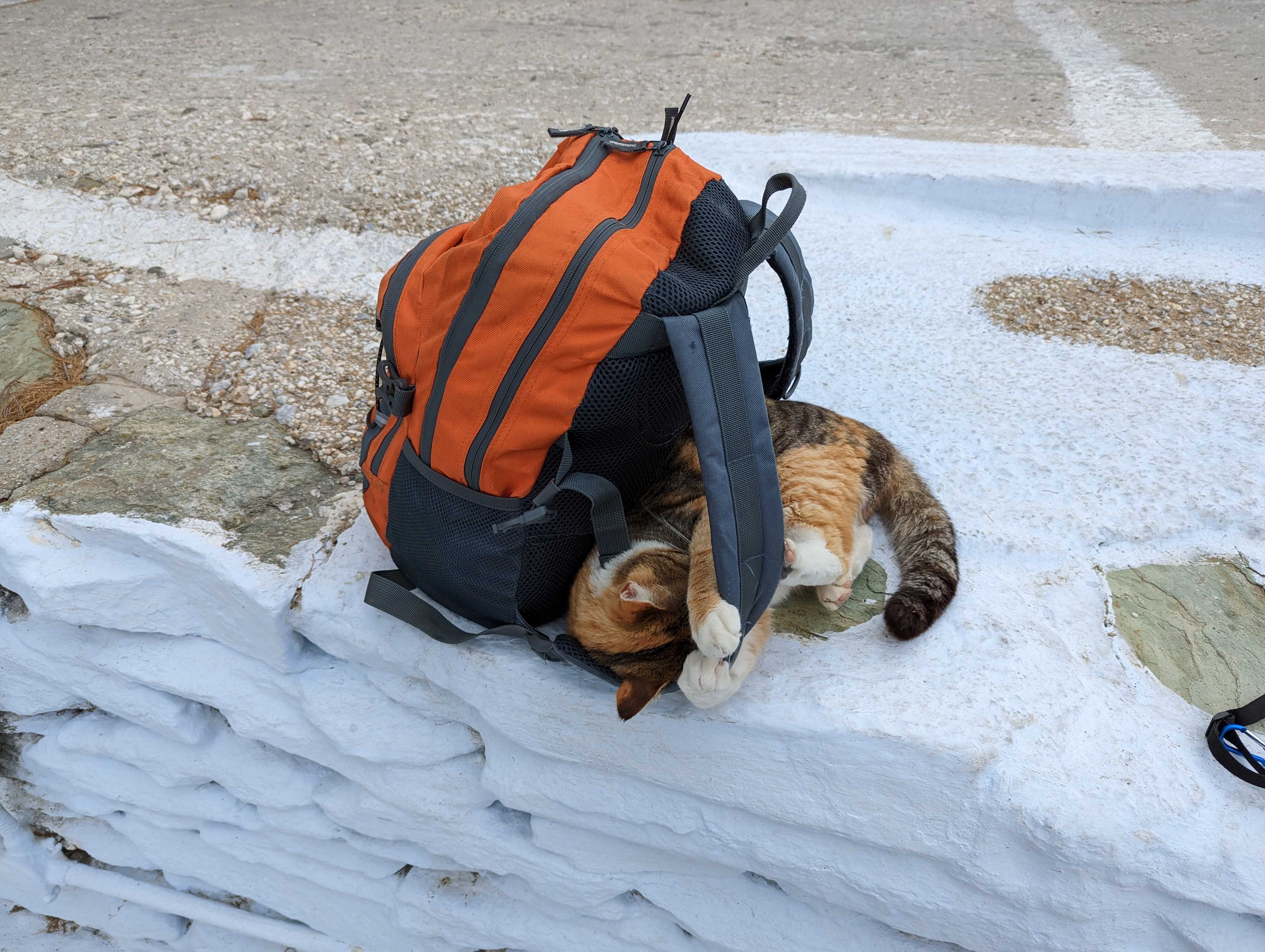
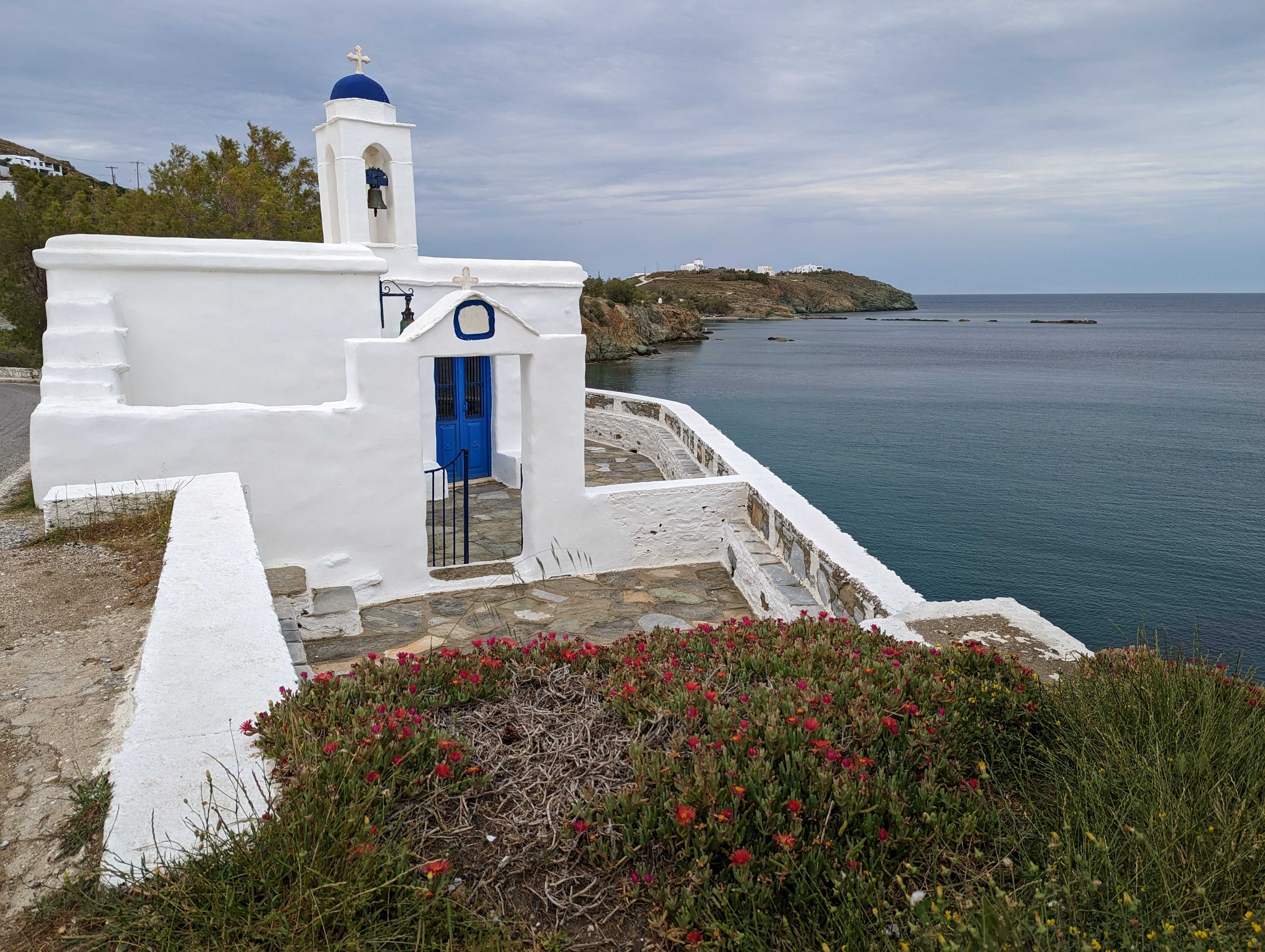
I gave Shiatsu to one of the artists I met, on the beach below this typical church while a kitten played with my rucksack, Kionia, Tinos, Greece.
I returned to Chora from Kionia, a walk of 40 plus minutes, along the main coastal road. Careful as there is no pavement in parts!
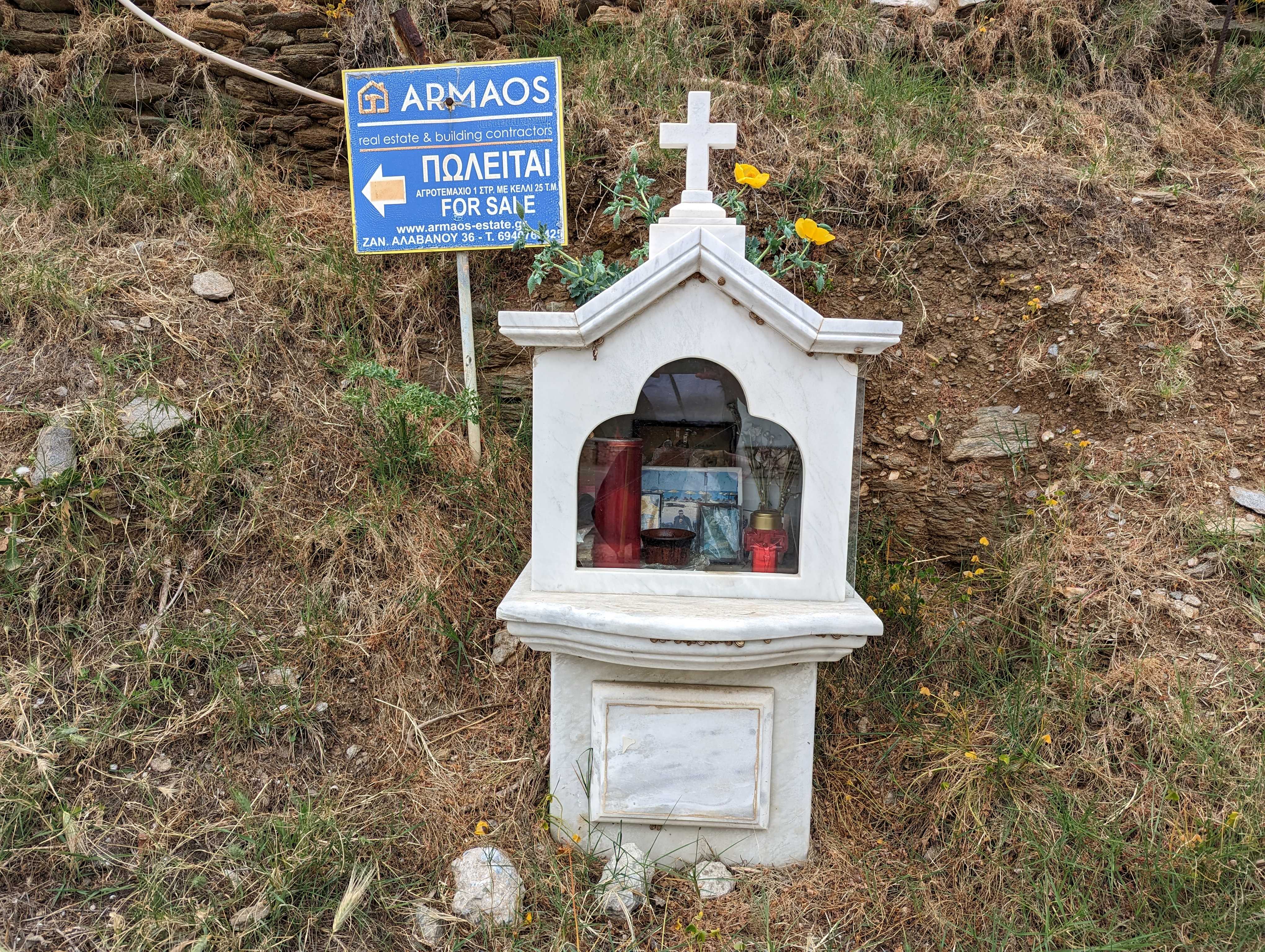
Traditional Wayside ShrineOffering
During my stay on Tinos, I crocheted wild flowers that I found as I walked and offered them in little niches by way of thanks for my experience on the island.
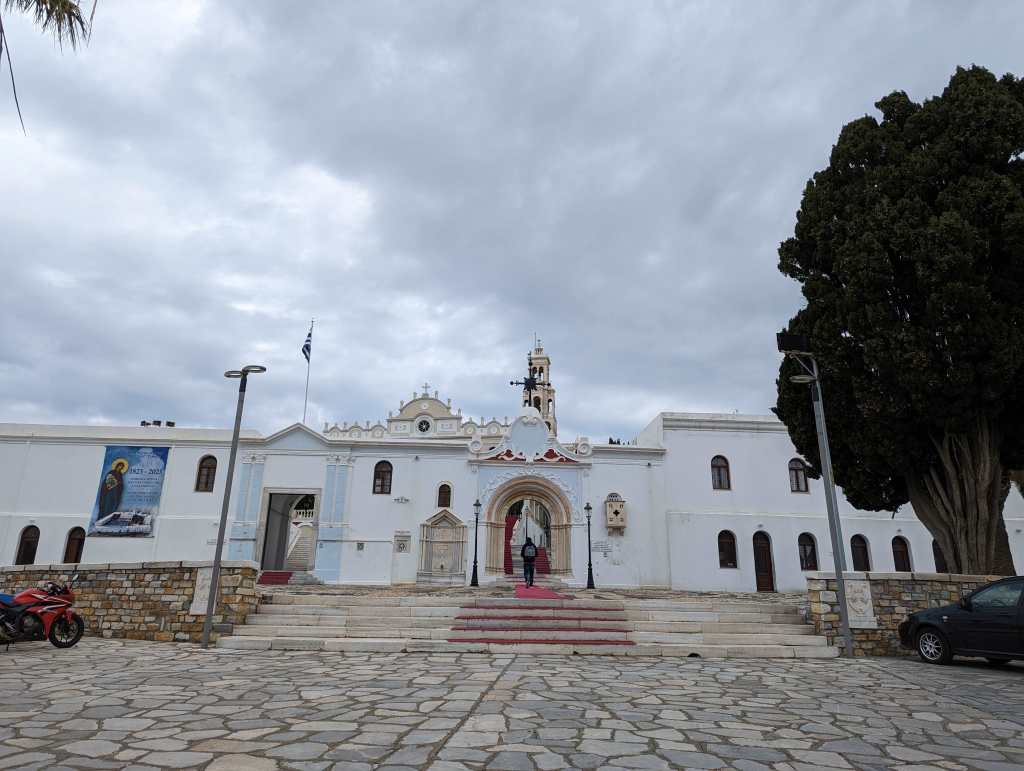
The title photo showing the peacocks, is of a plaque outside the Panagia shrine in Chora town. All images are my own.
I thought I might take a break after teaching Shiatsu and giving supervision in Athens, so I looked up islands which were easy to get to from the capital and typed the word ‘pilgrimage’ into the search engine as a starting point. Tinos came up immediately. It’s not only a vital place of pilgrimage for Greek people, but it’s also famous for its dovecots (see photo at the end of this blog), which I have been studying for a few years now. To Tinos I had to go!
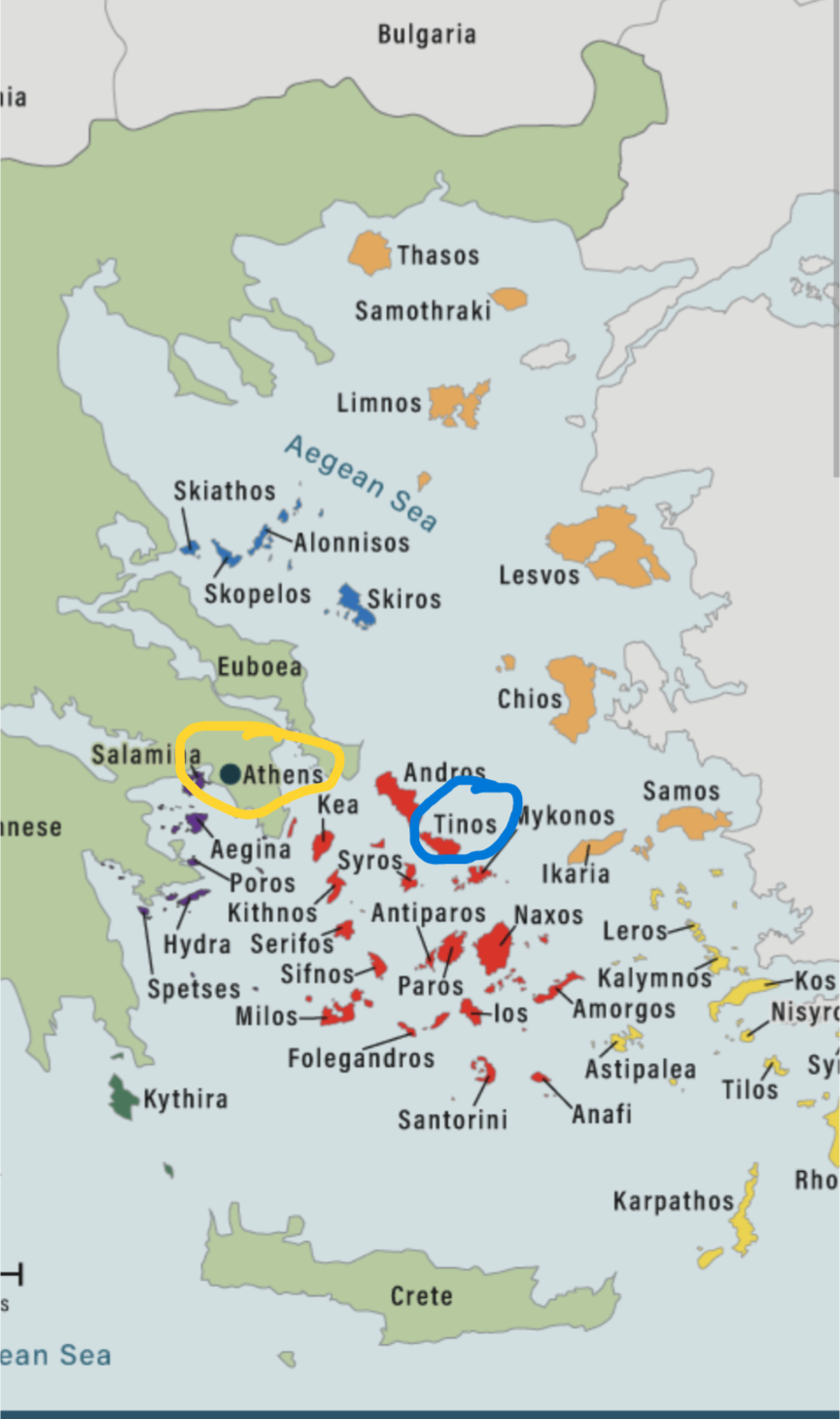
Map of Greece showing the location of Tinos in relationship to Athens
A sacred island of pilgrimage, Tinos is one of the Cyclades, and has a deep history that is crucial to Greece herself. Since the 7th century, a feast has taken place there in honour of the Dormition of the Virgin Mary (her passing from the earthly state). Then, in 1823, two years after the Greek War of Independence had started, a nun called Pelagia found the Holy icon of the Annunciation of the Panagia in a field. Considered a divine omen for the Greek Revolution, a shrine / church was founded to coincide with the agricultural calendar on the island, and a festival was established on 15 August to which women and men flock each year.
In the first [of several chapels at the Shrine] is a holy spring, where pilgrims collect water which has powers of fertility and cures sickness. According to tradition, the well was found during the excavations in search of the icon. The well was dry. On the day the church’s cornerstone was laid, it filled up with water. The source is seen as a miracle, and the chapel of the holy water is called the “Life-Giving Spring.”
Evy Johanne Haaland
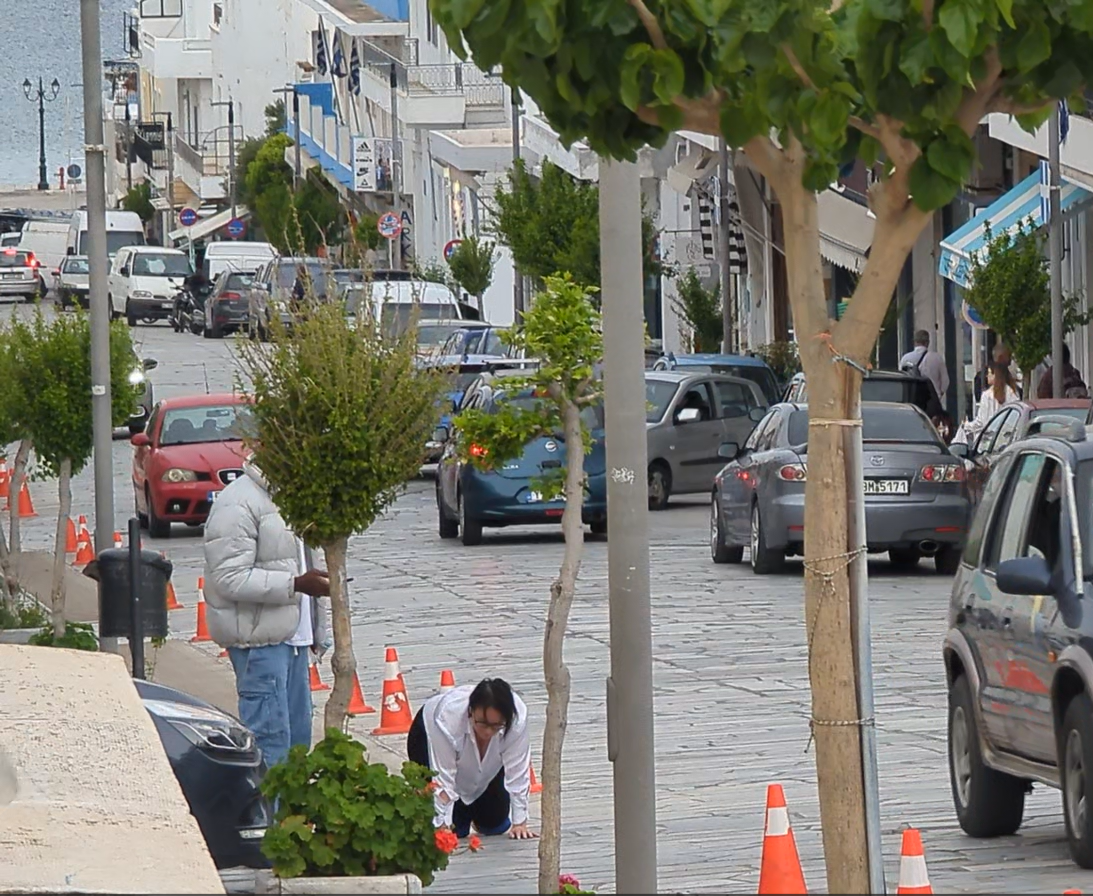
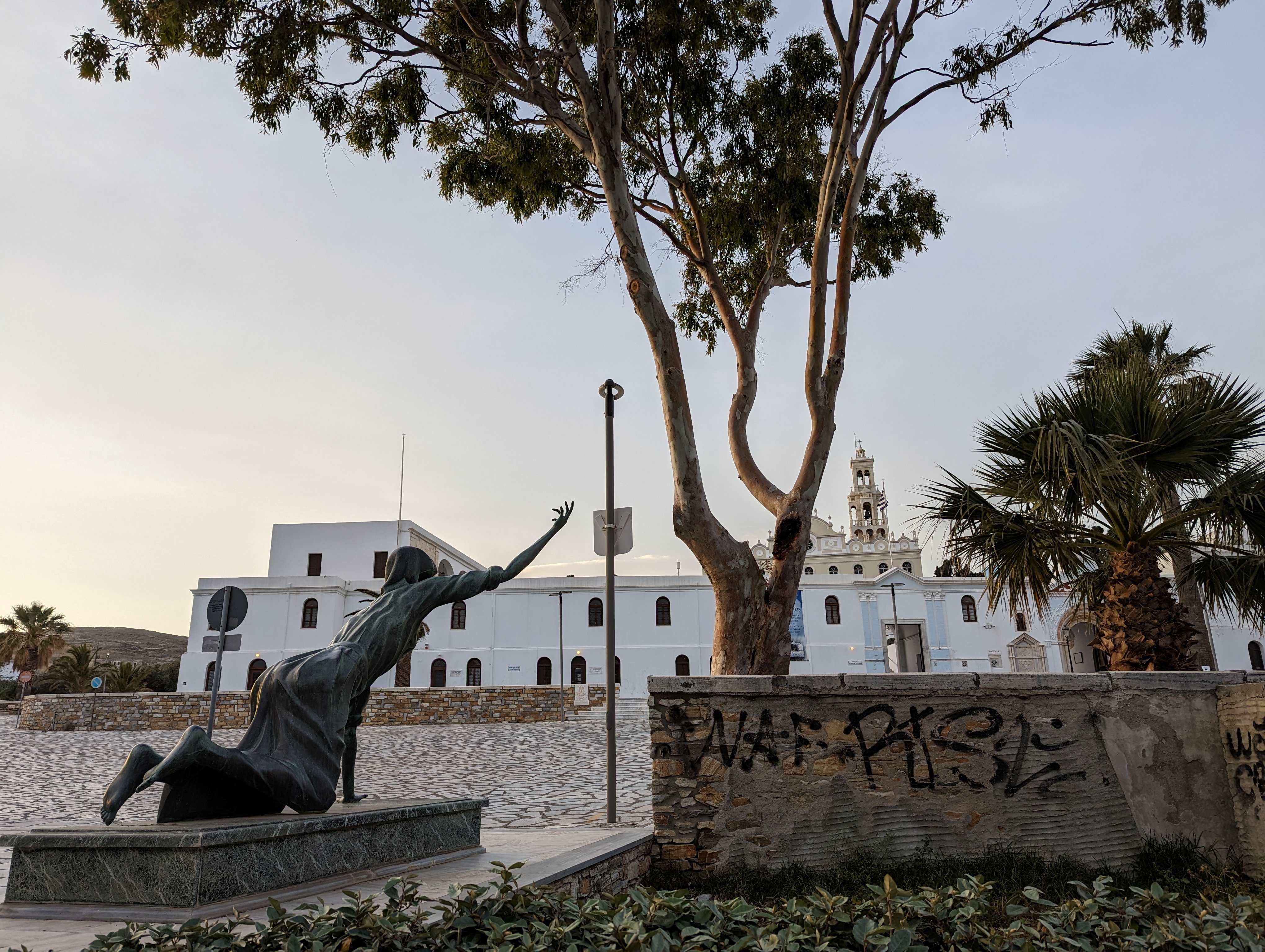
Evy Johanne Haaland, a Norwegian researcher (Dr/PhD, history) and government scholar, writes here about Palagia, and the ritual that women through the ages have performed – climbing up the steep hill from the sea to the shrine on their hands and knees, sometimes with a child on their back.
Greek women are strong and active persons …, thus paralleling the divine Panagia.
Evy Johanne Haaland
Shrine to the Panagia, Chora, Tinos, Greece
Practicalities
Chora is the main town of the island, also known as Tinos, and is where the ferry arrives and leaves from Athens. I took the ferry to and from Rafina (not far from Athens – take the inexpensive KTEL bus).
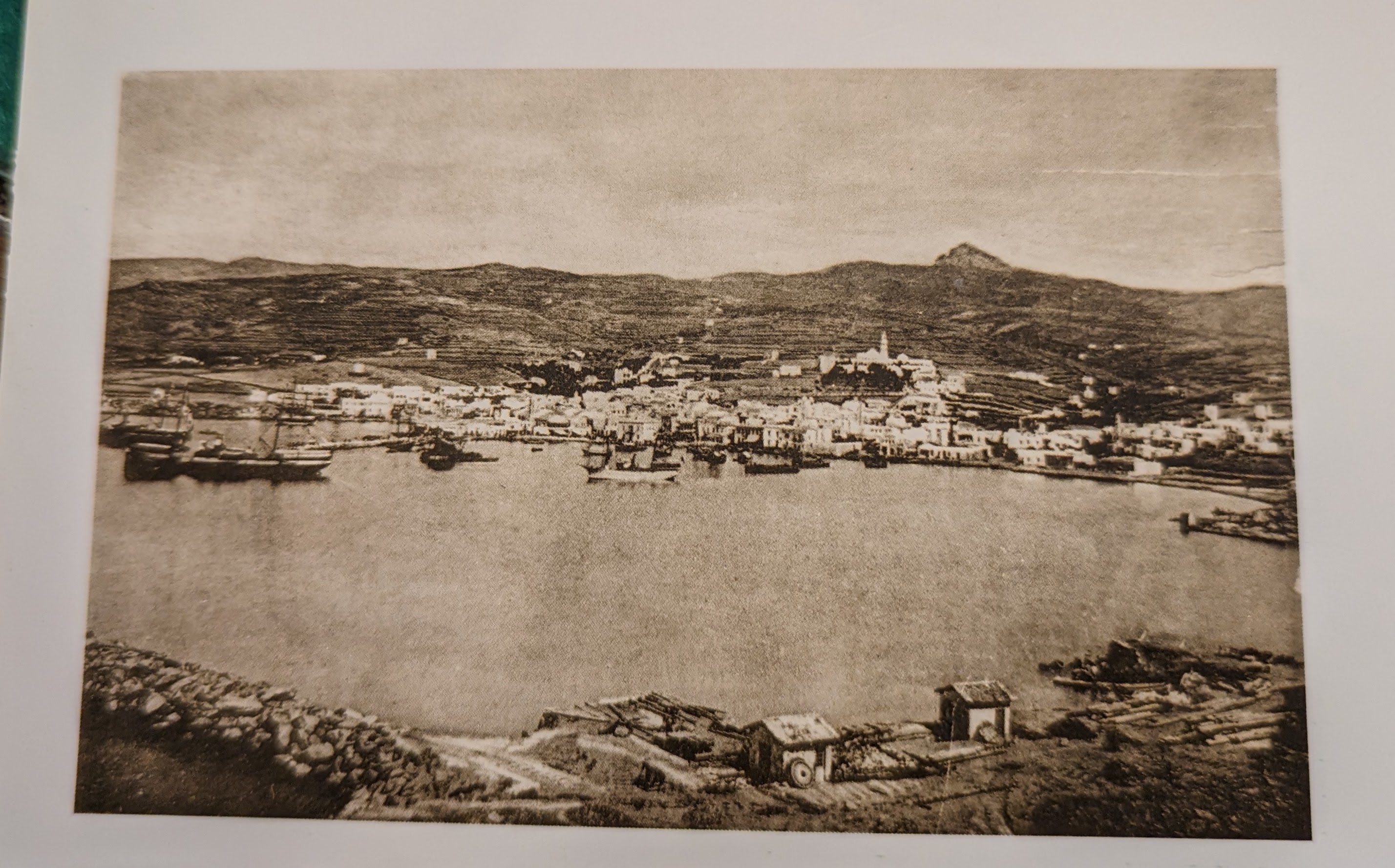
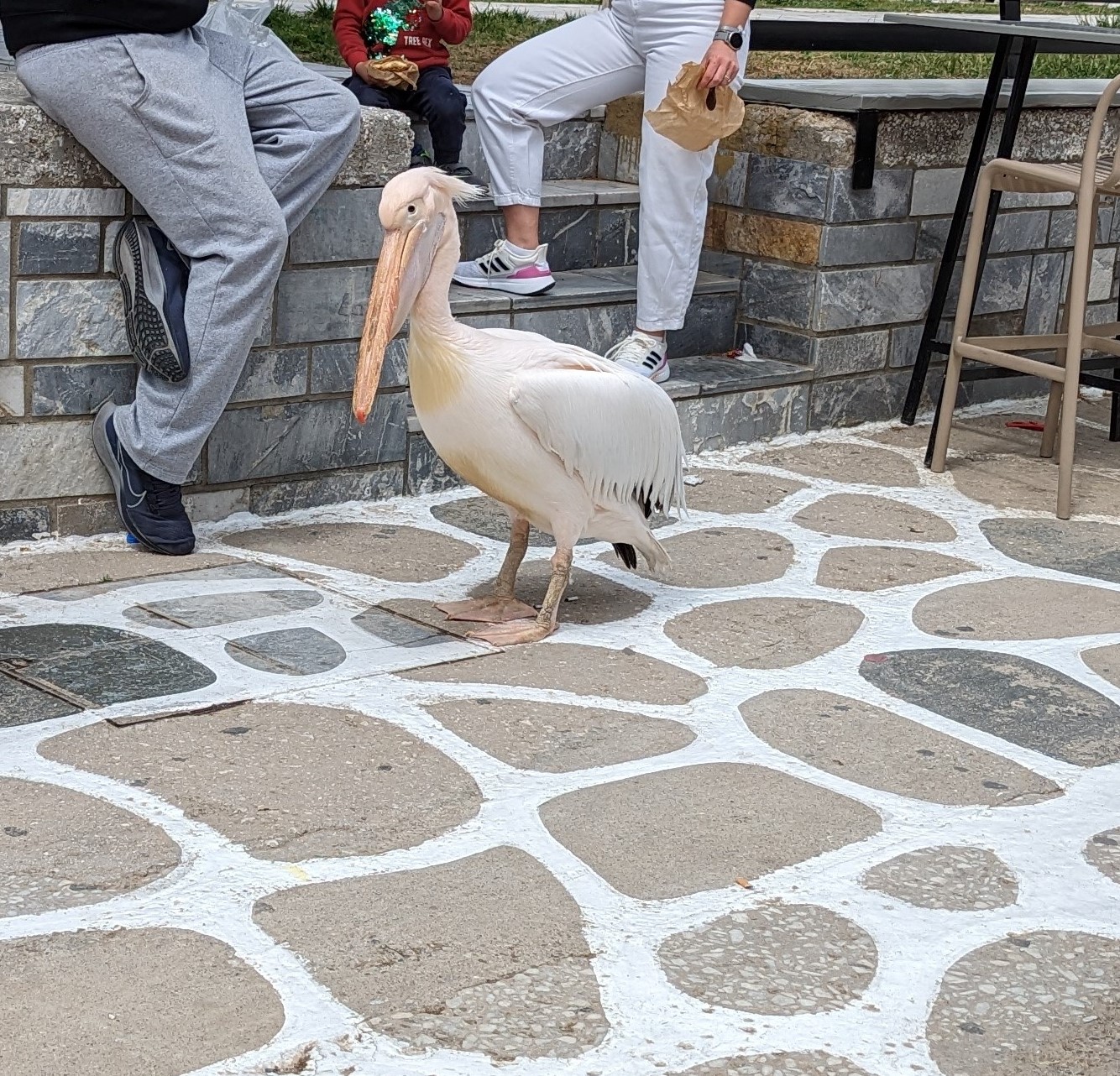
Old photo of Chora, Tinos, GreeceResident pelican, Chora, Tinos, Greece
The town is well stocked and bustling with pretty, narrow streets, a long waterfront (including the port) and steep climbs to the Panagia shrine.
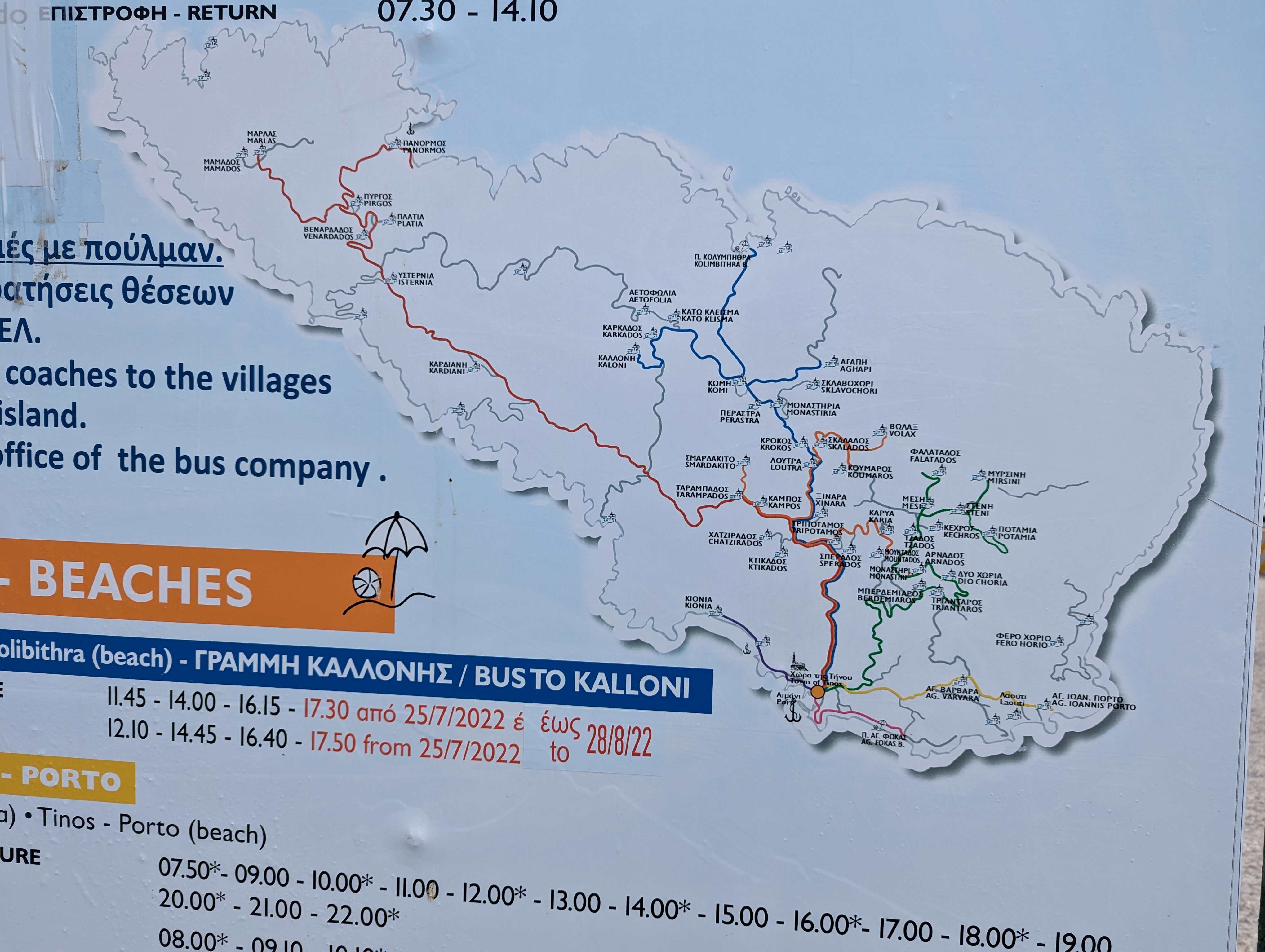
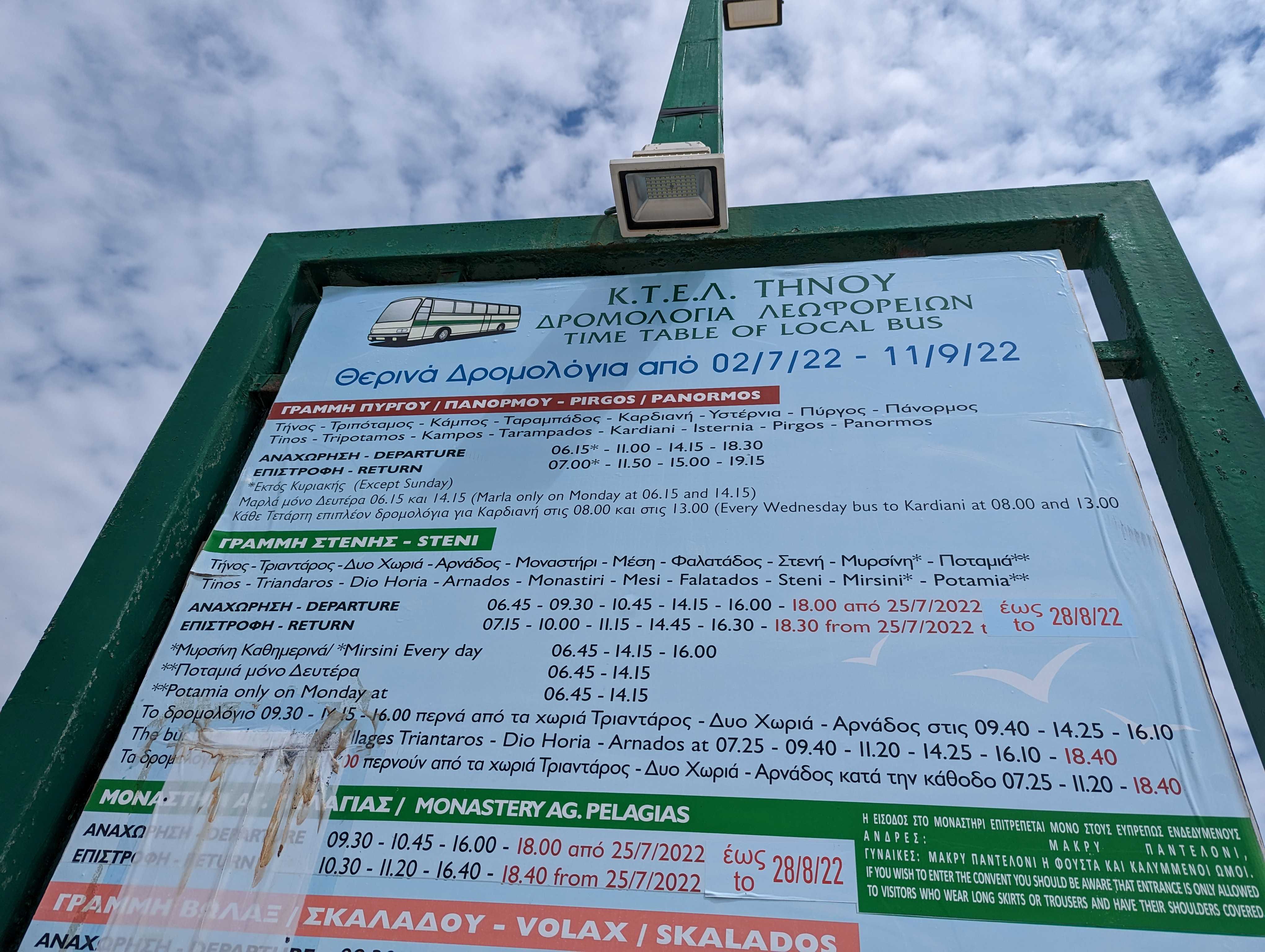
There is a good bus service across the island, but NOT on Sundays and I didn’t find it easy to get information about when they run.
Café
Recommended book café: Antilalos, Fr. Paximadi & Afentouli, 84200 Chora, Tinos. The owner and other staff were so very kind to me. I arrived on a Sunday and had booked an air bnb at the opposite end of the island – too far even for me to walk in one afternoon (though I walked from Pyrgos to Panormos which was wonderful). They made phone calls on my behalf and really helped me out. There were no taxis because, of course it was some sort of festival and so everyone was celebrating with family. I started to walk, but it was far too hot at midday, so in the end they arranged for a taxi driver they knew to come on his day off from another village and pick me up. He took me to Pyrgos – more than three quarters of the way there, and I was really grateful.
Antilalos Café in Chora, Tinos, Greece
Accomodation
I stayed at the Pension Selenti which I would recommend.
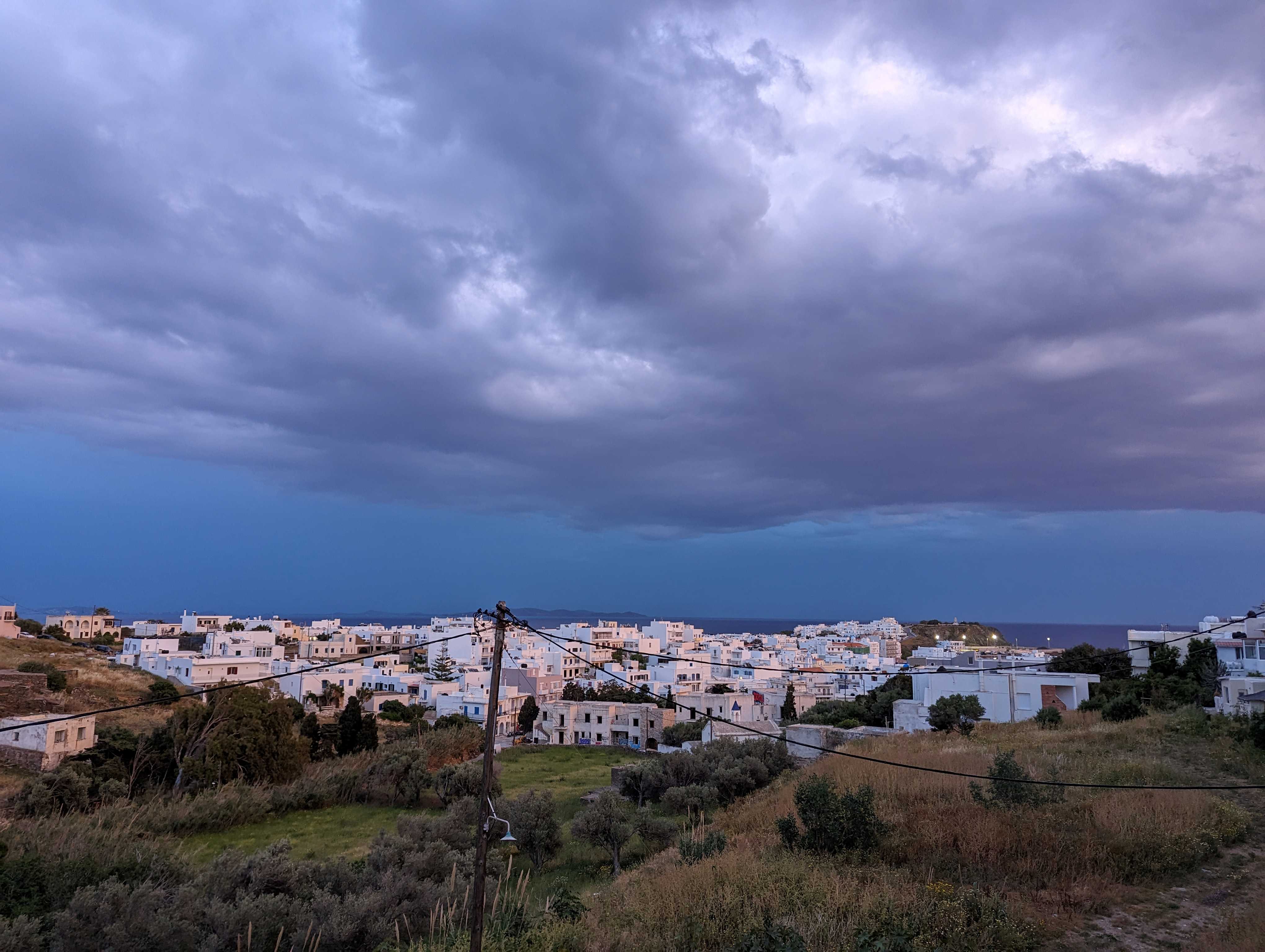
Evening view of Chora town from the Pension Selenti, Tinos, Greece
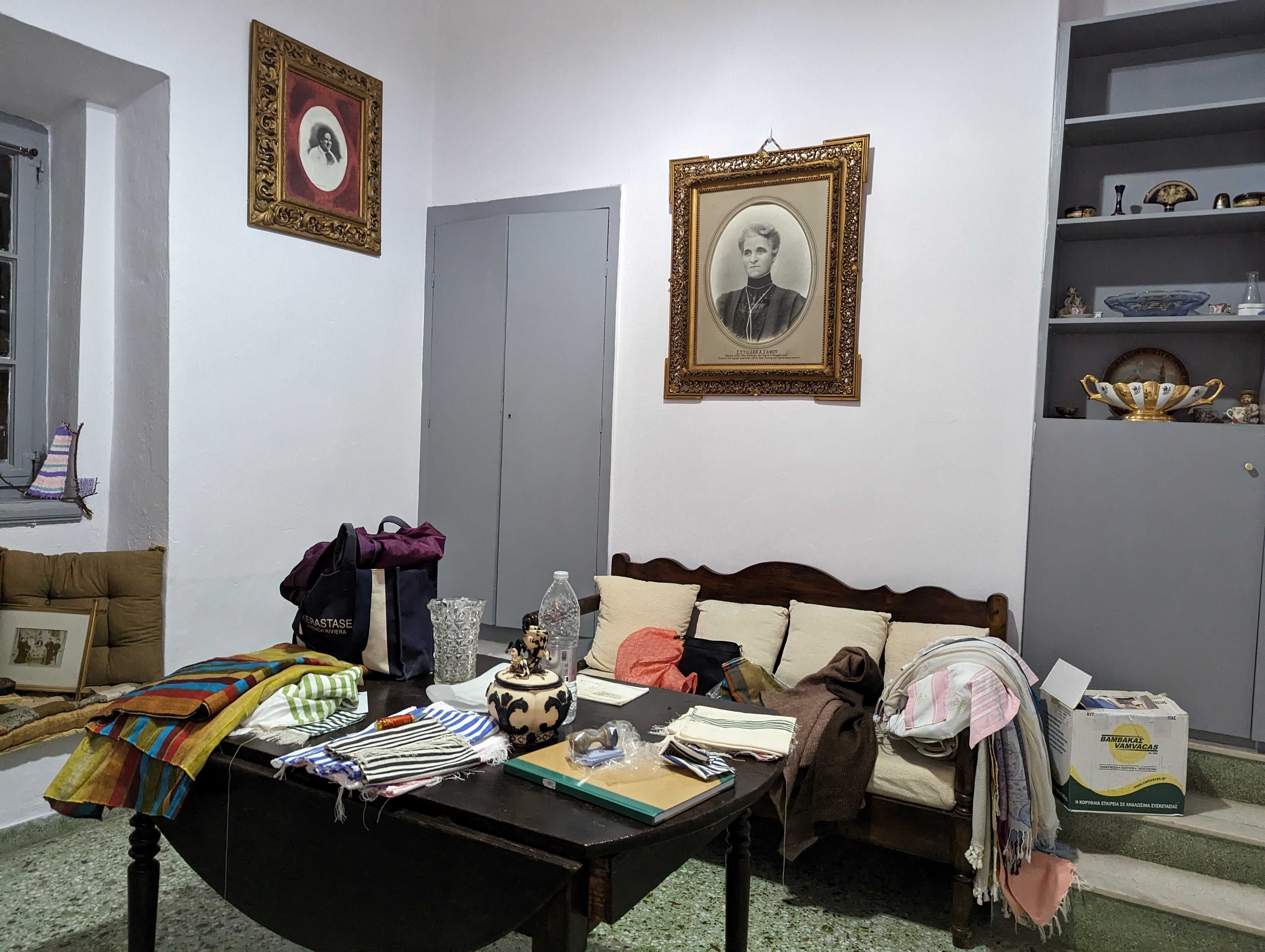
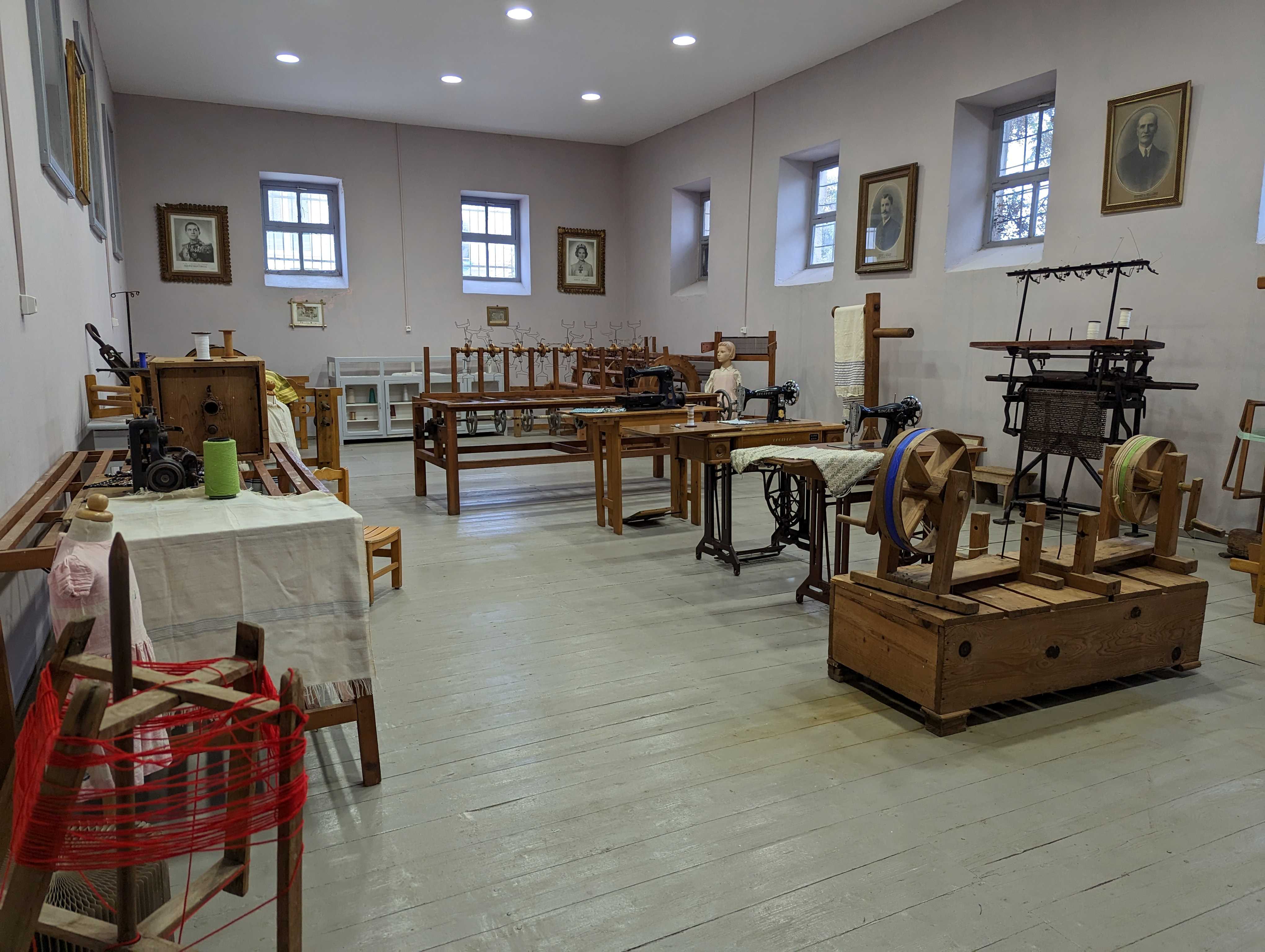
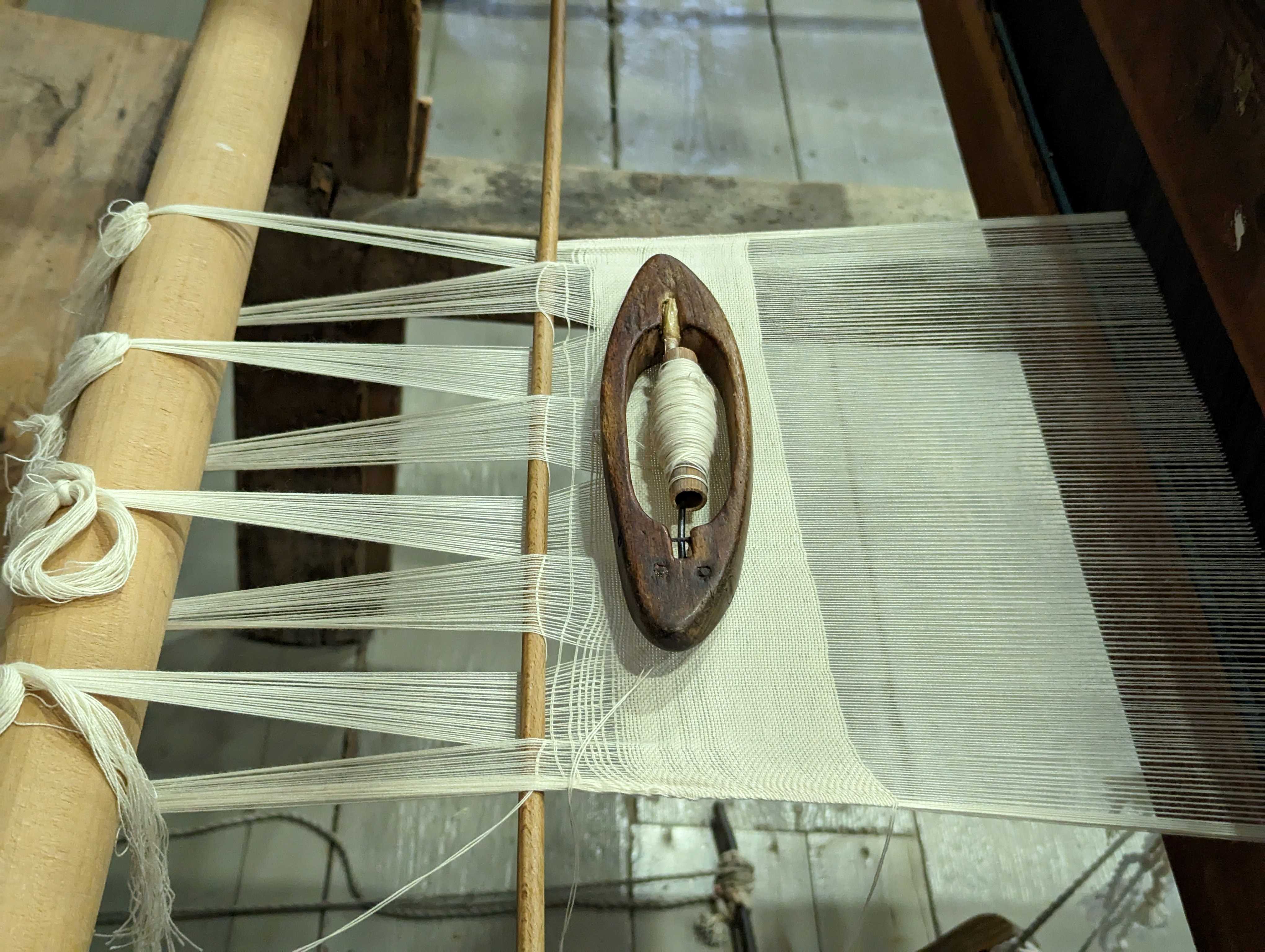
Old Weaving School, Chora
“Zarifios Vocational School (Βιοτεχνική Σχολή Τήνου Υφαντήριο) is a legacy of the Zarifis family originating from Constantinople. Since 1898, Zarifios School has been a reminder of the gratitude of the family of banker Nikolaos Zarifis towards the governess of his children, who took them to the safe environment of Tenos (sic), when riots broke out in the Constantinople. The school emphasized in the traditional weaving art supporting women and society in adverse conditions. Today, 200 years later, it still continues to have a presence by supporting the School and textile workshops.” Description from thehouse.gr website
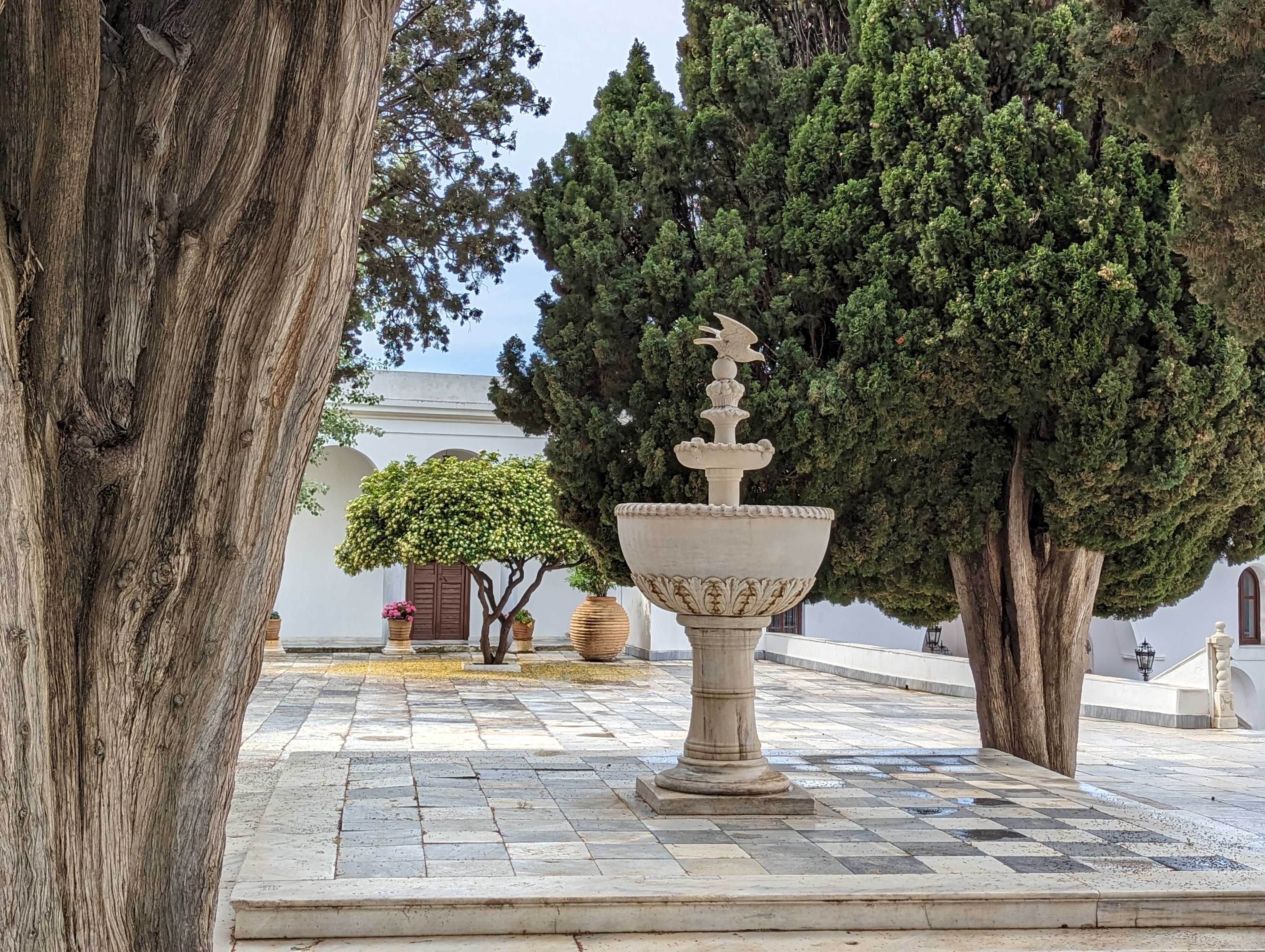
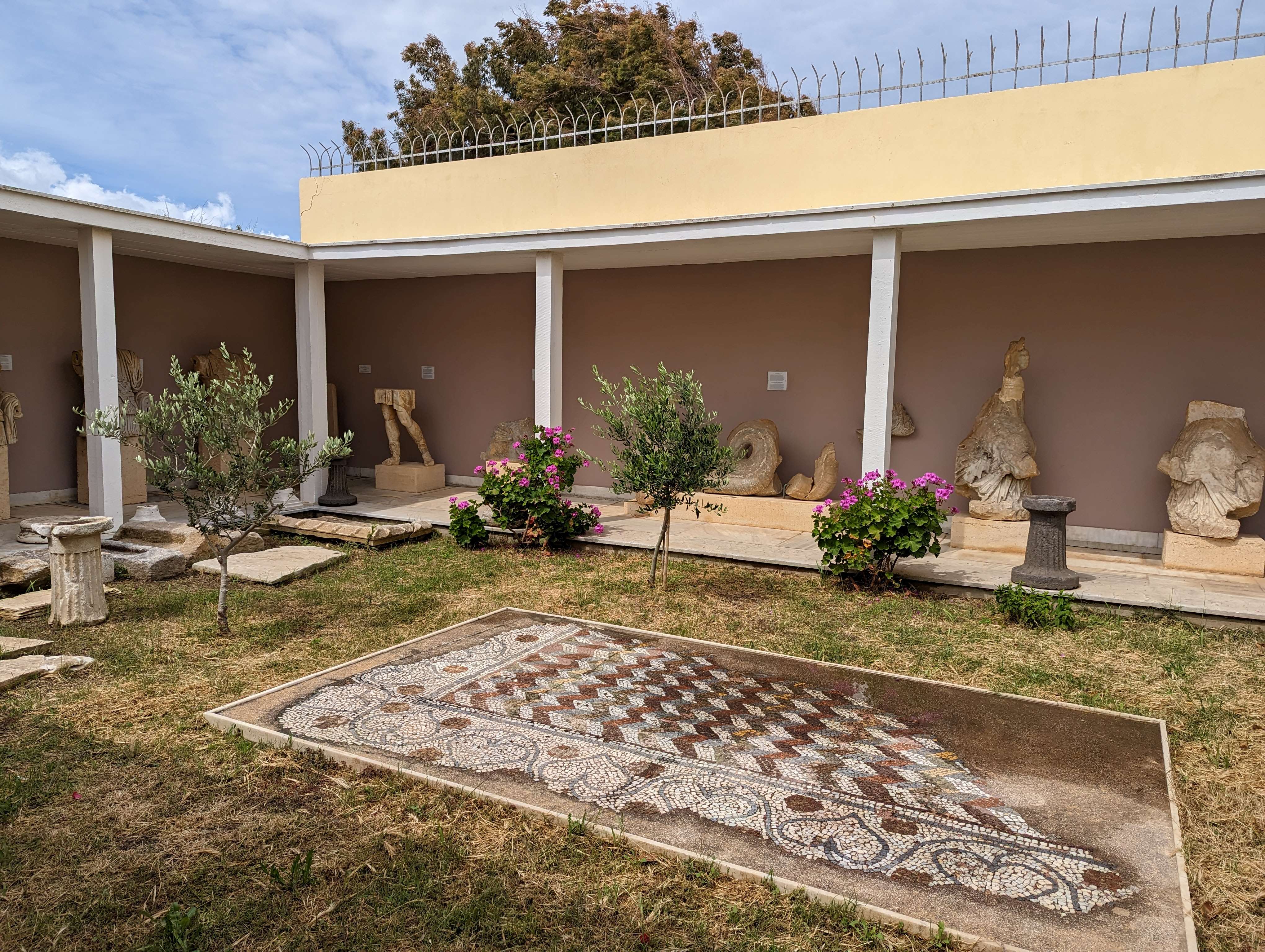
Built in the early 60s by the architect Charalambos Bouras, the Archaeological Museum of Tinos contains finds from Chora, the main town, as well as the hill of Exombourgo, local villages, and the Sanctuary of Poseidon. I particularly enjoyed the little courtyard with its bodyless legs and lace-like mosaic.
Archaeological Museum, Chora, Tinos, Greece
Artist’s Residency and Maria Valela
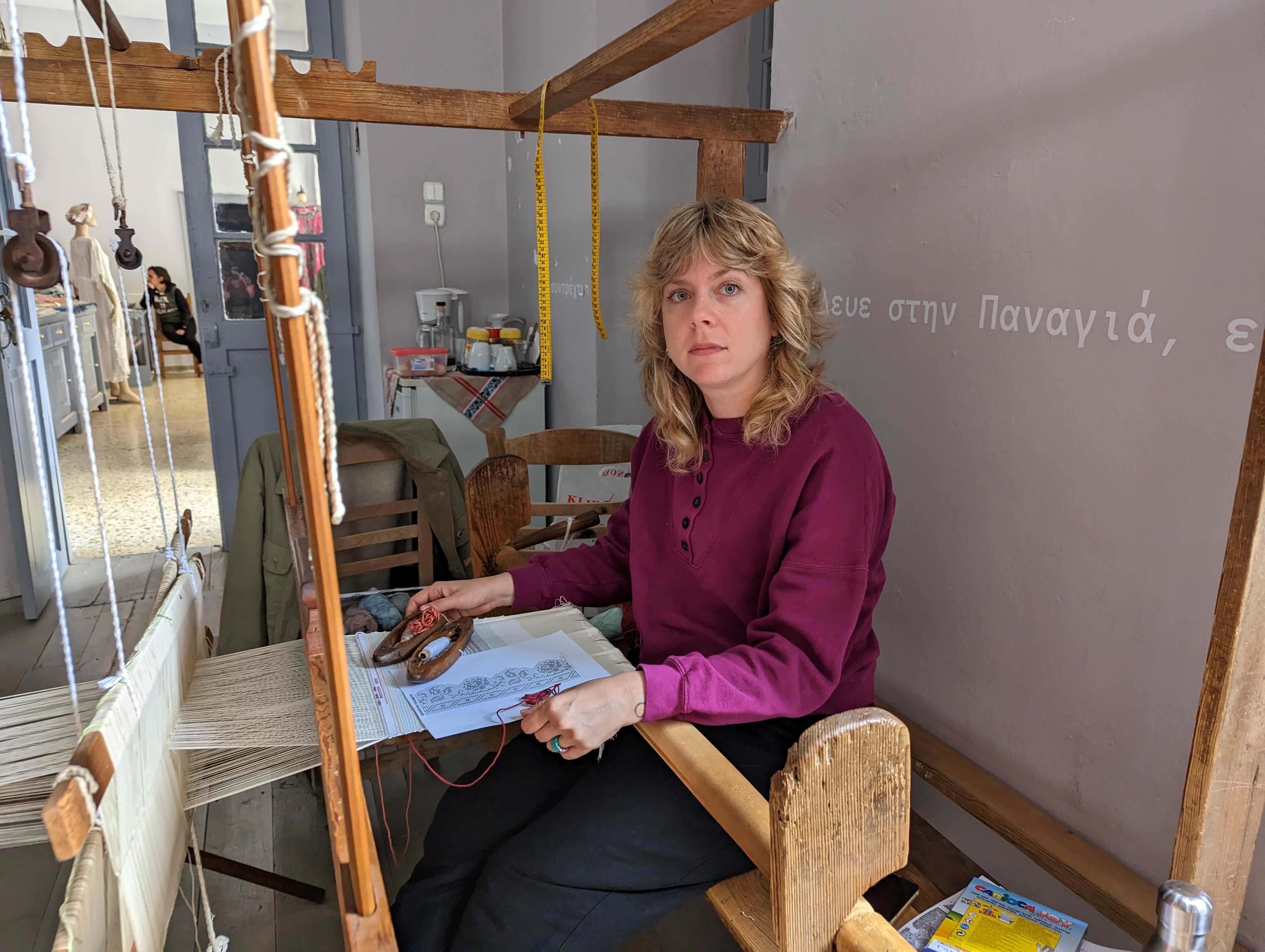
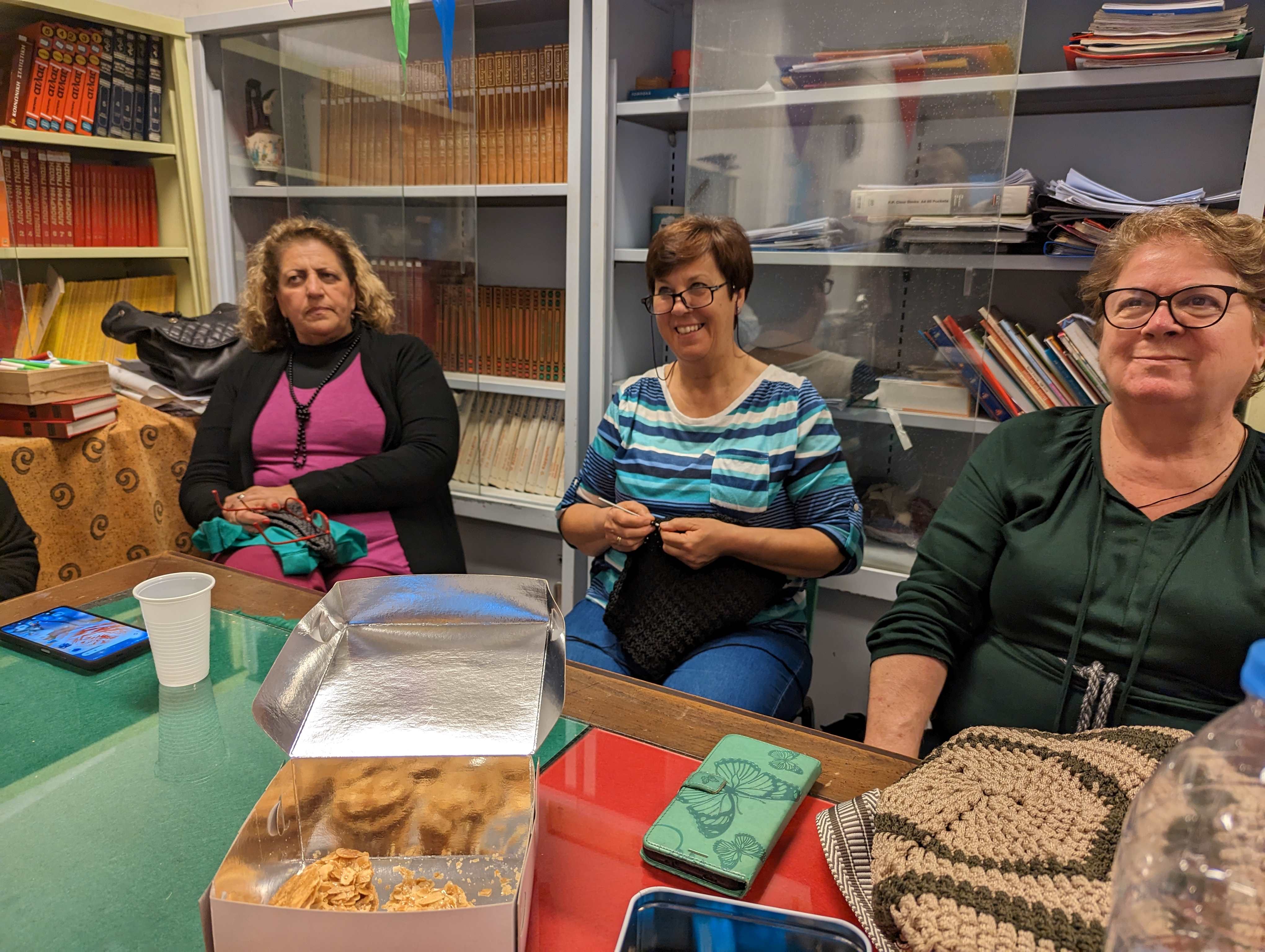
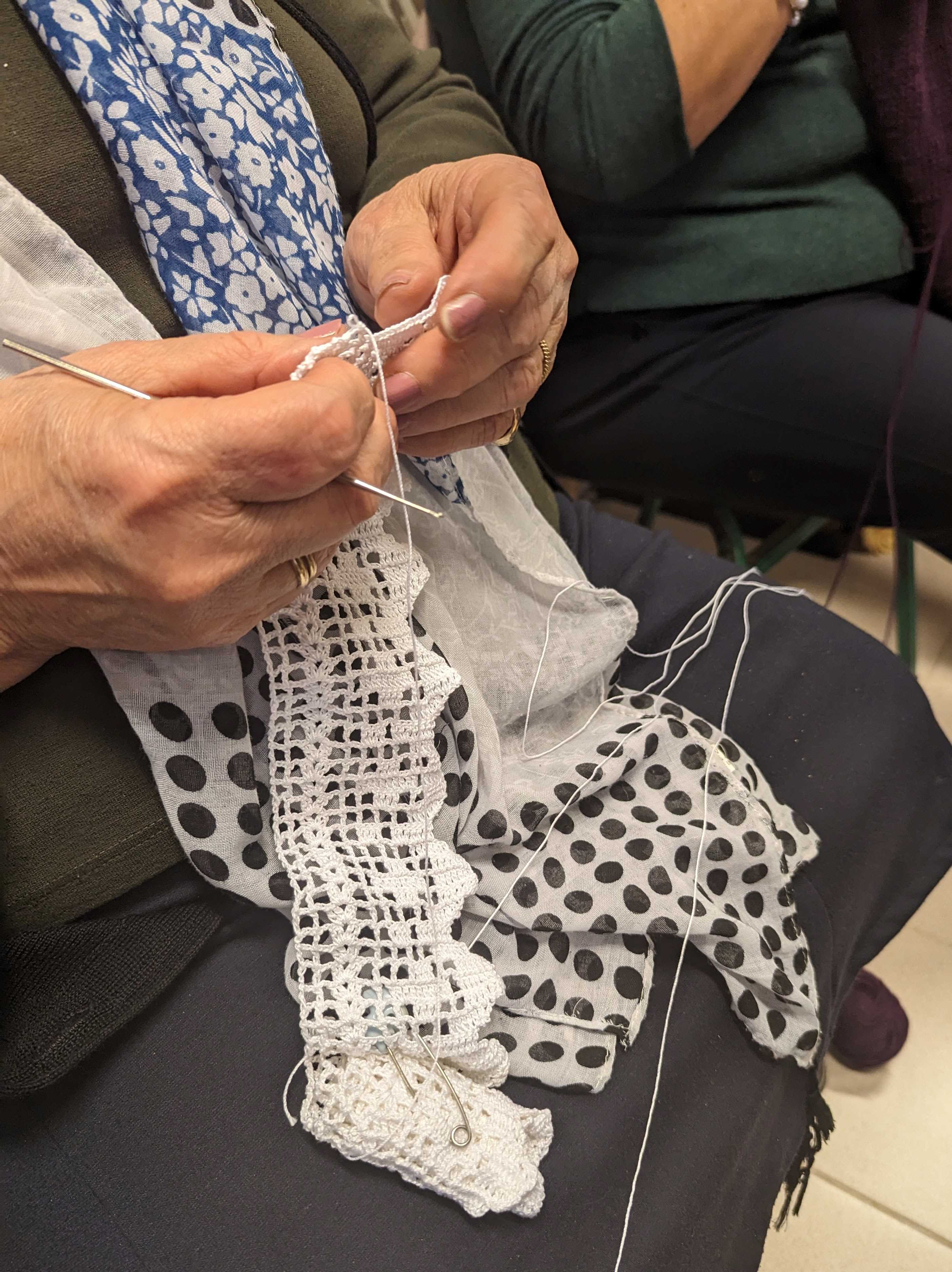
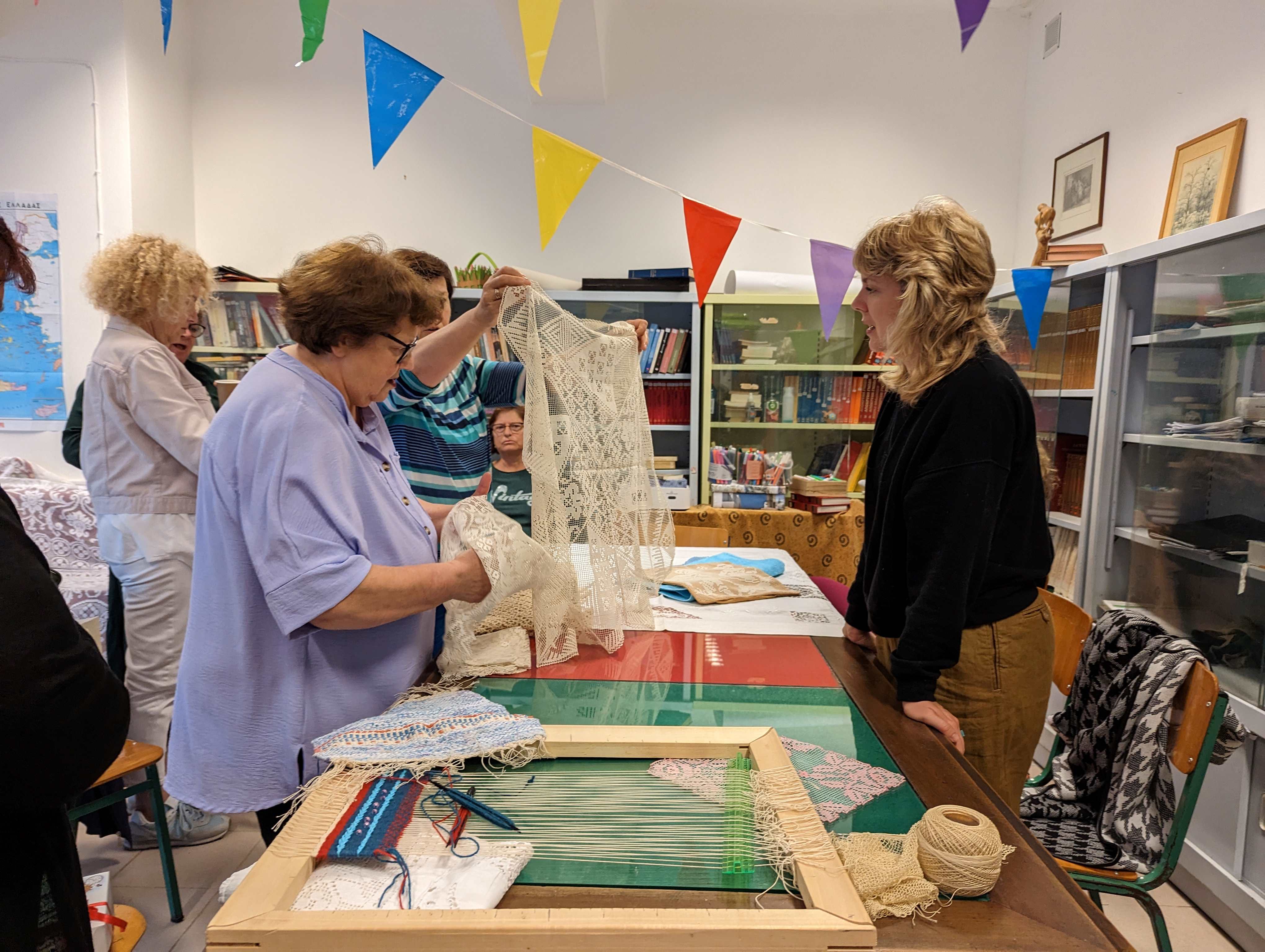
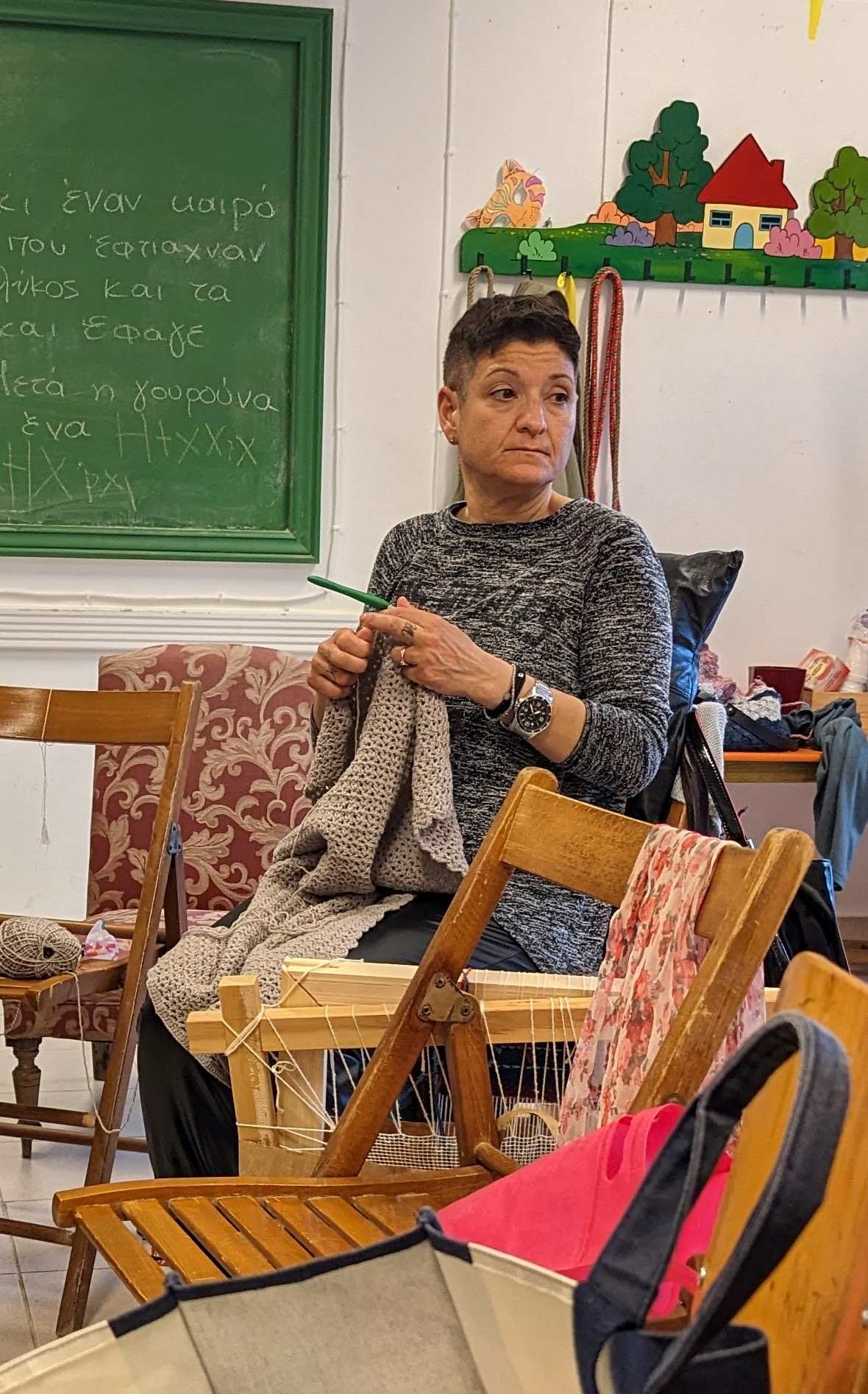
There was an Artist’s Residency taking place on the island when I was there, and I was particularly pleased to meet Maria Valela, a weaver, who gave an inspiring demonstration at the Old Weaving School in Chora, and invited me to accompany her to a local women’s knitting and weaving group that she was visiting. In return I offered her Shiatsu.
“The island is widely recognised for its marble tradition and was home to some of the most widely revered Greek artists of the 19th and 20th centuries.” from Kirki Projects page
Various photos of Maria and the knitting / crochet group, Chora, Tinos, Greece
The Inherited Earth artist residency programme was part of the Fe26 project a collective research program by the NWMW NPO team 2023. “The Fe26 project brings together an interdisciplinary group of people to exchange knowledge and practices around metal as matter, material, and object in conjunction with locus, crafts and identity. In this aspect, the NWMW team has envisioned along with curator Christos Artemis “The inherited earth” Fe26 residency.” ARTrabbit.com
Links
The second in this series of blogs about Tinos is Tinos and Kionia


 Walking without a donkey