Walk Paris – Tuileries and the Seine

January 2023

A walk from the Tuileries Gardens (Louvre art gallery end) to the Pont Neuf, along the Seine, and back through the Tuileries Tunnel with art works. I aimed to walk through the tunnel in the other (west-east) direction, but couldn’t find the entrance. Google maps to the rescue! Note that it says ‘Closed’ though at the time of writing that means only to cars and lorries etc.
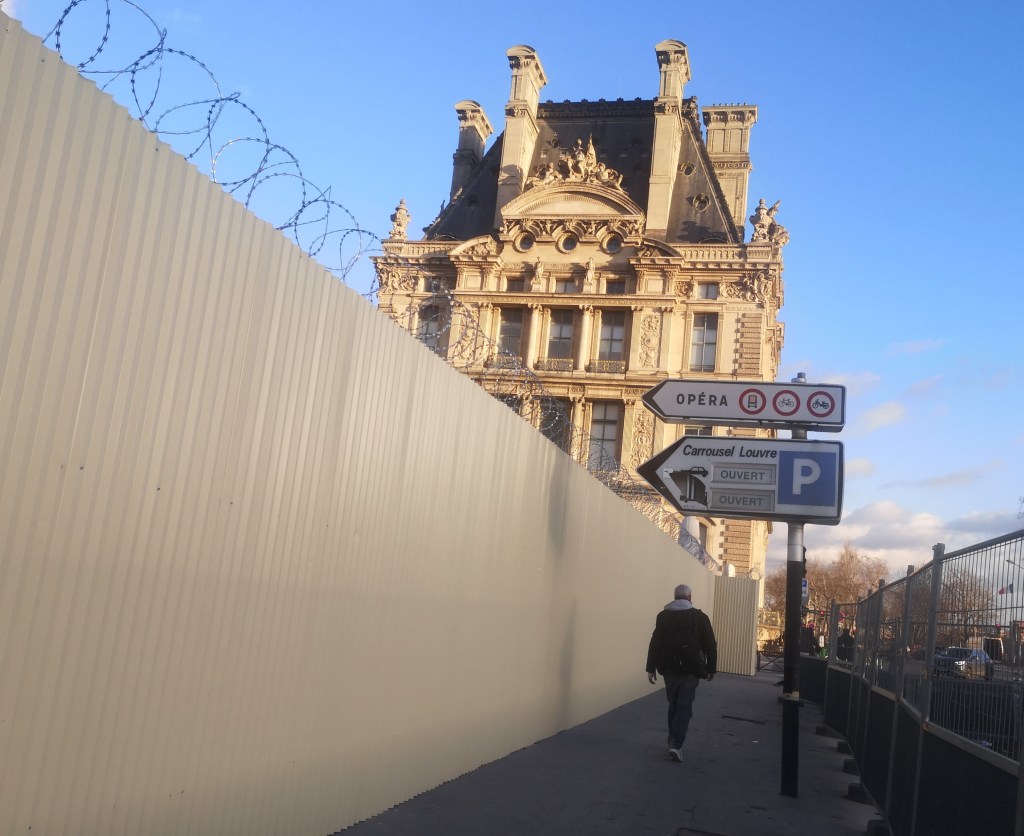
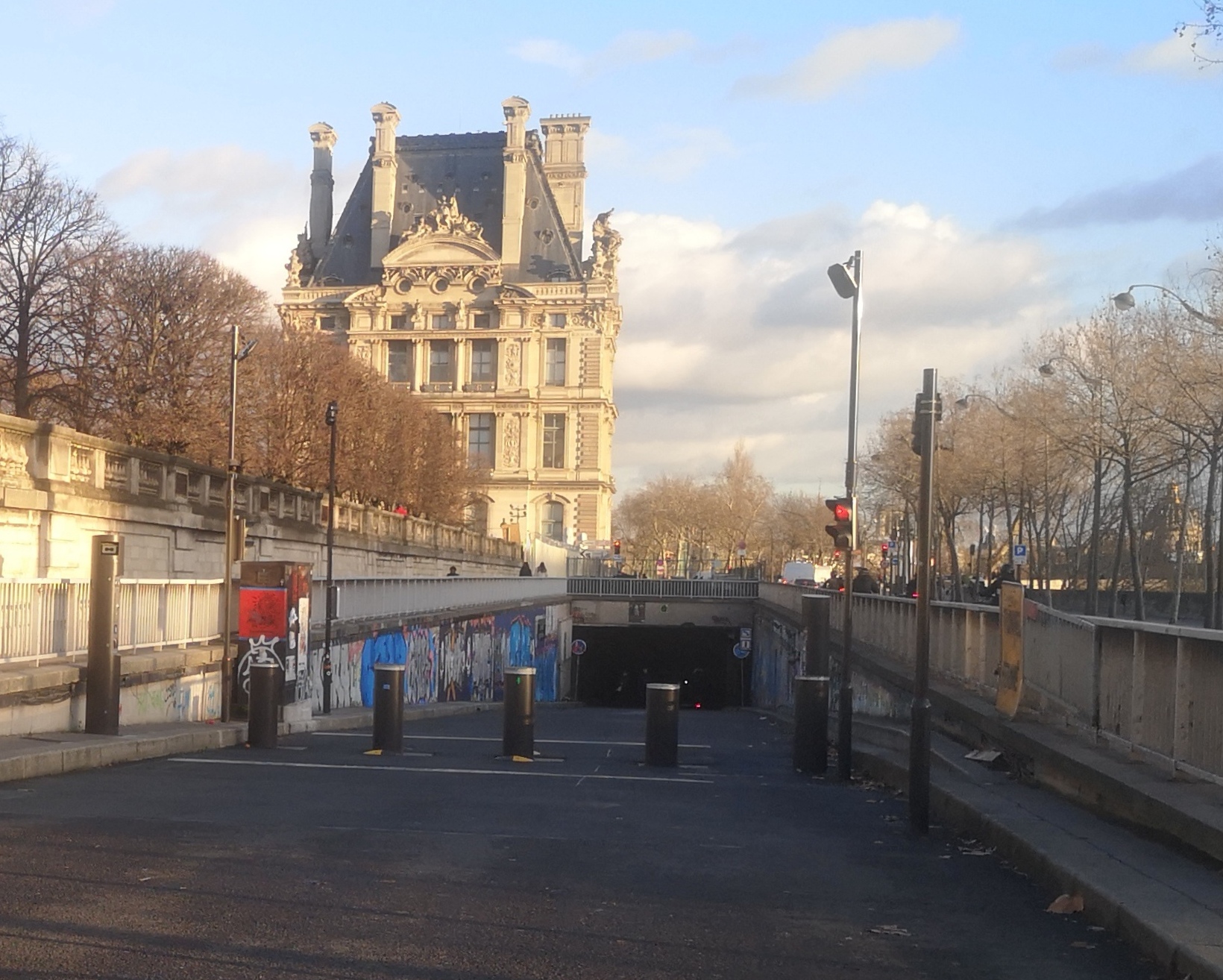
Come out of the Tuileries Gardens by the end of the Louvre (above) and instead of walking across the zebra crossing to the river, take a right on the same side (the barbed wire towering above you)
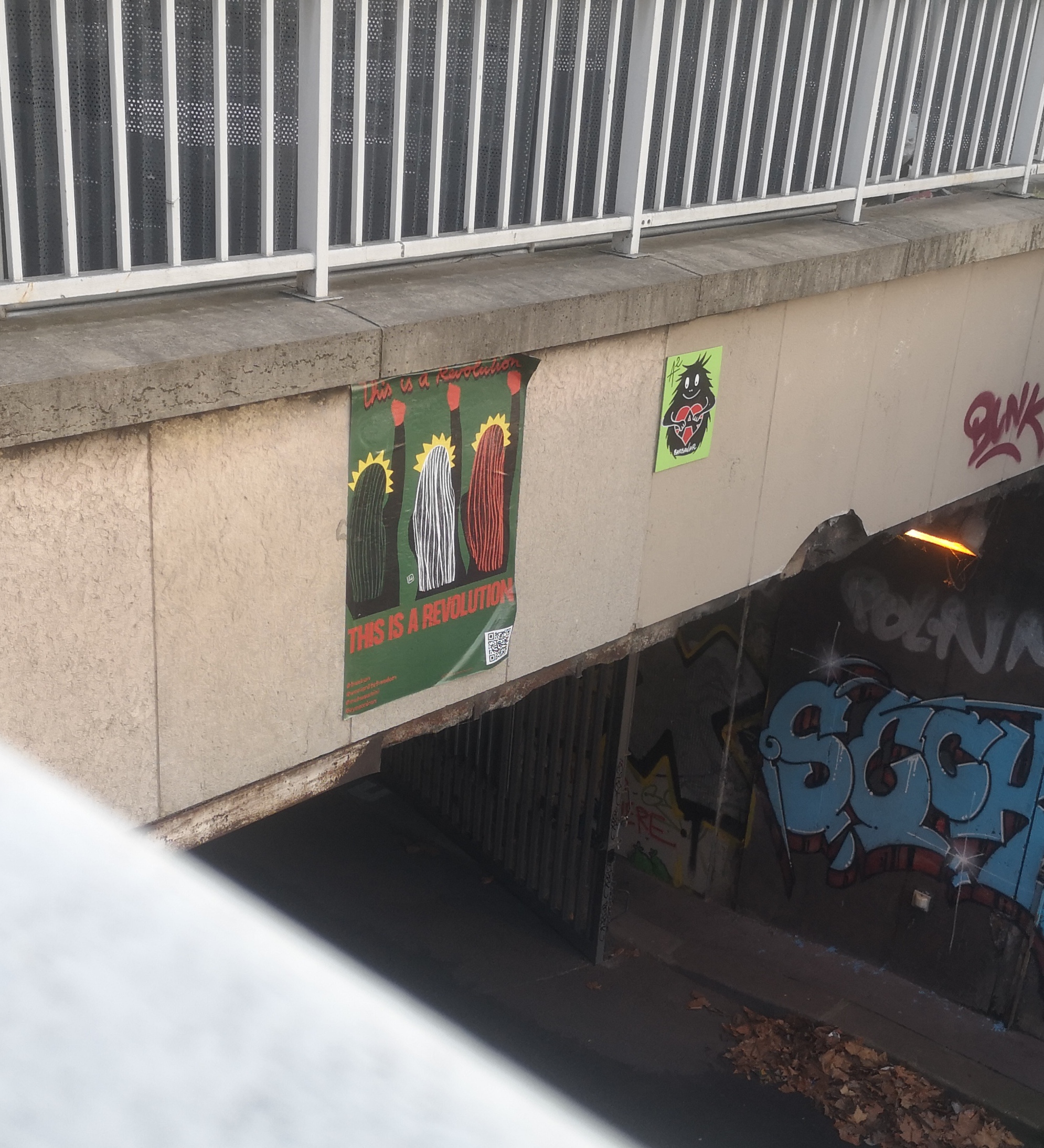
‘This is a Revolution’. Above the entrance to the Tuileries Tunnel
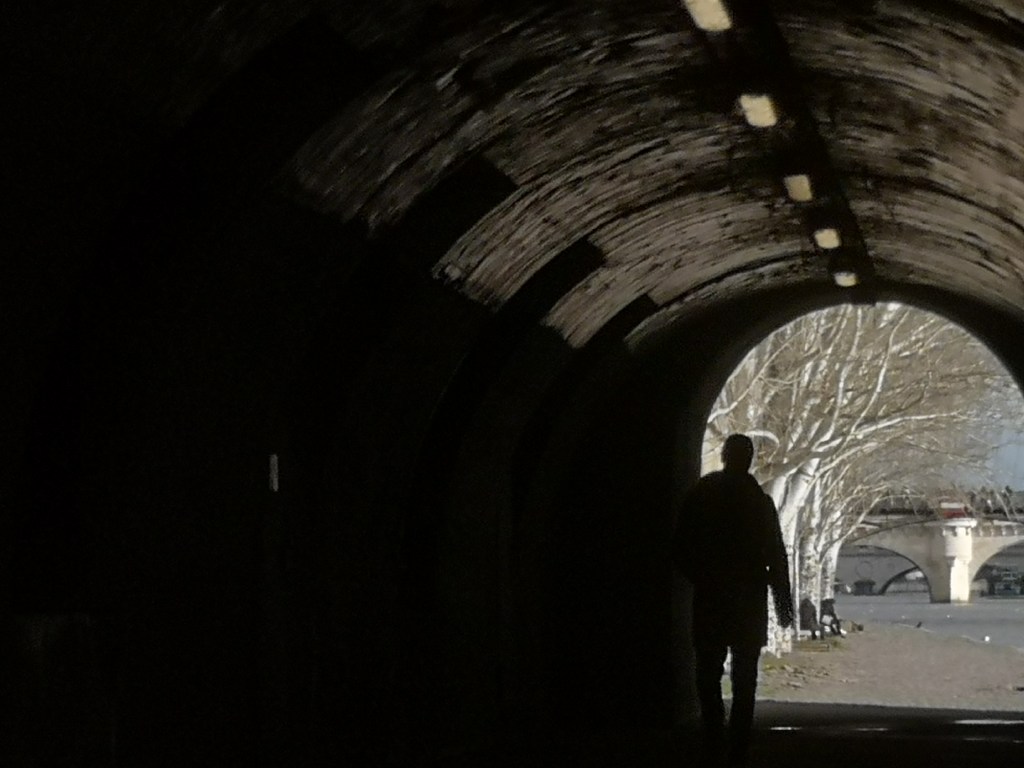
Tuileries Tunnel (Tuileries Gardens / Louvre) entrance

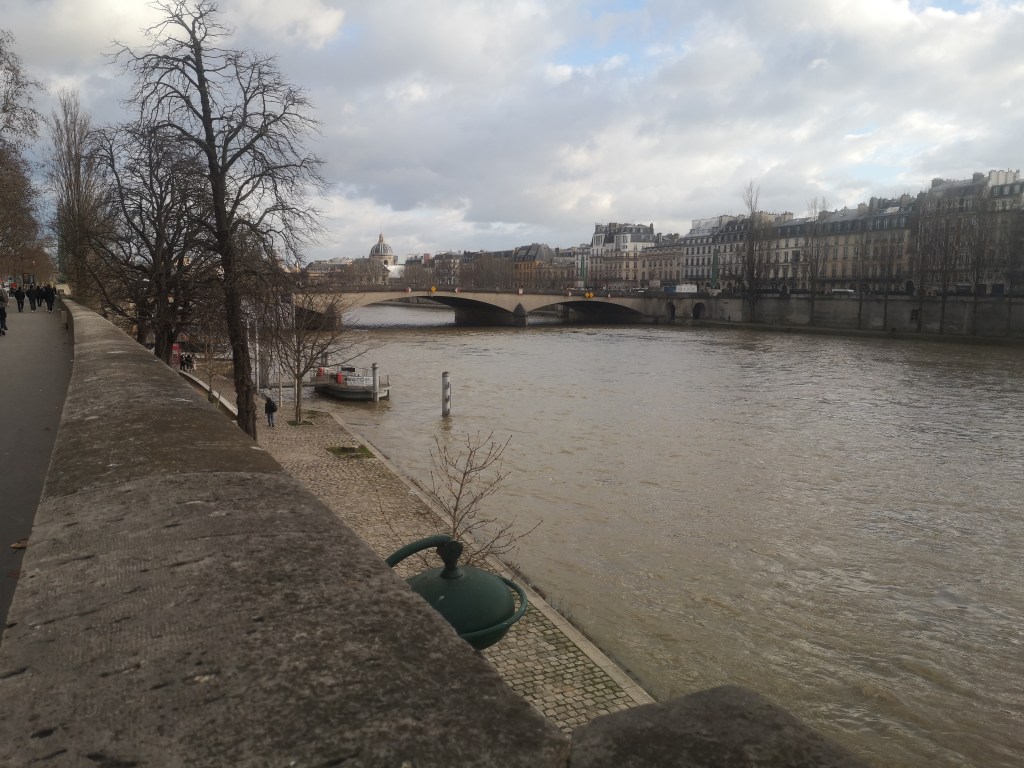
Walk along the Seine

The Seine river with the Pont des Arts in the distance. I was looking for some space and a more natural environment after many noisy walks across the city to and from work during the week.
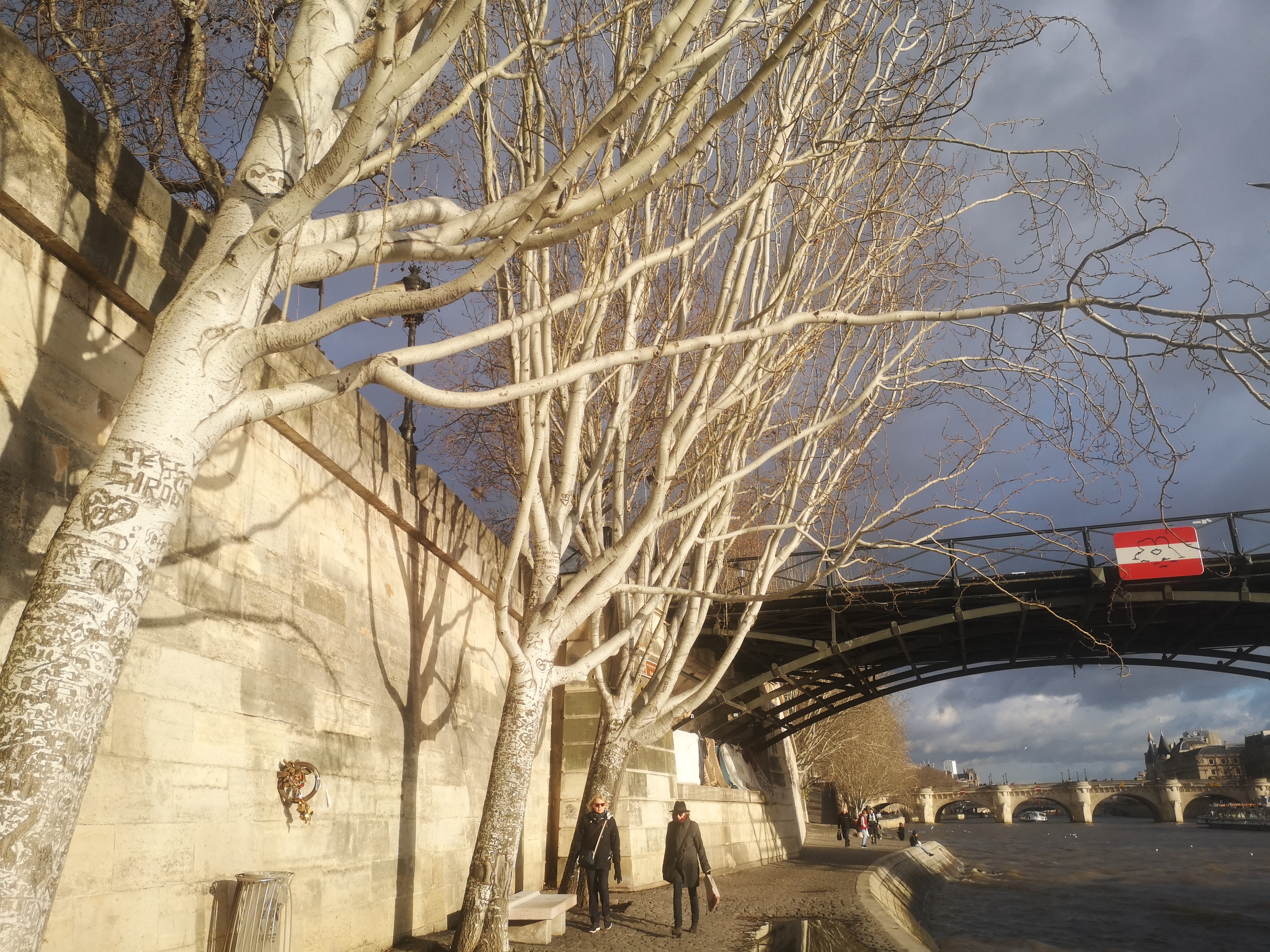
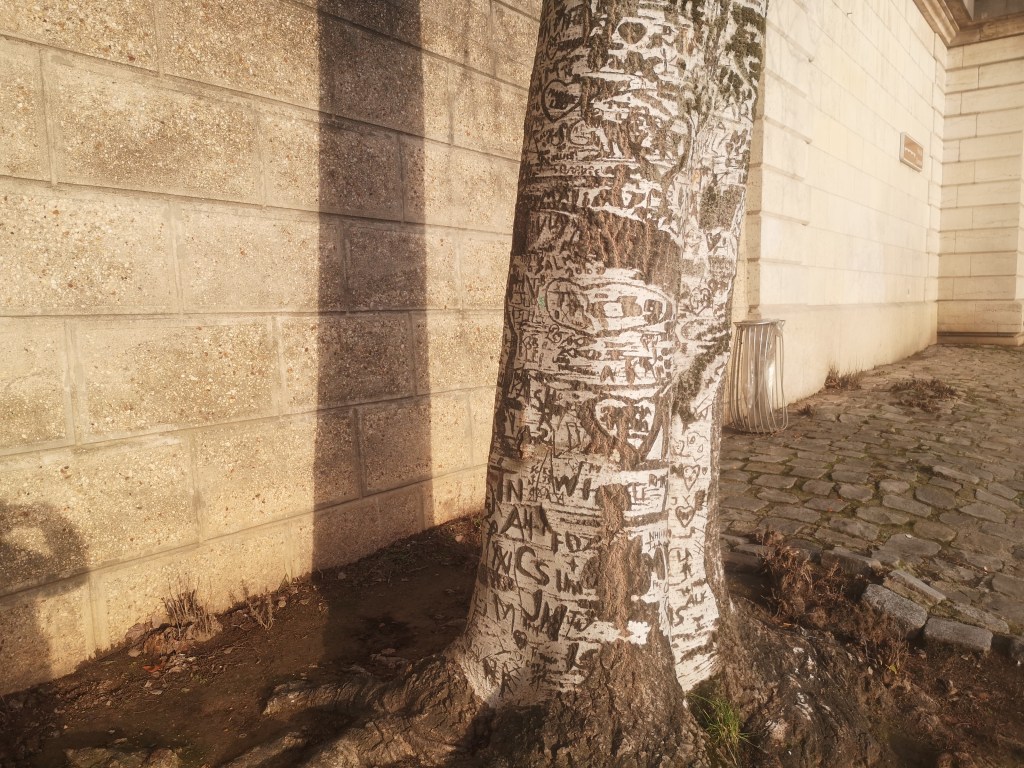
A long row of luminous silver birches lines the River Seine

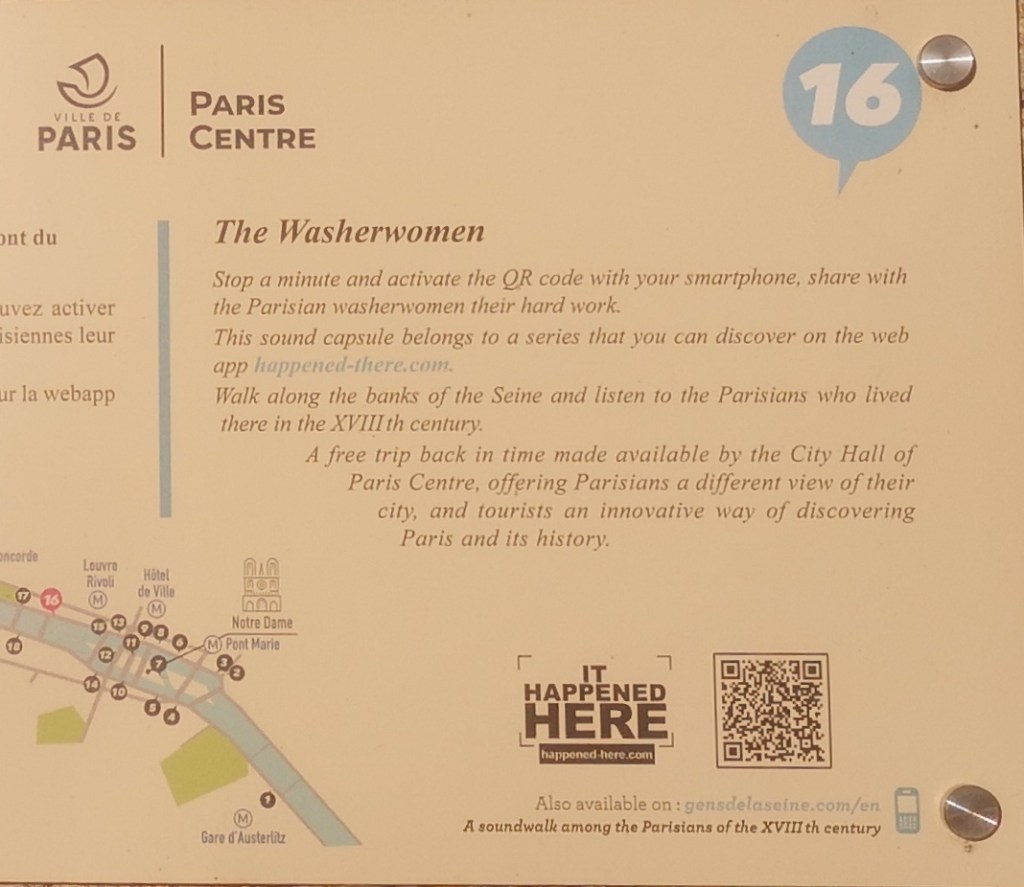
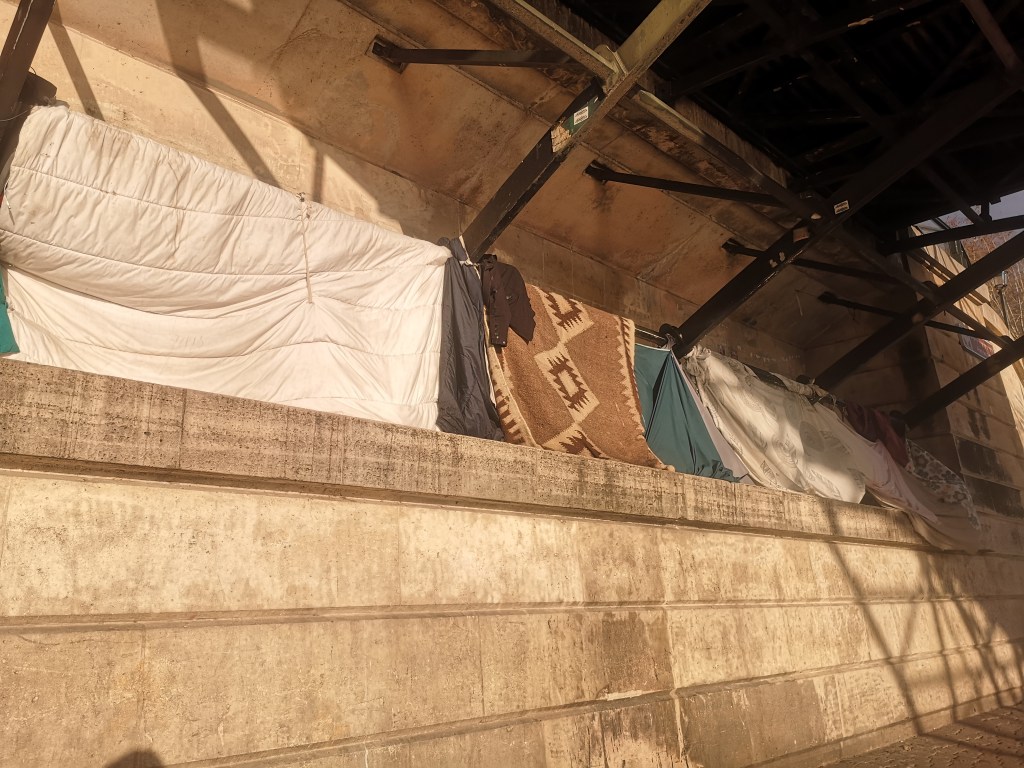
Look to your left for make-shift homes and art work. Signs indicating historical sites of interest and local history are on the walls too, including the story of the Washerwomen. During the18th century, more than 80 boats would have been moored along the banks of the Seine, each carrying 24 washerwomen (‘a gigantic laundry’). Others built a jetty, illegally, and stationed themselves there to hang out the washing to dry. Eventually the boats were condemned as a hindrance to river traffic, and ‘the smalls’ unseemly to be seen from the Louvre and the Tuileries Palace.
Tuileries Tunnel

Details:

  • From the Tuileries Gardens (close to the Louvre art gallery) to half way between the Pont des Arts and the Pont Neuf on the north/right bank
  • 800m long – once you’re in, there’s no escape
  • 10 European street artists
  • Parallel to the Seine River
  • Open only to walkers and cyclists
  • Including Andrea Ravo Mattoni, Hydrane, Lek & Sowat, Bault, Ërell, Madame, Romain Froquet
  • Artistic direction: Nicolas Laugero Lasserre, with the support of the City of Paris

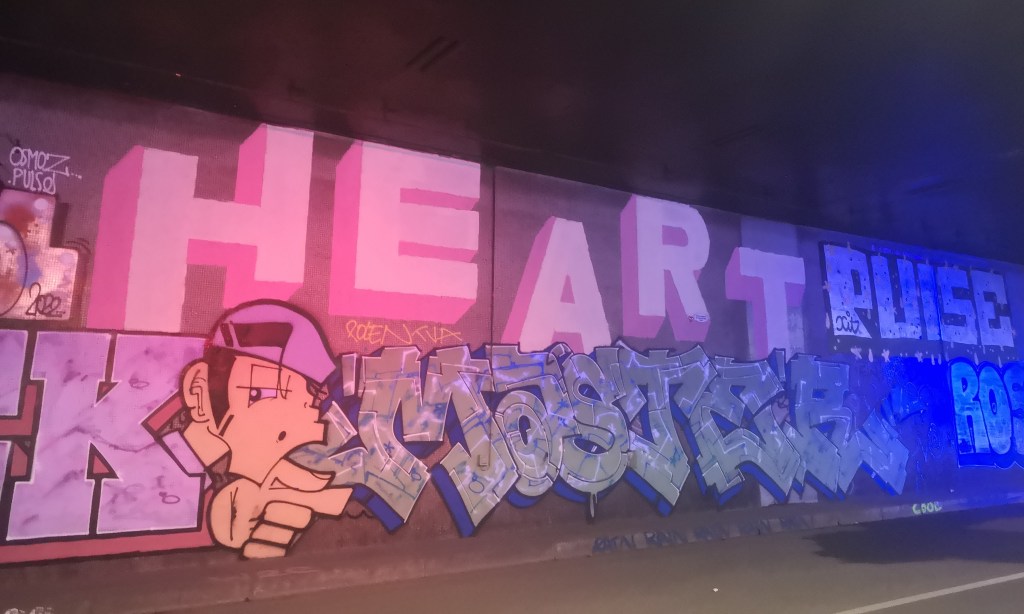
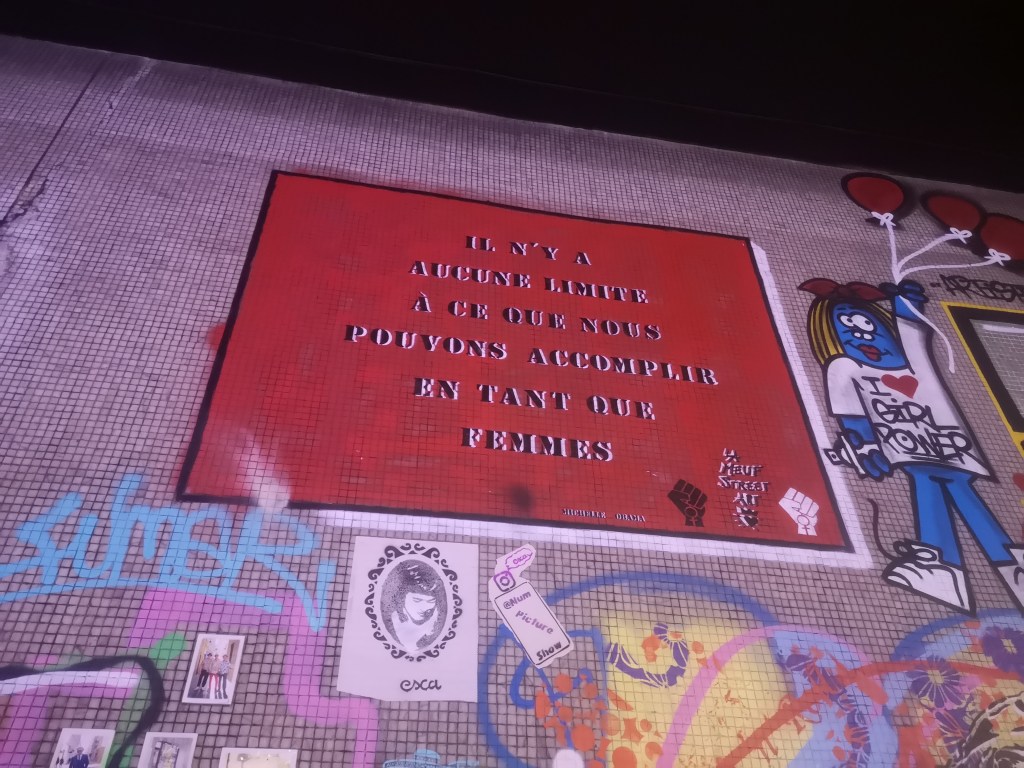
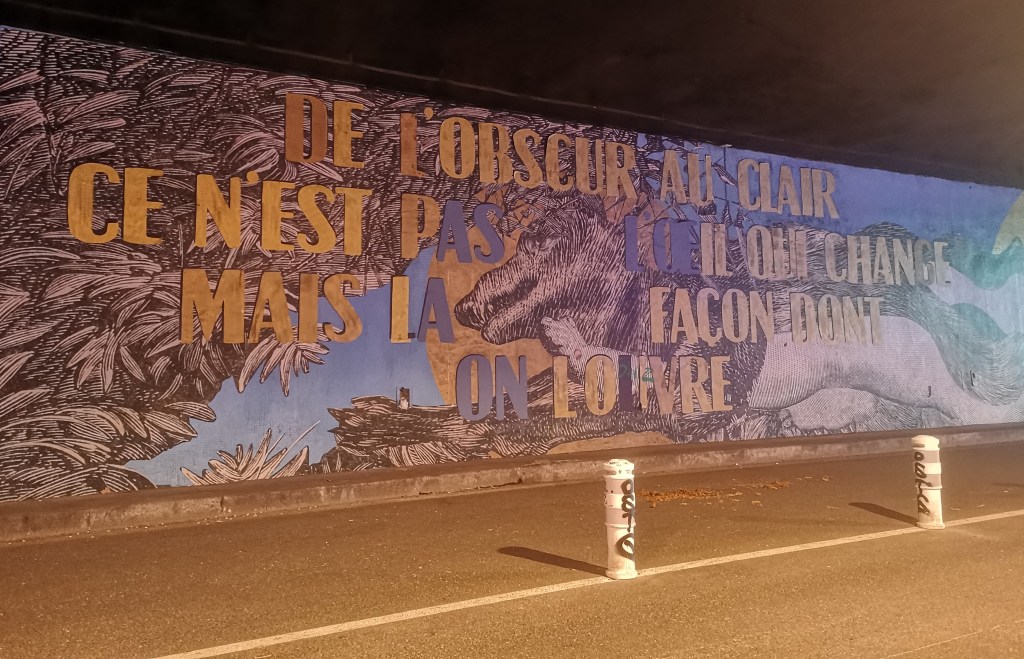
Text from the @m_a_d_a_m_e (below) ‘De l’obscur au clair ce n’est pas l’œil oui change mais la façon dont on Louvre’ meaning, approximately, ‘from dark to light, it’s not the eye that changes but the way we Louvre.’
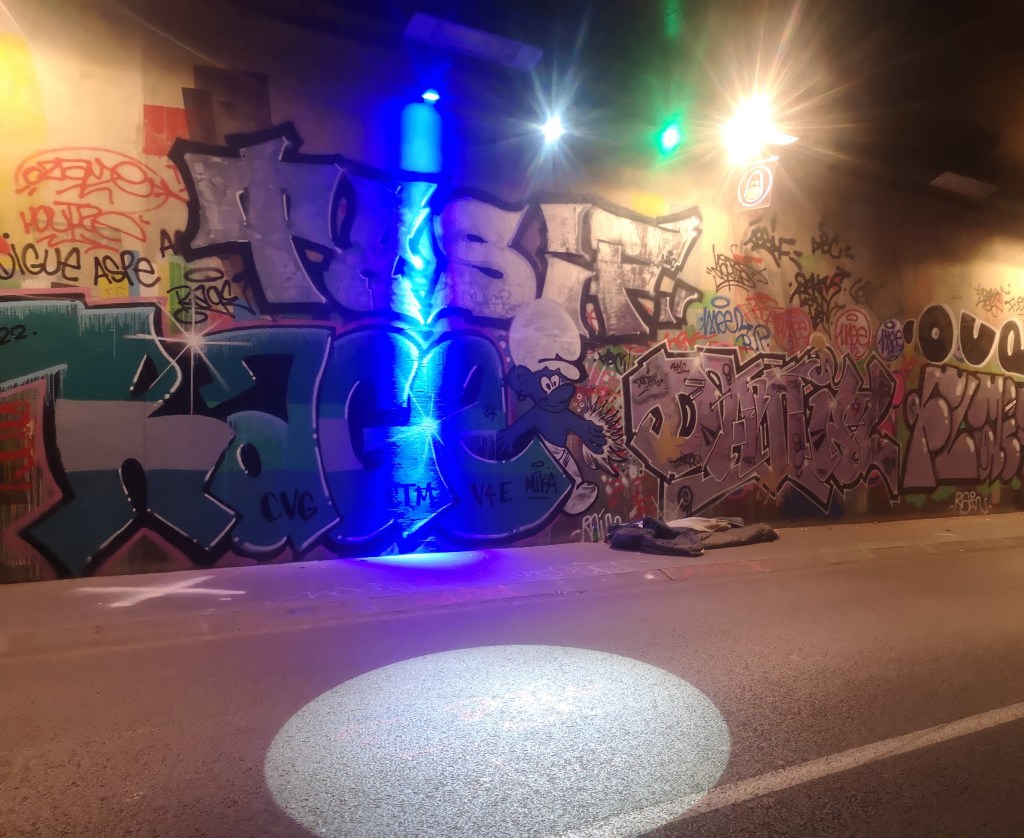
No spotlight on homelessness

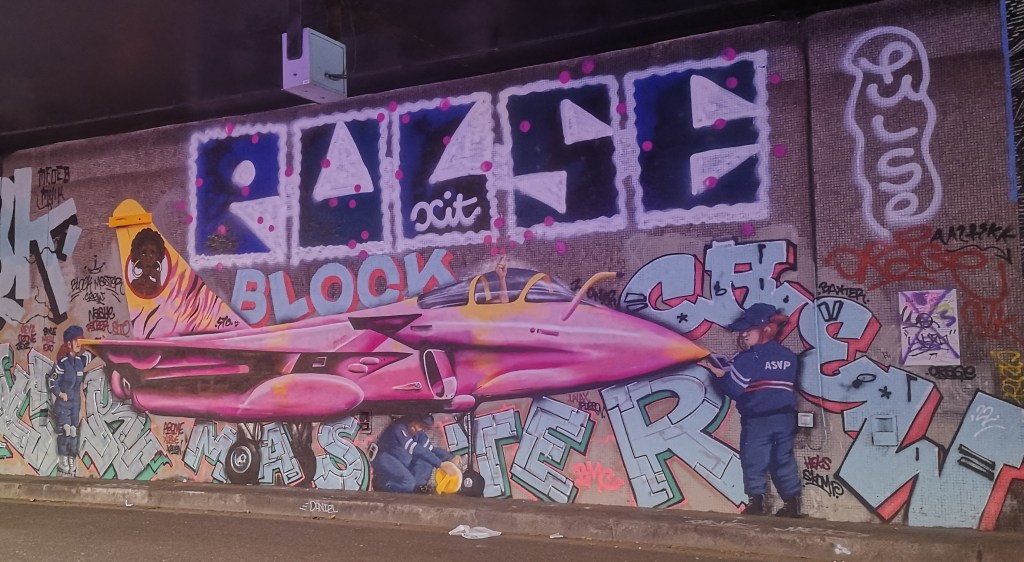
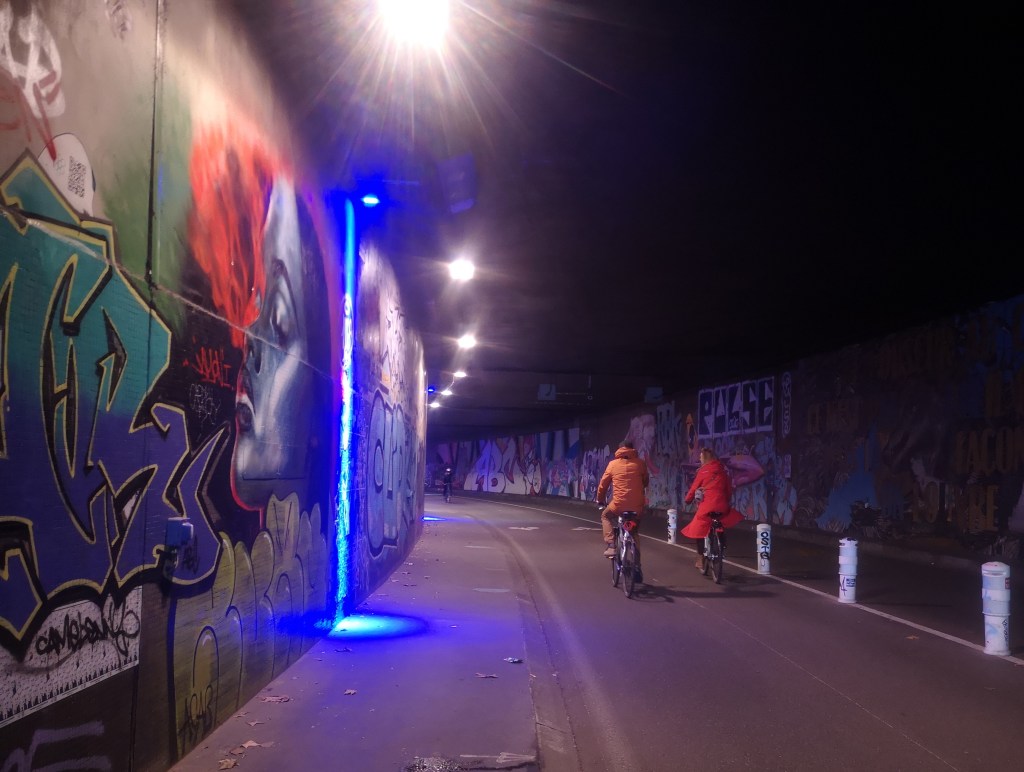
The Tuileries Tunnel is a cross between a cold contemporary art gallery and a graffitied tunnel. With all the ambience of the Channel one (linking Dover and Calais), once you are in it you are only reminded of its Parisian location by occasional French texts. Overlaid now with random graffiti, it’s hard to distinguish between the original and later-added work.
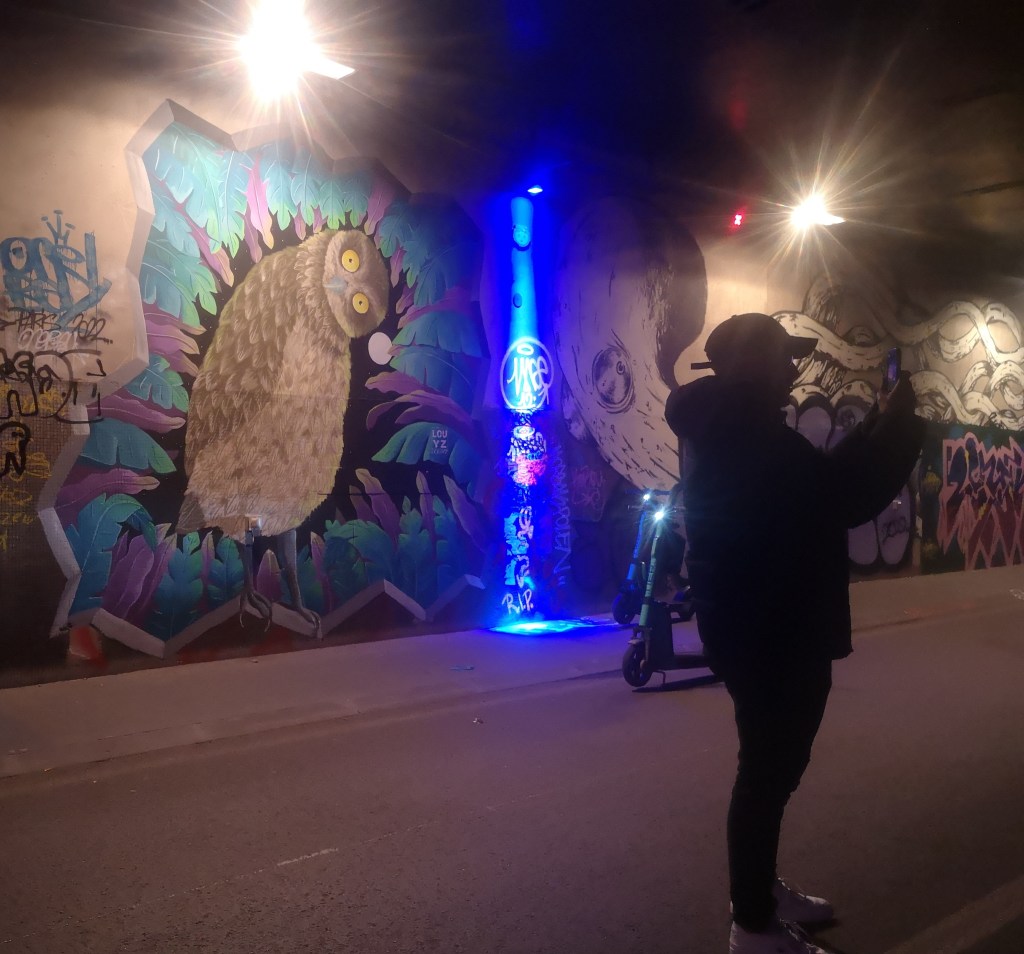
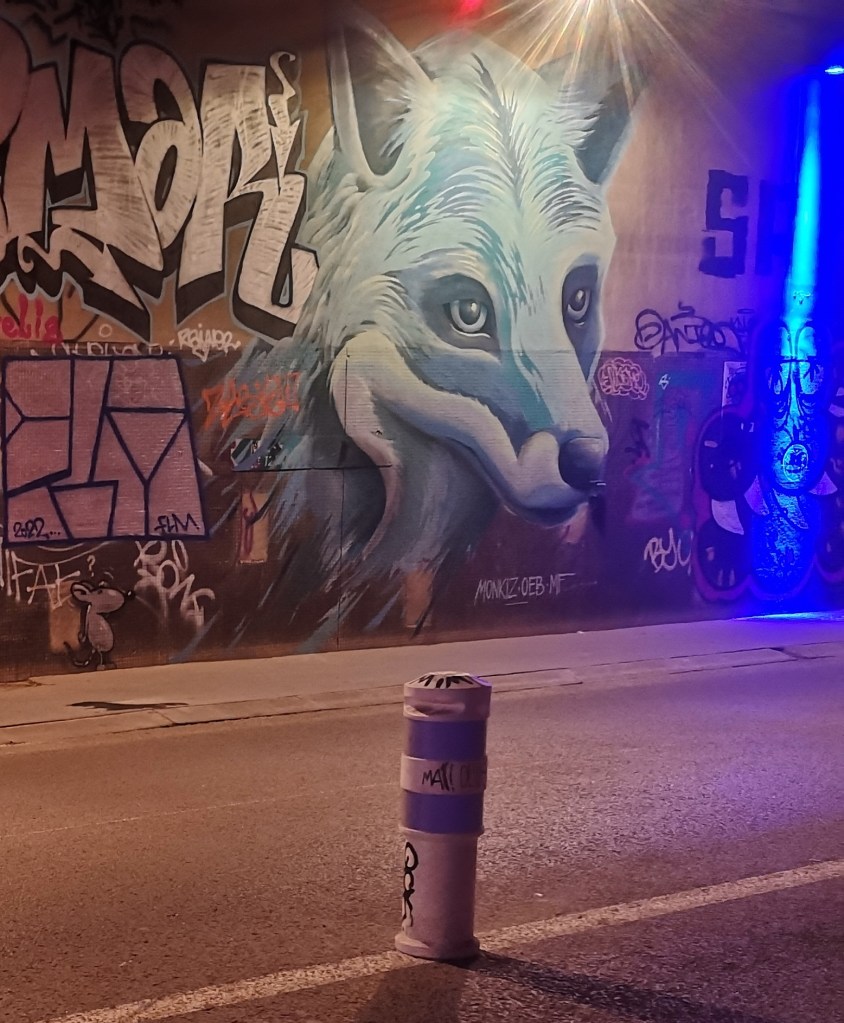
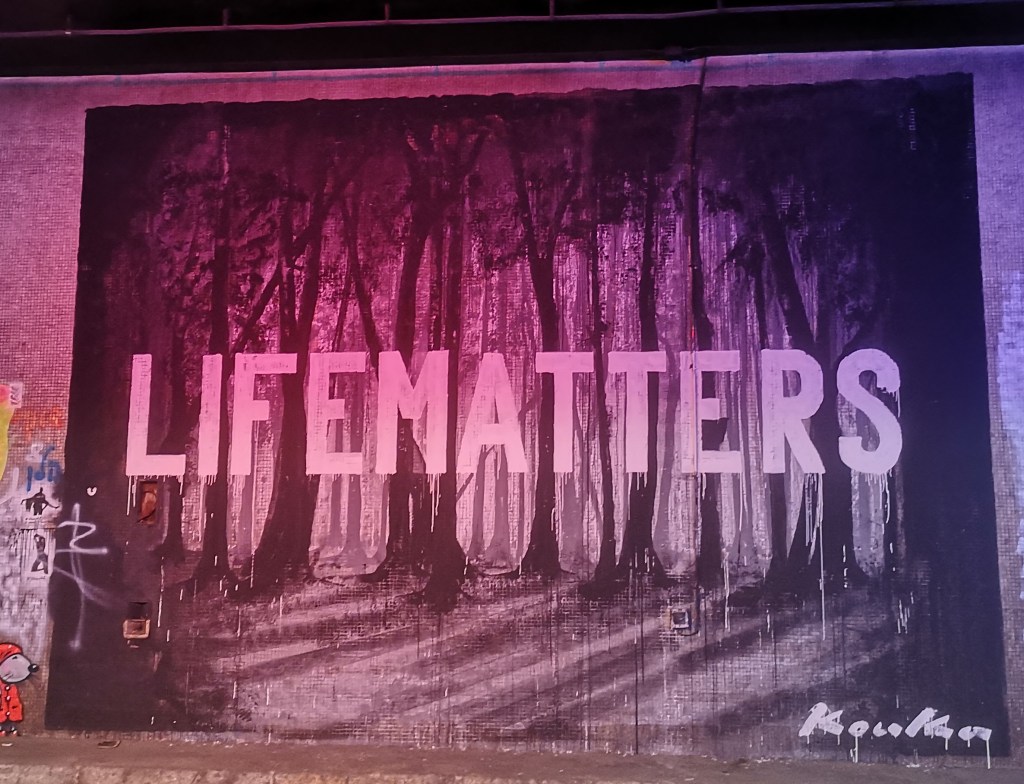
Lighting changes colour like switching traffic beacons and affects the frescoes. Beam-me-up blue ones invite you to stand underneath, back to the sides – part interrogatory, part revelatory. Some works stretch along the walls, like the dancing figures or running wild animals, moving and flowing; others decorate with familiar blocks of primary coloured letters or the image of Frida Kahlo. All are constantly interacting with their audience, some concentrating only on running and others defacing them.
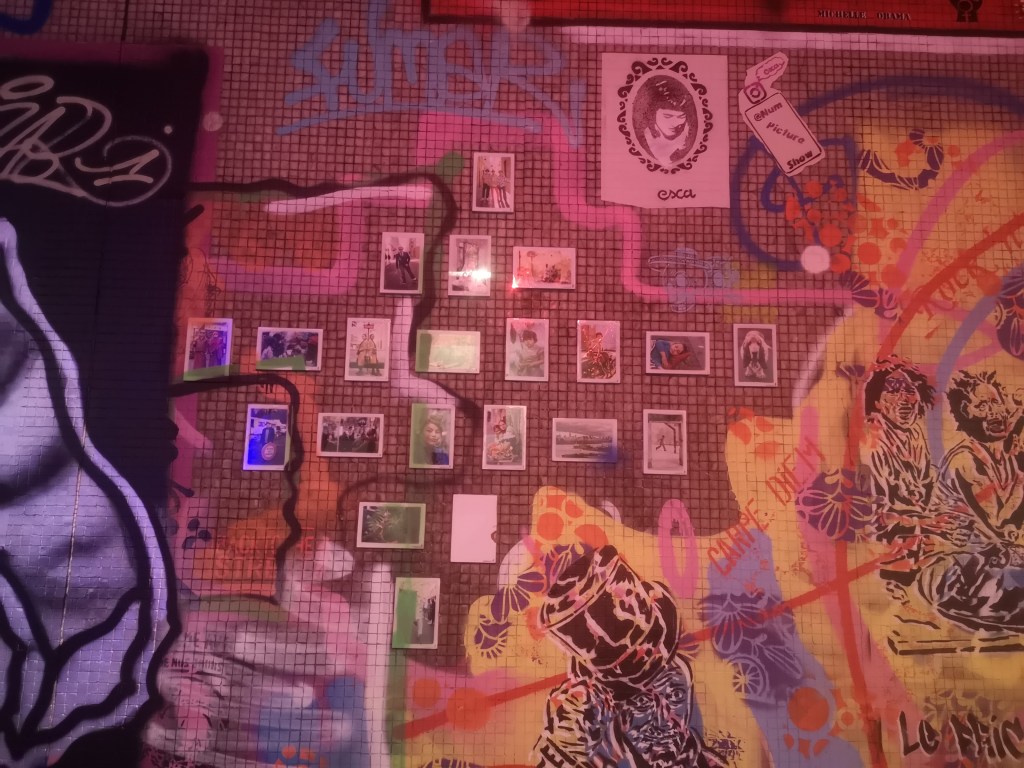
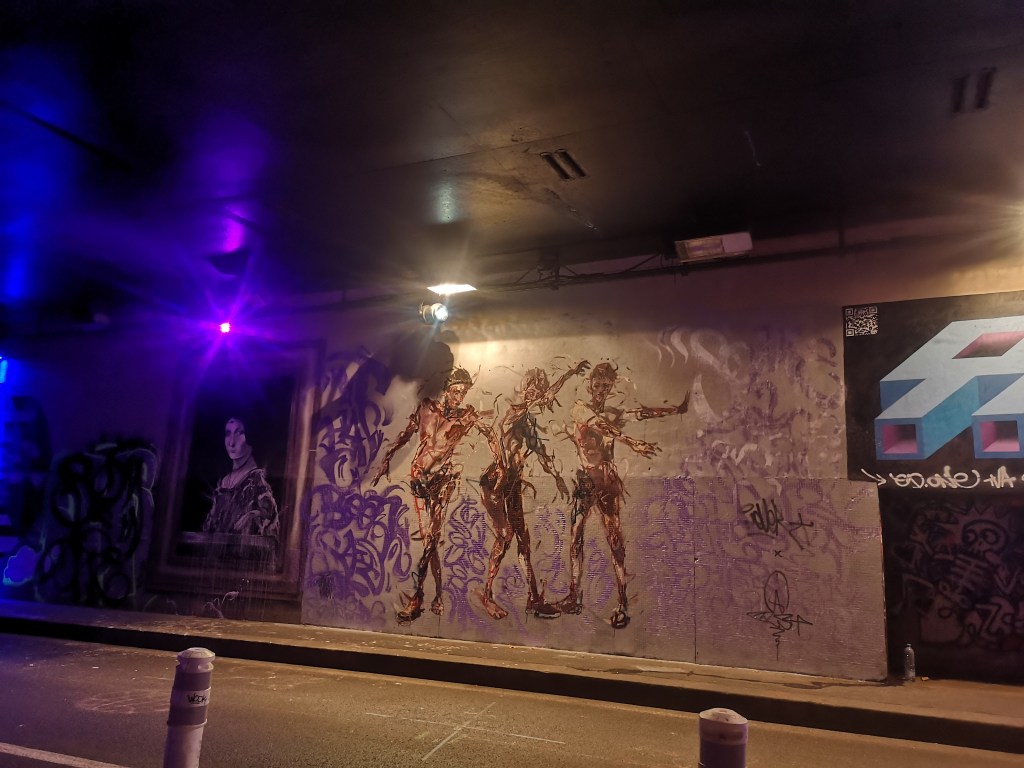
There isn’t one theme, though the fight for life and peace features strongly. The art works do not, collectively, tell a story, nor do they offer a message (unlike the Colinton Tunnel or No Birds Land in Edinburgh), though there is immense subtlety in some of them despite the conditions of the walls and the external temperature.
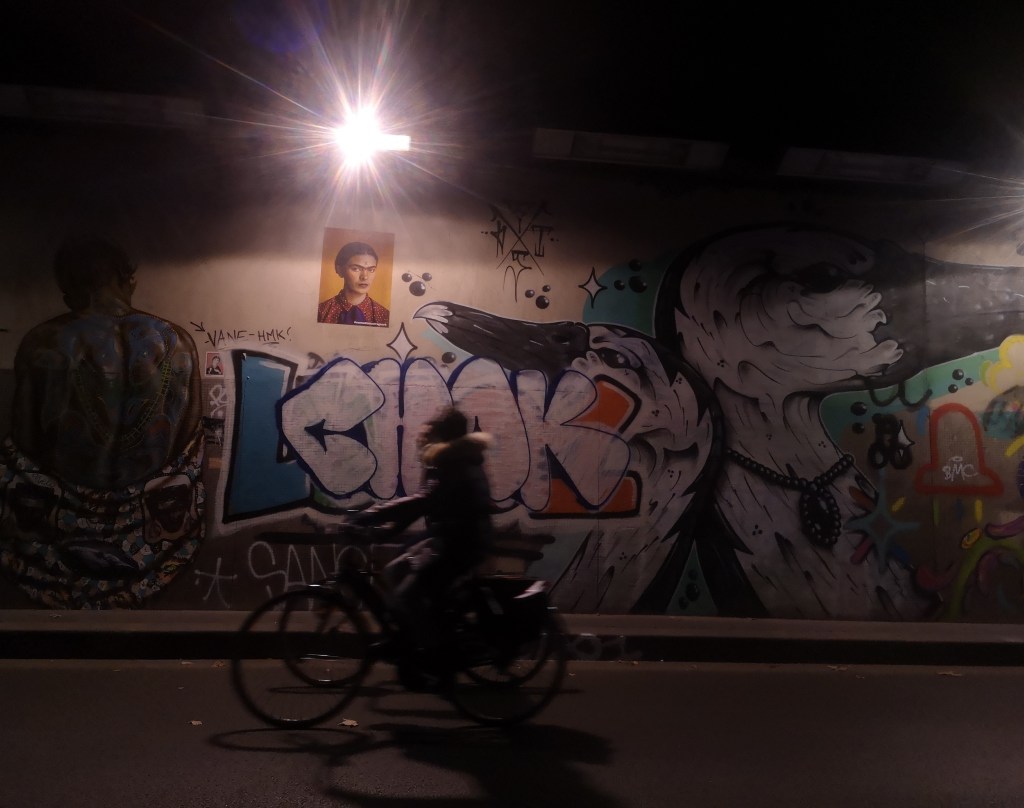
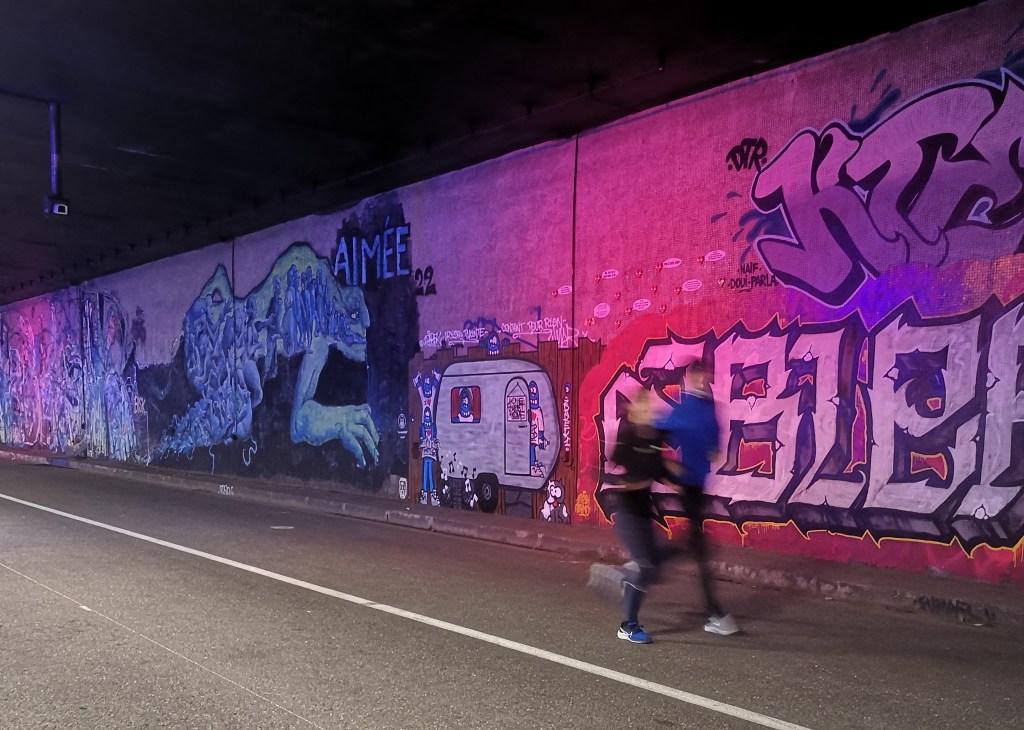
Half way through, I wasn’t sure I wanted to stay, but I had to either go back or on. There is a rawness in the air, a sense of disquiet, with none of the cosyness of a National Gallery or safety of a contemporary white box. Certainly there is impermanence – there are no guarantees that what you are witnessing will be there tomorrow.
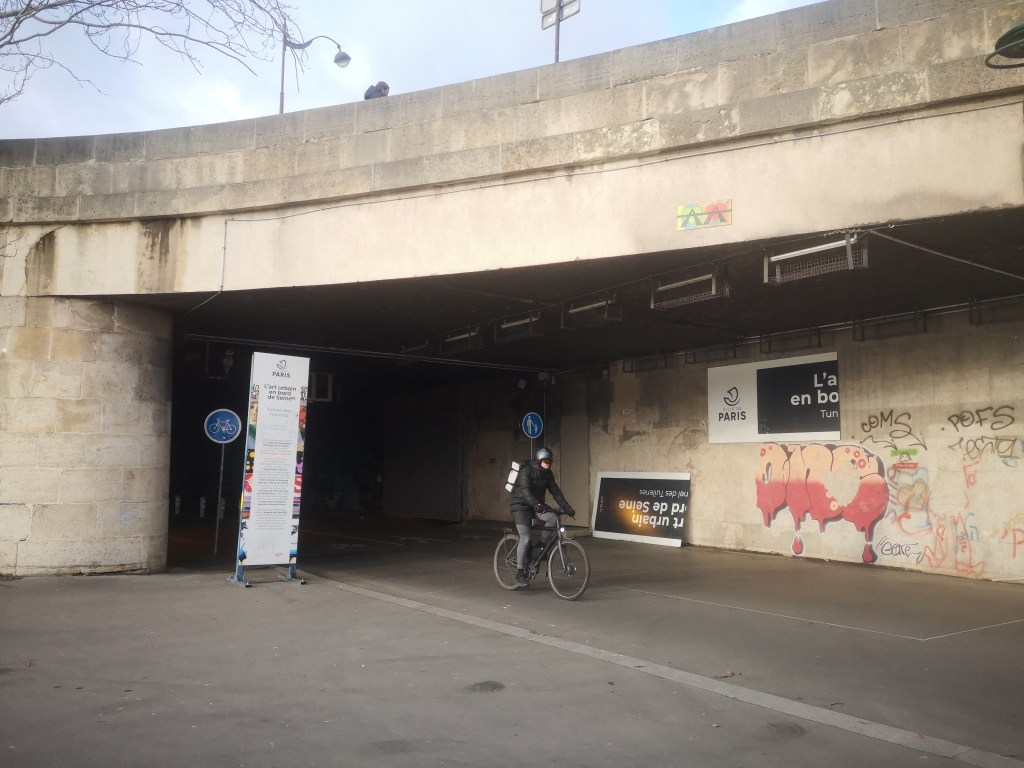
Way in / out

Link to tourist website page about the Tuileries Tunnel
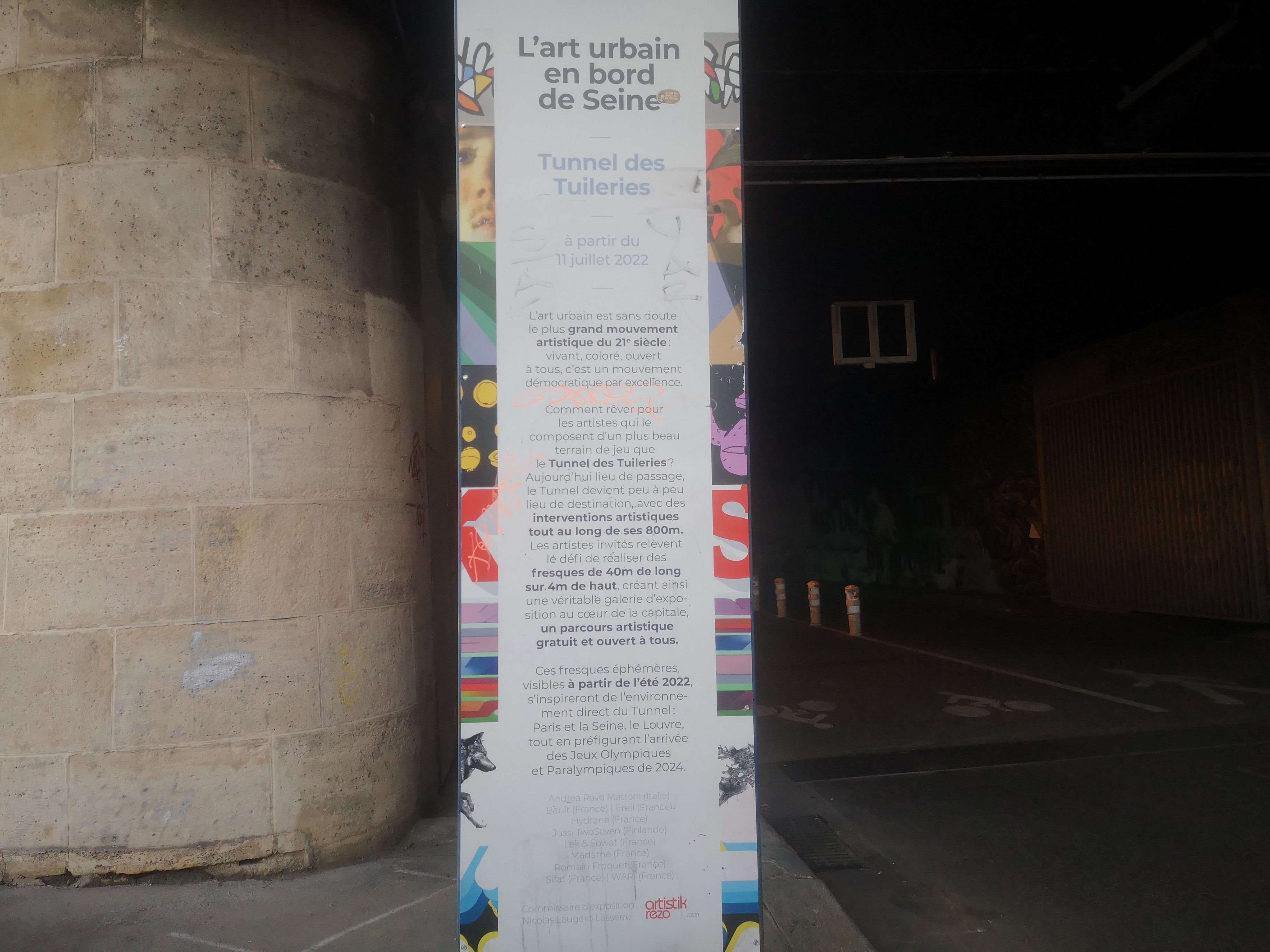
Info board

Nearest public toilets: Tuileries Gardens, Rue de Rivoli / Place des Pyramides entrance.

For a good takeaway try Aki Boulangerie, 16 Rue de Sainte-Anne, 75001 Paris (Japanese take-away meals: those works-of-art-cum-French-pâtisserie (cakes is too pedestrian a description), real delicacies. I had a briquette (I think it was called) sort of deep fried breadcrumbs outside with curried veg inside – delicious).
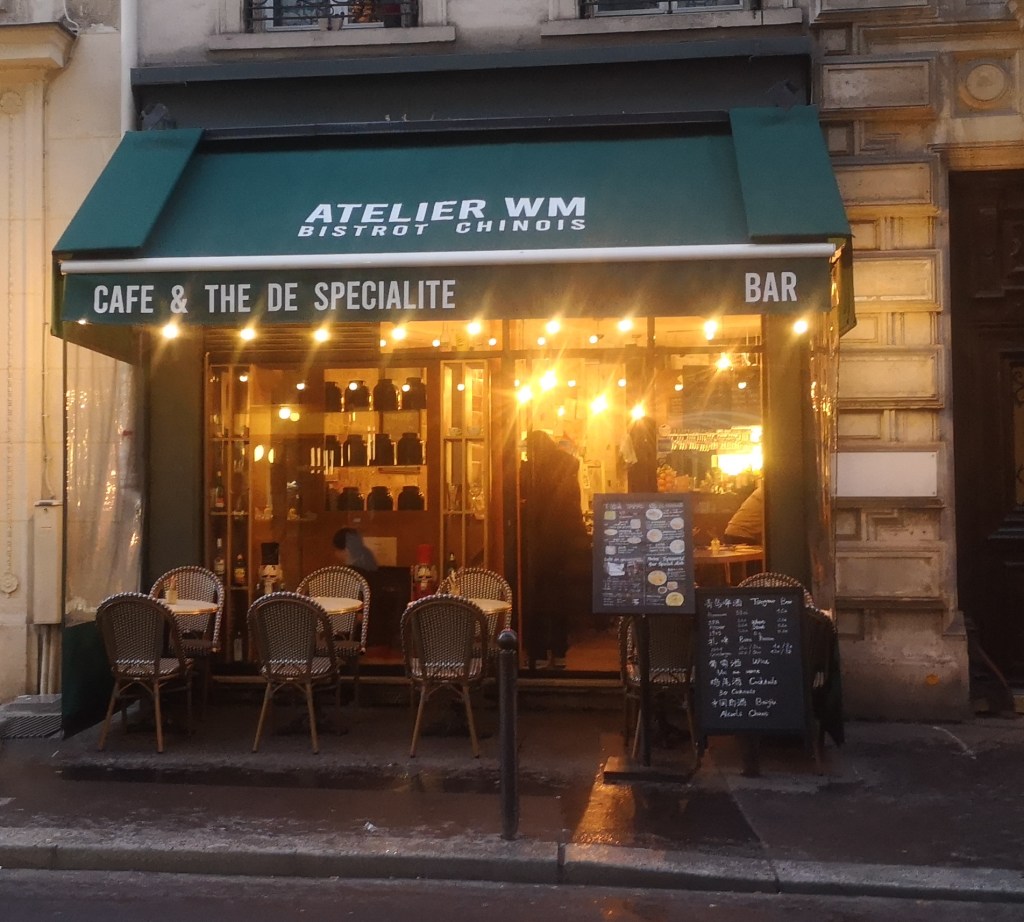
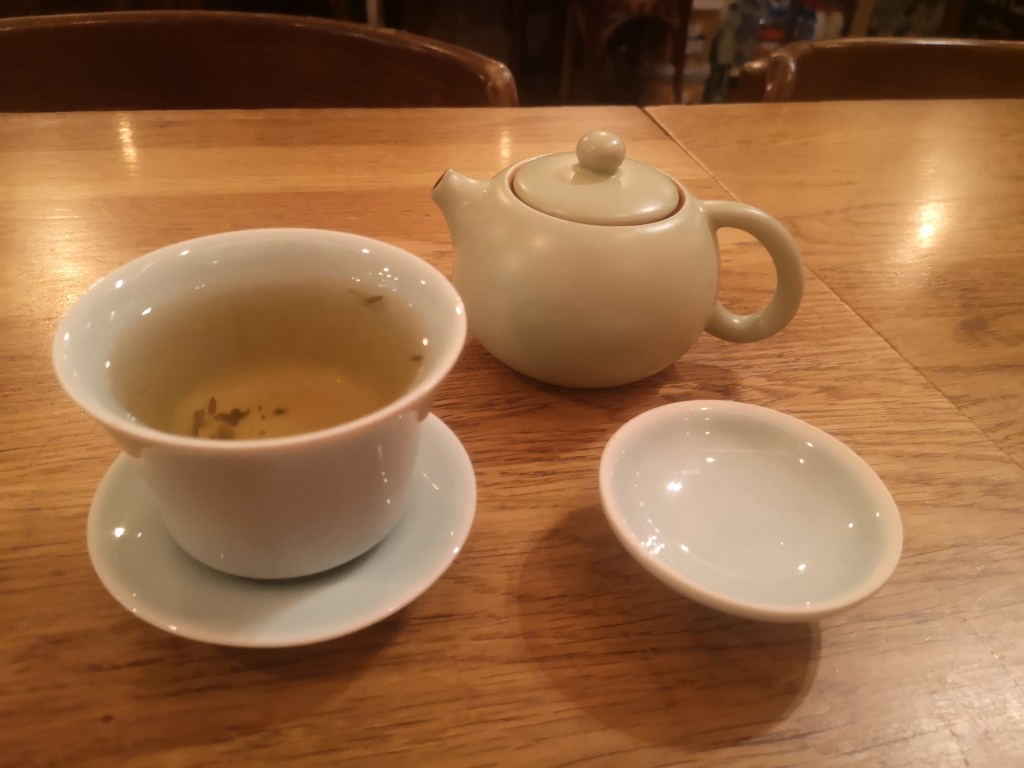
For the best, simple green tea served in the tiddliest teapot (there’s plenty – quality not quantity) in Paris (so far) try Atelier WM – 45 Rue de Richelieu, 75001 Paris, France
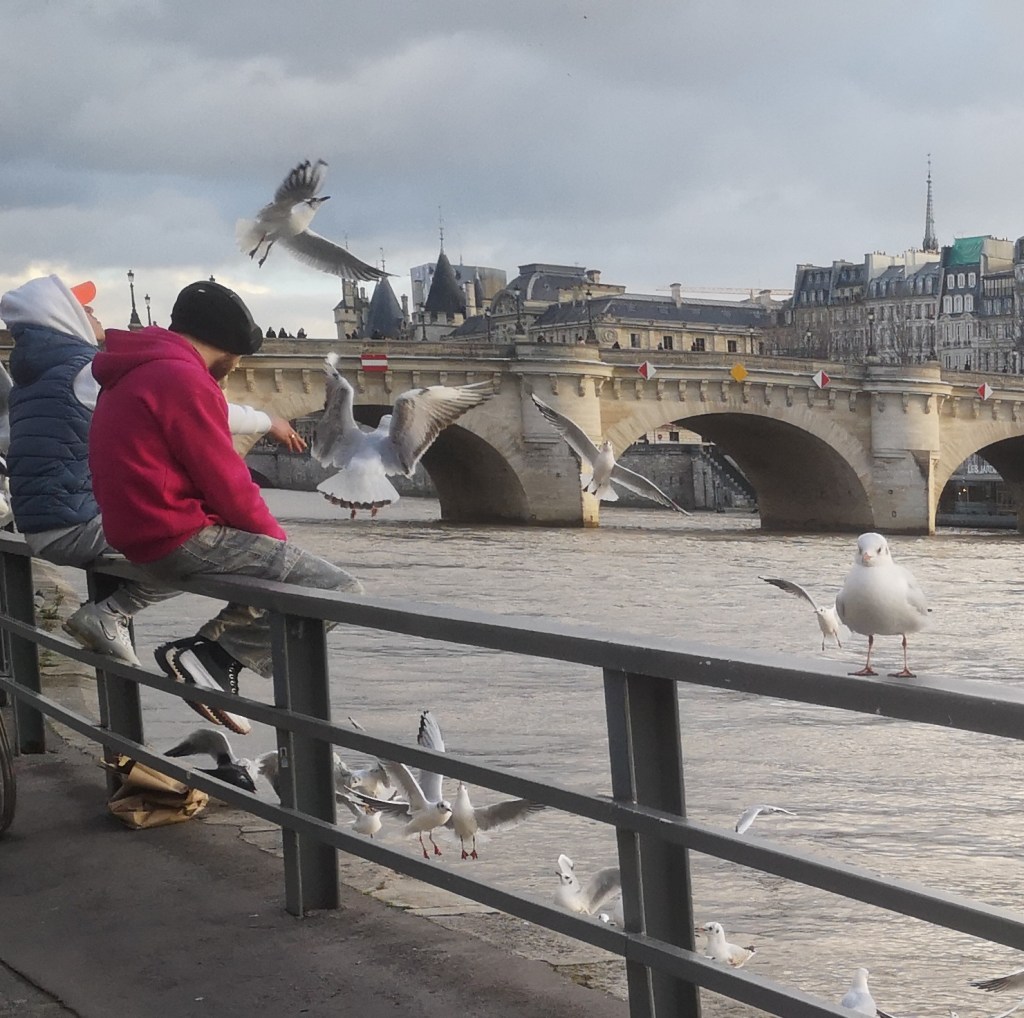
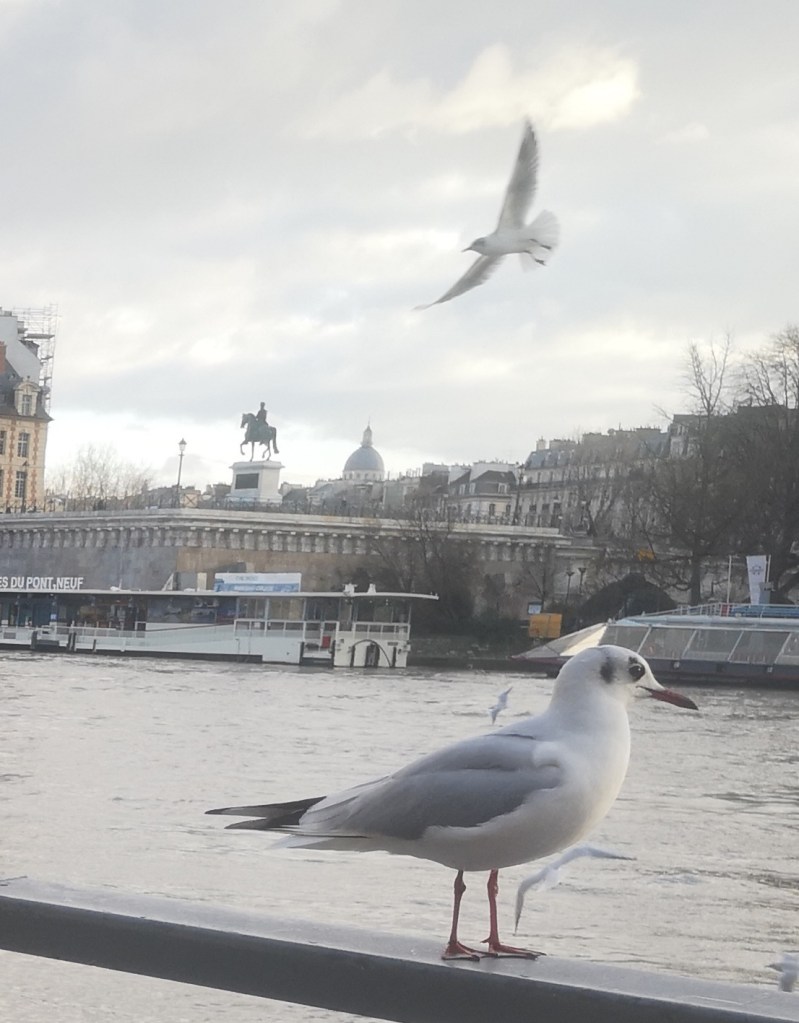
Have you been to the tunnel? What did you think? Please do leave a comment below.
Remembrance Day for Lost Species 2022

Documentation

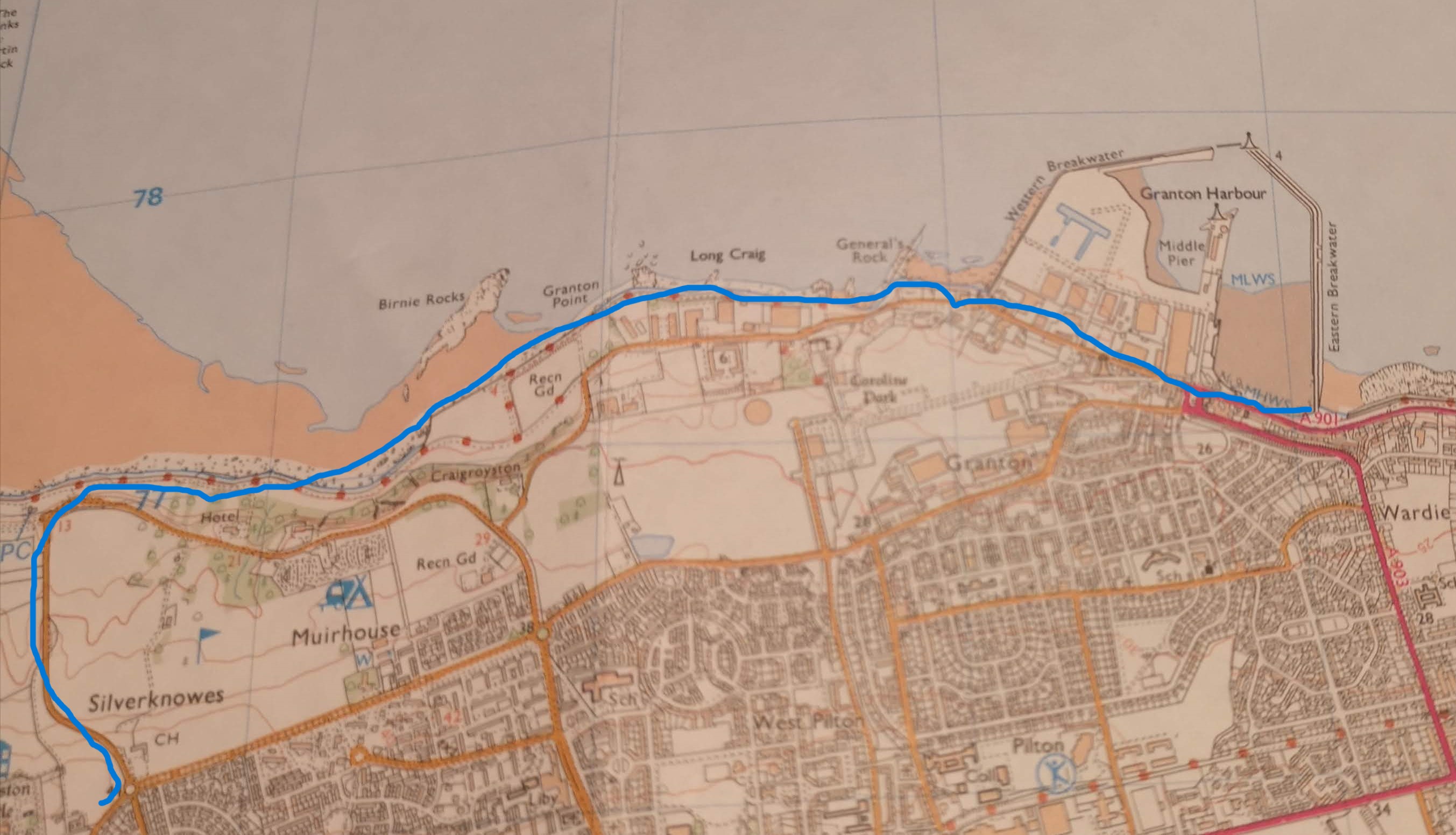
A small group of us met for a Community Walk on Wardie Bay by Granton Harbour, and walked along the coast in the direction of the Forth Bridges. We slid on the ice as far as the Boardwalk Beach Club and then headed inland to Lauriston Farm.

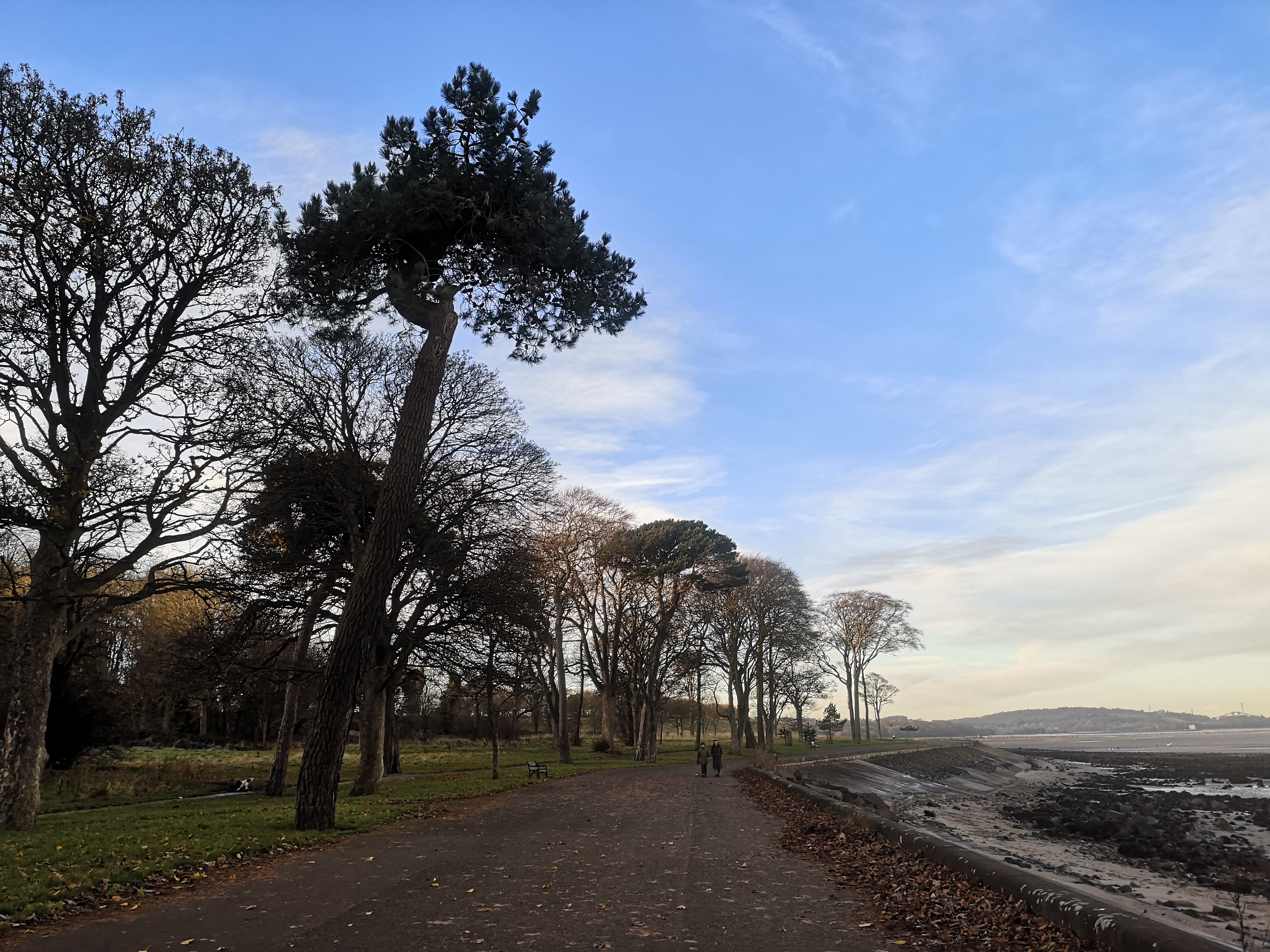
Silverknowes coastal walk – taken a week earlier

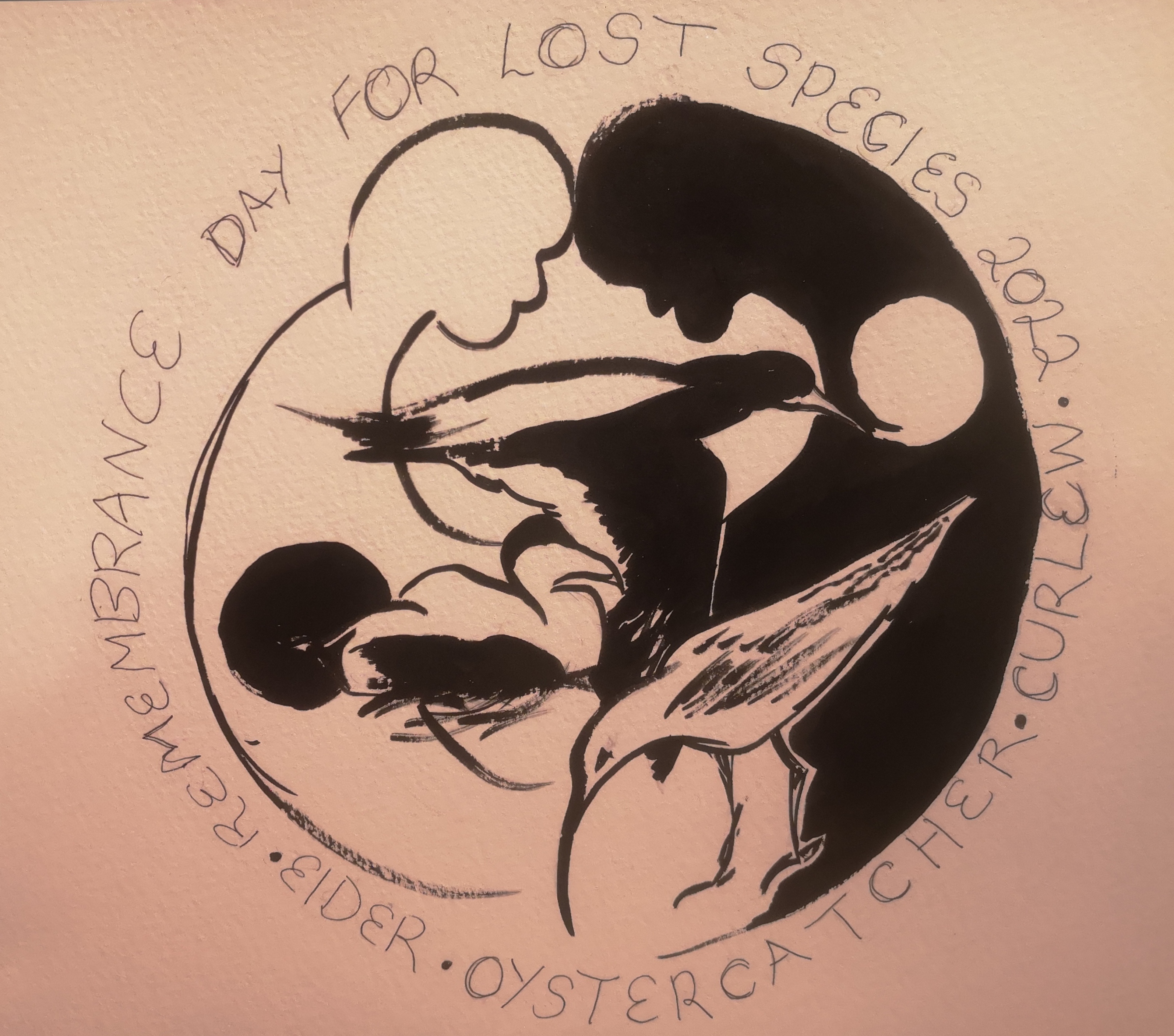
We were scanning for eider, curlew and oystercatchers, birds which are all currently on the RSPB Amber List because they are under threat from ocean pollution and decrease in habitat and safe feeding grounds.

The second in my series of 30×30 Biodiversity (pen and ink on watercolour paper)

The UK’s breeding curlew population has halved in the last 25 years.

https://www.gwct.org.uk/action-for-curlew/about-curlew/
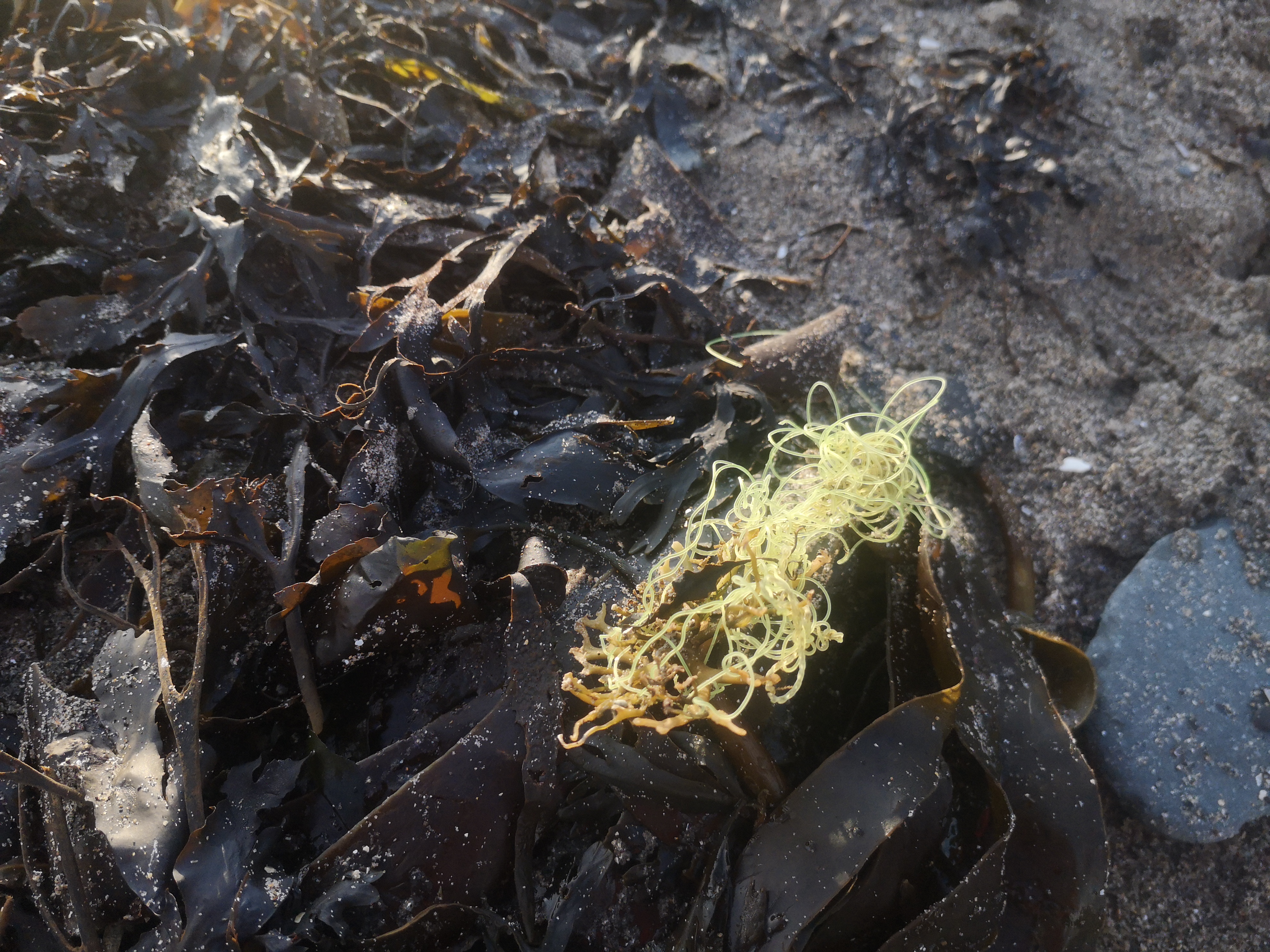
While we waited, I spent a considerable time removing this yellow fishing net which had become entangled with the seaweed on the beach
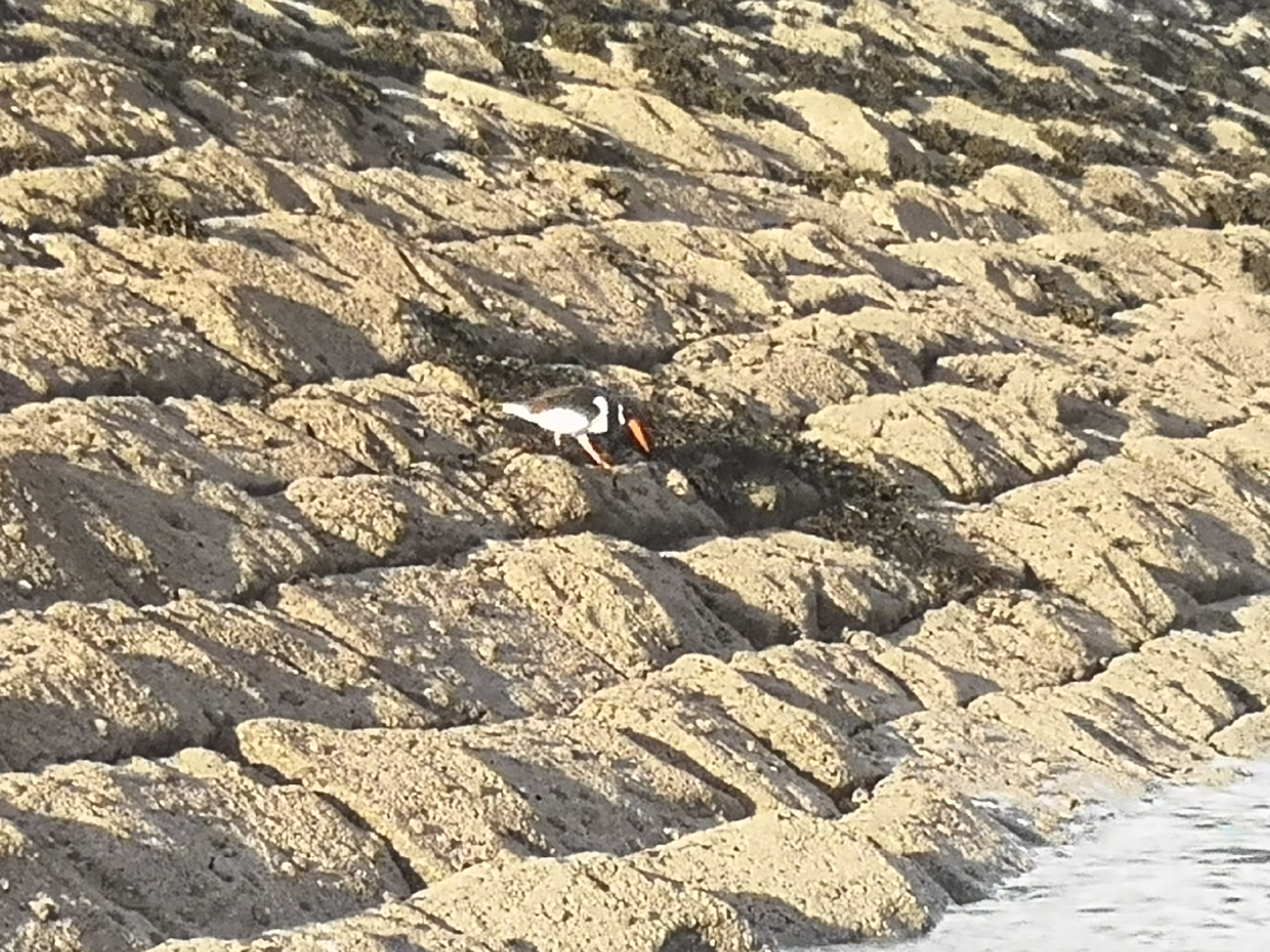
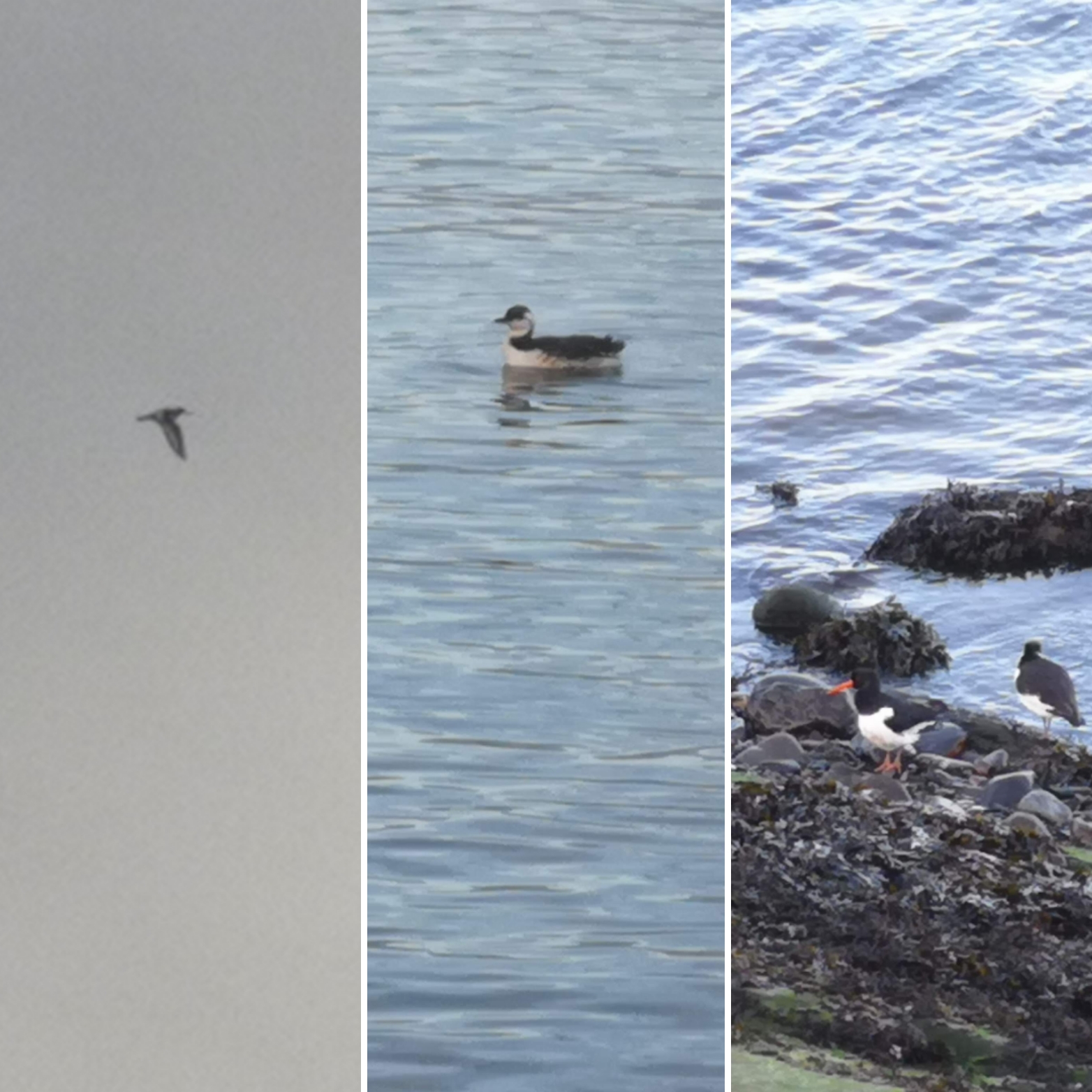
Straightaway, we spotted a few oystercatchers foraging on the Eastern breakwater with their red-orange bills and distinctive Balenciaga colouring. Unfortunately my phone camera cannot take good photos at a distance

Dogs were chasing the waders and we talked about how much energy the birds expend escaping them, energy they cannot afford to use up when the ground is frozen at this time of year and short daylight hours are filled with finding food.

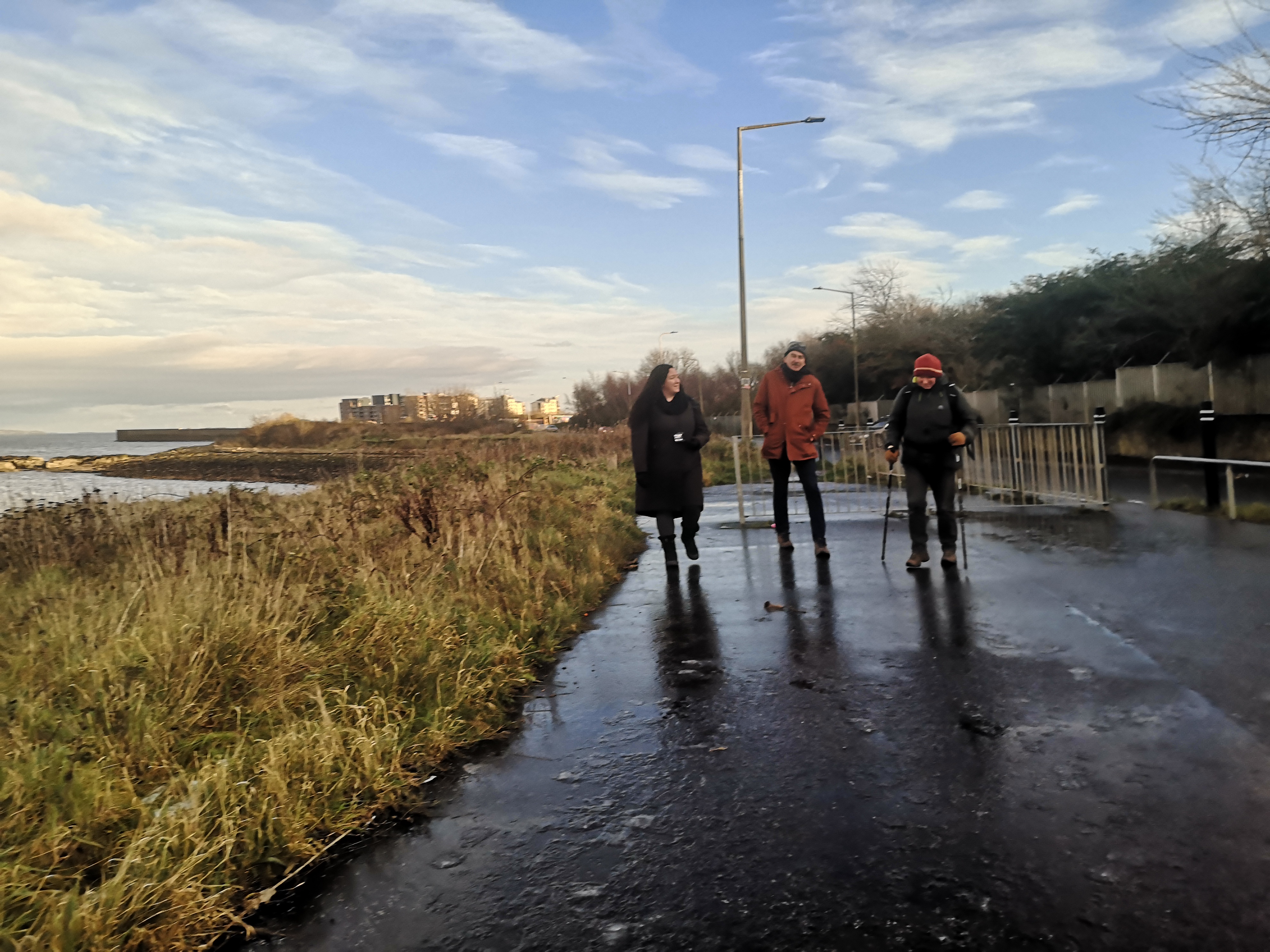
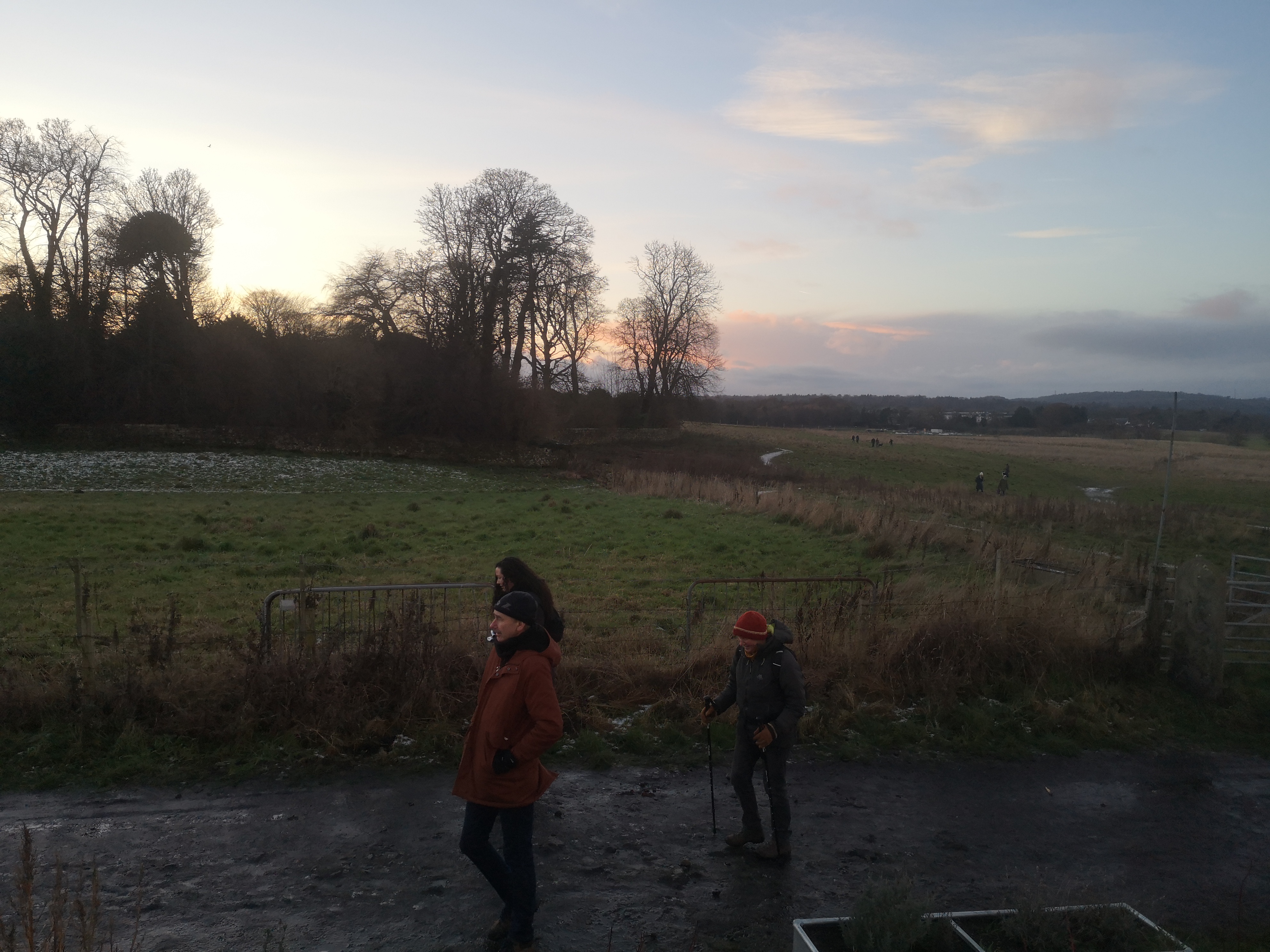
The walk had to be cancelled the week before on account of the snow. This Saturday it was icy underfoot. Kim, Ewan and Jennifer

There were eider ducks floating, thank goodness, plus cormorants and herring gull, redshank, guillemot and turnstones, great crested grebe, mergansers, and grey plover.

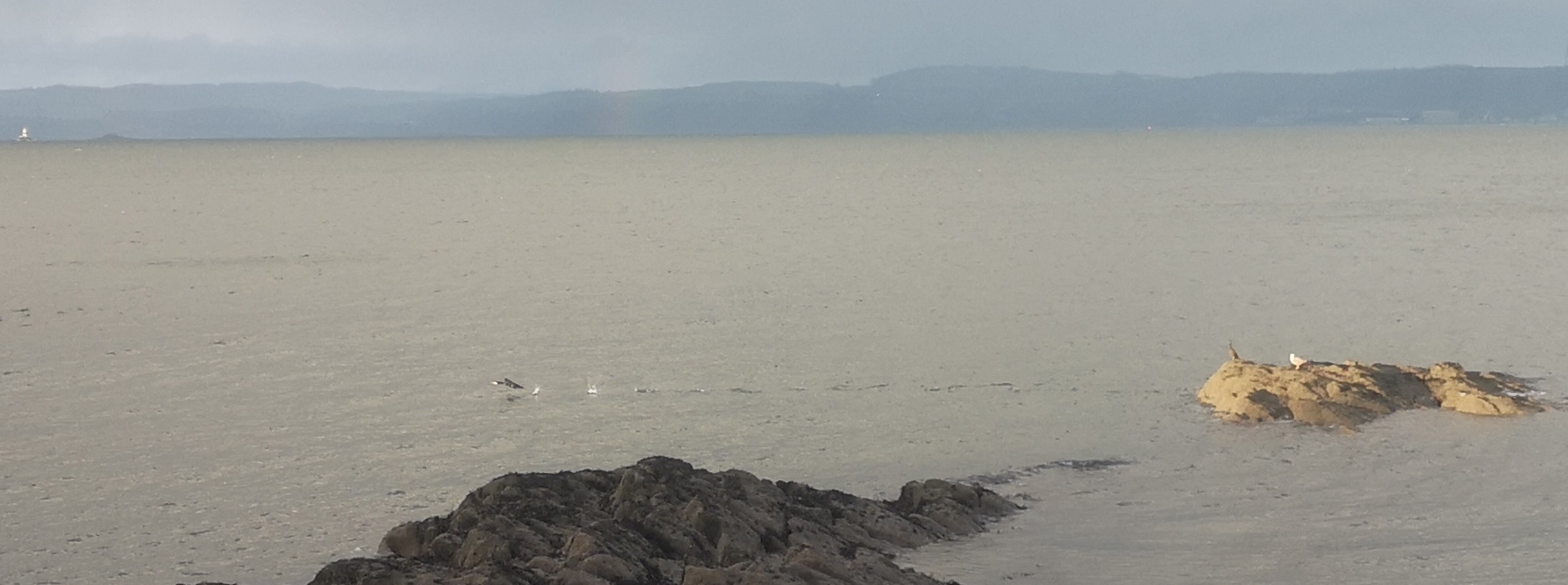
Another poor quality long-distance shot, but I managed to capture the cormorant skimming away from the rock it had been sunning on
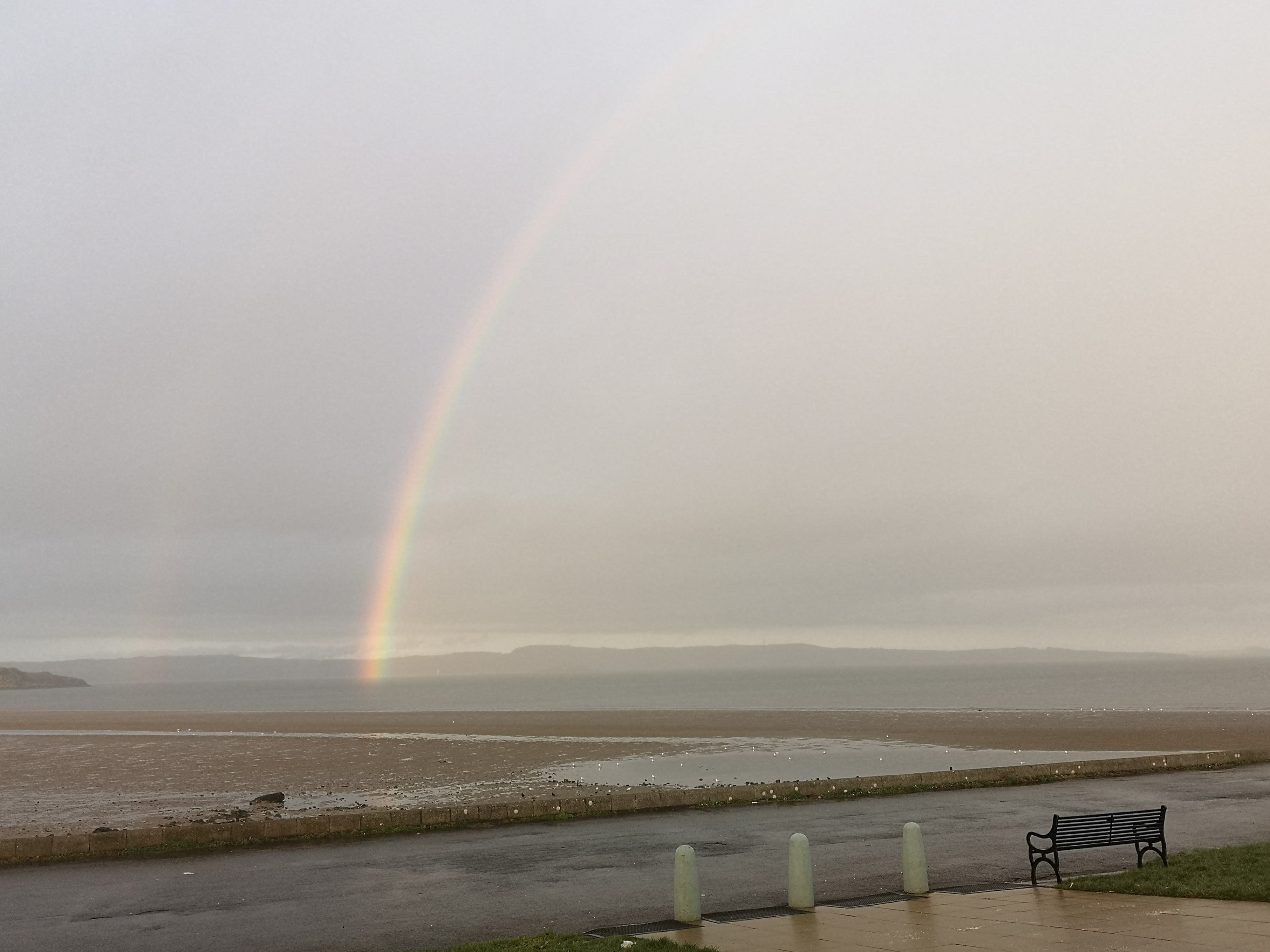
By the time we reached hot chocolate heaven with cold hands and full bladders, the rain was coming on and we admired the rainbow beside Cramond Island
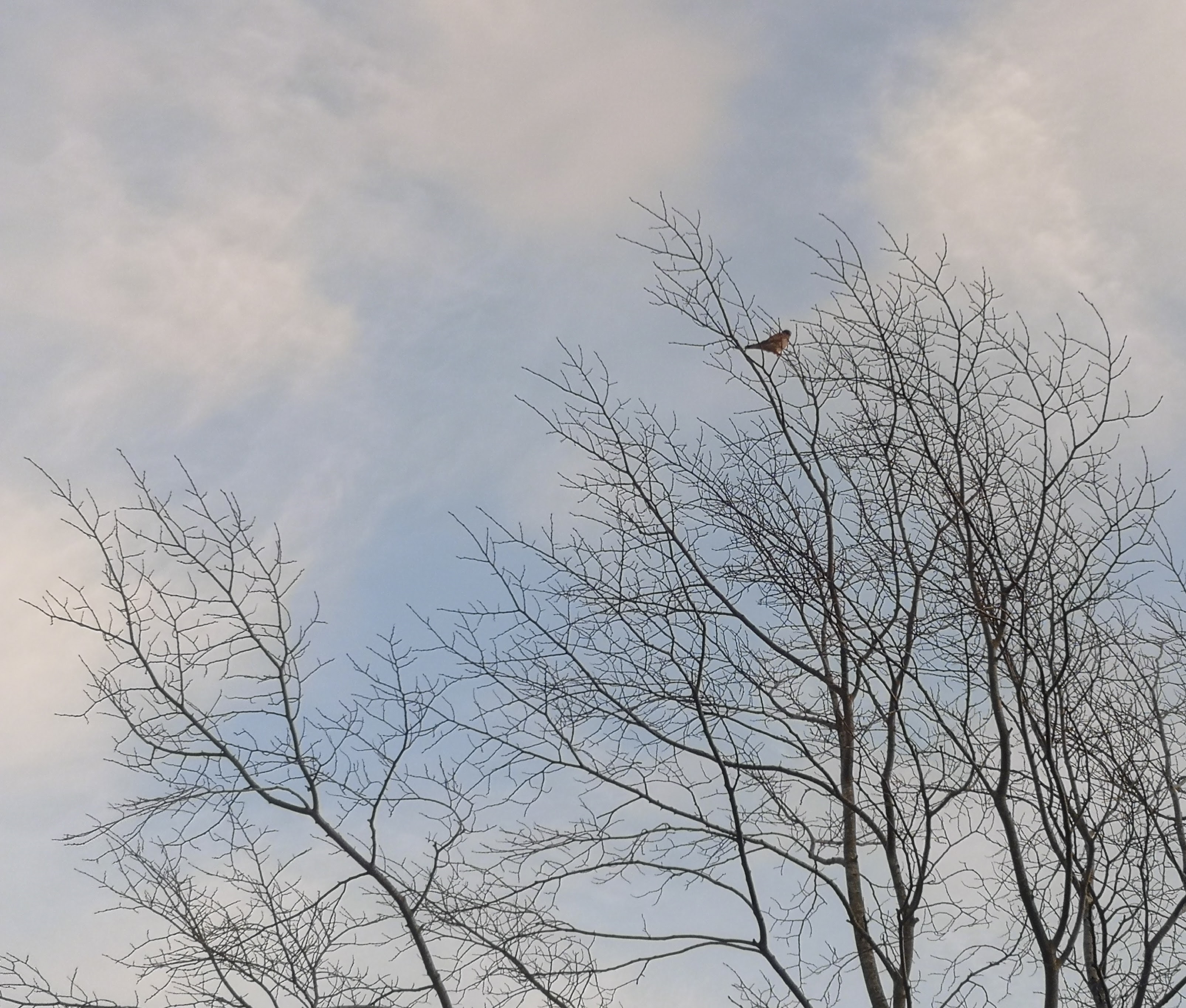
As we walked inland, we spotted a kestral hovering with wings spread, listening to something it had spotted, plummeting, and then sitting in a tree nearby, perhaps digesting
Lauriston Farm have recently fenced off their lower field so that migrators can overwinter there safely – commendable work that will benefit us all. Jennifer, Ewan and Kim, trusty fellow walkers

Other sightings: crows, robins, magpies, blackbirds, fieldfare, a heron, and a flock of linnets.

Lauriston Farm

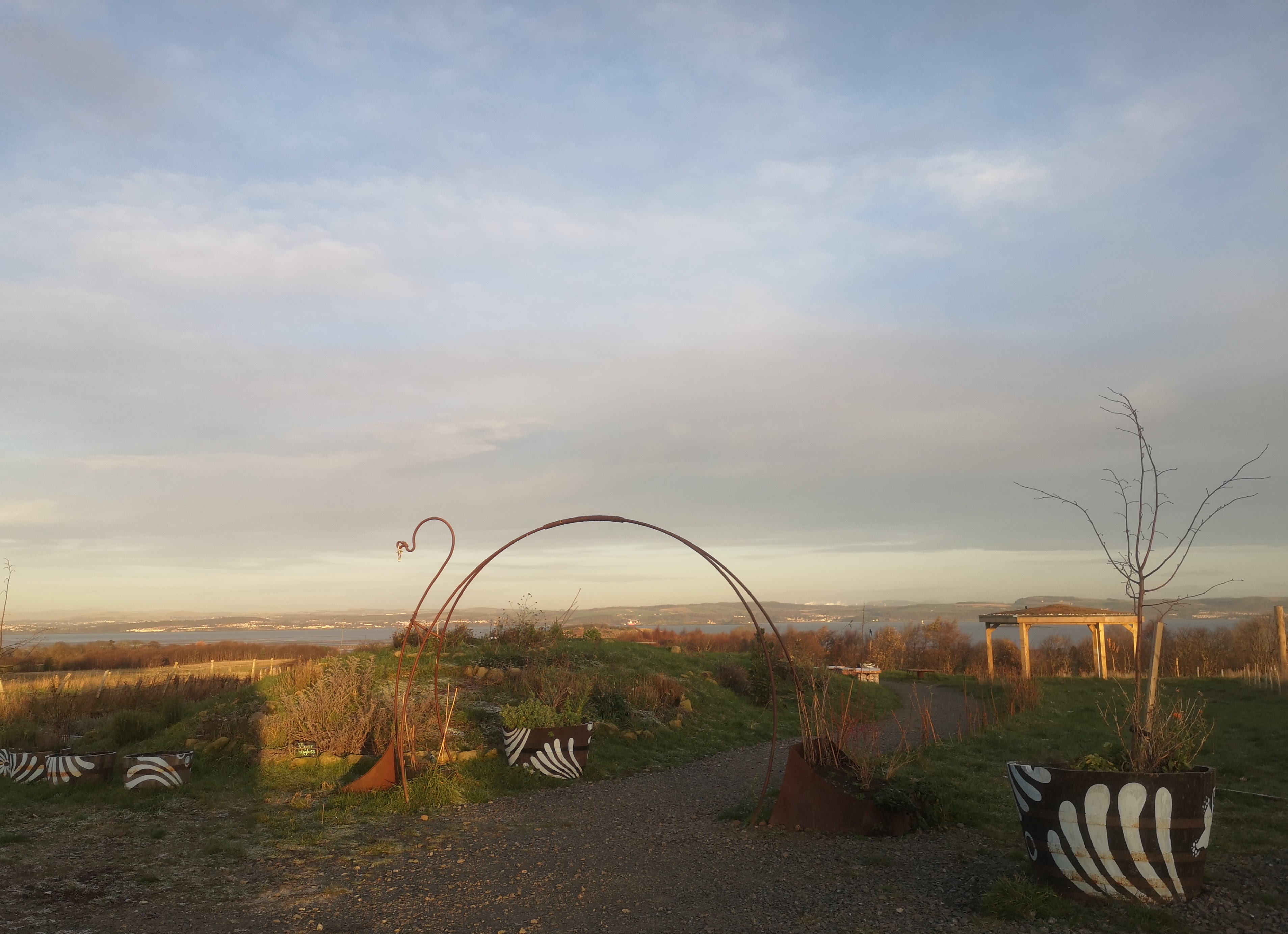
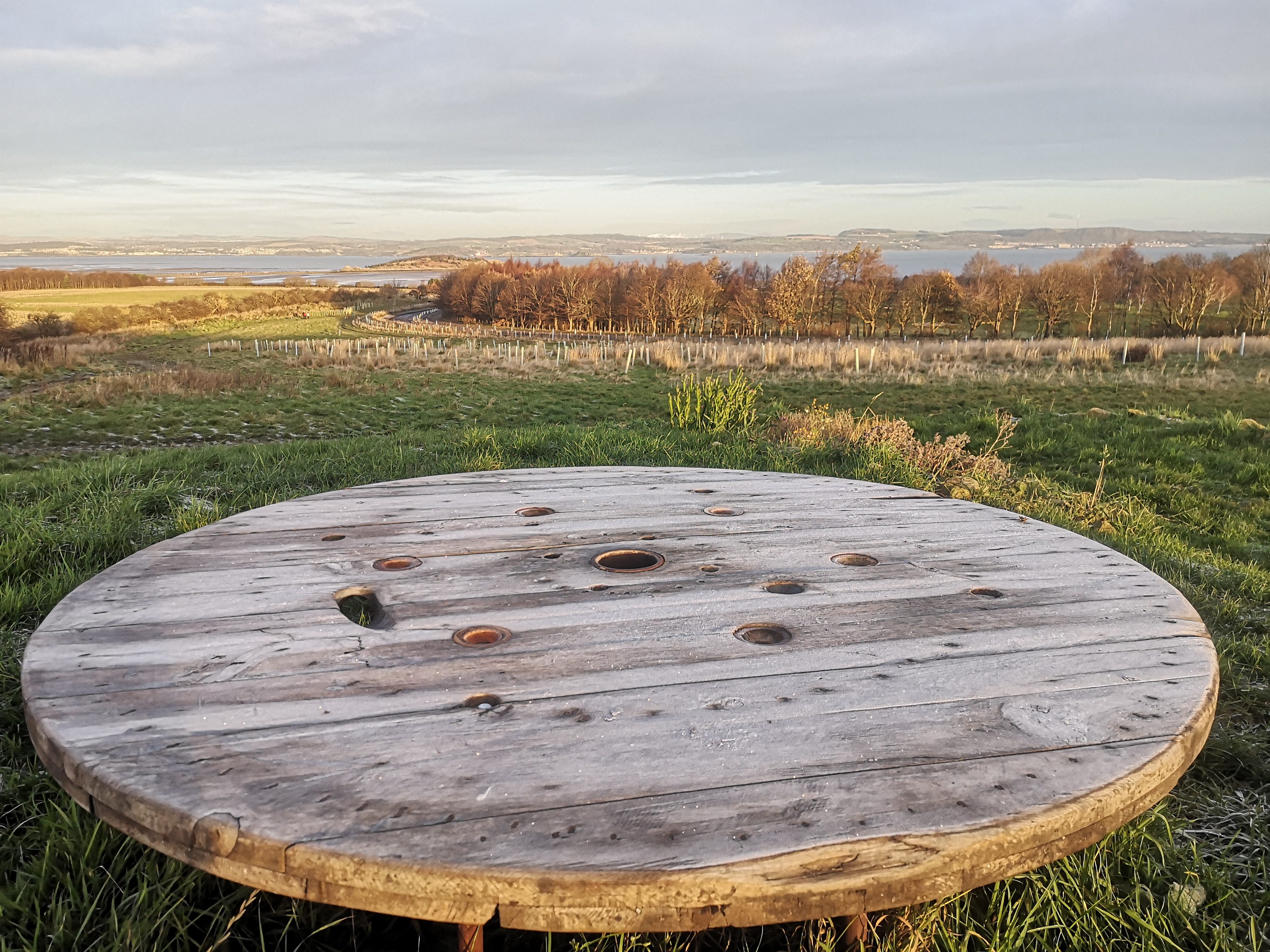
Lauriston Farm, higher up, offers a glorious view of the Fife hills. We stopped to chat with Toni, one of the tireless team who run it, and Bob, a local birder who said the curlew “are definitely coming back”. Not ten minutes later as we walked to the bus stop, he was proved right. By the road was a group wandering and feeding, and again, taking off when they were disturbed, needlessly, by a jogger who ran through their midst.

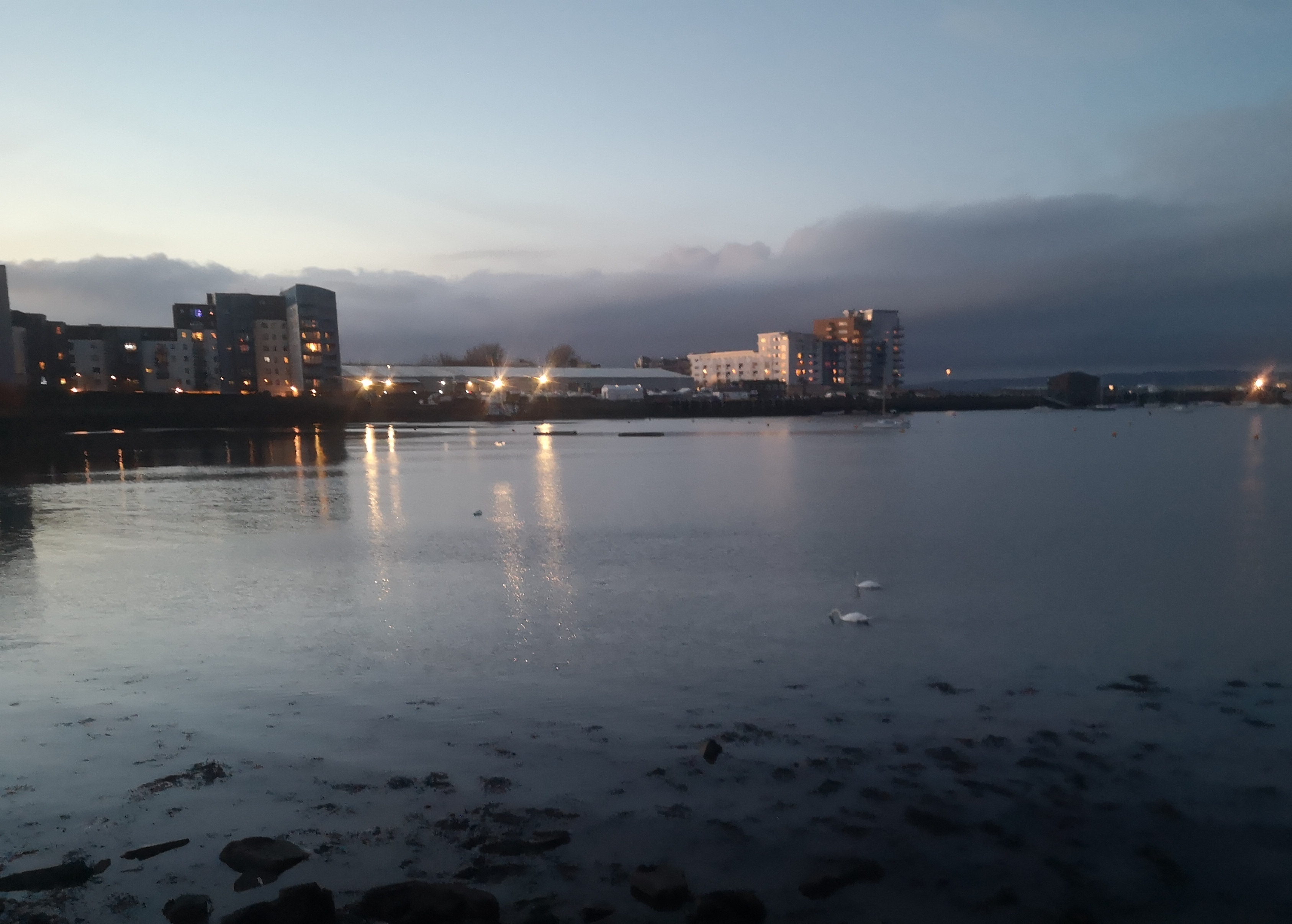
Back at Granton Harbour: swans at dusk

You might like to listen to Merlyn Driver s Summer Dim which celebrates the curlew

Related blog: Remembrance Day for Lost Species

Lost Species Day 2020

Lost Species Day 2021

Wader’s Welcome 2024

Remembrance Day for Lost Species

A community walk along the edge of the Firth of Forth to look for eider ducks, oyster catchers and curlew which are all on the RSPB amber list. This is the first post of two. The story of the walk is here.

Why we walked

Remembrance Day for Lost Species, November 30th, is a chance each year to explore the stories of extinct and critically endangered species, cultures, lifeways, and ecological communities. 

Whilst emphasising that these losses are rooted in violent and discriminatory governing practices, the day provides an opportunity for participants to make or renew commitments to all who remain, and to develop creative and practical solutions. 

Remembrance Day for Lost Species honours diverse experiences and practices associated with enduring and witnessing the loss of cultural and biological diversity

Remembrance Day for Lost Species website

Where and When?

Saturday December 17th 1-3pm 2022

Starting at the end of the Eastern Breakwater at Granton Harbour and walking along through the industrial area between Granton Square and the end of the Silverknowes walkway, continuing along the front, then turning inland to Lauriston Farm.

View from Lauriston Farm across to Fife – the end point for the walk

Lauriston Farm

Lauriston Farm write: “The north section of the farm is dedicated to habitat creation for coastal birds – we’re working to create the right conditions to encourage curlews and other wading and coastal wintering birds to return to the farm so they can find undisturbed areas to roost and feed. We have also seen a family of grey partridge (a red listed species) on the farm this year, and our work to create meadows, wetlands, hedgerows, field crops and tree lines plus a mixed management regime on grasslands will support this species as well as the curlews and other coastal birds.

The message we really want to get across is that we encourage and support people to visit and go for walks on Lauriston Farm *and* we really need visitors to help protect the north and middle field as a habitat for these endangered bird species. We ask all visitors to stay away from the north and middle fields, and to keep dogs away from those fields (look out for the maps on the farm that show the protected areas) so that the birds are not disturbed. We maintain a large area of grass to the east of the market garden to give space for dogs to play away from the north fields.

Lauriston Farm is a project on iNaturalist (an international citizen science project) and we would love visitors to report anybird sightings on the app – more details here: https://www.lauristonfarm.scot/posts/180″

Remembrance Day for Lost Species walk, Granton and Silverknowes

Level of difficulty

A relaxed and easy walk (flat until the last part – a gentle slope up to the farm).

What to bring / wear

Bring a flask and snack if you like – there are picnic benches – binoculars, and wear suitable clothing / footwear for the December Scottish weather. It will be mostly tarmac underfoot throughout.

Note

Please note that this is not a circular walk.

We are going to be looking for curlew, oystercatchers and eider ducks. Note: although these are curlew and oystercatchers, I could not find an eider duck so this is a guillemot 😦

Eiders are unusual in that they ‘crunch up’ mussel shells (and their soft yummy contents) for an ideal meal.

John Muir Way

Lost Species Day 2020

Lost Species Day 2021

Sound Walk – The Wall

My Sound Walk has been short-listed by walklistencreate.com for a Sound Walk September Award 2022. I am delighted.

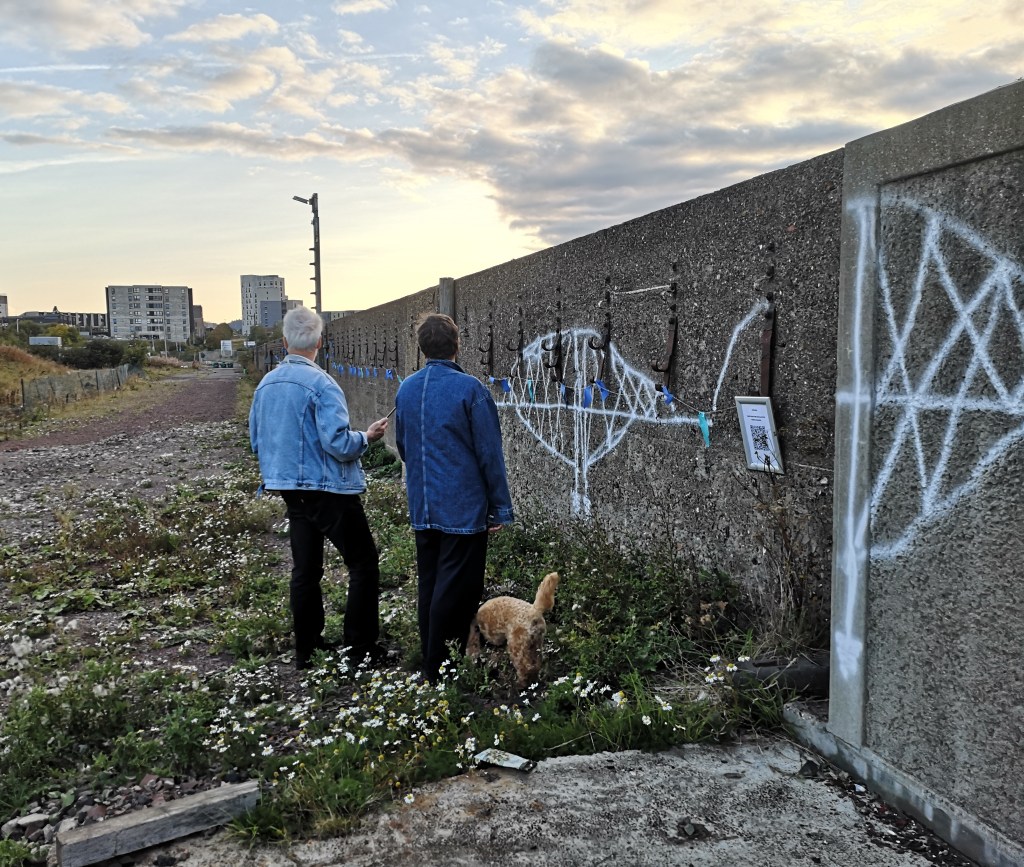
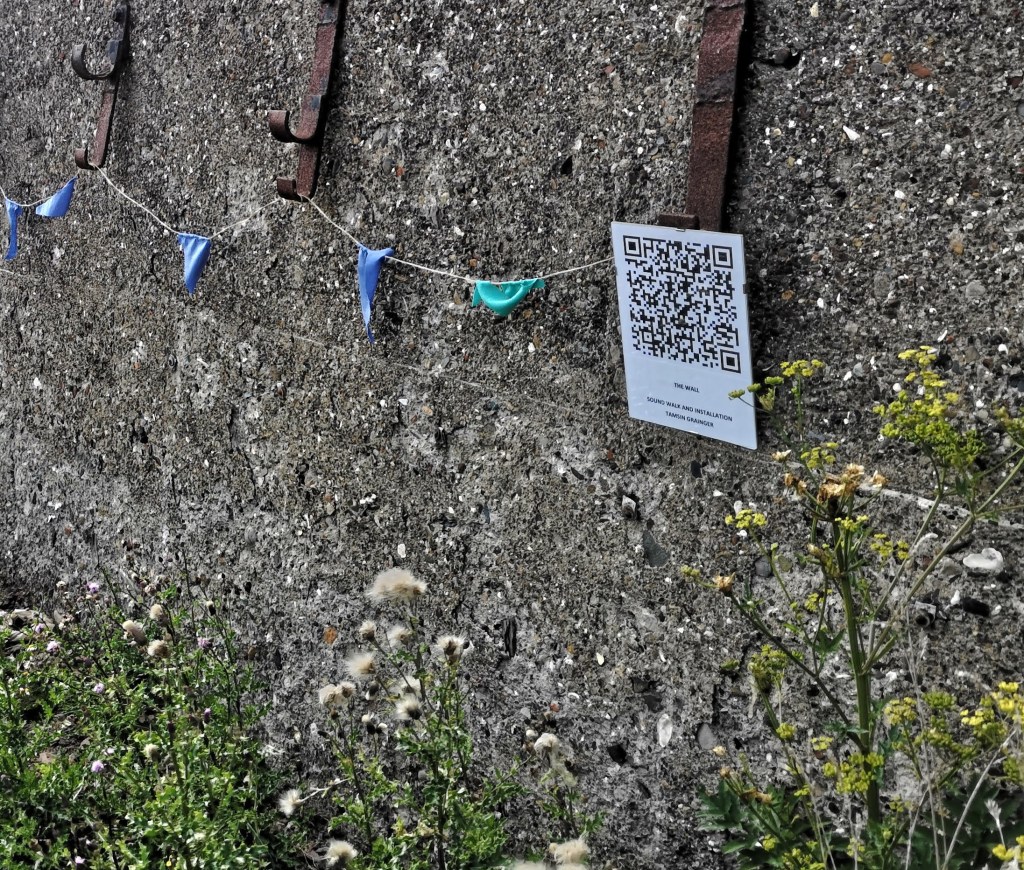
I’m sorry to say that this installation has become ragged from the weather and time. You can still walk the wall and listen to the Sound Walk on your phone, but you will need to access it either before you leave home or from here if you have sufficient data, as there is no QR code currently at the site.

Location: Western Breakwater, Granton Harbour. What3Words ///piles.cargo.whips Walk along Chestnut Street, turn left onto Hesperus Crossway. The very long wall is straight ahead of you (possibly through a gap in the temporary fence) across some wasteland.

Here is a pdf with information about this sound walk and art installation.

From the Artist’s Walk in September

So I made a new film as a taster.

The Wall taster film

On Soundcloud

To listen to the whole thing:

You can listen on the Western Breakwater itself to get the full experience or at home via Soundcloud

The others on the shortlist

Check out all the other shortlisted sound walks here from Wednesday 9th November 2022.

You may also be interested in James John Paul’s blog about Granton Harbour here https://wp.me/pdm7X0-YD

Equinox

Autumn 2022

I have been involved in a project devised and documented by Kel Portman. A curator on this Walking the Land project, his initial invitation set off a chain of coincidences and connections to do with the passing of time and how we experience sound.

“As the equinox marks the cusp of seasonal changes with the beginning of Autumn in the North and Spring in the South, artists record their reflections on the transition, the changes of light and the passing of time.”

KP

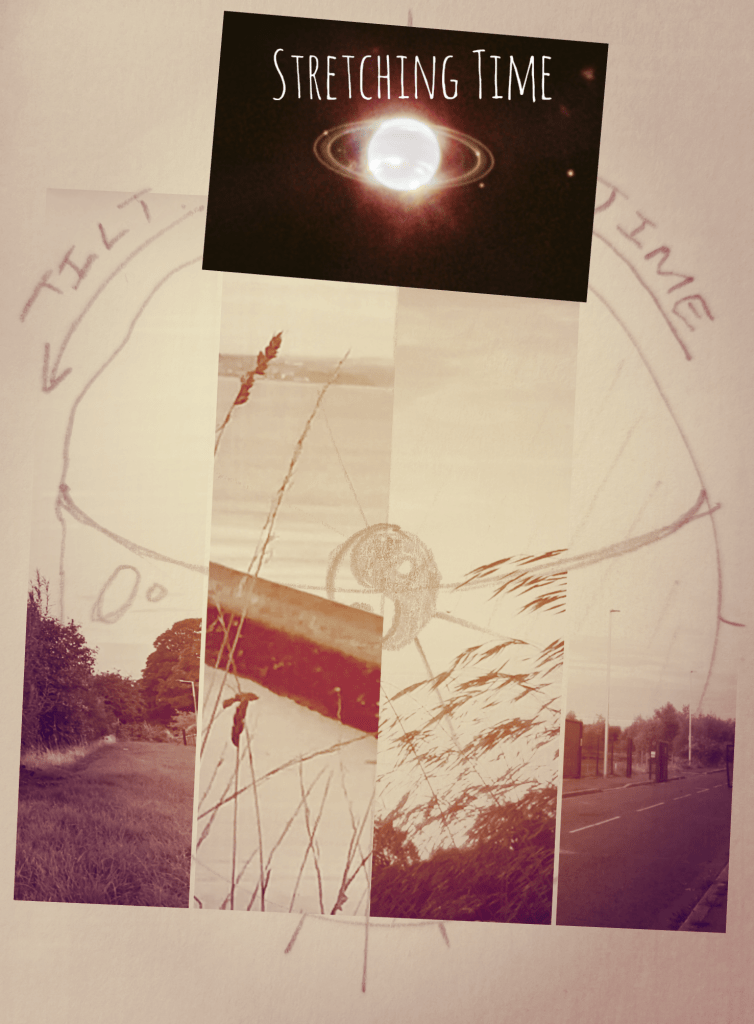
Stretching Time

Stretching Time was my contribution.

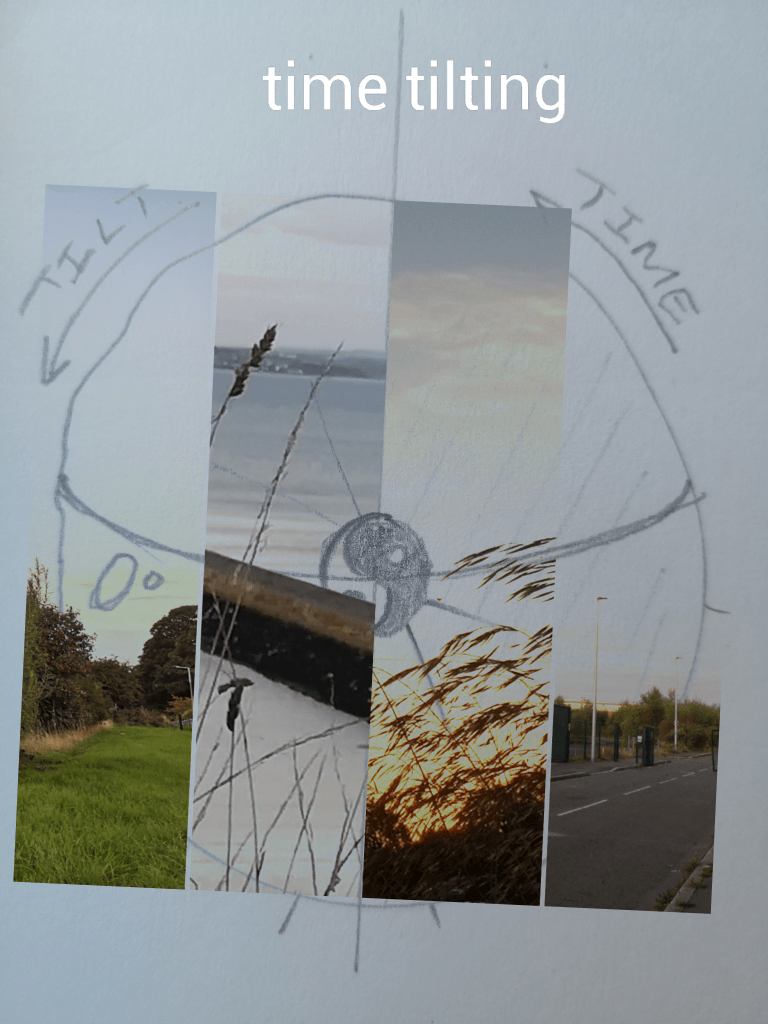
I walked in Edinburgh on consecutive days, photographing the sunset on the 22nd September, and the sunrise on the 23rd. As the earth’s axis comes perpendicular to the sun which crosses the equator from north to south, we, in the Northern Hemisphere, are traditionally celebrating harvest and know that we are moving into a darker and colder, more restful and reflective period. At this auspicious occasion, we pass through a time of near balance of 12 hours of daylight and 12 of night (equi-nox : equal-night).

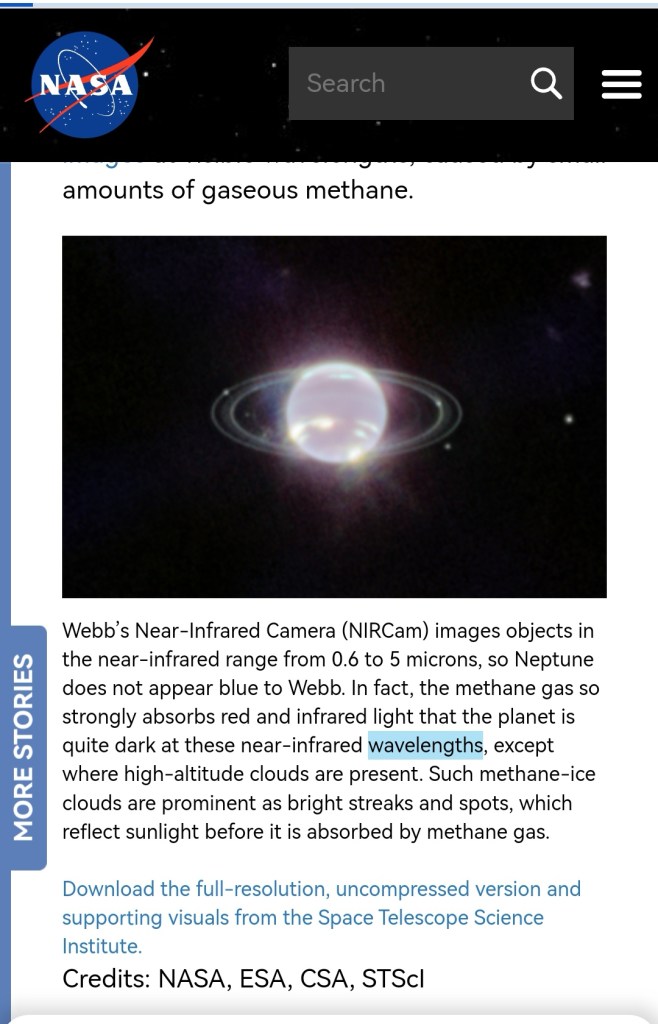
I time-ordered my photos, made an equator-axis tip, and then overlaid the images. I had been reading about “light being stretched and becoming redder” in The Guardian (24/9/22), and inspired by the James Webb telescope photo of Saturn, used a bloody tint. On that day, I was on a train crossing from Scotland to England and added some words about my own feelings at this time.

Stretching Time 

As the sun hits the equator
And the earth tilts an iota, 
I marvel. 

As the cells die in my body, 
And the train hurls itself southwards, 
I cry. 

As the rain stops at the border, 
And the year passes the baton, 
I know I must change. 

Link to the video. Thanks to Kel Portman.

Then in October I attended an opening at the Edinburgh Sculpture Workshop where Alliyah Enyo‘s work, Selkie Reflections, is in the tower. It is an other-worldly soundscape, reminiscent of sea mammals’ song and Tibetan Tonqin Longhorn. She writes about whale sounds taking more time to travel through sea water, but being able to travel far longer distances, and she mentions stretching time:

This is much like the pathos experienced when listening to an audio recording of a person from years ago, as time is stretched and distended by a voice communicating from the past.

Alliyah Enyo

I had already been listening to David Haskell describing the way sea creatures hear with the whole body:

If I had a watery fish body, sound would penetrate through me. Aquatic beings are immersed in the sound that they’re in.

David George Haskell on Walk Listen Create

So, as I sat in the tower listening to Enyo’s installation, I imagined I was hearing through my watery, bodily fluids. My eyes were not shut, but I could see horizontal, parallel wavy lines between me and the walls, and there were layers of sound, not just of the composition itself, but of birds from the cycle path, voices from the bench beside me, and people speaking outside the tower.

Allayah Enyo’s soundscape at the Edinburgh Sculpture Workshop, looking up

Link to the Edinburgh Sculpture Workshop

The more we engage with what we used to refer to as a separate, natural world, the more it is obvious that we are part of that world, that we all influence and have the opportunity to influence each other. Humans are limited in the world of sound, compared to birds (which I have written about before No Birds Land) and dolphins, for example, and I’d be interested to hear if you have tried listening in different ways and if so, how that was for you.