The Granton Boundary

Walking Like a Tortoise around the Granton boundary
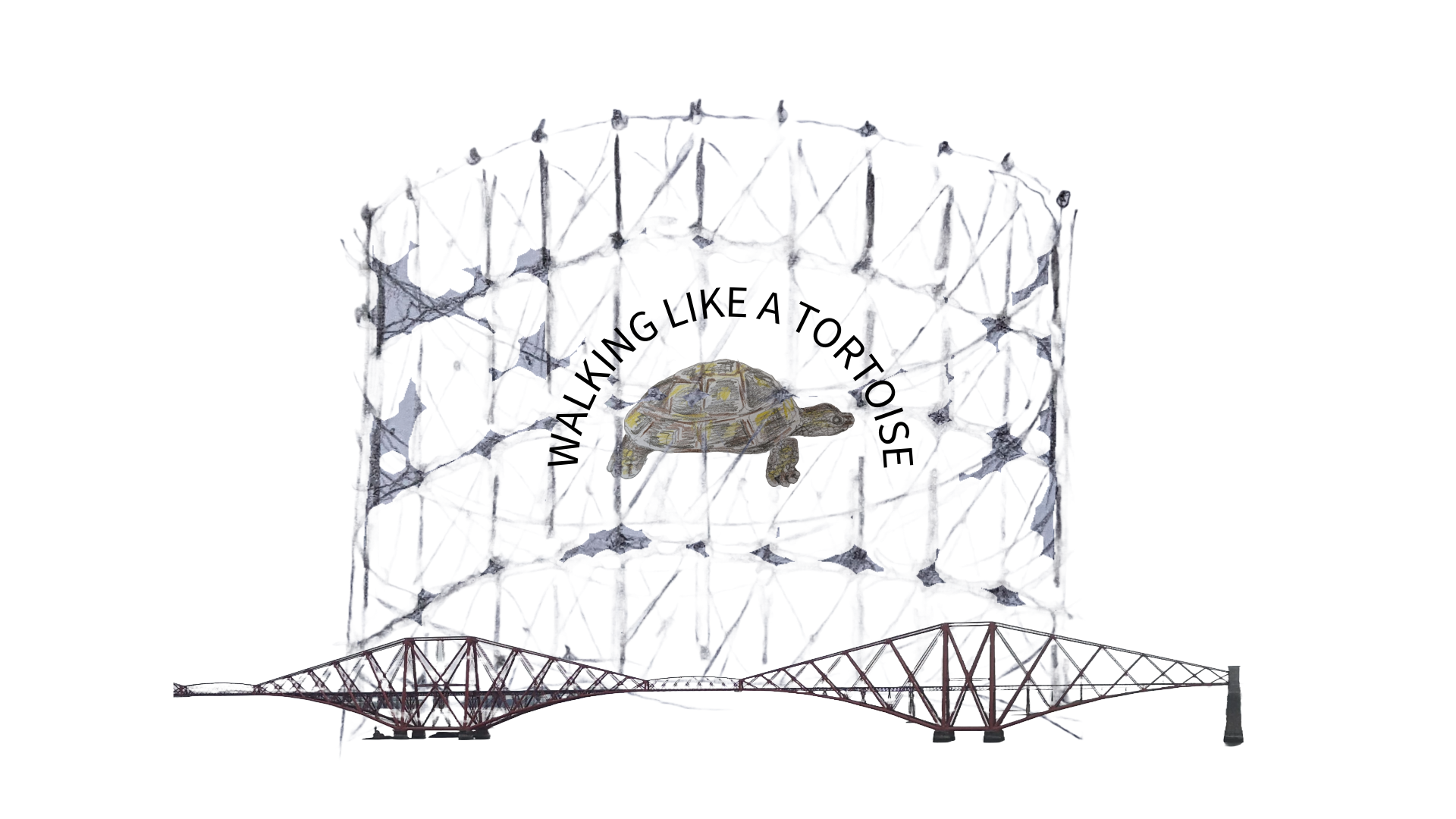
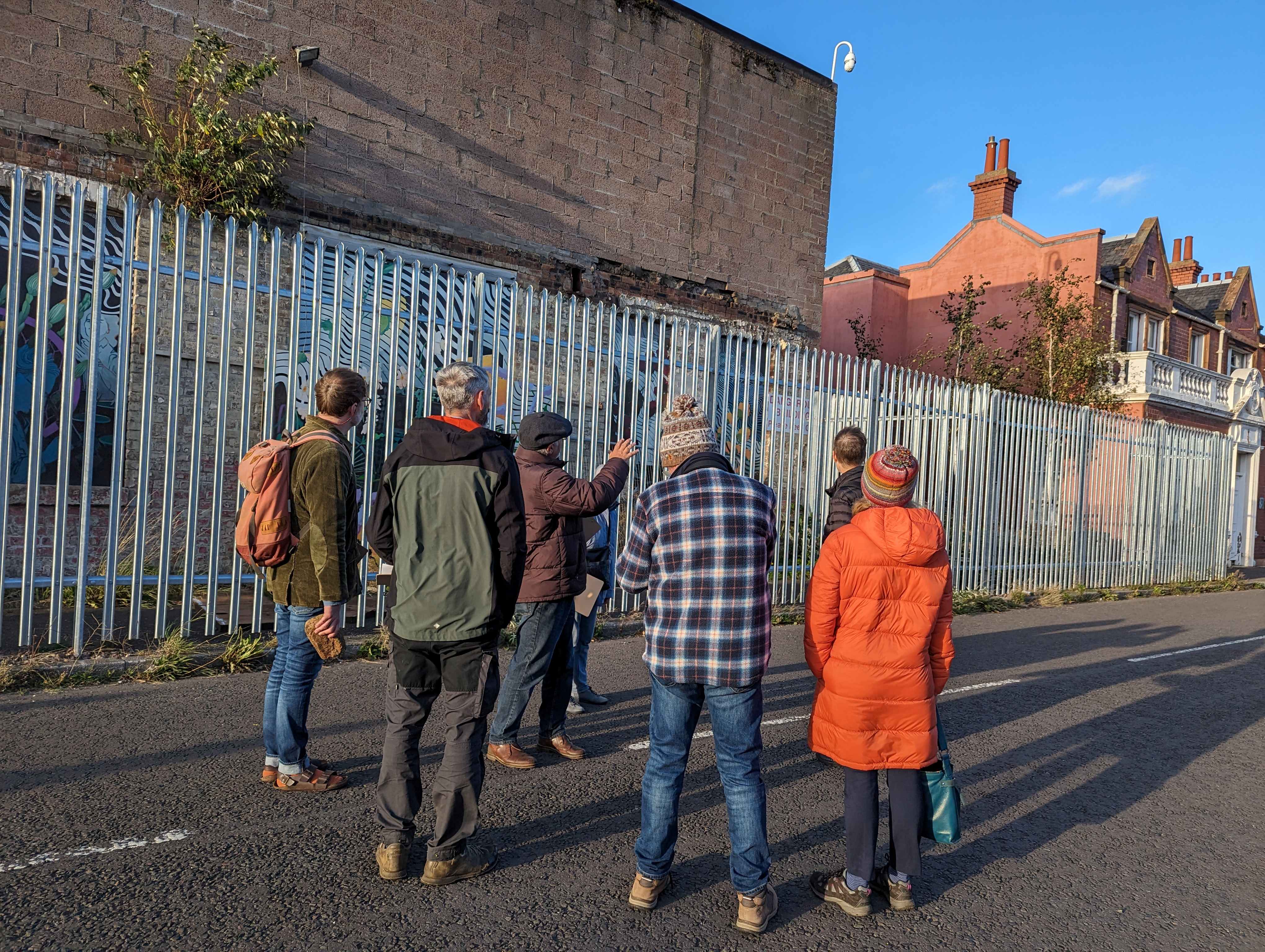
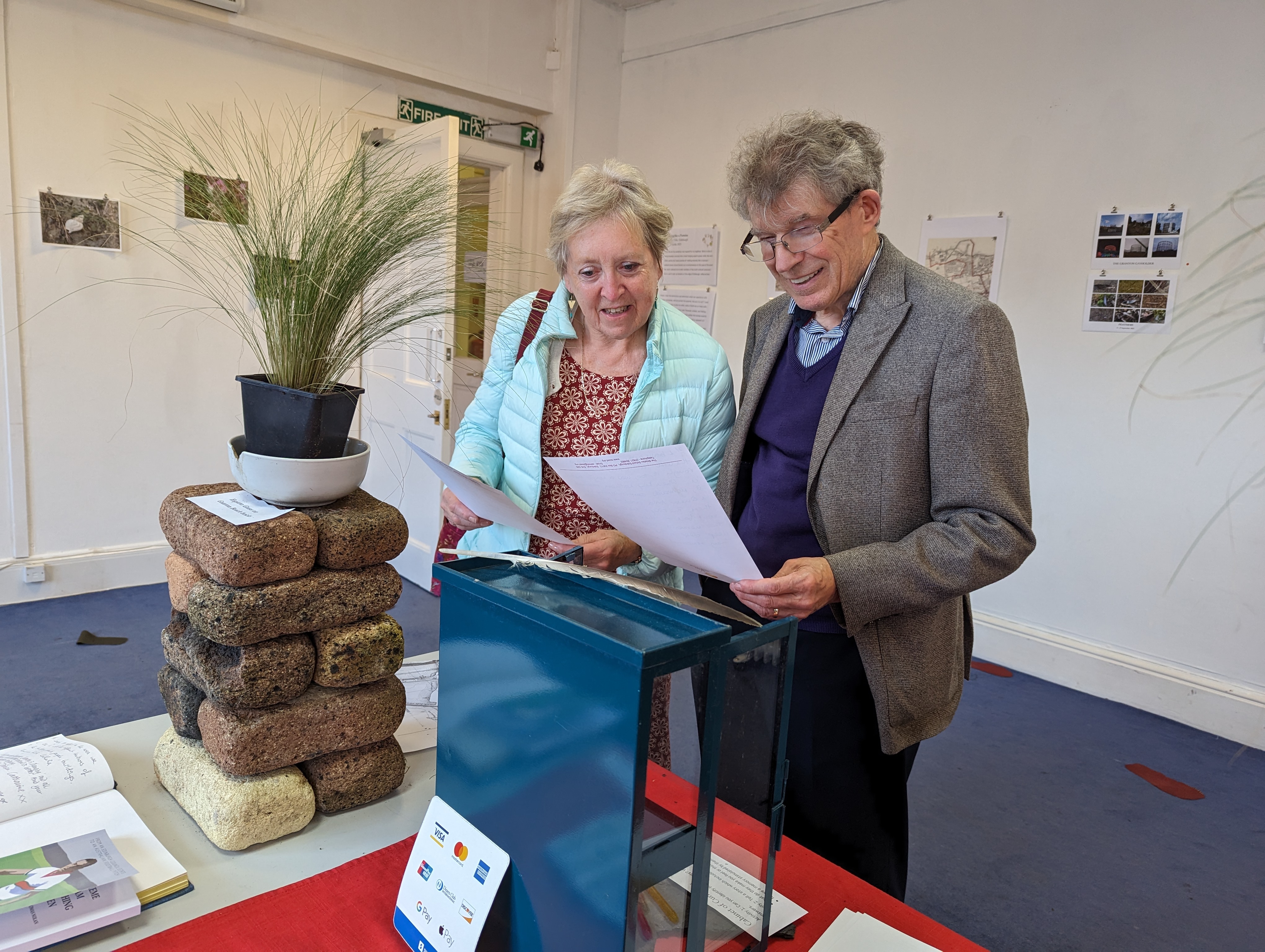
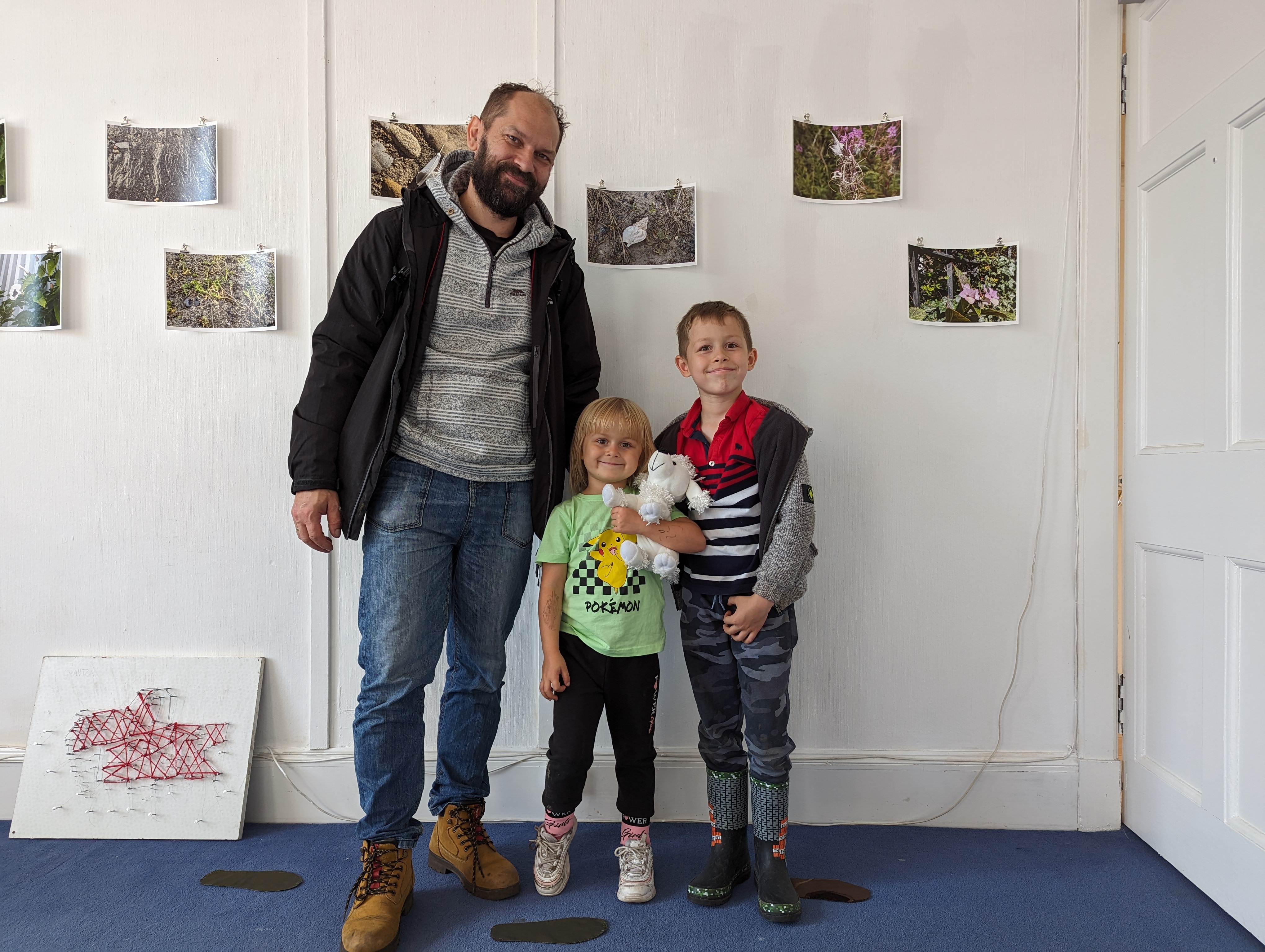
This project started with a collective walk on the Festival of Terminalia on 23 Feb 2023. It was followed by further solo and group walks and became the Walking Like a Tortoise project, which incorporated mixed media art exhibitions at Granton:hub (Edinburgh) on 29 September 2023 – 1 October 2023; Granton Station; Spilt Milk Gallery (online); and Edinburgh Central Library between 1 August – 30 September 2024. Community walking and workshops were a key part of this project and attracted a Creative Scotland / City of Edinburgh Council grant. Please also see this post for further artworks
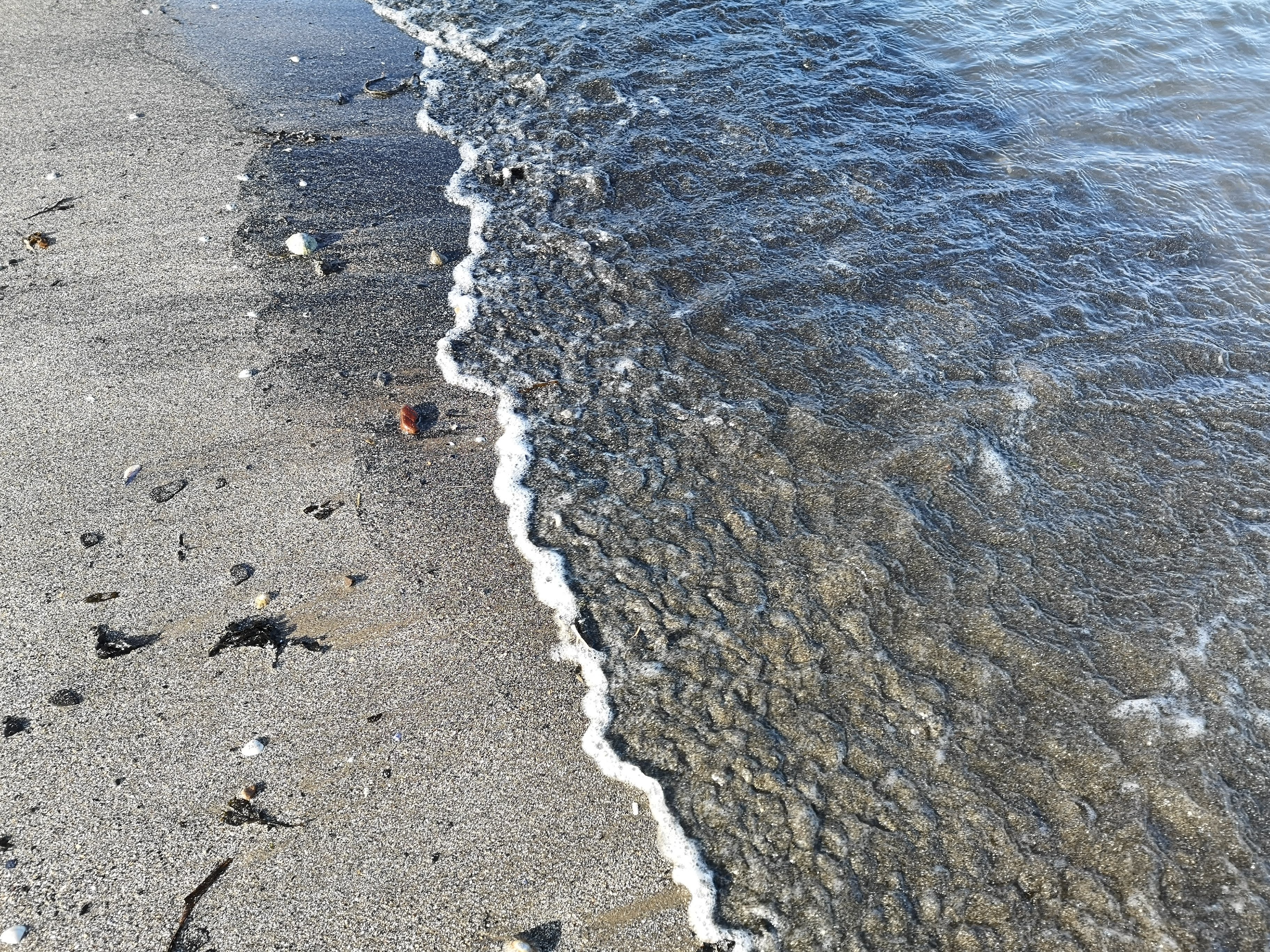
Illustration from ‘On the Festival of Terminalia’ zine

Before

Granton is changing a lot and very quickly. My plan was to make a series of walks using different contemporary and historical maps to explore the edges of the place and document who and what I found there. I was interested to see where the area began and ended, and how it bordered on its neighbours. I was asking, Who or what is in and outside the boundary?

For the first walk, I set off in a clockwise direction, following the map I photographed at the National Galleries presentation of their new project, Art Works, at the Edinburgh College in June 2022:

Granton, From The Architects Journal
  • From Granton View, I started down Lufra Bank
  • turning right up Granton Rd and right again onto the cycle path
  • coming off at Pilton Drive, and walking westwards along Ferry Road
  • continuing down Crewe Rd North, back towards the sea
  • turning at the ‘new’ gas building by Caroline Park
  • making my way along Waterfront Ave to the harbour (I knew that access to the boundary had been cut off here and that the Western and Eastern Breakwaters were not connected by land but by the Firth of Forth rushing between them, so I had to take a detour)
  • along Wardie Bay beach
  • climbing up Wardie Steps to the post box
  • and completing the circle back at Granton View.

I met residents and visitors to Granton as I walked and had some interesting conversations about where they thought the boundary was. I asked permission to take their photo and keep some basic information about them (name, age country of origin if appropriate etc) explaining I might use it for an exhibition in the future.

The Tortoise

The title for this project comes from two sources. The first was a charming story I was told by my former neighbour, Betty, about how as a child she was handed a stow-away tortoise from the depths of an esparto grass boat that had put in to Granton Harbour at the bottom of our road. (Esparto grass was imported for the paper-making industry in the 1940s). The second is related to the Taoist practice of ‘walking leisurely like a tortoise’ which I and other T’ai Chi enthusiasts do as a mindful meditation. When we do that, something fascinating happens: we feel part of what’s around us and also separate; we are conscious of everything—the details as well as the bigger picture—and aware of our own feelings at the same time.
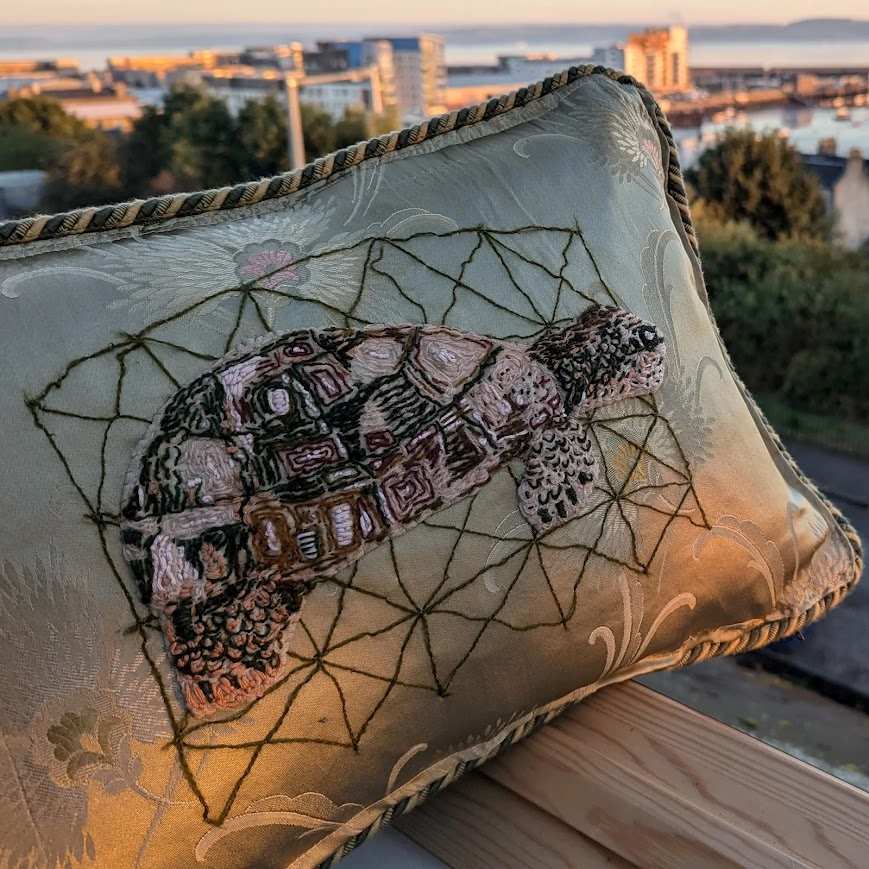
I practised a version of this slow walking around Granton as a counterbalance to the pace of life around me. It allowed me to meet other residents in a relaxed way, notice what lives here, and have time for reflection and reassessment, which is something that rushing does not.

“How much are we missing because we are constantly on the go….? When will we make space for our bodies to reflect and for our hearts to widen so we can connect with who we are?”

Trisha Hershey, Rest is Resistance

The project aimed to contribute to our collective memory by asking: ‘Where is the boundary of Granton?’ ‘Is it important that things stay the same or are changes welcome?’ ‘Is the decision-making process which is precipitating these changes a democratic one?’ and, ‘Is belonging somewhere important to a sense of identity?’

Once, Granton was outside the main city and shown in a ghostly grey on the plans. Once, there was no harbour, no outward reaching / welcoming arms from our shores. Later, Granton was part of Crammond, a large and sprawling geography which contained parts of the River Almond, Newhaven, Inverleith, most of Ferry Road, swathes of Leith, and Davidson’s Mains. It has got smaller over the years, halved and subdivided.
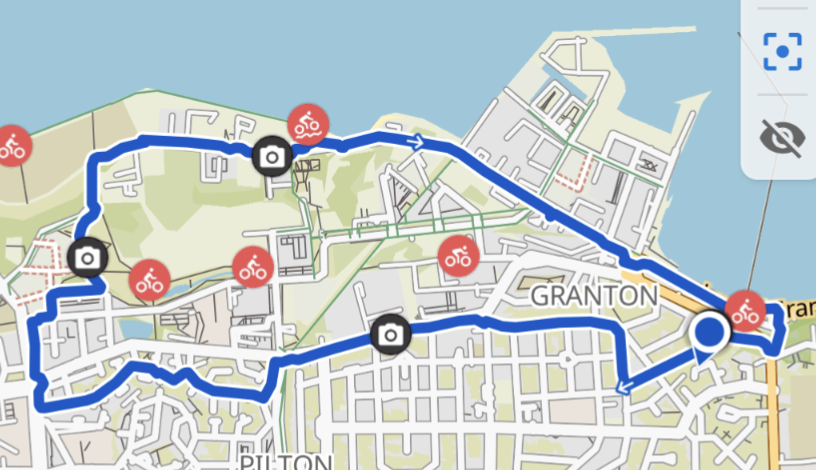
Walking the Granton Boundary copyright Tamsin Grainger

Maps

‘Walking like a Tortoise’ became the title for two mixed media art exhibitions based on the Granton walks. The introduction explained that I had used maps of the area from 1870 to the present day, skirted the urban and coastal landscapes of Granton, looked into hidden corners, viewed the architecture from unlikely angles, and spent time meeting those who live and work there.

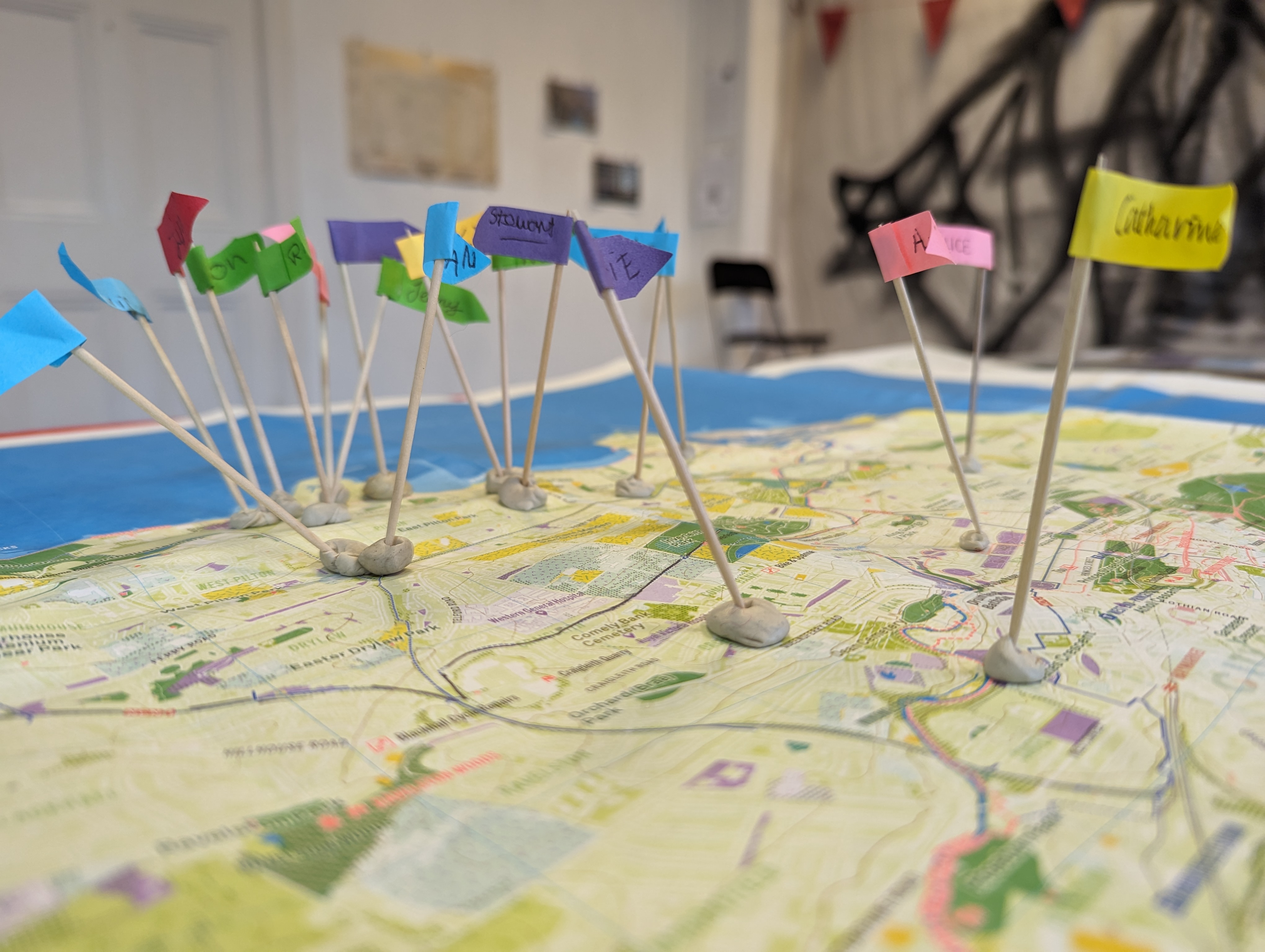
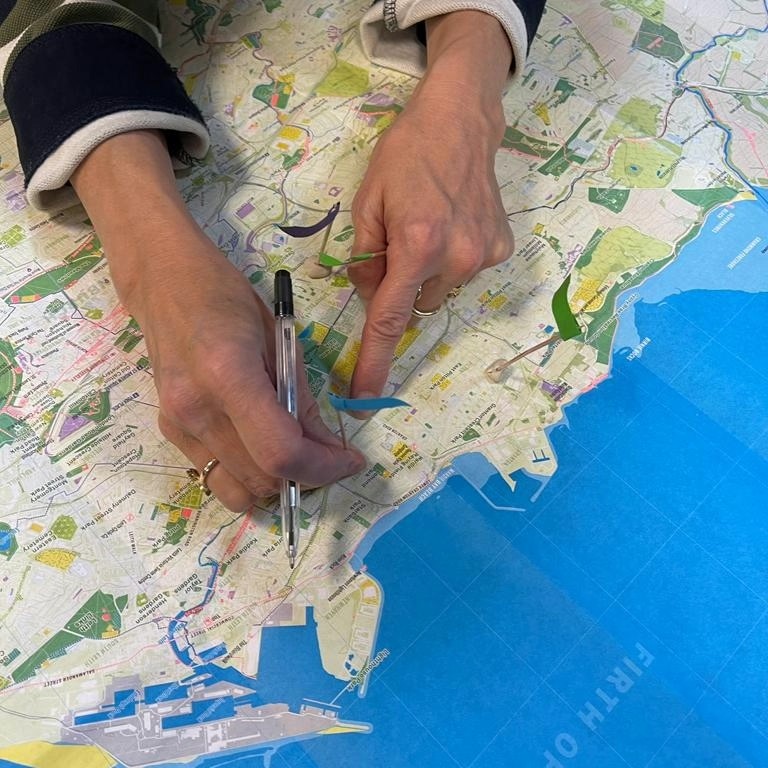
I showed a lot of Granton maps in the exhibition, the ones which were used to plan the walks, and others which showed exactly where the area was and is according to different political and social groups, and in different eras. Granton is part of entities of varying sizes and shapes and it’s not always easy to know where the dividing line is between it and its neighbours – Pilton, Wardie and Trinity. There is ‘Edinburgh North(ern) and Leith’, the Scottish parliamentary constituency, and also the Westminster (UK government) ward of ‘Forth (Edinburgh)’. Then there’s the Edinburgh Parish of which we are part, the EH5 post code area, or the more generic ‘North Edinburgh’. Each map charts different distinctions and definitions which serve to separate and unify people and places. They are always political and prompt the question, ‘Are you in or out?’ Like all maps, they are networks; a tracery of streets and cycle tracks which lead to somewhere important. I walked these pathways and discovered that though they sometimes connect with each other, they are sometimes dead ends offering privacy, but no way through.
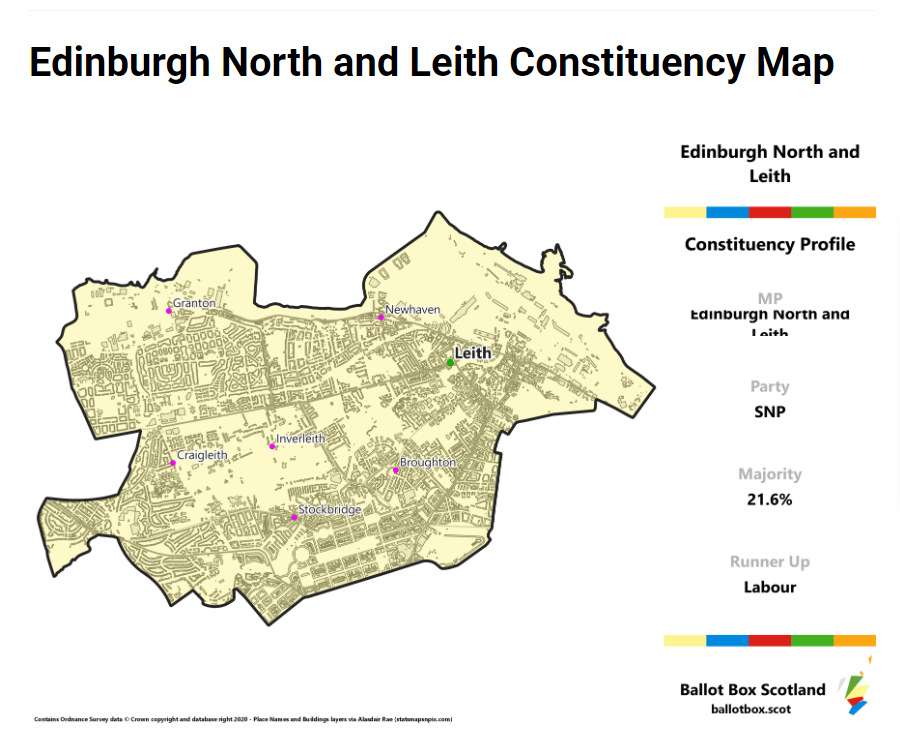
Through photographs, words, textiles and found materials, I asked how the act of slow walking can develop a sense of belonging somewhere, and how mindful noticing of the area, on foot, promotes appreciation of, and connection to what is home. Then the official boundaries are less important and it’s the human and natural links that matter.

New Building

The Granton, Royston and Wardieburn schemes (social housing estates), which started being built in 1932, have long been demolished and substituted. Much older, formerly industrial buildings have also been raised to the ground, and now green / brownfield sites have been replaced with tall, rectangular boxes of oddly coloured bricks with little history and no gardens (although some advertise dog grooming facilities). All this is despite Historic Environment Scotland stating, “The historic environment shapes our identity. It tells us about the past, the present – even points the way to the future.”
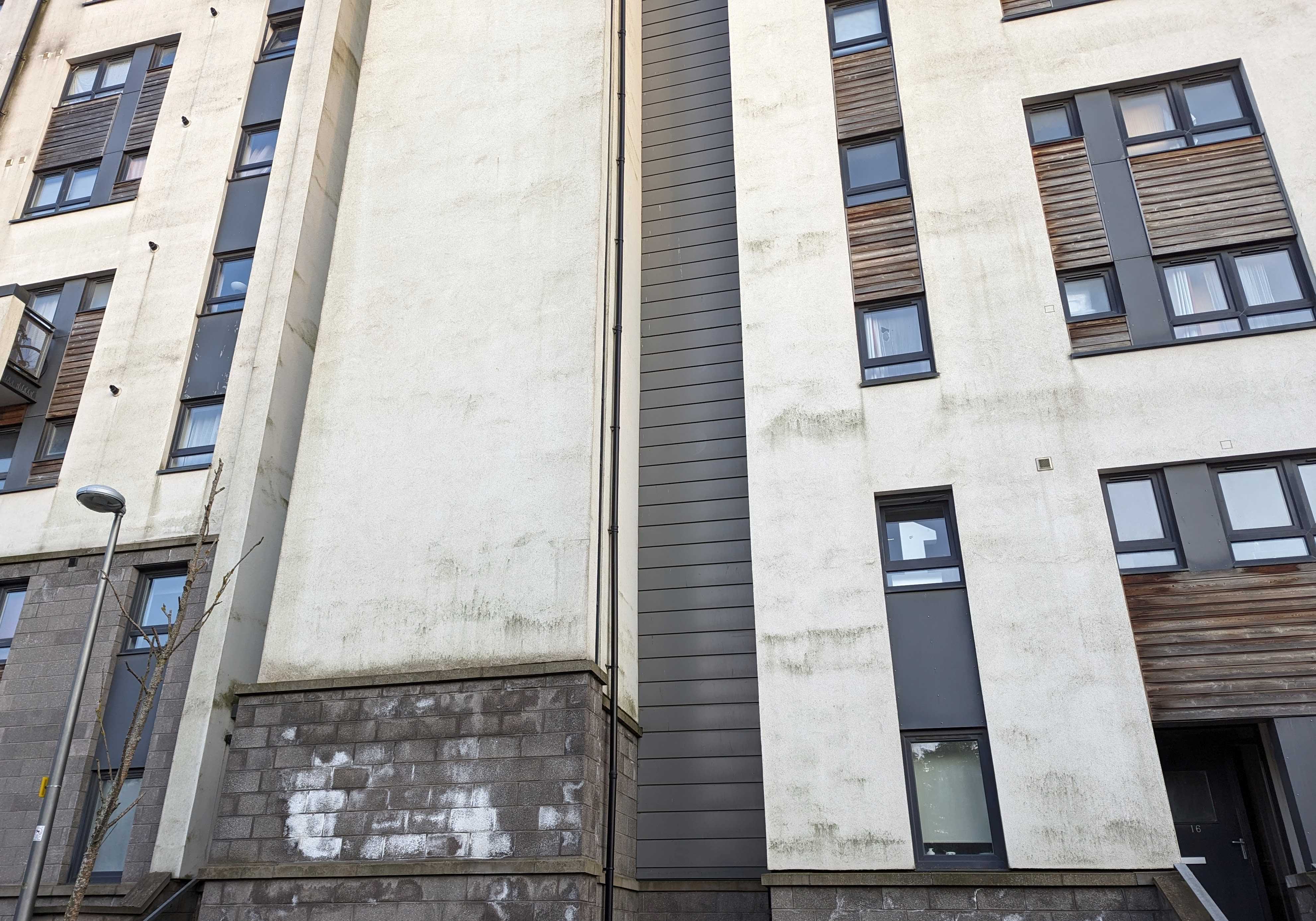
‘New’ building, Granton, Edinburgh

Planned at least as far back as 2019, it’s only recently that the Council, an hour’s bus journey away in the middle of the city, actually embarked on further extensive apartment building out here at Edinburgh’s edge. Although the architects and planners who spoke at a recent Pecha Kucha public event (EDI- v.45: RETROFIT “The greenest building is the one that already exists”) were unanimous in agreeing that changing existing buildings is infinitely better for the environment than putting up new ones, these newbuilds are now happening apace.

Slow

Walking slowly around and hearing people’s stories helped me and those who walked together in the community events feel part of a multi-cultural community. We found that we all have different backgrounds, but share a need to belong somewhere, that there is something unifying about how we live and use our local resources. Going to one of the Co-op stores slowly on foot is a chance for us to catch up on news; the Granton Community Bakery queue is ideal for some lively banter; returning your book and using the computer at the precious Granton Library offers time to listen to and exchange local gossip, securing community ties; and scything wheat in the Granton Community Garden followed by eating lunch together is a choice opportunity for swapping experiences.

Slow is “a position [that is] counter to the dominant value-system of ‘the times … We believe there is a positive potential in slowness as a means of critiquing or challenging dominant narratives or values that categorise contemporary modernity for many”.

Wendy Parking and Geoffrey Craig, Slow Living

Collaborations

The first Walking Like a Tortoise Community Walk took place on Friday 29 September 2023, followed by the opening of the exhibition at Granton:hub. Granton:hub is the home of the community archive where I volunteered and worked for 6 months during this project, meeting members of the public at the weekly drop-in sessions, sharing community walks, an open day, and art workshops, some with members of the Granton History Hub and volunteers.
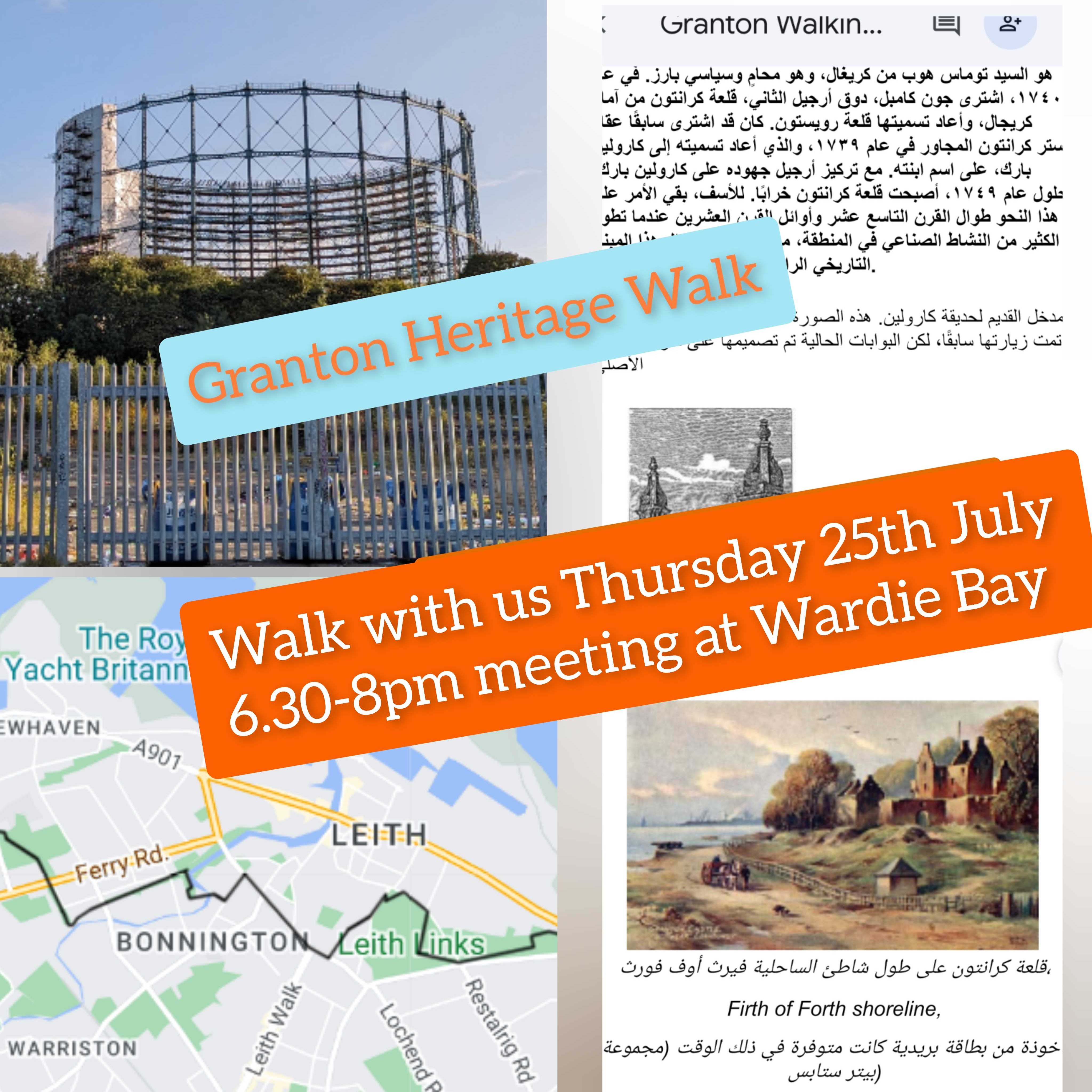
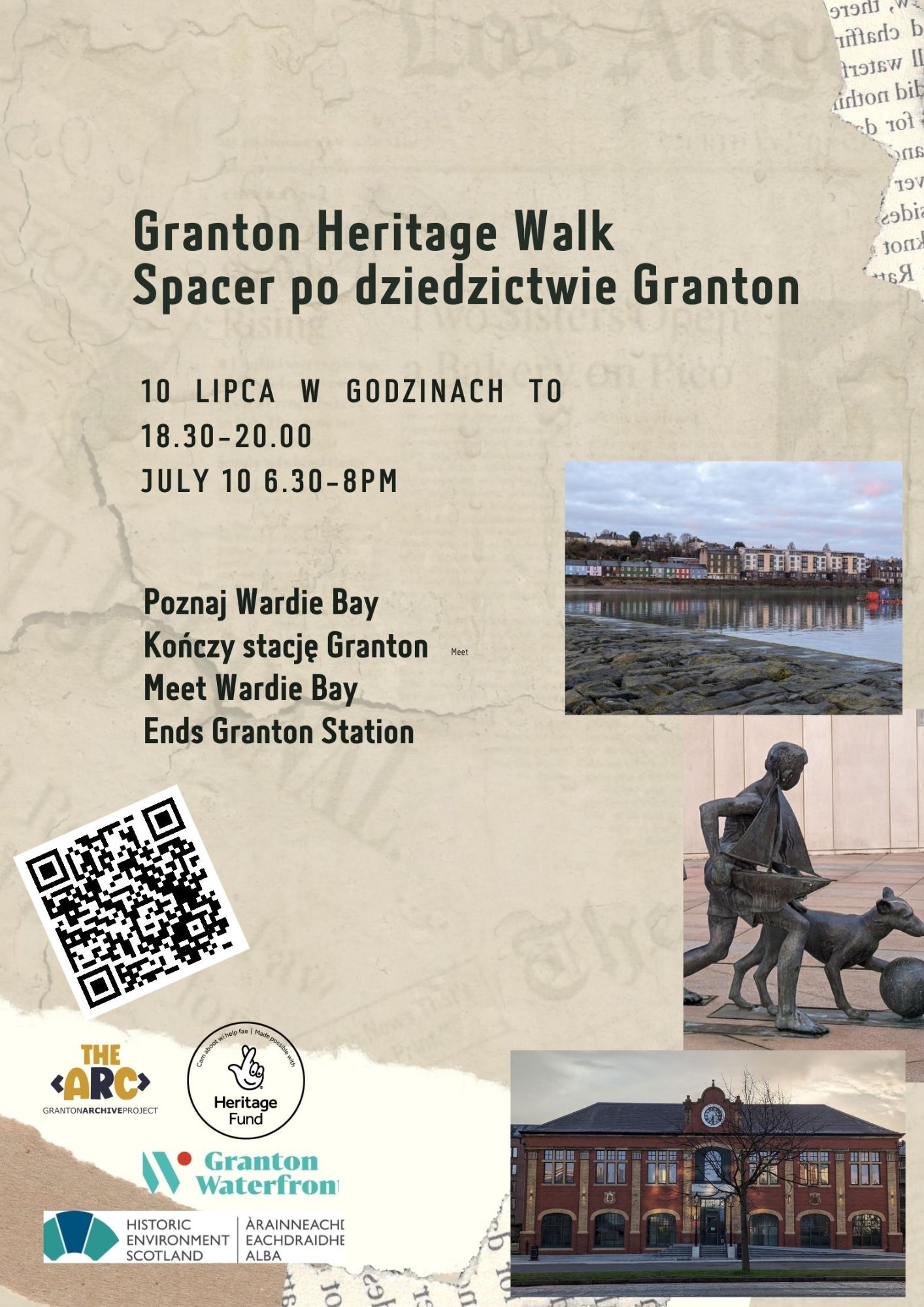
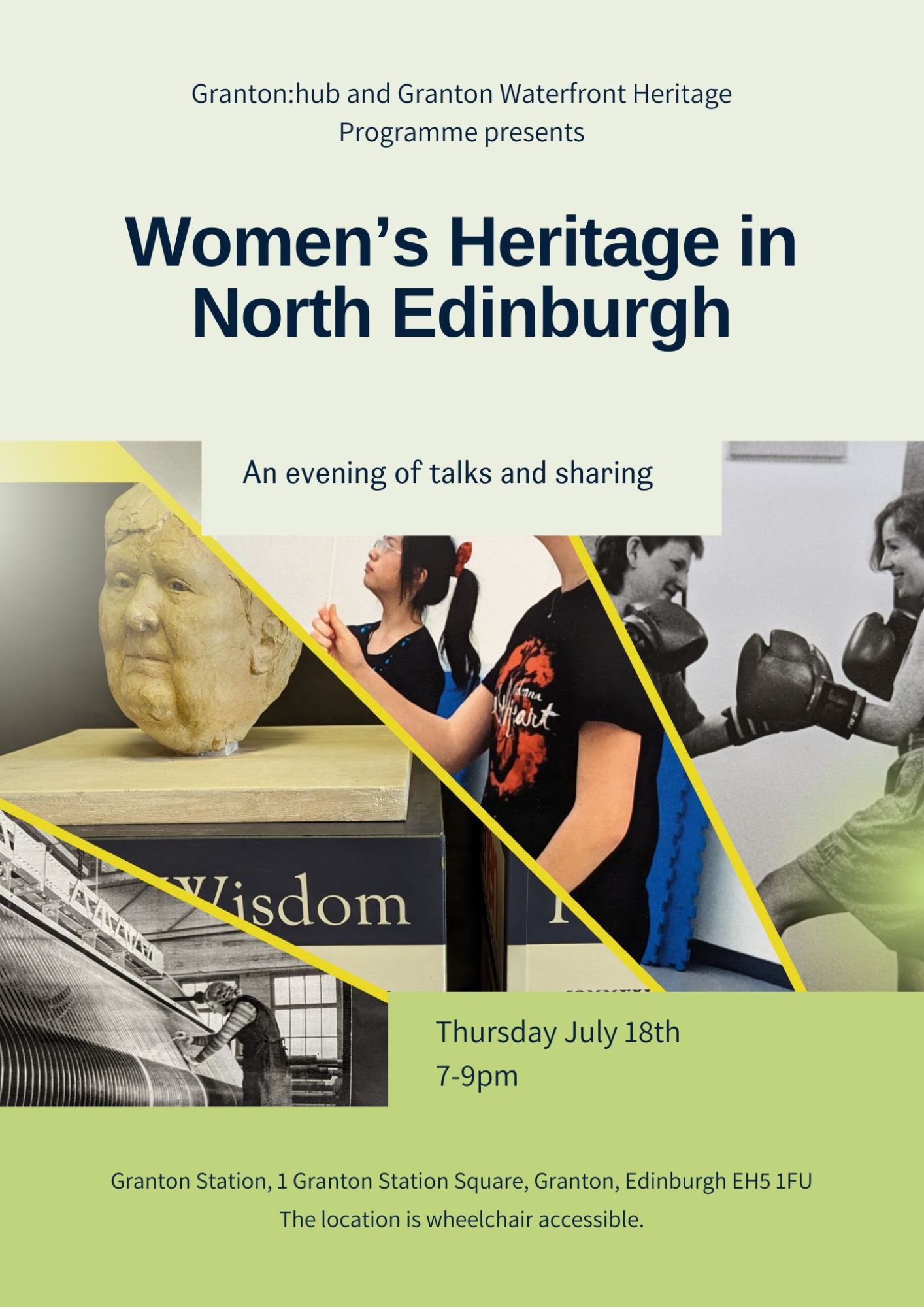
Granton Waterfront were also funders of part of this project, incorporating more community walking and including translations of the text into Arabic and Polish, art workshops for children and for adult carers, and an evening of community sharing and discussion – Women’s Heritage in Granton and North Edinburgh which focused on Black women and women of colour and involved Edinburgh and Lothians Regional Equality Council (ELREC), the Edinburgh Carribbean Association, and Project Esperanza. This project was also involved in Cultural Heritage at the Metropolitan Edge (CUMET), with Granton:hub and the Edinburgh College of Art.
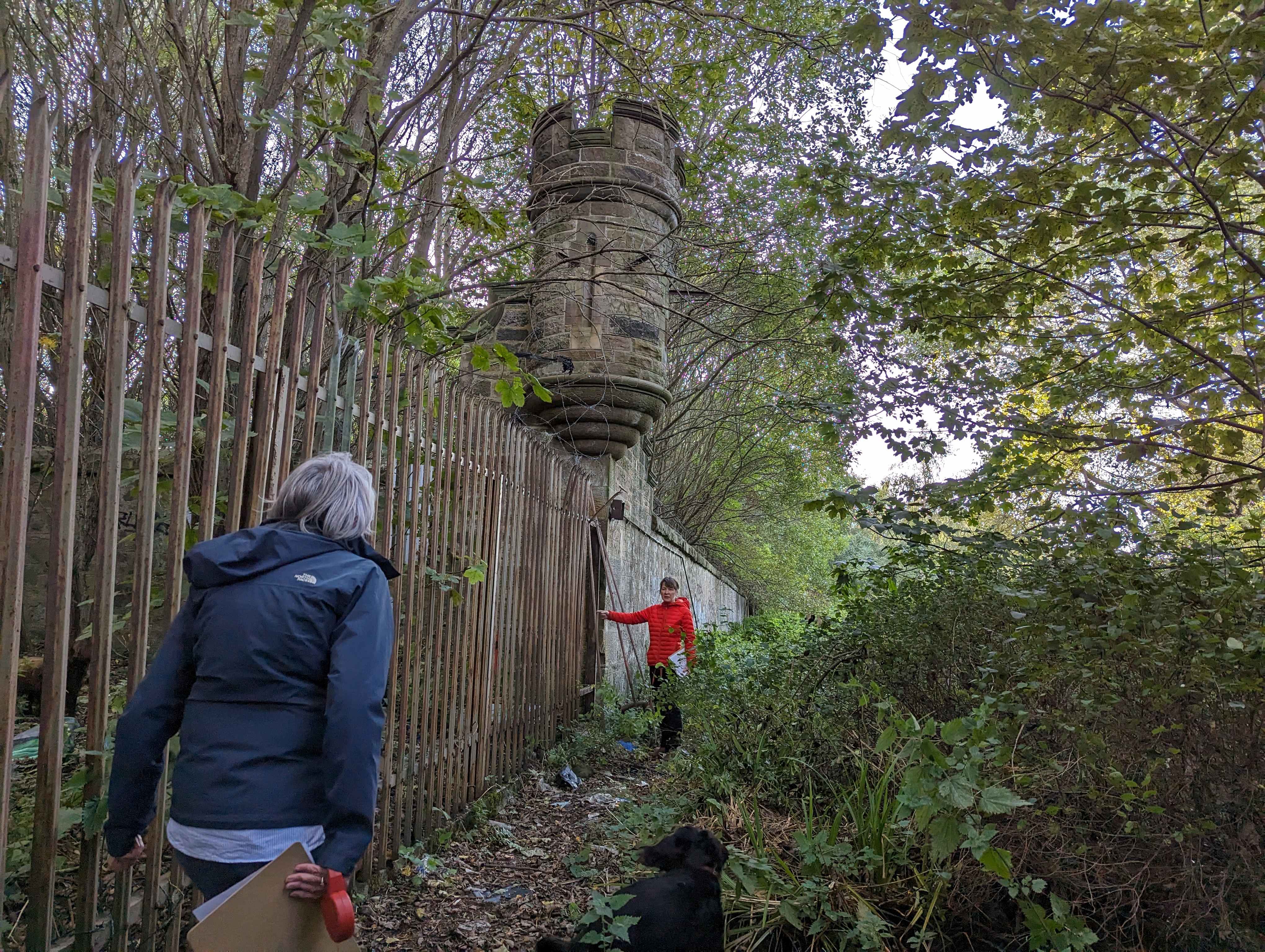
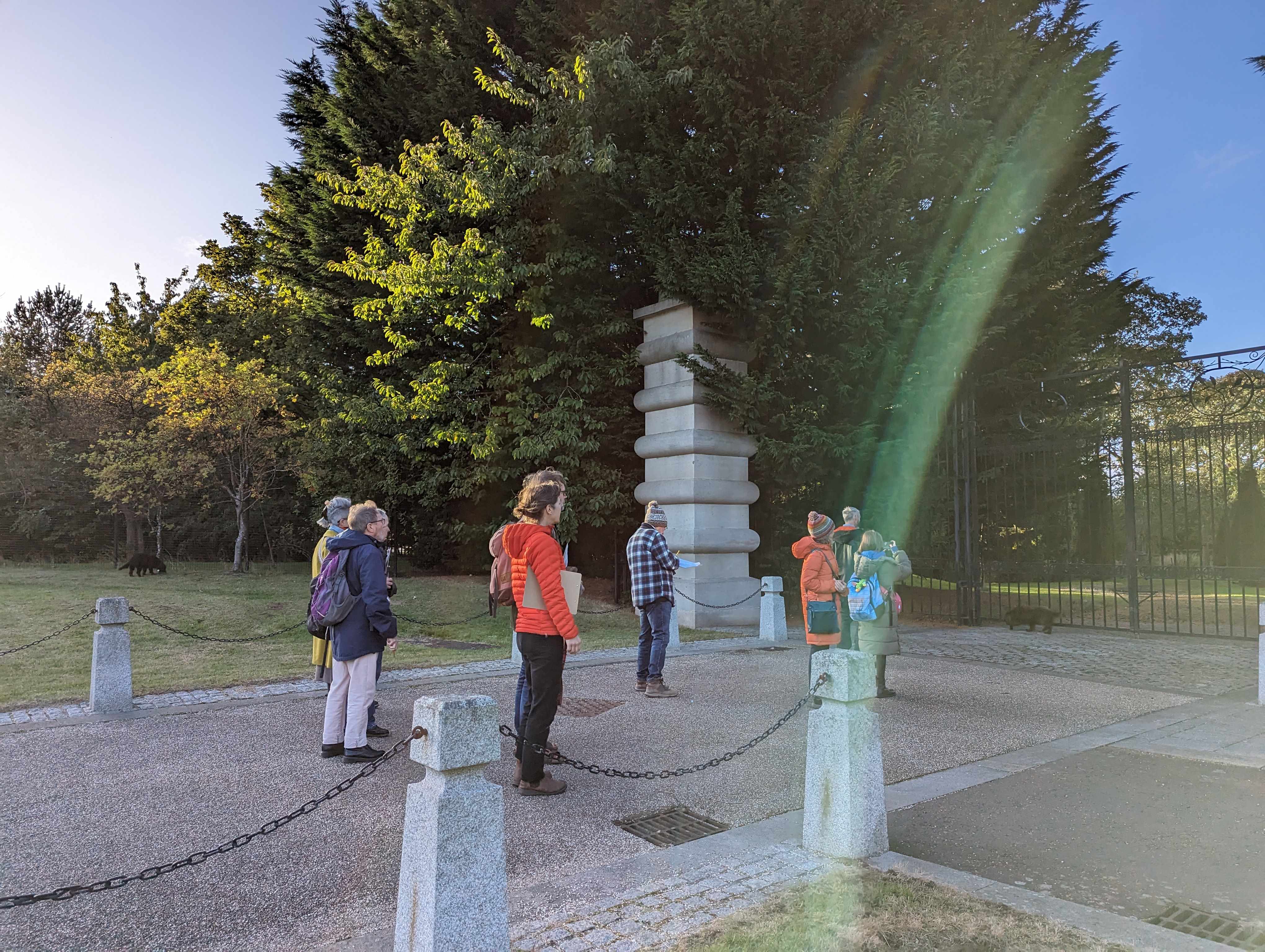
Walking Like a Tortoise exhibition at Granton:hub (September 2023)

A children’s workshop was held at the Edinburgh Central Library on 14 September (see below). On 18 September 2024 there was an adult event: a tour of the exhibition, a slow walk (like a tortoise – a style of marital art), an explanation of the project in the context of geography (counter-mapping), anthropology and the changing population from the past to the present, and an author/artist reading from The Wall (short-listed for a Sound Walk September Award).
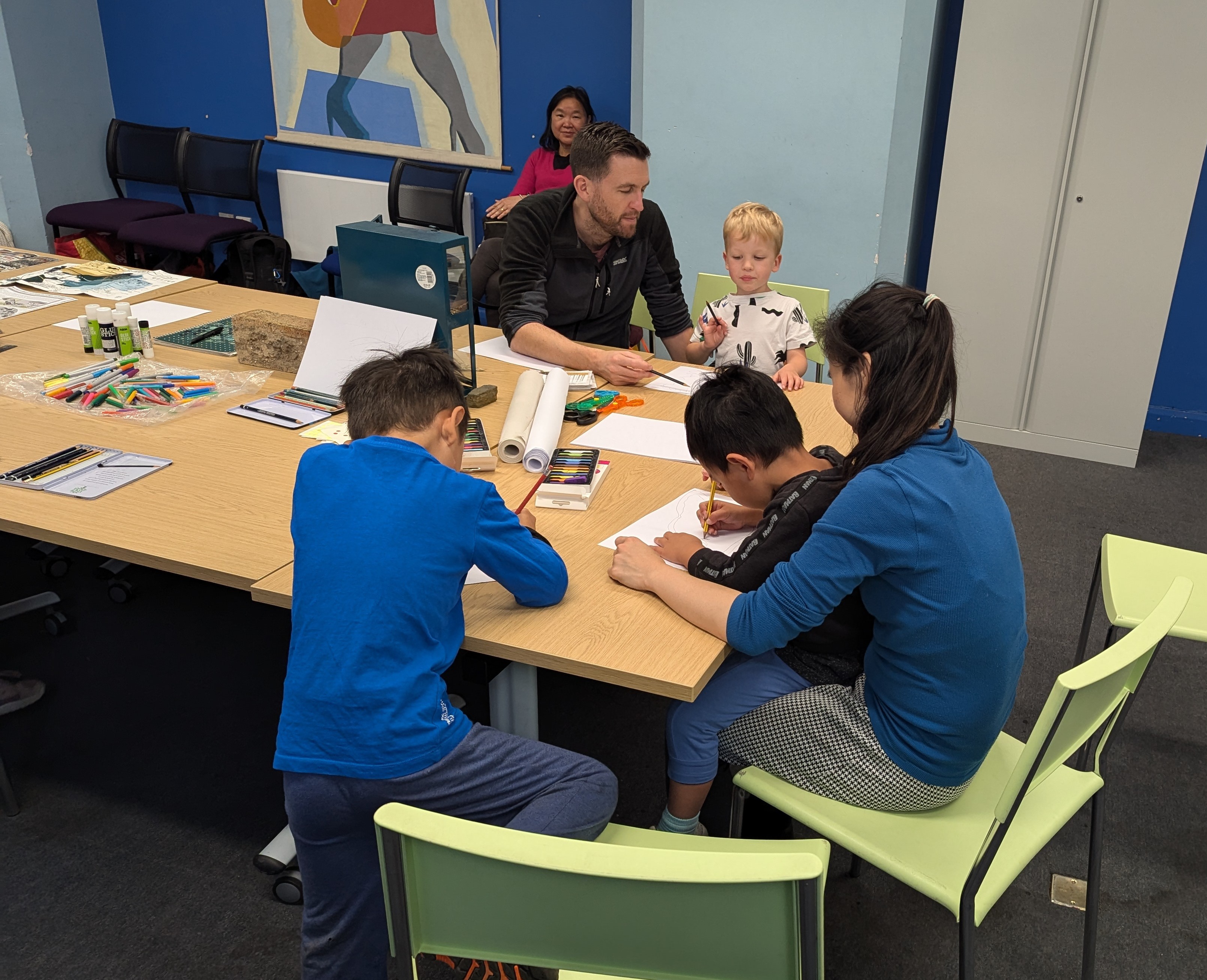
Children’s workshop at Walking Like a Tortoise exhibition Edinburgh Central Library Sep 2024

I have now circled these roads and byways many times, and as a long-time Zen practitioner I always aim to walk without expectations of what I may find, to be in the moment. I’m ready to encounter and notice what arises. Though I’m a psychogeographer, I resist straying if my interest is piqued, sticking instead to the prescribed boundary route, but taking care and paying equal attention to the urban and the rural, the so-called banal and the beautiful.  

There were more questions arising from the Walking Like a Tortoise project

The City of Edinburgh Council have sliced off the coastal strip and named it Edinburgh Waterfront. Does that mean that we need to let go, then, of that fragment of Granton and accept that our border is now an inland one, that we have no seaside?

The Council have also renamed buildings and streets, disorienting older, local people and confusing their memories. Was this necessary? Did they take care to think it through or were considerations of image more important?

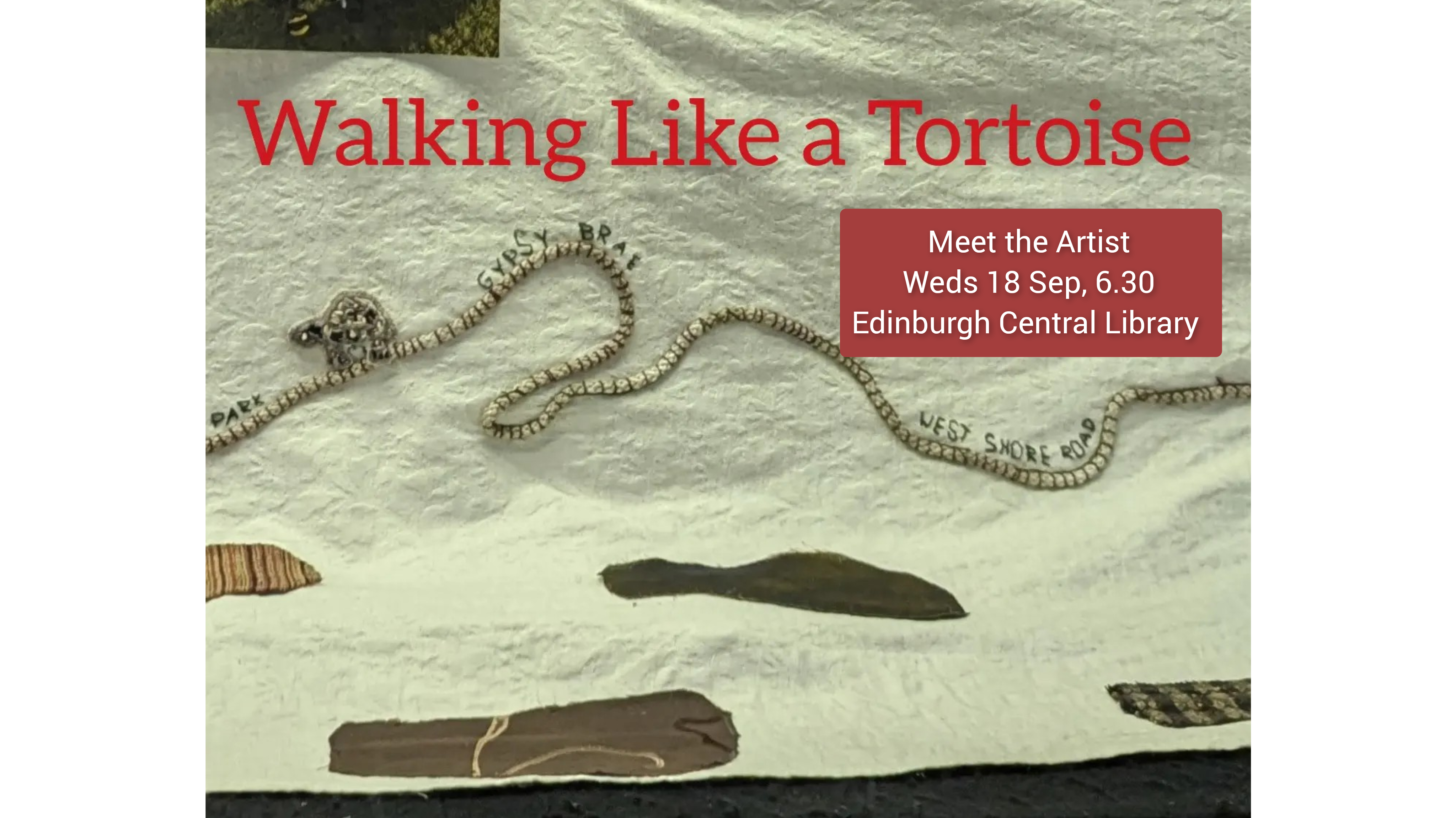
Granton has no equivalent of the Leith ‘Persevere’ emblem, and I took to thinking about and discussing what one might look like. I wondered whether the tortoise could be part of it. What do you think? What else could we add to represent our community?
Stitched Steps

Tensions

There are tensions at this edge of Edinburgh. A young Chinese woman told me about her feelings of loss over the cutting down of trees overnight to make way for new blocks of flats, despite the fact that the previous day she and other residents had chained themselves to the railings to make it very clear they were opposed.

Flora and Fauna – Heritage

I walked to the fringe, to the beach and wastelands at the border of Granton where the best wild herbs grow for foraging, and where there is hidden art. I diverted into the centre where the library and health centres, homes for the elderly, and clubs for young people are. I wrote about it on Caught by the River magazine. Places transform all the time, but it became plain that the alterations that people and the climate have wrought on the built-up environment and natural spaces are happening at a rapid pace; there are new no-go areas, streets and stations with new names, and views which have disappeared.
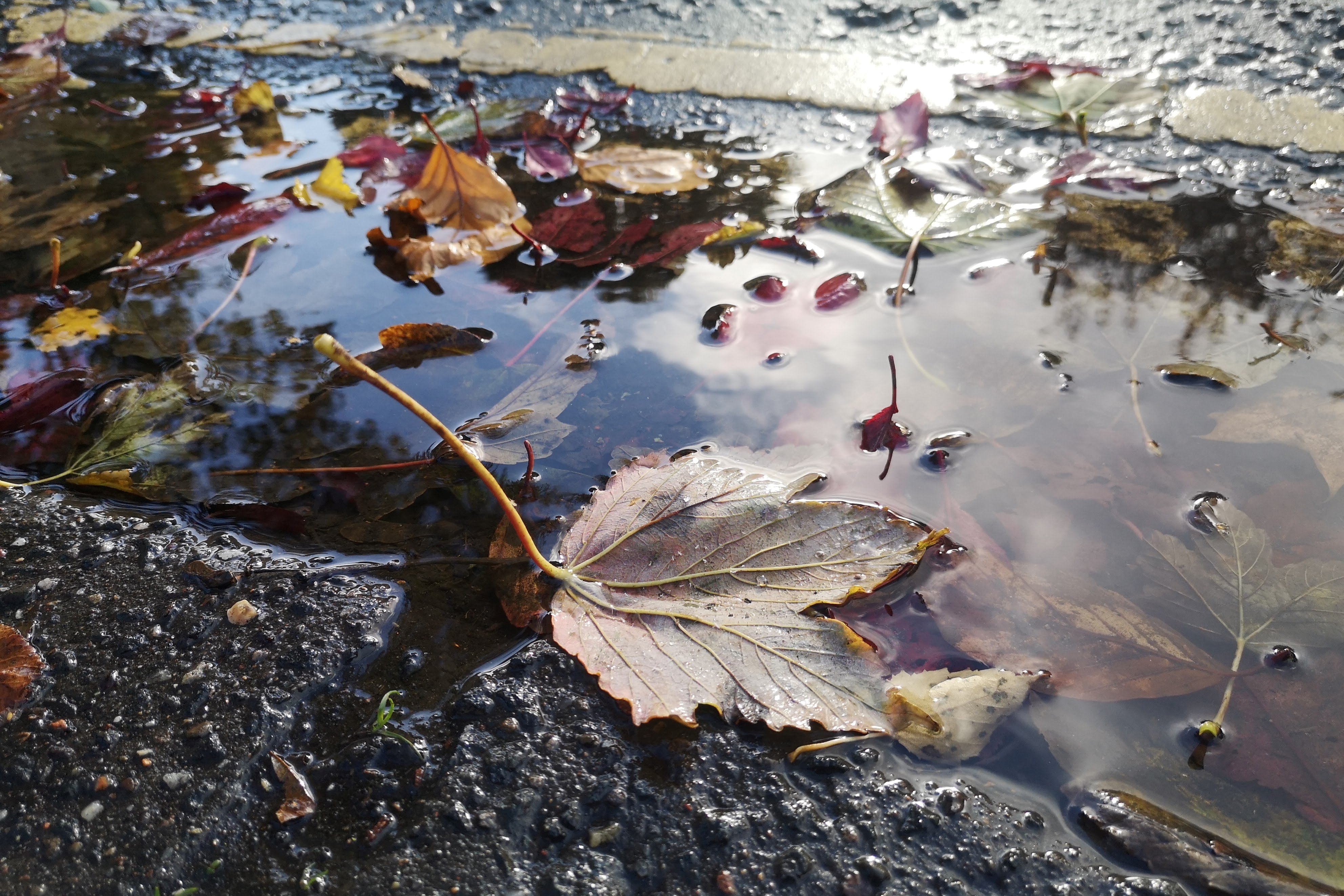
Slowly wandering the boundary and making artwork has stimulated a deeper understand of local history and heritage, but how much of this will have soon vanished?

Secular, Urban Pilgrimage

I often make secular pilgrimage in places previously unknown to me, and though Granton is familiar territory, it is nevertheless a pilgrimage of sorts. As with the St Magnus Way, I left home, visited venerated places, and returned to my doorstep. There was no triumphant arrival, just a simple home-coming. It was, however, inevitably a sort of transformation – for the landscape through which I travelled, for the other human and more-than-humans (plants, birds, animals) I met along the way, and for me. After all, any stepping changes a place and it’s inhabitants.

“Seekers of wisdom, seekers of life.”

Lailah Gifty Akita, Pearls of Wisdom: Great mind

Walking Like a Tortoise at Edinburgh Central Library was supported by VACMA (City of Edinburgh and Creative Scotland)


Links to other boundaries and borders projects and the Sound Walk Map (Edinburgh):

Walking Like a Tortoise

Festival of Terminalia

The Festival of Terminalia zine is available by post for £4 plus p&p. Please email tamsinlgrainger@gmail.com

Walking the Line

Leith’s Women and Walking Between Worlds

The Wall

Festival of Terminalia

Precarious Edge

Sound Walk Map (Edinburgh) A link to a map which shows the locations of my three site-specific sound walks: The Wall, No Birds Land and Is There a Place for REVOLution or Peace and Biscuits
Leith’s Women

This blog is related to walks I have led in life and online which focus on the lives of Leith’s women.

Focus on women

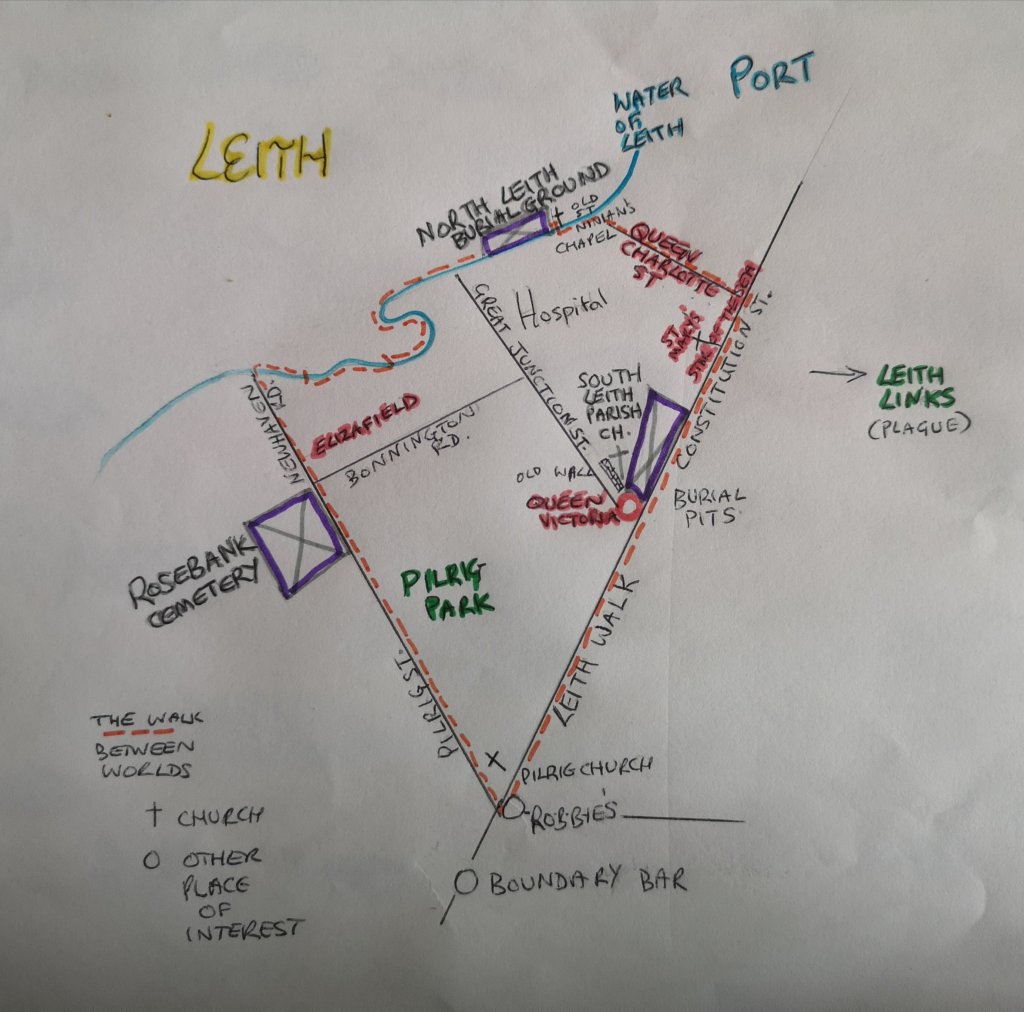
I am focusing on women’s stories because as a woman and a feminist I need to know who came before me, about my backstory; it helps me sense my place in the continuum of the generations. I have a special interest in the lives of people who are forgotten or overlooked, and especially those who were connected to the area where I have lived for so long. I took solitary and group walks to visit the graves of notable women in Rosebank Cemetery, North Leith Burial Ground, and South Leith Parish Church, stopping at streets between them to discover more about the women who lived there.

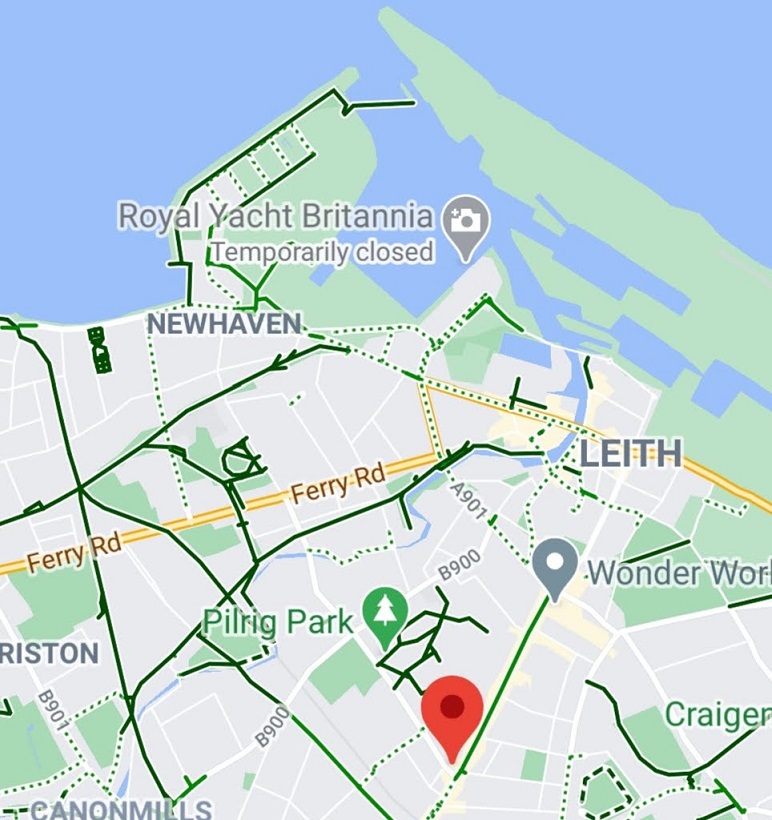
This is the original route map. The March 2023 route begins at Rosebank Cemetery, Pilrig Street and ends at South Leith Parish Church at the top of Constitution Street, Leith

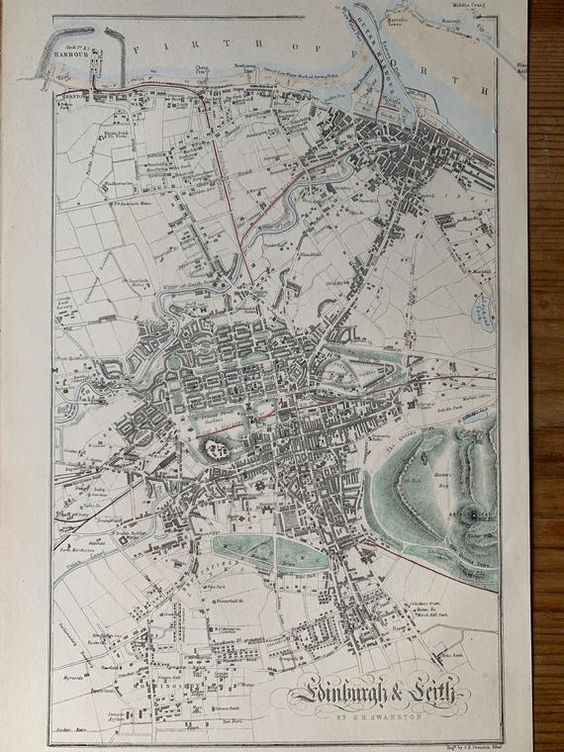
Located by the sea, we have records of Leith’s wharfs being in use as far back as the eleventh century, and know that by the fourteenth, it had become the principal port. (After that Glasgow took over, offering quicker passages to the Americas). The docks (named after Victoria (the Queen), Albert (her consort) and so on) were built between 1817-1904. By 1833, we know that Leith had grown into a powerful independent burgh. In 1920 there was a plebiscite about joining the City of Edinburgh, and the people voted 26,810 to 4,340 against. Despite this, the merger went ahead, but to this day Leith has a distinctive and independent character. Many of the women we will be finding out about will have seen those changes happening; they and their families would have relied on the goods and business which was channeled through the port, and sailed in and out through it.


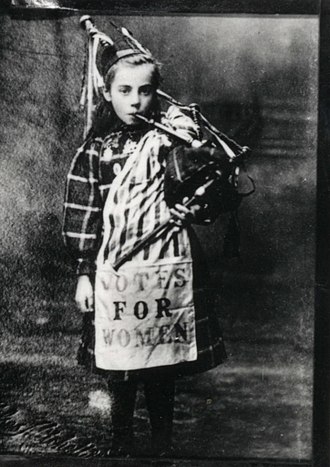
Bessie Watson aged 9 years Leith

I have spent a great deal of time trying to discover information about the women buried in Leith, and have not found as much as I would have hoped. I did come across a record with the names of the women in the Leith Poor House in the eighteenth century which made very interesting reading, but very little detail about their lives, and thus I scoured newspaper cuttings, Facebook, local history groups, and online links for associated details. Nevertheless, thinking about these women I never knew, searching for details about their lives, and trying to understand what it might have been like for them to live in Leith / Scotland in the seventeenth to nineteenth centuries has been worthwhile, emotionally and symbolically.

As we all know, behind the inventions and developments, the ports and ships and grand buildings which were built then and which have survived almost entirely with the names of men attached to them, were the women and girls giving birth, loving and supporting them.

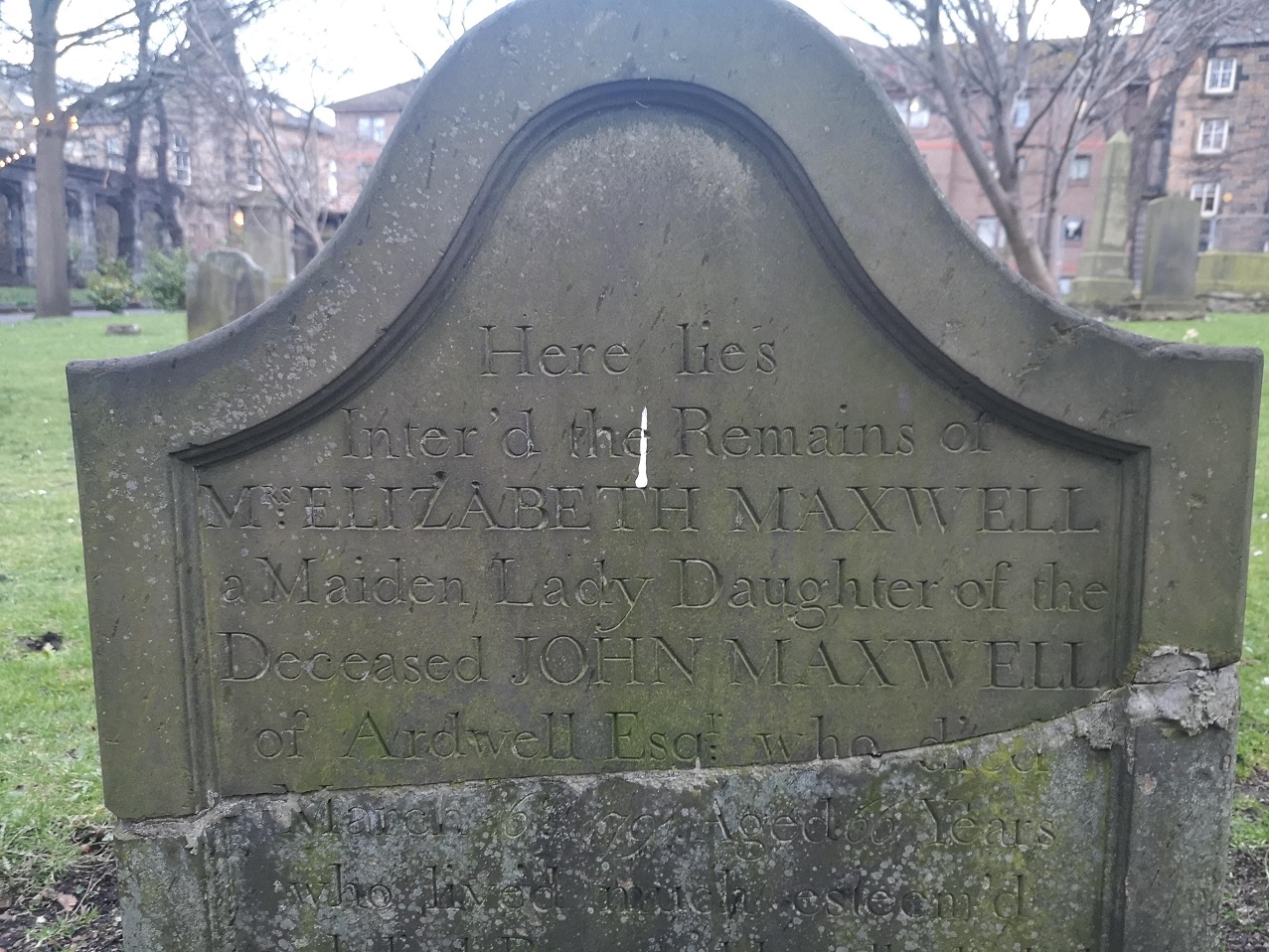
The women who were buried with headstones, so that we know their name and sometimes, their family affiliations, came from monied families and/or were married to monied gentlemen. Although the language you will find on them is archaic to our ears ‘Sarah Adam relict of Alex…’ these were wives, sisters and mothers who were ‘loved and respected’ and ‘much missed’. I will continue to be interested and to listen to as many stories as I can, to unearth not the bodies but the lives of them.

Rosebank Cemetery

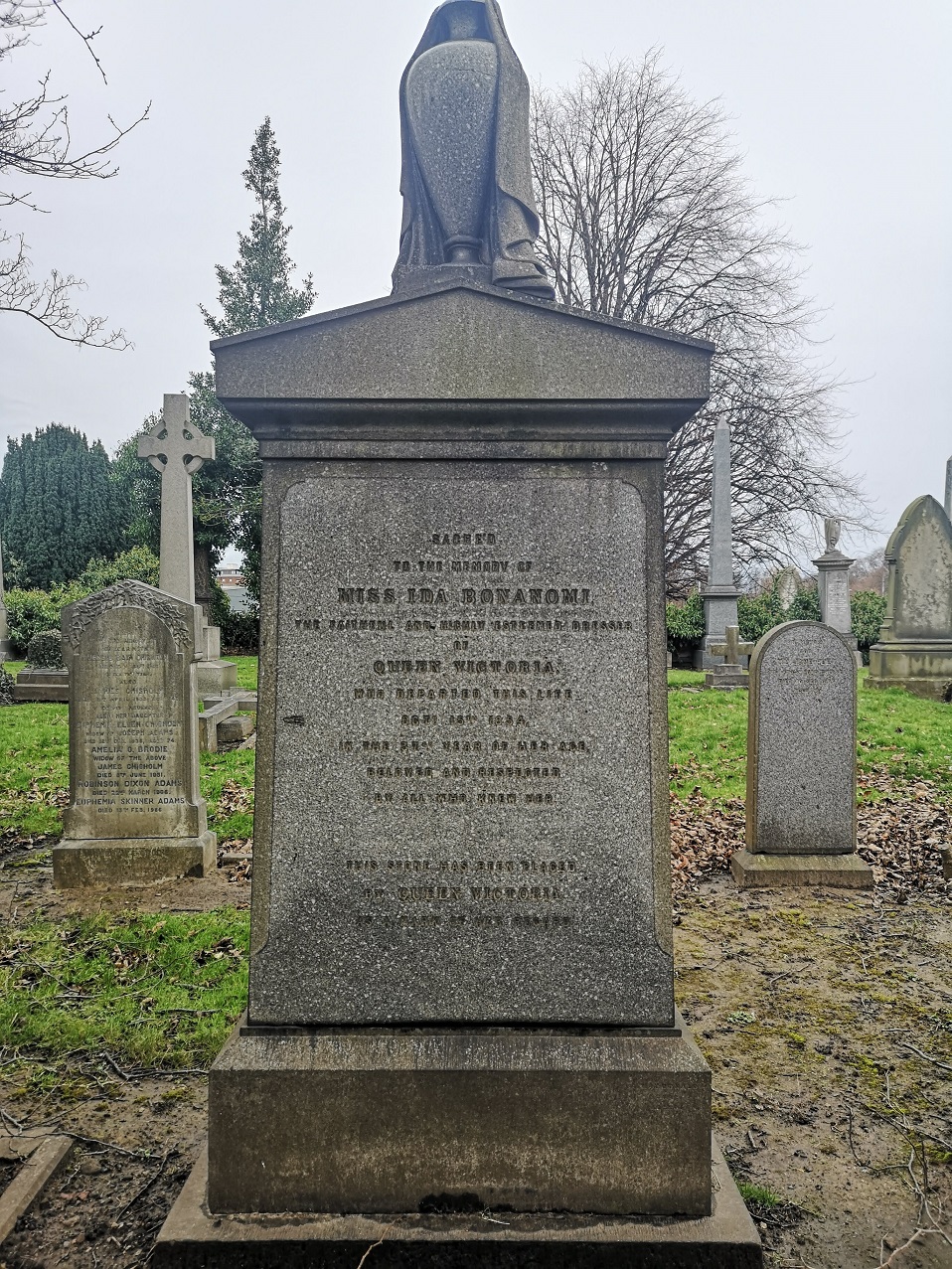
One of the most famous graves in Rosebank is that commemorating Ida Bononomi (probably Italian). It reads, ‘Sacred to the memory of Miss Ida Bonanomi, the faithful and highly esteemed dresser of Queen Victoria, who departed this life October 15 1854, in the 37th year of her age. Beloved and respected by all who knew her. This stone had been placed by Queen Victoria as a mark of her regard’.

Ida Bononomi

Bononomi’s job was a position of extreme intimacy with the monarch. In the Autumn of 1854, Ida had been travelling in Scotland with the Queen and stayed with her at Holyrood Palace where she fell ill. She was therefore unable to travel on with her mistress. In her journal, the Queen wrote, ‘Saw Sir James Clark, who brought me a telegram with the sad news that my excellent maid Ida Bononomi, whom I had had to leave at Holyrood as she had become so ill, not having been well at Balmoral before – had died last night. It was a great shock to me, & I was thoroughly upset, for no one, including Sir James had apprehended any immediate danger. She was the kindest, gentlest, best being possible, & such a pleasant servant, so intelligent, so trustworthy & her calm, quiet manner had such a soothing effect, on my often over wrought nerves. To lose her thus, and so far away, surrounded only by strangers is too grievous. Everyone was shocked & grieved, for she was quite adored.’

Queen Victoria liked funerals and had an interest in the protocol of mourning, ‘a mentality as much as a personal observance’ (see below for references). It is known that she recognised the deaths of her housemaids and others with ritual in which other members of the household were required to be involved, and also that she visited Ida’s grave six years after she died.

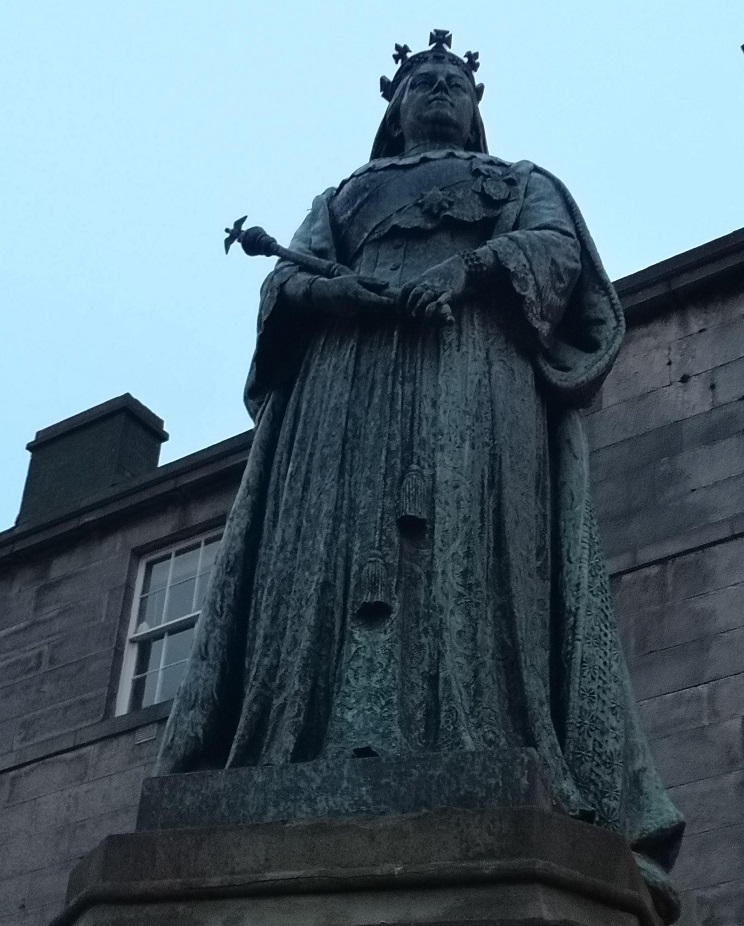
Queen Victoria high on her plinth outside Lloyd’s Pharmacy, at the bottom of Leith Walk

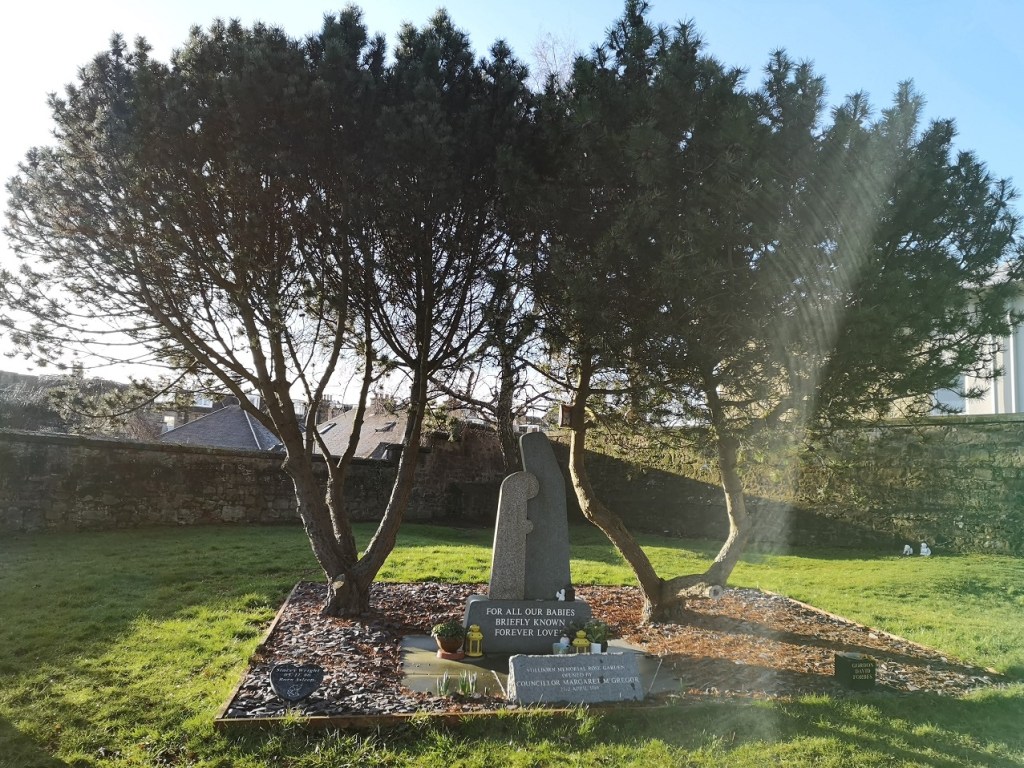
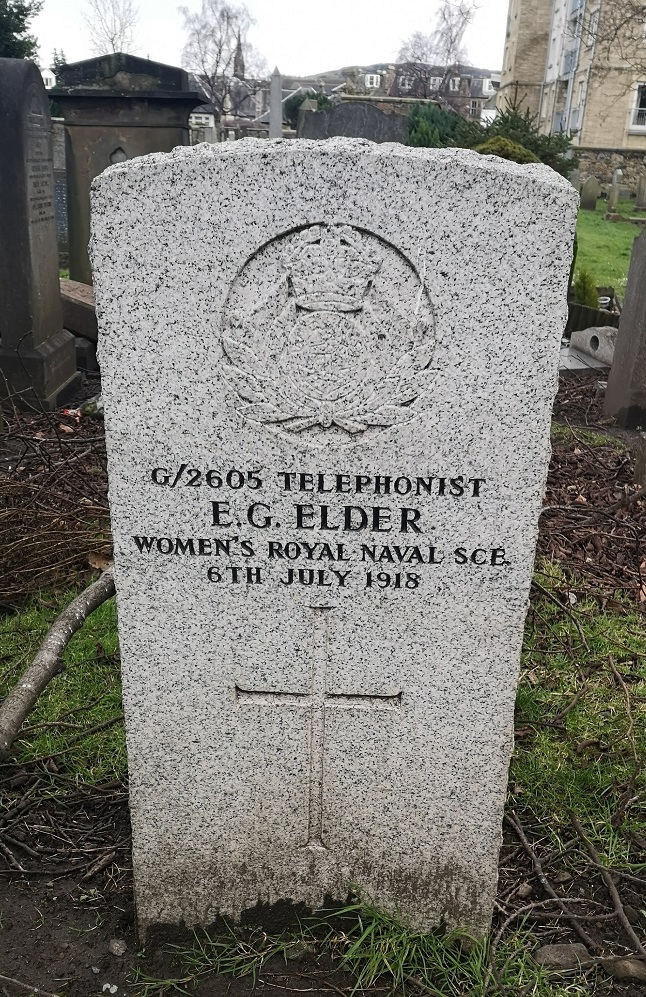
There are, of course, many other graves of interesting women in this cemetery, and there is also one which commemorates the stillborn babies who, by Scots law, cannot be cremated and must be buried. Annie Blackie is said to be the oldest person buried here (105 years). There is a rare female WW1 grave to E G Elder of the Women’s Royal Naval Service (7/7/18) and a WW2 memorial to E W L Fruish, also of the WRNS.

Excellent information for parents of stillborn babies who dies long ago is offered by SANDS (‘Saving babies’ lives. Supporting bereaved families.’) Phone: 0808 164 3332 or email helpline@sands.org.uk

Also, Held in our Hearts charity providing baby loss counselling and peer support to families. Tracy Watt can be contacted here tracy@heldinourhearts.org.uk

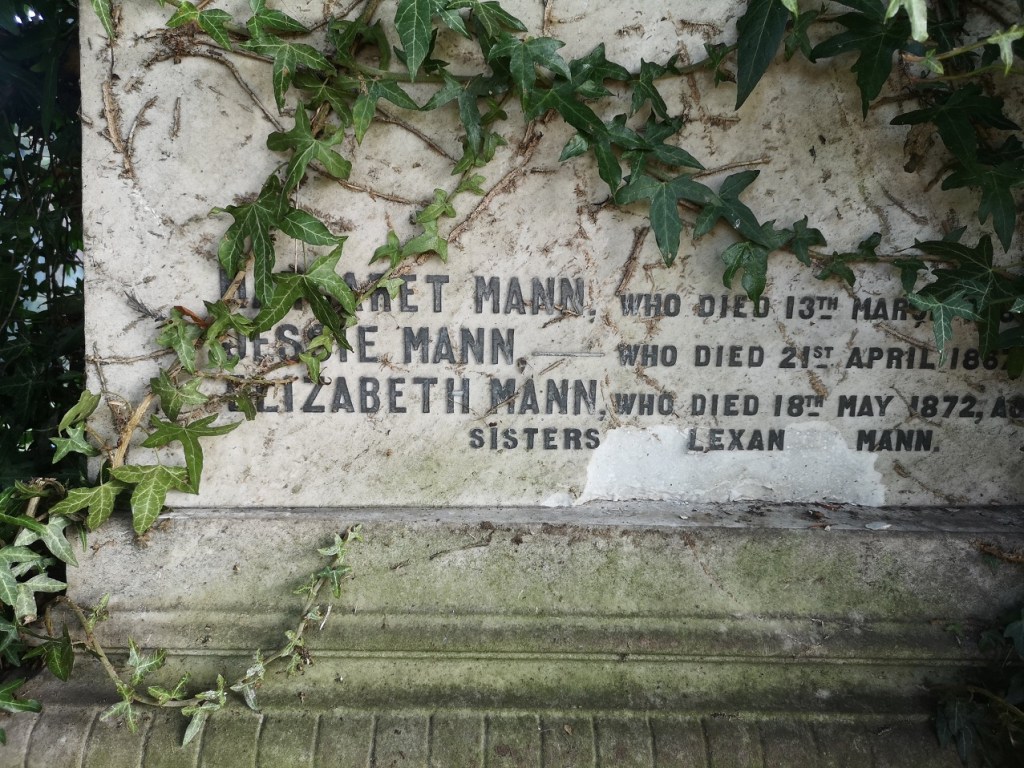
Jessie Mann (1805-1867) is a strong candidate for Scotland’s first female photographer. She was known to be the studio assistant of David Octavius Hill and Robert Adamson and worked at Rock House, Calton Hill. Later a school housekeeper in Musselburgh, she died of a stroke aged 62. She is thought to be the photographer of the King of Saxony which hangs in the Portrait Gallery on Queen’s Street (yes! the same queen).

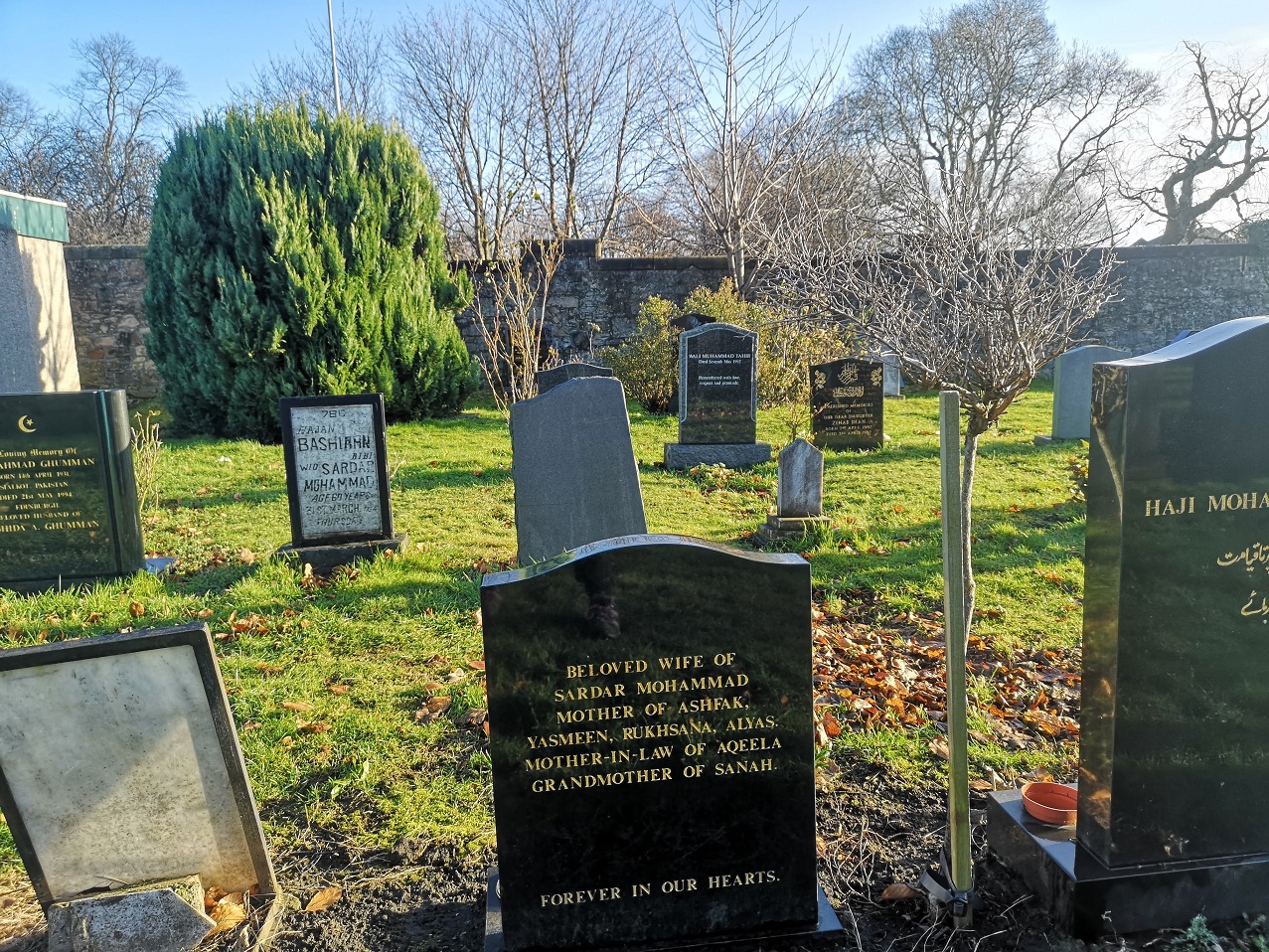
The grave stone of Amina Bibi – wife, mother, mother-in-law, grandmother

According to a Commission for Racial Equality paper, it is important that Scottish cemeteries set aside a section for Muslim graves, as is the case in Rosebank. It is important that they are raised 4-12 inches above the ground, as it is forbidden to walk over them. Before burial, the body will be washed in a ritual manner (Ghusl), usually in the Mosque, then taken to the grave where a prayer is said (Salat Al-Janazah). Then the body is wrapped in 1 or 2 sheets of white cloth and laid in the grave (traditionally without a coffin, and strictly only one person per grave). The headstones are usually simple.

Information on Muslim Burials from the Scottish Muslim Funeral Service

Bonnytoun

Turning left out of Rosebank, we can walk across the junction and along Newhaven Road. Second on the right is Elizafield, named after Eliza, a native of Leith, and the woman who bore Dr. Robert Grant (not Dr Robert Edmond Grant, zoologist). I have not been able to find out anything about her and her life – her story has disappeared, perhaps deemed less important than his, despite the fact that he would not exist if it weren’t for her, not least because birthing was such a dangerous task in the 1780’s.

Historically it [birth] was thoroughly natural, wholly unmedical, and gravely dangerous. Only from the early eighteenth century did doctors begin getting seriously involved, with obstetrics becoming a medically respectable specialty and a rash of new hospitals being built. Unfortunately, the impact of both was bad. Puerperal, or childbed, fever was a mystery, but both doctors and hospitals made it worse. Wherever the medical men went the disease grew more common, and in their hospitals it was commonest of all.

Druin Burch (2009) https://www.livescience.com/3210-childbirth-natural-deadly.html

Eliza’s son was a surgeon and left Leith in his twenties (1782-92) to settle, very successfully, in South Carolina (USA) marrying Sarah Foxworth. The rice plantation he established in Georgia was also named Elizafield, and, as was the way then, it only drew the produce and profits it did, as a result of the female and male slaves who carried out the work: they were, ‘the driving force behind the success of the plantation’. (Amy Hedrick, author on glynngen.com).
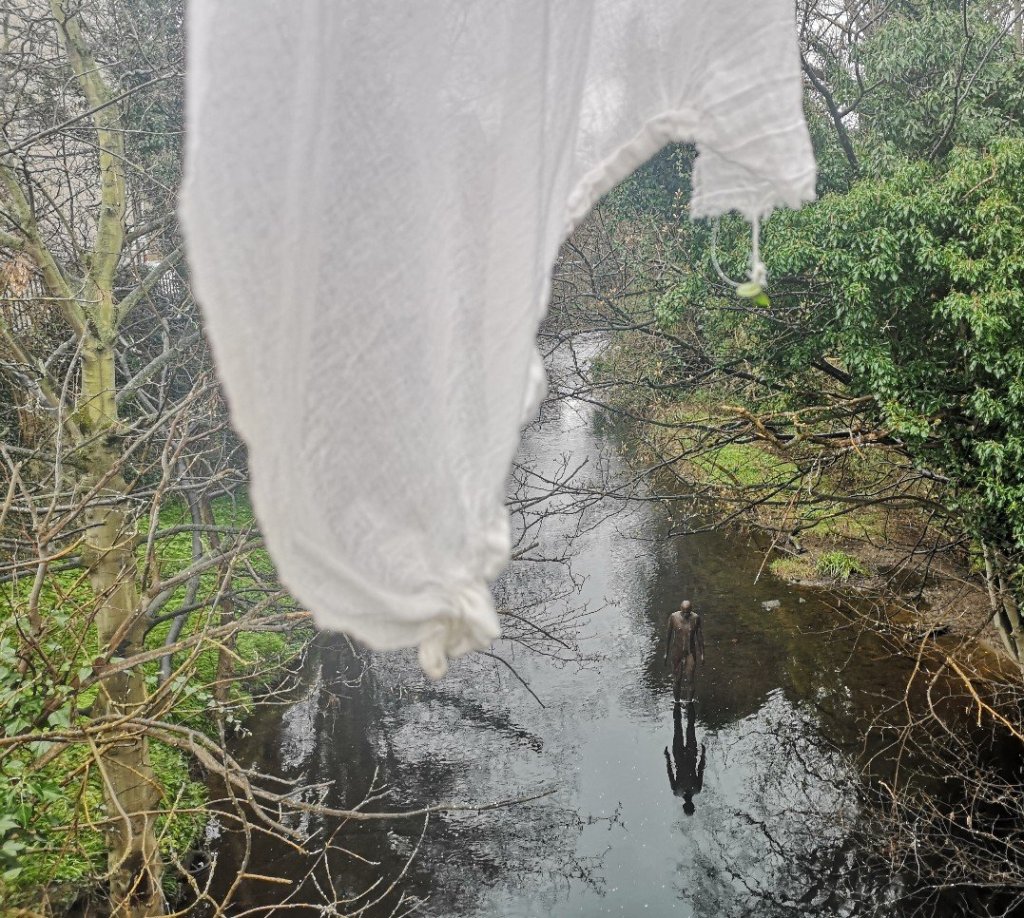
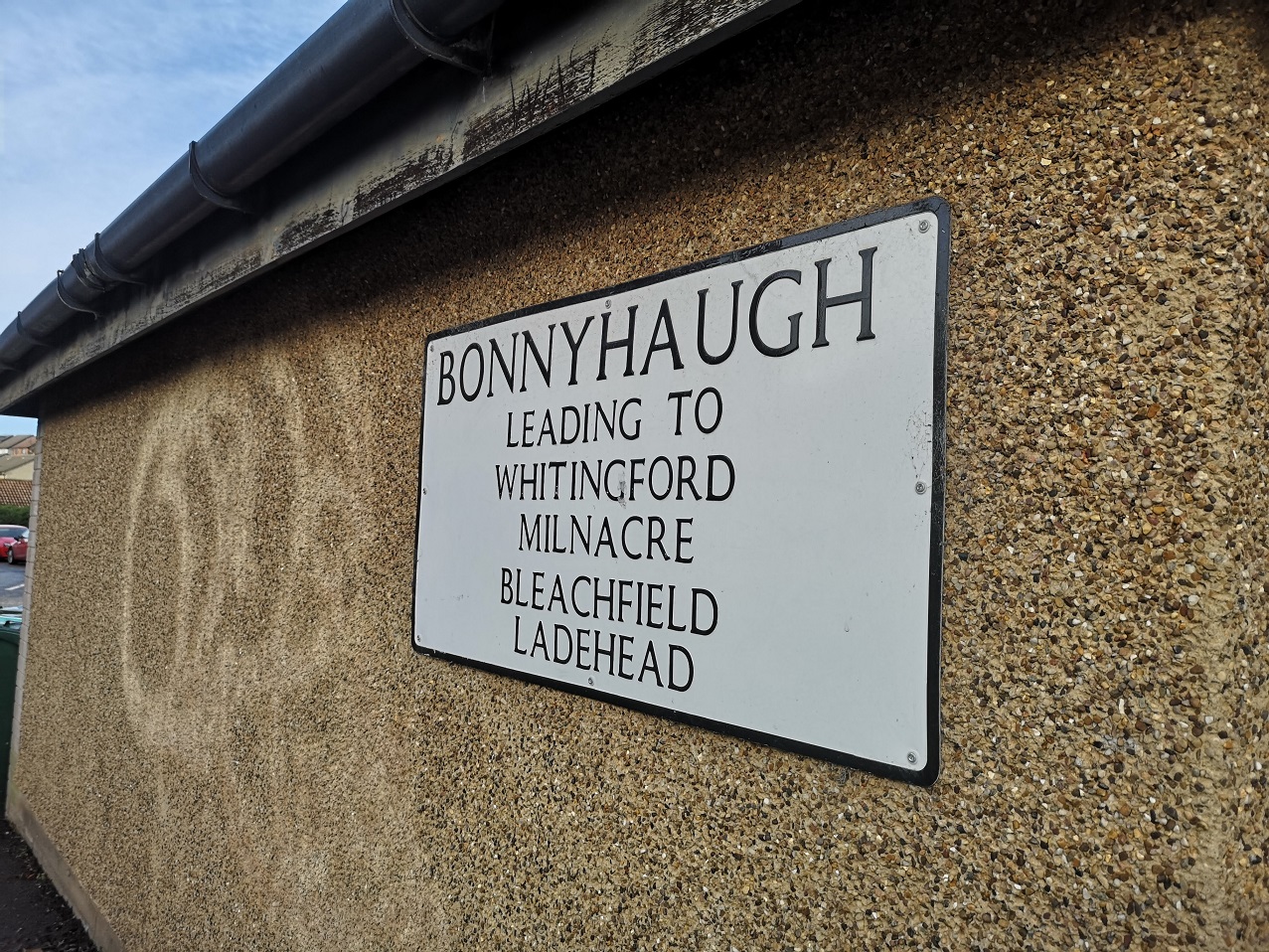
Current street names refer to the industries which used to be located in the Bonnington area

Women in industry

Flaxmill Place is almost opposite Elizafield. Flax was used to make linen, most of which was exported from Scotland, and it was a very successful industry employing 10 – 12000 workers, many of whom would have been women (although the exact data is unavailable).

The Bonnington Mills, on the banks of the Water of Leith, made woollen cloth as well as linen, and much of the wool was produced by women in their own homes nearby. As the owners were always aiming to improve profits and cut corners, they controversially introduced Flemish and French workers (who were accommodated at Little Picardy(ie), the current Picardy Place). The women and girls spun the cambric yarn (for the close-woven, light type of linen) to try and improve the quality of the cloth, but this took away the local jobs. 
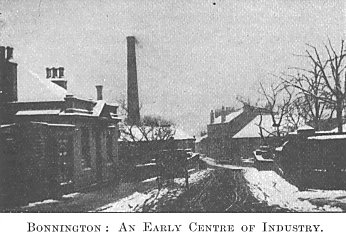
Before 1887

Before the Industrial Revolution, hand spinning had been a widespread source of female employment. It could take as many as ten spinners to provide one hand-loom weaver with yarn, and men did not spin, so the majority of the workers in the textile industry were women. The new textile machines of the Industrial Revolution changed that. Wages for hand-spinning fell, and many rural women who had previously spun, found themselves unemployed. In a few locations, new cottage industries such as straw-plaiting and lace-making grew, taking the place of spinning, but in other locations women remained unemployed.

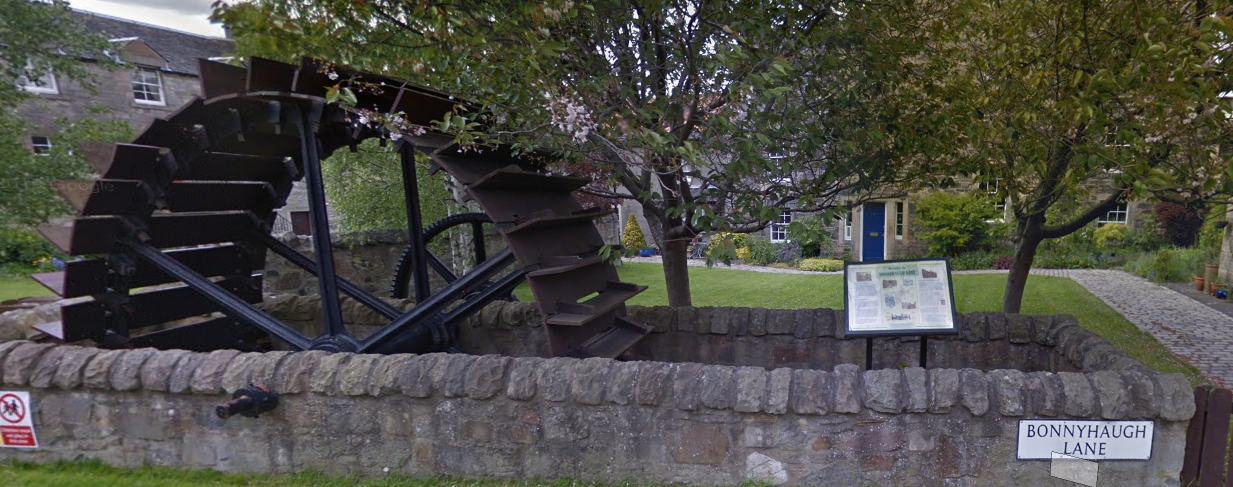
A screenshot from google earth maps of the Bonnington waterwheel

In 1686, the first Parliament of James VII passed an ‘Act for Burying in Scots Linen‘, the object of which was to keep the home-made cloth in the country. It was enacted that, “hereafter no corpse of any persons whatsoever shall be buried in any shirt, sheet, or anything else except in plain linen, or cloth of hards, made and spun within the kingdom, without lace or point.” Heavy penalties were attached to breaches of the Act, and it was made the duty of the parish minister to receive and record certificates of the fact that all bodies were buried as directed. On hearing this, we can imagine that the women in the graves we were visiting may have been bound in just such a linen shroud, made right in this place.


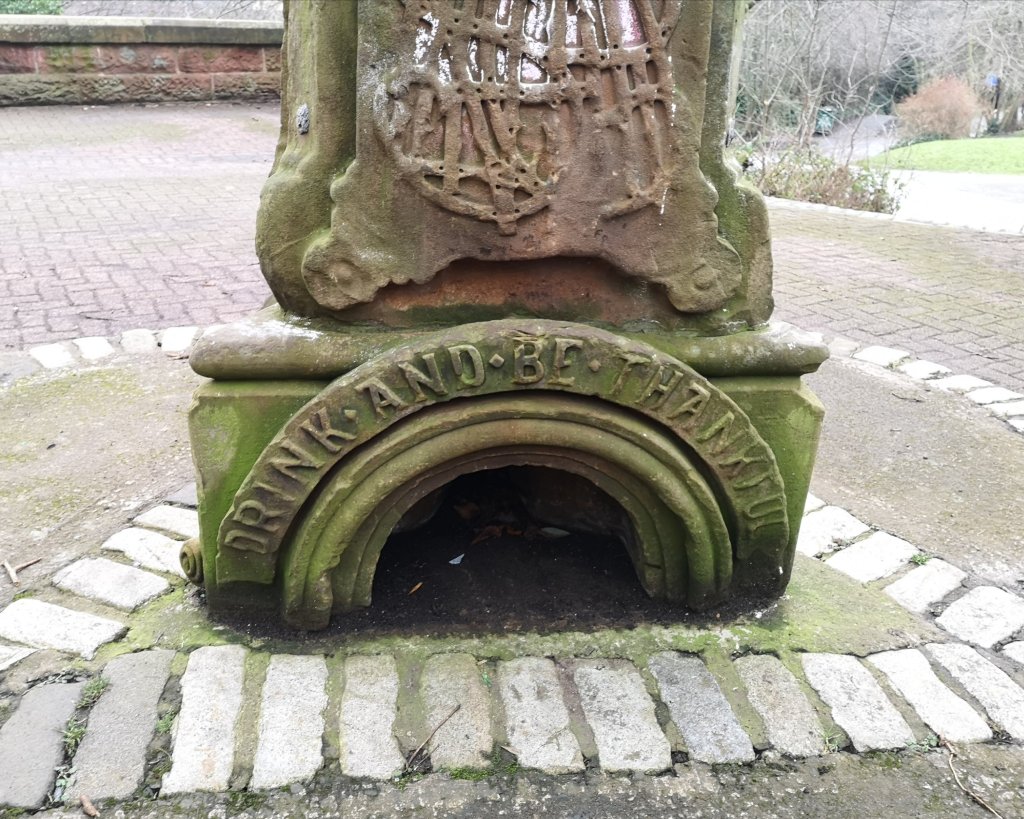
Here are the remains of the Catherine Sinclair drinking fountain – the first ever such watering place. She was a children’s writer and philanthropist (1800-1864) and it can be found at Steadfastgate, Gosford Place. See the Women of Scotland site for more details.

Remains of the Catherine Sinclair drinking fountain, Steadfastgate

North Leith Burial Ground

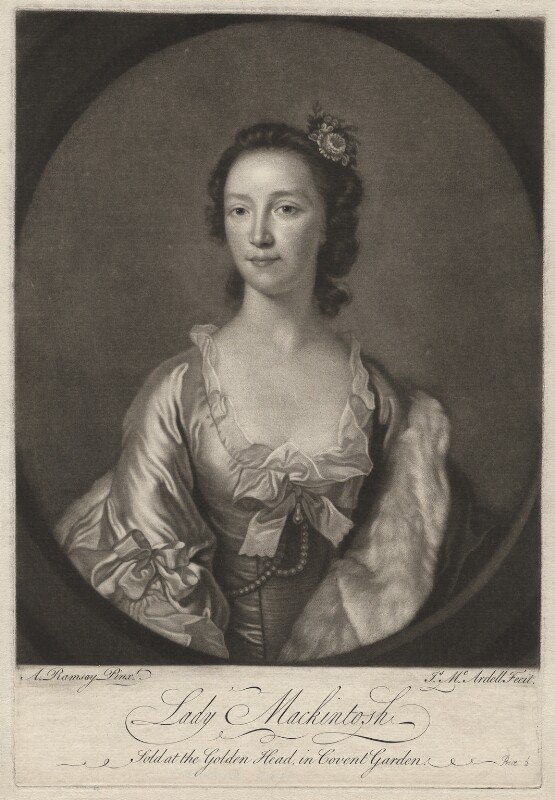
Lady Mackintosh

Colonel Lady Anne Mackintosh (b 1723-1787) was the daughter of John Farquharson, the chief of the clan and staunch Jacobite. She married the head of the Mackintosh(es) when she was aged 19 and was feisty by all accounts, known as one of the damn rebel bitches (the name of a book by Maggie Craig). These were women who acted as moral supporters for their men. They served in intelligence and communication roles, built support for the movement, sheltered Jacobite fugitives, and had their image torn apart by the enemy press in the papers’ attempt to discredit the Jacobite cause.

When Anne was 22, she dressed in male attire and rode around the Scottish glens to enlist men to fight in a regiment for the cause Prince Charlie. This was an attempt by Charles Edward Stuart to regain the British throne for his father, James Francis Edward Stuart in what became known as the 1745 Jacobite uprising or ’45 rebellion’ or, simply, ‘The 45’. The numbers of men she raised are different in each account, from 97 to 200, 350, even 400! If the women who supported the cause in such a way were captured…..

“The ‘ladies’ all got off with at worst, a brief term of imprisonment. Some made pretty speeches to King George and got their husbands released and their lands restored. Even when in prison they were well treated, and allowed their silk gowns and nice food. This applied even in cases where they were clearly guilty of treason. ‘Common women’, on the other hand, mostly got shipped off to the West Indies as slaves for life, usually for doing nothing more than following their husbands on campaign.”

Maggie Craig

During the uprising Captain Angus Mackintosh, her husband, fought on the losing Government side at the Battle of Prestonpans in 1745 and was subsequently captured. He was later released into Anne’s custody. After the Battle of Culloden in 1746, however, when the tides turned, Anne herself was held in Inverness for six weeks before being turned over to her mother-in-law, whose family had fought for the other side. These family disagreements were eventually forgiven and Anne and her family moved to Leith where she died in 1784 and was buried in North Leith Burial Ground which would have had a church beside it in those days.

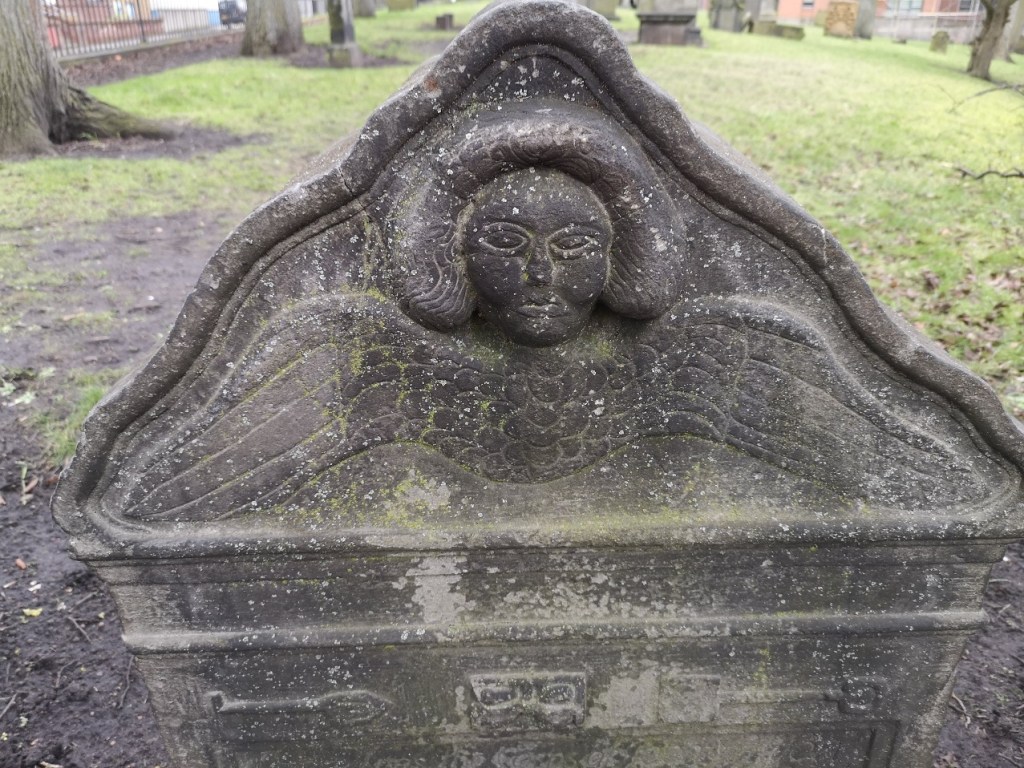
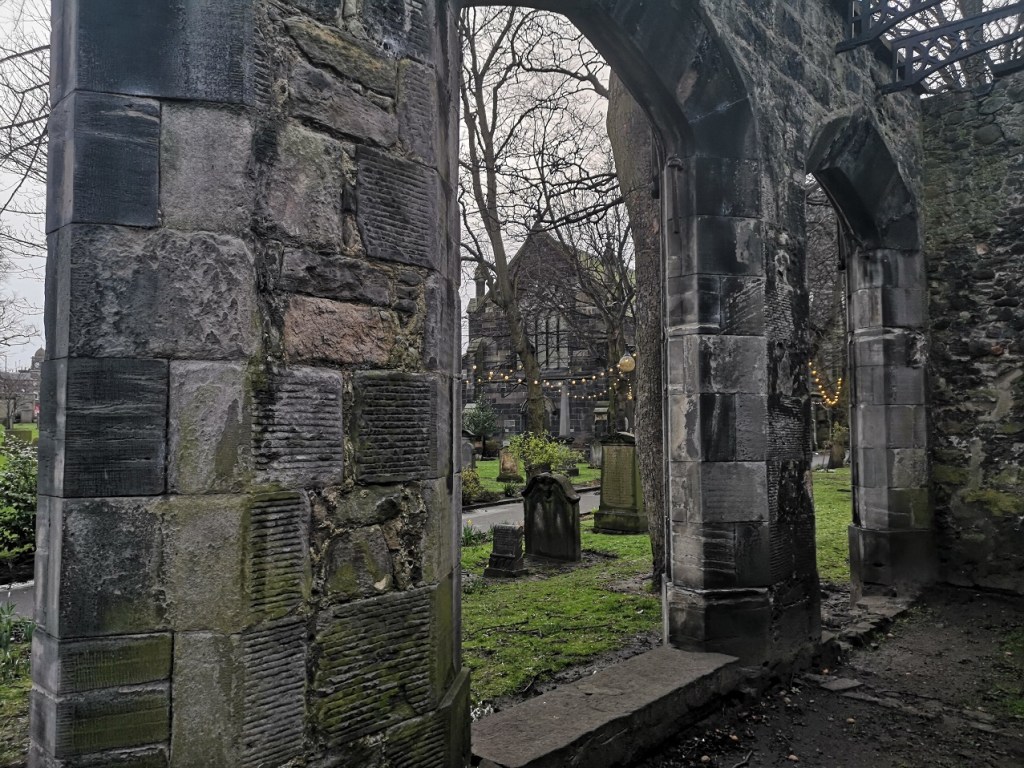
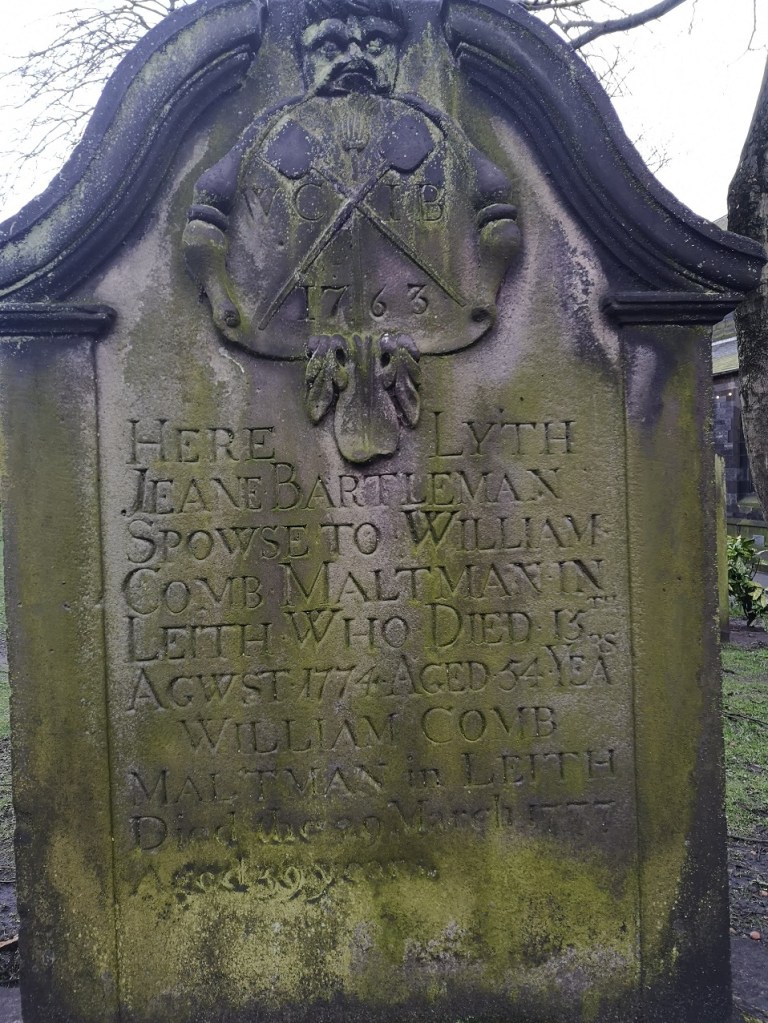
The memorial stones at North Leith Burial Ground are old (1664 – 1820) and varied. You can find grand mausoleums and individual slabs – some half buried and unintelligible. Almost all have engravings and carvings are worth seeing. I suggest we search for the grave of Lady Mackintosh as well as carvings of a long bone, angels, skulls and hourglasses (some on their sides and others upstanding, the sands of time sifting down through the narrow neck as life passes by).

Queen Charlotte Street

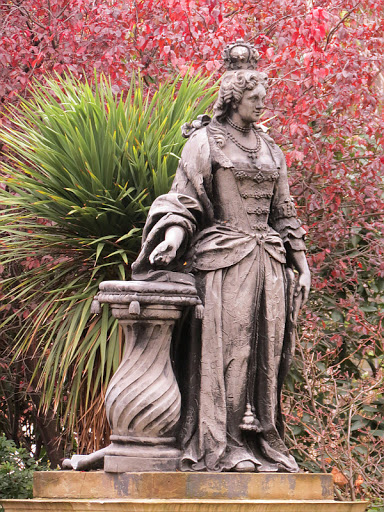
Queen Charlotte in Bloomsbury Square

Crossing the Water of Leith again, along Sandport Place and Tolbooth Wynd, is Queen Charlotte Street, named after the Queen of Mecklenburg-Strelitz (1744-1818). She is remembered in Queens Square, Bloomsbury, London with a statue (see above). Charlotte was an immigrant and did not support slavery (there is a bit of a theme emerging here!)

Sara Sheridan, in her book Where are the Women, tells of Elizabeth Nicol (1807-189), an abolitionist, anti-segregationist, suffragist, and chartist who “attended the World Anti-slavery Convention in London in 1840 as one of only six British female delegates. On arriving the women were told, despite their objections, they could not participate and were made to sit in a segregated area.”

Queen Charlotte was a reknowned botanist and founded Kew Gardens. Married to King George III, she had fifteen (that’s 15) children and was, famously, painted by Allan Ramsey (also an anti-slavery campaigner) in 1762, when she was aged 17 years. The painting is owned by the Scottish National Galleries. Recent articles have posed the question whether she was of African origin herself which would explain her support.

Round the corner and on to Constitution Street is St Mary’s Star of the Sea, a Catholic church and home to the missionary oblates.

Hail, Queen of Heav'n, the ocean Star, 
Guide of the wand'rer here below!
Thrown on life's surge we claim thy care,⁠
Save us from peril and from woe.

Mother of Christ, Star of the sea,⁠ 
Pray for the wanderer, pray for me

Based on the anonymous Latin hymn, Ave Maris Stella

South Leith Parish Church

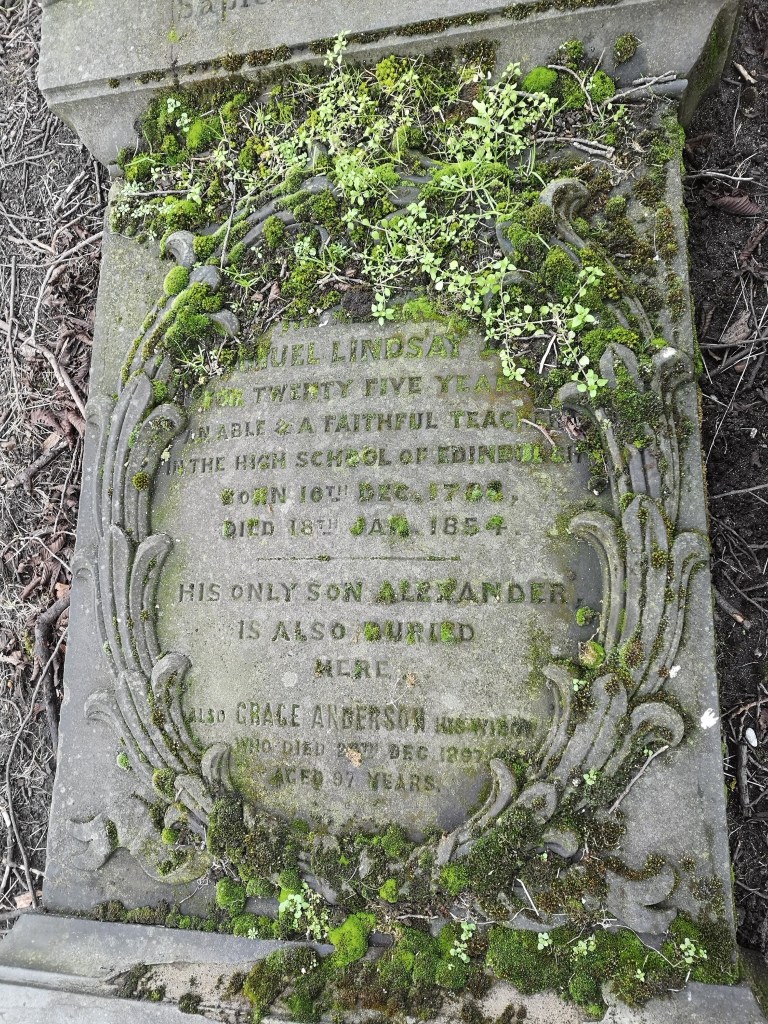
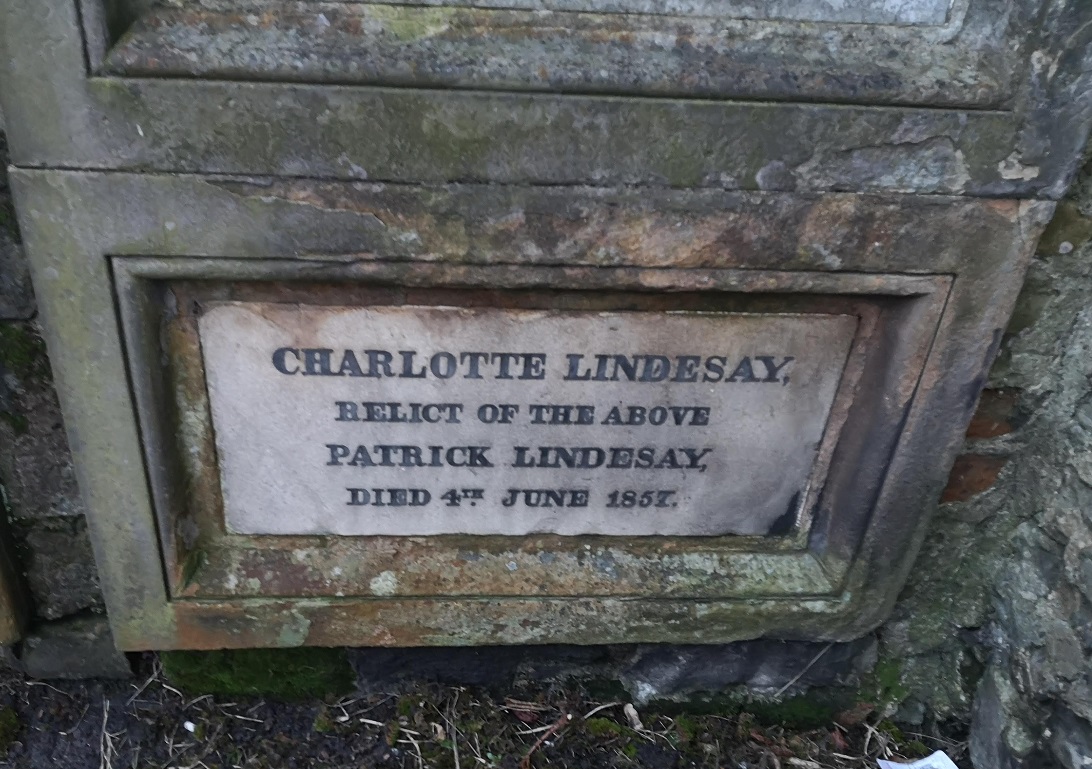
Further up the same street is St Mary’s Chapel, part of South Leith Parish Church, dating from 1483, and its graveyard. I spent some considerable time researching the women in this kirkyard, trying to find out their stories, but to almost no avail. I focused on another Charlotte, Charlotte Lindesay (1780-1857 aged 77), and did manage to discover that she was one of a brood of six from Feddinch in Fife, and that her parents were William Lindesay and Elizabeth Balfour. In 1805, she married her cousin, Patrick who was very active in the community.

Amongst other jobs, Patrick was the president of the Leith Dispensary and Humane Society which was formed in 1825 on Maritime Street, later to become Leith Hospital, bringing healthcare (via a clinic and hospital, both initially in Broad Wynd) to the poor. I like to imagine Charlotte accompanying him, or even visiting the needy with a basket over her arm as portrayed in countless Jane Austen films, but I am woefully ill informed about her true particulars.

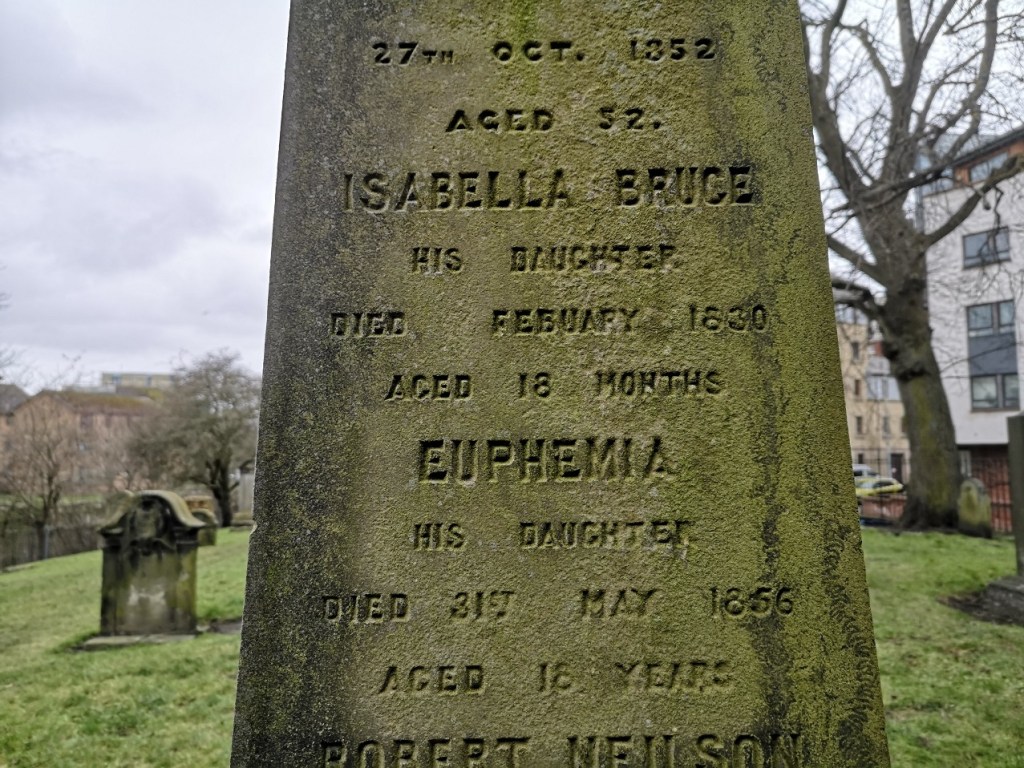
See how this woman is named a ‘relict’ of her husband, South Leith Parish Church, Scotland

The forerunner of that Leith Hospital was the Old King James Hospital in the Kirkgate, founded in 1614 and closed in to make room for the new one in Sheriff Brae overlooking Mill Lane in1822. You can still see part of the wall close by the South Leith Parish Church.

If you were one of the very first groups of female students who were finally ‘allowed’ to do clinical training at a Scottish hospital in 1886, you would have done it in Leith – in your long skirts and tight waisted costumes.

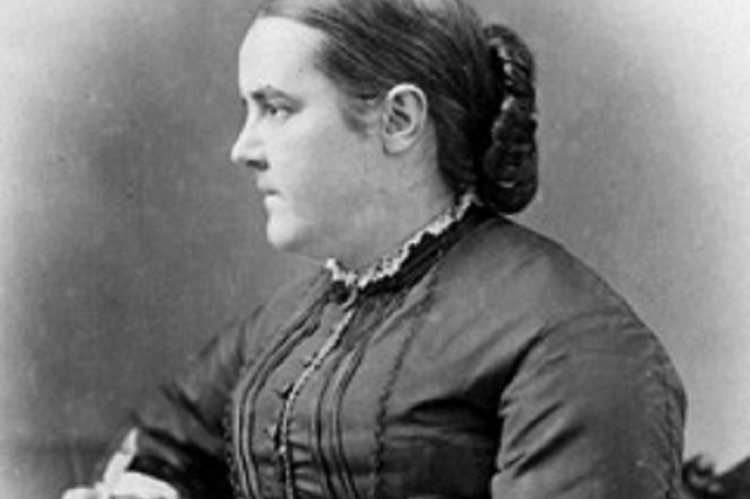
Sophia Louise Jex-Blake, leader of the Edinburgh Seven (Wiki)

Christine Hoy tells us about the first district nurse, Mrs Brown whose role it was “to carry out faithfully the doctors’ orders, to instruct the relations or friends of the patient in the art of good nursing and to inculcate, and if necessary enforce, attention to cleanliness”. The hospital paid for her to attend a nursing course at King’s College, London. Popular and hardworking she made 13,000 home visits in 1877 alone. More information on The Edinburgh Seven. Leith Hospitals information here.

Some other women associated with this church

Mary of Guise (also called Mary of Lorraine), ruled Scotland as regent from 1554 until her death in 1560. A noblewoman from the Lotharingian House of Guise, which played a prominent role in 16th-century French politics, Mary became queen consort upon her marriage to King James V of Scotland in 1538. (Wikipedia). She worshipped at this church in 1559 and her coat of arms is displayed in the entrance today. Mary had fortified the town and she was in Leith being guarded by the thousands of French troops stationed there at the time.

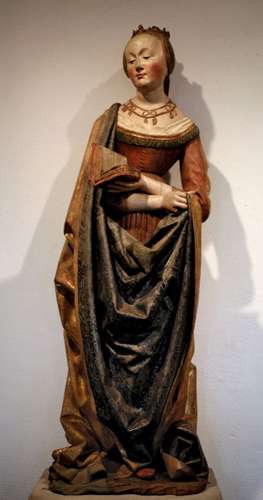
Saint Barbara

There is also an altar dedicated to St Barbara who had a very sad and sorry life. Wanting to dedicate herself to Christ instead of marrying the man her father wanted her to (Dioscorus, 7th century), she was tortured and her father chopped her head off. He got his comeuppance, apparently, being struck by lightening and reduced to ashes. Perhaps this is why she is invoked in thunderstorms. She is also the patroness of miners, although I am not sure why. (From the Britannica and Archdiocese of St Andrews on facebook).

Saint Barbara, whose altar sits in South Leith Parish Church, Scotland

When excavating for the trams in 2019, mass graves were found. There were 50 per cent more bodies of women than men, and the bodies were smaller than the average woman today, showing signs of malnourishment compared to the national average even then. An exhibition and book were made and it was posited that they had something to do with the plague and/or that they were from the poorhouse. There is a banner in the entrance to The Museum of Edinburgh with some information about this and the book is sold in the shop there.

The graves of Jane Eliza Mackie and Jane Smart (left)

As a way of paying respect to the women whose names I discovered here, I made a list of them, together with their relationships, but omitted the names of their male relatives. This is to recognise how many women we know so little about, and the manner in which they were remembered. I will read out the list during the walk, in remembrance.

These have been women’s stories, of their families, interests, occupations and deaths. They are often seen through the eyes, or in the context of men, making it hard to celebrate them in their own right, but the search to find out more about them was well worth it and is by no means over.

Walking Artists Network and Women Who Walk

Tamsin Grainger is a member of Women Who Walk and the Walking Artists Network. The network is for those who use walking in their creative or academic practice. It includes artists, writers, field historians and archaeologists, psychogeographers, academics and more.

Sources

The Edinburgh Gazeteer

Christine Hoy https://www.amazon.co.uk/Beacon-Our-Town-Story-Hospital/dp/0951373900

Elizabeth Jane Timmins, 2019 and her blog for the information about Ida Bononomi and Queen Victoria.

‘The Jacobite Grenadier’ by Gavin Wood.

Elizafield Plantation, USA by Amy Hedrick http://www.glynngen.com/plantations/elizafield.htm and https://mesda.org/item/collections/dr-robert-grant/1194/

Blackwood’s Edinburgh Magazine which has delights in it if you care to look hard enough, such as ‘[he died] At Paris, of a fever, occasioned by bathing whilst in a state of perspiration, T Palmer”

Joyce Burnette (2008) This webpage has some fascinating pictures of women spinning at home and in the factory and statistics about self-employed wmen in the eighteenth century and much more (England)

The History Press

Other links

See also Edinburgh New College and Calton Hill – a tour of the centre of Edinburgh celebrating some of Edinburgh’s famous women – based on the Hidden Heroines Tour by Carla Nebulosa.

See also Where Are the Women? A Guide to An Imagined Scotland by Sara Sheridan

and the Meet the Author event with Sara Sheridan on 1 May 2021 at 10.30am

Saltire Society Outstanding Women of Scotland

The New Biographical Dictionary of Scottish Women

Quines by Gerda Stevenson celebrates women of Scotland in poetry. My review is here

There are other books about women that I have reviewed here

Walking the Line

A Terminalia Festival 2023 walk which took place on Saturday 25 February 1.30 – 5pm

Here is what happened – Ewan Davidson’s blog

The Festival of Terminalia

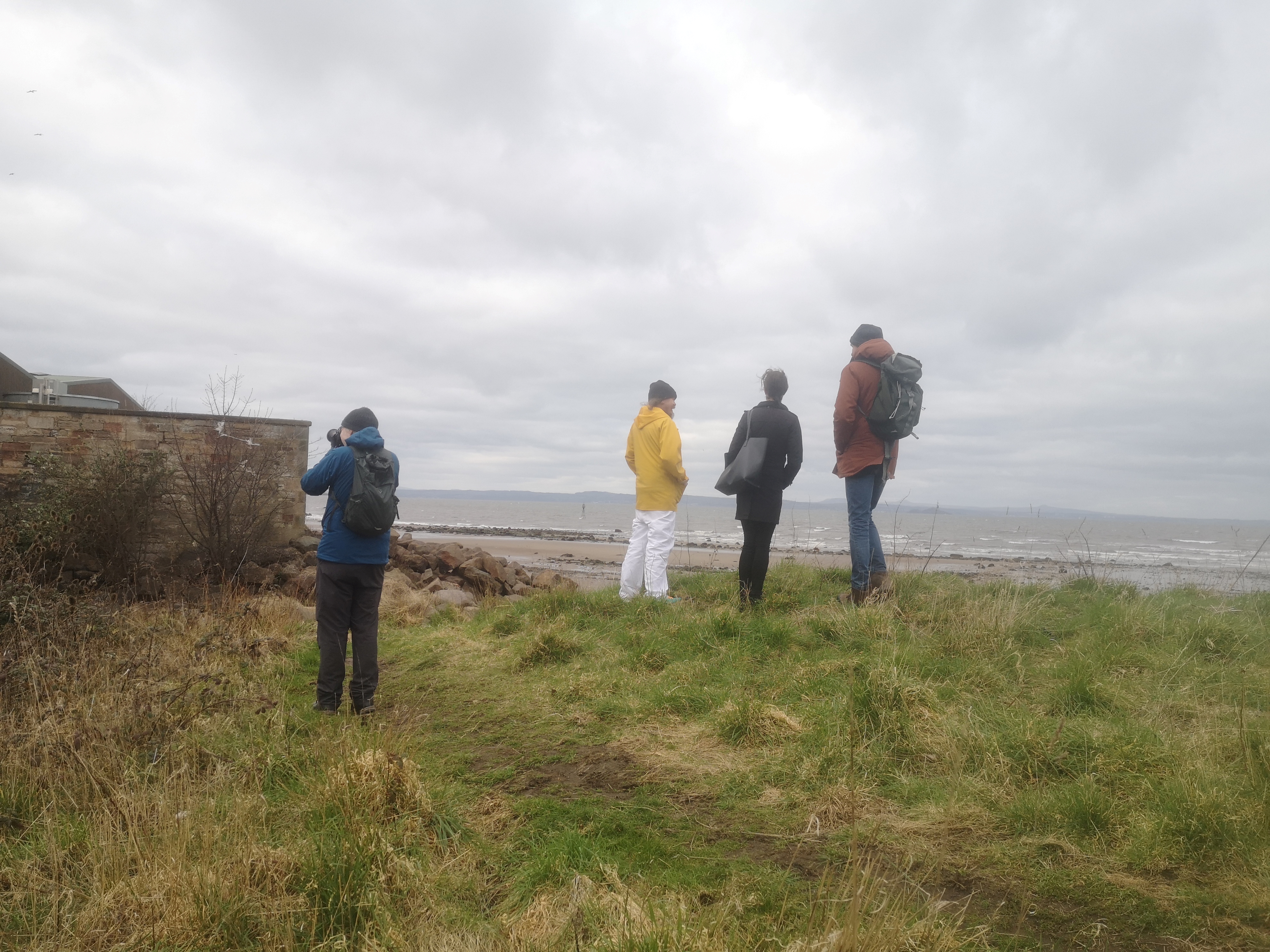
Gathering at the coastal edge of the Firth of Forth to walk the boundary

We celebrated the festival of Terminalia by looking for the invisible line that marks the mutual edge of Edinburgh and East Lothian.

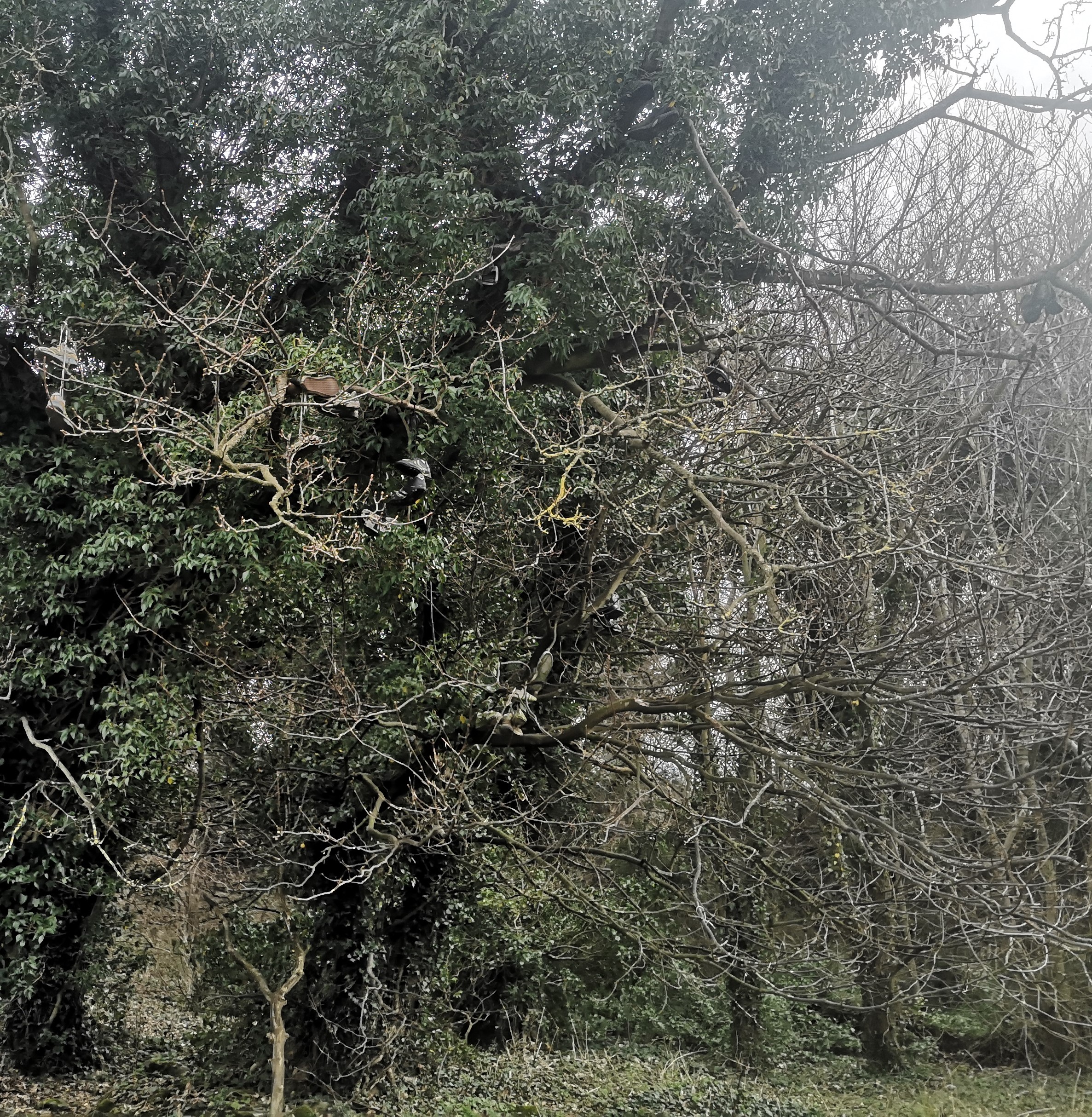
Shoe Tree

Along the way we looked for hermits, skylarks, horses, incinerators, filmmakers, and a shoe tree. We found all this and we offered our libations to Terminus.

Terminus was one of the really old Roman gods – more of a symbol of the basic patterns of reality – he didn’t have a face, he was literally a stone marker. Terminus was given influence over less physical boundaries too, like that between two months, or between two groups of people. Terminalia was celebrated on the 23rd February – which was the last day of the Roman Year, the boundary between two new year. …Traditionally, feasting and sacrifices were performed during Terminalia at boundary markers. In Roman times for the festival the two owners of adjacent property crowned the statue with garlands and raised a rude altar, on which they offered up some corn, honeycombs, and wine, and sacrificed a lamb or a sucking pig. Today we can look back and acknowledge the timeless pattern of boundaries and landmarks.


@tim_waters (twitter)
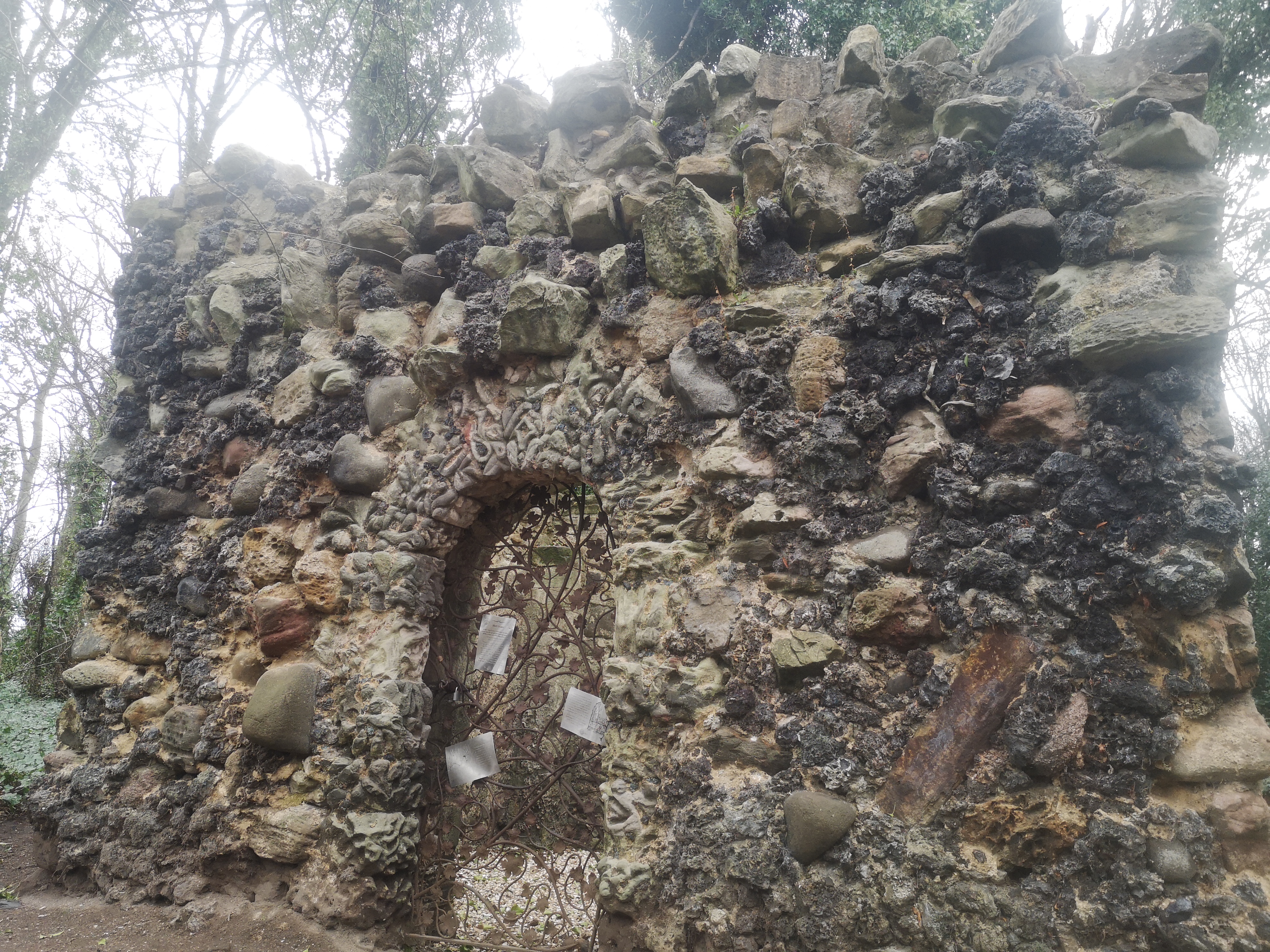
Hermitage on the Newhailes Estate

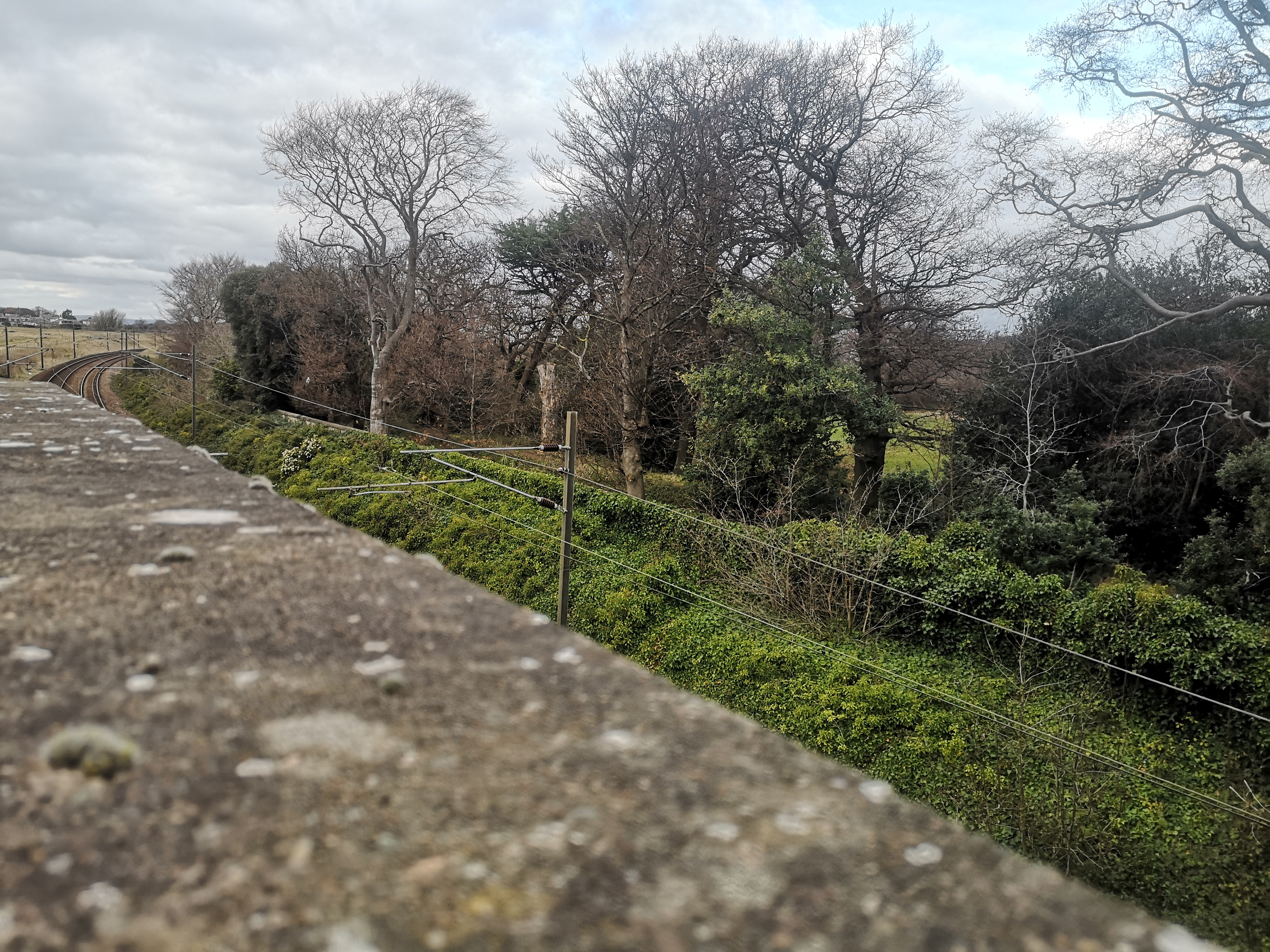
We began on the coast between Musselburgh and Portobello and walked a route via Newhailes (National Trust for Scotland) for loos and a cup of tea. We spotted spoil heaps and culverts, railway lines, bridges and the hermitage, and ended at Newcraighal Shopping Centre which is on top of the old mine shafts and site of the Niddrie Brickworks.

Heading to the terminal
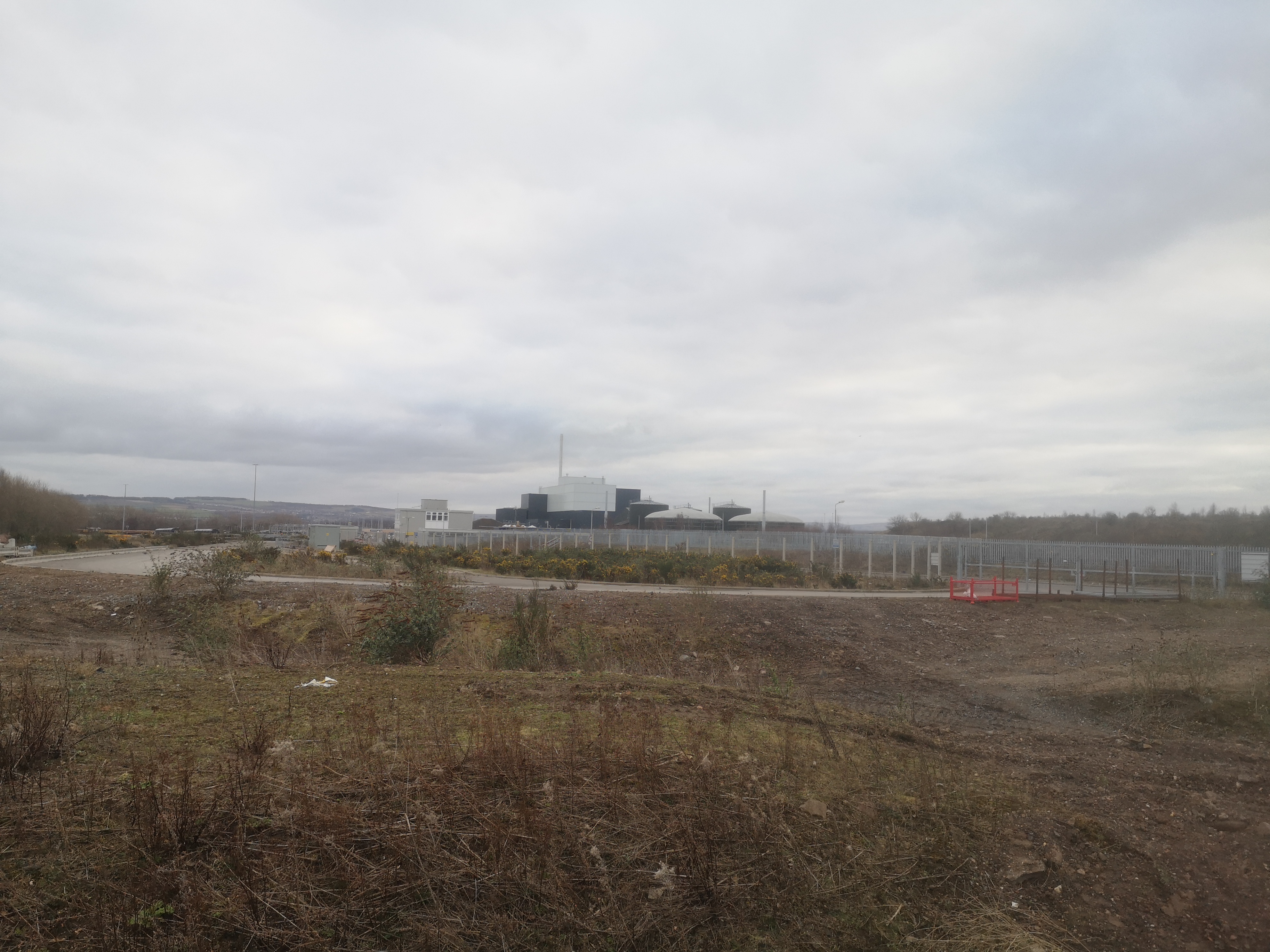
The Edinburgh incinerator
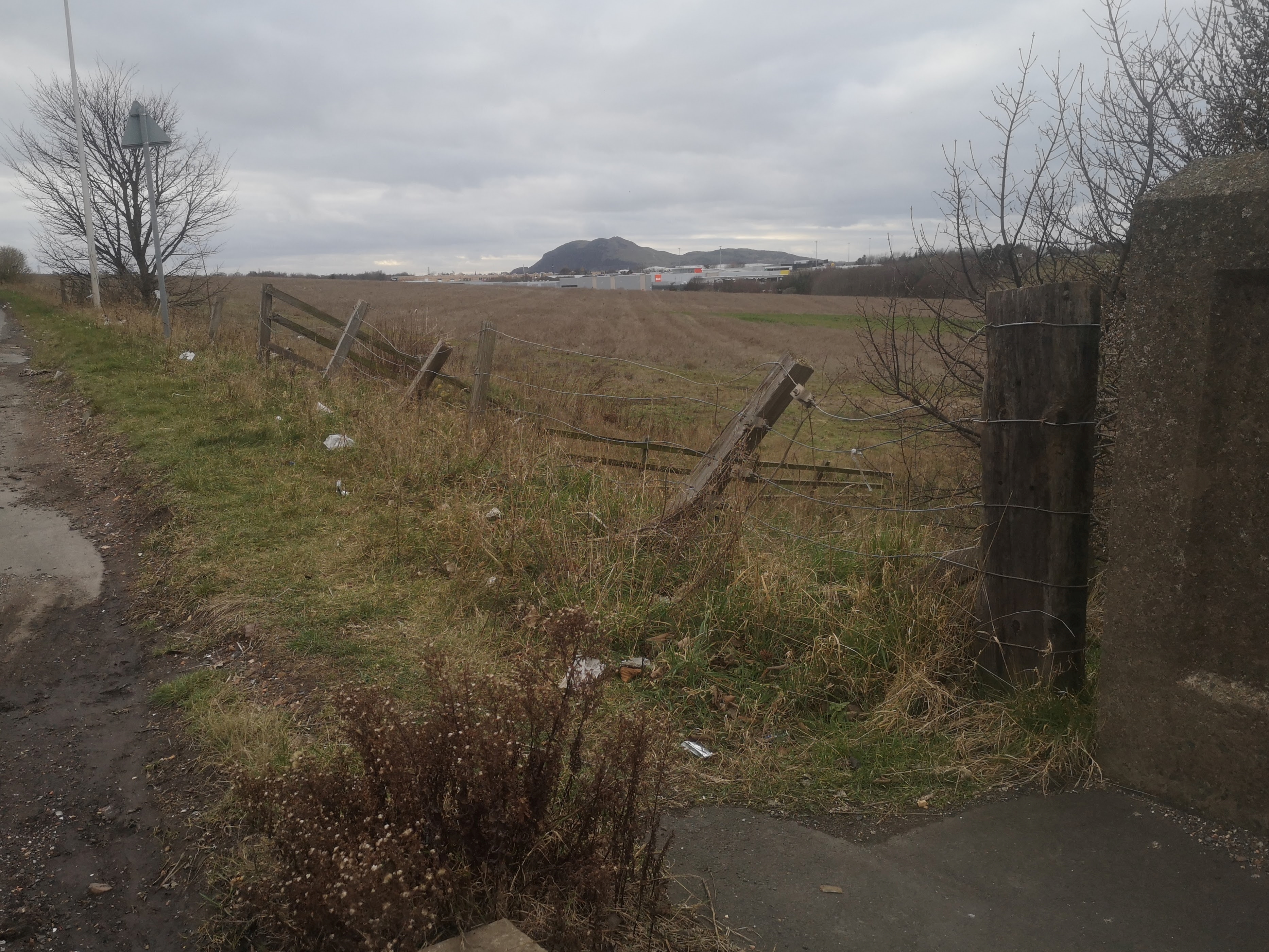
Fences at the edgeland, Arthur’s Seat and Salisbury Crags in the distance
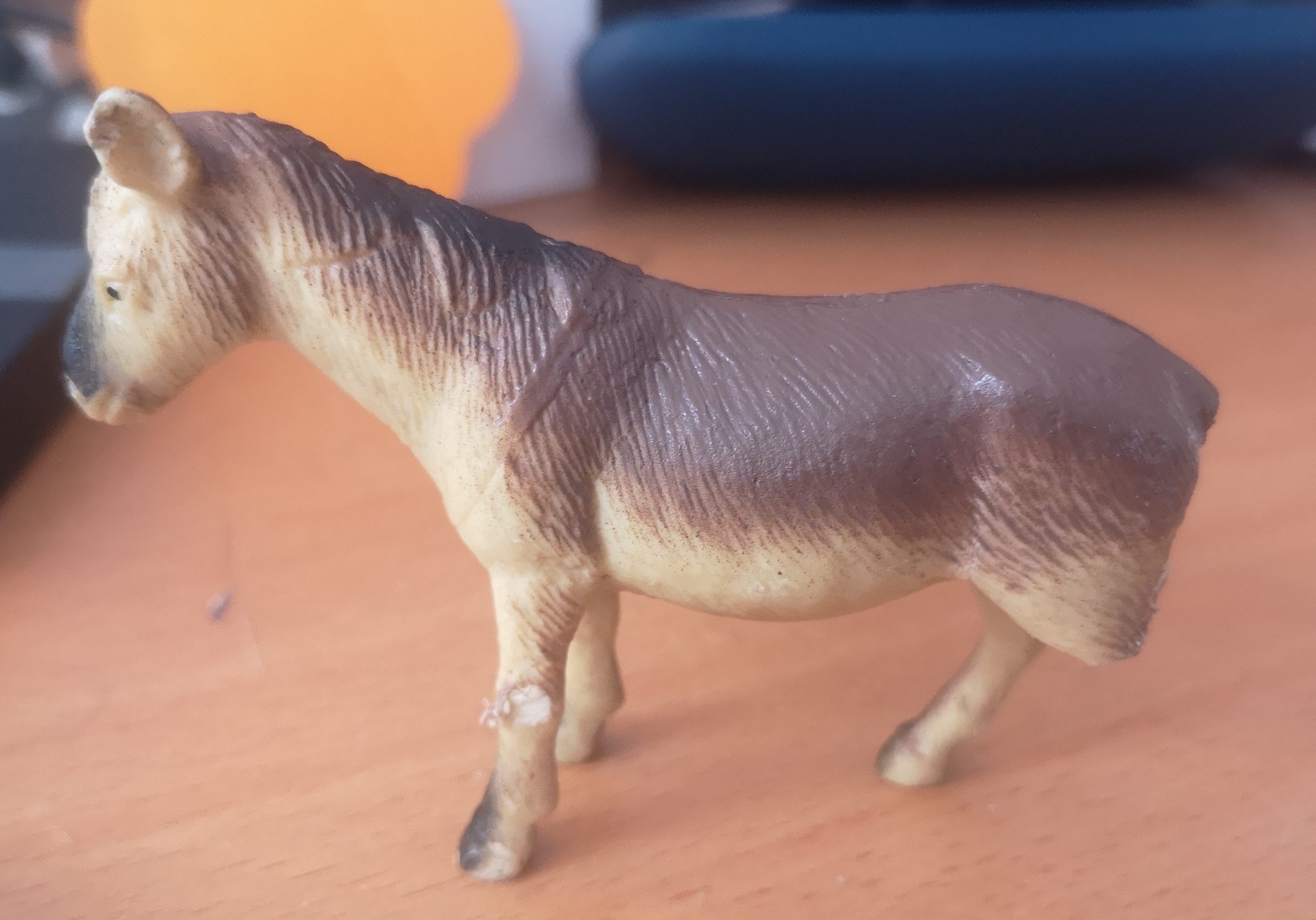
A found horse, a talisman

With Ewan Davidson (his blog is here) and me, Tamsin Grainger.

Abandoned Walk

This project was conceived by Kel Portman. We drew a straight, red line the length of the UK on a phone map between our homes (334 miles) and started to walk along it towards each other; Kel from his doorstep in Gloucestershire and I from mine in Edinburgh. We allowed one day and had to abandon before meeting in the middle.

5th April 2022

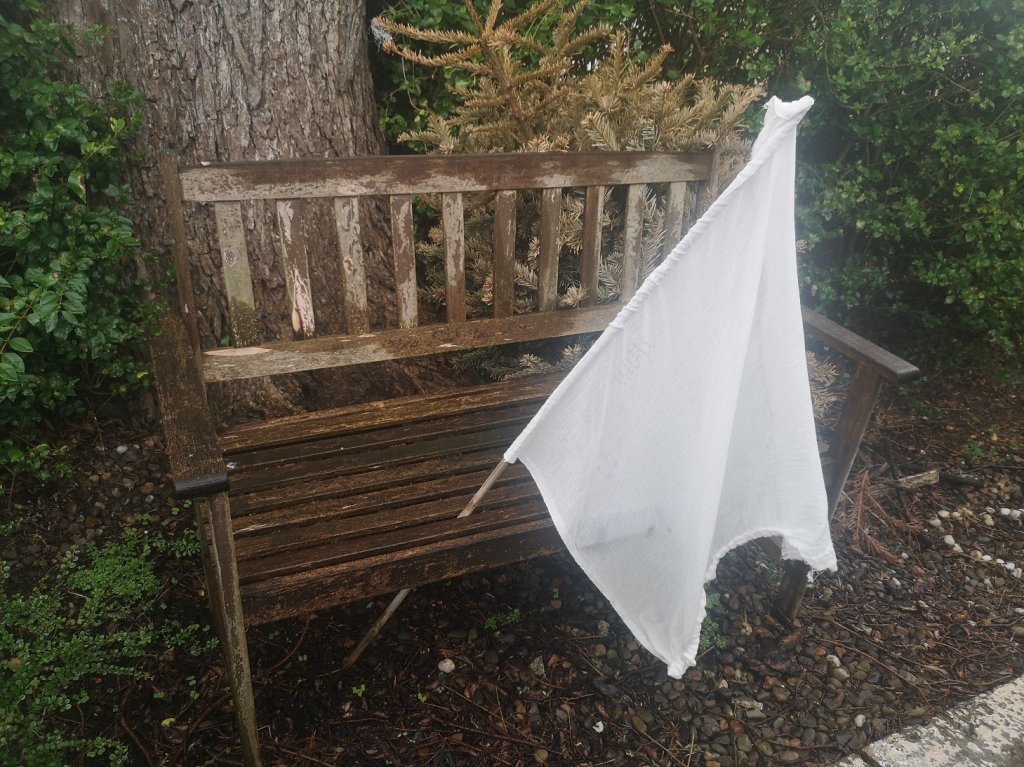
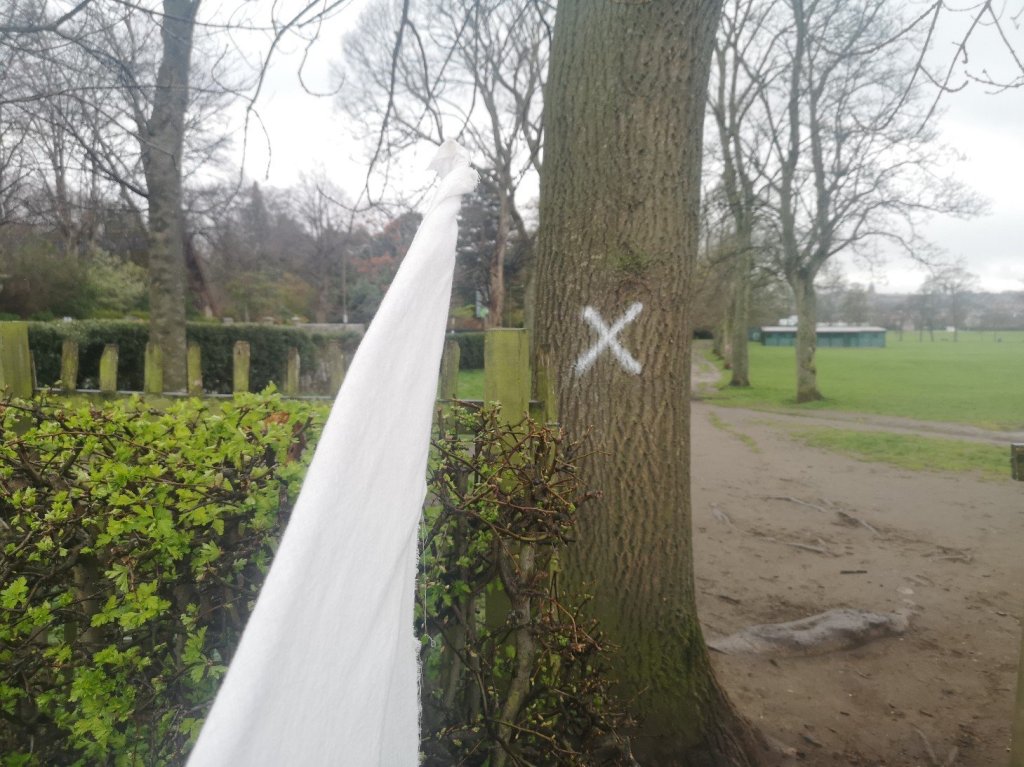
Home, the starting point. I took my white flag with me for Peace (the Ukranian war was moving into its third month)

Let’s begin with the weather! It was wet, not pouring though, and I was on familiar ground. Strange that one’s sense of distance changes if you set out for long walk – I seemed to be in Inverleith Park in a matter of minutes. Slow came the raindrops.

I passed a worm on the pavement and admired a Tree Creeper bird as he did just that.

I hope this strong and upstanding tree is not condemned. Inverleith Park, still on the north side of the city of Edinburgh

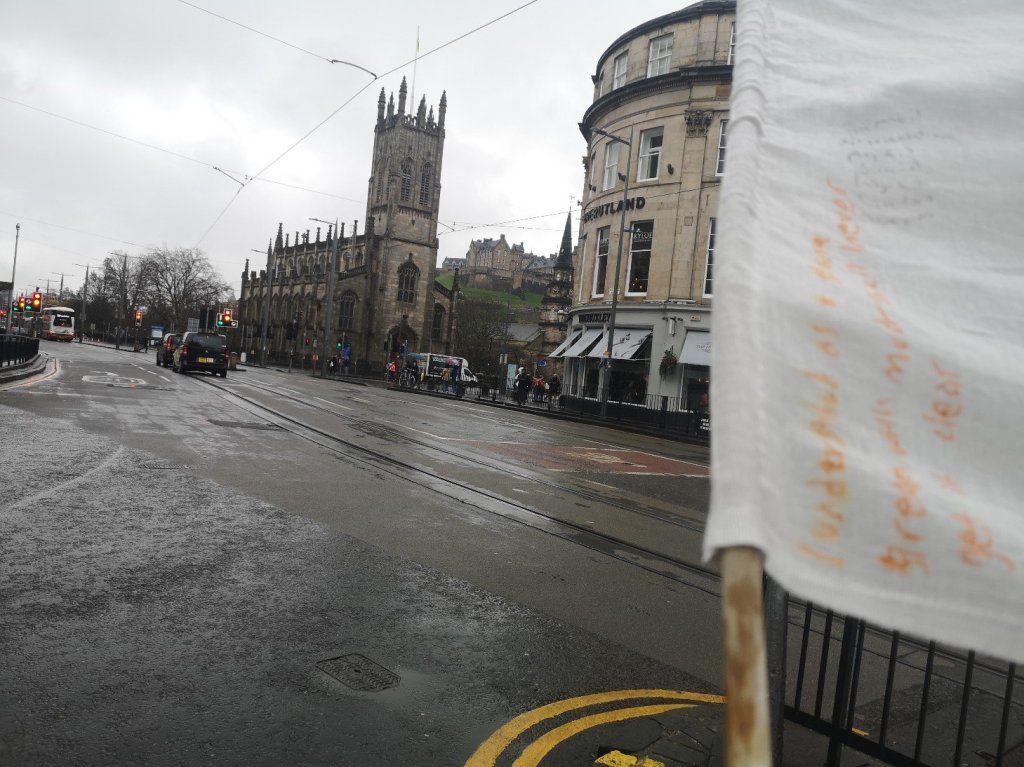
I have a book of poetry with me by Denise Riley, ‘Say Something’. Stopping after 2,108 steps in Stockbridge, overlooking the Water of Leith and one of Andy Galsworthy’s statues, I count 21 words from the first of the book and write the next ones on the tabula rasa of my flag: “I understood as a stone”.

I added to my flag at each of my stopping places and in this way I made a Found Poem for the walk.

I took the hint and put myself in to the rock that I was standing and leaning on. I felt stalwart.

Walking further uphill through the New Town, there are removal men stacking a truck. One says, “it looks like you’re surrendering”. I remember a conversation with a Polish taxi driver last week who said that the Ukraine should surrender, to save lives. That was during the fifth week of this pointless war that Putin is waging. Perhaps my flag is going to prompt some interesting and topical conversations with people I might otherwise never discuss politics.

I guess I am surrendering to the route to the idea of this walk, and to the wet.

The second sloppy, muddy stop on Princes Street with Edinburgh Castle in the background

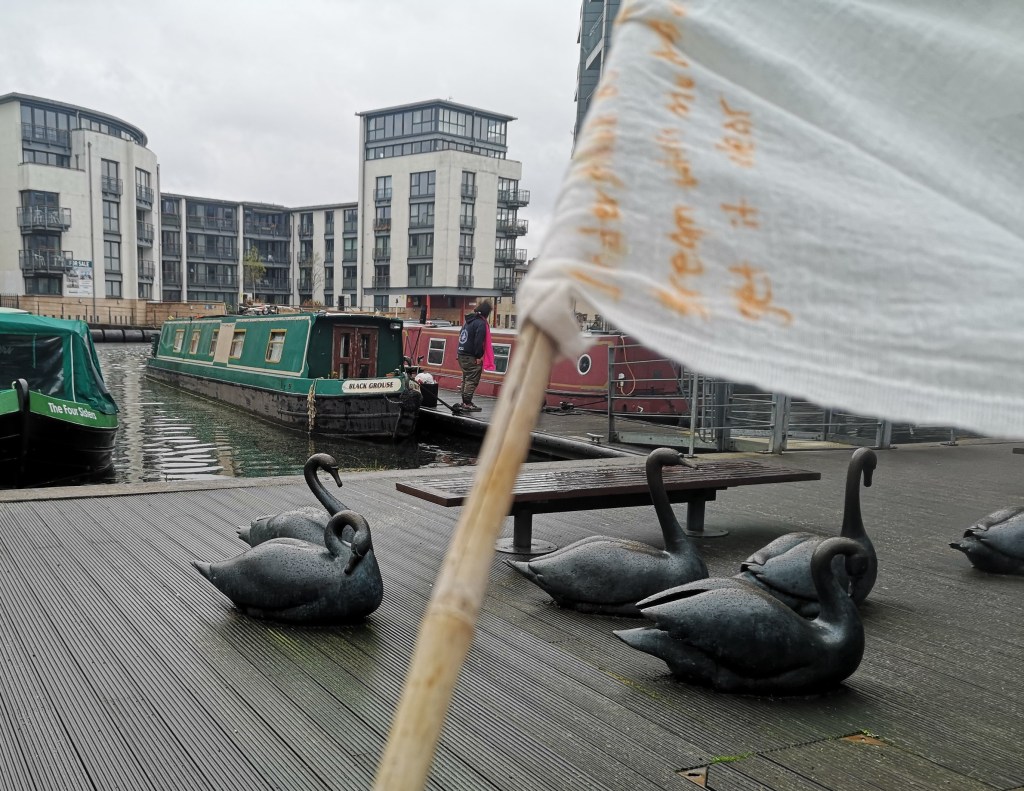
Phone call #2 with Kel is at 10.03am. I tell him that, of course, Edinburgh residents are used to people doing weird stuff on the street, because of the annual summer Festival with its buskers and theatricals. My new app said 2,891 steps so 28 words further on into Riley’s book I copy my second phrase in the orange pen: “stream with mud-shall I never get it clear”.

Lochrin Quay, Edinburgh

Moving from one watercourse to another, I am making my way steadily behind the west side of Lothian Road to Lochrin Quay, the beginning of the Union Canal. Here are swans and seagulls and the start of the water’s journey to Glasgow and the west.

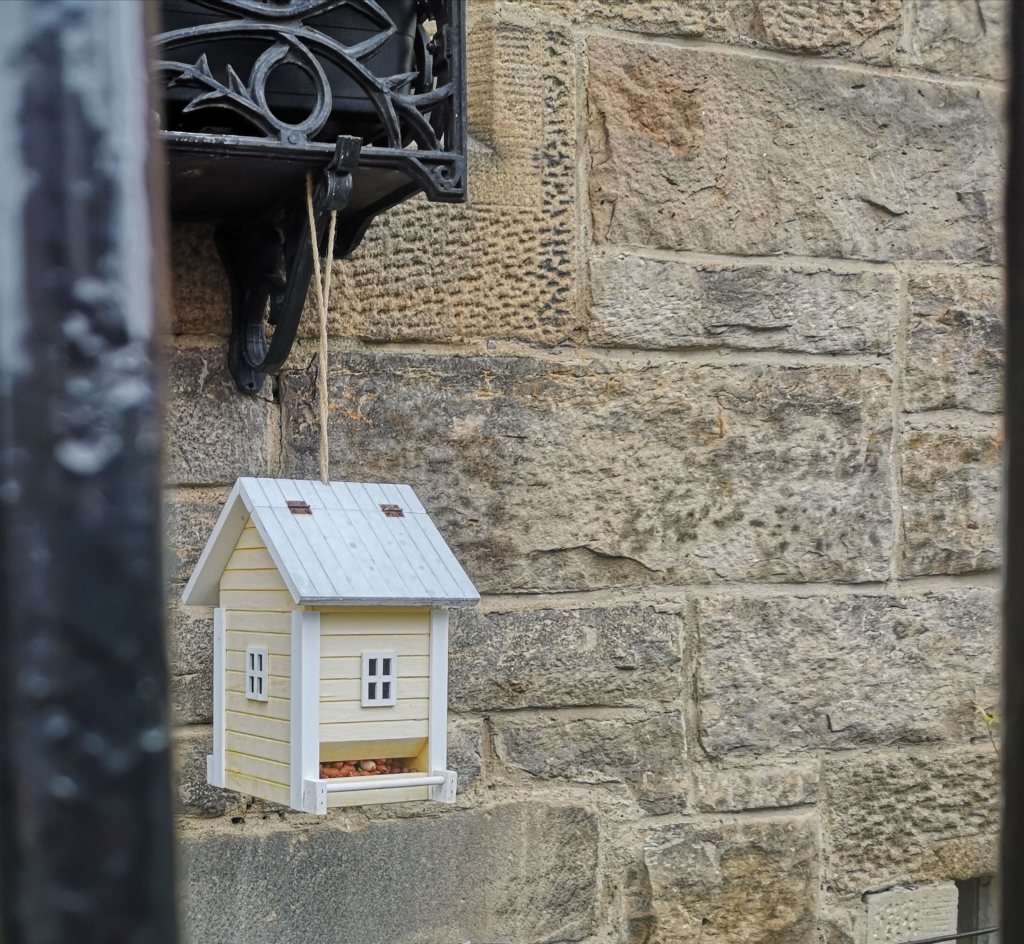
A wee white hoose hangin’

Still attempting to follow the red line as closely as possible, I am being taken a new way, winding through residential areas which are peaceful, all except for repeated deliveries – vans hopscotching up the street from door to door.

To surrender: to give in. Also – to allow your instinct or others you trust to lead you. To listen to what’s drawing you on, for signals to turn right or left. It is a blend of controlling and releasing control.

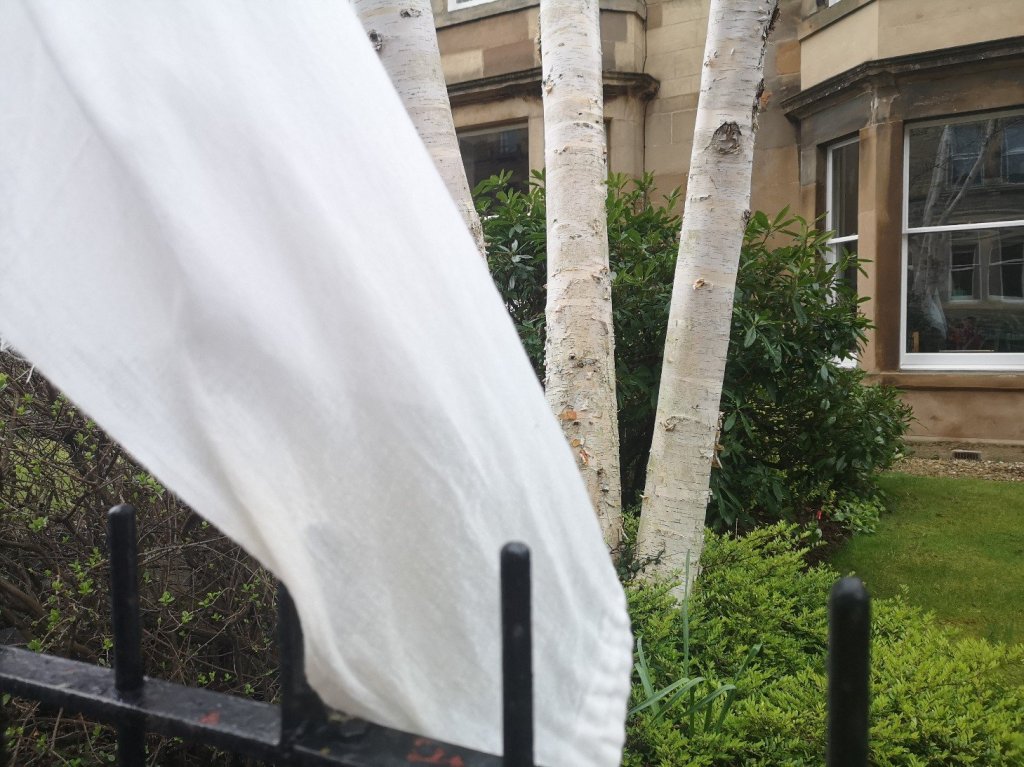
Himalayan (silver) birches in a front garden

Surrender – I’m getting interested in this ‘given’ theme: to say ‘yes’ to Kel’s prompt, follow the line which happens to connect us on the map and see what happens.

Now I’m entering ‘the South Side’ of the city. I nip into the Bike Shop for a wee. More climbing. More detours around gardens that only key holders are able to sit in. Where to have my picnic? I cannot find any seats – it’s a recognised issue in Edinburgh which I understand is to stop homeless folk sleeping on them. Instead, I pass piles of grubby bedding at pavement corners. It must be so cold.

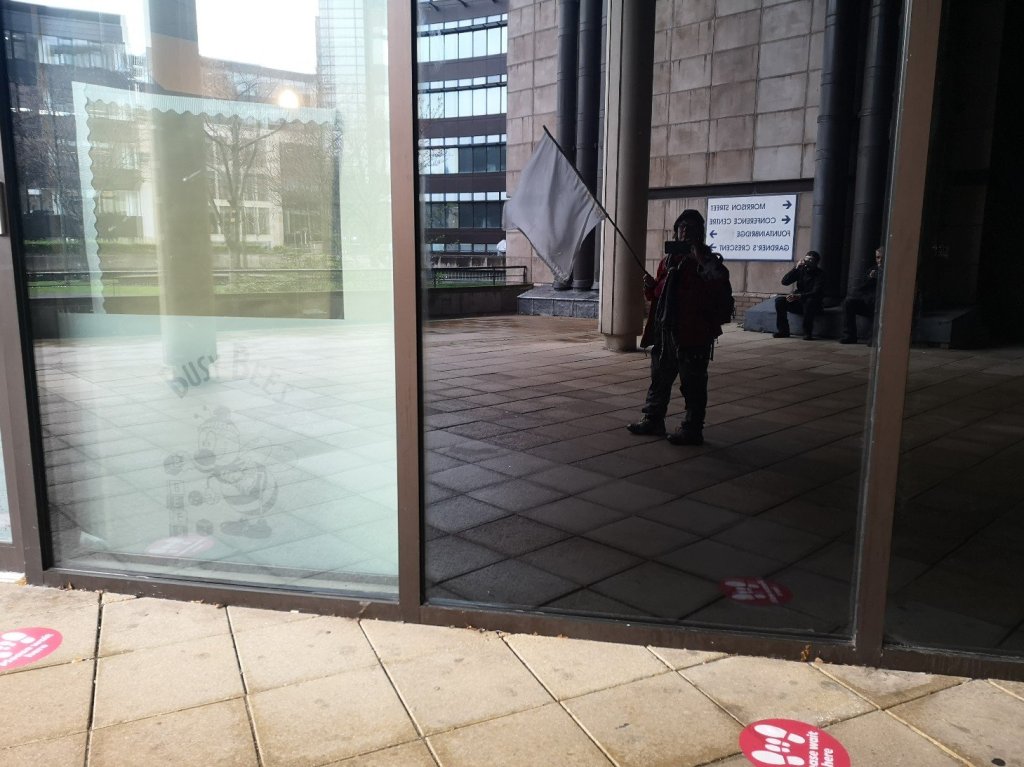
Self portrait with flag

I perch on a post and nibble my oatcakes.

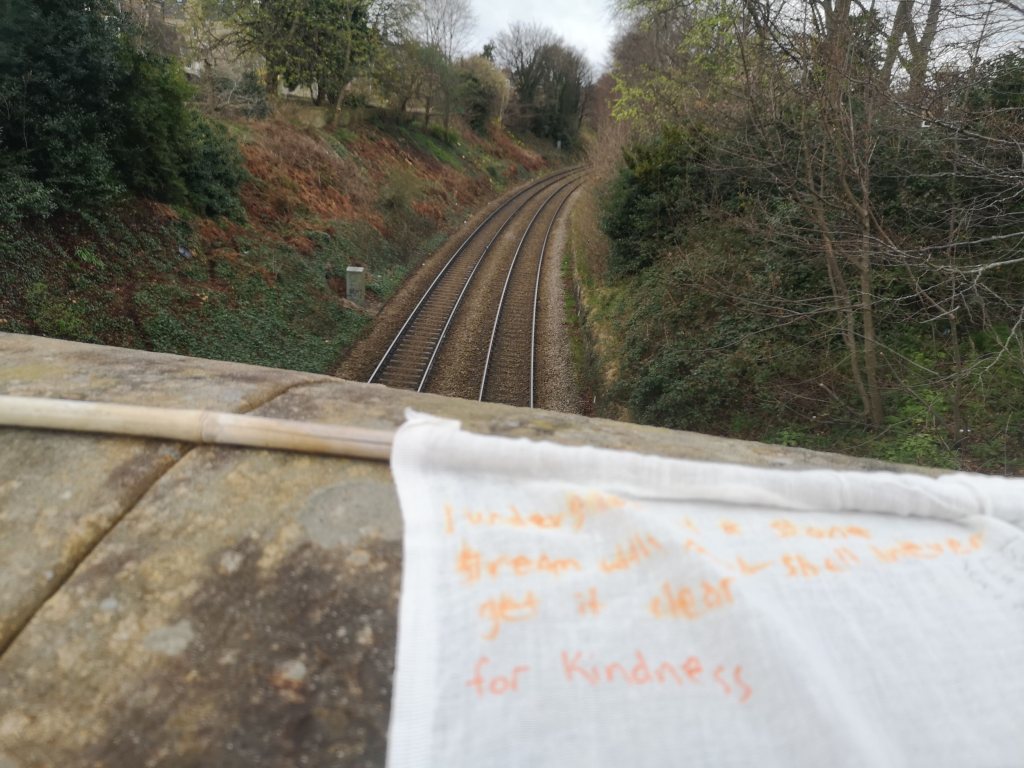
Number 3 stop is at 4,521 steps and I count 45 words by the railway line. I am noting the difference between my phone’s two step-counting apps (the other says 11,476 – oops).

Crossing the railway line, facing west

On completely unfamiliar territory now, I’m meeting no-one and there are plenty of dead ends. It is raining more heavily on me and I’m having to stop constantly to consult the maps, compare them and try to find a route through. The phone is getting wet so I’m balancing the umbrella over it with one hand and using the other to awkwardly hold and tap at the same time. Still climbing. Still in a residential area, though this time of bungalows and front gardens and driveways.

We drew a red line on the map, but had to abandon part way through the

I take a wrong turning around the Midmar Drive area where there are some trees, but mostly pavement, offering time for me to continue thinking about surrendering to the ground, letting it support my increasingly tired feet.

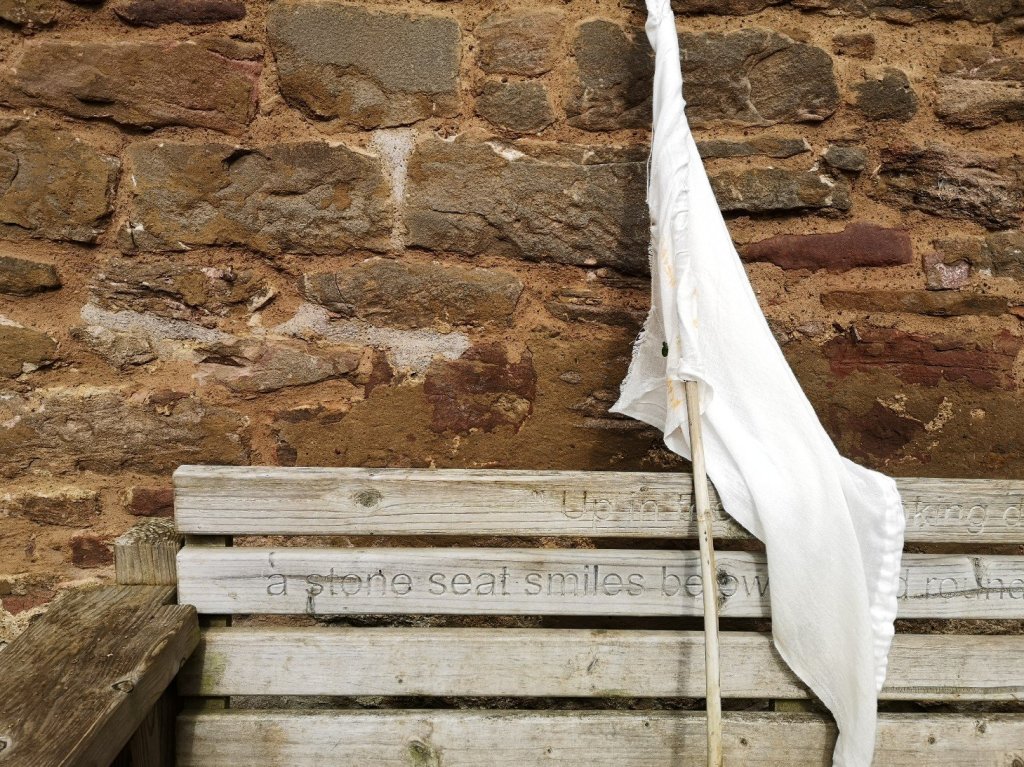
Found text in front of the Doocot at the Hermitage of Braid: “a stone seat smiles”

Eventually I am at the Hermitage of Braid and the Braid Burn, a small river running through woods. I love the smell of garlic, the crunch of pine cones underfoot and warmth of a little sun on my back. The café offers a seat, tea and a scone and I am reviving. Not far along is an abandoned dovecot / doocot, a community garden and some random-cut primroses lying on the path.

A man with a military moustache is with his wife, walking, and he makes comment on my flag. I explain. He guffaws that those who want peace must prepare for war and I repeat that I favour peace and surrender. He counters with “that’s a naughty word – surrender”. I give up.

Back and forward to find the way, I happily discover public toilets. Some nice Council men are clueless about the geography of the area, wish me “good luck”. It is a steep climb up and out, always travelling south towards my distant walking companion.

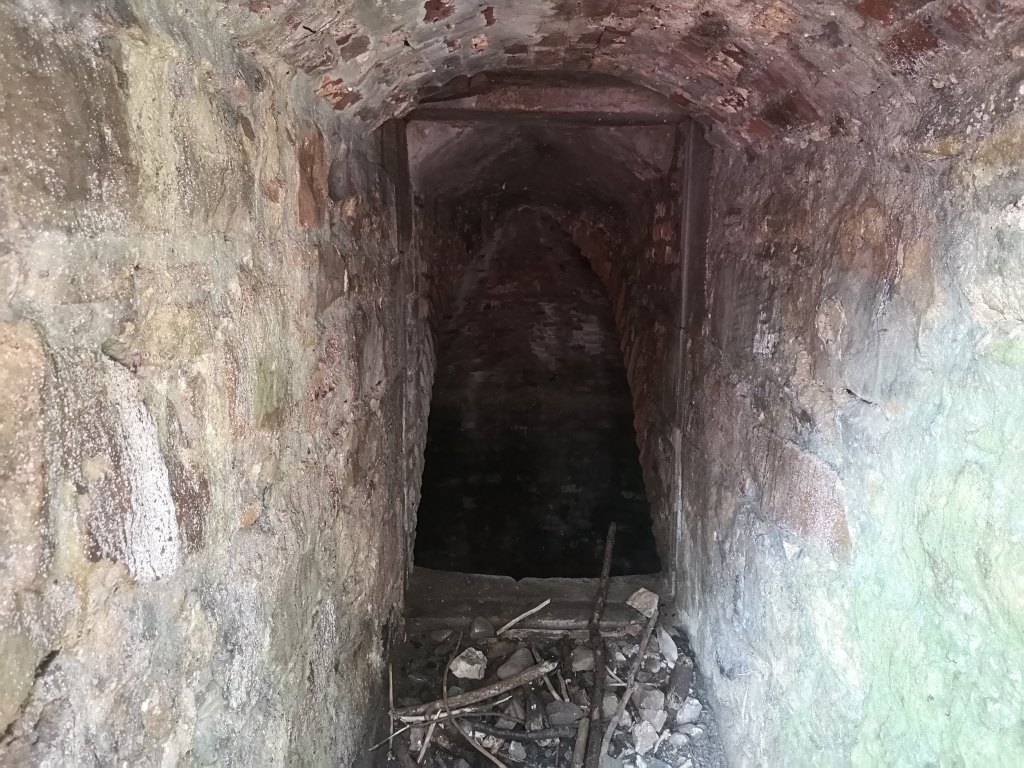
The Ice House, Hermitage of Braid

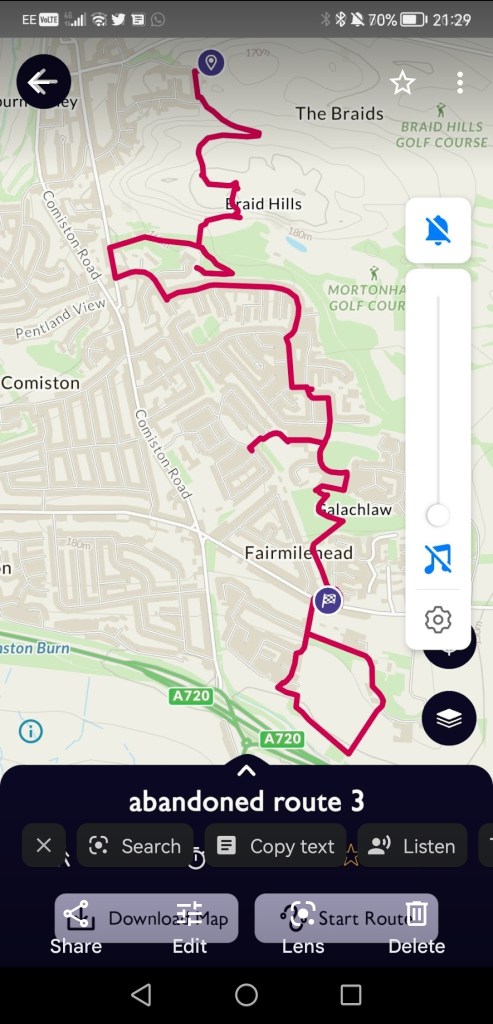
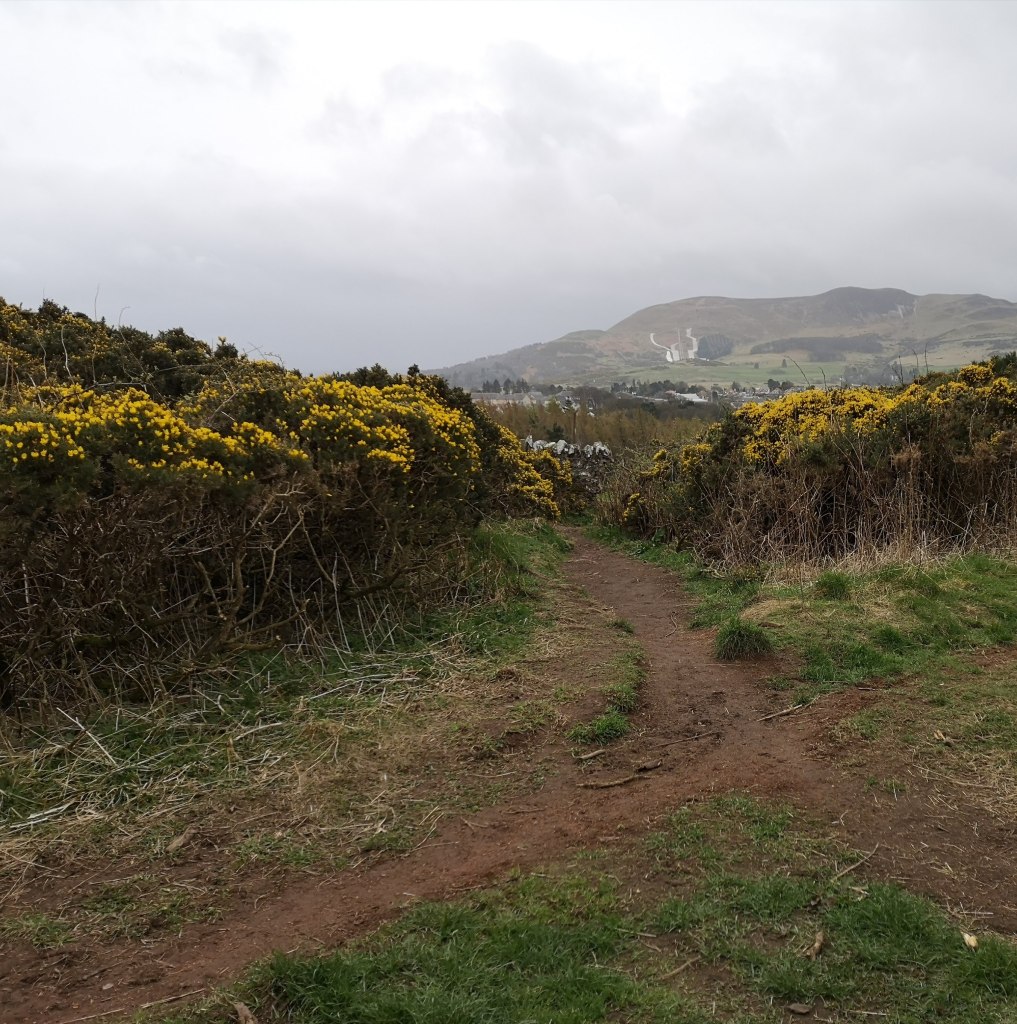
Turning back at a fallen tree because there’s a fence around the building, I cross a main road and must alternate crawling under brambles and pushing through yellow flowering gorse, then must retrace and try again further along. I’m flipping between the ordnance survey app, Google and my saved maps.

It’s windy up here. “Wha’s the white flag fer?” Asks another Council employee with a van and tools. “Are yer givin up?” “Peace?” He turns to his friend and says: “You need one a them Jimmy!” and Jimmy scowls.

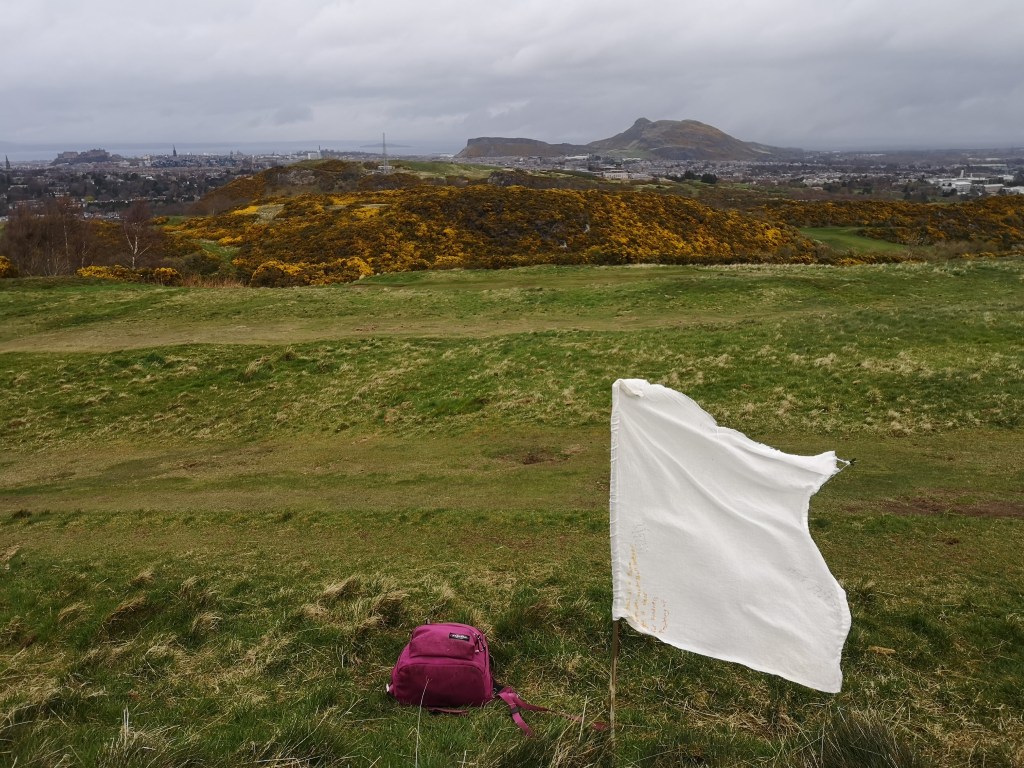
It’s 7,487 steps up on golf courses with a great view across the city towards home and Inchkeith Island, far away now. A headache threatens so I sit on the red line (metaphorically speaking) for a cup of tea from my flask and a snack. Tiredness. Riley’s words are “Perking up”.  

1.40pm and I’m feeling connected to Kel as we walk towards each other – like an internal compass adjusted south west, a magnet in my chest.

From the Braids, Edinburgh, looking towards England. The familiar coconut scent of the yellow gorse

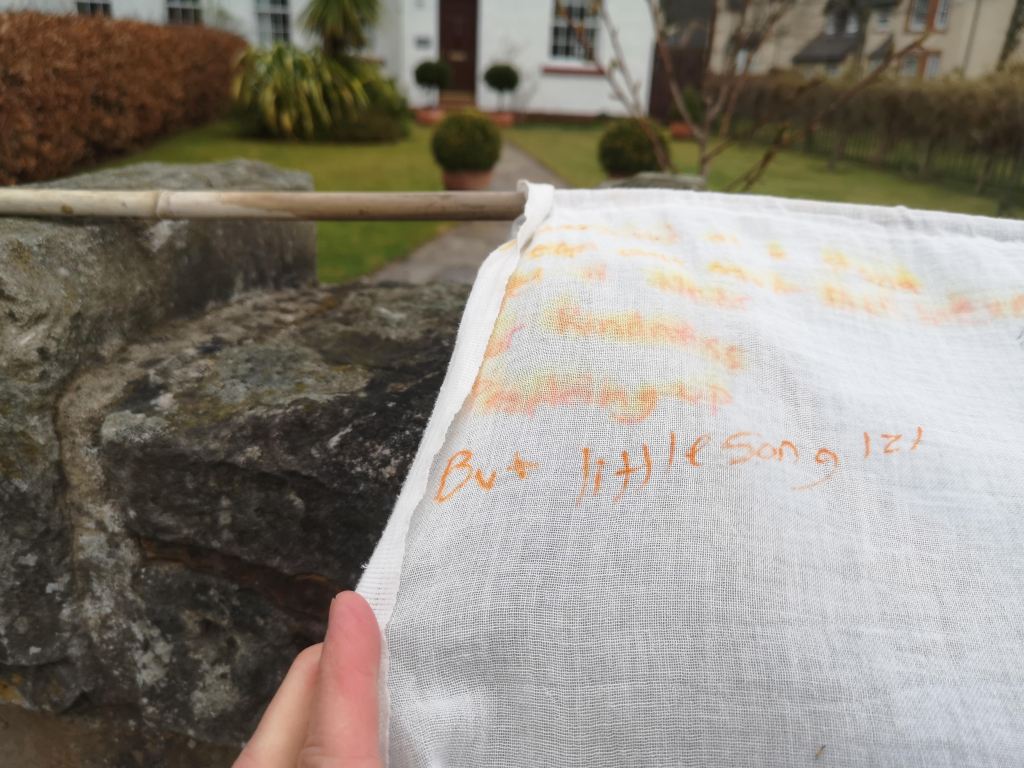
I must retrace my footsteps to Calachlaw and then it’s stop number 5 at 12,101 steps and I add to my flag: “But little songs”. Kel phones to say that he is abandoning his walk for the day. Frogston Road West. There’s an unidentifiable smell of chocolate and a new, blonde fence – harbinger of…?

“But little songs”
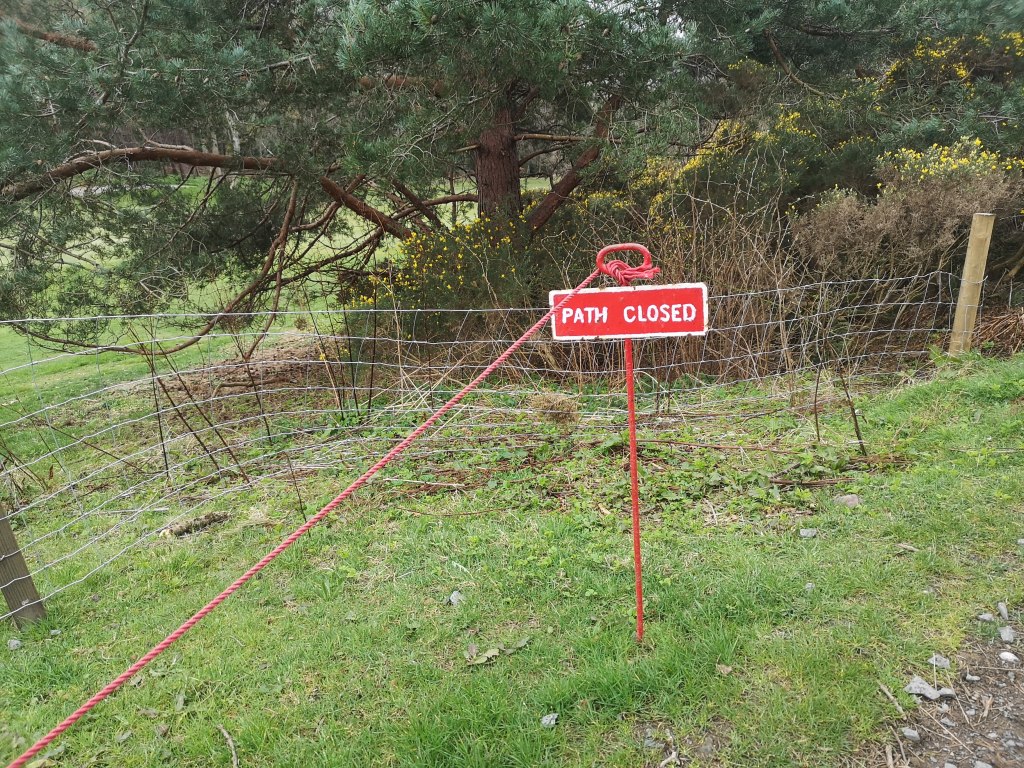
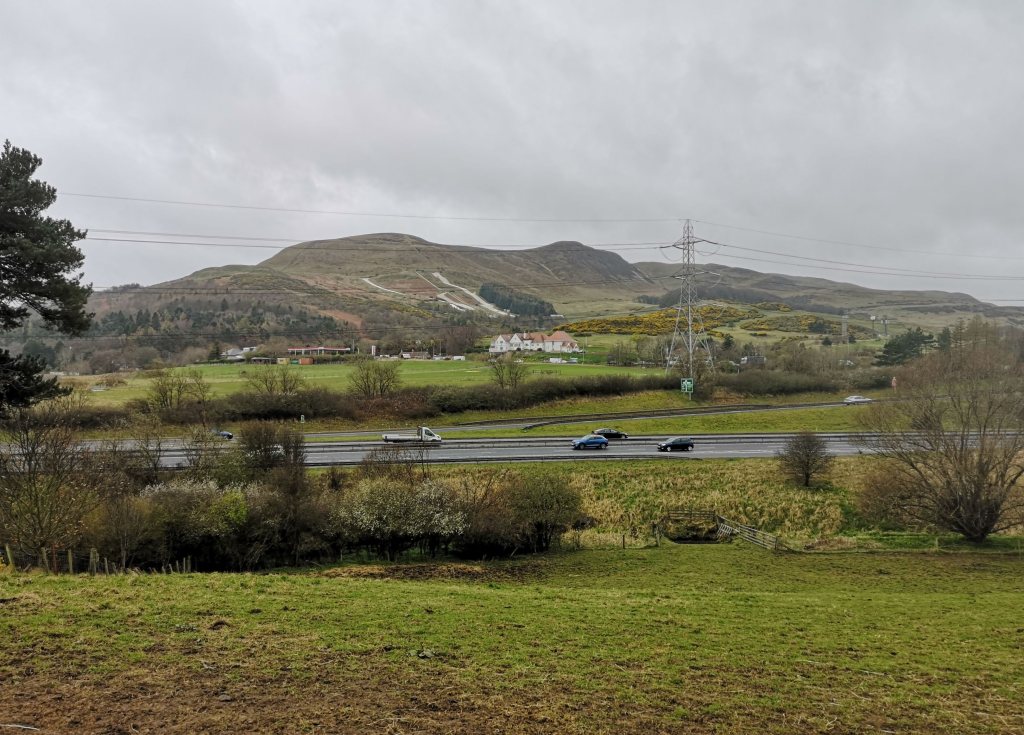
And then I couldn’t go any further. I reached the Edinburgh by-pass and there was no way across
There are the white strips of the Pentland Hills dry ski slope across the by-pass
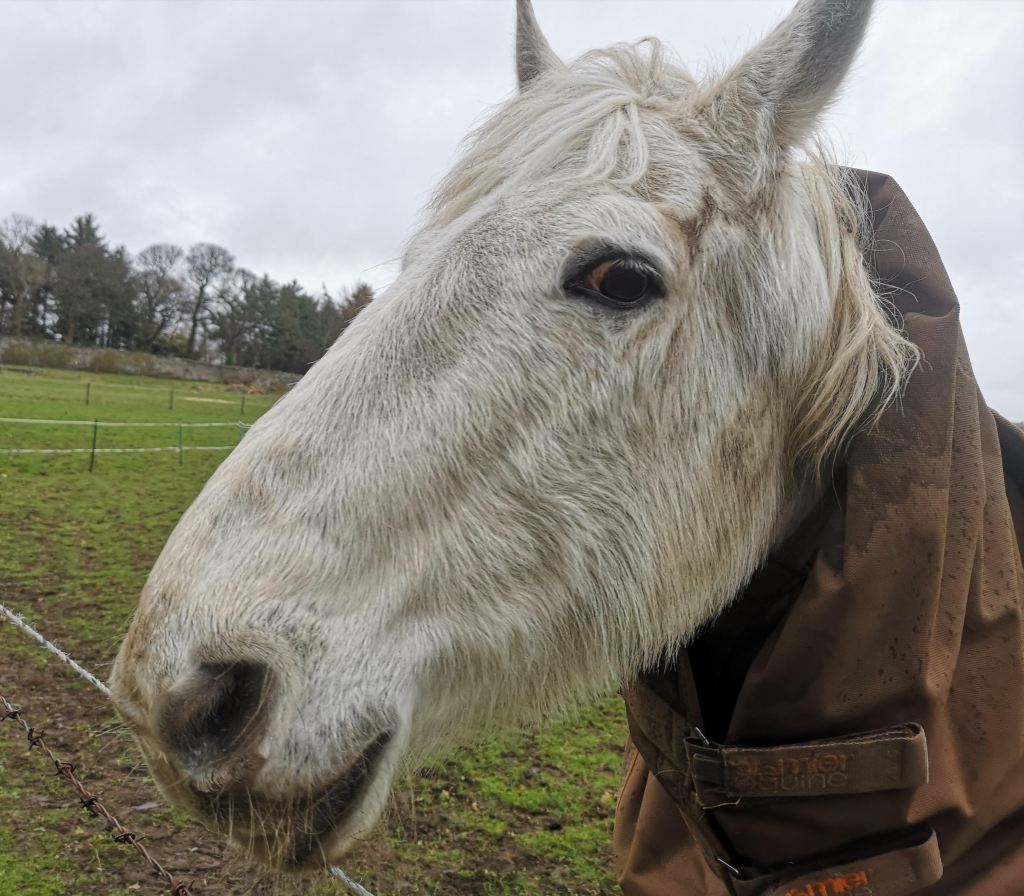
I meet a white horse
Inhale the sweet Hawthorn

And then I must walk an extra big loop back, at 5pm. Circumstances demand that I surrender. I must abandon my walk because of the man-made, traffic-laden road that has no pedestrian crossing. It’s 5 mins until the #11 bus is due to drive me back.

My found poem

I understood as a stone….stream with mud-shall I never get it clear ….. for kindness…. perking up…. But little songs…. we hope to find ourselves

Denise Riley from Maybe; maybe not and A Part Song @uealdc Denise Riley

From Denise Riley’s book: “for kindness”.

Stats

1st stage 8.86kms. 2nd 2.76kms. 3rd 17.09kms equals 28.71kms equals 17.84 miles. 6 and three quarters of an hour. 14025 pedometer, 28439 Huawei health app.

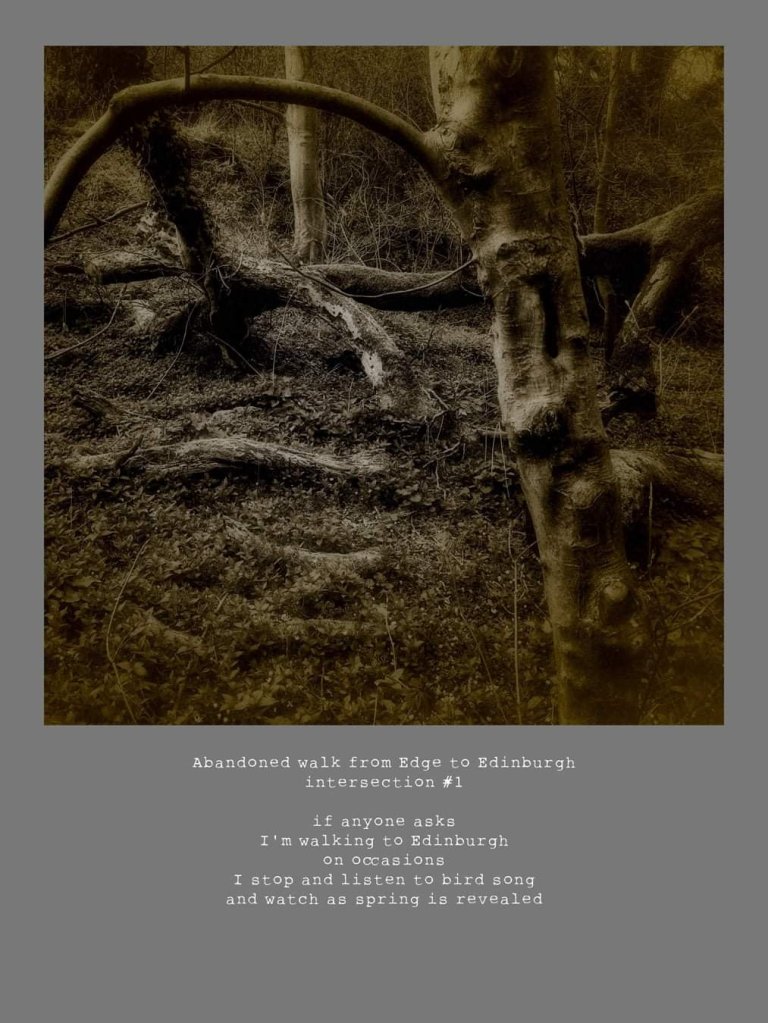
Image and words by Kel Portman I
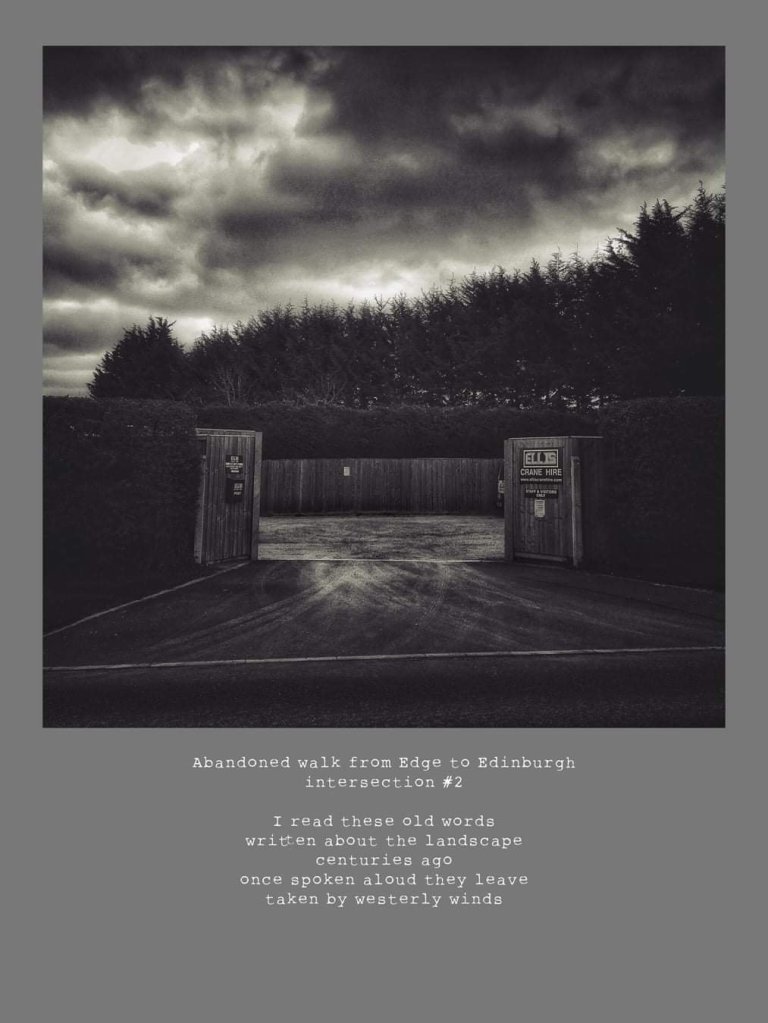
Image and words by Kel Portman II

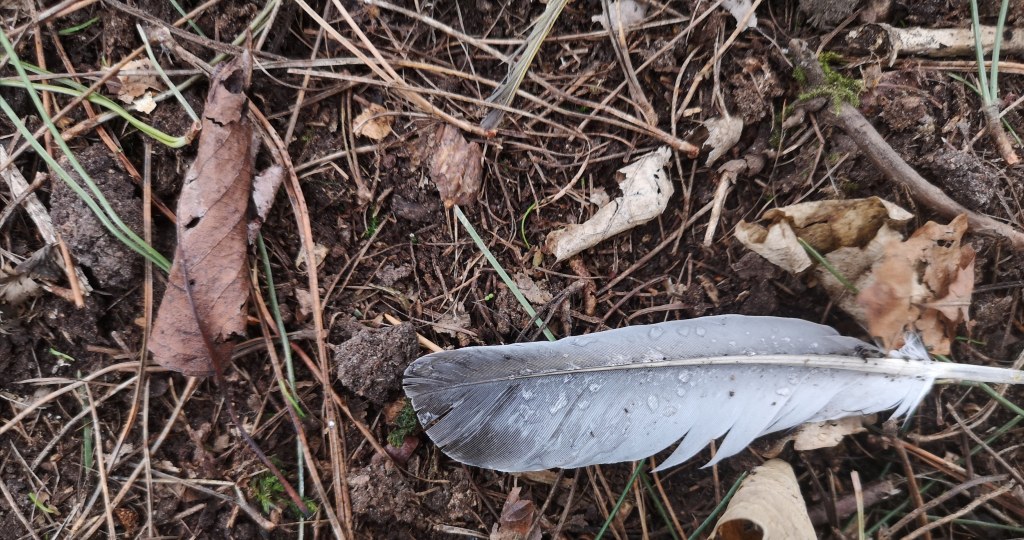
Today a feather