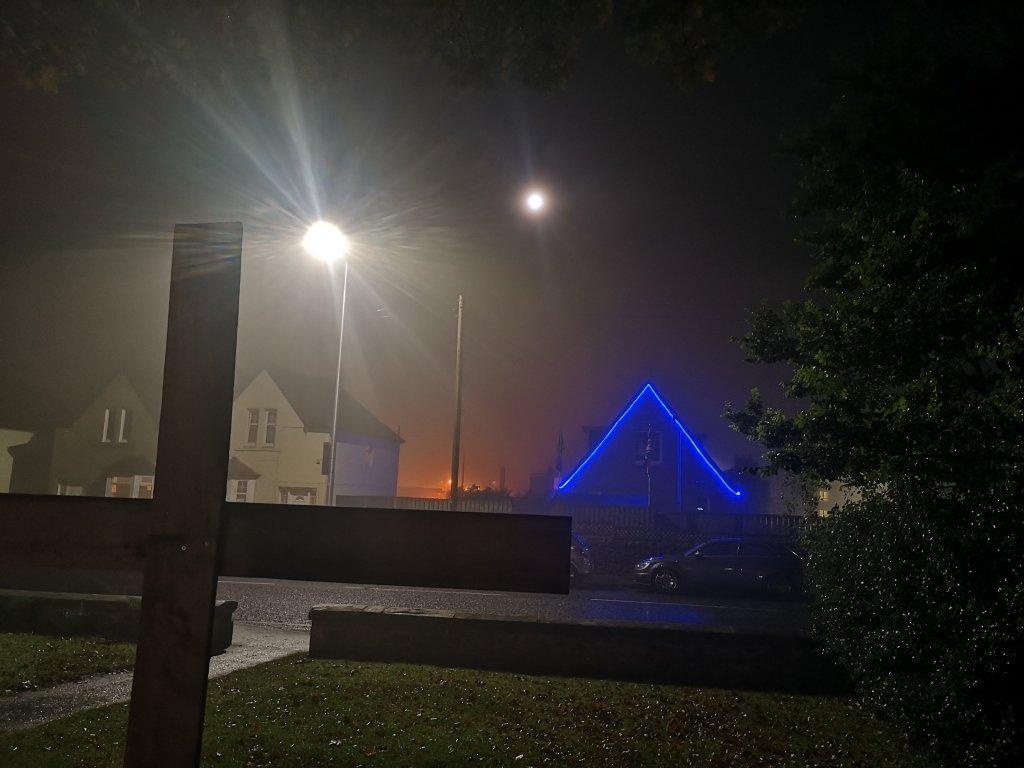
Pilgrimage for COP26

Blog 7: Portobello. 21 October 2021

Beach of Dreams

The public highlight of our Portobello stay was the Saturday morning Beach of Dreams installation by Kinetika, led by artist, Ali Pretty.
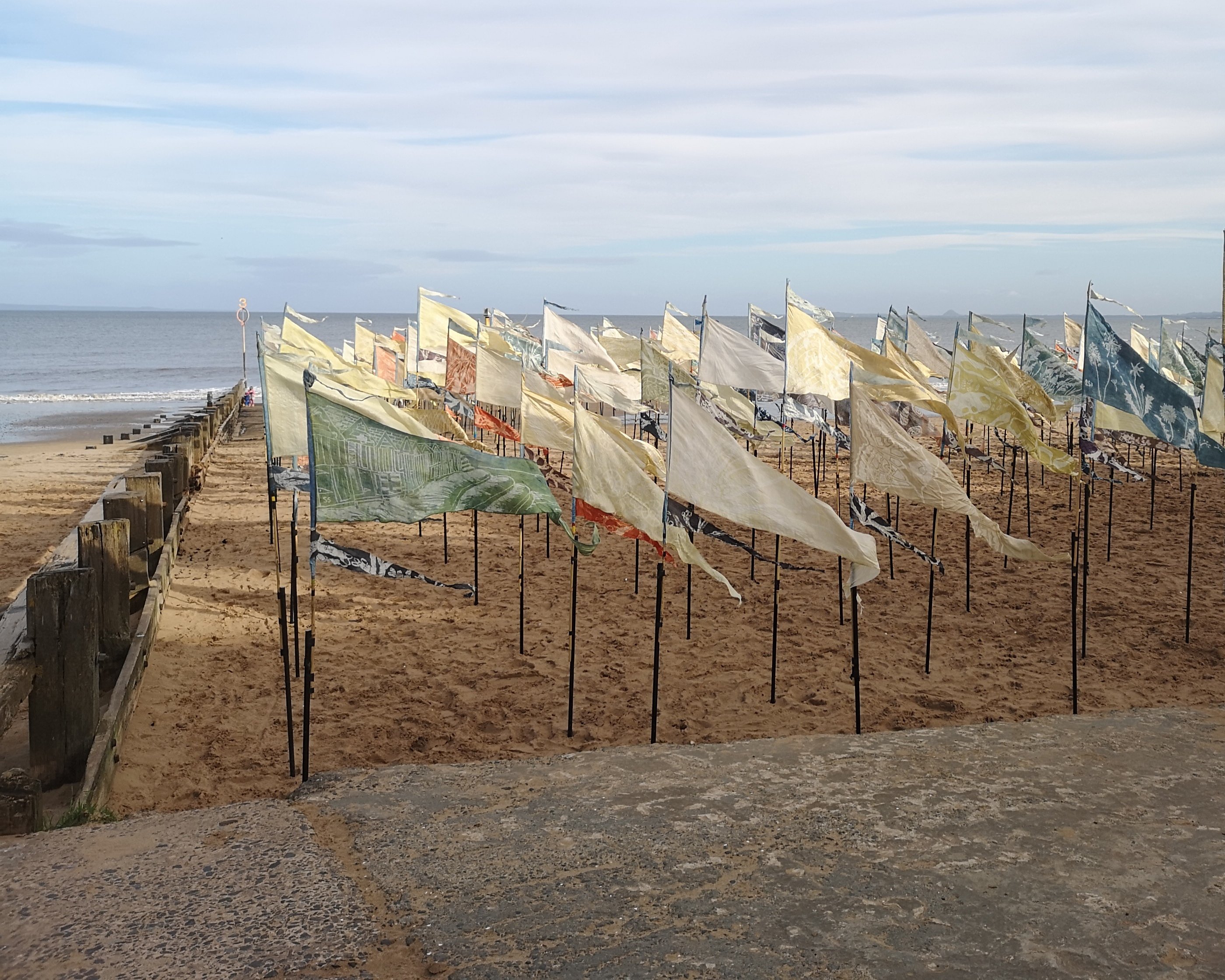
Beach of Dreams, Ali Pretty and Kinetika, Portobello, Edinburgh

This art installation is made up of 500 silk flags flying from poles which were planted on the beach, each representing a mile of the Essex coastline. A new pennant was created for each of these miles by Kinetika artists in response to photos or other images which were produced by people living in this edge-country, people who are witnessing the disintegration of the ground on which their houses are situated.
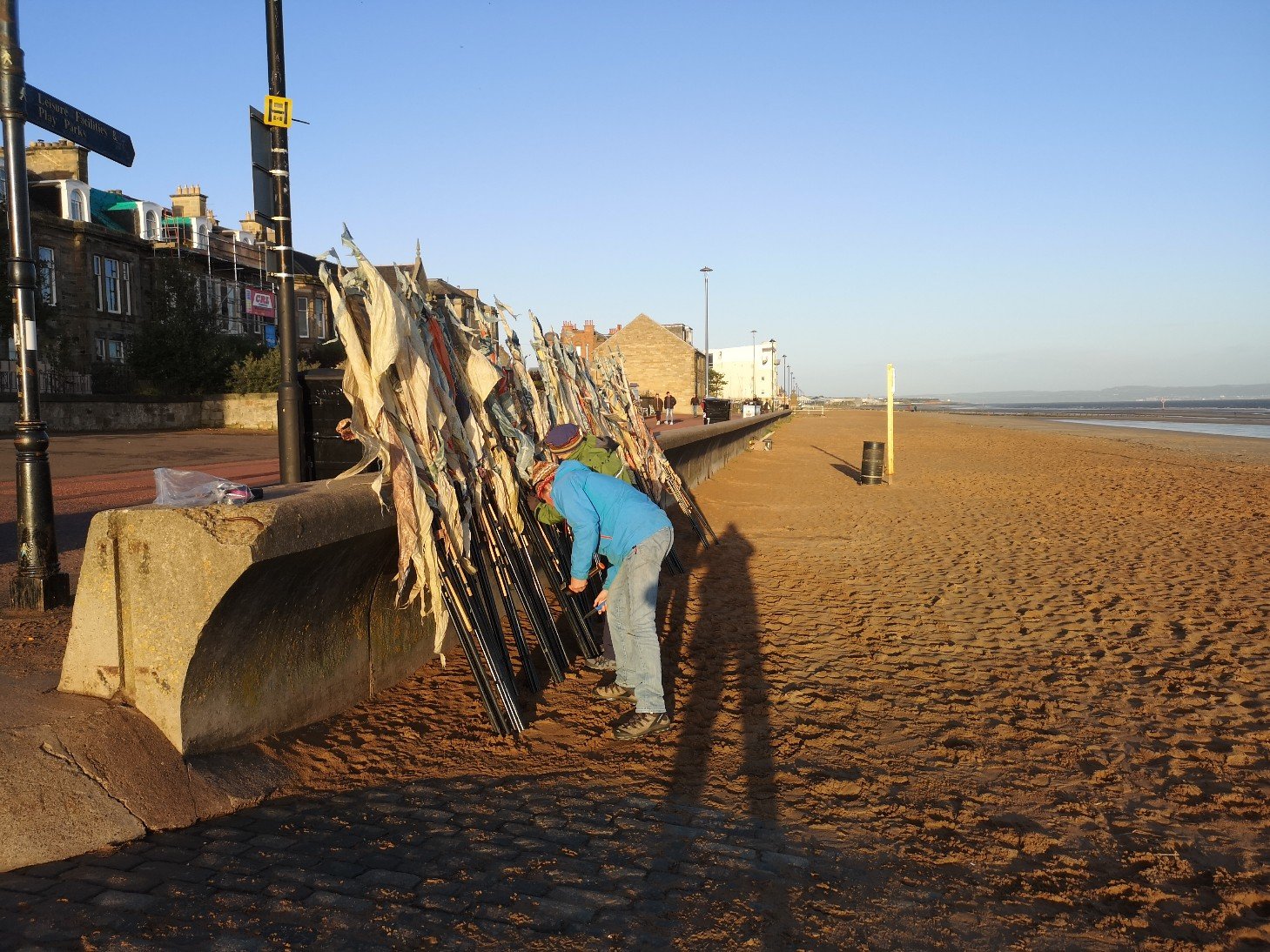
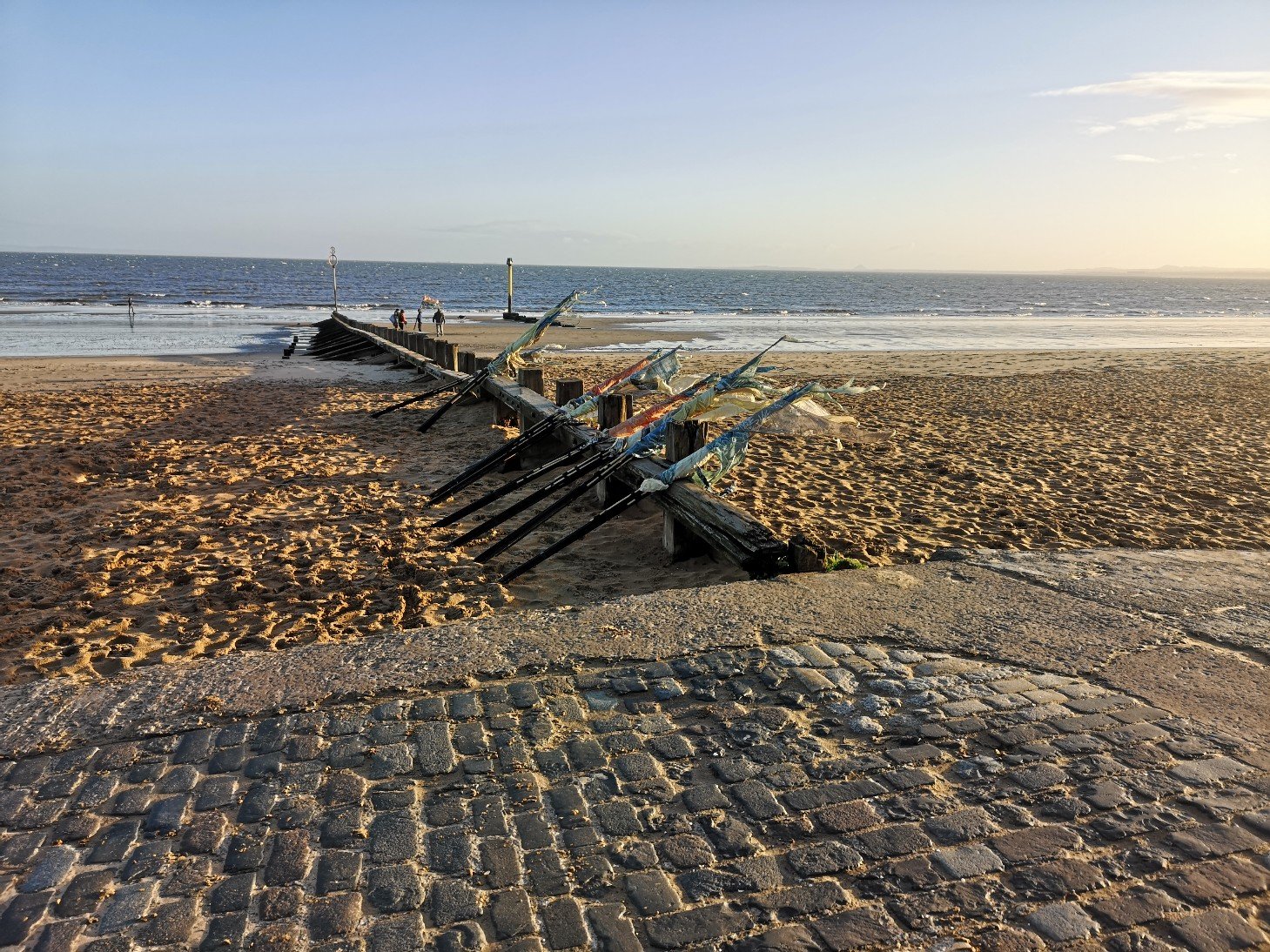
Setting up Beach of Dreams, Portobello, Edinburgh
Preparing for the installation of Beach of Dreams, Portobello, Edinburgh

Beach of Dreams was an epic journey to walk 500 miles over 35 days (June to August 2021) along the east coast of England. The purpose – to explore how we can take care of the environment, take care of the coast, take care of the community and ourselves.

from the website

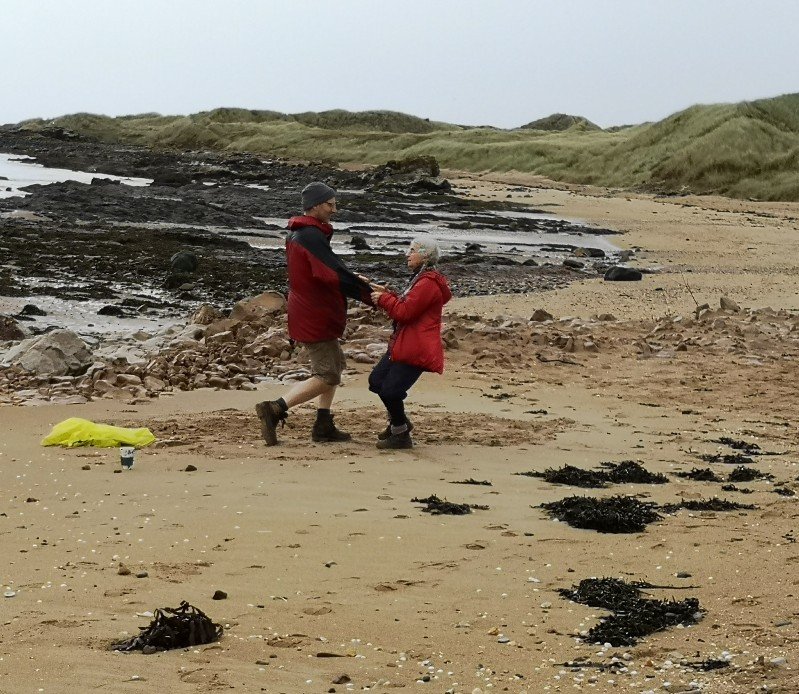
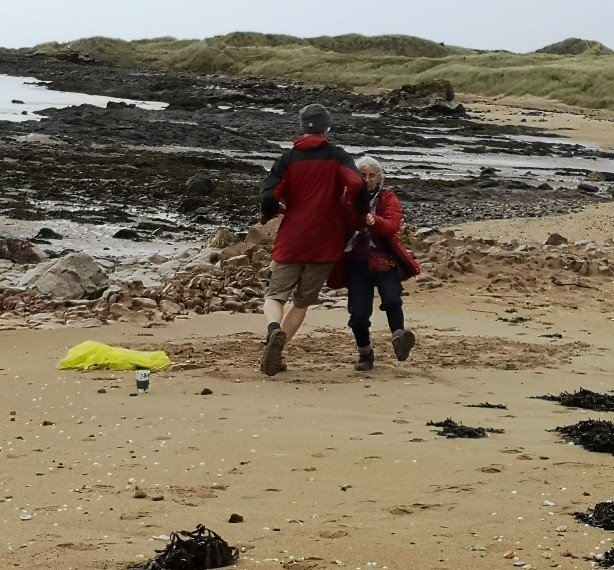
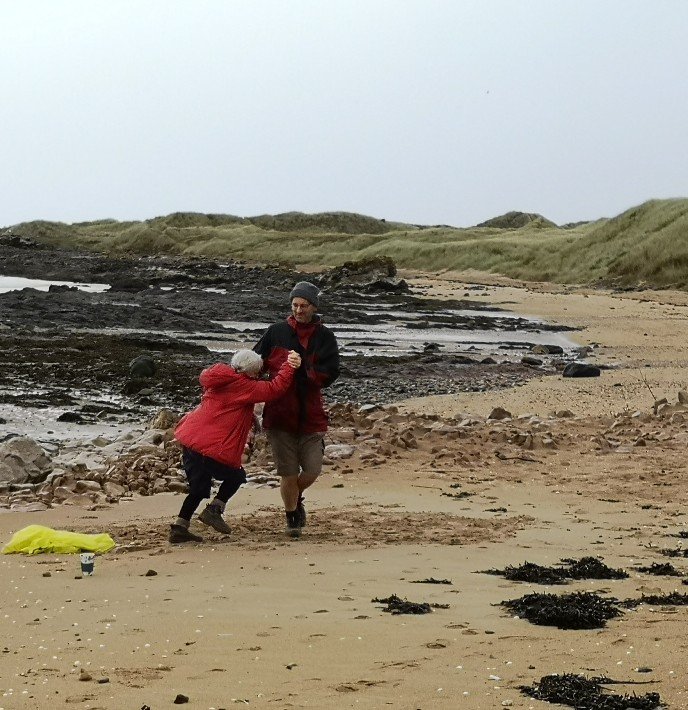
The flags were initially positioned in lines parallel to the Portobello breakwater, but as the sea came in, volunteers hurriedly moved them, re-sinking them in the sand higher up the beach and creating a tide of people and artworks rushing away from the approaching waters.
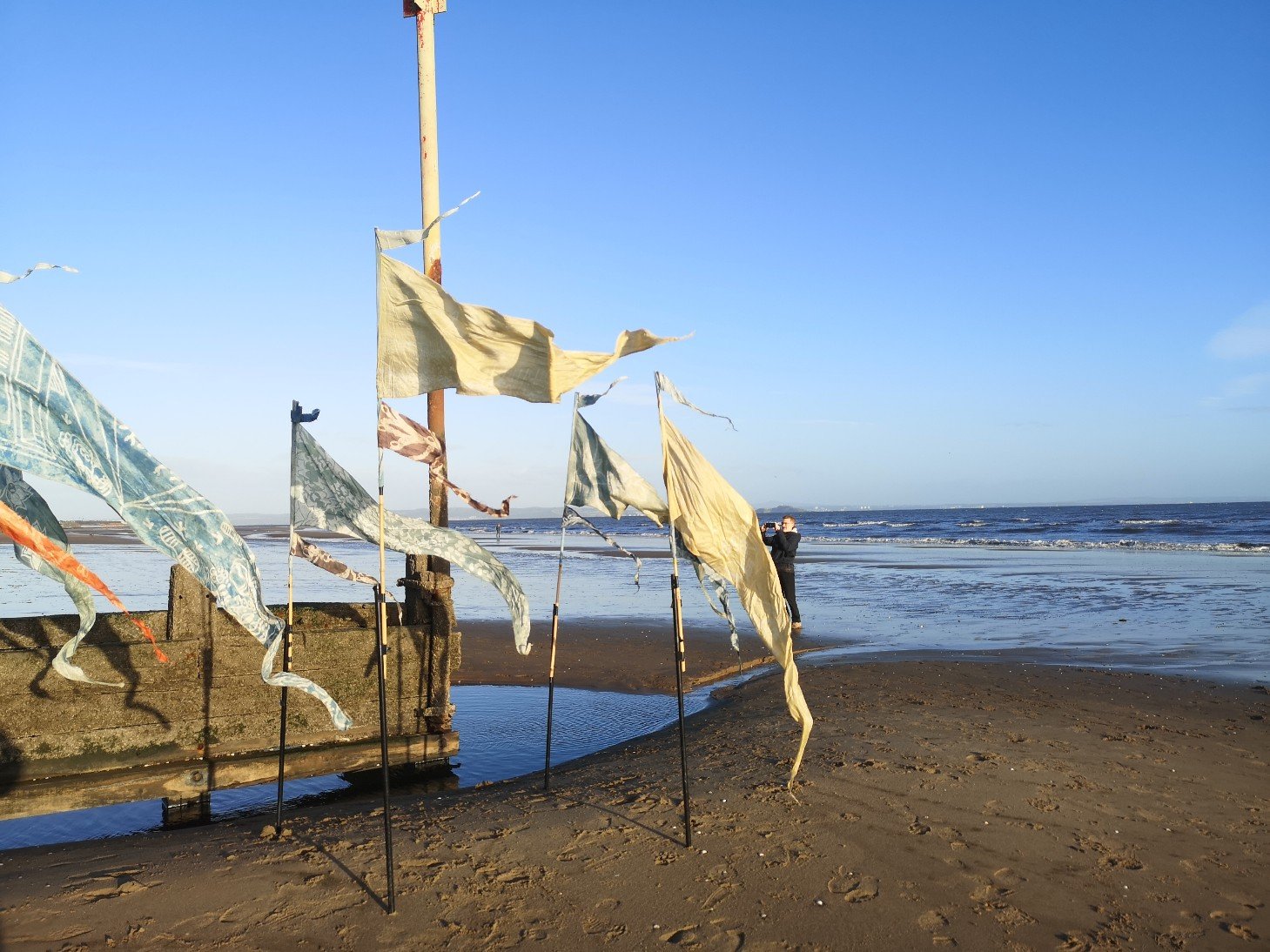
In danger from the incoming tide, Portobello, Edinburgh

These flags represent the dreams of the people of Eastern England for the future. Like urgent messages to us here on the east coast of Scotland, they tell of the vulnerability of our coastlines as sea levels rise. Moving, literally and emotionally, they are fragile, though steady, ephemeral but made of real stuff. They flutter and flap in the wind, prompting questions, ‘What’s blowing away? What are we losing?’ 
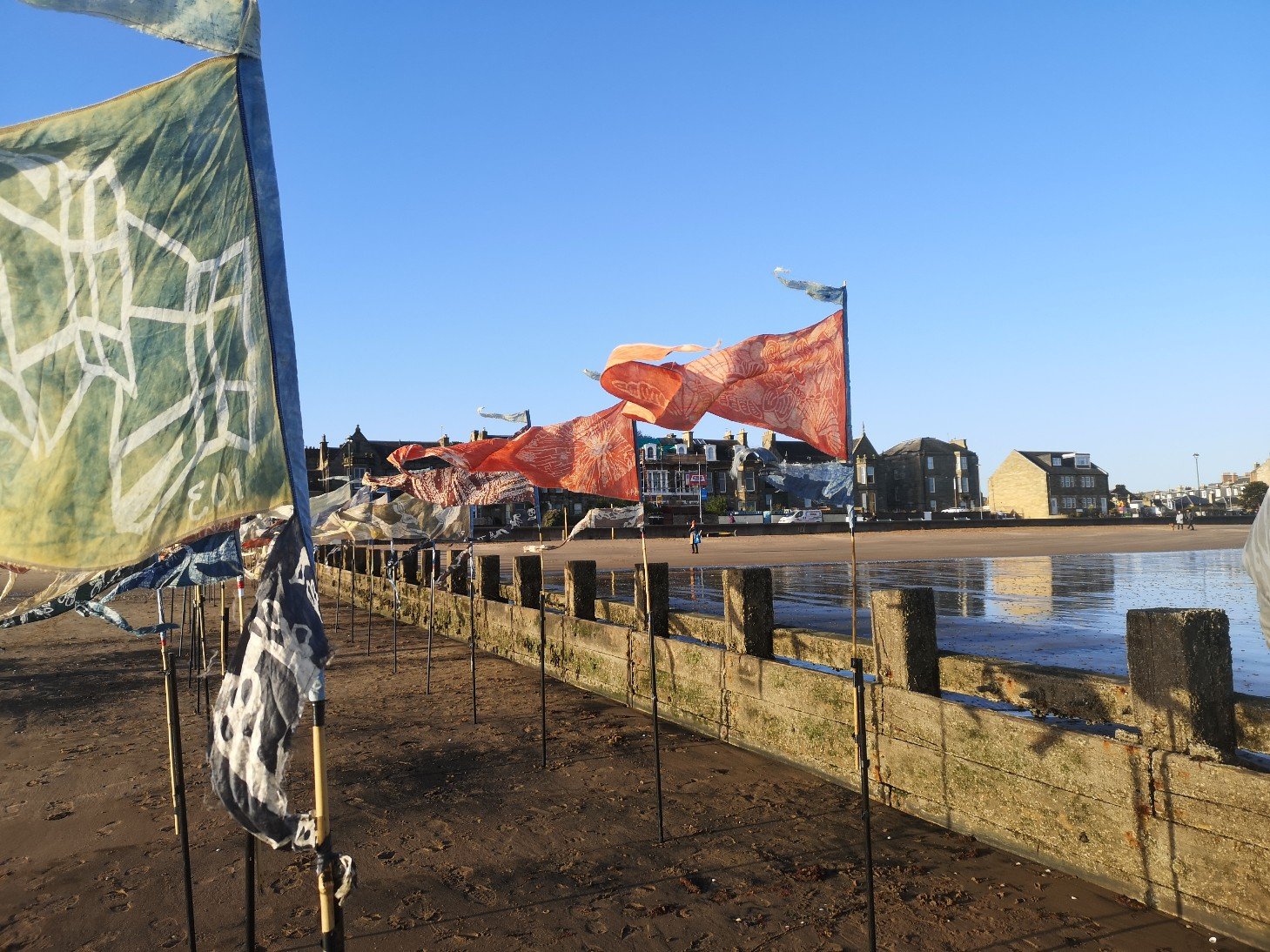
‘What’s blowing away? What are we losing?’ Portobello, Edinburgh

The poignant sound, as we lay under the flags and watched their subtle colours – lemon and rose – move against the cerulean sky, was a constant reminder that things are changing. The irregular flick-flack of the fabric responding to the capricious breeze wouldn’t let us drift away contentedly. Their beauty contrasted with the reminder that the sea levels are constant rising due to climate change.
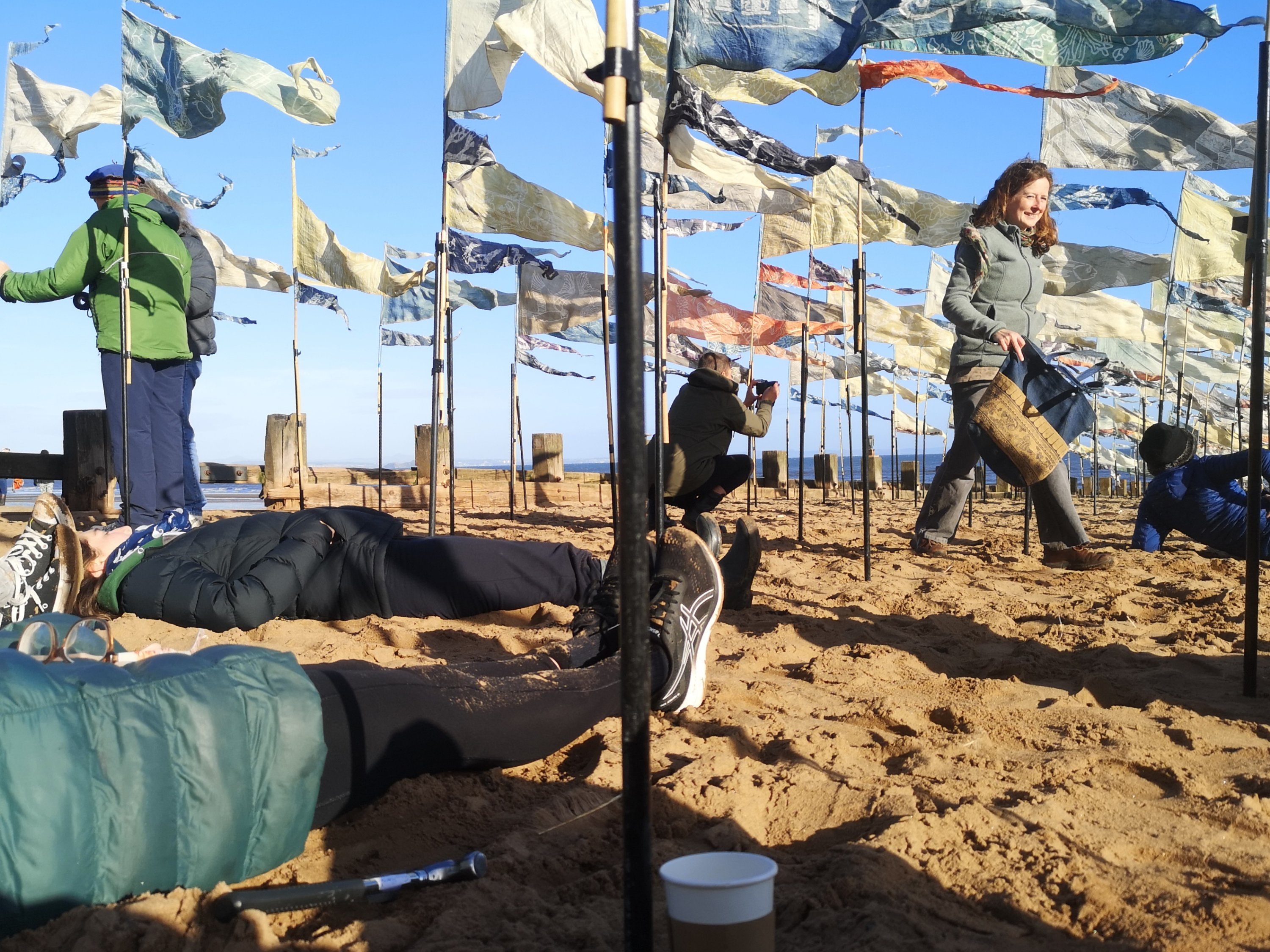
View from underneath, the Beach of Dreams Portobello, Edinburgh

Hospitality

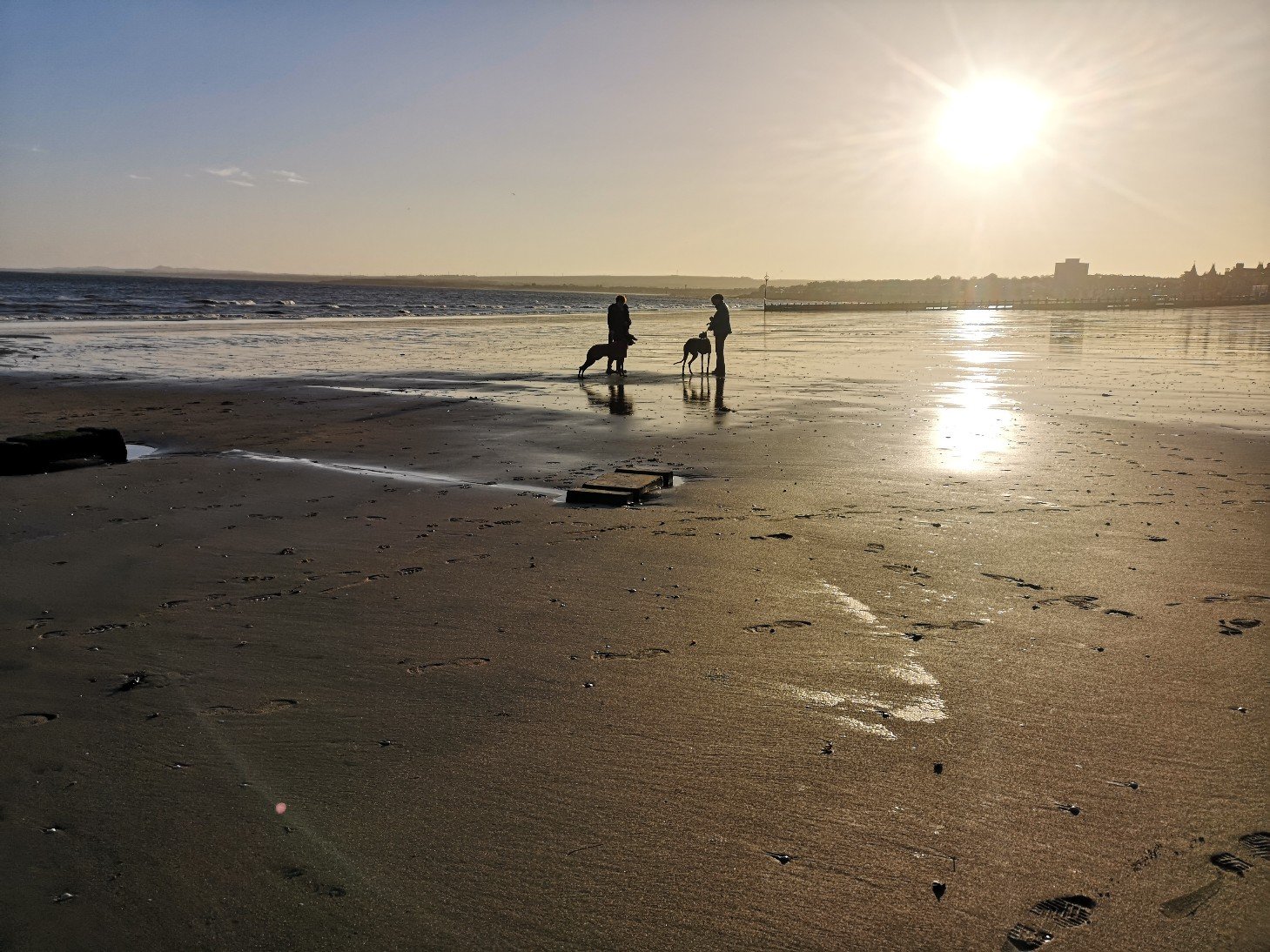
We stayed for two nights at St Mark’s Church where we were cared for with much-appreciated heat and facilities. Even a short walk like this focused our minds on the luxury, the privilege of having a roof over our heads and a floor to sleep on.
Portobello, Edinburgh

Walking the labyrinth

The full programme of events continued with a labyrinth. Set up by Ali Newell with red candles and autumn leaves, we were first given a short introduction to their origin and useage over the centuries. Then we were invited to take something from her basket and enter, one by one.
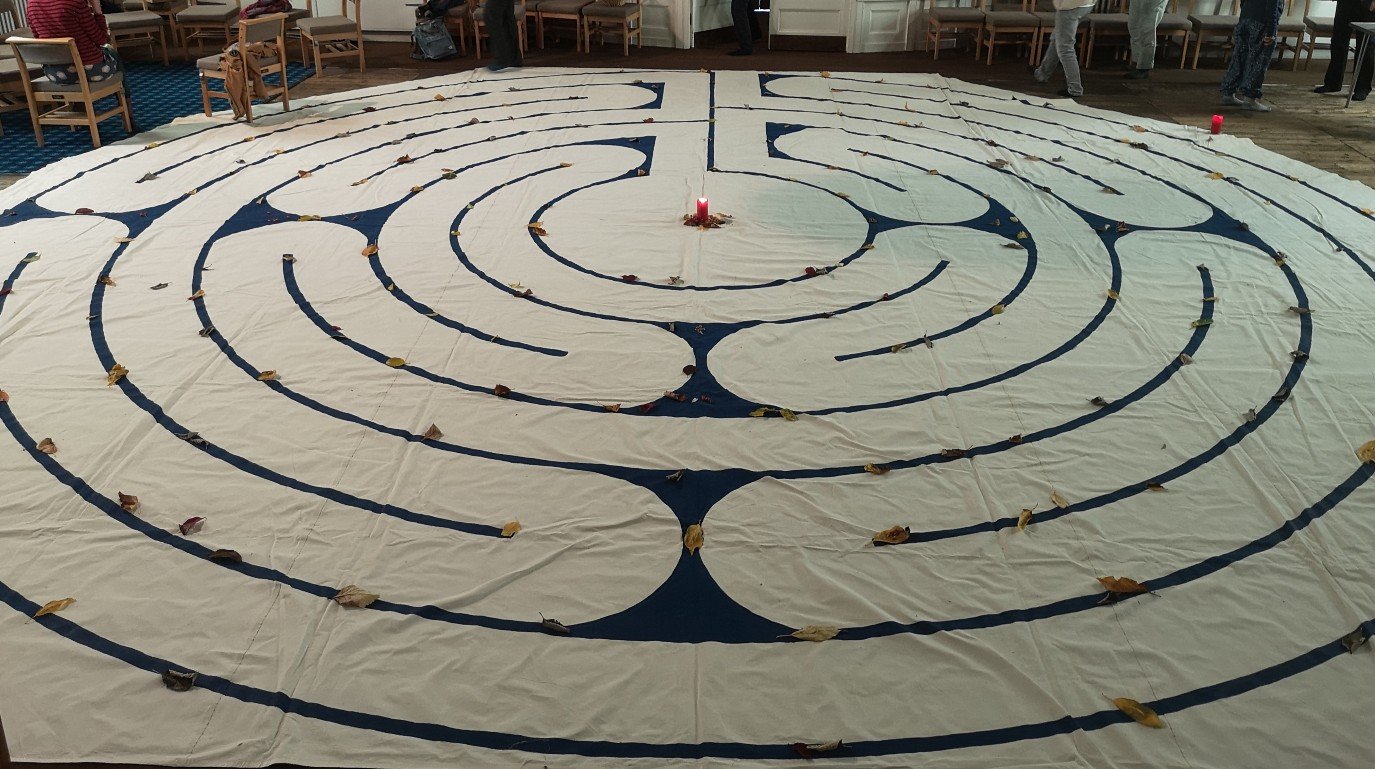
Labyrinth, Ali Newell

The minute I started, I felt such sorrow. Was it the music by Arvo Pärt, or the accumulated feelings of the group? Was it my grief at the state of our world, or a more personal sadness rising up into my throat? One stained glass window showed a man with his arm around a child, another depicted men embracing, with the words: ‘The soul of Jonathan was knit with the soul of David’ as a caption. That tenderness was one trigger for my weeping.

I lived in Estonia for a short time, where Pärt was born, and memories of those times bubbled up. I was writing a book about death and loss, and each day I walked the forest paths. I remembered the shock of turning a corner and coming across a large area of deforestation with trunk stumps all jagged and broken.
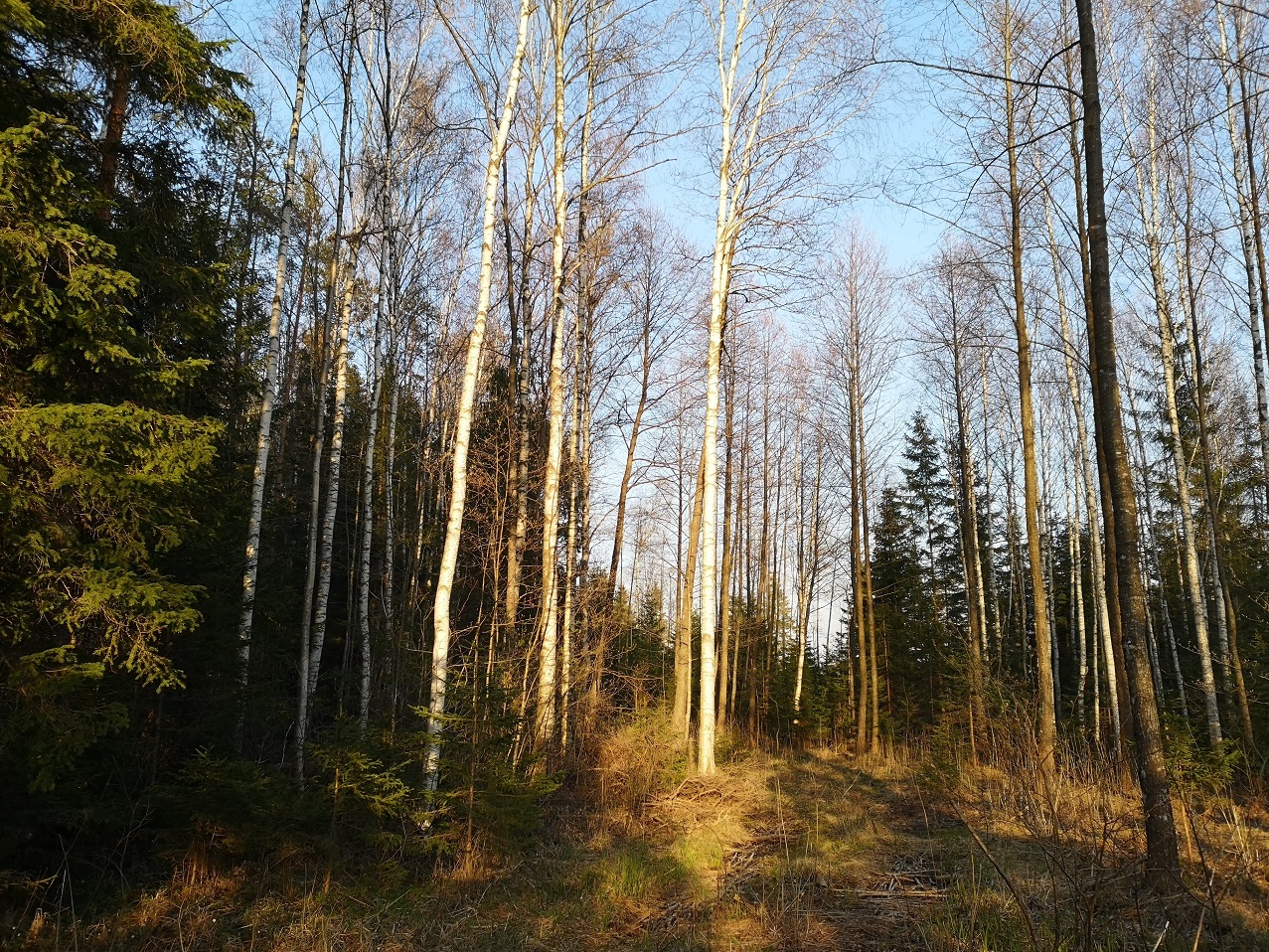
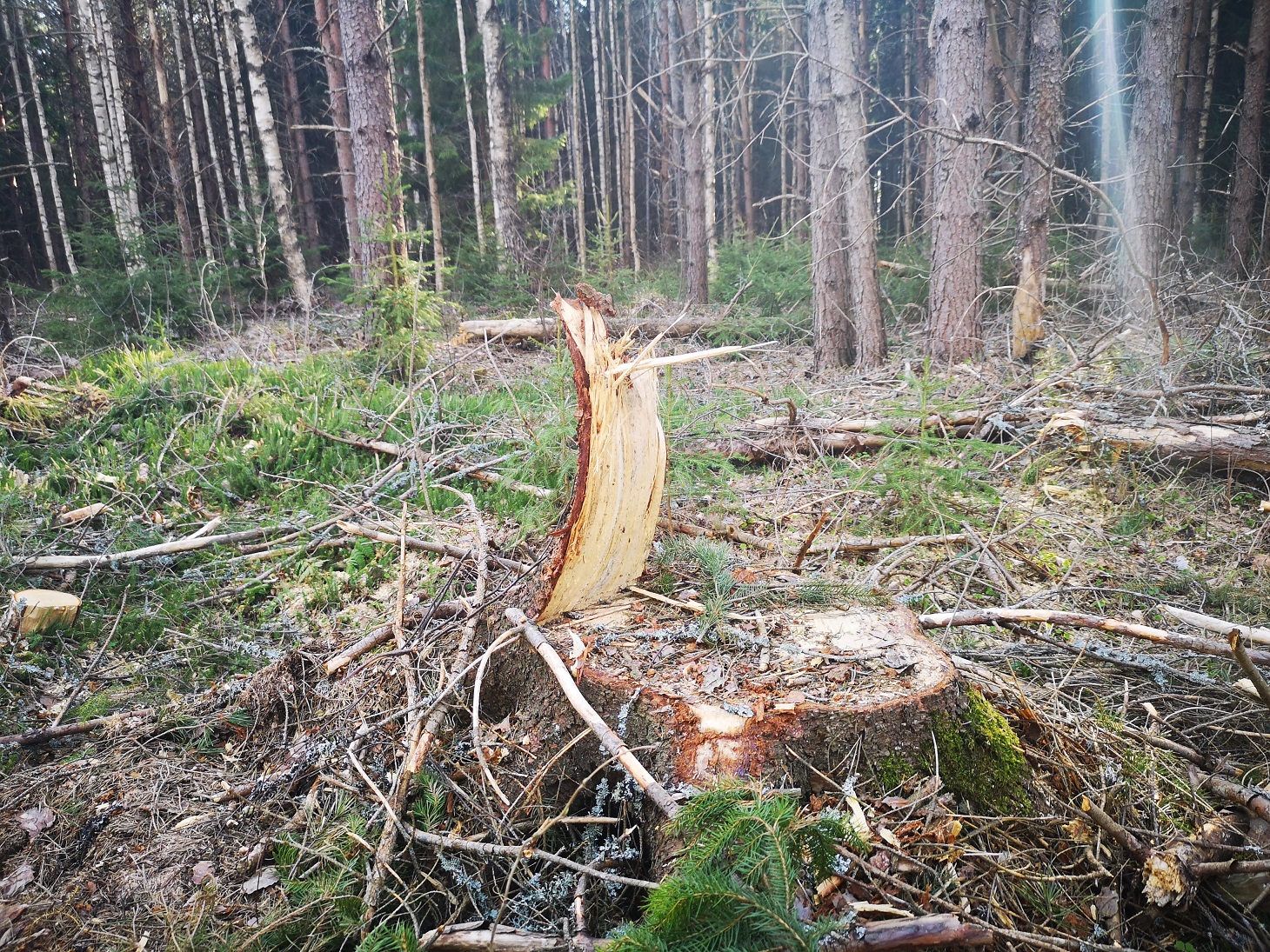
Pines interspersed with silver birch because the foresters know that these trees grow better in community than alone, Estonia
The trees are grown to be cut down, but that doesn’t make the sight any less distressing when you come across it. Estonia

Around the labyrinth I slowly walked, doubling back on myself, at once facing centre, then away from it, moving nearer, then seeming to be distanced. The narrow channel between the lines gave a sense of safety and the golden leaves which were scattered around, encapsulated the passing of the year. Eventually the tears dried up and there was something like peace, or at least calm as I continued. The sun was shining and it threw shadows across us and the room. I was conscious of passing shoulder-to-shoulder with friends on a similar journey to mine,  others with wet cheeks. Someone walked with her arms crossed over her chest, another with his hands cupped in front of him, a woman with arms raised up, palms to the ceiling. In this way, we almost-met, though we didn’t stare or speak. We were all in it together.

And then I saw, ahead of me, the entrance, not the centre. I stopped dead. I must have made a mistake because I was almost back where I started. I traced the way in with my eyes; how had that happened? I hadn’t crossed a line, hadn’t cheated.

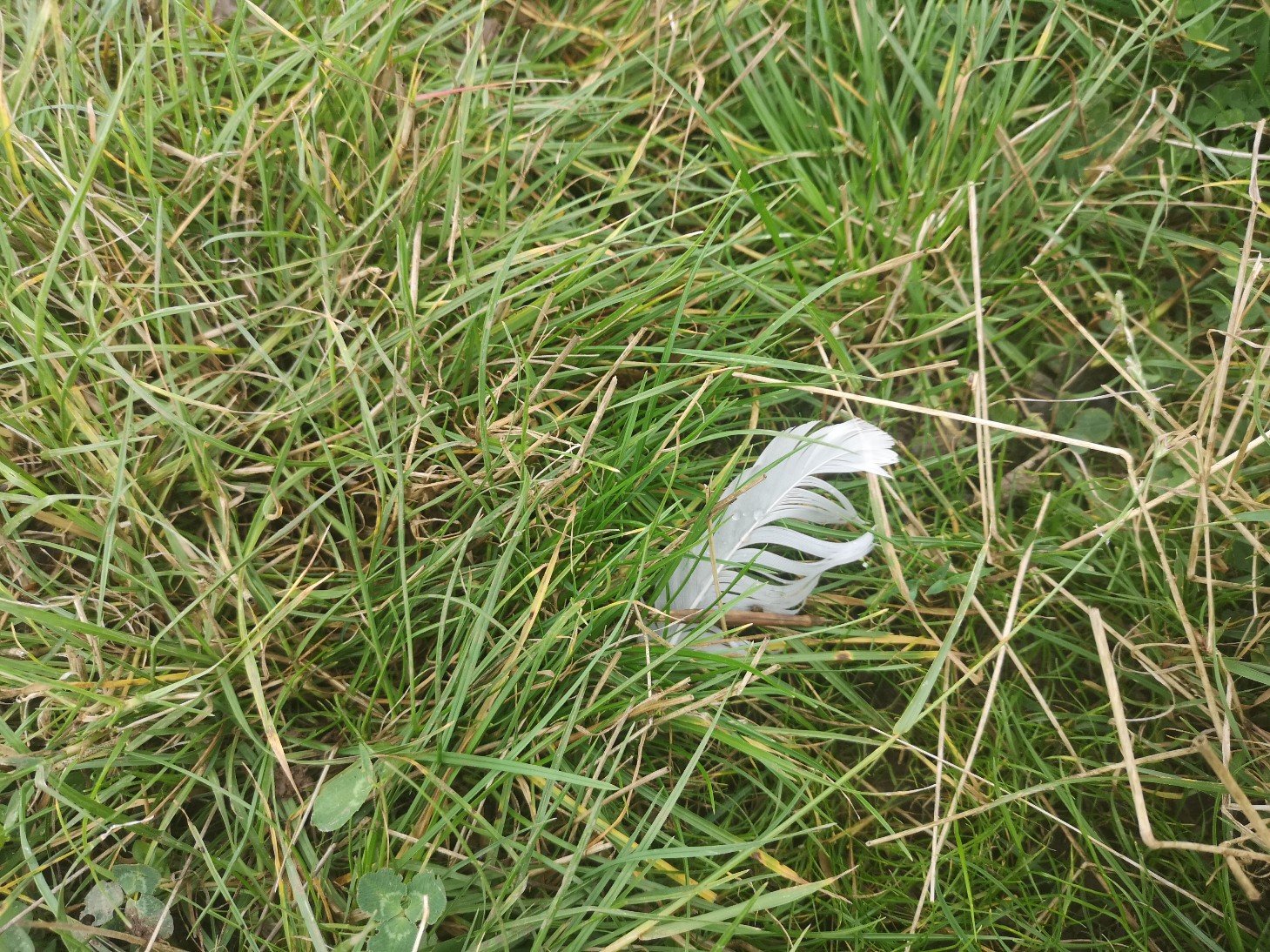
I decided to step out of my passageway into one which would take me on, along the way I had been going, and then, no! That wasn’t possible somehow. So I followed the direction my path was taking and found myself right where I began, ready to start over again. There, at my feet, was a battered magpie feather.
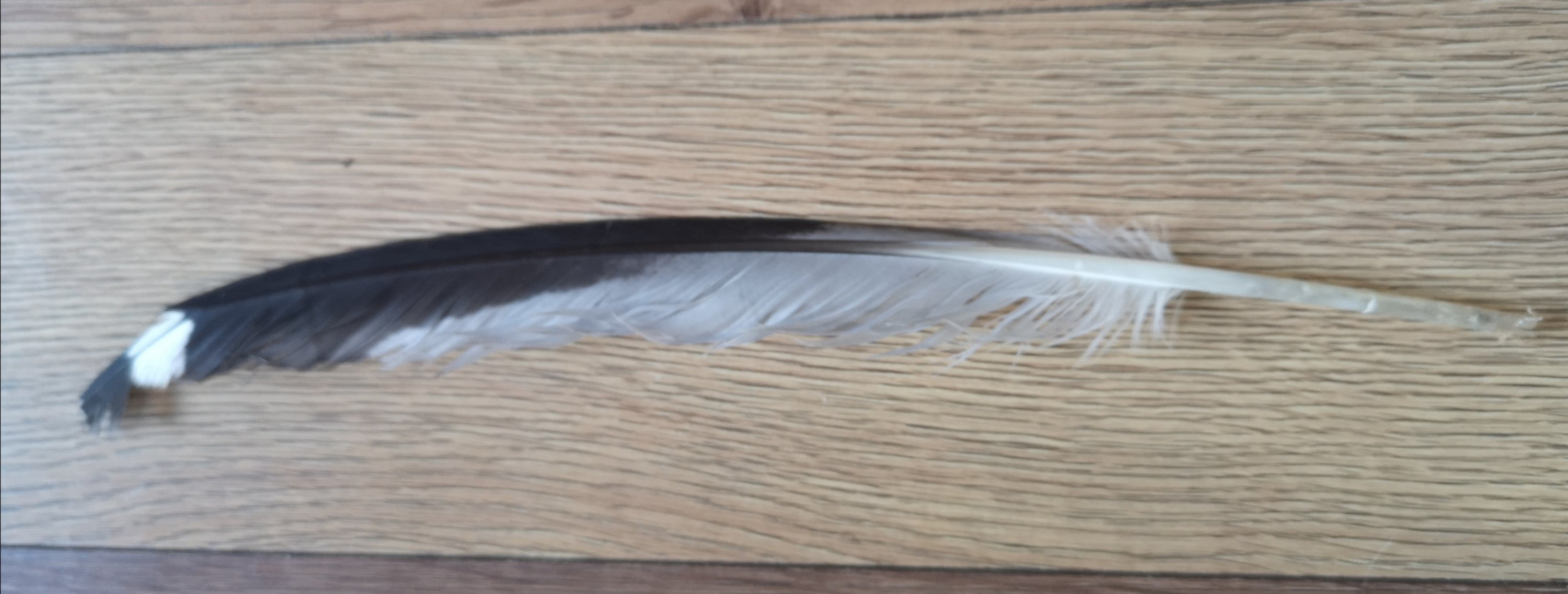
Magpie feather

I hadn’t seen it earlier, even though I am collecting one per day (see my first blog of this series) and so it was somehow special to find it at the moment that had I been ‘sent’ back. I picked it up, took a deep breath, turned around and carried it with me as I re-negotiated the labyrinth. Though I walked faster the second time, there was another onslaught of grief. It reminded me that we walk round our lives, spiralling outwards from our birth, but coming back through key elements of it. We are given the chance to go through stages again with our accumulated wisdom. I hoped I was wiser after the event.
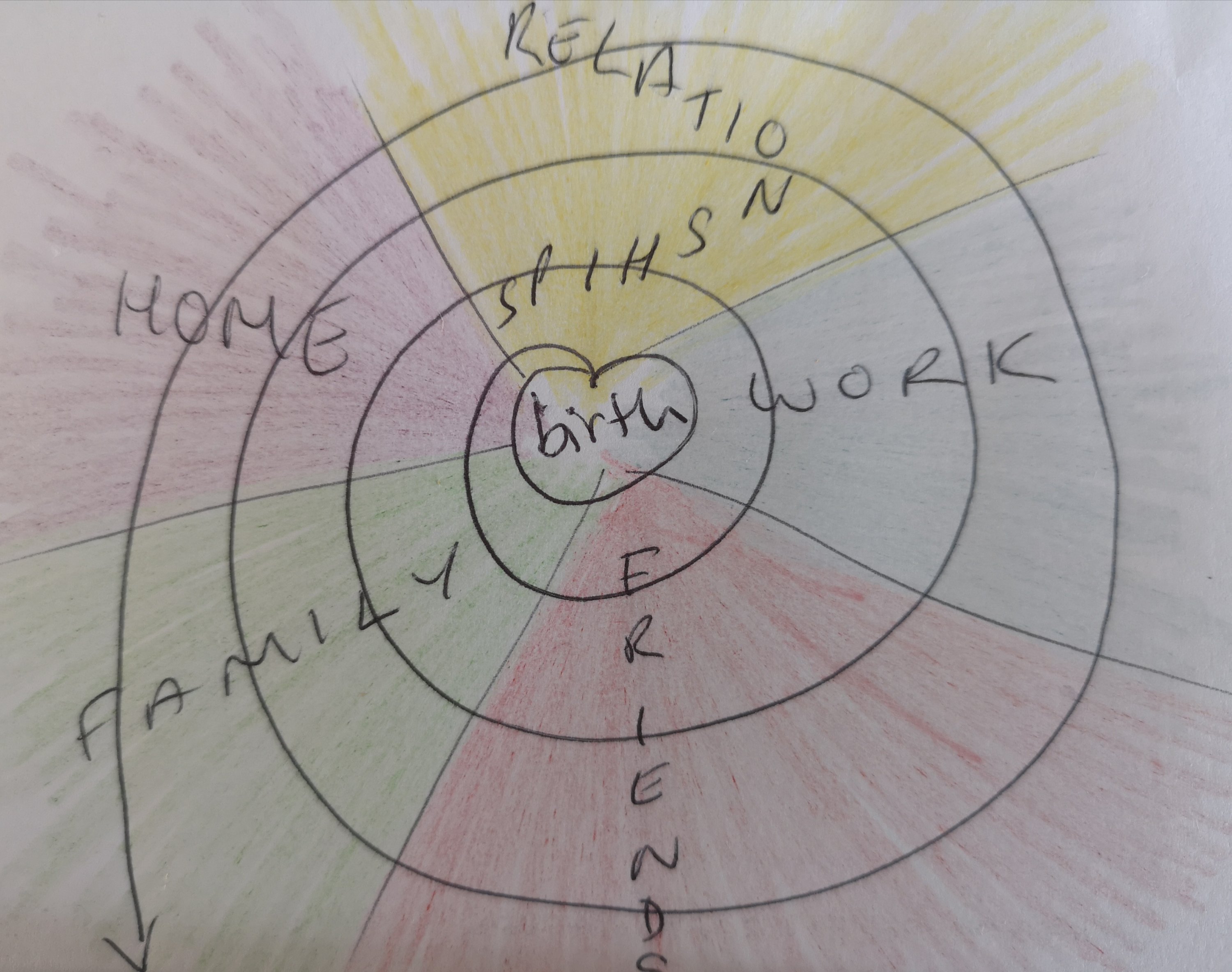
The spiral of life

Many of the fallen leaves had wafted onto the paths. They seemed to represent people I have known. Sometimes, unwittingly, I stepped on them, sometimes over and left behind. The person following me picked each one up and put it back in a safe place. I began to feel so weary, I wobbled, even once overbalanced into an adjoining track and had to step back. There was a small, wooden African sculpture in a corner, on the piano, of someone reaching down to touch a baby. It was similar to one I had at home. Again, it touched me deeply. Would this emotion go on for ever? I realised I needed ‘stamina, endurance, resilience’ which were Liz’s words, if I was to complete this Pilgrimage for COP26.
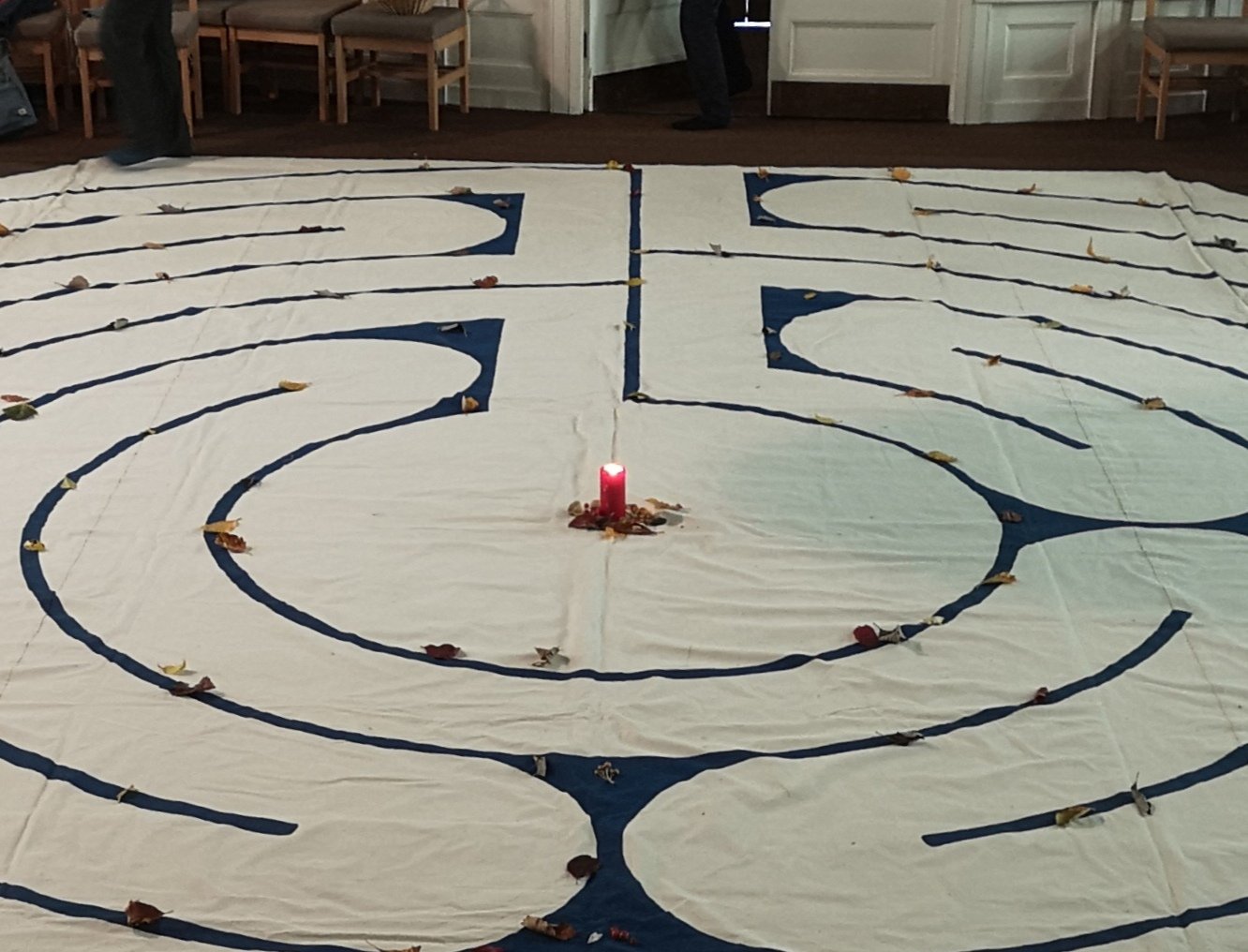
Entrance and centre of the labyrinth, Ali Newell

As I got closer to the centre, I feared I might not make it and I noticed that I wanted to get to the end as soon as possible. It was like my relationship to death; in the past I have willed it, later I decided against it and pleaded that it wouldn’t happen soon.

I did eventually get there, knelt and placed my stone, and, as Liz said afterwards, it was hot from my hand. Of course, it wasn’t an end at all, it was a mid point. It also wasn’t the way I experienced it when sitting beside the dying – a dwindling, a merging into another place and state – rather, it was part of the whole process of life and it was on-going.

As I walked out, I was coming in the opposite direction to others who stood aside to let me pass. Or sometimes I did that for them. It was a smooth, mindful journey, and I was changed at the end of it.

We set off one by one, but as we walked we kept coming into contact with each other. It was like a metaphor for life; people you see once and never again all moving in the same direction, all inspired by love and hope. We acknowledged each other as we passed. We were not alone.

Gareth
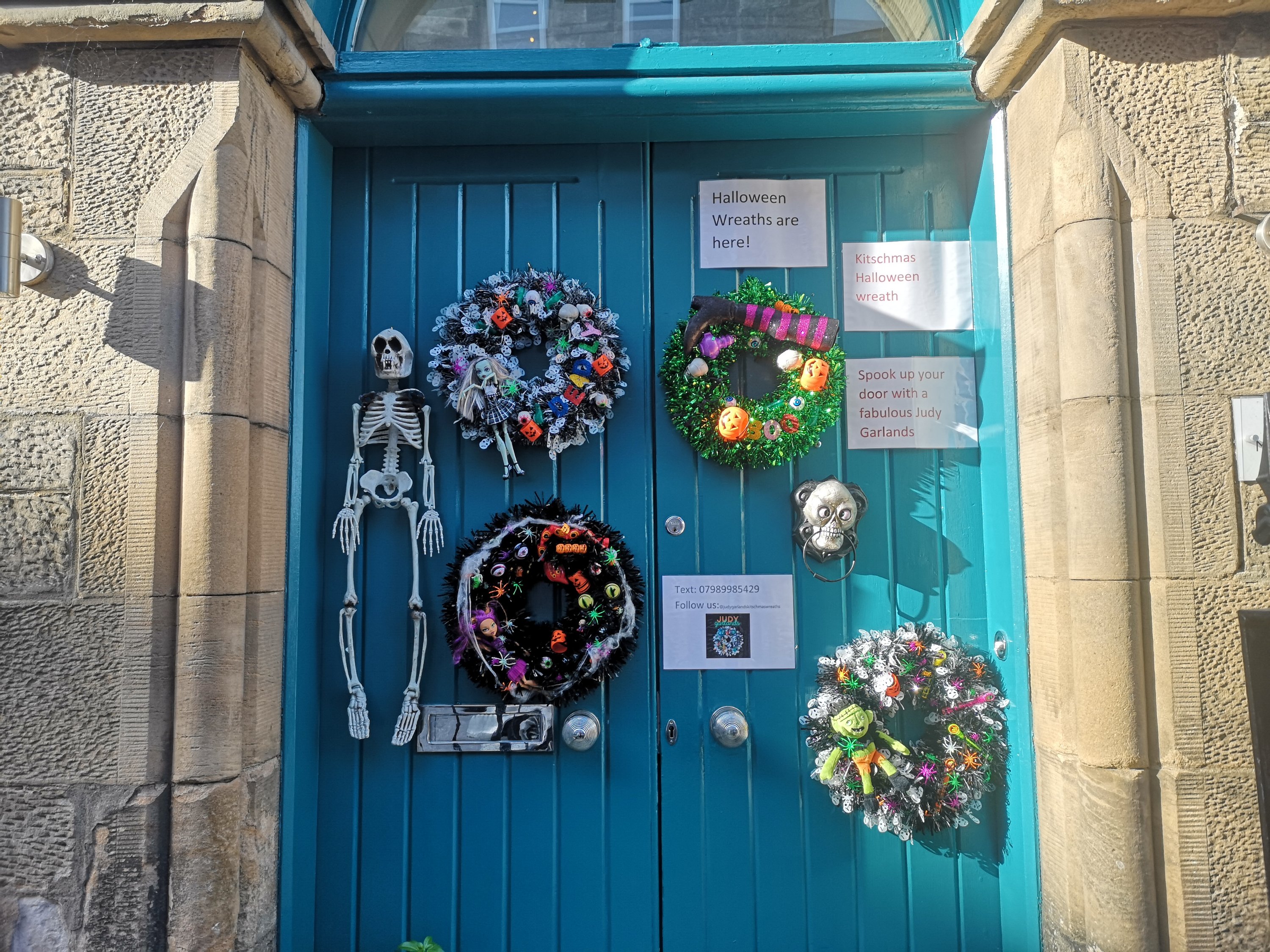
Front door, Portobello, Edinburgh

Even more kindness, and a change of perception

I went for a swim in the sea after that. Margaret who knows the seas, watched over me, signalling to keep away from the pipe which I had not noticed. Ruth offered me a shower at her flat, the first since leaving Dunbar on Monday, four days before, and I was really grateful for the hot water and her hospitality.

Coming back, I was struck by the frivolity of the home decoration items outside the shops on the High Street, items I usually enjoy, even covet. I was walking through such a familiar place, but my Camino shell dangled from my rucksack reminding me I was in the stream of the pilgrimage, and I felt like a different person.
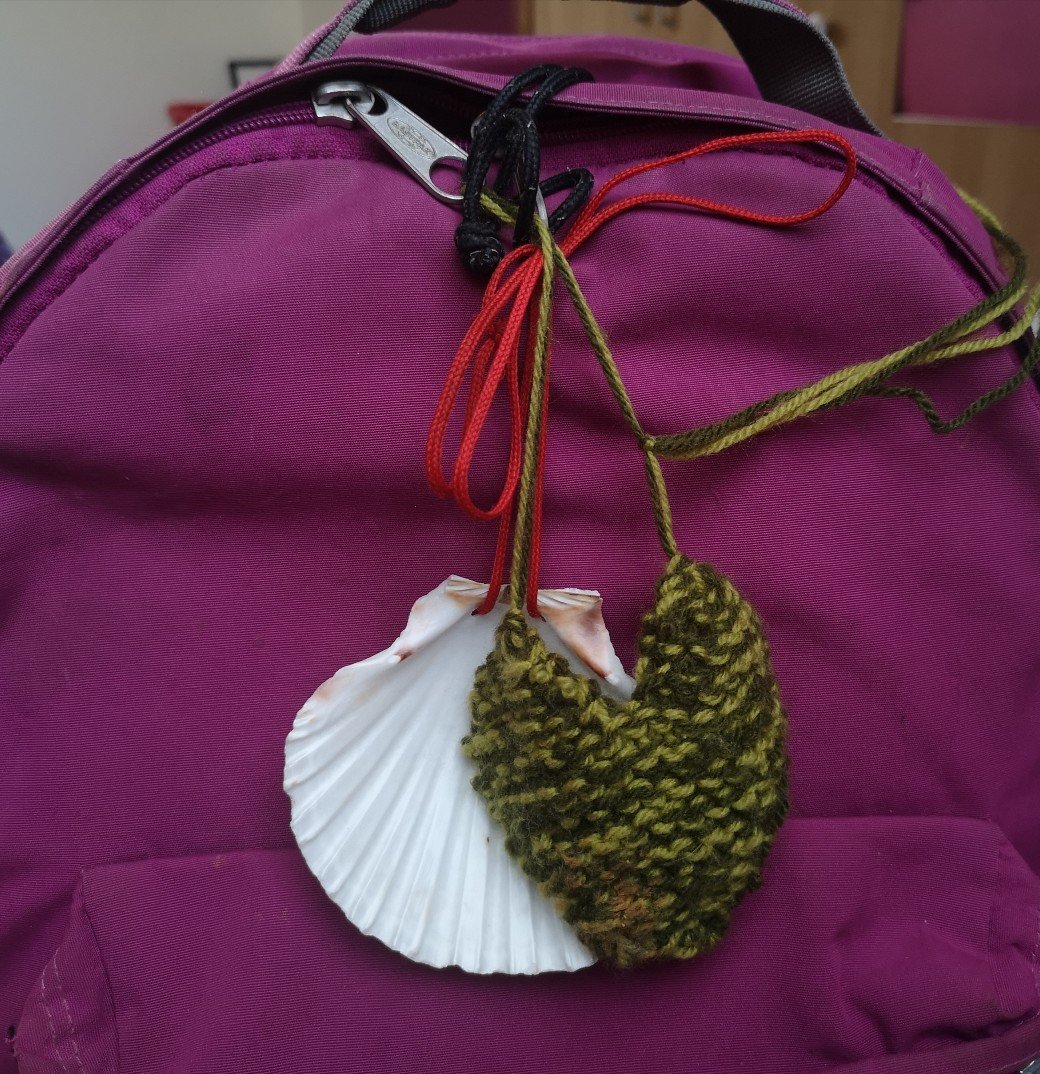
Camino shell symbolising that all paths lead to the same destination, eventually


Thanks go to members of the congregation of St Mark’s for a most delicious meal, particularly as the oven failed and food had to be ferried next door and back for warming – a much appreciated effort.

Community choir

And as if all that wasn’t enough, Jane Lewis led a singing circle on the beach under the almost-full moon. She exhorted us, ‘ If we listen to the earth breathing, then we will know what to do’, and we learned her new rendering of Arundhati Roy’s words (from Capitalism, a ghost story). 
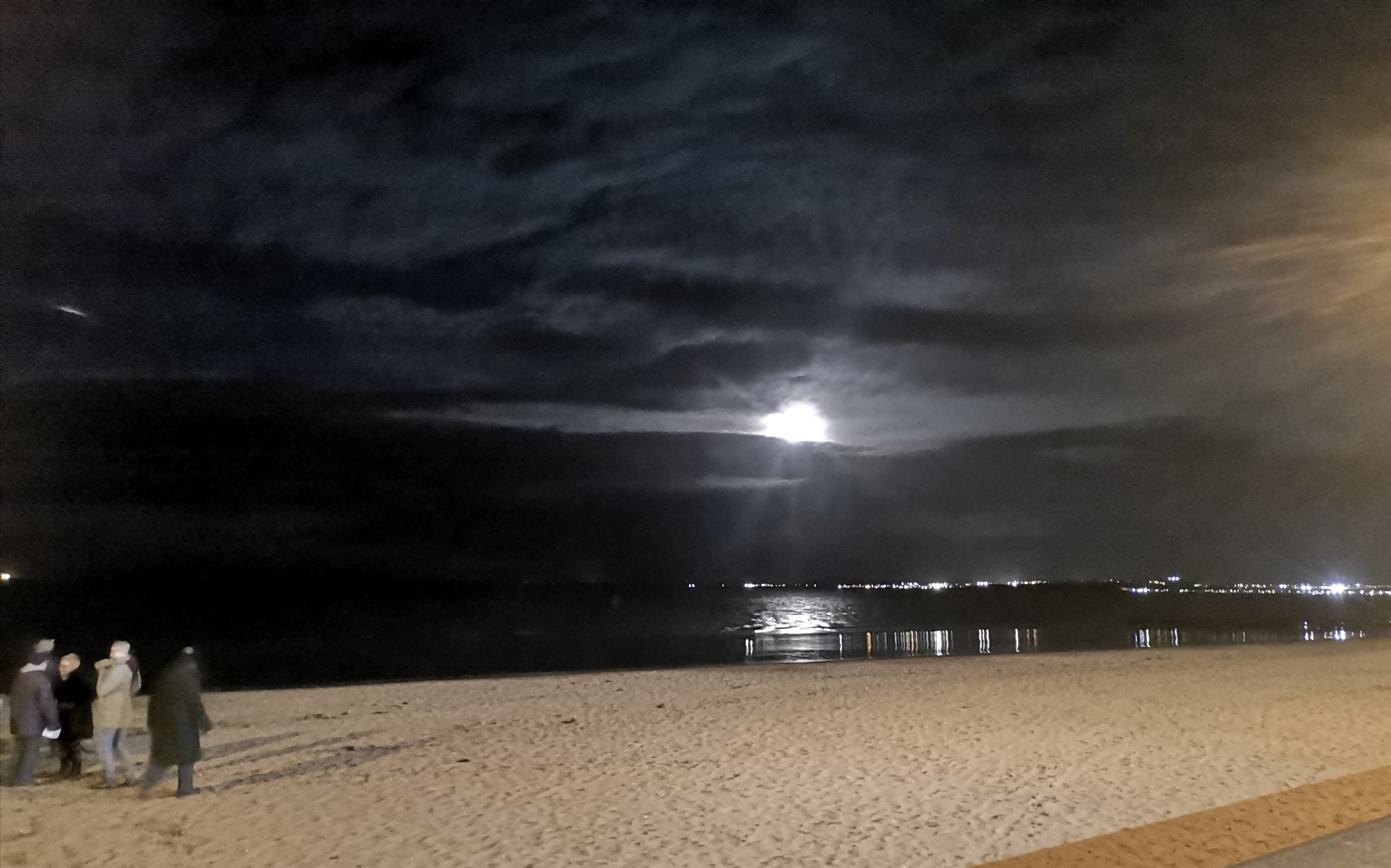
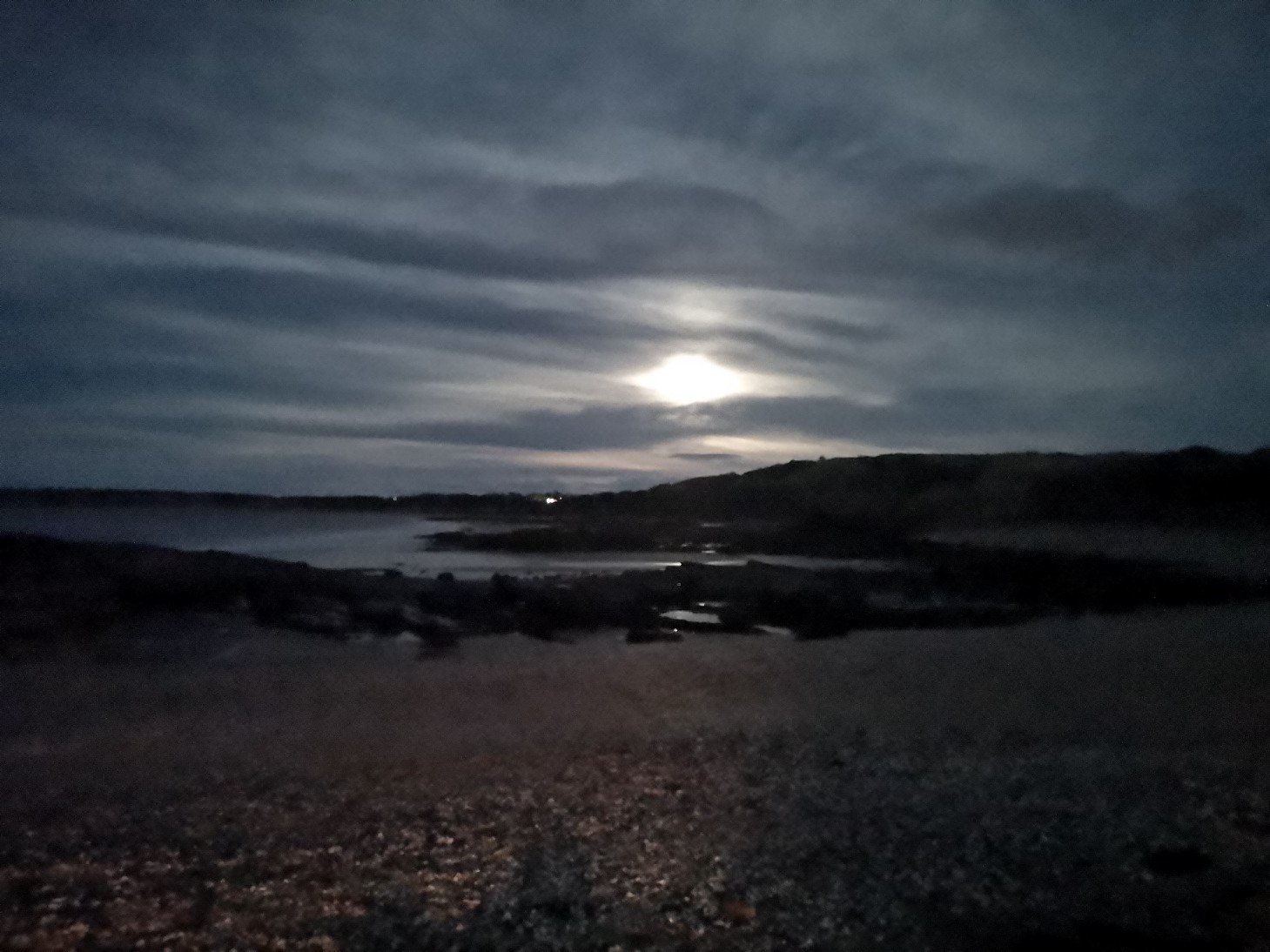
Portobello Beach, Edinburgh under the almost-full moon

Another world is not only possible, she is on her way. On a quiet day, I can hear her breathing. Can you hear her breathing?

Arundhati Roy / Jane Lewis

Protest in Harmony choir Another World link
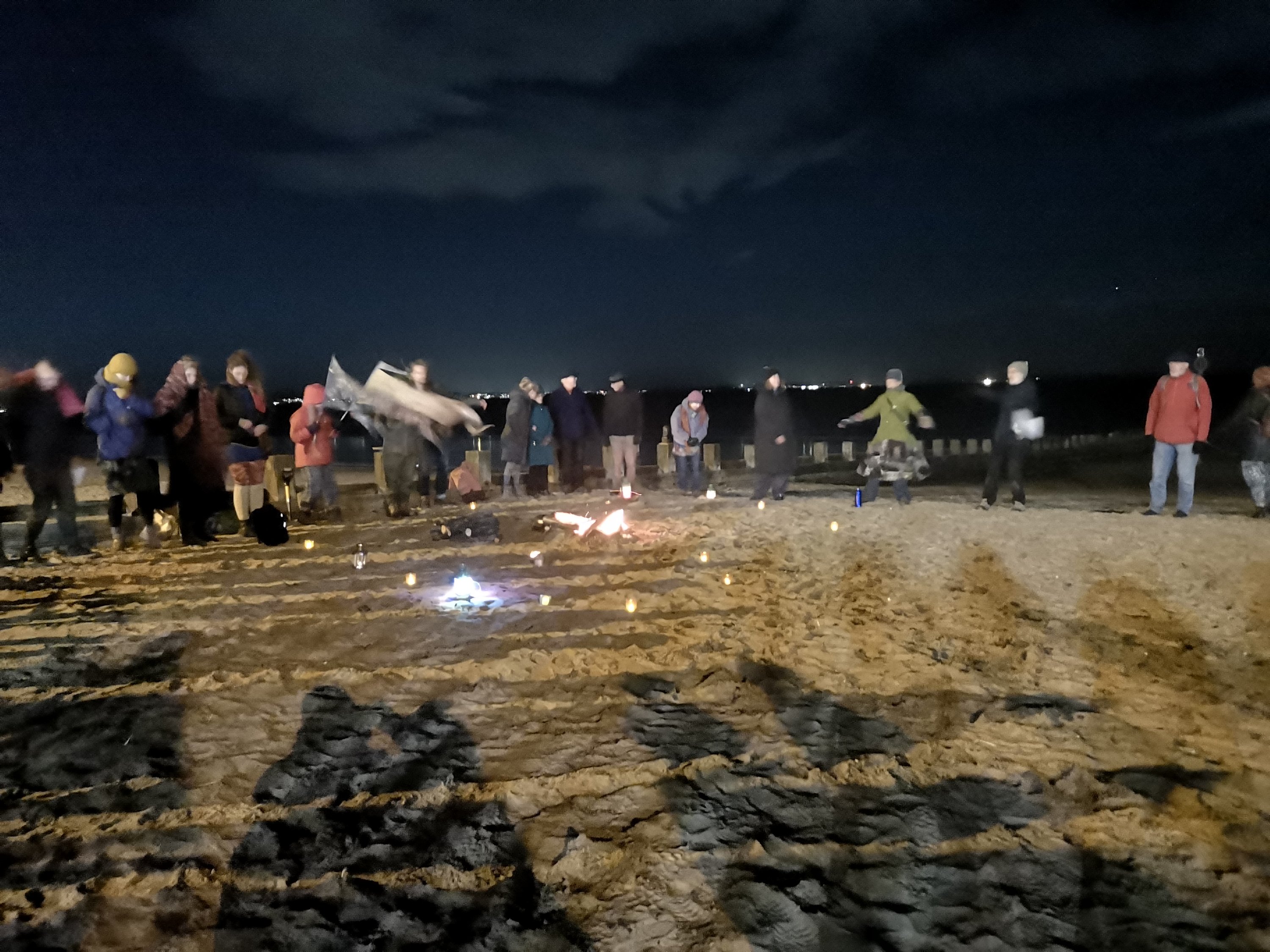
A very blurry singing circle with Jane Lewis, Portobello.

Though a hiatus from the long-distance walking, this day was full of opportunities to reflect on our journey, to learn from the communities we were passing through, and to receive.

We were nearly half way through the Pilgrimage for COP26 from Dunbar on the east coast of Scotland to Glasgow, where the COP26 Climate Change Conference is now taking place. It was organised by A+E and many volunteers.
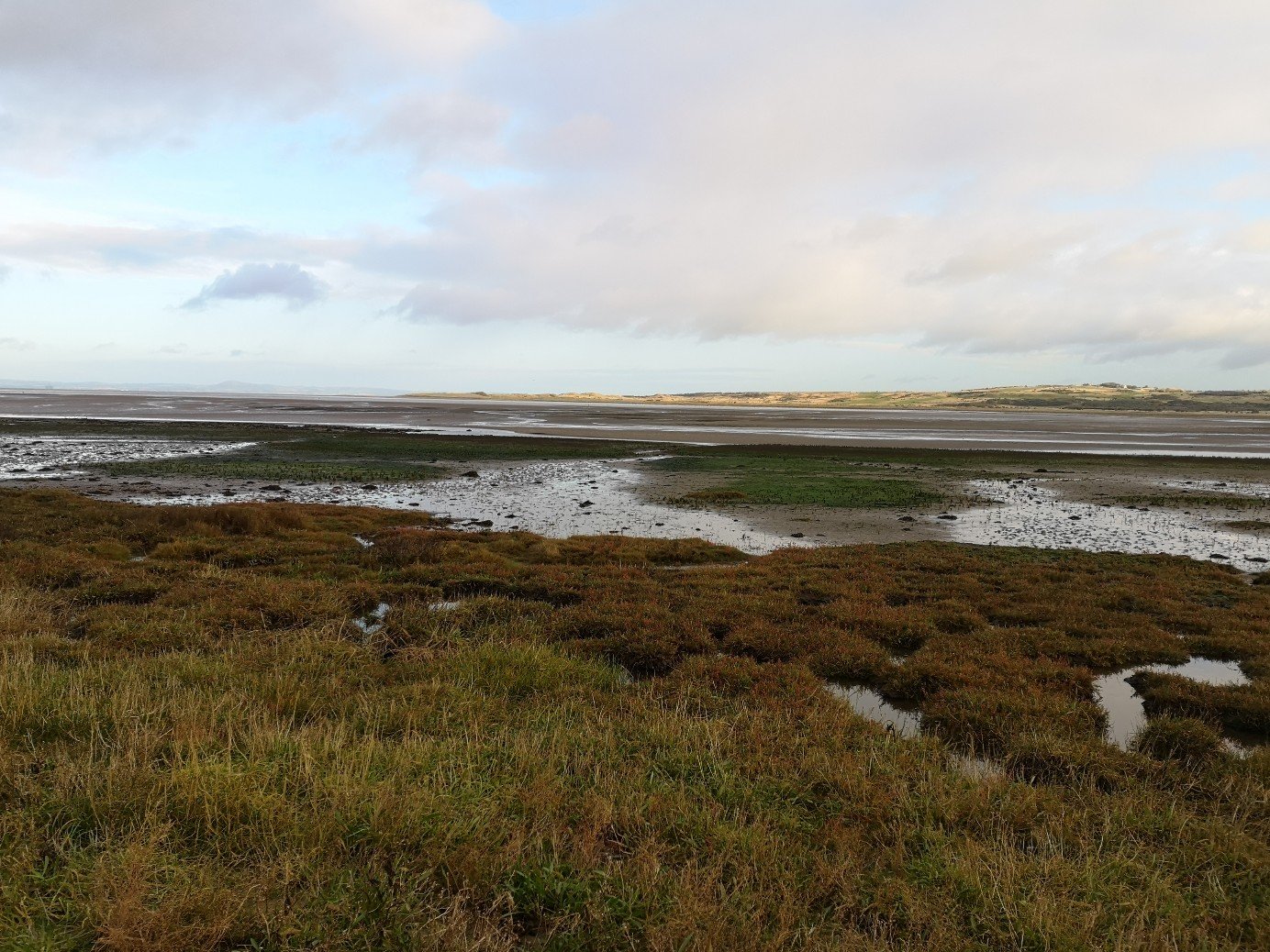
Pilgrmage to COP26

Blog 6: From Aberlady Bay to Portobello via Musselburgh

Listen to The king of the faeries by Matthew Crighton on the tin whistle on #SoundCloud recorded on the beach at Aberlady, round the campfire.

https://soundcloud.app.goo.gl/jHju3

Sunrise as we walk away from our camping spot at Aberlady Bay, 7am
It’s only just over an hour but we have all our camping gear and what’s left of the food and water paraphernalia, and it’s very uneven ground. We walk in silence

At the car park, the electric support vehicle and day walkers are waiting for us. The group had split into two the previous evening with the others sleeping at the village hall in Aberlady. They visited Prestongrange Museum where they received a lovely welcome.

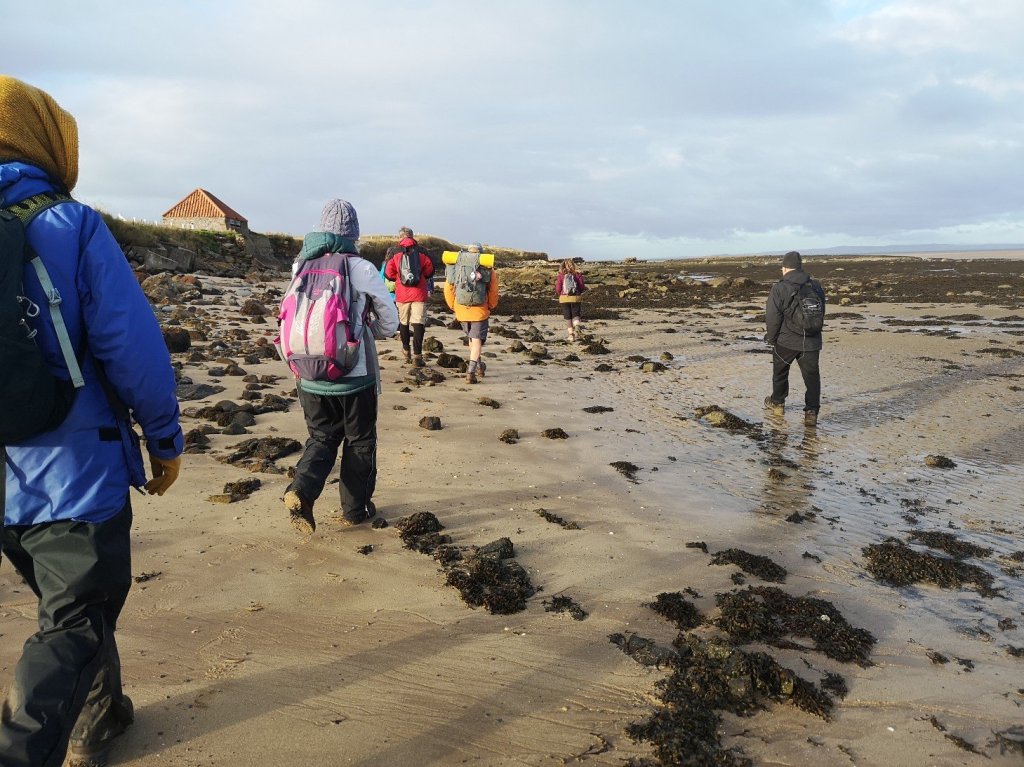
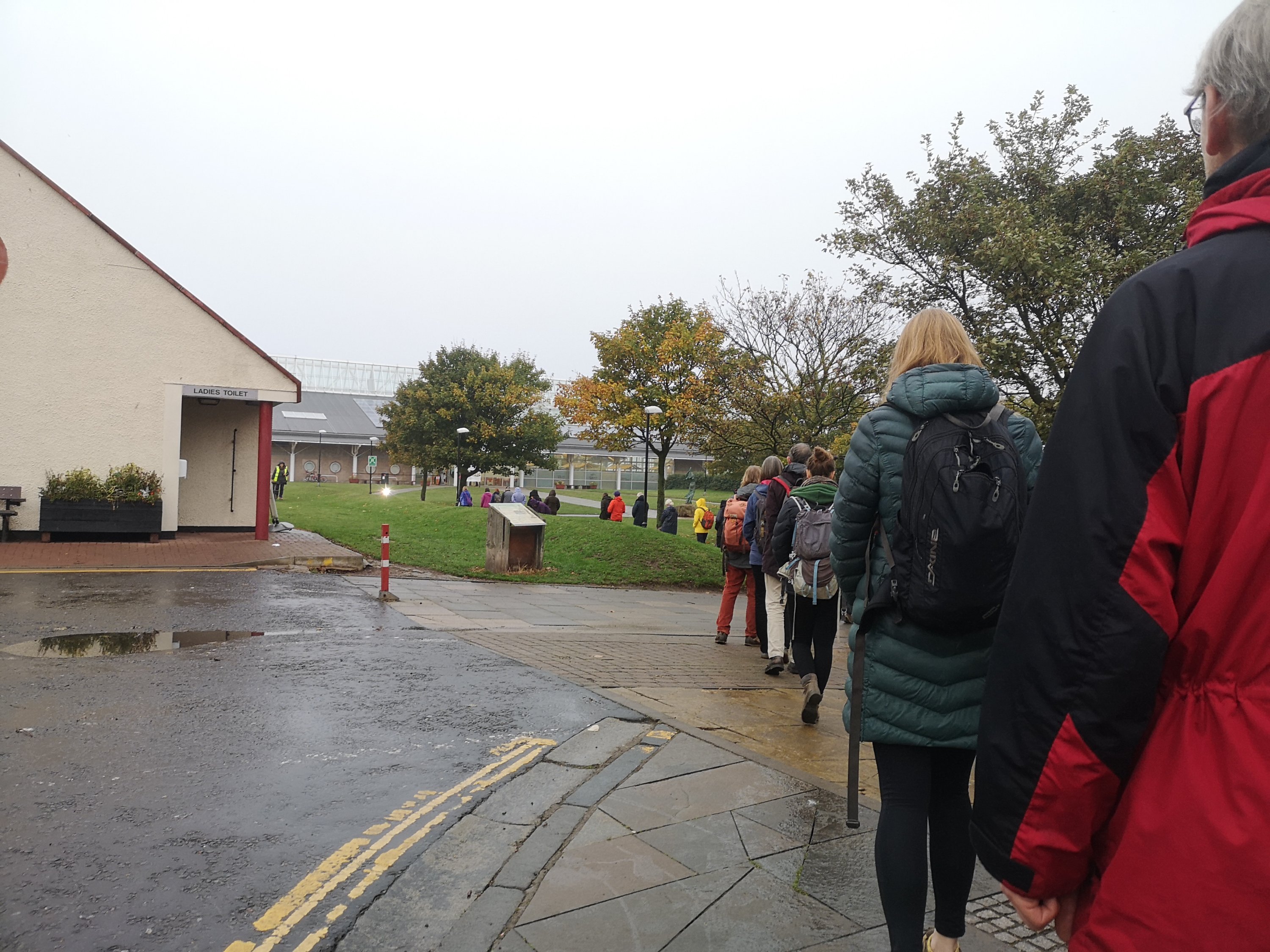
After a standing-up breakfast and use of the public conveniences (thanks to East Lothian Council for keeping them open for us), we set off for the day’s trek. The coast was stunning.

Longniddry Bents, East Lothian, Scotland
East Lothian

The weather was changeable – a cool wind with sun, light then heavier spells of rain, never for too long, thank goodness.

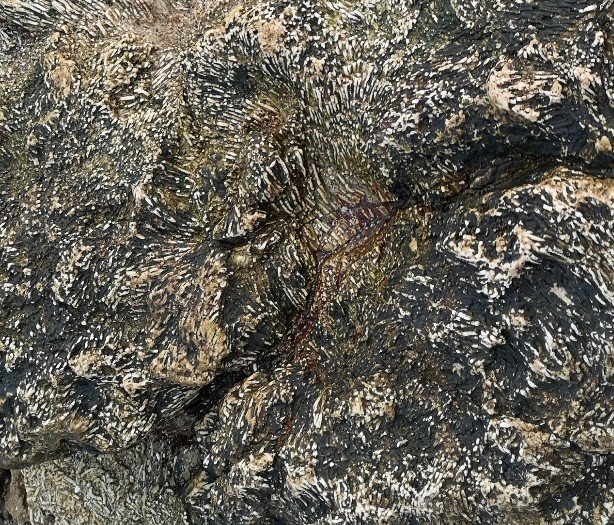
Coral skeletons

We passed coral skeletons (tubes) which have been squashed into limestone making ‘spaghetti rock’ which date from the Carboniferous period (350-300 million years back). Craigielaw point fossils gives more information.

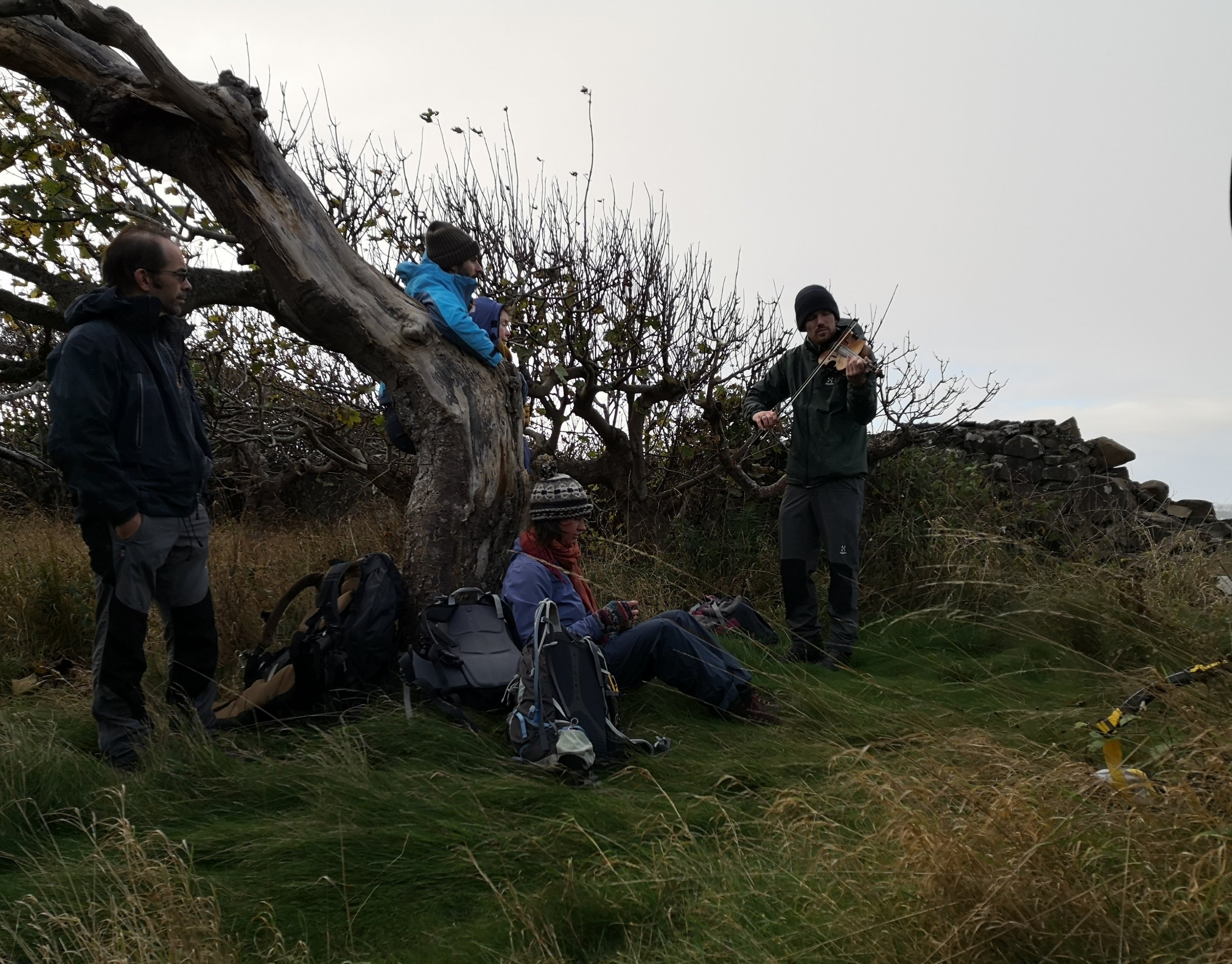
Cameron played the violin for us, though it was dark and drizzly then
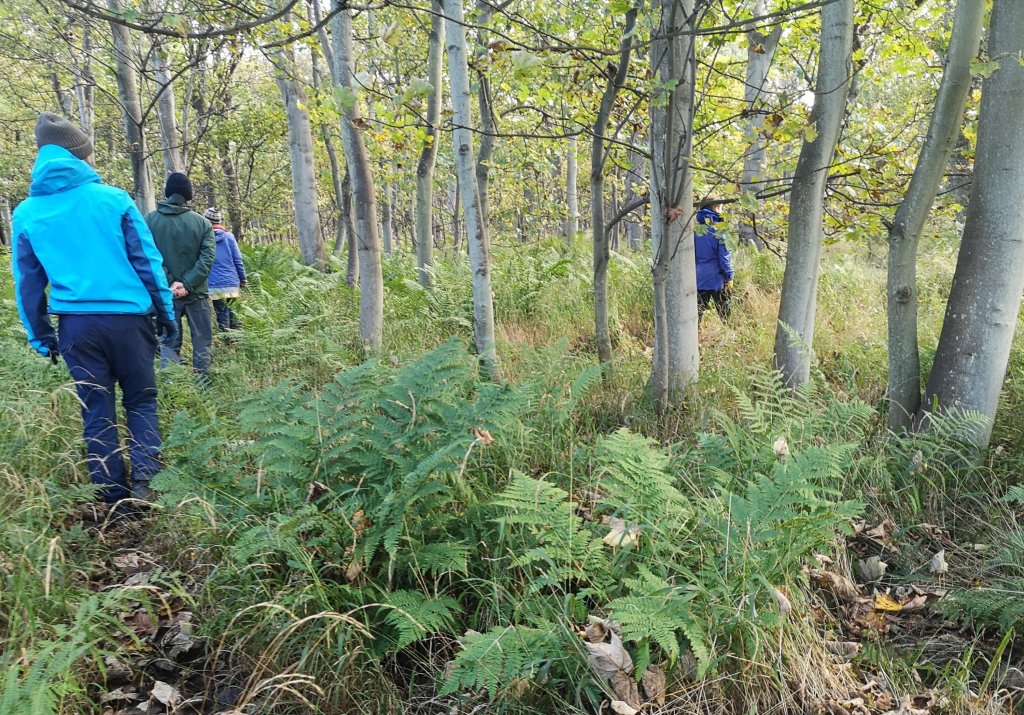
We were invited to walk amongst the sycamore copse, to listen to the particular song of those trees and admire their personal designs
Some had fallen, revealing their age
Wandering through the sycamore glade
Francesco
Beth
Port Seton

We regained the main road through Port Seton with all the hustle of normal life – quite a contrast to the meditative pacing at the shore. The Harbour Takeaway served a good green tea and peppermint slice and the sun was warm on my back for 5 minutes before we had to walk on.

Towards Prestonpans

At Musselburgh, we had an extended stop where volunteers had been preparing a meal for us at the Brunton Theatre. We were shown a film. ‘Local Food Roots’ (trailer on Pinterest) which featured various UK projects which grow and distributed vegetable boxes (Riverford) and innovative organisations which cooked with produce from their own communities (Nottingham Hospital – yes, it can be done. They argued that buying in food that had travelled many 100s of miles from South America and Africa was not only less nutritious but also added to the already dangerous limits of carbon in the atmosphere). Sheila Dillon from the BBC Radio 4 Food Programme was a contributor. This was another example of our learning about the various ways the climate crisis can be addressed, as we wend our way to Glasgow.

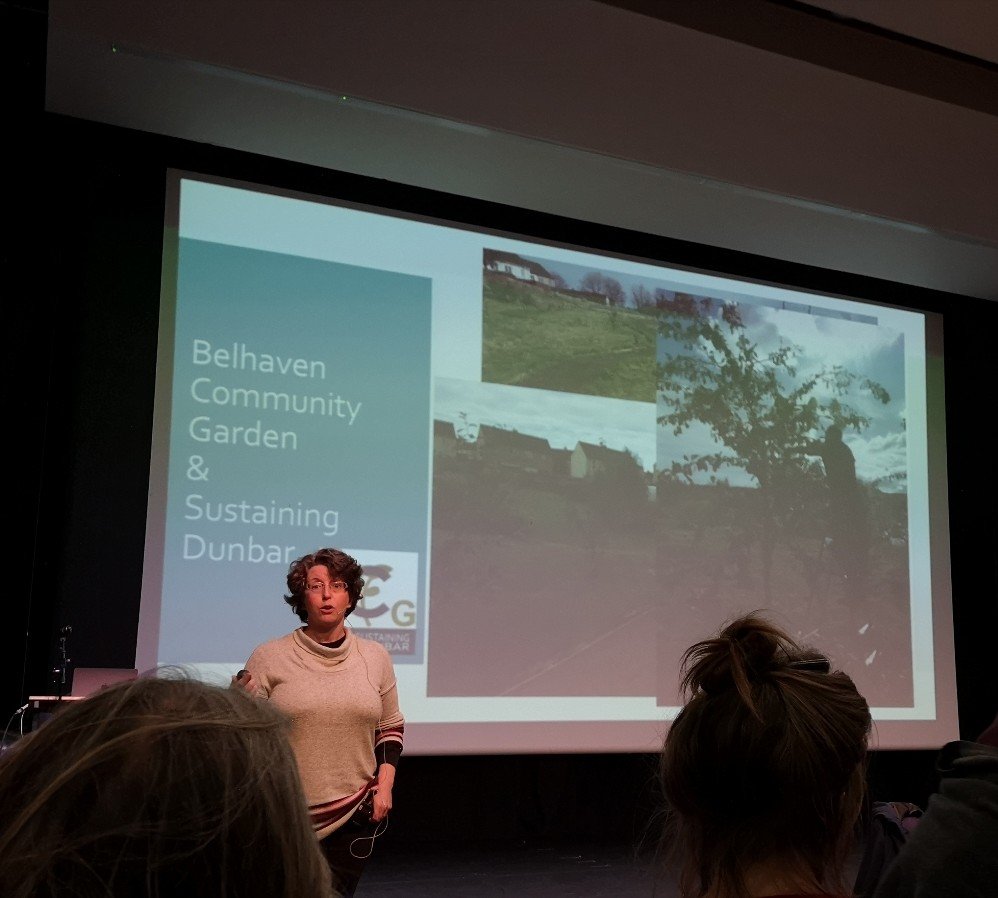
Naomi Barnes, Sustaining Dunbar
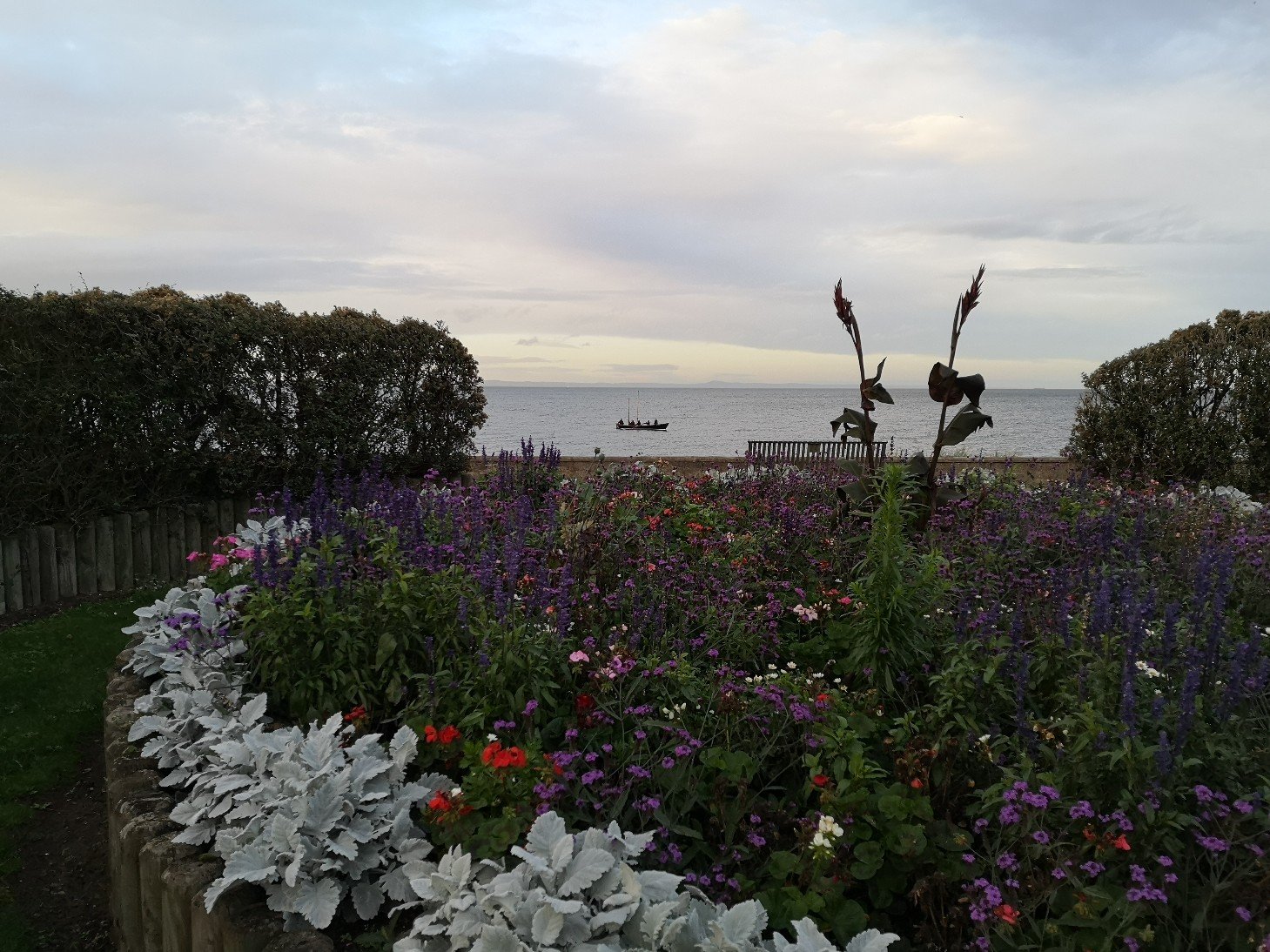
We were met by rowers from Musselburgh (you can see the boat in the middle of the picture beyond the flowers) Prestonpans, East Lothian

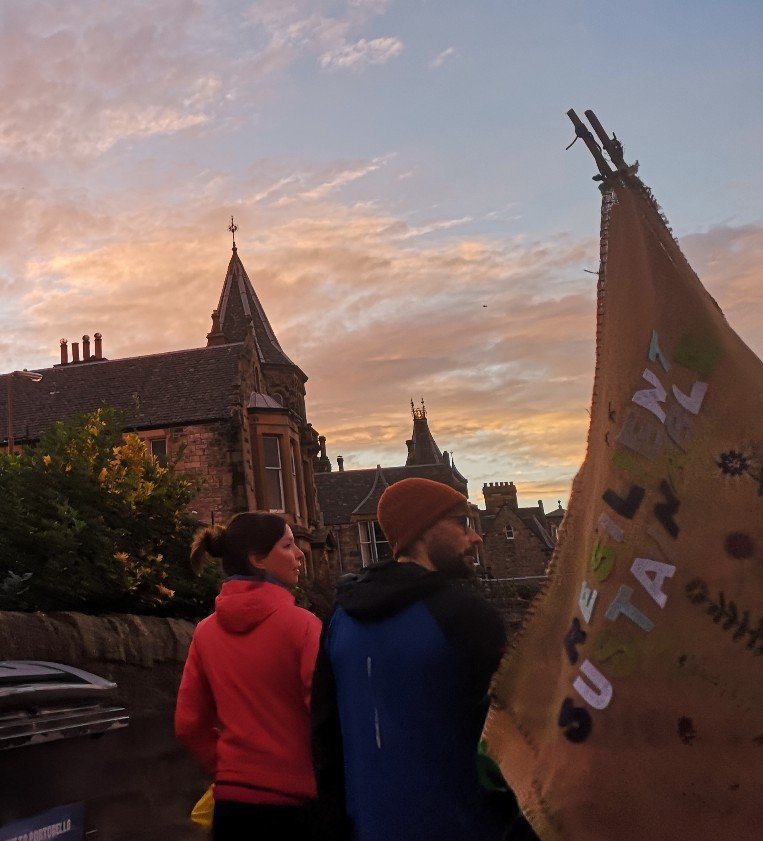
It was hoped that the Portobello crew would be there too, but at the last minute they were short of a member, so two of them ran to meet us here, and then walked back with us (see below) with their Resilient, Sustainable banner.

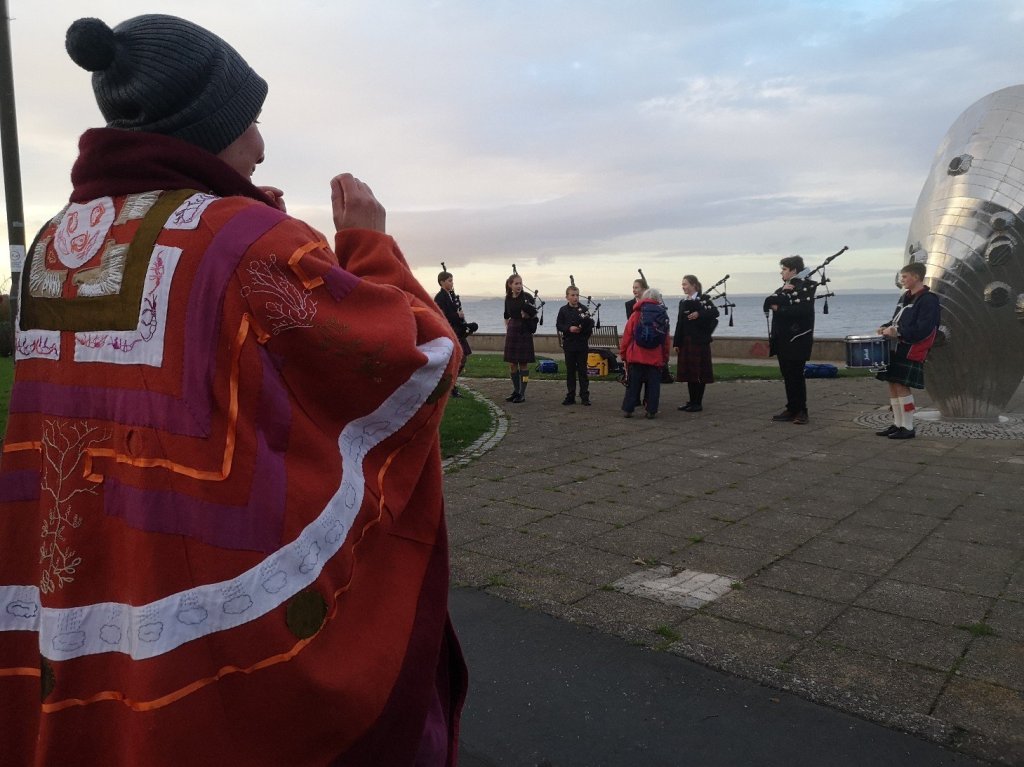
The pipe band from Loretto School were also there to welcome us. Marianne was the Keeper of the Soils for the day

People seem to really understand what we are doing: they thank us and wave as we go by, and messages of encouragement are coming in all the time.

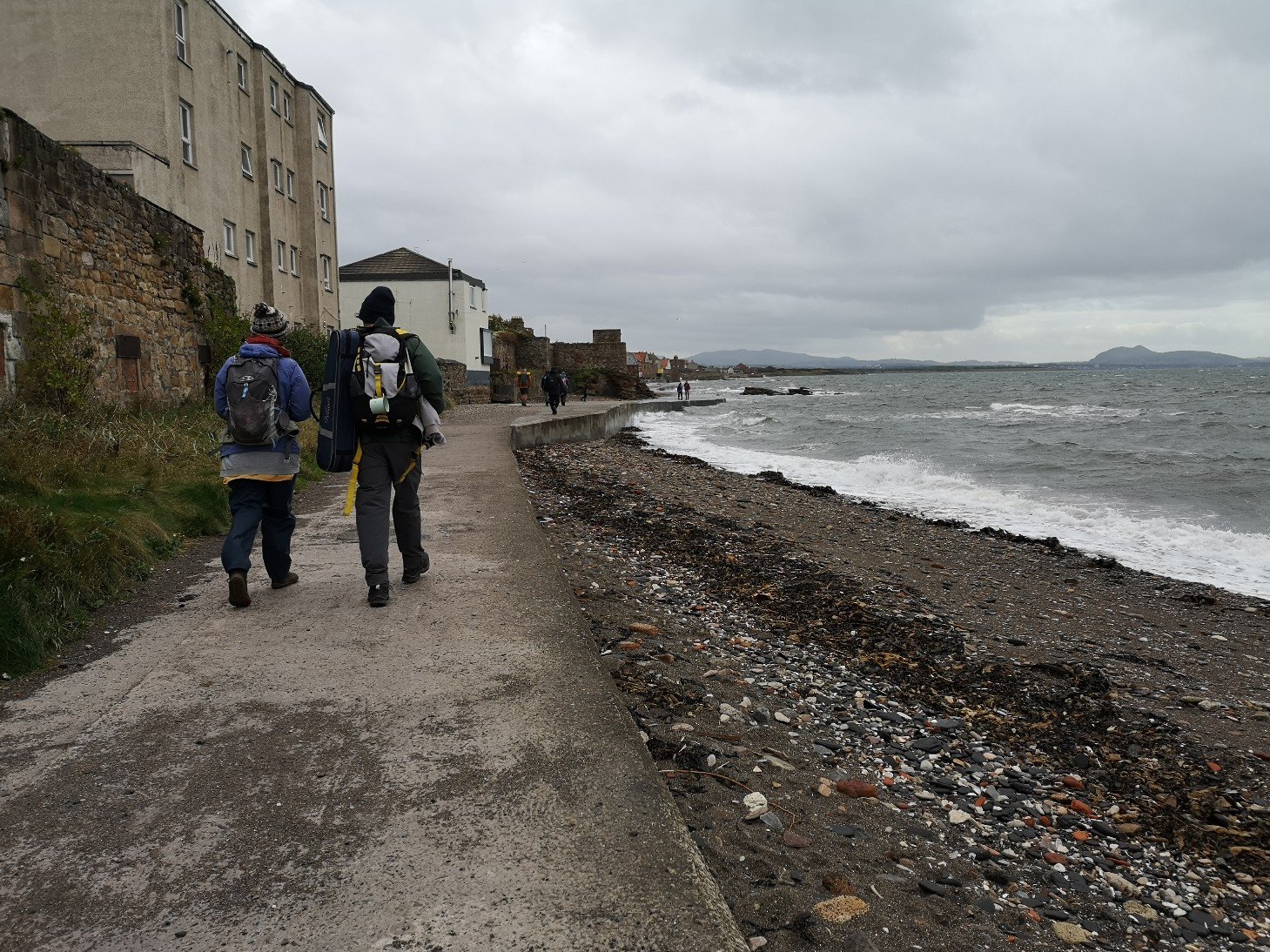
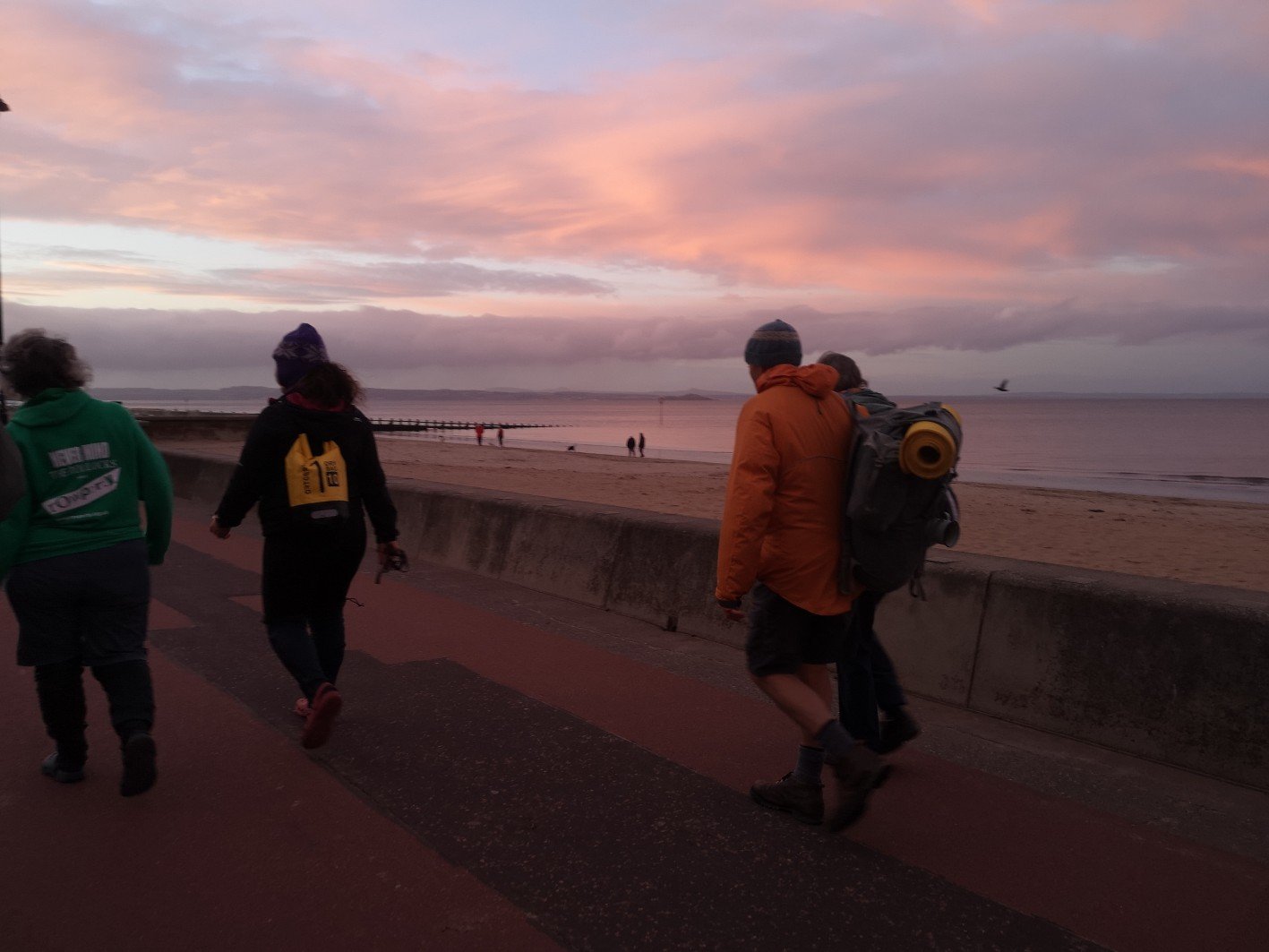
As the sun was lowering, we walked along the prom into Portobello

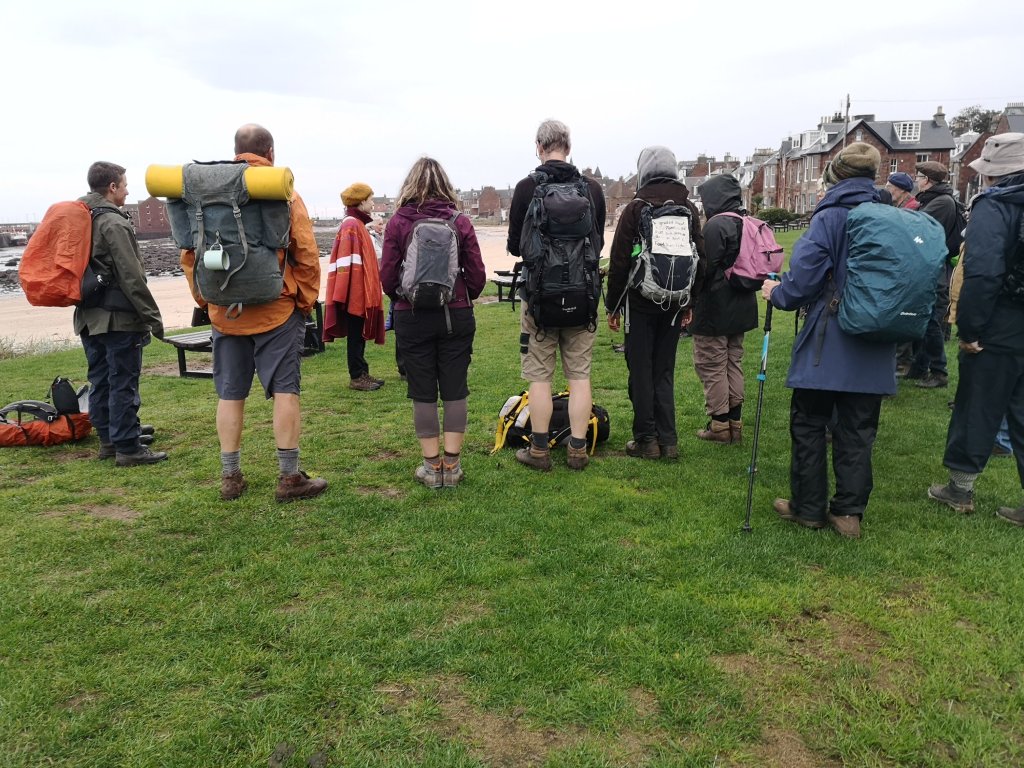
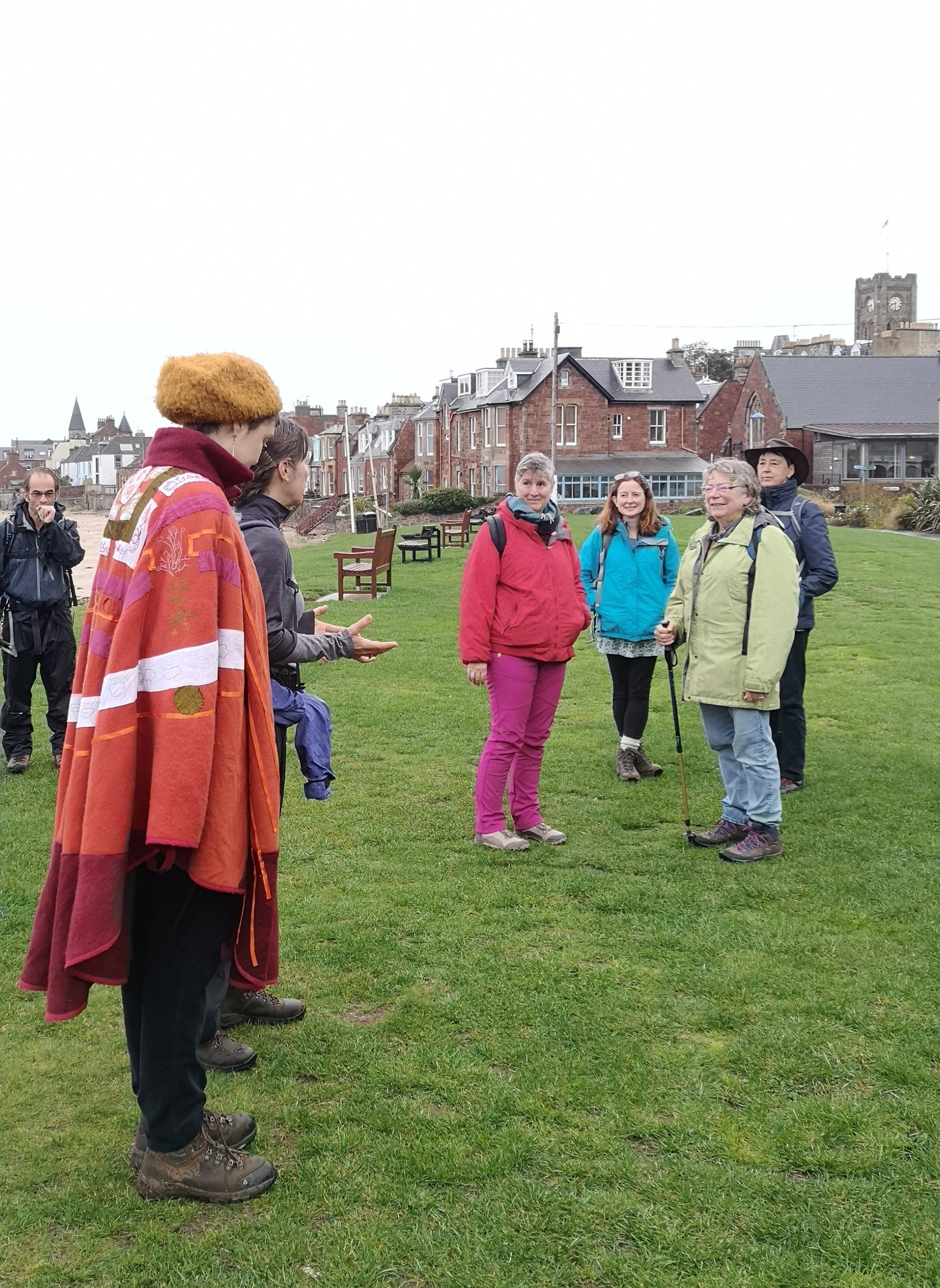
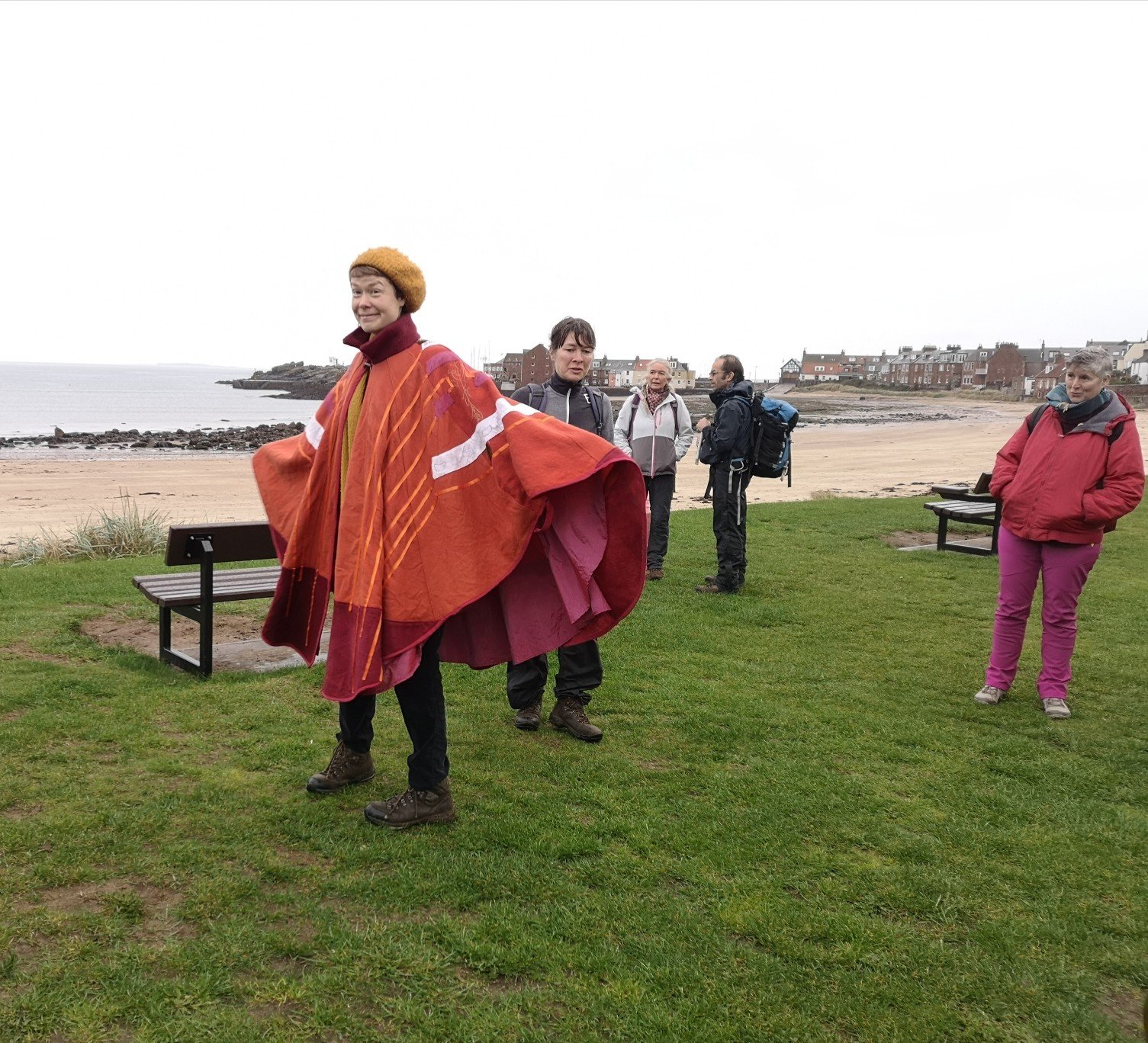
Keeper of the Soils cape: Natalie Taylor, artist, North Light Arts

The Pilgrimage for COP26 programme is here https://artandecologyearth.files.wordpress.com/2021/10/pilgrimage-for-cop26-programme-04.10.21-edit.pdf

@pilgrimageforcop26 #pcop26

Pilgrimage for COP26

19 October 2021 – Blog 5: North Berwick to Aberlady Bay

Ready to start out on the second day’s walk from North Berwick
Pilgrims at the ready – some who are walking all the way and others who have joined us for today
Olga is the Keeper of the Soils for this stage

Eva (in pink) was one of the day walkers and it was good to catch up after so many years. We talked of Reworlding, gratitude and reciprocity.

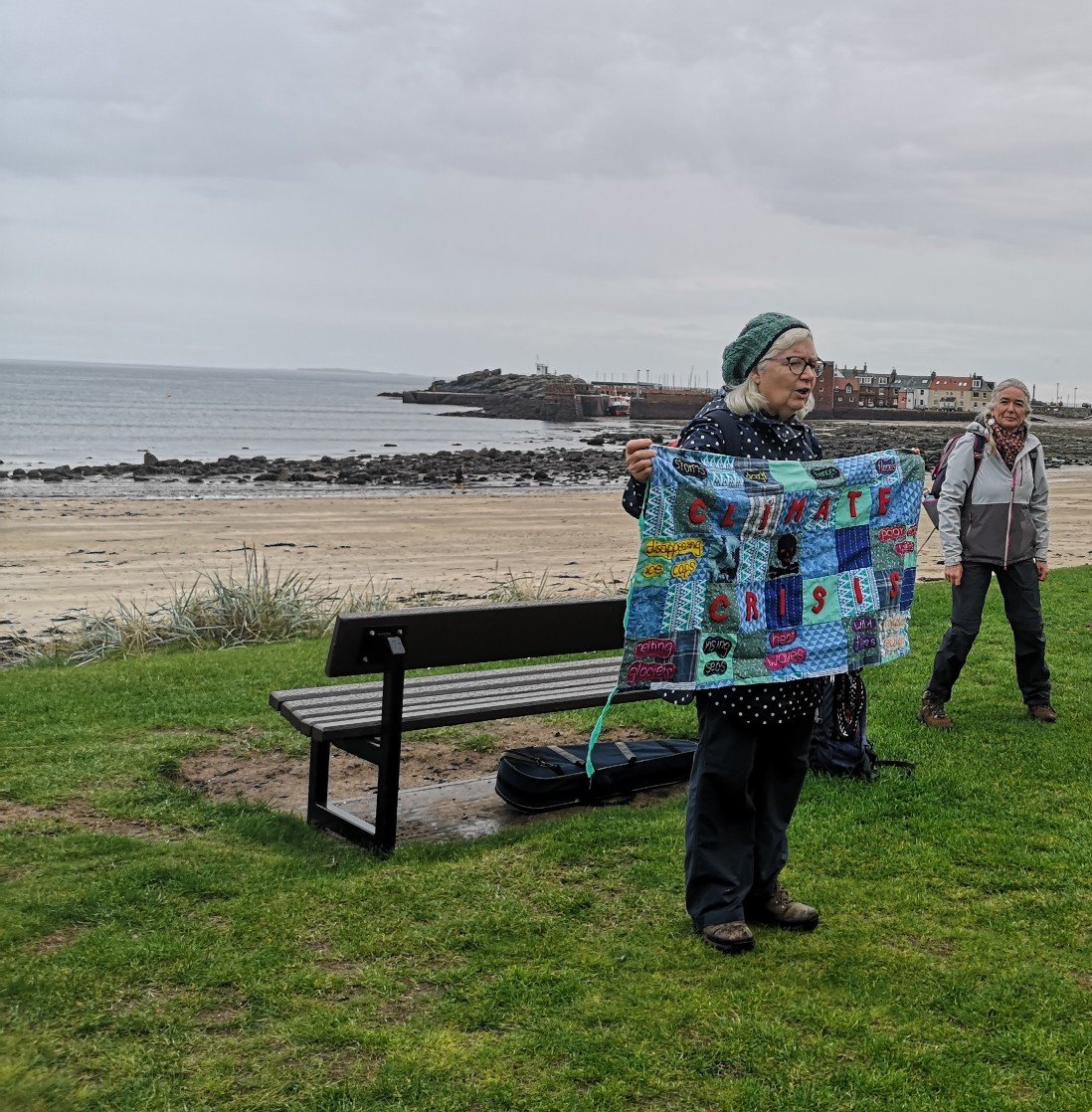
Cath explaining about Stitches for Survival – it was her day to carry the panels towards Glasgow
Ali Newell and Glen Cousquer were leading the walk

A field of brightness that travels ahead, providing, in time, ground to hold our footsteps and the light of thought to show the way. … to create a space for all our words, drawing us to listen inwards and outwards.

Read by Glen


Ali lead us in a Salute to the Sun from her Capacitar (Healing Ourselves, Healing Our World) exercises.


Then we began to walk and it rained

Petrichor: the smell of rain

In this photo the waves have left vertical horizons on the near part of the beach: a dividing line of wet-sand mountain peaks and their mocha-coloured reverse shapes

We took time for quiet walking and reflection, appreciating the luminosity of the scene. I listened to the sound of the waves and the pit pat of rain on my jacket. I wasn’t aware of my own smell – it seemed to have merged with the air around me, and my wet fringe tickled my forehead.

A stop to hold, admire and taste the Sea Buckthorn – salty and sour at the same time. As we walked on, we became attuned to the fermenting scent of the fruit on the bushes

… gifts from our plant relatives, manifestations of their generosity…When we speak of these, not as things, or products or commodities, but as gifts, the whole relationship changes. I can’t help but gaze at them, cupped like jewels in my hand … In the presence of such gifts, gratitude is the intuitive first response…

Robin Wall Kimmerer
I was glad that I popped a rain poncho in my rucksack at the last minute – it was useful to protect the cape
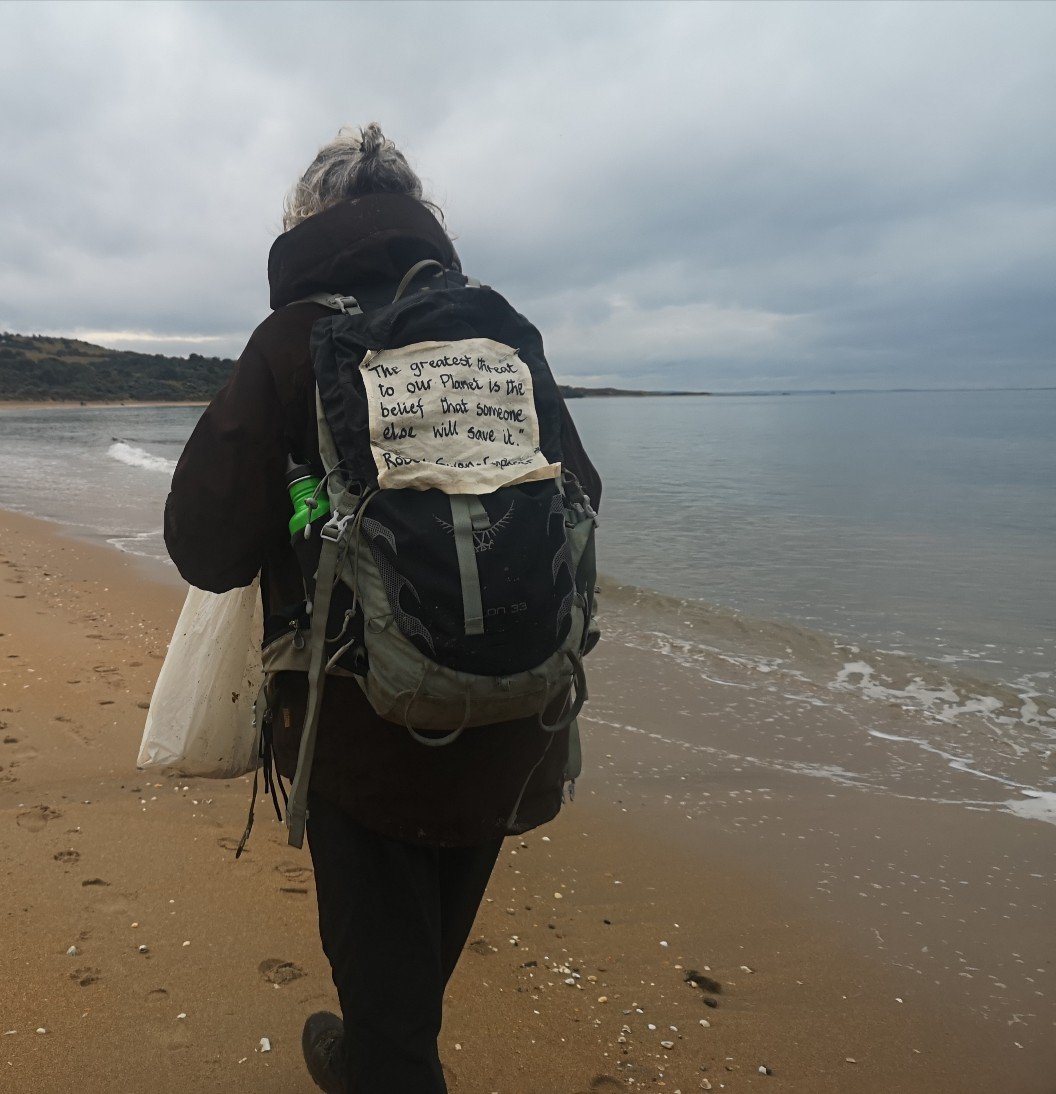
“The greatest threat to our planet is the belief that someone else will save it”

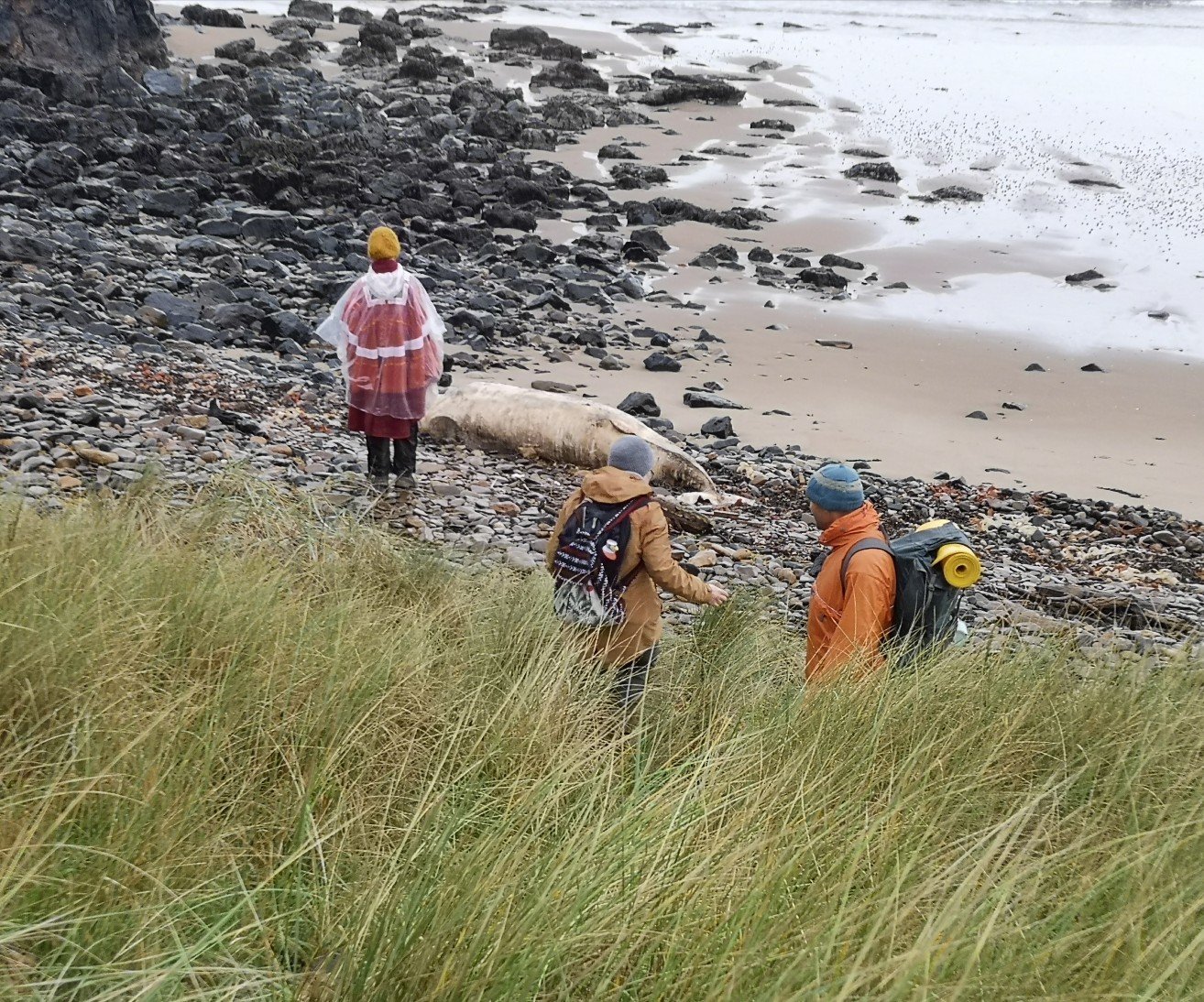
As we sat and ate our lunch, cormorants stretched out their wings on the rocks. The sea left a white line of bubbles behind. We couldn’t help ourselves stooping to pick up tiny triangles of blanched shells. The bloated body of a dead whale was a discomfiting pale apricot, and the decomposing stench was terrible as we walked past. I whispered my sorrow for its truncated life.

Cameron and the sea playing a lament

Someone said they had an image of Ghandi walking in solidarity with us.

We were regaled with songs including one from four members of Protest in Harmony.

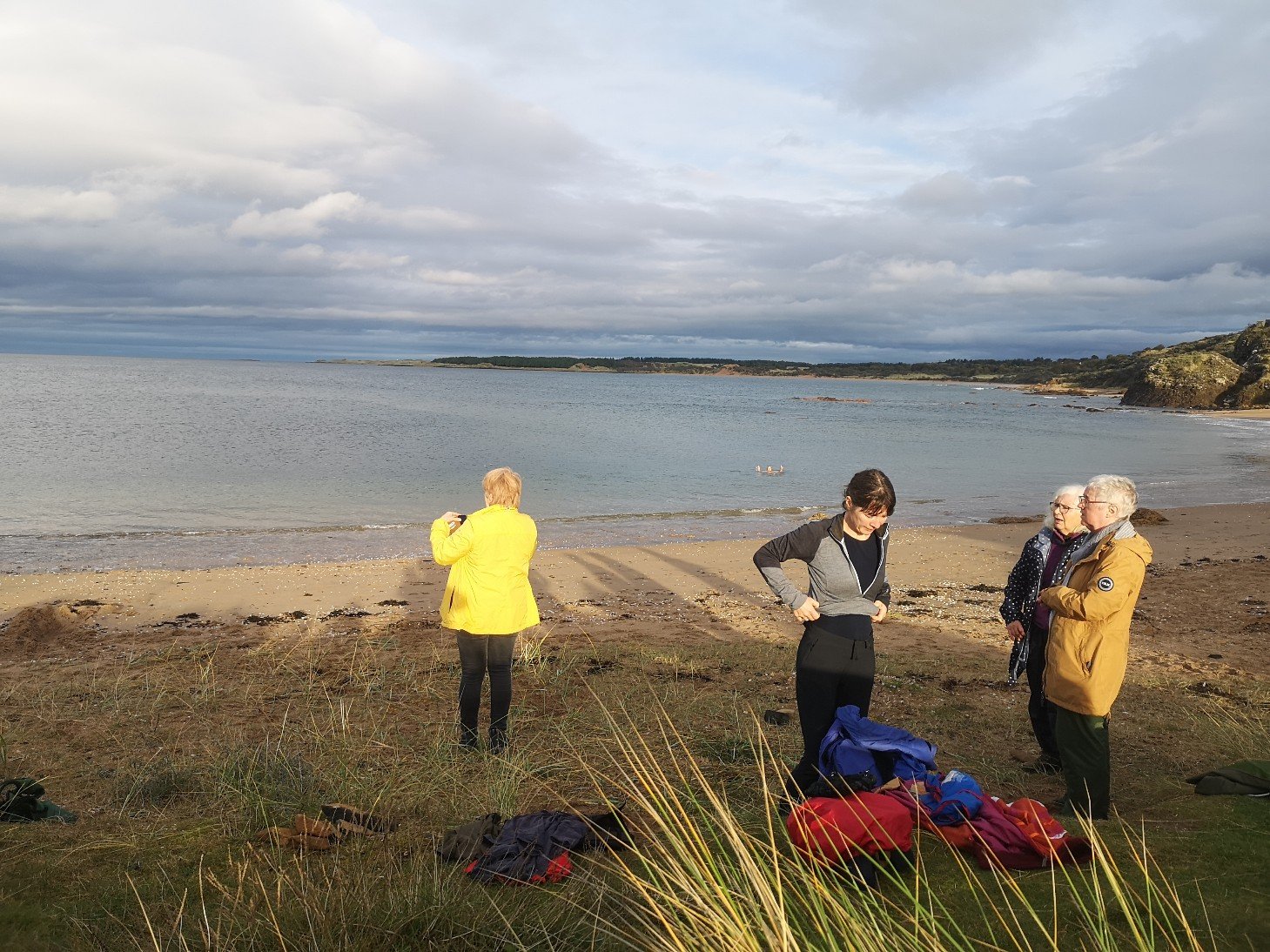
Some of us stopped and swam

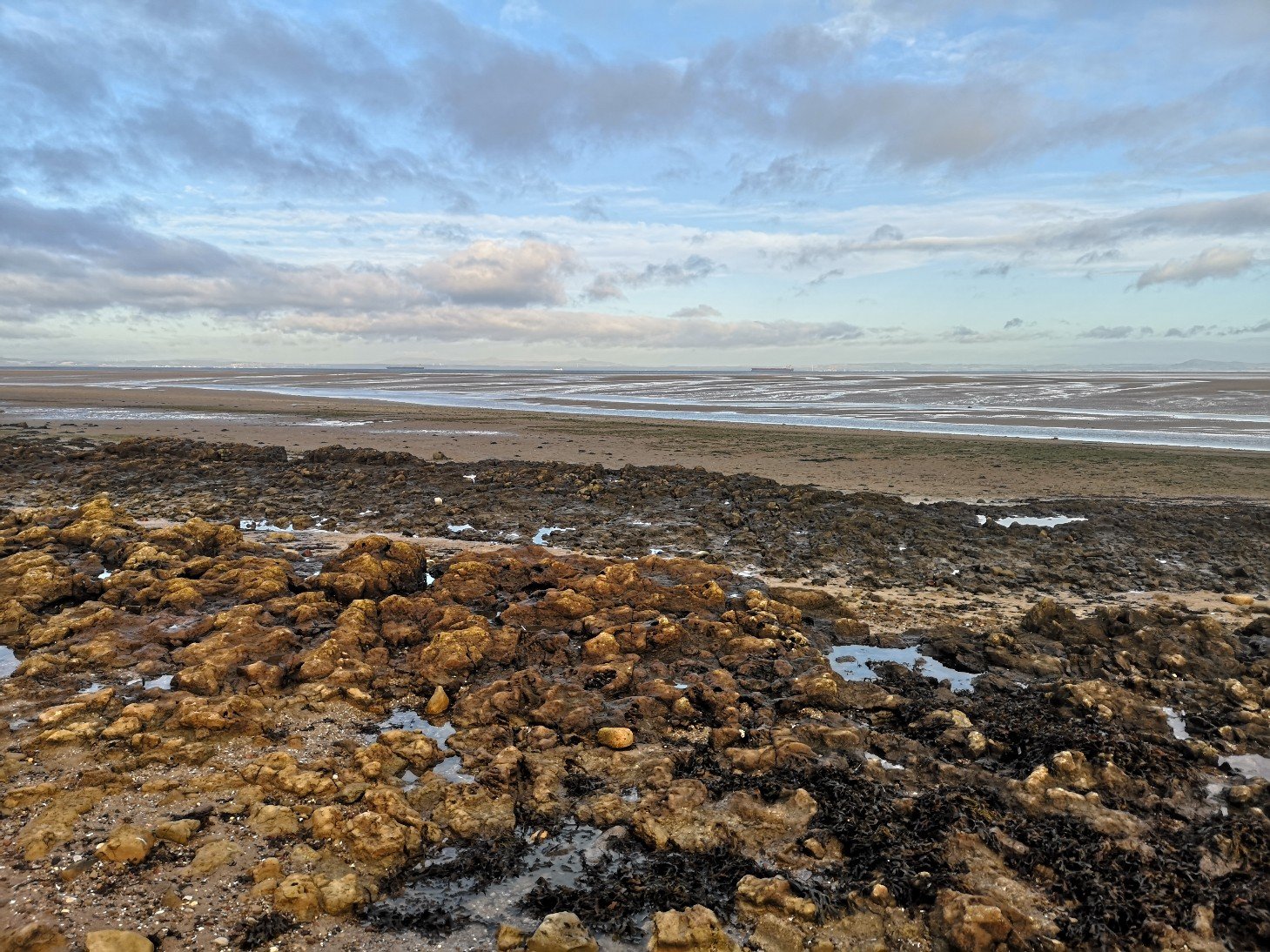
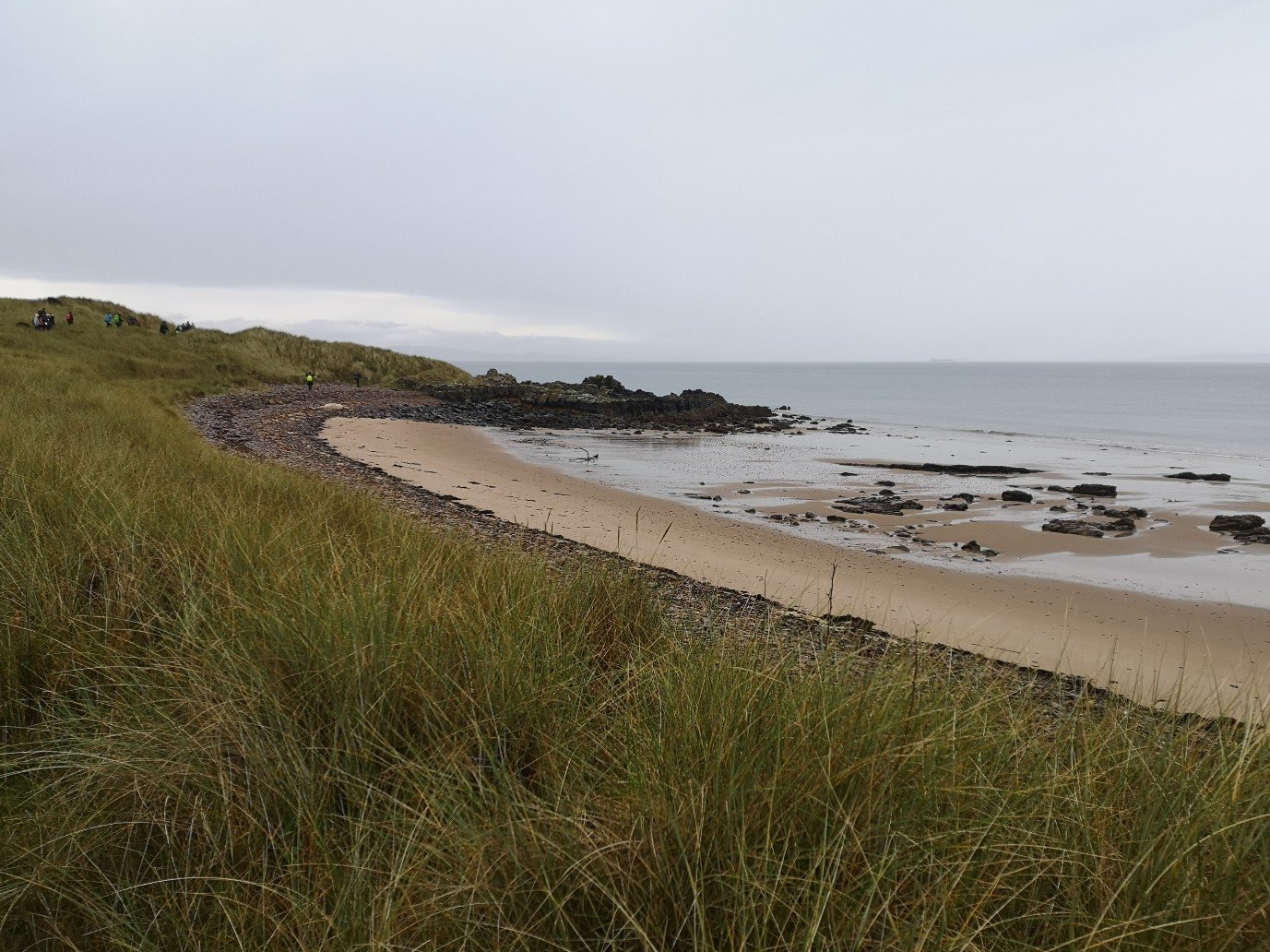
Miles of beachy colours – caramel, beige and cinnamon – and the occasional low-lying green plants with lilac flowers. Further on there were fingers of cerise and buttercup seaweed shining in contrast.
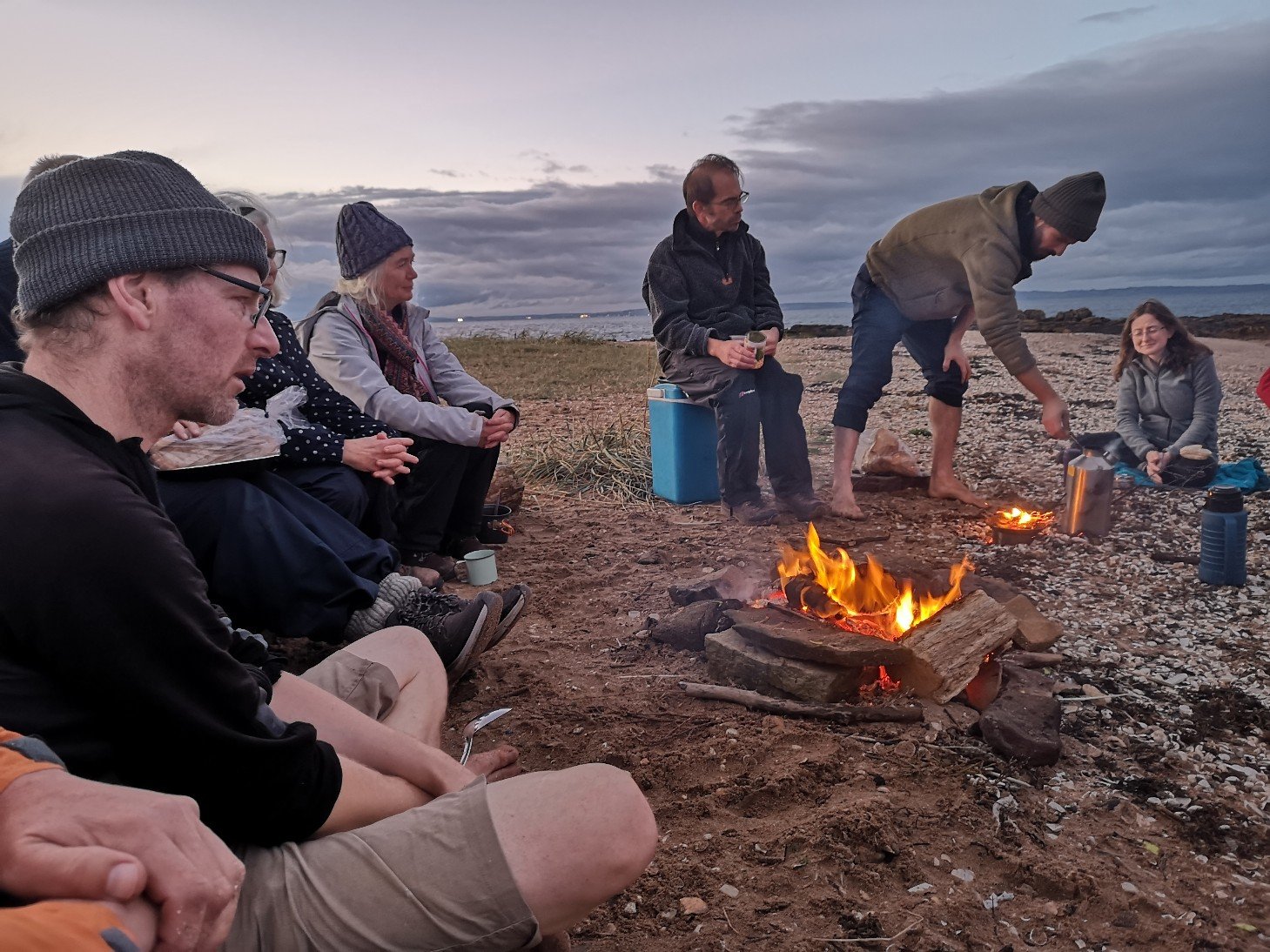
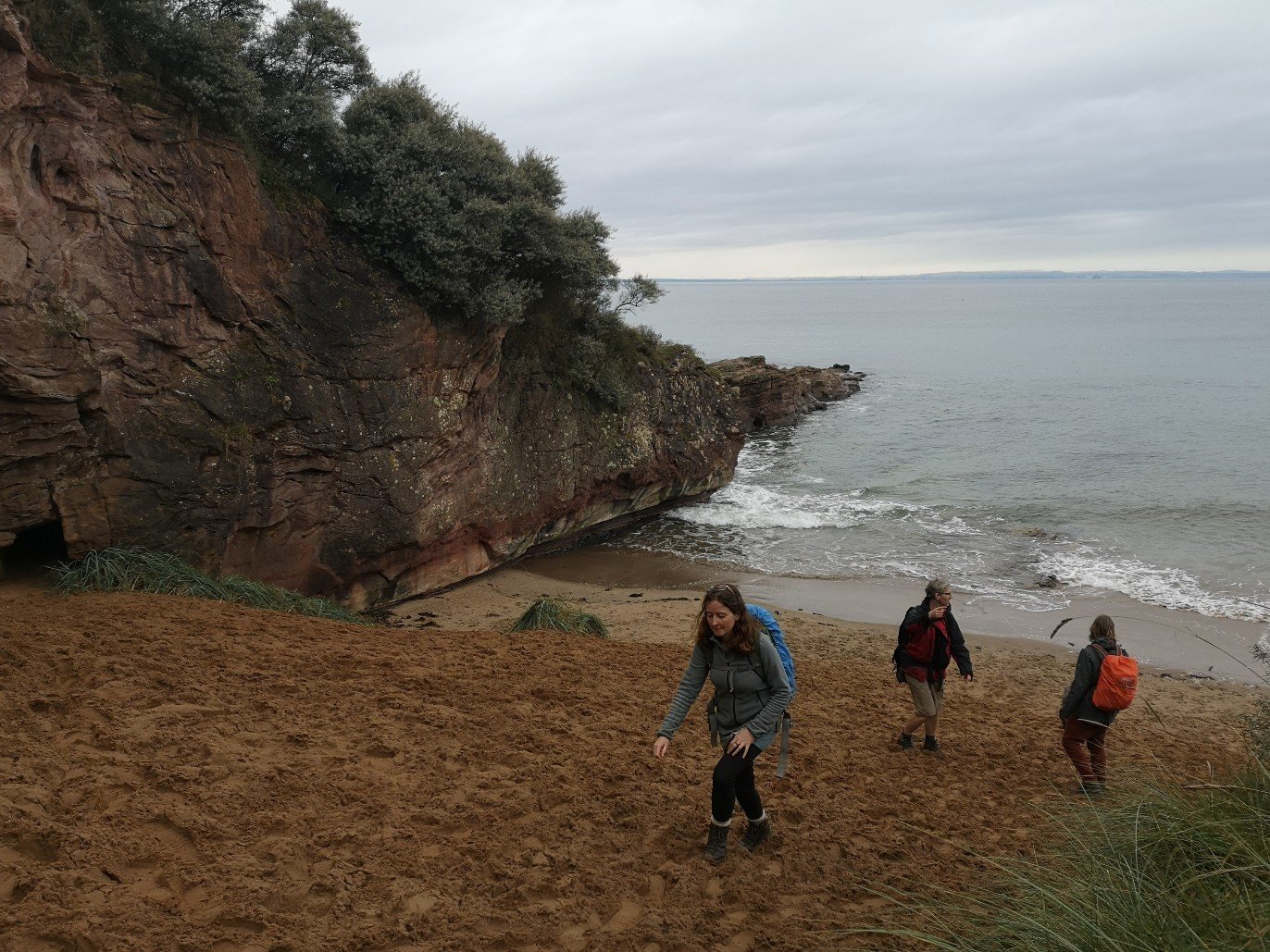
A steep climb that turned out to be the wrong route
Aberlady Bay, where we camped for the night
Delicious food around the campfire for all the walkers
Apricity: means ‘the warmth of winter sun’
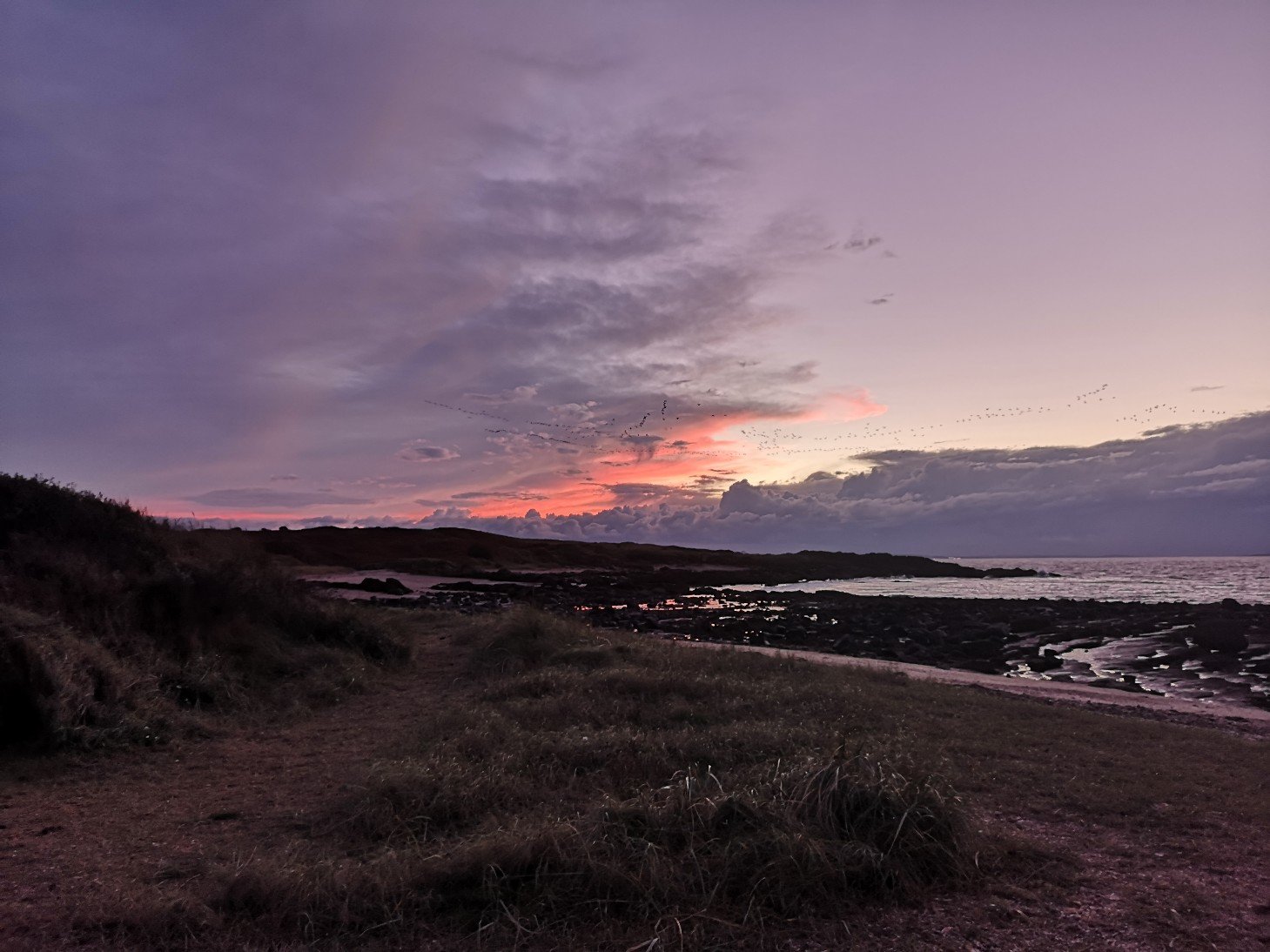
We watched skeins and skeins of geese honking homeward as the sky darkened. They were particularly spectacular when silhouetted first in front of the setting sun and then the rising moon
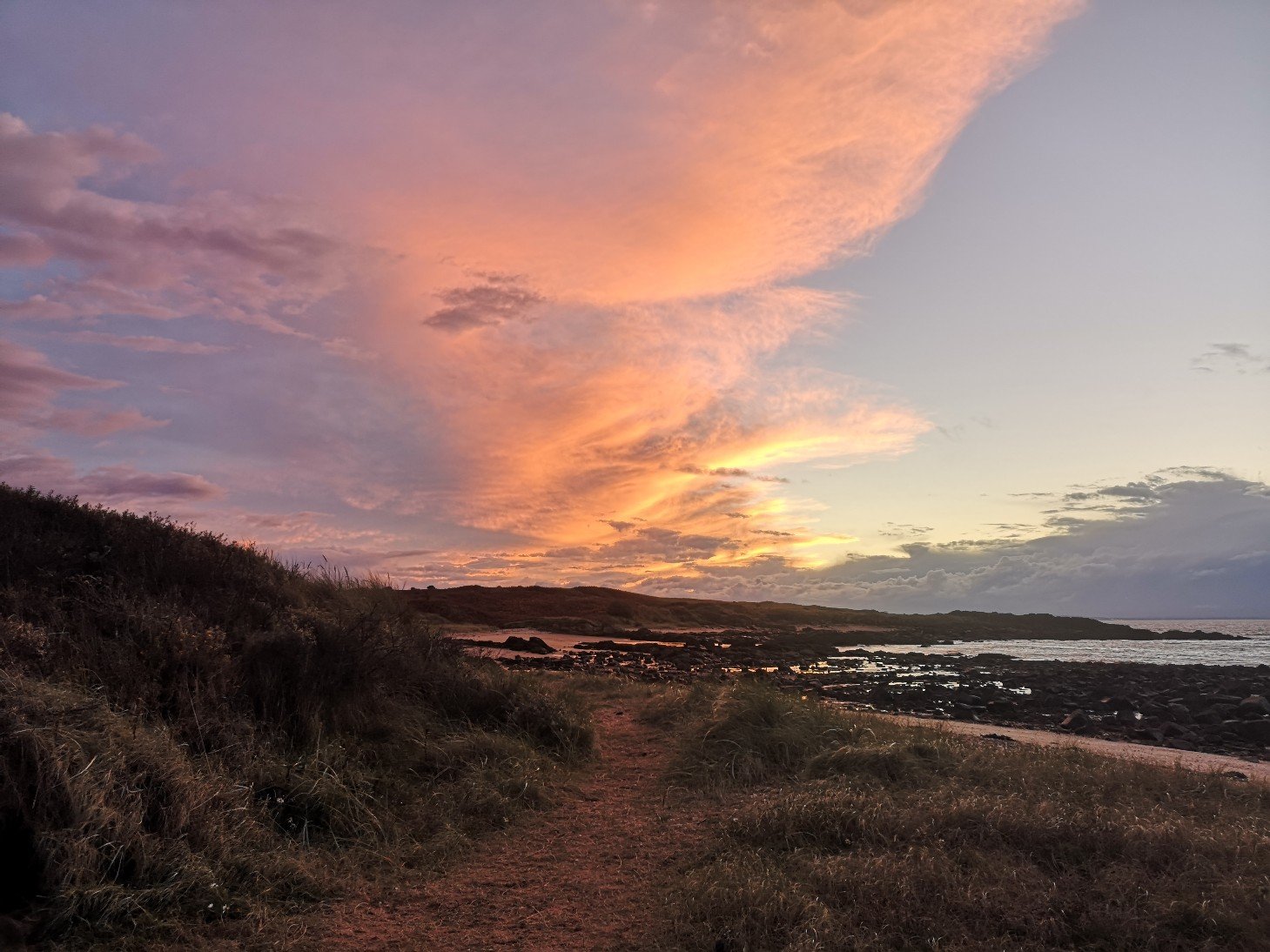
Landscapes in the sunset sky looking towards Longniddry
After supper, the group split in two and the majority walked to a hall in Aberlady village to sleep – a night walk along this path against the wind

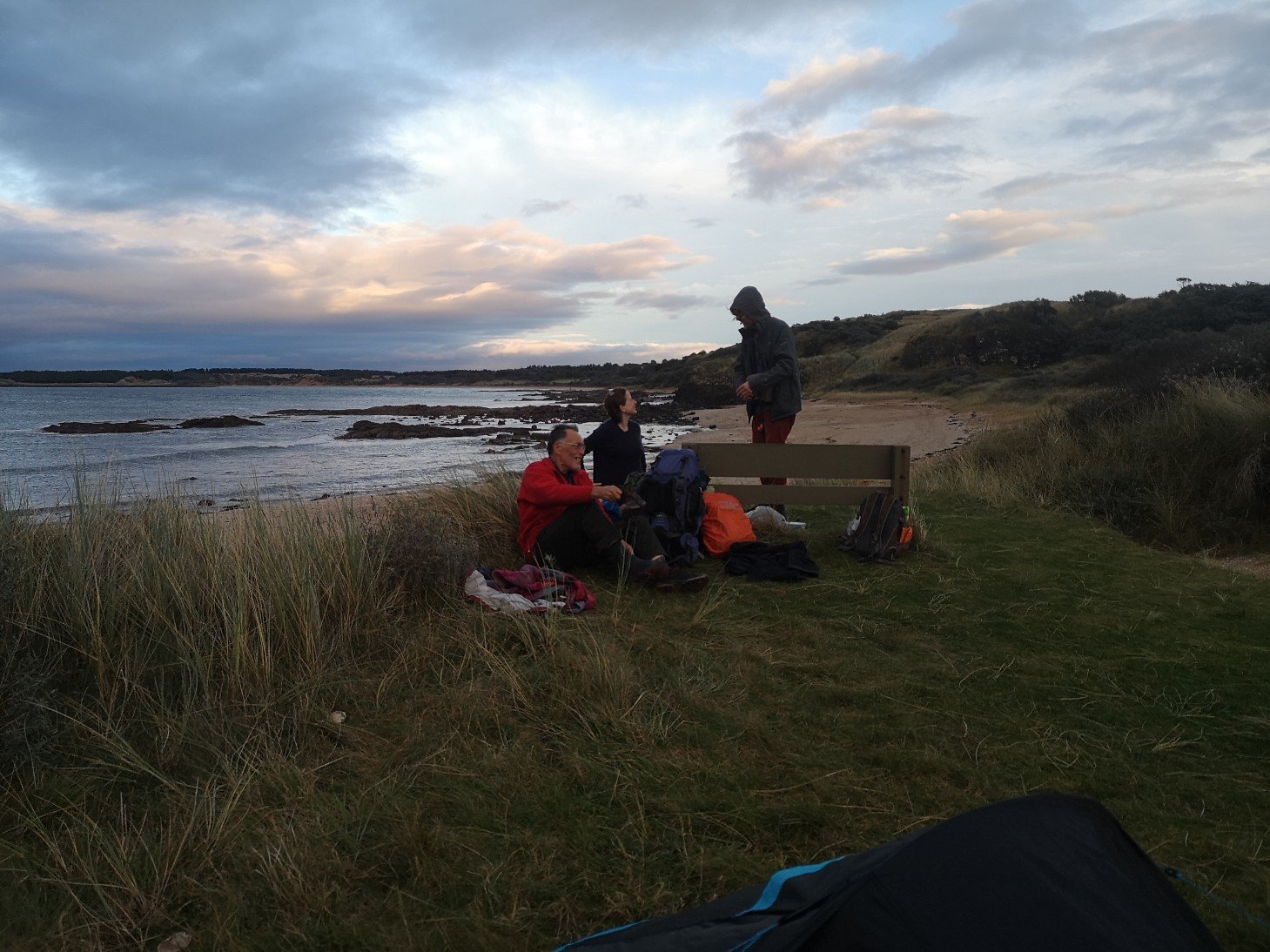
Eight of us camped in the high winds of the Aberlady Nature Reserve. It was the most beautiful spot for contemplating and talking about how important such places are and how vital it is that our government and businesses curtail sewage output, address coastal erosion, and put money behind the preservation of our wilder environments.
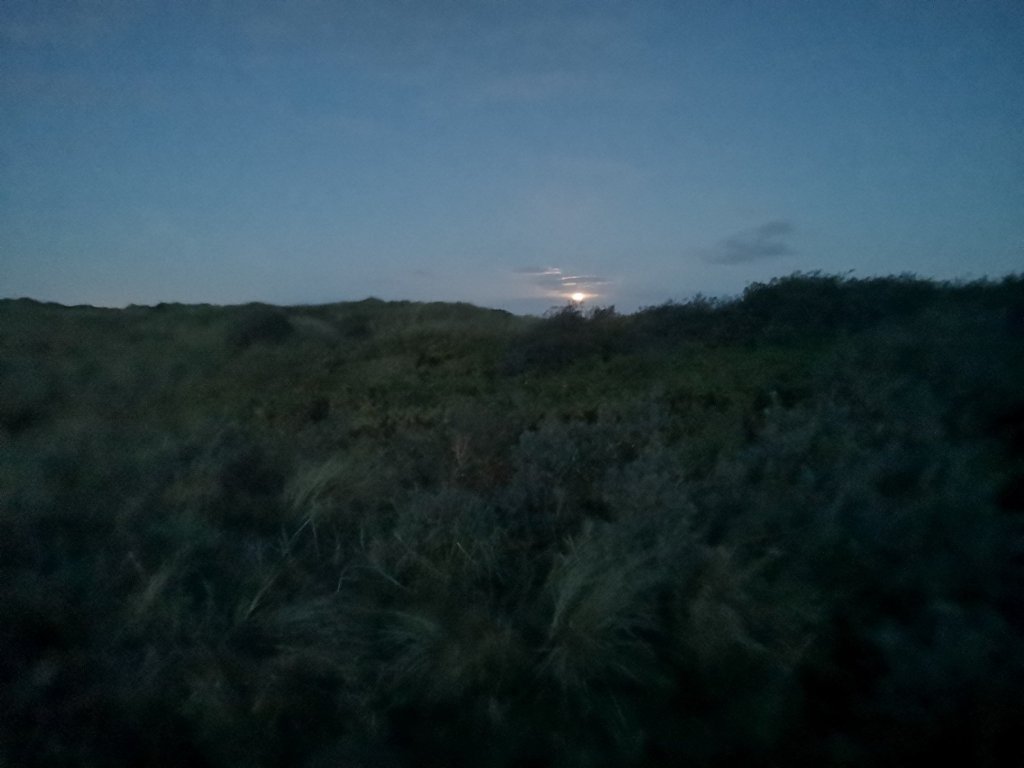
A blurry pic of the Harvest Moon – full around 5am
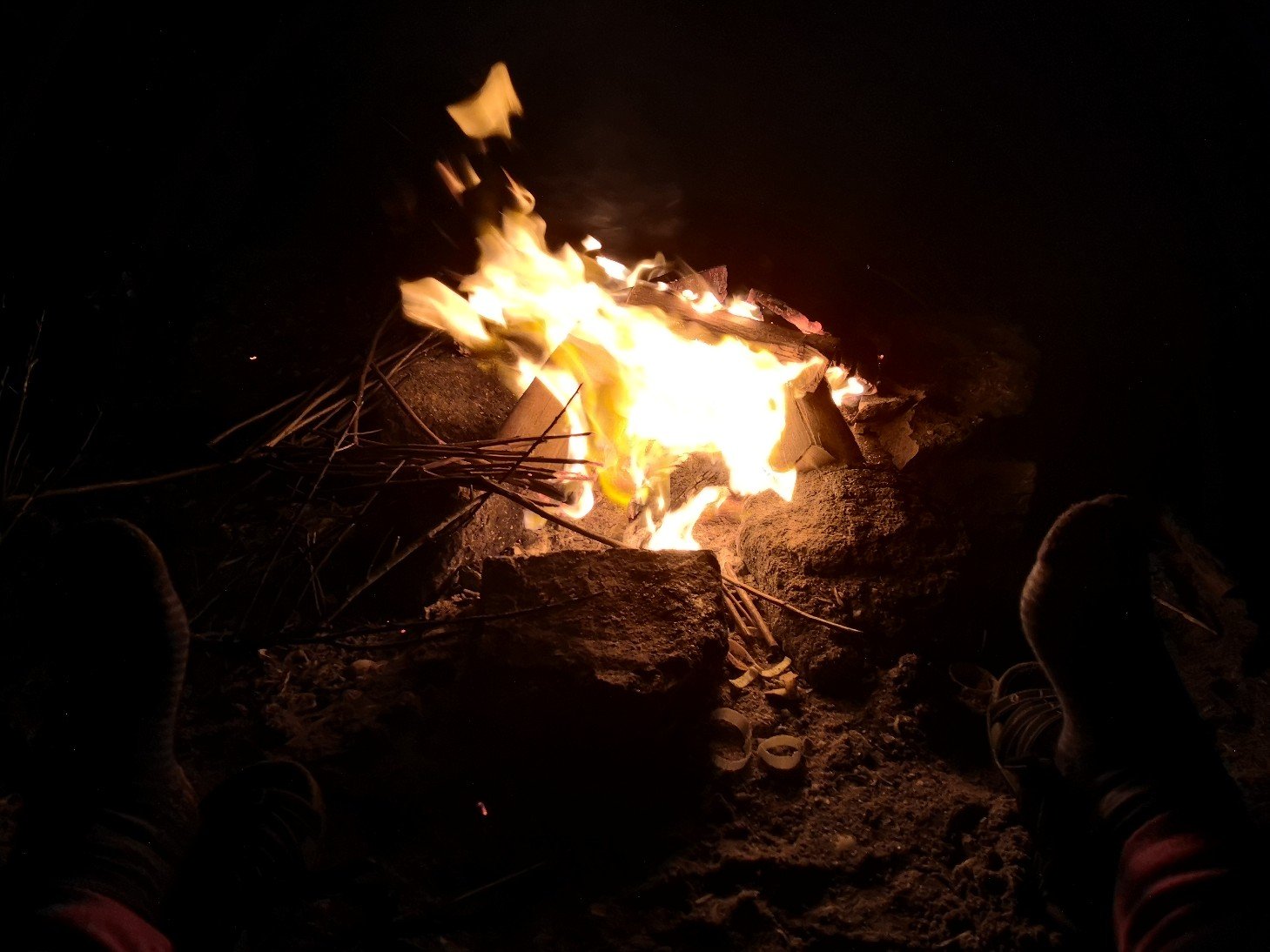
Campfire and a dram

Thanks to

Ali and Glen for leading the walk, and Cameron for playing his fiddle. Vicky for driving the electric van which carried our rucksacks.
Pilgrimage to COP26

18 October – Blog 4: Dunbar to North Berwick

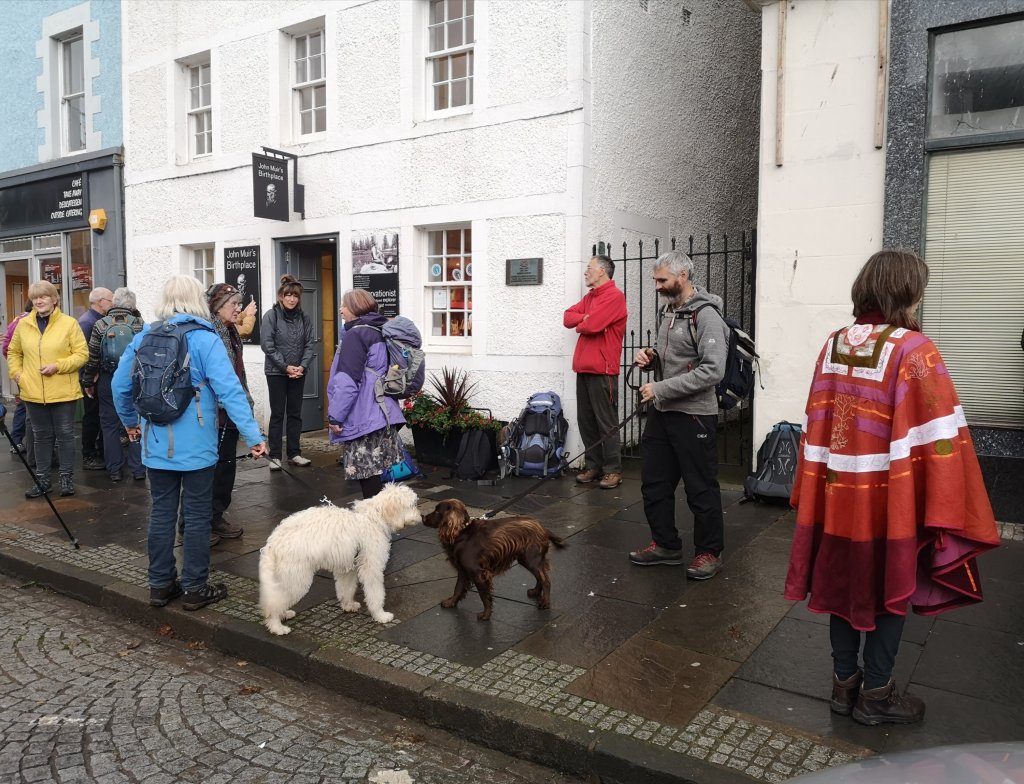
All ready to start the Pilgrimage for COP26 outside John Muir’s birthplace, Dunbar
Lauderdale Park, Dunbar, where we stopped for some introductions and announcements
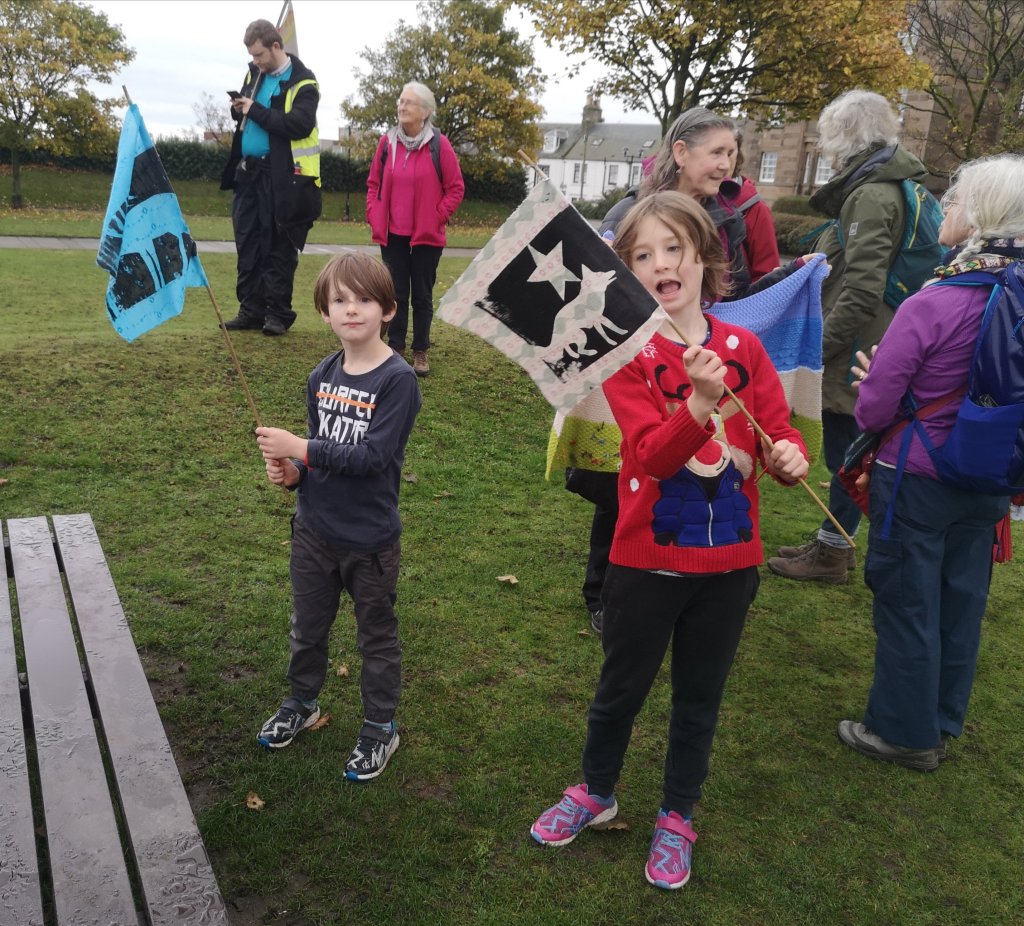
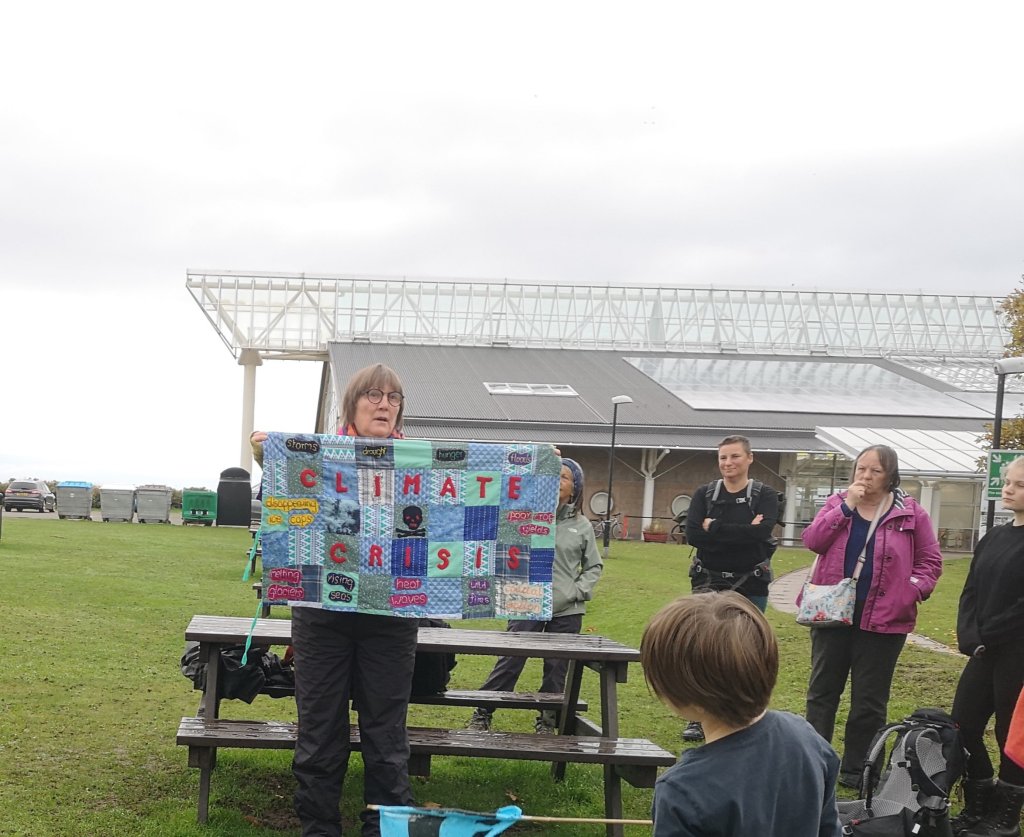
Stitches for Survival Mass-craftivism to put the Earth centre-stage at COP26
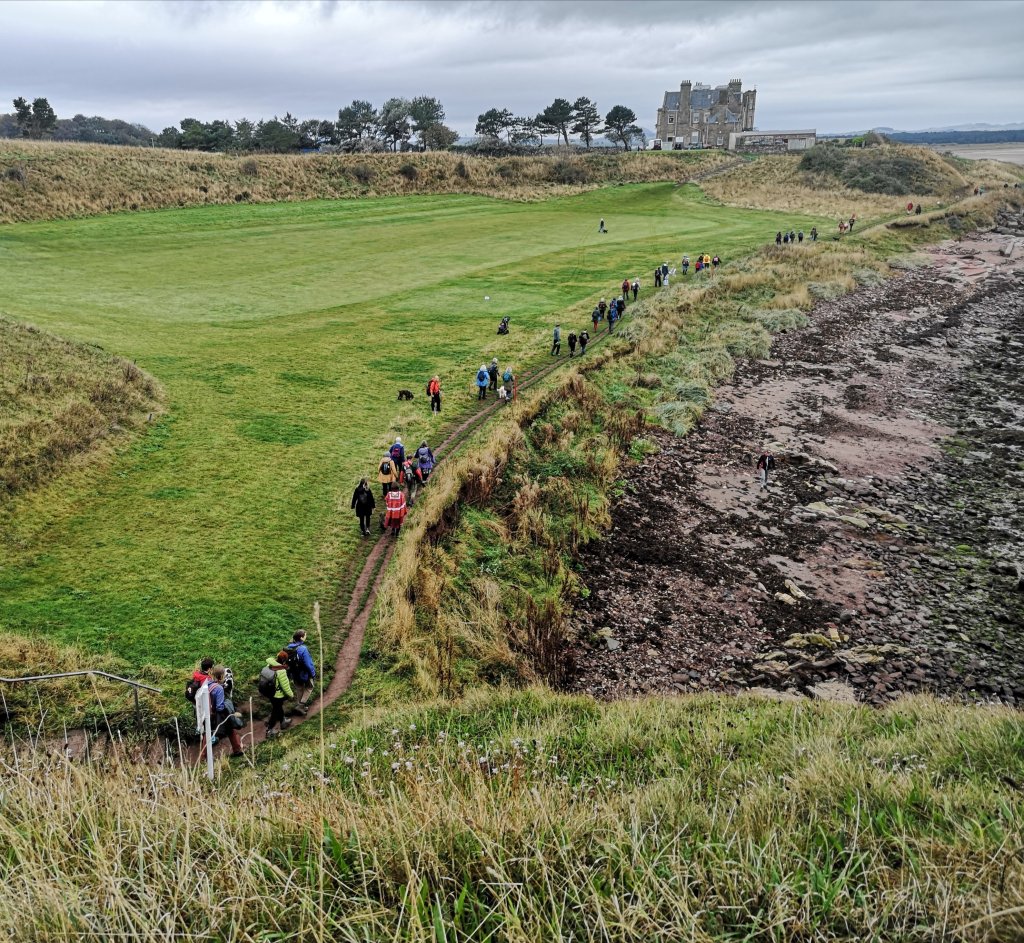
Pilgrims all strung out along the East Lothian coast
And beside Winterfield Golf Links
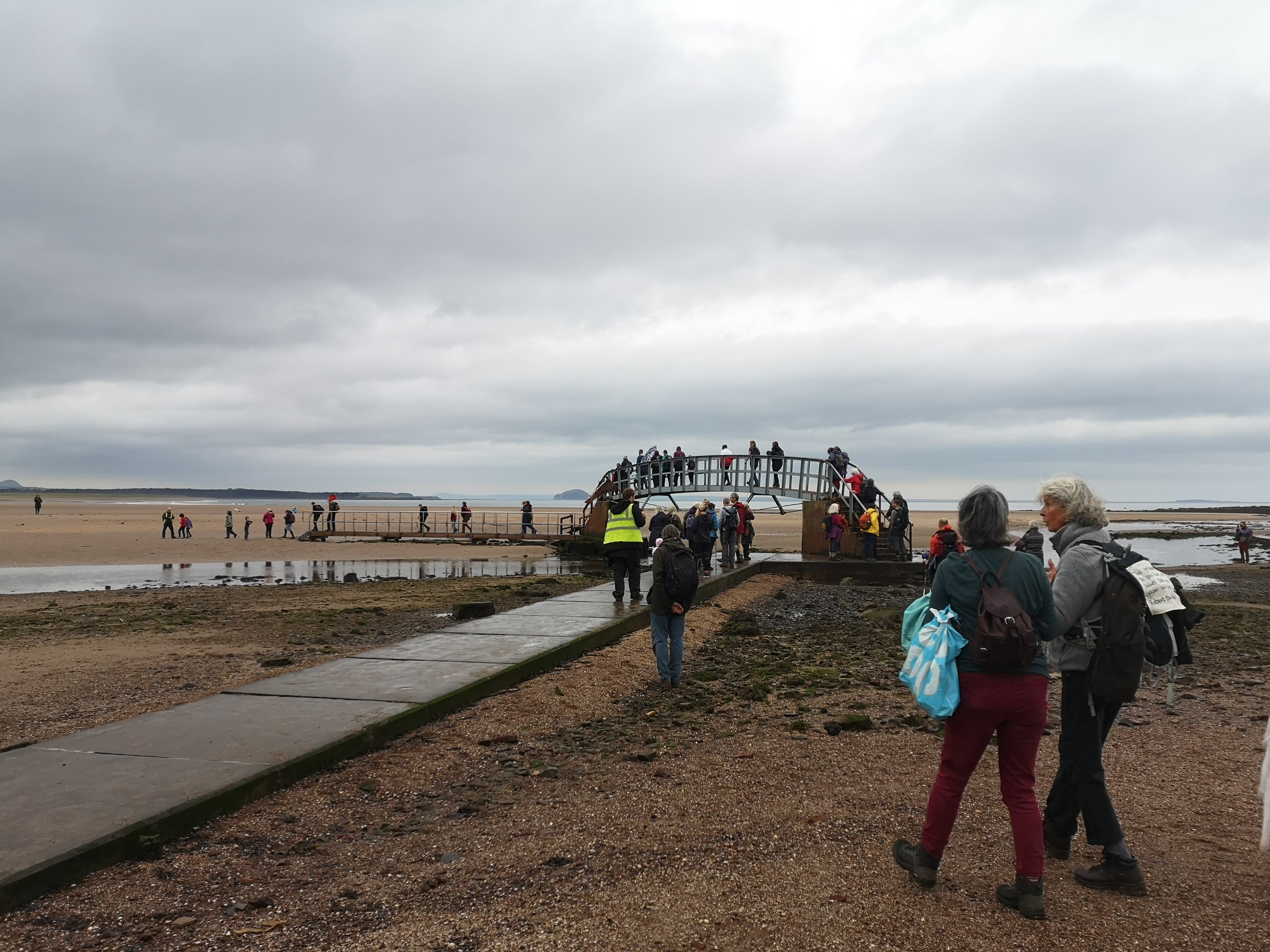
Across the Bridge to Nowhere
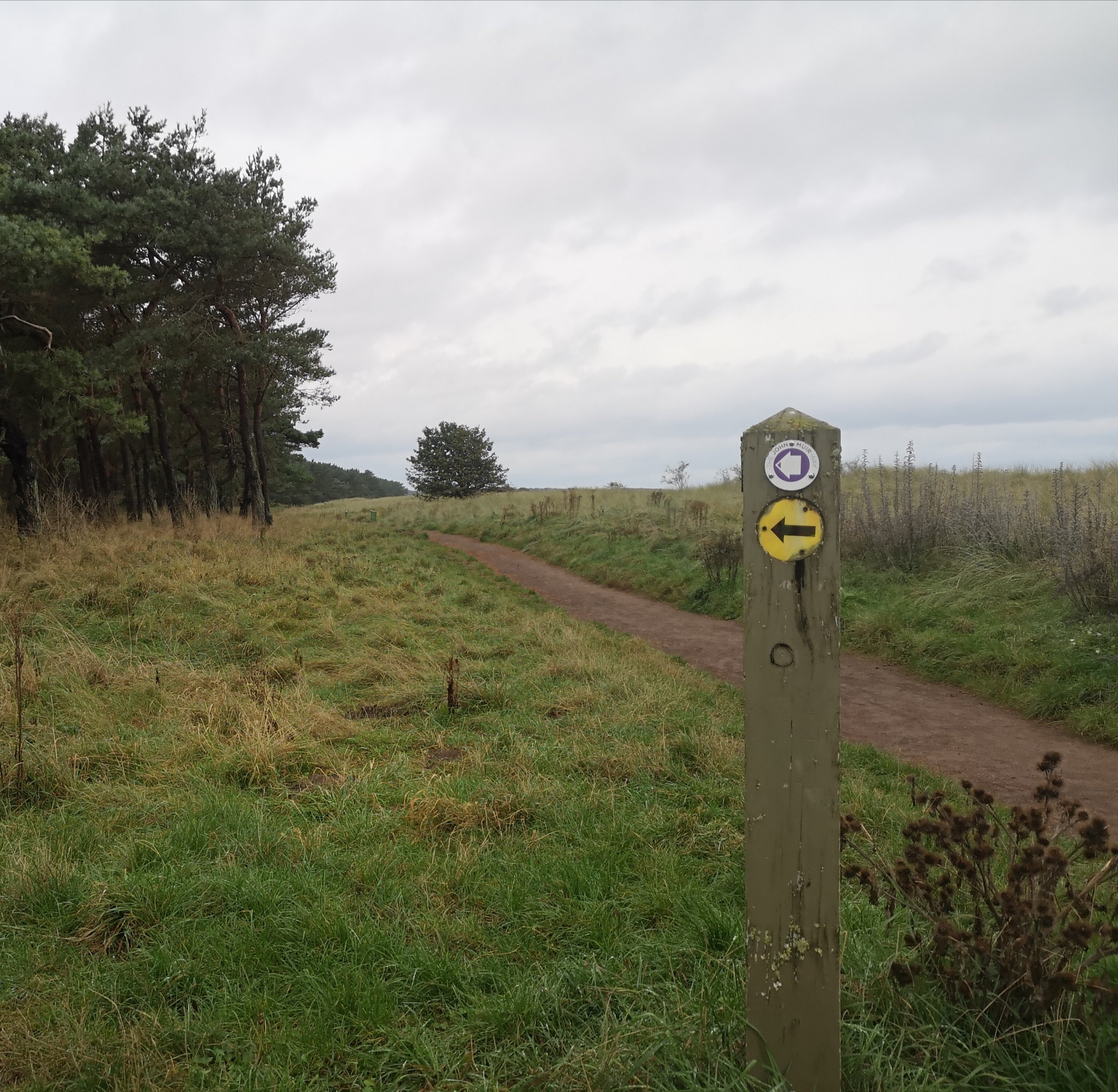
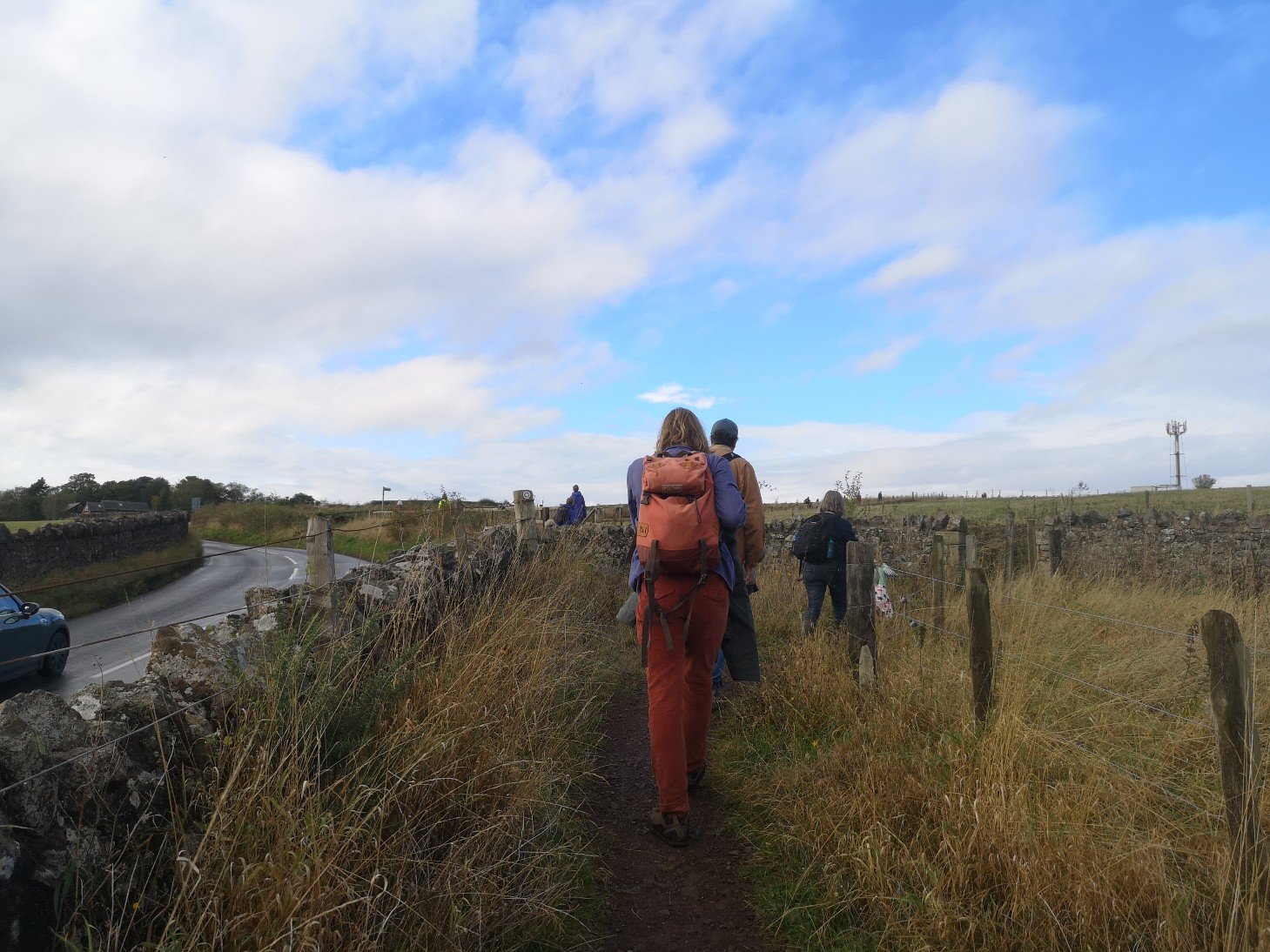
Following the John Muir Way – yes, it rained!
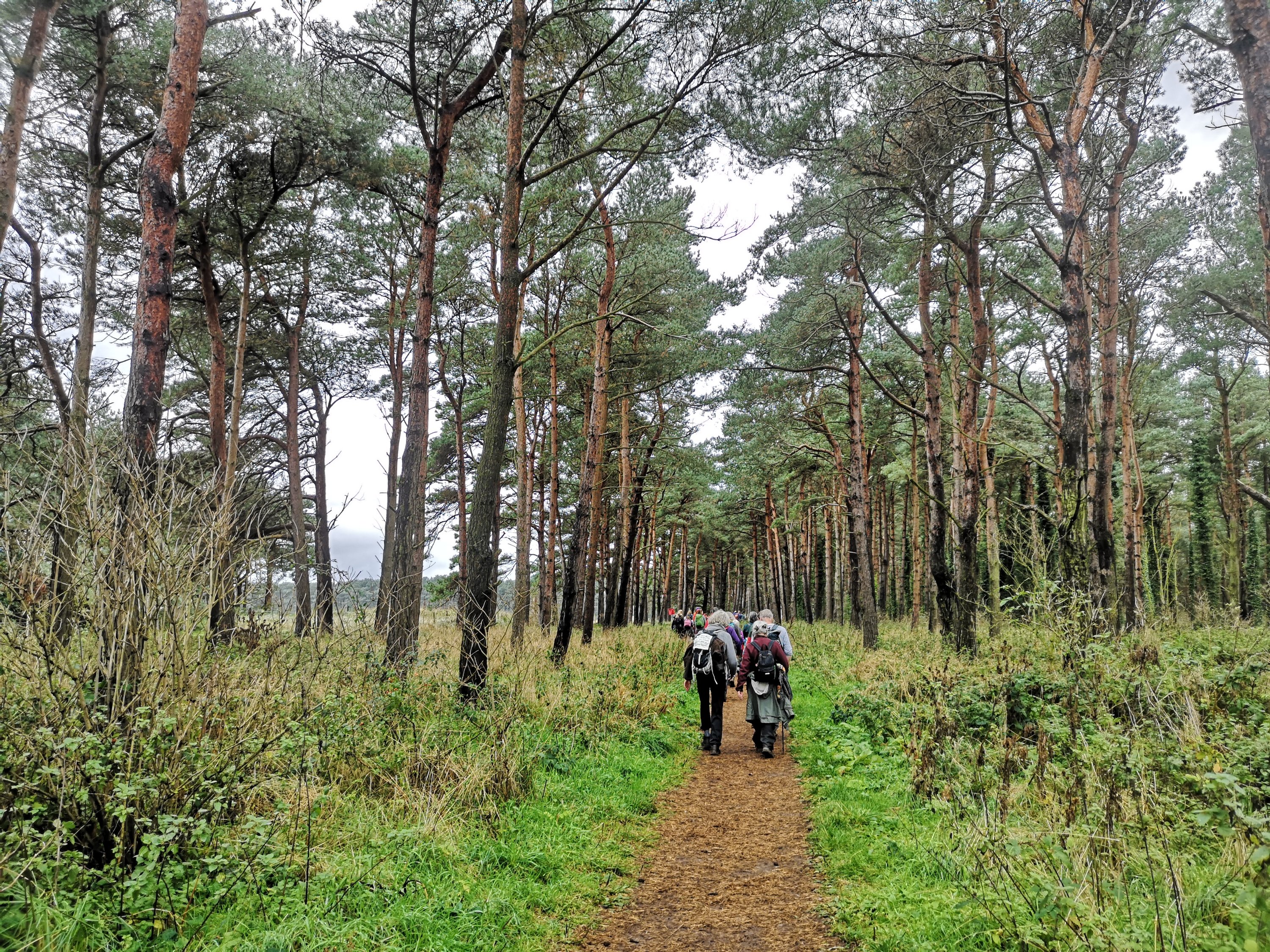
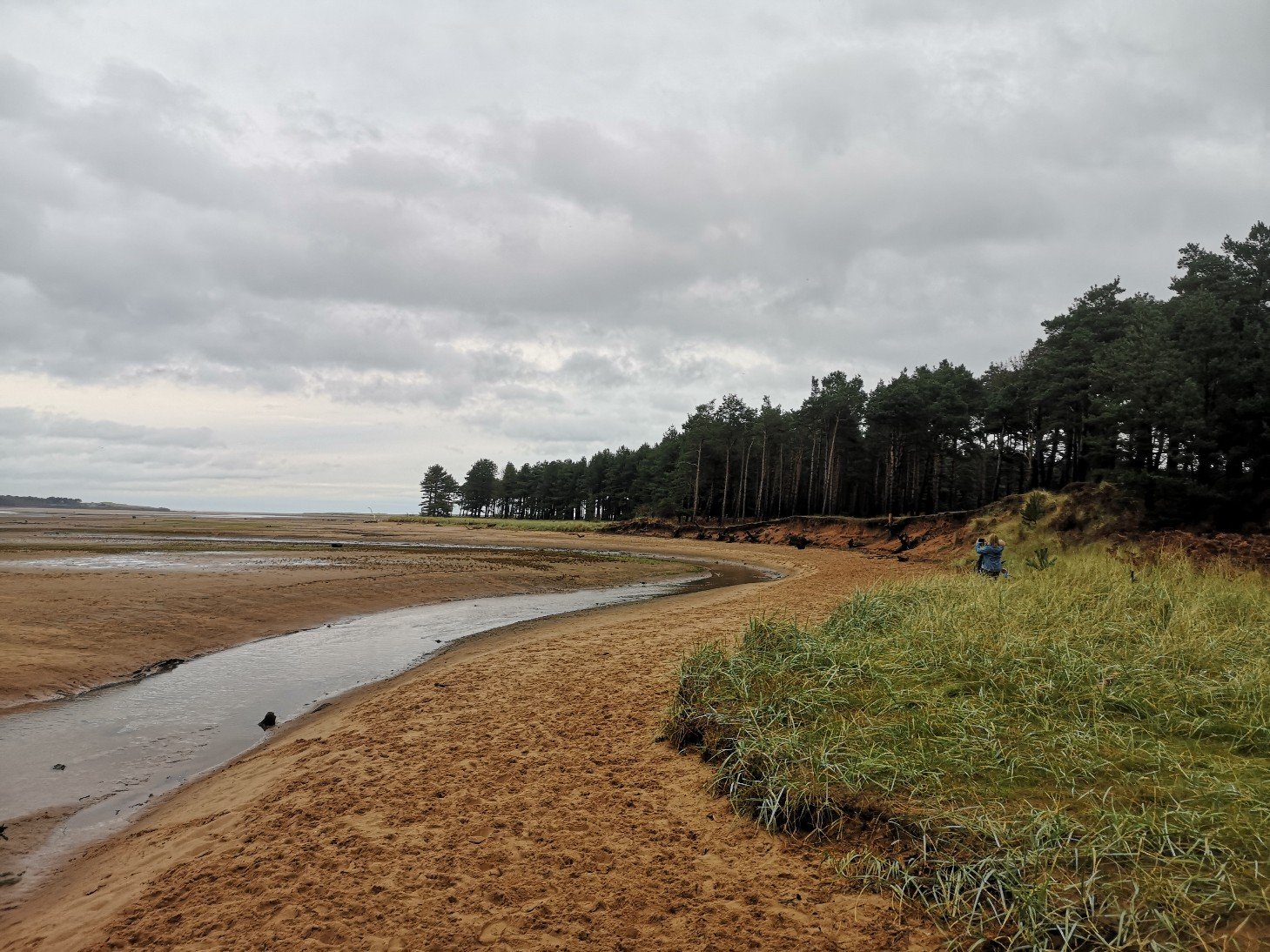
Beautiful woods of Scots Pine
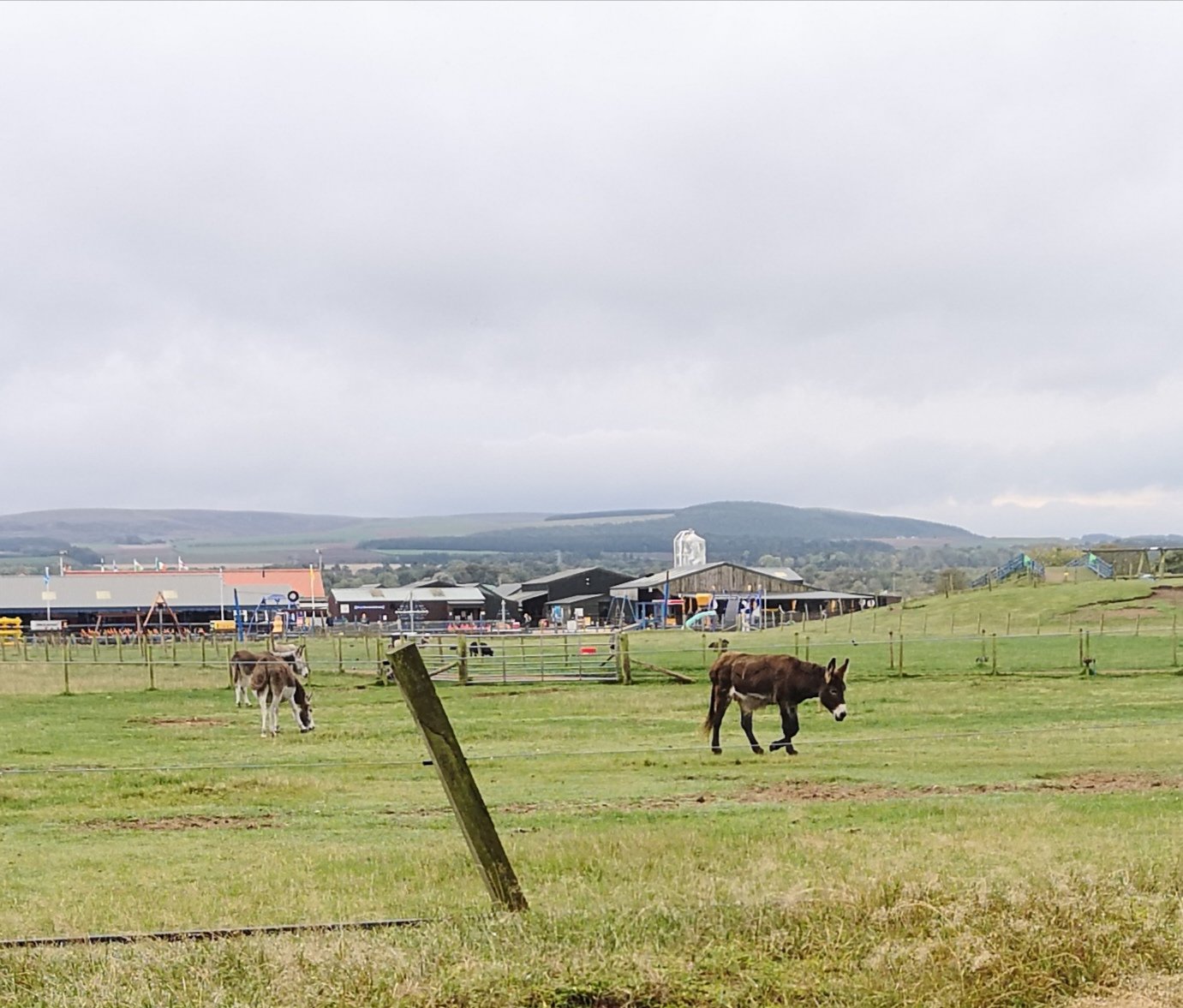
Past donkeys and llamas and emus
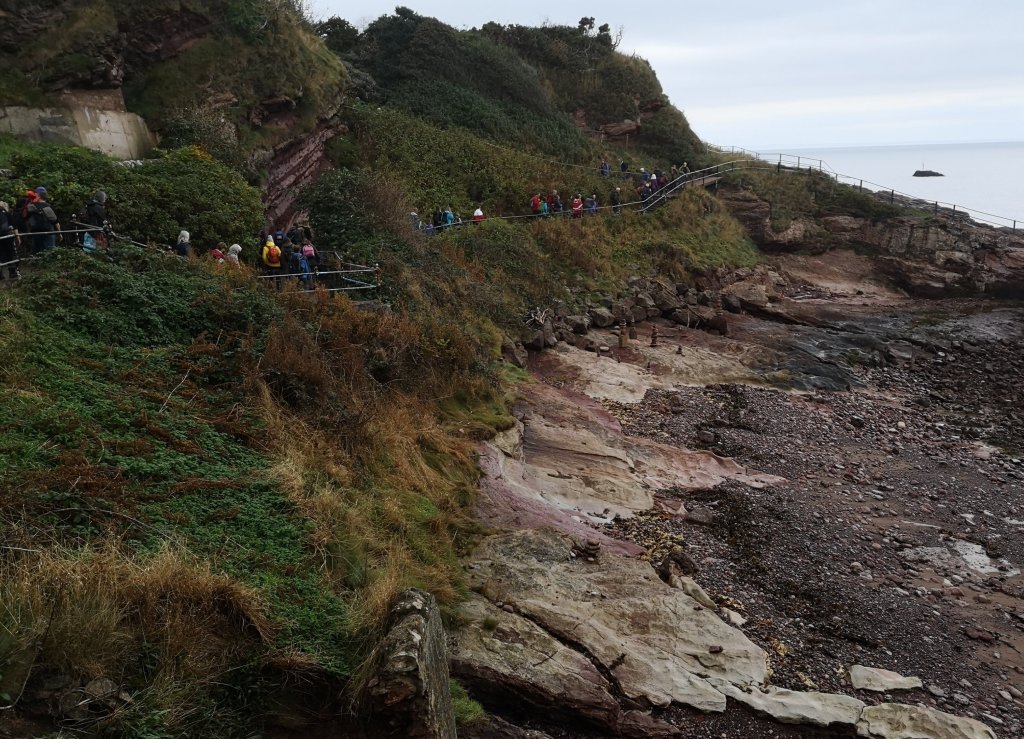
Stunning scenery
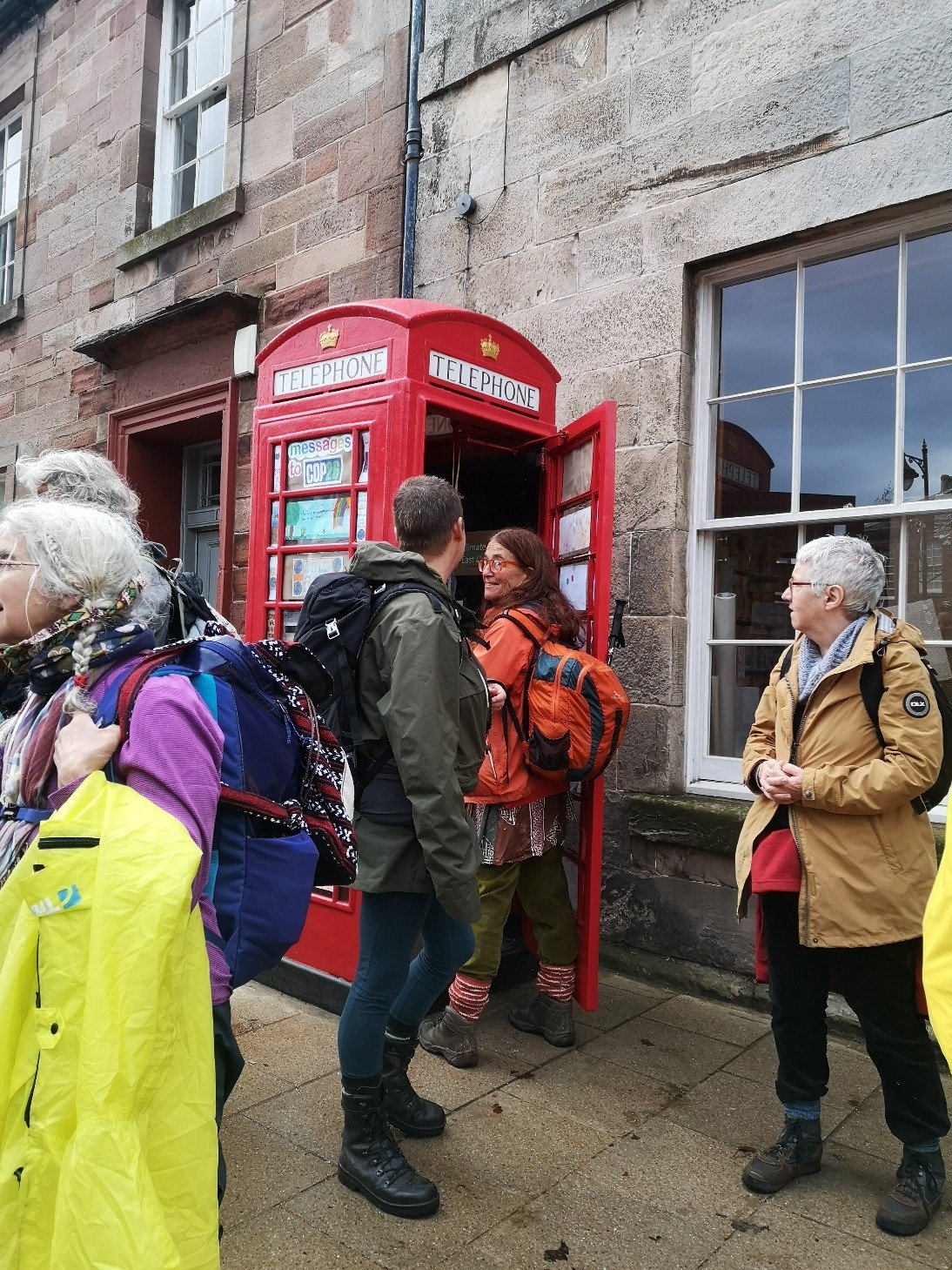
Stories Park, East Linton Climate Change phone box
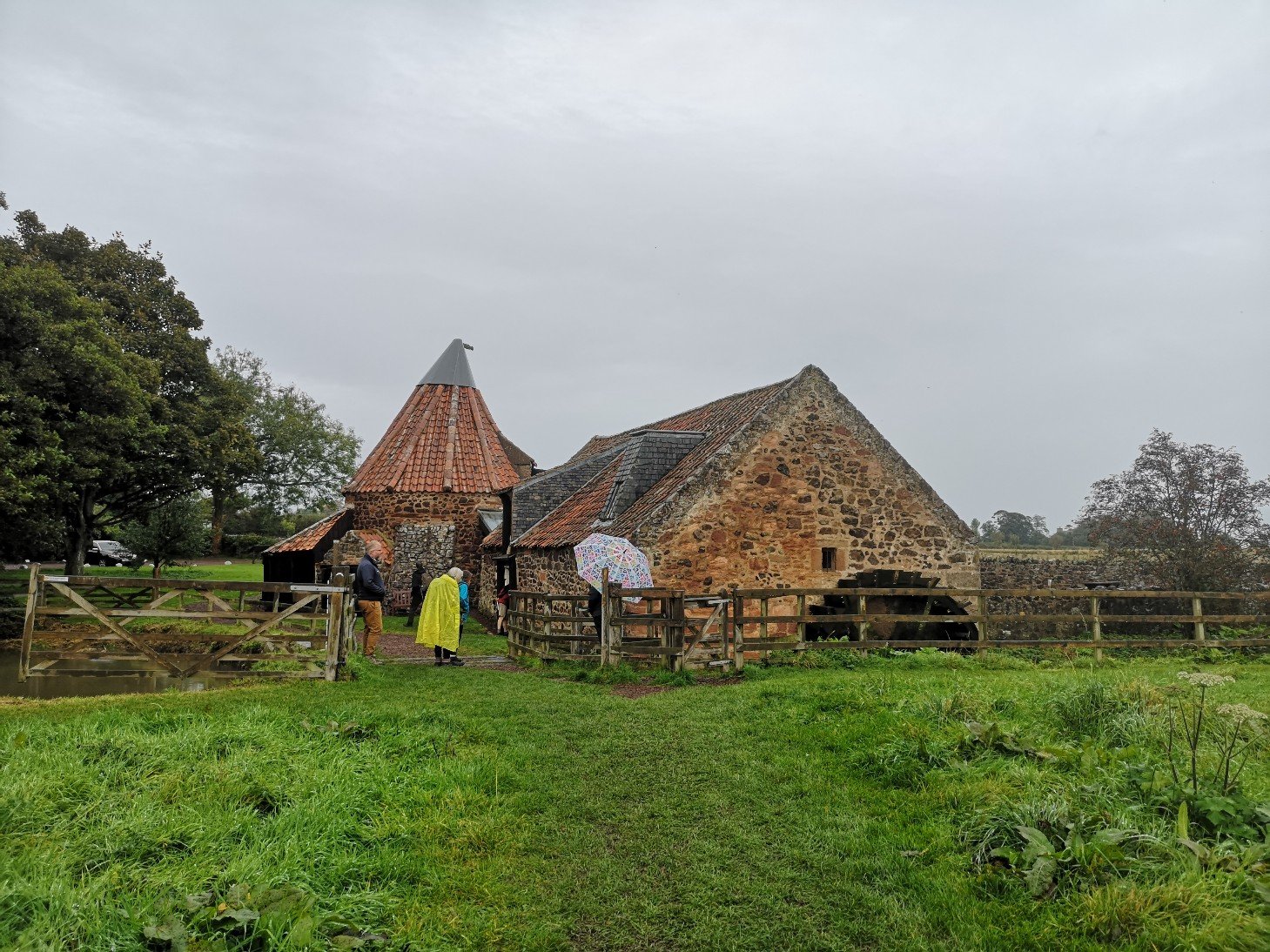
Coming into East Linton and Preston Mill and Phantassie Doocot on the River Tyne, which is run by the National Trust for Scotland

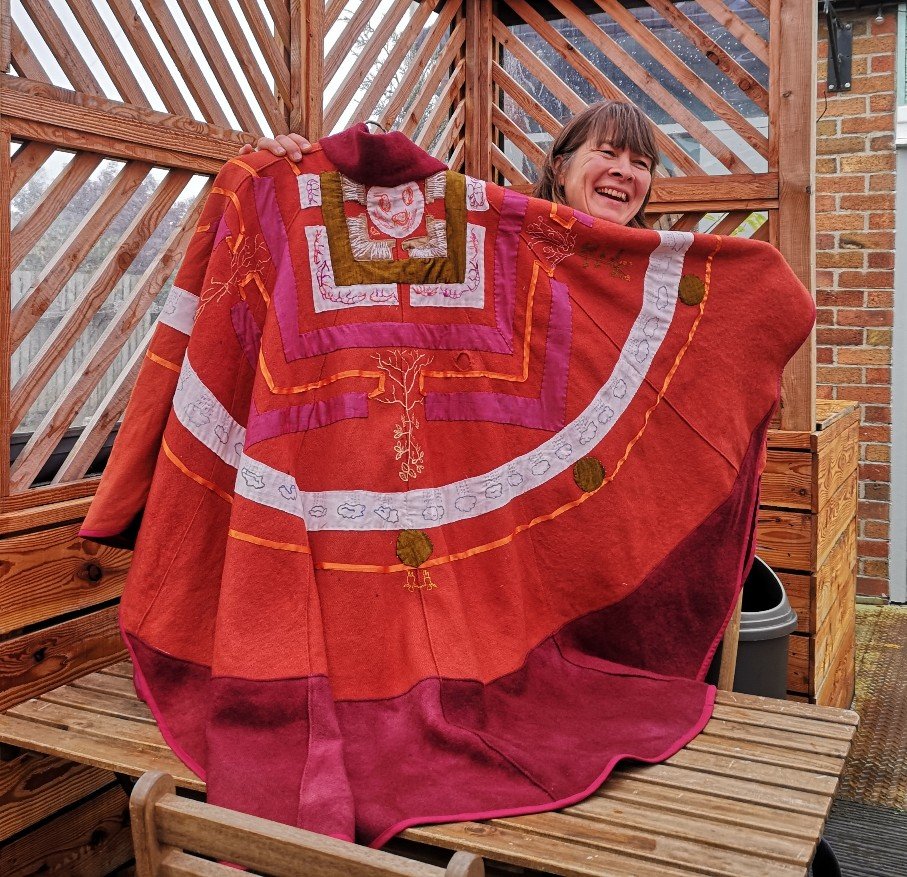
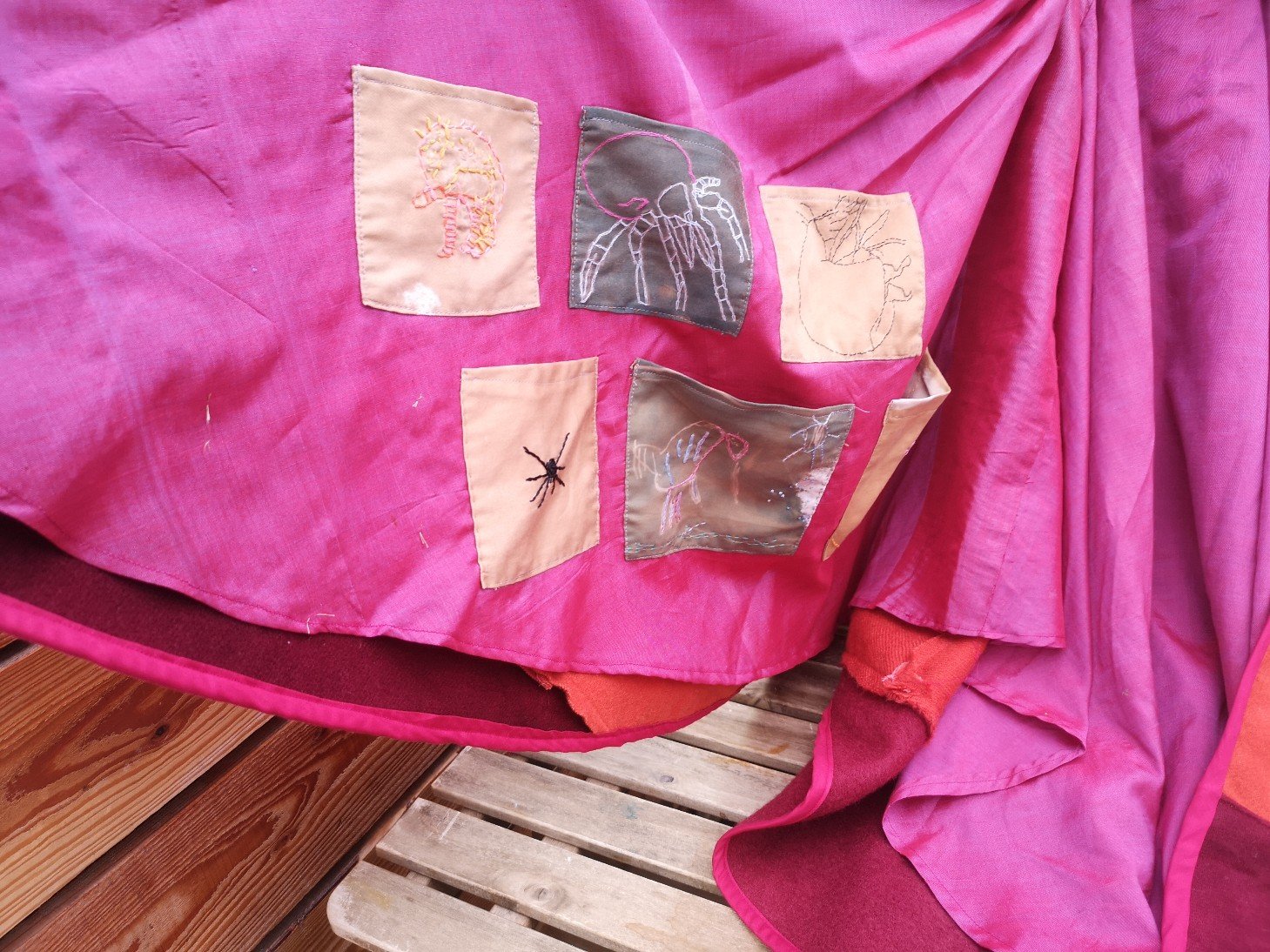
Phantassie Farm donated the day’s soil sample to the Keeper of the Soils, and it was tucked away in the inside pocket for safekeeping. Conceived of and made by Natalie Taylor with others, this wonderful cape has been hand-made using natural dyes. @northlightarts and @natalietaylorartist

Natalie Taylor , Keeper of the Soils cape with North Light Arts
Pockets inside the Keeper of the Soils cape for storing the samples of soil between Dunbar and Glasgow

We were treated to a delicious lunch at Prestonkirk Church – a much appreciated rest out of the rain – and when we reemerged, the sun was starting to show its face.

From East Linton, we headed to North Berwick,skirting Berwick Law, before arriving at our evening’s rest.

Changeable weather – some silent walking and fascinating conversation as we start to get to know each other
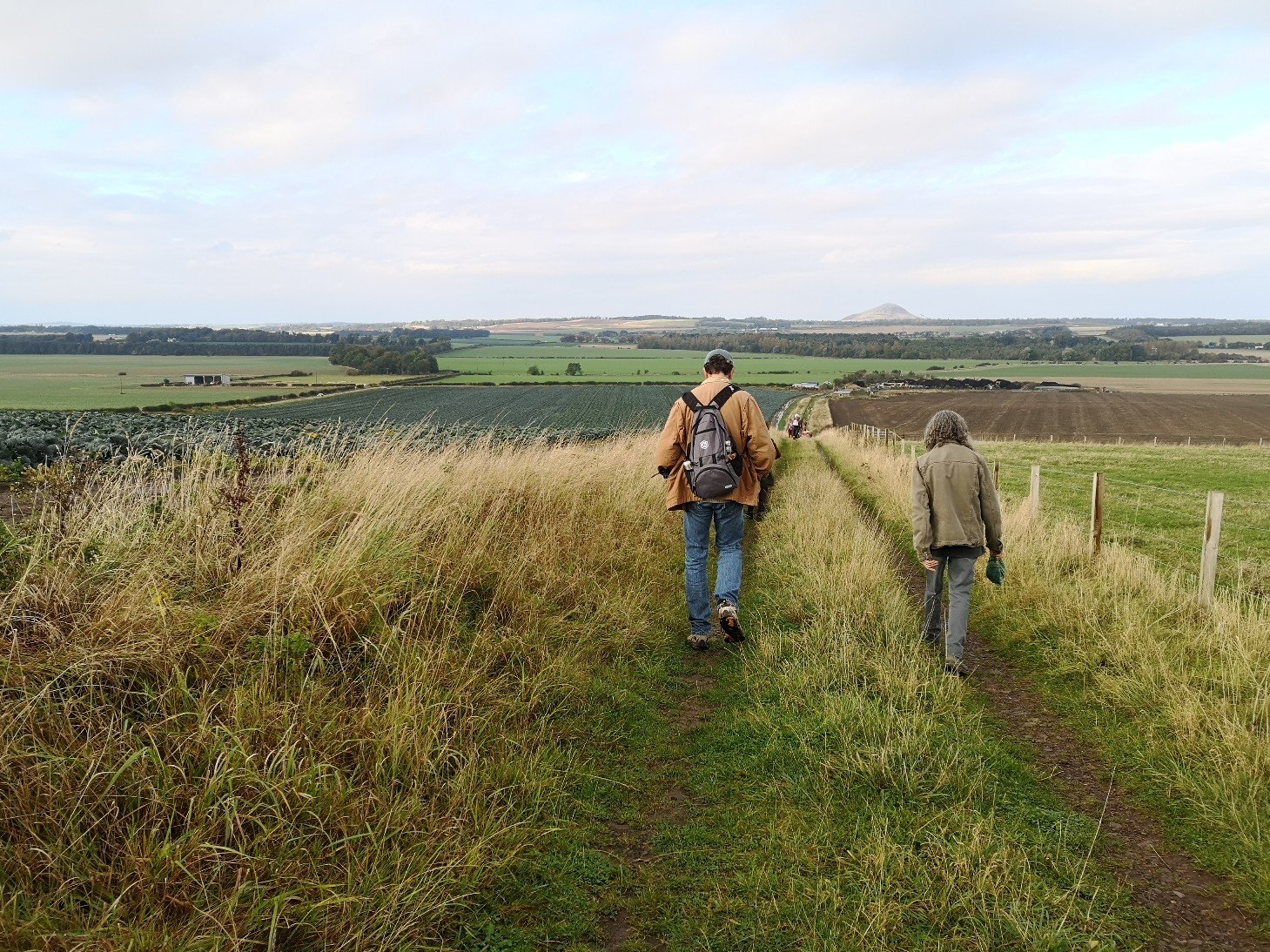
Across the fields in silence after lively lunchtime chats
I was bringing up the rear today, to ensure no-one got lost or left behind
Picking up my daily feather as I listened to people’s stories of grief and walking
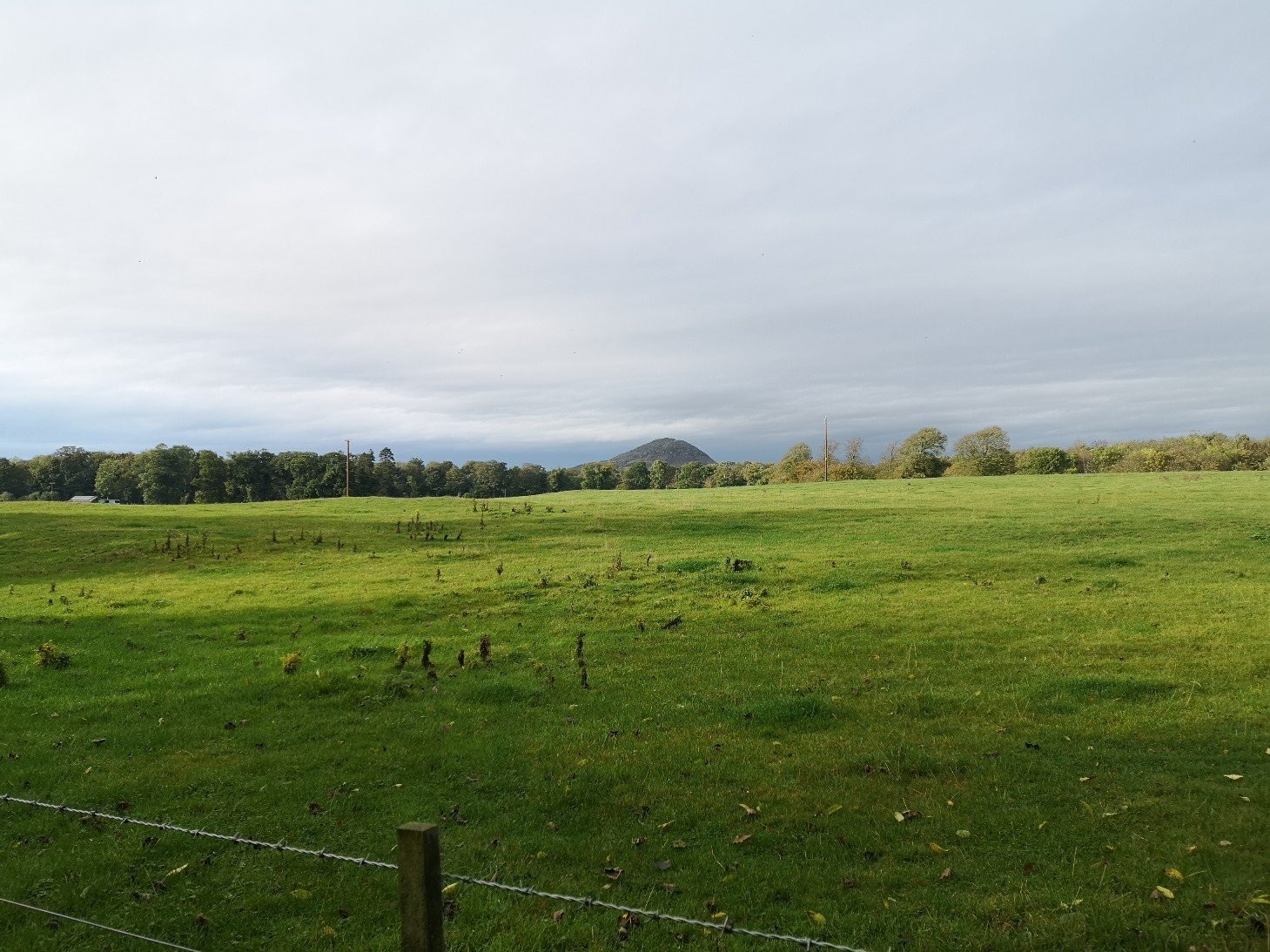
First sighting of Berwick Law, luring us to our first stop on the Pilgrimage for COP26
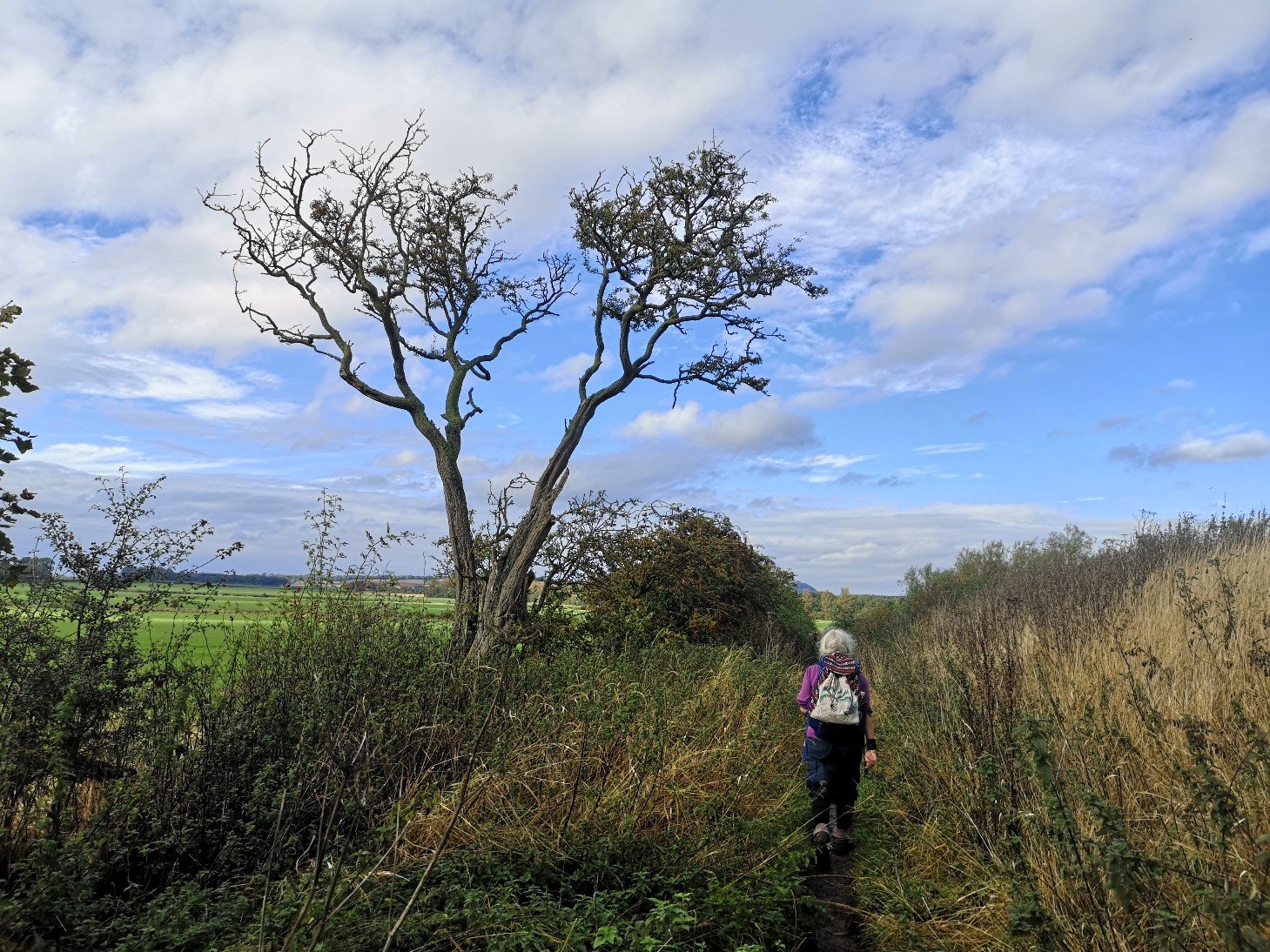
Oak woods reminding us of the environment we are walking for
Scots Pine in the late afternoon sun
Gillian – Berwick Law closer now

There were four of us at the back and we got lost here – tiredness causing a momentary lack of attention! Luckily it was only brief and GPS came to the rescue

Final circle in Lodge Grounds, North Berwick for each of us to share a word which summed up the day

Many thanks to:

Adrian for leafing today’s walk.

Cian, Finnán and Valerie for their hospitality for me overnight in Dunbar on 17th.

The kind people who provided a delicious lunch at Prestonkirk, in East Linton.

And St Baldred’s in North Berwick, who provided our evening meal and accommodation.

Pilgrimage to COP26

Blog 3 Dunbar 17 October

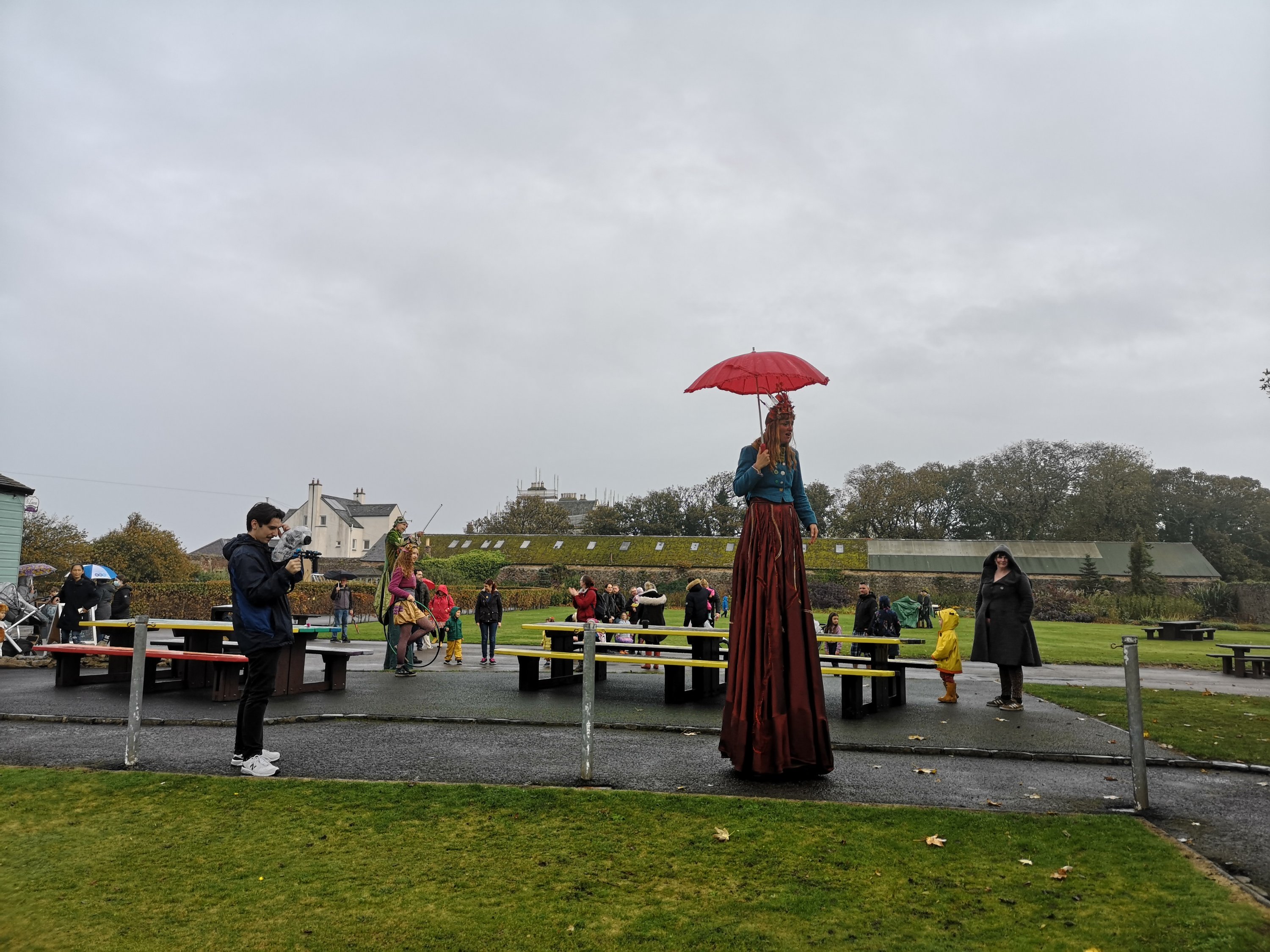
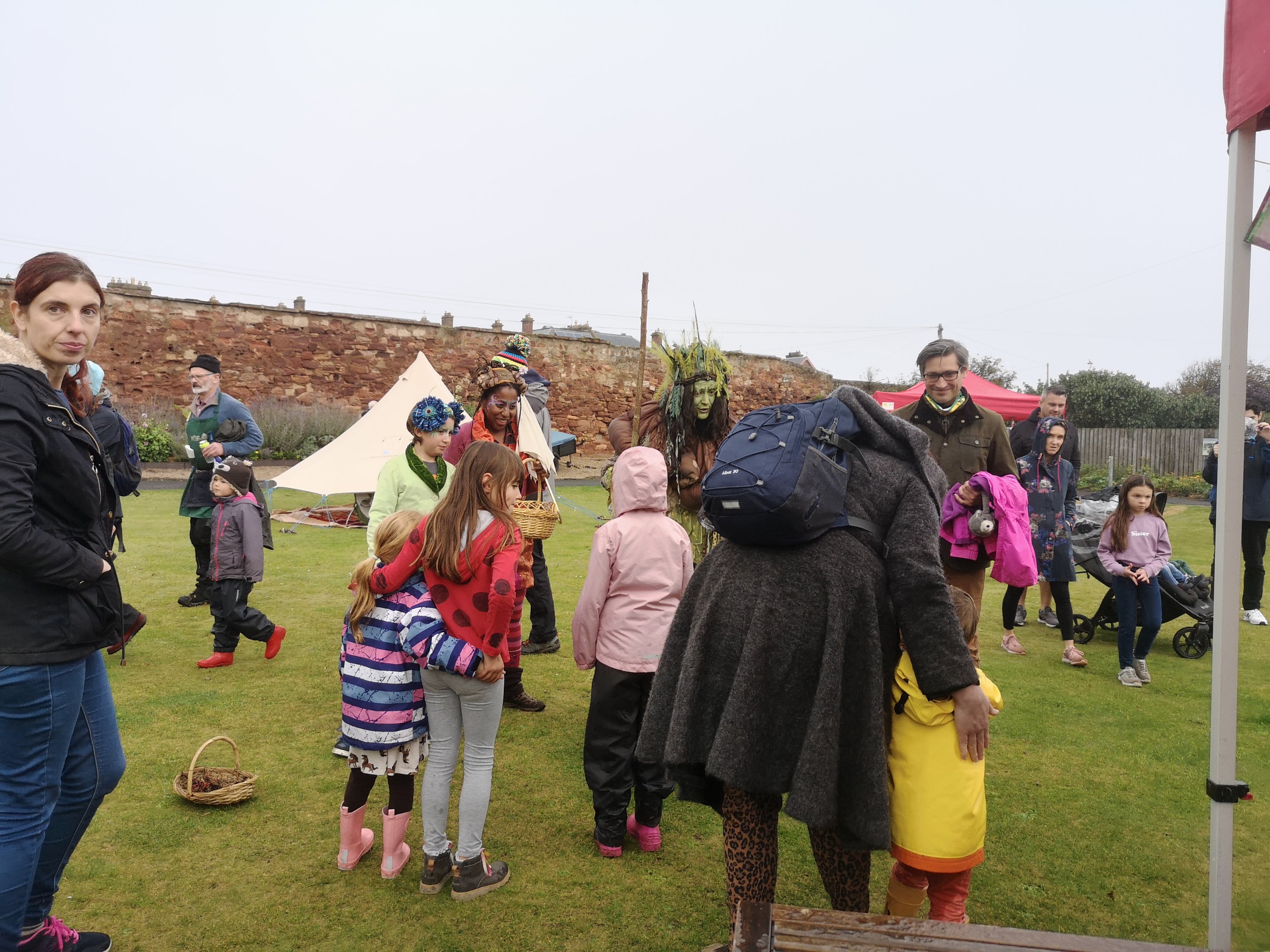
As two pilgrimages converged in Dunbar yesterday, the YCCN in relay from St Ives , Cornwall and this Pilgrimage for COP26, we merged happily with the people of East Lothian – women, children, men and umbrella-holding, violin-playing stilt walkers together with a green-faced witch.

The YCCN are calling on the government to lead the way on their climate finance pledges which have not yet been delivered in full, particularly for those countries who are suffering extremely from the climate crisis. It was announced that the
Labour party have agreed 3 out of 4 of the pledges on their website


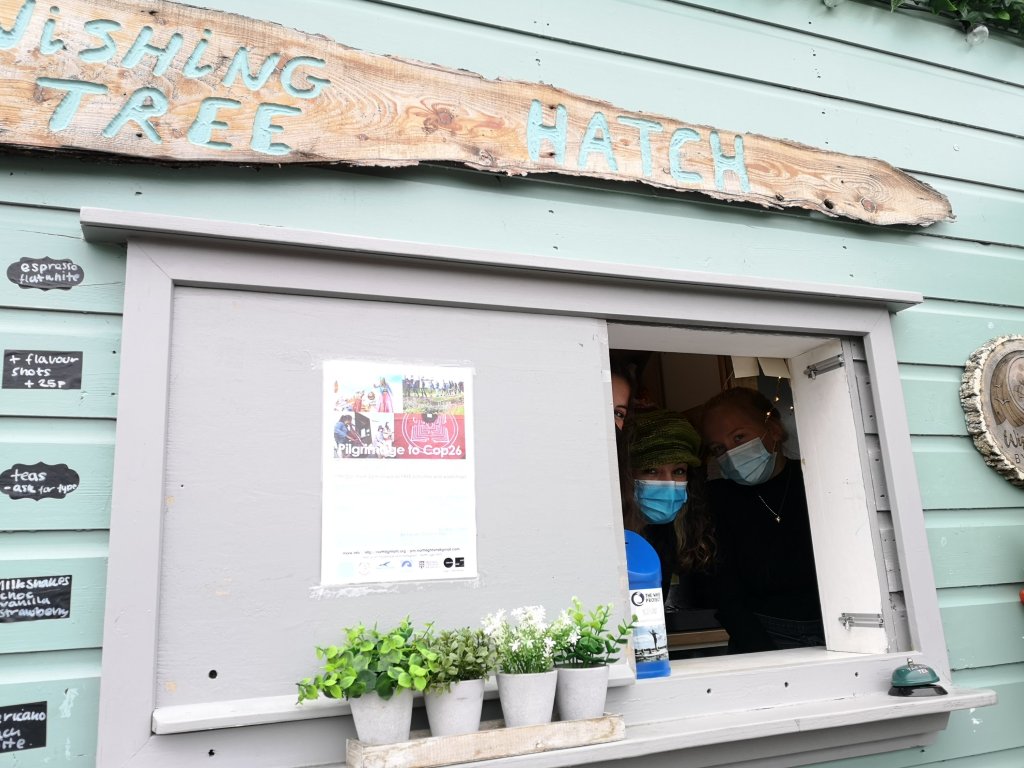
Climate change conversations erupted in the corners of fields, while waiting for delicious soup at the Wishing Tree by the Sea Cafe, and at the pizza oven.

 
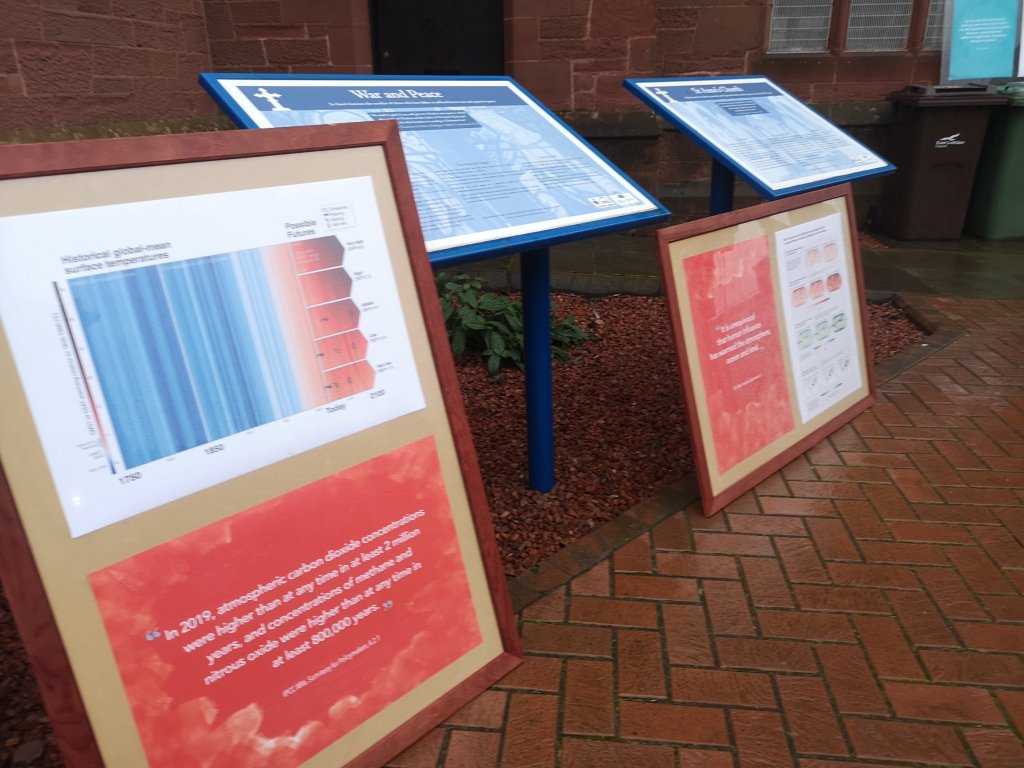
In the centre of town, we began a slow walk, lead by Karen (see yesterday’s blog), curving around the garden at the front of St Ann’s Church where we were read sections of the IPCC (Intergovernmental Policy on Climate Change).

We stopped the traffic.

Thousands of tired, nerve-shaken, over-civilized people are beginning to find out that going to the mountains is going home; that wildness is a necessity; and that mountain parks and reservations are useful not only as fountains of timber and irrigating rivers, but as fountains of life. Awakening from the stupefying effects of the vice of over-industry and the deadly apathy of luxury, they are trying as best they can to mix and enrich their own little ongoings with those of Nature, and to get rid of rust and disease.

John Muir, Our National Parks

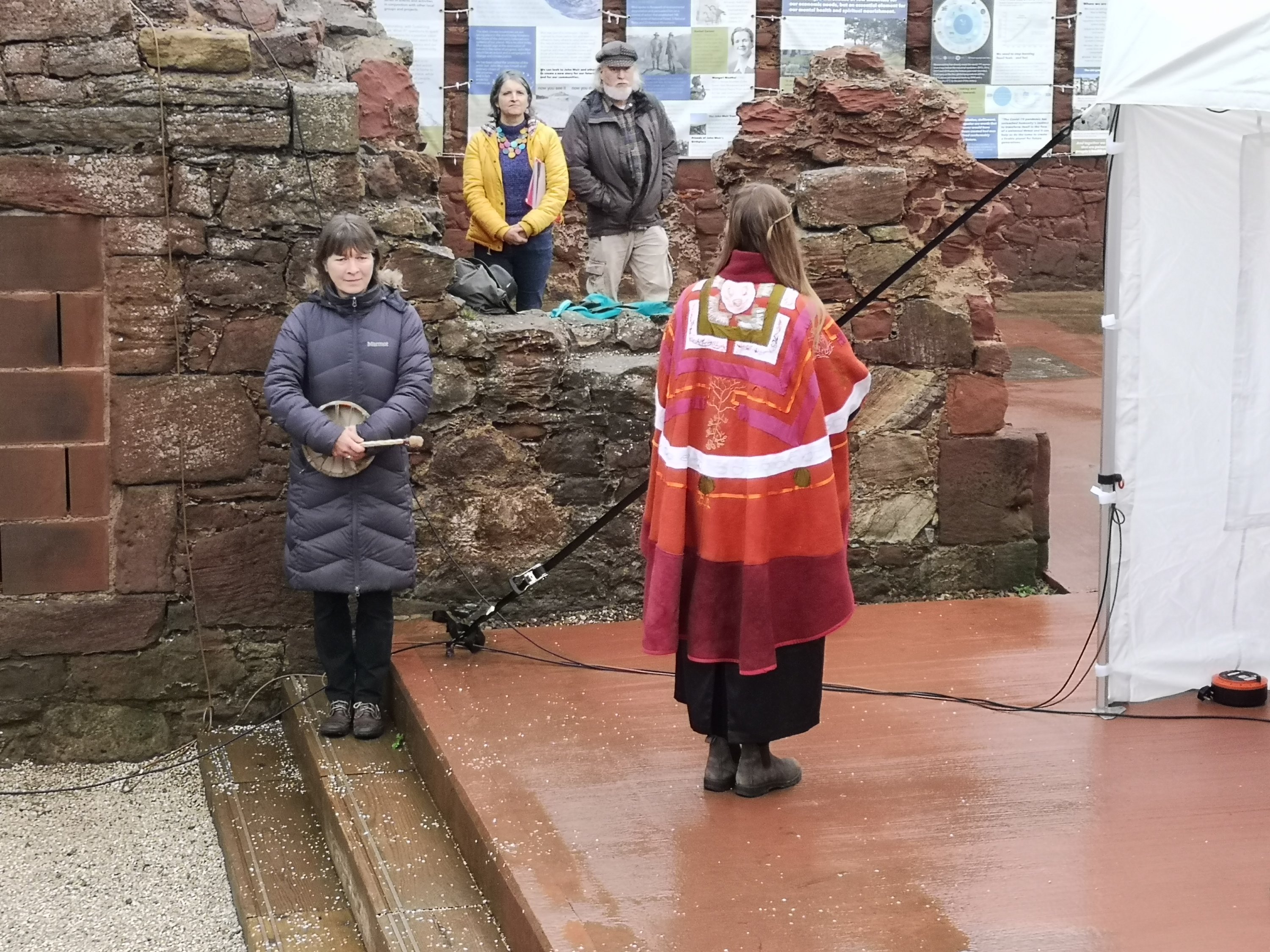
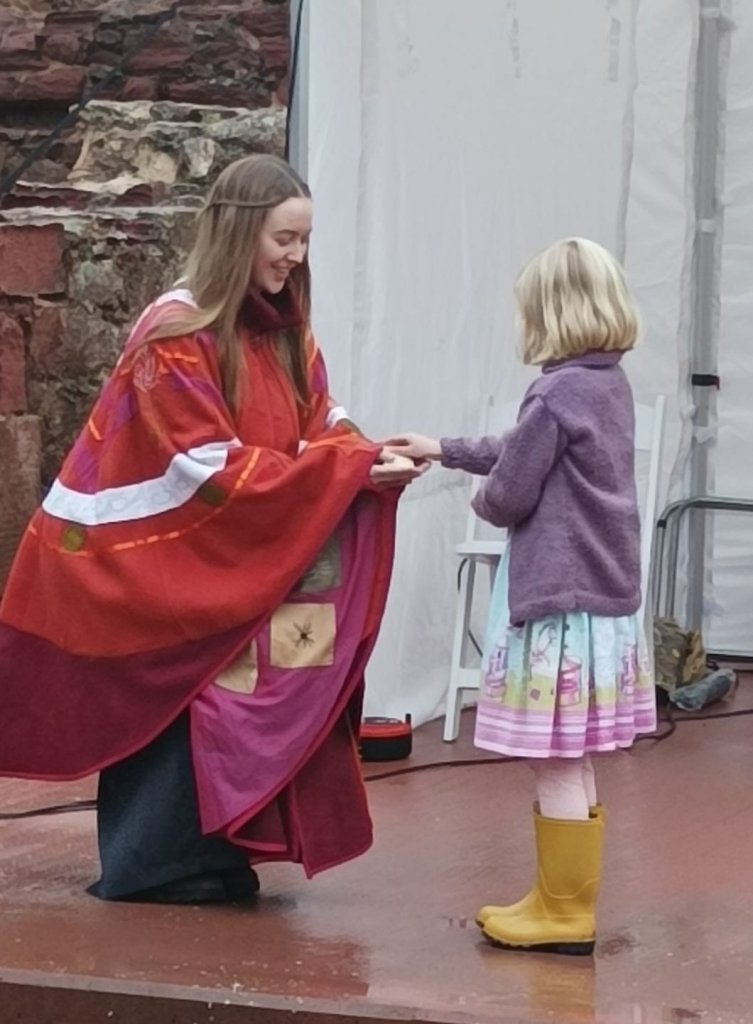
A huge crowd were waiting at the Battery at the sea’s edge for a ceremonious show. Representatives from John Muir’s Birthplace Trust and Friends opened proceedings. The Keeper of the Soil was gifted samples for the cape’s pockets, notably from land which Eve Balfour visited as a child. Founder of the Soil Association, she was one of the earliest women farmers, and the speaker, Chris Yule and his 6-year old daughter did her proud.

The beacon flashed as the nearly-new moon rose and we walked to the Belhaven Church for a Pilgrim’s meal arranged through Sustaining Dunbar with sourdough bread from the Station House Bakery.

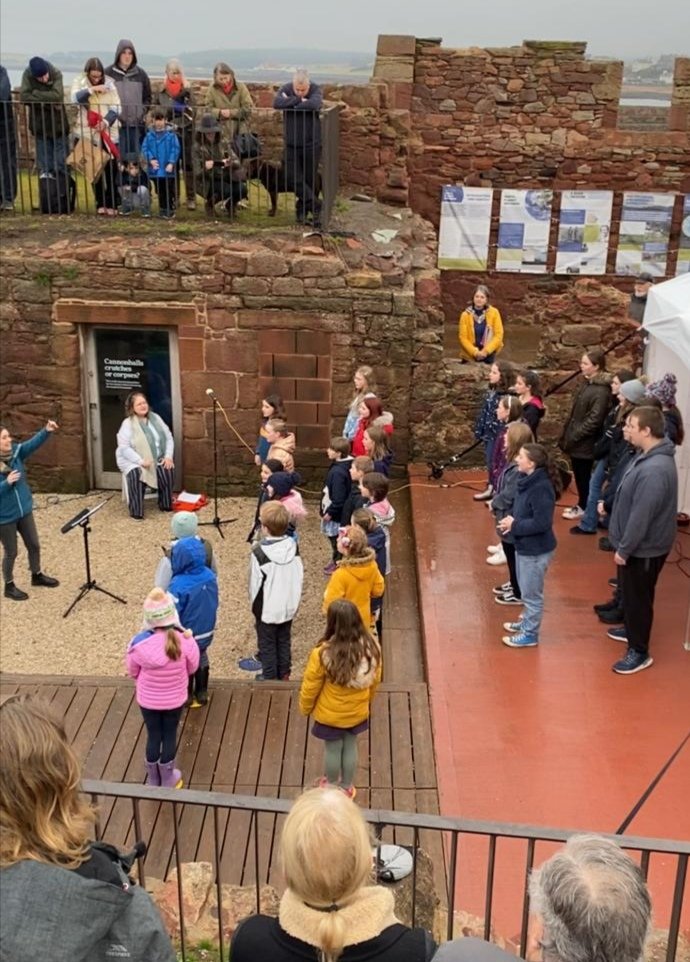
Karine Polwart wrote a song for the Dunbar Youth Choir which we all joined in with – smiles all round.

Tell me about despair, yours, and I will tell you mine

Mary Oliver, The Wild Geese

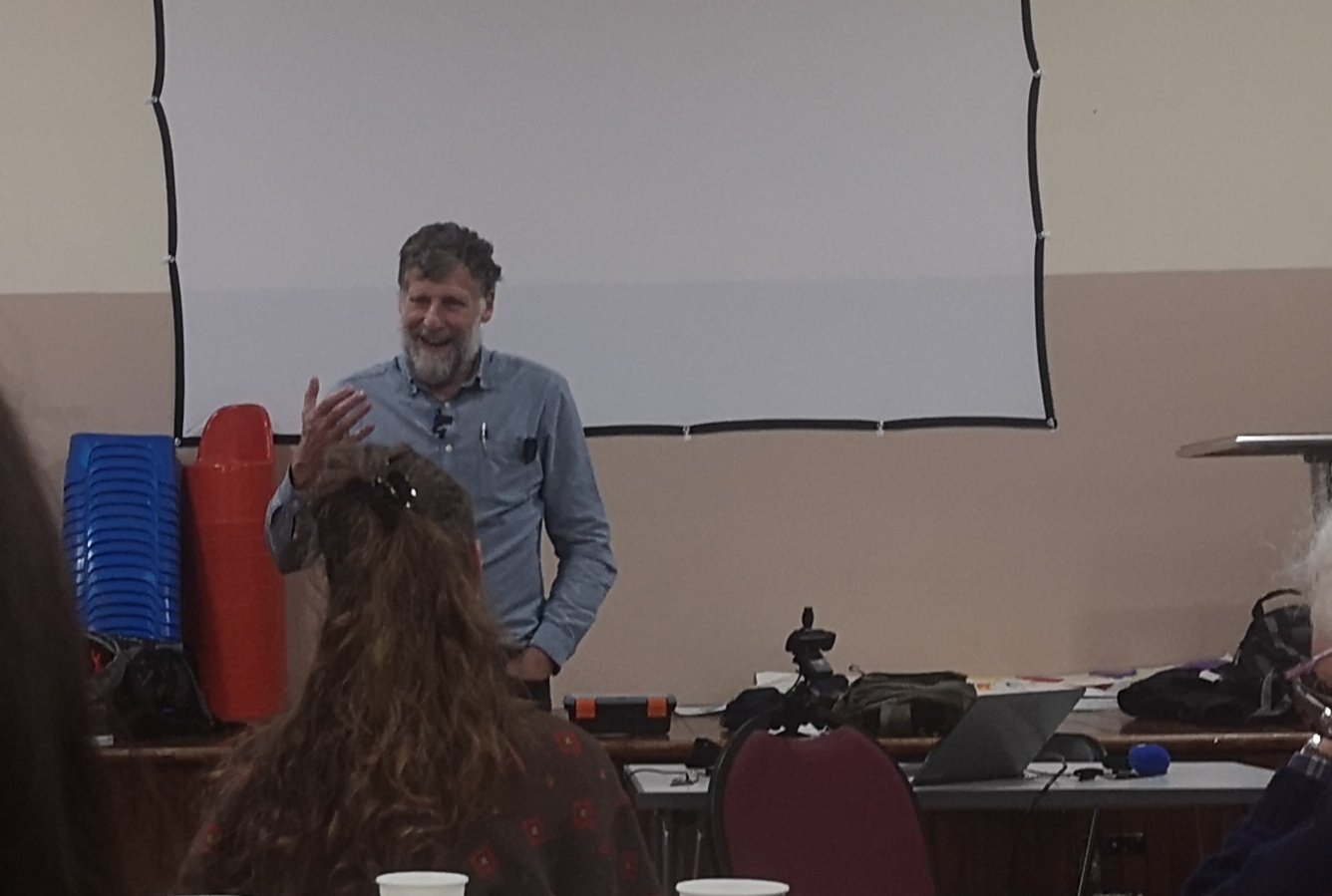
The highlight of the evening was a presentation by Alastair McIntosh who cautioned us to cease despairing, lamentation, yes, but not despair, and this chimed with the Mary Oliver quote which was shared on stage earlier that day.

Alastair quoted Alice Walker

Be nobody’s darling;

Be an outcast.

Take the contradictions

Of your life

And wrap around

You like a shawl,

To parry stones

To keep you warm

Alice Walker, from Everyday Life

Question from the floor: How do we make use of what we learn on pilgrimage when we get home?
Alastair’s answer: It’ll be in your presence. People sense if you’re connected spiritually. People share their stories with you because they intuit that you can hear them, it’s in your comportment and your bearing. Ask yourself, regularly, if you are still being honest, remember how you move to ground yourself, recognise the way it is and it isn’t.
He spoke about the phrase, Om mani padme hum, from the Hindu tradition, meaning ‘when mind and heart come together’, adding, when you do what you are doing from a spiritual place, ….. , that work is love made visible.